The thought of an interview can be nerve-wracking, but the right preparation can make all the difference. Explore this comprehensive guide to Chemical Handling and Safety Protocols interview questions and gain the confidence you need to showcase your abilities and secure the role.
Questions Asked in Chemical Handling and Safety Protocols Interview
Q 1. Describe your experience with SDS (Safety Data Sheets) and their practical application.
Safety Data Sheets (SDS) are crucial documents providing comprehensive information about hazardous chemicals. They are like the instruction manuals for chemicals, detailing everything from composition and hazards to handling procedures and emergency response. My experience involves extensive use of SDSs in various settings, from laboratory research to industrial manufacturing.
Practically, I use SDSs to:
- Assess chemical hazards: Before handling any chemical, I always consult its SDS to understand its potential health, fire, and reactivity hazards. This helps me select appropriate PPE and handling procedures.
- Develop safe operating procedures (SOPs): The SDS provides the data needed to create safe and compliant SOPs, which are essential for maintaining a safe working environment.
- Train personnel: I utilize information from SDSs to train colleagues and new employees on safe chemical handling, storage, and emergency response. I emphasize the importance of understanding the specific risks associated with each chemical.
- Respond to emergencies: In case of a spill or accident, the SDS acts as a guide, providing critical information on first aid measures, cleanup procedures, and emergency contact details.
For example, in a recent project involving strong acids, I used the SDS to determine the appropriate PPE (acid-resistant gloves, goggles, lab coat), ventilation requirements, and spill response procedures. This prevented potential injuries and ensured environmental compliance.
Q 2. Explain the different classes of fire extinguishers and their appropriate uses for chemical fires.
Fire extinguishers are categorized into different classes based on the type of fire they can effectively suppress. Understanding these classes is vital for responding to chemical fires appropriately. Using the wrong extinguisher can be ineffective or even dangerous.
- Class A: These extinguishers are suitable for ordinary combustible materials like wood, paper, and cloth. They typically use water or water-based agents.
- Class B: These extinguishers are designed for flammable liquids and gases, such as gasoline, oil, and propane. They often use carbon dioxide (CO2), dry chemical, or foam.
- Class C: These extinguishers are for electrical fires involving energized equipment. They use CO2 or dry chemical agents as they are non-conductive.
- Class D: These are specifically for combustible metals like magnesium, titanium, and sodium. They require specialized agents to prevent explosive reactions.
- Class K: These extinguishers are for cooking oils and fats fires in kitchens. They use a wet chemical agent to suppress the fire and prevent reignition.
For chemical fires, the choice of extinguisher depends on the nature of the burning chemical. For example, a flammable liquid fire (Class B) might be extinguished using a CO2 or dry chemical extinguisher. Never attempt to extinguish a fire if you are unsure of its class or if it’s rapidly spreading. Prioritize evacuation and calling emergency services.
Q 3. What are the proper procedures for handling chemical spills?
Chemical spills require immediate and controlled response to prevent further damage and injury. The procedures depend on the nature and quantity of the spilled chemical. Always refer to the SDS for specific instructions.
General procedures usually involve:
- Evacuation and Isolation: Clear the area immediately, restricting access to prevent exposure. Establish a perimeter to control the spread of the spill.
- Personal Protective Equipment (PPE): Don appropriate PPE based on the chemical involved, including gloves, eye protection, respiratory protection (if necessary), and protective clothing.
- Containment: If possible, contain the spill using absorbent materials like spill pads or kitty litter, preventing it from spreading further. This involves creating a berm around the spill.
- Neutralization (if appropriate): Some spills might require neutralization using a specific chemical, but this should only be done by trained personnel with the proper knowledge and equipment. Improper neutralization can create more hazardous byproducts.
- Cleanup: Carefully collect and dispose of the contaminated materials according to local regulations and SDS recommendations. Thoroughly clean the affected area.
- Waste Disposal: Dispose of all contaminated materials and cleanup materials properly, following all applicable environmental regulations.
- Reporting: Report the incident to the appropriate authorities, documenting details of the spill, cleanup procedures, and any injuries.
For instance, if a small quantity of acid spills, you might use a spill kit containing absorbent material and neutralizing agents. However, a large spill needs a more structured approach, possibly requiring specialized cleanup crews and emergency services.
Q 4. How do you identify and mitigate potential chemical hazards in a workplace?
Identifying and mitigating chemical hazards requires a proactive and systematic approach. This involves a combination of hazard identification, risk assessment, and control measures.
My approach involves:
- Hazard Identification: This involves creating a detailed inventory of all chemicals used or stored in the workplace, reviewing their respective SDSs, and identifying potential hazards through walk-through inspections and process analysis.
- Risk Assessment: Once hazards are identified, a risk assessment is performed to determine the likelihood and severity of potential incidents. This usually uses a matrix approach that rates risks based on factors like exposure, toxicity, and flammability.
- Control Measures: Implementing appropriate control measures to reduce or eliminate the identified risks. These measures can include:
- Engineering Controls: These are physical changes to the work environment to reduce exposure, such as improved ventilation systems, enclosed processes, and local exhaust ventilation.
- Administrative Controls: These involve changes in work practices, like standard operating procedures (SOPs), training programs, and limiting exposure times.
- Personal Protective Equipment (PPE): Selecting and using appropriate PPE to protect workers from chemical hazards, such as gloves, eye protection, respirators, and protective clothing.
- Monitoring and Review: Continuously monitoring the effectiveness of control measures and regularly reviewing the risk assessment to ensure its continued accuracy and relevance.
For example, in a laboratory setting, I might identify the risk of chemical splashes, implement engineering controls like splash guards, and provide workers with appropriate eye protection and gloves.
Q 5. What are your experiences with personal protective equipment (PPE) and its selection criteria?
Personal Protective Equipment (PPE) is the last line of defense against chemical hazards. Proper selection is crucial, as using the wrong PPE can expose workers to risks. My experience emphasizes that choosing PPE depends on the specific hazards identified in the risk assessment and the properties of the chemical involved.
Selection criteria include:
- Chemical Compatibility: The PPE material must be resistant to the chemicals it will contact. For example, nitrile gloves are preferred over latex for many organic solvents.
- Level of Protection: The PPE must provide the appropriate level of protection against the severity of the hazard. This might involve selecting different types of gloves, respirators, or eye protection.
- Fit and Comfort: PPE should fit properly and be comfortable to wear for extended periods, encouraging consistent use.
- Durability and Maintenance: PPE should be durable enough to withstand the conditions it will encounter and maintained properly to ensure its effectiveness.
- Regulations and Standards: PPE must comply with relevant industry standards and regulations.
For instance, when handling highly corrosive acids, I would select chemically resistant gloves, acid-resistant aprons, and face shields to provide complete protection. A simple pair of latex gloves would be insufficient in such a scenario.
Q 6. Explain the importance of proper chemical storage and labeling.
Proper chemical storage and labeling are fundamental to preventing accidents and maintaining a safe workplace. They are the foundation for controlling chemical hazards.
Storage:
- Compatibility: Incompatible chemicals should never be stored together. Mixing certain chemicals can lead to dangerous reactions. SDSs provide crucial information on compatibility.
- Ventilation: Proper ventilation is essential, particularly for volatile chemicals that can release harmful vapors.
- Temperature Control: Some chemicals require specific temperature conditions for safe storage, avoiding extreme heat or cold.
- Secure Storage: Chemicals should be stored securely to prevent unauthorized access, spills, or theft. This might involve locked cabinets, designated storage areas, or secondary containment.
Labeling:
- Clear and Accurate: Labels must be clear, unambiguous, and accurately identify the chemical’s name, hazards, and precautions.
- GHS Compliance: Labels should comply with the Globally Harmonized System of Classification and Labelling of Chemicals (GHS), using standardized hazard pictograms and signal words.
- Legibility: Labels must be legible and easy to understand, even from a distance.
- Regular Inspection: Labels should be regularly inspected and replaced if they become damaged or illegible.
For example, incompatible chemicals like acids and bases should be stored separately in designated cabinets with proper ventilation. Clear, accurate GHS-compliant labels are critical, ensuring everyone understands the potential hazards associated with each chemical.
Q 7. Describe your experience with waste disposal procedures for chemicals.
Waste disposal procedures for chemicals are crucial for environmental protection and worker safety. These procedures must comply with all applicable local, state, and federal regulations.
My experience involves:
- Waste Characterization: The first step is to accurately characterize the chemical waste, determining its composition and hazards. This information is crucial for selecting the appropriate disposal method.
- Segregation: Different types of chemical waste should be segregated to prevent incompatible materials from reacting and causing hazards.
- Containerization: Waste should be properly containerized in compatible containers with appropriate labels, ensuring secure handling and transport.
- Disposal Method Selection: The appropriate disposal method depends on the nature of the waste, and typically involves options like incineration, landfilling, recycling, or treatment before disposal. Local regulations often dictate specific requirements.
- Record Keeping: Meticulous record-keeping is vital, documenting waste generation, disposal methods, and disposal facility information.
- Compliance: All disposal procedures must comply with all relevant environmental regulations, often requiring manifests and certifications.
For example, handling halogenated solvents requires special care, often necessitating treatment before disposal due to environmental concerns. Improper disposal of such chemicals can lead to soil and water contamination. Always refer to local guidelines and consult with a qualified waste management service provider.
Q 8. What are the key elements of a comprehensive chemical safety program?
A comprehensive chemical safety program is the cornerstone of any operation handling chemicals, ensuring the safety of workers, the environment, and the public. It’s not just a checklist; it’s a living, breathing system that requires constant monitoring and adaptation. Key elements include:
- Chemical Inventory and Hazard Communication: A detailed inventory of all chemicals used, stored, and handled, along with readily accessible Safety Data Sheets (SDS) for each. This allows for quick identification of hazards and appropriate responses. Think of it as a chemical library, meticulously cataloged for easy access to critical safety information.
- Risk Assessment and Control: A thorough evaluation of potential hazards associated with each chemical, followed by implementation of control measures such as engineering controls (ventilation, enclosed systems), administrative controls (standard operating procedures, training), and personal protective equipment (PPE).
- Training and Education: Comprehensive training programs for all personnel involved in handling chemicals, covering hazard recognition, safe handling procedures, emergency response, and the proper use of PPE. Regular refresher training is crucial to maintain competency.
- Emergency Response Plan: A well-defined plan outlining procedures for responding to spills, leaks, fires, and exposures, including evacuation routes, emergency contact information, and the location of safety equipment. Regular drills ensure everyone knows what to do in an emergency.
- Spill Response and Waste Disposal: Procedures for handling spills and leaks safely and effectively, including appropriate cleanup materials and disposal methods in compliance with all applicable regulations. This ensures containment and minimizes environmental impact.
- Record Keeping and Audits: Maintaining detailed records of chemical usage, training, incidents, and inspections to demonstrate compliance and identify areas for improvement. Regular audits ensure the program remains effective and up-to-date.
For example, a pharmaceutical company would have a much more stringent program than a small cleaning business, reflecting the higher potential hazards associated with the chemicals they use.
Q 9. How would you respond to a chemical exposure incident?
Responding to a chemical exposure incident requires a swift and methodical approach. The first priority is to ensure the safety of the exposed individual and those around them. My response would involve these steps:
- Immediate Actions: Remove the individual from the source of exposure. If it’s a skin or eye contact, immediately flush the affected area with copious amounts of water for at least 15 minutes. For inhalation, move the individual to fresh air.
- Assess the Situation: Determine the nature and extent of the exposure, the chemical involved, and the individual’s condition. Consult the SDS for first aid recommendations.
- Provide First Aid: Administer appropriate first aid according to the SDS and any company-specific protocols. This might include administering oxygen or using specific antidotes if available and appropriate.
- Contact Emergency Services: Call emergency medical services (EMS) immediately and provide them with all relevant information, including the chemical involved, the extent of the exposure, and the individual’s condition.
- Isolate the Area: Secure the area to prevent further exposure and contamination. This may involve cordoning off the affected zone and evacuating personnel.
- Documentation: Thoroughly document the incident, including the time, location, individuals involved, the chemical involved, the measures taken, and the outcome. This is crucial for accident investigation and preventing future incidents.
For instance, if someone spilled concentrated sulfuric acid on their arm, the immediate priority would be to flush the area with water while simultaneously calling for help. Following that, we’d look at the SDS to guide the next steps.
Q 10. Explain your understanding of OSHA regulations regarding chemical handling.
OSHA (Occupational Safety and Health Administration) regulations regarding chemical handling are comprehensive and aim to protect workers from chemical hazards. Key regulations include:
- Hazard Communication Standard (HCS): This requires employers to inform employees about the hazards of chemicals they are exposed to in the workplace through labels, SDSs, and training. This is crucial for enabling informed decision-making.
- Process Safety Management (PSM): This standard applies to facilities that handle highly hazardous chemicals and requires employers to develop and implement comprehensive programs for preventing catastrophic releases.
- Permissible Exposure Limits (PELs): OSHA sets PELs for various chemicals, specifying the maximum concentration of a chemical that workers can be exposed to over an eight-hour workday without adverse health effects. Monitoring and control measures are required to stay below these limits.
- Specific Chemical Standards: OSHA has specific standards for the handling and use of certain chemicals, such as asbestos, lead, and formaldehyde, often with much stricter controls than general guidelines.
Non-compliance can lead to significant fines and legal repercussions. A robust understanding of these regulations is essential for maintaining a safe working environment.
Q 11. How familiar are you with Globally Harmonized System of Classification and Labelling of Chemicals (GHS)?
The Globally Harmonized System of Classification and Labelling of Chemicals (GHS) is an internationally recognized system for classifying and communicating chemical hazards. I am very familiar with it. GHS provides a standardized approach to:
- Classification of Chemicals: Chemicals are classified based on their physical, health, and environmental hazards. This ensures consistency in hazard identification worldwide.
- Labeling of Chemicals: GHS provides a standardized format for labels, including pictograms, signal words (Danger or Warning), hazard statements, and precautionary statements. This makes it easy to quickly understand the chemical’s hazards.
- Safety Data Sheets (SDS): GHS dictates a standardized format for SDSs, providing detailed information about the chemical’s properties, hazards, and safe handling procedures. This consistent format ensures crucial information is easily accessible and understandable globally.
The adoption of GHS has greatly improved the consistency and clarity of chemical hazard information, making workplaces safer worldwide. It allows for easier communication and understanding of chemical hazards across international borders.
Q 12. Describe your experience with risk assessments related to chemical handling.
I have extensive experience conducting risk assessments related to chemical handling, using a structured approach that involves these steps:
- Hazard Identification: Identifying all potential chemical hazards present in the workplace, considering both acute and chronic effects.
- Hazard Characterization: Evaluating the severity and likelihood of each hazard, considering factors such as toxicity, flammability, and reactivity.
- Exposure Assessment: Determining the potential for workers to be exposed to each hazard, considering the routes of exposure (inhalation, skin contact, ingestion).
- Risk Evaluation: Combining hazard characterization and exposure assessment to determine the overall level of risk associated with each hazard.
- Risk Control: Developing and implementing control measures to mitigate the identified risks, following a hierarchy of controls (elimination, substitution, engineering controls, administrative controls, PPE).
- Monitoring and Review: Regularly monitoring the effectiveness of control measures and reviewing the risk assessment to ensure it remains up-to-date and accurate. This includes considering changes in processes, chemicals used, and regulatory requirements.
In a previous role at a manufacturing plant, I conducted a risk assessment for a new chemical process that involved highly reactive chemicals. This assessment led to the implementation of improved ventilation systems, specialized PPE, and stricter operating procedures, significantly reducing the risk of accidents.
Q 13. What are the different types of chemical hazards (physical, health, environmental)?
Chemical hazards can be broadly categorized into three main types:
- Physical Hazards: These relate to the inherent physical properties of a chemical that can cause harm. Examples include:
- Flammability: The ability of a chemical to ignite and burn.
- Reactivity: The tendency of a chemical to undergo undesirable chemical reactions, such as explosions or the release of toxic gases.
- Explosivity: The ability of a chemical to undergo rapid decomposition or oxidation, producing a sudden release of energy and pressure.
- Oxidizing Properties: The ability of a chemical to readily provide oxygen to other substances, enhancing their flammability.
- Health Hazards: These relate to the potential for a chemical to cause harm to human health through various routes of exposure (inhalation, skin contact, ingestion). Examples include:
- Toxicity: The ability of a chemical to cause damage to living organisms.
- Carcinogenicity: The potential of a chemical to cause cancer.
- Mutagenicity: The potential of a chemical to alter the genetic material of living cells.
- Reproductive Toxicity: The potential of a chemical to affect reproductive function.
- Environmental Hazards: These relate to the potential for a chemical to cause harm to the environment. Examples include:
- Persistence: The ability of a chemical to remain in the environment for a long period.
- Bioaccumulation: The tendency of a chemical to accumulate in living organisms.
- Toxicity to aquatic life: The potential of a chemical to harm aquatic organisms.
Understanding these categories is fundamental to effectively managing chemical risks.
Q 14. How do you ensure compliance with environmental regulations for chemical handling?
Ensuring compliance with environmental regulations for chemical handling is paramount. It’s not just about avoiding penalties; it’s about being a responsible corporate citizen. My approach involves:
- Knowing the Regulations: A thorough understanding of all applicable federal, state, and local environmental regulations, including those related to air emissions, water discharges, and waste disposal. This includes staying updated on changes in regulations.
- Permitting and Reporting: Obtaining all necessary permits for handling, storing, and disposing of chemicals, and accurately reporting all chemical releases and waste disposal activities as required.
- Waste Management: Implementing a comprehensive waste management program that includes proper segregation, collection, treatment, storage, and disposal of chemical waste in accordance with relevant regulations. This often involves partnering with licensed waste disposal companies.
- Spill Prevention and Control: Developing and implementing procedures to prevent and control chemical spills and leaks to minimize environmental contamination. This involves regular inspections and maintenance of storage and handling equipment.
- Environmental Monitoring: Conducting regular environmental monitoring to assess the impact of chemical handling activities on the surrounding environment. This often involves soil and water testing and air quality monitoring.
- Employee Training: Training employees on environmental regulations and best practices related to chemical handling and waste management. This is crucial for ensuring compliance and minimizing environmental impact.
For example, in a previous project, I helped a manufacturing facility develop a comprehensive environmental management system that led to a significant reduction in their chemical waste and improved their environmental performance significantly.
Q 15. What is your experience with emergency response procedures in chemical handling incidents?
My experience with emergency response procedures in chemical handling incidents is extensive. I’ve been involved in developing and implementing emergency response plans for various facilities, ranging from small laboratories to large-scale manufacturing plants. This includes conducting regular drills, participating in actual emergency responses, and leading post-incident investigations. For instance, during a recent incident involving a sulfuric acid spill, my immediate actions involved initiating the facility’s emergency response protocol, which included evacuating personnel from the affected area, contacting emergency services, and implementing containment and cleanup procedures using specialized equipment and neutralizing agents. Post-incident, I led a thorough investigation to identify the root cause, implement corrective actions, and improve future response strategies. My approach always emphasizes the safety of personnel and the minimization of environmental impact.
I am proficient in using various emergency response equipment such as spill kits, personal protective equipment (PPE), and decontamination equipment. I’m also experienced in working with regulatory agencies and understanding the reporting requirements following a chemical incident. The key to effective emergency response is preparedness – well-defined protocols, regular training, and readily available resources.
Career Expert Tips:
- Ace those interviews! Prepare effectively by reviewing the Top 50 Most Common Interview Questions on ResumeGemini.
- Navigate your job search with confidence! Explore a wide range of Career Tips on ResumeGemini. Learn about common challenges and recommendations to overcome them.
- Craft the perfect resume! Master the Art of Resume Writing with ResumeGemini’s guide. Showcase your unique qualifications and achievements effectively.
- Don’t miss out on holiday savings! Build your dream resume with ResumeGemini’s ATS optimized templates.
Q 16. Describe your understanding of lockout/tagout procedures.
Lockout/Tagout (LOTO) procedures are critical for preventing accidental energy release during maintenance or repair of machinery. It’s a safety process designed to ensure that dangerous sources of energy (electrical, mechanical, hydraulic, pneumatic, etc.) are isolated and rendered inoperable before any work is performed. This prevents injuries to personnel caused by unexpected startup of equipment.
The process typically involves five steps:
- Preparation: Identifying energy sources and isolating them.
- Lockout: Applying a lock to the energy isolating device (e.g., a circuit breaker). This lock is unique to the person performing the work.
- Tagout: Attaching a tag to the lock clearly indicating the person, work being performed, and date.
- Verification: Before starting work, another person should verify the lockout/tagout has been performed correctly.
- Tagout Removal: Only the person who applied the lock should remove it after the work is completed and the equipment is safe.
Imagine a scenario where a maintenance worker is servicing a conveyor belt. If the LOTO process isn’t followed, the belt could unexpectedly start up, causing serious injury. Therefore, a thorough understanding and strict adherence to LOTO procedures are vital in preventing accidents. I have extensive experience implementing and auditing LOTO programs, ensuring compliance with OSHA and other relevant regulations.
Q 17. How do you ensure proper ventilation in areas where chemicals are handled?
Proper ventilation is paramount in chemical handling areas to prevent the buildup of hazardous vapors, gases, or dusts. This involves a multifaceted approach, starting with a proper risk assessment to determine the specific ventilation needs.
Methods include:
- General Ventilation: Using exhaust fans or HVAC systems to remove contaminants from the entire area. This is suitable for low-concentration hazards.
- Local Exhaust Ventilation (LEV): Employing hoods or other localized devices to capture contaminants at their source, preventing them from dispersing into the wider environment. This is crucial for high-concentration hazards.
- Dilution Ventilation: Increasing the airflow to dilute the concentration of contaminants. This is often used in conjunction with other methods.
For instance, when working with solvents, LEV systems are critical. These systems might involve a fume hood directly over the workstation or a dedicated exhaust system connected to a specific piece of equipment. The effectiveness of the system needs regular monitoring and testing to ensure it’s adequately removing contaminants. Furthermore, proper ventilation also includes maintaining clean air filters and regular inspections to avoid failure. Failure to maintain a proper ventilation system can lead to exposure to hazardous chemicals, resulting in health issues or even fatalities.
Q 18. Explain your experience with chemical inventory management.
Chemical inventory management involves tracking the types, quantities, locations, and expiration dates of all chemicals in a facility. It’s crucial for safety, regulatory compliance, and efficient resource allocation. I’ve implemented and managed chemical inventory systems using both manual and computerized methods.
My experience includes:
- Developing and maintaining a detailed inventory database using software like inventory management systems or spreadsheets.
- Implementing procedures for receiving, storing, and disposing of chemicals. This includes regular audits to ensure accuracy and compliance with regulations such as the Globally Harmonized System of Classification and Labelling of Chemicals (GHS).
- Tracking usage and ordering new chemicals based on consumption patterns.
- Properly labeling and managing chemical waste for safe disposal.
Effective inventory management minimizes the risks associated with outdated chemicals, prevents accidents by ensuring proper storage, and simplifies reporting and compliance requirements. In one instance, by implementing a new digital inventory system, I significantly improved accuracy, reduced waste, and streamlined the chemical ordering process, saving the company both time and money.
Q 19. What are your experiences with training employees on chemical safety protocols?
Training employees on chemical safety protocols is paramount in preventing accidents and ensuring compliance. I have a strong track record of designing and delivering comprehensive chemical safety training programs tailored to different roles and skill levels. My approach involves a combination of theoretical knowledge and hands-on practical training.
My training programs typically cover:
- Hazard communication: Understanding Safety Data Sheets (SDS) and labels.
- Personal Protective Equipment (PPE): Selecting, using, and maintaining the appropriate PPE for specific chemicals.
- Emergency response procedures: Knowing how to react to spills, leaks, or other incidents.
- Safe handling procedures: Correct techniques for transferring, mixing, and using chemicals.
- Waste management: Proper disposal and recycling of chemical waste.
I utilize various training methods including classroom instruction, demonstrations, interactive simulations, and hands-on workshops. Regular refresher courses ensure that employees stay updated on best practices and any changes in regulations. Post-training assessments help evaluate employee understanding and identify areas for improvement. A well-trained workforce is the most effective safety measure.
Q 20. How do you maintain accurate records of chemical handling activities?
Maintaining accurate records of chemical handling activities is critical for demonstrating compliance, tracing incidents, and identifying potential safety issues. This involves a multi-layered approach incorporating both physical and digital documentation.
Methods include:
- Detailed logs: Recording all chemical transactions, including receipts, transfers, usage, and disposal. This could include electronic logs or hand-written records, depending on the situation.
- Inventory databases: Maintaining an up-to-date inventory of all chemicals on site. Software is typically used for this, tracking quantities, locations, and expiration dates.
- SDS management systems: Organising and accessing Safety Data Sheets (SDS) electronically, ensuring easy retrieval for all chemicals in use.
- Waste disposal records: Documenting all waste generation, transportation, and disposal activities, complying with all relevant regulations.
The system I implement ensures that all records are traceable, auditable, and readily accessible. For example, all waste disposal activities are documented using chain-of-custody forms and tracking numbers, providing a complete audit trail. This meticulous record-keeping safeguards the company against potential liabilities and ensures ongoing safety and regulatory compliance.
Q 21. Explain your understanding of the hierarchy of controls for chemical hazards.
The hierarchy of controls for chemical hazards is a systematic approach to minimizing risks, prioritizing the most effective controls. It’s a prioritized order of control measures, starting with the most effective and progressing to less effective methods if the higher levels aren’t feasible.
The hierarchy typically follows this order:
- Elimination: Completely removing the hazard. For example, replacing a hazardous chemical with a safer alternative.
- Substitution: Replacing a hazardous chemical with a less hazardous one. This might involve using a less toxic solvent.
- Engineering controls: Implementing physical changes to the workplace to minimize exposure. Examples include installing ventilation systems, enclosed processing equipment, or using robotic systems to handle hazardous chemicals.
- Administrative controls: Implementing work practices to reduce exposure. Examples include implementing work permits, rotating employees to limit exposure, and providing comprehensive safety training.
- Personal Protective Equipment (PPE): Providing workers with PPE such as gloves, respirators, and eye protection. PPE is the least effective control and should only be used as a last resort, supplementing other controls.
Consider a process involving a highly toxic chemical. The ideal scenario would be to eliminate the chemical entirely. If that’s not possible, substituting it with a less hazardous option would be preferred. Then, engineering controls like a closed-system process would be implemented. Administrative controls, like stringent work practices, would follow, and PPE would be the final layer of protection. Following the hierarchy ensures that the most effective controls are implemented to minimize risk to workers and the environment.
Q 22. Describe a time you had to troubleshoot a chemical handling problem.
During my time at a pharmaceutical manufacturing plant, we experienced an unexpected increase in the reaction time of a key synthesis step involving highly reactive organolithium reagents. This delay threatened production deadlines and potentially compromised product quality. To troubleshoot, I first reviewed the batch records meticulously, checking for deviations in reagent concentrations, temperature profiles, and addition rates. I also analyzed the process parameters using the plant’s process control system (PCS) data logs. I discovered a subtle but significant drop in the reactor’s internal temperature during a critical stage, likely due to a malfunctioning cooling system component. After confirming the cooling system issue with maintenance, we corrected the temperature using auxiliary cooling methods while the faulty component was repaired. The problem was resolved, demonstrating the importance of proactive monitoring and thorough data analysis in chemical handling.
This situation highlighted the need for robust process monitoring systems and redundancy in critical process components. A simple temperature deviation almost led to significant production delays and potential safety hazards related to the reactive nature of the organolithium reagents. The successful troubleshooting reinforced the importance of thorough documentation and attention to detail in industrial chemical processes.
Q 23. How familiar are you with different types of chemical reactions and their safety implications?
My familiarity with chemical reactions extends to a wide range, encompassing acid-base reactions, redox reactions, nucleophilic substitutions, and many more. I understand their safety implications thoroughly. For example, exothermic reactions, like those involving strong acids and bases, can generate substantial heat, posing a risk of burns or even explosions if not properly controlled. Redox reactions, particularly those involving strong oxidizing or reducing agents, can be highly reactive and potentially explosive. Organometallic compounds like Grignard reagents are extremely air and moisture sensitive and require handling under inert atmosphere.
Understanding these reactions extends beyond simply knowing their chemical mechanisms. It means anticipating potential hazards like runaway reactions, gas evolution (e.g., hydrogen gas from acid-metal reactions), formation of toxic byproducts, and fire or explosion risks. This understanding informs my approach to safety, which prioritizes hazard assessment, engineering controls (like using fume hoods or specialized reactors), and the use of appropriate personal protective equipment (PPE). For example, when dealing with highly reactive chemicals, we use specialized equipment like flame-proof cabinets and robotic systems to minimize human exposure.
Q 24. Explain your experience with conducting safety inspections in chemical handling areas.
I’ve conducted numerous safety inspections in chemical handling areas, adhering strictly to established protocols and regulatory guidelines. My inspections cover various aspects, including the proper storage and labeling of chemicals, the functionality of emergency equipment (e.g., eyewash stations, safety showers, fire extinguishers), the condition of ventilation systems, and employee adherence to safety procedures. I use checklists to ensure consistency and thoroughness in my assessments, documenting any observed hazards or deviations from safety standards.
For example, during an inspection of a chemical storage facility, I identified several issues: improper labeling on some containers, inadequate ventilation in a particular storage area, and a missing eyewash station. These observations were promptly reported, and corrective actions were implemented – new labels were printed, the ventilation system was upgraded, and the missing eyewash station was installed. This proactive approach minimizes risks, preventing accidents and protecting personnel.
Q 25. How would you ensure the safe transportation of chemicals?
Safe chemical transportation involves careful planning and execution, from selecting the appropriate containers and modes of transport to ensuring compliance with all relevant regulations. The process begins with a thorough hazard assessment of the chemicals being transported, identifying potential risks associated with their physical and chemical properties. This assessment informs the choice of packaging – choosing containers that are compatible with the chemicals’ properties (e.g., resistant to corrosion, leakage-proof). The type of transport (road, rail, sea, air) is selected based on factors such as the quantity of chemicals, distance, and regulatory restrictions.
Furthermore, proper labeling and documentation are essential. Shipping papers must clearly identify the chemicals, their hazards, and the appropriate handling instructions. Drivers or personnel involved in transport must receive appropriate training on safe handling and emergency procedures. Regular vehicle maintenance, ensuring proper functioning of brakes, tires, and secure fastening of the cargo, is critical. In summary, safe chemical transportation is a multi-faceted process requiring attention to detail and adherence to stringent safety protocols.
Q 26. Describe your understanding of the concept of Material Safety Data Sheets (MSDS) – now SDS.
Safety Data Sheets (SDS), formerly known as Material Safety Data Sheets (MSDS), are standardized documents that provide comprehensive information about the hazards of a chemical and how to handle it safely. They are crucial for ensuring worker safety and environmental protection. An SDS typically includes sections on identification of the chemical, hazards identification, composition/information on ingredients, first-aid measures, fire-fighting measures, accidental release measures, handling and storage, exposure controls/personal protection, physical and chemical properties, stability and reactivity, toxicological information, ecological information, disposal considerations, transport information, regulatory information, and other information.
Understanding an SDS is critical for anyone working with chemicals. The information provided allows for informed decisions regarding safe handling, storage, emergency response, and waste disposal. For example, an SDS for a corrosive acid would detail its potential for causing burns, appropriate PPE (like gloves and eye protection), and emergency procedures in case of accidental spills. Failure to consult and adhere to the information on an SDS can lead to accidents and injuries.
Q 27. What are the key differences between acute and chronic chemical exposure?
Acute chemical exposure refers to a single exposure or several exposures within a short time period (typically less than 24 hours), resulting in immediate or rapid adverse health effects. These effects can range from mild irritation to severe poisoning or even death, depending on the chemical, the dose, and the route of exposure. Examples include a chemical splash in the eye causing immediate irritation, or inhaling a high concentration of a toxic gas leading to immediate respiratory distress.
Chronic chemical exposure, on the other hand, involves repeated or prolonged exposure to a chemical over a significant period (months or years). The effects may not be immediately apparent and can develop gradually. Chronic exposure can lead to a wide range of health problems, including organ damage, cancer, reproductive problems, and neurological disorders. Asbestos exposure, leading to asbestosis after years of inhalation, exemplifies chronic exposure’s delayed effects. Distinguishing between acute and chronic exposures is crucial for accurate diagnosis, treatment, and prevention strategies.
Q 28. How do you stay updated on the latest chemical safety regulations and best practices?
Staying updated on chemical safety regulations and best practices is an ongoing process. I regularly consult resources like the Occupational Safety and Health Administration (OSHA) website, the National Institute for Occupational Safety and Health (NIOSH) publications, and relevant industry associations like the American Chemistry Council (ACC). I also attend professional development courses and conferences focused on chemical handling and safety.
Subscribing to relevant journals and newsletters keeps me informed about the latest research findings and updates to safety guidelines. Participating in professional organizations allows me to network with other experts in the field, exchanging knowledge and best practices. Continuous learning is crucial in this dynamic field, ensuring my expertise remains current and relevant to the evolving landscape of chemical safety.
Key Topics to Learn for Chemical Handling and Safety Protocols Interview
- Hazard Identification and Risk Assessment: Understanding SDS sheets, recognizing chemical hazards (flammability, toxicity, reactivity), and conducting thorough risk assessments to mitigate potential dangers.
- Personal Protective Equipment (PPE): Selecting and properly using appropriate PPE (gloves, respirators, eye protection, etc.) based on the specific chemical hazards and work tasks. Practical application includes knowing limitations of different PPE types and understanding proper donning and doffing procedures.
- Safe Handling Procedures: Mastering techniques for safe chemical handling, including proper storage, transfer, mixing, and disposal of chemicals. This includes understanding spill response procedures and emergency protocols.
- Emergency Response and Spill Management: Knowing how to respond to chemical spills and emergencies, including the use of appropriate containment and cleanup procedures. This includes familiarity with emergency contact information and evacuation plans.
- Regulatory Compliance: Understanding relevant safety regulations (OSHA, etc.) and their application in the workplace. Practical application involves knowing how to interpret and adhere to these regulations.
- Waste Management: Proper procedures for the handling, storage, and disposal of chemical waste, including understanding different waste classifications and disposal methods.
- Communication and Teamwork: Effective communication of hazards, safety procedures, and emergency situations with colleagues and supervisors. This involves understanding the importance of proactive safety reporting.
- Incident Investigation and Reporting: Understanding the process for investigating chemical handling incidents, identifying root causes, and implementing corrective actions to prevent future occurrences. This involves accurate record-keeping and reporting protocols.
Next Steps
Mastering Chemical Handling and Safety Protocols is crucial for career advancement in this field. A strong understanding of these protocols demonstrates your commitment to safety, a highly valued trait by employers. To significantly boost your job prospects, it’s essential to create a professional and ATS-friendly resume that highlights your skills and experience effectively. We strongly recommend using ResumeGemini to build a compelling resume that showcases your expertise in Chemical Handling and Safety Protocols. ResumeGemini provides tools and examples specifically designed to help you craft a resume that gets noticed. Examples of resumes tailored to Chemical Handling and Safety Protocols are available to help you get started.
Safety Specialist Resume Sample

Compliance Officer Resume Sample
Environmental Scientist Resume Sample
Regulatory Affairs Specialist Resume Sample

Health and Safety Manager Resume Sample
Process Safety Engineer Resume Sample
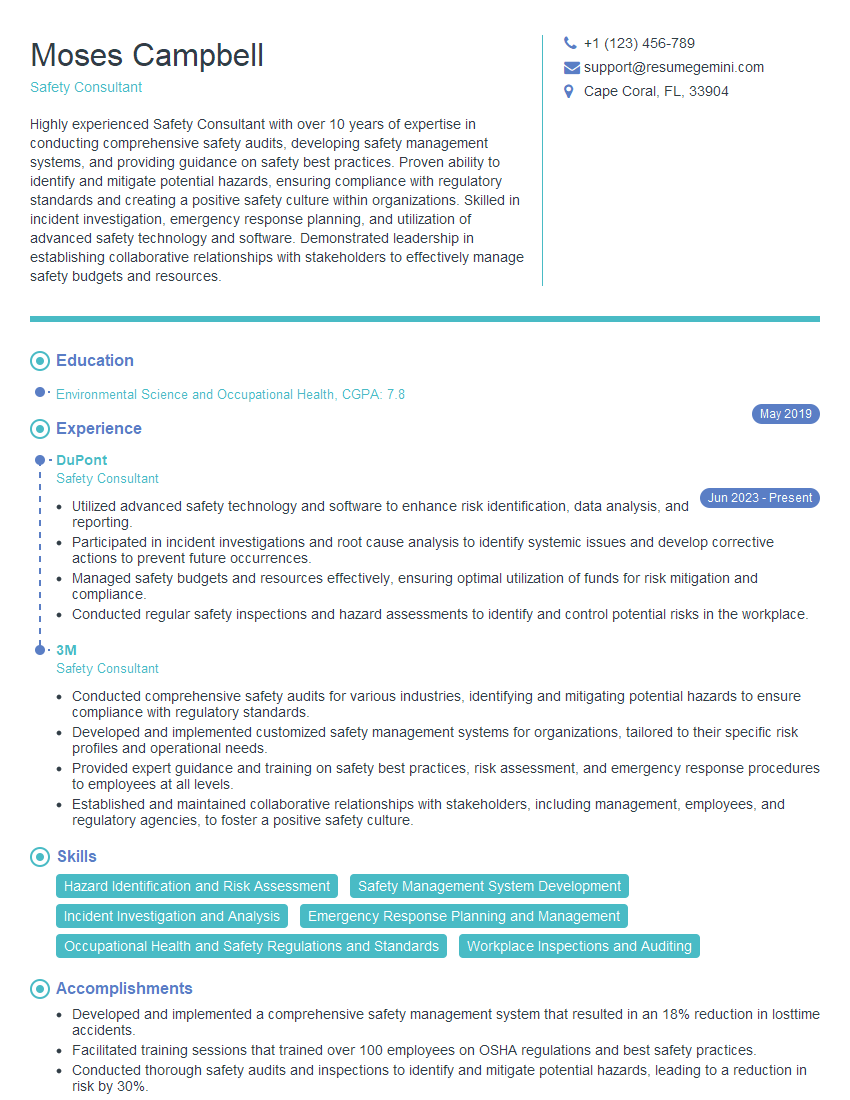
Safety Consultant Resume Sample

Safety Engineer Resume Sample

Laboratory Technician Resume Sample
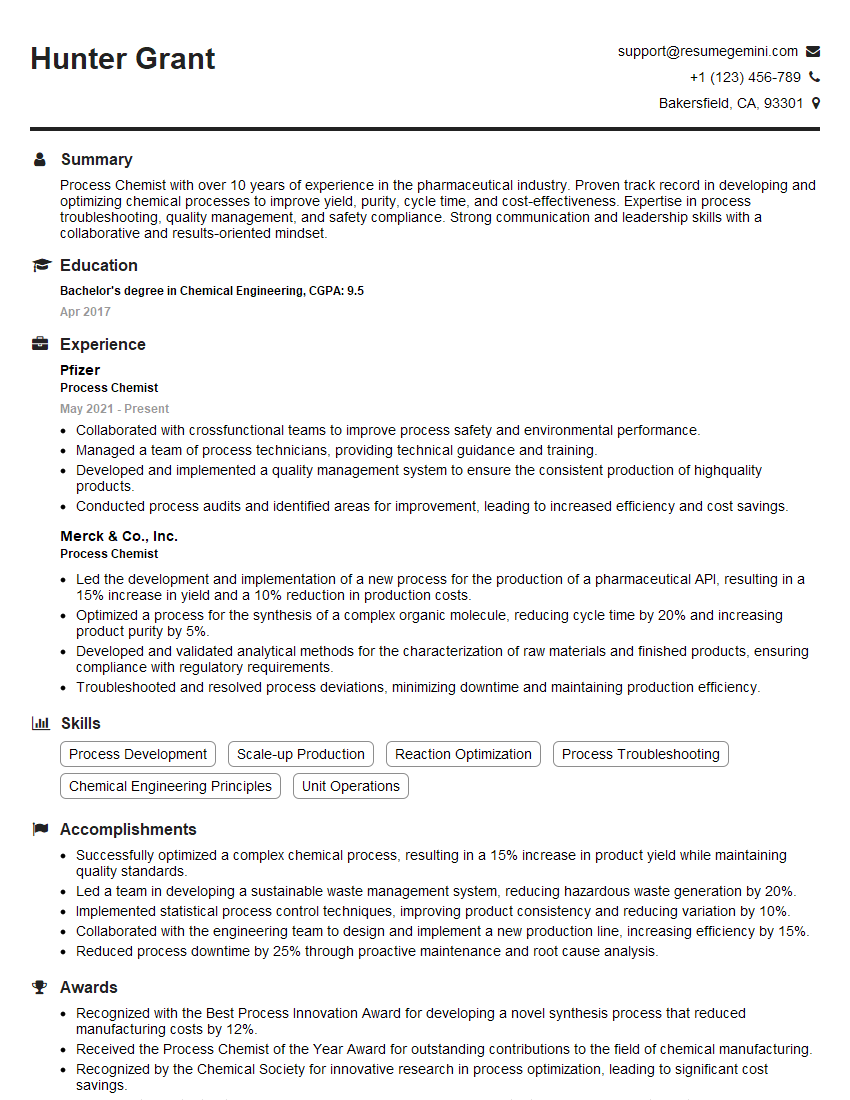
Process Chemist Resume Sample

Research Chemist Resume Sample

Risk Assessor Resume Sample
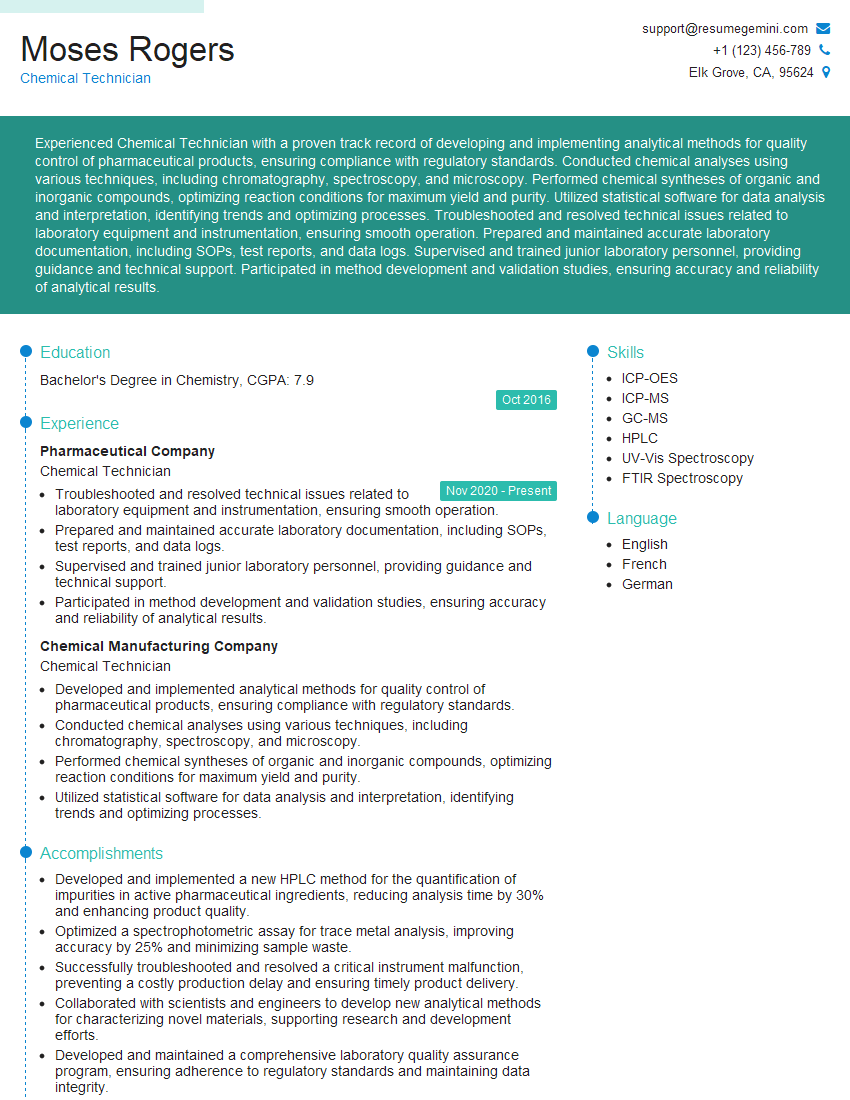
Chemical Technician Resume Sample
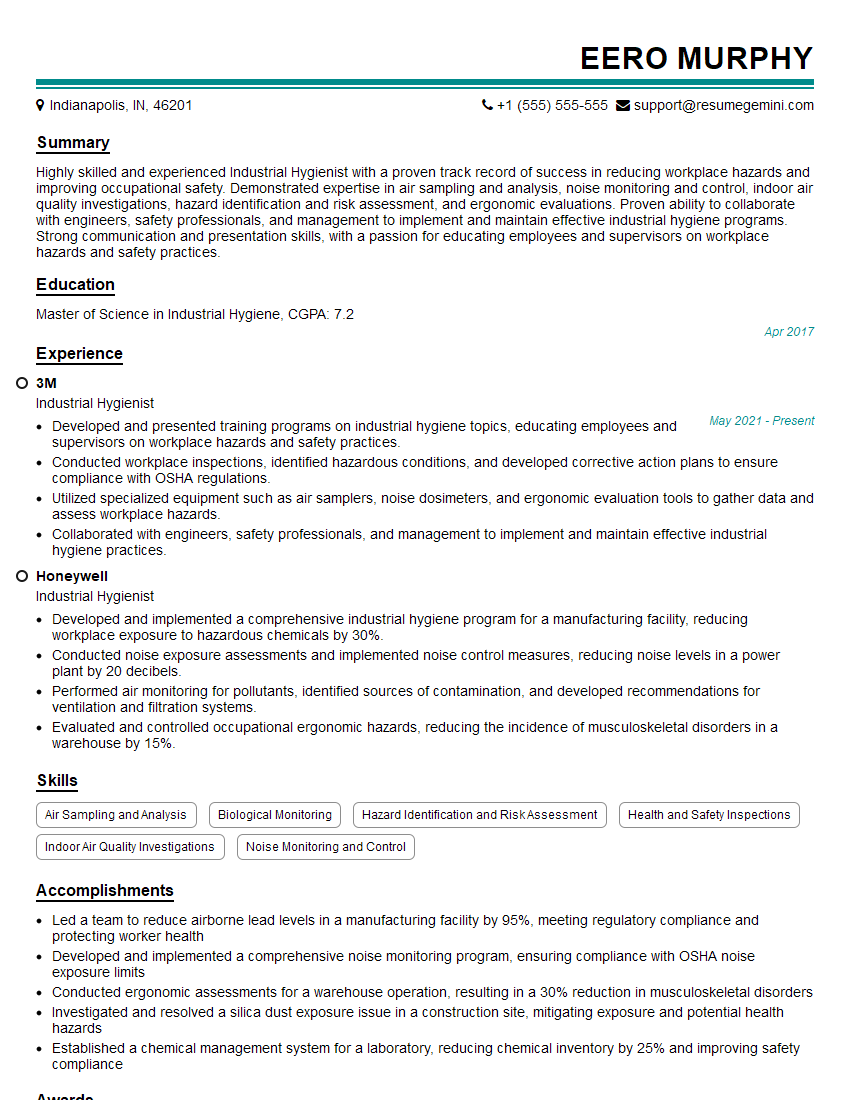
Industrial Hygienist Resume Sample

Hazardous Materials Handler Resume Sample

Chemical Plant Operator Resume Sample
- Safety Specialist
- Compliance Officer
- Environmental Scientist
- Regulatory Affairs Specialist
- Health and Safety Manager
- Process Safety Engineer
- Safety Consultant
- Safety Engineer
- Laboratory Technician
- Process Chemist
- Research Chemist
- Risk Assessor
- Chemical Technician
- Industrial Hygienist
- Hazardous Materials Handler
- Chemical Plant Operator
Explore more articles
Users Rating of Our Blogs
Share Your Experience
We value your feedback! Please rate our content and share your thoughts (optional).
What Readers Say About Our Blog
Really detailed insights and content, thank you for writing this detailed article.
IT gave me an insight and words to use and be able to think of examples