The right preparation can turn an interview into an opportunity to showcase your expertise. This guide to Collaboration with Architects and Interior Designers interview questions is your ultimate resource, providing key insights and tips to help you ace your responses and stand out as a top candidate.
Questions Asked in Collaboration with Architects and Interior Designers Interview
Q 1. Describe your experience managing the integration of architectural and interior design plans.
Managing the integration of architectural and interior design plans requires a proactive and collaborative approach. It’s like orchestrating a symphony – each instrument (architect, interior designer, contractor) plays a crucial role, and their parts must harmonize perfectly. My experience involves establishing clear communication channels early in the project, defining roles and responsibilities, and ensuring that both the architectural and interior design plans are reviewed and approved concurrently. This includes regular meetings, shared document repositories, and the use of collaborative design software.
For instance, on a recent hotel renovation, I facilitated weekly meetings with the architectural and interior design teams to discuss design iterations and ensure that structural elements considered by the architects (e.g., load-bearing walls, HVAC systems) were compatible with the interior design vision (e.g., placement of furniture, lighting fixtures).
This integrated approach ensures a seamless flow of information, minimizes conflicts, and ultimately delivers a cohesive and functional design.
Q 2. How do you resolve conflicts between architectural and interior design teams?
Resolving conflicts between architectural and interior design teams is about finding creative compromises that maintain the integrity of both disciplines. I approach conflicts as opportunities for improvement, not problems. My strategy is based on open communication, facilitated discussions, and finding common ground.
- Identify the Root Cause: Carefully understand the source of the conflict. Is it a misunderstanding, clashing visions, or budgetary constraints?
- Facilitate Collaborative Problem-Solving: I encourage both teams to present their perspectives, explain their design choices, and explore alternative solutions together. Brainstorming sessions can be particularly useful in generating creative alternatives.
- Mediate and Prioritize: I act as a neutral mediator, guiding the conversation toward mutually acceptable solutions. Sometimes, priorities need to be established. For instance, a specific structural element might need to take precedence over a particular interior design feature.
- Document Agreements: Once a solution is reached, it’s crucial to document it clearly in writing. This helps prevent misunderstandings down the line.
For example, in a residential project, the architect initially proposed a large window that the interior designer felt was too large and affected the planned furniture placement. By bringing them together, we explored different window sizes and found a balance that served both design aesthetics and the practicality of the interior layout.
Q 3. Explain your process for coordinating design revisions with multiple stakeholders.
Coordinating design revisions with multiple stakeholders requires a systematic approach. Think of it like managing a complex workflow – each revision needs clear documentation, approvals, and distribution.
- Version Control: I use cloud-based platforms with version control features (such as Dropbox or Google Drive) to track design changes. This allows all stakeholders to see the history of revisions.
- Centralized Communication Platform: I leverage project management software (e.g., Asana, Trello) to assign tasks, track progress, and maintain a record of decisions.
- Clear Communication Protocols: Before starting, I establish clear communication protocols, including frequency of updates, channels for feedback, and deadlines for approval.
- Regular Review Meetings: Scheduled review meetings ensure stakeholders remain aligned and address potential issues early.
- Formal Approval Process: A documented approval process ensures that all revisions receive necessary sign-offs before implementation.
This meticulous approach eliminates ambiguity, keeps everyone informed, and avoids costly mistakes later in the project.
Q 4. How do you ensure effective communication between architects and interior designers?
Effective communication is the backbone of any successful collaboration between architects and interior designers. It’s like a bridge connecting two vital elements of a building project. My approach involves establishing clear lines of communication early on and fostering a culture of open dialogue and mutual respect.
- Regular Meetings: Frequent meetings, both formal and informal, are crucial to keep communication channels open and address issues promptly.
- Shared Communication Platforms: Using shared online platforms (e.g., Slack, Microsoft Teams) helps facilitate quick exchanges of information and keeps everyone in the loop.
- Clear and Concise Documentation: Precise drawings, specifications, and meeting minutes are essential to prevent misunderstandings.
- Open Communication Styles: Encouraging open communication, active listening, and respectful feedback fosters a collaborative and productive environment.
- Constructive Criticism: Feedback should be delivered constructively, focusing on the design’s impact and functionality, not personalities.
For example, I encourage architects and interior designers to regularly review each other’s work, providing early feedback and identifying potential clashes before they escalate into major issues.
Q 5. What software or tools do you use to facilitate collaboration between architects and interior designers?
Leveraging technology is key to efficient collaboration between architects and interior designers. Several software and tools streamline the design process and facilitate communication.
- Building Information Modeling (BIM) Software:
Revit,Archicad, andAutodesk 3ds Maxallow architects and interior designers to work on a shared model, integrating architectural and interior design elements seamlessly. - Cloud-Based Collaboration Platforms:
Dropbox,Google Drive, andMicrosoft OneDriveenable seamless file sharing and version control. - Project Management Software:
Asana,Trello, andMonday.comhelp track tasks, deadlines, and communication efficiently. - Rendering and Visualization Software:
LumionandEnscapecreate realistic renderings and virtual tours, facilitating clearer communication and client presentations. - Communication Platforms:
Slack,Microsoft Teams, andZoomimprove communication flow and enable real-time collaboration.
The selection of specific software depends on project complexity and team preferences but utilizing these tools is essential for effective collaboration.
Q 6. Describe a project where you successfully integrated the work of architects and interior designers.
In a recent project involving the renovation of a historic office building, I successfully integrated the work of architects and interior designers by emphasizing early collaboration and open communication. The architects were tasked with preserving the building’s original architectural features, while the interior designers aimed to create a modern and functional workspace. Potential conflicts arose regarding the placement of new mechanical systems and the restoration of original architectural elements.
By employing BIM software, we created a shared model that allowed both teams to visualize the interplay between architectural preservation and modern interior design. We held regular joint meetings where each team presented their progress, discussed challenges, and collaboratively identified solutions. The result was a successful renovation that honored the building’s history while creating a vibrant and contemporary workspace. Client satisfaction was exceptionally high, demonstrating the value of integrated design processes.
Q 7. How do you manage design budgets across multiple disciplines?
Managing design budgets across multiple disciplines requires careful planning and monitoring. It’s crucial to establish a detailed budget breakdown for each discipline (architecture, interior design, landscaping, etc.), allocating funds based on the scope of work. Regular budget reviews and adjustments are essential to prevent cost overruns.
- Detailed Budget Breakdown: Create a comprehensive budget that outlines costs for each stage of the project, broken down by discipline.
- Value Engineering: Regularly review the design to identify opportunities for cost savings without compromising quality or functionality.
- Contingency Planning: Include a contingency fund to accommodate unexpected costs or design changes.
- Regular Monitoring and Reporting: Track expenditures meticulously, comparing actual costs to the budget and providing regular reports to stakeholders.
- Transparent Communication: Maintain transparent communication regarding budget status with all stakeholders.
Using project management software can help automate budget tracking, generating reports and facilitating effective budget management.
Q 8. How do you handle differing design aesthetics between architects and interior designers?
Handling differing design aesthetics between architects and interior designers requires a collaborative and communicative approach. It’s crucial to remember that architects often focus on the structural integrity and overall form of the building, while interior designers prioritize the functionality, comfort, and style of the interior spaces. Disagreements are inevitable, but they shouldn’t be seen as conflicts. Instead, they’re opportunities for creative problem-solving.
- Early Communication: Establishing a shared vision from the outset is key. This often involves a series of initial meetings where we discuss design goals, preferences, and potential challenges. Mood boards, sketches, and even 3D models can help visualize different aesthetic approaches.
- Compromise and Negotiation: Finding common ground is critical. This might involve incorporating elements from each design aesthetic to create a unified yet unique outcome. For example, a modern architectural style might be softened with warmer, more traditional interior elements.
- Respectful Dialogue: Active listening and open communication are essential. Each professional should feel comfortable expressing their viewpoints and concerns, fostering a respectful dialogue where solutions can emerge.
- Client Involvement: Keeping the client informed and actively engaged throughout the process helps manage expectations and ensure that the final design reflects their vision.
For example, on a recent project, the architect favored a minimalist exterior, while the interior designer preferred a more eclectic interior. We addressed this by incorporating the minimalist palette in certain key areas of the interior to bridge the gap, creating a cohesive design that satisfied both professionals and the client.
Q 9. Explain your experience in reviewing and approving design drawings.
My experience in reviewing and approving design drawings involves a meticulous and systematic approach, ensuring accuracy, compliance, and aesthetic consistency. This process typically includes several stages:
- Initial Review: Checking for overall design intent, compliance with initial briefs and design concepts.
- Technical Review: Verifying dimensional accuracy, structural soundness, material specifications, and compliance with relevant building codes and regulations.
- Coordination Review: Ensuring proper coordination between architectural, structural, MEP (Mechanical, Electrical, Plumbing) and interior design drawings. This helps avoid conflicts and potential issues during construction.
- Aesthetic Review: Assessing the overall look and feel of the design, ensuring it aligns with the client’s vision and meets high-quality standards.
I often use digital tools to aid in this process, including BIM (Building Information Modeling) software, which allows for comprehensive review and coordination of all aspects of the design. Any discrepancies or issues are documented and communicated to the relevant design professionals for immediate resolution. A signed-off set of drawings is only released after all issues are satisfactorily addressed.
Q 10. How do you ensure design compliance with building codes and regulations?
Design compliance with building codes and regulations is paramount, and my approach involves proactive measures to avoid costly revisions later on. This starts with a thorough understanding of local, regional, and national codes.
- Early Code Review: Integrating code checks from the very beginning of the design process. This means carefully reviewing requirements related to fire safety, accessibility, structural integrity, energy efficiency, and environmental impact.
- Consult with Specialists: Engaging structural engineers, MEP consultants, and other specialists as needed to ensure design meets strict code requirements.
- Software and Tools: Utilizing design software that includes features for automated code checking and compliance reports.
- Regular Inspections: Conducting regular inspections and monitoring progress throughout the construction phase to ensure ongoing adherence to building codes and to detect and fix any non-compliance issues.
For example, if we’re working on a project with complex fire safety requirements, we ensure that our design team fully understands these requirements and incorporates them from the initial design concept. This proactive approach minimizes costly delays and rework.
Q 11. How do you manage timelines and deadlines in collaborative design projects?
Managing timelines and deadlines in collaborative design projects necessitates a proactive and organized approach. Effective time management is crucial for successful project delivery. Here’s my strategy:
- Detailed Project Schedule: Creating a comprehensive project schedule from the outset that outlines all major milestones and deliverables, including clear responsibilities and deadlines for each team member.
- Regular Meetings: Holding regular progress meetings to review the schedule, identify potential delays, and brainstorm solutions. This ensures everyone is aligned and informed.
- Risk Assessment: Identifying and assessing potential risks that may impact the project timeline, and developing contingency plans to mitigate these risks.
- Communication and Collaboration Tools: Utilizing project management software and communication platforms to facilitate seamless information sharing and tracking of progress.
- Flexibility and Adaptation: Remaining flexible and adapting to unforeseen circumstances or changes in scope. However, any changes are documented, evaluated against the overall project schedule, and approved by relevant stakeholders.
I often employ Gantt charts to visualize project timelines, clearly illustrating task dependencies and potential bottlenecks. This ensures transparency and facilitates effective communication between all project participants.
Q 12. What strategies do you use to foster a collaborative team environment?
Fostering a collaborative team environment is essential for the success of any design project. My strategies involve creating a culture of trust, open communication, and mutual respect:
- Team Building Activities: Engaging the team in informal activities to encourage bonding and camaraderie. This can range from simple team lunches to more elaborate events.
- Open Communication Channels: Establishing clear communication channels, making sure that everyone feels comfortable expressing their ideas and concerns without fear of judgment.
- Regular Feedback Sessions: Implementing regular feedback sessions to ensure that all team members feel heard and valued. This helps identify potential issues early and promotes continuous improvement.
- Shared Goals and Objectives: Ensuring all team members are aligned with the project’s overall goals and objectives. Regular reminders about the collective purpose maintain motivation and focus.
- Conflict Resolution: Establishing clear processes for addressing conflicts and disagreements. This often includes mediation or facilitation to help resolve disputes constructively and professionally.
I believe in leading by example, fostering a positive and supportive work environment where everyone feels empowered to contribute their best work.
Q 13. How do you address design changes proposed during construction?
Addressing design changes proposed during construction requires a systematic and controlled process to minimize disruption and maintain project integrity.
- Formal Change Request: Any proposed change must be documented formally as a change request, outlining the nature of the change, its implications, and the associated costs and timelines.
- Impact Assessment: A thorough impact assessment must be conducted to determine how the proposed change affects other aspects of the project, including the schedule, budget, and overall design.
- Client Approval: The client must approve all proposed changes before they are implemented. This ensures that they are informed and satisfied with the changes.
- Revised Drawings and Specifications: Any approved changes require updated drawings and specifications. These must be issued to the construction team.
- Cost and Time Adjustments: The impact of the change on the project budget and schedule must be carefully evaluated, and any necessary adjustments negotiated and approved.
It’s critical to maintain detailed records of all changes and their impact, ensuring transparency and accountability. This helps manage expectations and avoid conflicts in the future. Delaying decisions can cause more problems than resolving the issue swiftly and transparently.
Q 14. Describe your experience in presenting design concepts to clients.
Presenting design concepts to clients is a critical stage, requiring clear, concise communication and effective visualization. My approach involves:
- Thorough Preparation: Preparing a comprehensive presentation that includes mood boards, sketches, 3D models, and other visual aids to help clients understand the design. Presenting options is crucial to demonstrating understanding and flexibility.
- Storytelling: Framing the design concept as a story, illustrating how the design meets the client’s needs and enhances their lifestyle. Connecting the design to their aspirations and lifestyle is key.
- Interactive Presentation: Engaging the clients in an interactive presentation, encouraging questions, and feedback. This fosters a sense of ownership and helps address concerns early on.
- Detailed Explanation: Providing a clear and detailed explanation of the design choices, materials, and functionalities, clarifying any technical details in simple, understandable terms.
- Follow-Up: Following up with clients after the presentation to address any remaining questions or concerns, solidifying the design concept and moving toward the next stage.
For example, I recently used a virtual reality experience to show a client a 3D rendering of their future home, enabling them to walk through the space and experience the design firsthand, enhancing their understanding and engagement.
Q 15. How do you incorporate client feedback into the design process?
Incorporating client feedback is paramount to a successful design. We treat it as an iterative process, not a one-time event. We begin with thorough initial consultations to understand the client’s vision, needs, and preferences. This involves active listening, asking clarifying questions, and visual aids like mood boards and concept sketches. Throughout the design process, we hold regular meetings, presenting updated designs and soliciting feedback at key milestones. We use tools like online collaboration platforms for sharing files and gathering feedback asynchronously. For example, on a recent residential project, the initial client feedback highlighted a preference for natural light. This feedback significantly influenced our window placement and material choices, ultimately leading to a brighter, more airy space. We document all feedback meticulously, tracking changes and justifications for transparency and accountability.
We never dismiss client feedback; even seemingly minor comments can significantly impact the final product. We might need to explain design decisions, justifying choices based on functionality, budget, or building codes. The key is to create a collaborative environment where clients feel heard and empowered to shape the design to their liking.
Career Expert Tips:
- Ace those interviews! Prepare effectively by reviewing the Top 50 Most Common Interview Questions on ResumeGemini.
- Navigate your job search with confidence! Explore a wide range of Career Tips on ResumeGemini. Learn about common challenges and recommendations to overcome them.
- Craft the perfect resume! Master the Art of Resume Writing with ResumeGemini’s guide. Showcase your unique qualifications and achievements effectively.
- Don’t miss out on holiday savings! Build your dream resume with ResumeGemini’s ATS optimized templates.
Q 16. How do you prioritize design elements to balance aesthetics and functionality?
Balancing aesthetics and functionality is a delicate dance. We use a prioritization matrix that considers both the subjective and objective aspects of the design. For instance, on one axis, we assess the aesthetic impact – how a design element contributes to the overall look and feel of the space. On the other axis, we rate functionality – its practical purpose and user-friendliness. We might use a simple scoring system, assigning weights to different elements based on client priorities and project goals. A high score on both axes represents a crucial element that enhances both beauty and usability. Elements scoring high on aesthetics but low on functionality might be revisited or adjusted for practicality.
For example, a stunning but impractical fireplace might need to be downsized or replaced with a more efficient design that still delivers the desired aesthetic appeal. This matrix helps facilitate meaningful discussions with the architects and interior designers, ensuring everyone understands the design decisions. It serves as a tangible visual aid in discussions with the client, enabling informed choices and collaborative problem-solving.
Q 17. Explain your understanding of sustainable design principles.
Sustainable design is not merely a trend; it’s an ethical and responsible approach to design and construction. Our understanding encompasses several key principles: Minimizing environmental impact through material selection (choosing recycled or locally sourced materials), reducing energy consumption (optimizing natural lighting, incorporating energy-efficient systems), conserving water (using water-saving fixtures and landscaping), and promoting indoor air quality (selecting low-VOC paints and finishes). We also emphasize waste reduction through careful planning and construction techniques. For example, we might specify reclaimed wood for flooring or design a building that maximizes passive solar heating, reducing the need for artificial heating. We actively seek certifications like LEED to validate our commitment to sustainable design and demonstrate our expertise to clients.
Furthermore, we educate our clients about the long-term benefits of sustainable choices, highlighting the cost savings and positive environmental impact. Our process includes exploring different scenarios with varying levels of sustainability, ensuring balance between cost, environmental performance, and client preferences.
Q 18. How do you handle design discrepancies between architectural and interior design documents?
Discrepancies between architectural and interior design documents are inevitable but manageable. We establish a clear communication protocol at the project’s outset, outlining roles, responsibilities, and a schedule of regular meetings and coordination sessions. We use BIM (Building Information Modeling) software to detect conflicts early on. BIM allows us to integrate architectural and interior design models, identifying clashes in dimensions, placement of elements, and structural components. For example, an interior design element might clash with a structural beam, which is identified through BIM analysis.
When discrepancies arise, we convene a joint meeting involving the architects and interior designers to review the conflicting elements and collaborate on solutions. The decision-making process is documented, ensuring everyone understands the rationale behind the resolution. This collaborative problem-solving approach prevents costly rework during construction and strengthens communication between disciplines.
Q 19. What strategies do you employ to ensure efficient information flow among team members?
Efficient information flow is critical for successful collaboration. We rely on a combination of strategies to ensure everyone is informed and engaged. This includes using cloud-based project management software that centralizes documents, schedules, and communication. We hold regular team meetings, utilizing both in-person and virtual formats to facilitate discussions and updates. Minutes from these meetings are meticulously documented and distributed. We use version-controlled document sharing, so everyone works on the most current versions of plans and specifications. This minimizes confusion and prevents conflicts caused by outdated information. For example, we use a shared online project folder with clearly defined subfolders for different design phases and disciplines. This ensures easy access and tracking of documents.
Clear communication channels – including email, instant messaging, and video conferencing – are essential for prompt issue resolution. We establish a designated point person for communication on each project to ensure consistent messaging and streamline decision-making.
Q 20. Describe your experience using building information modeling (BIM) for collaboration.
BIM (Building Information Modeling) is an indispensable tool for collaboration. My experience spans several projects where BIM played a crucial role in visualizing the design, detecting clashes, and improving coordination. We utilize BIM software to create 3D models that integrate architectural, structural, and interior design elements. This allows us to identify and resolve conflicts early in the process, reducing costly errors during construction. The ability to see all elements in a single 3D model improves communication and understanding among the team and the client.
For instance, in a recent commercial project, BIM enabled us to identify a conflict between the HVAC system and the proposed ceiling design. By addressing this clash in the BIM model, we avoided significant delays and cost overruns during construction. BIM also facilitates cost estimation, material scheduling, and energy analysis, contributing to a more efficient and sustainable design process.
Q 21. How do you ensure the accurate representation of design intent in construction documents?
Accurate representation of design intent in construction documents is crucial for successful project execution. We employ several strategies to ensure this accuracy: Rigorous quality control checks at each stage of the design process, involving independent review and verification of drawings and specifications. Detailed annotations and notes on drawings clarify design intentions and address potential ambiguities. We use standardized templates and conventions for drawings and specifications to ensure consistency and clarity. Close collaboration with the construction team, providing them with the necessary information to build the design as intended. This includes site visits, regular meetings, and proactive responses to questions or clarifications.
Furthermore, we utilize BIM to create detailed shop drawings and construction documentation, further enhancing accuracy and reducing the risk of misinterpretations. We also provide a comprehensive construction manual that supports the construction documents, clarifying design choices and offering additional guidance to the construction team. This multi-layered approach ensures that the final product accurately reflects the initial design vision.
Q 22. Describe your approach to conflict resolution during the design process.
My approach to conflict resolution centers around proactive communication and collaborative problem-solving. I believe that disagreements are inevitable in a creative process, but they shouldn’t derail the project. My strategy involves:
- Active Listening: I prioritize understanding each party’s perspective before offering solutions. This means truly hearing their concerns and acknowledging their feelings.
- Facilitated Discussion: I guide discussions to focus on the project’s goals and identify shared objectives. This helps refocus the conversation away from personalities and onto practical solutions.
- Brainstorming Alternatives: Instead of focusing on who’s right or wrong, we brainstorm multiple options to address the conflict. This collaborative approach encourages ownership and buy-in from everyone involved.
- Documenting Agreements: Once a solution is agreed upon, it’s crucial to document it clearly. This minimizes the risk of future misunderstandings.
- Mediation, if Necessary: In cases where the conflict is deeply entrenched, I’m comfortable facilitating mediation or suggesting a neutral third party to help resolve the issue.
For example, I once had a conflict between an architect who favored a minimalist design and an interior designer who preferred a more eclectic approach. By actively listening to their arguments and facilitating a discussion about the client’s needs and preferences, we were able to create a design that incorporated elements of both styles, satisfying both parties.
Q 23. How do you effectively manage expectations with architects, interior designers, and clients?
Managing expectations is critical for a smooth collaborative process. My approach involves:
- Clear Communication: I establish clear communication channels and maintain open and frequent dialogue with architects, interior designers, and clients throughout the project. Regular updates, meetings, and progress reports are vital.
- Realistic Project Scope: We collaboratively define the project’s scope, timeline, and budget from the outset. This prevents unrealistic expectations and potential disappointment later on.
- Setting Expectations for Change Orders: It’s important to establish a process for managing changes to the initial scope, including procedures for approvals, cost adjustments, and timeline impacts. This ensures that everyone understands the implications of any alterations.
- Visual Aids and Prototypes: Using visual aids like sketches, 3D models, and prototypes allows everyone to visualize the project and clarify expectations. This is particularly helpful for communicating complex design concepts.
- Regular Check-ins: Regular check-ins with all stakeholders ensure that everyone remains aligned and any issues are addressed promptly. This proactive approach helps prevent minor issues from escalating into major problems.
For instance, I use project management software to track progress, assign tasks, and share updates, keeping everyone informed of the project’s status.
Q 24. What is your experience with different design contract types?
I have experience with various design contract types, including:
- Lump Sum Contracts: These contracts fix the total price for the design services. They are suitable for projects with clearly defined scopes and minimal anticipated changes.
- Time and Materials Contracts: These contracts charge for the time spent and materials used. They are suitable for projects with evolving scopes or where the final design is not fully defined upfront.
- Cost-Plus Contracts: These contracts reimburse the actual costs incurred, plus a markup for profit. They offer flexibility but require robust cost tracking and transparent reporting.
- Design-Build Contracts: These contracts combine design and construction phases under a single contract. They offer advantages in coordination and streamlining but require careful risk assessment.
The choice of contract type depends heavily on the project’s complexity, the client’s risk tolerance, and the desired level of flexibility.
Q 25. How do you contribute to a positive and productive work environment?
Contributing to a positive and productive work environment involves several key strategies:
- Open Communication: Fostering open and honest communication ensures that everyone feels comfortable expressing their ideas and concerns.
- Respectful Collaboration: Valuing diverse perspectives and encouraging collaborative problem-solving creates a respectful and inclusive atmosphere.
- Effective Teamwork: Encouraging teamwork through shared goals and celebrating successes creates a sense of unity and shared purpose.
- Clear Roles and Responsibilities: Clearly defining roles and responsibilities prevents overlap and ensures everyone understands their contributions.
- Constructive Feedback: Providing and receiving constructive feedback is crucial for continuous improvement and professional growth.
I believe in leading by example and demonstrating these principles in my daily interactions. For example, I regularly organize team-building activities to foster camaraderie and strengthen relationships.
Q 26. Describe your experience with design reviews and feedback sessions.
Design reviews and feedback sessions are essential components of the design process. My experience includes:
- Preparation: Thorough preparation is crucial. This includes gathering relevant materials like design drawings, specifications, and mood boards.
- Structured Approach: I use a structured approach, starting with a presentation summarizing the design concept and its rationale. Then, I facilitate a discussion, ensuring everyone has an opportunity to contribute.
- Objective Feedback: I encourage objective feedback, focusing on the design’s strengths and weaknesses, rather than personal opinions.
- Actionable Insights: The goal of the feedback session is to gather actionable insights to improve the design.
- Documentation: I document the feedback received and any agreed-upon changes to maintain a record of the design evolution.
For instance, I’ve used online collaboration tools to share design files and collect feedback remotely, making the process more efficient and convenient for all participants.
Q 27. Explain your understanding of the role of specifications in design collaboration.
Specifications are crucial for clear communication and successful execution in design collaboration. They act as a bridge between the design intent and its physical realization. My understanding involves:
- Clarity and Precision: Specifications must be clear, concise, and unambiguous. Any ambiguity can lead to costly mistakes during construction or procurement.
- Complete Information: They must contain comprehensive information about materials, finishes, dimensions, and performance requirements.
- Consistency: Specifications should be consistent across different parts of the design to avoid conflicts.
- Collaboration Tool: They facilitate effective communication among architects, interior designers, contractors, and suppliers.
- Legal Implications: Specifications form a crucial part of the project contracts and have legal implications.
A well-written specification ensures that the final product meets the design intent and the client’s expectations. For example, specifying a particular type of flooring with its exact technical characteristics avoids misunderstandings and ensures the correct material is used.
Q 28. How do you ensure design solutions are both aesthetically pleasing and cost-effective?
Balancing aesthetic appeal with cost-effectiveness is a constant challenge in design. My approach involves:
- Value Engineering: This involves analyzing the design to identify opportunities for cost savings without compromising quality or aesthetics. This is a collaborative process that requires careful consideration of alternatives.
- Material Selection: Careful material selection is crucial. I explore cost-effective alternatives that still achieve the desired aesthetic effect.
- Design Optimization: Optimizing the design layout and minimizing material waste can significantly reduce costs.
- Prioritization: Prioritizing design elements based on their impact on overall aesthetic appeal helps ensure that the most important aspects are not compromised by budget constraints.
- Open Communication: Transparency with clients about cost implications and trade-offs is crucial for making informed decisions.
For example, I might suggest using a slightly less expensive type of tile that still meets the design criteria, or optimizing the layout to reduce the overall amount of material needed, resulting in significant cost savings without compromising the overall design’s visual impact.
Key Topics to Learn for Collaboration with Architects and Interior Designers Interview
- Understanding Design Intent: Learn to effectively interpret architectural and interior design plans, comprehending the overall vision and specific design goals.
- Communication & Teamwork: Mastering clear and concise communication, active listening, and collaborative problem-solving techniques within a multidisciplinary team.
- Project Workflow & Scheduling: Develop a strong understanding of typical project timelines, deliverables, and the interplay between architectural and interior design phases.
- Technical Specifications & Standards: Familiarize yourself with relevant building codes, material specifications, and industry standards impacting collaboration.
- Conflict Resolution & Negotiation: Develop strategies for navigating disagreements and finding mutually beneficial solutions between architects, designers, and other stakeholders.
- Budgeting & Cost Management: Understand the role of cost estimation and control within collaborative projects, and how to balance design aspirations with budgetary constraints.
- Software Proficiency (if applicable): Showcase your expertise in relevant design software (e.g., Revit, AutoCAD, SketchUp) and how it enhances collaborative processes.
- Sustainability & Green Building Practices: Demonstrate understanding of sustainable design principles and how they influence collaboration between architects and interior designers.
- Case Study Analysis: Practice analyzing successful (and unsuccessful) collaborations to identify best practices and potential pitfalls.
Next Steps
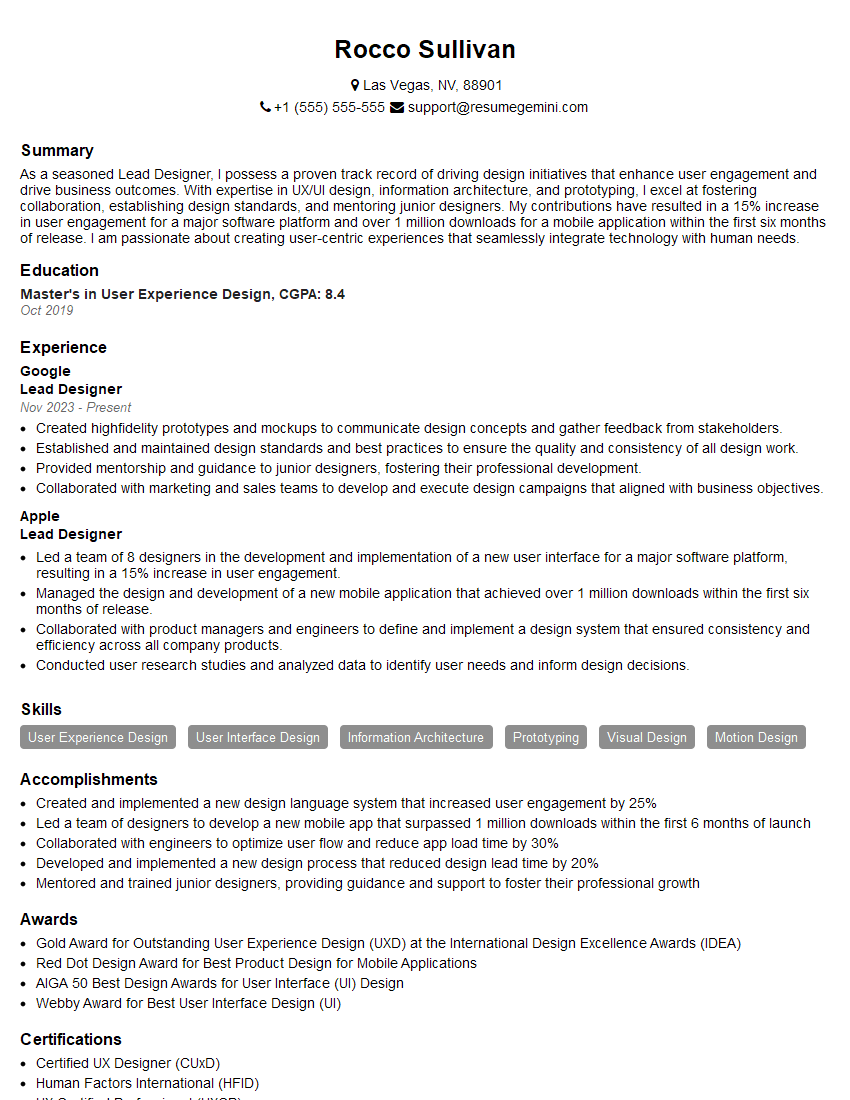
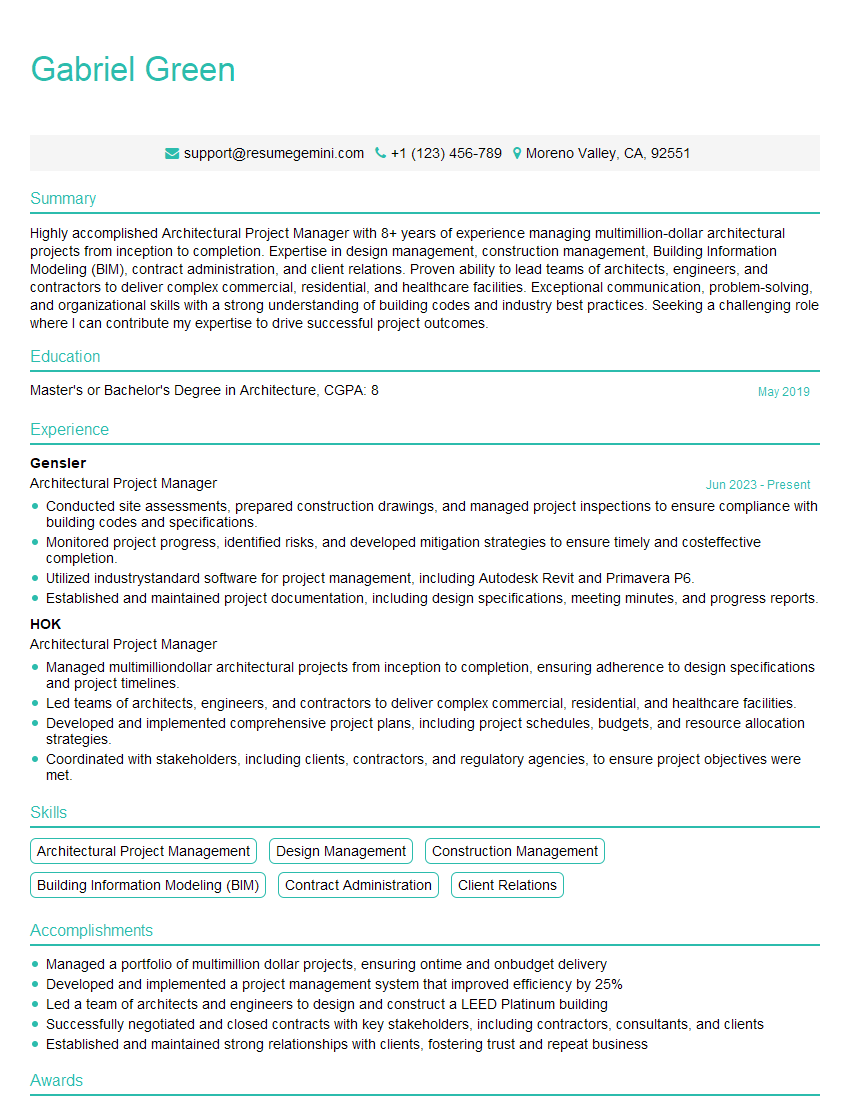
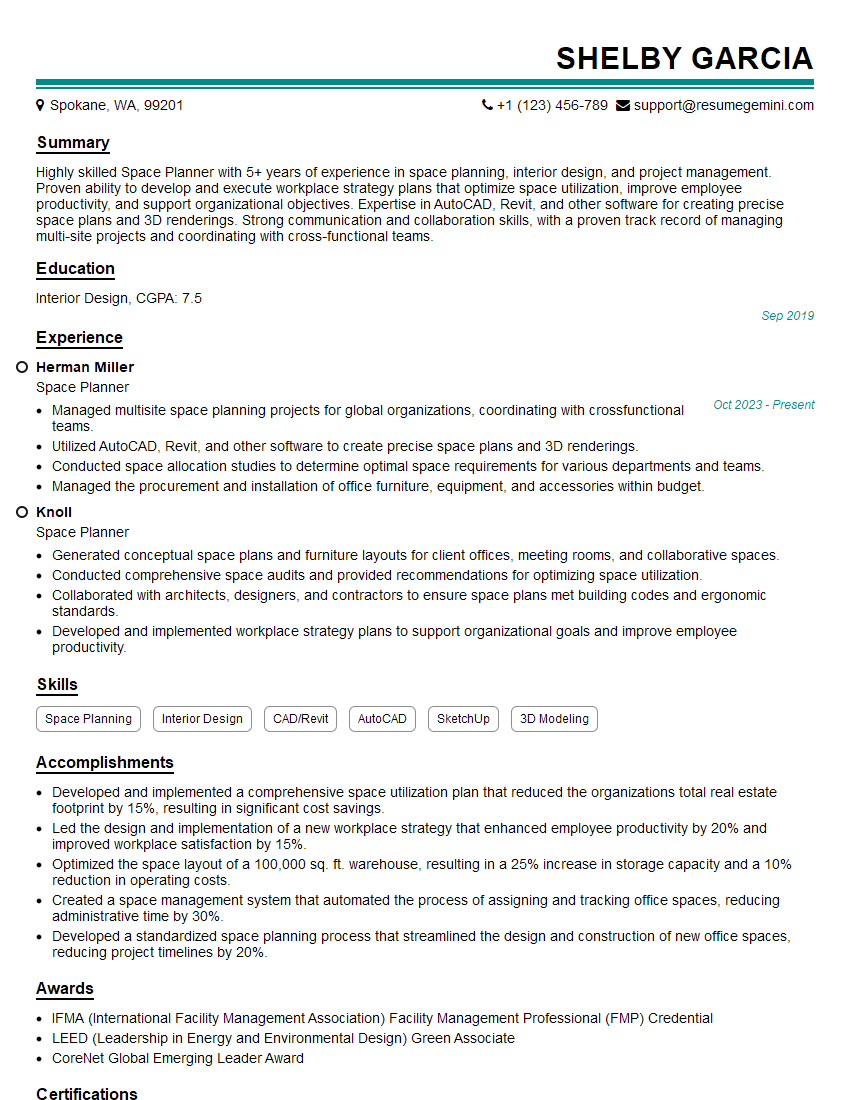
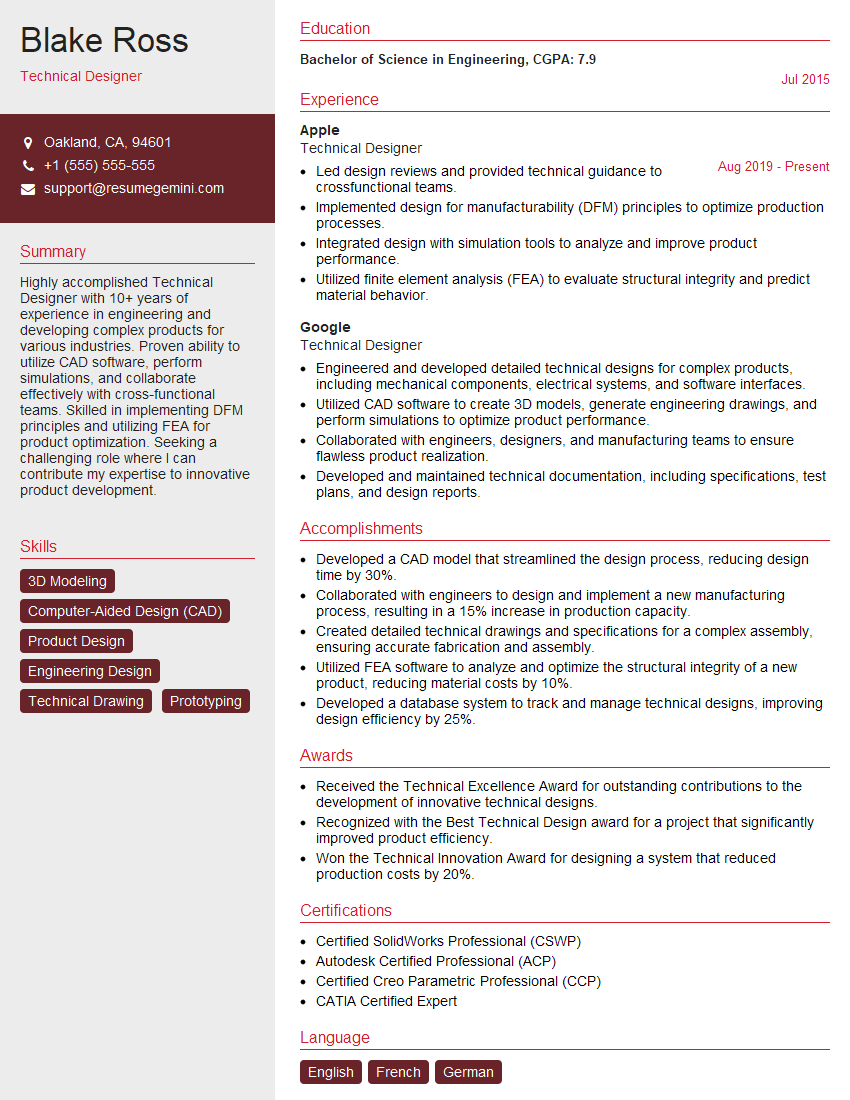
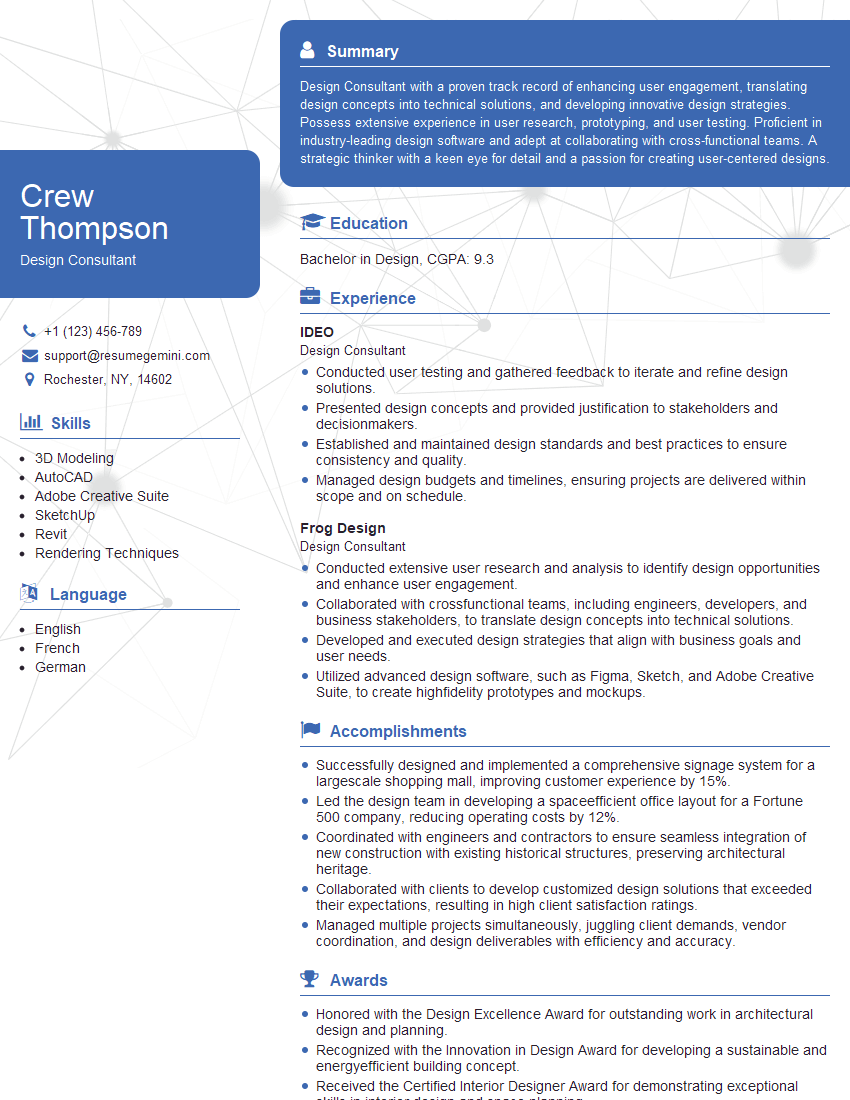
Mastering collaboration with architects and interior designers is crucial for career advancement in the design industry. It opens doors to exciting projects and positions requiring strong interpersonal and technical skills. To maximize your job prospects, create an ATS-friendly resume that highlights your relevant experience and skills. We highly recommend using ResumeGemini to build a professional and impactful resume tailored to your specific aspirations. ResumeGemini offers examples of resumes specifically crafted for roles involving collaboration with Architects and Interior Designers, providing you with valuable templates and guidance.
Explore more articles
Users Rating of Our Blogs
Share Your Experience
We value your feedback! Please rate our content and share your thoughts (optional).
What Readers Say About Our Blog
Really detailed insights and content, thank you for writing this detailed article.
IT gave me an insight and words to use and be able to think of examples