The right preparation can turn an interview into an opportunity to showcase your expertise. This guide to Familiar with International Trade Regulations interview questions is your ultimate resource, providing key insights and tips to help you ace your responses and stand out as a top candidate.
Questions Asked in Familiar with International Trade Regulations Interview
Q 1. Explain the difference between Incoterms® 2020 rules FCA and DAP.
Both FCA (Free Carrier) and DAP (Delivered at Place) are Incoterms® 2020 rules that define the responsibilities of buyers and sellers in international trade, specifying where the risk and costs transfer. The key difference lies in the point of delivery and responsibility for transportation.
FCA: Under FCA, the seller delivers the goods to a named carrier at a specified location. The seller is responsible for getting the goods to that point. Once the goods are handed over to the carrier, the risk and costs of transportation shift to the buyer. Think of it like handing off a package at a shipping depot – the seller’s job is done. The buyer is then responsible for the rest of the shipment.
DAP: With DAP, the seller bears the responsibility for delivering the goods to the named place of destination, but not for importing or clearing customs. The seller is responsible for arranging and paying for freight to the designated location. The risk transfers to the buyer only once the goods are ready for unloading at the named destination. It’s like a delivery service bringing a package to your doorstep – the seller handles the whole journey until it reaches you.
In short: FCA involves delivery to a carrier, while DAP involves delivery to the named place of destination. FCA shifts responsibility earlier in the process than DAP.
Example: If a US company is exporting goods to Germany, they might use FCA if they want the buyer to manage the international shipment from a port in the US. Using DAP, however, means the US seller would handle shipping all the way to the buyer’s warehouse in Germany, though the buyer handles customs clearance at that point.
Q 2. Describe the process of obtaining an import license.
Obtaining an import license is a multi-step process that varies depending on the country and the specific goods being imported. However, some general steps are usually involved:
- Identify the need for a license: First, determine if an import license is even required for your goods. Many countries have lists of goods subject to licensing, often for reasons of national security, environmental protection, or public health.
- Gather necessary information: Collect all the required documentation, such as a detailed description of the goods, HS code (see Question 3), quantity, value, and intended use. You may also need business registration details and proof of financial capacity.
- Complete the application: Fill out the import license application form accurately and thoroughly. Inaccurate or incomplete forms will likely lead to delays or rejection.
- Submit the application: Submit the application and all required documents to the appropriate government agency. This often involves paying a fee.
- Wait for processing: Allow sufficient time for processing. Processing times can vary widely.
- Receive approval or denial: Once the application is processed, you’ll receive notification of approval or rejection. If rejected, you need to understand the reason and address any issues to reapply.
The specific requirements and procedures will depend on the regulations of the importing country. It’s crucial to consult the relevant government agency’s website or seek expert advice to navigate these processes effectively.
Q 3. What are the key elements of a Harmonized System (HS) code?
The Harmonized System (HS) code is a standardized system of names and numbers used to classify traded products. It’s a six-digit code, used globally by customs authorities to identify goods and apply tariffs, quotas, and other trade regulations. The six digits represent a progressively narrower classification.
Key elements:
- Sections: The HS system is organized into 21 Sections, which group similar types of goods (e.g., Section VI: Live trees and other plants; bulbs, roots and the like; cut flowers and ornamental foliage).
- Chapters: Each Section is divided into Chapters, using two-digit codes (e.g., Chapter 6: Live trees and other plants; bulbs, roots and the like; cut flowers and ornamental foliage).
- Headings: Chapters are further divided into Headings (four digits) which provide more specific descriptions of products.
- Subheadings: Finally, Headings are often broken down into Subheadings (six digits) for greater detail in classifying products.
Example: A code of 040110 might represent ‘milk and cream (not concentrated or sweetened)’. The first two digits (04) place it within Chapter 4 (Dairy products), then the next two further narrow it down to Heading 0401 (Milk and cream), and the final two give additional specifics (in this case, not concentrated or sweetened).
Accurate HS coding is crucial for compliance, proper customs processing, and ensuring accurate application of trade regulations and tariffs.
Q 4. How do you determine the country of origin for goods?
Determining the country of origin is vital for trade compliance as it influences tariffs, quotas, and rules of origin. There isn’t a single global standard, but the general principle is to identify where the goods underwent their ‘last substantial transformation’. This means where the goods acquired their essential characteristics or where the last significant value-added step took place.
Several factors are considered:
- Where were the goods manufactured or assembled? This is often a primary factor.
- Where did the most significant processing occur? This might be determined by the percentage of value added at each stage of production.
- Where were the key components sourced? The origin of major parts can influence the overall origin of the final product.
- Applicable regulations: Specific rules and regulations regarding country of origin are determined by the importing country. These rules may consider the change of tariff classification and regional trade agreements.
Example: A car assembled in Mexico using parts from various countries, including the engine from Japan and the chassis from the US. The country of origin would likely be Mexico if a substantial amount of assembly and value-added occur there. If the engine represents a significant value, the origin could be disputed. Each case should be determined based on the specific facts and applicable laws of the importing nation.
Q 5. Explain the concept of ‘rules of origin’ and their significance in international trade.
Rules of origin (ROOs) are criteria used to determine the country of origin of a product, especially relevant in the context of preferential trade agreements. These agreements often provide reduced tariffs or other trade benefits for goods originating within a specific region or country.
Significance:
- Tariff preferences: ROOs are critical for accessing preferential tariffs under trade agreements like NAFTA (now USMCA), EU-Canada Comprehensive Economic and Trade Agreement (CETA), and many others. Goods not meeting the ROOs are subject to regular, higher tariffs.
- Trade restrictions: Some countries may impose import quotas or other restrictions based on the country of origin.
- Verification and enforcement: Customs authorities verify the claimed country of origin to ensure compliance with trade agreements and prevent trade abuse. Failure to comply can result in penalties or denial of preferential tariff treatment.
- Supply chain management: Companies must consider ROOs when selecting suppliers and manufacturing locations to ensure their products meet the required criteria for preferential access to target markets.
Determining ROOs: Determining ROOs often involves analyzing the manufacturing process, assessing the value added at each stage, and tracking the origin of components. Different trade agreements have different criteria, so careful study of the relevant agreement is necessary.
Q 6. What are the common challenges faced in international trade compliance?
International trade compliance presents numerous challenges, and navigating them effectively requires meticulous attention to detail and a proactive approach. Here are some common hurdles:
- Ever-changing regulations: Trade regulations are constantly evolving, requiring businesses to stay updated on changes in tariffs, sanctions, and other rules.
- Complex documentation: Complying with the extensive documentation requirements for customs and other authorities can be complex and time-consuming.
- HS code classification: Accurately classifying products using HS codes is crucial and involves understanding nuanced terminology and distinctions between products.
- Rules of origin verification: Demonstrating compliance with rules of origin (ROOs) can be challenging, especially with complex supply chains.
- Sanctions and export controls: Navigating sanctions and export controls requires careful scrutiny of trading partners and goods to ensure compliance with international and domestic laws.
- Language and cultural differences: Communication barriers and differing cultural norms can complicate international transactions and regulatory compliance.
- Customs delays and inspections: Delays or complications with customs procedures can disrupt supply chains and cause financial losses.
Effective management of these challenges involves robust trade compliance programs, ongoing training for staff, and utilization of trade compliance software and expert consultants.
Q 7. Describe your experience with export controls and sanctions regulations.
Throughout my career, I’ve gained extensive experience with export controls and sanctions regulations. I’ve worked on numerous projects involving the export of sensitive technologies, requiring careful assessment of licensing requirements and adherence to the Export Administration Regulations (EAR) in the US and equivalent regulations in other jurisdictions (e.g., EU’s dual-use regulations). My experience includes:
- License applications: Preparing and submitting license applications for the export of controlled items to various countries, accurately documenting the goods, end-users, and intended uses.
- Compliance audits: Conducting internal compliance audits to ensure adherence to export control and sanctions regulations, identifying areas of weakness, and implementing corrective actions.
- Due diligence on trading partners: Performing due diligence on potential trading partners to assess their compliance history and identify any potential red flags related to sanctions lists.
- Sanctions screening: Regularly screening trading partners and transactions against sanctions lists maintained by OFAC (Office of Foreign Assets Control) and other relevant authorities.
- Training and awareness programs: Developing and delivering training programs to raise awareness among company personnel about export control and sanctions compliance issues.
I understand the complexities of these regulations and the significant penalties for non-compliance. I consistently prioritize a risk-based approach to ensure all activities are conducted in full compliance with applicable laws.
Q 8. How do you handle discrepancies in trade documentation?
Discrepancies in trade documentation are a common challenge in international trade. These inconsistencies can range from minor typographical errors to significant mismatches between shipping documents and commercial invoices. Handling them effectively requires a methodical approach.
My process begins with careful identification of the discrepancy. I then analyze the nature of the discrepancy – is it a simple clerical error, or does it indicate a more serious issue like fraud or misdeclaration? The severity dictates the response. Minor errors might be easily rectified with a simple amendment or clarification provided by the supplier. For more significant discrepancies, I might need to engage with customs authorities, freight forwarders, and the trading partner to provide supporting documentation and explanations to resolve the issue. A key strategy is proactive communication; promptly addressing discrepancies prevents delays and potential penalties.
For example, a discrepancy between the quantity declared on the commercial invoice and the quantity listed on the bill of lading could lead to delays in customs clearance, potentially resulting in demurrage charges. Thorough reconciliation and supporting evidence (e.g., packing list, weight certificates) are vital in these situations. Understanding Incoterms (International Commercial Terms) is crucial, as they determine the responsibilities of each party involved.
Q 9. What are the different types of trade barriers and their implications?
Trade barriers are government-imposed restrictions on the free flow of goods and services between countries. They significantly impact international trade by increasing costs, reducing market access, and potentially harming economic growth. There are various types:
- Tariffs: Taxes imposed on imported goods, increasing their price and making them less competitive.
- Non-tariff barriers: These are regulations and policies that restrict trade without directly imposing taxes. Examples include:
- Quotas: Limits on the quantity of a specific good that can be imported.
- Embargoes: Complete bans on trade with a particular country.
- Sanctions: Penalties imposed on a country for political or economic reasons.
- Technical barriers to trade (TBT): Regulations on product standards, labeling, and testing procedures that can make it difficult for foreign goods to enter a market.
- Sanitary and phytosanitary (SPS) measures: Regulations designed to protect human, animal, and plant health, but can also be used as non-tariff barriers if excessively strict.
The implications of these barriers can be severe. Tariffs directly increase prices for consumers, while non-tariff barriers create additional costs and complexities for businesses. Reduced competition can lead to higher prices and less innovation. Ultimately, trade barriers can harm economic growth both domestically and globally.
Q 10. Explain the role of the World Trade Organization (WTO).
The World Trade Organization (WTO) is an intergovernmental organization that regulates international trade and aims to liberalize it. It acts as a forum for member countries to negotiate trade agreements and settle trade disputes. Think of it as a referee for global commerce.
The WTO’s primary functions include:
- Administering existing trade agreements: The WTO ensures that member countries adhere to the rules and obligations agreed upon in various trade agreements.
- Acting as a forum for trade negotiations: It provides a platform for members to negotiate new trade agreements and reduce trade barriers.
- Providing a mechanism for dispute settlement: When trade disputes arise between members, the WTO offers a structured process for resolving them.
- Providing technical assistance to developing countries: The WTO helps developing countries build capacity to participate effectively in the global trading system.
The WTO’s impact is substantial. By reducing trade barriers and resolving disputes, it facilitates global commerce, stimulates economic growth, and promotes economic development. However, it has faced criticisms, including concerns about its effectiveness in addressing issues such as environmental protection and labor standards.
Q 11. How do you ensure compliance with anti-dumping and countervailing duties?
Ensuring compliance with anti-dumping and countervailing duties requires a thorough understanding of these trade remedies and meticulous record-keeping. Anti-dumping duties are imposed when a foreign company sells goods in a domestic market at a price below their normal value (dumping), causing material injury to the domestic industry. Countervailing duties address government subsidies that provide an unfair advantage to foreign producers.
Compliance involves several key steps:
- Accurate valuation: Properly determining the normal value of imported goods is crucial for anti-dumping investigations. This often involves analyzing production costs, sales prices, and other relevant factors.
- Detailed record-keeping: Maintaining comprehensive records of all transactions, including production costs, sales prices, and export documentation is essential to demonstrate compliance.
- Transparency: Openly disclosing information to investigating authorities is critical. Hiding or manipulating data can lead to severe penalties.
- Cooperation with authorities: Responding promptly and cooperatively to requests from anti-dumping or countervailing duty authorities is paramount.
- Legal counsel: Seeking advice from experienced trade lawyers can help navigate the complexities of these investigations and ensure compliance.
For example, a company exporting steel to another country must ensure its pricing practices do not constitute dumping and that it complies with any existing anti-dumping or countervailing duties imposed by the importing country.
Q 12. Describe your experience with customs audits and investigations.
I have extensive experience with customs audits and investigations. These processes can range from routine checks of documentation to in-depth investigations into potential violations. My approach is proactive and collaborative.
During an audit, I ensure all relevant documentation is readily available and accurately reflects the transactions. This includes commercial invoices, packing lists, bills of lading, certificates of origin, and any other supporting documents. If any discrepancies are identified, I work closely with the auditing authorities to provide explanations and resolve any issues promptly.
In investigations, the process is more rigorous. I have experience working with investigators, providing clear and concise answers to their questions, and offering supporting evidence to demonstrate compliance. Maintaining a detailed audit trail throughout the entire import/export process is crucial for successful navigation of such investigations.
For instance, I once assisted a client during a customs audit where a minor discrepancy in the declared value of a shipment was found. By providing detailed supporting documentation and a clear explanation, we successfully avoided any penalties. This experience highlights the importance of precise record-keeping and proactive communication with customs authorities.
Q 13. What is your experience with Free Trade Agreements (FTAs)?
Free Trade Agreements (FTAs) significantly impact international trade by reducing or eliminating tariffs and other trade barriers between participating countries. My experience with FTAs involves leveraging their benefits to optimize import and export operations.
This includes:
- Identifying eligible goods: Understanding the rules of origin within FTAs is essential to determine which goods qualify for preferential tariff rates. This often requires careful examination of product composition and manufacturing processes.
- Preparing documentation: FTAs typically require specific documentation to claim preferential tariffs. This includes certificates of origin, which attest that goods meet the rules of origin requirements.
- Negotiating contracts: FTAs can impact contract negotiations, requiring careful consideration of terms relating to origin, customs duties, and dispute resolution.
- Analyzing tariff rates: Staying updated on tariff changes under FTAs is crucial for optimizing pricing and competitiveness.
For example, I have assisted companies in utilizing the benefits of the USMCA (United States-Mexico-Canada Agreement) to reduce their import costs from Mexico by ensuring proper documentation and adherence to rules of origin. This resulted in significant cost savings for my clients.
Q 14. Explain the process of classifying goods under the Harmonized System (HS) nomenclature.
The Harmonized System (HS) nomenclature is a standardized system for classifying goods used worldwide. Accurate HS classification is critical for determining the correct tariffs, import regulations, and other trade-related requirements for goods moving across international borders. Misclassifications can lead to costly delays, penalties, and legal issues.
The classification process is complex and requires a thorough understanding of the HS structure and its detailed descriptions. It generally involves these steps:
- Identifying the product: Precisely determine the nature of the goods based on their physical characteristics, materials, and intended use.
- Consulting the HS code: The HS code consists of six digits and is the foundation for tariff classification. Each digit represents a progressively narrower category. The HS code needs to be meticulously selected based on the specific characteristics of your goods.
- Considering national classifications: Many countries add their own additional digits to the six-digit HS code, creating a more detailed classification system specific to that nation’s regulations.
- Seeking expert advice: Given the complexities of HS classification, seeking guidance from customs brokers or specialized consultants is highly recommended, particularly for complex or unusual goods. Incorrect classification can lead to significant financial consequences.
For example, classifying a specific type of clothing may involve considering factors like the material, construction, and intended use. A slight difference in material or design could lead to a different HS code and potentially different tariffs.
Q 15. How do you manage risks associated with international trade transactions?
Managing risks in international trade is crucial for success. It’s akin to navigating a complex maze, where unforeseen obstacles can significantly impact your business. A multifaceted approach is necessary, encompassing various risk categories.
- Political Risks: These include government instability, changes in trade policies (like tariffs or sanctions), and expropriation of assets. For example, a sudden change in import duties in a target market can severely impact profitability. Mitigation involves thorough due diligence on the political landscape, diversification of markets, and potentially securing political risk insurance.
- Commercial Risks: These stem from the buyer’s inability or unwillingness to pay, delays in shipment, or quality disputes. Using Letters of Credit (discussed further in the next answer) or robust contract terms, including arbitration clauses, helps mitigate this. Regularly checking the buyer’s creditworthiness is also critical.
- Operational Risks: These involve logistical challenges, such as delays in shipping, port congestion, or damage to goods in transit. Careful planning of logistics, using reliable freight forwarders, and purchasing cargo insurance provide a buffer against these risks.
- Financial Risks: These involve currency fluctuations, credit risk, and interest rate changes. Hedging strategies, such as using forward contracts or options, can minimize currency risk. Careful selection of payment terms also plays a significant role.
- Legal Risks: These encompass compliance with various international regulations, contract disputes, and intellectual property rights infringement. Seeking legal counsel specializing in international trade is vital, ensuring all contracts are properly drafted and all legal requirements are met.
A proactive risk management plan, including regular monitoring, contingency planning, and effective communication with all stakeholders, is paramount to success in international trade.
Career Expert Tips:
- Ace those interviews! Prepare effectively by reviewing the Top 50 Most Common Interview Questions on ResumeGemini.
- Navigate your job search with confidence! Explore a wide range of Career Tips on ResumeGemini. Learn about common challenges and recommendations to overcome them.
- Craft the perfect resume! Master the Art of Resume Writing with ResumeGemini’s guide. Showcase your unique qualifications and achievements effectively.
- Don’t miss out on holiday savings! Build your dream resume with ResumeGemini’s ATS optimized templates.
Q 16. Describe your experience with Letter of Credit (LC) transactions.
Letters of Credit (LCs) are a cornerstone of international trade finance, providing a secure payment mechanism for both buyers and sellers. Think of an LC as a guaranteed payment promise from the buyer’s bank to the seller, provided the seller fulfills the terms specified in the LC.
My experience includes negotiating, reviewing, and managing LCs for various transactions, ranging from simple documentary LCs to complex, multi-beneficiary arrangements. I’ve handled situations involving discrepancies in documentation and successfully resolved them by communicating effectively with all parties involved – the buyer, seller, and respective banks.
For example, I once successfully navigated a situation where a discrepancy in the shipping documents (incorrect invoice date) threatened to delay payment. Through timely communication and collaboration, we provided the necessary corrective documentation, ensuring the LC was successfully negotiated, and payment released on schedule. This highlighted the importance of meticulous attention to detail in all LC documentation.
My expertise encompasses understanding different types of LCs (Irrevocable, Confirmed, Standby), navigating the intricacies of UCP 600 (Uniform Customs and Practice for Documentary Credits), and proactively addressing potential challenges to ensure smooth and secure transactions.
Q 17. What are the key considerations when negotiating international contracts?
Negotiating international contracts requires a meticulous and strategic approach. It’s not just about price; it’s about safeguarding your interests within a complex legal and commercial environment.
- Clearly Defined Terms: Ambiguity is the enemy. Ensure the contract explicitly defines goods, quantities, quality standards, delivery timelines, payment terms, and liabilities.
- Payment Terms: Carefully choose payment terms (e.g., Letter of Credit, Documentary Collection, Open Account) based on risk assessment and trust levels. A secure payment mechanism is paramount.
- Delivery and Risk Transfer: Clearly stipulate Incoterms (International Commercial Terms), which define the responsibilities of buyers and sellers regarding delivery, costs, and risk transfer.
- Dispute Resolution: Include a robust dispute resolution mechanism, such as arbitration or litigation, specifying the governing law and jurisdiction. This avoids costly and time-consuming legal battles down the line.
- Force Majeure Clause: This clause addresses unforeseen events (e.g., natural disasters, wars) that prevent contract fulfillment, outlining the consequences and responsibilities of each party.
- Intellectual Property Rights (IPR): If IPR is involved, specifically address ownership and usage rights to protect your assets.
- Confidentiality Clause: Protect sensitive business information by including a confidentiality clause.
Thorough legal review and ideally expert counsel are essential. A poorly drafted contract can lead to significant financial and legal repercussions. Think of it like building a house: you wouldn’t start without blueprints; similarly, a well-structured contract is the blueprint for a successful international transaction.
Q 18. How do you stay updated on changes in international trade regulations?
Staying updated in the dynamic world of international trade regulations requires a multi-pronged approach.
- Subscription to Trade Publications and Journals: Publications like the Journal of World Trade or International Trade Law Review provide in-depth analysis and updates.
- Government Agencies and International Organizations: Regularly monitor websites of organizations like the World Trade Organization (WTO), national trade ministries, and customs agencies for policy changes and announcements.
- Industry Associations and Trade Groups: Associations related to your specific industry often provide updates and analysis specific to your sector.
- Legal and Consulting Firms: Many firms specializing in international trade offer newsletters, webinars, and consulting services that keep you abreast of relevant developments.
- Networking and Conferences: Attending industry conferences and networking with experts offers valuable insights and first-hand knowledge of regulatory changes.
Continuous learning is key. The regulatory landscape is in constant flux, so active monitoring and continuous professional development are necessary for remaining compliant and competitive.
Q 19. What are your preferred methods for managing trade documentation?
Effective trade documentation management is essential for smooth international transactions. My preferred methods leverage technology for efficiency and accuracy.
- Electronic Document Management Systems (EDMS): EDMS provides secure, centralized storage and access to all trade documents, reducing the risk of loss or misplacement. This includes using cloud-based solutions with robust access controls.
- Trade Data Management Platforms: Platforms that streamline the exchange of trade documents with partners and facilitate compliance checks are increasingly vital.
- Data Analytics Tools: Analyzing trade data allows for identifying trends, inefficiencies, and potential risks in the documentation process.
- Automated Workflow Tools: Automating tasks like document verification, approvals, and routing helps speed up processing and reduces errors. This might involve integration with ERP (Enterprise Resource Planning) systems.
The chosen system should be secure, reliable, and compliant with relevant data protection regulations. Regular backups and security audits are crucial. Think of it like a well-organized filing system for your business’s most important assets – your trade documents.
Q 20. Explain the importance of due diligence in international trade.
Due diligence in international trade is akin to thoroughly inspecting a house before buying it. It’s the process of investigating potential business partners, markets, and regulations to mitigate risks and ensure a successful transaction.
- Buyer Due Diligence: This involves verifying the buyer’s creditworthiness, financial stability, and business reputation. Checking credit reports, conducting background checks, and requesting financial statements are crucial.
- Supplier Due Diligence: This involves assessing the supplier’s manufacturing capabilities, quality control processes, and compliance with relevant regulations. On-site visits and audits are sometimes necessary.
- Market Due Diligence: This involves researching the target market’s size, growth potential, competition, and regulatory environment. Understanding local customs and cultural nuances is also important.
- Regulatory Due Diligence: This entails reviewing all relevant international and local laws and regulations, including export controls, sanctions, and intellectual property rights.
Neglecting due diligence can lead to significant financial losses, legal disputes, and reputational damage. A thorough due diligence process helps make informed decisions, minimizing uncertainty and maximizing chances of success in international trade.
Q 21. Describe your experience with export financing and insurance.
Export financing and insurance are crucial tools for mitigating financial risks associated with international trade. They provide support for both exporters and importers.
My experience includes working with various export financing instruments, including letters of credit, export credit agencies (ECAs), and factoring. I understand the application processes, eligibility criteria, and documentation requirements for obtaining financing and insurance coverage. I’ve successfully secured financing for several export projects, ensuring timely payments and mitigating currency risk.
Export credit insurance, for example, protects exporters from non-payment by foreign buyers due to various risks like political instability or insolvency. I’ve helped clients navigate the complexities of insurance policies, ensuring adequate coverage for their exports, offering peace of mind and protection against substantial financial losses. One particular case involved securing insurance coverage for a high-value export to a politically unstable region, ultimately ensuring the successful completion of the transaction despite political unrest.
Understanding the diverse options available and tailoring solutions to specific client needs is key to leveraging export financing and insurance to maximize business opportunities and minimize potential risks in international trade.
Q 22. How do you handle disputes related to international trade?
Resolving international trade disputes often involves a multi-layered approach. Initially, we try to negotiate a mutually agreeable solution directly with the involved parties. This could involve clarifying contractual terms, mediating misunderstandings, or exploring alternative solutions that satisfy both sides. If direct negotiation fails, we escalate to more formal dispute resolution mechanisms.
These mechanisms can include:
- Arbitration: A neutral third party hears both sides and makes a binding decision. This is often preferred for its speed and confidentiality.
- Litigation: This involves pursuing the matter through national or international courts, which can be a lengthy and costly process.
- Mediation: A neutral third party helps the disputing parties communicate and find common ground. This approach is more collaborative than arbitration or litigation.
- World Trade Organization (WTO) dispute settlement system: For disputes concerning WTO agreements, this provides a structured framework for resolving trade disagreements between member countries. This often involves consultations, panel rulings, and potential retaliatory measures if a ruling is not complied with.
Choosing the appropriate mechanism depends on several factors including the nature of the dispute, the relationship between the parties, the cost and time involved, and the desired outcome. For instance, a small, easily resolved issue might warrant direct negotiation, while a complex, high-value dispute might require arbitration or WTO intervention.
Q 23. What is your understanding of trade remedies such as anti-dumping duties?
Trade remedies are government actions designed to protect domestic industries from unfair foreign competition. Anti-dumping duties are a key example. Dumping occurs when a foreign company sells its goods in a foreign market at a price lower than its domestic price or below its cost of production, usually to gain market share quickly.
Anti-dumping duties are essentially tariffs imposed on dumped goods to level the playing field and prevent injury to domestic producers. To initiate an anti-dumping investigation, domestic producers typically file a complaint with their government’s trade agency. The agency then conducts an investigation to determine:
- Whether dumping has occurred: This involves comparing prices in the exporting country with prices in the importing country.
- Whether material injury has been caused to the domestic industry: This examines factors like lost sales, reduced profits, and unemployment in the affected domestic industry.
- Whether there’s a causal link between the dumping and the injury: The investigation needs to demonstrate a clear connection between the dumped imports and the harm to the domestic industry.
If dumping and material injury are established, anti-dumping duties are imposed to offset the price difference and protect the domestic industry. These duties are temporary and subject to regular review.
Other trade remedies include countervailing duties (to offset government subsidies in exporting countries) and safeguard measures (temporary tariffs imposed to protect domestic industries from surges in imports).
Q 24. Explain the difference between a tariff and a non-tariff barrier.
Both tariffs and non-tariff barriers are used to restrict imports, but they differ significantly in their nature.
Tariffs are taxes imposed on imported goods, directly increasing their price and making them less competitive compared to domestically produced goods. Think of it as a direct tax on imports, making them more expensive for consumers.
Non-tariff barriers (NTBs) are any measures other than tariffs that restrict international trade. These can be much more subtle and harder to quantify. Examples include:
- Quotas: Numerical limits on the quantity of a specific good that can be imported.
- Sanitary and phytosanitary (SPS) regulations: Standards related to food safety and animal and plant health. These can be used legitimately to protect consumers, but also as a barrier to trade if they’re excessively stringent or discriminatory.
- Technical barriers to trade (TBTs): Regulations relating to product standards, testing procedures, and labeling requirements. Again, while designed to protect consumers, they can create trade barriers if they’re excessively burdensome or differ significantly from international standards.
- Administrative regulations: Complex customs procedures, licensing requirements, and bureaucratic hurdles that make importing more difficult and costly.
- Embargoes: Complete bans on the import or export of certain goods.
The key difference lies in the directness of the impact. Tariffs are explicit taxes, whereas NTBs are often indirect and more difficult to identify and challenge, making them a favored tool for protectionist measures.
Q 25. How do you utilize trade data analysis in your work?
Trade data analysis is crucial for informed decision-making in international trade. I utilize various data sources, including government agencies (like the U.S. Census Bureau or Eurostat), international organizations (like the WTO), and private sector databases. This data helps me to:
- Identify market opportunities: Analyzing import and export data reveals trends, demand patterns, and potential new markets for goods and services.
- Assess market risks: Tracking trade flows helps to identify potential risks such as changes in demand, competition, or trade policies.
- Monitor competitor activity: Analyzing data on import sources and export destinations provides insights into the actions of competitors and their market share.
- Support trade policy development: Data analysis is essential for informing policy recommendations on issues like tariffs, trade agreements, and dispute settlement.
- Forecast future trends: Using statistical methods, we can create forecasts of future trade flows, based on historical data and macroeconomic indicators.
My analytical skills involve using statistical software and visualization tools to analyze large datasets, identify patterns, and draw meaningful conclusions for clients and stakeholders. For example, I might use regression analysis to predict future demand for a particular product based on factors like GDP growth and consumer spending.
Q 26. Describe your experience working with different international trade payment methods.
My experience encompasses a wide range of international trade payment methods. The choice of method depends on several factors, including the value of the transaction, the level of trust between buyer and seller, and the risk tolerance of both parties.
Common methods include:
- Letters of Credit (LCs): These provide a secure payment mechanism, where a bank guarantees payment to the seller once specific conditions are met (e.g., presentation of shipping documents). LCs are commonly used for high-value transactions and reduce risk for both parties.
- Documentary Collections: Similar to LCs but offer less security. The buyer’s bank acts as an intermediary, collecting payment from the buyer against presentation of documents.
- Open Account: The seller ships the goods and invoices the buyer, with payment due on agreed terms. This is the most convenient for the buyer but presents higher risk for the seller.
- Advance Payment: The buyer pays the seller in advance before shipment. This is the safest for the seller, but rarely used due to the lack of trust.
- Electronic payment methods: These include wire transfers, online payment gateways, and other digital platforms that enable faster and more efficient cross-border payments.
In my work, I have successfully negotiated and implemented various payment terms, optimizing the balance of risk and convenience for each transaction. For example, I’ve worked with clients to secure LCs for high-value imports from emerging markets, mitigating the credit risk associated with unfamiliar suppliers.
Q 27. How do you ensure the accuracy and integrity of trade data?
Ensuring the accuracy and integrity of trade data is paramount. My approach involves a multi-pronged strategy:
- Source Verification: I only utilize reputable and validated sources for my data. This includes reviewing the methodology and data collection processes of government agencies and international organizations.
- Data Validation: I always cross-check data from multiple sources to identify inconsistencies and potential errors. This helps to ensure the reliability of my analysis.
- Data Cleaning: Raw data often contains errors or inconsistencies that need to be addressed before analysis. This involves handling missing data, correcting errors, and transforming data into a suitable format.
- Statistical Analysis: Employing appropriate statistical techniques helps to identify outliers and anomalies that may indicate data errors. I use various statistical methods to ensure the data’s reliability.
- Documentation: Meticulous record-keeping and documentation of all data sources, processing steps, and analyses are essential to maintain transparency and traceability.
Ultimately, the goal is to minimize bias and ensure the data accurately reflects the realities of international trade. Careful attention to data quality is crucial for making sound decisions and avoiding potentially costly mistakes.
Key Topics to Learn for Familiar with International Trade Regulations Interview
- International Trade Agreements: Understand the structure and impact of key agreements like WTO rules, free trade agreements (FTAs), and regional trade blocs. Consider the practical application of these agreements to specific industries.
- Tariff and Non-Tariff Barriers: Analyze the effects of tariffs, quotas, subsidies, and other trade restrictions on international commerce. Explore case studies where these barriers have impacted businesses.
- Trade Finance: Learn about Letters of Credit, documentary collections, and other financial instruments used in international transactions. Understand the risk mitigation strategies employed in international trade finance.
- Export Controls and Sanctions: Grasp the complexities of export licensing requirements and sanctions imposed by various countries and international organizations. Practice applying these regulations to hypothetical scenarios.
- Customs Procedures and Documentation: Familiarize yourself with the process of importing and exporting goods, including the necessary documentation (e.g., commercial invoices, packing lists, certificates of origin). Understand how to navigate customs regulations efficiently.
- Trade Remedies: Gain a thorough understanding of anti-dumping duties, countervailing duties, and safeguards – their application and implications for businesses.
- International Dispute Resolution: Explore methods for resolving trade disputes, including arbitration and litigation under international trade law.
- Intellectual Property Rights in International Trade: Understand the protection and enforcement of intellectual property rights in the context of international trade agreements and transactions.
- Rules of Origin: Master the concept of rules of origin and their importance in determining preferential tariff treatment under FTAs.
- Trade Compliance: Develop a strong understanding of the importance of maintaining trade compliance programs and managing potential risks.
Next Steps
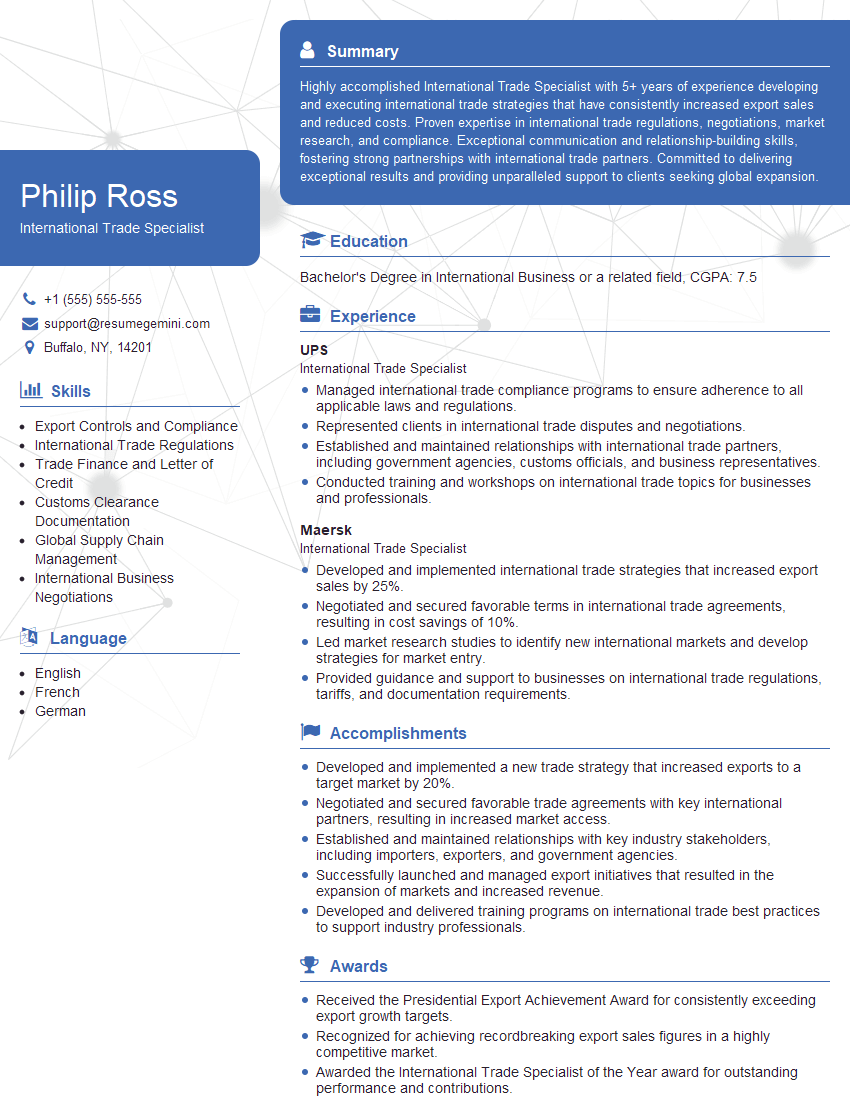
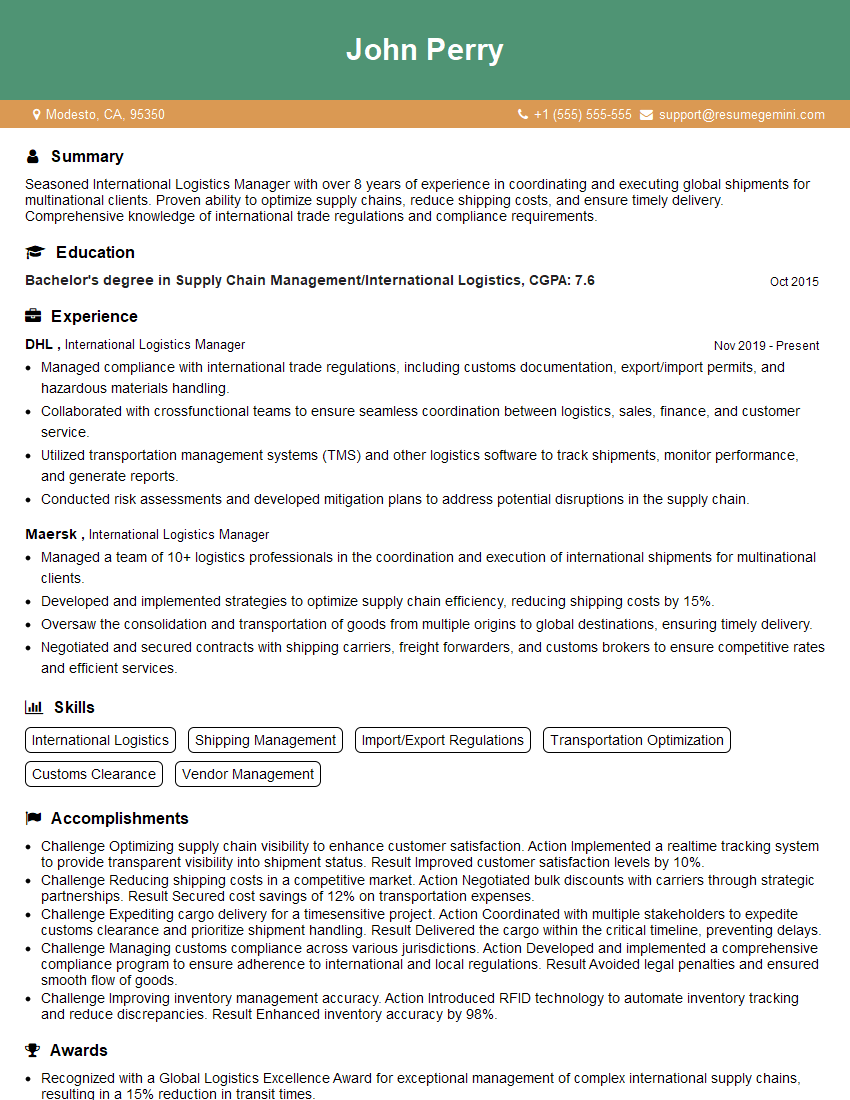
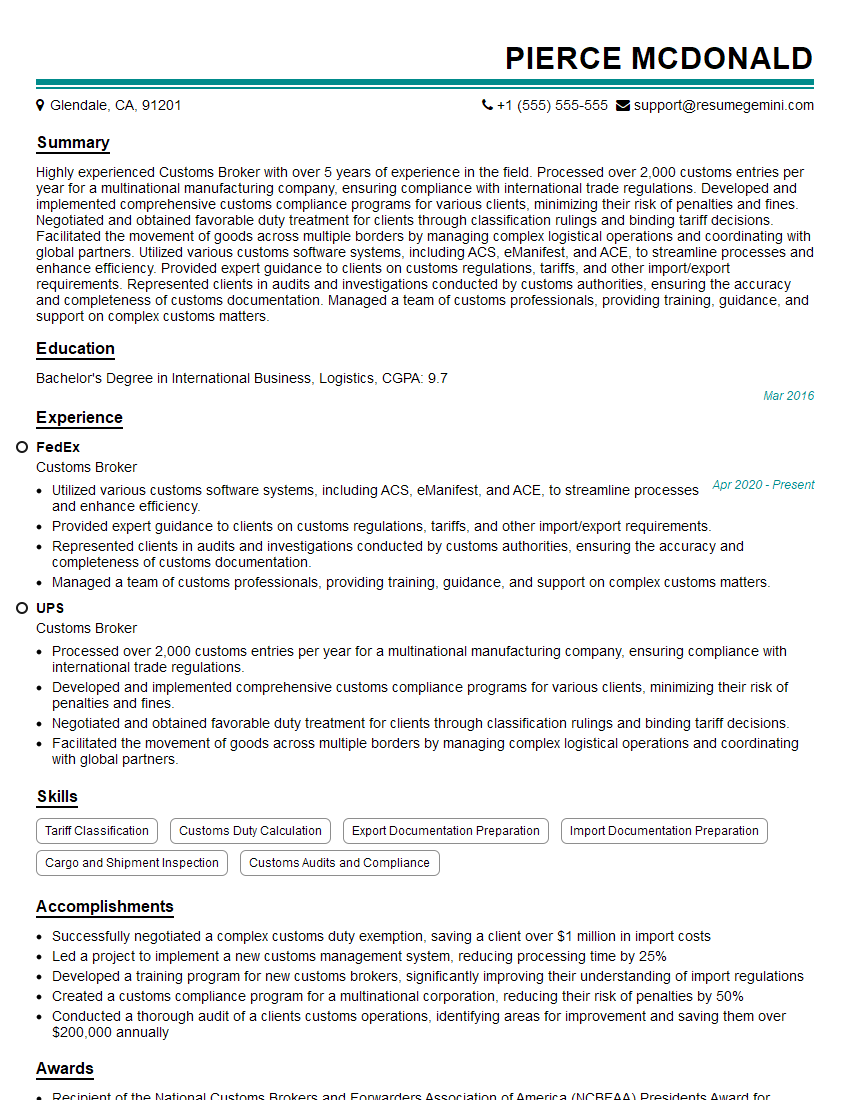
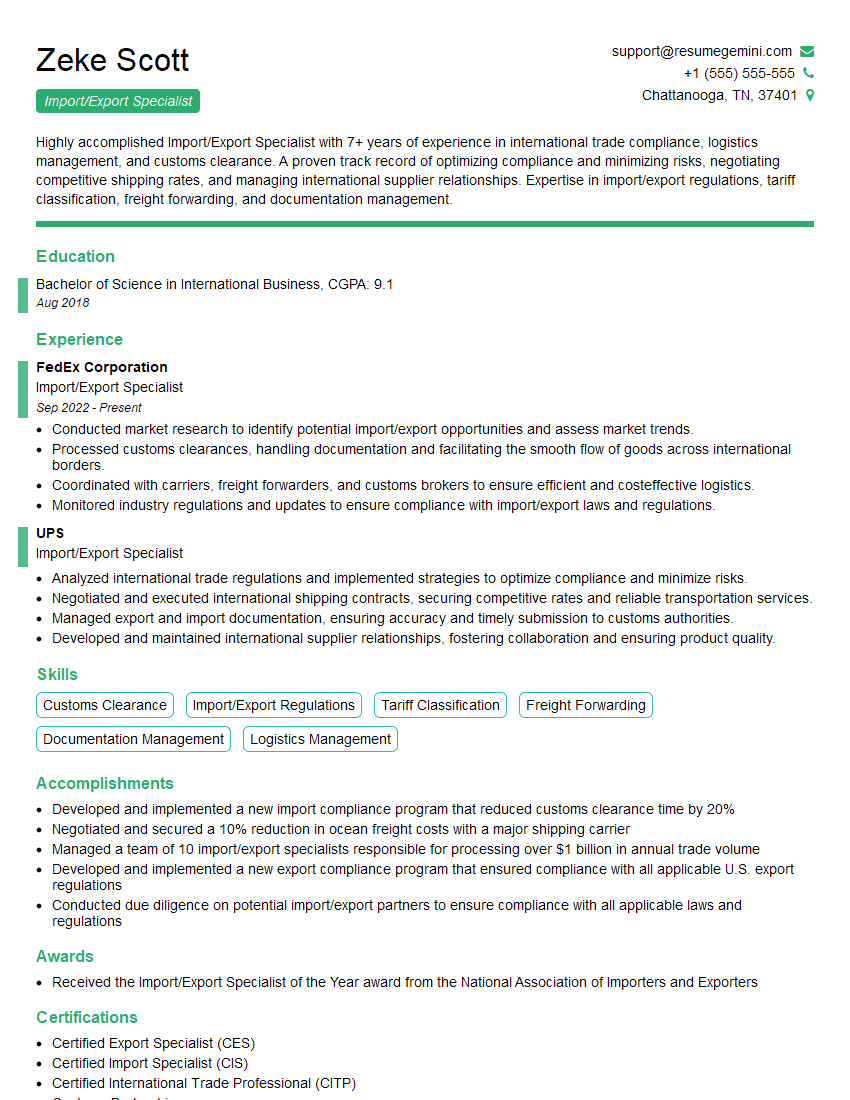
Mastering international trade regulations is crucial for career advancement in global business, offering opportunities in import/export management, international trade law, and consulting. A well-crafted, ATS-friendly resume is key to showcasing your expertise and securing interviews. To make your resume stand out, utilize ResumeGemini – a trusted resource for creating professional and impactful resumes. ResumeGemini provides examples of resumes tailored to professionals with expertise in Familiar with International Trade Regulations, ensuring your application makes a strong first impression.
Explore more articles
Users Rating of Our Blogs
Share Your Experience
We value your feedback! Please rate our content and share your thoughts (optional).
What Readers Say About Our Blog
Really detailed insights and content, thank you for writing this detailed article.
IT gave me an insight and words to use and be able to think of examples