The right preparation can turn an interview into an opportunity to showcase your expertise. This guide to Color Copying and Printing interview questions is your ultimate resource, providing key insights and tips to help you ace your responses and stand out as a top candidate.
Questions Asked in Color Copying and Printing Interview
Q 1. Explain the difference between CMYK and RGB color models.
The CMYK and RGB color models are fundamentally different ways of representing color, each suited to a specific application. RGB (Red, Green, Blue) is an additive color model used for screens and digital displays. It works by combining different intensities of red, green, and blue light to create a wide range of colors. Think of your computer or phone screen – it uses RGB to display images. The more light you add, the brighter the color becomes. CMYK (Cyan, Magenta, Yellow, Key [black]) is a subtractive color model used in printing. It works by subtracting light from white light using inks of cyan, magenta, yellow, and black. Imagine starting with a white sheet of paper; adding cyan ink subtracts red light, magenta subtracts green, and yellow subtracts blue. The black (K) ink is added for depth and sharpness. In simple terms, RGB adds light to create color, while CMYK subtracts light. This difference is why a color that looks vibrant on your screen might appear duller when printed; the color spaces don’t perfectly overlap.
Example: A bright, pure red in RGB might be represented as (255, 0, 0), while the same red in CMYK might look significantly different due to ink limitations and the subtractive nature of the process.
Q 2. Describe the process of calibrating a color printer.
Calibrating a color printer ensures consistent and accurate color reproduction. This involves several steps. First, you need a colorimeter or spectrophotometer – a device that measures the color output of your printer. Then you’ll use calibration software (often provided by the printer manufacturer) which guides you through the process. The software generates test prints, your device analyzes the colors, and adjustments are made in the printer’s settings to achieve the target color values. You might adjust things like ink levels, color profiles, and print settings. This usually involves printing a series of color patches, measuring their color values using the instrument, and making software-based adjustments to match a pre-defined standard, creating a color profile specific to your printer and paper combination. Regular calibration, especially if you’re dealing with professional color-critical work like photography or graphic design, is crucial for maintaining consistent output. Think of it like tuning a musical instrument – regular calibration ensures it plays accurately.
Q 3. How do you troubleshoot a color mismatch in a print job?
Color mismatches in print jobs can stem from several issues. A systematic approach to troubleshooting is key. First, check the source file. Is it in the correct color space (e.g., CMYK for print)? Are the colors accurately represented there? Next, verify the printer driver settings. Make sure the correct color profile is selected and that color management is properly enabled. Inspect the printer itself for issues like clogged print heads or low ink levels – these can significantly impact color accuracy. Consider the paper type; using the wrong paper can alter how colors appear. Check the calibration of the printer; an out-of-calibration printer will invariably produce color inconsistencies. Finally, if you’re using external color profiles, ensure that they are correctly installed and linked to the printer. If all else fails, you may need to test with a different printer or a print shop to rule out other factors. A simple process of elimination usually identifies the problem. For instance, if you’re only seeing color shifts in certain sections, it points to problems with the file or specific parts of the printer.
Q 4. What are the common paper types used in color printing and their applications?
Many paper types are used in color printing, each with specific properties affecting the final output. Coated paper, with a smooth surface, provides excellent color reproduction and sharpness, ideal for high-quality images and graphics. Uncoated paper, with a rougher texture, is best for applications where absorbency is desired (like with some inks or watercolors). Matte paper delivers a non-reflective finish, reducing glare for ease of viewing. Glossy paper offers vibrant, shiny colors, perfect for eye-catching prints. Recycled paper is an eco-friendly option, though the color saturation might be slightly lower compared to virgin paper. The choice depends on the application. For example, brochures often use glossy paper for visual appeal, while business cards might utilize thicker, coated stock. Choosing the correct paper is vital because different papers absorb and reflect ink differently, resulting in color variations.
Q 5. Explain the concept of color profiles and their importance in color management.
Color profiles are essentially digital descriptions of how a device (like a monitor, scanner, or printer) handles colors. They act as translators between different color spaces. Each device has its own unique way of interpreting and reproducing colors. Color profiles ensure that colors appear consistently across different devices, enabling accurate color management. Without a profile, a color that looks perfect on one monitor might appear completely different on another or when printed. A printer’s profile describes its color capabilities and how it interprets CMYK data to produce color on paper. These profiles are crucial for bridging the gap between digital and physical color representations, making sure that what you see on your screen is as close as possible to what you get in print. Think of it as a recipe for color – each profile specifies the exact ‘ingredients’ (ink amounts) needed to produce a particular color on a specific device.
Q 6. How do you handle a jammed printer?
Handling a jammed printer requires a cautious approach. First, turn off the printer to prevent further damage. Consult your printer’s manual for specific instructions on accessing the paper path. Gently remove any jammed paper, taking care not to tear it. Avoid forcefully pulling the paper, as this could damage the printer’s internal mechanisms. Once the jam is cleared, check for any remaining debris. Restart the printer and try printing a test page. If the problem persists, check your paper input tray; make sure the paper is loaded correctly and that there is nothing obstructing the rollers. For persistent issues, consider contacting the manufacturer’s support team.
Q 7. What are the different types of printing techniques (e.g., offset, digital)?
Different printing techniques cater to different needs and scales. Offset printing is a high-volume, cost-effective method involving transferring ink from a plate to a rubber blanket and then to the paper. It’s ideal for large print runs, such as books, magazines, and newspapers. Digital printing uses digital files directly, printing one page at a time. It’s more flexible for smaller runs, personalized printing, and on-demand printing, often used for business cards, flyers, and short-run books. Screen printing uses stencils to apply ink to the substrate, which is perfect for printing on fabrics or other materials. Other printing techniques include flexography (used mainly for packaging) and gravure (used for high-quality photo printing).
Q 8. Describe your experience with different finishing techniques (e.g., binding, lamination).
Finishing techniques are crucial for enhancing the presentation and durability of printed materials. My experience encompasses a wide range of binding methods, from simple saddle-stitch binding (used for brochures and booklets) to more complex techniques like perfect binding (for books and journals), wire-o binding (for calendars and notebooks), and case binding (for high-end books). I’m also proficient in various lamination options, including gloss, matte, and UV lamination. Each choice impacts the final product’s feel and longevity. For instance, gloss lamination provides a shiny, professional look, while matte offers a more subdued, elegant finish. UV lamination adds an extra layer of protection against scratches and wear, ideal for high-traffic materials like menus or marketing collateral. I select the most appropriate finishing method based on the client’s needs and the nature of the printed piece, always considering factors like budget and desired aesthetic.
- Saddle Stitch: Economical for smaller projects.
- Perfect Binding: Provides a professional, flat-lying book.
- Wire-O Binding: Allows for easy page turning and lays flat.
- Case Binding: A robust option for high-quality books.
Q 9. How do you ensure color consistency across multiple print runs?
Maintaining color consistency across multiple print runs is paramount. This involves a multi-faceted approach. Firstly, we use a standardized color management system, often involving ICC profiles, which translate the color values from the digital design to the printing press. Secondly, we meticulously calibrate our printing equipment regularly, using color targets and spectrophotometers to ensure accurate color reproduction. Before each print run, we print test sheets to check color accuracy against the approved proofs. Any deviations are addressed by fine-tuning the press settings. We also maintain detailed records of each print job, including press settings and ink formulations, allowing for precise replication in subsequent runs. This documentation is crucial for achieving consistent quality and minimizing discrepancies. Think of it like baking a cake – you need the same recipe and oven temperature each time to get the same result.
Q 10. What software are you proficient in for color manipulation and printing?
My expertise spans a range of software crucial for color manipulation and printing. I’m highly proficient in Adobe Creative Suite, particularly Photoshop, Illustrator, and InDesign, for designing and preparing print-ready files. I also have experience with color management software like X-Rite i1Profiler and GMG ColorServer, which help ensure accurate color reproduction across different devices and workflows. Furthermore, I’m familiar with RIP (Raster Image Processor) software, essential for translating digital files into instructions for the printing press, optimizing for various printing technologies. My experience includes working with both Mac and PC platforms, ensuring flexibility across different work environments.
Q 11. Explain your understanding of DPI and its impact on print quality.
DPI, or dots per inch, refers to the resolution of a printed image. It represents the number of ink dots printed per linear inch. A higher DPI results in a sharper, more detailed image with smoother transitions between colors. Conversely, a lower DPI produces a coarser, less detailed image with potentially visible pixelation or banding. The ideal DPI depends on the printing method and the desired quality. For example, high-resolution offset printing may benefit from 300 DPI or higher, while lower-resolution methods might use 150 DPI. Choosing the appropriate DPI is crucial for optimizing print quality and avoiding unnecessary file sizes. Imagine comparing a low-resolution photo on a computer screen to a high-resolution print – the difference is stark, highlighting the significant impact DPI has on the final product’s appearance.
Q 12. How do you manage large print jobs efficiently?
Managing large print jobs efficiently requires meticulous planning and execution. I utilize project management tools to track deadlines, resources, and progress. This often involves breaking down the job into smaller, manageable tasks, assigning responsibilities, and setting clear milestones. Prioritization of tasks based on urgency and dependencies is crucial. I also leverage automation where possible, such as using automated imposition software to arrange pages efficiently for printing. Regular communication with the client and internal team keeps everyone informed and ensures timely completion. Efficient file management and utilization of pre-flighting software to catch errors early in the process prevent costly delays. Effective communication with clients helps to manage their expectations realistically and ensures the print job proceeds smoothly.
Q 13. Describe your experience with quality control in a printing environment.
Quality control is an integral part of every printing project. My experience involves implementing a robust QC process that starts with verifying the digital files for pre-press errors. This includes checking color profiles, resolution, bleeds, and fonts. Throughout the printing process, I conduct regular checks on the press to ensure color accuracy, registration (alignment of colors), and ink consistency. We employ visual inspections as well as using densitometers and spectrophotometers for precise color measurements. Finally, a thorough inspection of the finished product is conducted to identify any defects before delivery. Maintaining detailed records of all QC checks ensures traceability and accountability. A proactive approach to quality control minimizes errors and guarantees client satisfaction.
Q 14. How would you handle a client complaint regarding color accuracy?
Handling a client complaint regarding color accuracy requires a calm and professional approach. The first step is to gather all relevant information, including the client’s specific concerns, the print specifications, and the original design file. I would then review the print samples and compare them to the approved proofs, checking for any deviations in color. This often involves using a spectrophotometer to objectively measure the color discrepancies. Based on my analysis, I would explain the potential causes of the issue, which could range from variations in the printing process to inconsistencies in the original design file. Depending on the findings, I’d discuss possible solutions, such as reprinting the job with adjusted press settings or offering a partial refund. Open communication and a willingness to find a mutually acceptable solution are crucial for maintaining a positive client relationship.
Q 15. What are your troubleshooting skills related to printer hardware and software issues?
Troubleshooting printer issues involves a systematic approach combining hardware and software diagnostics. For hardware, I start with the basics: checking power connections, paper jams, ink or toner levels, and ensuring proper media loading. I’m proficient with using diagnostic tools built into most printers to identify specific error codes. For example, a recurring error code might indicate a failing print head, necessitating replacement or repair. Software troubleshooting often involves checking printer drivers, ensuring the correct printer is selected, and verifying network connectivity. Problems can range from simple driver updates to more complex network configuration issues requiring examination of IP addresses, ports, and firewall settings. I’m adept at using both printer manufacturer’s utilities and system tools to isolate the source of the problem, and I thoroughly document the steps I take, both for my own records and to provide clear explanations to clients.
For instance, I once solved a seemingly intractable issue where a network printer wouldn’t print color correctly. After checking the obvious (cables, drivers, ink levels), I discovered a faulty network switch causing intermittent data loss. Replacing the switch immediately resolved the problem, highlighting the importance of considering the entire print system, not just the printer itself.
Career Expert Tips:
- Ace those interviews! Prepare effectively by reviewing the Top 50 Most Common Interview Questions on ResumeGemini.
- Navigate your job search with confidence! Explore a wide range of Career Tips on ResumeGemini. Learn about common challenges and recommendations to overcome them.
- Craft the perfect resume! Master the Art of Resume Writing with ResumeGemini’s guide. Showcase your unique qualifications and achievements effectively.
- Don’t miss out on holiday savings! Build your dream resume with ResumeGemini’s ATS optimized templates.
Q 16. Explain your understanding of different print resolutions and their applications.
Print resolution refers to the detail in a printed image, measured in dots per inch (dpi). Higher dpi equates to sharper, more detailed images. Common resolutions range from 300 dpi (suitable for most documents and photographs) to 1200 dpi or higher for professional-grade photo printing and detailed illustrations. The choice of resolution depends on the intended use and the quality of the original image. A low-resolution image will not benefit from a high-resolution print setting – you’ll only increase print time, not image quality.
For example, a basic office document might only require 300 dpi, whereas a high-quality art print might demand 1200 dpi or even higher for optimal results. I always advise clients to match the resolution to the application: using a high resolution unnecessarily increases cost and printing time, while using too low a resolution leads to unsatisfactory results.
Q 17. How do you maintain printing equipment to ensure optimal performance?
Maintaining printing equipment is crucial for optimal performance, reliability, and longevity. My maintenance routine includes regular cleaning of the print heads or drums (depending on the printer type), checking and replacing ink or toner cartridges as needed, and ensuring the paper path is clear from dust and debris. I perform routine inspections for any signs of mechanical wear and tear, paying particular attention to rollers and belts. Preventative maintenance also involves keeping the printer’s firmware updated to ensure optimal functionality and compatibility with new software or media types.
For example, neglecting regular cleaning of a laser printer’s drum can lead to toner buildup, resulting in inconsistent prints and ultimately damaging the drum. I always follow the manufacturer’s recommended maintenance schedules and proactively address any potential issues before they become major problems, saving time and money in the long run.
Q 18. Describe your experience with pre-press processes.
My experience with pre-press processes is extensive. I’m proficient in managing color profiles, ensuring accurate color representation from the digital file to the final print. This involves working with different color spaces (e.g., RGB, CMYK), using color management software to convert images to the appropriate color space for the selected printing method, and understanding color separation techniques for multi-color printing. I also have experience with file preparation, ensuring images are correctly sized and have suitable resolution, and handling trapping and imposition to prepare files for optimal printing.
A significant part of pre-press involves proofing and reviewing files for errors before sending them to the printer. I routinely check for color accuracy, image sharpness, resolution, and alignment to ensure the final product meets client expectations. I use various proofing methods, ranging from soft proofs on screen to hard proofs printed on a high-quality proofing device. A recent project involved creating a large-format banner for a trade show – I carefully managed color profiles to ensure accurate and consistent color throughout the banner’s large surface area.
Q 19. What are some common causes of banding in color prints?
Banding in color prints appears as horizontal streaks or bands of uneven color saturation. Several factors contribute to this. One common cause is insufficient print resolution – if the resolution is too low, the printer cannot smoothly blend colors, resulting in visible banding. Another frequent culprit is low-quality ink or toner, which can lead to uneven deposition on the paper. Faulty print heads or drums can also cause banding as they fail to deliver ink or toner consistently. In some cases, problems with the printer’s internal calibration or driver settings might also be to blame.
Troubleshooting banding requires a systematic approach. I would check the print resolution settings, inspect the ink or toner cartridges for signs of clogging or low levels, and run a printer self-test or cleaning cycle. If the banding persists, it’s often necessary to replace the print heads or drums or to recalibrate the printer. In a recent case, banding was resolved simply by adjusting the printer’s color profile settings.
Q 20. How do you calculate the cost of a print job?
Calculating the cost of a print job involves considering various factors. The primary cost is the materials: paper, ink or toner, and any special substrates. I then factor in the labor cost, based on the complexity of the job, machine time, and the level of finishing required (e.g., binding, cutting, laminating). Overhead costs, such as electricity and maintenance, are also included, though they are often calculated as a percentage of the direct costs. Finally, I add a profit margin to account for business expenses and profit.
For example, calculating the cost of printing 1000 brochures would involve determining the cost of paper per brochure, the ink or toner consumption, the machine time required, and labor costs for setup and operation. I would then add a percentage to cover overhead and my profit margin, arriving at a total cost per brochure. This detailed approach ensures accurate pricing and fair compensation for the provided services.
Q 21. What are the safety precautions you take when operating printing machinery?
Safety is paramount when operating printing machinery. I always follow the manufacturer’s safety guidelines, which include wearing appropriate personal protective equipment (PPE) such as safety glasses and gloves where necessary. I carefully handle ink and toner cartridges, avoiding spills and inhalation of toner dust. I ensure the printer’s ventilation system is functioning correctly to prevent the buildup of harmful fumes. I never attempt repairs or maintenance on the printer while it’s powered on, and I’m always aware of potential pinch points and moving parts during operation. I regularly inspect the machinery for any signs of damage or wear and tear, and I promptly report any issues to ensure a safe working environment.
Furthermore, I am aware of electrical safety protocols, ensuring all equipment is properly grounded and using appropriate power cords. I also regularly check the surrounding area for obstructions to avoid tripping hazards and maintain a clean and organized work area, free of clutter and tripping hazards.
Q 22. How familiar are you with different types of inks and toners?
My familiarity with inks and toners is extensive, encompassing their chemical composition, color properties, and application methods across various printing technologies. I have experience with a wide range, from liquid inks used in inkjet and offset printing to powdered toners employed in laser printing.
Liquid Inks: These include dye-based inks (vivid colors, but prone to fading), pigment-based inks (more durable, less vibrant), and UV-curable inks (fast drying, ideal for specialized applications).
Toners: These are finely ground powders composed of pigments, resins, and other additives. Different types exist, categorized by particle size, charge, and formulation, impacting print quality and longevity. I’m familiar with the variations needed for different printing devices and paper types, including those optimized for high-speed printing versus photo-quality output.
Specialized Inks: My experience also includes working with eco-friendly, food-safe, and metallic inks, each with unique characteristics and application requirements. Understanding these variations is critical for selecting the best ink for a given project, considering factors such as cost, durability, and environmental impact.
Q 23. Explain your understanding of color gamut and its limitations.
The color gamut refers to the range of colors a particular device or system can reproduce. It’s essentially the color ‘vocabulary’ of that device. Think of it like a painter’s palette; a larger palette allows for more nuanced colors. Limitations arise because different devices use different technologies and color models (e.g., RGB for screens, CMYK for print).
For instance, a digital screen uses RGB (Red, Green, Blue) light to create colors, while a printing press uses CMYK (Cyan, Magenta, Yellow, Key/Black) inks. CMYK can’t reproduce the full range of colors that RGB can, leading to a smaller color gamut and potential discrepancies between what’s seen on screen and what’s printed. This is why a vibrant, bright green on your screen might appear slightly duller in print. Other limitations include the quality of the inks and paper, as well as the printing process itself. Accurate color management involves understanding these limitations and using color profiles to bridge the gap between different color spaces. This includes compensating for the color differences inherent in the transition between RGB and CMYK to maintain color consistency between digital and print media.
Q 24. How do you address issues related to color bleeding or ghosting?
Color bleeding and ghosting are common printing issues. Color bleeding occurs when ink spreads beyond its intended boundaries, resulting in blurred edges or color mixing. Ghosting, on the other hand, is a faint image of a previous print appearing on subsequent prints, especially noticeable in dark colors. Addressing these requires a multi-pronged approach:
Ink and Toner Selection: Using inks or toners specifically designed for the media type is crucial. For instance, using high-quality inks suited for the paper’s absorbency can minimize bleeding. Similarly, using the correct toner for a laser printer prevents issues.
Print Settings Optimization: Correcting settings like ink density, drying time, and print resolution can significantly reduce issues. Testing different settings on a test print is a valuable troubleshooting step.
Paper Selection: Choosing the right paper is critical. Highly absorbent paper can lead to bleeding, whereas coated papers can reduce this problem, but might have other consequences, like ink smearing.
Maintenance: Regular cleaning of the print heads (inkjet) or rollers (offset printing) is vital to ensure even ink distribution and prevent ghosting. For laser printers, removing residual toner from rollers and other components is important.
Calibration: Proper calibration of the printer is key to ensuring consistent ink distribution, avoiding bleeding, and producing vibrant, sharp colors.
Q 25. Describe your experience with different types of printing presses.
My experience spans several printing press types, each with its unique characteristics and applications:
Offset Printing Presses: These are workhorses for high-volume printing, using plates to transfer ink onto a rubber blanket before it’s transferred to the paper. I’m proficient in operating and maintaining these machines, understanding the intricacies of platemaking, ink adjustments, and press configurations.
Digital Printing Presses: These are ideal for short-run and personalized projects. I’m familiar with various technologies including inkjet and toner-based digital presses, understanding their color profiles, and workflow management.
Screen Printing Presses: Suitable for specialized printing on various materials like textiles or plastics, I have hands-on experience with mesh selection, ink viscosity adjustment and alignment.
Flexographic Printing Presses: Used for packaging and labels, I understand the workings of this process, including plate preparation and ink delivery systems.
This diverse experience allows me to adapt to various printing needs, choosing the optimal press type for a specific project.
Q 26. How do you manage inventory of printing supplies?
Inventory management of printing supplies is critical for efficient operations. My approach involves a combination of:
Demand Forecasting: Analyzing past usage patterns to predict future needs, accounting for seasonal variations and project timelines. This minimizes waste and ensures we have enough stock without excess inventory.
Just-in-Time Inventory: Ordering supplies as needed to minimize storage costs and reduce the risk of obsolescence, particularly for specialized inks or toners.
Inventory Tracking System: Utilizing a software system (e.g., ERP or dedicated inventory management software) to track stock levels, monitor consumption, and issue automatic reordering alerts. This enables efficient monitoring of stock and proactive ordering.
Regular Audits: Conducting periodic physical checks to verify inventory accuracy and identify potential discrepancies between physical stock and recorded levels.
Supplier Relationships: Establishing strong relationships with reliable suppliers to ensure timely delivery and competitive pricing.
This integrated approach ensures smooth production with minimal disruptions due to supply shortages.
Q 27. What are your skills in using finishing equipment like cutters, folders, and laminators?
My skills in using finishing equipment are integral to my role. I’m proficient in operating and maintaining:
Cutters: Both guillotine cutters for precise cuts and automated cutters for high-volume jobs. I’m adept at setting up the machine for different paper sizes and thicknesses.
Folders: Various types of folders, including simple hand-held folders and automated systems for complex folds (e.g., letter folds, gate folds). I understand the proper adjustments for different paper weights and fold types.
Laminators: Both heat and cold laminators, for adding protective coatings to printed materials. I can adjust lamination speed and temperature according to the material being laminated.
I’m also familiar with other finishing techniques like binding, punching, and die-cutting, ensuring the final product meets the highest quality standards.
Q 28. Describe a time you had to solve a complex color printing problem.
One time, a client requested a specific Pantone color for their corporate branding on a large print run. However, we encountered significant color inconsistencies between test prints and the final product. Initial tests showed a noticeable shift in the Pantone color, appearing duller than the client’s approved sample.
To solve this, I systematically investigated various factors:
Ink Calibration: We carefully recalibrated the printing press’s ink settings to ensure accurate color reproduction, adjusting the density and balance of the CMYK inks used to achieve the Pantone color.
Paper Consistency: We checked the paper’s moisture content, as variations can affect ink absorption and subsequently, color reproduction. We sourced a fresh batch of paper to rule out any inconsistencies in the initial batch.
Press Conditions: We verified the press’s rollers, dampening system (for offset), and temperature control, as these can influence ink distribution and color accuracy. Minor adjustments were made to address minor variations.
Color Profile Verification: We double-checked our color profile and ensured it was accurately representing the Pantone color requested. The entire process was carefully reviewed to ensure that the color profile was accurately mapped to the printer’s CMYK system.
Through this meticulous process, we successfully resolved the color discrepancies, delivering a final product that perfectly matched the client’s requirements. This experience reinforced the importance of a thorough understanding of color management, press operations, and the interdependency of different variables in achieving accurate color reproduction.
Key Topics to Learn for Color Copying and Printing Interview
- Color Theory and Reproduction: Understanding color models (CMYK, RGB), color profiles (ICC), and color management workflows. Practical application: Troubleshooting color discrepancies between digital files and printed output.
- Printing Processes: Familiarity with various printing technologies (e.g., inkjet, laser, offset), their strengths and weaknesses, and appropriate applications. Practical application: Selecting the optimal printing method for a specific project based on budget, quality requirements, and turnaround time.
- Image Pre-Press Preparation: Knowledge of image resolution, file formats (PDF, TIFF, JPEG), and pre-flight checks for print readiness. Practical application: Identifying and resolving potential print issues before sending files to press.
- Print Finishing Techniques: Understanding binding methods (e.g., saddle stitch, perfect bind), paper types and finishing options (lamination, die-cutting). Practical application: Advising clients on the best finishing options to enhance their printed materials.
- Print Quality Control: Identifying and troubleshooting common print defects (e.g., banding, moiré, color shifts). Practical application: Implementing quality control measures throughout the printing process to ensure consistent, high-quality output.
- Equipment Maintenance and Troubleshooting: Basic understanding of printer maintenance, troubleshooting common issues, and identifying the need for professional service. Practical application: Performing routine maintenance tasks and identifying minor malfunctions to minimize downtime.
- Digital Asset Management: Understanding workflow and organization of digital files, including version control and archiving. Practical application: Efficiently managing large volumes of digital assets for printing projects.
Next Steps
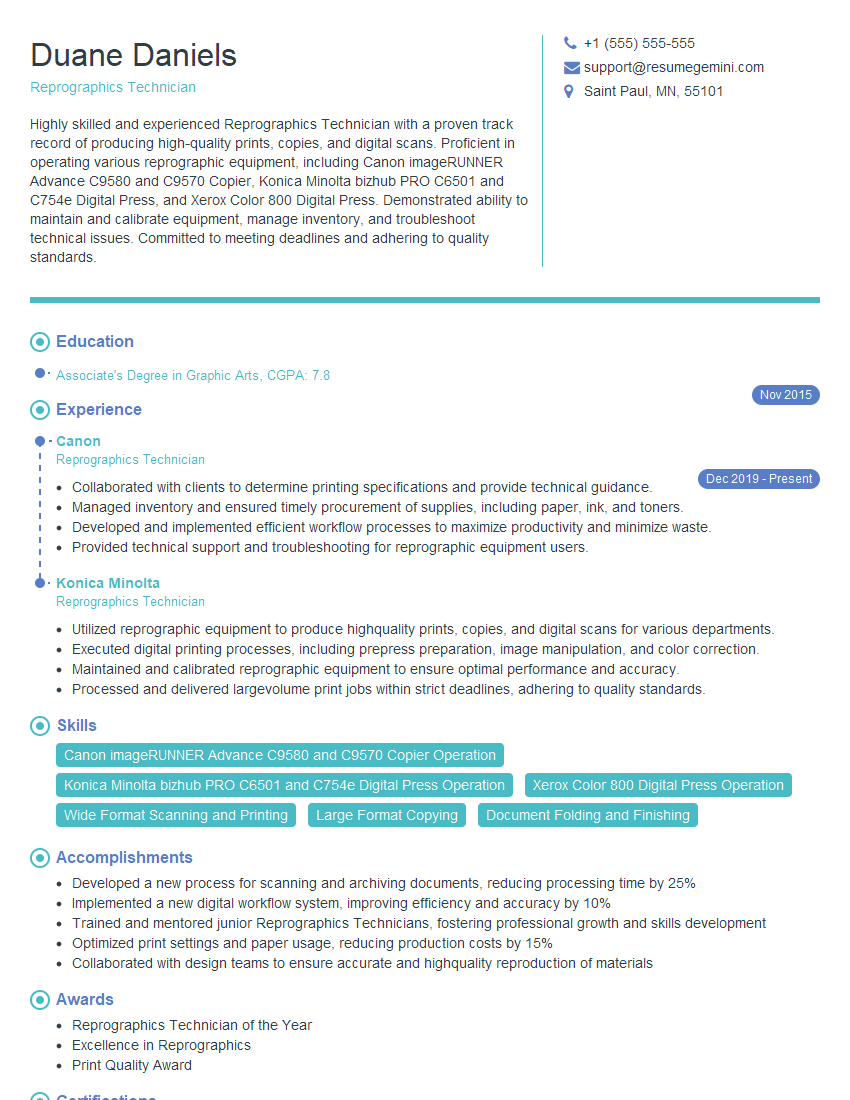
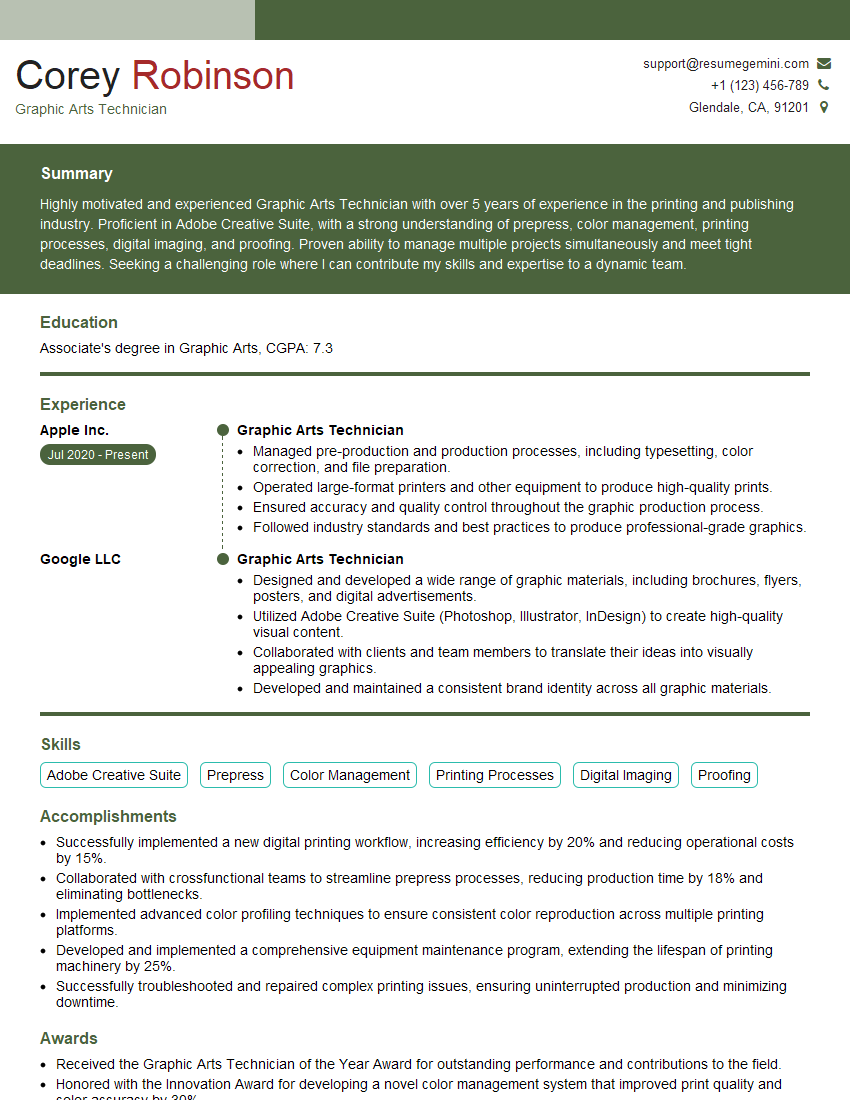
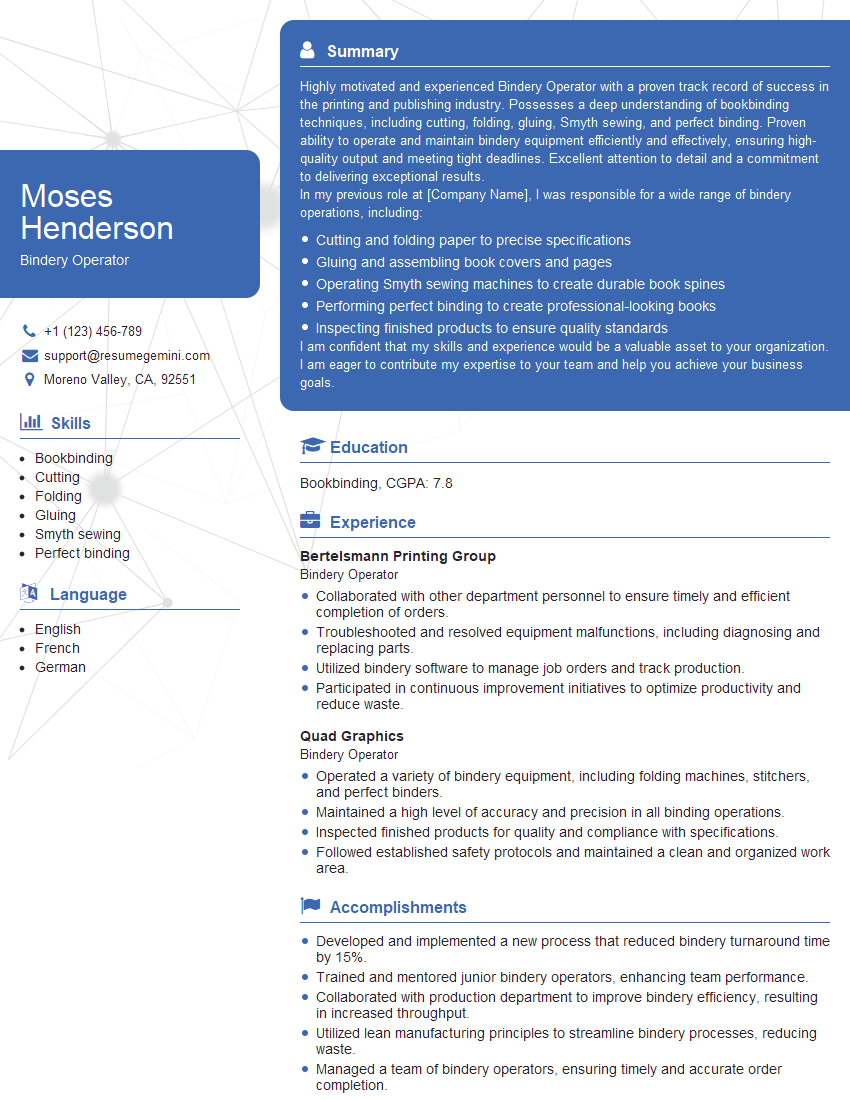
Mastering Color Copying and Printing opens doors to diverse and rewarding career opportunities within the graphic arts industry. From entry-level positions to advanced roles in print management, your expertise in color reproduction and printing processes is highly valuable. To increase your job prospects, focus on building a strong, ATS-friendly resume that highlights your skills and experience. ResumeGemini is a trusted resource for creating professional, impactful resumes. They offer examples specifically tailored to Color Copying and Printing roles, helping you present your qualifications effectively and stand out from the competition.

Explore more articles
Users Rating of Our Blogs
Share Your Experience
We value your feedback! Please rate our content and share your thoughts (optional).
What Readers Say About Our Blog
Really detailed insights and content, thank you for writing this detailed article.
IT gave me an insight and words to use and be able to think of examples