The thought of an interview can be nerve-wracking, but the right preparation can make all the difference. Explore this comprehensive guide to Precision Installation interview questions and gain the confidence you need to showcase your abilities and secure the role.
Questions Asked in Precision Installation Interview
Q 1. Describe your experience with different types of precision measurement tools.
My experience with precision measurement tools spans a wide range, encompassing both conventional and advanced technologies. I’m proficient with tools like dial indicators, micrometers, calipers, and laser measurement systems. Dial indicators are invaluable for measuring minute deviations in alignment or surface flatness – for example, ensuring a machine’s spindle is perfectly perpendicular to the worktable. Micrometers and calipers provide highly accurate linear measurements critical for component fitting and ensuring tolerances are met during assembly. I’ve also extensively utilized laser trackers and laser alignment systems for large-scale installations, such as aligning heavy machinery or long conveyor systems, where achieving sub-millimeter accuracy is essential. In one project involving the installation of a large printing press, we used a laser tracker to ensure the press’s various components were precisely aligned to within 0.05 mm – crucial for print quality and to prevent costly downtime.
- Dial Indicators: Measuring minute deviations in alignment, surface flatness.
- Micrometers & Calipers: Precise linear measurements, crucial for component fitting.
- Laser Measurement Systems: Large-scale installations, achieving sub-millimeter accuracy.
Q 2. Explain the importance of following precise installation procedures.
Following precise installation procedures is paramount because it directly impacts the functionality, reliability, and safety of the installed equipment. Precision installations, by their nature, involve components with tight tolerances. Deviating from established procedures can lead to misalignment, poor performance, premature wear, and even catastrophic failure. Think of installing a high-precision robotic arm: even a slight misalignment can lead to inaccurate movements, potentially damaging the workpiece or causing the robot to malfunction. Accurate adherence to procedures ensures that the equipment operates as intended, maximizing its lifespan and minimizing the risk of downtime or accidents. Furthermore, strict adherence to these procedures is often a requirement for warranties and compliance with industry standards.
Q 3. How do you ensure the accuracy of your work during precision installations?
Ensuring accuracy in precision installations is a multifaceted process. It begins with meticulous planning and preparation, including thorough review of the installation instructions and site conditions. During the installation, I utilize multiple measurement techniques to verify alignment, dimensions, and levels at each stage. This includes using various precision tools mentioned earlier, cross-referencing measurements from different tools, and documenting every step. I also regularly perform quality checks using visual inspection, confirming the alignment of components through sighting techniques and using a variety of tools to ensure every aspect conforms to the specified tolerances. Any discrepancies are immediately investigated and addressed. For instance, if a laser alignment system shows a slight misalignment, I investigate the cause – perhaps a slight variation in the mounting surface – and correct it before proceeding.
Q 4. What are some common challenges encountered during precision installations, and how do you overcome them?
Common challenges during precision installations include environmental factors (temperature fluctuations, vibrations), unforeseen site conditions (variations in building structure, unexpected obstacles), and component variations (slight manufacturing discrepancies). To overcome these, I employ several strategies. For environmental factors, I carefully consider the impact of temperature and vibration and utilize techniques to minimize their effects, like climate-controlled environments or vibration damping materials. For unforeseen site conditions, I use adaptability and problem-solving skills, sometimes requiring on-site modifications to the installation plan. For component variations, I incorporate precision measurement techniques at various stages to identify and compensate for these differences, ensuring that the final installation meets specifications. For example, in one project, we discovered unexpected floor unevenness. We used shims and leveling plates to compensate for the inconsistencies, ensuring the machine remained perfectly level and aligned.
Q 5. Describe your experience with laser alignment techniques.
I have extensive experience with laser alignment techniques, utilizing both self-leveling lasers and more sophisticated laser tracking systems. Self-leveling lasers are commonly used for simpler alignments, such as ensuring machinery is level. Laser tracking systems, however, allow for highly accurate measurements over longer distances and in three dimensions, crucial for aligning complex machinery or long conveyor systems. I’m proficient in setting up and operating both systems, and proficient in interpreting the data they provide, understanding how to compensate for environmental conditions. One project involved using a laser tracker to precisely align a series of robotic arms in an automotive assembly line. The laser tracker’s accuracy ensured the robots’ movements would be perfectly synchronized for efficient and precise assembly operations.
Q 6. How do you handle discrepancies between installation instructions and on-site conditions?
Discrepancies between installation instructions and on-site conditions require careful consideration and proactive problem-solving. My first step is to thoroughly document the discrepancy and photograph any relevant differences. Then, I consult with the relevant engineers and project managers to develop a solution that maintains the integrity of the installation while addressing the on-site challenges. This might involve revising the installation plan, sourcing replacement parts, or utilizing creative problem-solving techniques. Open communication is vital in these situations to ensure everyone understands the challenges and agrees on the best course of action. In one instance, the building’s supporting structure wasn’t exactly as specified in the drawings. After documenting the differences, we consulted the structural engineer who confirmed the stability of the modified structure. The installation plan was revised accordingly, and we proceeded with the installation, ensuring all safety considerations were met.
Q 7. What safety precautions do you take during precision installations?
Safety is my utmost priority during precision installations. I strictly adhere to all relevant safety regulations and guidelines, including using appropriate personal protective equipment (PPE) such as safety glasses, gloves, and steel-toe boots. I also ensure that the work area is properly secured, with clear signage and barriers to prevent unauthorized access. Before commencing any work, I perform a thorough risk assessment, identifying potential hazards and implementing control measures. Furthermore, I am trained in safe handling of tools and equipment, including lifting techniques for heavy components and awareness of potential hazards associated with laser equipment. Proper lockout/tagout procedures are always followed when working with powered equipment. Teamwork and communication are vital; every team member is aware of safety protocols and participates in ensuring a safe working environment.
Q 8. Explain your experience with different types of fastening systems used in precision installations.
My experience encompasses a wide range of fastening systems crucial for precision installations. The choice of system depends heavily on the material properties of the components being joined, the required strength and precision, and the environment the assembly will operate in.
- Mechanical Fasteners: I’m proficient with screws, bolts, and nuts, ranging from standard machine screws to specialized components like socket head cap screws with precise torque requirements. For instance, in installing a high-precision optical instrument, I’d carefully select screws with low head-to-shaft clearance and use a torque wrench to prevent over-tightening and component damage.
- Adhesives: I have extensive experience with various adhesives, including epoxy resins, cyanoacrylates (super glue), and UV-curable adhesives. The selection depends on the materials involved, required bond strength, cure time, and environmental factors. For example, UV-curable adhesives are excellent for quick, precise bonding in cleanroom environments, often used in micro-electronics assembly.
- Welding: While less common in some precision installations, I have experience with laser welding and micro-welding for joining delicate components. This is particularly crucial in applications where mechanical fasteners could introduce stress or vibrations.
- Press-Fit & Interference Fits: These techniques are vital for precise alignment and stability, particularly in applications with tight tolerance requirements. Careful dimensional control is crucial for avoiding damage or excessive stress during assembly.
Each project necessitates a careful evaluation of these options to ensure optimal performance, longevity, and adherence to the specified tolerances.
Q 9. How do you troubleshoot problems during installation?
Troubleshooting in precision installations requires a systematic approach. I typically follow these steps:
- Identify the Problem: Begin with a thorough inspection, paying close attention to any misalignments, gaps, or unusual readings. This often involves using measuring instruments such as micrometers, calipers, and optical alignment tools.
- Analyze the Root Cause: Once the problem is identified, investigate the potential causes. Was there an error in the design, a faulty component, or an issue with the installation procedure? Careful review of the installation plan and any relevant documentation is essential.
- Develop a Solution: Based on the root cause analysis, I formulate a solution. This might involve adjusting component positions, replacing faulty parts, or modifying the installation procedure. The chosen solution must ensure the integrity and functionality of the system without compromising the precision requirements.
- Implement and Verify: After implementing the solution, I conduct thorough verification tests to ensure the problem is resolved and the system meets the required specifications. This often involves repeated measurements and functional tests.
- Document the Process: Detailed documentation of the troubleshooting steps, including the problem, root cause analysis, solution, and verification results, is crucial for future reference and continuous improvement.
For example, I once encountered a situation where a laser alignment system was consistently misaligned. Through systematic troubleshooting, we discovered a minor defect in a mounting bracket, leading to a slight distortion. Replacing the bracket resolved the problem immediately.
Q 10. Describe your experience with calibration procedures and equipment.
Calibration is fundamental to precision installations. My experience includes calibration of various types of equipment used in precision assembly and measurement, including:
- Coordinate Measuring Machines (CMMs): I’m proficient in using CMMs to verify dimensional accuracy of components and assemblies. This involves using calibrated artifacts and standardized procedures to ensure the CMM’s accuracy.
- Laser Alignment Systems: These systems require regular calibration to maintain accuracy. My experience includes calibrating laser trackers and interferometers to ensure precise alignment of optical components.
- Torque Wrenches: Regular calibration of torque wrenches is critical for ensuring consistent and accurate tightening of fasteners. I use traceable calibration standards to verify the accuracy of these tools.
- Micrometers and Calipers: These precision measuring instruments also require periodic calibration to maintain accuracy and traceability. I use master gauges to verify the readings of these instruments.
Calibration procedures vary depending on the specific equipment, but they all involve comparing the instrument’s readings to known standards and adjusting as needed. Maintaining accurate calibration records and adhering to established protocols are critical to ensure the reliability and precision of the entire installation process.
Q 11. How do you maintain accurate records during the installation process?
Maintaining accurate records is crucial for traceability, quality control, and future maintenance. I utilize a combination of methods:
- Detailed Installation Logs: Every step of the installation process is documented, including the date, time, components used, measurements taken, and any deviations from the planned procedure.
- Digital Documentation: I utilize specialized software to create digital records, including CAD drawings, component specifications, and test results. This ensures easy access, sharing, and archival of the installation data.
- Photographs and Videos: Visual documentation is invaluable, particularly for complex assemblies. Photographs and videos are used to record the installation process and highlight critical steps.
- Calibration Certificates: Calibration certificates for all instruments used during installation are meticulously maintained. These certificates demonstrate traceability to national standards.
This meticulous record-keeping approach is crucial for ensuring the accuracy, repeatability, and long-term maintainability of the installation. It also assists in identifying and resolving issues that may arise in the future.
Q 12. What software or tools are you proficient in using for precision installations?
My proficiency in software and tools essential for precision installations includes:
- CAD Software (AutoCAD, SolidWorks): I use CAD software for reviewing designs, creating assembly drawings, and verifying component dimensions and tolerances.
- CAM Software (Mastercam): For some precision machining applications, I’m proficient with CAM software to generate CNC machining programs.
- Data Acquisition Software: I’m experienced with various data acquisition systems used to monitor and record measurements during the installation process.
- Spreadsheet Software (Microsoft Excel): Used for data analysis, record-keeping, and creating reports.
- Specialized Measurement Software: Software specific to CMMs, laser trackers, and other precision measurement instruments is used for data analysis and report generation.
Proficiency in these tools enables efficient planning, execution, and documentation of precision installation projects.
Q 13. Explain your understanding of tolerance levels and their significance in precision installation.
Tolerance levels define the permissible variation in dimensions or other parameters of a component or assembly. In precision installations, tolerances are critical because they directly impact the functionality and performance of the system.
For example, a tolerance of ±0.01 mm might be specified for the diameter of a shaft that fits into a bearing. This means the shaft’s diameter can vary by no more than 0.01 mm from the nominal value. Exceeding this tolerance could lead to excessive clearance, resulting in instability, vibration, and ultimately system failure. Conversely, if the tolerance is too tight, it can make manufacturing and assembly extremely difficult, or even impossible.
Understanding tolerance levels requires a good understanding of geometric dimensioning and tolerancing (GD&T), a standardized system for specifying tolerances and their relationship to features of a part. This allows me to assess the implications of tolerance stack-up (the accumulation of tolerances from multiple components) and to ensure that the overall assembly meets the required specifications. I routinely use GD&T symbols and annotations on engineering drawings to ensure correct interpretation and compliance during installations.
Q 14. How do you ensure the cleanliness and proper environment for sensitive equipment during installation?
Maintaining a clean and controlled environment is paramount for sensitive equipment. This is especially crucial during installation to prevent contamination and ensure optimal performance. My approach involves:
- Cleanroom Environment: For extremely sensitive equipment, the installation is conducted within a cleanroom environment with controlled temperature, humidity, and particulate levels. This minimizes the risk of contamination from dust, particles, or other environmental factors.
- Protective Clothing and Equipment: I always use appropriate personal protective equipment (PPE), including cleanroom garments, gloves, and masks, to prevent contamination of the equipment.
- Static Control: Static electricity can damage sensitive components. Anti-static mats, wrist straps, and other static control measures are used to prevent electrostatic discharge (ESD).
- Specialized Cleaning Procedures: Components are thoroughly cleaned before installation using appropriate cleaning agents and techniques to remove any contaminants. Isopropyl alcohol is frequently used for cleaning electronic components.
- Controlled Access: Access to the installation area is restricted to authorized personnel only to minimize the risk of contamination.
Following these procedures ensures that the installation process proceeds without compromising the cleanliness and integrity of the sensitive equipment, ensuring its optimal performance and longevity.
Q 15. Describe your experience working with complex mechanical assemblies.
My experience with complex mechanical assemblies spans over ten years, encompassing projects ranging from intricate robotics systems to high-precision manufacturing equipment. I’ve worked extensively with assemblies containing hundreds of individual parts, each with tight tolerances and specific functionalities. For example, in one project involving a semiconductor fabrication tool, I was responsible for the installation of a complex vacuum chamber, integrating various sensors, actuators, and control systems. This required meticulous attention to detail, precise alignment, and a deep understanding of the mechanical interplay between all components. Another significant project involved the assembly and installation of a large-scale 3D printer, requiring precise calibration of its many moving parts for optimal functionality. These experiences have honed my skills in troubleshooting, problem-solving, and ensuring the seamless integration of numerous mechanical components.
Career Expert Tips:
- Ace those interviews! Prepare effectively by reviewing the Top 50 Most Common Interview Questions on ResumeGemini.
- Navigate your job search with confidence! Explore a wide range of Career Tips on ResumeGemini. Learn about common challenges and recommendations to overcome them.
- Craft the perfect resume! Master the Art of Resume Writing with ResumeGemini’s guide. Showcase your unique qualifications and achievements effectively.
- Don’t miss out on holiday savings! Build your dream resume with ResumeGemini’s ATS optimized templates.
Q 16. How do you interpret technical drawings and schematics for precision installation?
Interpreting technical drawings and schematics is fundamental to precision installation. My process starts with a thorough review of all documentation, including assembly drawings, part lists, and wiring diagrams. I focus on understanding the spatial relationships between components, identifying critical dimensions and tolerances, and recognizing any potential installation challenges. I utilize tools like CAD software to visualize the assembly in 3D, helping to identify potential conflicts or clearances issues early on. For instance, I might use a CAD model to verify the accessibility of specific components for installation or to check for interferences between moving parts. This proactive approach significantly reduces errors and streamlines the installation process. I also make sure to understand any special installation procedures or safety precautions outlined in the documentation.
Q 17. Explain your process for verifying the correct installation of components.
Verifying correct installation involves a multi-step process that combines visual inspection, measurement, and functional testing. After installing a component, I visually inspect it for proper alignment and secure connections. I then use precision measuring tools, such as calipers and micrometers, to verify critical dimensions and tolerances. This ensures that the component is installed according to specifications. Finally, I perform functional testing to validate that the component operates as intended. For example, after installing a motor, I would verify its rotational speed and torque output. If any discrepancies are found, a thorough investigation is carried out to identify and rectify the root cause. This might involve re-examining the installation procedure, checking for part defects, or consulting the original design documentation.
Q 18. How do you manage your time effectively during complex installations?
Effective time management during complex installations hinges on detailed planning and proactive problem-solving. I begin by breaking down the installation into smaller, manageable tasks. Each task is assigned a realistic timeframe, taking into account potential challenges and unforeseen delays. I also prioritize tasks based on their criticality and dependencies, using a Gantt chart or similar project management tool to visualize the timeline and track progress. Regular progress meetings with the team help to identify and address any roadblocks promptly, minimizing delays. Furthermore, I proactively source necessary tools and materials to avoid any delays due to supply chain issues. Finally, I build in contingency time for unexpected events. This structured approach ensures that the installation is completed on time and within budget.
Q 19. Describe your experience working with different types of materials in precision installations.
My experience working with various materials in precision installations is extensive. I’m proficient in handling materials such as metals (steel, aluminum, titanium), plastics (polymers, composites), ceramics, and various specialized alloys. Each material requires a unique approach to handling and installation, considering its properties like hardness, brittleness, and thermal expansion. For instance, when working with delicate ceramic components, I employ extra caution to avoid damage during handling and installation. Similarly, working with metals requires understanding different joining techniques, such as welding, brazing, or adhesive bonding, ensuring the correct method is chosen based on the material’s properties and the required strength of the joint. Understanding material compatibility is also crucial in preventing reactions or degradation.
Q 20. How do you prioritize tasks during a precision installation project?
Task prioritization during a precision installation project relies heavily on understanding dependencies and critical path analysis. I use a combination of methods to determine the order of tasks, including identifying critical components that must be installed before others can be added. For example, the foundation of a machine might need to be completed before the main assembly is added. I also consider factors like the time sensitivity of certain tasks and the potential impact of delays. Tasks that have significant impacts on downstream processes or are prone to errors are prioritized. This approach combines critical path analysis with risk assessment to ensure the most efficient and reliable installation process.
Q 21. What are some common sources of error in precision installations, and how to prevent them?
Common sources of error in precision installations include incorrect component alignment, loose connections, damaged parts, and inadequate cleaning. Preventing these errors requires a multi-faceted approach. Precise measurement and alignment tools are critical for ensuring components are installed correctly. Regular inspection and quality checks throughout the installation process are necessary to identify potential issues early on. Furthermore, maintaining a clean and organized workspace minimizes the risk of contamination or accidental damage. Employing proper handling techniques for each component, based on its material and fragility, is crucial. Finally, clear communication and collaboration within the installation team ensure that everyone is aware of potential risks and understands their responsibilities in preventing errors. Detailed documentation of each step, including any corrective actions, also helps to track and prevent future issues.
Q 22. Explain your understanding of different types of precision installation jigs and fixtures.
Precision installation jigs and fixtures are essential tools that guide and constrain components during assembly, ensuring accuracy and repeatability. They come in various forms, each designed for specific applications.
- Drill jigs: These guide the drill bit to the precise location, preventing misaligned holes. For example, a drill jig might be used to accurately place mounting holes for a circuit board in a chassis.
- Welding fixtures: These hold components in the correct position for welding, preventing warping or misalignment. Imagine a robotic welding system using a fixture to precisely position car body panels for a weld.
- Clamping fixtures: These use clamps or other mechanisms to secure components, ensuring consistent pressure and alignment during bonding or fastening. Think of a fixture holding a lens precisely in place for optical alignment.
- Locating pins and bushings: These precisely sized components ensure accurate placement of components. They might be used to align printed circuit boards with their connectors.
- Custom fixtures: Often designed and manufactured specifically for a particular product or assembly process. A complex electronic assembly might necessitate a custom fixture to manage numerous interconnected components.
The choice of jig or fixture depends on factors like the complexity of the assembly, the required precision, and the production volume. Simple assemblies might use basic jigs, while complex ones often require sophisticated, custom-designed fixtures.
Q 23. How do you handle unexpected issues or setbacks during installation?
Unexpected issues during installation are inevitable. My approach involves a systematic problem-solving process:
- Identify and document the problem: Precisely describe the issue, including measurements and observations. A photograph or video can be invaluable.
- Analyze the root cause: Is it a component defect, a tooling issue, a procedural error, or something else? This often involves reviewing drawings, specifications, and previous successful installations.
- Develop and implement a solution: This could range from a simple adjustment to a complete redesign of the jig or fixture, or even a change in procedure. Thorough documentation of this process is crucial.
- Verify the solution: After implementing the solution, thoroughly test and verify that the problem is resolved and that no new problems have been introduced.
- Document the resolution: This ensures that similar issues are avoided in the future. It is important to learn from past mistakes and contribute to continuous improvement.
For example, if a component doesn’t fit as expected, I would first verify the dimensions against the specifications. Then, I might check for any damage or deformation. If the problem persists, I would investigate the jig or fixture for any misalignment or wear. Communication with the design or manufacturing team might be necessary to resolve more complex issues.
Q 24. Describe your experience with different types of precision fastening equipment.
My experience encompasses a wide range of precision fastening equipment, including:
- Torque wrenches: Essential for applying the correct amount of torque to fasteners, preventing over-tightening or under-tightening, which can lead to damage or failure. I am proficient in using both manual and electronic torque wrenches, calibrated regularly for accuracy.
- Automated fastening systems: These include robotic systems and specialized machinery for high-volume, high-precision applications such as those found in electronics manufacturing. I am familiar with programming and troubleshooting these systems.
- Ultrasonic welders: Used for joining dissimilar materials without the use of fasteners or adhesives. They provide a clean, strong bond, often used in delicate applications. This experience covers both the operation and maintenance of this equipment.
- Adhesive dispensing systems: For applications that require bonding instead of mechanical fasteners, I have experience with various dispensing methods, ensuring accurate and consistent application of adhesives.
- Riveting tools: Used for creating permanent mechanical joints, I am experienced with various types of riveting tools, ensuring appropriate rivet selection for specific applications and material.
Selecting the appropriate fastening equipment is crucial for ensuring the integrity and longevity of the installed components. The choice depends on factors like material properties, required strength, and accessibility.
Q 25. How do you ensure the compatibility of different components during precision installations?
Ensuring component compatibility during precision installation involves a multi-step process that begins long before the actual installation phase:
- Thorough review of specifications: This includes verifying dimensions, tolerances, material properties, and surface finishes of all components involved. Discrepancies should be flagged and addressed early on.
- Pre-assembly checks: Before starting the installation, a dry run or pre-assembly is conducted to identify potential interference or fit issues. This is often facilitated using jigs or fixtures to simulate the final assembly.
- Dimensional inspection: Precise measurements using tools like calipers, micrometers, and coordinate measuring machines (CMMs) are used to verify the dimensions of the components and ensure they meet the specifications.
- Material compatibility checks: This includes ensuring that the materials used are compatible and won’t react negatively with each other, leading to corrosion or other issues.
- Clear communication: Maintaining open communication between the design, manufacturing, and installation teams is paramount. This ensures that any changes or issues are addressed promptly and effectively.
For example, if a connector doesn’t mate properly with its counterpart, I would verify the pin spacing and alignment using appropriate measuring tools. If an issue is identified, I would investigate whether it is due to manufacturing tolerances, material variations, or a design flaw.
Q 26. What is your experience with testing and verification procedures post-installation?
Post-installation testing and verification are crucial to ensure the successful completion of the installation. My experience includes a variety of techniques:
- Dimensional verification: Using precision measuring tools to confirm that the installed components are within the specified tolerances.
- Functional testing: Testing the functionality of the installed components to ensure they operate as intended. This might involve electrical testing, mechanical testing, or optical testing, depending on the application.
- Leak testing: For systems involving fluids or gases, leak testing is critical to ensure the integrity of the seals and connections.
- Stress testing: Subjecting the assembly to various stress conditions to assess its durability and stability. This could involve thermal cycling, vibration testing, or shock testing.
- Non-destructive testing (NDT): Techniques like X-ray inspection or ultrasonic inspection are used to detect hidden defects or flaws without damaging the assembly.
The specific testing procedures employed are determined by the criticality of the application, the potential consequences of failure, and the relevant industry standards. A detailed test plan is usually prepared before commencing the tests to ensure comprehensive coverage.
Q 27. Describe your experience with documentation and reporting related to precision installations.
Documentation and reporting are integral parts of precision installations. I maintain meticulous records throughout the entire process:
- Installation logs: Detailed records of each installation step, including dates, times, personnel involved, and any deviations from the planned procedure.
- Measurement data: Precise measurements taken at various stages of the installation, including before, during, and after.
- Test results: Detailed records of all testing performed, including the methods used, the results obtained, and any anomalies observed.
- Photographs and videos: Visual documentation of the installation process and the final assembly can be invaluable for troubleshooting and future reference.
- Final reports: Comprehensive reports summarizing the installation process, the results of the tests, and any identified issues or non-conformances.
These records are essential for traceability, quality control, and troubleshooting, and are crucial for compliance with industry standards and regulations. Using a combination of electronic documentation and physical records is common practice.
Q 28. How do you stay up-to-date with the latest technologies and best practices in precision installation?
Staying current in the field of precision installation requires a proactive approach:
- Professional development courses: I regularly attend workshops and training courses to learn about new technologies and best practices.
- Industry publications and journals: I stay informed by reading trade publications and journals focused on precision engineering and manufacturing.
- Conferences and trade shows: Attending conferences and trade shows allows me to network with other professionals and learn about the latest developments in the field.
- Online resources: I leverage online resources like professional organizations’ websites and technical databases to access up-to-date information and research papers.
- Collaboration and knowledge sharing: I actively collaborate with colleagues and experts in the field to share best practices and learn from each other’s experiences.
Continuous learning is essential for maintaining a high level of proficiency in this constantly evolving field. Keeping up with new technologies like advanced robotic systems, improved measuring techniques, and new materials is crucial for delivering consistently high-quality precision installations.
Key Topics to Learn for Precision Installation Interview
- Understanding Tolerance and Specification: Grasping the critical role of tolerances in precision installation, including interpreting engineering drawings and specifications to ensure accurate placement and alignment.
- Measurement Techniques and Tools: Familiarity with various precision measurement tools (e.g., calipers, micrometers, laser levels) and their appropriate application in installation processes. Understanding accuracy and error reduction strategies.
- Alignment and Fixture Design: Knowledge of different alignment techniques and the design and use of fixtures to ensure precise positioning and secure fastening of components.
- Material Properties and Handling: Understanding how material properties (e.g., thermal expansion, stiffness) affect installation and implementing appropriate handling procedures to prevent damage or misalignment.
- Troubleshooting and Problem-Solving: Developing strategies for identifying and resolving installation issues, including the ability to analyze discrepancies and implement corrective actions.
- Safety Procedures and Regulations: Demonstrating a strong understanding of safety protocols relevant to precision installation, including the use of personal protective equipment (PPE) and adherence to industry standards.
- Cleanroom Practices (if applicable): If the role involves cleanroom environments, understanding and adhering to strict cleanliness protocols to maintain the integrity of the installation.
- Documentation and Reporting: Maintaining accurate and detailed records of installation procedures, measurements, and any encountered challenges.
Next Steps
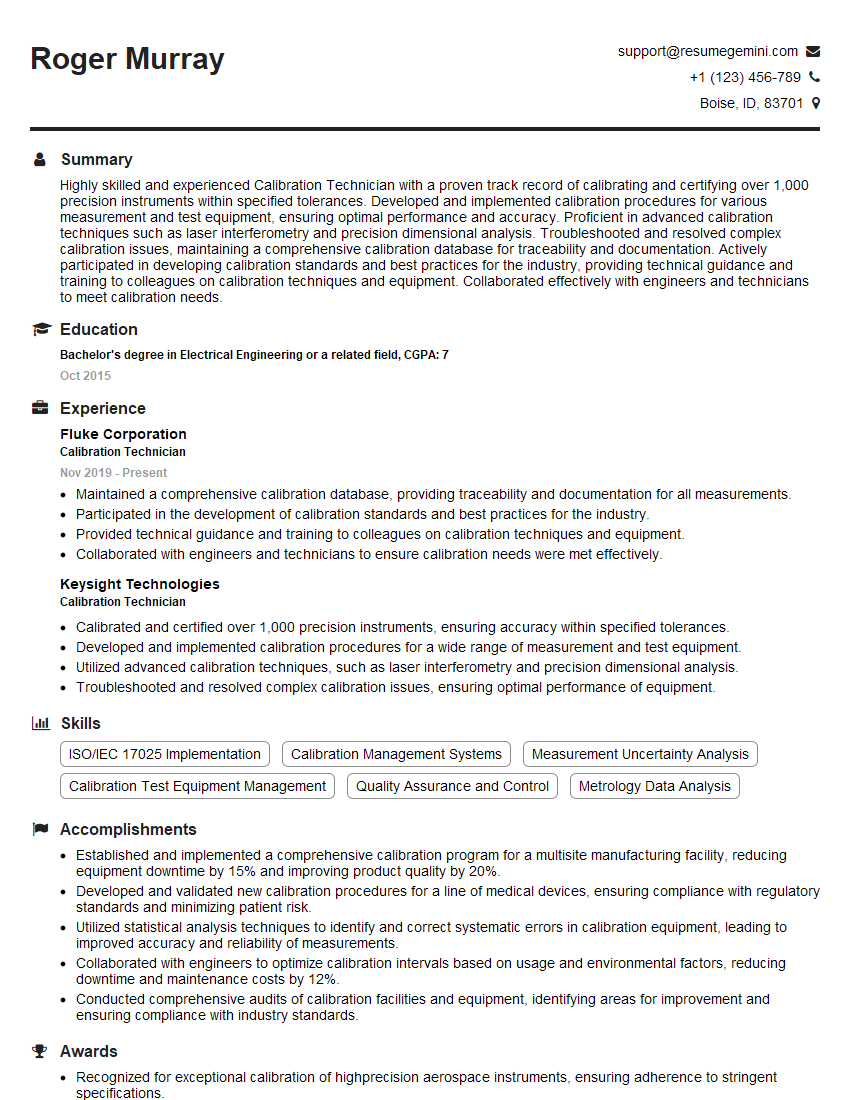
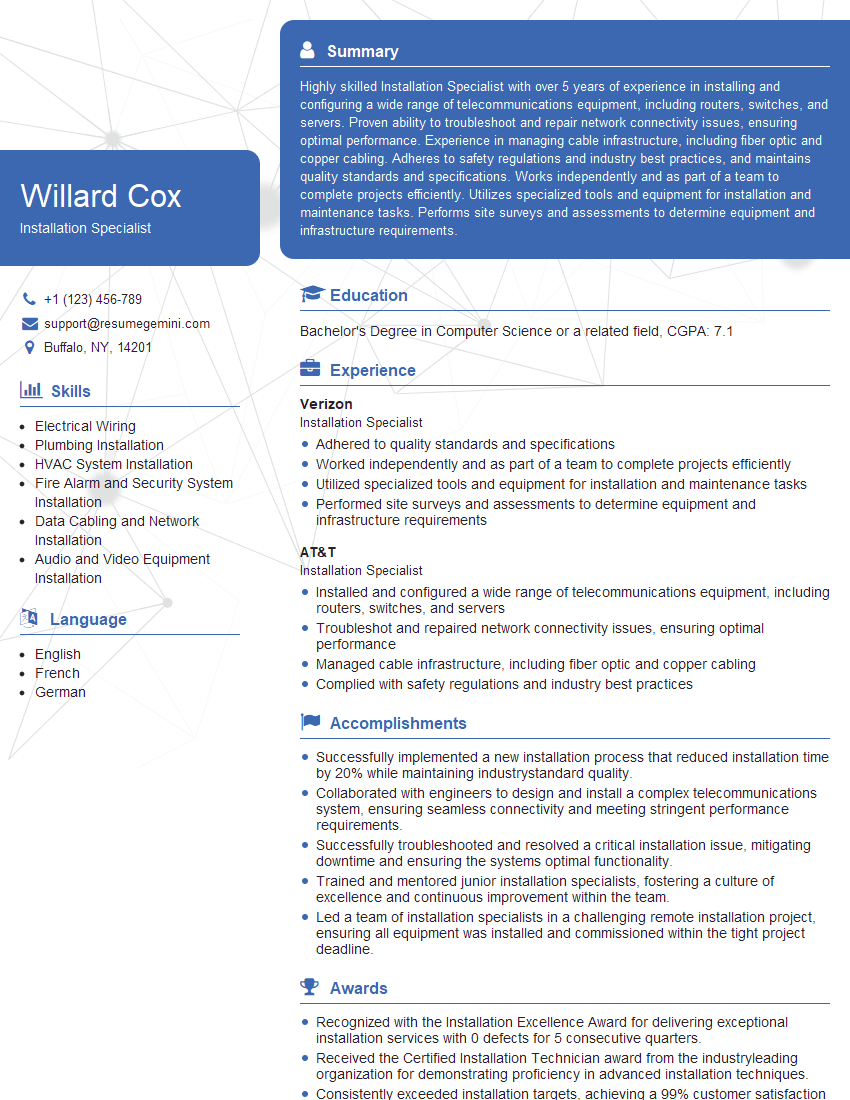
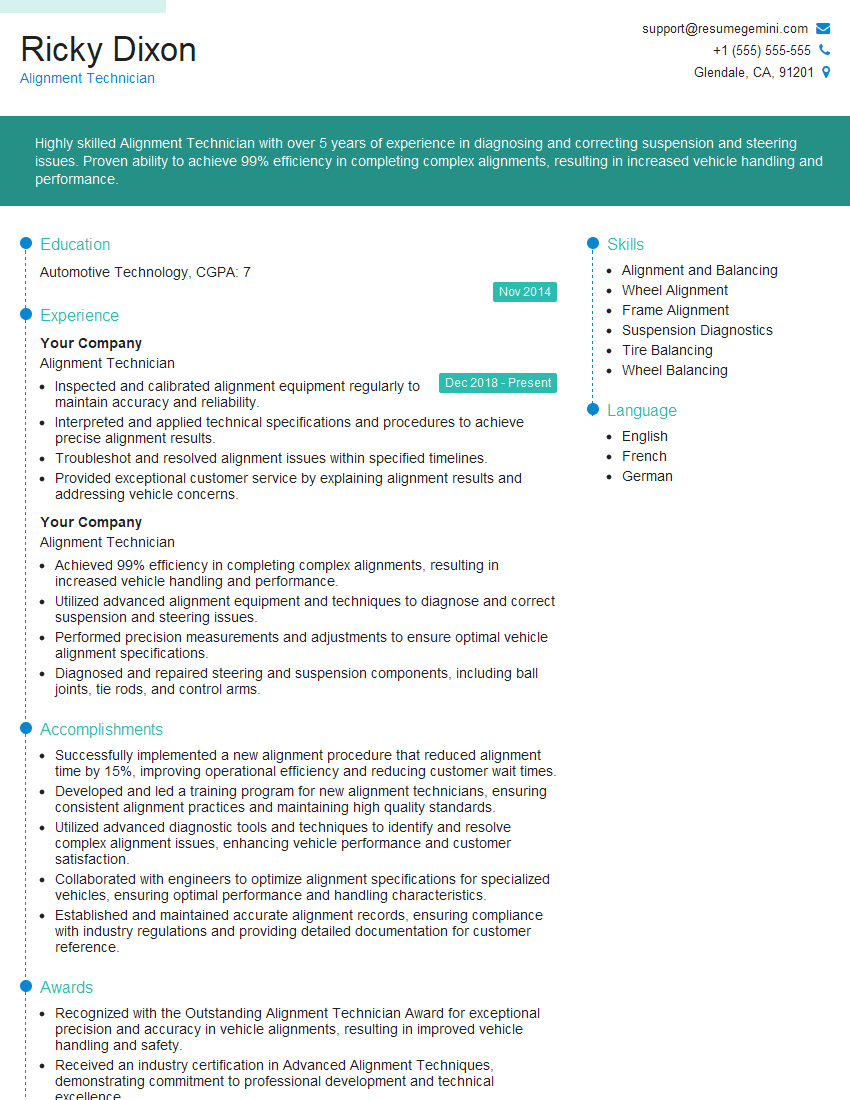
Mastering precision installation techniques significantly enhances your career prospects within engineering, manufacturing, and related fields. It demonstrates a high level of skill and attention to detail, opening doors to advanced roles and increased earning potential. To maximize your chances of landing your dream job, it’s crucial to present your skills effectively. Creating an ATS-friendly resume is essential for getting past applicant tracking systems and into the hands of hiring managers. We highly recommend using ResumeGemini to build a professional and impactful resume. ResumeGemini offers a streamlined process and provides examples of resumes tailored to Precision Installation, ensuring your qualifications shine through.

Explore more articles
Users Rating of Our Blogs
Share Your Experience
We value your feedback! Please rate our content and share your thoughts (optional).
What Readers Say About Our Blog
Really detailed insights and content, thank you for writing this detailed article.
IT gave me an insight and words to use and be able to think of examples