Every successful interview starts with knowing what to expect. In this blog, we’ll take you through the top Concept Design interview questions, breaking them down with expert tips to help you deliver impactful answers. Step into your next interview fully prepared and ready to succeed.
Questions Asked in Concept Design Interview
Q 1. Explain your process for developing a concept from initial sketch to final presentation.
My concept design process is iterative and highly visual. It begins with a thorough understanding of the project brief, followed by brainstorming and sketching to explore initial ideas. I typically start with quick, rough sketches to capture the essence of the concept, focusing on form, function, and overall aesthetic. These sketches are then refined digitally, often using software like Photoshop or SketchUp, to create more detailed 2D representations. This stage involves experimenting with different perspectives, compositions, and visual styles. Once a strong visual direction is established, I move into 3D modeling, typically using ZBrush, to develop the concept further, adding texture and refining details. Finally, the process culminates in high-quality renderings and presentations, which are often accompanied by detailed specifications and design rationale.
For example, when designing a new type of ergonomic chair, I might begin with sketches showing different back support options and overall silhouettes. These initial sketches would then be developed into refined 2D drawings in Photoshop, showcasing material choices and color schemes. ZBrush would be used to create a detailed 3D model, allowing me to explore the chair’s ergonomics virtually. The final presentation would include high-resolution renders showing the chair in various settings, coupled with a document explaining the design choices and benefits.
Q 2. Describe your experience with different software used in concept design (e.g., Photoshop, ZBrush, SketchUp).
My software proficiency spans a range of industry-standard tools. I’m highly proficient in Adobe Photoshop for image manipulation, rendering, and presentation design. My skills in ZBrush allow for creating highly detailed 3D models, perfect for visualizing complex forms and textures. SketchUp is my go-to for quick prototyping and creating 3D models with a focus on form and function, often used early in the design process. I also have experience with other software such as Blender for 3D modeling and animation, and Illustrator for vector-based graphics. The specific software I choose depends on the project’s requirements and the stage of the design process. For instance, if I’m working on a project requiring photorealistic renderings, Photoshop and potentially Octane Render would be key tools. But for quick explorations of form, SketchUp’s simplicity and speed are invaluable.
Q 3. How do you handle feedback and revisions during the concept design process?
Handling feedback and revisions is crucial for a successful design process. I encourage open communication and actively seek feedback at multiple stages. I start by clearly outlining the goals of the design and keeping the client informed throughout the process. I find it beneficial to present concepts in an iterative manner, allowing for adjustments and revisions based on feedback. I carefully document all feedback received, ensuring that each comment is addressed and incorporated into the design appropriately. I strive to understand the reasons behind the feedback, even if it initially seems contradictory to my initial vision. This approach allows for a collaborative design process where the final product reflects both my creative input and the client’s vision.
For example, if a client provides feedback on a chair design stating that the back support is too high, I’ll analyze the feedback and make adjustments to the 3D model accordingly. I might even create multiple revisions to demonstrate different solutions before settling on a final approach. The goal is to ensure the design meets the client’s needs while maintaining its creative integrity.
Q 4. How do you balance creativity with the client’s or team’s vision?
Balancing creativity and client vision requires a delicate approach, built on effective communication and mutual understanding. I believe that the most successful designs are those that seamlessly integrate both elements. I begin by actively listening to the client’s needs, goals, and expectations. Then, I translate these requirements into creative solutions while pushing the boundaries of conventional design thinking. I find presenting a range of concept explorations, both within and outside the client’s initially stated preferences, is effective. This demonstrates my understanding of their needs while simultaneously opening doors to unexpected and potentially superior solutions. Through open discussions, I guide the client towards the best design option while still incorporating my creative contributions.
For instance, if a client wants a “modern” office chair, I might present concepts ranging from minimalist designs to more bold, avant-garde options, all while adhering to their ergonomic requirements. This allows the client to see the full spectrum of possibilities within their desired style, often leading to a more refined and satisfying final product.
Q 5. Describe your approach to creating mood boards and concept explorations.
Mood boards and concept explorations are integral to establishing the visual direction of a project. Mood boards act as visual references, compiling images, textures, colors, and other inspirational elements to set the overall tone and aesthetic. They help to establish a unified visual language and ensure consistency. Concept explorations involve generating numerous sketches, digital renderings, and 3D models, experimenting with different forms, materials, and visual styles. This helps to brainstorm and evaluate diverse design directions before committing to a final design. These explorations might be presented as a series of thumbnails or more detailed renderings, each conveying a distinct visual approach.
For example, designing a futuristic spaceship might involve a mood board featuring images of sleek aircraft, metallic textures, glowing lights, and abstract futuristic landscapes. The concept explorations would then consist of different 3D models showing varied spaceship designs, ranging from streamlined fighter jets to large, bulky cargo vessels, all reflecting the futuristic aesthetic established in the mood board.
Q 6. How do you conduct research to inform your concept designs?
Research is essential for creating informed and relevant designs. My research process typically involves multiple stages. Firstly, I conduct thorough background research to understand the project context and relevant industry trends. I then analyze existing designs, exploring successful and unsuccessful precedents. This often includes studying competitor products, analyzing user feedback, and researching relevant technologies. User research, including interviews or surveys, is invaluable in understanding the target audience’s needs and preferences. Finally, I conduct material research to identify suitable materials that meet the project’s functional and aesthetic requirements. This might involve examining the properties of various materials, considering sustainability factors, and evaluating cost-effectiveness.
For instance, when designing a new bicycle, I would research existing bicycle designs, analyze user reviews, investigate the latest materials used in bicycle manufacturing (like carbon fiber or aluminum alloys), and perhaps even conduct user interviews to understand their cycling habits and preferences.
Q 7. Explain your understanding of color theory and how it impacts your work.
Color theory plays a vital role in my design process. I understand the psychological impact of colors and how they evoke different emotions and associations. I use color palettes strategically to reinforce the design’s overall message and create a desired atmosphere. My understanding encompasses the color wheel, including primary, secondary, and tertiary colors, as well as complementary, analogous, and triadic color schemes. I consider color temperature (warm vs. cool), saturation, and hue to create visual harmony and contrast. Furthermore, I understand the cultural connotations of colors and how these can vary across different regions and contexts. I carefully choose colors to ensure they are both aesthetically pleasing and appropriate for the intended audience and purpose.
For instance, a calming spa environment might utilize a palette of cool blues and greens, whereas a high-energy gaming console might use vibrant reds and oranges. A deep understanding of color theory ensures my design choices support the overall concept and convey the intended message effectively.
Q 8. How do you ensure your designs are both aesthetically pleasing and functional?
Balancing aesthetics and functionality is paramount in concept design. It’s not about choosing one over the other; it’s about finding a harmonious blend. I approach this by starting with a deep understanding of the project’s purpose and user needs. This informs the functional aspects – what the design needs to do. Then, I explore aesthetic solutions that not only look good but also enhance the functionality. For example, a user-friendly interface with clear visual hierarchy isn’t just aesthetically pleasing, it’s also incredibly functional, making the experience efficient and intuitive.
I often use sketching and mood boards to explore various visual directions, testing different layouts and styles against the functionality requirements. Think of it like building a house – the foundation (functionality) needs to be strong and well-planned, but the exterior (aesthetics) should be attractive and inviting. Iteration is key; I’ll continuously refine the design, testing both its look and its effectiveness throughout the process.
Q 9. Describe your experience with different design styles and aesthetics (e.g., realistic, stylized, abstract).
My experience spans a range of design styles. I’ve worked extensively with realistic styles, often employing photorealistic rendering techniques for projects requiring high fidelity and a sense of realism. This is particularly useful for architectural visualization or product design where the client needs to see exactly what the final result will look like. Conversely, I’ve successfully implemented stylized designs, using simplified forms and bold colors to create a distinctive visual language. This works well for animation or branding projects where a unique, memorable aesthetic is crucial. I’ve also explored abstract design approaches for projects emphasizing mood and emotion over literal representation, focusing on symbolic forms and evocative color palettes. For instance, a concept design for a sci-fi film might benefit from a stylized or even abstract approach to create a futuristic and otherworldly feel.
The choice of style is entirely project-dependent. I always consider the target audience, the overall message, and the project’s purpose to ensure the selected aesthetic effectively communicates the intended concept.
Q 10. How do you manage your time and prioritize tasks when working on multiple projects?
Managing multiple projects effectively requires a structured approach. I use a project management system, incorporating task prioritization and time allocation. I start by breaking down each project into smaller, manageable tasks, assigning deadlines to each. I prioritize tasks based on urgency and impact, focusing first on critical path items that directly influence the project timeline. Tools like Trello or Asana are invaluable for visualising progress and ensuring accountability. Furthermore, I dedicate specific time blocks to each project to maintain focus and avoid context switching. Regular reviews and adjustments to the schedule are crucial to ensure I stay on track and adapt to unforeseen circumstances.
A key aspect is open communication with clients. I set realistic expectations upfront and maintain regular updates to ensure alignment and manage any potential delays proactively. This collaborative approach not only helps in managing time efficiently but also builds strong client relationships.
Q 11. Describe a time you had to overcome a creative block in your concept design process.
I once faced a significant creative block while designing a children’s toy. The initial concepts felt uninspired and lacked the playful energy the project demanded. To overcome this, I stepped away from the digital tools and focused on brainstorming using traditional methods. I spent a day sketching freely, exploring various shapes, textures, and color combinations without any self-criticism. I also sought inspiration from unrelated sources – visiting a children’s museum, observing kids at play, and researching different art styles. This immersion in different perspectives sparked new ideas and allowed me to approach the design with a fresh perspective. The result was a unique and playful toy design that incorporated elements from my sketches and research, ultimately proving successful with both clients and users.
Q 12. How do you present your concept designs to clients or stakeholders?
Presenting concept designs effectively involves more than just showcasing visuals; it’s about storytelling and conveying a compelling narrative. I start by outlining the project’s background, objectives, and target audience. Then, I present my designs using a combination of high-quality visuals, such as renderings and animations, and clear, concise explanations of the design rationale. I use annotated sketches to show the design process and highlight key design decisions. Interactive presentations or prototypes are also helpful for demonstrating functionality and engaging stakeholders.
Crucially, I encourage a two-way conversation, soliciting feedback and addressing any questions or concerns. The presentation isn’t a one-way delivery; it’s a collaborative discussion aimed at refining the design and ensuring alignment with the client’s vision. The goal is to make the client feel confident and excited about the design’s potential.
Q 13. Explain your experience with different rendering techniques.
My experience with rendering techniques is broad, encompassing various software and approaches. I’m proficient in using programs like Blender, 3ds Max, and Cinema 4D for creating photorealistic 3D renders, which are essential for conveying realistic details and textures. For quicker iterations and initial exploration, I use simpler techniques like hand-drawn illustrations or basic digital painting, which allows for faster concept development.
I also leverage techniques like ambient occlusion and global illumination to enhance the realism and visual appeal of my renders. The choice of rendering technique depends entirely on the project’s scope and the level of detail required. A quick concept sketch might be sufficient for an early stage presentation, while a fully rendered 3D model might be necessary for a final client presentation or manufacturing documentation.
Q 14. How do you incorporate user feedback into your concept designs?
User feedback is invaluable in refining concept designs. I actively seek feedback through various methods, including user surveys, focus groups, usability testing, and informal feedback sessions. I carefully analyze the feedback, separating constructive criticism from personal opinions. I prioritize feedback that addresses functionality, usability, and aesthetic preferences. I use this feedback to iterate on the design, making necessary adjustments to improve the overall user experience.
For instance, if user testing reveals a particular feature is difficult to use, I might redesign that feature to be more intuitive. Similarly, if feedback indicates a certain aesthetic element is not appealing, I may explore alternative visual solutions. This iterative process ensures the final design meets the needs and expectations of the target users, resulting in a more successful and user-friendly product.
Q 15. What are your strengths and weaknesses as a concept designer?
My greatest strength as a concept designer lies in my ability to blend strong visual communication with a deep understanding of narrative. I excel at translating abstract ideas into compelling visual representations that resonate with audiences. I can quickly grasp the core essence of a project and translate it into initial sketches and mood boards. I also possess a strong grasp of various software and techniques, allowing me to efficiently execute my designs.
However, I recognize that perfectionism can sometimes hinder my workflow. While striving for excellence is positive, I’m actively working on managing my time more effectively and learning to prioritize tasks to meet deadlines without compromising quality. I achieve this through utilizing project management techniques and setting realistic goals.
Career Expert Tips:
- Ace those interviews! Prepare effectively by reviewing the Top 50 Most Common Interview Questions on ResumeGemini.
- Navigate your job search with confidence! Explore a wide range of Career Tips on ResumeGemini. Learn about common challenges and recommendations to overcome them.
- Craft the perfect resume! Master the Art of Resume Writing with ResumeGemini’s guide. Showcase your unique qualifications and achievements effectively.
- Don’t miss out on holiday savings! Build your dream resume with ResumeGemini’s ATS optimized templates.
Q 16. How do you stay current with trends and advancements in concept design?
Staying current in concept design requires a multi-faceted approach. I regularly browse online resources such as ArtStation, Behance, and other design-focused websites for inspiration and to observe the work of leading professionals. I actively follow industry influencers on social media and attend online and in-person workshops and conferences when possible. I also dedicate time to experimenting with new software and techniques, pushing my creative boundaries and exploring innovative ways to solve visual problems. This constant learning keeps my skills sharp and ensures my work remains fresh and relevant.
Q 17. Describe your experience working within a team environment.
I thrive in collaborative environments. I believe that diverse perspectives enrich the design process and lead to more innovative outcomes. My experience includes working on multiple large-scale projects, where effective communication and teamwork were critical to success. I’m comfortable participating in brainstorming sessions, providing constructive feedback, and incorporating input from others into my work. For example, on a recent project designing a fantasy game world, I actively collaborated with writers, environment artists, and programmers, contributing my visual expertise to create a unified and cohesive game environment. This collaborative approach resulted in a product exceeding individual expectations.
Q 18. How do you handle constructive criticism?
I view constructive criticism as an invaluable opportunity for growth and improvement. I actively seek feedback, understanding that it is not a personal attack, but a chance to refine my work. I approach criticism with an open mind, focusing on understanding the reasoning behind the critique and identifying areas where I can strengthen my approach. I document the feedback and use it to inform future iterations of my designs. For example, if a client suggests a change in color palette, I take the time to understand their rationale and explore different color combinations to find the best fit for the project’s overall aesthetic and message.
Q 19. Explain your process for creating believable characters or environments.
Creating believable characters and environments requires a multifaceted approach encompassing research, world-building, and artistic skill. My process begins with extensive research; for example, if designing a futuristic city, I’ll research real-world urban planning, architecture, and technological advancements. This research informs my design choices, making them more grounded and credible. Then, I develop a detailed concept for the character or environment, considering factors such as their background, personality, and function within the larger narrative. I utilize mood boards, sketches, and 3D modeling to bring my initial concepts to life. Finally, iteration is key; I continuously refine the design based on feedback and self-assessment, ensuring the final product is both visually appealing and believably integrated within its context.
Q 20. How do you use storytelling in your concept designs?
Storytelling is at the heart of effective concept design. I aim to imbue my designs with narrative weight, ensuring they convey a message or evoke an emotion. This is achieved through visual language; for example, the choice of color palette, composition, character poses, and environmental details all contribute to the overall narrative. Consider a scene depicting a lone figure standing on a desolate, windswept hill; this simple composition evokes a feeling of loneliness and isolation, instantly communicating a key element of the story. By carefully selecting and arranging visual elements, I can construct a compelling visual narrative that resonates with the viewer even without explicit text.
Q 21. Describe your understanding of perspective and composition.
Perspective and composition are fundamental to creating impactful concept art. Perspective creates depth and realism, drawing the viewer’s eye through the scene. I utilize various techniques, including one-point, two-point, and three-point perspective, depending on the needs of the design. Composition, on the other hand, focuses on arranging visual elements to create a balanced and engaging image. I utilize the rule of thirds, leading lines, and other compositional principles to guide the viewer’s gaze and enhance the visual impact of my work. For example, placing a key character at a focal point using the rule of thirds draws the viewer’s attention to the character, creating a stronger sense of emphasis and narrative impact.
Q 22. How do you utilize reference images effectively in your work?
Reference images are the backbone of effective concept design. They aren’t just copied; they’re dissected and reinterpreted. My approach involves a multi-stage process. First, I gather a wide array of images relevant to my project – focusing on form, composition, color palettes, and even texture. For example, if designing a futuristic city, I might collect images of modern architecture, decaying industrial sites, and even biological structures to inspire unusual shapes and textures. Second, I analyze these images, breaking down what works and why. I might note the use of light and shadow in one, the dynamic composition in another, and the intriguing color scheme in a third. Finally, I actively synthesize this information, avoiding direct copying and instead using the images as a springboard for my own creative ideas. It’s like having a visual library of inspiration, allowing me to efficiently generate unique and grounded concepts.
For instance, designing a character, I might use reference images of human anatomy for accurate proportions, animal studies for unique features, and fashion photography for stylistic inspiration. I avoid simply pasting elements together; instead, I use the references to inform my decisions regarding proportions, pose, texture, and overall aesthetic.
Q 23. How do you create a cohesive and believable visual style?
Creating a cohesive and believable visual style is about establishing a clear visual language and maintaining consistency. It begins with defining the overall mood and tone of the project. Is it dark and gritty, whimsical and lighthearted, or something in between? This initial decision guides subsequent choices regarding color palettes, line weights, textures, and even the level of detail.
Consistency is key. I utilize style guides (even for personal projects) to document my choices. This helps ensure visual elements maintain a unified look and feel throughout the entire project, whether it’s a single piece of concept art or a large-scale project. For example, I might define a specific color palette with primary, secondary, and accent colors, and then rigidly adhere to these choices. I also establish consistent line weights and textures to further enhance visual unity. Imagine designing a game world – consistency in architectural styles, character designs, and environment details will make the world feel believable and immersive.
Finally, believable visuals require understanding the underlying principles of realism or stylistic consistency, depending on the project. If designing a fantasy world, while elements may be fantastical, their visual presentation should adhere to consistent internal logic. For example, gravity, light sources, and material properties should function within the established rules of your created universe.
Q 24. Explain your approach to problem-solving in a design context.
My problem-solving approach in design is iterative and analytical. I start by thoroughly understanding the problem or brief. This involves asking clarifying questions, identifying constraints, and defining the desired outcome. I then brainstorm multiple potential solutions, sketching freely to visualize different approaches. This often involves mood boards, quick sketches, and thumbnail explorations. I consider factors like functionality, aesthetics, feasibility, and budget. I then select the most promising solutions and develop them further, refining them through repeated iterations of testing and feedback. This cyclical process involves evaluating each iteration, identifying areas for improvement, and making necessary adjustments.
For example, if tasked with designing a futuristic vehicle, I’d begin by researching similar vehicles, brainstorming functionalities, and sketching initial designs. I would then iterate on those sketches, refining their proportions, detailing the interiors and exteriors, and ensuring they reflect a cohesive and believable design within the established style. This continuous process of refinement is essential to delivering a well-considered and effective final product. I use tools like Photoshop and 3D modeling software to aid in this process.
Q 25. Describe your experience with creating concept art for different mediums (e.g., games, film, animation).
My experience spans various mediums, each presenting unique challenges and rewards. In game concept art, the focus is often on creating assets that are both visually appealing and technically feasible for integration into the game engine. This requires understanding polygon counts, texture resolutions, and material properties. I’ve worked on character designs, environment concepts, and weapon designs for various game projects.
Film concept art necessitates a strong understanding of cinematography, lighting, and storytelling. The focus is on conveying mood, atmosphere, and narrative through visually striking imagery. Here, I’ve contributed to designs for set pieces, characters, and overall visual styles for short films and animation projects. Animation concept art shares similarities with both game and film art, but also requires considering character rigging, animation principles, and the overall flow of movement across different shots. It demands a strong understanding of character design, expression and body mechanics.
In each case, my approach involves understanding the technical limitations and creative opportunities of each medium, tailoring my style and workflow accordingly. It’s about knowing when to prioritize detail, when to be suggestive, and when to focus on clarity and functionality.
Q 26. How do you ensure your designs are scalable and adaptable?
Scalability and adaptability are paramount in concept design. To ensure my designs are scalable, I avoid unnecessary detail in early stages, focusing on the overall form and structure. I utilize modular design principles whenever possible, breaking down complex elements into smaller, reusable components. This makes it easier to adapt the designs for different scales or applications.
For example, designing a building, I might first create a modular design for a single unit which can then be repeated and scaled up or down to form different buildings or complexes. Similarly, I consider the design’s adaptability to various resolutions or output formats (such as print or digital display). I also design with vector formats as much as possible for flexibility in scaling. Finally, I create designs that are easily adjustable. This might involve using layers effectively and ensuring individual components are easily modified without affecting the rest of the design. This adaptability ensures my work remains versatile and flexible to changes in project requirements or scale.
Q 27. Describe your understanding of design principles, such as balance, contrast, and unity.
Design principles like balance, contrast, and unity are fundamental to creating effective and visually appealing designs. Balance refers to the visual weight distribution within a composition – symmetrical balance creates a sense of stability and formality, while asymmetrical balance generates a more dynamic and engaging feel.
Contrast refers to the juxtaposition of opposing elements to create visual interest and emphasis. This could be variations in color, value, texture, shape, or scale. For example, a brightly colored object against a dark background will stand out significantly. Unity, on the other hand, involves creating a sense of cohesiveness and harmony within the design. This is achieved through consistency in style, color palette, and the use of visual elements that tie the different parts of the design together.
Consider a poster design. A balanced composition ensures no single element overpowers the rest. Contrast is used to highlight key elements like the title or call to action. Unity ensures all elements work together harmoniously to deliver a cohesive message. Understanding and applying these principles is crucial for creating designs that are both visually engaging and effectively communicate their intended message.
Q 28. How do you use visual language to communicate effectively in your designs?
Visual language is the key to effectively communicating through design. It’s about using visual elements – lines, shapes, colors, textures, and composition – to convey meaning, evoke emotions, and tell stories. The choice of color palette, for instance, can significantly influence the mood and tone of a design. Warm colors often convey feelings of comfort and happiness, whereas cool colors might suggest calmness or sadness.
Line weight and style can also communicate a lot. Bold lines might suggest strength and power, while thin, delicate lines might imply fragility or elegance. Shape language can also be expressive. Sharp, geometric shapes often feel modern and technological, whereas organic, flowing shapes might convey naturalness or fluidity. Composition plays a critical role in guiding the viewer’s eye and establishing visual hierarchy.
For instance, in character design, sharp lines and angular shapes might create a character that feels aggressive, while soft curves and rounded shapes may suggest a more gentle or playful persona. Therefore, mastering visual language allows me to effectively communicate complex ideas and concepts in a concise and impactful manner, ensuring my designs resonate with their intended audience.
Key Topics to Learn for Concept Design Interview
- Ideation and Brainstorming: Understanding various brainstorming techniques, from mind mapping to collaborative sessions, and their application in generating innovative design concepts.
- Sketching and Visual Communication: Mastering quick sketching to effectively communicate ideas, exploring different sketching styles and their applications in different design contexts.
- Design Principles and Theory: A strong grasp of fundamental design principles like composition, color theory, typography, and their practical application in creating compelling visuals.
- User-Centered Design (UCD): Understanding the importance of user research and its integration into the concept design process, focusing on creating user-centric solutions.
- Storytelling through Design: Developing the ability to craft a narrative through visual elements and effectively convey a message or idea to the target audience.
- Software Proficiency (relevant to your application): Demonstrating practical experience with industry-standard design software (e.g., Adobe Creative Suite, Figma, Sketch) and showcasing your proficiency.
- Presentation and Communication: Effectively presenting your design concepts, articulating your design rationale, and addressing feedback constructively.
- Problem-Solving and Critical Thinking: Demonstrating your ability to analyze design problems, identify constraints, and propose innovative solutions.
- Case Studies and Portfolio Review: Preparing compelling case studies that highlight your design process and demonstrate your ability to tackle real-world design challenges.
Next Steps
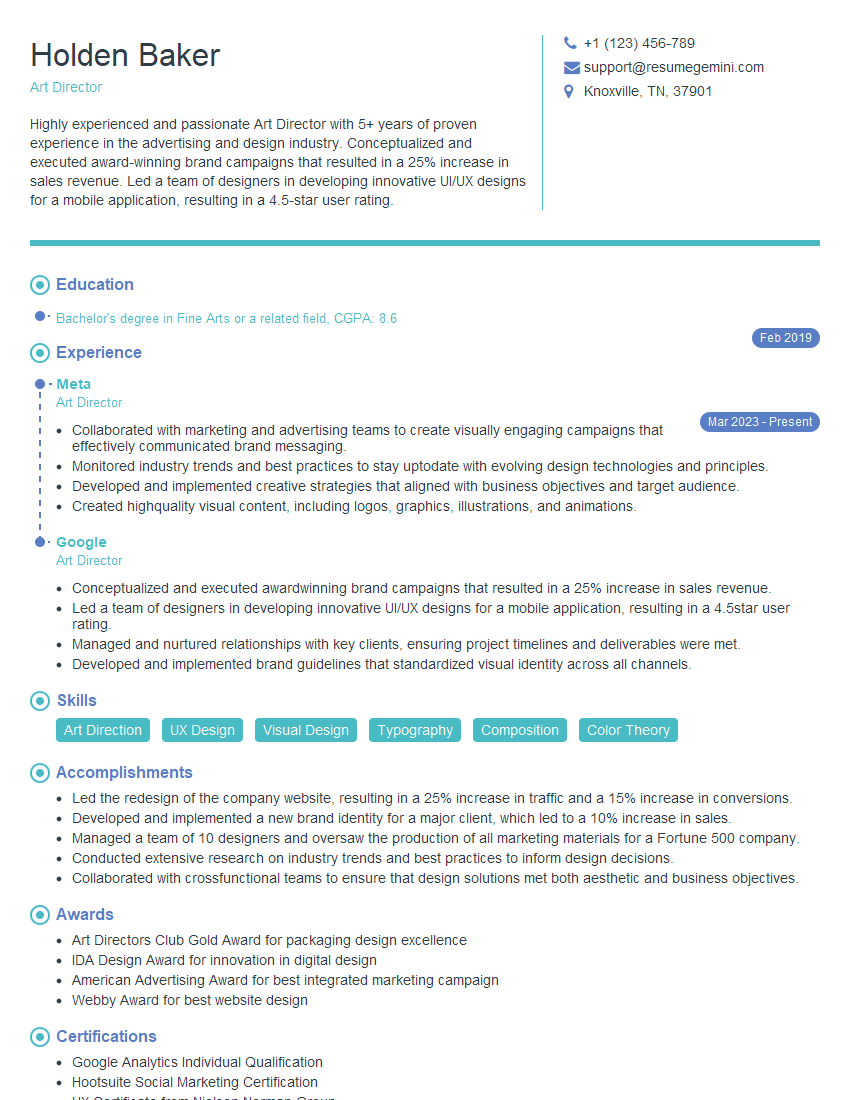
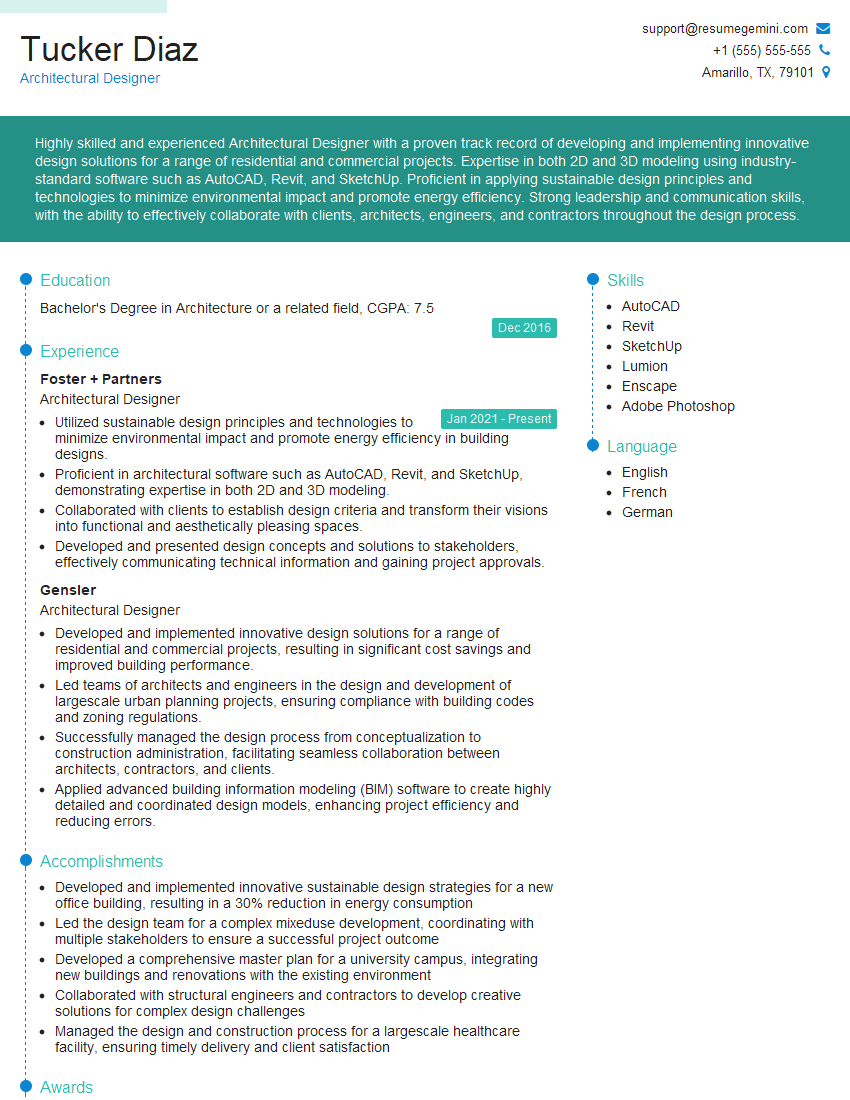
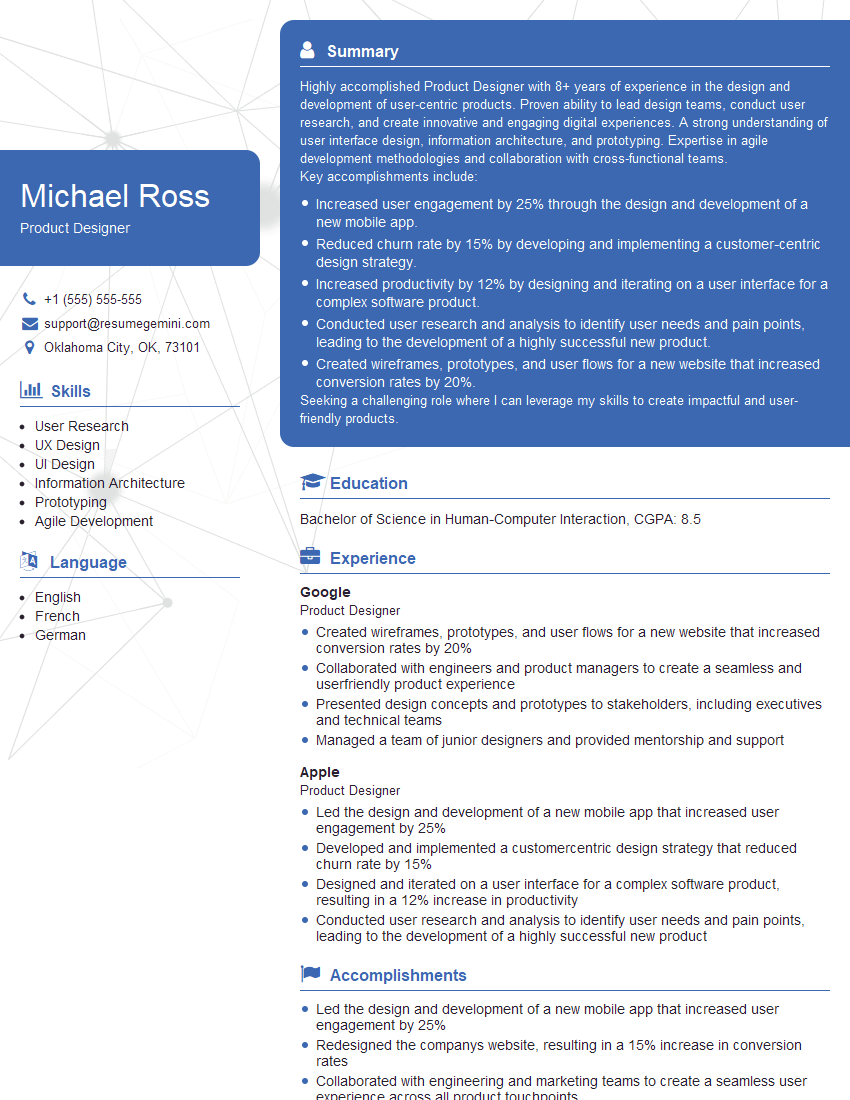
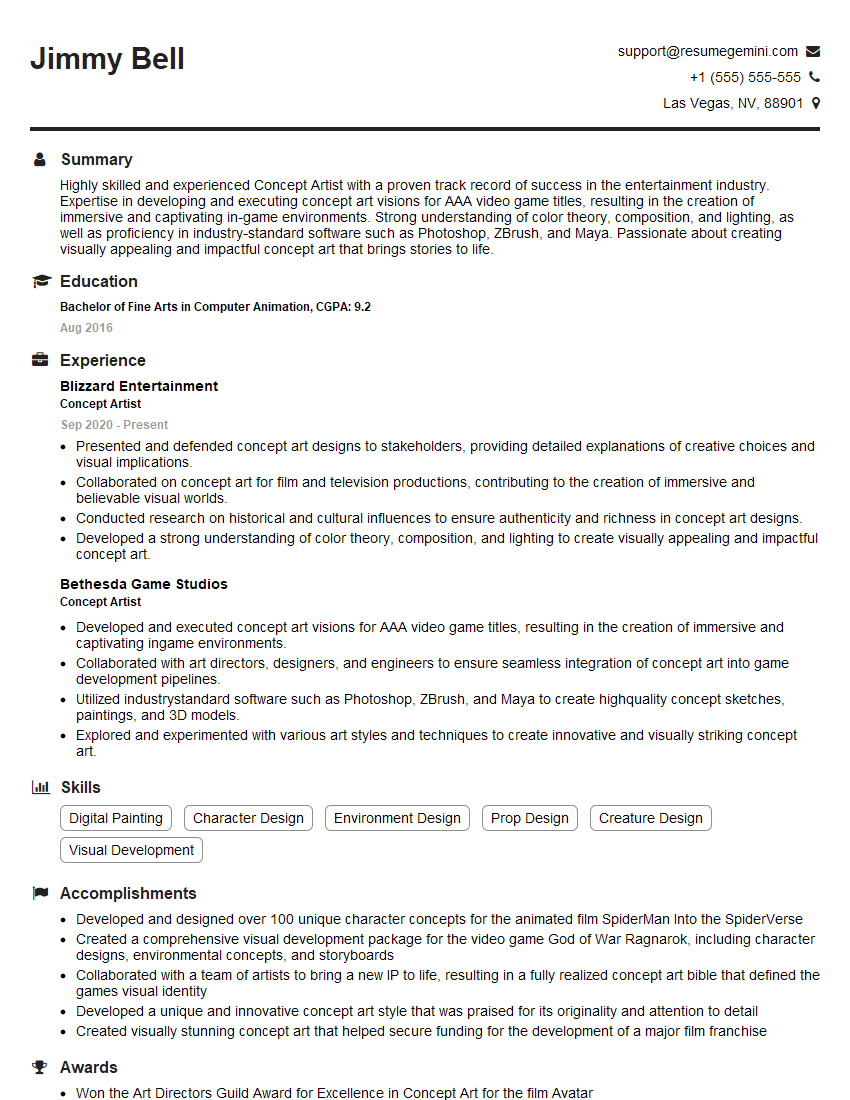
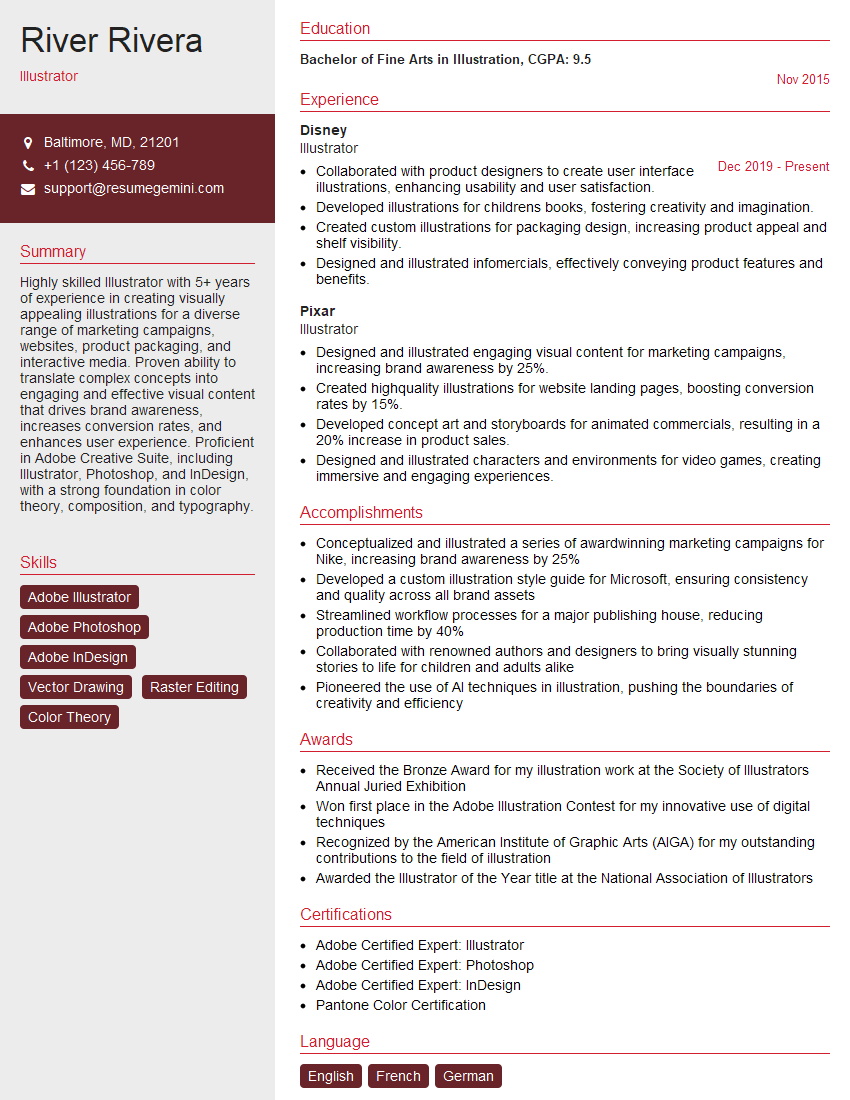
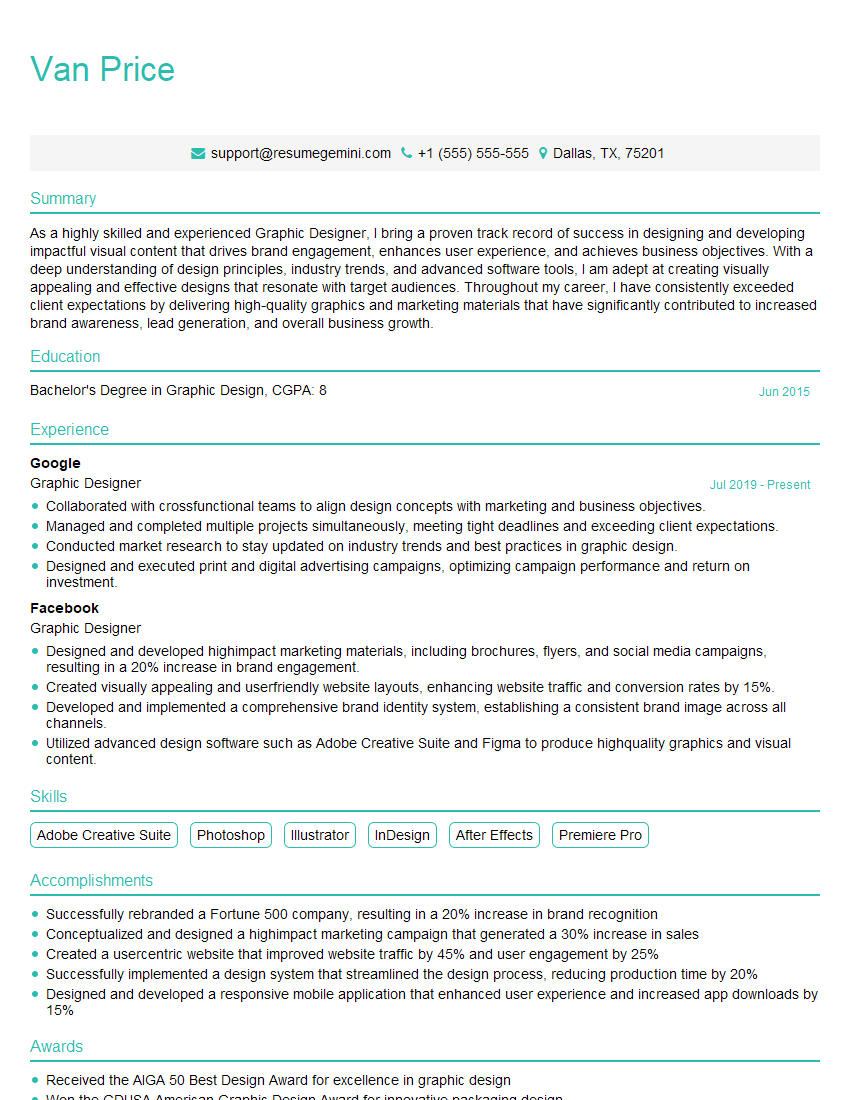
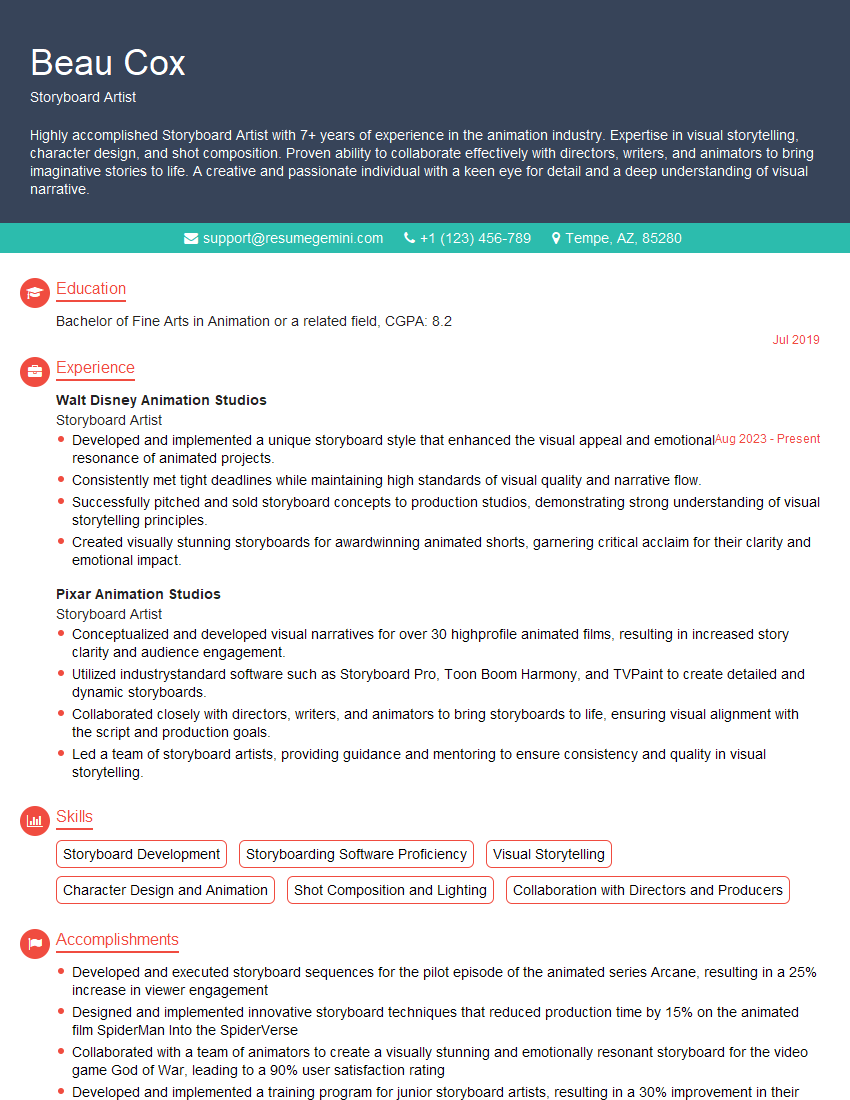
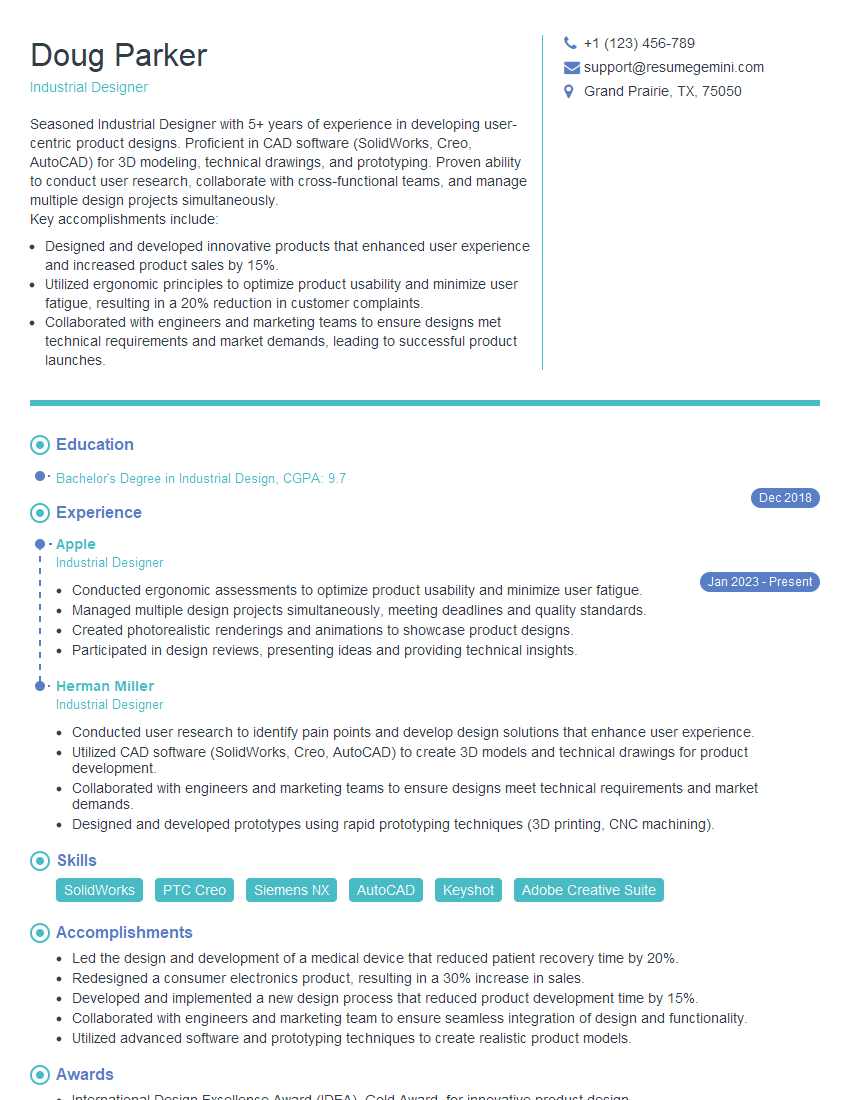
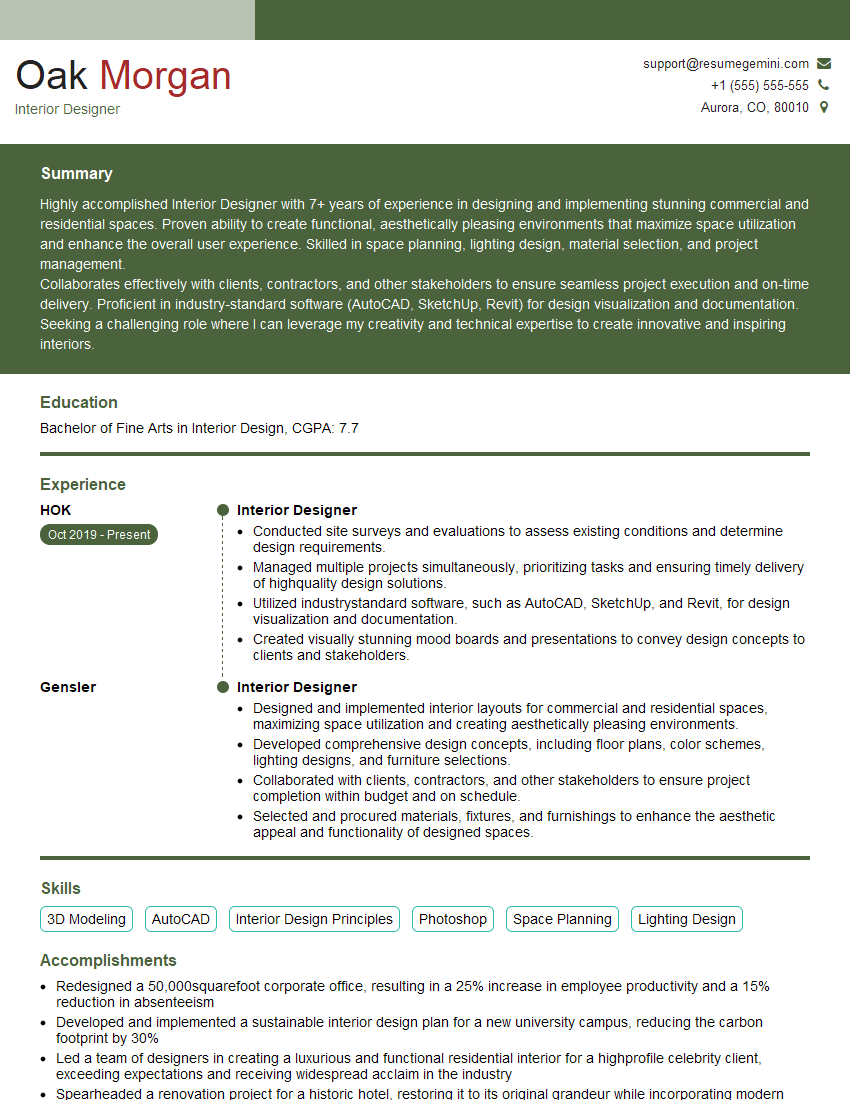
Mastering Concept Design opens doors to exciting and rewarding career opportunities in various creative fields. A strong grasp of these core principles significantly enhances your employability and allows you to showcase your creative problem-solving abilities. To maximize your job prospects, creating an ATS-friendly resume is crucial. This ensures your application gets noticed by recruiters and hiring managers. We highly recommend using ResumeGemini to build a professional and impactful resume. ResumeGemini provides the tools and resources to create a compelling document, and we have examples of Concept Design-tailored resumes available to guide you.
Explore more articles
Users Rating of Our Blogs
Share Your Experience
We value your feedback! Please rate our content and share your thoughts (optional).
What Readers Say About Our Blog
Really detailed insights and content, thank you for writing this detailed article.
IT gave me an insight and words to use and be able to think of examples