The thought of an interview can be nerve-wracking, but the right preparation can make all the difference. Explore this comprehensive guide to Conceptual Aircraft Design interview questions and gain the confidence you need to showcase your abilities and secure the role.
Questions Asked in Conceptual Aircraft Design Interview
Q 1. Explain the process of conceptual aircraft design, from initial concept to preliminary design.
Conceptual aircraft design is a multidisciplinary process that iteratively refines an initial idea into a preliminary design ready for detailed engineering. It starts with defining the mission requirements – what the aircraft needs to do (e.g., carry a specific payload over a certain range at a given speed). This mission definition drives the initial concept phase. Here, we explore various configurations, propulsion systems, and technologies to meet those needs. This might involve sketching, simple calculations, and preliminary aerodynamic estimations. Think of it as brainstorming but with a strong focus on feasibility.
Next comes the preliminary design phase. This involves a more rigorous analysis, using tools like Computational Fluid Dynamics (CFD) and weight estimations to refine the initial concept. We start selecting specific components, developing a more detailed geometry, and evaluating trade-offs between different design choices. The outcome is a refined aircraft configuration with performance predictions and a preliminary weight statement, laying the groundwork for detailed design.
For example, designing a small, efficient commuter aircraft might start with considering different wing designs (high-aspect ratio for efficiency or low-aspect ratio for maneuverability), engine types (turboprops for efficiency or turbofans for speed), and fuselage configurations (high-wing or low-wing). The preliminary design would then solidify these choices based on performance simulations and cost analysis.
Q 2. Describe different aircraft configurations and their respective advantages and disadvantages.
Aircraft configurations vary widely depending on mission requirements. Common configurations include:
- High-wing: Wings mounted above the fuselage. Advantages include better ground visibility, higher wing clearance for rough runways, and more stable handling. Disadvantages can include increased fuselage drag and higher center of gravity.
- Low-wing: Wings mounted below the fuselage. Advantages include lower center of gravity, improved stability at high speeds, and reduced drag compared to high-wing designs (for similar wingspans). Disadvantages include reduced ground visibility and potential damage to wings during landings on rough terrain.
- Mid-wing: Wings mounted at mid-fuselage height. Offers a balance of high and low wing advantages, but with potential for compromised stability in certain flight conditions.
- Canard: Small forward-mounted wings before the main wing. Improves maneuverability and stability at high angles of attack. Disadvantages can include potential for drag increase and complex control systems.
- Flying Wing: Entire aircraft structure forms the wing. Highly efficient due to reduced drag and weight, but presents challenges in stability and control, as well as passenger accommodation.
Choosing the right configuration is a key decision in conceptual design, driven by mission requirements and performance goals. For example, a crop duster might benefit from a high-wing design for ground clearance, while a high-speed fighter jet would likely prefer a low-wing design for aerodynamic efficiency.
Q 3. How do you balance performance requirements (speed, range, payload) with design constraints (weight, cost, manufacturability)?
Balancing performance requirements and design constraints is the core challenge in aircraft design. It’s an iterative process involving trade-offs and optimization. We often use multi-disciplinary optimization (MDO) techniques. This involves defining objective functions (e.g., maximize range, minimize weight) and constraint functions (e.g., maximum allowable stress, cost limits).
For instance, increasing payload increases weight, negatively impacting range and speed. Similarly, higher speed demands more powerful engines, adding weight and cost. Therefore, we must carefully balance these conflicting factors. We often use parametric design tools that allow us to change parameters (wing area, engine size, etc.) and quickly assess the effects on performance and weight. This allows for rapid exploration of the design space and identification of optimal solutions.
The process involves simulations, estimations and refinement. For instance, early stage weight estimations may not be very precise, but later the more detailed models of the components will help us to refine that weight estimation, potentially impacting the engine selection and other design choices.
Q 4. Explain the role of Computational Fluid Dynamics (CFD) in conceptual aircraft design.
Computational Fluid Dynamics (CFD) is crucial in conceptual aircraft design. It allows us to simulate airflow around the aircraft, predicting aerodynamic forces (lift, drag, moment) and pressure distributions. This is essential for evaluating the aerodynamic performance of different configurations and design choices. Early in the process, CFD allows us to examine the overall flow field, understanding where drag is generated and how to reduce it, allowing us to optimize the shape early in the process.
Using CFD, we can assess the effectiveness of various wing designs, fuselage shapes, and control surfaces. For example, we can simulate different wing sweep angles to understand their impact on drag at transonic speeds. We can also explore various high-lift devices (flaps, slats) to improve takeoff and landing performance. The results from CFD simulations inform design decisions, guiding the optimization process and enabling us to achieve better aerodynamic efficiency and performance.
Imagine designing a new airfoil. CFD simulations would allow us to evaluate different airfoil shapes and surface treatments to find the one that minimizes drag and maximizes lift. This information then feeds into other aspects of the design, ultimately influencing the overall performance and efficiency of the aircraft.
Q 5. Discuss different wing designs and their impact on aerodynamic performance.
Wing design significantly influences aerodynamic performance. Key parameters include:
- Aspect Ratio (AR): The ratio of wingspan to average chord (wing width/wing average thickness). Higher AR wings generally have lower induced drag (drag generated by the wingtip vortices) but can be less maneuverable. A high-aspect ratio wing is ideal for gliders or long-range aircraft where efficiency is paramount. Low-aspect ratio wings, by contrast, are used in aircraft where maneuverability and high lift are essential such as fighters.
- Sweep Angle: The angle between the wing’s leading edge and the aircraft’s longitudinal axis. Sweep back reduces drag at transonic speeds but can negatively affect low-speed handling.
- Airfoil Shape: The cross-sectional shape of the wing. Different airfoil shapes offer different lift and drag characteristics. A thick airfoil might be chosen for low-speed flight, while a thin airfoil might be better for supersonic flight.
- High-lift Devices: Flaps and slats improve lift at low speeds, crucial for takeoff and landing. These can greatly impact low speed performance, but can also add significant weight and complexity.
The selection of the wing design depends on the specific mission requirements of the aircraft. A long range airliner may benefit from a high aspect ratio wing to achieve optimal fuel economy, while a high speed fighter jet may need a low aspect ratio, swept wing to achieve optimal supersonic performance.
Q 6. How do you incorporate stability and control considerations in the conceptual design phase?
Stability and control considerations are integral to conceptual design. We must ensure that the aircraft is inherently stable (tends to return to its equilibrium state after a disturbance) and controllable (the pilot can easily maneuver it). We use tools like static and dynamic stability analysis to assess stability characteristics. This often involves evaluating the aircraft’s center of gravity (CG) location relative to its aerodynamic center (AC).
In the conceptual phase, we conduct preliminary stability and control analyses using simplified models. We determine appropriate locations for control surfaces (ailerons, elevators, rudder) to effectively control the aircraft’s attitude and flight path. We also consider factors such as longitudinal stability (pitch stability), lateral stability (roll stability), and directional stability (yaw stability). Proper balance of these factors is needed for a safe and easily controllable aircraft. For example, a poorly designed aircraft might have a tendency to pitch up excessively during flight, making it very difficult to handle, or even dangerous.
For example, placing the center of gravity too far aft might lead to longitudinal instability, making the aircraft difficult to control. Early in the conceptual design phase we should make an initial determination for the center of gravity location. This will influence the location of many components and drive the overall aircraft design process.
Q 7. Explain the concept of lift-to-drag ratio and its importance in aircraft design.
The lift-to-drag ratio (L/D) is a crucial performance indicator in aircraft design. It represents the amount of lift generated for every unit of drag. A higher L/D ratio signifies greater aerodynamic efficiency, leading to improved fuel economy, increased range, and better overall performance.
Maximizing L/D is a primary goal in aircraft design. Various design choices influence L/D. For instance, a streamlined fuselage, efficient wing design (high aspect ratio, optimized airfoil shape), and minimizing parasitic drag (drag from components like landing gear and antennas) all contribute to a higher L/D. CFD simulations play a significant role in determining and optimizing L/D. We can use CFD to analyze the airflow over different design configurations and identify areas for improvement.
Imagine comparing two aircraft with the same weight and lift. The aircraft with the higher L/D ratio will require less thrust to maintain level flight, resulting in reduced fuel consumption and longer range. The L/D ratio is a key metric that helps evaluate the overall aerodynamic efficiency of any aircraft.
Q 8. What are the key factors influencing aircraft weight estimation during the conceptual phase?
Accurate aircraft weight estimation is crucial in the conceptual design phase, as it significantly impacts performance, cost, and feasibility. It’s an iterative process, refining estimates as the design matures. Key influencing factors include:
- Mission Requirements: Payload (passengers, cargo), range, speed, and altitude directly dictate the size and weight of the aircraft. A longer-range aircraft, for instance, necessitates more fuel, increasing overall weight.
- Aircraft Configuration: The chosen aerodynamic configuration (e.g., wing shape, fuselage length) profoundly affects weight. A blended wing body design, for example, can potentially offer weight savings compared to a traditional tube-and-wing configuration.
- Propulsion System: The weight of engines, fuel tanks, and associated systems is a dominant factor. Choosing lighter and more fuel-efficient engines can significantly reduce overall weight.
- Materials Selection: The selection of materials (e.g., aluminum alloys, composites, titanium) significantly impacts weight. Composites, while often more expensive, offer substantial weight savings compared to traditional aluminum alloys.
- Systems and Equipment: The weight of avionics, flight control systems, hydraulic systems, and other onboard equipment contributes to the overall weight. Effective system integration and weight optimization strategies are vital.
- Safety Factors: Safety regulations mandate design margins to account for uncertainties and potential overloading. These safety margins add to the overall weight.
Weight estimation often starts with simple estimations using historical data and scaling laws before moving to more sophisticated methods like weight breakdown structures and parametric models as the design progresses.
Q 9. Describe different propulsion systems and their suitability for different aircraft types.
Aircraft propulsion systems vary widely, each with strengths and weaknesses that make them suitable for different aircraft types. The choice depends on factors like mission requirements, operating altitude, and environmental considerations.
- Turbojet Engines: Efficient at high altitudes and speeds, ideal for supersonic and high-speed subsonic aircraft. Examples include Concorde and many military fighter jets. However, they are less fuel-efficient at lower speeds and altitudes.
- Turbofan Engines: Bypassing a significant portion of air around the core, turbofans are more fuel-efficient than turbojets across a wider range of speeds and altitudes, making them ubiquitous in commercial airliners.
- Turboprop Engines: These propel the aircraft using a propeller driven by a turbine, offering high efficiency at lower speeds and altitudes. Commonly used in regional and smaller aircraft.
- Turboshaft Engines: These produce shaft power rather than thrust, primarily used in helicopters and tiltrotors to drive rotors.
- Electric Propulsion: Emerging technology with potential for lower emissions and noise. Currently, mostly used in smaller, electric aircraft but is rapidly developing for larger applications.
- Hybrid-Electric Propulsion: Combines electric motors with traditional combustion engines, offering a potential pathway to reduced fuel consumption and emissions.
- Rocket Engines: Used for space launch vehicles and high-speed experimental aircraft, requiring immense power for short durations.
Selecting the right propulsion system requires careful consideration of the trade-offs between performance, efficiency, weight, cost, and environmental impact.
Q 10. How do you address noise reduction considerations in conceptual aircraft design?
Noise reduction is a critical concern in modern aircraft design, impacting both community acceptance and regulatory compliance. Addressing this in the conceptual phase involves a multi-faceted approach:
- Aerodynamic Design: Optimizing the aircraft’s shape to minimize turbulence and noise generation is paramount. This includes designing quieter airfoils, incorporating noise-reducing nacelles (engine housings), and optimizing the placement of engine inlets and exhausts.
- Propulsion System Selection: Choosing quieter engines is essential. For example, advanced turbofan designs with improved noise suppression technologies are being developed continuously. Consideration of electric or hybrid-electric propulsion might also contribute to noise reduction.
- Material Selection: Using noise-dampening materials in the aircraft structure and interior can further reduce the noise levels experienced by passengers and those near airports.
- Computational Fluid Dynamics (CFD): CFD simulations are vital in predicting and minimizing noise generation throughout the design process. Sophisticated simulations help assess the impact of different design choices on noise levels.
- Active Noise Control: These systems use advanced technology to cancel out unwanted noise frequencies within the aircraft cabin.
Meeting noise regulations requires a holistic approach, often involving iterative design refinements and testing to ensure compliance.
Q 11. Explain the process of conducting trade studies in aircraft design.
Trade studies are a systematic process of evaluating different design options to identify the optimal solution based on predefined criteria. In aircraft design, they are crucial for balancing conflicting requirements.
The process typically involves:
- Defining Objectives and Constraints: Clearly specifying the design goals (e.g., maximizing range, minimizing weight, reducing cost) and constraints (e.g., regulatory requirements, available technology).
- Identifying Design Variables: Determining the key parameters that can be varied to achieve different design options (e.g., wingspan, engine type, material selection).
- Generating Design Alternatives: Creating a range of design options by varying the design variables. This could involve using design of experiments or other techniques to explore the design space efficiently.
- Developing Evaluation Metrics: Defining quantitative measures to assess the performance of each design alternative based on the defined objectives (e.g., range, fuel efficiency, cost).
- Evaluating Design Alternatives: Analyzing the performance of each alternative using the evaluation metrics. This could involve analytical calculations, simulations, or even experimental testing (depending on the stage of design).
- Selecting the Optimal Design: Choosing the design that best satisfies the objectives and constraints based on the evaluation results. This often involves using decision-making tools or techniques.
Example: A trade study might compare different wing configurations (e.g., low-wing, high-wing) for a new aircraft, evaluating each based on drag, lift, weight, and manufacturing cost to select the best overall design.
Q 12. How do you incorporate sustainability considerations into conceptual aircraft design?
Incorporating sustainability is no longer optional but a necessity in conceptual aircraft design. This involves minimizing environmental impact throughout the aircraft’s lifecycle.
- Reduced Fuel Consumption: Designing for improved aerodynamic efficiency, lighter weight, and more fuel-efficient propulsion systems is crucial. This might involve exploring advanced materials, innovative wing designs, and optimizing flight operations.
- Reduced Emissions: Minimizing greenhouse gas emissions is a priority. This could involve using sustainable aviation fuels (SAFs), exploring hybrid-electric or electric propulsion, and optimizing engine combustion to reduce pollutants.
- Noise Reduction: Minimizing noise pollution benefits communities near airports and reduces the overall environmental impact.
- Sustainable Materials: Using recycled and renewable materials wherever feasible contributes to a circular economy and reduces reliance on resource-intensive processes.
- Lifecycle Assessment: Evaluating the environmental impact of the aircraft throughout its entire lifecycle (from manufacturing to disposal) provides a holistic view of its sustainability performance.
The industry is actively pursuing advancements in sustainable aviation technologies to achieve a greener future for air travel.
Q 13. Discuss the importance of multidisciplinary design optimization (MDO) in aircraft design.
Multidisciplinary Design Optimization (MDO) is a crucial approach in modern aircraft design. It involves integrating the expertise of different engineering disciplines (aerodynamics, structures, propulsion, systems) to find an optimal design that considers the interactions between them.
Traditional design processes often treated disciplines in isolation, leading to suboptimal solutions. MDO addresses this by:
- Simultaneous Optimization: Optimizing multiple design variables across disciplines simultaneously, rather than sequentially. This allows for identification of globally optimal solutions that may not be apparent through sequential optimization.
- Disciplinary Coupling: Explicitly accounting for the interactions and dependencies between different disciplines. For example, changes in aerodynamic design affect the structural loads, and structural weight impacts fuel consumption.
- Advanced Optimization Algorithms: Employing sophisticated algorithms (e.g., genetic algorithms, gradient-based methods) to efficiently explore the vast design space and identify optimal solutions.
- Improved Design Efficiency: By considering the interdisciplinary relationships early in the design process, MDO can reduce the need for iterations and design changes later on, saving time and resources.
MDO tools often rely on advanced simulation capabilities and efficient data exchange between different disciplines, resulting in improved design quality and reduced development time.
Q 14. How do you manage design risks and uncertainties in the conceptual design phase?
Managing design risks and uncertainties is critical in the conceptual design phase, where many aspects are still undefined. A robust approach involves:
- Risk Identification and Assessment: Systematically identifying potential risks (e.g., technological challenges, regulatory changes, cost overruns) and assessing their likelihood and potential impact.
- Sensitivity Analysis: Evaluating the sensitivity of the design to variations in key parameters. This helps to identify areas where uncertainties have a significant impact on the design’s performance.
- Robust Design Techniques: Employing design strategies to make the aircraft less sensitive to variations in parameters or environmental conditions. This might involve using robust optimization techniques or designing with safety margins.
- Scenario Planning: Developing different scenarios to account for potential uncertainties, such as changes in fuel prices or regulatory requirements. This enables evaluating the design’s performance under various conditions.
- Design Reviews and Decision Making: Conducting regular design reviews to evaluate progress, identify potential issues, and make informed decisions to mitigate risks.
- Contingency Planning: Developing backup plans to address potential problems or unexpected events.
Proactive risk management ensures that the conceptual design is robust and feasible, reducing the likelihood of encountering significant problems during later stages of development.
Q 15. Describe your experience with different CAD/CAM software used in aircraft design.
My experience with CAD/CAM software in aircraft design is extensive, encompassing a range of industry-standard tools. I’m proficient in CATIA, a mainstay for complex 3D modeling and surface design, particularly useful for creating the intricate shapes needed for aerodynamic efficiency. I’ve also worked extensively with NX, which excels in both design and manufacturing processes, enabling seamless transition from conceptual design to production. Furthermore, I’m familiar with SolidWorks, a more versatile tool often used for less complex components or initial design explorations. My experience spans the entire design workflow, from initial conceptual sketches to generating manufacturing instructions using CAM functionalities within these platforms. For instance, in a recent project involving the design of a high-altitude UAV, I used CATIA to model the airframe and then leveraged NX’s CAM capabilities to generate the CNC milling paths for manufacturing the composite wing spars.
Beyond the software itself, my expertise lies in understanding the limitations and capabilities of each tool and choosing the right software for the specific design task. This includes utilizing plugins and add-ons to enhance the design process, such as FEA (Finite Element Analysis) integration for structural simulations directly within the CAD environment.
Career Expert Tips:
- Ace those interviews! Prepare effectively by reviewing the Top 50 Most Common Interview Questions on ResumeGemini.
- Navigate your job search with confidence! Explore a wide range of Career Tips on ResumeGemini. Learn about common challenges and recommendations to overcome them.
- Craft the perfect resume! Master the Art of Resume Writing with ResumeGemini’s guide. Showcase your unique qualifications and achievements effectively.
- Don’t miss out on holiday savings! Build your dream resume with ResumeGemini’s ATS optimized templates.
Q 16. Explain your understanding of aerodynamics and its impact on aircraft performance.
Aerodynamics is the study of how air interacts with moving objects, and its impact on aircraft performance is paramount. It dictates lift, drag, thrust, and stability—all crucial factors in aircraft design. Understanding principles like Bernoulli’s principle (faster airflow equals lower pressure, generating lift) and boundary layer theory (the thin layer of air adjacent to the surface of the aircraft significantly impacting drag) is essential. The shape of the wings (airfoils), fuselage, and other components are carefully designed to optimize lift and minimize drag at different flight speeds and altitudes.
For example, the design of a high-speed jet requires a very different aerodynamic approach than that of a low-speed propeller-driven aircraft. High-speed aircraft often feature swept wings to reduce wave drag, while low-speed aircraft may have high-lift devices like flaps and slats to enhance lift during takeoff and landing. My experience involves using computational fluid dynamics (CFD) software to simulate airflow and refine designs for optimal aerodynamic performance, ensuring the aircraft meets the required speed, altitude, and fuel efficiency parameters.
Q 17. Discuss your experience with structural analysis and design techniques.
My experience with structural analysis and design techniques encompasses both analytical methods and finite element analysis (FEA). Analytical methods provide a quick initial assessment of structural integrity using simplified mathematical models, useful for early-stage design and conceptual estimations. However, for more detailed and accurate assessments, FEA is essential. I’m highly proficient in using FEA software like ANSYS and ABAQUS to simulate stresses, strains, and deflections under various load conditions. This ensures that the aircraft structure can withstand the loads encountered during flight, including aerodynamic forces, inertial forces during maneuvers, and fatigue loads over the aircraft’s lifespan.
A recent project involved analyzing the stress distribution on the wings of a small passenger aircraft. Using ABAQUS, I modeled the wing structure, applied various load cases (including gust loads and maneuver loads), and analyzed the results to ensure the design met the required safety factors. This involved selecting appropriate materials, optimizing the structural layout, and iteratively refining the design until it met all structural integrity requirements.
Q 18. How familiar are you with different materials used in aircraft construction?
Aircraft construction utilizes a wide range of materials, each with its own strengths and weaknesses. Aluminum alloys have been a staple for decades due to their high strength-to-weight ratio and good formability. However, composites (e.g., carbon fiber reinforced polymers) are increasingly prevalent, offering even higher strength-to-weight ratios and excellent fatigue resistance, leading to lighter and more fuel-efficient aircraft. Titanium alloys are used in high-temperature applications, such as engine components, due to their exceptional heat resistance. Steel, though heavier, is still used for specific components where high strength and durability are paramount. Selecting the right material requires careful consideration of factors like strength, weight, cost, manufacturability, and corrosion resistance.
In my work, I’ve been involved in material selection processes for various aircraft components, carefully considering the trade-offs between different materials to achieve optimal performance and cost-effectiveness. For example, in the design of a UAV wing, we chose carbon fiber composites to minimize weight, allowing for longer flight times and increased payload capacity.
Q 19. Explain your understanding of propulsion systems and their integration into aircraft designs.
Propulsion system integration is a critical aspect of aircraft design, influencing many other design aspects. The choice of propulsion system (turbofan, turboprop, piston engine, electric motor) directly impacts the aircraft’s performance, weight, size, and operational costs. Integration considerations include engine placement, nacelle design (the housing for the engine), exhaust system routing, fuel system design, and overall aircraft weight distribution. Careful attention must be paid to ensuring compatibility with the airframe and other systems, considering factors such as vibrations, noise, and heat.
I have experience integrating various propulsion systems into aircraft designs, ranging from small UAVs with electric motors to larger aircraft with turbofan engines. For example, during the design of a regional passenger aircraft, we had to carefully integrate the turbofan engines, optimizing their placement to minimize drag and noise while ensuring sufficient clearance for other systems. This involved detailed analysis of engine performance data, CFD simulations to analyze the airflow around the engine nacelles, and rigorous structural analysis to ensure the airframe could withstand the loads imposed by the engines.
Q 20. Describe your experience with flight control systems and their design considerations.
Flight control systems are crucial for maintaining stability and maneuverability. These systems use actuators (e.g., hydraulic or electromechanical) to move control surfaces (ailerons, elevators, rudder) based on pilot input or autopilot commands. Design considerations include ensuring sufficient control authority (ability to control the aircraft), stability augmentation (improving aircraft stability), redundancy (backup systems for safety), and fail-safe mechanisms. Furthermore, the integration of flight control systems with other aircraft systems, such as the avionics, is crucial for a safe and reliable operation.
My work has included designing and simulating flight control systems using MATLAB/Simulink. This involves creating mathematical models of the aircraft dynamics, designing control algorithms (e.g., PID controllers), and simulating their performance under different flight conditions. A project involving a remotely piloted aircraft required designing a robust flight control system capable of handling various disturbances such as wind gusts. Simulations and rigorous testing were essential to ensure the stability and controllability of the aircraft.
Q 21. Discuss your experience with avionics systems and their integration into aircraft designs.
Avionics systems encompass all electronic systems within an aircraft, including communication, navigation, flight management, and display systems. Their integration into aircraft designs is vital for safe and efficient operation. Design considerations include weight, power consumption, reliability, electromagnetic compatibility (EMC), and human-machine interface (HMI) design. Careful attention must be paid to ensure compatibility with other aircraft systems and regulatory requirements.
My experience involves selecting and integrating various avionics components, including GPS receivers, transponders, flight management systems, and displays. A recent project involved integrating a new generation of avionics into a light aircraft, requiring careful consideration of power distribution, data bus architecture, software compatibility, and certification requirements. This included detailed analysis of the avionics architecture, system-level simulations, and extensive testing to ensure reliable operation and compliance with relevant safety standards.
Q 22. How would you approach the design of a high-speed, long-range aircraft?
Designing a high-speed, long-range aircraft involves a multidisciplinary approach focusing on aerodynamics, propulsion, structures, and systems integration. We begin with a thorough mission analysis, defining range, speed, payload, and operational conditions. This informs critical design choices.
Aerodynamics: We’d opt for a low-drag airframe, likely incorporating features like swept wings, advanced laminar flow control techniques (like suction or micro-vortex generators), and possibly blended body-wing designs to minimize wave drag at supersonic speeds. Computational Fluid Dynamics (CFD) simulations are crucial here.
Propulsion: High bypass turbofans for subsonic speeds or advanced supersonic combustion ramjets (scramjets) for hypersonic flight would be considered. Fuel efficiency is paramount, so advanced materials and engine designs are critical. This necessitates close collaboration with propulsion specialists.
Structures: Lightweight, high-strength materials like carbon fiber composites are essential to minimize weight and maximize fuel efficiency. Advanced structural analysis using Finite Element Analysis (FEA) is needed to ensure structural integrity under high speeds and stresses.
Systems Integration: This involves optimizing all aspects to work together seamlessly. For example, the flight control system needs to handle high-speed maneuvers, and the thermal management system needs to cope with the heat generated by high-speed flight. This involves close collaboration with system engineers.
Imagine designing a supersonic business jet: The trade-offs between speed, range, passenger comfort, and cost are constantly evaluated. We might explore a smaller passenger capacity to reduce weight and improve range. The design would necessitate extensive wind tunnel testing and flight simulation to verify performance and address potential issues.
Q 23. How would you approach the design of a short takeoff and landing (STOL) aircraft?
Short Takeoff and Landing (STOL) aircraft design prioritizes maximizing lift at low speeds. This requires careful consideration of wing design, high-lift devices, and propulsion system integration. The key is to generate significant lift at low airspeeds, and short distances.
Wing Design: High-aspect-ratio wings (longer and narrower wings) generate more lift at lower speeds. Advanced high-lift devices like leading-edge slats and trailing-edge flaps are crucial to increase lift significantly at low airspeeds. Consideration is also given to wing placement. For example, high-wing designs can provide advantages in STOL configurations.
High-Lift Devices: These are mechanical systems that alter the wing’s shape to increase lift. Sophisticated deployment strategies, integrated with the flight control system, are critical for safety and performance.
Propulsion: Powerful engines with high thrust-to-weight ratios are required. Consideration is often given to propellers or turboprops due to their high thrust efficiency at lower airspeeds, although turbofans are also used in certain configurations. Vectoring thrust is also a possibility for enhancing maneuverability during takeoff and landing.
Aerodynamic Design: Minimizing drag is crucial for STOL aircraft. This is often done using computational fluid dynamics (CFD) simulation.
Think of a bush plane operating in remote areas. Its ability to take off and land on short, unpaved runways dictates many design considerations. This translates to a focus on high-lift devices, strong but lightweight structures, and robust landing gear.
Q 24. How would you approach the design of an electric or hybrid-electric aircraft?
Designing electric or hybrid-electric aircraft presents unique challenges and opportunities. The primary challenge is the high energy density required for sufficient range. This involves maximizing battery technology and propulsion system efficiency.
Battery Technology: The energy density and weight of batteries are critical. Advanced battery chemistries (like solid-state batteries) are actively researched to enhance performance. Thermal management is a key concern, as excessive heat can degrade battery performance and safety.
Propulsion System: Electric motors offer high efficiency and quiet operation. The choice of motor type (e.g., permanent magnet motors, switched reluctance motors) depends on specific performance requirements. The design needs to incorporate power electronics for efficient energy conversion and distribution.
Airframe Design: Weight reduction is paramount due to the weight of the battery pack. Lightweight composite materials and innovative design strategies are critical to optimize the aircraft’s overall efficiency. Aerodynamic optimization is equally important to minimize energy consumption during flight.
Power Management System: Efficient power management is crucial for optimizing range and performance. This involves sophisticated algorithms for managing power distribution to the motors and other systems based on flight conditions.
An example is a small electric commuter aircraft. Its design focuses on maximizing battery life and minimizing weight, potentially using distributed electric propulsion (multiple smaller motors) to improve efficiency and redundancy. Careful consideration of charging infrastructure and regulatory compliance would also be crucial elements.
Q 25. How do you ensure compliance with relevant aviation regulations during the design process?
Ensuring regulatory compliance is an integral part of the design process, beginning from the initial conceptual phase and extending through certification. We utilize a structured approach, adhering to standards set by organizations like the FAA (in the US) or EASA (in Europe).
Regulatory Framework: We meticulously review all relevant regulations, including airworthiness standards, environmental regulations, and operational limitations. This involves regularly updating ourselves on any changes or revisions to these standards.
Design for Certification: We incorporate regulatory requirements into every aspect of the design process. This ensures that the aircraft will meet all certification criteria from the outset, minimizing potential issues during the certification process.
Documentation: Thorough documentation is essential. This includes design specifications, test reports, analysis reports, and other supporting documentation. This needs to be consistently maintained and readily available for auditing purposes.
Testing and Validation: Rigorous testing and validation are performed throughout the design process to demonstrate compliance with regulations. This includes ground tests, flight tests, and simulations.
For example, the design of a new helicopter must comply with stringent standards concerning rotor dynamics, control systems, and safety features. Any deviation requires justification and thorough analysis to prove that it does not compromise safety. Non-compliance can result in delays and increased costs.
Q 26. Describe your approach to problem-solving in a complex engineering environment.
In a complex engineering environment, problem-solving involves a systematic approach encompassing analysis, collaboration, and iteration. I utilize a structured methodology, often involving these steps:
Problem Definition: Clearly define the problem, identifying its root cause and scope. This often involves discussions with multiple stakeholders to get a holistic perspective.
Solution Brainstorming: Generate multiple potential solutions through brainstorming sessions, involving diverse team members. This encourages creative thinking and exploration of varied approaches.
Feasibility Analysis: Evaluate the feasibility of each solution, considering technical, economic, and regulatory constraints. This often involves simulations, calculations, and risk assessments.
Solution Selection: Select the optimal solution based on the analysis, considering factors like cost, performance, risk, and time constraints. This often involves a decision matrix.
Implementation and Testing: Implement the chosen solution, carefully documenting each step. Rigorous testing is conducted to validate performance and identify any unforeseen issues.
Iteration and Refinement: Based on the test results, the solution may be iteratively refined and improved. This is a crucial aspect of effective problem-solving, reflecting a continuous improvement approach.
For instance, during the design of a UAV (Unmanned Aerial Vehicle), a weight problem might arise. We would analyze the weight breakdown, identify the heaviest components, and explore options for lighter materials or more efficient designs. This iterative process continues until an acceptable solution is found.
Q 27. How do you communicate technical information effectively to both technical and non-technical audiences?
Effective communication is critical. I tailor my approach based on the audience. For technical audiences, I use precise terminology and detailed technical explanations. For non-technical audiences, I utilize analogies, visualizations, and simplified language to convey complex ideas.
Technical Audiences: I use technical reports, presentations with detailed data, and diagrams to convey information effectively. I aim for clarity and precision in my explanations, utilizing appropriate terminology and data visualization.
Non-Technical Audiences: I use concise language, avoiding jargon. I employ visual aids like charts, graphs, and simplified models to communicate key aspects. I focus on the overall impact and significance of the project, highlighting its benefits in a relatable way.
Communication Tools: I utilize a range of tools, including presentations, technical reports, email, and meetings, to ensure effective communication. The choice of tool depends on the context and audience.
For example, when presenting a new aircraft design to investors, I focus on the market opportunity, projected profitability, and technical feasibility. In contrast, when presenting the same design to engineers, I delve into specific technical details, analysis results, and design tradeoffs.
Q 28. Describe your experience working in a team environment on a complex engineering project.
I have extensive experience working in collaborative engineering teams on complex projects. This involves actively participating in design reviews, brainstorming sessions, and technical discussions. Successful teamwork relies on clear communication, mutual respect, and a shared understanding of goals.
Collaboration Techniques: I utilize various collaborative tools and techniques, including Agile methodologies, to manage tasks, track progress, and facilitate effective teamwork.
Conflict Resolution: I’m adept at navigating disagreements and resolving conflicts constructively. This is essential in ensuring team cohesion and efficient problem-solving.
Leadership and Mentorship: I’m comfortable leading team discussions, guiding junior engineers, and sharing my expertise to benefit the team as a whole.
In a recent project designing a new drone, we used an Agile approach, with regular sprint reviews and daily stand-up meetings to track progress and identify any potential roadblocks. This collaborative environment helped us to deliver the project efficiently and effectively. Open communication and mutual support were crucial for overcoming technical challenges and meeting deadlines.
Key Topics to Learn for Conceptual Aircraft Design Interview
- Aerodynamics: Understanding fundamental principles like lift, drag, and stability; exploring advanced concepts such as high-lift devices and computational fluid dynamics (CFD) analysis. Practical application: Evaluating the aerodynamic performance of different wing designs.
- Propulsion Systems: Knowledge of various propulsion technologies (turbojets, turbofans, turboprops, etc.), their performance characteristics, and integration with the airframe. Practical application: Selecting the optimal propulsion system for a specific mission profile.
- Aircraft Structures: Familiarity with structural materials, stress analysis techniques, and design considerations for weight optimization and structural integrity. Practical application: Designing a lightweight yet strong wing structure for a long-range aircraft.
- Flight Mechanics and Control: Understanding aircraft equations of motion, stability and control derivatives, and the design of control systems. Practical application: Analyzing the longitudinal and lateral stability of a novel aircraft configuration.
- Systems Engineering: Applying systems thinking to integrate various aircraft subsystems (avionics, flight controls, environmental control systems) and manage complex design trade-offs. Practical application: Developing a system architecture for an unmanned aerial vehicle (UAV).
- Mission Analysis and Performance: Defining mission requirements, calculating aircraft performance parameters (range, endurance, payload capacity), and optimizing design for specific missions. Practical application: Determining the optimal size and weight of an aircraft to meet specific cargo transport needs.
- Design Tools and Software: Proficiency in using CAD software and other relevant design tools for conceptual design and analysis. Practical application: Creating 3D models and performing preliminary design studies.
Next Steps
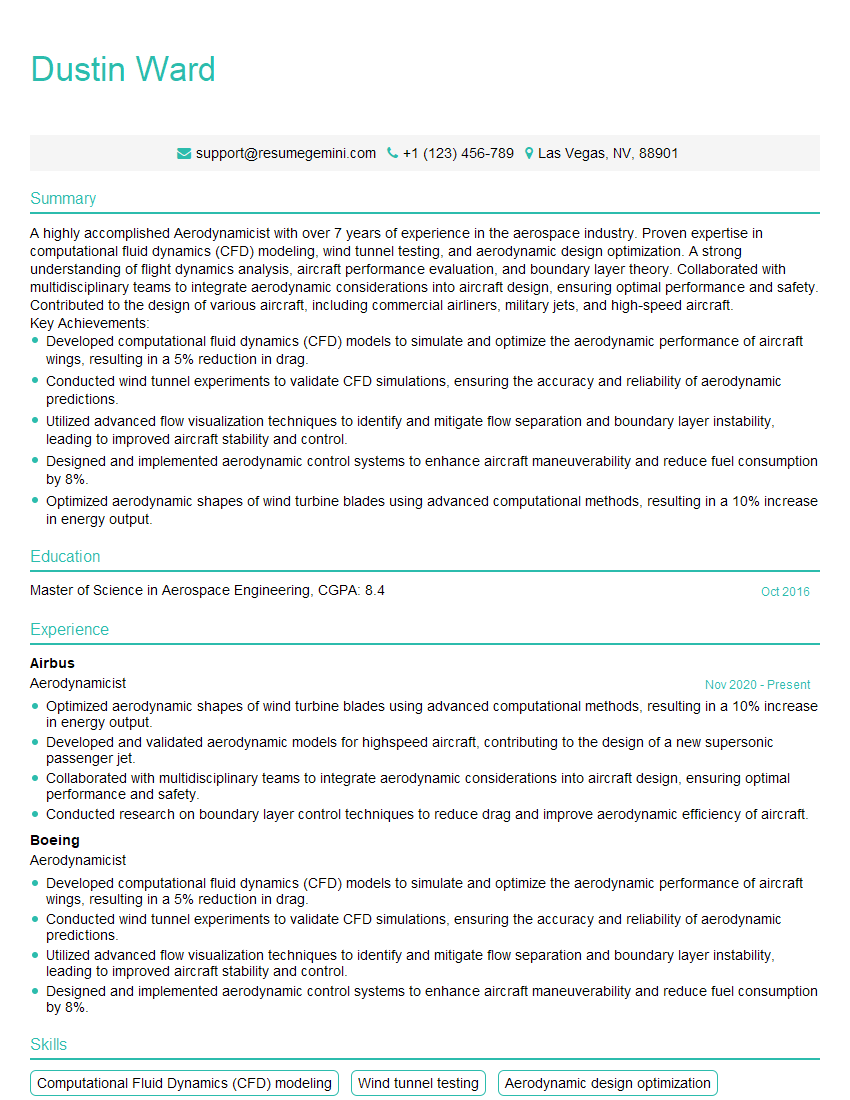
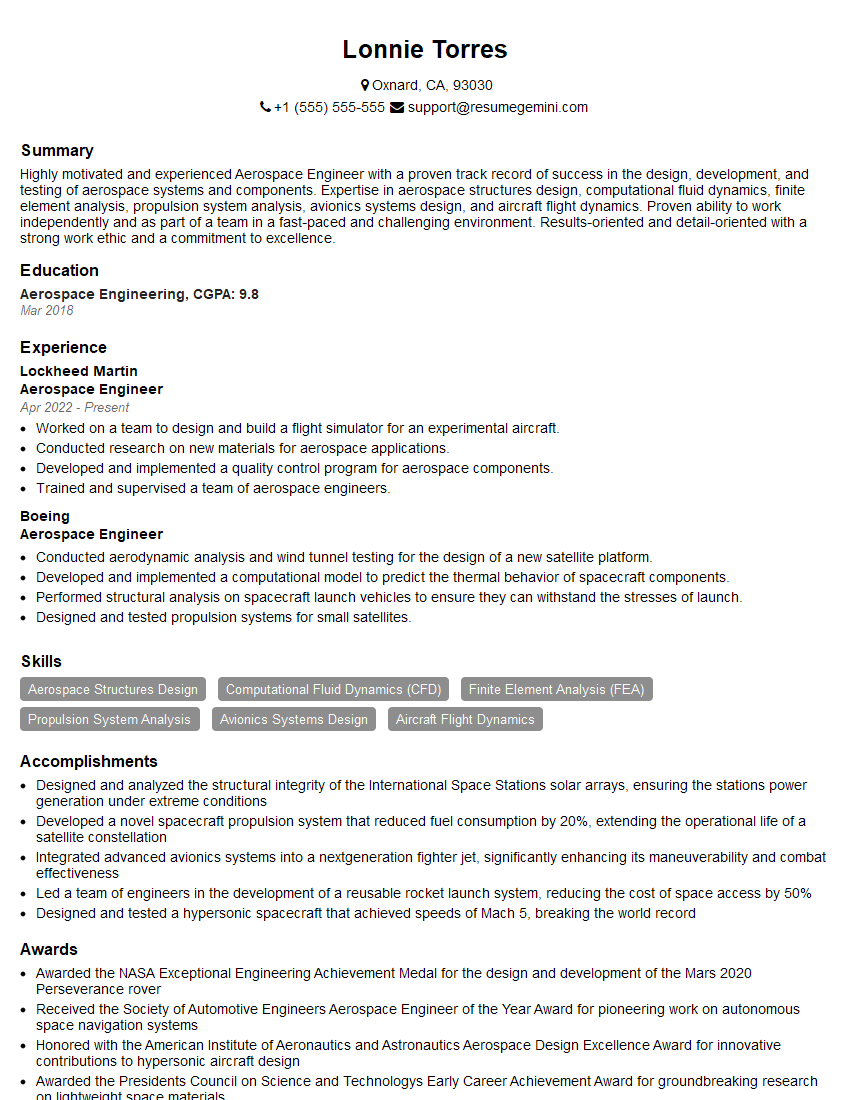
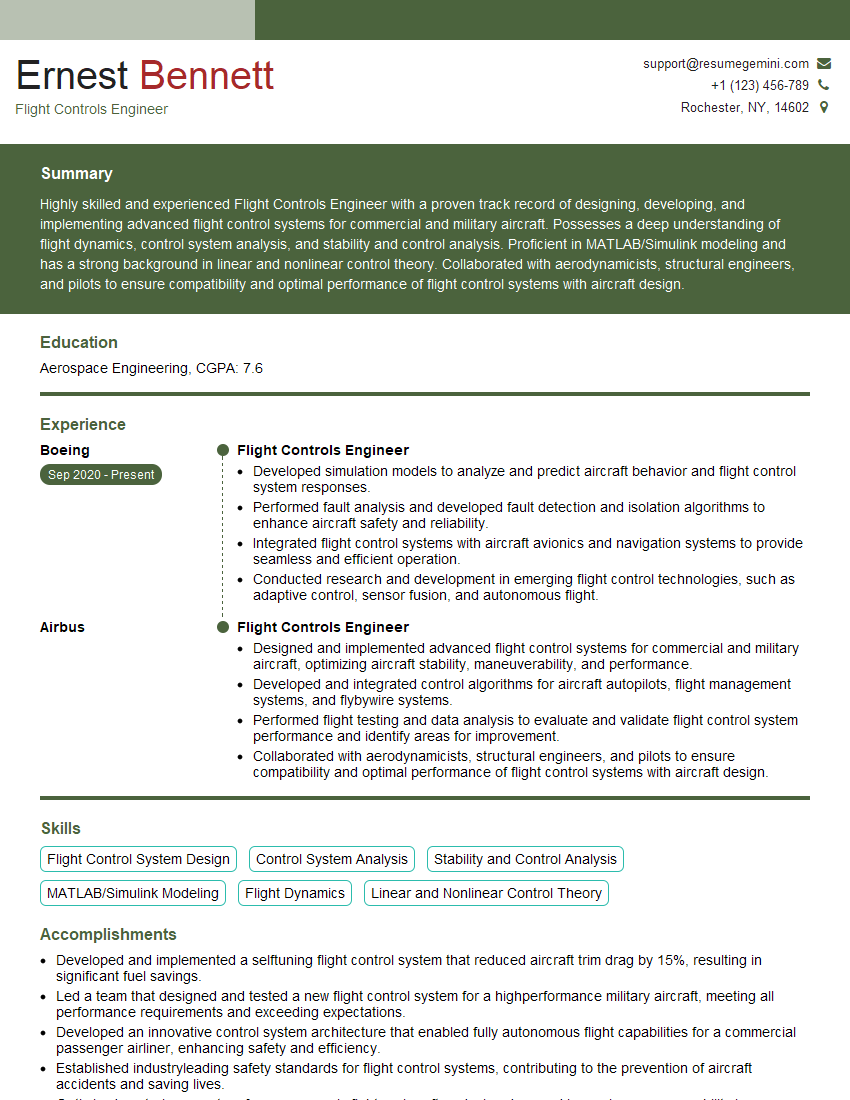
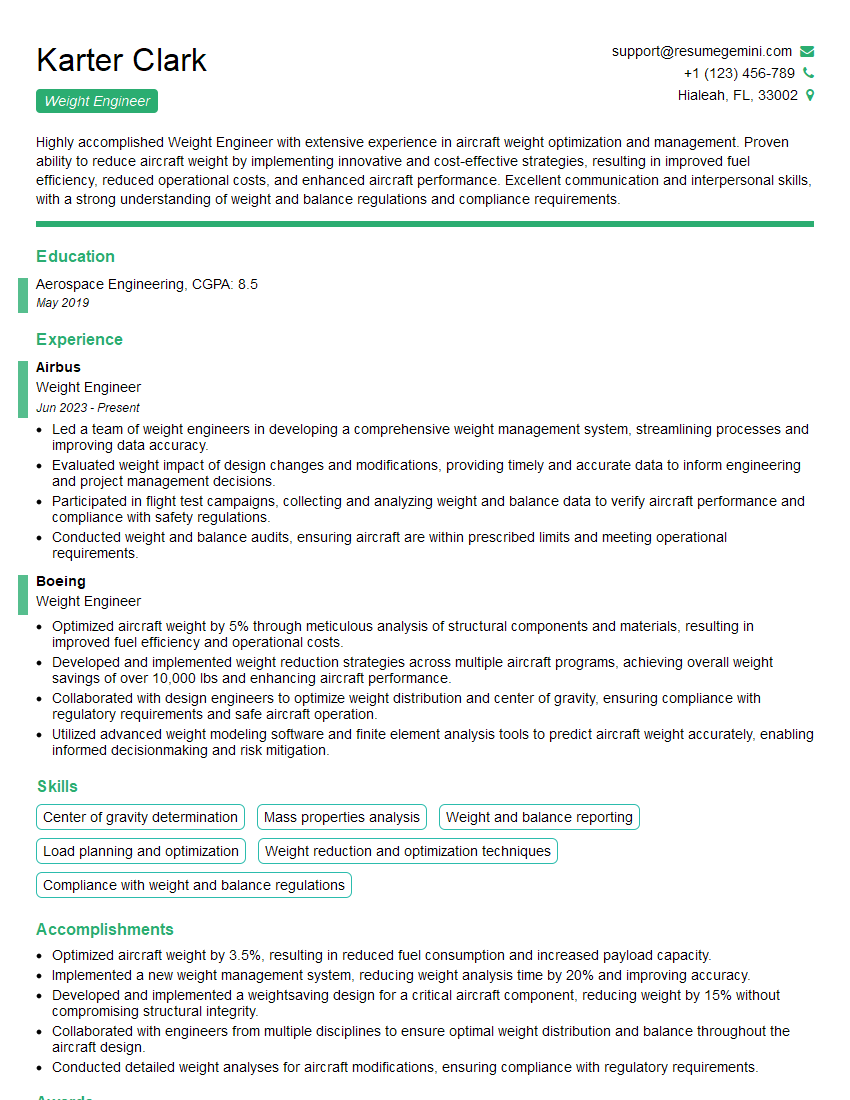
Mastering Conceptual Aircraft Design is crucial for a successful career in aerospace engineering, opening doors to innovative roles and significant contributions to the industry. A strong resume is your key to unlocking these opportunities. Creating an ATS-friendly resume is paramount to ensuring your application gets noticed by recruiters. To help you craft a compelling and effective resume, we recommend using ResumeGemini. ResumeGemini provides a user-friendly platform to build a professional resume and showcases examples tailored specifically to Conceptual Aircraft Design, helping you present your skills and experience in the best possible light. This ensures your qualifications stand out to potential employers.
Explore more articles
Users Rating of Our Blogs
Share Your Experience
We value your feedback! Please rate our content and share your thoughts (optional).
What Readers Say About Our Blog
Really detailed insights and content, thank you for writing this detailed article.
IT gave me an insight and words to use and be able to think of examples