Every successful interview starts with knowing what to expect. In this blog, we’ll take you through the top Color and Taste Evaluation interview questions, breaking them down with expert tips to help you deliver impactful answers. Step into your next interview fully prepared and ready to succeed.
Questions Asked in Color and Taste Evaluation Interview
Q 1. Explain the difference between descriptive and affective sensory evaluation.
Descriptive and affective sensory evaluations are two distinct approaches to assessing food and beverage products. Descriptive analysis focuses on characterizing the sensory attributes of a product objectively, while affective analysis assesses the overall liking or preference of a product subjectively.
Descriptive Analysis: This method uses trained panelists to identify and quantify sensory characteristics. Imagine a panel describing a strawberry jam: they’d meticulously detail its sweetness, tartness, color intensity, texture (smooth, chunky), and aroma (fruity, floral). They provide numerical scores or intensity ratings for each attribute, creating a detailed sensory profile. This is crucial for product development, as it allows for precise adjustments to achieve a desired profile.
Affective Analysis: In contrast, affective analysis utilizes untrained panelists to evaluate their overall liking of a product. They may rate it on a hedonic scale (e.g., 1-9, where 9 is ‘like extremely’ and 1 is ‘dislike extremely’), or indicate their preference among multiple samples. This approach is essential for market research, understanding consumer acceptance, and guiding product launch strategies.
In short: Descriptive analysis is about ‘what’ is in the product (objective), while affective analysis is about ‘how much’ people like it (subjective).
Q 2. Describe the principles of a triangle test.
The triangle test is a simple yet powerful discrimination test used to determine if there’s a perceptible difference between two samples. Three coded samples are presented to the panelist: two are identical, and one is different. The panelist’s task is to identify the odd sample out.
Principles:
- Randomization: The order of presentation for the three samples (e.g., AAA, ABA, BAA, etc.) is randomized to prevent bias.
- Coding: Samples are coded with three-digit random numbers or letters to mask their identity.
- Statistical Analysis: The number of correct identifications is compared against a chance probability (33% for three samples). Statistical analysis determines whether the difference between samples is statistically significant, indicating whether a perceptible difference exists.
Example: A food company wants to know if consumers can detect a difference between their original recipe and a new, lower-cost version of a yogurt. They conduct a triangle test. If a significantly higher proportion of panelists correctly identify the odd sample, it suggests the change is noticeable.
Q 3. What are the limitations of using untrained sensory panelists?
Using untrained sensory panelists has significant limitations compared to trained panels. While convenient and cost-effective, untrained panelists:
- Lack Vocabulary: They may struggle to describe subtle sensory differences, hindering detailed descriptive analysis. For instance, they might say ‘it tastes different’ instead of pinpointing the difference as ‘less acidic’ or ‘more bitter’.
- Inconsistent Judgments: Their responses can be less reliable due to a lack of understanding of sensory scales and the importance of consistency.
- Susceptibility to Bias: They’re more likely to be influenced by factors like appearance, brand perception, or expectations (halo effect), rather than purely sensory attributes. A beautifully presented product might be rated higher regardless of its actual taste.
- Difficulty with Complex Tasks: They might struggle with more complex tasks like profiling numerous attributes or performing discrimination tests consistently.
These limitations can lead to unreliable and less precise results. While useful in quick affective tests, untrained panels are not suitable for detailed descriptive studies where precision and objectivity are critical.
Q 4. How do you control for bias in sensory evaluation?
Controlling for bias is crucial for the validity of sensory evaluation. Several strategies are employed:
- Blind Testing: Samples are coded to mask their identity, preventing panelists from being influenced by brand names, packaging, or prior expectations.
- Randomization: The order of presentation, the location of samples, and the order of attributes are randomized to minimize bias.
- Balanced Designs: Ensure samples are presented in a balanced manner, preventing a systematic bias from sample presentation order.
- Panel Selection and Training: Carefully selecting panelists (based on their sensory acuity and sensitivity) and providing thorough training can reduce bias due to individual differences in perception.
- Counterbalancing: If using different presentation methods, it is crucial to use counterbalancing to control for order effects.
- Booths: Individual booths minimize interactions between panelists, preventing influence from others.
- Palate Cleansers: Providing palate cleansers (e.g., water, crackers) between samples neutralizes the previous taste and prevents carryover effects.
By implementing these controls, we strive for objective results and ensure the sensory differences observed are genuine and not artifacts of the testing procedure.
Q 5. Explain the concept of sensory thresholds (detection, recognition, difference).
Sensory thresholds represent the minimum level of a stimulus that can be detected or perceived. Three key types of thresholds are:
- Detection Threshold (Absolute Threshold): This is the lowest concentration of a stimulus (e.g., sweetness, color, aroma) that can be detected by 50% of the panelists. For example, the detection threshold for sugar in water identifies the minimum sugar concentration a person can taste as ‘sweet’.
- Recognition Threshold: This is the lowest concentration at which a stimulus can be correctly identified. It’s usually higher than the detection threshold. A panelist might detect a faint sweetness (detection threshold), but only recognize it as sugar at a slightly higher concentration (recognition threshold).
- Difference Threshold (Just Noticeable Difference or JND): This represents the minimum detectable difference between two stimuli. It’s the smallest change in concentration that a panelist can reliably discern. For example, the JND for saltiness would tell us the minimum increase in salt concentration needed for a panelist to perceive a noticeably ‘saltier’ taste.
Understanding these thresholds is crucial in food product development, as they guide the formulation of products with perceptible differences and ensure that changes in ingredients are noticeable to consumers.
Q 6. Describe various methods for measuring color (e.g., spectrophotometry).
Color measurement is essential in food and beverage quality control. Several methods exist:
- Spectrophotometry: This is the most common and accurate method. A spectrophotometer measures the reflectance or transmittance of light across the visible spectrum (400-700 nm). The resulting data is used to calculate color parameters like L*a*b* (CIELAB) values, which describe color in terms of lightness (L*), redness/greenness (a*), and yellowness/blueness (b*). This provides objective and quantitative color data, crucial for quality consistency.
- Colorimetry: This involves visual comparison of a sample to standard color charts or scales. While less precise than spectrophotometry, it’s quicker and simpler, suitable for initial assessments.
- Visual Assessment: This relies on human observation and comparison. It’s subjective and highly dependent on the observer but can be useful in conjunction with instrumental methods for a holistic evaluation.
Example using Spectrophotometry: Imagine measuring the color of tomato sauce. A spectrophotometer will provide the L*a*b* values, allowing for precise quantification of the redness (a*), enabling consistent color across different batches. Deviations from target L*a*b* values can signal variations in raw materials or processing.
Q 7. How do you account for individual variations in taste perception?
Individual variations in taste perception are significant and must be accounted for in sensory evaluations. These variations stem from several factors:
- Genetics: Genetic variations influence the number and types of taste receptors individuals possess, impacting sensitivity to different tastes (e.g., bitterness, sweetness).
- Age: Taste sensitivity changes with age; older individuals may have reduced sensitivity to certain tastes.
- Gender: Some studies suggest gender differences in taste perception, though this is not consistently found across all tastes.
- Health and Medication: Health conditions and medications can significantly impact taste perception, either temporarily or permanently.
- Cultural Background and Experience: Personal experiences and cultural background influence taste preferences and how tastes are perceived.
Accounting for Variations: To minimize the impact of these variations, several strategies are employed:
- Large Panel Size: Utilizing a large and diverse panel helps average out individual differences, providing more reliable results.
- Statistical Analysis: Statistical methods are used to analyze data, accounting for individual variations and identifying significant differences among samples.
- Panel Screening: Screening panelists for sensory acuity and ability to discriminate helps select individuals with reliable sensory capabilities.
- Training and Calibration: Training panelists to use standardized scales and calibrate their perception reduces subjectivity.
By employing these strategies, researchers can obtain more reliable sensory data while acknowledging and minimizing the influence of inherent individual differences.
Q 8. Explain the impact of temperature on taste perception.
Temperature significantly impacts taste perception. Think about a warm cup of coffee versus a cold one – the same coffee beans taste drastically different at varying temperatures. This is because temperature affects the volatility of aroma compounds, which are crucial to our perception of flavor. Warmer temperatures generally release more aroma compounds, enhancing the overall taste experience. Conversely, colder temperatures can suppress these volatile compounds, leading to a less intense or even different flavor profile.
For example, the sweetness of certain foods, like ice cream, is perceived differently at different temperatures. A very cold ice cream may taste less sweet initially because the cold numbs the taste buds slightly, reducing sensitivity. As it warms, the sweetness becomes more pronounced. Similarly, spicy foods can seem less intense when cold and more intense when warm due to the change in the release of capsaicinoids (the compounds responsible for the spiciness).
In the food industry, understanding the temperature’s influence on taste is critical for product development and quality control. Optimizing serving temperatures can drastically enhance the consumer experience, increasing product satisfaction and sales.
Q 9. What are some common color defects in food products and how are they detected?
Color defects in food can significantly impact consumer appeal and indicate potential quality issues. These defects can range from undesirable changes in hue, brightness, or saturation to the presence of off-colors. Some common defects include discoloration due to enzymatic browning (think of a cut apple turning brown), loss of pigment (fading of vibrant colors in fruits and vegetables), and the presence of undesirable pigments (e.g., greenish discoloration in certain meats indicating spoilage).
Detection methods vary depending on the type of defect and the food product. Visual inspection is often the first step, followed by more sophisticated techniques. Instrumental methods such as spectrophotometry are widely used to quantify color objectively by measuring the reflectance or transmittance of light at different wavelengths. This provides numerical data that allows for precise color comparisons and tracking changes over time. Other techniques include chromatography, which can identify and quantify specific pigments present in the food.
For example, in the juice industry, spectrophotometry is used to ensure consistency in color from batch to batch. Any deviations from the desired color profile may signal a problem during processing or storage. The industry utilizes standards and tolerances for acceptable variations in color to maintain product quality and consumer expectations.
Q 10. Describe different types of taste receptors and their functions.
We have five basic taste receptors, each responsible for detecting a specific taste quality: sweet, sour, salty, bitter, and umami. These receptors are specialized cells located in taste buds on the tongue and other areas of the oral cavity.
- Sweet: Detects sugars and other sweet-tasting substances. Important for energy identification.
- Sour: Detects acids. Acts as a warning system, often indicating spoilage or potential toxicity.
- Salty: Detects sodium ions. Essential for maintaining fluid balance in the body.
- Bitter: Detects a wide range of bitter compounds, many of which are toxic. Serves as a protective mechanism.
- Umami: Detects glutamate (an amino acid) and other savory compounds, contributing to a satisfying and meaty flavor.
Each receptor type has its unique structure and signaling mechanism. The interaction of these receptors with taste molecules triggers a signal transduction cascade, leading to the perception of taste. The interplay between these receptors, combined with smell, texture, and temperature, creates the complex flavor experiences we enjoy.
Q 11. How do you design a sensory test to evaluate a new product?
Designing a sensory test for a new product involves careful planning to ensure reliable and meaningful results. The process typically includes the following steps:
- Define the objective: Clearly state the purpose of the test (e.g., preference testing, discrimination testing, descriptive analysis).
- Select the panelists: Recruit a suitable panel of trained or untrained assessors depending on the test’s complexity. Consider factors such as age, experience, and sensitivity to the product characteristics.
- Choose the appropriate sensory test method: Different methods exist for different objectives (e.g., paired comparison, ranking, hedonic scaling).
- Develop the test protocol: Include detailed instructions for panelists, sample presentation, and data recording. Control for factors like temperature, lighting, and environment to avoid bias.
- Conduct the sensory evaluation: Implement the test protocol in a controlled environment.
- Analyze and interpret the data: Use appropriate statistical methods to analyze the results and draw conclusions.
For instance, if you’re developing a new type of yogurt, you might conduct a preference test to compare it to existing products. A paired comparison test would involve presenting panelists with two yogurt samples and asking them to indicate which they prefer. The data then would be analyzed to determine if there is a significant preference for the new product.
Q 12. How do you analyze and interpret sensory data?
Sensory data analysis involves using statistical methods to interpret the results from sensory tests. The specific methods used will depend on the type of test conducted. For example, data from hedonic scaling might be analyzed using descriptive statistics (mean, standard deviation) to understand the overall liking score. Data from discrimination tests might involve statistical tests like t-tests or analysis of variance (ANOVA) to determine if significant differences exist between samples.
The interpretation focuses on identifying patterns and trends in the data. Visualizations like bar charts and box plots are often used to present the results clearly. The analysis should consider the variability within the data and identify any outliers or inconsistencies. The conclusions drawn should be based on the statistical analysis and the overall context of the test.
For example, in a preference test, a higher mean liking score and lower standard deviation for one product compared to another suggests a stronger preference for that product.
Q 13. What statistical methods are commonly used in sensory analysis?
Several statistical methods are commonly used in sensory analysis, depending on the type of data and research question. Some frequently used methods include:
- Descriptive statistics: Mean, standard deviation, median, range, and frequency distributions help summarize and describe the data.
- t-tests: Used to compare the means of two groups (e.g., comparing the liking of two different products).
- Analysis of variance (ANOVA): Used to compare the means of three or more groups (e.g., comparing the liking of three different flavors).
- Non-parametric tests: Used when the data do not meet the assumptions of parametric tests (e.g., Mann-Whitney U test, Kruskal-Wallis test).
- Principal Component Analysis (PCA): A multivariate technique used to reduce the dimensionality of data and identify patterns in high-dimensional datasets. This is particularly useful in descriptive analysis where many attributes are being evaluated.
The choice of statistical method is crucial for drawing valid conclusions. It’s important to select appropriate tests based on the data’s characteristics and the research questions.
Q 14. Explain the concept of ‘hedonic scaling’ in sensory evaluation.
Hedonic scaling is a sensory evaluation method used to measure the degree of liking or pleasure associated with a product. Panelists rate their liking on a structured scale, usually numerical (e.g., 1-9 scale, where 1 represents extreme dislike and 9 represents extreme liking) or pictorial (using faces or other visual cues to represent different levels of liking).
This method provides quantitative data on consumer acceptance. It’s widely used to assess consumer preferences for different products and to guide product development and reformulation. For example, a company developing a new beverage might use hedonic scaling to evaluate consumer preference for different flavor combinations. By analyzing the hedonic scores, they can identify the most preferred flavor profile.
Interpreting hedonic scale data involves calculating descriptive statistics like mean and standard deviation to summarize overall liking. Statistical tests can be used to compare liking scores across different products or treatments. The results of hedonic scaling inform product decisions, assisting in the development of products likely to be well-received by the target market.
Q 15. How would you assess the color stability of a food product over time?
Assessing the color stability of a food product over time involves monitoring changes in its hue, saturation, and lightness (often measured using the CIE L*a*b* color space). We need to consider both the intrinsic factors (e.g., the food’s chemical composition) and extrinsic factors (e.g., storage conditions like light exposure, temperature, and oxygen levels).
A common method involves taking color readings at regular intervals using a spectrophotometer. For example, we might measure the color of a strawberry jam sample every week for a month, storing half the samples under normal light and the other half in complete darkness. The resulting data allows us to quantify the color changes and identify the rate of degradation. Statistical analysis can then determine if the differences are significant and predict the shelf life based on acceptable color change parameters set by the manufacturer or regulatory bodies. Further analysis might involve identifying the specific chemical reactions causing the color change – perhaps enzymatic browning or oxidation – which allows for potential solutions such as packaging modifications or the addition of antioxidants.
Career Expert Tips:
- Ace those interviews! Prepare effectively by reviewing the Top 50 Most Common Interview Questions on ResumeGemini.
- Navigate your job search with confidence! Explore a wide range of Career Tips on ResumeGemini. Learn about common challenges and recommendations to overcome them.
- Craft the perfect resume! Master the Art of Resume Writing with ResumeGemini’s guide. Showcase your unique qualifications and achievements effectively.
- Don’t miss out on holiday savings! Build your dream resume with ResumeGemini’s ATS optimized templates.
Q 16. Describe different techniques used to characterize aroma compounds.
Characterizing aroma compounds requires a multi-faceted approach combining various techniques. Gas chromatography-mass spectrometry (GC-MS) is a cornerstone method, separating volatile compounds based on their boiling points (GC) and then identifying them based on their mass-to-charge ratio (MS). This provides a comprehensive profile of the aroma volatiles.
Another approach is gas chromatography-olfactometry (GC-O), where a trained sensory panelist sniffs the effluent from the GC column, allowing the direct correlation of specific aroma notes with their retention times. This is particularly useful in identifying key odorants that contribute to the overall aroma profile.
Electronic noses, using arrays of sensors, provide rapid, albeit less precise, assessment of aroma profiles. These are helpful for quality control applications, detecting off-flavors or spoilage. We can think of the GC-MS as a detailed chemical analysis of the aroma, while the electronic nose provides a more general ‘fingerprint’ of the smell.
Q 17. What are the challenges associated with using consumer panels for product evaluation?
Using consumer panels presents several challenges. Firstly, ensuring a representative sample of the target population is crucial. If your sample doesn’t reflect the consumer base, the results won’t be generalizable. Secondly, consumer behavior can be highly variable, with individual preferences and biases greatly influencing their responses. There is also the issue of ‘halo effects’ – a positive experience with one aspect of the product can skew ratings of other aspects. For example, a beautifully designed package might unduly influence the taste rating.
Furthermore, managing panelist fatigue and ensuring consistent performance across sessions is critical. Training is essential to minimize variability and provide panelists with the tools to effectively assess and articulate their perceptions. Finally, the cost and logistics associated with recruiting, training, and managing large consumer panels can be significant.
Q 18. How would you deal with a panelist who consistently provides inconsistent results?
Dealing with an inconsistent panelist requires a careful and systematic approach. First, we would review the panelist’s data to identify the nature of the inconsistency. Is it random variation or are there systematic biases? If random, further training might be needed, focusing on aspects like standardized scoring methods and reducing influence from external factors. If there’s a clear systematic bias (for instance, always rating higher than others), then we might check for factors like lack of understanding of the instructions or a personal predisposition affecting their judgments.
We’d then engage the panelist in a discussion to understand the reason for the inconsistent results. This might involve going through specific examples and evaluating their responses. If the inconsistencies persist despite further training and discussion, exclusion of the panelist’s data from the final analysis becomes necessary to maintain the data integrity of the overall study.
Q 19. Explain the impact of texture on overall sensory perception.
Texture significantly impacts overall sensory perception. It’s a complex attribute that encompasses multiple aspects such as hardness, viscosity, smoothness, and chewiness. These textural properties can influence the release of aroma compounds and impact the perception of taste.
For instance, a crunchy apple will deliver a different sensory experience compared to a soft pear, even if both are similarly sweet. The crunchiness enhances the perception of freshness and contributes to a more satisfying eating experience. The viscosity of a sauce can influence how quickly the taste is perceived and the overall mouthfeel. A thick sauce might provide a more luxurious feel compared to a thin, watery sauce, regardless of its flavor profile. This interplay between texture and other senses makes it a crucial aspect to consider in food product development and evaluation.
Q 20. How do you ensure the safety and hygiene standards of a sensory testing environment?
Maintaining safety and hygiene in a sensory testing environment is paramount to ensure the integrity and reliability of the results. The testing area should be meticulously cleaned and sanitized before each session, using appropriate food-safe disinfectants. All surfaces, including tables and utensils, must be kept clean. Panelists should be required to wash their hands thoroughly before commencing the evaluation.
Adequate ventilation is crucial to eliminate lingering odors that might influence the panelists’ perceptions. Controlled lighting and temperature help create a neutral and consistent environment. Using disposable or thoroughly cleaned and sanitized equipment minimizes the risk of cross-contamination. Furthermore, detailed protocols should be followed, such as the use of coded samples to eliminate bias and the provision of palate cleansers (like water or crackers) between samples to avoid sensory fatigue.
Q 21. Describe the role of mouthfeel in taste perception.
Mouthfeel plays a critical role in taste perception, extending beyond the basic five tastes (sweet, sour, salty, bitter, umami). It encompasses the tactile sensations experienced in the mouth during consumption, including factors like viscosity, astringency, coolness, and warmth. These sensations interact with the taste receptors to create the overall gustatory experience.
For instance, the creamy texture of a chocolate mousse enhances the perception of its richness and sweetness, while the astringency of red wine can influence the perception of its bitterness and acidity. A carbonated beverage’s fizz adds another dimension to the taste, altering the perception of sweetness and flavor intensity. Therefore, ignoring mouthfeel in taste evaluation is limiting; understanding this crucial interaction of texture with taste is key to a complete sensory analysis.
Q 22. What are the ethical considerations involved in sensory evaluation?
Ethical considerations in sensory evaluation are paramount to ensure the integrity and validity of the results. They center around honesty, fairness, and respect for participants. This includes:
- Informed Consent: Participants must be fully informed about the purpose of the study, the procedures involved, and their rights, including the right to withdraw at any time. They should understand how their data will be used and protected.
- Confidentiality and Anonymity: Protecting the identity and sensory data of participants is crucial. Data should be anonymized whenever possible and stored securely.
- Avoiding Bias: Researchers must be mindful of potential biases that could influence the results, such as order effects, expectation bias, or personal preferences. Careful experimental design, including randomization and blinding, is essential.
- Compensation and Incentives: Fair compensation, if any, should be offered to participants for their time and effort. The incentive structure should not unduly influence their responses.
- Data Integrity: Researchers have a responsibility to accurately collect, record, and analyze data, ensuring no manipulation or falsification occurs. This includes proper calibration of equipment and adherence to established protocols.
For example, in a taste test for a new beverage, participants should be clearly informed that their responses will be kept confidential and that they are free to withdraw at any point. Any incentives offered should be modest to avoid unduly influencing their judgements.
Q 23. Explain the use of instrumental methods alongside sensory evaluation.
Instrumental methods complement sensory evaluation by providing objective, quantitative data that can be correlated with sensory perceptions. While sensory panels offer valuable insights into the overall experience (e.g., texture, aroma, flavor), instruments measure specific physical and chemical properties. For example:
- Colorimetry: Measures color attributes (hue, chroma, lightness) using spectrophotometers, providing objective data to compare across samples and correlate with perceived color differences by panelists.
- Texture analysis: Instruments like texture analyzers can quantify firmness, chewiness, and other textural properties, allowing for a comparison with sensory descriptions of texture. For example, the force required to break a cookie can be measured objectively.
- Chromatography (GC-MS, HPLC): Identifies and quantifies volatile compounds (aroma) and non-volatile compounds (taste) in food and beverages. These data can be used to understand the chemical basis of sensory attributes.
- Spectroscopy (NIR, UV-Vis): These techniques can rapidly measure various chemical components in samples, which can be related to color, taste, and overall quality.
Using both sensory and instrumental data together provides a more complete picture of product quality. For instance, a sensory panel might describe a jam as ‘too tart,’ and instrumental analysis can confirm high acidity levels. This combination helps in better product development and quality control.
Q 24. How do you maintain the confidentiality of sensory test results?
Maintaining confidentiality is critical in sensory evaluation. Several strategies are employed:
- Anonymization: Participants are assigned unique, anonymous codes instead of using their names. Data is linked to codes, not identities.
- Secure Data Storage: Sensory data should be stored securely, using password-protected databases or files, accessible only to authorized personnel.
- Limited Access: Access to raw sensory data should be restricted to those directly involved in the analysis and interpretation of results.
- Data Aggregation: Results are often reported as averages or group data, not as individual panelist responses, further protecting anonymity.
- Compliance with Regulations: All data handling practices should adhere to relevant data protection regulations (like GDPR or HIPAA, depending on the location and type of data involved).
For example, a code like ‘S123’ might represent a panelist in a database, with all data associated with that code rather than the individual’s name. This safeguards their privacy and promotes honest feedback.
Q 25. What software programs are commonly used for sensory data analysis?
Several software programs are commonly used for sensory data analysis, offering features for data entry, statistical analysis, and report generation. Popular choices include:
- FIZZ: Specifically designed for sensory data analysis, offering a wide range of statistical tools.
- XLSTAT: A statistical add-in for Microsoft Excel that provides sensory-specific analyses.
- R: A powerful open-source statistical programming language with numerous packages tailored for sensory data analysis.
- SensoryLab: Provides data management and statistical tools for sensory evaluation.
- SAS: A comprehensive statistical software package that includes functionalities applicable to sensory data.
The choice of software depends on the specific needs of the project, the complexity of the data, and the user’s statistical expertise. Many programs allow for the import and export of data, facilitating collaboration and data sharing.
Q 26. How would you evaluate the bitterness of a beverage?
Evaluating the bitterness of a beverage involves a combination of sensory methods and, potentially, instrumental analysis:
- Descriptive Analysis: Trained panelists use standardized scales or descriptive language to assess the intensity, duration, and character of bitterness. They might describe bitterness as ‘lingering,’ ‘sharp,’ ‘astringent,’ or ‘herbal,’ among other terms.
- Scale Measurements: Panelists might rate bitterness on a structured scale (e.g., 0-9 scale, where 0 represents ‘no bitterness’ and 9 represents ‘extremely bitter’).
- Threshold Tests: These determine the minimum concentration of a bitter compound that can be detected by the average consumer.
- Instrumental Analysis (HPLC): This could measure the concentration of specific bitter compounds (e.g., iso-alpha acids in beer) and help to correlate them with sensory perceptions.
For example, when evaluating the bitterness of several craft beers, a descriptive analysis might uncover differences in the type of bitterness (e.g., one beer being ‘grassy’ and another ‘chocolatey’), while a scale measurement might indicate which beer is the most intense in bitterness.
Q 27. How would you assess the sweetness of a food product?
Assessing the sweetness of a food product requires similar strategies to evaluating bitterness, but focused on sweetness-related attributes:
- Scale Measurements: Panelists rate the sweetness intensity on a structured scale (e.g., 0-9, where 0 is ‘not sweet’ and 9 is ‘extremely sweet’).
- Descriptive Analysis: Trained panels describe the sweetness quality (e.g., ‘clean,’ ‘lingering,’ ‘sugary,’ ‘fruity sweetness’).
- Threshold Tests: Determine the concentration of sugar or sweetener needed for detection.
- Instrumental Analysis (Refractometry): Directly measure the sugar concentration (e.g., °Brix) and correlates it with perceived sweetness. This is particularly useful in controlling sweetness in manufacturing.
For example, in evaluating the sweetness of different yogurt samples, panelists might use a scale to compare sweetness intensity, while also describing the quality of sweetness (e.g., one yogurt has a ‘clean’ sweetness, another is ‘overly sugary’).
Q 28. Describe different techniques for masking undesirable flavors.
Masking undesirable flavors is a common practice in food and beverage development. Several techniques can be used:
- Flavor Masking Agents: These ingredients interact with undesirable compounds, reducing their perception. For example, cyclodextrins can encapsulate bitter compounds, reducing their bioavailability and therefore, their taste.
- Flavor Balancing: Adding other flavors that complement or counteract the undesirable flavor. For example, adding sweetness can mask acidity, or adding a savory note can mask bitterness.
- Ingredient Modification: Processing or treating ingredients to reduce undesirable flavors. For example, enzymatic treatments can modify the precursors of off-flavors.
- Flavor Encapsulation: Encapsulating the undesirable flavor compound in microcapsules can control its release and reduce its overall impact.
- Sensory Thresholds: By understanding the detection threshold of the undesirable flavor, it’s possible to reduce its concentration to a level below consumer perception.
For example, in a coffee with a bitter aftertaste, a touch of sweetness or a complementary spice (like cinnamon) can balance the bitterness. Alternatively, microencapsulation could reduce the perception of a particular bitter compound. The optimal approach depends on the nature of the undesirable flavor and the desired sensory profile.
Key Topics to Learn for Color and Taste Evaluation Interview
- Sensory Perception: Understand the physiological mechanisms behind color and taste perception, including the role of the eyes, tongue, and brain.
- Psychophysics of Sensory Evaluation: Learn about methods for quantifying sensory experiences, such as threshold testing, scaling, and preference mapping. Understand concepts like Weber’s Law and Fechner’s Law.
- Colorimetry and Color Space: Familiarize yourself with different color systems (e.g., CIE L*a*b*, RGB) and their applications in food and beverage analysis. Understand color difference calculations (e.g., Delta E).
- Taste Chemistry: Explore the fundamental chemical compounds responsible for different taste sensations (sweet, sour, salty, bitter, umami) and their interaction with taste receptors.
- Sensory Testing Methodologies: Master various sensory evaluation techniques, including descriptive analysis (DA), affective testing (hedonic scales), and difference testing (paired comparison, triangle test).
- Data Analysis and Interpretation: Develop proficiency in statistical methods used to analyze sensory data, including ANOVA, t-tests, and principal component analysis (PCA).
- Practical Applications: Understand how color and taste evaluation is applied in different industries, such as food science, beverage production, cosmetics, and pharmaceuticals.
- Quality Control and Assurance: Learn about the role of sensory evaluation in maintaining product consistency and ensuring quality throughout the production process.
- Bias and Error in Sensory Evaluation: Understand potential sources of bias in sensory testing and methods to minimize their impact on results (e.g., panel selection, training, blinding).
- Instrument-Assisted Sensory Evaluation: Explore the use of electronic tongues and noses, and how these technologies complement human sensory evaluation.
Next Steps
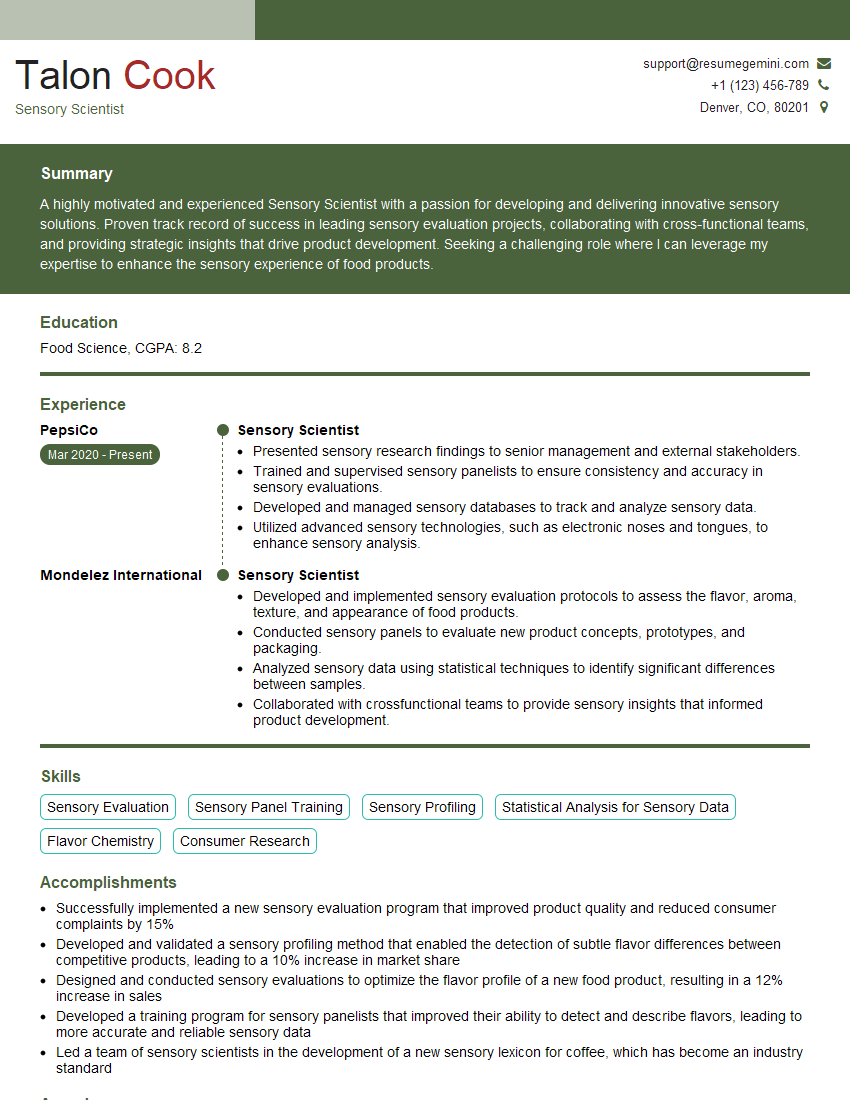
Mastering Color and Taste Evaluation opens doors to exciting careers in food science, quality control, product development, and sensory research. To maximize your job prospects, create an ATS-friendly resume that highlights your skills and experience effectively. ResumeGemini is a trusted resource to help you build a professional resume that stands out. We provide examples of resumes tailored to Color and Taste Evaluation to help you get started.

Explore more articles
Users Rating of Our Blogs
Share Your Experience
We value your feedback! Please rate our content and share your thoughts (optional).
What Readers Say About Our Blog
Really detailed insights and content, thank you for writing this detailed article.
IT gave me an insight and words to use and be able to think of examples