Interviews are more than just a Q&A session—they’re a chance to prove your worth. This blog dives into essential Continuous Process Improvement (CPI) interview questions and expert tips to help you align your answers with what hiring managers are looking for. Start preparing to shine!
Questions Asked in Continuous Process Improvement (CPI) Interview
Q 1. Describe your experience with Lean methodologies.
Lean methodologies are a collection of practices aimed at eliminating waste and maximizing value in any process. My experience spans several years, working across various industries to streamline operations and improve efficiency. I’ve been involved in implementing Lean principles from Value Stream Mapping to Kaizen events. For example, in my previous role at a manufacturing company, we utilized Lean principles to reduce lead times by 40% by identifying and eliminating bottlenecks in the production line. This involved a combination of 5S implementation for workplace organization, standardized work development to ensure consistency, and Kanban boards to manage work flow visually. I’m proficient in applying Lean tools such as Value Stream Mapping, 5S, Kanban, and Poka-Yoke to drive continuous improvement.
Q 2. Explain the DMAIC process.
DMAIC is a data-driven improvement cycle used in Six Sigma projects. It stands for Define, Measure, Analyze, Improve, and Control. Imagine it as a five-step recipe for solving a problem systematically.
- Define: Clearly define the problem, its impact, and the project goals. This step involves setting SMART (Specific, Measurable, Achievable, Relevant, Time-bound) goals.
- Measure: Collect data to understand the current state of the process and quantify the problem’s severity. This involves identifying key metrics and gathering data to establish a baseline.
- Analyze: Analyze the data to identify the root causes of the problem. Tools like Pareto charts, fishbone diagrams, and statistical process control charts are used here.
- Improve: Develop and implement solutions to address the root causes. This could involve process changes, technology upgrades, or training initiatives.
- Control: Monitor the improved process to ensure the gains are sustained and prevent regression. This often includes implementing control charts and regular process reviews.
For instance, in a previous project at a call center, we used DMAIC to reduce customer wait times. We defined the problem (long wait times), measured average wait times, analyzed call volume patterns and agent availability, improved the system by implementing a new call routing system, and finally established controls to monitor wait times regularly.
Q 3. What is the difference between Lean and Six Sigma?
While both Lean and Six Sigma aim for process improvement, they differ in their focus. Lean focuses on eliminating waste (muda) in all forms – anything that doesn’t add value to the customer. Think of it as streamlining and making processes more efficient. Six Sigma, on the other hand, focuses on reducing variation and defects, aiming for near-perfection (six standard deviations from the mean). It uses statistical methods to identify and eliminate sources of variation.
A helpful analogy is this: Lean is about removing unnecessary steps from a recipe, while Six Sigma is about ensuring each step is consistently performed to the highest standard, minimizing errors. They are often used together; Lean’s efficiency gains create a smoother, more predictable process, making Six Sigma’s defect reduction easier.
Q 4. How do you identify process improvement opportunities?
Identifying process improvement opportunities requires a systematic approach. I use a combination of methods:
- Data Analysis: Examining key performance indicators (KPIs) to identify areas with high defect rates, long cycle times, or low efficiency.
- Process Mapping: Creating visual representations of the process to identify bottlenecks, redundancies, and areas for improvement.
- Voice of the Customer (VOC): Gathering feedback from customers to understand their needs and identify pain points in the process.
- 5 Whys Analysis: Repeatedly asking “Why?” to drill down to the root causes of problems.
- Gemba Walks: Observing the process firsthand to identify inefficiencies or issues not captured in data or documents.
For example, a high defect rate in a specific production step might be identified through data analysis, prompting a 5 Whys analysis to determine the root cause, perhaps a faulty machine or inadequate training. Process mapping then visualizes the problem area, facilitating solution implementation and verification.
Q 5. Describe a time you used data analysis to improve a process.
In a previous role, we experienced high customer churn in our subscription service. Instead of relying on gut feelings, I conducted a thorough data analysis. I analyzed customer data, including demographics, usage patterns, and reasons for cancellation (gathered through surveys and feedback forms). The analysis revealed that customers who didn’t use a specific feature within the first month were significantly more likely to cancel. This insight led us to implement an onboarding process that highlighted that feature and provided tutorials. The result was a 15% reduction in customer churn within three months. This shows the power of data-driven decision making in identifying and solving process issues.
Q 6. What are your preferred tools for process mapping?
My preferred tools for process mapping vary depending on the context and complexity of the process. For simpler processes, I often use whiteboard sessions for collaborative brainstorming and quick visualization. For more complex processes, I utilize software tools such as Lucidchart, Microsoft Visio, or draw.io. These allow for easy collaboration, version control, and the incorporation of data and metrics directly into the map. The choice depends on the scale of the project, team size, and the need for detailed analysis.
Q 7. How do you prioritize process improvement projects?
Prioritizing process improvement projects requires a balanced approach. I typically use a prioritization matrix that considers several factors:
- Impact: How significant is the potential improvement (e.g., cost savings, efficiency gains, customer satisfaction)?
- Feasibility: How easily can the improvement be implemented? This includes considering resources, time, and technical feasibility.
- Urgency: How quickly does the problem need to be addressed?
- Alignment with strategic goals: Does the project contribute to broader organizational objectives?
By scoring each project on these factors, we can create a prioritized list, focusing our resources on the most impactful and feasible projects. This ensures we’re working on the “right” things first, maximizing return on investment for our continuous improvement efforts.
Q 8. Explain your understanding of Kaizen.
Kaizen, a Japanese term meaning “change for the better,” is a philosophy that emphasizes continuous improvement through small, incremental changes. It’s not about revolutionary overhauls, but rather a culture of ongoing refinement. Think of it like polishing a gemstone – each small adjustment makes it shine brighter.
In practice, Kaizen involves identifying areas for improvement, proposing solutions, implementing those solutions, and then carefully monitoring the results. This iterative process allows for quick adjustments and minimizes risk. It encourages employee participation at all levels, fostering a sense of ownership and shared responsibility for process improvement. For example, a team might identify a slight bottleneck in their workflow and brainstorm a small adjustment to workflow, such as reorganizing a workspace or streamlining a form, to increase efficiency.
A key element of Kaizen is the use of tools like Gemba walks (going to the actual place where the work is done to observe the process firsthand), 5S (Sort, Set in Order, Shine, Standardize, Sustain – a workplace organization methodology), and visual management techniques (using visual aids to track progress and identify issues).
Q 9. How do you measure the success of a process improvement project?
Measuring the success of a process improvement project requires a multi-faceted approach. We can’t just focus on one metric; instead, we need a balanced scorecard.
- Quantitative Metrics: These are the numbers – reduction in cycle time, increased throughput, lower defect rates, improved efficiency (often measured as output/input), cost savings, improved customer satisfaction scores (CSAT).
- Qualitative Metrics: These are harder to quantify but equally important. They include improved employee morale, enhanced collaboration, increased agility and responsiveness, improved workplace safety, better compliance with regulations.
For instance, in a project aimed at reducing order processing time, we’d measure the reduction in processing time (quantitative) and simultaneously assess the impact on employee stress levels through surveys (qualitative). A successful project shows improvement across both quantitative and qualitative metrics.
Q 10. Describe your experience with root cause analysis.
Root cause analysis (RCA) is crucial for truly fixing problems, not just treating the symptoms. It’s a structured process to identify the underlying cause of a defect or problem, rather than just addressing its immediate manifestations. I’m proficient in several RCA techniques, including the 5 Whys, Fishbone diagrams (Ishikawa diagrams), and Fault Tree Analysis.
Example: Let’s say a production line is experiencing frequent stoppages. Simply restarting the machine (treating the symptom) won’t solve the problem. Using the 5 Whys, we might find:
- Why did the line stop? Because the motor overheated.
- Why did the motor overheat? Because the cooling system was malfunctioning.
- Why was the cooling system malfunctioning? Because the coolant pump was worn out.
- Why was the coolant pump worn out? Because it wasn’t replaced during the scheduled maintenance.
- Why wasn’t it replaced? Because the maintenance schedule wasn’t being followed properly.
The root cause is the failure to follow the maintenance schedule, not the overheated motor. Addressing this root cause prevents future stoppages.
Q 11. How do you handle resistance to change during process improvement initiatives?
Resistance to change is inevitable in any process improvement initiative. It stems from fear of the unknown, job security concerns, lack of understanding, or simply inertia. Addressing this requires a proactive and empathetic approach.
- Communication and Education: Clearly explain the reasons for the change, its benefits, and how it will impact individuals. Address concerns openly and honestly.
- Involvement and Participation: Engage those affected in the design and implementation of the changes. This creates buy-in and ownership.
- Training and Support: Provide adequate training to help people adapt to the new process. Offer ongoing support and resources to address challenges.
- Incentives and Recognition: Reward early adopters and celebrate successes to reinforce positive behavior and demonstrate the value of the changes.
- Addressing Concerns: Actively listen to and address concerns. Show empathy and acknowledge the validity of people’s fears.
For example, if implementing a new software system, ensure thorough training, offer support hotlines, and involve employees in testing the system before full deployment. Celebrate successful transitions to build confidence.
Q 12. What are some common process improvement metrics?
Common process improvement metrics vary depending on the specific process, but some key examples include:
- Cycle Time: The time it takes to complete a process from start to finish.
- Throughput: The rate at which a process produces output.
- Defect Rate: The percentage of output that is defective.
- First-Pass Yield: The percentage of output that is correct on the first attempt.
- Customer Satisfaction (CSAT): A measure of customer happiness with the process.
- Cost per Unit: The cost of producing one unit of output.
- Lead Time: The time it takes to fulfill a customer’s request.
- Inventory Turnover: How efficiently inventory is used.
The choice of metrics should align with the specific goals of the improvement project. For example, in a manufacturing setting, defect rate and cycle time would be paramount, while in customer service, CSAT would be critical.
Q 13. Explain your experience with value stream mapping.
Value stream mapping (VSM) is a lean management technique used to visualize the flow of materials and information in a process. It helps identify waste (Muda) and bottlenecks, allowing for targeted improvements. I have extensive experience creating and using VSMs to analyze various processes, from manufacturing to software development.
The process typically involves:
- Selecting a process to map: Identify a specific process requiring improvement.
- Gathering data: Collect data on process steps, cycle times, inventory levels, and other relevant information.
- Creating the map: Visually represent the process flow using standard symbols.
- Analyzing the map: Identify areas of waste, bottlenecks, and opportunities for improvement.
- Developing improvement plans: Based on the analysis, create plans to address the identified issues.
- Implementing and monitoring: Implement the improvement plans and monitor the results.
I’ve used VSM in several projects to successfully reduce lead times, improve efficiency, and eliminate waste. For instance, mapping the order fulfillment process in an e-commerce company revealed significant delays in the shipping stage, leading to targeted improvements that significantly shortened delivery times.
Q 14. How do you ensure that process improvements are sustainable?
Sustaining process improvements requires more than just implementing changes; it demands a shift in organizational culture and practices.
- Standardization: Document the improved processes, creating clear, concise procedures that everyone can follow consistently. This creates a baseline and avoids regression.
- Training and Competency: Ensure all involved personnel are properly trained on the new processes and are competent in performing their tasks effectively.
- Monitoring and Measurement: Continuously monitor key metrics to track progress and identify any deviations from the standard. Regular review helps identify emerging issues early on.
- Feedback Mechanisms: Establish systems for collecting feedback from employees and customers to identify areas for further improvement and make necessary adjustments.
- Leadership Commitment: Secure ongoing commitment from leadership to support the process improvements, including providing resources and reinforcement of improved processes.
- Continuous Improvement Culture: Foster a culture of continuous improvement, where improvements are seen as an ongoing process, not a one-time event. Kaizen plays a vital role here.
Without these measures, improvements are likely to revert back to previous inefficiencies over time. Embedding improvements into the company’s DNA ensures longevity.
Q 15. Describe your experience with 5S methodology.
5S is a workplace organization methodology that uses a list of five Japanese words: Seiri (Sort), Seiton (Set in Order), Seiso (Shine), Seiketsu (Standardize), and Shitsuke (Sustain). It’s a foundational element of Lean manufacturing and aims to create a more efficient and safer work environment by eliminating waste and improving workflow.
In my experience, I’ve implemented 5S in various settings, from manufacturing plants to office environments. For instance, in a manufacturing plant, we started with Seiri (Sort) by removing unnecessary tools, equipment, and materials from the production floor. This immediately freed up space and improved accessibility. Next, Seiton (Set in Order) involved strategically organizing the remaining items for easy retrieval, using visual management tools like shadow boards and color-coded labels. Seiso (Shine) focused on deep cleaning and regular maintenance to prevent equipment failure and maintain hygiene. We then standardized these processes through checklists and training programs (Seiketsu, Standardize). Finally, Shitsuke (Sustain) required consistent monitoring, regular audits, and ongoing employee engagement to ensure the improvements were maintained long-term. The result was a significant reduction in waste, improved safety, and a boost in overall productivity.
One key aspect of successful 5S implementation is active employee participation. I believe in empowering employees to take ownership of their workspace and actively contribute to the process. This requires clear communication, training, and regular feedback.
Career Expert Tips:
- Ace those interviews! Prepare effectively by reviewing the Top 50 Most Common Interview Questions on ResumeGemini.
- Navigate your job search with confidence! Explore a wide range of Career Tips on ResumeGemini. Learn about common challenges and recommendations to overcome them.
- Craft the perfect resume! Master the Art of Resume Writing with ResumeGemini’s guide. Showcase your unique qualifications and achievements effectively.
- Don’t miss out on holiday savings! Build your dream resume with ResumeGemini’s ATS optimized templates.
Q 16. What is your understanding of Poka-Yoke?
Poka-Yoke, also known as mistake-proofing, is a method of designing processes and equipment to prevent errors from occurring in the first place. It’s about building in safeguards that either prevent errors entirely or immediately detect them, avoiding costly rework or defects.
Think of it like this: a Poka-Yoke system is like a safety net that catches mistakes before they cause major problems. Examples include simple design features like keyed components that only fit together correctly, color-coding to distinguish different parts, or automated checks that halt a process if a critical step is missed.
In my work, I’ve applied Poka-Yoke principles in several projects. For instance, in a data entry process, we implemented automated checks to verify data input against a database, immediately flagging any inconsistencies. In another project involving machine operation, we designed a mechanism that would automatically stop the machine if a safety cover was opened improperly. This significantly reduced the risk of accidents and improved product quality.
Q 17. How do you use control charts in process improvement?
Control charts are essential tools in process improvement for monitoring process stability and identifying variations. They visually represent data over time, allowing us to detect trends, shifts, and outliers that indicate potential problems. Common types include X-bar and R charts (for variables data) and p-charts and c-charts (for attribute data).
I utilize control charts to establish baseline process performance, identify assignable causes of variation (special cause variation), and monitor the effectiveness of implemented improvements. For example, if we’re trying to reduce the defect rate in a manufacturing process, we would create a p-chart to track the percentage of defective units over time. By analyzing the chart, we can identify periods of instability and investigate the root causes of these variations. If the process is out of control, it signals the need for corrective action to bring it back within the acceptable limits. Once improvements are implemented, we continue monitoring the control chart to verify their effectiveness and ensure the process remains stable.
The interpretation of control charts requires understanding statistical process control (SPC) principles, and it’s crucial to avoid prematurely attributing variation to special causes without proper investigation.
Q 18. Explain your experience with process automation.
Process automation is a key driver of efficiency and reduced error rates in process improvement. My experience encompasses various automation methods, including Robotic Process Automation (RPA), software integrations, and automated machinery.
For instance, I led a project that automated a manual data entry process using RPA. This involved configuring software robots to extract data from various sources, validate it, and input it into the target system. This significantly reduced manual effort, improved data accuracy, and freed up employees to focus on higher-value tasks. In another project, we integrated different software systems to streamline the order fulfillment process, automating tasks such as inventory management and shipping label generation. The result was faster order processing times and reduced operational costs.
Successful automation requires careful planning and analysis to determine which processes are best suited for automation, considering factors like cost-benefit analysis and the impact on employees. Change management is also crucial to ensure smooth adoption and integration of automated systems.
Q 19. How do you deal with conflicting priorities in process improvement projects?
Conflicting priorities are a common challenge in process improvement. My approach involves a structured prioritization framework, typically using a combination of techniques like MoSCoW (Must have, Should have, Could have, Won’t have) analysis and weighted scoring matrices.
The first step is clearly defining all the competing priorities and their associated impact on business goals. Then, I engage stakeholders to collectively analyze the importance and feasibility of each item. This collaborative approach ensures alignment and buy-in from all involved parties. Using a scoring matrix, we can objectively weight factors like impact, urgency, and resource requirements to rank priorities. The MoSCoW method helps to clearly delineate what’s essential, desirable, and less important, allowing for informed decision-making and realistic project scope definition. Sometimes, prioritizing requires making tough choices about delaying or eliminating less critical initiatives.
Q 20. Describe a situation where you had to make a difficult decision during a process improvement project.
In one project focused on reducing cycle time in a manufacturing process, we identified two potential solutions: a significant capital investment in new machinery or a series of process optimization strategies that required less initial investment but potentially longer implementation time. Both offered potential benefits, but the capital expenditure was significantly higher.
Making the decision involved careful analysis of the return on investment (ROI) for each option, considering factors like the potential reduction in cycle time, cost savings, risk associated with the new machinery, and the opportunity cost of delaying the project. We conducted a thorough cost-benefit analysis, created detailed financial models, and presented our findings to senior management. Ultimately, we opted for the process optimization strategy, as the ROI was comparable to the capital investment option within a shorter timeframe and involved lower risk. This decision, while challenging, proved successful, demonstrating the value of carefully evaluating all options and balancing financial considerations with implementation feasibility.
Q 21. What is your experience with Agile methodologies in process improvement?
Agile methodologies offer a flexible and iterative approach to process improvement, emphasizing collaboration, rapid feedback, and continuous adaptation. This contrasts with traditional, waterfall approaches that are more rigid and linear.
In my experience, implementing Agile principles in process improvement projects yields significant benefits. We use iterative cycles (sprints) to break down large projects into smaller, manageable tasks. This allows for frequent testing and validation of improvements, reducing the risk of major setbacks. The emphasis on frequent communication and collaboration ensures stakeholder alignment and allows for quick adjustments based on feedback. Tools such as Kanban boards and daily stand-up meetings help track progress and identify roadblocks promptly. The iterative nature of Agile allows for continuous improvement and the flexibility to adjust the approach based on changing priorities or unforeseen challenges. In practice, Agile fosters a culture of experimentation, learning, and continuous adaptation, ultimately leading to more effective and efficient processes.
Q 22. How do you communicate process improvement results to stakeholders?
Communicating process improvement results effectively is crucial for securing buy-in and ensuring the sustainability of changes. My approach involves tailoring the communication to the audience and the specific results. I begin by identifying key stakeholders and understanding their priorities and communication styles. Then, I structure my communication using a clear and concise narrative that highlights the impact of the improvements.
For executive stakeholders, I focus on the high-level impact: improved efficiency, cost savings, reduced defects, increased customer satisfaction, and return on investment (ROI). I use charts and graphs to visualize key metrics and present a compelling executive summary.
For operational stakeholders, I delve into the specifics of the changes, including the process flow modifications, training materials, and any new tools or technologies implemented. I might provide detailed reports showing before-and-after data, highlighting the specific improvements achieved.
For team members, I emphasize the positive impacts on their daily work, such as reduced workload, improved workflow, and increased opportunities for skill development. I foster open communication and address concerns, ensuring everyone feels valued and involved in the process.
I consistently use visual aids like dashboards, infographics, and presentations to make the data easily understandable. Finally, I follow up with regular updates to track progress and address any arising issues, ensuring continued engagement and support.
Q 23. Describe your experience with process simulation.
Process simulation is a powerful tool for analyzing and optimizing processes before implementing changes in the real world. I have extensive experience using simulation software, such as Arena or AnyLogic, to model complex processes and test different scenarios. For example, I once used Arena to simulate a manufacturing process to identify bottlenecks and improve throughput. The simulation showed that optimizing the material handling system would yield the most significant improvement, saving the company considerable time and money.
My experience includes:
- Developing simulation models based on real-world data, including process maps, time studies, and historical data.
- Running simulations to test various process improvements, such as changes in workflow, staffing levels, or equipment utilization.
- Analyzing simulation results to identify areas for improvement and quantify the impact of different changes.
- Presenting simulation results to stakeholders, using clear visuals and easy-to-understand explanations.
Simulation is invaluable for understanding complex interactions within a process and mitigating risks before implementing potentially costly changes. It allows for a data-driven approach to process improvement and helps build consensus among stakeholders.
Q 24. What is your experience with Design of Experiments (DOE)?
Design of Experiments (DOE) is a statistical methodology used to efficiently determine the factors that significantly impact a process output. I’ve used DOE extensively to identify the key variables affecting product quality, cycle times, or other critical metrics. For instance, in a previous project focused on reducing defects in a packaging line, we employed a fractional factorial DOE to investigate the impact of different machine settings, material properties, and operator techniques. The experiment revealed that adjusting the machine pressure and the material temperature significantly reduced defects.
My experience encompasses:
- Designing and executing DOE experiments using software such as Minitab or JMP.
- Analyzing the results to identify significant factors and their interactions.
- Developing models to predict process behavior based on the experimental results.
- Using the experimental findings to optimize the process and achieve desired improvements.
DOE is particularly useful when multiple factors might influence a process outcome and the goal is to identify and optimize the most influential factors efficiently. It’s a much more efficient approach than changing one factor at a time, reducing experimentation time and cost.
Q 25. How do you manage project risks in process improvement projects?
Managing project risks in process improvement projects is critical for success. I use a proactive approach, starting with thorough risk identification during the project planning phase. This often involves brainstorming sessions with the team and stakeholders, as well as reviewing past project experiences and industry best practices. We then assess the likelihood and potential impact of each identified risk.
For each risk, we develop a mitigation strategy. This might involve implementing controls, developing contingency plans, or allocating additional resources. For instance, if a key team member is unexpectedly unavailable, we would have a backup plan in place to ensure project continuity. Throughout the project, we regularly monitor for emerging risks and adapt our mitigation strategies as needed. We document all risks, mitigation strategies, and monitoring activities to facilitate transparent communication and effective risk management.
A robust risk management framework is essential for successful process improvement projects. It not only minimizes potential disruptions but also builds confidence among stakeholders and ensures project success.
Q 26. Explain your experience with implementing a new process.
Implementing a new process requires careful planning and execution. My approach follows a structured methodology, starting with a thorough needs assessment and a detailed design phase. This includes defining clear objectives, developing a detailed process map, identifying required resources, and creating training materials. Then, comes a pilot implementation phase, allowing us to test the new process in a controlled environment and identify any unforeseen challenges before a full-scale rollout.
For example, I led the implementation of a new customer onboarding process. We started with a pilot program with a small group of customers, gathering feedback and making necessary adjustments before launching the process company-wide. We used a change management framework, communicating the changes clearly and addressing concerns proactively. Following the full implementation, we monitored performance closely, using key performance indicators (KPIs) to assess its effectiveness and make further improvements as needed. The key to successful process implementation is careful planning, effective change management, and continuous monitoring and improvement.
Q 27. What is your experience with training and coaching others on process improvement?
Training and coaching others on process improvement is a crucial part of my role. I believe in a hands-on, collaborative approach, combining theoretical knowledge with practical application. My training sessions often involve a mix of presentations, workshops, and hands-on exercises. I use real-world examples and case studies to make the concepts more relatable and engaging.
For example, I recently developed and delivered a training program on Lean methodologies for a team of manufacturing engineers. The program included classroom training, on-the-job coaching, and follow-up mentoring. I focused not only on teaching the tools and techniques but also on fostering a continuous improvement mindset within the team. The goal was to empower them to identify and solve problems independently and to become champions of continuous improvement within their respective areas.
Effective coaching involves personalized guidance and support, tailored to each individual’s learning style and experience level. It’s about building confidence and fostering a culture of learning and improvement.
Q 28. Describe a time you failed in a process improvement project and what you learned from it.
In one project aimed at streamlining a complex supply chain, we underestimated the resistance to change from certain stakeholders. We had developed a detailed plan, but we failed to adequately engage and address the concerns of some key personnel who felt their roles were threatened by the new process. This resulted in delays, increased costs, and ultimately, a less successful implementation than anticipated.
The valuable lesson learned was the critical importance of thorough stakeholder analysis and engagement from the outset. We needed to spend more time understanding their perspectives, addressing their concerns, and securing their buy-in before initiating the implementation. In future projects, I prioritize early and proactive stakeholder engagement, focusing on building consensus and fostering a collaborative approach throughout the project lifecycle. This includes identifying potential resistance points and developing strategies to overcome them.
Key Topics to Learn for Continuous Process Improvement (CPI) Interview
- Lean Principles: Understanding core Lean concepts like Value Stream Mapping, Kaizen, 5S, and waste elimination (Muda). Practical application: Analyze a process to identify and eliminate bottlenecks.
- Six Sigma Methodology: Familiarize yourself with DMAIC (Define, Measure, Analyze, Improve, Control) and its practical application in reducing process variation and defects. Practical application: Developing a project charter and implementing control charts to monitor process improvements.
- Process Mapping and Analysis: Mastering techniques for visually representing processes and identifying areas for improvement. Practical application: Using swim lane diagrams or flowcharts to analyze and optimize workflow.
- Data Analysis and Metrics: Understanding key performance indicators (KPIs) and using data to drive process improvement decisions. Practical application: Interpreting control charts, analyzing process capability indices, and presenting data-driven recommendations.
- Change Management: Understanding the importance of effectively managing change during process improvement initiatives. Practical application: Developing strategies to overcome resistance to change and ensure successful implementation.
- Root Cause Analysis (RCA): Mastering techniques like the 5 Whys, Fishbone diagrams, and fault tree analysis to identify the underlying causes of process problems. Practical application: Conducting a root cause analysis to prevent recurring issues.
- Problem-Solving Methodologies: Familiarity with various problem-solving frameworks beyond RCA, such as PDCA (Plan-Do-Check-Act). Practical application: Applying a chosen methodology to resolve a complex process issue.
Next Steps
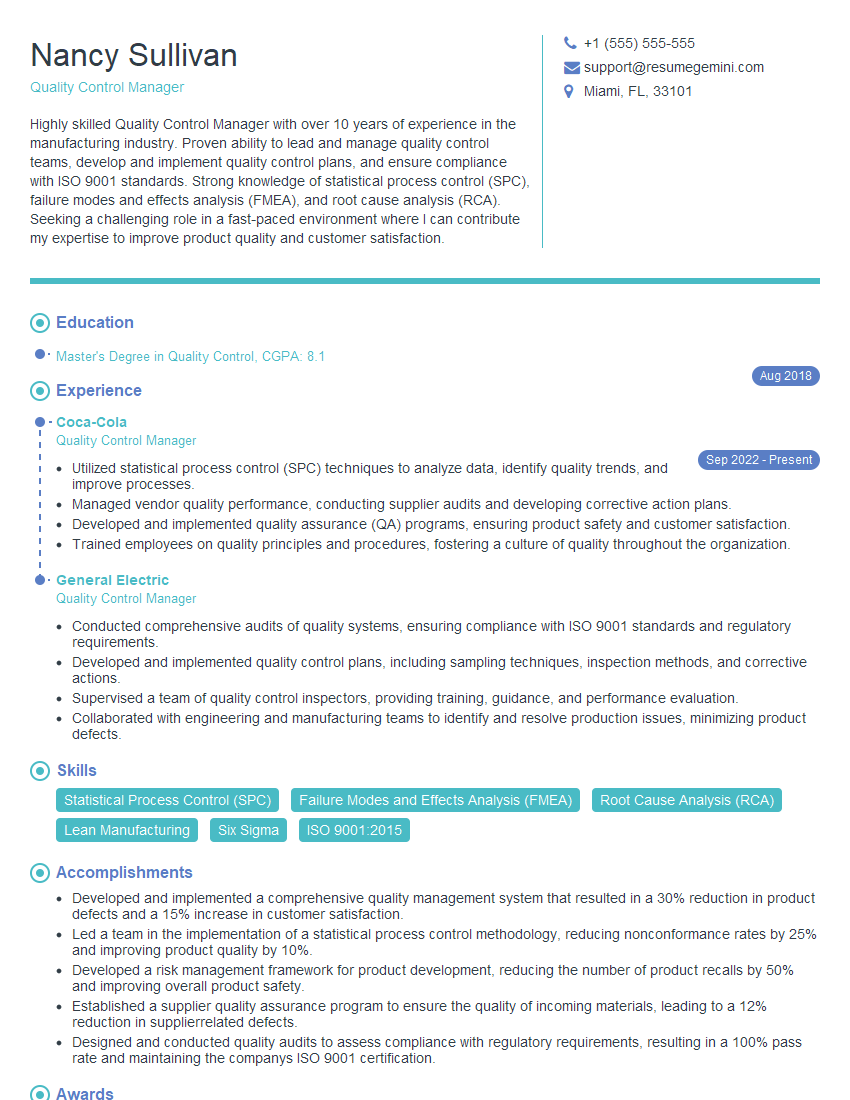
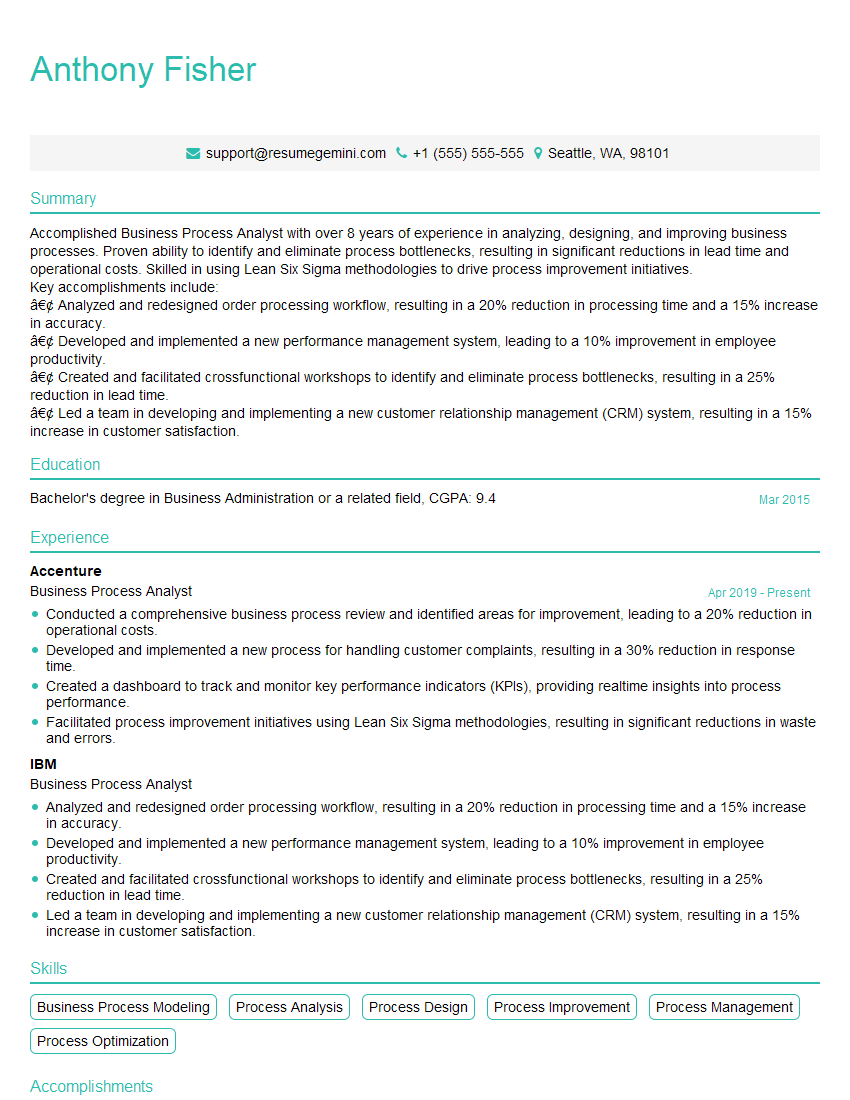
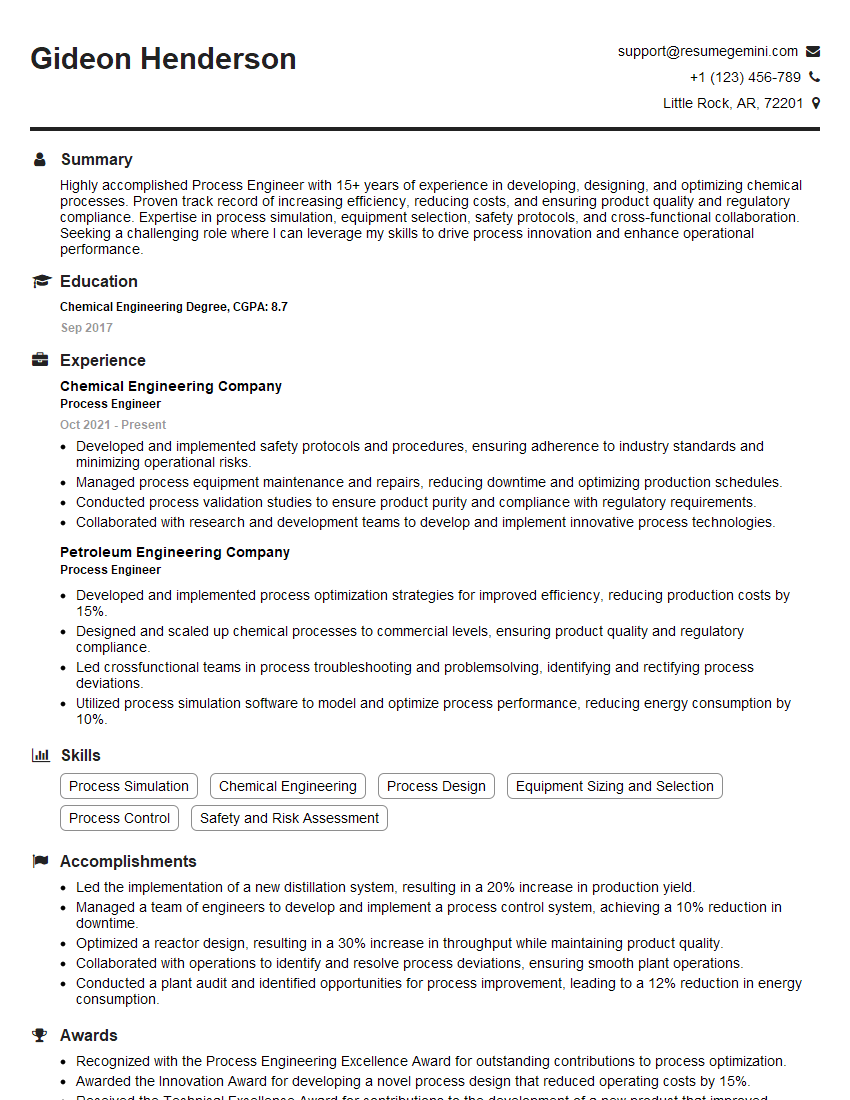
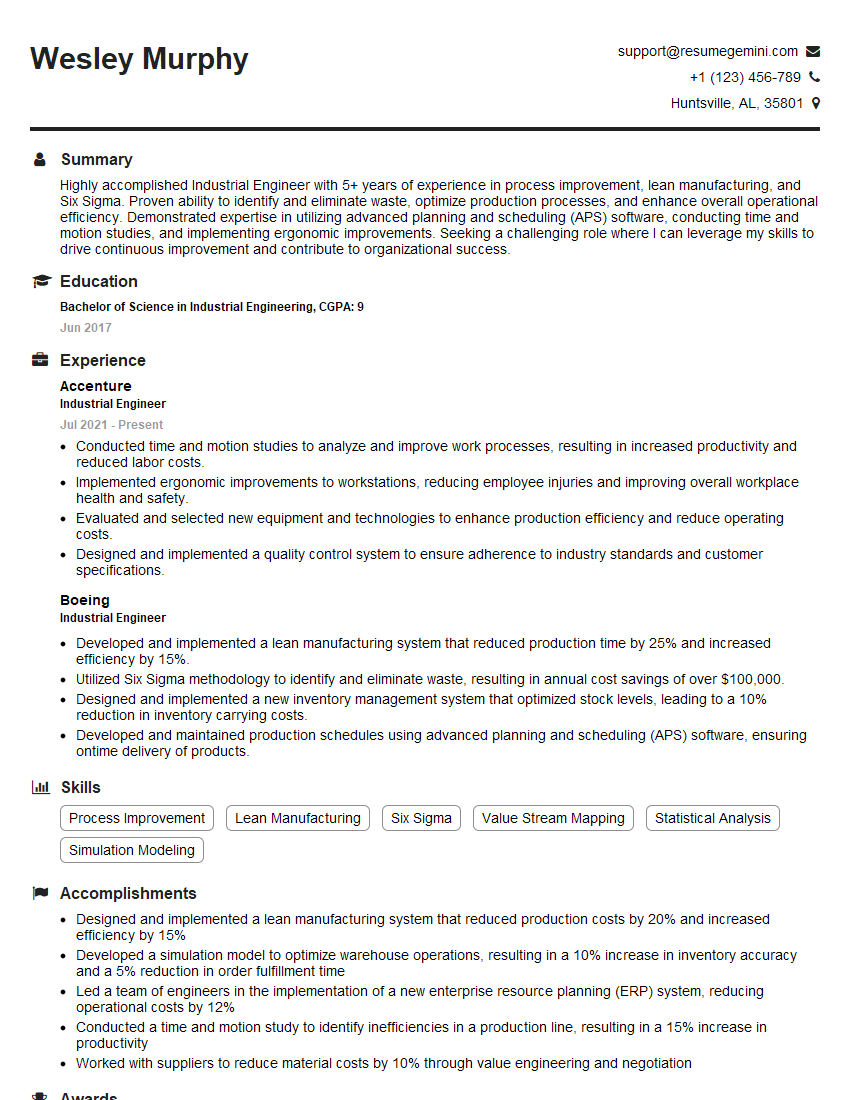
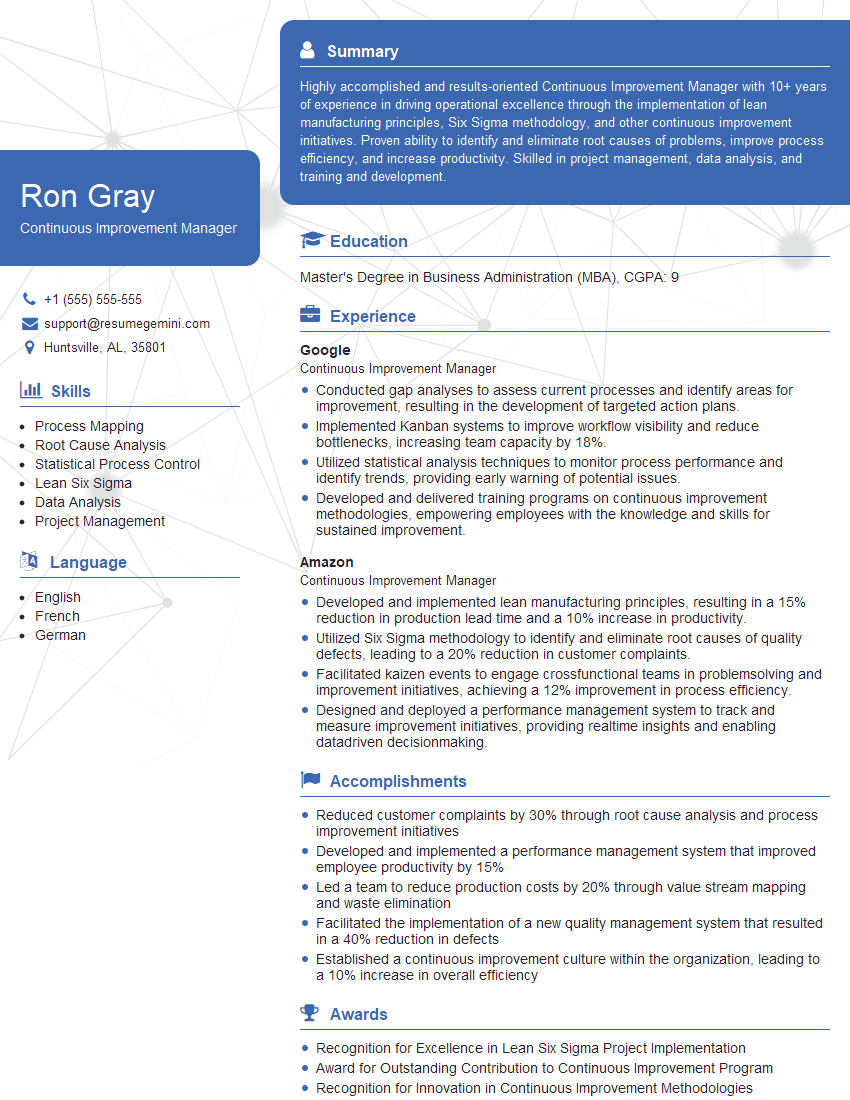
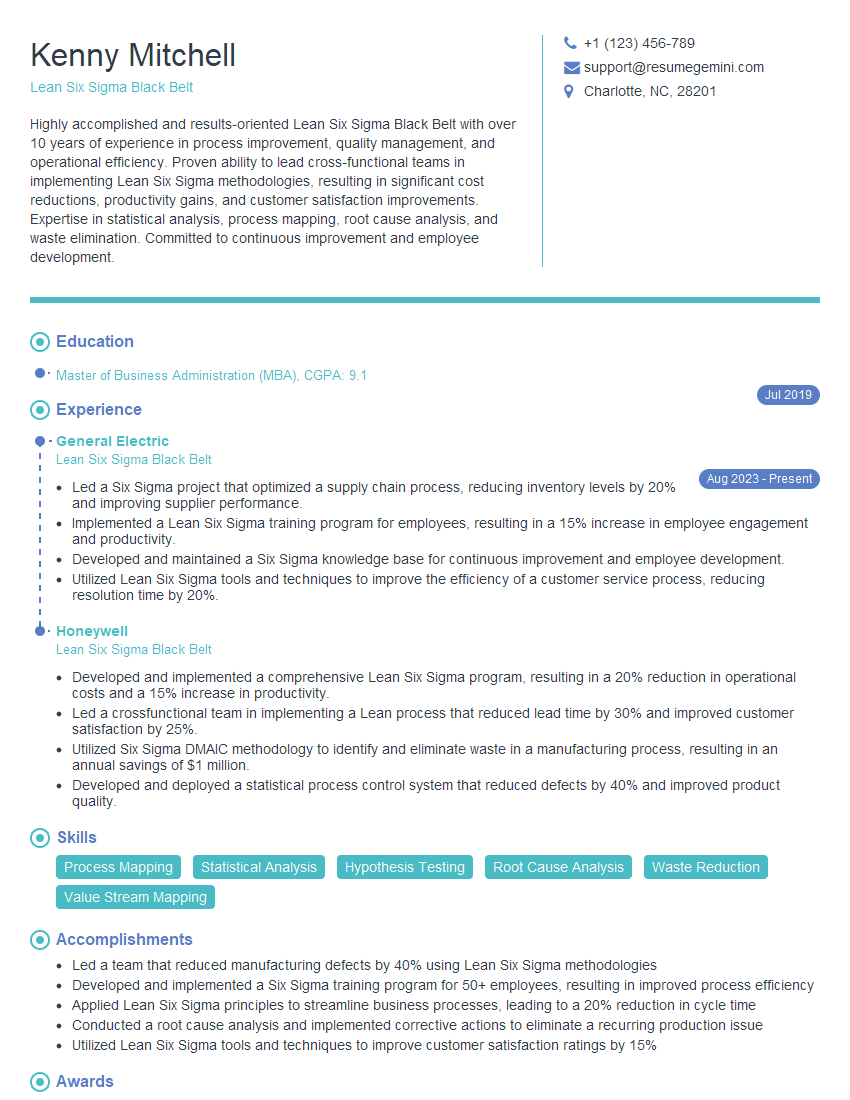
Mastering Continuous Process Improvement (CPI) methodologies is crucial for career advancement in today’s competitive landscape. It demonstrates your ability to drive efficiency, reduce costs, and improve overall organizational performance. To maximize your job prospects, creating a strong, ATS-friendly resume is essential. ResumeGemini can help you craft a compelling resume that highlights your CPI skills and experience, ensuring your application gets noticed. Examples of resumes tailored to Continuous Process Improvement (CPI) roles are available within ResumeGemini to help guide your creation.
Explore more articles
Users Rating of Our Blogs
Share Your Experience
We value your feedback! Please rate our content and share your thoughts (optional).
What Readers Say About Our Blog
Really detailed insights and content, thank you for writing this detailed article.
IT gave me an insight and words to use and be able to think of examples