Interviews are more than just a Q&A session—they’re a chance to prove your worth. This blog dives into essential Fixed-Rate Mortgages interview questions and expert tips to help you align your answers with what hiring managers are looking for. Start preparing to shine!
Questions Asked in Fixed-Rate Mortgages Interview
Q 1. Explain the difference between a fixed-rate and an adjustable-rate mortgage.
The core difference between a fixed-rate mortgage (FRM) and an adjustable-rate mortgage (ARM) lies in the interest rate. With a fixed-rate mortgage, the interest rate remains constant for the entire loan term, typically 15 or 30 years. This provides predictability and stability in monthly payments. In contrast, an adjustable-rate mortgage has an interest rate that fluctuates based on a benchmark index, like the LIBOR or SOFR, plus a margin set by the lender. This means your monthly payment can change over the life of the loan, potentially increasing or decreasing depending on market conditions. Think of it like this: a fixed-rate mortgage is like buying a product at a set price, while an ARM is like buying a product with a price that can change.
For example, a 30-year FRM might have a 6% interest rate throughout its life. An ARM, however, might start at 4% but could rise to 7% or even fall to 3% over the years, leading to varying monthly payments.
Q 2. Describe the components of a fixed-rate mortgage payment.
Each fixed-rate mortgage payment comprises two main components: principal and interest. The principal is the amount of money you originally borrowed from the lender. The interest is the cost of borrowing that money. In the early stages of the loan, a larger portion of your payment goes towards interest, and as time progresses, a larger portion goes towards the principal. Some mortgages also include property taxes and homeowner’s insurance (often abbreviated as PITI – Principal, Interest, Taxes, Insurance) bundled into the monthly payment, held in an escrow account by the lender to pay these expenses on your behalf.
For example, if your monthly payment is $1500, $1000 might go toward interest and $500 towards principal early in the loan. Towards the end, that proportion could reverse, with a larger portion allocated to principal.
Q 3. What are the different types of fixed-rate mortgages available?
Several types of fixed-rate mortgages cater to various needs and financial situations. Common types include:
- Conventional Fixed-Rate Mortgages: These are not insured or guaranteed by a government agency and typically require a larger down payment (often 20%).
- Conforming Fixed-Rate Mortgages: These adhere to loan limits set by Fannie Mae and Freddie Mac, making them eligible for purchase on the secondary mortgage market.
- Non-Conforming Fixed-Rate Mortgages (Jumbo Mortgages): These exceed the conforming loan limits and often have stricter qualification requirements and potentially higher interest rates.
- Government-Backed Fixed-Rate Mortgages (e.g., FHA, VA, USDA): These mortgages are insured or guaranteed by government agencies and typically require lower down payments and more lenient credit requirements.
- 15-Year Fixed-Rate Mortgages: These loans have shorter terms, resulting in higher monthly payments but significantly lower overall interest paid compared to 30-year loans.
The best type of fixed-rate mortgage depends heavily on individual circumstances, including credit score, down payment amount, and long-term financial goals.
Q 4. How do interest rates affect fixed-rate mortgages?
Interest rates are a crucial factor influencing fixed-rate mortgages. Higher interest rates lead to higher monthly payments and a greater total amount paid over the life of the loan. Conversely, lower interest rates result in lower monthly payments and reduced total interest paid. The prevailing market interest rates at the time of loan origination directly determine the interest rate offered on a fixed-rate mortgage. Borrowers should closely monitor interest rate trends to time their mortgage application strategically.
For instance, if interest rates rise by 1%, a borrower might face significantly higher monthly payments and pay thousands more in interest over the lifetime of the mortgage. Conversely, a drop in rates translates to substantial savings.
Q 5. Explain the concept of amortization in a fixed-rate mortgage.
Amortization refers to the gradual repayment of a loan principal over time through regular payments. In a fixed-rate mortgage, each payment consists of both principal and interest. A fixed amortization schedule details how much of each payment goes towards principal and how much goes towards interest over the loan term. Early payments mostly cover interest, but as the loan progresses, a larger proportion is allocated to principal repayment.
Imagine paying off a $200,000 loan over 30 years. The initial payments largely go to interest, while the principal reduction is minimal. However, as you make regular payments, the principal balance decreases, and therefore, the interest component of subsequent payments also decreases.
Amortization schedules are usually provided to borrowers at the time of loan closing, allowing them to track their loan repayment progress and see the breakdown of each payment.
Q 6. What are the key factors considered during the underwriting process for a fixed-rate mortgage?
Underwriting a fixed-rate mortgage involves a thorough assessment of the borrower’s ability to repay the loan. Key factors considered include:
- Credit Score: A higher credit score indicates lower risk and typically qualifies the borrower for better interest rates.
- Debt-to-Income Ratio (DTI): This ratio compares the borrower’s monthly debt payments (including the proposed mortgage payment) to their gross monthly income. A lower DTI is generally preferred.
- Income Verification: Lenders verify the borrower’s income through pay stubs, tax returns, and employment verification.
- Assets and Reserves: Lenders assess the borrower’s liquid assets and reserves to ensure they can handle unexpected expenses and maintain payments.
- Property Appraisal: The property’s value is determined to ensure it’s sufficient collateral for the loan amount.
- Loan-to-Value Ratio (LTV): This ratio compares the loan amount to the appraised value of the property. A lower LTV generally indicates lower risk.
Lenders use a combination of these factors to determine the borrower’s creditworthiness and the overall risk associated with the loan.
Q 7. How do you assess the creditworthiness of a mortgage applicant?
Assessing a mortgage applicant’s creditworthiness is a multi-faceted process relying on several key aspects:
- Credit Report Analysis: A comprehensive review of the applicant’s credit report from major credit bureaus (Equifax, Experian, TransUnion) is paramount. This reveals their credit history, including payment patterns, outstanding debts, and public records.
- Credit Score Evaluation: Credit scores, like FICO scores, provide a numerical representation of creditworthiness. Higher scores indicate lower risk.
- Debt-to-Income Ratio (DTI) Calculation: This crucial metric measures the applicant’s ability to manage existing debt alongside a new mortgage payment. A higher DTI suggests increased financial strain.
- Verification of Income and Employment: Lenders verify income through pay stubs, tax returns, and direct contact with employers to ensure the applicant’s income stability and reliability.
- Review of Assets and Liabilities: An assessment of assets (savings, investments) and liabilities (outstanding loans, credit card debt) paints a picture of the applicant’s overall financial health.
By combining these elements, lenders create a holistic evaluation to gauge the risk associated with lending to the applicant. This rigorous process helps protect both the lender and the borrower.
Q 8. Explain the process of calculating a borrower’s debt-to-income ratio (DTI).
The Debt-to-Income ratio (DTI) is a crucial metric lenders use to assess a borrower’s ability to repay a loan. It represents the percentage of your gross monthly income that goes towards debt payments. A lower DTI indicates a greater capacity to manage additional debt.
Calculating DTI:
- Calculate Total Monthly Debt Payments: Add up all your recurring monthly debt obligations, including credit card payments, student loans, car loans, and any other installment loans.
- Determine Gross Monthly Income: This is your pre-tax monthly income from all sources (salary, bonuses, investments, etc.).
- Calculate DTI: Divide your total monthly debt payments by your gross monthly income and multiply by 100 to express it as a percentage.
DTI = (Total Monthly Debt Payments / Gross Monthly Income) * 100
Example: Let’s say your total monthly debt payments are $2,000, and your gross monthly income is $6,000. Your DTI would be (2000/6000) * 100 = 33.33%. Lenders typically prefer DTI ratios below 43%, but the ideal range can vary depending on the lender and the type of loan.
Q 9. What are the various loan-to-value ratios (LTV) and their implications?
The Loan-to-Value ratio (LTV) is the percentage of a property’s value that is financed by a mortgage loan. It’s calculated by dividing the loan amount by the appraised value of the property. Different LTVs carry different implications for borrowers and lenders.
- High LTV (80% and above): This means you’re borrowing a larger portion of the property’s value. It often requires Private Mortgage Insurance (PMI), as discussed later, because it represents a higher risk for the lender.
- Moderate LTV (60-80%): This is generally considered a safer range for lenders. It often eliminates the need for PMI.
- Low LTV (below 60%): This indicates a substantial down payment and represents a lower risk to the lender. It usually doesn’t require PMI and may qualify for better interest rates.
Implications: A higher LTV might mean a smaller down payment, but you’ll likely pay PMI and might face stricter lending requirements. A lower LTV usually means a larger down payment but could translate to lower interest rates and less risk for both the borrower and the lender. The implications also affect the amount of equity you have in your home initially.
Q 10. Describe the role of private mortgage insurance (PMI).
Private Mortgage Insurance (PMI) is an insurance policy that protects lenders from losses if a borrower defaults on their mortgage loan, especially when the LTV is high. It’s typically required when the down payment is less than 20% of the home’s purchase price. PMI adds to your monthly mortgage payment.
Role of PMI: PMI mitigates the lender’s risk by insuring a portion of the loan. If the borrower defaults and the lender forecloses on the property, but the sale price is less than the loan amount, PMI compensates the lender for the difference. Once the borrower builds up sufficient equity (usually when the LTV reaches 80%), they can request the PMI to be removed.
Example: Imagine you bought a house for $300,000 with a 10% down payment ($30,000). Your loan is $270,000, representing an LTV of 90%. The lender will likely require PMI to protect itself from potential losses in the event of default.
Q 11. What are the common closing costs associated with a fixed-rate mortgage?
Closing costs are various fees and expenses associated with finalizing a mortgage loan. These can vary significantly depending on location, lender, and the specifics of the transaction. Some common closing costs include:
- Loan Origination Fee: A fee charged by the lender for processing the loan application.
- Appraisal Fee: The cost of a professional appraisal to determine the property’s value.
- Title Insurance: Protects the lender and borrower against title defects (explained in more detail later).
- Home Inspection Fee: The cost of a home inspection to identify any structural or other issues.
- Property Taxes: Often paid in arrears, so a portion might be due at closing.
- Homeowner’s Insurance: Proof of homeowner’s insurance is required before closing.
- Recording Fees: Fees paid to the county to record the mortgage document.
- Escrow Fees: Fees charged by the escrow company for managing the closing process.
It’s crucial to budget for these costs, as they can add several thousand dollars to the overall cost of buying a home.
Q 12. How do you handle discrepancies in an applicant’s financial documentation?
Discrepancies in an applicant’s financial documentation are a common challenge in mortgage lending. Handling these requires a systematic and thorough approach:
- Verification: Attempt to verify the discrepancy with the applicant. Ask for clarification and additional documentation, such as updated bank statements, pay stubs, or tax returns.
- Documentation Review: Carefully review all submitted documents for inconsistencies or errors. Look for patterns or explanations that might resolve the discrepancy.
- Independent Verification: If the discrepancy can’t be resolved through direct communication and document review, consider independent verification. This might involve contacting the applicant’s employer or other relevant sources to confirm the information.
- Documentation of the Discrepancy: Regardless of the resolution, thoroughly document the discrepancy, the steps taken to resolve it, and the final outcome. This creates an audit trail and protects the lender from future liabilities.
- Decision-Making: Based on the verification process, determine if the discrepancy is significant enough to impact the loan approval. Minor discrepancies might be overlooked, but major inconsistencies could lead to loan denial.
Transparency and clear communication are vital throughout this process. Explaining the reasons for requesting additional information helps maintain a positive relationship with the applicant.
Q 13. Explain the process of title insurance and its importance in mortgage lending.
Title insurance protects the lender and the homeowner from financial losses resulting from defects in the property’s title. A title is the legal document that proves ownership of a property.
Process of Title Insurance: A title company conducts a thorough search of the public records to uncover any potential problems with the title, such as liens, encumbrances, or other claims against the property. They issue a title report summarizing their findings. If the title is clear, they issue a title insurance policy.
Importance in Mortgage Lending: Title insurance is crucial because it protects both the lender and borrower against unexpected legal challenges to the ownership of the property after the mortgage is finalized. For the lender, it ensures that their security (the property) is free of encumbrances that could jeopardize their investment. For the borrower, it protects them from claims that could force them to lose their home or spend money on legal battles to defend their ownership.
Example: A title search might reveal an outstanding tax lien on the property, meaning the previous owner hasn’t paid their property taxes. Title insurance would protect the new owner and the lender from having to pay these outstanding taxes.
Q 14. What are some common risks associated with fixed-rate mortgages?
While fixed-rate mortgages offer the stability of predictable payments, several risks exist:
- Interest Rate Risk (for lenders): If interest rates decline after a fixed-rate loan is issued, the lender might forgo potential profits they could have earned by lending at a higher rate.
- Inflation Risk: Unexpectedly high inflation can erode the purchasing power of future payments, making the loan less valuable in real terms for the lender. For borrowers, high inflation can make repayments feel more burdensome relative to earnings.
- Default Risk: The risk that the borrower will fail to make their mortgage payments. This is mitigated by factors such as credit scores, DTI ratios, and appraisals, and partially insured by PMI if applicable.
- Prepayment Risk (for lenders): If interest rates drop significantly, borrowers might refinance their loans, thereby potentially reducing the lender’s income from interest.
- Economic Downturn Risk: Economic recessions can lead to job losses and reduced income, increasing the likelihood of defaults.
Managing these risks involves careful underwriting, diversification of loan portfolios, and utilizing risk mitigation tools such as PMI. For borrowers, responsible financial planning and maintaining a strong credit history are key to minimizing the risks of default.
Q 15. How do you manage challenging situations with clients or borrowers?
Managing challenging situations with clients starts with active listening and empathy. I strive to understand their concerns fully before offering solutions. For example, if a client is struggling with affordability due to unexpected job loss, I wouldn’t simply dismiss their concerns but explore options like loan modifications, forbearance, or connecting them with housing counselors. I believe in transparency – clearly explaining the available options, their pros and cons, and the potential implications. Documentation is key; meticulous record-keeping ensures accountability and facilitates a smooth process. Finally, I prioritize maintaining a calm and professional demeanor, even under pressure. A frustrated client needs a calming voice, not further stress.
In instances of disagreements, I focus on finding common ground. For example, if a client is dissatisfied with the appraisal process, I carefully review the appraisal report with them, highlighting the factors that influenced the valuation, and offer to explore obtaining a second appraisal if warranted, clearly outlining the costs and process involved. Ultimately, a collaborative approach yields better outcomes than confrontation.
Career Expert Tips:
- Ace those interviews! Prepare effectively by reviewing the Top 50 Most Common Interview Questions on ResumeGemini.
- Navigate your job search with confidence! Explore a wide range of Career Tips on ResumeGemini. Learn about common challenges and recommendations to overcome them.
- Craft the perfect resume! Master the Art of Resume Writing with ResumeGemini’s guide. Showcase your unique qualifications and achievements effectively.
- Don’t miss out on holiday savings! Build your dream resume with ResumeGemini’s ATS optimized templates.
Q 16. What is your experience with mortgage fraud detection and prevention?
Mortgage fraud detection and prevention is crucial to maintaining the integrity of the mortgage market. My experience encompasses several key areas. First, I meticulously verify all documentation submitted by borrowers. This includes income verification (pay stubs, W-2s, tax returns), asset documentation (bank statements, investment accounts), and property appraisals. Discrepancies or inconsistencies immediately trigger further investigation.
I’m proficient in using fraud detection software and analyzing data patterns to identify potential red flags, such as unusually high loan-to-value ratios, fabricated income statements, or suspicious property valuations. For instance, I recently flagged a loan application where the borrower’s stated income was significantly higher than their documented earnings; further investigation revealed falsified tax returns. Collaboration with internal and external fraud investigators is also essential. I am well-versed in reporting suspicious activity to regulatory authorities.
Moreover, I emphasize proactive measures, educating borrowers about their responsibilities and potential risks associated with misrepresentation. Transparent communication and clear expectations contribute significantly to fraud prevention.
Q 17. How do changes in the Federal Reserve’s interest rate policy affect the mortgage market?
The Federal Reserve’s interest rate policy profoundly impacts the mortgage market. When the Fed raises interest rates (like during periods of inflation), borrowing becomes more expensive. This leads to higher mortgage rates, reducing demand for mortgages and potentially slowing down the housing market. Higher rates make it more difficult for borrowers to qualify for loans, and existing homeowners with adjustable-rate mortgages (ARMs) may experience increased monthly payments.
Conversely, when the Fed lowers interest rates (often during economic downturns), borrowing becomes cheaper. This results in lower mortgage rates, stimulating demand, and potentially boosting the housing market. Lower rates can make homes more affordable, leading to increased home purchases and refinancing activity. For example, a significant Fed rate cut could lead to a surge in refinancing applications, as homeowners seek to lower their monthly payments by securing a new mortgage at a lower rate.
It’s important to remember that the effect isn’t immediate or always uniform. The housing market’s response is influenced by multiple factors beyond interest rates, including economic growth, employment levels, and government regulations.
Q 18. Describe your understanding of different mortgage insurance options.
Mortgage insurance protects lenders against losses if a borrower defaults on their loan. Several options exist, each with distinct characteristics.
- Private Mortgage Insurance (PMI): Required for conventional loans with down payments below 20%. PMI premiums are paid monthly by the borrower and are cancelled once the loan-to-value ratio reaches 80% (typically through equity build-up).
- Federal Housing Administration (FHA) Insurance: Insures loans made through the FHA program. FHA loans typically require lower down payments and credit scores than conventional loans. Borrowers pay an upfront premium and an annual premium.
- Veterans Affairs (VA) Guaranteed Loans: Backed by the Department of Veterans Affairs, these loans don’t require private mortgage insurance. However, borrowers usually pay a VA funding fee.
- United States Department of Agriculture (USDA) Rural Development Loans: These loans are available to borrowers in eligible rural areas and don’t require private mortgage insurance. They have income limitations and property restrictions.
The choice of mortgage insurance depends on the borrower’s financial situation, credit score, and down payment. I guide my clients in selecting the most suitable option based on their individual circumstances. For example, a first-time homebuyer with a lower down payment and credit score may find an FHA loan more appropriate than a conventional loan requiring PMI.
Q 19. What is your experience with the use of mortgage loan origination systems (LOS)?
I have extensive experience using mortgage loan origination systems (LOS). These software platforms streamline the mortgage lending process from application to closing. My proficiency includes data entry, loan application processing, underwriting, and document management. I’m familiar with several leading LOS platforms, including [Mention Specific LOS platforms if you have experience with them].
An LOS improves efficiency by automating tasks such as credit report pulls, income verification, and compliance checks. For example, an LOS automatically flags potential inconsistencies or discrepancies in the application data, allowing for quicker identification and resolution of issues. This minimizes processing time and reduces manual errors. Moreover, LOS platforms provide robust reporting and analytics capabilities, offering insights into key performance indicators (KPIs) and aiding in risk management. My expertise in LOS allows me to manage a high volume of loan applications effectively and accurately, while ensuring compliance with all regulations.
Q 20. Explain the process of loan servicing.
Loan servicing encompasses all the activities involved in managing a mortgage loan after it’s originated. This includes collecting monthly payments, managing escrow accounts (property taxes and insurance), responding to borrower inquiries, handling delinquencies and defaults, and ultimately paying off the loan upon completion.
The process begins with setting up the borrower’s payment schedule and escrow accounts. Monthly payments are processed, and records are maintained. Regular communication with borrowers is vital to answer questions regarding their loan and to prevent potential issues. In case of delinquencies, the servicer initiates contact with the borrower to arrange repayment plans or explore options like forbearance or loan modification. If delinquency persists, foreclosure proceedings may be initiated. Upon loan payoff, the servicer releases the mortgage lien.
Efficient loan servicing is crucial for both borrowers and lenders. For borrowers, it ensures timely and accurate accounting of payments and efficient handling of any loan-related issues. For lenders, effective servicing minimizes losses due to defaults and protects their investment.
Q 21. How do you stay updated on changes in mortgage lending regulations?
Staying current on mortgage lending regulations is paramount. I achieve this through a multi-faceted approach.
- Professional Development: I regularly attend industry conferences, seminars, and webinars hosted by organizations like the Mortgage Bankers Association (MBA). These events provide updates on regulatory changes and best practices.
- Regulatory Websites and Publications: I monitor websites of relevant regulatory bodies, such as the Consumer Financial Protection Bureau (CFPB), the Federal Housing Finance Agency (FHFA), and others, for updates and announcements. I also subscribe to industry publications that provide in-depth analysis of regulatory changes.
- Professional Networking: Engaging with colleagues and peers allows for the exchange of information and insights on recent regulatory developments.
- Continuing Education: I actively participate in continuing education courses to maintain my licensing and stay abreast of the latest compliance requirements.
This multi-pronged approach ensures that my knowledge base remains current and my practices comply with the ever-evolving landscape of mortgage lending regulations.
Q 22. Describe your familiarity with different types of mortgage documentation.
My familiarity with mortgage documentation is extensive, encompassing all forms crucial for a fixed-rate mortgage. This includes the initial application, which gathers borrower information, income verification, and asset details. Then there’s the Loan Estimate (LE), mandated by RESPA, providing a clear picture of loan costs. The Closing Disclosure (CD), also mandated by RESPA, provides a final breakdown of all fees and charges before closing. Beyond these core documents, I’m proficient with appraisal reports, title insurance documents, homeowner’s insurance policies, and all supporting documentation required to underwrite and close a loan. I’m also familiar with various state-specific forms and disclosures.
- Loan Application: This forms the foundation, providing details of the borrower’s financial situation and the desired loan terms.
- Loan Estimate (LE): A crucial document for transparency, outlining estimated closing costs and loan terms.
- Closing Disclosure (CD): The final document summarizing all costs, terms, and details before loan consummation.
- Appraisal Report: An independent assessment of the property’s value, vital for underwriting.
Understanding these documents is not just about paperwork; it’s about ensuring a smooth, transparent process for the borrower, protecting both the borrower and the lender from potential issues.
Q 23. What strategies do you employ to ensure accurate and timely loan processing?
Accuracy and timeliness are paramount in loan processing. My strategies involve a meticulous, multi-step approach. First, I employ a thorough review of all documentation at the outset to identify any missing information or potential discrepancies early on. This prevents delays later in the process. I utilize a robust checklist system to ensure every step is completed in the correct order and that all required documents are received. Furthermore, I leverage technology—specifically, Loan Origination Systems (LOS) —to automate certain tasks, reducing manual errors and speeding up processing time. Regular quality checks and internal audits are crucial for ensuring accuracy and identifying any areas for improvement. Finally, I maintain open communication with borrowers and real estate agents to address any queries or provide updates promptly.
For example, if a borrower’s income documentation is incomplete, I immediately reach out to request the necessary information instead of waiting until the end of the process. This proactive approach dramatically reduces processing time and avoids potential delays at closing.
Q 24. How do you handle customer complaints or objections effectively?
Handling customer complaints requires empathy, patience, and a commitment to finding solutions. My approach involves actively listening to understand the borrower’s concerns without interrupting. I then calmly explain the situation, providing clear and concise answers to their questions. If there’s a legitimate issue, I work diligently to rectify it, following established procedures and escalation pathways. Transparency is crucial; I keep the borrower informed of my progress and anticipated timelines. Even if the complaint is unwarranted, I maintain a professional and respectful demeanor, aiming to leave the customer feeling heard and understood. Documenting the entire interaction, including the resolution, is also a crucial part of the process.
For instance, if a borrower complains about unexpected closing costs, I’d review the Loan Estimate and Closing Disclosure with them, pointing out any discrepancies and providing a detailed explanation of each charge. This transparent approach helps de-escalate the situation and fosters trust.
Q 25. Describe your experience working with real estate agents or brokers.
I have extensive experience collaborating with real estate agents and brokers. These relationships are critical for efficient loan processing. I understand the importance of clear and timely communication, ensuring they receive prompt updates and have easy access to necessary information. I proactively provide agents with the information they need, such as estimated closing dates and required documentation, fostering a collaborative environment. I appreciate their expertise in the real estate market and value their input in ensuring a smooth transaction for their clients. Strong relationships based on mutual respect and trust are essential for successful loan closings.
For example, I frequently participate in pre-closing calls with agents and their clients to address any remaining questions or concerns before closing, thereby preventing potential last-minute delays or complications.
Q 26. What is your approach to managing a high volume of mortgage applications?
Managing a high volume of mortgage applications requires a systematic and efficient approach. I utilize a workflow management system to prioritize applications based on urgency and deadlines. This involves assigning tasks to team members, tracking progress, and identifying potential bottlenecks. Automation tools are crucial for streamlining repetitive tasks such as data entry and document verification. Clear communication within the team ensures everyone is informed and working collaboratively towards meeting deadlines. Prioritization ensures that time-sensitive applications are processed swiftly, while maintaining accuracy and compliance throughout the process. Regular performance reviews help identify areas for improvement and ensure that processes remain efficient.
For instance, employing a robust Customer Relationship Management (CRM) system to track application progress and deadlines allows for effective prioritization and efficient management of a large volume of applications.
Q 27. Explain your understanding of the Truth in Lending Act (TILA) and Real Estate Settlement Procedures Act (RESPA).
The Truth in Lending Act (TILA) and the Real Estate Settlement Procedures Act (RESPA) are fundamental to fair lending practices in the mortgage industry. TILA mandates the disclosure of all finance charges associated with a loan, ensuring borrowers understand the total cost of borrowing. This includes interest rates, fees, and other charges, presented clearly and concisely in the Loan Estimate and Closing Disclosure. RESPA focuses on the settlement process, requiring disclosures about closing costs and prohibiting kickbacks or referral fees that could inflate those costs. Compliance with both acts is non-negotiable and protects borrowers from predatory lending practices.
Understanding TILA and RESPA is not just about legal compliance; it’s about building trust and transparency with borrowers, ensuring they make informed decisions about their mortgages. Failure to comply with either act can result in significant penalties for lenders.
Key Topics to Learn for Fixed-Rate Mortgages Interview
- Understanding the Fundamentals: Define fixed-rate mortgages, their key features (interest rate, loan term, amortization), and how they differ from adjustable-rate mortgages. Explore the advantages and disadvantages for borrowers.
- Loan Calculations and Amortization: Master calculating monthly payments, total interest paid, and remaining loan balances using different amortization schedules. Practice solving problems related to loan terms and interest rates.
- Mortgage Insurance and PMI: Explain the purpose and implications of Private Mortgage Insurance (PMI) and how it impacts borrowers with down payments less than 20%. Understand when PMI is required and how it’s released.
- Closing Costs and Fees: Become familiar with the various fees associated with closing a mortgage, including points, appraisal fees, title insurance, and others. Understand how these impact the overall cost of borrowing.
- Financial Regulations and Compliance: Develop an understanding of relevant regulations and compliance requirements related to fixed-rate mortgages, including RESPA, TRID, and other applicable laws.
- Risk Assessment and Underwriting: Understand the process of evaluating borrower creditworthiness, assessing risk, and determining loan eligibility based on factors like credit score, debt-to-income ratio, and loan-to-value ratio.
- Scenario Analysis and Problem Solving: Prepare to analyze different mortgage scenarios, considering variations in interest rates, loan terms, and down payments. Be ready to solve practical problems related to loan calculations and financial implications.
Next Steps
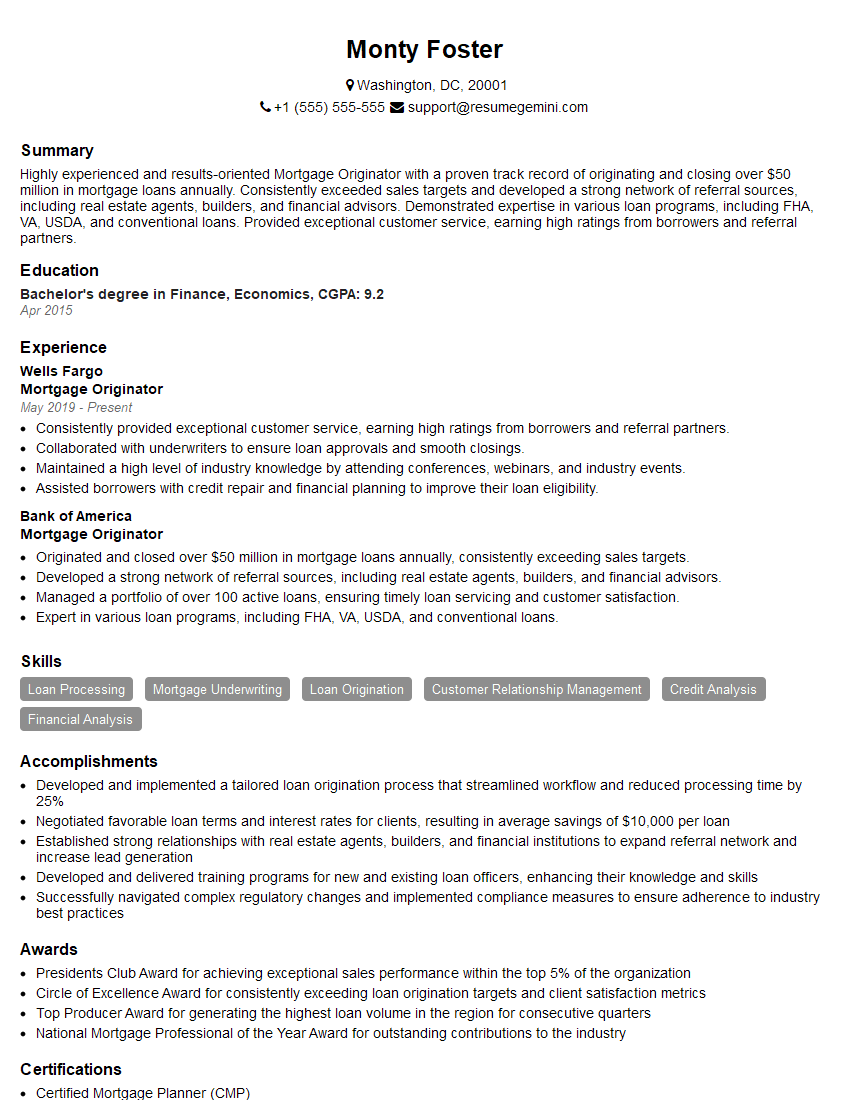
Mastering fixed-rate mortgages is crucial for career advancement in the financial sector, opening doors to specialized roles and higher earning potential. A strong understanding of these concepts is highly sought after by employers. To maximize your job prospects, create an ATS-friendly resume that effectively highlights your skills and experience. ResumeGemini is a trusted resource that can help you build a professional, impactful resume tailored to the financial industry. Examples of resumes specifically designed for Fixed-Rate Mortgage roles are available to help guide you.
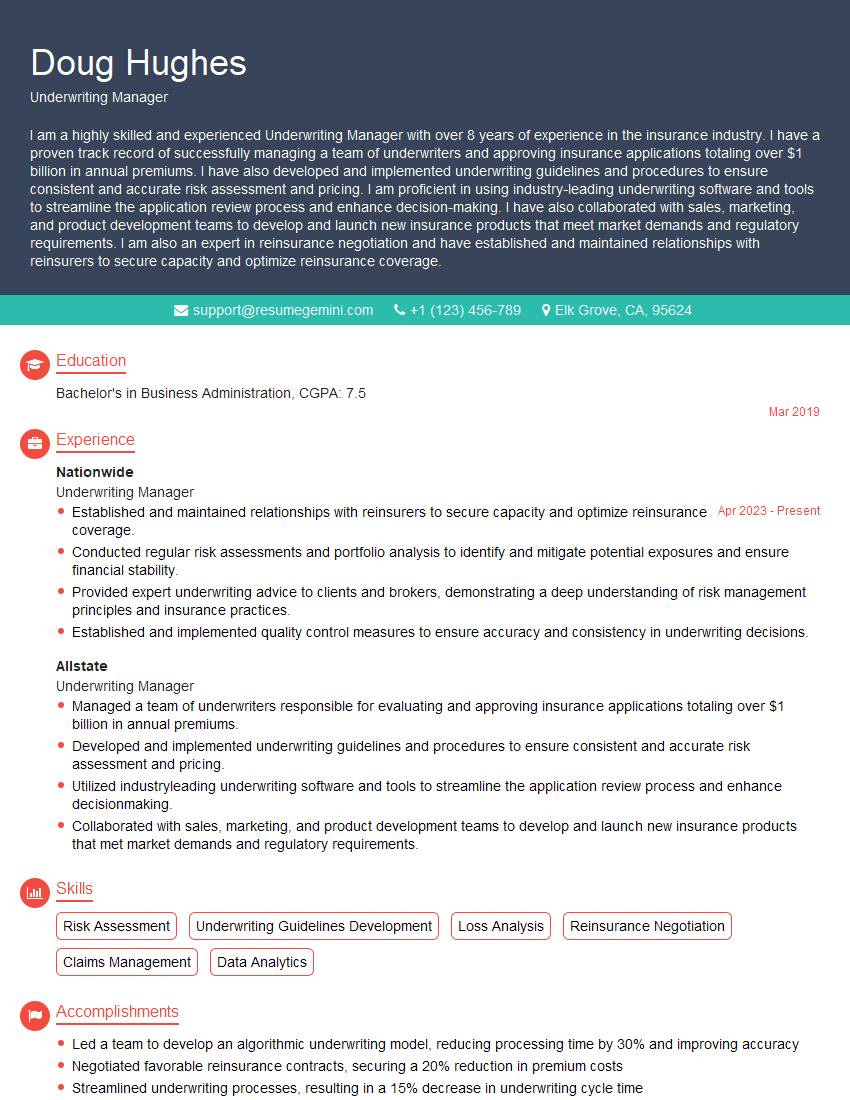
Underwriting Manager Resume Sample
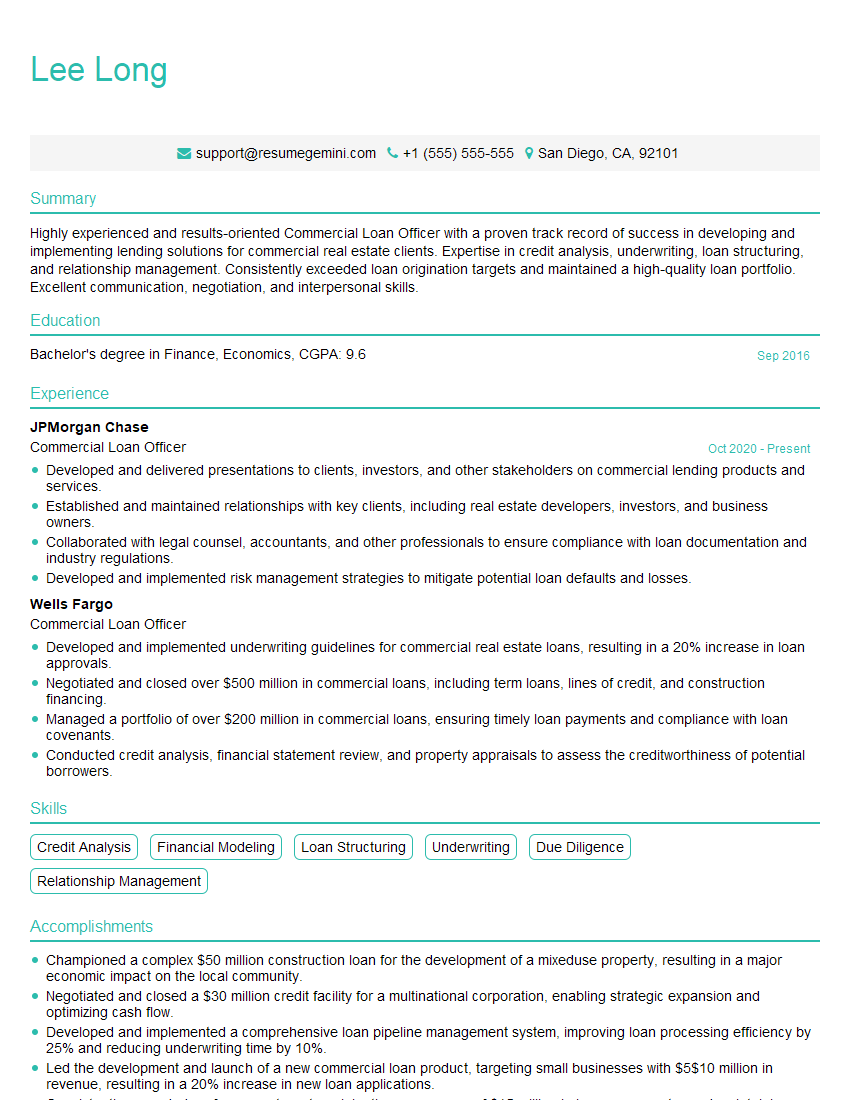
Commercial Loan Officer Resume Sample
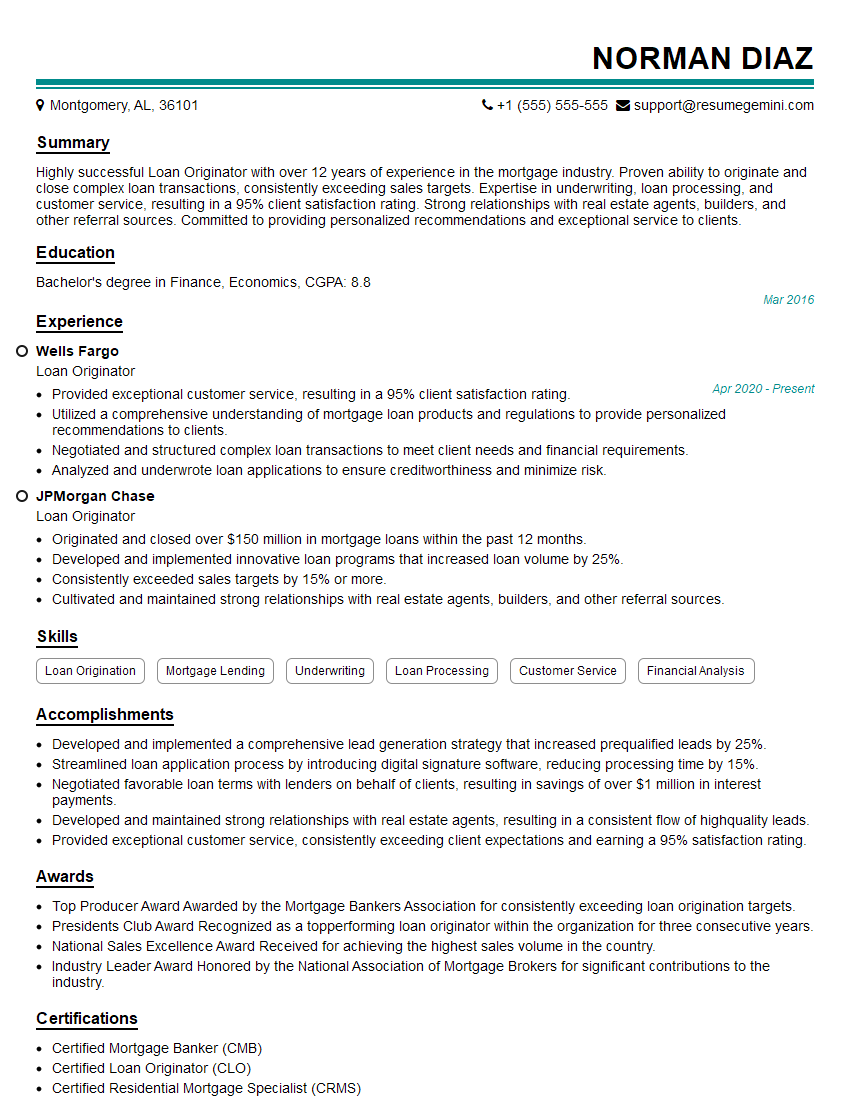
Loan Originator Resume Sample
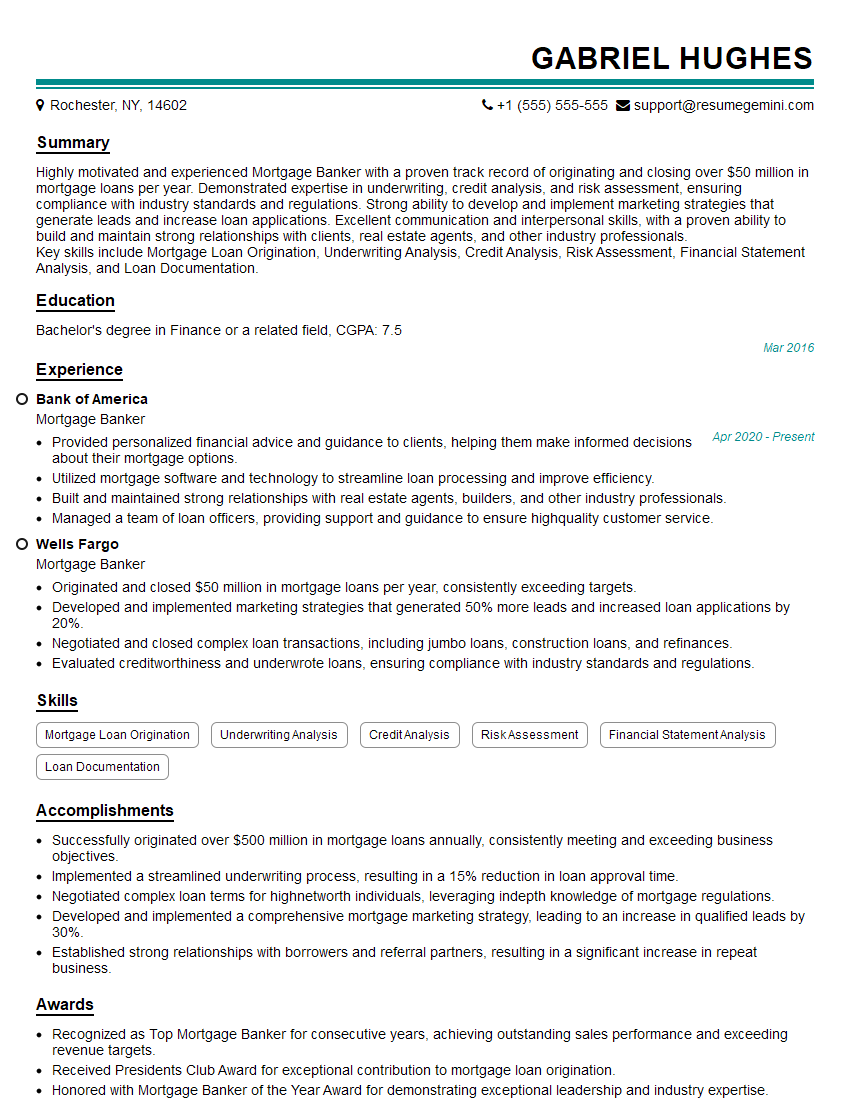
Mortgage Banker Resume Sample
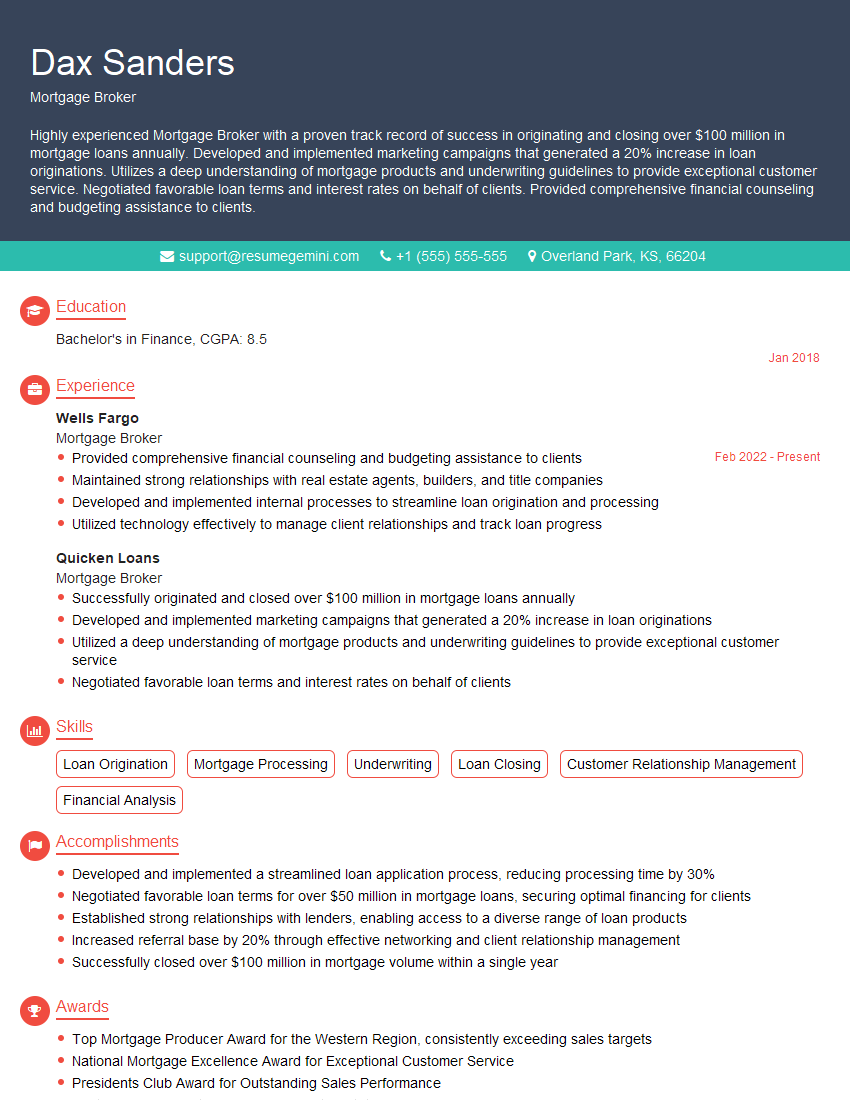
Mortgage Broker Resume Sample
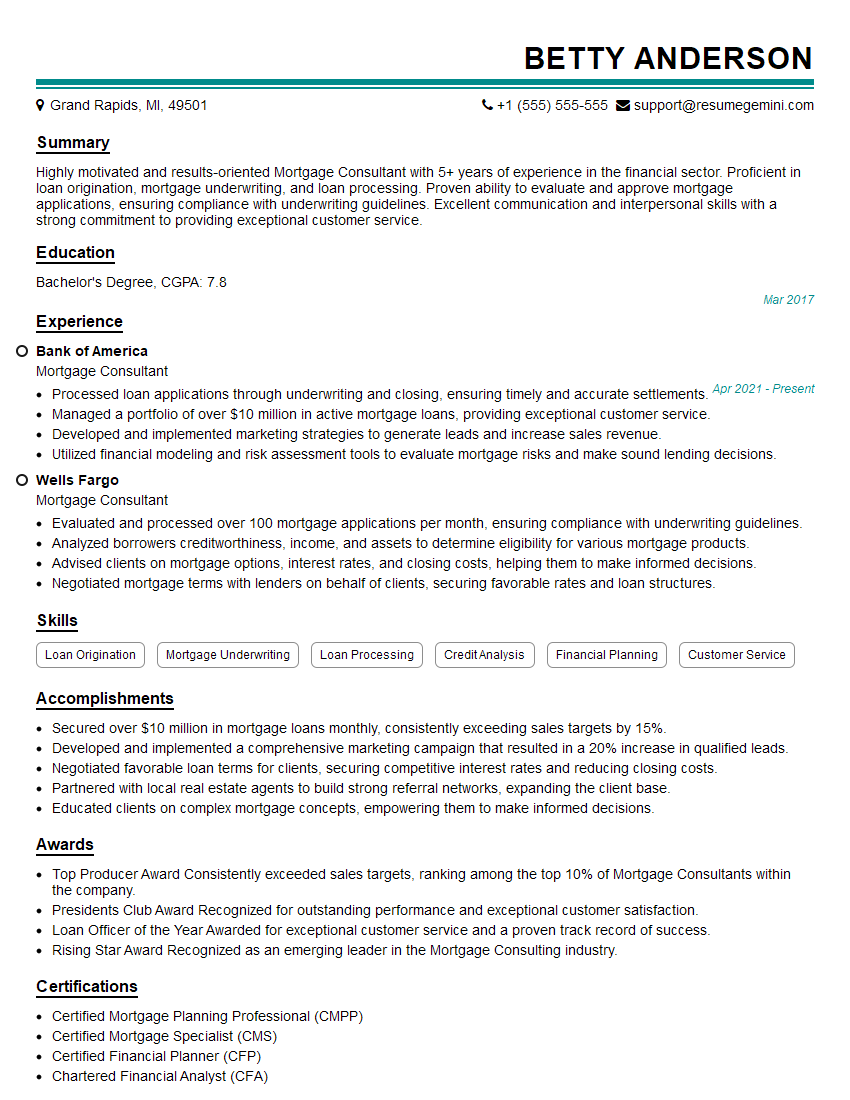
Mortgage Consultant Resume Sample
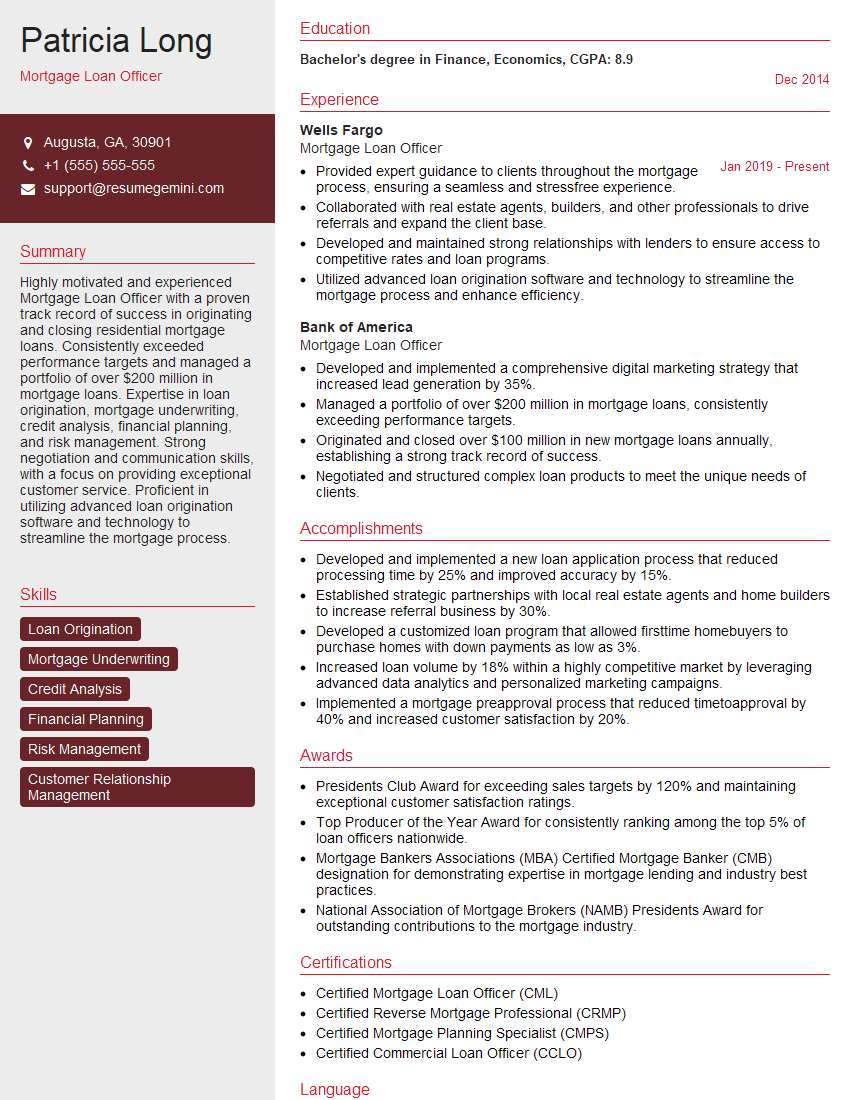
Mortgage Loan Officer Resume Sample
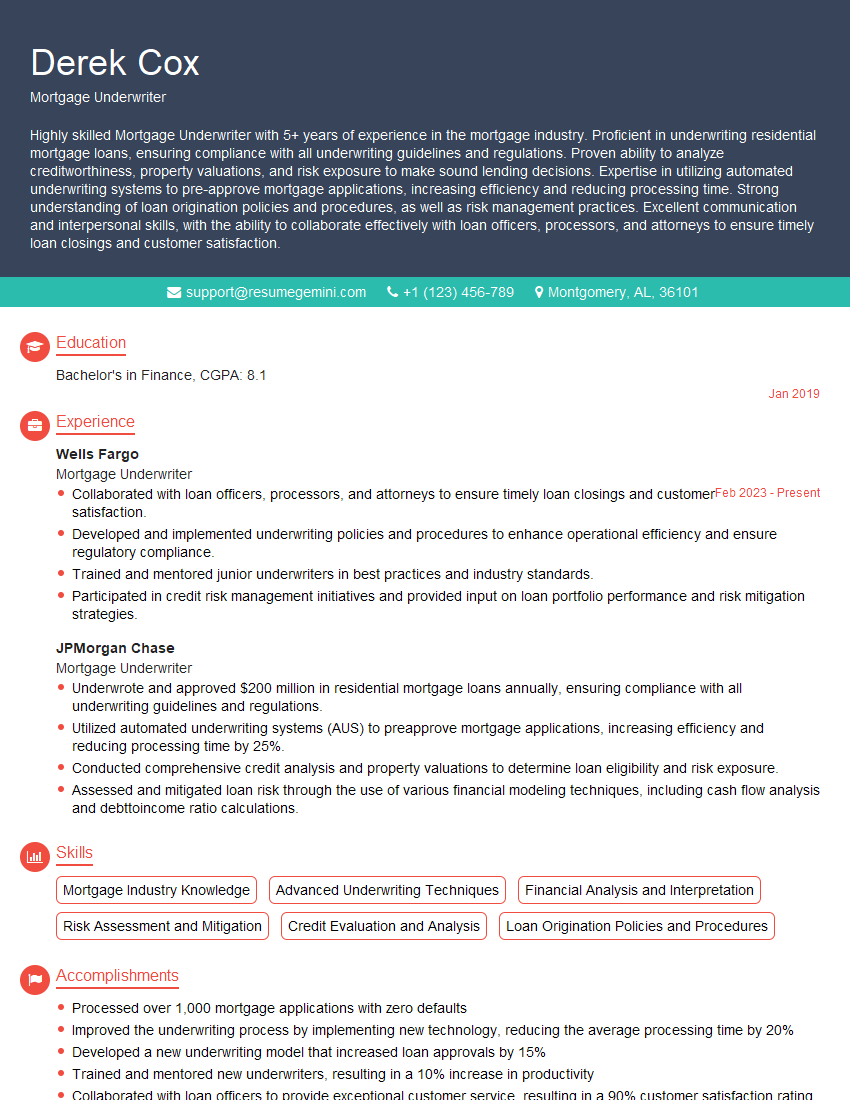
Mortgage Underwriter Resume Sample
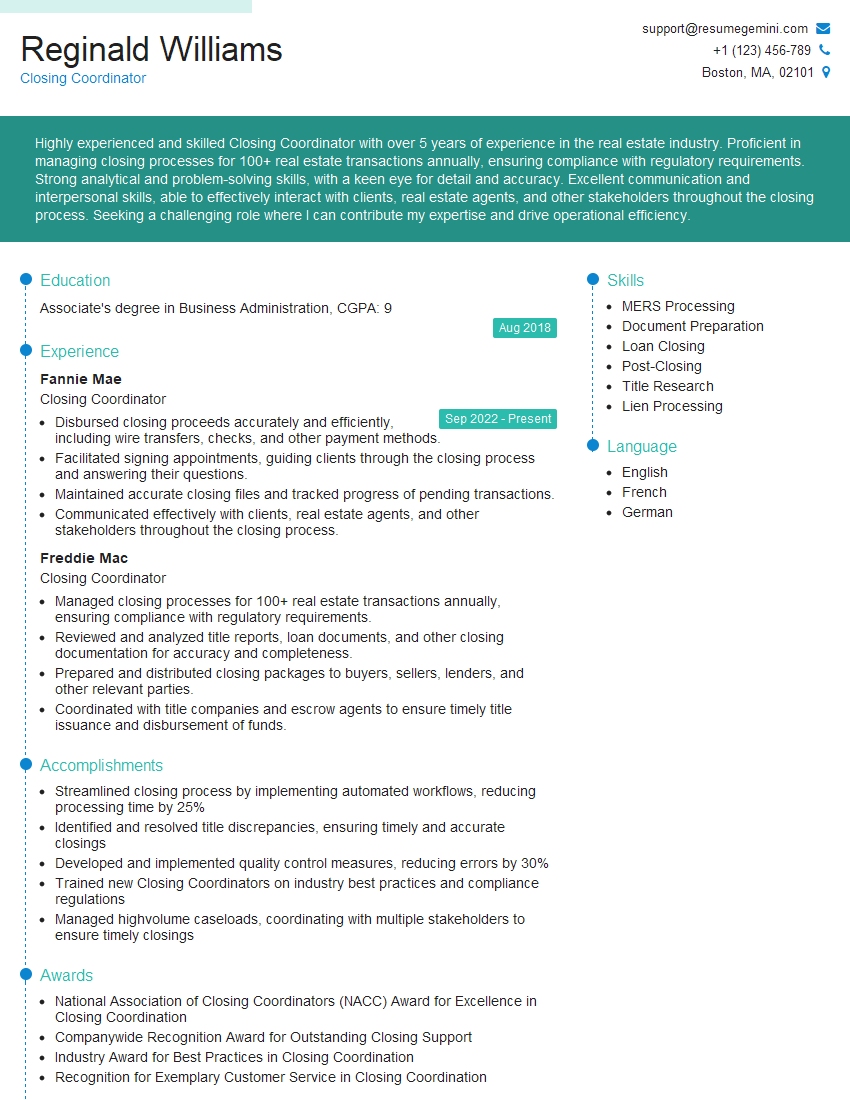
Closing Coordinator Resume Sample
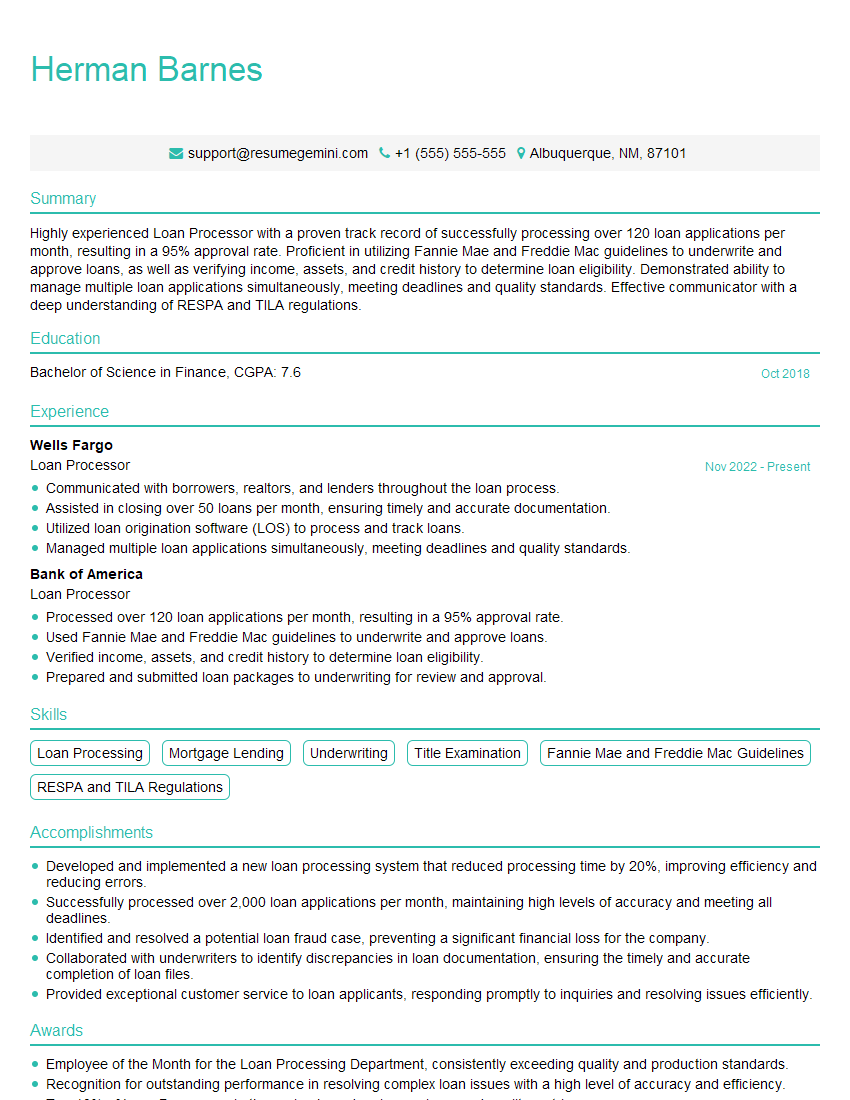
Loan Processor Resume Sample
Explore more articles
Users Rating of Our Blogs
Share Your Experience
We value your feedback! Please rate our content and share your thoughts (optional).
What Readers Say About Our Blog
Really detailed insights and content, thank you for writing this detailed article.
IT gave me an insight and words to use and be able to think of examples