The thought of an interview can be nerve-wracking, but the right preparation can make all the difference. Explore this comprehensive guide to Creating and Maintaining a Positive and Nurturing Classroom Culture interview questions and gain the confidence you need to showcase your abilities and secure the role.
Questions Asked in Creating and Maintaining a Positive and Nurturing Classroom Culture Interview
Q 1. Describe your approach to establishing classroom rules and expectations.
Establishing clear classroom rules and expectations is foundational to a positive learning environment. My approach is collaborative and focuses on student input to foster a sense of ownership.
- Co-creation of Rules: Instead of simply dictating rules, I involve students in brainstorming and creating a classroom code of conduct. This makes them active participants in shaping their learning space. For example, we might have a class discussion about what makes a respectful learning environment and collaboratively list rules based on our shared ideas.
- Positive Language: Rules are framed positively, focusing on what students should do rather than what they shouldn’t do. For instance, instead of ‘Don’t talk out of turn,’ we might use ‘Raise your hand and wait to be called on.’
- Visual Reinforcement: The agreed-upon rules are visually displayed in the classroom, perhaps with accompanying illustrations or examples, to serve as constant reminders.
- Consistent Enforcement: Fair and consistent enforcement is key. Consequences are clearly explained upfront and applied equally to all students, promoting fairness and predictability.
- Regular Review and Revision: We revisit and adjust the rules periodically, as needed, ensuring they remain relevant and effective throughout the year. This ongoing process demonstrates flexibility and responsiveness to the class’s evolving dynamics.
Q 2. How do you create a sense of community and belonging in your classroom?
Building a sense of community and belonging is crucial for student engagement and well-being. I achieve this through various strategies focusing on fostering relationships, creating shared experiences, and celebrating diversity.
- Building Relationships: I take the time to get to know each student individually, learning about their interests and backgrounds. This personal connection creates a safe and supportive environment where students feel valued and understood.
- Collaborative Activities: Regular group work and collaborative projects encourage teamwork, communication, and a sense of shared accomplishment. These activities also provide opportunities for students to learn from and support each other.
- Classroom Traditions: Establishing class traditions, like weekly shout-outs for positive behavior or a monthly class celebration, helps to build a sense of unity and shared identity.
- Celebrating Diversity: I actively celebrate the diversity of backgrounds, experiences, and learning styles within the classroom, fostering inclusivity and respect. We might have ‘show and tell’ sessions about different cultures or languages.
- Positive Feedback: I provide frequent and specific positive feedback to students, celebrating their efforts and achievements, both big and small. This reinforces their sense of belonging and encourages a growth mindset.
Q 3. Explain your strategies for managing student behavior effectively and fairly.
Effective behavior management involves proactive strategies and consistent, fair consequences. My approach is based on positive reinforcement and restorative practices.
- Positive Reinforcement: I focus on rewarding positive behavior through praise, rewards, and class-wide systems like a behavior chart. This reinforces desired behaviors and reduces the need for disciplinary measures.
- Proactive Strategies: I create a predictable and engaging classroom routine to minimize disruptive behavior. Clear instructions, effective transitions, and engaging lessons keep students focused and on task.
- Restorative Practices: When misbehavior occurs, I use restorative practices to address the underlying causes of the behavior. This involves talking to the student about their actions, helping them understand the impact of their behavior on others, and collaboratively developing a plan for future behavior.
- Consequences: Consequences are applied fairly and consistently, with an emphasis on teaching students about responsibility and accountability. Consequences are tailored to the severity of the misbehavior and may include time-outs, loss of privileges, or parent contact.
- Communication: Open communication with students and parents is essential for consistent and effective behavior management. I regularly communicate with parents about student progress and any behavior concerns.
Q 4. How do you differentiate instruction to meet the diverse needs of your students?
Differentiating instruction to meet diverse student needs is crucial for ensuring all learners succeed. My approach is multifaceted, adapting teaching methods and materials based on individual learning styles, readiness, and interests.
- Assessing Learning Needs: I use a variety of assessment methods, including formative and summative assessments, to understand each student’s strengths and weaknesses. This helps me tailor my instruction to meet their individual needs.
- Tiered Assignments: I often provide tiered assignments, offering different levels of challenge and support based on students’ readiness. This allows students to work at their own pace and reach their full potential.
- Flexible Grouping: I use a variety of grouping strategies, such as whole-class instruction, small-group work, and individual work, to cater to different learning styles and needs. This provides opportunities for collaboration, peer support, and individualized attention.
- Varied Instructional Strategies: I incorporate a variety of instructional strategies, such as visual aids, hands-on activities, technology integration, and real-world applications, to engage learners with diverse learning preferences.
- Individualized Support: I provide individualized support to students who require additional assistance, either through one-on-one tutoring, small-group instruction, or differentiated instruction within the classroom.
Q 5. Describe a time you had to address conflict between students. What was your approach?
I recently had a conflict between two students who were arguing over a classroom resource. My approach involved fostering communication and resolution through a restorative approach.
- Active Listening: First, I created a safe space for both students to express their feelings and perspectives without interruption. I actively listened to both sides of the story, demonstrating empathy and understanding.
- Identifying Underlying Issues: I helped them identify the root cause of the conflict, which turned out to be a misunderstanding about sharing the resource.
- Collaborative Problem-Solving: I guided them in collaboratively developing a solution to prevent future conflicts, which included creating a shared schedule for using the resource and establishing clear communication strategies.
- Restorative Circle: In this instance a restorative circle wasn’t necessary, but sometimes for more complex issues, involving a restorative circle allows other students to participate in resolving conflict and reinforcing community values.
- Follow-up: I followed up with both students individually to ensure they understood the resolution and were comfortable with the agreed-upon solution. This ensures the issue is addressed effectively and prevents similar issues in the future.
Q 6. How do you foster a growth mindset in your students?
Fostering a growth mindset involves teaching students that their abilities and intelligence are not fixed, but rather can be developed through effort and learning.
- Growth Mindset Language: I use growth mindset language regularly, praising effort and persistence rather than just intelligence or talent. For example, I might say, ‘I love how persistently you’re working on this problem!’ rather than, ‘You’re so smart!’
- Celebrating Mistakes as Learning Opportunities: I create a safe environment where students feel comfortable making mistakes, viewing them as valuable learning opportunities. We discuss how mistakes can help us improve and learn from our errors.
- Modeling a Growth Mindset: I model a growth mindset myself by openly sharing my own challenges and how I overcome them. This demonstrates that everyone struggles sometimes, and that perseverance is key.
- Providing Feedback Focused on Effort and Strategies: I provide feedback that focuses on effort, strategies, and progress rather than just on the final outcome. This encourages students to focus on their learning process and improvement.
- Growth Mindset Activities: I incorporate activities and discussions focused on growth mindset concepts into the curriculum. This allows students to actively engage with the ideas and develop their own growth mindset.
Q 7. What strategies do you use to build positive relationships with students and parents?
Building positive relationships with students and parents is essential for creating a supportive and effective learning environment.
- Open Communication: I maintain open and regular communication with both students and parents through various channels, such as newsletters, email, phone calls, and parent-teacher conferences. This ensures that everyone is informed about student progress and any concerns.
- Positive Interactions: I strive to create positive interactions with students and parents by being approachable, respectful, and responsive to their needs. I show genuine interest in their lives and perspectives.
- Positive Feedback: I regularly communicate positive feedback to parents about their child’s progress, achievements, and positive behaviors. This helps to build trust and foster a strong partnership.
- Collaboration: I encourage collaboration with parents by involving them in classroom activities, such as volunteering or contributing to classroom projects. This allows parents to feel connected to their child’s learning experience.
- Addressing Concerns Proactively: I address any concerns or challenges promptly and effectively, working collaboratively with parents to find solutions. This demonstrates my commitment to student well-being and builds trust.
Q 8. How do you incorporate positive reinforcement into your classroom management plan?
Positive reinforcement is a cornerstone of my classroom management. Instead of focusing solely on punishing negative behaviors, I prioritize rewarding positive actions. This fosters a more positive and motivating learning environment. My approach is multifaceted:
Verbal Praise: I frequently offer specific and genuine praise, highlighting effort and improvement rather than just results. For instance, instead of saying ‘Good job!’, I might say, ‘I noticed you persevered through that challenging math problem; your dedication is impressive!’
Non-Verbal Cues: A simple smile, a nod of approval, or a thumbs-up can go a long way in reinforcing positive behavior. This is especially effective with students who may be sensitive to public praise.
Class Dojo/Reward Systems: I utilize systems like Class Dojo, where students earn points for positive behaviors like participation, cooperation, and following classroom rules. These points can be redeemed for small rewards, creating intrinsic motivation.
Celebrating Successes: I regularly celebrate both individual and group achievements. This could involve sharing student work, highlighting exemplary projects, or having a class celebration for reaching a collective goal.
By focusing on positive reinforcement, I create a classroom where students feel valued and encouraged to strive for their best.
Q 9. How do you handle disruptive behavior without resorting to punishment?
Addressing disruptive behavior without punishment requires a proactive and restorative approach. My focus is on understanding the root cause of the behavior and guiding the student towards more positive choices.
Proximity Control: Sometimes, simply moving closer to a disruptive student can be enough to redirect their behavior. This non-confrontational approach often subtly communicates expectations.
Quiet Redirection: I often use quiet, private cues to remind a student of expectations. A gentle touch on the shoulder or a whispered reminder can be more effective than a public reprimand.
Restorative Conversations: If the disruptive behavior persists, I engage in a calm and empathetic conversation with the student to understand the underlying issue. This could be boredom, frustration, or a need for attention. The conversation aims at collaboratively finding solutions rather than assigning blame.
Positive Time-Out: Instead of punitive time-outs, I sometimes use ‘positive time-outs’ where a student takes a brief break in a designated calming space to regain composure before re-joining the class. This provides an opportunity for self-reflection.
Collaboration with Parents/Guardians: Open communication with parents or guardians is crucial. Understanding a student’s home environment and potential contributing factors can inform strategies for behavior management.
This restorative approach builds relationships and fosters a sense of responsibility within the students. It allows for learning from mistakes rather than simply punishing them.
Q 10. Describe your methods for promoting student collaboration and teamwork.
Promoting collaboration and teamwork is vital for developing essential 21st-century skills. I integrate collaborative activities into my teaching in several ways:
Think-Pair-Share: This simple yet effective strategy allows students to process information individually, discuss it with a partner, and then share their insights with the whole class.
Group Projects: I design group projects that require diverse skills and responsibilities, ensuring each student contributes meaningfully. I provide clear rubrics and expectations to guide their collaboration.
Jigsaw Activities: Students become ‘experts’ on a specific part of a topic and then teach their peers, fostering collaboration and peer learning.
Cooperative Games: I incorporate games that encourage teamwork and problem-solving, creating a fun and engaging environment for collaboration.
Peer Tutoring: Students with stronger grasps of certain concepts can tutor their peers, strengthening their understanding while also developing leadership skills.
Throughout these activities, I emphasize the importance of active listening, respectful communication, and shared responsibility. I also provide regular opportunities for reflection on teamwork processes, allowing students to learn from their experiences and improve their collaborative skills.
Q 11. How do you create a safe and inclusive learning environment for all students?
Creating a safe and inclusive learning environment is paramount. This involves fostering a sense of belonging and respect for all students, regardless of their background, abilities, or learning styles. My approach includes:
Establishing Clear Expectations: I clearly communicate classroom rules and expectations, emphasizing kindness, respect, and inclusivity. This sets the foundation for a positive and safe learning environment.
Building Relationships: I prioritize building strong relationships with each student, getting to know their individual needs and learning styles. This helps create a sense of trust and belonging.
Creating a Welcoming Space: I ensure my classroom is physically and emotionally welcoming, displaying diverse representations of cultures and abilities. I make an effort to learn about and celebrate the diversity within my class.
Addressing Bullying and Harassment: I have clear procedures for addressing bullying and harassment, creating a zero-tolerance policy and ensuring all students feel safe to report incidents without fear of reprisal.
Using Inclusive Language: I use inclusive language in my instruction and interactions, avoiding stereotypes and generalizations. I strive to present diverse perspectives and experiences.
By consistently modeling inclusive behaviors and actively creating a culture of respect, I ensure that all students feel safe, valued, and empowered to learn.
Q 12. How do you adapt your teaching methods to accommodate students with diverse learning styles?
Accommodating diverse learning styles requires flexibility and a differentiated approach to teaching. I use various methods to cater to visual, auditory, and kinesthetic learners:
Visual Aids: I utilize visual aids such as diagrams, charts, and videos to support understanding for visual learners.
Auditory Learning: I incorporate discussions, lectures, and audio recordings to engage auditory learners.
Kinesthetic Activities: I include hands-on activities, role-playing, and movement-based learning to cater to kinesthetic learners.
Differentiated Instruction: I differentiate assignments, providing various options for students to demonstrate their understanding. This allows students to choose methods that align with their strengths.
Technology Integration: I leverage technology to provide personalized learning experiences, using educational apps and online resources tailored to individual needs.
By employing a multifaceted approach and regularly assessing students’ learning preferences, I can adapt my teaching to effectively reach all learners.
Q 13. What strategies do you use to encourage student self-regulation?
Encouraging student self-regulation involves equipping them with the skills and strategies to manage their emotions, behaviors, and learning. My strategies include:
Mindfulness Activities: I incorporate short mindfulness exercises, such as deep breathing or guided meditation, to help students calm down and focus.
Self-Assessment Tools: I provide students with self-assessment checklists and rubrics to monitor their progress and identify areas for improvement.
Goal Setting: I encourage students to set both academic and behavioral goals, breaking down larger goals into smaller, manageable steps.
Self-Monitoring Strategies: Students learn to track their behavior and progress, identifying patterns and making adjustments as needed. This might involve keeping a journal or using a behavior chart.
Teaching Self-Talk Strategies: I teach students positive self-talk techniques to replace negative thoughts and build self-confidence.
By empowering students to take ownership of their learning and behavior, they develop crucial self-regulation skills that extend beyond the classroom.
Q 14. How do you assess the effectiveness of your classroom management techniques?
Assessing the effectiveness of my classroom management techniques is an ongoing process. I use a combination of methods to gather data and make adjustments:
Classroom Observations: I regularly observe student behavior and interactions, noting patterns and trends.
Student Feedback: I solicit student feedback through anonymous surveys, class discussions, or individual conversations. This provides valuable insights into their perceptions of the classroom environment and my teaching methods.
Data Tracking: I track key metrics such as student engagement, participation, and behavior incidents. This data helps identify areas where adjustments are needed.
Parent/Guardian Communication: Regular communication with parents or guardians provides additional perspectives on student behavior and well-being.
Reflection and Adjustment: I regularly reflect on my teaching practices and make adjustments based on the data collected. This continuous improvement cycle is essential for creating a positive and effective learning environment.
By using a multi-faceted approach to assessment, I ensure my classroom management strategies are effective and responsive to the needs of my students.
Q 15. Describe your approach to providing feedback to students.
My approach to providing feedback is multifaceted and focuses on fostering growth, not just grading performance. I believe feedback should be timely, specific, and actionable. I avoid generic comments like ‘good job’ and instead offer detailed observations tied to learning objectives. For instance, instead of saying ‘good essay,’ I might say, ‘Your essay effectively used evidence from the text to support your thesis, particularly in paragraphs 2 and 4. However, consider strengthening your conclusion by summarizing your key points more concisely.’
I utilize a variety of methods for delivering feedback: written comments on assignments, verbal feedback during class discussions, individual conferences, and self-reflection prompts. I also encourage peer feedback to cultivate a collaborative learning environment where students learn from one another. The ultimate goal is to empower students to understand their strengths and weaknesses, and to develop strategies for improvement.
For example, if a student struggles with organization in their writing, I might provide them with a visual organizer or model essay demonstrating effective structuring techniques. I follow up on feedback to ensure understanding and to check on student progress. This cyclical process of feedback and reflection is crucial for student learning and growth.
Career Expert Tips:
- Ace those interviews! Prepare effectively by reviewing the Top 50 Most Common Interview Questions on ResumeGemini.
- Navigate your job search with confidence! Explore a wide range of Career Tips on ResumeGemini. Learn about common challenges and recommendations to overcome them.
- Craft the perfect resume! Master the Art of Resume Writing with ResumeGemini’s guide. Showcase your unique qualifications and achievements effectively.
- Don’t miss out on holiday savings! Build your dream resume with ResumeGemini’s ATS optimized templates.
Q 16. How do you create a classroom environment that is engaging and motivating for students?
Creating an engaging and motivating classroom relies on building a strong sense of community, incorporating varied teaching methods, and connecting learning to students’ lives. I start by establishing clear expectations and routines that create structure and predictability, fostering a sense of safety and belonging. This is crucial because students learn best when they feel comfortable and supported.
I then diversify my teaching strategies to cater to different learning styles. This includes incorporating hands-on activities, group projects, technology integration, games, and discussions. For example, I might use interactive simulations to teach complex scientific concepts or role-playing activities to understand historical events. I also encourage student choice whenever possible, allowing students to select projects or topics that genuinely interest them. This increased autonomy fosters intrinsic motivation.
Finally, I strive to connect learning to real-world applications and students’ personal experiences. This helps make the material relevant and meaningful. For instance, when studying environmental issues, we might conduct a local environmental cleanup or invite a guest speaker from a relevant organization. By making learning relatable and engaging, I aim to cultivate a classroom where students are actively invested in their education.
Q 17. How do you use technology to enhance the learning experience and classroom culture?
Technology plays a significant role in enhancing both the learning experience and classroom culture. I use technology to differentiate instruction, provide immediate feedback, and create engaging interactive learning experiences. I employ learning management systems (LMS) like Canvas or Google Classroom to organize assignments, distribute resources, and track student progress. These systems also facilitate communication and collaboration among students and between students and me.
Interactive whiteboards and educational apps transform lessons into dynamic and engaging experiences. For example, using educational games can make learning fun and competitive, while educational apps can provide personalized learning support. Moreover, I incorporate tools for creating multimedia projects, allowing students to express their learning in creative ways. Video conferencing tools can also facilitate collaborations with experts or students in other locations.
However, I’m mindful of responsible technology use, ensuring that technology complements, not replaces, essential human interaction and critical thinking skills. I explicitly teach digital citizenship and responsible online behavior. The goal is to empower students to become digitally literate and ethically responsible users of technology.
Q 18. What are your strategies for building rapport with students from diverse backgrounds?
Building rapport with students from diverse backgrounds requires cultural sensitivity, active listening, and a genuine interest in understanding individual experiences. I begin by creating a classroom environment where all students feel respected, valued, and included regardless of their background. This includes using inclusive language, showcasing diverse perspectives in curriculum materials, and actively celebrating the unique identities of my students.
I actively seek opportunities to learn about students’ cultures and backgrounds. I encourage students to share their experiences, perspectives, and traditions. I also make a conscious effort to incorporate diverse perspectives and cultural contexts into my teaching. For example, I might incorporate diverse authors and stories into my reading list or use case studies that represent different cultural experiences. This helps students see themselves reflected in the curriculum and creates a more inclusive learning environment.
I make it a point to learn students’ names correctly and use their preferred names and pronouns. I also adapt my teaching methods to accommodate varying learning styles and preferences. Open communication is key; I create a safe space for students to express their thoughts and feelings, while also modeling respect and empathy.
Q 19. How do you ensure that your classroom is physically and emotionally safe for students?
Creating a physically and emotionally safe classroom is paramount to student learning and well-being. Physically, this means ensuring the classroom is organized, clean, and free of hazards. This includes proper seating arrangements, well-maintained equipment, and readily available emergency exits. I also establish clear classroom rules and procedures, emphasizing respect for oneself and others, and providing consistent consequences for misbehavior.
Emotional safety is equally crucial. I foster a positive and supportive classroom climate where students feel respected, valued, and understood. I establish a classroom culture built on empathy, kindness, and inclusivity. This involves creating opportunities for students to connect with one another and build positive relationships. I proactively address bullying and harassment, and teach students conflict-resolution skills. I model appropriate behavior and create a classroom where open communication and emotional expression are encouraged within appropriate boundaries.
I also establish a clear process for reporting any concerns or incidents, ensuring students feel comfortable bringing issues to my attention without fear of retribution. This includes collaboration with school counselors and administrators to address any serious issues.
Q 20. How do you communicate effectively with parents and guardians about student progress?
Effective communication with parents and guardians is essential for creating a strong home-school partnership. I utilize various methods to keep parents informed about their children’s progress, including regular progress reports, parent-teacher conferences, and email or phone calls. I provide regular updates on student performance, highlighting both strengths and areas needing improvement. I also communicate any concerns or challenges that arise, working collaboratively with parents to develop strategies to support the student’s academic and social-emotional growth.
My communication style is clear, concise, and respectful. I avoid educational jargon and explain student progress in a way that is easy to understand. I always start by highlighting the student’s strengths before discussing areas for improvement. I also encourage two-way communication by making myself readily available to answer any parent questions or concerns. This proactive and transparent communication builds trust and creates a supportive partnership.
For example, I might use a parent-teacher communication platform to share weekly updates, send reminders about assignments, and quickly address any parent inquiries. I also schedule regular meetings to discuss student progress in greater detail and jointly create action plans. The aim is to build a collaborative relationship based on mutual respect and a shared commitment to the student’s success.
Q 21. Describe your process for planning and organizing your classroom.
My classroom planning and organization process is systematic and designed to maximize student learning and engagement. It starts with aligning my curriculum with state standards and learning objectives. Then, I design engaging lessons that incorporate a variety of teaching strategies. This includes creating detailed lesson plans that outline learning objectives, activities, materials, assessment methods, and differentiation strategies.
I organize my classroom physically to optimize learning and collaboration. This means having designated areas for various activities (e.g., group work, individual work, reading). Materials and resources are easily accessible and well-organized. Clear labeling and visual aids are also crucial in maintaining a tidy and efficient learning space. I also utilize technology to enhance organization and efficiency. This includes using digital calendars, scheduling tools, and learning management systems to manage assignments, track student progress, and communicate effectively with students and parents.
Regular reflection and adjustment are part of my process. I regularly review my teaching practices, seeking feedback from students and colleagues. This ensures that my planning and organization methods are continually refined to best support student learning and create a positive and productive classroom environment. I might use data analysis to inform changes in instruction or lesson design, thereby ensuring that my classroom remains a dynamic and effective learning space.
Q 22. How do you involve parents in their child’s education?
Involving parents is crucial for a child’s success. My approach is multifaceted, focusing on open communication and collaborative partnerships. I start by establishing clear channels of communication – regular newsletters, a class website or app, and parent-teacher conferences. Beyond these formal channels, I prioritize informal communication: quick notes, phone calls, or emails to share both successes and challenges. I also encourage parent participation in classroom activities, whether it’s volunteering during class, helping with projects, or sharing their expertise. For example, last year, a parent who was an architect helped students design and build miniature models of their ideal cities. This involvement creates a strong home-school connection and ensures everyone is working towards the same goals.
Furthermore, I utilize platforms like ClassDojo or Seesaw to share student work, progress, and classroom updates regularly. These platforms allow for easy communication and provide parents with insights into their child’s daily learning experiences.
Q 23. How do you address students’ social and emotional needs?
Addressing students’ social and emotional needs is paramount; it forms the foundation for successful academic learning. I create a classroom environment that fosters empathy, respect, and inclusivity. This involves establishing clear classroom rules and expectations, emphasizing kindness and collaboration, and using positive reinforcement techniques. I employ strategies like morning meetings to build community and check in with students individually. We use activities like role-playing and conflict resolution exercises to teach essential social-emotional skills. For students requiring additional support, I work closely with school counselors and psychologists, leveraging their expertise and implementing individualized support plans. For example, a student struggling with anxiety benefited from having a quiet corner in the classroom where they could take breaks, and the implementation of mindfulness techniques before challenging tasks.
Q 24. What resources do you use to support students’ academic and social-emotional learning?
Supporting students requires a diverse range of resources. Academically, I utilize differentiated instruction, providing varied learning materials and activities tailored to different learning styles and paces. I integrate technology, using educational apps and online platforms to enhance learning and engagement. For social-emotional learning, I use a variety of resources, including books, games, and age-appropriate social skills curricula. We utilize mindfulness activities, such as breathing exercises and guided imagery, to help students manage stress and emotions. I also collaborate with the school’s counseling department, using their resources like workshops and individual support sessions to meet the specific needs of students. Access to school-wide programs such as peer mediation and conflict resolution workshops also enhances the classroom learning environment.
Q 25. Describe a time you had to adapt your teaching style to better meet the needs of a particular student.
I once had a student, let’s call him Alex, who was exceptionally bright but struggled with focus and impulsivity. My initial direct instruction approach wasn’t working. I realized I needed to adapt my teaching style. I started by incorporating more hands-on activities and movement breaks into the lessons. I also worked with Alex to create a personalized learning plan that included frequent check-ins and shorter assignments. This allowed him to stay engaged and challenged without becoming overwhelmed. I implemented visual timers to help him manage his time more effectively. I also used positive reinforcement strategies, praising his efforts and celebrating his successes, even the small ones. This approach significantly improved Alex’s engagement and academic performance. He thrived in the more personalized learning environment and eventually became a classroom leader.
Q 26. How do you promote a positive and respectful learning environment among students?
Promoting a positive and respectful environment is a continuous process. I begin by establishing clear expectations, co-creating classroom rules with students, and consistently reinforcing them. We use restorative justice practices to address conflicts, focusing on repairing harm and teaching empathy. I model respectful behavior in all my interactions and praise students who show kindness and consideration. We celebrate diversity and individuality. We incorporate activities that encourage collaboration and teamwork, building a sense of community. For instance, we hold regular class meetings where students can voice their concerns and ideas. This creates a safe space for open communication and collaborative problem-solving. Creating a classroom community where everyone feels valued and respected is a top priority.
Q 27. How do you foster a sense of responsibility and ownership among students?
Fostering responsibility and ownership begins with providing students with choices and autonomy. I give them opportunities to participate in classroom decision-making, such as choosing activities or organizing classroom materials. I assign roles and responsibilities, such as class helpers or librarians. I also provide clear expectations and consequences and involve students in setting classroom rules and procedures. We regularly discuss how their actions impact the classroom community, and I help them to reflect on their choices and their effects. For instance, students are responsible for maintaining classroom materials, tracking their progress on assignments, and participating in peer-to-peer learning. The goal is to empower students to take ownership of their learning and their contribution to the classroom community.
Q 28. Describe your strategies for creating a classroom that promotes student independence and self-advocacy.
Creating a classroom that fosters independence and self-advocacy is crucial. I start by teaching students self-regulation strategies, such as time management techniques and organizational skills. I provide opportunities for students to make choices and solve problems independently. I explicitly teach them how to seek help when needed, including effective communication skills and strategies for asking questions. We work on goal setting and self-assessment strategies to help them track their progress and identify areas for improvement. For example, we might use learning journals or self-reflection activities. I encourage them to express their needs and preferences and actively participate in discussions about their learning. This helps them develop confidence in their abilities and advocate effectively for their own needs.
Key Topics to Learn for Creating and Maintaining a Positive and Nurturing Classroom Culture Interview
- Building Relationships: Understanding student needs, fostering trust and rapport, and creating a safe and inclusive learning environment. Practical application: Developing strategies for effective communication and conflict resolution with students of diverse backgrounds.
- Classroom Management: Establishing clear expectations and routines, implementing effective behavior management techniques, and promoting student self-regulation. Practical application: Designing and implementing a classroom management plan that promotes positive behavior and minimizes disruptions.
- Creating a Positive Learning Environment: Promoting collaboration, celebrating student success, and fostering a growth mindset. Practical application: Developing activities that encourage teamwork, creativity, and critical thinking.
- Differentiation and Inclusion: Adapting instruction to meet the diverse needs of all learners, including students with disabilities and those from diverse backgrounds. Practical application: Implementing differentiated instruction strategies to cater to varying learning styles and abilities.
- Parent and Community Engagement: Building strong relationships with parents and the wider community to support student learning and well-being. Practical application: Developing strategies for effective communication with parents and creating opportunities for parent involvement.
- Promoting Social-Emotional Learning (SEL): Integrating SEL skills into the curriculum to help students develop self-awareness, self-management, social awareness, relationship skills, and responsible decision-making. Practical application: Incorporating mindfulness activities, conflict resolution strategies, and empathy-building exercises into classroom routines.
- Addressing Challenging Behaviors: Developing strategies for addressing challenging behaviors in a positive and supportive manner. Practical application: Utilizing restorative justice practices and positive behavior interventions and supports (PBIS).
Next Steps
Mastering the art of creating and maintaining a positive and nurturing classroom culture is essential for career advancement in education. It demonstrates your commitment to student well-being and your ability to create a thriving learning environment. To significantly boost your job prospects, focus on building an ATS-friendly resume that highlights your skills and experience in this area. ResumeGemini is a trusted resource to help you craft a professional and impactful resume that showcases your qualifications effectively. Examples of resumes tailored to Creating and Maintaining a Positive and Nurturing Classroom Culture are available to guide you.
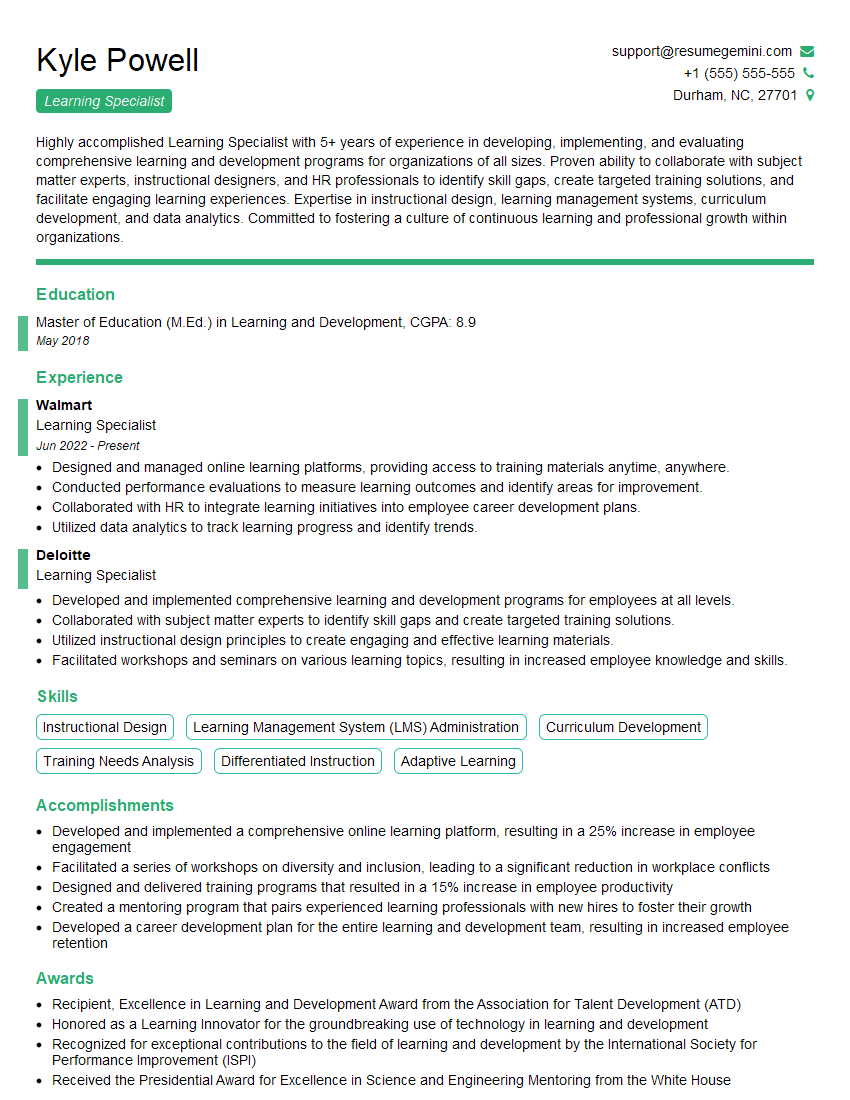
Learning Specialist Resume Sample
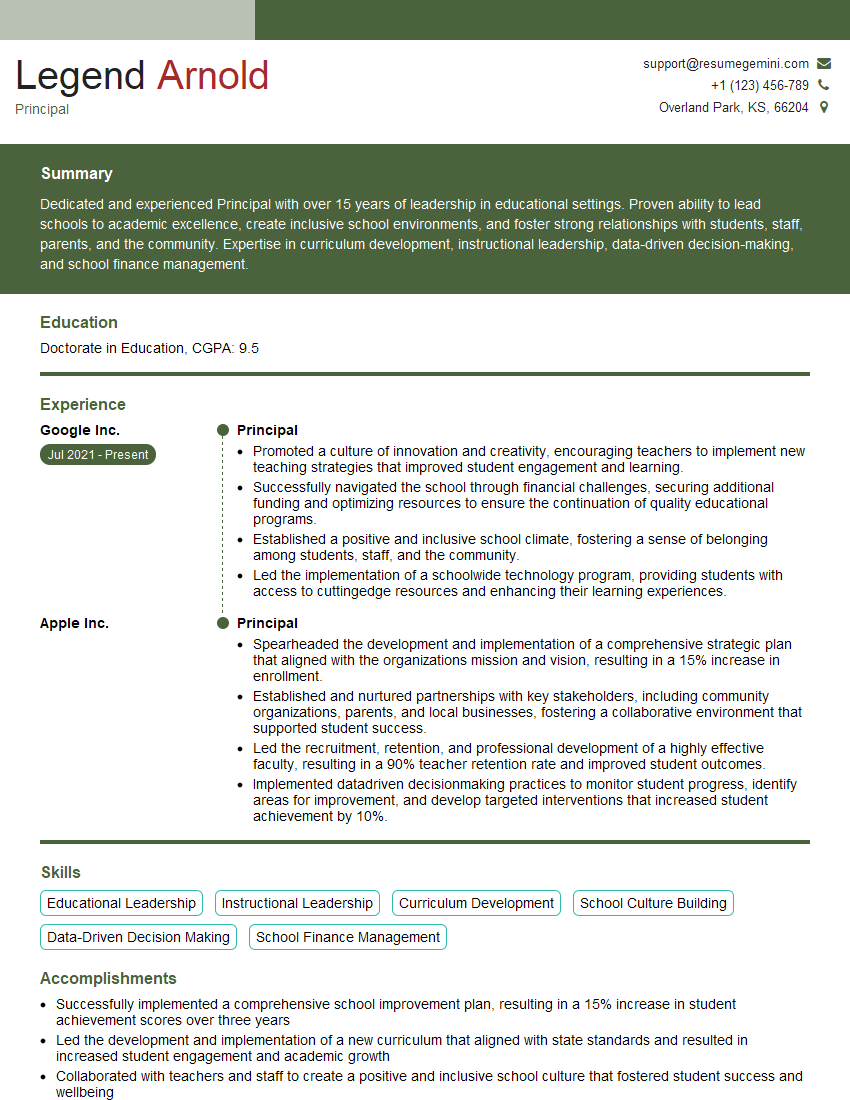
Principal Resume Sample
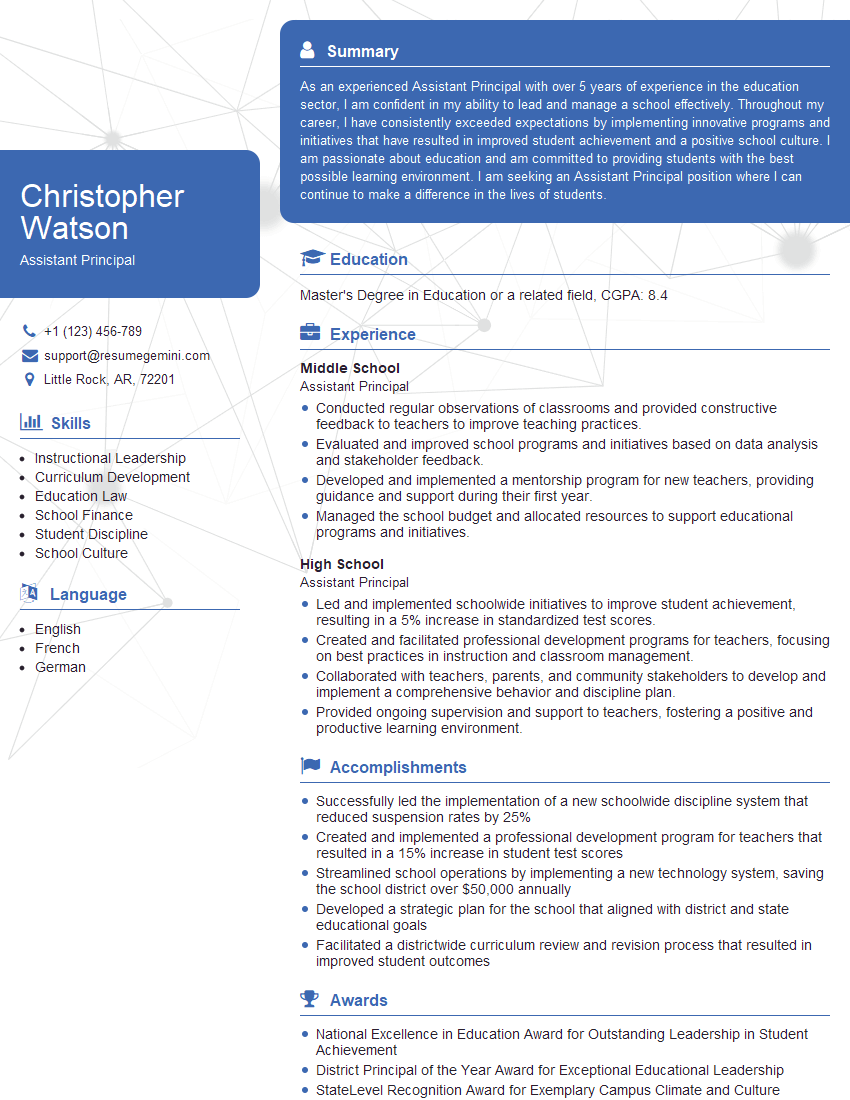
Assistant Principal Resume Sample
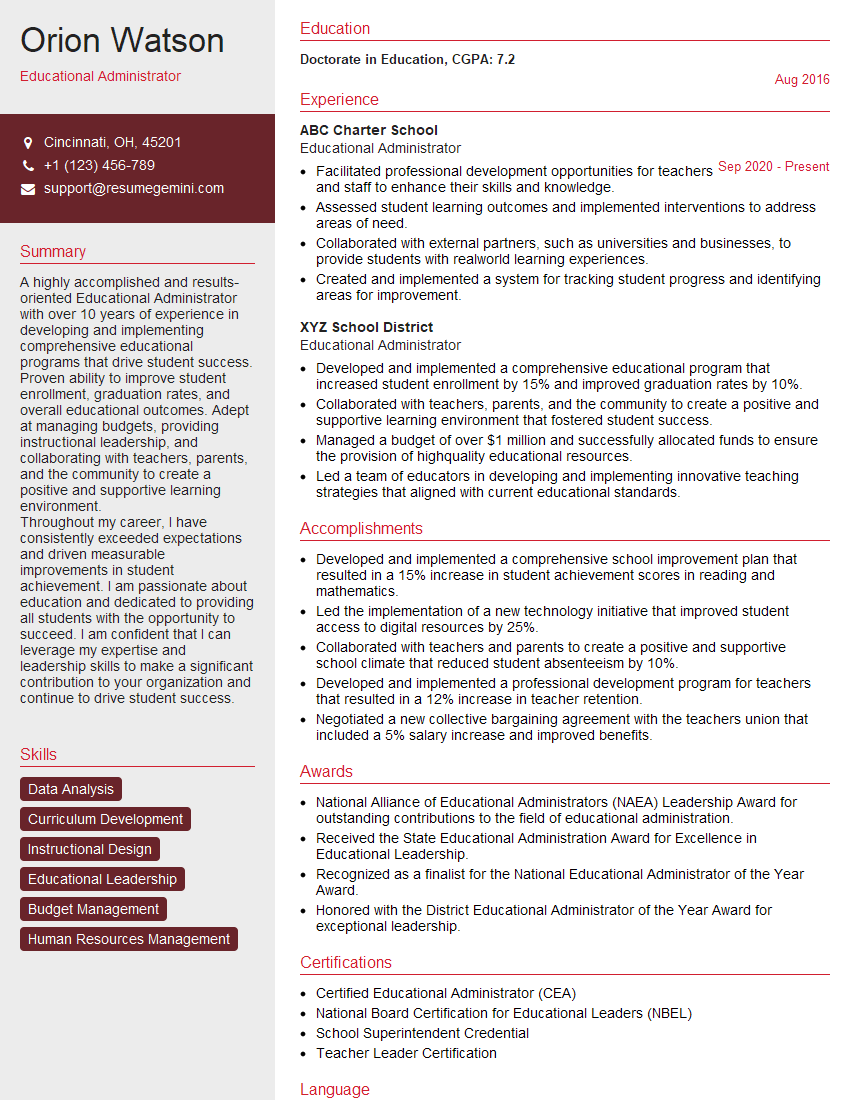
Educational Administrator Resume Sample
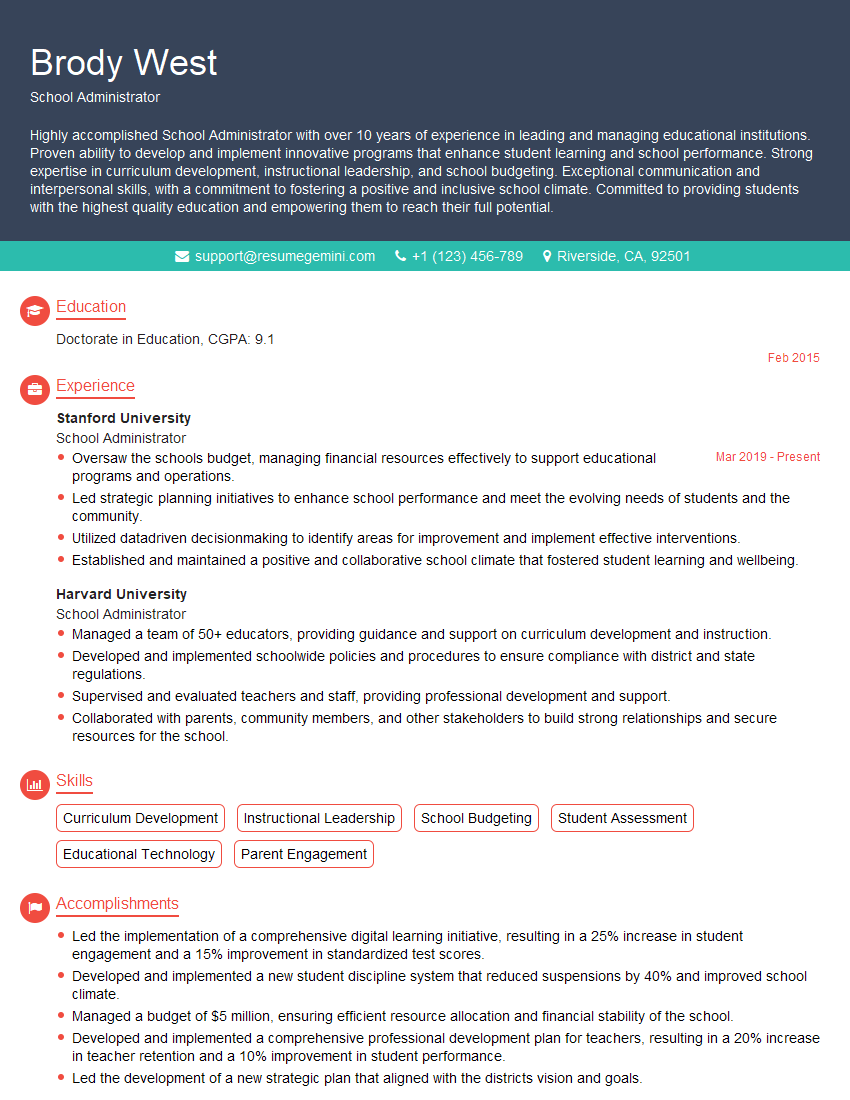
School Administrator Resume Sample
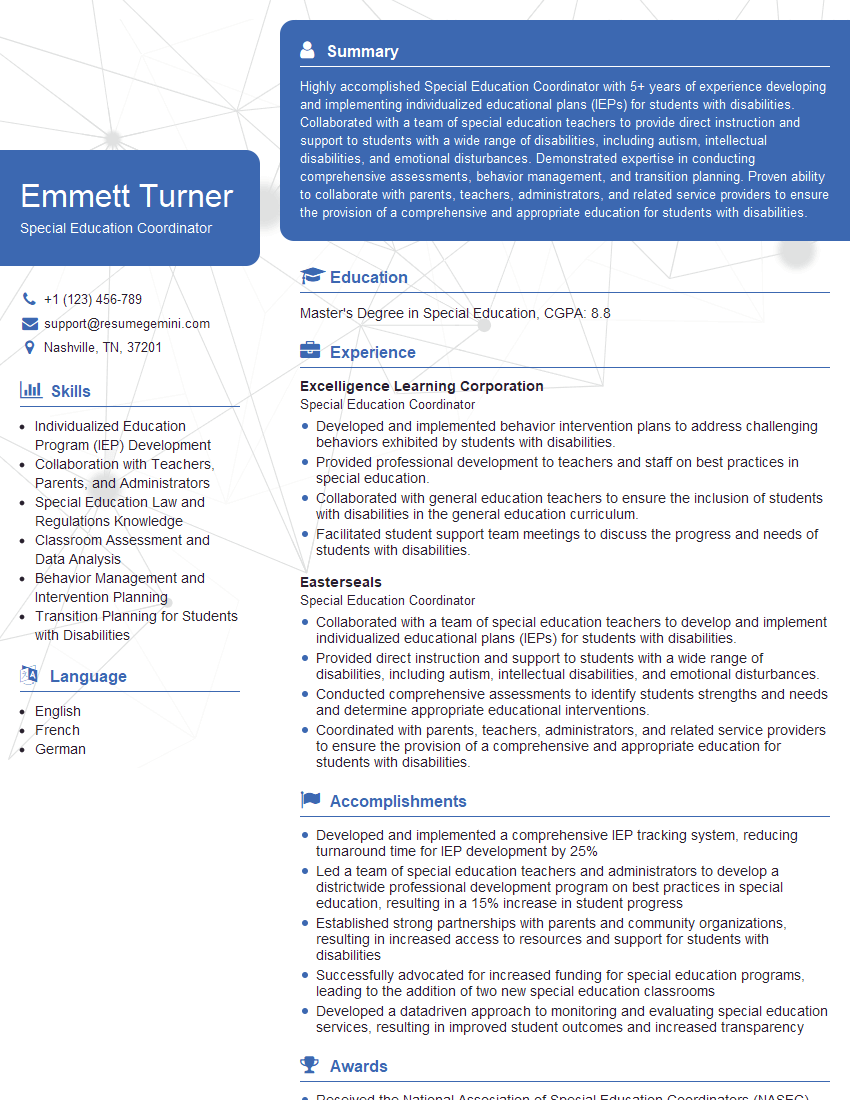
Special Education Coordinator Resume Sample
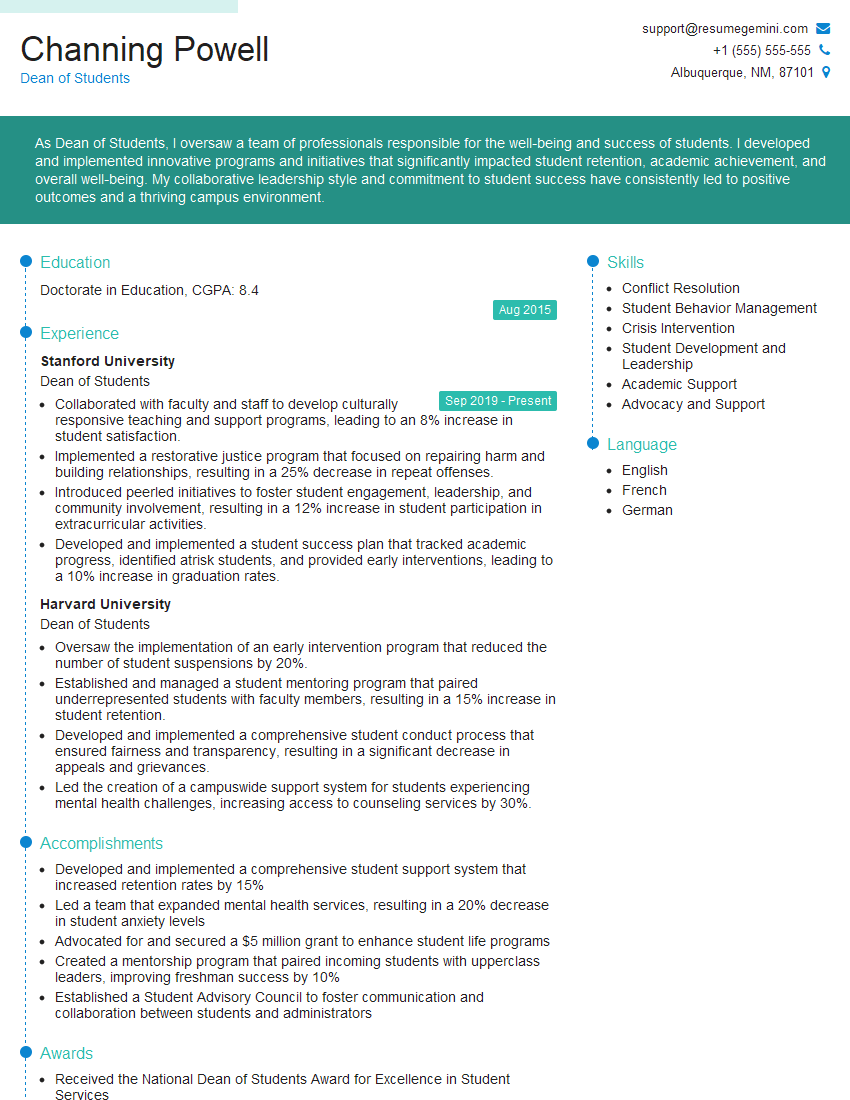
Dean of Students Resume Sample

Curriculum Developer Resume Sample
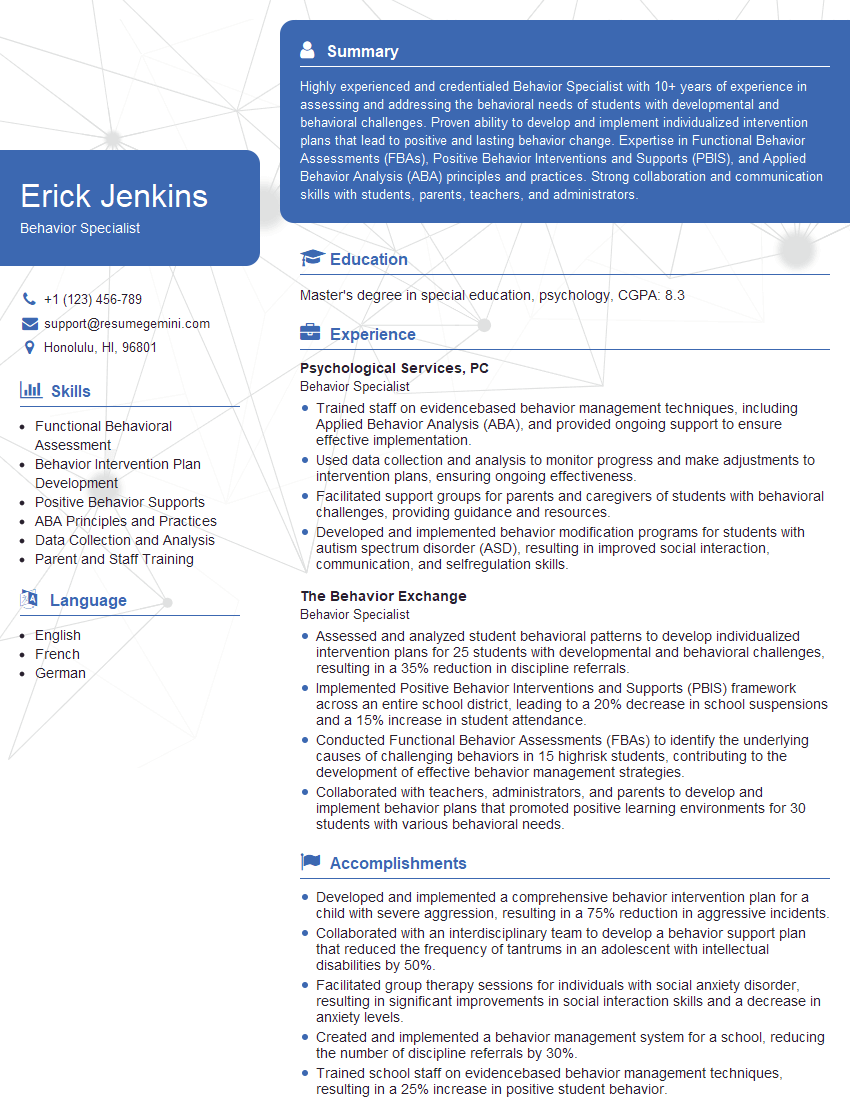
Behavior Specialist Resume Sample
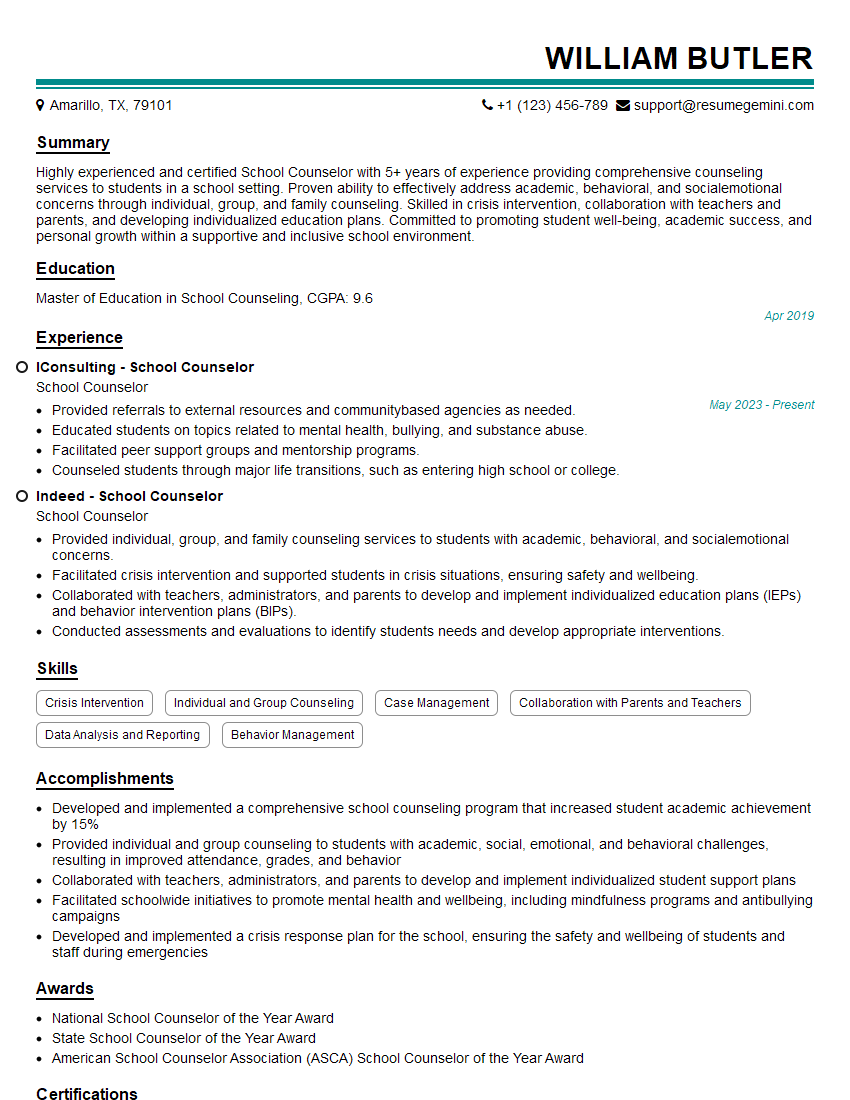
School Counselor Resume Sample
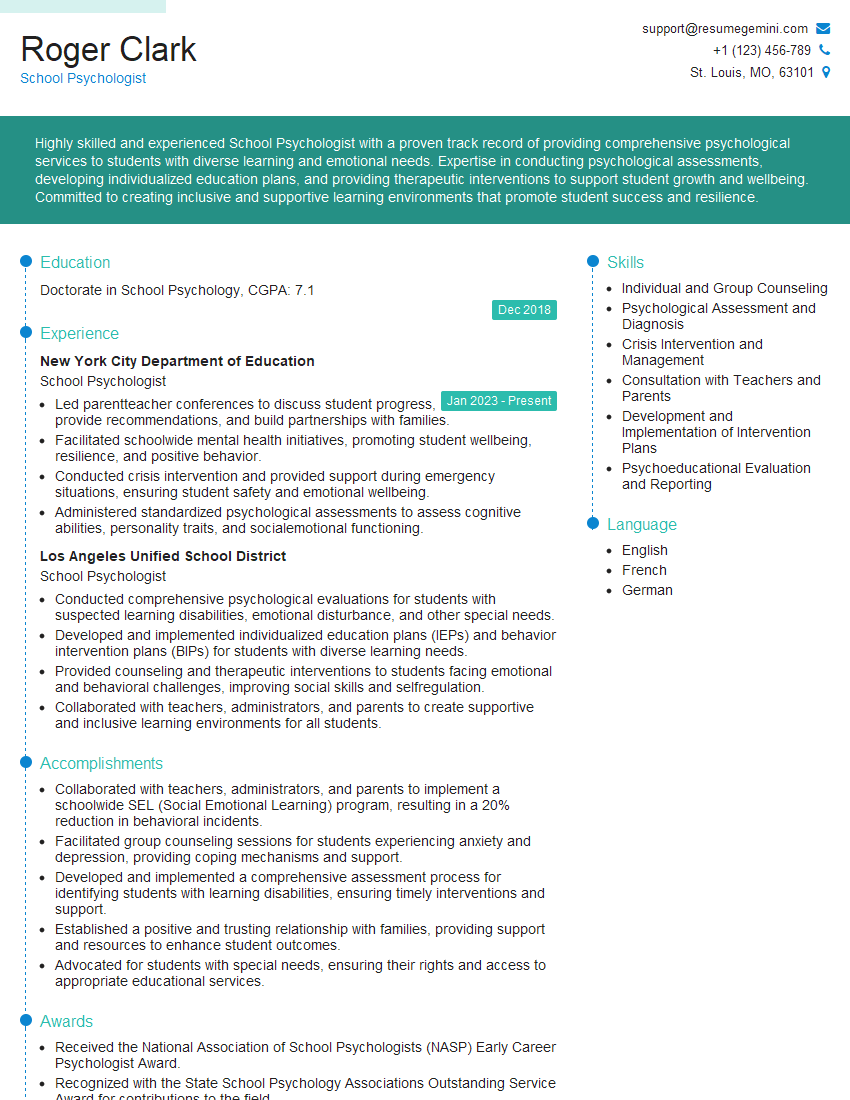
School Psychologist Resume Sample
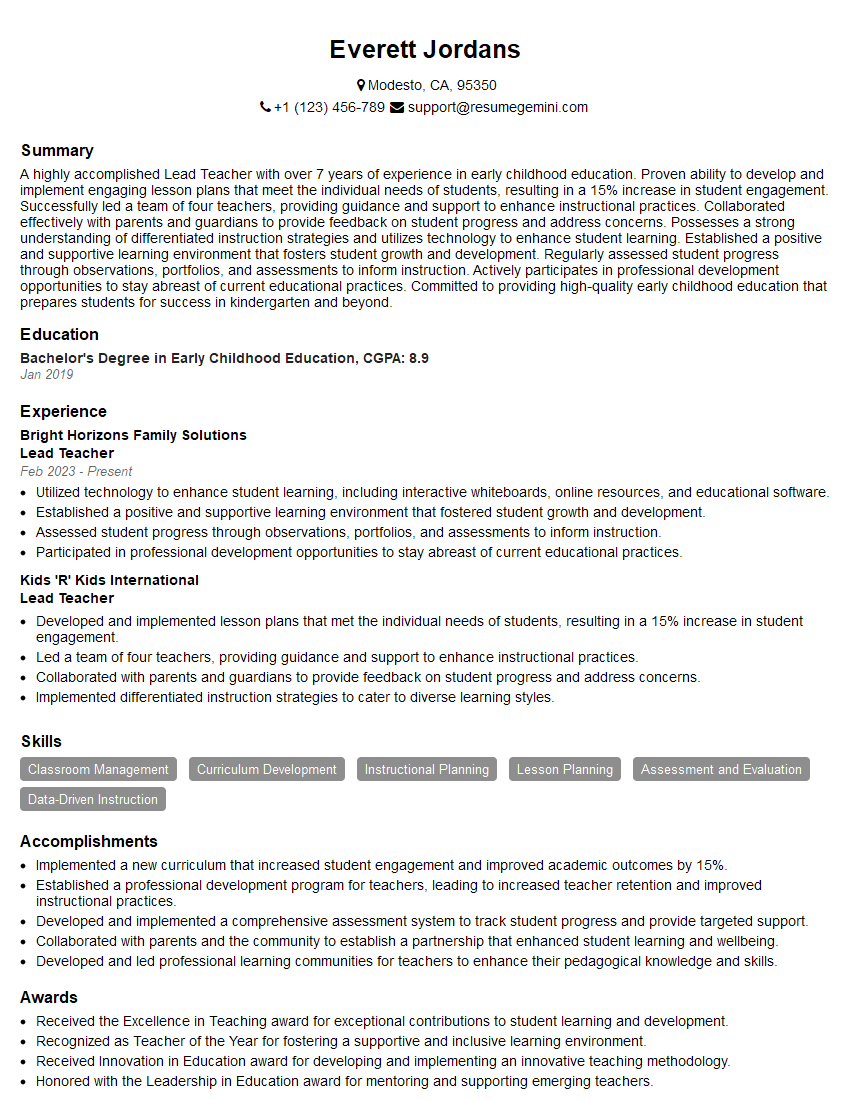
Lead Teacher Resume Sample
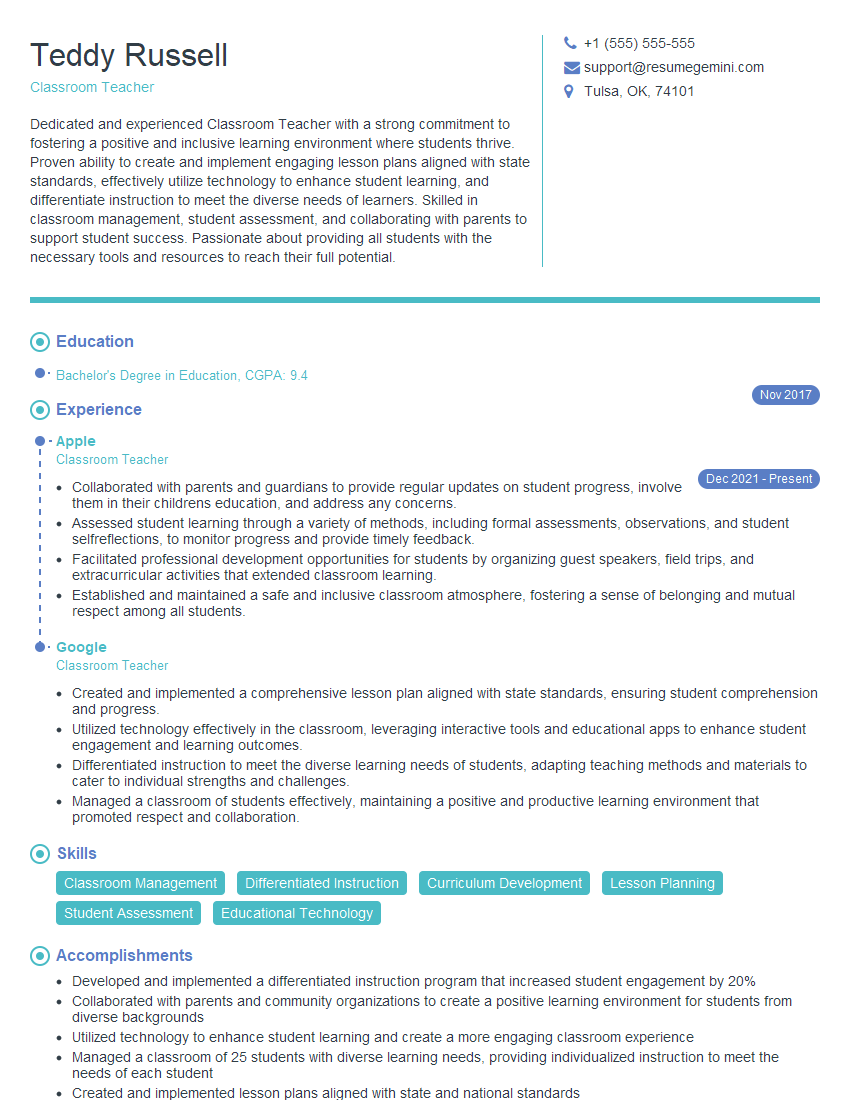
Classroom Teacher Resume Sample
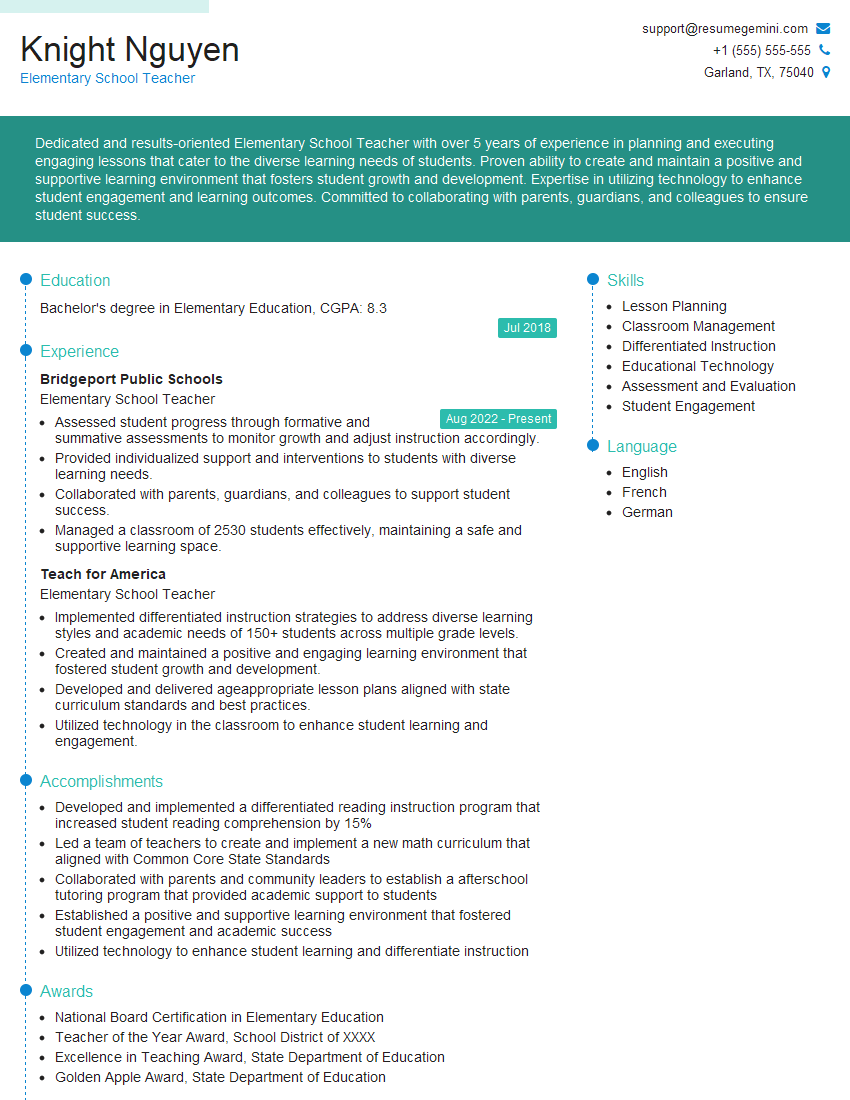
Elementary School Teacher Resume Sample
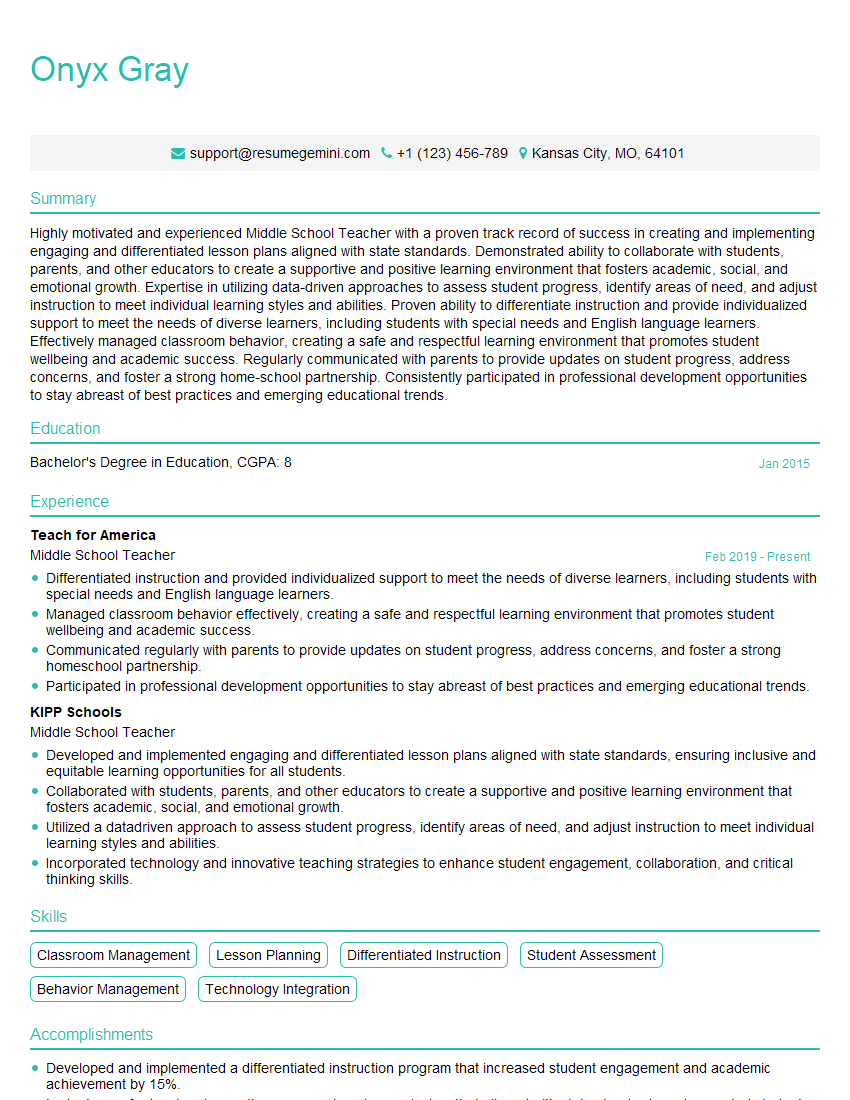
Middle School Teacher Resume Sample
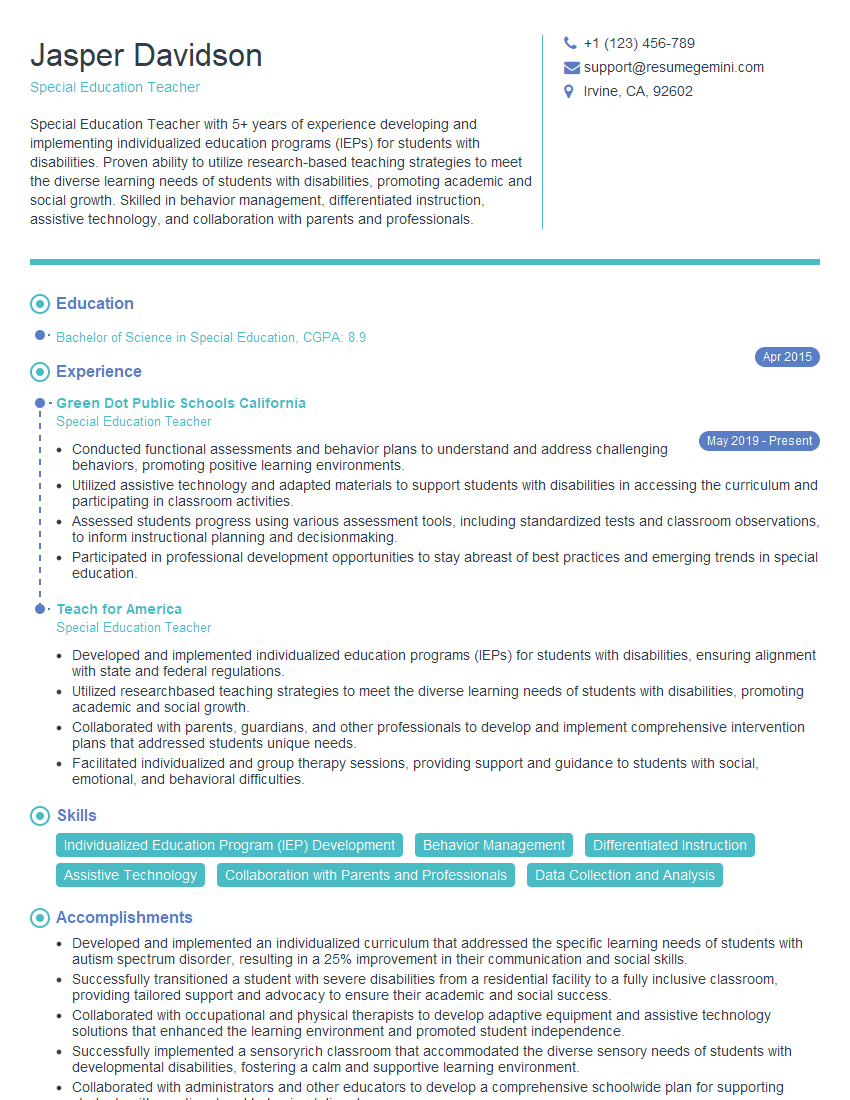
Special Education Teacher Resume Sample
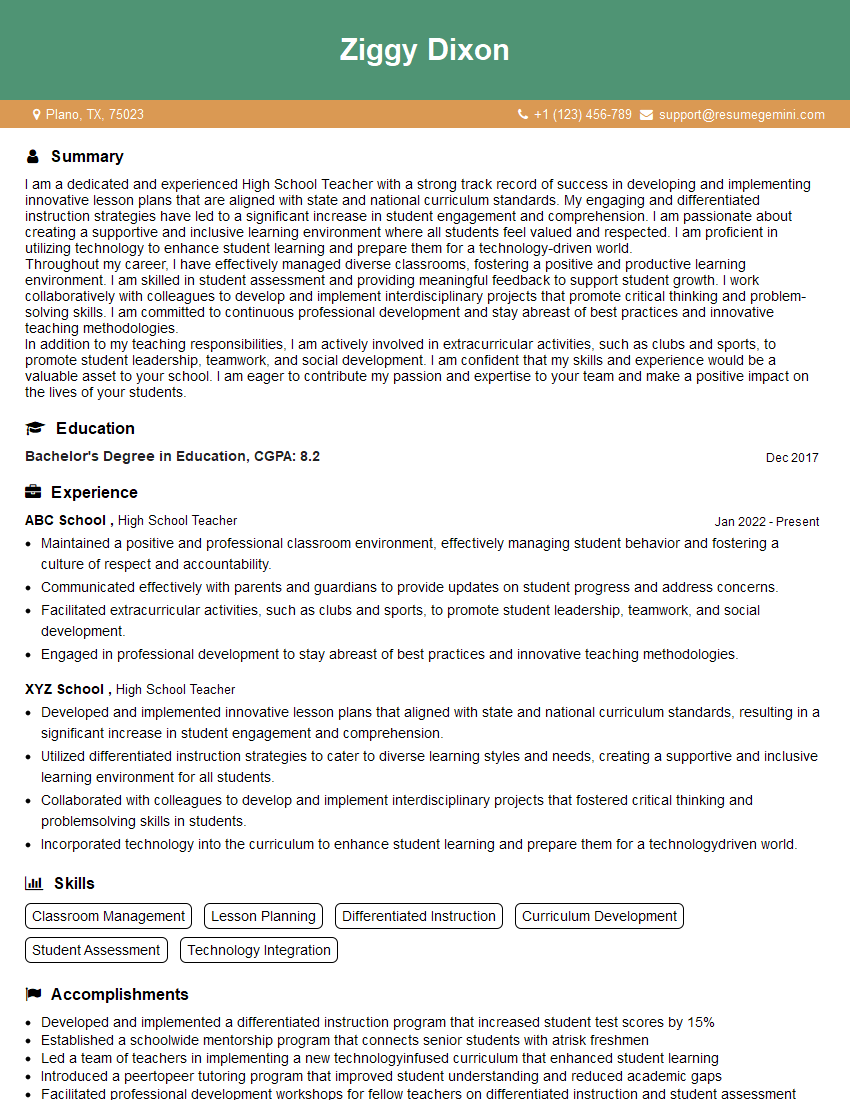
High School Teacher Resume Sample
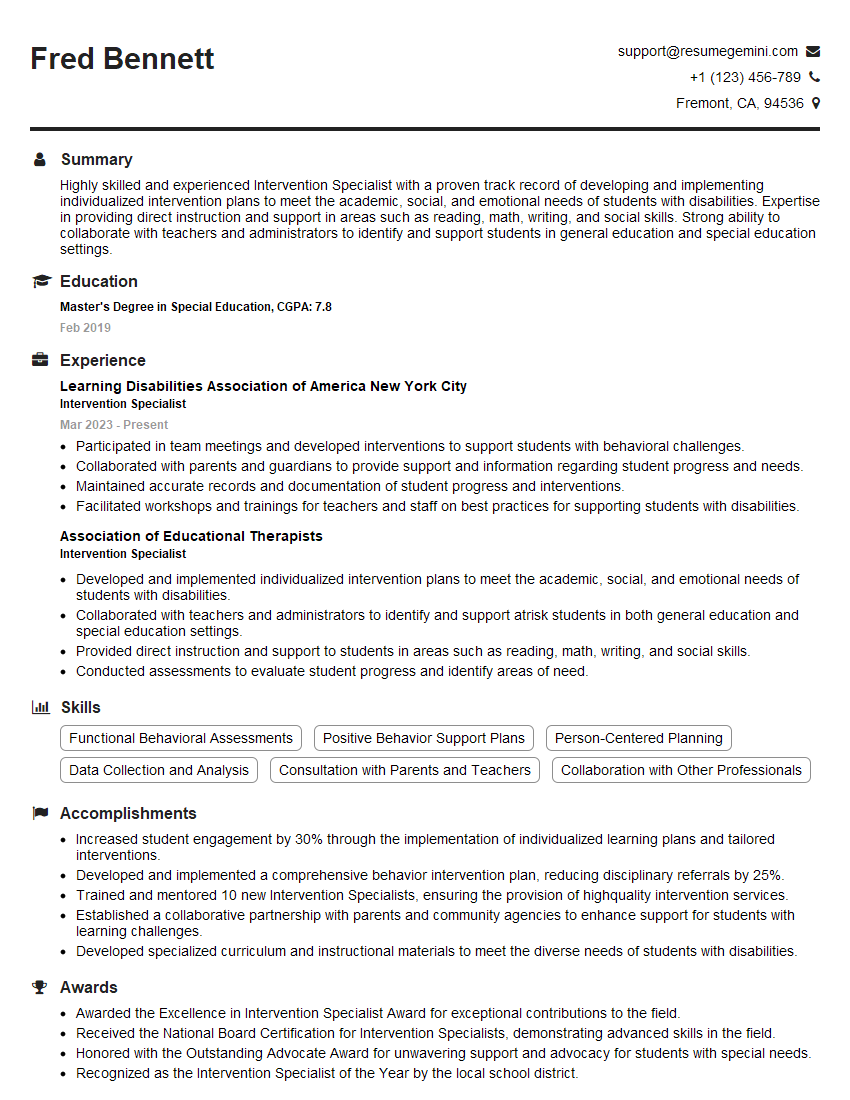
Intervention Specialist Resume Sample
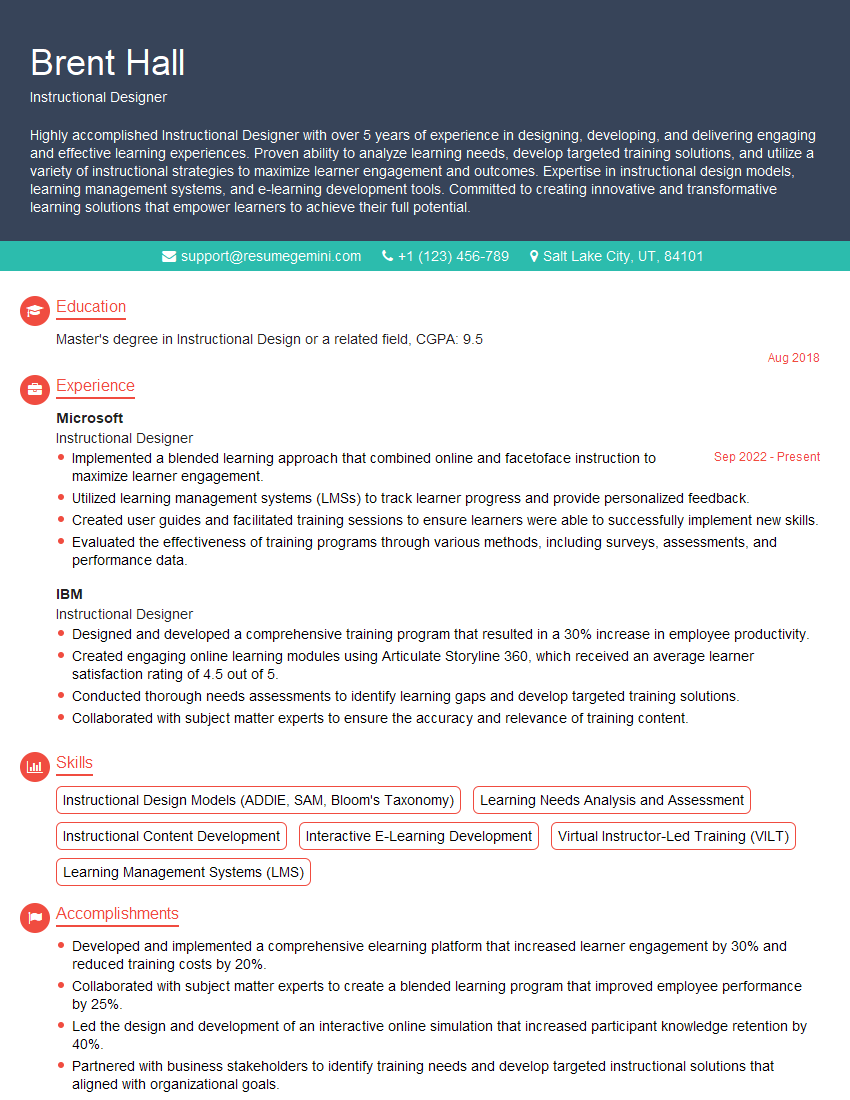
Instructional Designer Resume Sample
- Learning Specialist
- Principal
- Assistant Principal
- Educational Administrator
- School Administrator
- Special Education Coordinator
- Dean of Students
- Curriculum Developer
- Behavior Specialist
- School Counselor
- School Psychologist
- Lead Teacher
- Classroom Teacher
- Elementary School Teacher
- Middle School Teacher
- Special Education Teacher
- High School Teacher
- Intervention Specialist
- Instructional Designer
Explore more articles
Users Rating of Our Blogs
Share Your Experience
We value your feedback! Please rate our content and share your thoughts (optional).
What Readers Say About Our Blog
Really detailed insights and content, thank you for writing this detailed article.
IT gave me an insight and words to use and be able to think of examples