Feeling uncertain about what to expect in your upcoming interview? We’ve got you covered! This blog highlights the most important Tax Law and Regulations Expertise interview questions and provides actionable advice to help you stand out as the ideal candidate. Let’s pave the way for your success.
Questions Asked in Tax Law and Regulations Expertise Interview
Q 1. Explain the difference between tax avoidance and tax evasion.
Tax avoidance and tax evasion are often confused, but they are fundamentally different. Tax avoidance is the legal utilization of tax laws to reduce one’s tax liability. It involves employing legitimate strategies and deductions allowed within the framework of the tax code. Think of it like strategically shopping for the best deals – you’re using the system to your advantage, but not breaking any rules. Tax evasion, on the other hand, is illegal. It’s the deliberate attempt to avoid paying taxes that are legally due. This could involve concealing income, underreporting earnings, or using fraudulent deductions. The key difference lies in legality: avoidance is legal, while evasion is a criminal offense with serious consequences.
Example of Tax Avoidance: Contributing to a 401(k) retirement plan reduces your taxable income legally. Example of Tax Evasion: Failing to report income from a side business or using a fake invoice to claim a false business expense.
Q 2. Describe the current corporate tax rate in [Specific Country/State].
I need to know the specific country/state to answer this question accurately. Corporate tax rates vary significantly across different jurisdictions. For example, the United States has a graduated corporate tax rate, while some countries may have a flat rate. The rate also changes frequently due to legislative updates. To provide you with the most accurate information, please specify the location.
Q 3. How do you handle conflicting tax regulations across different jurisdictions?
Handling conflicting tax regulations across jurisdictions requires a systematic approach. First, a thorough understanding of the relevant laws in each jurisdiction is crucial. This often involves consulting with local tax experts or specialized legal counsel. Next, we need to identify the areas of conflict and determine the most advantageous or compliant strategy. This often involves careful planning to optimize tax efficiency while remaining fully compliant with all applicable laws. Documentation is vital – maintaining detailed records of transactions, supporting documentation, and the rationale behind the chosen strategy helps in the event of future audits.
Example: A multinational corporation operating in both the US and the UK must navigate different corporate tax rates, depreciation rules, and transfer pricing regulations. A coordinated strategy, often involving tax professionals in both countries, is necessary to ensure compliance and optimize overall tax liability.
Q 4. What are the key components of a tax return for a sole proprietorship?
A sole proprietorship’s tax return, typically filed using Schedule C (Form 1040), requires key components to accurately report business income and expenses. These include:
- Business Income: Total revenue generated from the business activities.
- Business Expenses: A detailed list of all allowable business expenses, such as rent, utilities, supplies, and professional services. Proper documentation is crucial for each expense.
- Cost of Goods Sold (COGS): If applicable, the direct costs associated with producing goods for sale should be deducted.
- Depreciation: The deduction for the wear and tear of business assets over their useful life (explained further in answer 5).
- Capital Gains and Losses: Income or losses from the sale of business assets.
- Self-Employment Tax: Sole proprietors pay self-employment taxes, which cover Social Security and Medicare.
Accurate and thorough record-keeping throughout the year is essential for accurate completion of Schedule C.
Q 5. Explain the concept of depreciation and its impact on tax liability.
Depreciation is the systematic allocation of the cost of a tangible asset over its useful life. It reflects the asset’s decline in value due to wear and tear, obsolescence, or other factors. For tax purposes, depreciation allows businesses to deduct a portion of the asset’s cost each year, reducing their taxable income. This is not a reflection of the actual market value of the asset.
Impact on Tax Liability: By deducting depreciation, businesses can lower their taxable income, resulting in lower tax payments. This helps to offset the cost of the asset over time and improves cash flow. Different depreciation methods (e.g., straight-line, accelerated) exist, each affecting the timing and amount of the deduction. The choice of method can significantly impact the company’s tax liability in the short and long term.
Example: A business purchases a delivery truck for $50,000 with a 5-year useful life. Using straight-line depreciation, they can deduct $10,000 ($50,000/5) each year, reducing their taxable income.
Q 6. How do you calculate capital gains tax?
Calculating capital gains tax involves several steps. First, determine the capital gain, which is the difference between the selling price and the adjusted basis of the asset. The adjusted basis is the original cost plus any improvements minus depreciation or other allowable deductions. Then, determine the applicable capital gains tax rate, which varies depending on the type of asset (e.g., short-term or long-term), income level, and the specific tax jurisdiction. Finally, apply the rate to the capital gain to compute the tax owed.
Example: You bought a stock for $10,000 (basis) and sold it for $15,000. Your capital gain is $5,000. If your long-term capital gains tax rate is 15%, your capital gains tax would be $750 ($5,000 * 0.15).
Q 7. What is the significance of Form 1099?
Form 1099 is a series of information returns used by the IRS to track various types of income paid to independent contractors and other non-employees. It doesn’t represent the total tax liability but is crucial for reporting income correctly. Different 1099 forms exist for various types of income, such as:
- 1099-NEC (Nonemployee Compensation): Reports payments to independent contractors.
- 1099-INT (Interest Income): Reports interest earned from bank accounts or investments.
- 1099-DIV (Dividend Income): Reports dividend payments from stocks.
The significance of Form 1099 lies in its role in ensuring accurate tax reporting. The recipient of a 1099 form must report the income on their tax return, even if no taxes were withheld. Failure to do so can lead to penalties and interest charges.
Example: A freelancer who received $20,000 in payments from a client during the year would receive a 1099-NEC from that client and must report this income on their tax return.
Q 8. Describe your experience with tax audits.
Throughout my career, I’ve been extensively involved in various tax audits, both representing clients and working with the auditing teams. My experience ranges from straightforward individual tax returns to complex corporate audits involving multi-national entities and intricate financial transactions. I’ve handled audits triggered by both routine selection and specific inquiries from tax authorities. A key aspect of my work has been proactive preparation – ensuring accurate and complete documentation, proactively addressing potential areas of concern, and maintaining meticulous record-keeping. This proactive approach often minimizes the scope and duration of the audit, and consequently, minimizes the client’s stress and cost. For instance, in one case, by meticulously organizing a client’s international transactions records, I was able to demonstrate compliance and resolve the audit within a significantly shorter timeframe than initially anticipated.
During audits, I employ a methodical approach. This involves a thorough review of all relevant documentation, identifying potential discrepancies or areas requiring clarification, and effectively communicating with the auditors. I focus on building a positive and collaborative relationship with the auditors, aiming for a mutually respectful and efficient resolution process. Critical to this is being able to clearly and persuasively explain the client’s position using clear and factual evidence. I also understand the importance of utilizing available dispute resolution mechanisms, such as appeals, when necessary. Ultimately, successful navigation of a tax audit hinges on thorough preparation, clear communication, and a deep understanding of both the client’s business operations and the relevant tax laws.
Q 9. Explain your understanding of transfer pricing regulations.
Transfer pricing regulations are designed to prevent multinational corporations from manipulating the prices of goods, services, or intangibles exchanged between their associated entities in different jurisdictions, in order to shift profits to lower-tax countries. These regulations aim to ensure that profits are taxed where the economic activity generating them actually occurs. My understanding encompasses the OECD’s guidelines as the bedrock for many national transfer pricing rules, focusing on the application of the arm’s length principle.
This principle states that transactions between associated entities should be priced as if they were conducted between independent parties under comparable circumstances. Determining this ‘arm’s length price’ can be complex and often involves extensive analysis, including benchmarking studies comparing the client’s transactions to those of comparable independent enterprises. I have considerable experience in various methodologies for determining arm’s length prices, including comparable uncontrolled price (CUP) method, cost-plus method, and transactional net margin method (TNMM). I also understand the importance of detailed documentation to support the chosen transfer pricing methodology and demonstrate compliance. This documentation, often called a ‘master file’ and ‘local files’, includes detailed descriptions of the transactions and the rationale behind the chosen pricing method. Failure to maintain adequate transfer pricing documentation can lead to significant penalties and adjustments.
The practical application requires understanding the intricacies of different tax jurisdictions and their specific rules concerning transfer pricing. I have worked on several cross-border transactions, advising clients on structuring their transactions in a way that complies with transfer pricing regulations across multiple countries, while optimizing their tax burden within legal limits. This requires careful planning and coordination with legal and accounting teams in various jurisdictions. For example, I recently advised a client on restructuring its international supply chain to mitigate potential transfer pricing risks related to the pricing of intangible assets.
Q 10. How do you stay updated on changes in tax laws and regulations?
Staying current in the ever-evolving landscape of tax law and regulations requires a multi-faceted approach. I subscribe to several leading tax journals and newsletters, including publications from reputable organizations like the AICPA and the Tax Foundation. These provide in-depth analysis of recent legislative changes, court decisions, and regulatory updates. Regularly attending industry conferences and seminars is also crucial, allowing me to network with other professionals and learn from leading experts in the field. This face-to-face interaction offers invaluable insights and perspectives often not found in publications. I also actively participate in continuing professional education (CPE) courses, specifically tailored to new developments in tax legislation and interpretations. These courses ensure I maintain my professional certifications and stay ahead of the curve.
Furthermore, I leverage online resources, such as government websites and specialized tax databases, to access official pronouncements and guidance documents. This direct access to primary sources ensures that my advice is always based on the most up-to-date information. Finally, I maintain a network of contacts within the tax community—including colleagues, tax attorneys, and government officials—that allows for quick access to information and insights on emerging issues.
Q 11. What is your experience with tax software and related technologies?
My experience with tax software and related technologies is extensive. I’m proficient in several leading tax preparation and accounting software packages, including but not limited to [mention specific software, e.g., GoSystem, ProSystem fx Tax, Lacerte]. I am comfortable navigating complex tax forms and utilizing advanced features such as tax planning modules and data analytics tools. Beyond the typical preparation software, I have experience using specialized data analysis tools to identify potential tax risks and opportunities. This often involves importing and analyzing large datasets from various sources, such as general ledgers, ERP systems, and CRM databases. Data visualization techniques are also frequently used to clearly communicate findings to clients.
Moreover, I understand the importance of data security and compliance with data privacy regulations when working with sensitive client information. I adhere to strict protocols for data storage and transmission, utilizing encrypted systems and secure cloud-based solutions to ensure the confidentiality and integrity of client data. This includes familiarity with relevant regulations such as HIPAA and GDPR, as applicable.
Q 12. How would you handle a situation where a client disagrees with your tax advice?
Handling disagreements with clients on tax advice requires a diplomatic yet firm approach. My priority is to maintain a strong and trusting client relationship, even when disagreements arise. The first step is to patiently and clearly explain the reasoning behind my advice, using plain language and avoiding technical jargon whenever possible. I would then actively listen to the client’s concerns and perspectives, acknowledging their valid points. This process involves carefully examining the client’s concerns to ensure that all relevant factors are considered.
If the disagreement persists, I would present alternative solutions or strategies, exploring various options that address the client’s concerns while remaining compliant with the relevant tax laws. It is vital to document the entire discussion, including any alternative options considered, the client’s position, and the rationale for the final recommendation. If a compromise cannot be reached, I would clearly articulate the potential consequences of choosing a different course of action, highlighting potential tax risks or penalties. Ultimately, it is crucial to reiterate that the final decision rests with the client, while providing my professional opinion and supporting rationale. In rare cases, where the disagreement concerns fundamental ethical or legal matters, I would clearly outline my limitations and, if necessary, advise the client to seek a second opinion from another qualified tax professional.
Q 13. Explain the difference between direct and indirect taxes.
The distinction between direct and indirect taxes lies in who ultimately bears the burden of the tax. Direct taxes are levied directly on the income or wealth of individuals or corporations. Examples include income tax (paid directly by individuals and businesses to the government), corporate income tax, and property tax. The taxpayer directly pays the tax to the government and cannot easily shift the burden onto someone else.
Indirect taxes, on the other hand, are levied on goods and services, and the burden is often passed on to consumers through higher prices. Sales tax, value-added tax (VAT), and excise duties are classic examples. While businesses collect these taxes, they are ultimately borne by the consumers who purchase the goods and services. For example, when you buy a product with sales tax included, the seller collects the tax and remits it to the government, but the economic impact is felt by you, the consumer, in the form of a higher purchase price. Understanding this distinction is crucial for tax planning and financial forecasting, as the impact of each type of tax can significantly vary depending on the taxpayer’s circumstances and the nature of the economy.
Q 14. Describe your understanding of the Internal Revenue Code (IRC).
The Internal Revenue Code (IRC) is the body of federal tax laws in the United States. It’s a complex and extensive set of statutes that governs the taxation of individuals, corporations, and other entities. My understanding of the IRC encompasses its various titles, subtitles, chapters, and sections, each dealing with specific aspects of taxation. I’m familiar with the intricacies of income tax, estate and gift tax, payroll tax, and excise tax provisions. I’m also proficient in interpreting the relevant regulations, rulings, and judicial precedents that clarify and provide guidance on the application of the IRC’s provisions.
Furthermore, my understanding goes beyond just the code itself. I know how the IRC interacts with other relevant federal laws and regulations, as well as state tax codes. Navigating the IRC requires not only knowledge of the code’s text but also an understanding of its legislative history, its interpretation by the courts, and the practical implications of its application in diverse business and personal contexts. For example, I regularly consult the IRC when advising clients on issues related to deductions, credits, capital gains and losses, and international taxation. I am skilled in applying the relevant sections of the IRC to develop tailored tax strategies for clients, minimizing their tax liability while maintaining compliance with all applicable regulations. Finally, I am well-versed in the procedures and processes for resolving disputes with the IRS, including audit representation and litigation, if necessary.
Q 15. What is your experience with tax planning for high-net-worth individuals?
My experience with tax planning for high-net-worth individuals (HNWIs) spans over a decade. I’ve worked with a diverse clientele, including entrepreneurs, executives, and inheritors of significant wealth. My approach centers around understanding their unique financial situations, long-term goals, and risk tolerance. This holistic understanding allows me to craft bespoke strategies that minimize their tax liability while aligning with their investment objectives and overall financial well-being.
For example, I recently assisted a client in structuring a complex estate plan involving charitable giving to maximize tax deductions and minimize estate taxes. This involved intricate calculations involving various tax credits and deductions, taking into account state and federal tax implications. Another client benefited from a comprehensive tax-efficient investment strategy, leveraging various tax-advantaged accounts and investment vehicles to optimize their portfolio’s growth while deferring tax obligations.
Beyond specific strategies, I emphasize proactive tax planning. This includes regular reviews and adjustments to plans as circumstances change, ensuring ongoing compliance and optimization.
Career Expert Tips:
- Ace those interviews! Prepare effectively by reviewing the Top 50 Most Common Interview Questions on ResumeGemini.
- Navigate your job search with confidence! Explore a wide range of Career Tips on ResumeGemini. Learn about common challenges and recommendations to overcome them.
- Craft the perfect resume! Master the Art of Resume Writing with ResumeGemini’s guide. Showcase your unique qualifications and achievements effectively.
- Don’t miss out on holiday savings! Build your dream resume with ResumeGemini’s ATS optimized templates.
Q 16. Explain the concept of tax shelters.
Tax shelters are strategies used to legally reduce an individual or business’s tax liability. It’s crucial to understand that the term ‘shelter’ doesn’t imply evasion; rather, it points to using permitted provisions within the tax code to minimize tax burdens. These strategies utilize deductions, credits, and other allowable mechanisms to decrease taxable income.
Examples include investing in tax-advantaged retirement accounts like 401(k)s and IRAs, contributing to health savings accounts (HSAs), or utilizing deductions for charitable donations. More complex tax shelters might involve specific investment structures or partnerships designed to generate tax-deductible losses offsetting taxable income from other sources.
However, it’s critical to approach tax shelters with caution. The tax code is constantly evolving, and what qualifies as a legitimate shelter today may not be valid tomorrow. Moreover, overly aggressive or poorly structured shelters can lead to significant legal and financial penalties. Thorough due diligence and professional advice are essential to ensure the strategy’s legality and effectiveness.
Q 17. How do you ensure compliance with tax regulations?
Ensuring compliance with tax regulations is paramount. My approach is multifaceted and proactive. It starts with a deep understanding of the relevant tax laws and regulations, including regular updates to account for changes in legislation and judicial interpretations. This includes staying abreast of developments through professional organizations, continuing education, and analyzing relevant legal updates.
For my clients, meticulous record-keeping is crucial. We maintain detailed and organized records of all financial transactions, ensuring accuracy and ease of auditing. This includes digital record management using secure cloud-based systems.
We employ comprehensive tax planning strategies from the outset, aiming to minimize the risk of non-compliance. This includes meticulous tax preparation and timely filing of all required returns. Furthermore, we regularly conduct internal reviews and audits to identify potential vulnerabilities and address them promptly.
Q 18. Describe your experience with tax research and analysis.
Tax research and analysis form the bedrock of my work. I frequently leverage various resources, including tax codes, IRS publications, court decisions, and professional journals, to interpret complex regulations and find optimal solutions for my clients. I am proficient in using specialized tax research databases and software to quickly access relevant information and analyze tax implications of various transactions.
For example, when working on a recent cross-border investment, I had to thoroughly research the applicable tax treaties between the US and the involved country. This involved identifying relevant articles within the treaty, understanding the rules on source-based taxation, and determining the most tax-efficient structure for the investment.
My analysis extends beyond just legal research. I also consider the potential impact of economic factors, market conditions, and client-specific circumstances to create tailored strategies that reflect both legal and practical considerations.
Q 19. What is your experience with international tax treaties?
My experience with international tax treaties is extensive. I have worked on numerous cases involving cross-border transactions, foreign investments, and the tax implications of international residency. Understanding the nuances of these treaties is critical for minimizing double taxation and ensuring compliance with multiple jurisdictions’ tax laws.
I’m familiar with various types of treaties, including those that address taxation of income, estate, and gift taxes, and those that provide mechanisms for resolving tax disputes between countries. I have a strong grasp of the concepts of residence, source, and permanent establishment, and their implications in determining tax liability under different treaties.
For instance, I recently assisted a client with significant investments in a foreign country, utilizing the relevant tax treaty to reduce their overall tax burden. This required careful analysis of the treaty’s provisions, consideration of source rules, and coordination with international tax advisors.
Q 20. How do you handle complex tax calculations and reporting requirements?
Handling complex tax calculations and reporting requirements involves a combination of technical expertise, attention to detail, and proficiency in tax software. I’m skilled in using various tax software packages to efficiently perform intricate calculations, ensuring accuracy and minimizing errors. This includes preparing various tax returns, including individual, corporate, and partnership returns, accurately reflecting all relevant deductions, credits, and other factors.
For example, in a recent project involving a complex corporate restructuring, I utilized specialized tax software to model the tax implications of various scenarios, allowing my client to make informed decisions based on precise calculations. This involved considering depreciation schedules, capital gains, and various other tax implications.
I also understand the significance of meeting stringent reporting deadlines and ensuring compliance with all regulatory requirements. This includes staying current with evolving reporting standards and maintaining meticulous records to facilitate audits if required.
Q 21. Describe your approach to resolving tax disputes.
Resolving tax disputes requires a systematic approach combining negotiation, litigation, and a thorough understanding of tax law. My strategy begins with a comprehensive review of the disputed tax assessment to identify potential grounds for appeal or negotiation. This involves analyzing the facts, applying relevant tax law, and preparing a well-supported argument.
Negotiation is often the first step. I strive to find mutually agreeable solutions with the relevant tax authority to minimize legal costs and time. However, if negotiation fails, I have experience representing clients in tax court, preparing for and executing a robust legal defense strategy. This includes gathering evidence, preparing legal documents, and presenting the case effectively before the court.
My approach emphasizes proactive dispute resolution by focusing on clear communication, detailed documentation, and a commitment to achieving the most favorable outcome for my clients within the bounds of the law.
Q 22. What is your experience with preparing and presenting tax reports to management?
Throughout my career, I’ve consistently prepared and presented comprehensive tax reports to management, tailoring my approach to the audience’s needs. This includes creating clear and concise summaries of complex tax situations, highlighting key findings and recommendations, and using data visualization techniques (charts, graphs) to enhance understanding. For example, when working with a tech startup, I prepared a quarterly report explaining the impact of the R&D tax credit on their overall tax liability, including projections for future years. This wasn’t just a list of numbers; it illustrated how leveraging this credit improved their bottom line and allowed for strategic reinvestment in growth. Another example involves presenting an annual tax provision to the audit committee, walking them through each significant adjustment, answering their questions, and addressing any concerns they had.
My reports aren’t just about numbers; they tell a story about the company’s tax position and the strategies we’ve employed to optimize it. I believe in proactive communication and always ensure management is informed about potential tax implications, enabling them to make well-informed business decisions.
Q 23. Explain your understanding of tax amortization.
Tax amortization refers to the systematic allocation of the cost of an intangible asset over its useful life. Think of it like depreciation, but for things that aren’t physical, like patents, copyrights, or trademarks. Instead of depreciating a building, we amortize the cost of a software license. The process involves determining the asset’s useful life and then spreading its cost evenly or using an accelerated method across that period, reducing the tax basis each year. This reduces the taxable income in the years the asset is used.
For instance, a company purchases a patent for $1 million with a 10-year useful life. Under straight-line amortization, $100,000 would be amortized each year, reducing taxable income by that amount annually. The specific rules governing amortization can vary depending on the type of intangible asset and the applicable tax laws. Understanding these rules is crucial for accurate tax reporting and minimizing tax liability.
Q 24. How do you identify and mitigate tax risks for a business?
Identifying and mitigating tax risks requires a proactive, multi-faceted approach. It starts with a thorough understanding of the business, its operations, and the applicable tax laws. I use a risk assessment framework that considers various factors such as the industry, transactions, and geographic locations. Here’s how I approach it:
- Identifying Risks: This involves reviewing financial statements, contracts, and other relevant documents to identify potential tax exposures. For example, I’d look for areas like international transactions, complex ownership structures, or significant changes in business operations that might trigger additional tax scrutiny.
- Assessing Risks: After identifying potential risks, I assess their likelihood and potential impact. This might involve considering the penalties and interest associated with non-compliance or the possibility of an audit.
- Mitigating Risks: Once risks are identified and assessed, I develop strategies to mitigate them. This could involve restructuring transactions to optimize tax outcomes, implementing improved internal controls, or engaging in proactive communication with tax authorities.
For example, a client considering an international expansion might face risks related to transfer pricing and foreign tax credits. My role would be to advise them on strategies to ensure compliance and minimize their tax burden. This might involve designing a robust transfer pricing policy or exploring the utilization of available tax treaties. Ultimately, my goal is to help businesses navigate the complex tax landscape and minimize their exposure to unnecessary risks.
Q 25. What is your experience with various tax forms (e.g., 1120, 1040, 1065)?
My experience encompasses a wide range of tax forms, including the most common ones you mentioned. I’m proficient in preparing and reviewing Forms 1120 (U.S. Corporation Income Tax Return), 1040 (U.S. Individual Income Tax Return), and 1065 (U.S. Return of Partnership Income). I understand the nuances of each form, the required documentation, and the potential issues that can arise during preparation.
For example, with Form 1120, I’m skilled in handling complex corporate tax issues like deductions, credits, and the computation of alternative minimum tax. With Form 1040, I have experience with various individual tax situations, including itemized deductions, capital gains and losses, and the various tax credits available to individuals. On Form 1065, I can efficiently handle partnership allocations, identifying and allocating the appropriate share of income, deductions, and credits to each partner.
Beyond these, I’m also familiar with numerous other tax forms, such as Schedule C (Profit or Loss from Business), Schedule K-1 (Partner’s Share of Income, Deductions, Credits, etc.), and various state tax returns. My expertise extends beyond simply filling out the forms; I understand the underlying tax principles that govern the data reported.
Q 26. Describe your experience with tax reconciliation.
Tax reconciliation is the process of comparing the tax reported on a tax return to the actual financial records of a company. It’s essentially a thorough check to ensure accuracy and consistency. Think of it as a final audit of your tax calculations. It involves a meticulous review of all financial records, comparing them against entries on the tax return. Discrepancies are investigated and adjustments are made as needed to resolve any differences. A well-executed reconciliation is critical for maintaining compliance and preventing potential issues with tax authorities.
For example, a common reconciliation involves comparing the book depreciation with the tax depreciation. Differences may arise due to different methods used for book and tax purposes. A properly executed reconciliation will identify these differences and explain them, ensuring accuracy on the tax return. Any unreconciled items require further investigation to ensure compliance and prevent future issues.
Q 27. Explain your understanding of the tax implications of mergers and acquisitions.
Mergers and acquisitions (M&A) have significant tax implications, often requiring specialized knowledge and planning. The tax consequences can be complex and vary depending on the structure of the transaction, the types of assets involved, and the tax jurisdictions involved. Key considerations include:
- Purchase Price Allocation: Determining the fair market value of the assets acquired and liabilities assumed is crucial for proper tax basis determination. This impacts depreciation and amortization calculations and future tax liabilities.
- Taxable vs. Tax-Free Transactions: The tax treatment of an M&A depends heavily on the structure. A stock-for-stock exchange (often tax-free) is treated differently from a cash acquisition (often taxable).
- Carryover Basis: In some cases, the tax basis of acquired assets carries over from the seller to the buyer, affecting depreciation and future tax implications.
- Due Diligence: Thorough due diligence is crucial to identifying any potential tax liabilities or opportunities associated with the target company.
- Post-Merger Integration: Tax planning continues even after the deal is closed. The integrated company’s tax structure needs to be optimized, considering deductions, credits and other tax strategies.
For example, a company acquiring another may inherit tax attributes like net operating losses (NOLs). Proper planning is essential to effectively utilize these NOLs to reduce future tax liabilities. The absence of proactive tax planning in M&A can lead to significant unforeseen tax costs. Therefore, it is crucial to engage in tax planning from the beginning of the process.
Q 28. How do you prioritize tasks when dealing with multiple tax deadlines?
Prioritizing tasks when dealing with multiple tax deadlines requires a structured and organized approach. I use a combination of techniques, including:
- Creating a Master Calendar: I maintain a comprehensive calendar with all upcoming deadlines clearly marked, including reminders and alerts.
- Prioritization Matrix: I use a matrix to prioritize tasks based on urgency and importance, focusing on time-sensitive and high-impact tasks first. For example, a state tax return with a looming deadline would take precedence over a less urgent, more complex federal tax planning project.
- Delegation and Teamwork: If possible, I delegate tasks to team members, ensuring clear communication and follow-up. This also helps me avoid working beyond reasonable hours.
- Effective Time Management: I break down large tasks into smaller, manageable steps to avoid feeling overwhelmed and improve focus. Timeboxing is very helpful in this regard.
By using a combination of these techniques, I ensure timely completion of all tax tasks, meeting deadlines while maintaining accuracy and thoroughness. This organized approach minimizes stress and maximizes productivity during peak periods.
Key Topics to Learn for Tax Law and Regulations Expertise Interview
- Federal Tax Code: Understanding the intricacies of the Internal Revenue Code, including individual and corporate taxation, will be crucial. Focus on key sections relevant to your specialization.
- State and Local Taxes: Familiarize yourself with variations in tax laws across different jurisdictions. Be prepared to discuss the complexities of state and local tax compliance.
- Tax Research and Analysis: Mastering research methods, including using tax databases and interpreting legal precedents, is essential for effective problem-solving. Practice applying these skills to hypothetical scenarios.
- Tax Planning and Strategy: Develop your ability to advise clients on tax-efficient strategies, considering both short-term and long-term implications. Think critically about how to minimize tax liabilities legally and ethically.
- Tax Controversy and Dispute Resolution: Understand the process of resolving tax disputes, including audits, appeals, and litigation. Explore different dispute resolution methods and their potential outcomes.
- Specific Tax Areas (e.g., International Taxation, Estate Planning, etc.): Depending on your chosen specialization, delve deeper into the relevant regulations and case law. Highlight your expertise in these areas.
- Ethical Considerations in Tax Practice: Demonstrate a strong understanding of professional responsibilities and ethical dilemmas faced in tax law. Be prepared to discuss scenarios involving conflicts of interest or ethical breaches.
- Practical Application: Prepare examples from your past experiences (academic projects, internships, etc.) showcasing your ability to apply tax law concepts to real-world situations.
Next Steps
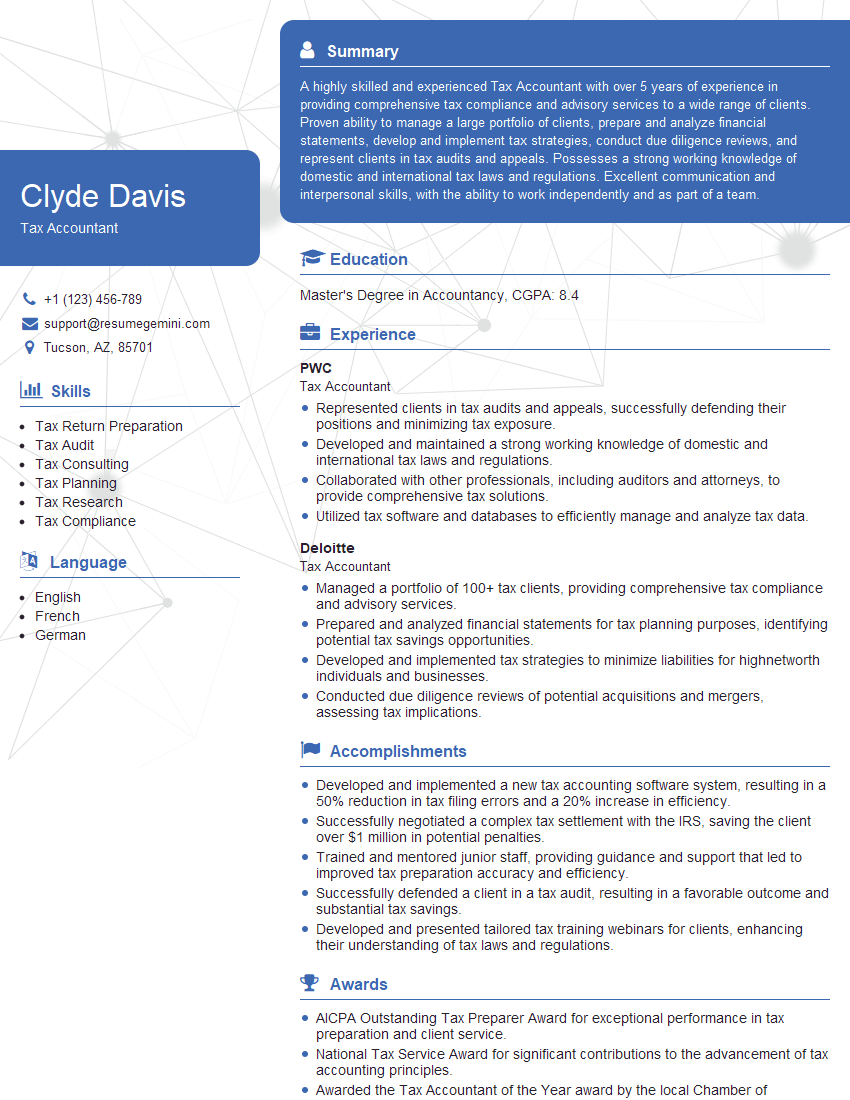
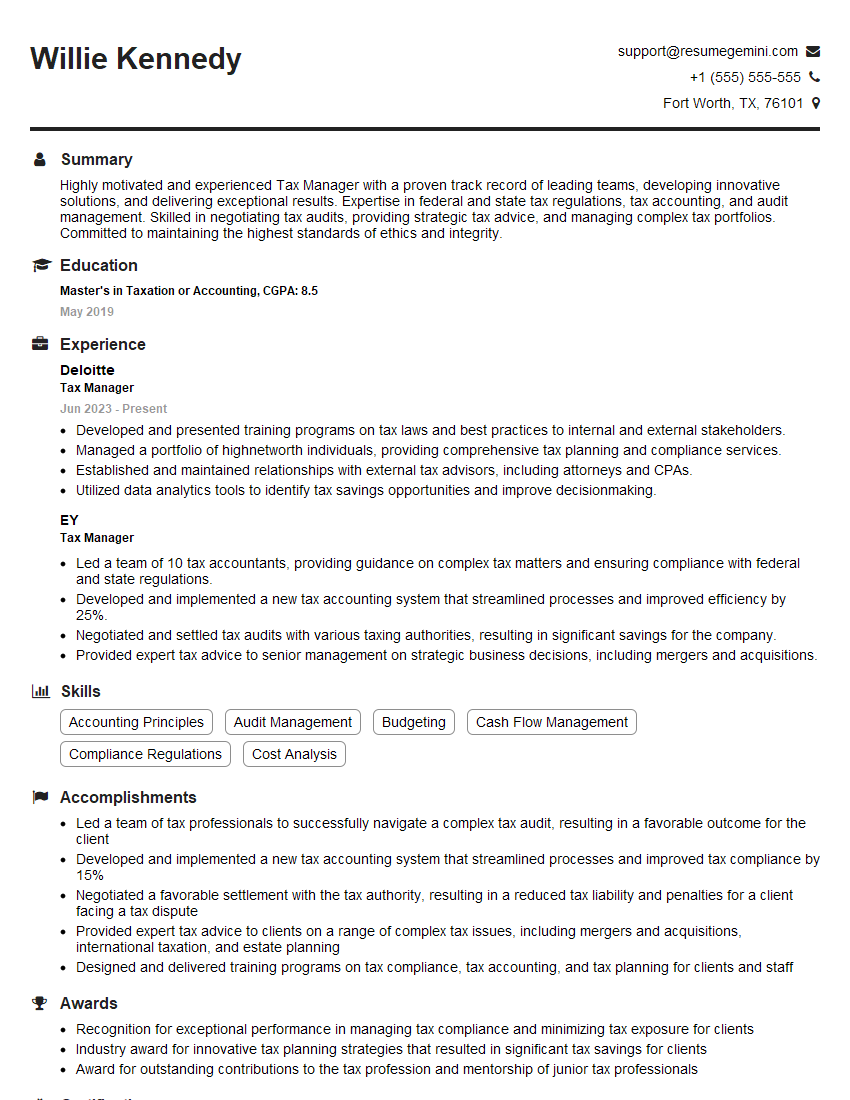
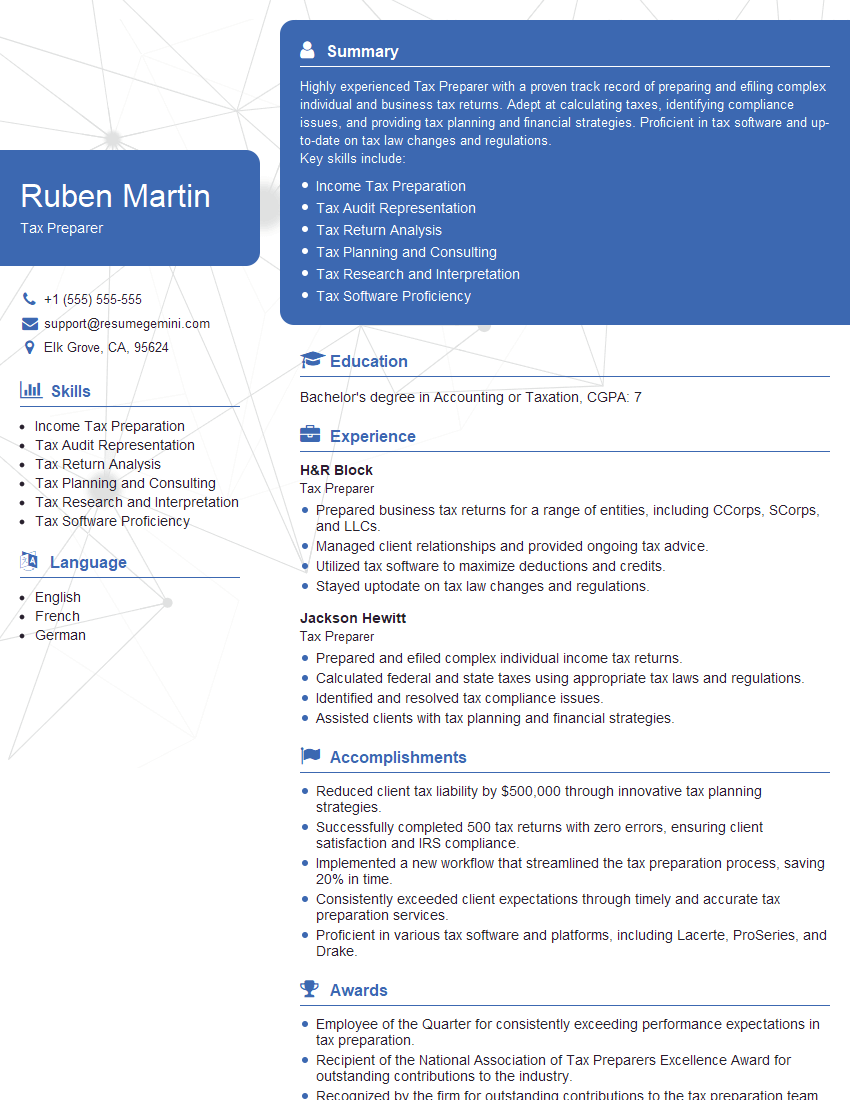
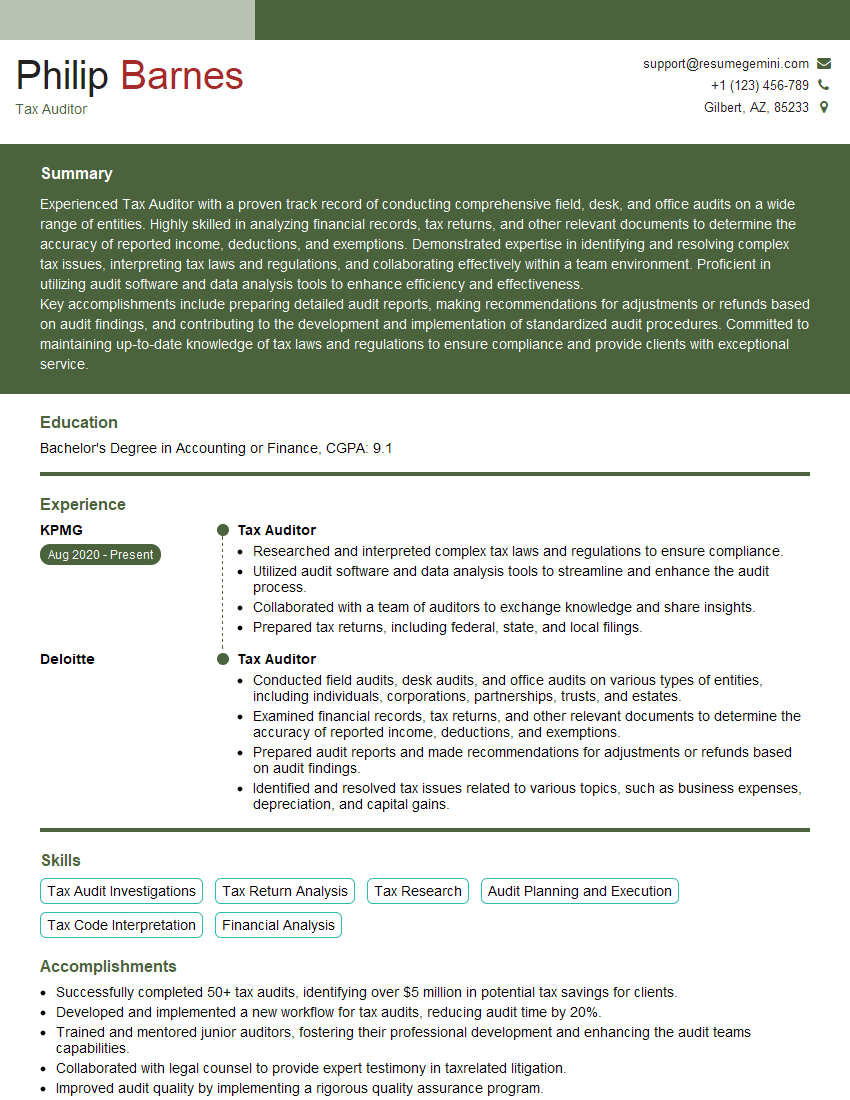
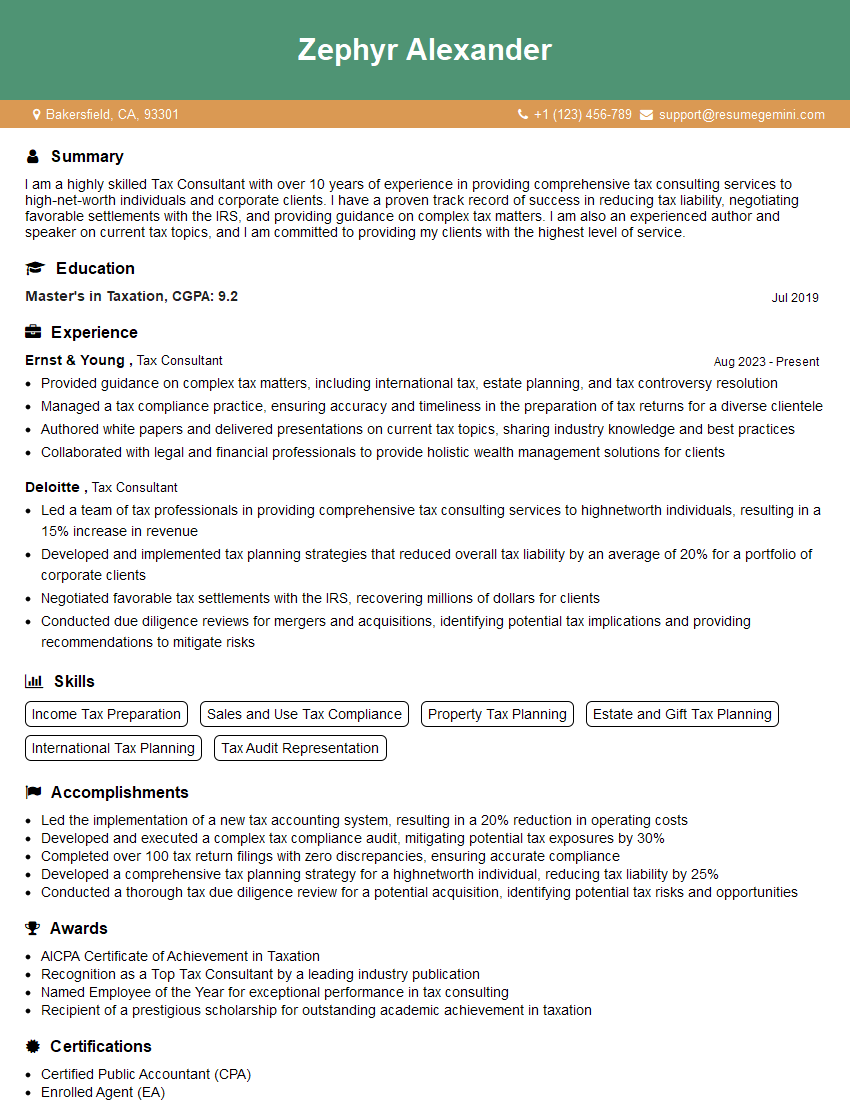
Mastering Tax Law and Regulations Expertise is paramount for a successful and rewarding career. It opens doors to high-demand roles, significant earning potential, and the opportunity to make a tangible impact. To maximize your job prospects, creating an ATS-friendly resume is crucial. This ensures your qualifications are effectively communicated to hiring managers and Applicant Tracking Systems. We strongly recommend using ResumeGemini to build a professional and impactful resume. ResumeGemini provides a streamlined process and offers examples of resumes tailored specifically to Tax Law and Regulations Expertise, helping you present your skills and experience in the best possible light. Take the next step towards your dream career today!
Explore more articles
Users Rating of Our Blogs
Share Your Experience
We value your feedback! Please rate our content and share your thoughts (optional).
What Readers Say About Our Blog
Really detailed insights and content, thank you for writing this detailed article.
IT gave me an insight and words to use and be able to think of examples