Are you ready to stand out in your next interview? Understanding and preparing for Credit Union Regulatory Compliance interview questions is a game-changer. In this blog, we’ve compiled key questions and expert advice to help you showcase your skills with confidence and precision. Let’s get started on your journey to acing the interview.
Questions Asked in Credit Union Regulatory Compliance Interview
Q 1. Explain the role of the NCUA in regulating credit unions.
The National Credit Union Administration (NCUA) is the primary regulatory agency for federally chartered credit unions in the United States. Think of them as the ‘bank regulator’ for credit unions. Their role is multifaceted, encompassing supervision, examination, and enforcement to ensure the safety and soundness of these institutions. This includes:
- Chartering and Licensing: The NCUA approves applications for new credit unions and ensures they meet the necessary requirements before opening their doors.
- Supervision and Examination: They conduct regular on-site and off-site examinations to assess a credit union’s financial health, risk management practices, and compliance with regulations. This helps them identify potential problems early on.
- Enforcement: If a credit union violates regulations, the NCUA has the authority to take corrective actions, ranging from cease-and-desist orders to the ultimate action of closing the institution. It is all about maintaining stability within the credit union system.
- Insurance: The NCUA operates the National Credit Union Share Insurance Fund (NCUSIF), which insures member deposits up to $250,000, similar to the FDIC for banks. This protects consumers and maintains public confidence in the credit union system.
Essentially, the NCUA acts as a watchdog, ensuring credit unions operate safely and responsibly, protecting both members and the broader financial system.
Q 2. Describe the key components of the Bank Secrecy Act (BSA) and its impact on credit unions.
The Bank Secrecy Act (BSA) is a US federal law aimed at preventing money laundering and other financial crimes. For credit unions, it’s a crucial compliance area. Key components include:
- Customer Identification Program (CIP): Credit unions must verify the identity of all new customers to prevent individuals from opening accounts to hide illegal activities. This involves collecting identifying information and comparing it against government databases.
- Suspicious Activity Reports (SARs): If a credit union detects suspicious activity, like unusually large transactions or patterns inconsistent with a customer’s typical behavior, it must file a SAR with the Financial Crimes Enforcement Network (FinCEN). Think of this as flagging something for further investigation by law enforcement.
- Anti-Money Laundering (AML) Program: Credit unions need a comprehensive AML program that includes policies, procedures, and training to ensure compliance with BSA regulations. This is a living document that should be regularly updated and reviewed.
- Recordkeeping: Credit unions must maintain accurate and detailed records of all transactions for a specified period. This allows for effective auditing and tracing of funds if necessary.
Non-compliance with the BSA can result in significant fines, reputational damage, and even criminal prosecution. It’s vital for credit unions to establish robust BSA compliance programs to mitigate these risks. Imagine the consequences if a credit union unwittingly facilitated money laundering—the impact on its reputation and financial health would be devastating.
Q 3. What are the main provisions of the USA PATRIOT Act and how do they affect credit union operations?
The USA PATRIOT Act, enacted after 9/11, significantly strengthened anti-money laundering and counter-terrorism financing regulations. Its impact on credit unions includes:
- Enhanced Due Diligence (EDD): The PATRIOT Act requires credit unions to conduct EDD on customers deemed to be high-risk, such as those from countries identified as supporting terrorism. This involves more thorough identity verification and transaction monitoring.
- Customer Due Diligence (CDD): This goes beyond the basic CIP requirements and includes ongoing monitoring of customer activity to identify potential red flags. This continuous effort is key for effective compliance.
- Information Sharing: The PATRIOT Act encourages information sharing between financial institutions and law enforcement agencies to better detect and prevent terrorist financing. This collaborative approach is crucial in combating financial crimes.
- Cybersecurity Measures: The act indirectly emphasizes the importance of robust cybersecurity protocols to protect customer data and prevent financial crimes. Protecting the credit union’s systems from breaches is paramount.
Failure to comply with the PATRIOT Act can have severe consequences, similar to the BSA violations. Therefore, credit unions must integrate PATRIOT Act compliance into their overall AML/BSA program to ensure they meet both the letter and the spirit of the law.
Q 4. Explain your understanding of the Fair Lending Act and its implications for credit unions.
The Fair Lending Act encompasses several federal laws prohibiting discrimination in lending practices. For credit unions, it means ensuring equal access to credit regardless of race, color, religion, national origin, sex, marital status, age, or because all or part of an applicant’s income derives from a public assistance program. Key aspects include:
- Redlining: Credit unions cannot refuse to lend in certain geographic areas based on demographic factors. This is illegal and unethical.
- Disparate Treatment and Disparate Impact: Credit unions must avoid practices that intentionally or unintentionally discriminate against protected classes. For example, using a credit scoring model that disproportionately impacts a particular group could be considered discriminatory.
- Loan Documentation: Credit unions must maintain thorough and accurate loan documentation to demonstrate fairness and transparency in lending decisions. This creates an audit trail that is crucial for compliance.
- Fair Housing Act: This is particularly relevant for mortgage lending. Credit unions must provide equal housing opportunities and must not engage in practices that limit or deny housing opportunities based on protected characteristics.
Fair lending violations can lead to hefty fines, reputational damage, and legal challenges. Credit unions must develop and implement robust fair lending programs, including regular training for employees and periodic reviews of lending policies and practices. This requires a proactive and ethical approach to lending.
Q 5. How would you identify and mitigate compliance risks within a credit union?
Identifying and mitigating compliance risks within a credit union requires a proactive and multi-faceted approach. It’s like building a strong fortress, with multiple layers of defense.
- Risk Assessment: Regularly assess the credit union’s vulnerability to compliance risks across all areas, including BSA/AML, fair lending, and consumer protection laws. This assessment should be documented and reviewed periodically.
- Policy and Procedure Development: Develop clear, concise, and comprehensive policies and procedures that outline how the credit union will comply with all relevant regulations. Regular review and updates are crucial for effectiveness.
- Employee Training: Provide regular and thorough training to all employees on compliance requirements, relevant laws, and the credit union’s internal policies. Training should be engaging, not just lectures.
- Monitoring and Surveillance: Implement systems to monitor transactions and other activities for potential red flags, including automated tools and human review. This is your ‘early warning system’.
- Internal Audits: Conduct regular internal audits to assess the effectiveness of the compliance program and identify any weaknesses. Audits should be objective and independent.
- Independent Review: Periodically engage an independent third party to review the compliance program for objectivity and ensure it meets current standards. This outside perspective helps identify potential blind spots.
By implementing these measures, a credit union can significantly reduce its compliance risk and protect itself from potential penalties and reputational harm.
Q 6. Describe your experience with developing and implementing a compliance program.
In my previous role at [Previous Credit Union Name], I was instrumental in developing and implementing a comprehensive compliance program. This involved a collaborative effort with various departments, including operations, lending, and legal. We started with a thorough risk assessment, identifying key areas of vulnerability.
Based on this assessment, we developed a suite of policies and procedures, including detailed BSA/AML procedures, fair lending guidelines, and a robust employee training program. We incorporated interactive training modules to improve employee engagement and knowledge retention. We used scenario-based training to prepare employees for real-world situations.
We also implemented a system for monitoring transactions and reporting suspicious activity. This system included automated alerts for unusual patterns, allowing for early intervention. Regular internal audits were conducted to assess the effectiveness of our program and identify areas for improvement. The program was documented and reviewed annually or as needed for regulatory changes. This systematic and proactive approach ensured our credit union remained compliant and well-prepared for potential regulatory scrutiny.
Q 7. What is your experience with conducting internal audits and compliance reviews?
I have extensive experience conducting both internal audits and compliance reviews. In my previous roles, I led numerous audits, covering various aspects of compliance, including BSA/AML, fair lending, consumer protection, and regulatory reporting. My approach involves a blend of data analysis, procedural review, and interviews with staff.
For BSA/AML compliance reviews, I meticulously examine transaction logs, SAR filings, and customer identification procedures. For fair lending reviews, I analyze lending data for potential discriminatory patterns, review loan documentation for completeness and accuracy, and interview loan officers to understand their decision-making processes. The goal is always to identify any weaknesses or potential violations and recommend corrective actions.
I leverage data analytics techniques to identify trends and potential red flags. I use audit software to streamline the process and ensure a thorough review. My reports are comprehensive, clearly articulating findings, root causes, and recommended corrective actions. They also include recommendations for program improvements to prevent future occurrences. This thorough process ensures a credit union can maintain high compliance standards.
Q 8. How familiar are you with the regulatory requirements for consumer protection?
Consumer protection in the credit union industry is paramount, encompassing a wide range of regulations designed to safeguard members from unfair or deceptive practices. My familiarity extends to a deep understanding of the Truth in Lending Act (TILA), the Fair Credit Reporting Act (FCRA), the Real Estate Settlement Procedures Act (RESPA), and the Fair Debt Collection Practices Act (FDCPA), among others. These regulations dictate transparency in lending, accuracy in credit reporting, and fair treatment in debt collection. For example, TILA mandates clear disclosure of all loan terms and fees, preventing hidden charges that could mislead borrowers. Similarly, FCRA ensures accuracy and fairness in credit reporting, protecting members from errors that could harm their creditworthiness. I’m also intimately familiar with the Consumer Financial Protection Bureau (CFPB) regulations and enforcement actions, as they play a significant role in overseeing compliance across the industry.
- TILA Compliance: Ensuring accurate disclosure of APR, fees, and repayment terms on all loan products.
- FCRA Compliance: Implementing processes to ensure accurate and timely reporting of credit information, as well as providing proper dispute resolution mechanisms.
- RESPA Compliance: Strictly adhering to guidelines on real estate settlement costs and disclosures.
- FDCPA Compliance: Maintaining robust procedures to ensure ethical and legal debt collection practices.
Q 9. Explain your knowledge of the requirements for reporting suspicious activity (SARs).
Reporting suspicious activity, or filing Suspicious Activity Reports (SARs), is crucial for combating financial crime within the credit union system. My expertise involves understanding the Bank Secrecy Act (BSA), its implementing regulations, and the specific requirements for SAR filing. This includes identifying potential red flags indicative of money laundering, terrorist financing, or other illicit activities. I know how to analyze transactions for unusual patterns, such as unusually large cash deposits, frequent wire transfers to offshore accounts, or transactions that seem inconsistent with a member’s known financial profile. Failing to report suspicious activity can lead to severe penalties, including hefty fines and reputational damage.
For example, a series of large cash deposits from an individual with a previously low-balance account might trigger a SAR filing. We’d investigate further to understand the source of funds and ensure compliance. The process often involves documenting all relevant information, creating a detailed narrative of the suspicious activity, and promptly submitting the SAR to the Financial Crimes Enforcement Network (FinCEN). I have experience in developing and implementing robust BSA/AML compliance programs, including employee training and ongoing monitoring.
Q 10. How do you ensure compliance with regulations related to data privacy and security?
Data privacy and security are critical in the credit union environment. I’m well-versed in regulations like the Gramm-Leach-Bliley Act (GLBA), which protects the privacy of consumer financial information, and the various state laws regarding data breach notification. My approach to ensuring compliance includes implementing strong security measures, such as robust firewalls, encryption, intrusion detection systems, and multi-factor authentication. Beyond technology, it also involves creating and maintaining comprehensive data privacy policies, providing regular employee training on data security best practices, and having a well-defined incident response plan in place to handle data breaches effectively. This includes adhering to strict access control measures, conducting regular security audits, and staying updated on the latest industry standards and best practices to prevent and respond to cyber threats. We also conduct regular risk assessments and vulnerability scans to proactively identify and mitigate potential weaknesses.
Q 11. How would you handle a regulatory examination?
Handling a regulatory examination requires a proactive and organized approach. My strategy involves meticulous preparation, beginning with assembling a comprehensive compliance program documentation package well in advance of the examination. This ensures we can readily provide examiners with evidence of our adherence to all applicable regulations. I would collaborate closely with the examination team, ensuring open communication and promptly responding to their requests for information. We would conduct thorough internal reviews to identify and correct any deficiencies before the examination begins. Furthermore, I would lead the internal team through the entire examination process, ensuring accurate and timely responses to all inquiries, and documenting the entire process meticulously.
Following the examination, we’d carefully review the examiner’s report, addressing any identified deficiencies promptly and implementing corrective actions. This proactive and collaborative approach helps mitigate risk, fosters a positive relationship with regulators, and strengthens our overall compliance posture.
Q 12. Describe your experience with managing compliance-related investigations.
My experience in managing compliance-related investigations encompasses a structured approach focusing on thoroughness, objectivity, and timely resolution. This involves initiating a prompt and comprehensive investigation, gathering all relevant evidence, interviewing witnesses, and meticulously documenting the entire process. I am adept at identifying the root cause of the issue, determining the extent of any regulatory violations, and devising appropriate corrective actions. I would collaborate with legal counsel as needed to ensure the investigation’s findings are legally sound and compliant. A critical aspect involves documenting findings clearly and concisely and communicating these findings to stakeholders transparently and effectively. My approach always prioritizes fairness and objectivity while adhering to all applicable legal and regulatory requirements.
Q 13. What is your approach to staying current with evolving regulatory changes?
Staying current with regulatory changes in the credit union industry is essential. My approach involves a multi-faceted strategy. This includes subscribing to reputable regulatory updates and publications, attending industry conferences and webinars, and actively participating in professional organizations focused on credit union compliance. I also maintain a network of contacts within regulatory agencies and among fellow compliance professionals to share information and insights on evolving regulatory expectations. Regular internal training sessions keep our team updated on the latest compliance developments and ensure consistent implementation across all areas of the credit union. Proactive monitoring of regulatory agency websites and updates is also part of this process.
Q 14. Explain your understanding of the regulatory capital requirements for credit unions.
Regulatory capital requirements for credit unions are designed to ensure their financial soundness and ability to absorb potential losses. These requirements are overseen by the National Credit Union Administration (NCUA). The NCUA uses a risk-based capital framework, meaning the amount of capital a credit union needs to hold varies depending on its risk profile. A credit union’s risk profile is assessed based on various factors, including asset quality, credit risk, operational risk, and interest rate risk. Credit unions are categorized into different risk categories, and the capital requirements differ based on this categorization. The NCUA establishes minimum capital ratios that credit unions must maintain. Failing to meet these minimum capital requirements can lead to supervisory actions by the NCUA, including restrictions on operations and even the potential for intervention or closure.
Understanding and complying with these requirements is crucial for the long-term health and stability of the credit union. This involves meticulous monitoring of capital ratios, proactive risk management, and the implementation of sound lending and investment strategies to maintain adequate capitalization levels.
Q 15. How would you address a potential violation of regulatory compliance?
Addressing a potential regulatory compliance violation requires a swift, thorough, and documented response. It’s crucial to remember that prevention is key, but when a violation occurs, the focus shifts to containment and remediation.
- Immediate Investigation: First, we assemble a team to thoroughly investigate the nature and extent of the violation. This involves collecting all relevant documentation, interviewing involved parties, and analyzing systems and processes.
- Root Cause Analysis: Once the facts are gathered, we conduct a root cause analysis to determine why the violation occurred. This might reveal weaknesses in our compliance program, training gaps, or systemic issues.
- Remediation: Based on the root cause analysis, we develop and implement corrective actions to prevent similar violations from happening again. This might include updating policies, improving training, or modifying internal controls.
- Reporting and Documentation: All findings, corrective actions, and their effectiveness are meticulously documented. Depending on the severity, we may need to report the violation to the relevant regulatory authorities, such as the National Credit Union Administration (NCUA).
- Preventive Measures: Following remediation, we review and enhance our compliance program to strengthen controls and prevent future violations. This might include implementing new monitoring procedures or adding layers of approval.
For example, if we discovered a pattern of inaccurate loan disclosures, we’d investigate, identify the root cause (perhaps inadequate staff training on TILA requirements), implement retraining, revise our internal controls for loan documentation, and report the issue to the NCUA if necessary. The goal is not just to fix the problem but to prevent it from recurring.
Career Expert Tips:
- Ace those interviews! Prepare effectively by reviewing the Top 50 Most Common Interview Questions on ResumeGemini.
- Navigate your job search with confidence! Explore a wide range of Career Tips on ResumeGemini. Learn about common challenges and recommendations to overcome them.
- Craft the perfect resume! Master the Art of Resume Writing with ResumeGemini’s guide. Showcase your unique qualifications and achievements effectively.
- Don’t miss out on holiday savings! Build your dream resume with ResumeGemini’s ATS optimized templates.
Q 16. Describe your experience with regulatory reporting and filing requirements.
My experience with regulatory reporting and filing encompasses a broad range of requirements, including Call Reports, 5300 reports, and other regulatory filings specific to credit unions. I’m proficient in using various reporting software and have a deep understanding of the data elements required by the NCUA and other relevant regulatory bodies.
- Call Reports: I have extensive experience in preparing and submitting Call Reports, ensuring accuracy and timeliness in reporting financial data, loan portfolio information, and other key metrics.
- 5300 Reports: I am familiar with the requirements for completing and submitting 5300 reports (Reports of Income), including proper categorization of income and expenses.
- Regulatory Changes: I stay updated on regulatory changes impacting reporting requirements and have a proven track record of adapting to these changes quickly and accurately.
- Data Integrity: I prioritize data integrity throughout the reporting process, implementing rigorous quality control measures to minimize errors.
In my previous role, I led the team responsible for regulatory reporting, streamlining processes and improving the overall efficiency of our reporting cycle. This led to a reduction in errors and a more timely submission of reports, demonstrating my commitment to meeting all regulatory deadlines and maintaining accurate records.
Q 17. How familiar are you with the rules governing lending practices in credit unions?
I possess a thorough understanding of the rules governing lending practices in credit unions. This includes a solid grasp of fair lending laws, consumer protection regulations, and the specific requirements for various loan products.
- Fair Lending Compliance: I’m well-versed in the Equal Credit Opportunity Act (ECOA), the Fair Housing Act, and other fair lending laws, understanding how to avoid discriminatory lending practices. This includes recognizing and mitigating potential biases in the loan application process.
- Consumer Protection: I am knowledgeable about consumer protection laws designed to protect borrowers from unfair or deceptive practices, such as the Truth in Lending Act (TILA) and the Real Estate Settlement Procedures Act (RESPA).
- Loan Product Knowledge: I have a practical understanding of the regulations surrounding various loan products offered by credit unions, including mortgages, auto loans, and personal loans.
- Loan Documentation: I’m adept at ensuring all loan documentation is complete, accurate, and compliant with applicable regulations.
For example, I’ve successfully audited lending practices to identify and correct potential violations of the ECOA, ensuring fair access to credit for all applicants, regardless of race, religion, or other protected characteristics.
Q 18. Explain your understanding of the Truth in Lending Act (TILA).
The Truth in Lending Act (TILA) is a federal law designed to protect consumers by ensuring they receive clear and accurate information about the terms of credit transactions. It mandates that lenders disclose specific information to borrowers before they enter into a credit agreement.
- Key Disclosures: TILA requires disclosure of the finance charge, annual percentage rate (APR), and other important terms, such as the total amount financed and the total payments. These disclosures must be clear, concise, and easy for consumers to understand.
- Regulation Z: The regulations implementing TILA, known as Regulation Z, provide detailed guidance on the required disclosures and how they should be presented.
- Advertising: TILA also governs the advertising of credit terms, requiring accuracy in the presentation of rates and fees.
- Rescission Rights: Under certain circumstances, TILA grants consumers the right to rescind (cancel) a credit transaction, such as a home equity loan, within a specified period.
Understanding TILA is critical to avoiding costly fines and legal repercussions. In practice, this means meticulously reviewing and documenting all loan disclosures to ensure compliance with Regulation Z’s detailed requirements. Any deviation can result in significant penalties.
Q 19. How do you handle conflicts of interest within a credit union?
Handling conflicts of interest is crucial for maintaining the integrity and trust of a credit union. A robust conflict-of-interest policy is essential.
- Disclosure: The first step is to have a clear process for employees and board members to disclose any potential conflicts of interest. This might involve completing annual conflict-of-interest questionnaires.
- Management: Once a conflict is identified, we employ a strategy to manage it, which may involve recusal from relevant decisions, independent review, or implementation of additional controls. The specific approach depends on the nature and severity of the conflict.
- Documentation: All disclosures and actions taken to address conflicts of interest are meticulously documented.
- Regular Review: The credit union’s conflict-of-interest policy and its implementation should be reviewed regularly to ensure its continued effectiveness.
For instance, if a board member is also a significant shareholder in a company seeking a loan from the credit union, the board member must recuse themselves from discussions and votes related to that loan. This maintains transparency and protects the credit union’s interests. We might establish an independent review committee to assess the loan application independently.
Q 20. What is your experience with implementing and maintaining a compliance training program?
Implementing and maintaining a comprehensive compliance training program is a critical responsibility. It’s not a one-time event but an ongoing process.
- Needs Assessment: We start by identifying the specific compliance requirements relevant to the credit union and the training needs of our employees.
- Curriculum Development: Next, we develop a training curriculum that covers all relevant regulations, policies, and procedures. This curriculum may include online modules, in-person workshops, and role-playing exercises.
- Delivery: We employ various methods to deliver training, ensuring that it’s accessible and engaging for employees at all levels.
- Assessment and Testing: To measure the effectiveness of the training, we use assessments and tests to gauge comprehension and knowledge retention.
- Record Keeping: We maintain detailed records of all employee training, including attendance records, test scores, and any other relevant documentation.
- Ongoing Updates: The training program is regularly reviewed and updated to reflect changes in regulations and best practices.
For instance, we might conduct annual TILA training for loan officers, using online modules supplemented by a practical workshop. This not only ensures they understand the requirements but also provides an opportunity to address specific questions and clarify any ambiguities.
Q 21. Explain your understanding of the requirements for credit union board governance related to compliance.
Credit union board governance plays a vital role in establishing and maintaining a strong compliance culture. The board has ultimate responsibility for ensuring compliance with all applicable laws and regulations.
- Oversight: The board provides oversight of the credit union’s compliance program, reviewing reports and ensuring that adequate resources are allocated to compliance activities.
- Policy Development: The board is responsible for approving the credit union’s compliance policies and procedures.
- Risk Assessment: The board should engage in a regular review of the credit union’s compliance risks and ensures that a suitable risk management framework is in place.
- Accountability: The board holds management accountable for maintaining compliance and takes appropriate action if compliance failures occur.
- Education and Training: Board members themselves receive regular training on compliance matters to ensure their understanding of their responsibilities and the current regulatory environment.
A proactive and engaged board is critical for a robust compliance program. Their oversight, combined with a well-defined compliance framework, helps the credit union navigate the complexities of the regulatory landscape and protect the interests of its members.
Q 22. Describe your experience with risk assessment methodologies for compliance.
Risk assessment in credit union compliance isn’t just about ticking boxes; it’s about proactively identifying and mitigating potential problems before they escalate into regulatory violations or financial losses. I utilize a multi-faceted approach, drawing from established frameworks like the National Credit Union Administration’s (NCUA) guidance and incorporating best practices. My process typically involves:
- Identifying Potential Risks: This includes analyzing our operations, reviewing regulatory changes, considering emerging threats (like cybersecurity vulnerabilities or changes in lending practices), and evaluating internal controls.
- Assessing Risk Likelihood and Impact: Once risks are identified, I assess the likelihood of each risk occurring and the potential impact on the credit union. This often involves a qualitative analysis, but quantitative data (like loss history) can also be incorporated. For example, a high-likelihood, high-impact risk might be a significant data breach, while a low-likelihood, low-impact risk might be a minor procedural oversight.
- Developing Risk Mitigation Strategies: Based on the risk assessment, I develop and implement control measures to reduce the likelihood and impact of identified risks. This could involve strengthening internal controls, updating policies and procedures, or investing in new technologies.
- Monitoring and Reporting: Ongoing monitoring is crucial. I regularly review the effectiveness of our mitigation strategies and report findings to senior management. This ensures our risk assessment remains dynamic and adaptive.
For instance, in a previous role, we identified a high risk related to BSA/AML (Bank Secrecy Act/Anti-Money Laundering) compliance. Our risk assessment led us to implement enhanced customer due diligence procedures, invest in more sophisticated transaction monitoring software, and provide more comprehensive training to our staff. This proactive approach not only helped us meet regulatory expectations but also protected the credit union from potential financial and reputational damage.
Q 23. How would you measure the effectiveness of your compliance program?
Measuring the effectiveness of a compliance program is a continuous process. It’s not enough to simply complete compliance tasks; we need to demonstrate that these activities are truly reducing risks. I use a combination of key performance indicators (KPIs) and qualitative assessments:
- Key Performance Indicators (KPIs): Examples include the number of compliance violations, the time it takes to remediate issues, the percentage of employees completing compliance training, and the frequency of internal audits. Tracking these KPIs over time provides valuable insights into the program’s effectiveness.
- Internal Audits: Regular internal audits are critical for identifying weaknesses and measuring compliance with policies, procedures, and regulations. These audits should be independent and thorough.
- Regulatory Examinations: While not something we directly *control*, how we handle regulatory examinations provides a benchmark of our compliance efforts. A clean exam with minimal findings is a strong indicator of success.
- Employee Surveys and Feedback: Gauging employee understanding and adherence to compliance procedures through anonymous surveys can reveal areas needing improvement.
- Incident Reporting and Response: A well-functioning incident reporting system is vital. It allows us to track any compliance-related issues, analyze root causes, and continuously improve our risk mitigation processes.
Think of it like this: a doctor doesn’t just check your blood pressure once; they monitor it regularly to manage your health. Similarly, continuously measuring the effectiveness of our compliance program allows us to identify and address any developing issues early.
Q 24. What software or tools have you used to support compliance functions?
Technology is indispensable for effective compliance. I’ve utilized a range of software and tools, including:
- Compliance Management Software: These platforms help streamline compliance tasks, automate workflows, and track progress against deadlines. Examples include [mention specific software – avoid naming actual products for generality]. These systems often include features for policy management, training assignment, and audit scheduling.
- Transaction Monitoring Systems: These are vital for BSA/AML compliance, analyzing transactions to detect suspicious activity. Sophisticated systems use machine learning to identify patterns and flag potentially problematic transactions.
- Data Loss Prevention (DLP) Tools: Protecting sensitive member data is paramount. DLP tools help prevent unauthorized access, use, disclosure, disruption, modification, or destruction of member information.
- Regulatory Reporting Software: Many specialized solutions simplify the generation of required regulatory reports, ensuring accuracy and timely submission.
In my experience, selecting the right tools is crucial. We need to choose systems that integrate well with our existing infrastructure and provide the functionality needed to address our specific compliance needs. For example, in a previous role we migrated to a cloud-based compliance management system, improving accessibility and collaboration amongst team members, while simultaneously reducing IT overhead.
Q 25. How do you prioritize competing compliance demands and deadlines?
Prioritizing competing compliance demands and deadlines requires a structured approach. I typically follow these steps:
- Risk Assessment: This is paramount. I assess the potential impact and likelihood of non-compliance for each task. High-impact, high-likelihood issues are always prioritized.
- Regulatory Deadlines: Regulatory deadlines are non-negotiable. These take precedence over all other tasks.
- Materiality: I assess the materiality of each compliance requirement. A violation of a key regulation carries significantly more weight than a minor procedural issue.
- Resource Allocation: I consider the resources (time, staff, budget) needed for each task. This helps ensure we’re allocating resources effectively.
- Project Management Tools: Using project management software like [mention generic type – avoid naming products] allows me to track progress, manage deadlines, and allocate resources efficiently. Gantt charts, Kanban boards, and prioritization matrices are helpful visual aids.
Imagine a fire alarm going off in a building. Evacuating the building is the immediate priority, even if other important tasks are pending. Similarly, in compliance, we need to address high-risk, urgent issues first.
Q 26. Explain your understanding of the differences between NCUA and state regulatory requirements for credit unions.
The NCUA (National Credit Union Administration) regulates federally chartered credit unions, while state regulatory agencies oversee state-chartered credit unions. While there’s significant overlap, key differences exist:
- Chartering and Licensing: Federally chartered credit unions receive charters from the NCUA, while state-chartered credit unions are chartered by their respective state agencies.
- Regulations: While many regulations are consistent across both, some differences exist. For example, certain lending requirements, capital adequacy standards, and reporting requirements might vary.
- Supervisory Authority: The NCUA directly oversees federally chartered credit unions, while state agencies oversee state-chartered credit unions. This affects examination frequency and regulatory interactions.
- Examination Frequency: Examination frequency can vary depending on the size and risk profile of the credit union and its charter. Both the NCUA and state regulators have their own examination cycles and processes.
A credit union’s charter type significantly impacts its compliance requirements. Understanding these distinctions is crucial for ensuring compliance across all relevant regulations. For example, a federally chartered credit union would need to adhere to NCUA’s regulations on cybersecurity, whereas a state-chartered credit union would likely need to comply with both NCUA and state-specific guidelines on the same topic. This is where a deep understanding of both sets of regulations is imperative.
Q 27. Describe your experience with working with external auditors or regulatory examiners.
Working effectively with external auditors and regulatory examiners requires transparency, collaboration, and a proactive approach. My experience involves:
- Preparation: I ensure thorough documentation of our compliance programs, policies, and procedures. This allows for quick and easy access to information during an audit or examination.
- Open Communication: Maintaining open and honest communication with auditors and examiners is key. Addressing their questions promptly and thoroughly is critical.
- Proactive Issue Resolution: Identifying and addressing potential issues before they are discovered by external parties is vital. This demonstrates a commitment to compliance and reduces the likelihood of significant findings.
- Follow-up: Once an audit or examination is complete, I meticulously review the findings and implement corrective actions where necessary. I also document the steps taken to address any identified deficiencies.
For instance, during a recent regulatory examination, we proactively provided the examiners with evidence demonstrating our enhanced BSA/AML procedures. This proactive approach resulted in a smooth and efficient examination, minimizing disruption to the credit union’s operations. Building a strong working relationship based on trust and open communication is key to navigating this process successfully.
Q 28. How would you communicate compliance risks and issues to senior management?
Communicating compliance risks and issues to senior management requires a clear, concise, and impactful approach. I typically use the following strategies:
- Executive Summaries: For quick updates, I provide concise executive summaries that highlight key risks and issues, focusing on the potential impact on the credit union.
- Regular Reporting: I provide regular reports (e.g., monthly or quarterly) that track key compliance metrics, identify emerging risks, and outline any significant issues.
- Visual Aids: Utilizing charts, graphs, and dashboards makes complex information more accessible and understandable to senior management. This includes using heat maps to visually represent the risk level of different compliance areas.
- Risk Registers: Maintaining a regularly updated risk register provides a central repository for all identified compliance risks, their likelihood, potential impact, and the mitigation strategies in place. This allows senior management to stay informed about the overall compliance posture.
- Escalation Protocols: Establishing clear escalation protocols is important for handling significant compliance issues that require immediate attention from senior management.
The goal is to provide senior management with the information they need to make informed decisions about resource allocation and risk mitigation. Presenting the information in a clear, concise, and non-technical manner ensures its effectiveness. Imagine telling a story – you want to highlight the key points while keeping the audience engaged and informed, enabling them to understand the severity and implications of the issue.
Key Topics to Learn for Credit Union Regulatory Compliance Interview
- Federal Credit Union Act (FCUA): Understanding the core principles and key provisions of the FCUA, including membership requirements, field of membership, and operational guidelines. Consider exploring specific sections relevant to lending, investments, and member services.
- National Credit Union Administration (NCUA) Regulations: Familiarize yourself with NCUA rules and regulations pertaining to capital adequacy, liquidity, risk management, and lending practices. Practice applying these regulations to hypothetical scenarios.
- Bank Secrecy Act (BSA) and Anti-Money Laundering (AML) Compliance: Grasp the importance of BSA/AML compliance within credit unions, including suspicious activity reporting (SAR), customer due diligence (CDD), and ongoing monitoring programs. Develop problem-solving skills to identify potential compliance weaknesses.
- Consumer Financial Protection Bureau (CFPB) Regulations: Understand the CFPB’s role in protecting consumers and how its regulations impact credit union lending practices, particularly regarding fair lending and debt collection. Analyze how to ensure compliance with relevant CFPB rules.
- Cybersecurity and Data Privacy: Explore the evolving landscape of cybersecurity threats and the importance of data privacy regulations for credit unions. Practice analyzing risk assessments and developing mitigation strategies.
- Internal Controls and Audits: Understand the importance of strong internal controls in maintaining compliance. Learn about various audit methodologies and how to respond to audit findings effectively.
- Regulatory Changes and Updates: Stay current with recent changes and updates to regulations impacting the credit union industry. Demonstrate your ability to adapt to evolving regulatory requirements.
Next Steps
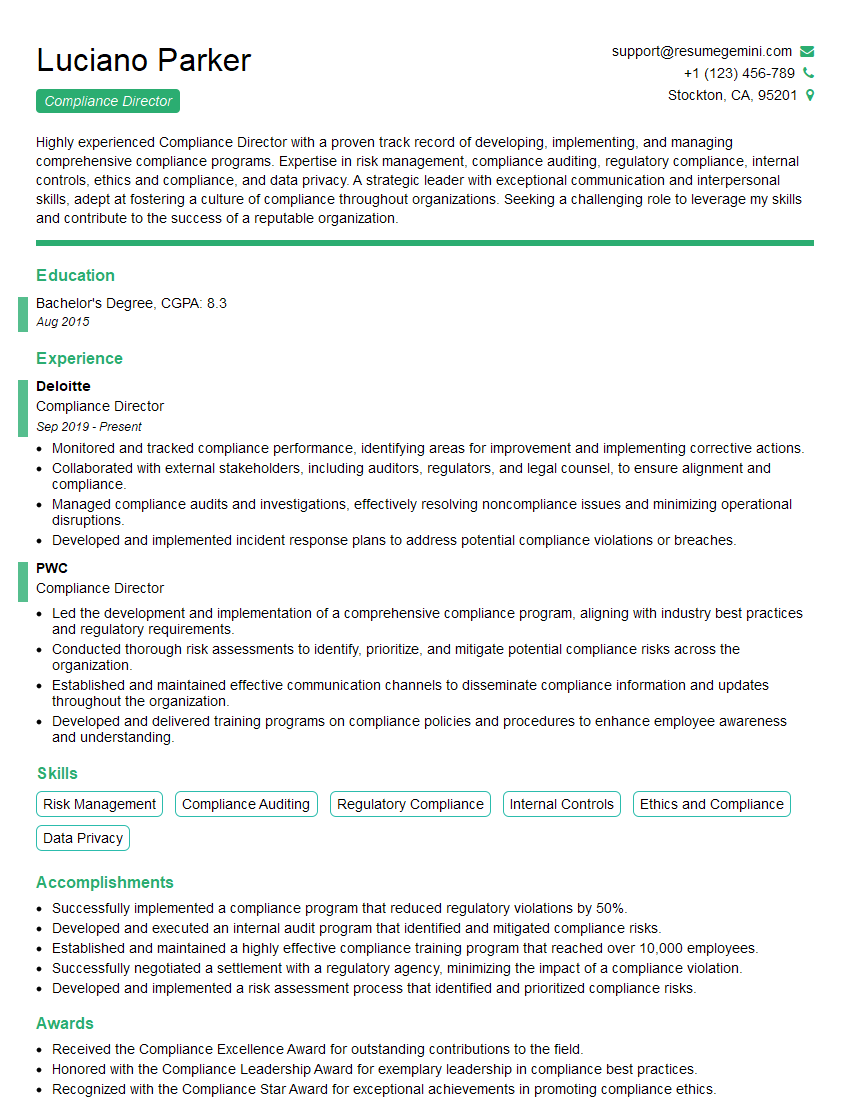
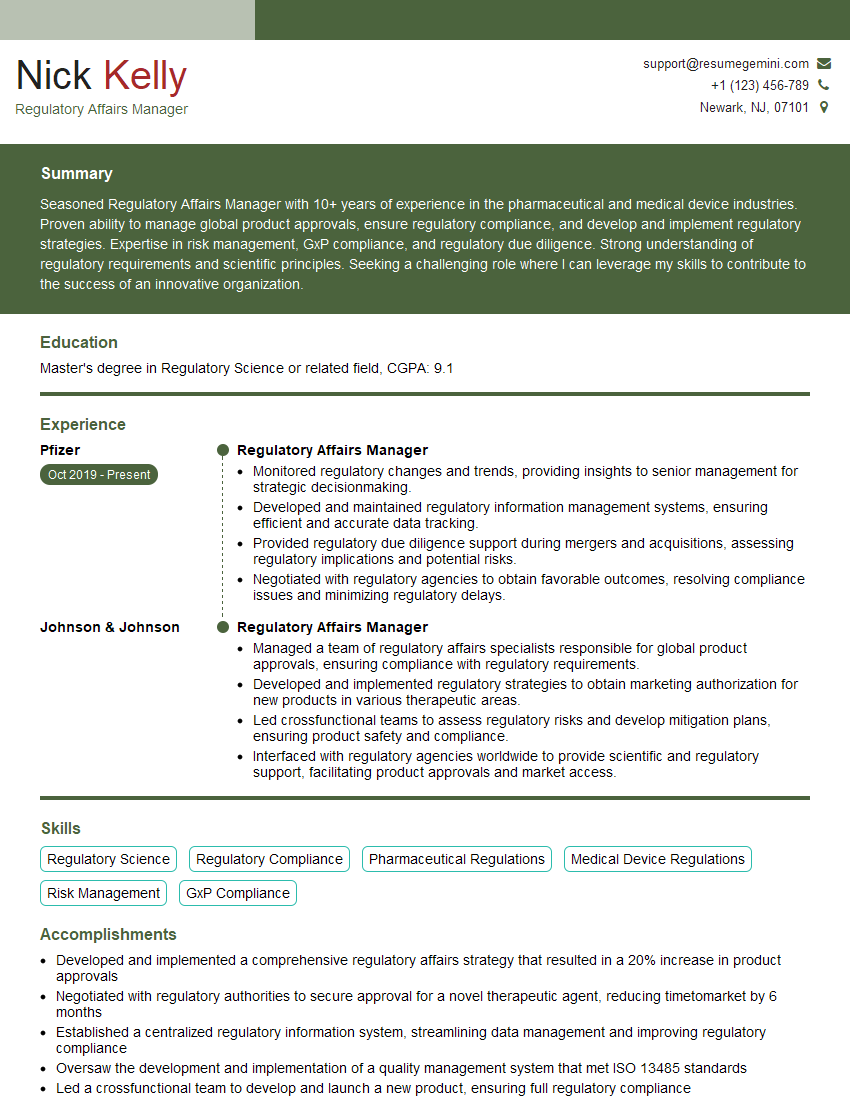
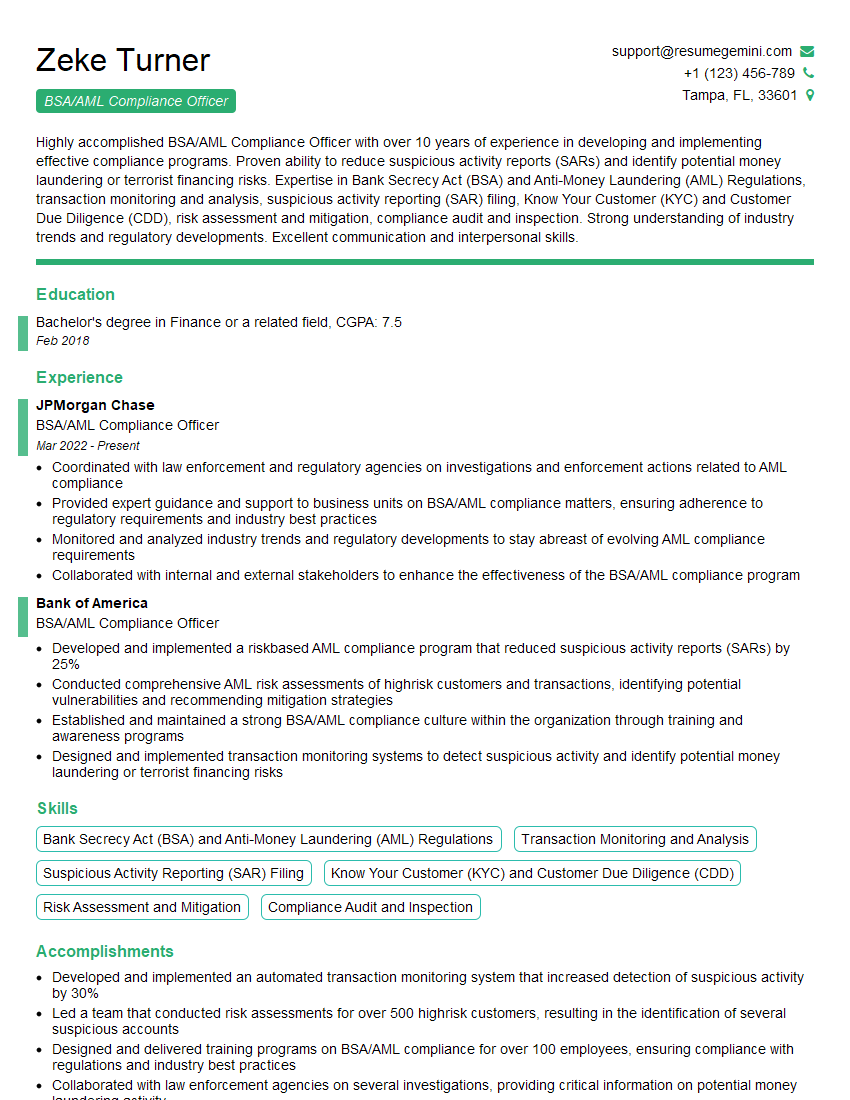
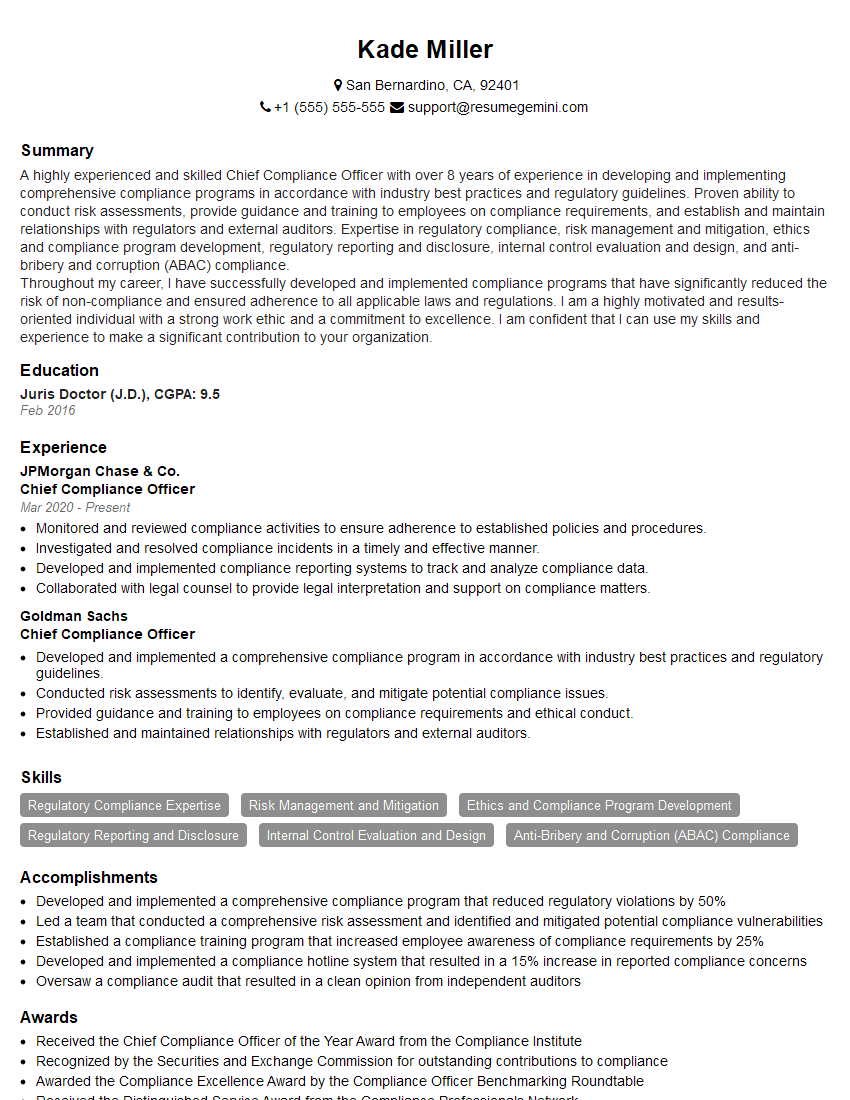
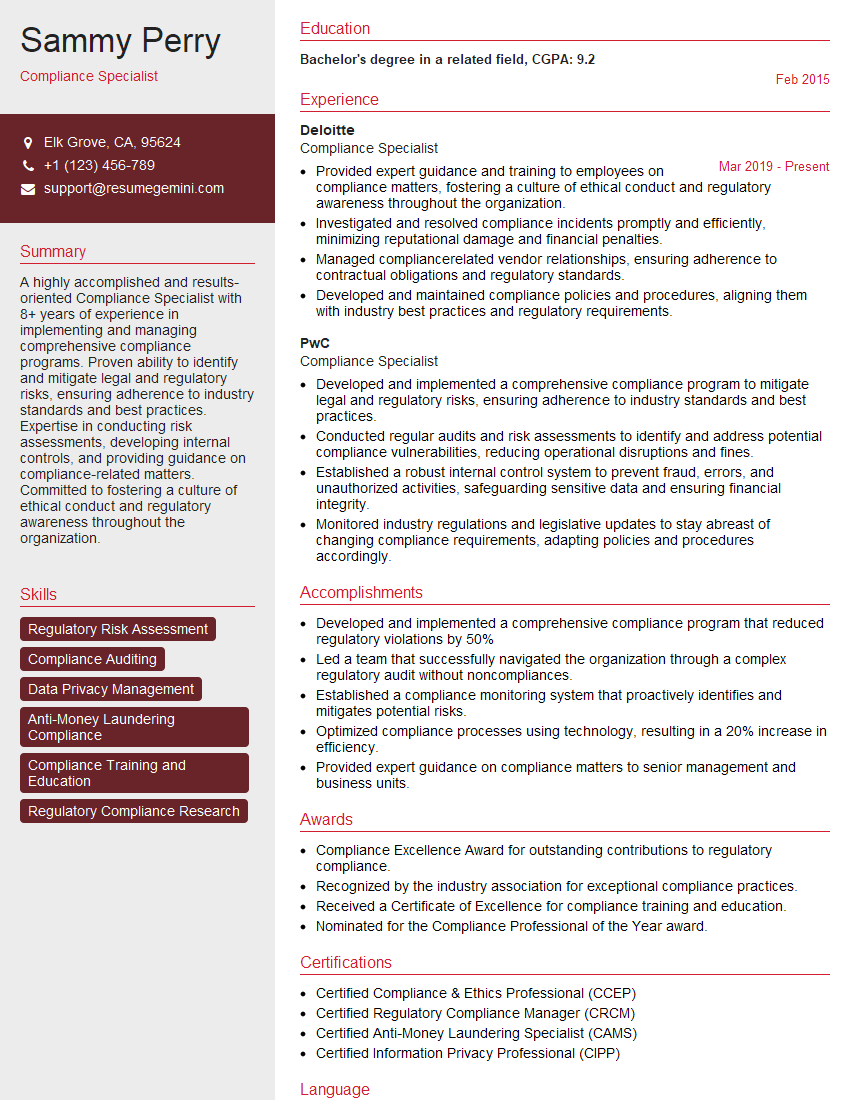
Mastering Credit Union Regulatory Compliance is crucial for a successful and rewarding career in this field. A strong understanding of these regulations demonstrates your commitment to ethical practices and risk management, leading to greater career opportunities and advancement. To significantly improve your job prospects, create an ATS-friendly resume that highlights your relevant skills and experience. We recommend using ResumeGemini, a trusted resource, to build a professional and impactful resume. Examples of resumes tailored to Credit Union Regulatory Compliance are available to guide you through the process.
Explore more articles
Users Rating of Our Blogs
Share Your Experience
We value your feedback! Please rate our content and share your thoughts (optional).
What Readers Say About Our Blog
Really detailed insights and content, thank you for writing this detailed article.
IT gave me an insight and words to use and be able to think of examples