Interviews are more than just a Q&A session—they’re a chance to prove your worth. This blog dives into essential Customer Engagement and Interaction interview questions and expert tips to help you align your answers with what hiring managers are looking for. Start preparing to shine!
Questions Asked in Customer Engagement and Interaction Interview
Q 1. Describe your experience designing and implementing customer engagement strategies.
Designing and implementing customer engagement strategies is a multifaceted process that begins with a deep understanding of the target audience and their needs. It involves defining clear objectives, selecting appropriate channels, and crafting compelling content and experiences.
In my previous role at Acme Corp, we implemented a multi-channel engagement strategy focused on improving customer retention. We began by segmenting our customer base based on demographics, purchase history, and engagement levels. This allowed us to tailor our messaging and offers for maximum impact. For example, high-value customers received personalized email campaigns offering exclusive discounts and early access to new products, while new customers were enrolled in a welcome series of emails and onboarding tutorials. We also integrated a robust CRM system to manage customer interactions and track campaign performance. The result was a 15% increase in customer retention within six months.
Another example involves a project where I redesigned a company’s website to enhance user experience and facilitate self-service options. By streamlining navigation, improving search functionality, and providing comprehensive FAQs and help articles, we reduced customer support tickets by 20% and improved customer satisfaction scores significantly.
Q 2. How do you measure the success of a customer engagement initiative?
Measuring the success of a customer engagement initiative requires a balanced approach, using both qualitative and quantitative metrics. Simply put, we need to know if our efforts are actually working and improving the customer experience.
- Quantitative Metrics: These are easily measurable data points. Examples include customer satisfaction scores (CSAT), Net Promoter Score (NPS), customer churn rate, website traffic, conversion rates, engagement rates on social media, and the number of support tickets resolved.
- Qualitative Metrics: These delve deeper into the ‘why’ behind the numbers. Examples include customer feedback gathered through surveys, reviews, social media monitoring, and focus groups. Analyzing this feedback provides valuable insights into customer sentiment and areas for improvement.
A comprehensive approach would involve setting specific, measurable, achievable, relevant, and time-bound (SMART) goals before launching any initiative. Regular monitoring of these metrics, coupled with qualitative feedback analysis, allows for data-driven optimization and ensures that engagement strategies remain effective and aligned with business objectives.
Q 3. Explain your approach to improving customer satisfaction.
Improving customer satisfaction is a continuous process that requires a holistic approach. My approach is built on three pillars: proactive engagement, efficient problem resolution, and continuous improvement.
- Proactive Engagement: This involves anticipating customer needs and proactively addressing potential issues before they arise. Examples include personalized recommendations, proactive support through chatbots, and regular communication about product updates or relevant information.
- Efficient Problem Resolution: When problems do arise, it’s crucial to address them swiftly and effectively. This requires empowered employees with the authority to resolve issues, clear escalation paths, and a focus on empathetic communication.
- Continuous Improvement: Regularly analyzing customer feedback, tracking key metrics, and conducting customer satisfaction surveys allows for continuous improvement and iterative refinement of processes and strategies. This might involve using data analytics to pinpoint pain points and developing targeted solutions.
For example, at a previous company, we implemented a system for proactively identifying at-risk customers through automated alerts based on their behavior. This allowed us to intervene early with personalized support and prevent them from churning.
Q 4. What tools and technologies are you proficient in for managing customer interactions?
I am proficient in a variety of tools and technologies for managing customer interactions. My expertise spans CRM systems, help desk software, social media management platforms, and analytics dashboards.
- CRM Systems: Salesforce, HubSpot, Zoho CRM – for managing customer data, tracking interactions, and automating workflows.
- Help Desk Software: Zendesk, Freshdesk, Intercom – for managing support tickets, tracking resolutions, and providing self-service options.
- Social Media Management Platforms: Hootsuite, Sprout Social – for monitoring social media channels, engaging with customers, and managing brand reputation.
- Analytics Dashboards: Google Analytics, Tableau, Power BI – for tracking key metrics, analyzing customer behavior, and gaining insights into customer engagement.
I am also experienced in integrating these tools to create a seamless customer experience across different channels. For instance, I’ve implemented integrations between CRM systems and help desk software to provide agents with a complete view of customer history and past interactions.
Q 5. Describe a time you successfully resolved a challenging customer issue.
In my previous role, we faced a situation where a major software update caused widespread service disruption for a significant portion of our customer base. The situation was exacerbated by the fact that our initial communication was unclear and unhelpful, leading to widespread frustration and negative reviews online.
My approach involved several steps: First, I coordinated a team to quickly diagnose the root cause of the problem. Second, we developed a clear and concise communication strategy to inform customers about the issue, provide status updates, and offer sincere apologies for the inconvenience. Third, we implemented a temporary workaround to restore essential services for the most affected customers. Fourth, we established dedicated support channels to address individual customer concerns and provide personalized assistance. Finally, we conducted a post-incident review to identify areas for improvement in our communication and incident management processes. By addressing the problem effectively, and communicating transparently, we were able to mitigate the negative impact and restore customer trust.
Q 6. How do you handle negative customer feedback?
Negative customer feedback, while unpleasant, is invaluable for identifying areas for improvement. My approach to handling negative feedback is empathetic, proactive, and data-driven.
- Empathetic Response: Acknowledge the customer’s frustration and validate their feelings. A simple “I understand your frustration” can go a long way.
- Proactive Resolution: Take ownership of the problem and outline the steps to resolve it. Offer a sincere apology and potentially offer compensation for the inconvenience.
- Data-Driven Analysis: Analyze negative feedback patterns to identify recurring issues and implement solutions to prevent similar problems from happening in the future. This might involve process improvements, training, or product enhancements.
For example, if multiple customers complain about a complex process, I would work with the relevant teams to simplify that process. This prevents future negative feedback and demonstrates a commitment to continuous improvement.
Q 7. How do you build and maintain strong customer relationships?
Building and maintaining strong customer relationships is about more than just transactions; it’s about creating genuine connections. My approach centers around personalization, consistent communication, and exceptional service.
- Personalization: Use customer data to tailor interactions and provide personalized recommendations, offers, and support. This shows customers that you understand their individual needs.
- Consistent Communication: Maintain regular contact with customers, not just when there’s a problem. Share relevant updates, offer exclusive content, and build a community around your brand.
- Exceptional Service: Go the extra mile to exceed customer expectations. Respond promptly to inquiries, resolve issues effectively, and demonstrate genuine care and empathy.
For instance, I have implemented loyalty programs that reward repeat customers with exclusive perks and benefits, fostering a sense of belonging and appreciation. Regular customer surveys also ensure that we are continuously meeting evolving expectations.
Q 8. What is your experience with customer segmentation and personalization?
Customer segmentation and personalization are crucial for effective engagement. Segmentation involves dividing your customer base into distinct groups based on shared characteristics like demographics, purchase history, behavior, or psychographics. This allows for targeted messaging and offers, enhancing relevance and increasing the likelihood of conversion. Personalization takes this a step further by tailoring the customer experience to the individual, using data to deliver unique content, product recommendations, and offers.
In my previous role at Acme Corp, we segmented our customer base into three groups: high-value, mid-value, and low-value customers. High-value customers received personalized email campaigns with exclusive offers and early access to new products. Mid-value customers received targeted promotions based on their past purchases. Low-value customers received more general marketing communications aimed at driving repeat business. This resulted in a 20% increase in customer lifetime value for high-value customers and a 15% increase in overall sales.
Another example involved using behavioral data to personalize website experiences. Customers who frequently viewed specific product categories were shown related products and promotions, leading to a significant increase in add-to-cart rates.
Q 9. Describe your approach to customer onboarding.
My approach to customer onboarding focuses on creating a seamless and positive first experience. I believe in a multi-channel approach, combining email, in-app tutorials, and potentially even personalized phone calls depending on the customer segment and product complexity. The goal is to quickly demonstrate value and empower the customer to utilize the product or service effectively.
The onboarding process typically includes:
- A welcome email with a clear explanation of next steps.
- An in-app walkthrough highlighting key features and functionalities.
- Early support interactions to address immediate questions or concerns.
- A follow-up email a few days later to check for satisfaction and offer additional assistance.
For example, at Beta Solutions, we introduced an interactive onboarding tutorial within our SaaS product, resulting in a 30% reduction in customer churn within the first month. The tutorial guided users through key tasks with visual aids and interactive elements, making the learning process much more engaging and effective.
Q 10. How do you prioritize competing customer needs?
Prioritizing competing customer needs requires a structured approach. I use a framework that combines urgency, impact, and feasibility. Urgency refers to how quickly the need must be addressed, impact assesses the potential positive or negative consequences of addressing or not addressing the need, and feasibility considers the resources and time required.
I typically use a matrix to visualize this: needs are plotted on a graph with urgency on one axis and impact on the other. Feasibility is then considered for the needs that score high on both urgency and impact. This ensures that the most critical and impactful needs are addressed first, even if there are multiple competing demands.
For example, if a major system failure is impacting many customers (high urgency, high impact), that would take precedence over a feature request from a single customer (low urgency, low impact), even if the feature request is technically simpler to implement.
Q 11. How do you identify and address customer pain points?
Identifying and addressing customer pain points requires a combination of proactive and reactive methods. Proactive methods include analyzing customer data, conducting user research, and monitoring social media for feedback. Reactive methods involve actively soliciting feedback through surveys, support tickets, and direct customer interactions.
Once pain points are identified, I analyze them to understand their root cause and prioritize solutions based on their impact and feasibility. This often involves collaborating with different teams to implement solutions. Regular follow-up is key to ensure that the solutions implemented are effective in resolving the identified pain points.
For instance, at Gamma Industries, we discovered through customer surveys that a cumbersome checkout process was leading to high cart abandonment rates. By streamlining the checkout process, we saw a 25% increase in conversions.
Q 12. What is your experience with CRM systems?
I have extensive experience with various CRM systems, including Salesforce, HubSpot, and Zoho CRM. My expertise encompasses data entry, report generation, customization, and integration with other business systems. I’m proficient in using CRM systems to manage customer interactions, track customer journeys, and analyze customer data to identify trends and opportunities for improvement.
Beyond basic functionality, I have experience with advanced CRM capabilities such as workflow automation, predictive analytics, and sales forecasting. I understand the importance of data integrity and effective data management within a CRM system to ensure accurate and reliable insights.
For example, at Delta Corporation, I implemented a new Salesforce workflow automation to streamline the lead qualification process, reducing the time spent on manual tasks by 40% and improving sales efficiency.
Q 13. How do you use data to inform customer engagement decisions?
Data is the cornerstone of informed customer engagement decisions. I use data analytics to understand customer behavior, preferences, and needs. This includes analyzing website analytics, CRM data, sales data, and social media data to identify trends and patterns. I use this information to personalize marketing campaigns, optimize customer journeys, and improve customer service.
For example, I might analyze website data to identify which pages have high bounce rates, indicating potential usability issues. Similarly, I might use CRM data to segment customers based on their purchase history and tailor marketing messages accordingly. This data-driven approach helps ensure resources are allocated effectively and maximizes the return on investment.
I leverage tools like Google Analytics, Tableau, and Power BI to visualize data and extract meaningful insights. A/B testing is also an important tool in understanding the impact of various engagement strategies.
Q 14. Describe your experience with customer surveys and feedback collection.
I have extensive experience designing, deploying, and analyzing customer surveys and feedback collection methods. I believe in employing a multi-faceted approach to gather diverse perspectives and gain a comprehensive understanding of customer experiences. This often involves a combination of quantitative and qualitative methods.
Examples of methods I’ve used include:
- Online surveys using platforms like SurveyMonkey or Qualtrics.
- Customer satisfaction (CSAT) surveys to measure overall satisfaction.
- Net Promoter Score (NPS) surveys to gauge customer loyalty.
- In-depth customer interviews to understand underlying reasons for feedback.
- Focus groups for collaborative feedback gathering.
The data collected from these methods is crucial for identifying areas for improvement, measuring the success of implemented changes, and informing future strategic decisions. Analyzing survey results and feedback requires careful consideration, ensuring that insights are accurately interpreted and used to make informed decisions.
At Epsilon Solutions, implementing a regular customer feedback program resulted in a 10% improvement in customer satisfaction and a significant reduction in negative online reviews.
Q 15. How do you foster a customer-centric culture within a team?
Fostering a customer-centric culture isn’t a one-time event; it’s an ongoing process that requires consistent effort and leadership buy-in. It starts with clearly defining what ‘customer-centric’ means within your specific organization. This might involve creating a mission statement that prioritizes customer needs and feedback above all else.
Next, I’d implement several key strategies:
- Lead by example: Managers and team leaders must actively demonstrate customer-centric behaviors. This includes actively listening to customer feedback, empathizing with their frustrations, and empowering team members to resolve issues quickly and effectively.
- Empower employees: Give team members the authority to make decisions that benefit the customer, even if it means bending the rules slightly. This empowers them to take ownership and fosters a sense of responsibility for customer satisfaction.
- Regular feedback loops: Implement systems for gathering and acting upon customer feedback. This could involve customer surveys, feedback forms, or even regular one-on-one interactions with customers. Analyzing this feedback is crucial to identifying areas for improvement.
- Training and development: Invest in training programs that focus on customer service skills, empathy, and conflict resolution. Role-playing scenarios can help employees practice handling difficult customer interactions.
- Celebrate successes: Publicly acknowledge and reward team members who consistently go above and beyond to meet customer needs. This reinforces the importance of customer-centric behavior.
For example, in a previous role, we implemented a ‘Customer Hero’ program, recognizing employees who resolved particularly challenging customer issues. This significantly boosted team morale and reinforced the importance of customer satisfaction.
Career Expert Tips:
- Ace those interviews! Prepare effectively by reviewing the Top 50 Most Common Interview Questions on ResumeGemini.
- Navigate your job search with confidence! Explore a wide range of Career Tips on ResumeGemini. Learn about common challenges and recommendations to overcome them.
- Craft the perfect resume! Master the Art of Resume Writing with ResumeGemini’s guide. Showcase your unique qualifications and achievements effectively.
- Don’t miss out on holiday savings! Build your dream resume with ResumeGemini’s ATS optimized templates.
Q 16. What are some key metrics you track for customer engagement?
The key metrics I track for customer engagement are multifaceted and should be tailored to the specific goals of the organization. However, some core metrics consistently provide valuable insights.
- Customer Satisfaction (CSAT): Measured through surveys, this directly reflects how happy customers are with their interactions and the product/service. A high CSAT score indicates a successful engagement strategy.
- Net Promoter Score (NPS): This metric gauges customer loyalty and willingness to recommend your product/service. A high NPS score demonstrates strong customer advocacy.
- Customer Effort Score (CES): This measures how easy it was for customers to interact with your company. Lower scores indicate friction points that need attention.
- Website/App engagement metrics: These include metrics like bounce rate, time on site, pages per visit, and conversion rates. They indicate user experience and identify areas for improvement in online engagement.
- Social media engagement: Tracking likes, shares, comments, and mentions provides insight into how customers perceive your brand and products across various platforms.
- Customer Churn Rate: This indicates the percentage of customers who stop using your product or service within a given period. Lower churn rates are a sign of successful engagement and retention.
By tracking these metrics and analyzing trends, you can proactively address customer needs and optimize your engagement strategy.
Q 17. Explain your understanding of the customer lifecycle.
The customer lifecycle is a journey that customers take with a company, from initial awareness to eventual advocacy. Understanding this journey is crucial for crafting effective engagement strategies.
The stages typically include:
- Awareness: The customer becomes aware of your brand or product through various channels (marketing, word-of-mouth, etc.).
- Interest: The customer expresses interest, perhaps researching your product or visiting your website.
- Decision: The customer decides whether to purchase or engage with your offering.
- Action: The customer purchases or engages with your product/service.
- Retention: The company works to retain the customer through ongoing engagement and support.
- Advocacy: The satisfied customer becomes an advocate for your brand, recommending it to others.
Understanding each stage allows businesses to tailor their communications and offerings to meet the specific needs and expectations of customers at each point in their journey. For example, during the awareness stage, you might focus on brand building and creating compelling content. During the retention stage, you might focus on loyalty programs and personalized communication.
Q 18. How do you stay up-to-date on industry best practices in customer engagement?
Staying current with industry best practices in customer engagement requires a multi-pronged approach.
- Industry publications and blogs: Regularly reading industry-specific publications and blogs allows me to stay informed about new trends and technologies.
- Conferences and webinars: Attending industry conferences and webinars provides valuable networking opportunities and exposes me to cutting-edge ideas and strategies.
- Professional networks: Engaging with professional networks like LinkedIn and attending relevant meetups facilitates knowledge sharing and collaboration with peers.
- Case studies and research: Analyzing case studies and research reports from reputable sources provides insights into successful customer engagement initiatives and their outcomes.
- Competitor analysis: Regularly evaluating the customer engagement strategies of competitors provides valuable benchmarks and identifies areas for potential improvement.
By actively seeking out and analyzing this information, I can consistently update my knowledge base and implement best practices within my own work.
Q 19. Describe your experience with different customer communication channels.
I have extensive experience working with a variety of customer communication channels, each with its own strengths and weaknesses.
- Email: Excellent for sending targeted messages, promotions, and transactional updates. However, it can have low open rates and may be perceived as less personal.
- Phone: Allows for real-time interaction and personalized service. However, it can be costly and less scalable.
- Live chat: Provides instant support and is ideal for addressing immediate questions or resolving issues. It’s highly effective for enhancing website engagement.
- Social media: Allows for two-way communication, brand building, and community engagement. It’s vital for monitoring brand reputation and addressing customer concerns quickly.
- SMS/Text Messaging: Ideal for sending short, timely messages like appointment reminders or shipping notifications. It offers high open rates but requires careful messaging to avoid being perceived as intrusive.
- In-app messaging: Provides direct communication within the context of the product or service. It facilitates personalized support and improved user experience.
The optimal channel selection depends on the specific context, the customer’s preferences, and the nature of the interaction. Often, a multi-channel approach offers the best results, enabling customers to choose their preferred method of communication.
Q 20. How do you manage customer expectations?
Managing customer expectations involves setting realistic expectations upfront and consistently meeting or exceeding them throughout the interaction. This involves clear, transparent communication.
My approach focuses on:
- Clear communication: Clearly articulate what customers can expect in terms of timelines, deliverables, and potential outcomes. Avoid making promises you can’t keep.
- Proactive updates: Keep customers informed about the progress of their requests or issues, even if there’s no significant update. This demonstrates responsiveness and builds trust.
- Realistic timelines: Set realistic timelines for resolving issues or fulfilling requests. It’s better to slightly overestimate than to under-promise and over-deliver.
- Empathetic responses: Acknowledge and validate customer concerns, even if you can’t immediately resolve the issue. Demonstrating empathy fosters positive relationships.
- Manage expectations during delays: If unforeseen delays occur, communicate them proactively, explaining the reasons behind them and providing an updated timeline. Offer alternative solutions if possible.
For instance, when facing a backlog of support tickets, I would inform customers of the expected wait time and offer alternatives like scheduling a callback.
Q 21. How do you handle escalations in customer interactions?
Handling escalations requires a calm, professional, and empathetic approach. My strategy involves a structured process to ensure effective resolution.
The steps I follow are:
- Active listening: Carefully listen to the customer’s concerns without interruption. Emphasize their perspective and acknowledge their frustration.
- Gather information: Gather all relevant information about the issue, including previous interactions and attempts at resolution.
- Empathetic response: Express empathy and validate the customer’s feelings. Apologize if appropriate, even if it wasn’t your team’s fault.
- Problem-solving: Work collaboratively with the customer to identify a solution. Offer options and explore different approaches.
- Documentation: Meticulously document all interactions and actions taken. This is crucial for tracking progress and ensuring accountability.
- Follow-up: Follow up with the customer after the issue is resolved to ensure their satisfaction and gather feedback.
- Escalation: If the issue cannot be resolved at your level, escalate it to the appropriate team member or manager, ensuring clear communication and documentation.
In one instance, I successfully de-escalated a highly agitated customer by actively listening to their frustration, validating their concerns, and offering a tangible solution, ultimately converting a negative experience into a positive one.
Q 22. Describe your experience with customer retention strategies.
Customer retention strategies focus on keeping existing customers engaged and loyal. It’s significantly more cost-effective to retain a customer than acquire a new one. My experience encompasses a multi-faceted approach, encompassing proactive communication, personalized service, and loyalty programs.
Proactive Communication: This involves regular engagement beyond transactional interactions. For instance, I’ve implemented email campaigns offering exclusive content, product updates, or personalized recommendations based on past purchase history. This keeps the brand top-of-mind and fosters a sense of connection.
Personalized Service: I’ve worked on projects using data analytics to segment customers and tailor communication and offers to their individual needs and preferences. This might involve offering customized product suggestions or addressing specific customer pain points identified through feedback analysis.
Loyalty Programs: These incentivize repeat business and reward loyal customers. I’ve designed and managed programs that offer points, discounts, exclusive access, and early access to new products. Success depends on the program’s value proposition and its seamless integration with the overall customer journey.
For example, at a previous company, we implemented a tiered loyalty program that saw a 20% increase in repeat purchases within six months.
Q 23. How do you balance customer needs with business objectives?
Balancing customer needs and business objectives is crucial for sustainable success. It’s not about choosing one over the other; it’s about finding a harmonious synergy. I approach this through a customer-centric framework that incorporates data-driven decision making.
Understanding Customer Needs: This involves actively listening to customer feedback through surveys, reviews, and social media monitoring. Understanding their pain points, preferences, and unmet needs provides a roadmap for product development and service improvements.
Defining Business Objectives: Clear, measurable business goals (e.g., increased revenue, improved customer satisfaction, enhanced brand reputation) guide strategic decisions. These objectives should be aligned with overall company strategies and market trends.
Finding the Sweet Spot: The ideal solution lies in finding opportunities where meeting customer needs directly contributes to achieving business objectives. For instance, improving customer service processes might reduce customer churn, positively impacting both customer satisfaction and retention rates.
For example, in a previous role, we identified a customer segment frustrated by long wait times. By implementing a live chat feature, we improved customer satisfaction while simultaneously reducing the load on our call center, saving the company money.
Q 24. What is your experience with customer loyalty programs?
My experience with customer loyalty programs is extensive, ranging from designing and implementing programs to analyzing their effectiveness. I’ve worked with various reward structures, including points-based systems, tiered programs, and exclusive member benefits.
Program Design: This involves defining the target audience, selecting appropriate rewards, establishing clear rules and terms, and integrating the program with existing CRM and marketing systems. I’ve used A/B testing to optimize program elements and improve participation rates.
Program Management: This involves ongoing monitoring, maintenance, and optimization. I track key metrics like redemption rates, member engagement, and ROI to ensure program effectiveness. I also handle member inquiries and address any issues that may arise.
Data Analysis: Data analysis plays a key role in understanding program performance and identifying areas for improvement. I analyze customer behavior and feedback to tailor rewards and program elements, ensuring the program remains relevant and valuable.
For example, I once redesigned a loyalty program that was underperforming by incorporating personalized offers and gamification elements, which resulted in a significant increase in member engagement and repeat purchases.
Q 25. How do you measure customer lifetime value?
Customer Lifetime Value (CLTV) is a prediction of the net profit attributed to the entire future relationship with a customer. It’s a crucial metric for evaluating customer relationships and guiding resource allocation. Calculating CLTV involves several steps.
Average Purchase Value (APV): Calculate the average amount a customer spends per transaction.
Average Purchase Frequency (APF): Determine how often a customer makes a purchase.
Customer Lifespan (CL): Estimate how long a customer will remain active.
Gross Profit Margin (GPM): Calculate the percentage of revenue remaining after deducting the cost of goods sold.
A simplified CLTV calculation is: CLTV = APV * APF * CL * GPM
More sophisticated models consider factors like customer churn rate and customer acquisition cost for a more accurate prediction. CLTV allows businesses to prioritize high-value customers, personalize marketing efforts, and optimize customer retention strategies.
Q 26. Describe a time you had to adapt your approach to customer engagement.
During a product launch, we anticipated high demand and focused our engagement efforts on pre-orders and early adopter campaigns. However, post-launch, we discovered a significant portion of customers were experiencing technical difficulties. Our initial engagement approach, focused on excitement and promotion, needed a drastic shift.
We immediately adapted by:
Prioritizing Customer Support: We redirected resources to address technical issues promptly, providing immediate troubleshooting assistance through various channels (phone, email, chat).
Transparent Communication: We proactively communicated about the issues, acknowledging them and providing regular updates on resolution efforts. This built trust and demonstrated our commitment to customer satisfaction.
Offering Compensation: We provided discounts or refunds to affected customers to mitigate their frustration.
This shift in approach, although unexpected, showcased our adaptability and ultimately preserved customer loyalty, preventing significant brand damage.
Q 27. How do you identify opportunities for customer engagement improvement?
Identifying opportunities for customer engagement improvement involves continuous monitoring and analysis of various data points and customer feedback.
Customer Feedback Analysis: Regularly review customer surveys, reviews, social media mentions, and support tickets to identify recurring themes, pain points, and areas for improvement. Sentiment analysis tools can help quantify the overall sentiment of customer feedback.
Website Analytics: Analyze website traffic, bounce rates, and conversion rates to identify areas where customers are struggling or abandoning the process. Heatmaps can visualize user behavior and pinpoint areas requiring attention.
Customer Segmentation: Segment your customer base to identify specific needs and tailor engagement strategies accordingly. This allows for targeted communication and personalized offers.
Competitor Analysis: Analyze your competitors’ customer engagement strategies to identify best practices and potential opportunities for improvement.
By systematically analyzing these data sources, I can identify areas where we can enhance the customer experience, leading to increased loyalty and advocacy.
Q 28. How do you contribute to a positive customer experience?
Contributing to a positive customer experience is a holistic process that begins with understanding customer needs and continues throughout the entire customer journey. It involves a proactive, empathetic, and solution-oriented approach.
Empathy and Active Listening: I prioritize understanding customers’ perspectives and needs, actively listening to their concerns, and responding with empathy and understanding.
Proactive Problem Solving: I strive to anticipate potential problems and address them proactively, rather than reactively. This involves streamlining processes, improving communication, and providing readily available support resources.
Personalized Interactions: I tailor my communication and interactions to meet individual customer needs and preferences. This might involve personalized recommendations, customized offers, or addressing specific customer pain points.
Continuous Improvement: I regularly seek feedback and iterate on our processes to continually improve the customer experience. This might involve implementing new technologies, training staff, or making adjustments to our communication strategies.
Ultimately, creating a positive customer experience is about building strong relationships based on trust, transparency, and mutual respect. This fosters customer loyalty, advocacy, and ultimately, business success.
Key Topics to Learn for Customer Engagement and Interaction Interview
- Understanding Customer Needs: Learn to identify and articulate diverse customer needs and pain points through active listening and empathetic communication. Consider how different customer segments may have unique requirements.
- Communication Strategies: Master various communication channels (email, phone, chat, social media) and adapt your style for optimal engagement based on the context and audience. Practice clear, concise, and persuasive communication techniques.
- Building Rapport and Trust: Explore strategies for establishing strong relationships with customers. Consider the role of active listening, demonstrating empathy, and building credibility in fostering trust.
- Conflict Resolution and De-escalation: Develop effective techniques for handling difficult conversations and resolving customer complaints professionally and efficiently. Practice different approaches to de-escalate tense situations.
- Customer Journey Mapping: Understand how to map the complete customer experience and identify areas for improvement in engagement and interaction at each touchpoint. Consider how data analytics can inform these improvements.
- Metrics and KPIs: Familiarize yourself with key performance indicators (KPIs) used to measure customer engagement and satisfaction. Practice analyzing these metrics to identify trends and areas for improvement.
- Digital Engagement Tools and Platforms: Gain familiarity with commonly used CRM systems and other digital tools that enhance customer engagement (e.g., social media management platforms, marketing automation software).
- Ethical Considerations in Customer Engagement: Understand the importance of data privacy, ethical communication practices, and maintaining customer trust in all interactions.
Next Steps
Mastering Customer Engagement and Interaction is crucial for career advancement in today’s competitive market. Proficiency in this area demonstrates valuable soft skills and a customer-centric approach highly sought after by employers. To significantly boost your job prospects, focus on creating an ATS-friendly resume that highlights your relevant skills and experiences. ResumeGemini is a trusted resource that can help you build a professional and impactful resume. We provide examples of resumes tailored to Customer Engagement and Interaction roles to guide you in crafting a compelling application.
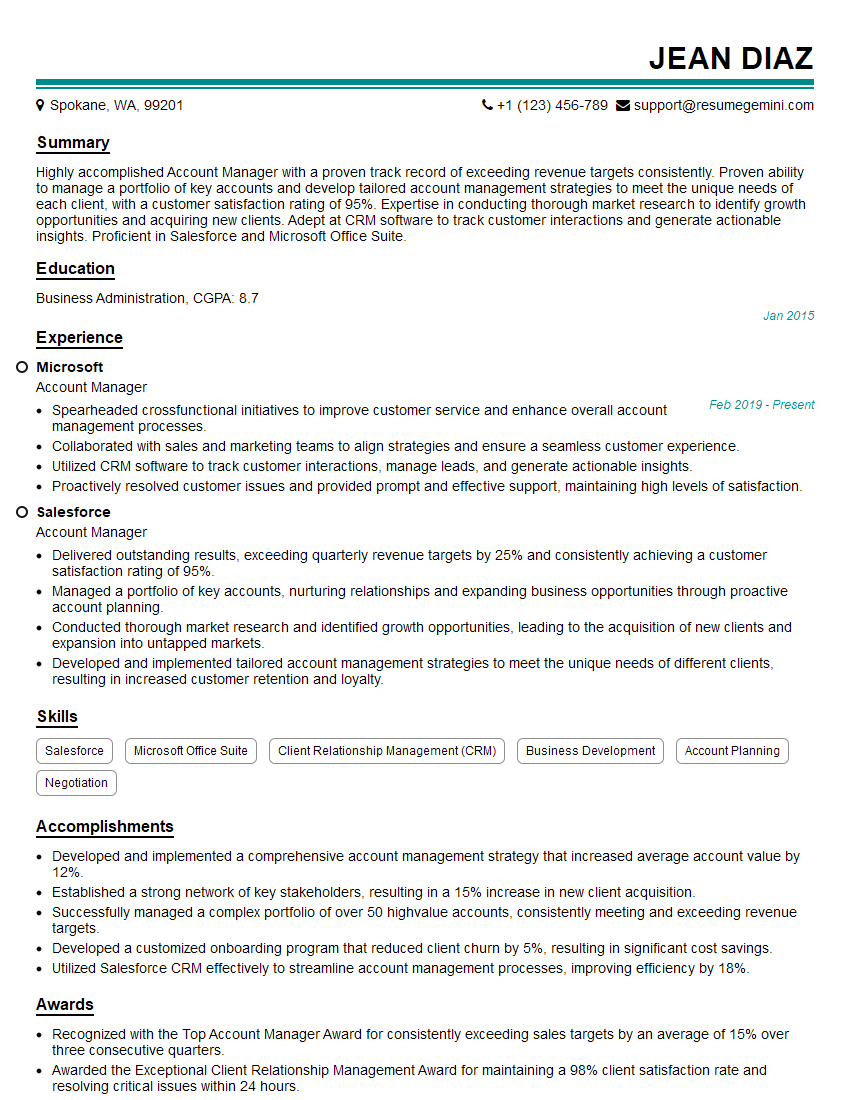
Account Manager Resume Sample
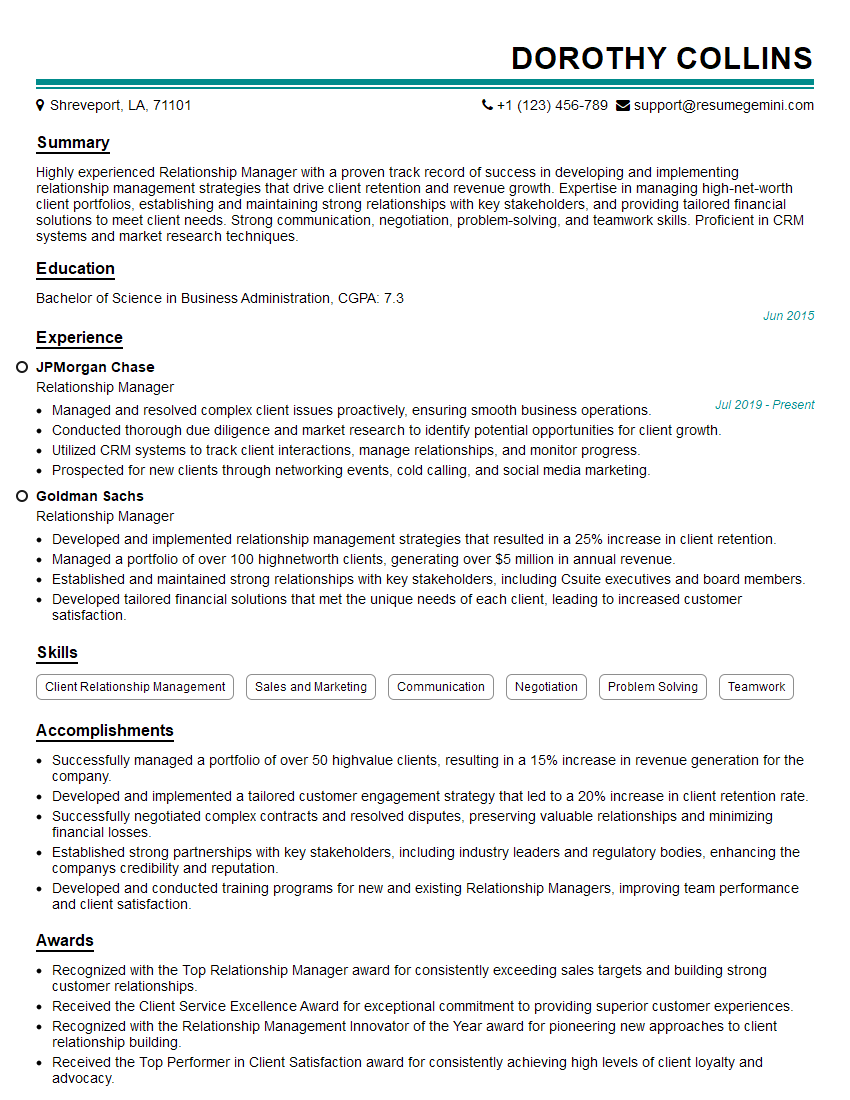
Relationship Manager Resume Sample
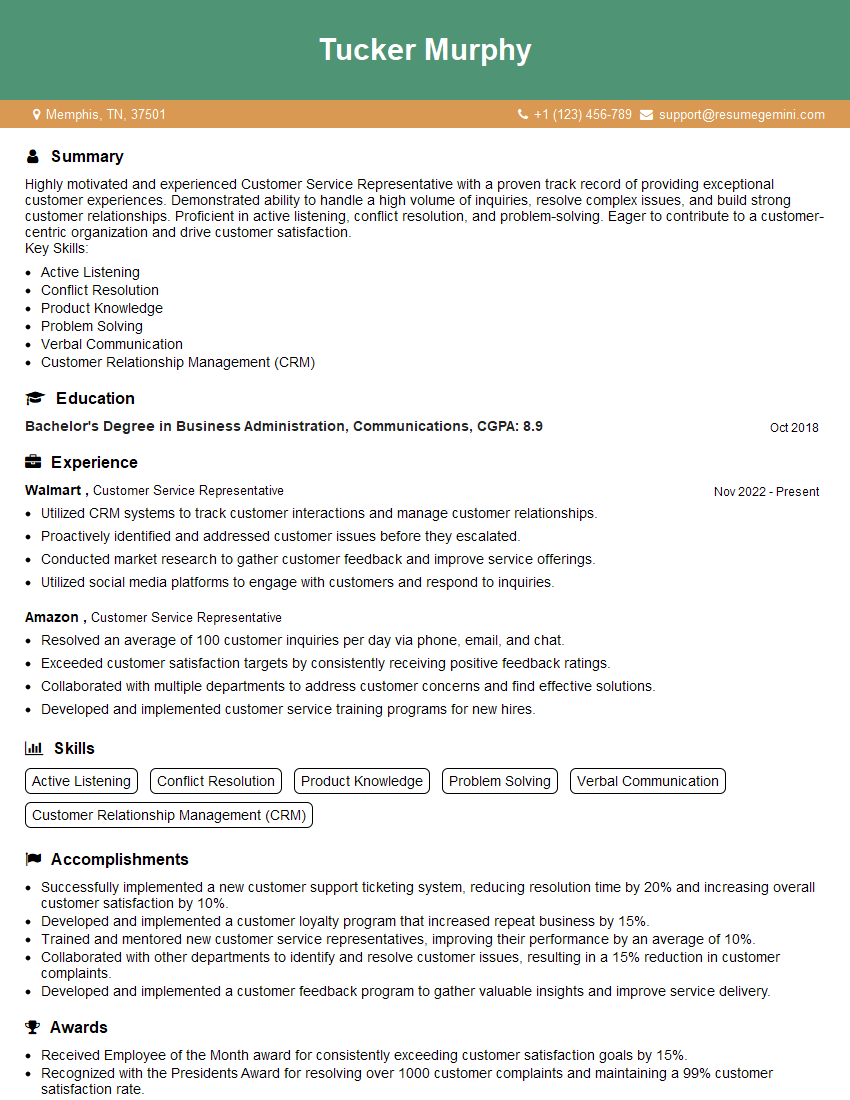
Customer Service Representative Resume Sample
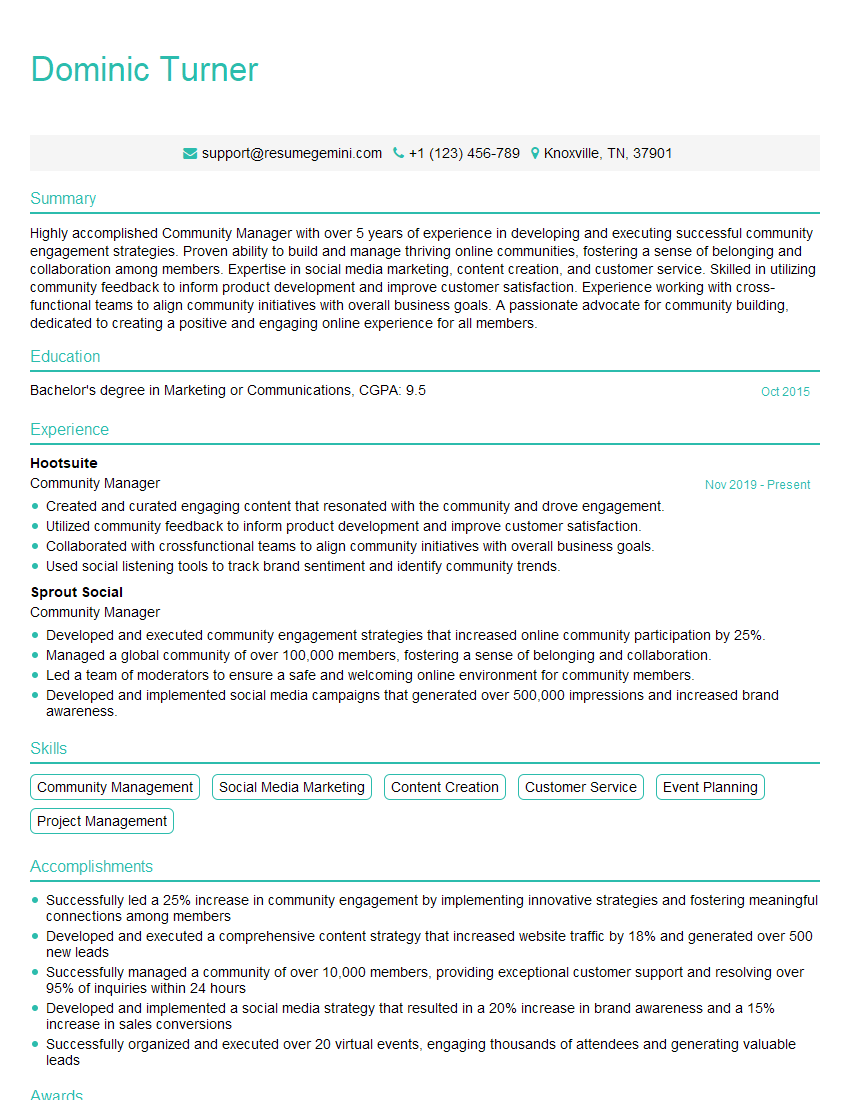
Community Manager Resume Sample
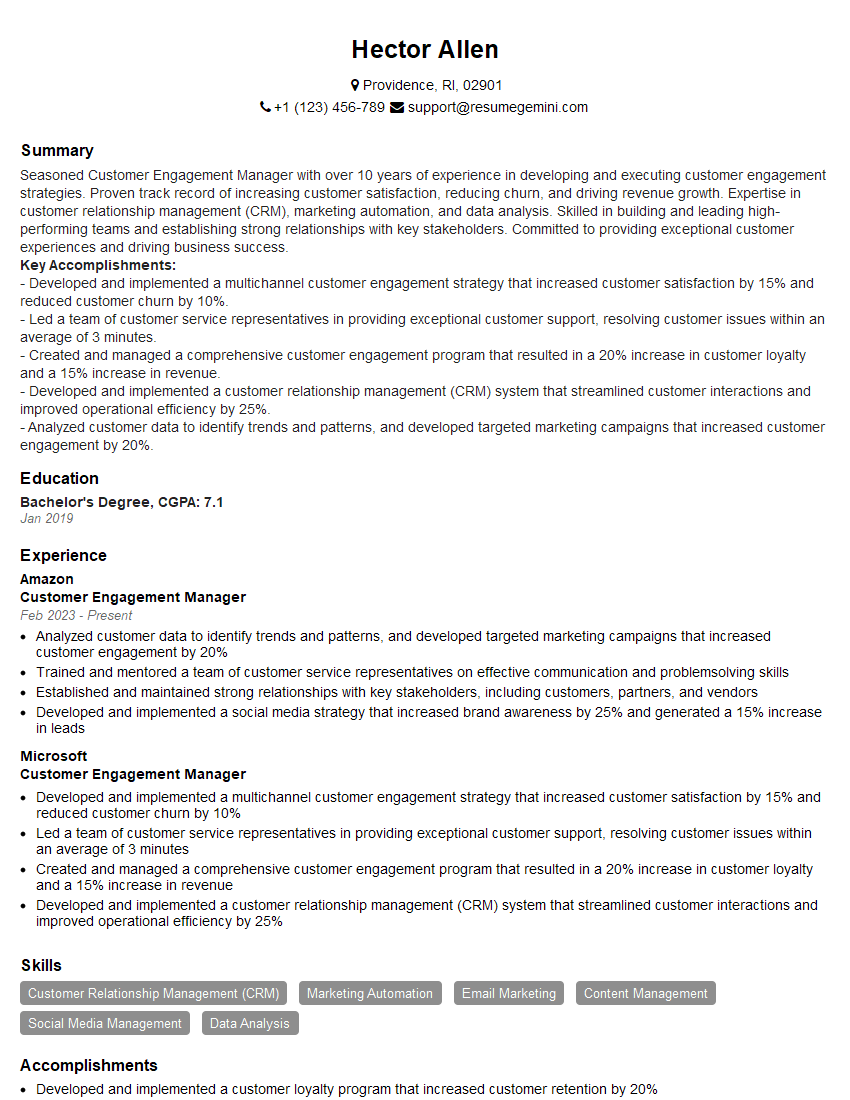
Customer Engagement Manager Resume Sample
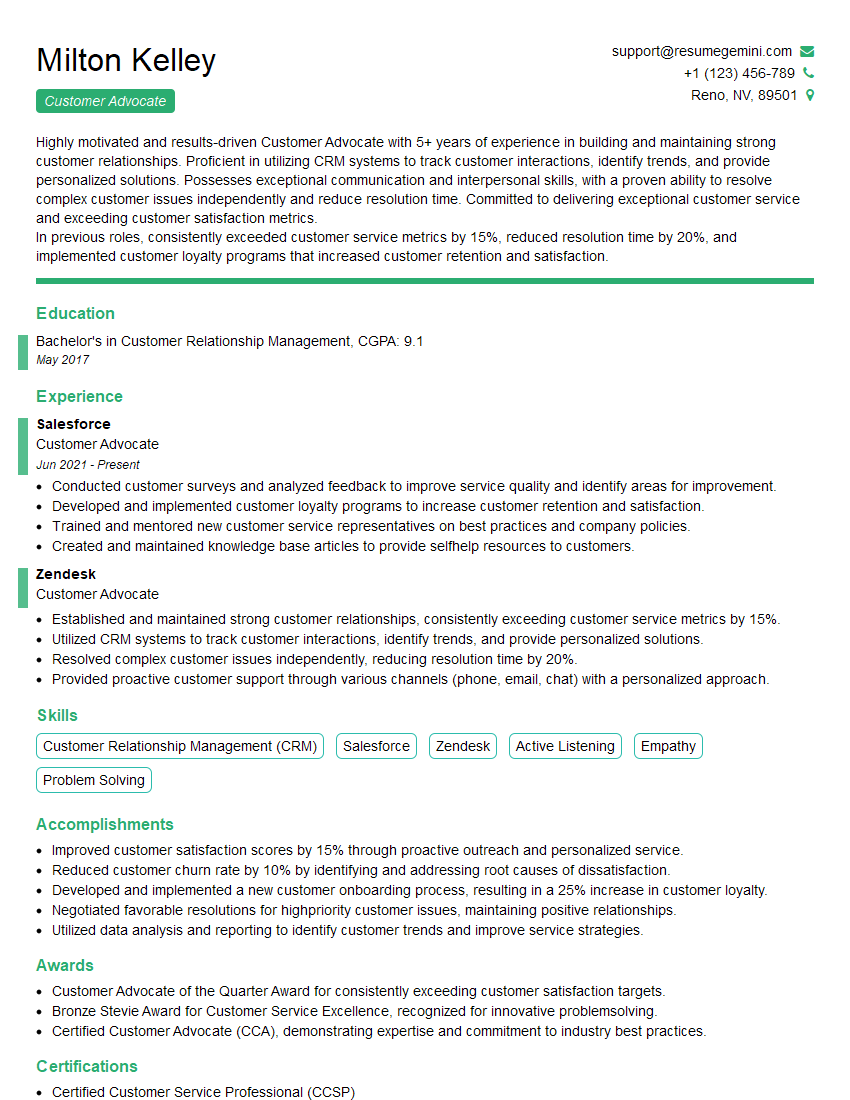
Customer Advocate Resume Sample
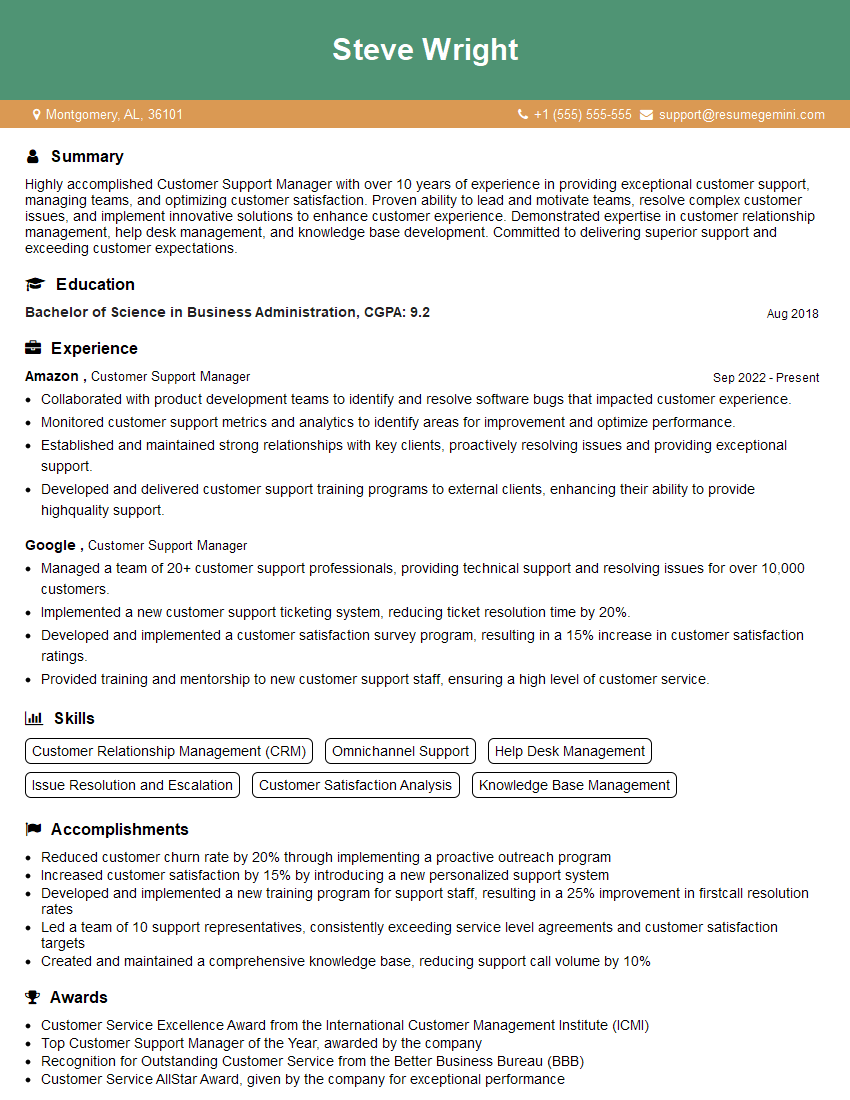
Customer Support Manager Resume Sample
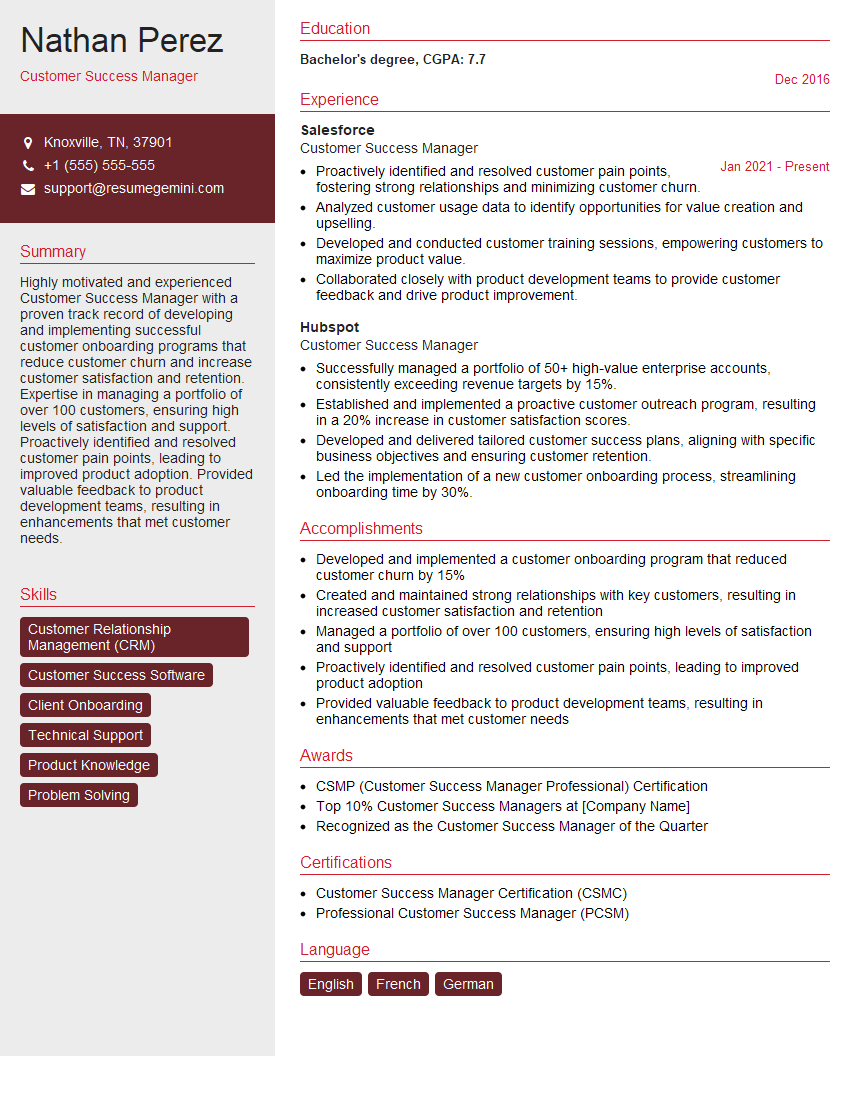
Customer Success Manager Resume Sample
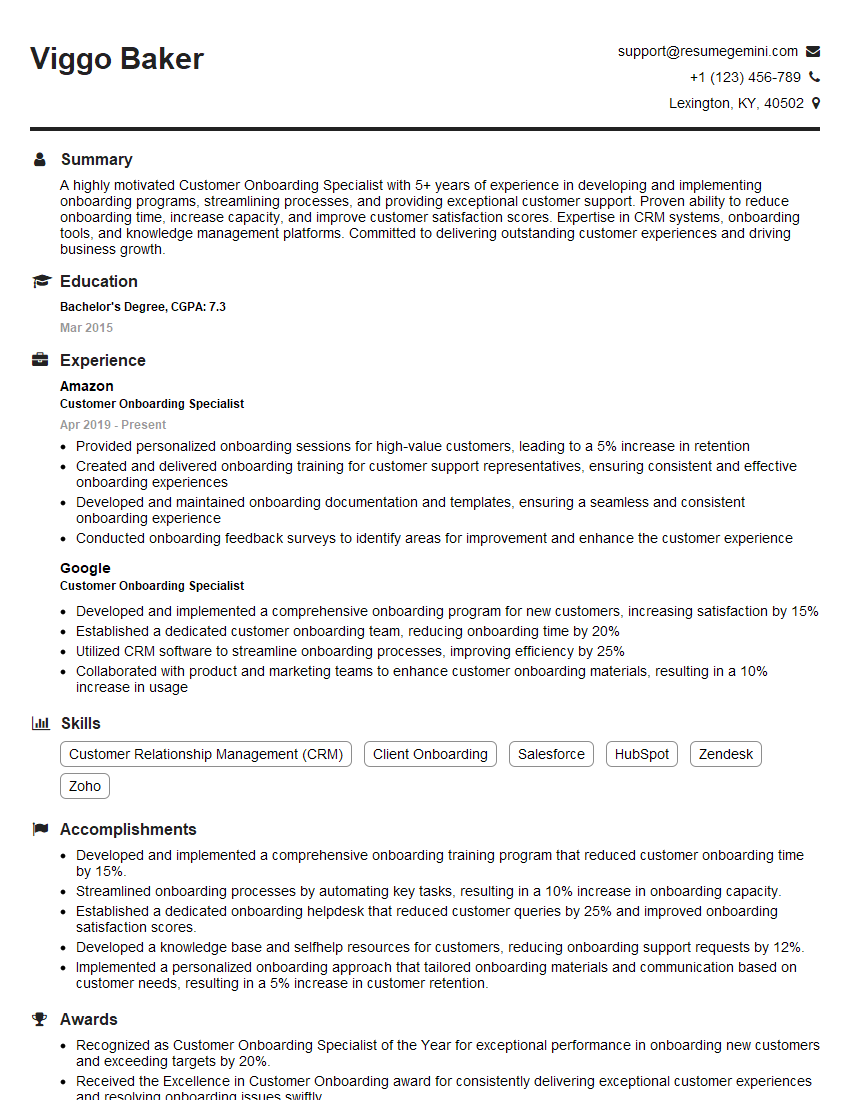
Customer Onboarding Specialist Resume Sample
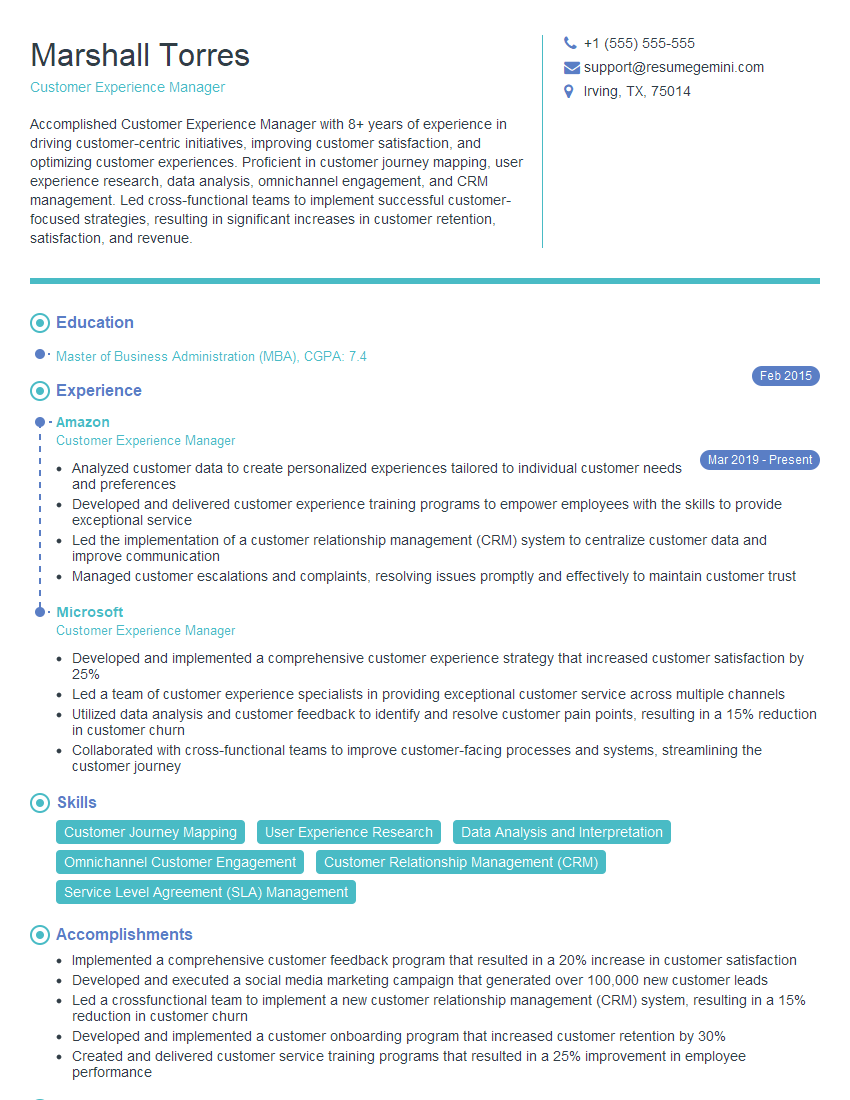
Customer Experience Manager Resume Sample
Explore more articles
Users Rating of Our Blogs
Share Your Experience
We value your feedback! Please rate our content and share your thoughts (optional).
What Readers Say About Our Blog
Really detailed insights and content, thank you for writing this detailed article.
IT gave me an insight and words to use and be able to think of examples