The right preparation can turn an interview into an opportunity to showcase your expertise. This guide to Differentiated Instruction and Accommodations interview questions is your ultimate resource, providing key insights and tips to help you ace your responses and stand out as a top candidate.
Questions Asked in Differentiated Instruction and Accommodations Interview
Q 1. Define differentiated instruction and explain its core principles.
Differentiated instruction is a teaching approach that recognizes and responds to the diverse learning needs of all students in a classroom. It’s not about teaching different things to different students, but rather teaching the same content in different ways. The core principles revolve around understanding that students learn at different paces, have varying learning styles, and possess unique strengths and weaknesses. Therefore, effective differentiation focuses on:
- Respecting student differences: Acknowledging that learners are not uniform in their abilities, interests, or learning preferences.
- Providing flexible learning opportunities: Offering choices in how students access content and demonstrate their understanding.
- Using formative assessment data: Continuously monitoring student progress to adjust instruction and support individual needs.
- Creating a supportive classroom environment: Fostering a culture of collaboration and respect, where students feel comfortable asking for help and taking risks.
Think of it like baking a cake: everyone gets the same cake (the content), but you might use different pans (learning methods), different ingredients (resources), and adjust the baking time (pace) based on individual needs. One student might need more visual aids, another more hands-on activities, and another more time to complete tasks.
Q 2. Describe three different methods of differentiating instruction.
Differentiation can be implemented in several ways. Here are three common methods:
- Content Differentiation: This involves adjusting the *what* of learning. For example, some students might read a chapter, others might watch a video, and still others might participate in a hands-on experiment, all exploring the same core concept. In a history class, one group might read primary source documents, while another analyzes a documentary, both addressing the same historical event.
- Process Differentiation: This focuses on the *how* students learn. It involves modifying the activities and learning strategies employed. This could involve providing tiered assignments (different levels of difficulty), allowing students to choose their preferred learning mode (visual, auditory, kinesthetic), or providing graphic organizers to help structure their thinking. For example, some students might work independently, while others collaborate on projects. A writing assignment could offer options: a traditional essay, a podcast, or a presentation.
- Product Differentiation: This involves changing the *how* students demonstrate their learning. Students can showcase their understanding in varied ways, reflecting their individual talents and preferences. A science unit might offer choices such as a written report, a presentation, a model, or a digital infographic. This allows students to choose a method that best aligns with their strengths and learning styles.
Q 3. How do you assess student learning needs to inform differentiation?
Assessing student learning needs is crucial for effective differentiation. I use a multi-faceted approach incorporating:
- Pre-assessments: These help determine students’ prior knowledge and identify areas where they might need extra support. This could include quizzes, surveys, or informal discussions.
- Ongoing formative assessments: These are regular checks for understanding throughout the learning process, allowing me to adjust my teaching in real-time. Examples include exit tickets, quick writes, and observations of student work.
- Summative assessments: These are larger-scale assessments at the end of a unit or term, which provide a comprehensive overview of student learning. These might include tests, projects, or presentations.
- Student self-assessments: Having students reflect on their own learning processes and identify their strengths and weaknesses helps create a more student-centered approach.
- Parent/Guardian Input: Collaborating with parents/guardians provides valuable insight into a student’s learning style and needs outside the classroom.
By combining these assessment methods, I build a detailed picture of each student’s learning profile, enabling me to tailor instruction effectively.
Q 4. Explain how you would adapt your instruction for a student with ADHD.
Adapting instruction for a student with ADHD requires a multi-pronged approach focused on managing inattention, impulsivity, and hyperactivity. I would:
- Provide a structured and organized learning environment: Clear routines, visual schedules, and designated workspaces minimize distractions and confusion.
- Break down tasks into smaller, manageable steps: This prevents overwhelming the student and helps them track their progress. I might use checklists or task cards.
- Offer frequent breaks and movement opportunities: Incorporating short physical activities or stretches helps maintain focus and regulate energy levels.
- Utilize technology to enhance engagement: Educational apps or interactive software can make learning more stimulating and less tedious.
- Provide positive reinforcement and feedback: Celebrate successes, however small, to boost motivation and self-esteem.
- Collaborate closely with the student’s parents/guardians and any support staff: A consistent approach across settings is key.
- Consider using assistive technology: Noise-canceling headphones, visual timers, or text-to-speech software can significantly aid learning.
Remember, the goal is to create a supportive and adaptable learning environment that caters to the student’s specific needs without compromising the academic content.
Q 5. Describe your experience with creating and implementing Individualized Education Programs (IEPs).
I have extensive experience in creating and implementing Individualized Education Programs (IEPs). My role typically involves collaborating with a team of educators, parents/guardians, specialists, and the student (when appropriate) to develop a plan tailored to the student’s unique needs. This process includes:
- Assessment and Evaluation: Thorough assessment to identify specific learning disabilities or needs, including standardized tests, observations, and teacher input.
- Goal Setting: Collaboratively setting measurable, achievable, relevant, and time-bound (SMART) goals addressing the student’s identified needs. These goals should be aligned with the general education curriculum as much as possible.
- Service Delivery: Determining the specific services and supports required to help the student achieve their goals. This might include specialized instruction, assistive technology, or related services.
- Monitoring and Evaluation: Regularly monitoring the student’s progress toward their goals and making adjustments to the IEP as needed. This typically involves reviewing the IEP annually or more frequently if necessary.
- Documentation: Maintaining detailed records of assessments, goals, services, and progress monitoring to ensure compliance with regulations and to provide transparency for all stakeholders.
I value the collaborative nature of IEP development and believe that a strong partnership between school and home is essential for student success.
Q 6. How do you differentiate instruction for gifted and talented students?
Differentiating instruction for gifted and talented students requires providing opportunities for them to deepen their understanding and extend their skills beyond the standard curriculum. Strategies include:
- Acceleration: Allowing students to move ahead in the curriculum at a faster pace, perhaps through independent study or advanced coursework.
- Enrichment: Providing additional challenges and opportunities to explore topics in greater depth, such as independent research projects or participation in advanced programs.
- Complexity: Presenting more complex problems and tasks that require higher-order thinking skills, such as open-ended inquiries or design challenges.
- Choice: Giving students more autonomy and control over their learning by allowing them to choose projects or activities that align with their interests.
- Collaboration: Providing opportunities for students to work with peers who share similar interests and abilities.
- Mastery-based learning: Allowing students to delve deeply into areas that spark their interest until they reach a level of mastery.
It’s important to remember that gifted and talented students have diverse needs, and differentiation should take into account their individual strengths, interests, and learning styles.
Q 7. Explain the difference between accommodations and modifications.
Accommodations and modifications are both adjustments made to instruction or assessment to support students with diverse learning needs, but they differ significantly:
- Accommodations: These do *not* change the content or expectations of the curriculum. They are changes made to *how* a student accesses the learning material or demonstrates their understanding. Examples include extended time on tests, preferential seating, use of assistive technology (e.g., text-to-speech software), or alternative assessment methods.
- Modifications: These *do* change the content or expectations of the curriculum. They are adjustments made to the *what* a student is expected to learn or demonstrate. Examples include simplifying assignments, reducing the number of questions on a test, or allowing a student to complete a modified version of a project.
Think of it this way: accommodations are like providing a ramp for someone in a wheelchair to access a building (they still enter the same building), while modifications would be like building a smaller, ground-level entrance specifically designed for them (accessing a different building entrance entirely).
Q 8. Give an example of a reasonable accommodation for a student with a visual impairment.
Reasonable accommodations for students with visual impairments focus on adapting the learning environment to maximize their access to information and participation in class. These accommodations are tailored to the individual’s specific needs and visual acuity.
For example, a student with low vision might benefit from large-print materials. Instead of standard-sized textbooks, providing enlarged copies or digital text with adjustable font sizes would be a reasonable accommodation. Another example would be using screen reader software (like JAWS or NVDA) in conjunction with a refreshable Braille display, allowing the student to access digital content audibly and tactilely.
Beyond materials, providing preferential seating closer to the board or projector, using auditory cues in addition to visual ones, and describing visual aids during presentations are all effective accommodations. Ultimately, the goal is to create an equitable learning environment where the student’s visual impairment doesn’t hinder their ability to learn and participate fully.
Q 9. How do you ensure all students feel included and respected in your classroom?
Creating an inclusive and respectful classroom environment is paramount. It begins with fostering a culture of empathy and understanding where every student feels valued and respected for their unique contributions.
- Building Relationships: I start by getting to know each student individually, learning about their interests and backgrounds. This helps build rapport and trust, making students feel more comfortable sharing their perspectives.
- Explicitly Teaching Respect: Classroom rules and expectations should explicitly address respectful communication and behavior, emphasizing tolerance and understanding of diverse backgrounds and abilities.
- Culturally Responsive Teaching: I integrate diverse perspectives and materials into my curriculum, ensuring that all students see themselves reflected in the learning process. This might involve using diverse examples in math problems, reading stories from different cultures, or showcasing achievements of individuals from various backgrounds.
- Student Voice and Choice: Providing opportunities for students to share their ideas, make choices, and participate in decision-making processes empowers them and makes them feel heard.
Regular check-ins with students, both individually and as a class, are essential to monitor the classroom climate and identify any issues that need addressing proactively.
Q 10. How do you collaborate with parents and other professionals to support student learning?
Collaboration is key to supporting student learning. I believe in maintaining open and consistent communication with parents and other professionals to create a cohesive support system for each student.
- Parent Communication: Regular communication – newsletters, email updates, parent-teacher conferences – keeps parents informed about their child’s progress and any challenges they might be facing. I actively solicit their input and insights into their child’s strengths and needs.
- Collaboration with Specialists: I work closely with special education teachers, therapists (e.g., occupational therapists, speech-language pathologists), and school counselors to coordinate support services and ensure a consistent approach to instruction and intervention. Regular meetings and shared planning sessions help us create a holistic plan that addresses the student’s individual needs.
- Data Sharing: Sharing assessment data and observations with parents and other professionals facilitates informed decision-making. This helps us to track the student’s progress, identify areas needing improvement, and adjust strategies accordingly.
By working together, we can create a supportive environment that maximizes each student’s potential.
Q 11. Describe your experience using assistive technology to support students with disabilities.
Assistive technology plays a crucial role in supporting students with disabilities. My experience includes using a range of technologies to address diverse needs.
- Text-to-Speech Software: I’ve utilized text-to-speech software, such as NaturalReader or Read&Write Gold, to support students with dyslexia or reading difficulties. This allows them to access written material audibly, improving comprehension and reducing reading fatigue.
- Graphic Organizers and Mind Mapping Software: Tools like MindManager or XMind help students with organizational challenges visually structure their thoughts and ideas, enhancing their planning and writing skills.
- Speech-to-Text Software: For students with writing difficulties, speech-to-text software like Dragon NaturallySpeaking allows them to dictate their work, bypassing the physical challenges of writing.
- Adaptive Learning Platforms: Platforms like Khan Academy and IXL offer personalized learning experiences, adapting to each student’s pace and providing targeted support based on their individual needs and strengths.
The key is to carefully assess the student’s needs and select the most appropriate technology to meet those needs. Training and ongoing support are crucial to ensure effective use of the assistive technology.
Q 12. How do you address the diverse learning styles in your classroom?
Differentiated instruction acknowledges that students learn in diverse ways. To address this, I employ a variety of strategies catering to different learning styles and preferences.
- Multiple Representations: I present information in multiple formats, such as visual aids, auditory explanations, and hands-on activities. For instance, teaching a concept in math might involve visual diagrams, verbal explanations, and a hands-on activity using manipulatives.
- Varied Activities: Lessons incorporate diverse activities, including group work, individual projects, independent practice, and interactive games. This allows students to engage with the material in ways that suit their strengths and preferences.
- Choice and Flexibility: Students are given choices in assignments and assessments, allowing them to demonstrate their learning in ways that are comfortable and effective for them. This might include choosing between writing an essay, creating a presentation, or developing a multimedia project.
- Tiered Assignments: I often provide tiered assignments, offering varying levels of complexity and support to meet the needs of different students. This ensures that all students are challenged appropriately.
Regular assessment and observation allow me to monitor the effectiveness of these strategies and make adjustments as needed.
Q 13. Explain how you monitor the effectiveness of differentiated instruction and make adjustments as needed.
Monitoring the effectiveness of differentiated instruction is an ongoing process. It involves a combination of formative and summative assessments, coupled with ongoing observation and reflection.
- Formative Assessment: Regular checks for understanding, such as quick quizzes, exit tickets, or informal observations, provide immediate feedback on student learning and help identify areas needing further attention.
- Summative Assessment: Formal assessments, such as tests and projects, measure student learning at the end of a unit or learning period. Analysis of these results informs future instruction.
- Student Work Review: Carefully reviewing student work, paying attention to both correct and incorrect answers, helps identify patterns in understanding and pinpoint areas where adjustments are needed.
- Student Feedback: Soliciting regular feedback from students about their learning experiences is invaluable. This can be done through surveys, informal discussions, or individual meetings.
Based on this data, I adjust my instruction, materials, or grouping strategies to better meet students’ needs. This iterative process ensures that the differentiated instruction remains effective and responsive to student learning.
Q 14. Describe a time you had to adapt your lesson plan due to unexpected student needs.
During a unit on fractions, I planned a hands-on activity using fraction circles. However, one student, unexpectedly, revealed a significant fine motor skill deficit that made manipulating the small circles extremely difficult. This impacted their ability to fully participate in the activity and understand the concepts.
I immediately adapted the lesson. Instead of using small fraction circles, I substituted larger, easier-to-manipulate fraction bars. I also paired the student with a peer who could assist with the physical manipulation, while I provided individualized verbal guidance and support. For future lessons involving similar activities, I incorporated alternative options, such as using digital manipulatives or providing visual aids that mirrored the hands-on activity, ensuring that all students could actively participate regardless of their fine motor abilities.
This experience highlighted the importance of flexibility and responsiveness in lesson planning. While a well-structured plan is essential, it’s equally crucial to be prepared to adjust based on the diverse and ever-evolving needs of students.
Q 15. How do you communicate effectively with students about their individual learning goals?
Communicating individual learning goals effectively involves a collaborative approach. I believe in making students active participants in setting their learning targets. Instead of simply assigning goals, I initiate conversations, using clear and accessible language. I start by discussing their strengths and areas for growth, building upon their self-perceptions. We co-create SMART goals (Specific, Measurable, Achievable, Relevant, Time-bound), ensuring they’re attainable yet challenging. For example, instead of a vague goal like ‘improve writing,’ we might target ‘write a well-structured paragraph with a clear topic sentence and supporting details by the end of the week.’ Regular check-ins, where we review progress and adjust goals as needed, are crucial. I utilize various methods – visual aids, graphic organizers, checklists – to keep the goals visible and accessible to the student. This shared understanding fosters ownership and increases motivation towards achieving these goals.
Career Expert Tips:
- Ace those interviews! Prepare effectively by reviewing the Top 50 Most Common Interview Questions on ResumeGemini.
- Navigate your job search with confidence! Explore a wide range of Career Tips on ResumeGemini. Learn about common challenges and recommendations to overcome them.
- Craft the perfect resume! Master the Art of Resume Writing with ResumeGemini’s guide. Showcase your unique qualifications and achievements effectively.
- Don’t miss out on holiday savings! Build your dream resume with ResumeGemini’s ATS optimized templates.
Q 16. How do you utilize formative assessment data to inform your differentiated instruction?
Formative assessment data is the cornerstone of my differentiated instruction. I use a variety of formative assessment methods—exit tickets, quick writes, think-pair-share activities, observations—to gather ongoing data on student understanding. This data informs my instructional decisions in real-time. For instance, if an exit ticket reveals that a significant portion of the class misunderstood a specific concept, I immediately adjust my lesson plan the following day. This might involve revisiting the concept using a different approach, providing additional examples, or breaking down the information into smaller, more manageable chunks. I also use formative assessment data to tailor my instruction to individual students. If a student struggles with a specific skill, I can provide targeted interventions, like one-on-one tutoring or access to differentiated materials. Analyzing this data helps me identify patterns in student learning and adjust my overall teaching strategies to better meet their needs. I track this information using spreadsheets or digital platforms, enabling me to effectively monitor individual and group progress.
Q 17. Explain your understanding of Universal Design for Learning (UDL).
Universal Design for Learning (UDL) is a framework that guides the creation of inclusive learning environments. It emphasizes providing multiple means of representation (how information is presented), action and expression (how students demonstrate learning), and engagement (how students are motivated and challenged). Instead of adapting instruction for individual students *after* they experience difficulties, UDL proactively designs learning experiences that are accessible and engaging for all learners from the start. For example, providing multiple means of representation could involve presenting information through text, audio, video, or visual aids. Multiple means of action and expression might include allowing students to demonstrate their learning through writing, drawing, presentations, or performance tasks. Multiple means of engagement involve fostering student choice, offering varied levels of challenge, and providing opportunities for collaboration and peer interaction. UDL is not about lowering standards; it’s about providing flexible pathways for all students to access and succeed in the curriculum.
Q 18. How do you differentiate instruction for English Language Learners (ELLs)?
Differentiating for English Language Learners (ELLs) requires a multifaceted approach that addresses both their linguistic and academic needs. I begin by understanding their proficiency level in English, using assessments designed to evaluate their listening, speaking, reading, and writing skills. Then I adjust my instruction to accommodate their language level. This could involve pre-teaching vocabulary, providing visual supports, using simpler sentence structures, and offering opportunities for collaborative learning with peers. I might also incorporate native language support where appropriate and utilize bilingual dictionaries or translation tools. In addition to linguistic modifications, I also focus on building background knowledge, as this can significantly impact comprehension. I utilize graphic organizers, real-world connections, and engaging visuals to make learning more accessible. It is crucial to ensure that assessments are appropriately modified to reflect their language proficiency, perhaps by adjusting the format or providing more time. Regularly checking in with ELLs to gauge their understanding and adjust my instruction accordingly is key to their success.
Q 19. Describe your experience working with students with specific learning disabilities (e.g., dyslexia, dysgraphia).
I have extensive experience working with students who have specific learning disabilities, including dyslexia and dysgraphia. My approach is rooted in understanding the specific challenges each student faces. For students with dyslexia, I incorporate strategies such as multi-sensory instruction (combining visual, auditory, and kinesthetic learning), assistive technology like text-to-speech software and word prediction tools, and modified reading assignments. For students with dysgraphia, I provide accommodations like allowing for dictation, using graphic organizers to structure their writing, and accepting alternative formats for assignments, such as oral presentations or using assistive technologies to aid with handwriting. Collaborating closely with special education teachers and other support staff is crucial for coordinating appropriate interventions and ensuring a consistent and supportive learning environment. Regular monitoring of their progress and adjusting strategies as needed is essential for maximizing their potential.
Q 20. How do you ensure equity and access for all students in your classroom?
Ensuring equity and access for all students is paramount. I create a classroom culture that values diversity and celebrates individual strengths. This involves utilizing culturally responsive teaching practices that reflect the backgrounds and experiences of my students. I use a variety of teaching methods and materials to cater to different learning styles and preferences. I proactively address potential biases in curriculum and assessment materials, seeking out resources that represent a wide range of perspectives. I also provide students with choice and autonomy in their learning, allowing them to select projects or activities that align with their interests and skills. Furthermore, building strong relationships with students and families helps me understand their individual needs and create a supportive learning community where everyone feels respected and valued. Regular self-reflection on my teaching practices and a commitment to ongoing professional development help me ensure that I am consistently working towards equity and access for all learners.
Q 21. Explain how you would support a student who is struggling with a particular concept.
Supporting a struggling student requires a systematic approach. First, I would identify the specific area of difficulty. Is it a lack of foundational knowledge, a misunderstanding of a key concept, or a problem with a specific skill? Once identified, I would use formative assessment techniques (e.g., questioning, observation) to further understand the nature of the struggle. Then, I would implement targeted interventions based on the student’s needs. This might include providing additional instruction using different methods, such as visual aids, real-world examples, or hands-on activities. I could also offer extra practice through individualized worksheets, online resources, or peer tutoring. If the difficulty persists, I would collaborate with colleagues, parents, and support staff to develop a comprehensive support plan. This might involve referring the student for additional assessment or specialized instruction. Throughout this process, regular communication with the student and their family is crucial, building a strong collaborative relationship to ensure their success.
Q 22. How do you use technology to support differentiated instruction?
Technology is an invaluable tool for supporting differentiated instruction. It allows me to cater to diverse learning styles and needs in a flexible and engaging way. I use a variety of tools depending on the student and the learning objective.
Learning Management Systems (LMS): Platforms like Canvas or Moodle allow me to create individualized learning paths. For example, I might assign different modules or activities within the LMS based on student readiness, providing extension activities for advanced learners and additional support for struggling students.
Interactive Simulations and Games: Educational games and simulations offer engaging ways for students to practice concepts at their own pace. Some students benefit from hands-on, visual learning, and these tools can provide that. For instance, I might use a virtual lab for science experiments for students who need more concrete experiences.
Adaptive Learning Platforms: These platforms adjust the difficulty level of the content based on a student’s performance. This ensures that each student is challenged appropriately. Khan Academy is a great example; it adapts to the student’s progress and provides targeted support.
Assistive Technology: Text-to-speech software, speech-to-text software, and graphic organizers are examples of assistive technologies that can help students with specific learning needs access and process information more effectively. For example, a student with dyslexia might benefit from using text-to-speech software to hear the material read aloud.
By strategically using technology, I can create a more personalized and effective learning environment for all my students.
Q 23. Describe your experience with Response to Intervention (RTI).
Response to Intervention (RTI) is a multi-tiered framework designed to provide early and effective support to students who are struggling academically or behaviorally. My experience with RTI involves collaborating with a team to identify students who need extra support, monitor their progress, and adjust interventions as needed.
In my previous role, I participated in weekly RTI meetings where we reviewed data on student performance. We identified students who were not meeting benchmarks and developed targeted interventions. These interventions were often tiered, starting with classroom-based support, progressing to small group instruction, and, if needed, to more intensive one-on-one support. For example, a student struggling with reading fluency might first receive support within the regular classroom through differentiated instruction. If progress isn’t sufficient, they’d move to a small group intervention focusing on specific reading strategies. Finally, if progress remains insufficient, they might receive one-on-one tutoring tailored to their specific needs.
Throughout this process, I meticulously tracked student progress using data-driven decision making. We adjusted interventions based on the data, ensuring that each student received the most appropriate support. This collaborative approach is crucial to ensuring that every student has the opportunity to succeed.
Q 24. How do you incorporate student choice and autonomy into your differentiated instruction?
Student choice and autonomy are fundamental to effective differentiated instruction. Giving students choices empowers them, increases engagement, and caters to their individual preferences.
Choice Boards: I often use choice boards, which offer students a variety of activities related to a single learning objective. Students can select activities that align with their learning styles and interests. For example, a choice board on the American Revolution might offer options such as writing an essay, creating a presentation, designing a historical timeline, or completing a research project.
Tiered Assignments: I create assignments with varying levels of difficulty, allowing students to choose the challenge level that best fits their abilities and readiness. This prevents students from becoming frustrated or bored. For example, I might offer three versions of a math worksheet: one with simpler problems, one with more complex problems, and one that encourages exploration and extension of concepts.
Student-Led Conferences: I encourage students to participate actively in their learning progress by leading conferences. This allows them to reflect on their strengths and weaknesses, and to set goals for improvement.
By offering choices, I help students develop a sense of ownership over their learning, which ultimately leads to increased motivation and achievement.
Q 25. Explain how you promote student self-advocacy.
Promoting student self-advocacy is a crucial aspect of preparing students for success beyond the classroom. I actively teach students to understand their learning needs and communicate those needs effectively.
Self-Reflection Activities: Regularly, I incorporate activities that encourage students to reflect on their learning process. Journals, learning logs, and self-assessments help them identify their strengths, weaknesses, and preferred learning strategies.
Goal Setting: Working collaboratively, students and I set learning goals. They then actively track their progress toward these goals, understanding how to identify areas needing improvement and advocating for resources or support as needed.
Role-Playing and Simulations: I use role-playing scenarios to simulate situations where students might need to advocate for themselves, like asking for clarification on an assignment or requesting extra time for a test.
Modeling Effective Communication: I consistently model effective communication strategies, such as clearly stating needs, providing specific examples, and using a respectful and assertive tone. This modeling helps students learn how to effectively express their needs to teachers, peers, and others.
By equipping students with these skills, I empower them to take ownership of their education and become successful advocates for themselves.
Q 26. How do you measure the effectiveness of accommodations implemented for students?
Measuring the effectiveness of accommodations requires a multifaceted approach that goes beyond simply looking at grades. I use a combination of methods to assess the impact of accommodations on student learning and well-being.
Data Tracking: I meticulously track student progress using various assessment tools, including formative and summative assessments, observations, and anecdotal notes. This allows me to see if the accommodations are helping the student achieve learning goals.
Student Feedback: I regularly solicit feedback from students regarding the effectiveness of the accommodations. This helps me understand their perspectives and identify any adjustments needed.
Teacher Observations: I regularly observe students to assess their engagement, participation, and overall progress while using the accommodations. I look for evidence that the accommodations are enhancing their ability to access and process information and participate in class activities.
Parent/Guardian Input: Open communication with parents/guardians is vital. Their insights into the student’s progress at home and the impact of accommodations on their overall well-being is invaluable.
By combining these methods, I gain a comprehensive understanding of the effectiveness of the implemented accommodations and make data-driven adjustments to ensure that students receive the optimal support they need.
Q 27. Describe a time you had to advocate for a student’s needs.
I once had a student, Maria, who was incredibly bright but struggled with severe test anxiety. This manifested as blank stares and panic attacks during assessments, resulting in grades that didn’t reflect her understanding of the material.
Initially, I tried standard accommodations like providing extra time. However, this wasn’t sufficient to address her underlying anxiety. I advocated for Maria by gathering evidence of her capabilities: classroom participation, homework quality, and informal assessments. I collaborated with the school psychologist and special education team. We developed a comprehensive plan that included not only extra time but also a quiet testing environment, frequent breaks, and anxiety-reducing techniques taught by the school counselor.
I also worked with Maria’s parents to ensure consistency and support at home. The plan required significant effort and collaboration but ultimately proved successful. Maria’s grades improved significantly, and more importantly, her confidence grew. This experience reinforced the importance of collaborative problem-solving and persistent advocacy to ensure that every student’s needs are met.
Q 28. How do you differentiate instruction for students with diverse cultural backgrounds?
Differentiating instruction for students with diverse cultural backgrounds requires a deep understanding of their individual experiences and learning preferences. It’s crucial to move beyond simply acknowledging diversity and actively incorporate culturally responsive teaching practices.
Culturally Relevant Pedagogy: I incorporate materials and learning activities that reflect the students’ cultures and backgrounds. This might involve using examples and stories from their cultures in lessons or incorporating diverse perspectives into discussions.
Family and Community Engagement: I actively seek input from families and the wider community to learn about students’ cultural backgrounds and preferences. This can provide valuable insights into their learning styles and needs.
Language Support: For students who are English language learners (ELLs), I provide appropriate language support, such as bilingual materials, visual aids, and modified assessments. I collaborate with ELL specialists to ensure that students are receiving the best possible support.
Understanding Learning Styles: Different cultures may have different learning styles and preferences. I incorporate a variety of teaching methods and activities to cater to these diverse preferences.
Addressing Bias: It’s crucial to be aware of and address any potential biases present in curriculum materials or teaching practices. I critically examine resources and adapt them as needed to ensure that they are inclusive and representative of all cultures.
By incorporating these strategies, I create a classroom environment that is welcoming, inclusive, and respectful of all students’ cultural backgrounds, promoting equitable learning opportunities for all.
Key Topics to Learn for Differentiated Instruction and Accommodations Interview
- Understanding Differentiated Instruction: Defining the core principles and philosophies behind differentiated instruction. Exploring various models and approaches (e.g., Tomlinson’s model).
- Practical Application of Differentiation: Developing lesson plans and activities that cater to diverse learning styles, readiness levels, and interests. Examples include tiered assignments, flexible grouping, and choice boards.
- Accommodations vs. Modifications: Clearly differentiating between accommodations (changes to HOW a student learns) and modifications (changes to WHAT a student learns). Understanding the legal and ethical implications.
- Assessing Student Needs: Utilizing various assessment methods (formative and summative) to identify individual student strengths, weaknesses, and learning preferences. Interpreting data to inform instructional decisions.
- Common Accommodations and Strategies: Familiarizing yourself with a range of accommodations, including those for students with IEPs and 504 plans. Examples include assistive technology, extended time, graphic organizers, and preferential seating.
- Collaboration and Communication: Understanding the importance of effective communication with parents, colleagues, and administrators regarding student progress and support needs. Working collaboratively to develop and implement effective interventions.
- Inclusive Classroom Management: Creating a positive and supportive classroom environment where all students feel respected, valued, and challenged. Strategies for managing diverse student behaviors and needs.
- Reflecting on Practice: Analyzing teaching practices to identify areas for improvement and growth in the area of differentiated instruction and accommodations. Utilizing data to inform adjustments to teaching strategies.
Next Steps
Mastering differentiated instruction and accommodations is crucial for career advancement in education. It demonstrates your commitment to inclusive practices and your ability to meet the diverse needs of all learners. A strong resume highlighting these skills is essential. To increase your chances of landing your dream role, create an ATS-friendly resume that showcases your expertise effectively. ResumeGemini is a trusted resource that can help you build a compelling and professional resume tailored to your unique experiences and qualifications. Examples of resumes tailored to highlight experience in Differentiated Instruction and Accommodations are available to guide you.
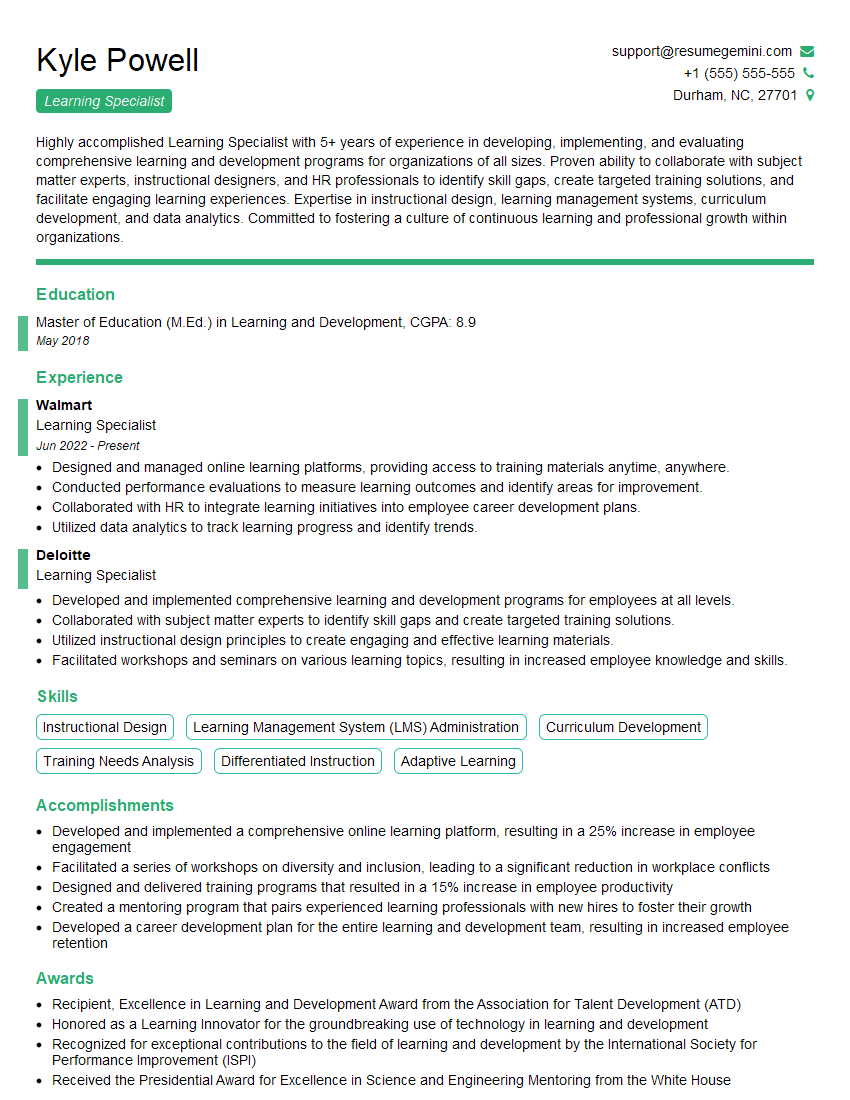
Learning Specialist Resume Sample

Special Education Director Resume Sample
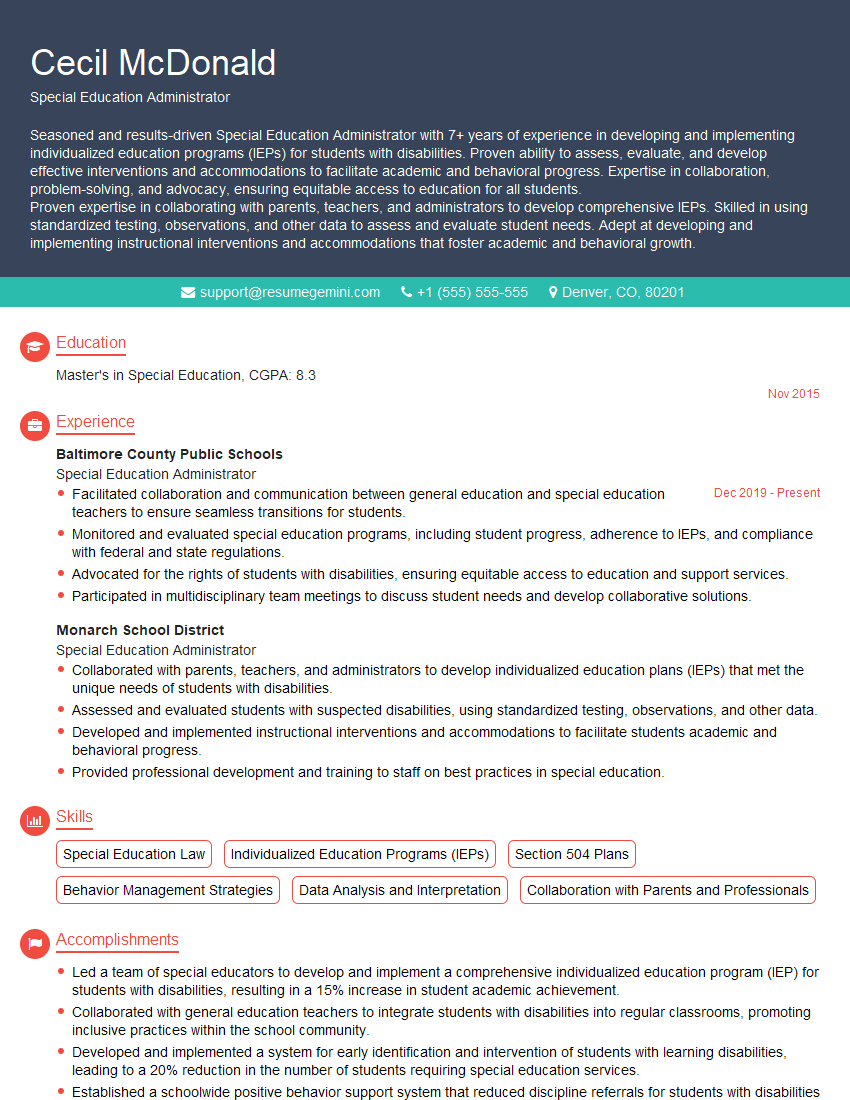
Special Education Administrator Resume Sample
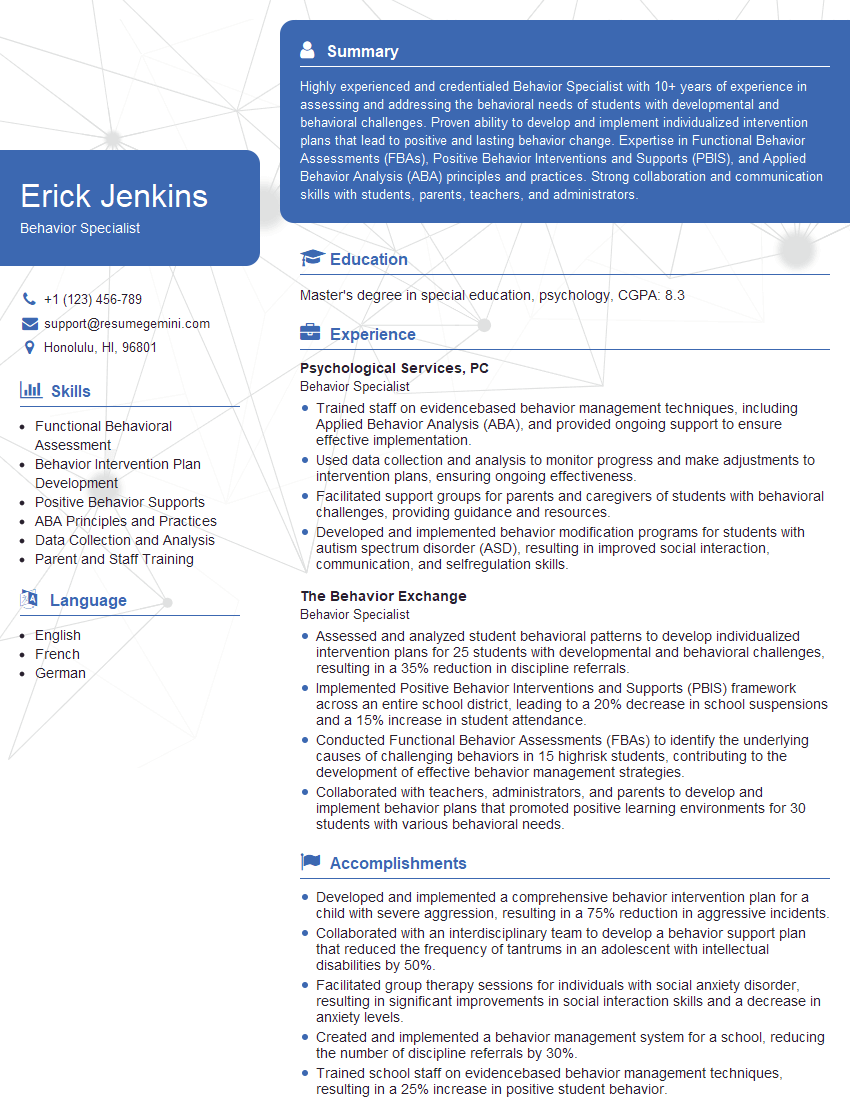
Behavior Specialist Resume Sample
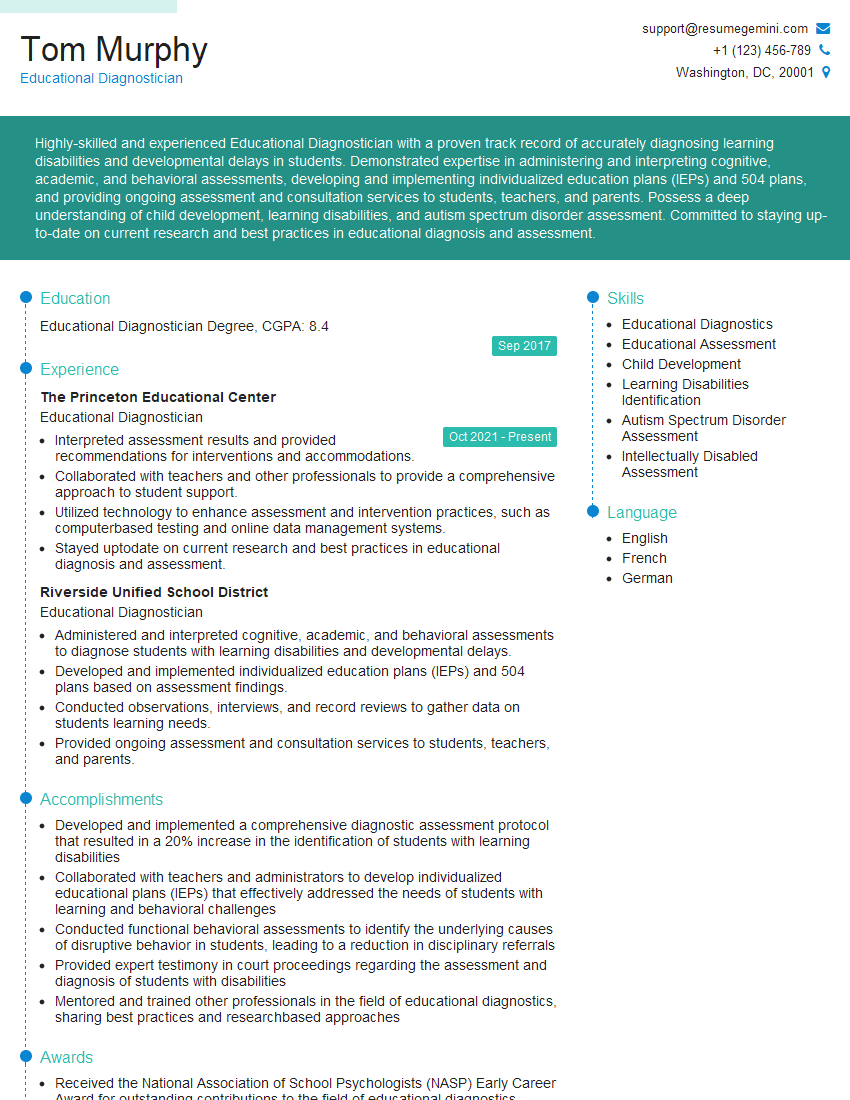
Educational Diagnostician Resume Sample
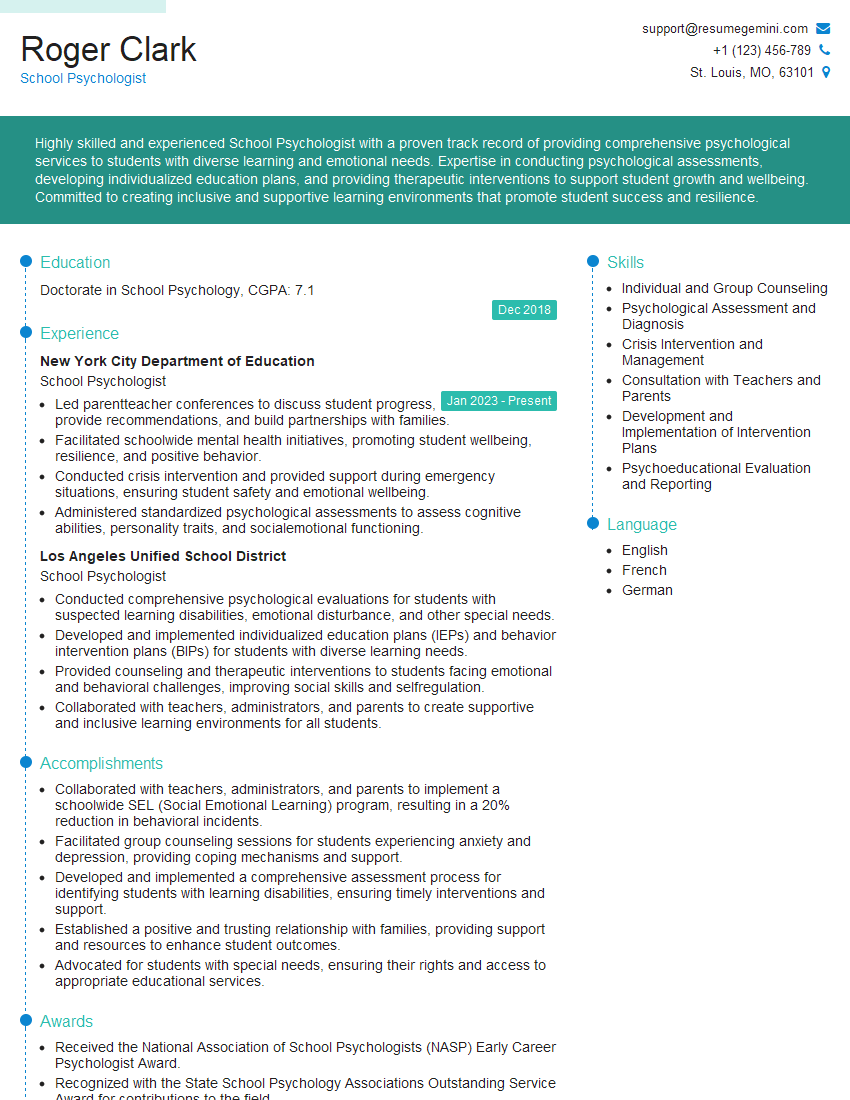
School Psychologist Resume Sample
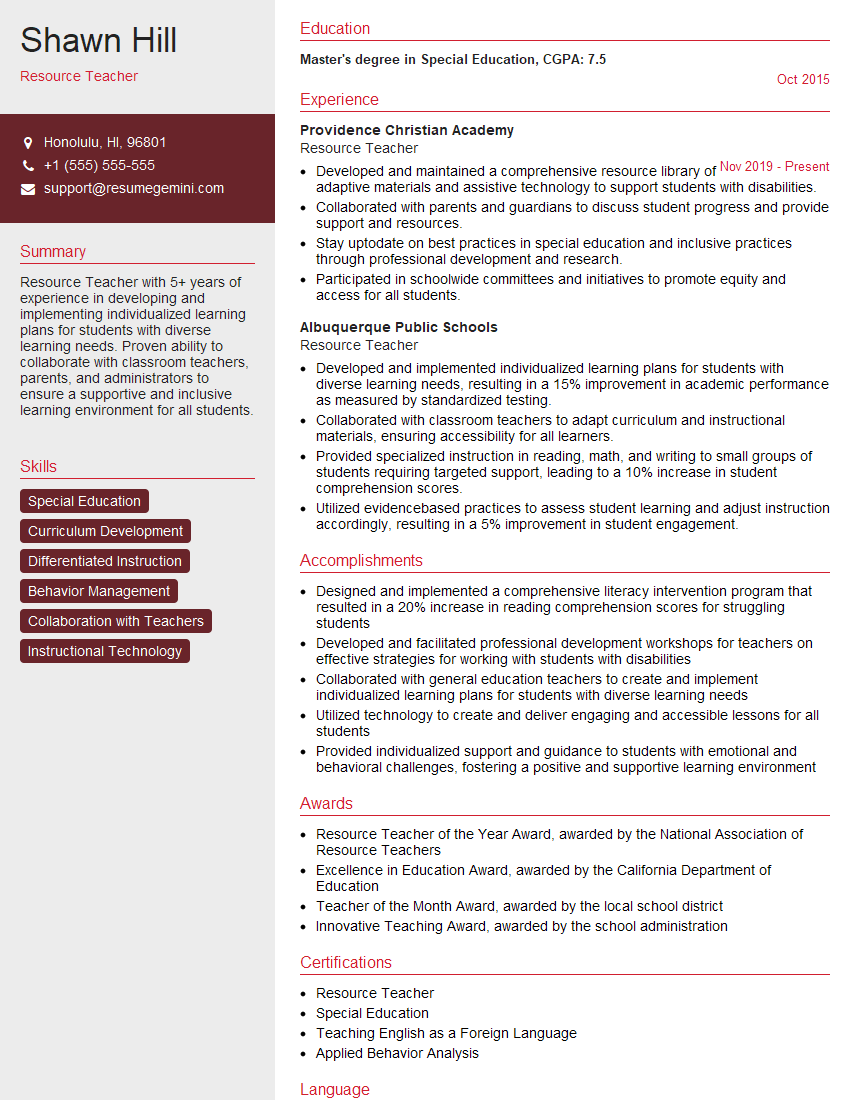
Resource Teacher Resume Sample
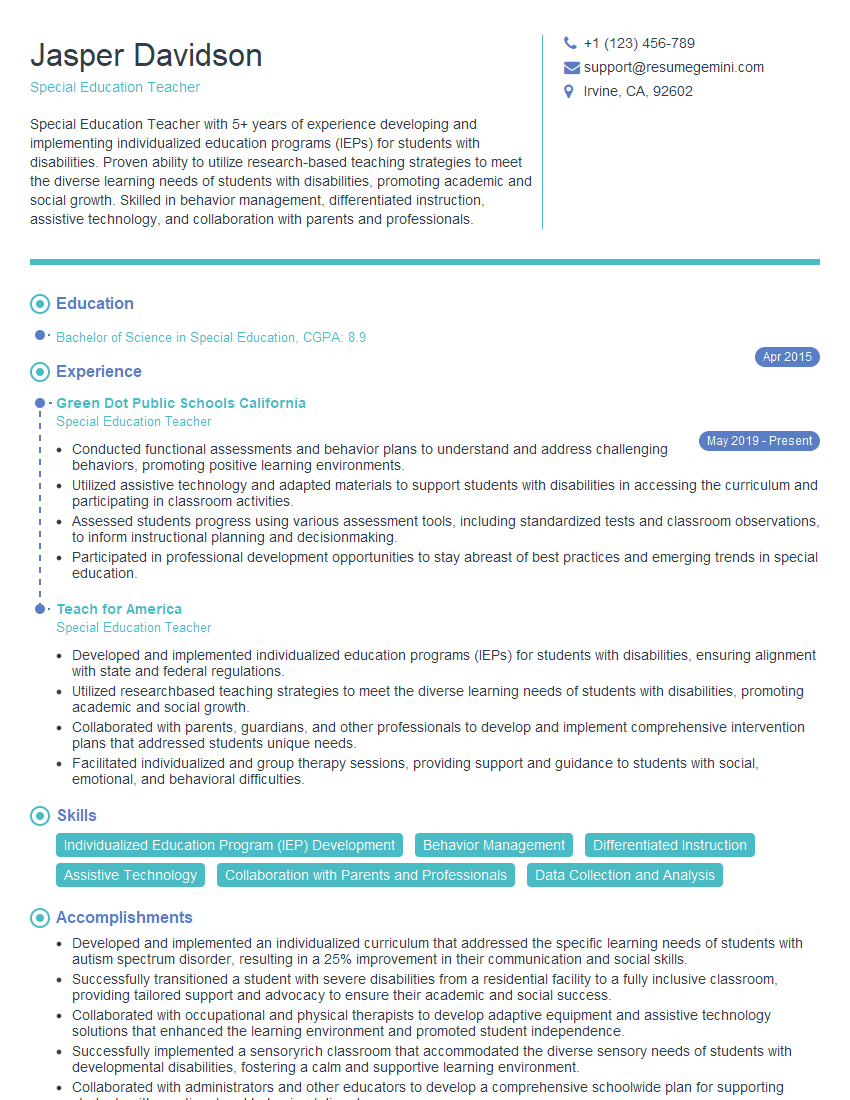
Special Education Teacher Resume Sample
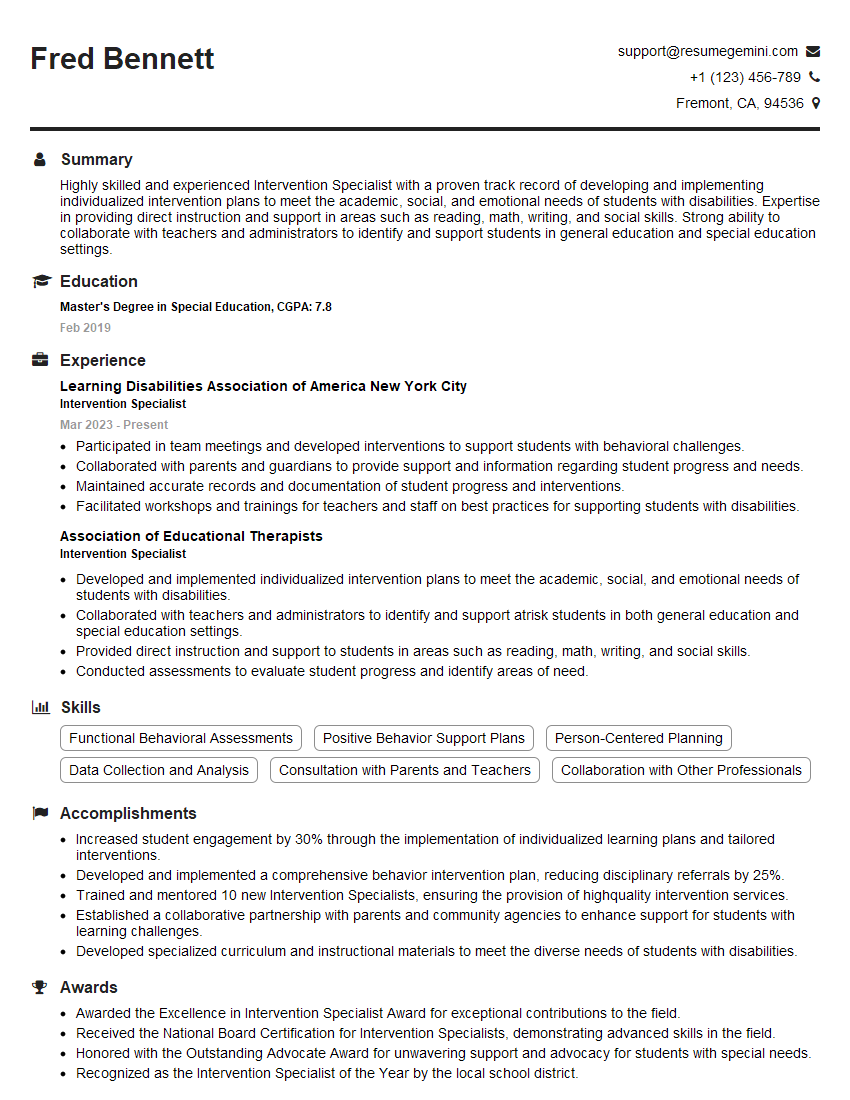
Intervention Specialist Resume Sample
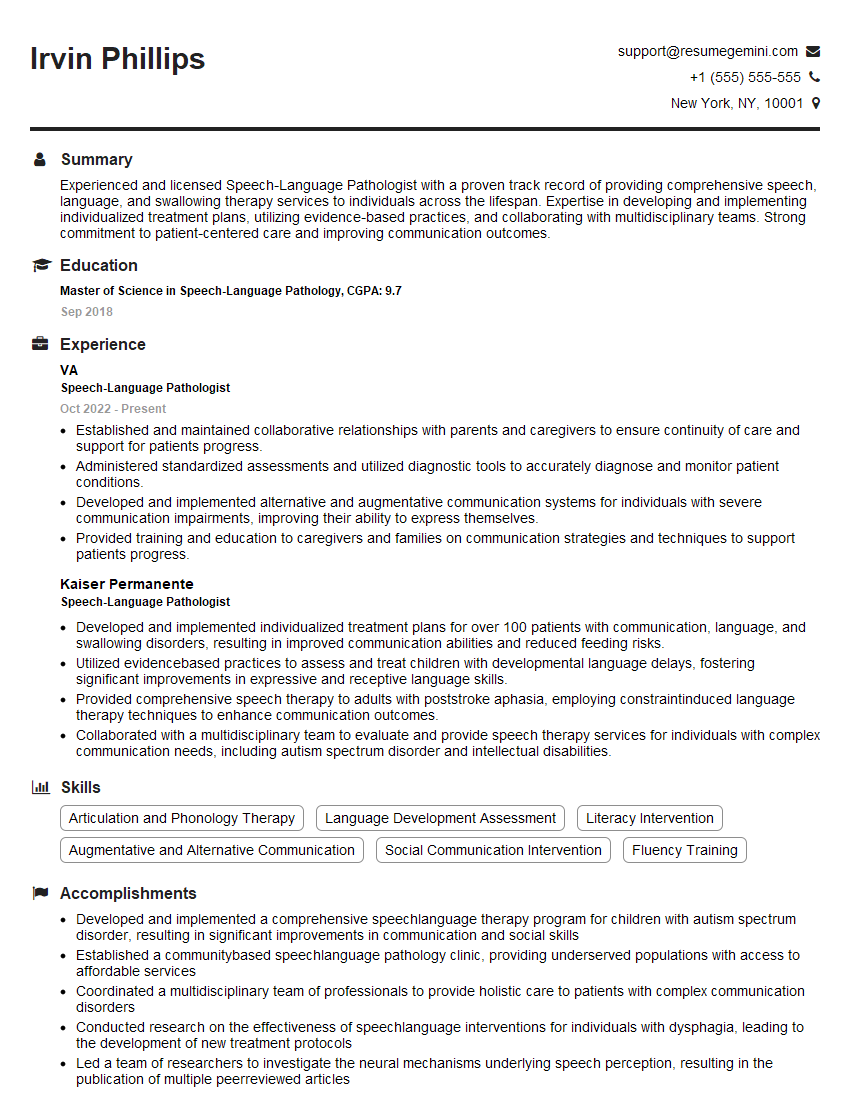
Speech-Language Pathologist Resume Sample
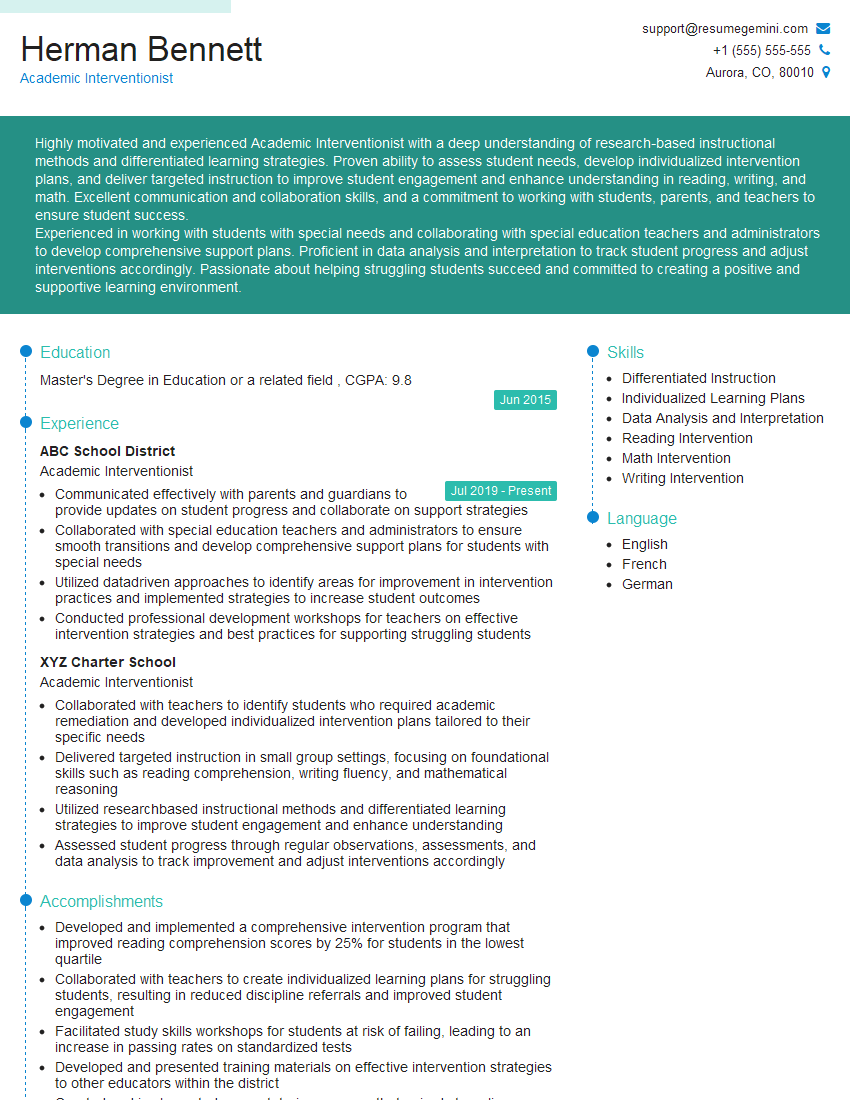
Academic Interventionist Resume Sample
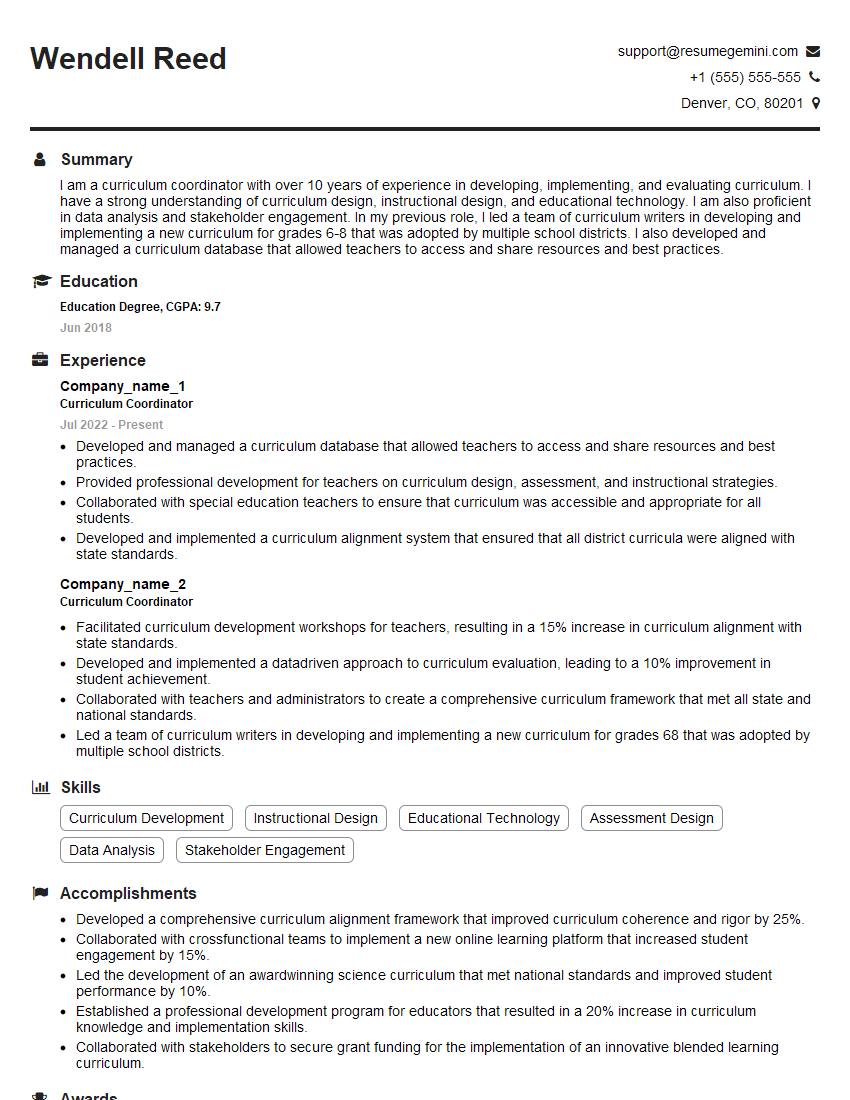
Curriculum Coordinator Resume Sample
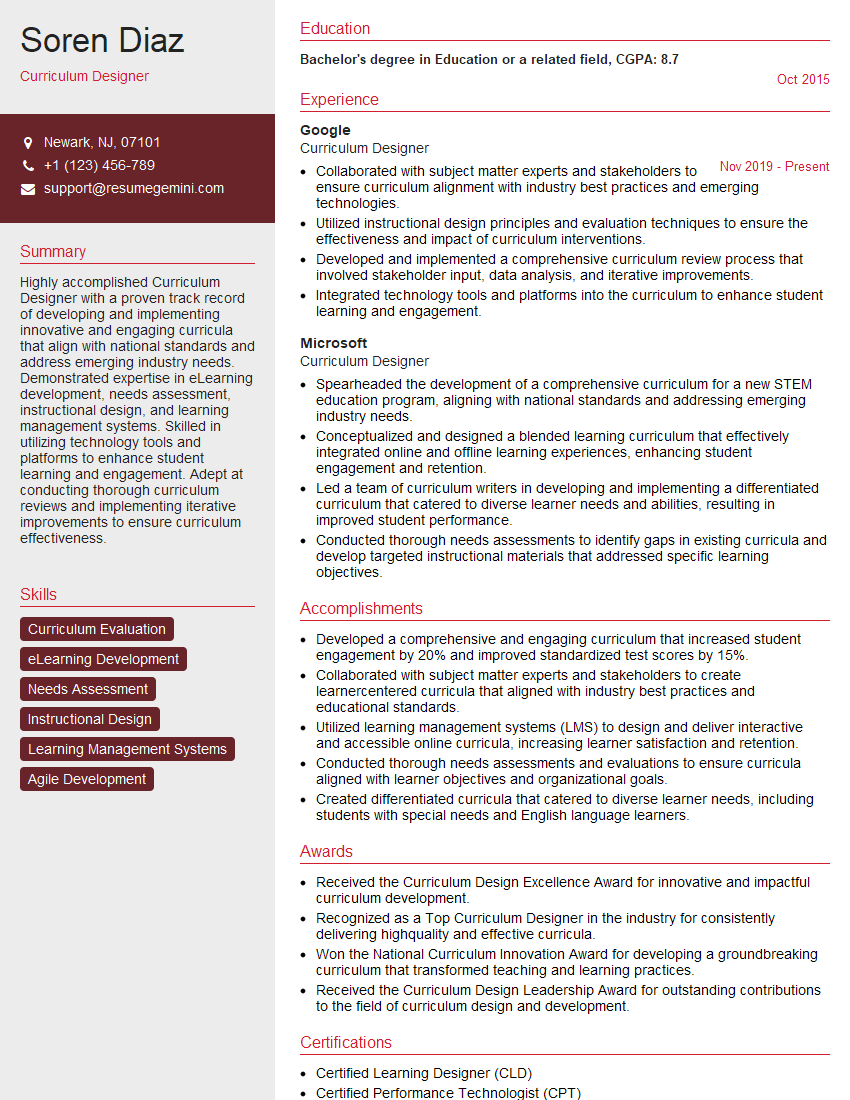
Curriculum Designer Resume Sample
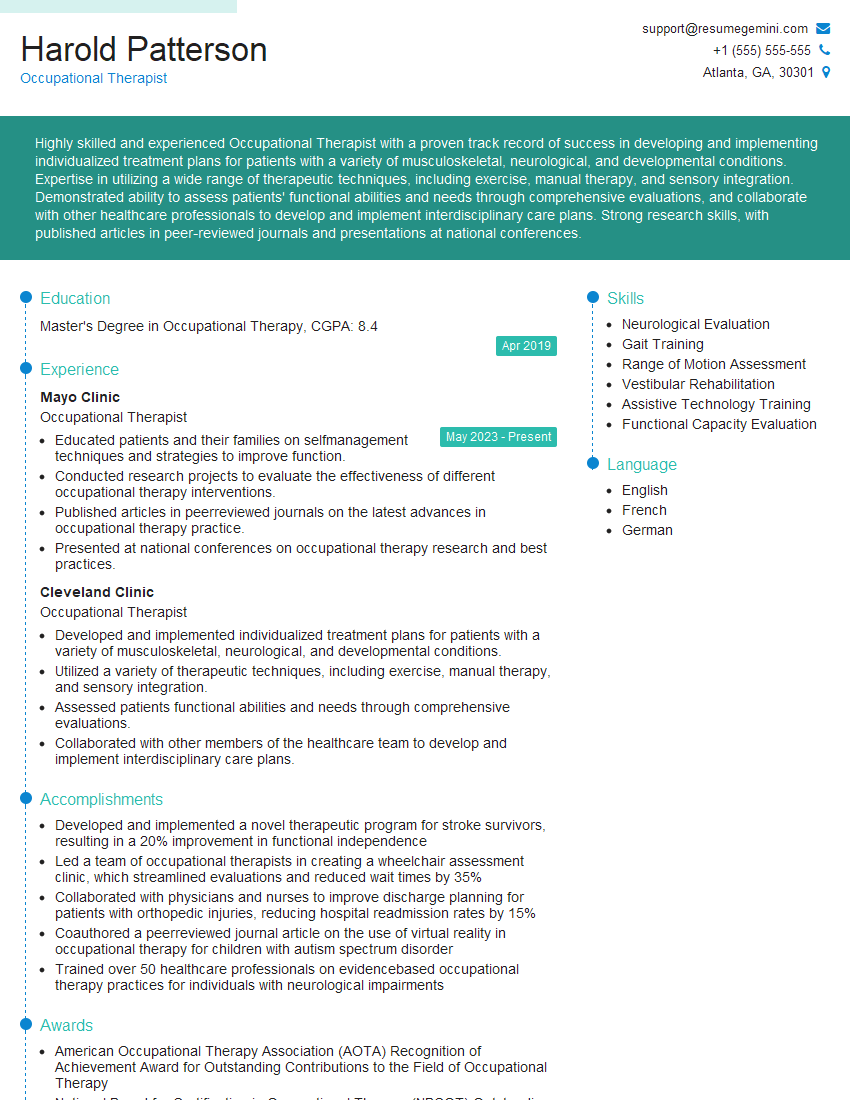
Occupational Therapist Resume Sample
- Learning Specialist
- Special Education Director
- Special Education Administrator
- Behavior Specialist
- Educational Diagnostician
- School Psychologist
- Resource Teacher
- Special Education Teacher
- Intervention Specialist
- Speech-Language Pathologist
- Academic Interventionist
- Curriculum Coordinator
- Curriculum Designer
- Occupational Therapist
Explore more articles
Users Rating of Our Blogs
Share Your Experience
We value your feedback! Please rate our content and share your thoughts (optional).
What Readers Say About Our Blog
Really detailed insights and content, thank you for writing this detailed article.
IT gave me an insight and words to use and be able to think of examples