Every successful interview starts with knowing what to expect. In this blog, we’ll take you through the top Documentation and Archival Management interview questions, breaking them down with expert tips to help you deliver impactful answers. Step into your next interview fully prepared and ready to succeed.
Questions Asked in Documentation and Archival Management Interview
Q 1. Explain the difference between records management and archives management.
Records management and archives management are closely related but distinct disciplines. Think of records management as the active, ongoing process of creating, using, and disposing of records throughout their lifecycle. Archives management, on the other hand, focuses on the long-term preservation and access of records with enduring value, once they are no longer actively used.
- Records Management: This is about managing active records. It involves creating effective filing systems, implementing retention schedules, ensuring security and access control, and ultimately disposing of records according to legal and organizational requirements. An example would be managing employee personnel files – these are actively used for payroll, performance reviews, etc., but eventually become inactive and may be transferred to archives.
- Archives Management: This deals with inactive records deemed to have permanent or long-term value. It emphasizes preservation, ensuring authenticity and integrity, providing access to researchers, and managing the physical or digital storage of these historical materials. For example, an archive might hold the company’s historical financial records or early marketing materials.
In essence, records management is about managing information for current operational needs, while archives management is about preserving information for future research, accountability, and historical understanding.
Q 2. Describe your experience with metadata schemas and their application.
Metadata schemas are crucial for organizing and finding information within archives, both physical and digital. I have extensive experience using various schemas, including Dublin Core, MODS (Metadata Object Description Schema), and PREMIS (Preservation Metadata Implementation Strategy). Each schema has its strengths and weaknesses depending on the type of materials being described.
For example, I once worked on a project digitizing historical maps. We used MODS because it allows for detailed geospatial metadata, vital for accurately locating and describing the map’s coverage. This involves tagging the metadata with elements such as geographic coordinates and place names. Another project involved born-digital materials, where PREMIS was essential because of its focus on preservation information like file format, checksums, and digital signatures.
My approach involves carefully selecting the appropriate schema based on the specific needs of the archival collection and then meticulously applying it to each item, ensuring consistency and accuracy. This careful metadata creation is key to making the archive easily discoverable and usable for researchers.
Q 3. How do you ensure the authenticity and integrity of digital archives?
Ensuring the authenticity and integrity of digital archives is paramount. This requires a multi-pronged approach involving technical and procedural measures. Imagine a historical photograph; we want to ensure that the digital copy reflects the original perfectly, preventing any alteration or loss of information.
- Checksums and Hashing: These cryptographic techniques generate unique digital fingerprints of files. Regularly checking these ensures that files haven’t been corrupted or altered since their last verification.
- Digital Signatures: These provide evidence of the authenticity and integrity of a digital file, proving it hasn’t been tampered with.
- Version Control: Maintaining a history of file versions helps track changes and revert to earlier versions if needed.
- Secure Storage: Utilizing robust, secure storage systems with backup and disaster recovery plans is critical to protect against data loss.
- Metadata: Comprehensive metadata, as discussed earlier, is essential for tracking the provenance (origin and history) of the digital objects.
Combining these methods creates a robust system for maintaining the integrity and trustworthiness of the digital archive. Regular audits and rigorous quality control procedures are also indispensable components of this process.
Q 4. What are the key components of a successful records retention policy?
A successful records retention policy is essential for managing information lifecycle cost-effectively and legally. It’s a formal document specifying how long records should be kept and how they should be disposed of. Think of it as a roadmap for managing your organizational memory.
- Legal and Regulatory Requirements: The policy must comply with all relevant laws and regulations, such as tax laws, employment laws, and industry-specific regulations.
- Business Needs: It should consider the organization’s operational needs, outlining how long different types of records are needed for business processes.
- Risk Assessment: It should identify and assess risks associated with keeping or disposing of records, such as legal liabilities or potential loss of information.
- Storage Considerations: It should specify the appropriate storage methods for different record types, accounting for cost and accessibility.
- Disposal Procedures: Clear and secure procedures for the destruction or transfer of records should be documented, ensuring compliance with data privacy regulations.
A well-structured policy reduces storage costs, mitigates legal risks, and facilitates efficient information retrieval. Regular review and updates are crucial to keep the policy aligned with evolving business needs and regulations.
Q 5. Explain your understanding of different file formats and their archival implications.
Different file formats have vastly different archival implications. Some formats are more robust and durable than others; others are prone to obsolescence. Choosing the right format for archival purposes is crucial to long-term accessibility.
- Open Standards: Formats based on open standards (e.g., TIFF for images, PDF/A for documents) are preferred because they are less likely to become obsolete and are more readily accessible using various software.
- Proprietary Formats: Proprietary formats should generally be avoided for long-term archival storage due to the risk of software incompatibility and vendor lock-in.
- Lossy vs. Lossless Compression: Lossless compression (e.g., PNG, TIFF) maintains all the original data, while lossy compression (e.g., JPEG) discards some data to reduce file size. Lossless formats are always preferred for archival purposes to prevent information loss.
Understanding these differences is key to selecting the appropriate format for long-term preservation. A best practice is to avoid proprietary formats and favor open standards while always opting for lossless compression whenever possible.
For example, a simple .doc file is less durable in the long term compared to a well-structured PDF/A file. The former may require specialized software to open, which might not be available in the future. This highlights the importance of format selection in ensuring long-term access.
Q 6. Describe your experience with various archival storage solutions (physical and digital).
My experience spans both physical and digital archival storage solutions. I understand the strengths and weaknesses of each approach and can advise on the most suitable option based on the nature of the archive and its requirements.
- Physical Storage: This includes various approaches like climate-controlled repositories for paper-based documents, specialized vaults for valuable artifacts, and secure offsite storage for disaster recovery.
- Digital Storage: My experience includes using cloud-based storage solutions, network-attached storage (NAS), and various tape-based systems, employing strategies like tiered storage (combining different storage types for optimal cost and accessibility).
Choosing the right storage solution involves considering factors like cost, security, accessibility, disaster recovery, and long-term sustainability. In several projects, I’ve implemented hybrid approaches combining physical and digital storage to maximize efficiency and resilience. For instance, we might scan important documents and store them digitally while keeping the originals in a climate-controlled repository. This creates redundancy and ensures accessibility while minimizing deterioration of the physical documents.
Q 7. How do you handle conflicting preservation requirements for different formats?
Handling conflicting preservation requirements for different formats requires careful planning and a pragmatic approach. Different formats have different vulnerabilities and preservation needs. For instance, a digital audio file may require different preservation strategies than a paper-based manuscript.
My strategy involves a tiered approach:
- Prioritization: Assessing the relative importance and fragility of different formats. The most valuable and vulnerable materials will receive the highest priority in terms of preservation effort.
- Format Migration: When feasible, migrating materials to more stable formats is a key solution. This is a complex task, requiring meticulous planning and thorough testing to ensure no data loss or corruption occurs.
- Emulation: For formats where migration is not feasible, emulation technology, which runs the necessary software to access the format in a later environment, becomes crucial.
- Preservation Planning: Developing detailed preservation plans for each format, considering its specific vulnerabilities and the available preservation technologies.
- Resource Allocation: Prioritizing resource allocation (funding, staffing, technology) based on the risks and relative importance of the different formats within the archive.
This multi-faceted approach allows for effective preservation of a diverse archival collection, even when facing conflicting needs. It’s crucial to remember that preservation is an ongoing process requiring continuous monitoring and adaptation to technological advances.
Q 8. Explain your approach to disaster recovery and business continuity for archival materials.
Disaster recovery and business continuity for archival materials are paramount. My approach is multifaceted, prioritizing preservation and accessibility. It begins with a comprehensive risk assessment, identifying potential threats like fire, flood, theft, and data corruption. This informs the development of a detailed disaster recovery plan (DRP) and business continuity plan (BCP).
The DRP outlines specific procedures for mitigating damage during an event. This includes offsite backups of both physical and digital archives, ideally in geographically separate locations. For physical materials, this involves secure storage facilities with environmental controls and robust security measures. For digital archives, I utilize cloud storage with redundant systems and version control to ensure data integrity. Regular testing of the DRP is crucial, simulating disaster scenarios to refine procedures and identify weaknesses.
The BCP focuses on maintaining operations during and after a disruption. This involves establishing alternative work locations, communication protocols, and procedures for accessing and sharing archival materials. We might use a phased approach to recovery, prioritizing access to the most critical materials first. For example, if a fire damages the main archive, we would prioritize recovering essential legal documents or irreplaceable historical records before less critical items.
Crucially, both plans are regularly reviewed and updated, reflecting changes in technology, risks, and the archive’s holdings. Employee training is also a key component, ensuring everyone understands their roles and responsibilities during a disaster.
Q 9. What are the legal and ethical considerations in managing sensitive archival information?
Legal and ethical considerations are fundamental to archival management, particularly when dealing with sensitive information. Legal obligations vary depending on jurisdiction and the nature of the materials, but generally involve compliance with data privacy laws like GDPR and HIPAA, as well as freedom of information acts. This includes ensuring appropriate access controls, protecting confidentiality, and adhering to data retention policies.
Ethical considerations center on responsibility and transparency. Archivists have a duty to safeguard materials, respect their context, and provide equitable access. This requires careful consideration of potential biases, the potential harm of disclosing certain information, and the rights of individuals or groups represented in the archive. For example, we might need to redact identifying information in personal documents or consult with stakeholders before releasing materials that could be damaging to reputations.
Implementing robust access control systems, clear consent protocols, and detailed documentation of decisions regarding access and redaction are key to navigating these complexities. Maintaining a transparent process demonstrates ethical conduct and builds trust with stakeholders.
Q 10. How do you prioritize archival tasks based on importance and urgency?
Prioritizing archival tasks involves balancing importance and urgency using a framework like the Eisenhower Matrix (Urgent/Important). This helps distinguish between tasks that are both urgent and important (e.g., responding to a data breach), those that are important but not urgent (e.g., developing a long-term preservation plan), urgent but not important (e.g., responding to a minor metadata error), and those that are neither (e.g., unnecessary administrative tasks).
The importance of a task often depends on factors such as the historical significance of materials, legal obligations, research value, and potential impact on stakeholders. Urgency is usually determined by deadlines, preservation needs, or external demands. For example, digitizing fragile documents might be important for preservation but not urgent unless they’re at immediate risk of deterioration. Responding to a subpoena, however, is both important and urgent.
A well-defined workflow, a clear understanding of project goals, and consistent communication with stakeholders are essential for effective prioritization. Using project management tools can also aid in tracking progress and managing resources.
Q 11. Describe your experience with archival software and databases.
I have extensive experience with various archival software and databases, including both commercial and open-source solutions. My experience encompasses systems for managing metadata, creating finding aids, controlling access, and preserving digital objects. I’m proficient in using databases like ArchivesSpace and CONTENTdm for managing collections, and I’m familiar with digital asset management systems like Fedora and Islandora.
My experience extends to using various metadata schemas such as Dublin Core and MODS to standardize descriptive information. I understand the importance of implementing controlled vocabularies and thesauri to ensure consistency and searchability. I also have experience with Optical Character Recognition (OCR) software for digitizing text-based materials and converting them to searchable formats.
Furthermore, I possess a solid understanding of database administration tasks, including data migration, backup and recovery, and user access management. I can adapt to new software and databases quickly, and I am always eager to explore and implement innovative technologies to improve archival practices.
Q 12. How do you manage the transition from physical to digital archives?
The transition from physical to digital archives is a complex undertaking requiring careful planning and execution. My approach involves a phased methodology, starting with a thorough assessment of the existing collection to determine which materials are suitable for digitization. This assessment includes considering factors like the condition of the materials, their research value, and the available resources.
The digitization process itself involves high-resolution scanning, image enhancement, and metadata creation. Strict quality control measures are crucial at each stage to ensure the accuracy and fidelity of the digital copies. I advocate for employing a multi-platform strategy for long-term preservation, storing digital materials on multiple storage systems with robust redundancy.
Concurrent with digitization, we must develop a robust digital asset management system (DAMS) to organize and manage the digital materials. This ensures easy accessibility and searchability. Finally, the transition also necessitates establishing clear policies for access, preservation, and the eventual disposal of physical materials, potentially after a period of parallel access to both physical and digital versions.
Q 13. What are the key challenges in managing born-digital archives?
Managing born-digital archives presents unique challenges that differ significantly from managing traditional paper-based archives. The primary challenge lies in ensuring long-term access and preservation of digital materials in the face of technological obsolescence. File formats become outdated; hardware and software used to create and access them cease to be supported.
Another crucial challenge is managing the sheer volume of data. Born-digital archives can grow rapidly, making storage, management, and access increasingly complex. Furthermore, ensuring the authenticity and integrity of digital materials is critical. This requires employing robust digital signatures, checksums, and other methods to verify the integrity of the data over time.
Finally, effective metadata management is essential for ensuring the discoverability and accessibility of born-digital materials. This involves adopting standardized metadata schemas and employing appropriate keywording and indexing techniques. Addressing these challenges requires a proactive approach, regularly assessing risks, migrating data to newer formats, and adapting to evolving technologies.
Q 14. How do you ensure compliance with relevant regulations and standards (e.g., GDPR, HIPAA)?
Ensuring compliance with regulations and standards like GDPR, HIPAA, and others is crucial. My approach involves a thorough understanding of the specific requirements of each applicable regulation. This includes developing comprehensive policies and procedures that align with legal requirements and organizational best practices.
For GDPR compliance, this means implementing measures to protect personal data, providing transparency regarding data collection and usage, and ensuring individuals’ rights to access, modify, or delete their data. For HIPAA compliance, maintaining the confidentiality, integrity, and availability of protected health information (PHI) is paramount. This involves securing electronic systems and physical spaces where PHI is stored and processed.
Regular audits and risk assessments are conducted to verify compliance and identify potential vulnerabilities. Training employees on relevant regulations and best practices is also essential. Documentation of all processes and decisions concerning data handling is crucial for demonstrating compliance and responding to any potential audits or inquiries.
Q 15. Explain your experience with creating and implementing records management procedures.
Creating and implementing records management procedures involves a systematic approach to controlling the lifecycle of organizational records, from creation to final disposition. This ensures legal compliance, operational efficiency, and the preservation of valuable information. My experience encompasses several key phases:
- Needs Assessment: I begin by thoroughly analyzing an organization’s needs, identifying record types, volumes, and retention requirements. This often involves interviews with stakeholders across different departments.
- Policy Development: Based on the assessment, I develop comprehensive records management policies and procedures. This includes defining record types, retention schedules, access controls, and disposal methods. For example, I’ve developed policies addressing the retention of sensitive employee data compliant with GDPR and similar regulations.
- System Implementation: I then implement the chosen records management system, which could range from a simple filing system to a sophisticated electronic document management system (EDMS). This includes training staff on the new system and procedures.
- Monitoring and Evaluation: Finally, I establish a system for ongoing monitoring and evaluation of the program’s effectiveness. This ensures the procedures remain relevant and efficient.
In a previous role, I successfully implemented a new EDMS for a large law firm, reducing storage costs by 40% and improving document retrieval time by 60%. This involved not only the technical implementation but also significant change management to ensure user adoption.
Career Expert Tips:
- Ace those interviews! Prepare effectively by reviewing the Top 50 Most Common Interview Questions on ResumeGemini.
- Navigate your job search with confidence! Explore a wide range of Career Tips on ResumeGemini. Learn about common challenges and recommendations to overcome them.
- Craft the perfect resume! Master the Art of Resume Writing with ResumeGemini’s guide. Showcase your unique qualifications and achievements effectively.
- Don’t miss out on holiday savings! Build your dream resume with ResumeGemini’s ATS optimized templates.
Q 16. Describe your approach to training staff on proper records management practices.
My approach to staff training on proper records management practices is highly interactive and tailored to the specific needs and roles of the individuals involved. I believe in a blended learning approach:
- Needs Analysis: I first assess the knowledge level and specific needs of the staff. This informs the content and delivery method of the training.
- Modular Training: I break down the training into manageable modules covering key concepts such as record creation, classification, storage, retention, and disposal. This allows for flexible delivery and targeted learning.
- Hands-on Activities: I incorporate hands-on activities, such as simulated scenarios and practical exercises, to reinforce learning and provide immediate application of the concepts. For example, participants might practice classifying documents according to the established retention schedule.
- Ongoing Support: Training isn’t a one-time event. I provide ongoing support through FAQs, online resources, and regular updates to ensure continued compliance and effective use of the system.
- Gamification: To increase engagement, I often incorporate gamification elements such as quizzes and challenges to make learning fun and memorable.
For instance, when training staff at a hospital on managing patient health records, I created a role-playing scenario simulating the handling of a sensitive medical record breach, emphasizing the importance of security protocols.
Q 17. How do you measure the effectiveness of your records management program?
Measuring the effectiveness of a records management program requires a multifaceted approach. Key performance indicators (KPIs) are crucial. I use a combination of quantitative and qualitative measures:
- Compliance Audits: Regular audits are conducted to assess adherence to established policies and procedures. This helps identify areas for improvement and ensures compliance with legal and regulatory requirements.
- Time and Cost Savings: I track time spent on record retrieval and storage costs. Improvements in these areas demonstrate the program’s efficiency.
- User Satisfaction Surveys: Feedback from staff on the usability and effectiveness of the system provides valuable insights into areas needing attention.
- Data Loss Prevention: Tracking incidents of data loss or breaches highlights the effectiveness of security measures implemented within the records management system.
- Record Retrieval Time: Monitoring the time taken to retrieve specific records indicates the efficiency of the system and its impact on workflows.
For example, in one organization, we saw a 70% reduction in time spent searching for documents after implementing a new EDMS, directly contributing to increased productivity.
Q 18. Explain your experience with appraisal and selection of archival materials.
Appraisal and selection of archival materials is a crucial step in preserving historically significant records. It involves careful evaluation of materials based on their informational value, authenticity, and potential research use. My approach involves:
- Identifying Criteria: Establishing clear appraisal criteria based on the organization’s mission, historical context, and collecting priorities. This often involves working with archivists and subject matter experts.
- Sampling and Review: Reviewing a representative sample of materials to assess their overall value and identify any patterns or trends.
- Contextual Analysis: Considering the historical context of the materials and their relationship to other collections. This provides a deeper understanding of their significance.
- Documentation: Meticulously documenting the appraisal process, including the criteria used, decisions made, and rationale behind the selection.
- Prioritization: Prioritizing materials based on their overall value and significance, considering resource constraints.
For instance, when appraising the archives of a historical society, I used a multi-faceted approach combining established archival appraisal methodologies with consultations with subject-matter experts to determine which materials were most significant for the organization’s collection.
Q 19. How do you handle requests for access to archival materials?
Handling requests for access to archival materials requires a balanced approach that ensures preservation while respecting researchers’ needs. This includes:
- Establishing Access Policies: Clear policies governing access, including the types of materials accessible, restrictions on use, and procedures for requesting materials.
- Processing Requests: Efficiently processing requests, verifying identities, and providing researchers with necessary information about the materials.
- Preservation Measures: Implementing measures to protect materials from damage during handling and use, such as providing gloves and controlled environments.
- Copyright and Intellectual Property: Addressing copyright and intellectual property concerns and ensuring compliance with relevant regulations.
- Documentation and Tracking: Maintaining detailed records of all requests, access granted, and any restrictions imposed.
In one instance, I developed a system for managing access to fragile historical manuscripts, allowing researchers remote access to digital surrogates while carefully controlling physical access to the originals.
Q 20. What is your approach to managing large volumes of archival data?
Managing large volumes of archival data requires a strategic approach that integrates technology and best practices. My strategy focuses on:
- Data Migration and Organization: Developing a plan for migrating archival data to a suitable storage solution and implementing a robust organizational structure for easy retrieval.
- Digital Preservation: Employing digital preservation strategies to ensure long-term accessibility, including metadata creation, format migration, and disaster recovery planning.
- Metadata Management: Creating comprehensive and consistent metadata to describe the archival materials and facilitate discovery.
- Database Management: Using a database management system to efficiently store, retrieve, and manage large volumes of metadata.
- Storage Solutions: Implementing appropriate storage solutions, considering factors such as storage capacity, security, accessibility, and cost.
For example, I worked on a project to digitize and organize the entire archive of a major university library, resulting in a publicly accessible online archive.
Q 21. How do you ensure the long-term accessibility of archival materials?
Ensuring long-term accessibility of archival materials demands a proactive and multi-faceted approach focusing on both physical and digital preservation:
- Environmental Controls: Maintaining appropriate environmental conditions (temperature, humidity, light) to prevent deterioration of physical materials.
- Format Migration: Regularly migrating digital materials to newer formats to ensure compatibility with future technologies.
- Disaster Recovery Planning: Developing and implementing disaster recovery plans to safeguard materials from loss or damage caused by natural disasters or other unforeseen events.
- Preservation Metadata: Including preservation metadata describing the materials’ physical and digital condition and the preservation actions taken.
For instance, I helped develop a comprehensive digital preservation plan for a museum’s collection of digitized photographs, ensuring their long-term accessibility through regular format migration and robust metadata management.
Q 22. Describe your experience with metadata creation and management.
Metadata is the crucial descriptive information about archival materials, acting like a detailed index or label. Effective metadata management ensures easy retrieval and understanding of the records. My experience spans creating and managing metadata using various schemas like Dublin Core and MODS. For example, when processing a collection of photographs, I’d create metadata including title, creator, date created, subject matter, location, and keywords to facilitate searching and discovery. I also have experience working with metadata databases and applying controlled vocabularies to ensure consistency and interoperability. In a previous role, I implemented a metadata schema for a large digital archive, significantly improving search functionality and user experience. This involved not only defining the elements but also training staff on consistent application and conducting regular quality control checks.
- Dublin Core: A simple and widely used metadata element set.
- MODS (Metadata Object Description Schema): A more complex schema providing a richer descriptive framework.
Q 23. How do you deal with damaged or deteriorated archival materials?
Handling damaged archival materials requires a delicate and systematic approach prioritizing preservation. The first step involves careful assessment of the damage – is it brittle, torn, water damaged, or insect infested? This assessment dictates the appropriate handling and treatment. For minor damage like tears, conservation-grade repair materials and techniques are employed. For more extensive damage, I would consult with a professional conservator. This might involve techniques like deacidification (to neutralize acidity causing brittleness), lamination (to provide structural support), or digital imaging to create a surrogate for the original. Documentation of every stage of the process is crucial, including photographic records before, during, and after treatment, for future reference and audit trails. For example, I once worked on a collection of water-damaged manuscripts, where we used freeze-drying to remove moisture before carefully repairing the pages.
Q 24. Explain your understanding of different preservation techniques.
Preservation techniques span environmental controls, material handling, and digital preservation. Environmental controls involve maintaining stable temperature and humidity levels to minimize deterioration. This is particularly vital for organic materials like paper and photographs. Appropriate storage, using acid-free boxes and archival quality folders, is also crucial. Material handling demands careful training and adherence to strict protocols to avoid accidental damage. Digital preservation employs different strategies; creating backups, employing diverse storage media, and using open standards to avoid vendor lock-in. Regular data migration and format upgrades are also important, preventing digital obsolescence. Think of it like this: we need to safeguard our cultural heritage by considering the long-term integrity of our archives. We might use techniques such as creating digital surrogates of fragile originals or implementing strategies to ensure long-term accessibility of digital documents.
Q 25. How do you balance preservation with accessibility?
Balancing preservation and accessibility is a central challenge in archival management. We strive to make materials accessible while simultaneously ensuring their long-term survival. This often involves creating surrogates – like digital scans of fragile documents – to allow researchers to access materials remotely without handling the originals. Digitization projects, while costly, are a powerful tool for increasing access without jeopardizing preservation. Strategies like access restrictions, controlled viewing environments, or the use of protective sleeves and gloves when handling physical materials help create a middle ground, managing risk while still allowing access. For example, creating high-resolution digital scans allows researchers access to brittle documents, reducing the risks of damage while preserving the original material for future generations.
Q 26. What are your preferred methods for documenting archival processes?
I prefer a multi-faceted approach to documenting archival processes. This includes detailed written procedures, well-maintained databases, and comprehensive documentation of any actions taken regarding individual items. Written procedures act as guidelines, while databases help track the location and status of items. Detailed documentation accompanying each item, detailing its history, handling, and any treatments undertaken, provides a complete audit trail. For example, we might create digital records for the accessioning process (taking in new materials), including details such as the donor, the date of acquisition, and a comprehensive description of the materials. This allows us to track the provenance (origin and ownership) of every item.
Q 27. How do you stay up-to-date with best practices in Documentation and Archival Management?
Staying current is vital in this field. I actively participate in professional organizations like the Society of American Archivists (SAA) and attend conferences, workshops, and webinars regularly. I subscribe to relevant journals and publications, and engage in online communities of practice to learn about new technologies and methodologies. Moreover, I regularly review best practices guidelines issued by organizations such as the International Council on Archives (ICA) to ensure my work meets the highest standards. Continuous learning through online courses and certifications ensures my skillset remains sharp and adapts to the evolving landscape of digital preservation and archival management.
Q 28. Describe a time you had to solve a complex archival problem.
In a previous role, we faced a challenge with a collection of deteriorating nitrate film negatives. Nitrate film is highly flammable and prone to decomposition. A simple solution wouldn’t suffice. We had to address the immediate risk of fire while planning long-term preservation. The solution involved a multi-step approach: First, we relocated the collection to a climate-controlled vault with a sophisticated fire suppression system. Then, we prioritized digitization to create stable digital surrogates. Simultaneously, we worked with a film conservator to stabilize the deteriorating negatives as far as possible. This was a complex project requiring meticulous planning, resource allocation, and collaboration with various stakeholders, but the successful mitigation of risk and preservation of this important collection stands as a testament to the value of a multi-faceted, well-coordinated approach.
Key Topics to Learn for Documentation and Archival Management Interview
- Metadata and Descriptive Standards: Understanding and applying metadata schemas (e.g., Dublin Core, MODS) to ensure accurate and discoverable records. Practical application: Designing a metadata schema for a specific archival collection.
- Archival Appraisal and Selection: Developing criteria for identifying records worthy of preservation and determining disposition of less valuable materials. Practical application: Evaluating a collection of documents for long-term preservation value.
- Records Management Systems (RMS): Familiarity with various RMS software and their functionalities for organizing, storing, and retrieving documents. Practical application: Describing the benefits and drawbacks of different RMS solutions.
- Digital Preservation: Understanding the challenges of preserving digital materials and implementing strategies for long-term access and integrity. Practical application: Explaining the importance of file format migration and digital preservation strategies.
- Data Security and Compliance: Implementing security protocols and adhering to relevant regulations (e.g., GDPR, HIPAA) for protecting sensitive information. Practical application: Describing procedures for safeguarding sensitive archival materials.
- Disaster Recovery and Business Continuity Planning: Developing plans for protecting archival materials from damage and ensuring continued access in case of emergencies. Practical application: Outlining a disaster recovery plan for a specific archival setting.
- Preservation Environments: Understanding the environmental factors that affect the longevity of archival materials and implementing appropriate storage and handling techniques. Practical application: Designing a suitable storage environment for different types of archival materials.
- Access and Use: Developing strategies for providing access to archival materials while balancing preservation needs and user requests. Practical application: Designing a system for managing user access to a digital archive.
Next Steps
Mastering Documentation and Archival Management opens doors to a rewarding career with diverse opportunities in various sectors. Building a strong foundation in these skills is crucial for career advancement and navigating the competitive job market. To significantly improve your job prospects, crafting an ATS-friendly resume is essential. This ensures your application gets noticed by recruiters and hiring managers. We highly recommend using ResumeGemini to create a compelling and effective resume that highlights your unique skills and experience in Documentation and Archival Management. ResumeGemini provides tools and examples specifically tailored to this field, helping you present your qualifications in the best possible light. Examples of resumes tailored to Documentation and Archival Management are available to further assist you.

Knowledge Manager Resume Sample
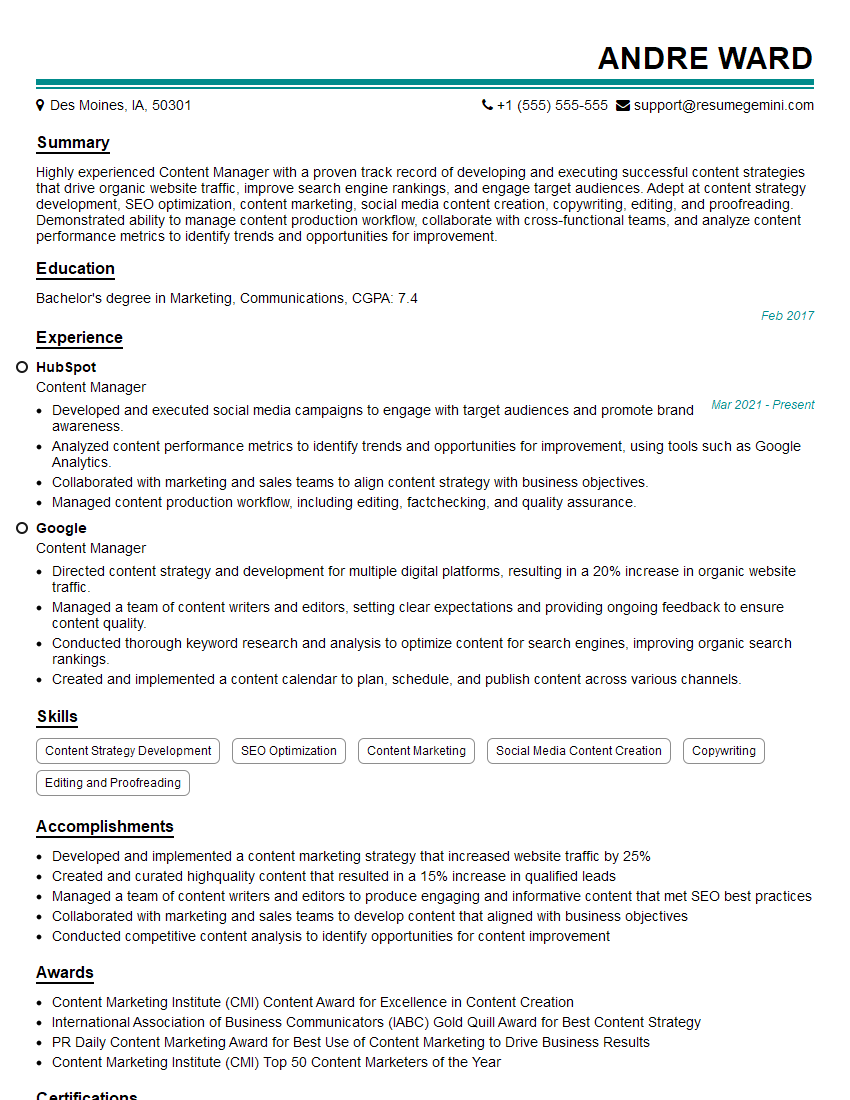
Content Manager Resume Sample

Information Architect Resume Sample
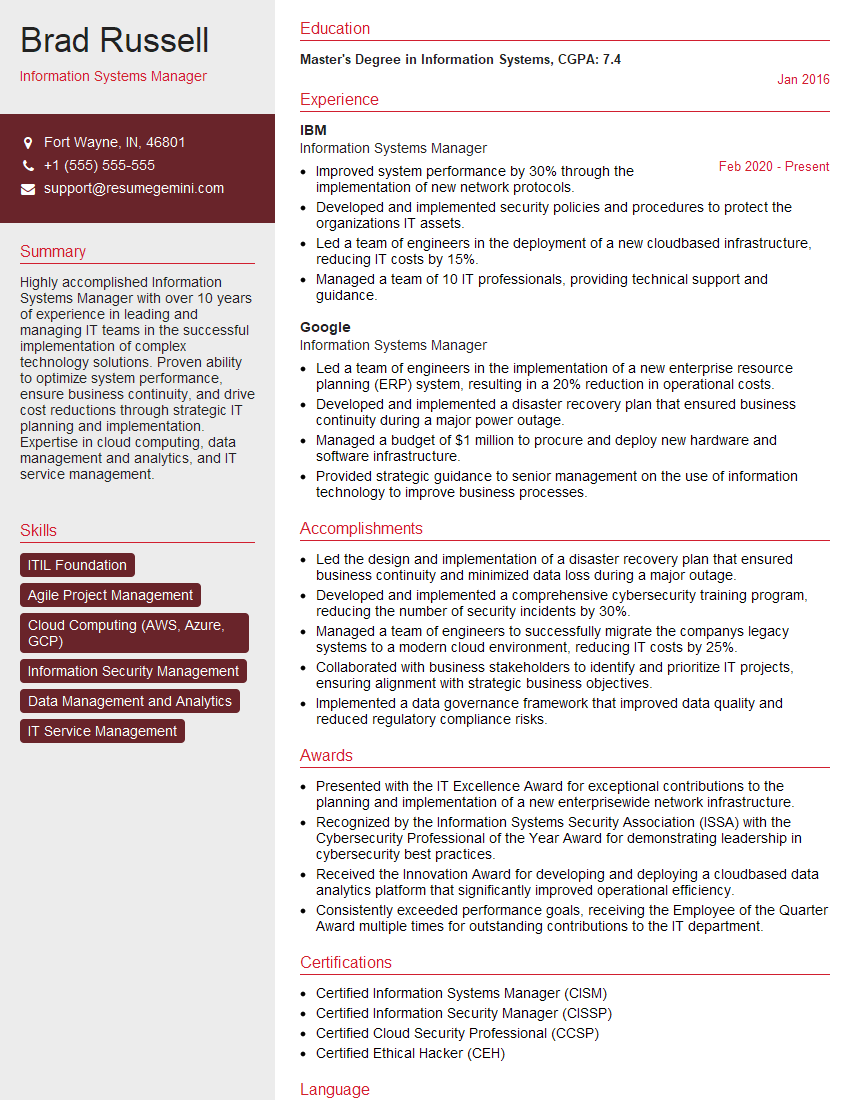
Information Systems Manager Resume Sample
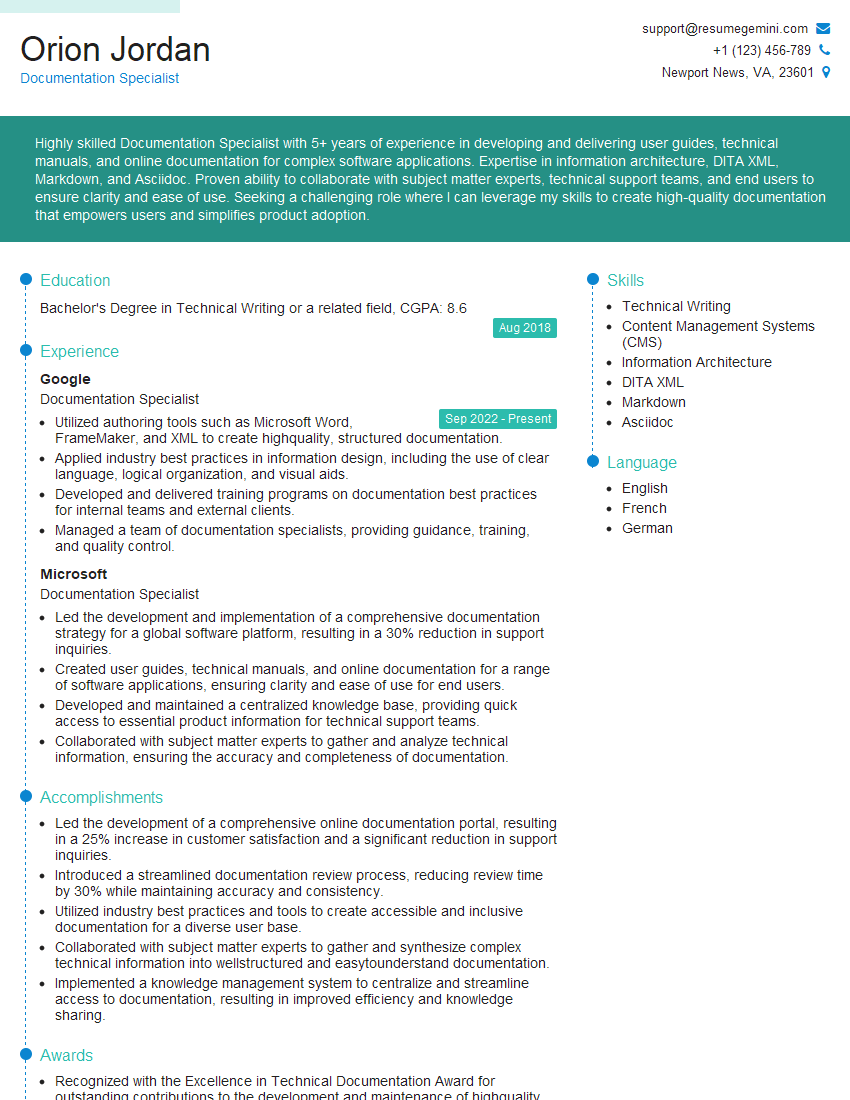
Documentation Specialist Resume Sample
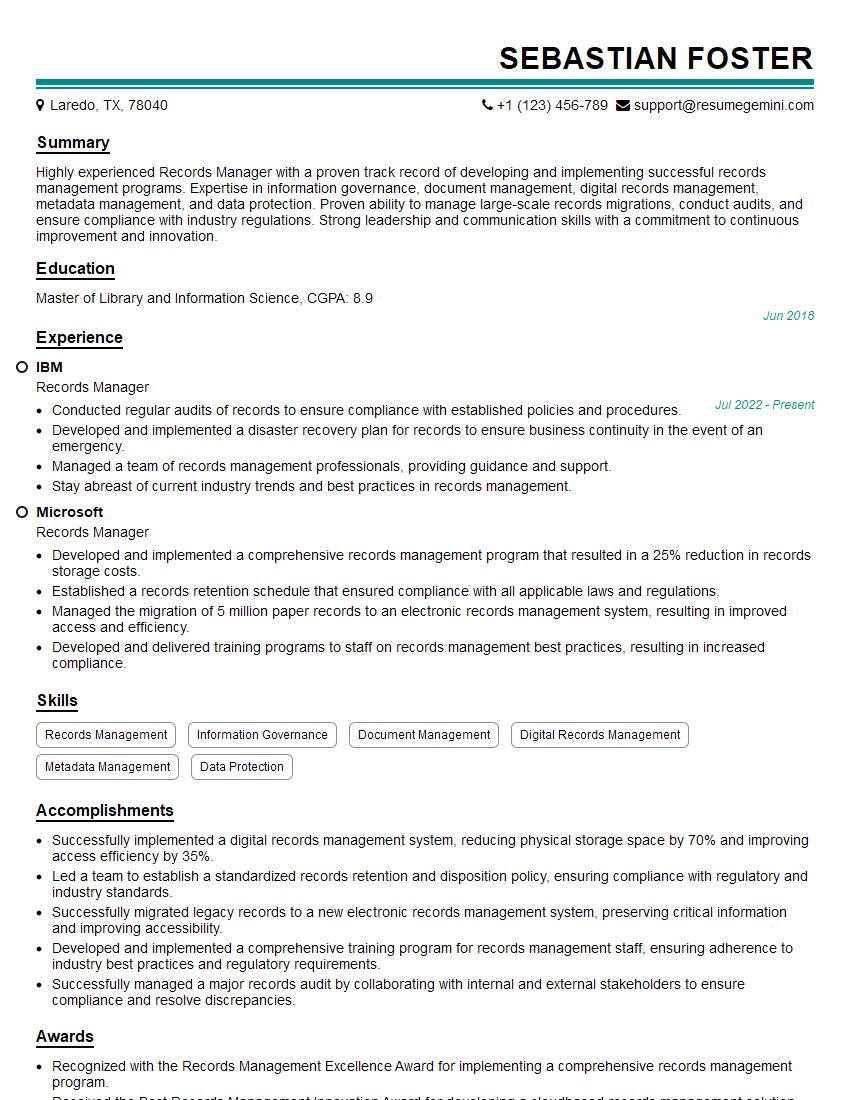
Records Manager Resume Sample
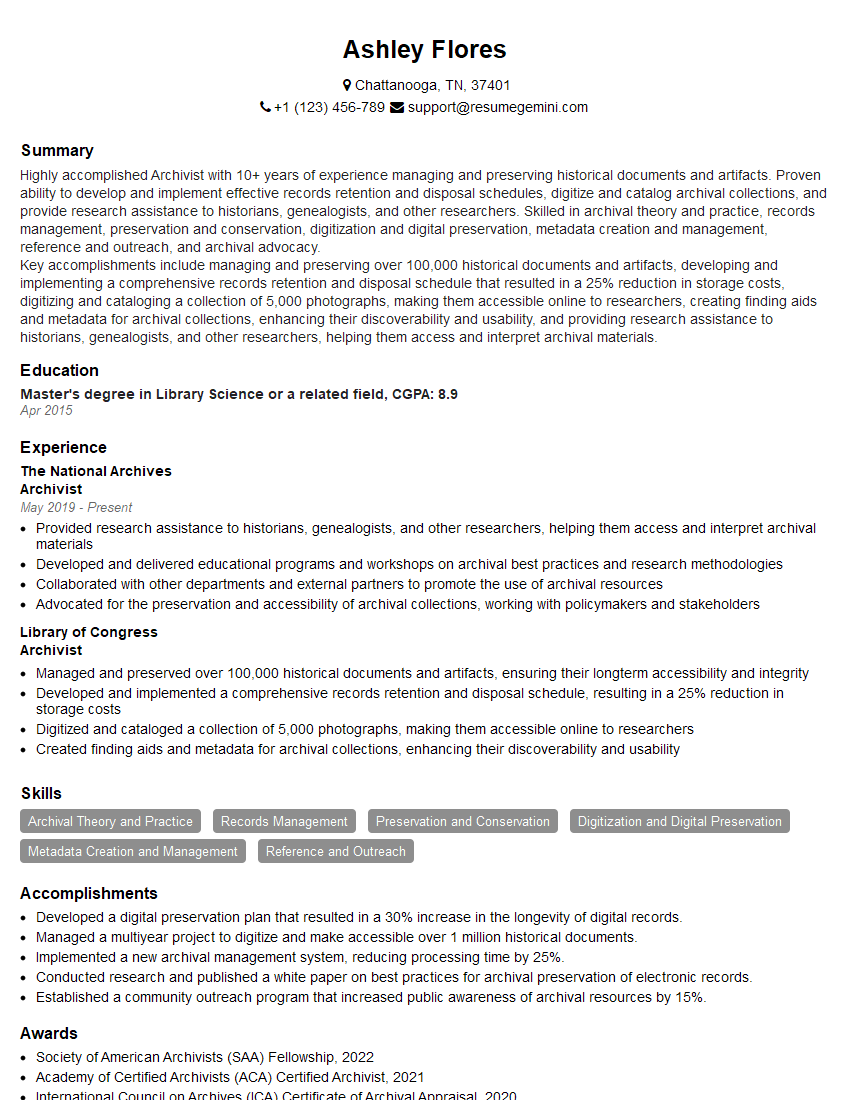
Archivist Resume Sample
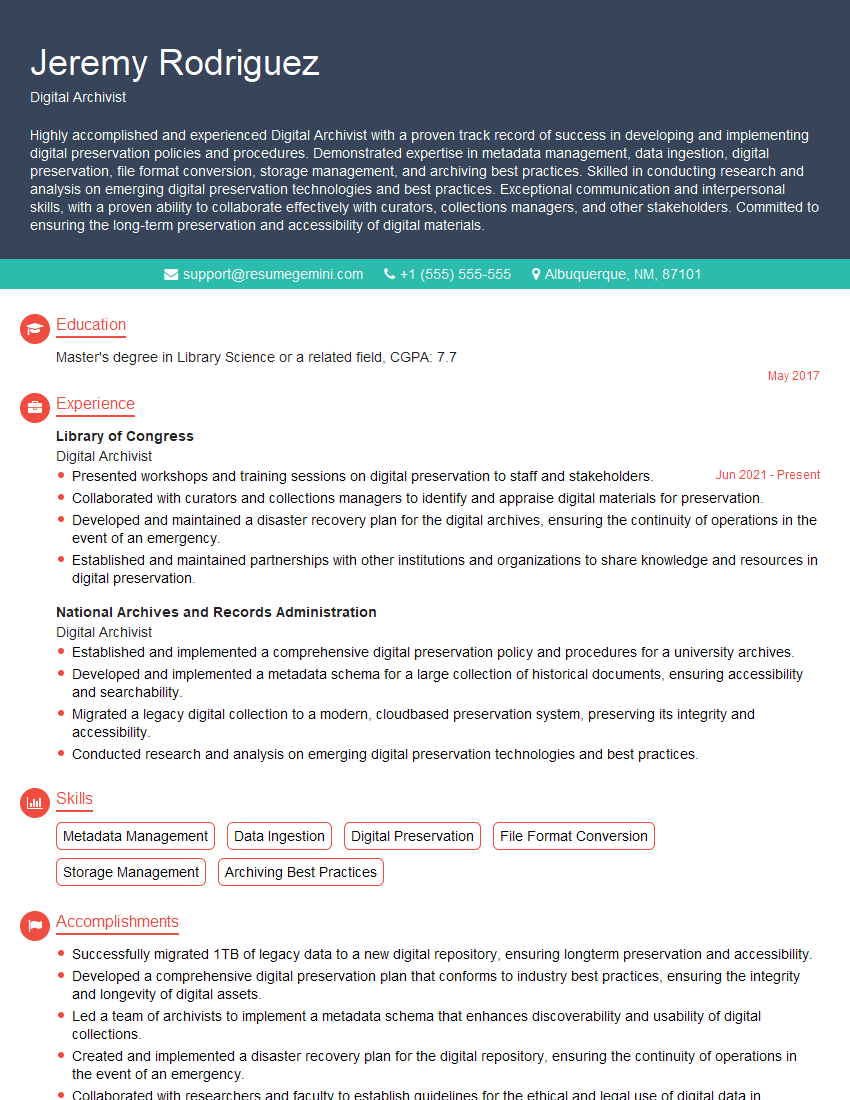
Digital Archivist Resume Sample
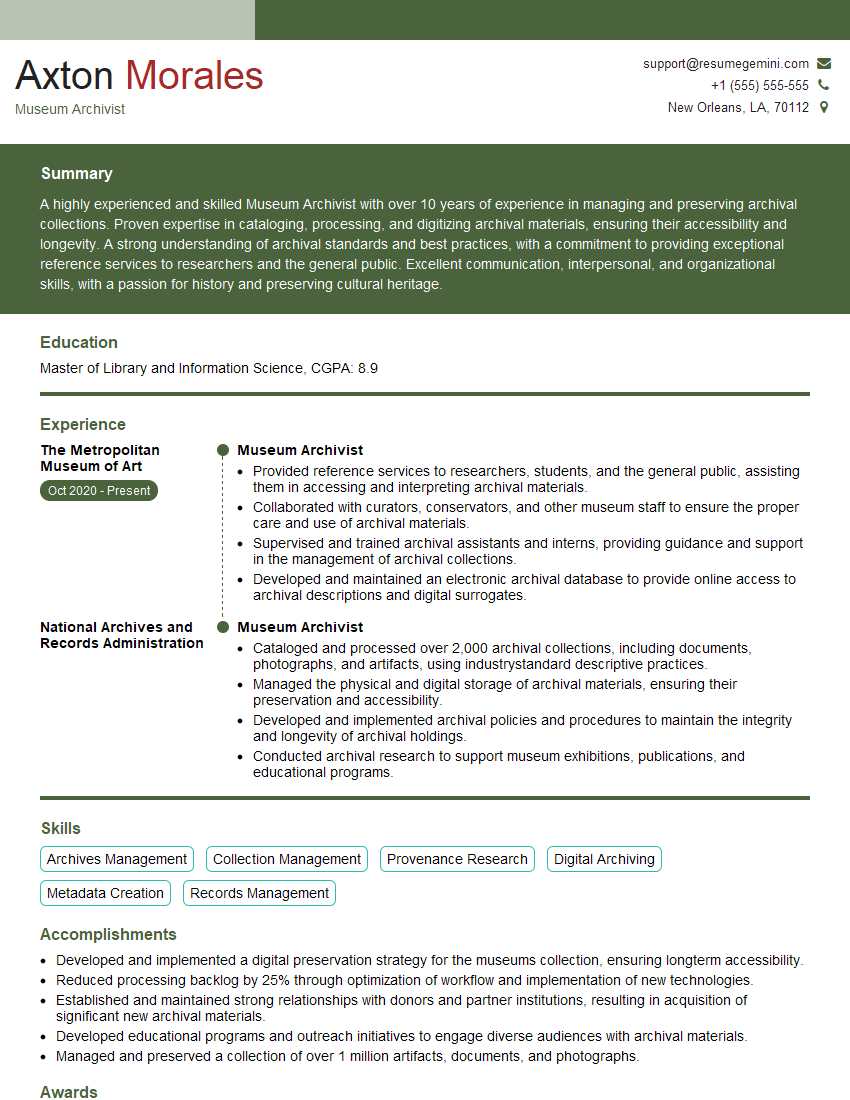
Museum Archivist Resume Sample
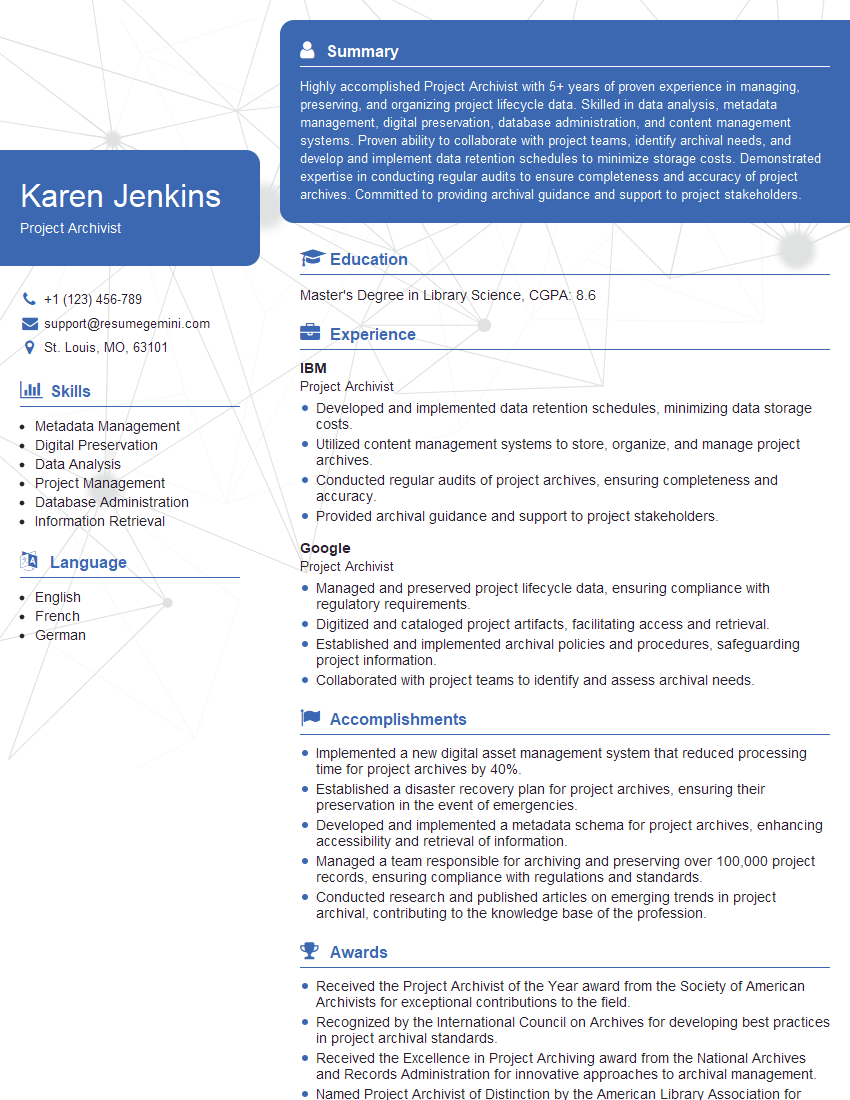
Project Archivist Resume Sample
Explore more articles
Users Rating of Our Blogs
Share Your Experience
We value your feedback! Please rate our content and share your thoughts (optional).
What Readers Say About Our Blog
Really detailed insights and content, thank you for writing this detailed article.
IT gave me an insight and words to use and be able to think of examples