The thought of an interview can be nerve-wracking, but the right preparation can make all the difference. Explore this comprehensive guide to Electronics and Controls interview questions and gain the confidence you need to showcase your abilities and secure the role.
Questions Asked in Electronics and Controls Interview
Q 1. Explain the difference between AC and DC circuits.
The core difference between AC (Alternating Current) and DC (Direct Current) lies in the direction of electron flow. In DC circuits, electrons flow consistently in one direction, like a river flowing downstream. This is the type of current produced by batteries and solar panels. AC circuits, on the other hand, see electrons constantly changing direction, oscillating back and forth like a pendulum. This cyclical change is what gives AC its characteristic waveform, typically sinusoidal. The frequency of this oscillation is measured in Hertz (Hz) and is usually 50Hz or 60Hz in power grids.
Think of it like this: DC is like a water slide – you only go one way. AC is like a swing – you go back and forth. This difference impacts how we design circuits and the types of components we use. DC is generally simpler to control, while AC is more easily transformed to different voltages, making it suitable for long-distance transmission with minimal energy loss.
For instance, your laptop runs on DC power from its battery or adapter. Meanwhile, the electricity powering your home comes from the AC power grid. AC is then stepped down by a transformer to a usable voltage within your home before powering your appliances (which may use AC or convert it to DC internally).
Q 2. Describe the operation of a PID controller.
A PID (Proportional-Integral-Derivative) controller is a feedback control mechanism widely used in industrial automation to maintain a desired setpoint. It calculates an error signal, which is the difference between the setpoint and the actual process variable, and adjusts the controller output to minimize this error. This output could control things like valve position, motor speed, or heater power.
The PID controller has three components:
- Proportional (P): The proportional term responds to the current error. A larger error results in a larger corrective action. It’s like a spring – the more you stretch it, the harder it pulls back. It provides quick response but may result in some steady-state error.
- Integral (I): The integral term accounts for accumulated error over time. This addresses the steady-state error left by the proportional term. It’s like remembering past mistakes to fully correct them, essentially eliminating any persistent offset.
- Derivative (D): The derivative term anticipates future error based on the rate of change of the error. It prevents overshoot and oscillation by damping the system’s response. It’s like predicting future movements and adjusting accordingly.
The overall controller output is the sum of these three terms: Output = Kp * error + Ki * ∫error dt + Kd * d(error)/dt, where Kp, Ki, and Kd are the tuning parameters (gains) that determine the contribution of each term. Fine-tuning these parameters is crucial for optimal control performance.
Imagine controlling the temperature of an oven. The PID controller continuously monitors the temperature, calculates the error (difference between the setpoint and current temperature), and adjusts the heating element accordingly. The proportional component provides initial heating, the integral eliminates any drift, and the derivative prevents overshooting the target temperature.
Q 3. What are the common types of sensors used in control systems?
Sensors are the eyes and ears of a control system, providing critical feedback about the process being controlled. Many types exist, each suited for specific applications:
- Temperature Sensors: Thermocouples, RTDs (Resistance Temperature Detectors), and thermistors measure temperature variations in various industrial processes, from ovens to chemical reactors.
- Pressure Sensors: These devices, such as strain gauges and piezoelectric sensors, measure pressure changes in pneumatic and hydraulic systems, ensuring optimal system operation.
- Flow Sensors: Flow meters, such as orifice plates, venturi meters, and ultrasonic flow meters, monitor the flow rate of liquids and gases in pipelines and other systems.
- Level Sensors: Ultrasonic, capacitive, and float-type sensors detect the level of liquids or solids in tanks and vessels, preventing overflow or underflow situations.
- Position Sensors: Encoders, potentiometers, and LVDTs (Linear Variable Differential Transformers) measure the position and displacement of mechanical components, crucial in robotics and automation.
- Proximity Sensors: Inductive, capacitive, and photoelectric proximity sensors detect the presence or absence of objects without physical contact, frequently used in safety systems and automated assembly lines.
The choice of sensor depends on the application’s specific requirements, including accuracy, range, response time, and environmental conditions.
Q 4. Explain the concept of feedback in control systems.
Feedback in control systems is the process of monitoring the output of a system and using that information to adjust the input, thus maintaining the system’s desired behavior. It’s a closed-loop system, creating a continuous cycle of measurement, comparison, and adjustment.
Imagine driving a car. You set a desired speed (setpoint). The speedometer provides feedback (actual speed). If the actual speed is lower than the setpoint, you press the accelerator (adjust input); if it’s higher, you brake. This continuous adjustment based on feedback keeps the car’s speed near the desired value. Without feedback, the car would either accelerate uncontrollably or remain stationary.
Feedback can be positive or negative. Negative feedback, as in the car example, reduces the error and stabilizes the system. Positive feedback amplifies the error, leading to instability—useful in some cases like triggering events but generally undesirable for stable control.
Feedback systems are crucial in maintaining stability, accuracy, and efficiency in various applications, ranging from temperature control in a building to precise positioning in robotics.
Q 5. How do you troubleshoot a faulty PLC program?
Troubleshooting a faulty PLC (Programmable Logic Controller) program involves a systematic approach:
- Examine the PLC’s I/O: Verify that all inputs and outputs are functioning correctly. Check for wiring errors, sensor malfunctions, and actuator failures. Use the PLC’s diagnostic tools to monitor I/O status.
- Review the PLC Program: Carefully examine the ladder logic or structured text code for errors in logic, syntax, or timing. Look for missing steps, incorrect conditions, or unintended loops.
- Utilize PLC Diagnostics: Modern PLCs offer powerful diagnostic tools. Utilize these tools to identify any internal errors within the PLC, memory issues, or communication problems.
- Force Inputs/Outputs: Use the PLC’s programming software to simulate inputs and outputs. This allows you to test specific sections of the program while bypassing the actual hardware and potentially isolate the faulty part of the program.
- Check for Communication Issues: If the PLC is part of a larger network, verify the network’s health and communication settings. Ensure proper connection between the PLC and HMI (Human Machine Interface) and other devices.
- Employ Breakpoints and Tracing: Insert breakpoints in the program to pause execution at certain points and trace variable values. This allows you to step through the program and identify where the error occurs.
- Use a Logic Analyzer (Optional): For more complex situations, a logic analyzer can capture the PLC’s internal signals, providing detailed information about timing and signal levels that can be crucial in identifying subtle timing problems.
Remember to always follow safety procedures when working with PLCs. Always have a backup of your program and ensure you understand the potential risks before making any changes.
Q 6. What are the advantages and disadvantages of using a relay?
Relays are electromechanical switches used to control a high-power circuit using a low-power signal. They act as an intermediary, isolating the control circuit from the load circuit.
Advantages:
- Isolation: Provides electrical isolation between control and load circuits, enhancing safety and preventing damage to low-voltage control systems.
- High Current Switching: Relays can switch high currents and voltages, making them suitable for controlling motors, heaters, and other high-power devices.
- Cost-Effective: Relays are relatively inexpensive, especially for low-to-moderate switching requirements.
- Simplicity: Relays are easy to understand, implement, and troubleshoot.
Disadvantages:
- Limited Life Cycle: Mechanical relays have a finite lifespan due to wear and tear on the contacts. This leads to contact bouncing, increased resistance, and ultimately failure.
- Slower Response Time: Compared to solid-state switches, relays are slower and can introduce noticeable delays.
- Noise Generation: The clicking sound of the relay contacts can generate electrical noise that might affect sensitive circuits.
- Contact Bounce: Contact bounce, where the contacts momentarily make and break several times when switching, can cause issues in certain applications. Debouncing circuitry might be necessary.
In applications requiring high current switching and electrical isolation, relays remain a valuable option. However, for high-speed, high-reliability applications, solid-state relays or other switching devices are often preferred.
Q 7. Describe different types of industrial communication protocols (e.g., Profibus, Ethernet/IP).
Industrial communication protocols are essential for exchanging data between devices in automation systems. Different protocols offer varying performance characteristics and capabilities:
- Profibus (PROcess FIeld BUS): A fieldbus system used for real-time communication in industrial automation. It’s widely used for connecting sensors, actuators, and PLCs in process control systems. Its strengths include robust error detection and correction, but it can be complex to implement.
- Ethernet/IP (Industrial Protocol): A network protocol based on Ethernet technology, offering high bandwidth and flexibility. It’s highly scalable, supporting a large number of devices and offering a wide range of communication services. Its openness and ease of use makes it highly popular, particularly in factory automation.
- Profinet: A high-performance industrial Ethernet protocol offering both real-time and non-real-time communication. It is often used in complex automation systems that require high bandwidth and fast data transfer speeds. Similar to Ethernet/IP in its adaptability, but often integrated into Siemens automation systems.
- Modbus: A simple, widely used protocol for serial communication. It’s commonly found in older systems and characterized by its simplicity and extensive support. Though not as fast as industrial Ethernet, its wide compatibility makes it still relevant.
- CAN bus (Controller Area Network): A robust and reliable protocol particularly suited for applications needing high noise immunity, like automotive and industrial vehicles. It is often used in embedded systems.
The choice of protocol depends on factors like speed requirements, network size, cost considerations, and the specific hardware being used. Many modern systems utilize a mix of protocols to meet diverse needs.
Q 8. Explain the function of a microcontroller.
A microcontroller is essentially a tiny computer on a single integrated circuit (IC). It’s a programmable device that acts as the ‘brains’ of many embedded systems. Think of it as a miniature version of the computer in your phone or laptop, but designed for specific tasks within a larger device, rather than general-purpose computing. It has a central processing unit (CPU) to execute instructions, memory to store programs and data, and input/output (I/O) peripherals to interact with the external world. These peripherals might include analog-to-digital converters (ADCs) to read sensor data, digital-to-analog converters (DACs) to control actuators, and various communication interfaces like UART, SPI, or I2C.
For example, a microcontroller in a washing machine controls the water level, washing time, and spin cycle based on user input and sensor feedback. In a car, microcontrollers manage engine control, anti-lock braking systems (ABS), and many other functions. They are everywhere – from your microwave to your thermostat to advanced industrial automation systems.
Q 9. What is the role of a capacitor in a circuit?
Capacitors are passive electronic components that store electrical energy in an electric field. They are essentially two conductive plates separated by an insulating material called a dielectric. The ability to store charge is quantified by capacitance, measured in Farads (F). Their behavior is defined by the relationship: I = C * (dV/dt), where I is the current, C is the capacitance, and dV/dt is the rate of change of voltage.
Capacitors have many uses, including:
- Filtering: Smoothing out voltage fluctuations in power supplies or removing unwanted noise from signals. Imagine a capacitor as a reservoir, smoothing out the peaks and troughs in a fluctuating water supply.
- Energy Storage: Storing energy temporarily, like in flash photography or backup power supplies.
- Timing Circuits: Used in combination with resistors to create time delays in circuits, crucial in applications like oscillators and timing controls.
- Coupling and Decoupling: Blocking DC signals while allowing AC signals to pass (coupling), or isolating different parts of a circuit (decoupling).
For example, a capacitor in a power supply smooths out the rectified AC voltage, resulting in a steadier DC output. In audio circuits, capacitors help filter out unwanted frequencies.
Q 10. What are different types of analog to digital converters (ADCs)?
Analog-to-digital converters (ADCs) are essential components that convert continuous analog signals (like voltage or current) into discrete digital representations. This is crucial because microcontrollers and digital systems primarily work with digital data.
Several types of ADCs exist, each with its advantages and disadvantages:
- Successive Approximation ADC: This is a common type that uses a binary search algorithm to determine the digital value. It’s relatively fast and accurate.
- Flash ADC: This uses a large number of comparators to simultaneously compare the input voltage with multiple reference voltages. It’s very fast but requires more hardware and power.
- Sigma-Delta ADC: This employs oversampling and noise-shaping techniques to achieve high resolution with lower hardware complexity. It’s well-suited for applications requiring high accuracy and precision.
- Integrating ADC: This measures the average value of the input signal over a certain period, providing good noise rejection.
The choice of ADC depends on factors such as speed requirements, resolution needs, power consumption, and cost.
Q 11. Explain the concept of impedance matching.
Impedance matching refers to designing a circuit so that the impedance of the source (e.g., a transmitter) is equal to the impedance of the load (e.g., a receiver). This maximizes power transfer from the source to the load. If impedances are mismatched, some power is reflected back towards the source, leading to losses and potentially damaging the source.
Think of it like trying to fill a bucket with a hose. If the diameter of the hose matches the opening of the bucket, you’ll fill it efficiently. If the hose is too small, the flow will be restricted, and if it’s too large, water will spill out. Similarly, impedance matching ensures efficient power transfer in electronic systems.
Impedance matching is critical in applications like RF communication, audio systems, and antenna design. Techniques used to achieve impedance matching include using transformers, matching networks (using inductors and capacitors), and transmission lines.
Q 12. How do you design a robust control system?
Designing a robust control system involves ensuring its performance remains acceptable even in the face of disturbances, uncertainties, and variations in the system’s parameters. This is achieved through several strategies:
- Feedback Control: This is the core of most robust systems. Feedback allows the system to monitor its output and adjust its input accordingly to maintain the desired performance. For example, a thermostat uses feedback to maintain a desired temperature.
- Robust Control Design Techniques: These mathematical methods help design controllers that are less sensitive to uncertainties and disturbances. Examples include H-infinity control and LQR (Linear Quadratic Regulator) control.
- System Identification: Accurately modelling the system’s dynamics is essential for designing effective controllers. This is done through experiments and analysis.
- Simulation and Testing: Extensive simulation and testing are crucial to validate the system’s robustness and performance under various conditions. This might involve software simulations or hardware-in-the-loop testing.
- Redundancy and Fault Tolerance: Adding redundancy – having backup systems or components – improves resilience against failures.
For instance, a robust control system for an aircraft needs to compensate for changes in wind speed, altitude, and weight while maintaining stability and safety.
Q 13. What are the different types of filters used in signal processing?
Filters are used in signal processing to selectively pass or attenuate certain frequency components of a signal. They are essential for removing noise, isolating desired frequencies, and shaping the signal’s spectrum.
Different types of filters include:
- Low-pass filters: Pass frequencies below a cutoff frequency and attenuate frequencies above it. Think of it as a sieve that lets small particles (low frequencies) pass through while blocking larger ones (high frequencies).
- High-pass filters: Pass frequencies above a cutoff frequency and attenuate frequencies below it.
- Band-pass filters: Pass frequencies within a specific range and attenuate frequencies outside that range.
- Band-stop filters (Notch filters): Attenuate frequencies within a specific range and pass frequencies outside that range.
These filters can be implemented using passive components like resistors, capacitors, and inductors (e.g., RLC circuits), or active components like operational amplifiers (op-amps).
Example: In audio systems, a low-pass filter removes high-frequency noise, resulting in cleaner audio. In a biomedical application, a band-pass filter might isolate a specific frequency band of an EEG signal associated with brain activity.
Q 14. Explain the concept of sampling and aliasing in digital signal processing.
In digital signal processing (DSP), sampling is the process of converting a continuous-time analog signal into a discrete-time digital signal by taking samples at regular intervals. The sampling rate (or frequency) determines how many samples are taken per second.
Aliasing is a phenomenon that occurs when the sampling rate is not sufficiently high to accurately represent the original signal. If the signal contains frequencies higher than half the sampling rate (Nyquist frequency), these high-frequency components will be misinterpreted as lower frequencies in the sampled signal. This leads to distortion and inaccuracies.
Imagine trying to capture the motion of a spinning wheel with a camera. If you take pictures too slowly, the wheel might appear to be spinning in the opposite direction or even stationary. This is analogous to aliasing. To prevent aliasing, the sampling rate must be at least twice the highest frequency present in the analog signal (Nyquist-Shannon sampling theorem). Anti-aliasing filters are often used before sampling to attenuate frequencies above the Nyquist frequency.
Q 15. Describe your experience with programming PLCs (e.g., Allen-Bradley, Siemens).
My PLC programming experience spans several years and includes extensive work with both Allen-Bradley (primarily using RSLogix 5000) and Siemens (using TIA Portal). I’ve developed numerous control programs for a variety of industrial applications, from automated assembly lines to complex process control systems. For example, in one project, I designed a PLC program for a bottling plant using Allen-Bradley PLCs. This involved managing sensor inputs for bottle detection, controlling pneumatic actuators for bottle handling, and coordinating conveyor belt speeds using PID control loops. With Siemens PLCs, I worked on a project optimizing a water treatment facility, where precise control of chemical dosing and flow rates was crucial. This required developing sophisticated ladder logic and function block diagrams to ensure efficient and safe operation while adhering to stringent safety standards.
I am proficient in ladder logic, structured text, and function block programming, and I have experience with various communication protocols, including Ethernet/IP, Profinet, and Modbus. My approach always emphasizes code readability, modularity, and maintainability to ensure long-term reliability and ease of modification. I also routinely incorporate safety features and fault detection mechanisms into my PLC programs.
Career Expert Tips:
- Ace those interviews! Prepare effectively by reviewing the Top 50 Most Common Interview Questions on ResumeGemini.
- Navigate your job search with confidence! Explore a wide range of Career Tips on ResumeGemini. Learn about common challenges and recommendations to overcome them.
- Craft the perfect resume! Master the Art of Resume Writing with ResumeGemini’s guide. Showcase your unique qualifications and achievements effectively.
- Don’t miss out on holiday savings! Build your dream resume with ResumeGemini’s ATS optimized templates.
Q 16. What are the different types of actuators used in control systems?
Actuators are the ‘muscles’ of a control system, converting control signals into physical movement or action. They come in various types, each suited for different applications. Think of it like choosing the right tool for a job – a screwdriver for screws, a hammer for nails, and so on.
- Pneumatic Actuators: These use compressed air to generate force. They are commonly used in applications requiring high force and speed, such as robotic arms in manufacturing or valves in process control. Their advantage is high power-to-weight ratio, while disadvantages include noise and potential for leaks.
- Hydraulic Actuators: Similar to pneumatic actuators but utilize pressurized hydraulic fluid. They excel in situations needing extremely high force, often found in heavy machinery and construction equipment. However, they are typically slower, bulkier, and require careful maintenance to prevent leaks.
- Electric Actuators: These use electric motors to generate motion. They come in various types – servo motors for precise positioning, stepper motors for incremental movements, and linear actuators for linear motion. Electric actuators offer precise control, high repeatability, and are generally cleaner and quieter than pneumatic or hydraulic options. However, they can be less powerful for the same size.
- Solenoids: These are electromechanical devices that generate linear motion in response to an electric current. They are often used for simple on/off switching of valves or other components. They are small, simple and inexpensive but generally limited in their force and range of movement.
Q 17. Explain your experience with SCADA systems.
My SCADA (Supervisory Control and Data Acquisition) system experience includes designing, implementing, and maintaining systems for various industrial processes. I have worked with multiple SCADA platforms, including Wonderware InTouch and Ignition. A recent project involved developing a SCADA system for a large water distribution network. This included integrating data from numerous remote telemetry units (RTUs), providing operators with real-time visualization of system performance, and implementing alarm management and historical trending capabilities. The system allowed operators to monitor pressure, flow rates, and tank levels across the entire network, allowing for proactive maintenance and efficient resource allocation.
My experience encompasses all aspects of SCADA development, from database design and HMI (Human-Machine Interface) development to network configuration and security implementation. I understand the critical importance of data integrity, redundancy, and secure communication in such systems. I am also familiar with various communication protocols used in SCADA systems, including Modbus, DNP3, and OPC UA.
Q 18. How do you handle real-time constraints in embedded systems?
Handling real-time constraints in embedded systems requires a meticulous and structured approach. It’s like running a tight ship – every task needs to be completed on time or the whole system suffers. Key strategies include:
- Real-Time Operating Systems (RTOS): Using an RTOS allows for preemptive multitasking, ensuring critical tasks are prioritized and executed within their deadlines. Examples include FreeRTOS and VxWorks.
- Task Scheduling: Carefully designing the task schedule is paramount. This involves analyzing task dependencies, execution times, and deadlines to optimize the system’s performance and avoid timing conflicts.
- Interrupt Handling: Efficiently managing interrupts is crucial for responsiveness to external events. Minimizing interrupt latency and maximizing interrupt service routine (ISR) efficiency prevents missed deadlines.
- Code Optimization: Writing efficient and optimized code is essential. Techniques such as reducing memory access, loop unrolling, and avoiding unnecessary function calls can significantly improve execution speed.
- Hardware Acceleration: For particularly demanding tasks, hardware acceleration can be used, such as employing dedicated processing units like DSPs or FPGAs.
In practice, I regularly use profiling tools to identify performance bottlenecks and refine the system’s timing characteristics. Iterative testing and fine-tuning are essential to ensure the embedded system meets real-time requirements under varying workloads.
Q 19. Explain your experience with PCB design.
My PCB design experience involves utilizing Altium Designer extensively. I’m proficient in schematic capture, PCB layout, and routing, with a strong emphasis on design for manufacturability (DFM) and design for testability (DFT). I’ve designed PCBs for various applications, ranging from simple sensor interfaces to complex high-speed digital circuits. For instance, a recent project involved designing a high-speed data acquisition PCB for a scientific instrument. This required careful consideration of signal integrity, impedance matching, and EMI/EMC compliance. I utilized multi-layer boards and advanced routing techniques to minimize signal crosstalk and noise. I also incorporated features to ease testing, such as test points and dedicated debugging interfaces.
Beyond technical skills, I also emphasize effective communication and collaboration with manufacturing engineers to ensure the designs are producible at scale and meet cost targets.
Q 20. Describe your experience with different types of electronic components (resistors, capacitors, inductors).
Understanding electronic components is fundamental. Think of them as the building blocks of any circuit. Each has unique properties and plays a specific role.
- Resistors: These control the flow of current in a circuit. Their key characteristic is resistance (measured in ohms), and they are used for current limiting, voltage division, and bias setting. I have experience selecting resistors with appropriate power ratings to prevent overheating.
- Capacitors: These store electrical energy in an electric field. Their key characteristic is capacitance (measured in farads), and they are used for filtering, energy storage, timing circuits, and decoupling noise. I understand the different types of capacitors (ceramic, electrolytic, film) and their respective characteristics.
- Inductors: These store energy in a magnetic field. Their key characteristic is inductance (measured in henries), and they are used in filtering, resonant circuits, and energy storage. I’m familiar with different inductor types, including air-core and ferrite-core inductors, and their impact on circuit performance.
In practice, I carefully select component values and types based on the circuit requirements, considering factors such as tolerance, temperature coefficient, and power dissipation. I also pay close attention to component placement and routing to minimize parasitic effects.
Q 21. How do you debug electronic circuits?
Debugging electronic circuits is a systematic process. It’s like solving a puzzle, requiring careful observation, logical thinking, and the right tools. My approach typically follows these steps:
- Visual Inspection: Begin with a thorough visual inspection of the circuit board, looking for obvious issues like broken traces, loose components, or shorts. A magnifying glass can be very helpful here.
- Schematic Review: Carefully review the schematic to ensure the circuit is designed correctly and components are properly connected.
- Measurements: Use multimeters, oscilloscopes, and logic analyzers to measure voltages, currents, and signals at various points in the circuit, comparing them to expected values. This helps pinpoint faulty components or incorrect signal paths.
- Signal Tracing: Trace signals through the circuit using a logic probe or oscilloscope to see where the problem arises. This can help isolate the faulty component or section of the circuit.
- In-Circuit Emulators (ICEs): For complex designs, in-circuit emulators allow for real-time monitoring and debugging of microcontrollers and other embedded systems.
- Systematic Troubleshooting: Use a structured approach. For example, you could use the ‘half-splitting’ method, where you isolate half the circuit and check for correct operation. Repeat until you find the problem area.
Effective debugging involves strong analytical skills and patience. Experience allows for quick problem identification based on the observed symptoms. I’ve had situations where a seemingly minor issue like a cold solder joint can lead to a significant malfunction, illustrating the importance of meticulous attention to detail.
Q 22. What are your experiences with different types of testing methodologies (unit, integration, system)?
Testing methodologies are crucial for ensuring the reliability and robustness of any electronic or control system. I’ve extensive experience in unit, integration, and system testing, each serving a distinct purpose in the development lifecycle.
- Unit Testing: This involves testing individual modules or components of the system in isolation. Imagine testing a single function in a microcontroller program responsible for reading a sensor. We use unit tests to verify that this function accurately converts sensor readings into meaningful data. Tools like JUnit or Google Test are invaluable here. The focus is on isolating faults to their source quickly.
- Integration Testing: Once individual units pass their tests, integration testing combines these units to verify their interaction. For example, after testing the sensor reading function (unit test), we’d integrate it with the control algorithm (another unit). Integration tests confirm that data flows correctly between the components and that their combined functionality meets requirements.
- System Testing: This is the highest level of testing, evaluating the complete system as a whole. In the case of our example, system testing would involve running the entire control system, including the sensor, the microcontroller with its control algorithm, and the actuator it controls (like a motor), in a realistic environment to ensure it meets specifications and performs as intended under various operating conditions.
My approach is to utilize a combination of these methods, creating a robust testing framework that helps identify defects early in the development process. A well-structured approach to testing, along with automation where possible, dramatically reduces debugging time and increases the overall quality of the final product.
Q 23. Describe your experience with version control systems (e.g., Git).
Version control systems are indispensable in collaborative software and hardware development. I am highly proficient with Git, utilizing its features to manage code changes, track revisions, and collaborate effectively with teams.
My experience includes branching strategies (like Gitflow), merging code, resolving conflicts, creating pull requests, and using remote repositories like GitHub or GitLab. I understand the importance of a well-structured commit history with clear, concise messages. For instance, during a recent project involving a complex embedded system, Git allowed us to easily revert to earlier versions when issues arose. Branching enabled parallel development of features while maintaining a stable mainline. This significantly improved our efficiency and minimized the risk of introducing errors.
Furthermore, I’m comfortable using Git’s command-line interface as well as graphical clients like Sourcetree or GitHub Desktop, adapting to the best tools for the specific project and team workflow.
Q 24. Explain your understanding of safety standards in industrial automation.
Safety standards in industrial automation are paramount, as failures can have significant consequences, from minor malfunctions to catastrophic events. I have a thorough understanding of standards like IEC 61508 (functional safety for electrical/electronic/programmable electronic safety-related systems) and its related standards for specific applications, such as IEC 61800-5-2 for industrial robots or ISO 13849 for safety-related parts of control systems. These standards define safety lifecycle requirements, risk assessment methodologies, and safety integrity levels (SILs) that dictate the necessary levels of safety assurance for specific functions.
These standards guide the entire development process, from hazard identification and risk analysis to the design, implementation, testing, and verification of safety-critical systems. My experience includes participating in HAZOP (Hazard and Operability) studies, which are crucial for identifying potential hazards and defining mitigation strategies. I’m also familiar with safety instrumented systems (SIS) and their design principles, including redundancy and fault tolerance.
Understanding and adhering to these standards isn’t just about compliance; it’s about engineering safe and reliable systems that protect both personnel and equipment. Neglecting safety standards can lead to significant legal and ethical ramifications, along with potential injury or environmental damage.
Q 25. How would you approach designing a control system for a specific application (e.g., robotic arm, temperature control)?
Designing a control system, whether for a robotic arm or temperature control, follows a systematic process. Let’s use the example of a robotic arm:
- Requirements Gathering: Clearly define the arm’s capabilities, such as its range of motion, payload capacity, speed, and accuracy. We’d consider factors like workspace constraints and the types of tasks it will perform.
- System Architecture: Choose the appropriate hardware components, including motors, sensors (position, force, etc.), a microcontroller or PLC, and possibly a communication network. A design might involve closed-loop control using feedback from sensors.
- Control Algorithm Design: Select and implement suitable algorithms to achieve the desired arm movements. This might involve PID (Proportional-Integral-Derivative) control, inverse kinematics calculations (transforming desired end-effector position into motor angles), and trajectory planning. The choice of algorithm depends on the required precision and speed.
- Software Development: Implement the control algorithms using a suitable programming language (e.g., C++, Python) and integrate it with the hardware. Testing is a critical component at each step.
- Testing and Tuning: Thoroughly test the system to ensure its performance meets specifications. This includes unit, integration, and system tests. PID parameters, for example, often require tuning to optimize the arm’s responsiveness and stability.
For temperature control, a similar process applies. The focus would shift to selecting appropriate sensors (thermocouples, RTDs), actuators (heaters, coolers), and control algorithms (PID is often used here as well) to maintain the desired temperature within specified limits. In either case, considerations for noise reduction, robustness against disturbances, and safety are crucial throughout the design process.
Q 26. Explain your experience with data acquisition and analysis.
Data acquisition and analysis are essential aspects of my work. I have experience using various data acquisition systems (DAQ) and software tools for collecting, processing, and analyzing data from sensors and other sources.
I’ve worked with DAQ devices from National Instruments and other vendors, using their software environments (like LabVIEW or DIAdem) for data logging and initial processing. For more in-depth analysis, I frequently utilize tools like MATLAB or Python (with libraries like NumPy, Pandas, and SciPy). These allow for signal processing, statistical analysis, and data visualization. For instance, in a recent project involving vibration analysis on industrial machinery, I used a DAQ to collect vibration data, processed it in MATLAB to identify potential faults, and presented the findings visually with clear reports.
Effective data acquisition and analysis are key to understanding system behavior, identifying anomalies, validating models, and ultimately improving system performance and reliability. The ability to clearly communicate findings through visualizations and reports is equally important, as this allows engineers and stakeholders to understand the data and make informed decisions.
Q 27. Describe a challenging technical problem you solved in a previous role and how you approached it.
In a previous role, we faced a significant challenge with a robotic welding system experiencing intermittent failures. The robot would occasionally stop mid-weld, causing production delays and requiring manual intervention. Initial diagnostics pointed towards various potential culprits, from sensor noise to communication issues, leading to a frustrating troubleshooting process.
My approach was methodical. First, I implemented a more comprehensive data logging system, capturing a much wider range of data points than before. This data, combined with thorough process documentation, revealed a pattern. The failures occurred more frequently during periods of high ambient temperature. This pointed us towards a thermal issue, not initially considered.
Further investigation revealed that a specific component within the robot’s control system was overheating due to inadequate heat dissipation. By modifying the cooling system and adding thermal sensors for proactive monitoring, we drastically reduced the occurrence of failures. This solution wasn’t simply a quick fix; it involved a combination of improved data acquisition, systematic troubleshooting, and a deeper understanding of the system’s thermal behavior. The result was improved reliability, increased productivity, and reduced maintenance costs, highlighting the importance of systematic problem-solving in complex systems.
Key Topics to Learn for Electronics and Controls Interview
- Circuit Analysis: Understanding fundamental circuit laws (Ohm’s Law, Kirchhoff’s Laws), analyzing both DC and AC circuits, and applying techniques like nodal and mesh analysis. Practical application: Designing and troubleshooting circuits in embedded systems.
- Digital Logic Design: Familiarity with Boolean algebra, logic gates, flip-flops, counters, and state machines. Practical application: Designing digital control systems and implementing control algorithms in hardware.
- Microcontrollers and Microprocessors: Understanding architecture, programming (e.g., C, Assembly), and interfacing with peripherals. Practical application: Developing embedded control systems for various applications.
- Control Systems Theory: Grasping concepts like feedback control, transfer functions, stability analysis (Bode plots, Nyquist plots, Root Locus), and controller design (PID controllers, state-space methods). Practical application: Designing and tuning control systems for precise and stable operation.
- Sensors and Actuators: Knowledge of various sensor types (temperature, pressure, position, etc.) and actuator technologies (motors, valves, etc.), including their characteristics and interfacing methods. Practical application: Implementing feedback control systems by integrating sensors and actuators.
- Signal Processing: Understanding basic signal processing techniques like filtering, sampling, and data acquisition. Practical application: Improving the quality and reliability of sensor data in control systems.
- Embedded Systems Design: Experience with real-time operating systems (RTOS), hardware-software co-design, and debugging techniques. Practical application: Developing robust and efficient embedded control systems.
Next Steps
Mastering Electronics and Controls opens doors to exciting and impactful careers in various industries, from automotive and aerospace to robotics and automation. A strong foundation in these areas is crucial for career advancement and securing high-demand roles. To significantly improve your job prospects, create an ATS-friendly resume that effectively highlights your skills and experience. We strongly recommend using ResumeGemini to build a professional and impactful resume. ResumeGemini provides a user-friendly platform and offers examples of resumes tailored to Electronics and Controls, helping you present your qualifications in the best possible light.
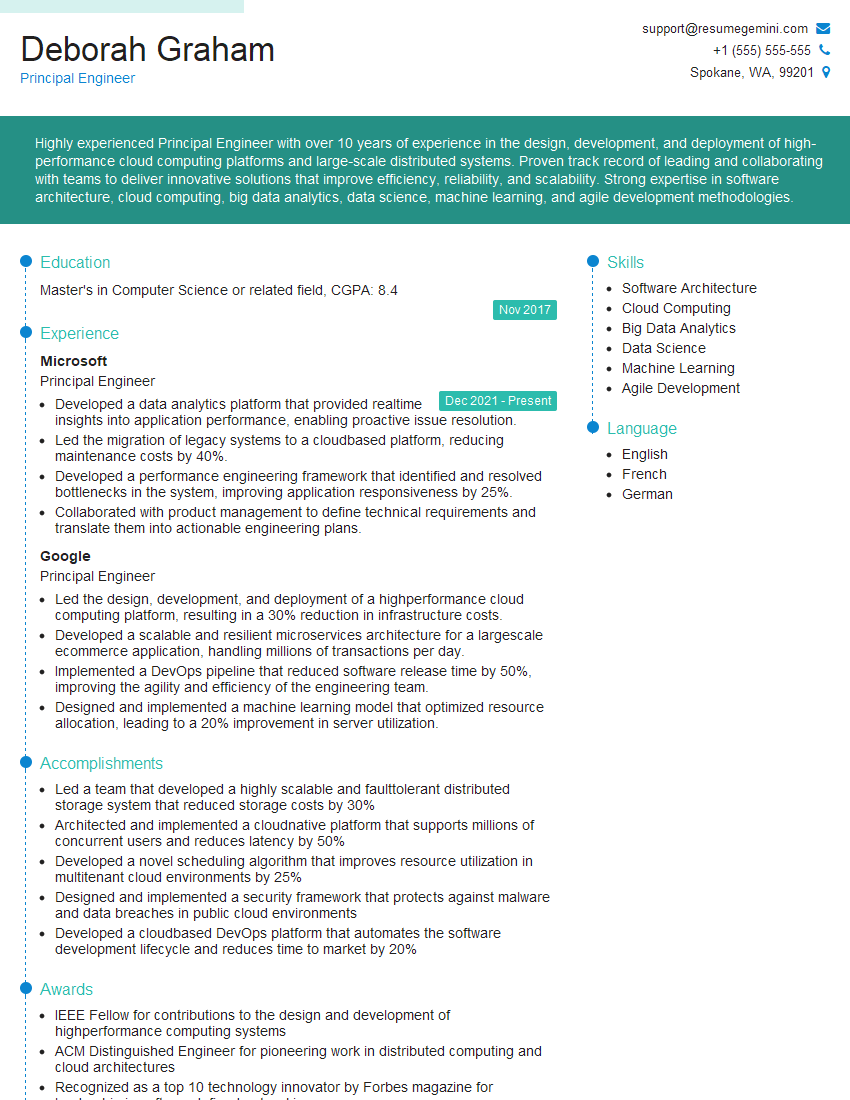
Principal Engineer Resume Sample

Project Engineer Resume Sample
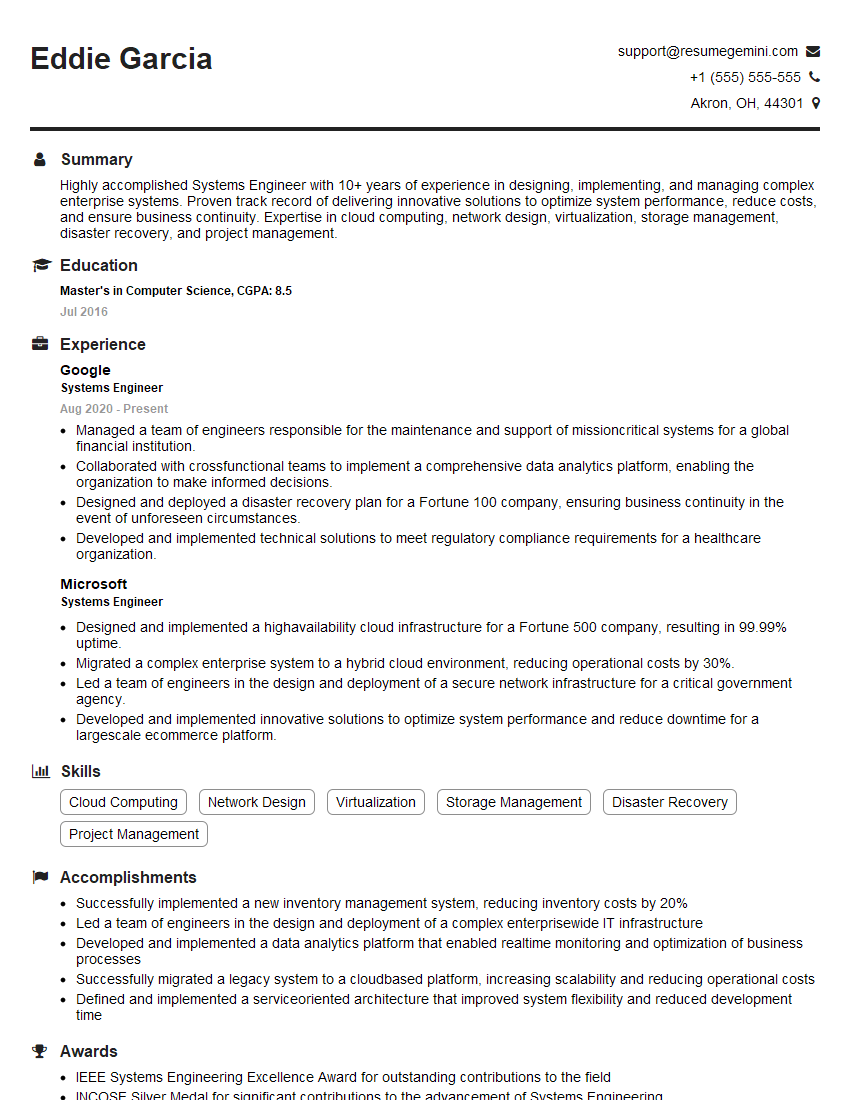
Systems Engineer Resume Sample
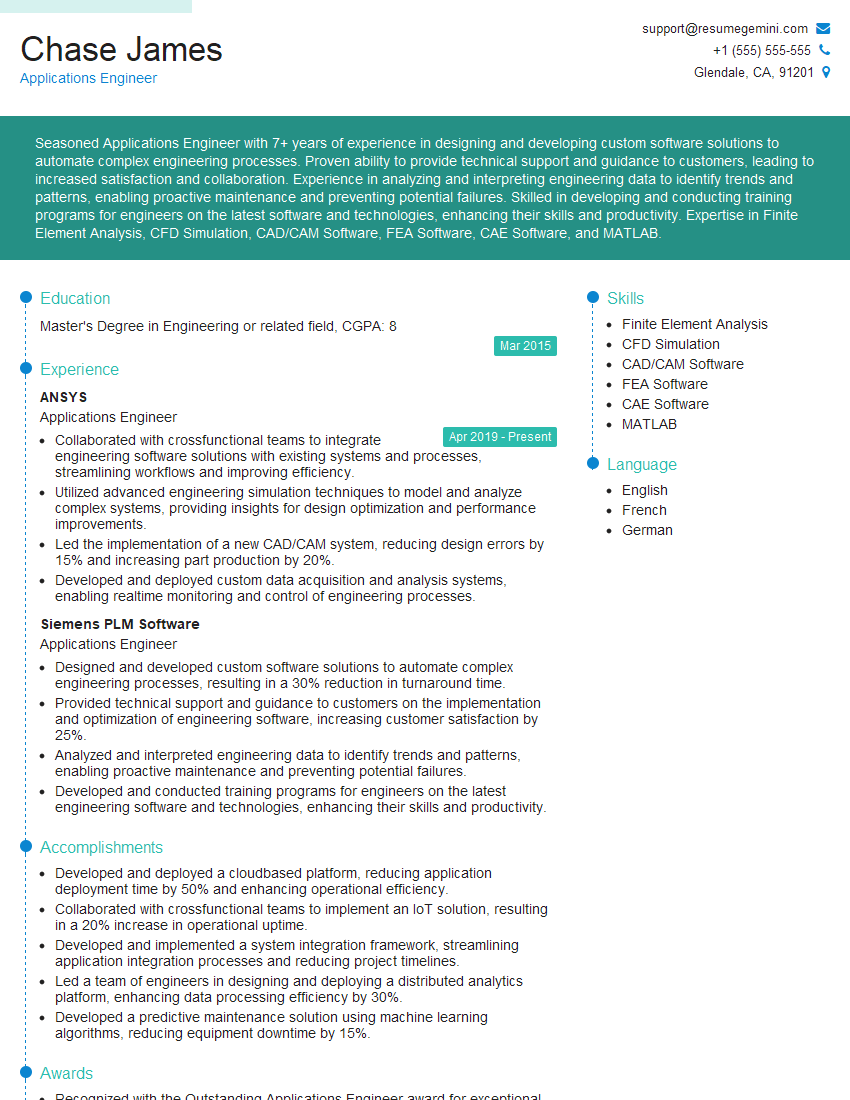
Applications Engineer Resume Sample
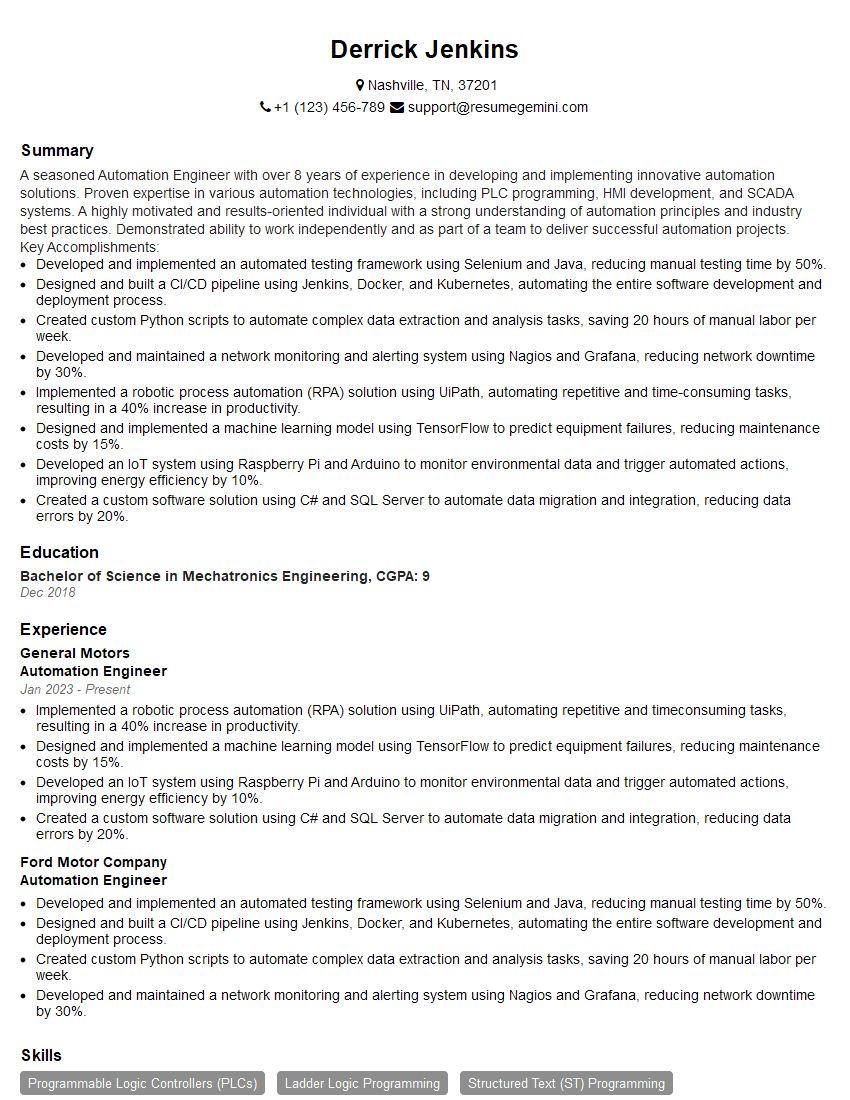
Automation Engineer Resume Sample
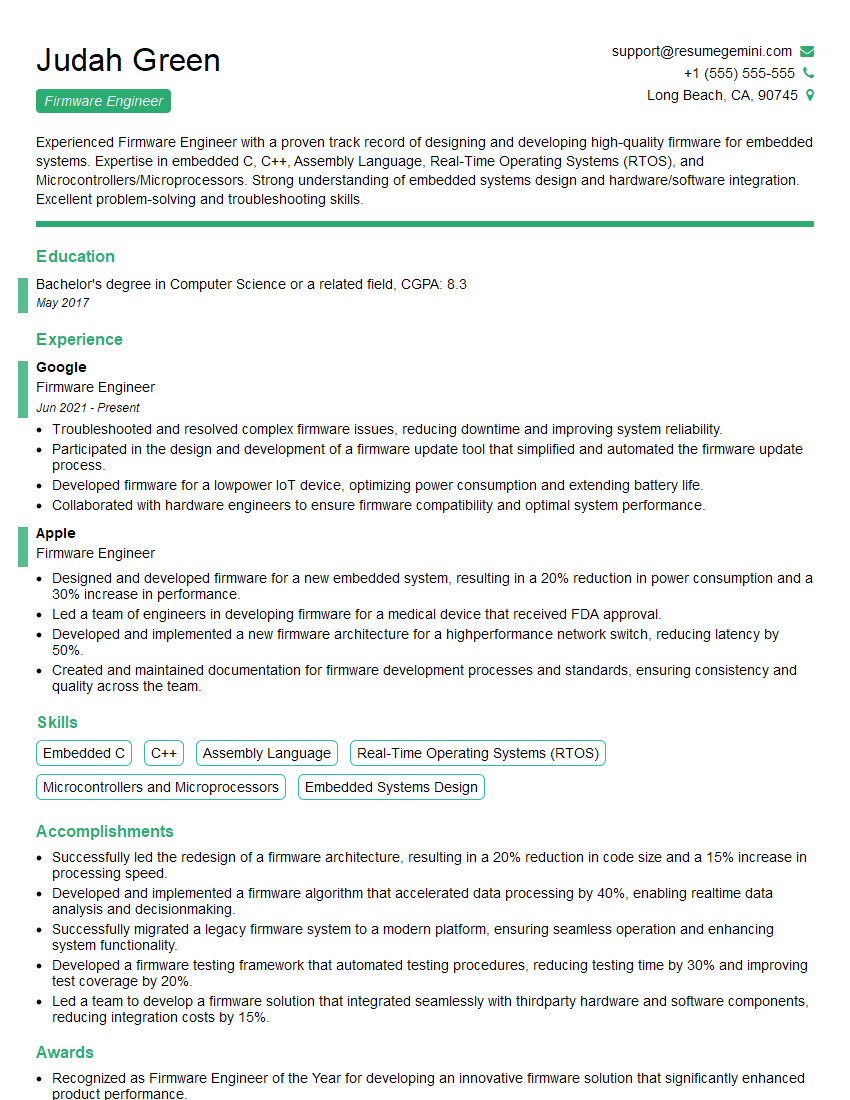
Firmware Engineer Resume Sample
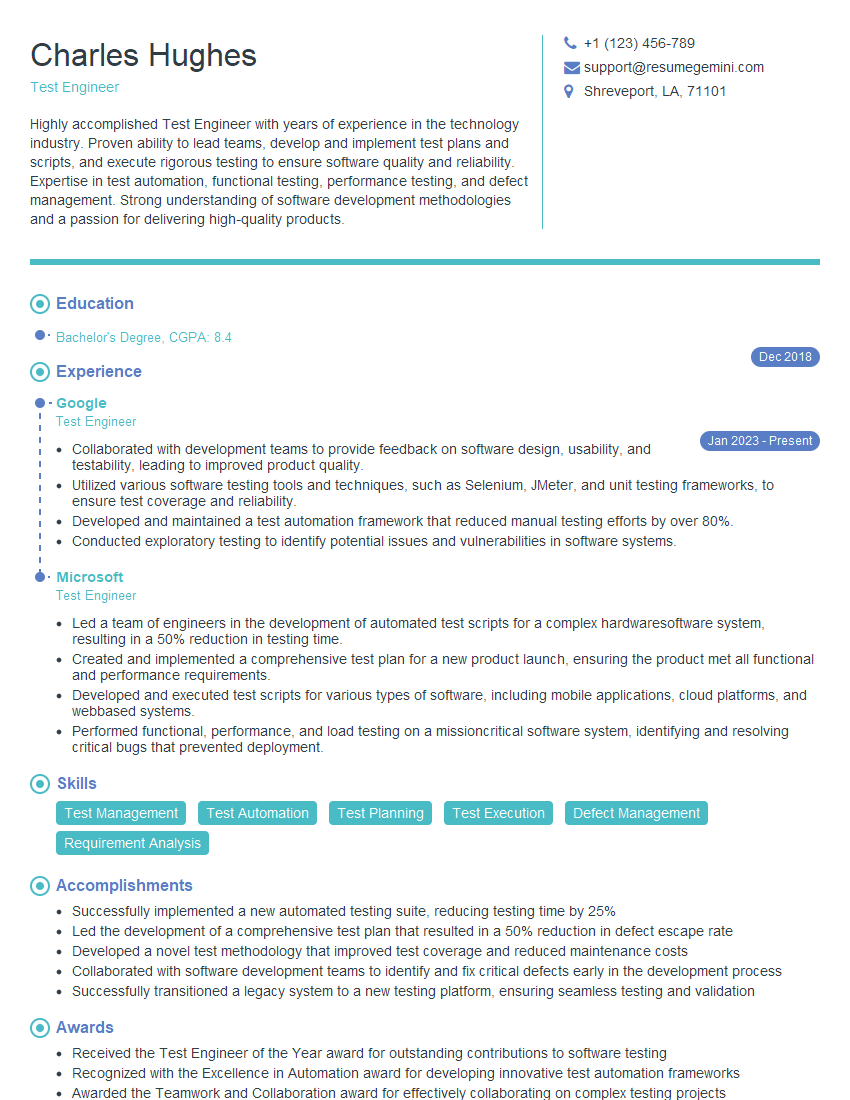
Test Engineer Resume Sample
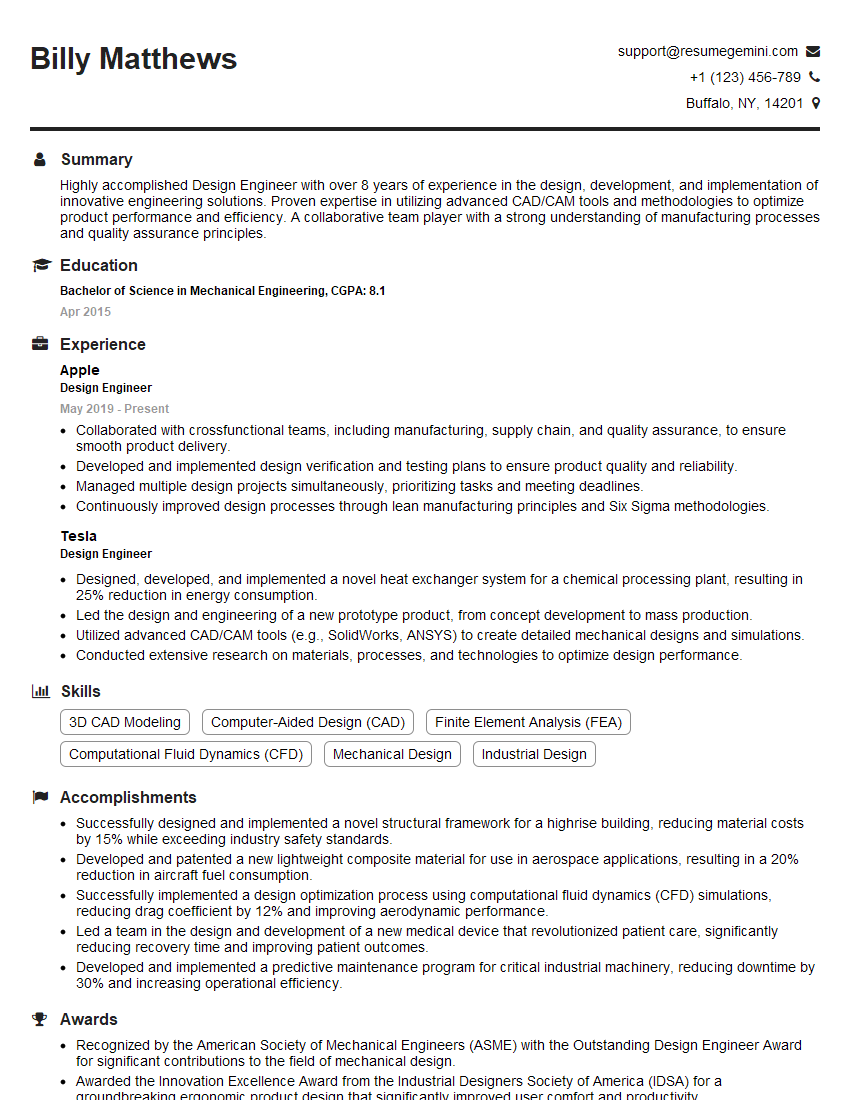
Design Engineer Resume Sample
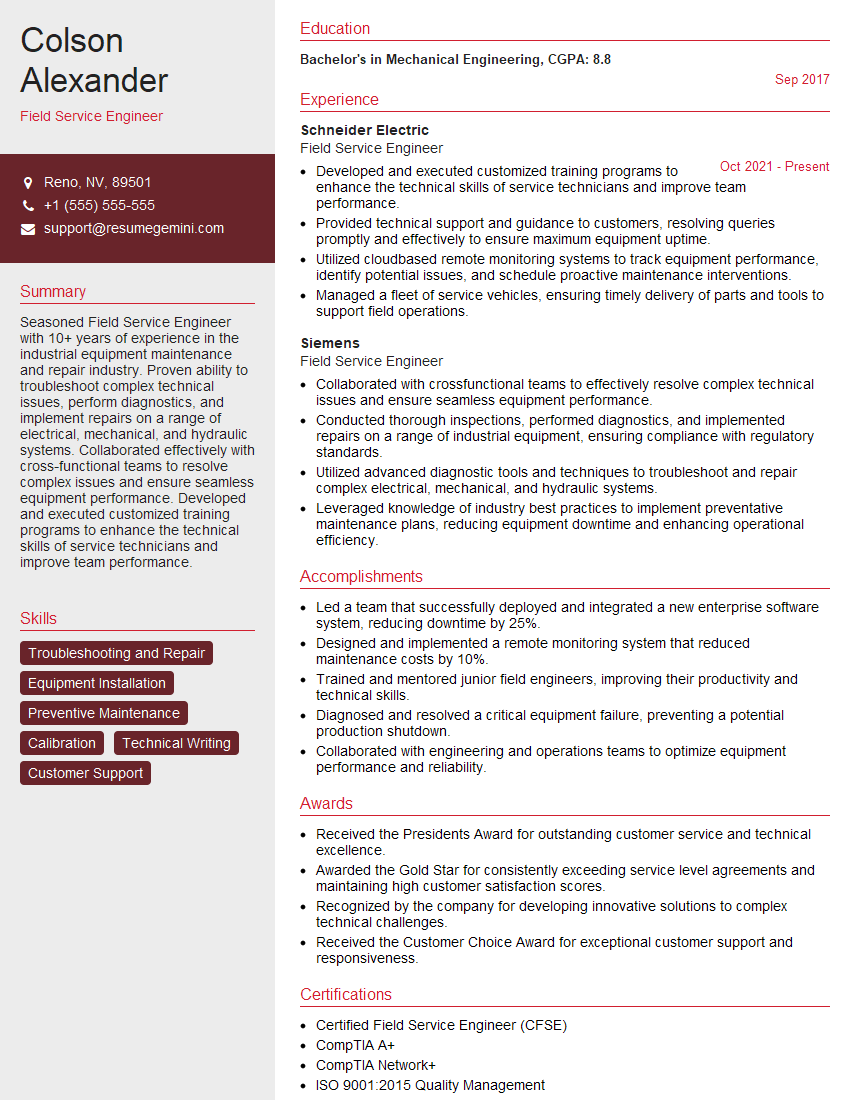
Field Service Engineer Resume Sample
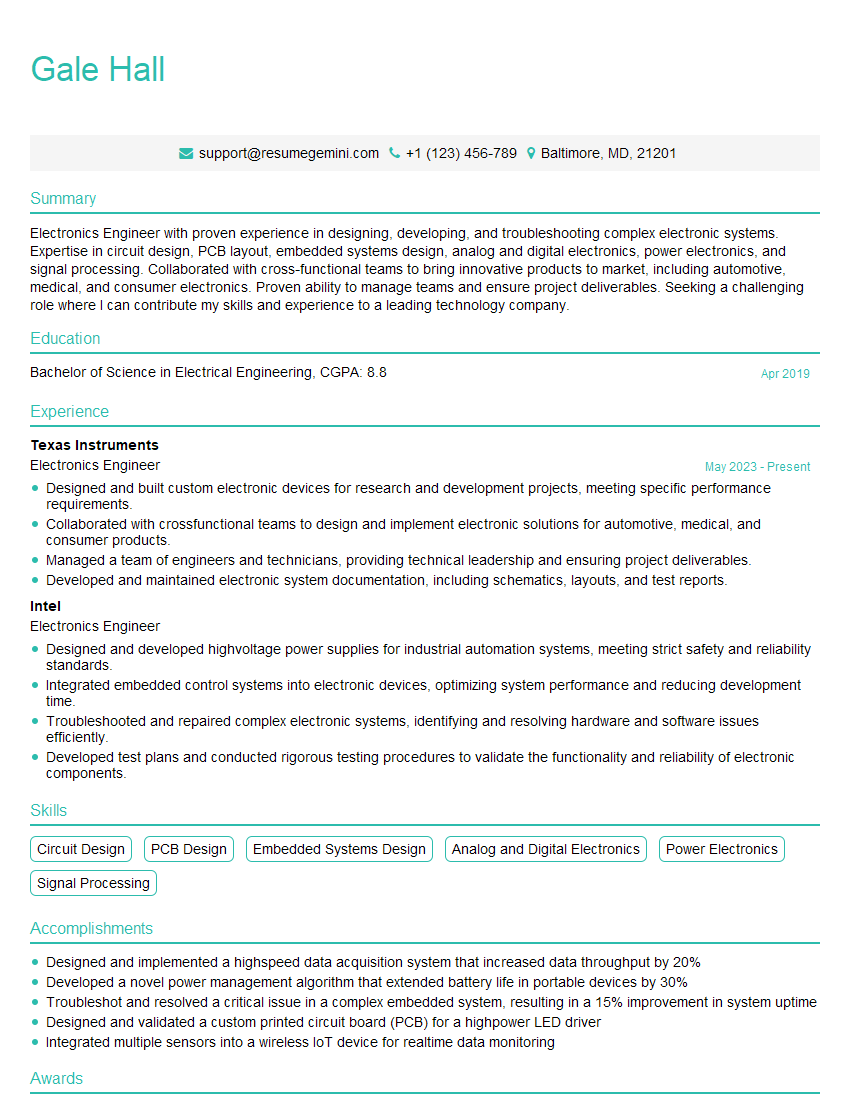
Electronics Engineer Resume Sample

Hardware Engineer Resume Sample
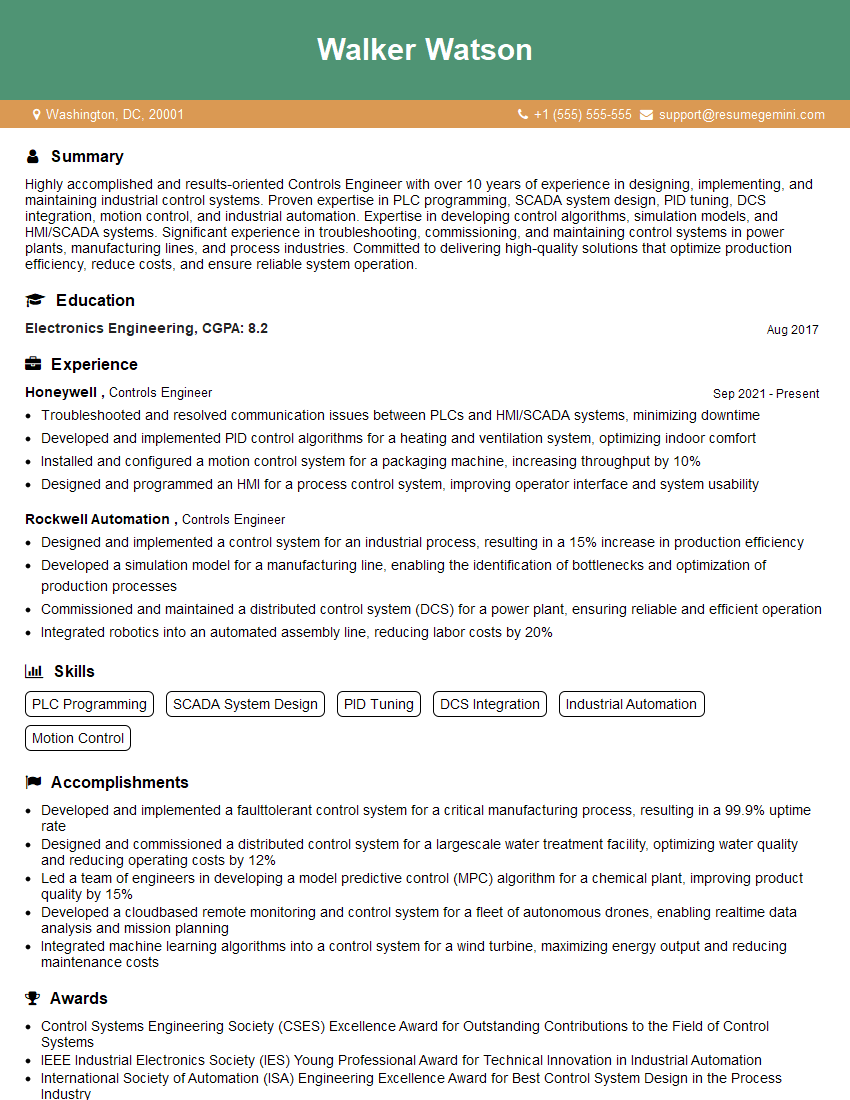
Controls Engineer Resume Sample
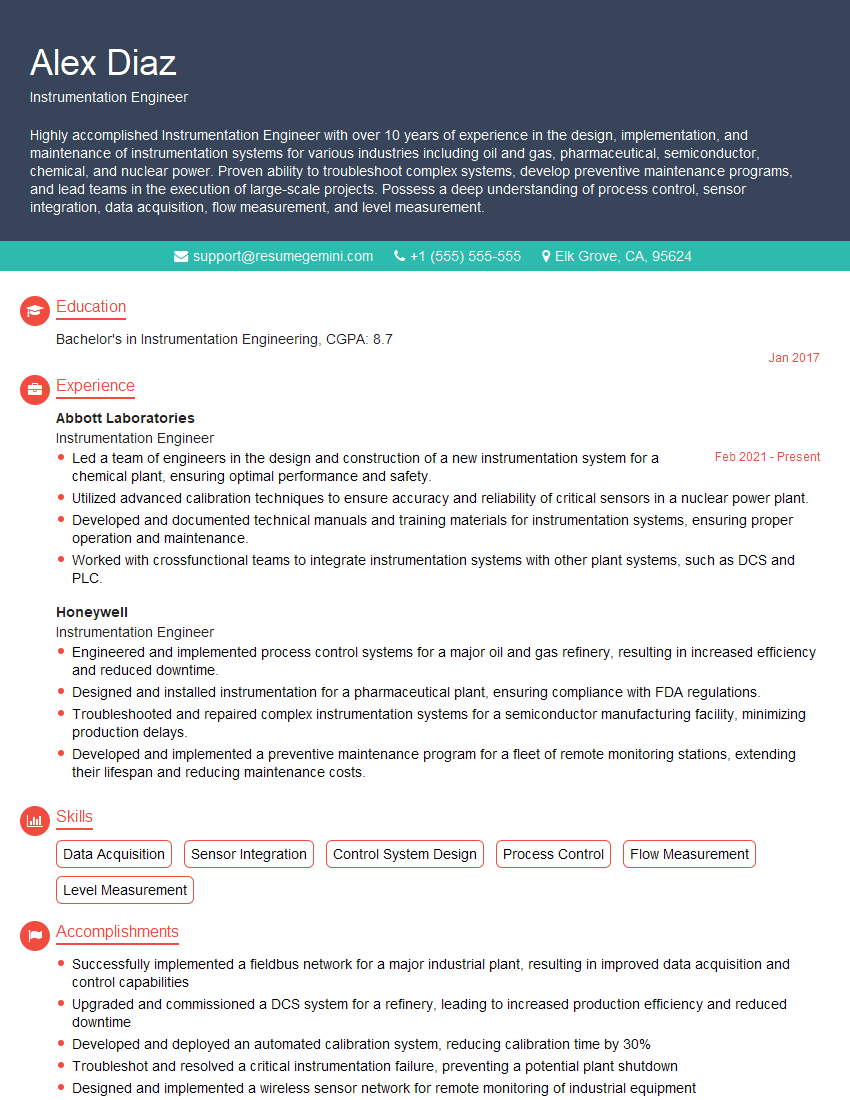
Instrumentation Engineer Resume Sample
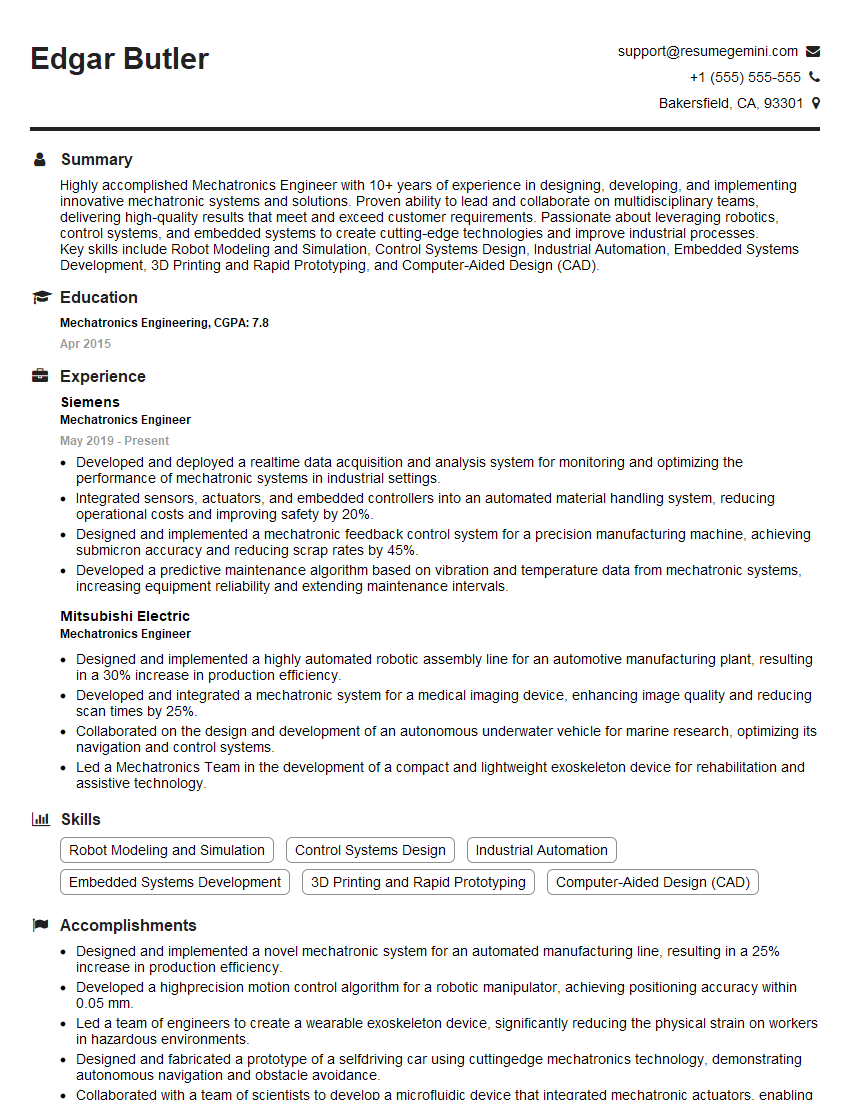
Mechatronics Engineer Resume Sample
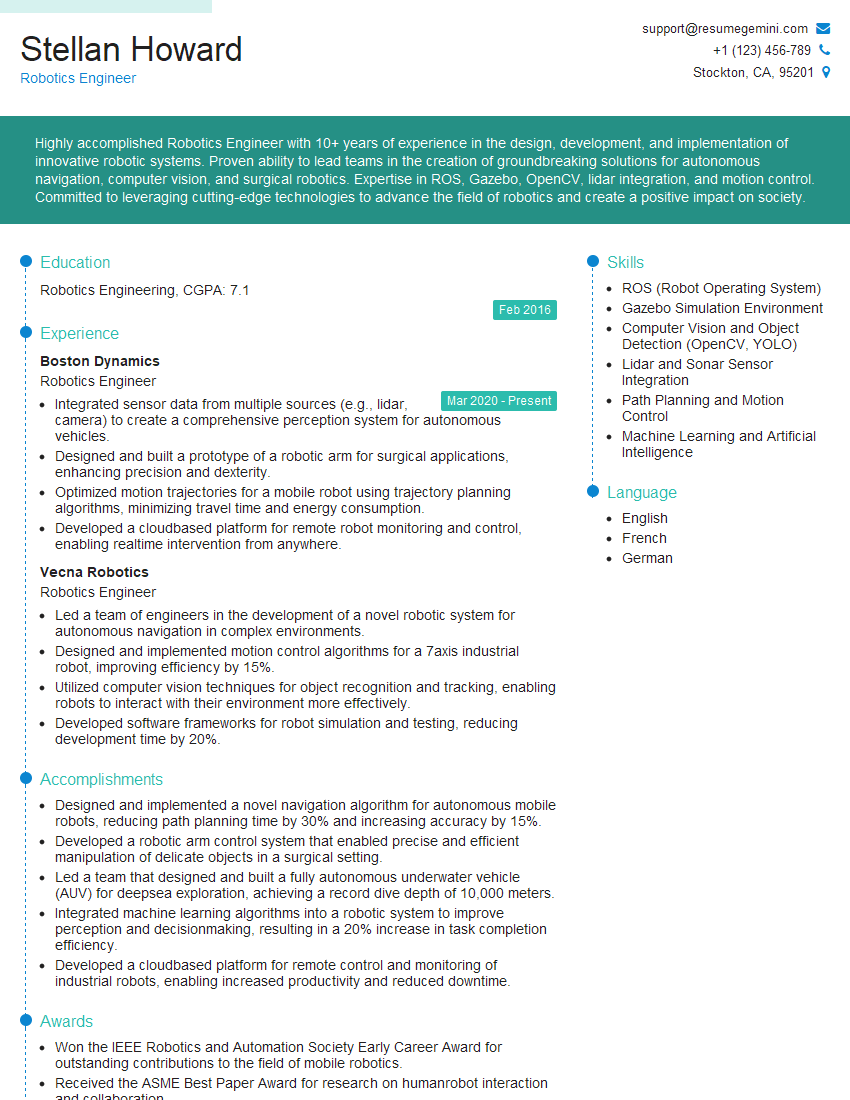
Robotics Engineer Resume Sample
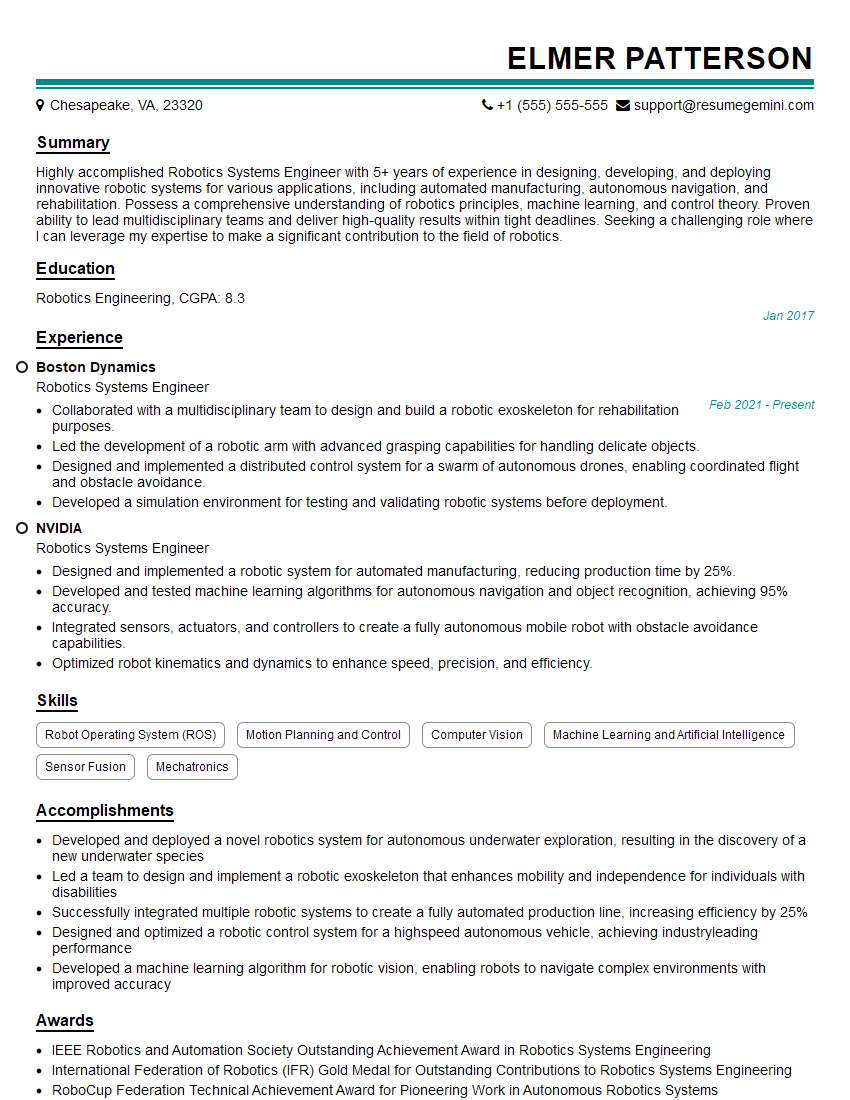
Robotics Systems Engineer Resume Sample
- Principal Engineer
- Project Engineer
- Systems Engineer
- Applications Engineer
- Automation Engineer
- Firmware Engineer
- Test Engineer
- Design Engineer
- Field Service Engineer
- Electronics Engineer
- Hardware Engineer
- Controls Engineer
- Instrumentation Engineer
- Mechatronics Engineer
- Robotics Engineer
- Robotics Systems Engineer
Explore more articles
Users Rating of Our Blogs
Share Your Experience
We value your feedback! Please rate our content and share your thoughts (optional).
What Readers Say About Our Blog
Really detailed insights and content, thank you for writing this detailed article.
IT gave me an insight and words to use and be able to think of examples