Are you ready to stand out in your next interview? Understanding and preparing for Electrostatic Powder Coating interview questions is a game-changer. In this blog, we’ve compiled key questions and expert advice to help you showcase your skills with confidence and precision. Let’s get started on your journey to acing the interview.
Questions Asked in Electrostatic Powder Coating Interview
Q 1. Explain the electrostatic powder coating process.
Electrostatic powder coating is a finishing process where dry, finely ground powder is applied to a conductive substrate. This powder, typically made of polymer resin, is then cured under heat, melting and forming a smooth, durable coating. Think of it like using a spray can, but instead of liquid paint, we’re using a dry powder. The process leverages electrostatic charge to attract the powder to the workpiece, ensuring even coverage.
The process typically involves several stages: Pre-treatment (cleaning and preparing the surface), powder application (using a spray gun with an electrostatic charge), and curing (baking the coated workpiece in an oven to melt and fuse the powder particles). This results in a tough, long-lasting, and attractive finish.
For example, imagine coating a metal chair. The chair’s surface would first be meticulously cleaned and possibly treated chemically to improve adhesion. Then, the powder is sprayed onto the chair, sticking due to electrostatic forces. Finally, the chair is baked in an oven at a specific temperature and time, creating the final coating.
Q 2. Describe the different types of powder coating resins.
Powder coating resins are classified into different types based on their chemical composition and properties, each offering unique characteristics. Common types include:
- Polyester: The most popular choice, known for its excellent outdoor durability, color retention, and chemical resistance. They offer a wide range of gloss levels and colors.
- Epoxy: Excellent chemical and corrosion resistance, often used for industrial applications where durability is paramount. They may not offer the same UV resistance as polyesters, however.
- Urethane: Combine the hardness of polyesters with the flexibility of epoxies, making them suitable for applications needing both toughness and impact resistance. They’re also known for their excellent color retention.
- Hybrids: These resins combine properties of different resin types, such as polyester and epoxy, to achieve specific performance characteristics tailored to particular applications. For instance, a hybrid could offer both exceptional UV resistance and good chemical resistance.
The choice of resin depends on the intended application and the required properties of the final coating, such as weather resistance, chemical resistance, flexibility, and cost.
Q 3. What are the advantages of powder coating over liquid painting?
Powder coating offers several significant advantages over traditional liquid painting:
- Environmental Friendliness: Powder coating is virtually solvent-free, resulting in less volatile organic compound (VOC) emissions, making it a more eco-friendly option. This reduces air pollution and health risks.
- Higher Film Thickness and Durability: Powder coatings are typically thicker and more durable than liquid paints, offering superior protection against corrosion, abrasion, and chipping. Imagine the difference between a thin layer of varnish and a thick, protective layer of enamel.
- High Transfer Efficiency: Almost all the powder applied adheres to the workpiece, minimizing waste compared to liquid paint, where some is lost through overspray.
- Cost-Effective: Reduced material waste and efficient application methods can lead to lower overall costs compared to liquid painting.
- Variety of Finishes: Powder coating offers a wide range of textures, gloss levels, and colors.
In a real-world example, consider coating a metal fence. Powder coating would offer superior protection from rust and weathering, lasting much longer than a liquid paint job.
Q 4. What safety precautions are necessary when working with powder coating equipment?
Safety is paramount in powder coating. Necessary precautions include:
- Respiratory Protection: Wear an appropriate respirator to prevent inhalation of powder particles, especially during powder handling and cleaning.
- Eye Protection: Safety glasses or goggles should be worn at all times to protect against powder particles and potential splashes from cleaning solutions.
- Skin Protection: Gloves should be worn to protect against skin irritation from powders and chemicals used in pre-treatment.
- Proper Ventilation: Ensure adequate ventilation in the powder booth and curing oven to prevent buildup of powder and fumes. This is crucial to maintaining a healthy work environment.
- Fire Safety: Powder coating involves the use of ovens operating at high temperatures. Regular checks and maintenance of the ovens are crucial and adherence to fire safety protocols are vital.
- Electrical Safety: The equipment used is often high voltage, necessitating careful handling and appropriate training to prevent electrical shocks.
Ignoring safety precautions can lead to serious health problems like respiratory issues and eye injuries, as well as fire hazards. Regular safety training and adherence to safety protocols are non-negotiable.
Q 5. How do you troubleshoot a faulty powder coating gun?
Troubleshooting a faulty powder coating gun involves a systematic approach. First, check the most common issues:
- Powder Flow: Ensure the powder hopper is full and that the powder is flowing freely. Check for any clogs in the feed lines.
- Voltage: Verify that the correct voltage is reaching the gun. A low voltage might cause poor powder adhesion.
- Air Pressure: Make sure the air pressure is correctly adjusted according to the manufacturer’s specifications. Incorrect pressure affects atomization and coating quality.
- Grounding: Check that the workpiece and the gun are properly grounded to ensure effective electrostatic attraction of the powder.
- Nozzle: Examine the nozzle for any blockages or damage. A worn nozzle can lead to uneven coating or poor atomization.
- High Voltage Supply: Inspect the high voltage supply for any faults or issues. This will usually involve testing the high voltage wire for continuity.
If the problem persists after checking these areas, consult the gun’s manual or seek professional assistance. Often, simple visual checks and adjustments can resolve the issue.
Q 6. Explain the importance of pre-treatment in powder coating.
Pre-treatment is crucial for successful powder coating because it significantly impacts the final coating’s adhesion and durability. A poorly prepared surface will lead to peeling, flaking, or other coating defects. Think of it as preparing a wall before painting; the better the surface, the better the paint adheres.
Pre-treatment typically includes several steps:
- Cleaning: Removing oils, grease, dirt, and other contaminants from the surface, usually with degreasers or solvents.
- Surface Preparation: This can involve abrasive blasting (sandblasting), chemical etching, or other methods to create a surface profile for improved adhesion.
- Rinsing: Thoroughly rinsing the surface to remove any cleaning solutions or etching chemicals.
- Phosphate Conversion Coating (Optional): Applying a phosphate coating enhances corrosion resistance and provides an excellent base for powder adhesion.
The specific pre-treatment method depends on the substrate material and the desired coating performance. A clean and well-prepared surface guarantees a strong bond between the substrate and powder coating.
Q 7. What are the common defects in powder coating and how are they prevented?
Several defects can occur during powder coating, and understanding their causes is vital for prevention. Here are some common defects and their prevention methods:
- Orange Peel: Uneven surface texture resembling an orange peel. Caused by low air pressure, high powder flow, or incorrect gun distance. Prevention: Optimize air pressure, powder flow, and gun distance per manufacturer’s specifications.
- Cratering: Small pits or craters on the surface. Caused by contaminants on the substrate or trapped air bubbles in the powder. Prevention: Ensure thorough pre-treatment to remove all contaminants, and use a suitable powder to minimize trapped air.
- Blistering: Bubbles or blisters on the coated surface. Caused by moisture trapped under the coating or outgassing from the substrate. Prevention: Ensure proper drying and ensure the substrate is dry and clean before powder application.
- Fish Eyes: Small, circular defects resembling fish eyes. Caused by silicone contamination. Prevention: Thorough cleaning and use of appropriate cleaning agents.
- Poor Adhesion: The coating peels or flakes off. Caused by inadequate pre-treatment or contamination of the surface. Prevention: Carefully follow pre-treatment steps and maintain cleanliness throughout the process.
Careful attention to detail throughout the entire powder coating process, from pre-treatment to curing, is crucial for minimizing defects and ensuring a high-quality finish.
Q 8. Describe the curing process in powder coating.
The curing process in powder coating is the crucial final step where the applied powder transforms from a loose coating into a durable, protective finish. This happens through heat, which melts the thermoplastic powder particles, allowing them to flow and fuse together. The heat also initiates a chemical cross-linking process, creating a strong, permanent bond. Think of it like baking a cake: the raw ingredients (powder) are transformed by heat into a solid, finished product (cured coating).
The curing temperature and time are critical and depend on the specific type of powder coating resin used. Typically, temperatures range from 350°F to 450°F (177°C to 232°C), with curing times varying from 10 to 20 minutes, depending on the oven’s efficiency and the thickness of the coating. Insufficient curing results in a weak, easily-damaged finish, while excessive heat can degrade the coating’s properties.
Different types of ovens, such as convection, infrared, and combination ovens, influence the curing process. Convection ovens use circulated hot air for even heating, while infrared ovens use radiant heat for faster curing in certain applications. The choice of oven depends on factors like production speed, desired finish quality, and energy efficiency.
Q 9. How do you determine the correct powder coating thickness?
Determining the correct powder coating thickness is essential for achieving optimal performance and appearance. Too thin a coating offers inadequate protection, while too thick a coating can lead to sagging, orange peel effect, and uneven curing. The desired thickness depends on several factors, including the substrate material, the intended application, and the required level of protection against corrosion or abrasion.
Film thickness is typically measured in microns (µm) or mils (thousandths of an inch). Industry standards and client specifications often dictate the acceptable thickness range. Measurement methods include wet film thickness measurement (before curing) and dry film thickness measurement (after curing) using specialized instruments like a magnetic gauge or an eddy current gauge.
For example, a coating intended for outdoor use might require a thicker film than one used for an indoor application. Achieving consistent thickness requires careful control of the powder application process, such as adjusting the gun settings, spray distance, and powder flow rate. Regular calibration of the application equipment and monitoring of the cured film thickness are vital for quality control.
Q 10. What are the different types of powder coating ovens?
Several types of powder coating ovens are used, each with its strengths and weaknesses. The choice depends on factors like production volume, budget, and the specific requirements of the coating.
- Convection Ovens: These ovens use fans to circulate hot air, providing relatively uniform heating throughout the oven chamber. They are suitable for general-purpose applications and are commonly used due to their cost-effectiveness.
- Infrared (IR) Ovens: IR ovens use radiant heat to directly heat the coated parts. This leads to faster curing times compared to convection ovens, but it can result in uneven heating if not carefully managed. They are often used for high-speed production lines.
- Combination Ovens: These ovens combine convection and infrared heating, leveraging the advantages of both systems. They offer a balance between curing speed and uniformity.
- Catalytic Ovens: These are specialized ovens which utilize a catalyst to reduce the curing temperature and time. They are usually employed for specific powder coatings that require lower curing temperatures to preserve certain properties.
The choice of oven type is a critical decision in setting up a powder coating line. It significantly impacts both production efficiency and the quality of the final finish.
Q 11. Explain the role of grounding in electrostatic powder coating.
Grounding plays a vital role in electrostatic powder coating by ensuring a complete electrical path for the powder particles to reach the workpiece. The workpiece acts as a grounded electrode, attracting the negatively charged powder particles from the spray gun. Without proper grounding, the powder will not adhere effectively, resulting in poor coating quality.
A properly grounded system minimizes the risk of electrostatic discharge (ESD), which can be hazardous to both operators and equipment. ESD can cause sparks, potentially igniting flammable materials in the powder booth. Grounding also ensures a uniform electrical field, leading to a more even and consistent powder application.
Effective grounding typically involves connecting the workpiece to a dedicated earth ground through a low-resistance wire. Regular inspection and maintenance of grounding connections are critical to maintaining safety and ensuring consistent coating quality. Failure to properly ground the equipment can lead to powder coating defects, including inconsistent film thickness, poor adhesion, and even safety hazards.
Q 12. How do you maintain powder coating equipment?
Maintaining powder coating equipment is crucial for ensuring consistent coating quality, minimizing downtime, and maximizing the equipment’s lifespan. Regular maintenance includes a variety of tasks, both daily and periodic.
- Daily Maintenance: This includes cleaning the powder booth and reclaim system, checking the powder flow and gun settings, and inspecting the grounding connections. Removing any powder buildup on the spray guns and ensuring the air filters are clean are paramount.
- Weekly Maintenance: This might involve more thorough cleaning of the oven, inspecting the heating elements, and checking the operation of the conveyor system. Regular calibration of the powder application equipment is crucial here as well.
- Monthly/Periodic Maintenance: This entails more in-depth checks of the entire system. Checking the condition of the high-voltage power supply and performing routine lubrication and inspection of the moving parts of the equipment should be included in this process.
A well-maintained system contributes to high-quality coatings, reduces waste, and extends the life of the equipment, saving you money in the long run. Neglecting maintenance can lead to significant problems and expensive repairs.
Q 13. Describe the process of color changing in a powder coating line.
Changing colors in a powder coating line requires a thorough and efficient process to prevent color contamination and ensure consistent quality. The complexity depends on the type of powder coating system used. Several strategies are implemented to effectively manage color changes.
Methods include:
- Complete System Purge: This involves completely purging the entire powder handling and application system with compressed air, ensuring all traces of the previous color are removed. This is a time-consuming process but ensures complete color separation.
- Color Change Stations: Some systems incorporate separate application stations for each color. This minimizes the need for complete system purges and significantly reduces downtime. However, this method requires more significant initial investment in the equipment.
- Specialized Purge Systems: There are specialized purge systems with multiple chambers and valves that facilitate rapid and efficient color changes without excessive powder waste.
Regardless of the method, careful attention to detail is paramount. Each step must be meticulously followed to prevent cross-contamination, maintain high-quality finishes, and minimize wasted material. The process involves the coordinated operation of the powder feeding system, the spray gun, and any reclaim systems to effectively switch between different colored powder coatings.
Q 14. What is the importance of air quality control in a powder coating booth?
Air quality control is critical in a powder coating booth for several reasons: operator safety, environmental compliance, and coating quality. Powder coating involves handling fine powder particles that can be inhaled, leading to respiratory problems. Also, overspray and escaped powder particles can contribute to air pollution if not properly managed.
Effective air quality control involves a combination of strategies:
- Efficient Ventilation: A properly designed ventilation system removes overspray and airborne powder particles from the booth, preventing them from accumulating and creating a hazardous environment.
- Air Filtration: High-efficiency particulate air (HEPA) filters are crucial for trapping fine powder particles and maintaining clean air within the booth. Regular filter changes are necessary to maintain efficiency.
- Reclaim System: A well-maintained reclaim system captures overspray powder, allowing it to be recycled, reducing waste and minimizing environmental impact.
- Regular Monitoring: Monitoring air quality parameters, such as particulate matter concentration, ensures compliance with environmental regulations and workplace safety standards.
Investing in a robust air quality control system is essential for protecting worker health, complying with environmental standards, and producing high-quality powder coatings. Ignoring this aspect can result in significant fines, health issues, and quality problems.
Q 15. How do you handle different substrate materials in powder coating?
Handling different substrate materials in powder coating requires careful consideration of their surface properties and compatibility with the chosen powder. Preparation is key! For example, metals like steel and aluminum often require different pre-treatments. Steel might need a phosphate conversion coating to enhance adhesion, while aluminum may benefit from a chromate or other suitable pretreatment to prevent corrosion. Plastics and other non-metallic substrates necessitate different approaches, often involving surface activation techniques to ensure proper powder adhesion. The choice of powder itself also plays a significant role – some powders are specifically formulated for excellent adhesion to certain materials.
For instance, a high-performance polyester powder might be perfect for steel outdoor furniture, offering excellent UV resistance and durability. Meanwhile, a powder designed for adhesion to polypropylene would be necessary for coating plastic parts. Understanding these material-specific requirements prevents defects like poor adhesion or premature coating failure.
Career Expert Tips:
- Ace those interviews! Prepare effectively by reviewing the Top 50 Most Common Interview Questions on ResumeGemini.
- Navigate your job search with confidence! Explore a wide range of Career Tips on ResumeGemini. Learn about common challenges and recommendations to overcome them.
- Craft the perfect resume! Master the Art of Resume Writing with ResumeGemini’s guide. Showcase your unique qualifications and achievements effectively.
- Don’t miss out on holiday savings! Build your dream resume with ResumeGemini’s ATS optimized templates.
Q 16. Explain the concept of transfer efficiency in powder coating.
Transfer efficiency in powder coating refers to the percentage of powder applied to the gun that actually adheres to the substrate. It’s a crucial metric for cost-effectiveness and environmental responsibility. A high transfer efficiency means less wasted powder, lower material costs, and reduced overspray, minimizing environmental impact. Think of it like this: if you’re spraying a can of paint, you want as much paint as possible to land on the wall, not on the floor or surrounding areas. Ideally, we aim for transfer efficiency above 90%.
Factors influencing transfer efficiency include the type of application equipment, the skill of the operator, the powder characteristics (particle size and flow), and the substrate’s properties. Optimizing these factors, through proper equipment maintenance and operator training, results in improved transfer efficiency and reduced operational costs.
Q 17. What are the environmental considerations in powder coating?
Environmental considerations in powder coating are paramount. Unlike traditional liquid painting methods, powder coating generates significantly less Volatile Organic Compounds (VOCs), contributing to cleaner air. However, there are still aspects to manage. Powder overspray needs to be carefully collected and recycled or disposed of properly, preventing environmental contamination. The choice of powder itself is crucial; some powders use less environmentally impactful curing agents or are formulated with recycled materials. Responsible waste management practices and selecting environmentally friendly powders minimize the footprint of the entire process.
Moreover, energy consumption during the curing process should be optimized to reduce greenhouse gas emissions. This can be achieved through effective oven design and efficient energy usage strategies.
Q 18. Describe different types of powder coating application methods.
Several methods exist for applying powder coatings. The most common are:
- Electrostatic Spraying: This is the predominant method, utilizing electrostatic charge to attract the powder particles to the grounded substrate. This ensures uniform coating and minimizes overspray.
- Electrostatic Fluidized Bed Coating: This technique is particularly suitable for parts with complex shapes or intricate details. The powder is fluidized in a bed, and the part is immersed, resulting in even coating across all surfaces.
- Tribostatic Spraying: A method that uses friction to charge the powder, avoiding the need for a high-voltage system. It’s often preferred for smaller-scale operations or applications where high voltage equipment is impractical.
The best method depends on factors such as part geometry, production volume, and desired coating quality.
Q 19. How do you identify and correct powder coating overspray issues?
Powder coating overspray issues manifest as excess powder accumulating on unwanted areas. Identifying the problem involves careful observation; uneven coating, excessive buildup in certain areas, or simply too much powder on the surrounding environment are all signs. Correcting overspray often involves a multi-pronged approach.
- Adjusting Spray Parameters: This might include optimizing the gun settings (voltage, air pressure, powder flow rate), improving the operator’s technique, or ensuring the grounding system is effective.
- Improving Pre-treatment: Insufficient pre-treatment can lead to uneven coating and increased overspray as the powder struggles to adhere properly.
- Maintaining Equipment: Regular maintenance of the spray guns and related equipment is crucial to prevent malfunction and ensure optimal performance.
- Effective Overspray Collection Systems: A well-designed overspray collection system is paramount for efficient powder recovery and environmental protection.
By systematically addressing these factors, overspray can be significantly reduced.
Q 20. Explain the importance of proper ventilation in a powder coating facility.
Proper ventilation in a powder coating facility is critical for both operator safety and environmental compliance. Powder dust is a potential respiratory irritant, and adequate ventilation removes it from the air, creating a safe working environment. Furthermore, effective ventilation helps prevent the buildup of flammable powder dust, which poses a significant fire hazard. Ventilation systems should be designed to capture overspray and exhaust it safely outside the building.
Regular maintenance and inspection of the ventilation system are essential to ensure continued effective operation and prevent safety hazards. The system’s efficiency should be monitored and adjusted based on the production level and specific operational conditions.
Q 21. What are the different types of powder coating defects?
A range of defects can occur in powder coating. These defects can compromise the appearance and durability of the finished product. Some common defects include:
- Orange Peel: A textured finish resembling an orange peel, often caused by insufficient powder flow, incorrect curing temperature, or improper application technique.
- Cratering: Small depressions or holes in the coating, usually due to trapped contaminants or gas release during curing.
- Blistering: The formation of bubbles on the surface, usually due to moisture entrapment or improper curing.
- Fisheyes: Small, irregular imperfections resembling fish eyes, typically caused by contaminants or solvents on the substrate’s surface.
- Poor Adhesion: The coating fails to bond properly to the substrate, often a result of inadequate pre-treatment or incompatible materials.
- Sagging: Excess powder buildup causing the coating to droop, usually due to excessively thick application or improper curing.
Understanding these defects and their root causes is vital for quality control and continuous improvement in powder coating processes.
Q 22. What is the role of corona charging in powder coating?
Corona charging is the heart of electrostatic powder coating. It’s the process that gives the powder its ability to stick to the workpiece. Think of it like static cling, but on a much larger scale. A high-voltage electrode (the corona wire) creates a strong electrostatic field. This field ionizes the air around it, creating a corona discharge – a stream of ions. As the powder particles pass through this field, they become charged, acquiring a negative charge (opposite to the positive charge on the corona wire). These negatively charged particles are then attracted to the grounded workpiece, which has a positive charge. The stronger the electrostatic field, the more effectively the powder is charged and deposited onto the substrate. This process ensures uniform coating and minimizes powder waste.
For example, imagine using a balloon to pick up small pieces of paper. The balloon (like the workpiece) becomes charged through rubbing (like the corona wire) and attracts the paper. The corona wire is analogous to rubbing the balloon to charge it.
Q 23. How would you diagnose and resolve problems with poor adhesion?
Poor adhesion is a common problem in powder coating, often stemming from inadequate surface preparation or incorrect curing parameters. To diagnose this, I’d systematically investigate several aspects:
- Surface cleanliness: Is the substrate truly clean and free from oils, grease, rust, or other contaminants? A simple solvent wipe test can reveal this. I might also use a microscope to confirm the absence of contaminants.
- Surface profile: Does the substrate have sufficient surface roughness to provide mechanical interlocking with the powder? A profile meter will help assess the surface texture. If it’s too smooth, a pre-treatment like sandblasting may be necessary.
- Pre-treatment quality: If chemical pre-treatments (like phosphating) were used, were they properly executed? Improper application leads to poor adhesion. This needs a careful review of the pre-treatment process and chemical baths.
- Curing parameters: Was the curing oven operating at the correct temperature and dwell time recommended by the powder supplier? An improperly cured coating will be weak and prone to peeling.
- Powder compatibility: Is the chosen powder compatible with the substrate material? The datasheet of the powder should specify the appropriate substrates.
To resolve the issue, I’d address each potential problem, starting with the most likely causes (cleaning and surface profile). Once identified and resolved, repeat the coating process and carefully inspect the results.
Q 24. Describe the process of reclaiming powder coating material.
Reclaiming powder coating material is crucial for both cost savings and environmental responsibility. The process involves recovering overspray powder from the booth’s collection system. The powder is usually collected in a hopper or filter system. This collected powder is then processed to remove any contaminants such as dust, debris, or cured powder particles. This often involves a sieving process to remove larger aggregates. The cleaned powder can then be tested to check for any degradation, such as change in particle size distribution, melt flow index, and color shift. This testing is vital because only powder meeting the original specifications should be reused. Reclaimed powder is generally blended with fresh powder at a controlled ratio to maintain consistent coating quality. The percentage of reclaimed powder will depend on the results from testing, always ensuring quality and consistency.
Think of it like recycling plastic; you don’t just toss old powder. Careful processing allows reuse, reducing waste and costs.
Q 25. Explain the importance of proper surface preparation before powder coating.
Proper surface preparation is paramount for achieving a durable and aesthetically pleasing powder coating finish. It’s the foundation upon which the entire coating process rests. A poorly prepared surface will inevitably lead to poor adhesion, premature failure, and an unsatisfactory finish. The goal of surface preparation is to create a clean, dry, and suitably profiled surface that ensures good mechanical bonding with the powder coating. This usually involves a series of steps:
- Cleaning: Removing all contaminants – grease, oil, dirt, rust – is the first step. This might involve degreasing, solvent cleaning, or abrasive blasting.
- Surface profiling: Creating a surface roughness promotes mechanical interlocking between the coating and the substrate. Methods like sandblasting, bead blasting, or chemical etching are common.
- Pre-treatment (optional): For enhanced corrosion resistance and adhesion, chemical pre-treatments like phosphating or chromating can be employed. These create a conversion coating that enhances adhesion.
For example, imagine trying to glue two smooth, polished pieces of glass together. They won’t stick well. But if you roughen the surfaces first, the glue will have much better grip. This is analogous to surface preparation.
Q 26. What are the key factors that influence the quality of the powder coating finish?
Several key factors significantly influence the quality of a powder coating finish:
- Powder quality: The characteristics of the powder itself (particle size, resin type, pigment concentration) heavily impact the final coating’s appearance, durability, and flow properties.
- Surface preparation: As mentioned earlier, a clean, well-profiled surface is essential for excellent adhesion and a uniform finish.
- Application parameters: The spray gun settings (voltage, air pressure, powder flow rate) and gun distance significantly affect the coating thickness and uniformity.
- Curing parameters: The temperature and dwell time within the curing oven are crucial for proper polymer fusion and development of the coating’s mechanical properties. Incorrect parameters lead to softness, brittleness, or poor adhesion.
- Environmental conditions: Humidity and temperature in the booth and curing oven affect the coating’s performance. High humidity can inhibit curing and affect adhesion.
Imagine baking a cake – the ingredients (powder quality), the preparation (surface preparation), and the oven settings (curing) all have a critical impact on the final product.
Q 27. How do you maintain consistency in powder coating application?
Maintaining consistency in powder coating requires meticulous control over all aspects of the process. Key strategies include:
- Regular calibration: All equipment should be regularly calibrated, including the spray guns, corona units, and oven temperature controllers. This ensures precise control of application and curing parameters.
- Standardized procedures: Implementing and strictly adhering to written Standard Operating Procedures (SOPs) for all stages of the process ensures consistency and minimizes variations between batches. Each step, from cleaning to curing, should be precisely documented.
- Quality control checks: Regular quality control checks, including visual inspection, thickness measurements, and adhesion testing, are crucial for identifying and correcting deviations early on.
- Material consistency: Using the same batch of powder and pre-treatment chemicals, if applicable, minimizes variations in coating properties.
- Operator training: Well-trained operators are essential for consistent application techniques and adherence to SOPs.
Think of it as following a recipe – precise measurements and consistent methods ensure a consistently good outcome.
Q 28. Explain how you would troubleshoot a problem with uneven coating thickness.
Uneven coating thickness points to inconsistencies in the application process. Troubleshooting involves a systematic approach:
- Spray gun settings: Check for proper voltage, airflow rate, and powder flow rate. Inconsistent settings will directly impact the coating thickness. Observe the spray pattern for even distribution.
- Gun distance: Maintaining a consistent distance between the spray gun and the workpiece is essential. Fluctuations in distance lead to variations in coating thickness. A consistent distance ensures uniform deposition.
- Electrostatic field: Inspect the corona wire for proper functioning and cleanliness. A worn or dirty corona wire may not generate an adequate electrostatic field, resulting in uneven charging and deposition.
- Workpiece masking and positioning: Poor masking or an uneven workpiece surface can obstruct the powder flow, leading to uneven thickness. Ensure proper masking and that the workpiece has a consistently shaped surface.
- Powder flow issues: Check for powder flow blockages in the hopper or feed system. Blockages may cause inconsistent powder delivery.
To resolve, I would systematically adjust each parameter, monitoring the results after each adjustment. Proper adjustments and documentation will eliminate the problem and ensure future consistency.
Key Topics to Learn for Electrostatic Powder Coating Interview
- Electrostatic Principles: Understand the fundamental physics behind electrostatic attraction and repulsion, including Coulomb’s Law and its application in powder coating.
- Powder Coating Materials: Familiarize yourself with different types of powder coatings (e.g., polyester, epoxy, polyurethane), their properties, and applications. Know the advantages and disadvantages of each.
- Application Methods: Master the various application techniques, including electrostatic spraying, fluidized bed coating, and electrostatic fluidized bed coating. Understand the equipment used in each method.
- Pre-treatment Processes: Learn about the importance of surface preparation, including cleaning, degreasing, and pre-treatment methods (e.g., chemical conversion coatings, phosphate coatings) to ensure optimal adhesion.
- Curing Process: Understand the different curing methods (e.g., convection ovens, infrared curing) and their impact on the final coating quality. Know the role of temperature and time in the curing process.
- Quality Control and Testing: Learn about common quality control procedures used to ensure consistent coating thickness, adhesion, and appearance. Understand relevant testing methods (e.g., adhesion testing, gloss measurement).
- Troubleshooting: Be prepared to discuss common problems encountered in electrostatic powder coating, such as orange peel, pinholes, and poor adhesion, and potential solutions.
- Safety Procedures: Understand and be able to articulate the safety precautions and regulations associated with handling powder coatings and operating the equipment.
- Sustainability and Environmental Considerations: Discuss the environmental impact of powder coating and any environmentally friendly practices used in the industry.
- Industry Standards and Regulations: Be aware of relevant industry standards and regulations concerning powder coating application and quality control.
Next Steps
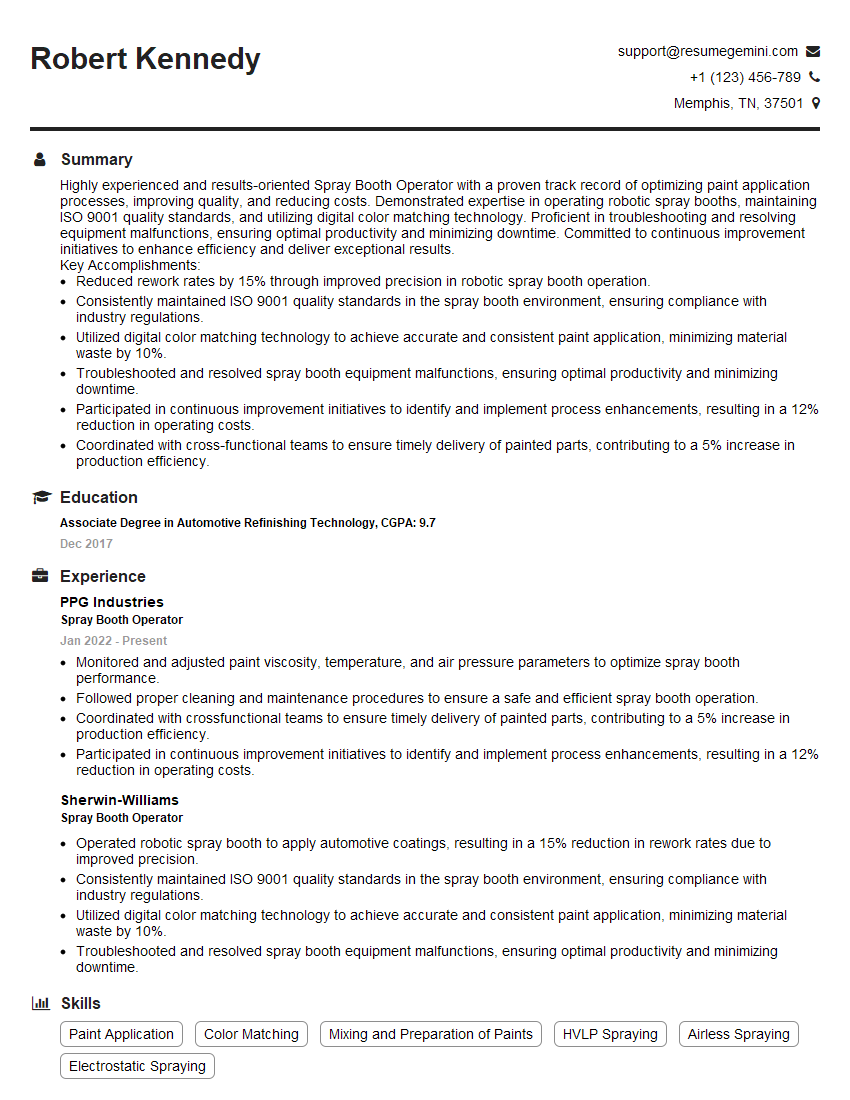
Mastering electrostatic powder coating opens doors to exciting career opportunities in manufacturing, automotive, and various other industries. To maximize your job prospects, focus on building a strong, ATS-friendly resume that highlights your skills and experience effectively. ResumeGemini is a trusted resource that can help you create a professional resume designed to get noticed. They provide examples of resumes tailored to the Electrostatic Powder Coating field, making your job search easier and more efficient. Take the next step and craft a resume that showcases your expertise!





Explore more articles
Users Rating of Our Blogs
Share Your Experience
We value your feedback! Please rate our content and share your thoughts (optional).
What Readers Say About Our Blog
Really detailed insights and content, thank you for writing this detailed article.
IT gave me an insight and words to use and be able to think of examples