Interviews are opportunities to demonstrate your expertise, and this guide is here to help you shine. Explore the essential Engine Performance interview questions that employers frequently ask, paired with strategies for crafting responses that set you apart from the competition.
Questions Asked in Engine Performance Interview
Q 1. Explain the concept of engine efficiency and its key parameters.
Engine efficiency refers to how well an engine converts the energy stored in fuel into useful work. It’s essentially a measure of how much ‘bang for your buck’ you get from the fuel. A highly efficient engine produces more power or torque from the same amount of fuel, resulting in better fuel economy and reduced emissions.
Key parameters for assessing engine efficiency include:
- Thermal Efficiency: This represents the percentage of fuel energy converted into mechanical work. A higher thermal efficiency indicates better energy conversion. It’s influenced by factors like compression ratio, combustion efficiency, and heat losses.
- Brake Specific Fuel Consumption (BSFC): This measures the fuel consumed (in grams or pounds) per unit of power (kilowatt-hour or horsepower-hour) produced. A lower BSFC signifies greater efficiency—less fuel is needed to generate the same power output.
- Volumetric Efficiency: This indicates the engine’s ability to draw in air into the cylinders. A higher volumetric efficiency means more air-fuel mixture is available for combustion, leading to increased power and potentially better efficiency.
- Mechanical Efficiency: This represents the ratio of brake power (power at the crankshaft) to indicated power (power developed within the cylinders). It accounts for frictional losses within the engine.
For example, a gasoline engine might have a thermal efficiency around 25-35%, while a diesel engine can achieve 40-45% due to its higher compression ratio and different combustion process. Improving any of these parameters directly contributes to better overall engine efficiency.
Q 2. Describe different types of engine testing procedures and their purposes.
Engine testing procedures are crucial for evaluating performance, durability, and emissions. Various types exist, each serving a specific purpose:
- Dynamometer Testing: This involves using a dynamometer to measure engine power, torque, and fuel consumption under controlled conditions. This is fundamental for performance evaluation and component calibration.
- Endurance Testing: This focuses on assessing engine durability and reliability by running it continuously under various operating conditions for extended periods (sometimes thousands of hours). It helps identify potential weaknesses and design flaws.
- Emissions Testing: This measures the quantity of harmful exhaust gases (e.g., NOx, CO, HC, PM) to ensure compliance with environmental regulations. Procedures include chassis dynamometer testing and specialized emissions analyzers.
- Component Testing: This involves individual testing of components like fuel injectors, sensors, and actuators to ensure their proper functioning. It’s crucial for fault diagnosis and quality control.
- Climate Testing: This evaluates engine performance under various ambient temperatures and humidity conditions to assess performance across diverse climates. This is particularly important for vehicles designed for extreme weather.
For instance, during the development of a new engine, engineers might utilize dynamometer testing to optimize the air-fuel mixture for maximum power, followed by endurance testing to ensure the engine can withstand the rigors of prolonged use. Emissions testing is then critical for meeting regulatory compliance.
Q 3. How do you analyze engine performance data using data acquisition systems?
Data acquisition systems (DAS) are vital for analyzing engine performance. These systems collect data from numerous sensors throughout the engine (temperature, pressure, airflow, RPM, etc.) and transmit it to a computer for analysis. The process involves:
- Sensor Selection and Placement: Choosing appropriate sensors and strategically positioning them to capture relevant data is the first step.
- Data Acquisition Hardware: Using hardware like A/D converters, multiplexers, and signal conditioning units to collect and process the sensor signals.
- Data Acquisition Software: Utilizing software to monitor, record, and analyze the data in real-time or post-processing.
- Data Visualization and Analysis: Employing software to create graphs, charts, and reports from the collected data to identify trends, anomalies, and areas for improvement.
- Correlation with Engine Models: Matching acquired data with engine simulation models to validate the models and identify discrepancies.
For example, if we see a sudden drop in intake air pressure during a dynamometer test, we can use the DAS data to further investigate potential causes like a faulty air filter, leaks in the intake manifold, or a problem with the turbocharger.
Example data visualization: A graph showing torque vs. engine speed, highlighting regions of peak performance and potential issues.
Q 4. What are the common causes of engine knock and how can it be mitigated?
Engine knock, or detonation, is an uncontrolled explosion of the air-fuel mixture in the combustion chamber, rather than the smooth, controlled burn desired. It’s characterized by a sharp, metallic pinging sound.
Common causes include:
- Lean Air-Fuel Mixture: Insufficient fuel results in hotter combustion, increasing the risk of autoignition.
- High Compression Ratio: Higher compression ratios increase the temperature and pressure within the cylinder, making detonation more likely.
- Low-Octane Fuel: Low-octane fuel is less resistant to autoignition, increasing the probability of knock.
- Ignition Timing Advance: Excessive ignition timing advance can lead to pre-ignition or detonation.
- Carbon Deposits: Buildup of carbon deposits in the combustion chamber can create hot spots that initiate knock.
Mitigation strategies involve:
- Using Higher Octane Fuel: Higher-octane fuel is more resistant to autoignition.
- Retarding Ignition Timing: Adjusting ignition timing to delay combustion.
- Optimizing Air-Fuel Ratio: Ensuring a stoichiometric or slightly rich air-fuel mixture.
- Engine Modifications: Implementing changes like improving cooling or using knock sensors.
- Regular Engine Maintenance: Removing carbon deposits through cleaning procedures.
For example, if an engine is experiencing knock, retarding the ignition timing might be an initial step to reduce the likelihood of detonation. This usually sacrifices some performance but prevents engine damage.
Q 5. Explain the role of engine management systems (EMS) in optimizing engine performance.
Engine management systems (EMS) are sophisticated computer systems that control and monitor various engine parameters to optimize performance, emissions, and fuel efficiency. They achieve this by adjusting several factors in real-time:
- Fuel Injection: Precisely controlling the amount and timing of fuel injection to optimize combustion.
- Ignition Timing: Adjusting ignition timing to maximize power and efficiency while minimizing emissions and knock.
- Variable Valve Timing (VVT): Optimizing valve timing to improve airflow and combustion efficiency across various engine speeds and loads.
- Throttle Control: Managing throttle opening to meet driver demands and optimize fuel consumption.
- Air-Fuel Ratio Control: Maintaining an optimal air-fuel ratio for efficient combustion and emission control.
In essence, the EMS acts as the ‘brain’ of the engine, constantly making adjustments based on feedback from various sensors to achieve the desired performance and efficiency characteristics. Modern EMS utilize advanced control algorithms and machine learning techniques to further optimize engine performance.
For example, in a modern gasoline engine, the EMS would constantly monitor factors like engine speed, intake air temperature, and exhaust gas oxygen content to precisely control the fuel injection and ignition timing for efficient combustion, minimizing emissions, and preventing knock.
Q 6. Discuss the impact of air-fuel ratio on engine performance and emissions.
The air-fuel ratio (AFR) is the ratio of air mass to fuel mass in the combustion process. It significantly impacts both engine performance and emissions.
Impact on Performance:
- Stoichiometric Ratio (approximately 14.7:1 for gasoline): This represents the ideal ratio for complete combustion. While not necessarily the peak power point, it offers a good balance between power and efficiency.
- Lean Mixture (AFR > 14.7:1): Less fuel means less power but potentially better fuel efficiency. However, excessively lean mixtures can lead to incomplete combustion, high emissions, and increased engine temperatures.
- Rich Mixture (AFR < 14.7:1): More fuel results in increased power but lower efficiency and higher emissions (particularly unburnt hydrocarbons and carbon monoxide).
Impact on Emissions:
- Lean mixtures generally lead to higher NOx emissions due to the high combustion temperatures.
- Rich mixtures result in increased CO and HC emissions due to incomplete combustion.
Modern engine management systems actively control the air-fuel ratio to optimize performance and meet emission standards. They constantly adjust the fuel delivery based on feedback from oxygen sensors to keep the AFR within a narrow target range. For instance, during acceleration, the system might momentarily run a richer mixture to maximize power, while during cruising, it would lean the mixture out to improve fuel economy.
Q 7. Describe your experience with engine calibration tools and software.
Throughout my career, I’ve extensively used various engine calibration tools and software, including:
- Calibration Software: I am proficient in using software like ETAS INCA, dSPACE ControlDesk, and Vector CANape. These allow for the modification and analysis of engine control parameters, enabling fine-tuning of engine performance and emissions characteristics.
- Calibration Hardware: I have experience with hardware interfaces like A/D converters, data acquisition systems, and communication interfaces (CAN, LIN). This hands-on experience ensures efficient data acquisition and real-time parameter adjustment during calibration.
- Engine Simulation Software: I have experience using GT-Power and AVL BOOST for simulating engine behavior under various conditions before performing physical calibration. This reduces the number of physical tests needed and allows the exploration of many different calibration strategies.
For example, in a recent project, I used ETAS INCA to adjust the ignition timing map on a gasoline engine to optimize power output while minimizing knock. The process involved iterative changes to the ignition timing map, followed by testing on a dynamometer to assess the impact of the modifications on engine performance and emissions. This required careful analysis of the data collected by the DAS and a strong understanding of the complex interplay of engine parameters.
Q 8. How do you troubleshoot engine performance issues in real-world scenarios?
Troubleshooting engine performance issues starts with a systematic approach. Think of it like diagnosing a patient – you need to gather symptoms, run tests, and analyze the results to pinpoint the problem. I typically begin by gathering information from the driver or owner about the symptoms: reduced power, rough idling, unusual noises, excessive fuel consumption, or emission issues. Then, I move onto a series of diagnostic steps:
- Visual Inspection: Checking for obvious problems like leaks, loose connections, or damaged components. Think of this as the initial physical exam.
- Diagnostic Scan Tools: Using OBD-II (On-Board Diagnostics) scanners to read trouble codes from the engine control unit (ECU). These codes act as clues, pointing towards potential faults within specific engine systems.
- Data Logging: Advanced diagnostic tools allow real-time data logging of various engine parameters (RPM, fuel pressure, air/fuel ratio, etc.) during operation. This provides a detailed performance profile, revealing subtle inconsistencies that might be missed with static readings.
- Component Testing: If the scan codes and data logs point toward a specific component (e.g., oxygen sensor, mass airflow sensor), I would proceed to test the functionality of the component to determine if it is faulty. This might involve using specialized equipment like a multimeter or a sensor simulator.
- Compression Test: Assessing the compression in each cylinder helps identify problems with the piston rings, valves, or head gasket. Low compression indicates a loss of power stroke efficiency.
For example, I once diagnosed a vehicle with a misfire by first observing erratic idling and pulling up relevant trouble codes related to cylinder 3 using a scan tool. Further data logging revealed a lean condition in that cylinder, leading to the replacement of a faulty fuel injector. The systematic approach, combining visual inspection, data analysis, and component testing, is critical for efficient and accurate diagnosis.
Q 9. Explain the principles of engine mapping and its significance.
Engine mapping is essentially a digital representation of how the engine’s various parameters interact to produce power and efficiency. Think of it as a detailed recipe for optimal engine performance. It’s a three-dimensional table (or more complex mathematical model) that links fuel injection timing, ignition timing, and other variables (e.g., air/fuel ratio, valve timing) to engine speed (RPM) and load (throttle position).
The significance lies in its ability to precisely control the engine’s behavior across its entire operating range. A well-tuned engine map maximizes power output while minimizing emissions and fuel consumption. Different driving conditions demand different engine parameters; the map ensures the engine operates optimally across these conditions – from gentle acceleration to high-speed cruising. For instance, at low engine speeds and light loads, the map will favor fuel efficiency, while at high speeds and high loads, it will prioritize power delivery.
Creating and modifying an engine map requires specialized software and hardware interfaces connected to the ECU. Changes to the map require careful consideration, as incorrect parameters can damage the engine or lead to hazardous situations. Therefore, engine calibration is usually carried out by experienced engineers using simulation tools and dyno testing to validate changes.
Q 10. How do you interpret engine performance curves (e.g., torque vs. RPM)?
Engine performance curves, particularly torque and horsepower versus RPM, are fundamental tools for understanding an engine’s characteristics. They tell the story of how the engine produces power throughout its operating range.
The torque curve shows how much rotational force (torque) the engine produces at each RPM. Peak torque represents the engine’s strongest pulling power. This is crucial for low-speed acceleration and towing. A broad, flat torque curve indicates good performance across a wider RPM range.
The horsepower curve is derived from torque and RPM. Horsepower represents the rate at which work is done; it essentially tells us how quickly the engine can perform that work. Peak horsepower represents the maximum power output of the engine, usually achieved at higher RPMs.
By examining these curves together, we can identify the engine’s strengths and weaknesses. For example, a narrow torque band might indicate an engine well-suited for high-performance applications but requiring more gear changes for optimal acceleration across different speeds. Conversely, a broad torque curve is usually desirable for everyday driving, providing more flexibility and ease of driving.
These curves are essential not only for assessing an engine’s performance but also for identifying potential issues. A significant drop in torque or horsepower across a specific RPM range could indicate a problem like a clogged air filter, faulty sensor or a more serious internal engine problem. Comparison against the manufacturer’s baseline data will help confirm performance issues.
Q 11. Discuss your experience with different types of engine sensors and their functions.
Engine sensors are crucial for the proper functioning and control of modern engines, acting as the engine’s sensory system. They provide the ECU with real-time information about the engine’s operating conditions. I’ve worked extensively with a wide variety of sensors, including:
- Mass Airflow Sensor (MAF): Measures the amount of air entering the engine, critical for calculating the correct fuel injection amount. A faulty MAF sensor leads to a poor air-fuel mixture and reduced engine performance.
- Throttle Position Sensor (TPS): Detects the throttle plate angle, informing the ECU about the driver’s demand for power. This is vital for adjusting fuel delivery and ignition timing.
- Oxygen Sensor (O2 Sensor): Measures the amount of oxygen in the exhaust gases, crucial for managing the air-fuel ratio to minimize emissions. A malfunctioning O2 sensor will result in inaccurate air/fuel control and increase emissions.
- Crankshaft Position Sensor (CKP): Detects the crankshaft’s rotational position, crucial for precise ignition timing and fuel injection control. A failure leads to misfires or engine stall.
- Cam Position Sensor (CMP): Senses the camshaft’s rotational position. This is essential for proper valve timing and engine synchronization. Problems here cause misfires and poor engine performance.
- Manifold Absolute Pressure (MAP) Sensor: Measures the pressure in the intake manifold, providing the ECU with information about the engine load.
Understanding the function and potential failure modes of each sensor is paramount for effective troubleshooting. For example, if the MAF sensor is faulty, the ECU may run the engine in a ‘fail-safe’ mode, leading to reduced performance and fuel economy. It’s not just knowing the sensors, but understanding the interconnectedness between them. The entire system needs to be functioning accurately to achieve optimal performance.
Q 12. Explain the concept of variable valve timing (VVT) and its benefits.
Variable Valve Timing (VVT) is a technology that allows for dynamic adjustment of the valve timing (when intake and exhaust valves open and close) during engine operation. Imagine it as having a more flexible ‘cam’ controlling each valve, optimizing its operation to different engine speeds and loads. Instead of a fixed cam profile, VVT systems use actuators (e.g., hydraulic or electric) to alter the valve timing, providing more efficient control.
The benefits of VVT are numerous:
- Improved Fuel Economy: By optimizing valve timing, VVT enhances engine breathing efficiency, particularly at lower engine speeds. This leads to better fuel economy and reduces emissions.
- Increased Power Output: At higher engine speeds and loads, VVT can optimize valve timing to improve combustion efficiency and increase horsepower.
- Reduced Emissions: VVT contributes to reducing harmful emissions like NOx and CO by optimizing the combustion process.
- Smoother Engine Operation: VVT helps improve engine smoothness and reduce vibrations by improving the combustion process throughout the engine’s operating range.
Different types of VVT systems exist, each with varying degrees of complexity and control. Some systems only adjust intake valve timing, while others control both intake and exhaust valve timing. VVT is a significant advancement in engine technology, contributing to improved efficiency, performance, and emissions control.
Q 13. How do you use simulation tools (e.g., GT-Power, AVL BOOST) to optimize engine performance?
Simulation tools like GT-Power and AVL BOOST are invaluable for optimizing engine performance. These tools allow engineers to create virtual models of engines and simulate their behavior under various operating conditions before physical prototypes are built. This significantly reduces development time and costs. Think of these tools as advanced ‘what-if’ scenarios for engine design.
My experience involves using these tools to:
- Design and optimize combustion systems: Simulating different combustion strategies (e.g., spark timing, fuel injection timing, air-fuel ratio) to improve efficiency and reduce emissions.
- Develop and tune engine control strategies: Testing and refining engine control algorithms to optimize performance across the entire operating range.
- Evaluate the impact of design changes: Assessing the effects of modifications to engine components (e.g., piston design, intake manifold geometry) on performance and emissions.
- Predict engine performance under various conditions: Simulating engine behavior at different altitudes, temperatures, and loads.
For example, I used GT-Power to investigate the impact of using a new type of intake manifold on an existing engine design. By running numerous simulations with varying geometries, I was able to identify the optimal design that significantly improved the engine’s torque at low RPMs. These simulations were then validated on a dynamometer using a physical engine prototype. The results closely matched the simulated predictions demonstrating the efficacy of using such tools in optimizing engine performance.
Q 14. Describe your experience with engine emission control systems (e.g., EGR, SCR).
Engine emission control systems are essential for meeting stringent environmental regulations. My experience encompasses various systems, focusing primarily on Exhaust Gas Recirculation (EGR) and Selective Catalytic Reduction (SCR).
Exhaust Gas Recirculation (EGR): This system recirculates a portion of the exhaust gases back into the intake manifold, reducing combustion temperatures. Lower temperatures result in less NOx formation, which are a significant contributor to air pollution. However, EGR can slightly reduce engine performance and fuel efficiency if not carefully managed.
Selective Catalytic Reduction (SCR): SCR systems inject a reducing agent (usually urea) into the exhaust stream upstream of a catalyst. The reducing agent reacts with NOx, converting it into harmless nitrogen and water. SCR systems are highly effective in reducing NOx emissions, especially in heavy-duty applications. Proper urea dosing is critical for optimal NOx reduction.
Troubleshooting these systems often involves checking the functionality of various components, including sensors, actuators, and the catalyst itself. For example, a faulty EGR valve could lead to insufficient NOx reduction, while a blocked SCR catalyst would reduce its effectiveness. The diagnostic process frequently involves using specialized testing equipment, and analysis of data from various sensors within the exhaust aftertreatment system. Understanding the intricate interplay between the engine, EGR, SCR, and other aftertreatment components is essential for ensuring efficient operation and minimizing emissions. It’s a complex system requiring a deep understanding of chemistry and control strategies.
Q 15. Explain the impact of fuel quality on engine performance and durability.
Fuel quality significantly impacts both engine performance and longevity. Using fuel with lower-than-specified octane rating can lead to pre-ignition or knocking, causing damage to engine components like pistons and valves. Conversely, higher-quality fuel, with appropriate additives, ensures cleaner combustion, improved efficiency, and reduced wear.
- Octane Rating: A higher octane rating indicates the fuel’s resistance to knocking. Lower octane fuel in a high-compression engine can cause premature ignition, leading to power loss and potential engine damage. Think of it like trying to squeeze too much air into a balloon – it’ll burst! Conversely, a higher octane fuel in a low-compression engine offers little benefit, representing an unnecessary cost.
- Additives: Modern fuels contain detergents and other additives that help keep the engine clean, preventing the build-up of deposits on injectors, valves, and pistons. These deposits can restrict fuel flow, reduce power, and increase emissions. Clean fuel translates directly to better performance and engine lifespan. I’ve seen firsthand the difference in fuel injector cleanliness between vehicles using premium fuel consistently versus those using lower-grade fuel.
- Sulphur Content: High sulphur content contributes to increased emissions and corrosion of internal engine components. Low-sulphur fuels are crucial for modern engines equipped with emission control systems like catalytic converters, and prolonging their functional lifespan.
In my experience, regularly using fuel that meets or exceeds the manufacturer’s recommendations is essential for optimal engine performance and extended engine life. Ignoring this can lead to costly repairs down the line.
Career Expert Tips:
- Ace those interviews! Prepare effectively by reviewing the Top 50 Most Common Interview Questions on ResumeGemini.
- Navigate your job search with confidence! Explore a wide range of Career Tips on ResumeGemini. Learn about common challenges and recommendations to overcome them.
- Craft the perfect resume! Master the Art of Resume Writing with ResumeGemini’s guide. Showcase your unique qualifications and achievements effectively.
- Don’t miss out on holiday savings! Build your dream resume with ResumeGemini’s ATS optimized templates.
Q 16. How do you address issues related to engine overheating or cooling system failures?
Engine overheating is a serious issue that can lead to significant engine damage. Diagnosing and resolving overheating problems requires a systematic approach.
- Identify the Cause: Overheating can stem from various sources, including a faulty thermostat, a failing water pump, a clogged radiator, a leak in the cooling system, or a malfunctioning cooling fan. I start by checking the coolant level and looking for visible leaks.
- Diagnostics: Using diagnostic tools like pressure testers for the cooling system and infrared thermometers to check component temperatures helps pinpoint the problem. If the temperature sensor is faulty, the engine management system might not accurately reflect the actual temperature.
- Repair/Replacement: The solution depends on the root cause. This might involve replacing a damaged component (like a thermostat or water pump), flushing the cooling system to remove clogs, or repairing a leak. I always recommend using manufacturer-specified coolant.
For instance, I once worked on a vehicle experiencing persistent overheating. After a thorough inspection, I discovered a hairline crack in the radiator, causing coolant loss. Replacing the radiator completely resolved the issue.
Q 17. Discuss your experience with engine lubrication systems and their importance.
Engine lubrication is paramount for engine health and performance. The lubrication system minimizes friction between moving parts, reducing wear and tear, dissipating heat, and keeping the engine clean. It’s essentially the engine’s lifeblood.
- Components: A typical system includes the oil pan, oil pump, oil filter, oil galleries (passages within the engine block), and various bearings and seals. The oil pump circulates the oil, and the filter removes contaminants.
- Oil Viscosity: The viscosity (thickness) of the oil is crucial. Using the wrong viscosity can lead to inadequate lubrication and increased wear. It’s critical to use the oil grade specified by the manufacturer, considering factors like temperature and engine type.
- Oil Changes: Regular oil changes are essential for maintaining engine health. Contaminated or degraded oil loses its lubricating properties, leading to increased friction and wear. The frequency of oil changes depends on the engine type, driving conditions, and the manufacturer’s recommendations.
In one instance, I diagnosed a premature engine failure due to neglecting oil changes. The accumulated sludge and contaminants severely hampered lubrication, causing excessive wear on the engine bearings.
Q 18. Explain the different types of engine fuels and their impact on performance.
Different fuels impact engine performance in various ways. The most common are gasoline (petrol), diesel, and alternative fuels like ethanol and biofuels.
- Gasoline: Widely used in spark-ignition engines, gasoline offers good power and efficiency but can be less fuel-efficient compared to diesel. Octane rating is a key factor affecting performance and avoiding knocking.
- Diesel: Used in compression-ignition engines, diesel fuel offers higher fuel efficiency and torque but produces higher emissions. Diesel engines generally have longer lifespans due to the robust design, though they also require specific high-pressure injection and lubrication systems.
- Ethanol (E85): A blend of gasoline and ethanol, it offers a renewable fuel source but often has lower energy density. Engine compatibility is a key factor; not all engines are designed to operate on high-ethanol blends.
- Biofuels: Derived from various biological sources, such as vegetable oils, they offer a more sustainable alternative, however, often requiring engine modifications for optimal compatibility.
Choosing the right fuel is crucial. Using the wrong type of fuel can severely damage an engine. For example, using diesel in a gasoline engine would lead to catastrophic failure of the fuel system.
Q 19. How do you determine the optimal spark timing for maximum engine efficiency?
Optimal spark timing is crucial for maximizing engine efficiency and power. It refers to the precise moment the spark plug ignites the air-fuel mixture within the cylinder.
Determining the optimal spark timing involves a balance between complete combustion and avoiding knocking. Too early and you get knocking (pre-ignition), which can damage the engine. Too late, and combustion is incomplete, leading to loss of power and increased emissions. Modern engines use sophisticated engine control units (ECUs) that dynamically adjust the spark timing based on various parameters such as engine speed, load, and intake air temperature.
- Engine Control Unit (ECU): The ECU uses sensors (like crankshaft position sensors and knock sensors) to monitor engine operation and adjust the spark timing accordingly. It constantly seeks the optimal timing for maximum efficiency.
- Tuning and Calibration: In performance tuning, advanced techniques and tools are used to fine-tune spark timing maps for increased power output, while carefully considering the risk of engine damage from pre-ignition or detonation.
- Data Logging: By analyzing data logged from sensors and parameters, like cylinder pressure, it’s possible to identify the most efficient spark advance for each operating condition.
In performance applications, dynamometer testing is frequently used to determine the optimal spark timing, as it allows for precise measurement of engine power and torque across a wide range of operating conditions.
Q 20. Describe your understanding of turbocharging or supercharging technologies.
Turbocharging and supercharging are technologies that increase the amount of air entering the engine, resulting in more power output. Both achieve this by forcing air into the cylinders under pressure, but they employ different methods.
- Turbocharging: Utilizes exhaust gas energy to spin a turbine, which in turn drives a compressor that forces air into the intake manifold. This is more efficient because it’s using waste energy, but it has a turbo lag – a delay between accelerator input and boost pressure increase.
- Supercharging: Uses a mechanically driven compressor, usually powered by a belt connected to the engine’s crankshaft. This provides immediate boost response, but it consumes engine power to drive the compressor.
Both technologies present advantages and disadvantages. Turbochargers offer better fuel efficiency due to their energy recovery from exhaust gases, but suffer from lag. Superchargers provide instant boost but reduce overall engine efficiency due to the mechanical energy used to drive them.
Consider a Formula 1 car; high-performance engines will commonly utilize both turbocharging and supercharging, to benefit from the improved power and efficiency characteristics of each.
Q 21. How do you analyze and interpret exhaust gas analysis data?
Exhaust gas analysis is a crucial diagnostic tool for assessing engine combustion efficiency and identifying potential problems. The analysis involves measuring the concentrations of various gases in the exhaust stream.
- Oxygen (O2): A high O2 level indicates insufficient fuel, while a low level indicates a rich mixture (too much fuel).
- Carbon Monoxide (CO): High CO levels indicate incomplete combustion, which is often due to improper air-fuel mixture, ignition timing, or catalytic converter issues.
- Carbon Dioxide (CO2): High CO2 levels usually indicate efficient combustion, though excessively high levels can suggest a very rich mixture.
- Hydrocarbons (HC): High HC levels also indicate incomplete combustion, which could be due to various engine issues, like a faulty fuel injector or ignition system.
- Nitrogen Oxides (NOx): High NOx levels are usually a sign of high combustion temperatures, and excessive NOx is harmful to the environment.
By analyzing these gas concentrations, I can pinpoint various problems, such as improper air-fuel mixture, ignition problems, or issues with the catalytic converter. For example, consistently high CO levels might indicate a need for a tune-up, while high HC levels might suggest a problem with the fuel injectors. I use this data in conjunction with other diagnostic procedures to accurately diagnose and solve engine issues.
Q 22. Discuss the challenges in optimizing engine performance for both power and fuel economy.
Optimizing engine performance for both power and fuel economy presents a classic engineering trade-off. Increasing power often necessitates richer fuel mixtures and higher engine speeds, directly impacting fuel consumption. Conversely, maximizing fuel economy often involves leaner mixtures and lower engine loads, potentially sacrificing power output.
To address this, sophisticated strategies are employed. These include:
Variable Valve Timing (VVT): VVT systems adjust the timing of valve opening and closing to optimize the intake and exhaust processes based on engine speed and load. This improves both power at high RPM and efficiency at low RPM.
Turbocharging or Supercharging: These forced induction systems allow smaller displacement engines to produce higher power output without consuming excessive fuel, improving power-to-fuel economy ratio.
Direct Injection: Precise fuel injection directly into the combustion chamber improves fuel atomization and mixing, leading to more complete combustion and better efficiency.
Advanced Combustion Strategies: Implementing strategies like homogeneous charge compression ignition (HCCI) or advanced stratified charge systems can significantly improve combustion efficiency and reduce emissions.
Engine Downsizing: Smaller engines with forced induction can deliver comparable power to larger naturally aspirated engines with improved fuel economy.
The challenge lies in finding the optimal balance between these strategies, often involving complex simulations, rigorous testing, and iterative refinement to meet performance and efficiency targets.
Q 23. Explain your experience with engine durability testing and analysis.
My experience in engine durability testing encompasses a wide range of activities, from designing and executing tests to analyzing results and developing solutions. I’ve been involved in both component-level and whole-engine testing, using methodologies like:
Endurance Testing: Running engines for thousands of hours under various load and speed conditions to assess long-term reliability.
Fatigue Testing: Using cyclic loading to identify potential failure points in components like connecting rods and crankshafts.
Thermal Cycling: Subjecting engines to repeated heating and cooling cycles to evaluate resistance to thermal stress.
Vibration Analysis: Using sensors to measure engine vibrations and identify potential sources of imbalance or resonance.
Data analysis includes using statistical tools and engineering software to interpret the collected data, identify trends, and predict potential failures. This data then informs design modifications and improvements to enhance engine durability. For example, I was involved in a project where vibration analysis revealed a resonance issue in a particular engine speed range. By redesigning a component to alter its natural frequency, we eliminated the resonance and significantly improved engine life.
Q 24. What are your strategies for improving engine response and drivability?
Improving engine response and drivability focuses on creating a seamless and enjoyable driving experience. My strategies center around:
Optimized Throttle Response: Ensuring the engine quickly and smoothly responds to throttle inputs. This often involves fine-tuning the ECU mapping to optimize fuel delivery and ignition timing.
Reduced Turbocharger Lag: Minimizing the delay between pressing the accelerator and the turbocharger spooling up, enhancing responsiveness in turbocharged engines.
Smooth Torque Delivery: Providing consistent and linear torque across the engine’s operating range. This contributes to a more predictable and controlled driving experience.
Gearbox Calibration: Optimizing the shift points and gear ratios to match the engine’s characteristics and driver preferences, contributing to smooth and efficient gear changes.
I’ve worked on projects where we used advanced control algorithms to minimize turbo lag and optimize throttle response. For instance, by implementing a sophisticated boost control strategy, we were able to reduce turbo lag by 30% while maintaining the desired power output.
Q 25. How do you ensure compliance with emission regulations during engine development?
Ensuring emission compliance is paramount in modern engine development. We employ several strategies throughout the development process, including:
Careful Design and Optimization: From the outset, engine components are designed to minimize emissions. This includes optimizing combustion parameters, exhaust gas recirculation (EGR) systems, and aftertreatment devices.
Advanced Aftertreatment Systems: Utilizing catalytic converters, diesel particulate filters (DPF), and selective catalytic reduction (SCR) systems to efficiently convert harmful emissions into less harmful substances.
Engine Calibration and Control Strategies: Fine-tuning the engine control unit (ECU) to precisely control fuel injection, ignition timing, and air-fuel ratio to optimize combustion efficiency and minimize emissions.
Rigorous Testing and Validation: Conducting comprehensive emission testing using chassis dynamometers and specialized equipment to verify compliance with regulations like Euro 6 or EPA standards.
Each step requires careful attention to detail and a thorough understanding of the relevant regulations. For example, we had to adjust the EGR system and recalibrate the ECU to meet stringent NOx emission limits during the development of a new diesel engine.
Q 26. Describe your experience with engine control unit (ECU) programming and flashing.
I possess extensive experience in ECU programming and flashing, using various tools and programming languages. My experience includes:
ECU Calibration: Modifying the ECU’s software to optimize engine performance, emissions, and drivability. This involves adjusting parameters like fuel maps, ignition timing, and valve timing.
Diagnostic Trouble Code (DTC) Analysis: Using diagnostic tools to identify and troubleshoot engine faults. This enables precise problem identification and effective solutions.
Flashing ECUs: Uploading new ECU software versions to update engine control strategies or implement new features.
Data Logging and Analysis: Collecting and analyzing data from the ECU to monitor engine performance and identify areas for improvement.
I’ve used various tools including specialized calibration software, in-circuit emulators (ICE), and various diagnostic scanners. For example, I once used data logging to identify a subtle misfire issue that wasn’t detectable through traditional methods. This allowed for targeted adjustments to the fuel map, resolving the problem efficiently.
Q 27. Explain your understanding of different engine combustion strategies (e.g., lean-burn, stoichiometric).
Engine combustion strategies dictate how air and fuel are mixed and ignited within the cylinder. Different strategies offer distinct advantages and disadvantages regarding power, fuel economy, and emissions.
Stoichiometric Combustion: This involves maintaining a precise air-fuel ratio of approximately 14.7:1 (for gasoline). This provides a good balance between power and emissions but isn’t the most fuel-efficient.
Lean-Burn Combustion: This operates with an air-fuel ratio leaner than stoichiometric, meaning more air and less fuel. This enhances fuel efficiency but can lead to higher NOx emissions and potentially reduced power output. Advanced control strategies are crucial to manage these tradeoffs.
Homogeneous Charge Compression Ignition (HCCI): This advanced combustion strategy relies on auto-ignition of a homogeneous air-fuel mixture, resulting in very high efficiency and low emissions. However, HCCI is challenging to control and currently has limited application in production vehicles.
Stratified Charge Combustion: This approach creates a stratified mixture with a rich zone for ignition and a leaner zone surrounding it. It offers a balance between power, fuel economy, and emissions, often used in gasoline direct injection (GDI) engines.
The choice of combustion strategy depends significantly on the engine design, targeted application, and emission regulations. My experience includes working with various strategies, and I understand the complexities and challenges associated with optimizing each one for specific performance goals.
Key Topics to Learn for Engine Performance Interview
- Thermodynamics of Internal Combustion Engines: Understanding the thermodynamic cycles (Otto, Diesel, Brayton), heat transfer, and efficiency calculations is crucial. Practical application includes analyzing engine performance data and optimizing combustion parameters.
- Engine Air Management Systems: Mastering concepts like intake and exhaust systems, turbocharging/supercharging, and fuel injection systems is vital. Practical application involves troubleshooting engine performance issues related to air-fuel mixture and pressure.
- Emission Control Systems: A strong grasp of catalytic converters, exhaust gas recirculation (EGR), and selective catalytic reduction (SCR) is essential. Practical application includes understanding emission regulations and designing for compliance.
- Engine Control Units (ECUs) and Sensors: Understanding ECU functionality, sensor technologies (e.g., MAF, MAP, O2 sensors), and control strategies is key. Practical application involves diagnosing and resolving engine malfunctions through data analysis.
- Engine Modeling and Simulation: Familiarity with engine simulation software and techniques (e.g., 1D and 3D modeling) allows for performance prediction and optimization. Practical application includes designing and evaluating engine modifications virtually before physical testing.
- Engine Testing and Data Analysis: Proficiency in engine testing methodologies and data acquisition/analysis is crucial. Practical application includes interpreting performance parameters, identifying areas for improvement, and validating simulation results.
- Engine Lubrication and Cooling Systems: Understanding the role of lubrication and cooling systems in engine performance and durability. Practical application involves analyzing lubricant properties, diagnosing cooling system issues, and optimizing system design for efficiency.
Next Steps
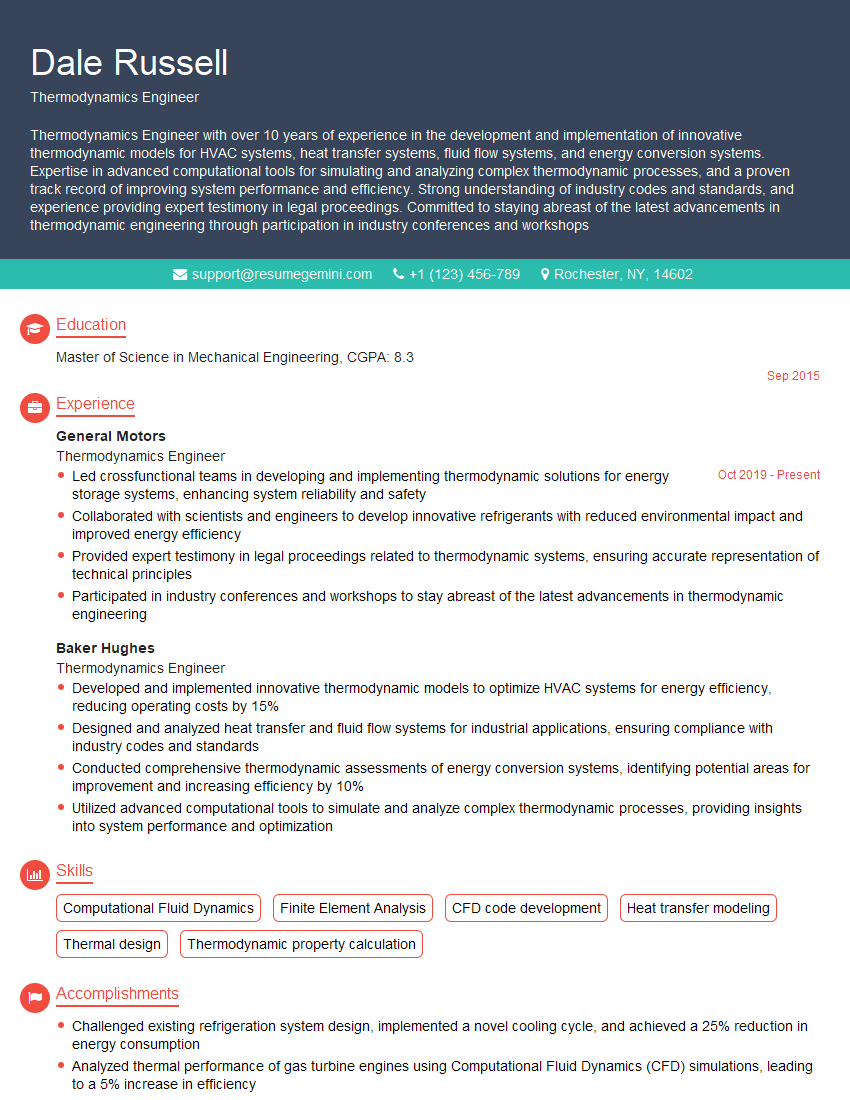
Mastering Engine Performance opens doors to exciting career opportunities in automotive engineering, research, and development. To significantly increase your job prospects, a well-crafted, ATS-friendly resume is essential. ResumeGemini is a trusted resource to help you build a professional resume that highlights your skills and experience effectively. Examples of resumes tailored specifically for Engine Performance roles are available to help guide you. Investing time in crafting a strong resume will significantly improve your chances of landing your dream job.
Explore more articles
Users Rating of Our Blogs
Share Your Experience
We value your feedback! Please rate our content and share your thoughts (optional).
What Readers Say About Our Blog
Really detailed insights and content, thank you for writing this detailed article.
IT gave me an insight and words to use and be able to think of examples