Every successful interview starts with knowing what to expect. In this blog, we’ll take you through the top Enterprise Asset Management (EAM) interview questions, breaking them down with expert tips to help you deliver impactful answers. Step into your next interview fully prepared and ready to succeed.
Questions Asked in Enterprise Asset Management (EAM) Interview
Q 1. Explain the core principles of Enterprise Asset Management (EAM).
Enterprise Asset Management (EAM) is a holistic approach to managing an organization’s physical assets throughout their lifecycle. Its core principles revolve around maximizing asset value and operational efficiency while minimizing risks and costs. This involves strategic planning, optimized maintenance, and informed decision-making based on data-driven insights.
- Planning and Optimization: Proactive planning ensures assets are acquired, utilized, and maintained effectively, aligning with business objectives.
- Data-Driven Decision Making: EAM leverages data to track asset performance, predict failures, and optimize maintenance schedules, leading to informed decisions.
- Risk Management: Identifying and mitigating potential risks associated with asset failure, downtime, and safety hazards is crucial. Regular inspections and maintenance help prevent unexpected breakdowns.
- Lifecycle Management: EAM considers the entire asset lifecycle, from acquisition and commissioning to decommissioning and disposal, ensuring optimal value extraction throughout.
- Collaboration and Communication: Effective communication and collaboration between different departments (maintenance, operations, procurement) are vital for successful EAM implementation.
Think of it like managing a valuable portfolio – you wouldn’t just buy stocks and forget about them. EAM is about proactively managing your assets to ensure they perform optimally and generate the highest return on investment (ROI).
Q 2. Describe your experience with different CMMS software (e.g., SAP PM, IBM Maximo, Infor EAM).
Throughout my career, I’ve had extensive experience with various CMMS (Computerized Maintenance Management System) software solutions, including SAP PM, IBM Maximo, and Infor EAM. Each platform offers unique strengths and caters to different organizational needs.
SAP PM: I’ve used SAP PM in large-scale manufacturing environments where its integration with other SAP modules (like FI/CO for financial accounting) proved invaluable for tracking maintenance costs and generating comprehensive reports. Its strength lies in its robust functionality and scalability, but it can be complex to implement and requires significant expertise.
IBM Maximo: I’ve found Maximo particularly effective in managing diverse asset portfolios across multiple sites. Its flexibility allows for customization and adaptation to specific industry needs. Its mobile capabilities enhanced field technicians’ efficiency by providing real-time access to work orders and asset information.
Infor EAM: Infor EAM, with its user-friendly interface, has been beneficial in environments needing quick deployment and straightforward asset management. It’s often preferred for smaller to mid-sized organizations.
My experience spans from system implementation and configuration to data migration, user training, and ongoing system optimization. I am comfortable working with different modules within each system and can adapt quickly to new platforms.
Q 3. How do you define and measure key performance indicators (KPIs) in EAM?
Key Performance Indicators (KPIs) in EAM are crucial for measuring the effectiveness of asset management strategies. They provide quantifiable metrics to track progress and identify areas for improvement. These KPIs should be aligned with overall business objectives.
- Mean Time Between Failures (MTBF): Measures the average time between asset failures. A higher MTBF indicates improved reliability.
- Mean Time To Repair (MTTR): Measures the average time taken to repair a failed asset. A lower MTTR signifies faster response times and reduced downtime.
- Overall Equipment Effectiveness (OEE): A comprehensive metric reflecting the efficiency of equipment utilization, considering availability, performance, and quality.
- Maintenance Backlog: Tracks the number of outstanding maintenance tasks. A high backlog indicates potential issues and risks.
- Maintenance Cost per Asset: Provides insights into the cost-effectiveness of maintenance activities.
- Asset Utilization Rate: Measures the percentage of time an asset is actively used.
For example, a manufacturing plant might track OEE to optimize production efficiency, while a transportation company might prioritize MTBF to minimize service disruptions. The selection of appropriate KPIs depends heavily on the specific context and organizational goals.
Q 4. What are the different types of maintenance strategies (e.g., preventive, predictive, corrective)?
Different maintenance strategies aim to optimize asset performance and minimize downtime. The choice of strategy often depends on the criticality of the asset and its potential impact on operations.
- Corrective Maintenance: This is reactive maintenance performed after an asset fails. It’s often the most costly approach due to unexpected downtime and emergency repairs.
- Preventive Maintenance: This involves scheduled maintenance tasks performed at predetermined intervals to prevent failures. This approach reduces unexpected downtime but may lead to unnecessary maintenance if schedules aren’t optimized.
- Predictive Maintenance: This uses data analysis and sensor technology to predict potential failures before they occur. It allows for proactive maintenance, maximizing uptime and minimizing costs. This often involves condition monitoring and advanced analytics.
- Condition-Based Maintenance (CBM): This focuses on maintaining an asset only when its condition indicates a need, thus avoiding unnecessary preventive maintenance.
Imagine a car – corrective maintenance is like fixing a flat tire after it’s already flat. Preventive maintenance is like regularly changing the oil. Predictive maintenance is like using sensors to detect potential tire wear before it leads to a flat.
Q 5. How do you prioritize maintenance tasks and optimize maintenance schedules?
Prioritizing maintenance tasks and optimizing maintenance schedules requires a structured approach. Several techniques can be employed:
- Criticality Analysis: Assets are categorized based on their criticality to operations. Critical assets receive higher priority.
- Risk Assessment: This identifies potential failure modes and their consequences. High-risk assets need more frequent maintenance.
- Maintenance Prioritization Matrix: This combines criticality and risk to determine the priority of maintenance tasks (e.g., a matrix with criticality and risk levels).
- Optimization Software: Advanced software solutions can optimize maintenance schedules based on various factors, including resource availability, maintenance costs, and asset criticality.
- Work Order Management: Efficiently managing work orders, assigning them to technicians, and tracking progress ensures tasks are completed on time.
A practical example: A hospital’s MRI machine would receive higher priority than a non-critical office printer. Optimization software could then schedule maintenance during off-peak hours to minimize disruptions.
Q 6. Explain your understanding of Total Cost of Ownership (TCO) in asset management.
Total Cost of Ownership (TCO) in asset management considers all direct and indirect costs associated with an asset throughout its lifecycle. It’s crucial for informed decision-making regarding asset acquisition, maintenance, and disposal.
TCO encompasses:
- Acquisition Cost: Initial purchase price, taxes, shipping, and installation.
- Operating Costs: Energy consumption, maintenance, repairs, and labor costs.
- Maintenance Costs: Preventive and corrective maintenance costs.
- Disposal Costs: Costs associated with decommissioning and disposal of the asset.
- Downtime Costs: Lost production, revenue, and potential penalties due to asset failures.
By carefully analyzing TCO, organizations can make informed choices about asset selection, optimizing maintenance strategies, and maximizing the return on their investment. For instance, an asset with a lower initial cost might have higher long-term maintenance costs, making it less cost-effective in the long run.
Q 7. Describe your experience with Root Cause Analysis (RCA) techniques.
Root Cause Analysis (RCA) is a systematic approach to identifying the underlying causes of problems, particularly asset failures. It’s crucial for preventing recurrence and improving asset reliability. Several techniques are used:
- 5 Whys: Repeatedly asking ‘why’ to drill down to the root cause. Simple yet effective for straightforward issues.
- Fishbone Diagram (Ishikawa Diagram): A visual tool to identify potential causes categorized by factors like people, methods, machines, materials, and environment.
- Fault Tree Analysis (FTA): A deductive method used to analyze the various combinations of events that can lead to a specific undesired event (failure).
- Failure Mode and Effects Analysis (FMEA): Proactive technique to identify potential failure modes, their effects, and severity to implement preventive measures.
For example, if a pump fails, the 5 Whys might reveal the root cause is due to inadequate lubrication, which was caused by a faulty lubrication system, which was caused by insufficient maintenance training for technicians, leading to the root cause being a lack of training.
Effective RCA requires thorough investigation, data collection, and collaboration across different teams to understand the system-wide factors contributing to the failure.
Q 8. How do you handle budget constraints in an EAM context?
Budget constraints are a common challenge in Enterprise Asset Management (EAM). Effectively managing them requires a strategic approach that prioritizes value and optimizes resource allocation. My approach begins with a thorough understanding of the overall budget and its limitations. Then, I prioritize projects and maintenance activities based on their impact on operational efficiency, safety, and regulatory compliance. This often involves a cost-benefit analysis, where we weigh the cost of a particular intervention against the potential financial losses from equipment failure or downtime.
For example, instead of replacing an aging asset immediately, we might opt for preventative maintenance to extend its lifespan. Or, we might prioritize critical assets that support core business operations over less critical ones. This often involves using techniques like weighted scoring or multi-criteria decision analysis to objectively rank potential projects. Finally, exploring alternative financing options, such as leasing or performance-based contracts, can also improve budget utilization.
In one project, we faced a significant budget cut. By carefully analyzing the asset criticality and implementing a robust preventative maintenance program, we were able to avoid major equipment failures and significantly reduce unplanned downtime, thereby saving more money than the initial budget reduction.
Q 9. Explain your experience with data analysis and reporting in EAM.
Data analysis and reporting are fundamental to effective EAM. My experience involves extracting, cleaning, and analyzing data from various sources within the EAM system, such as maintenance logs, work orders, and asset inventory details. This data allows us to monitor key performance indicators (KPIs), identify trends, and make data-driven decisions.
I’m proficient in using various tools for data analysis, including SQL, Excel, and specialized EAM reporting dashboards. I create customized reports to track asset performance, maintenance costs, and equipment reliability. For example, I’ve developed reports that highlight assets with high failure rates, which help in optimizing maintenance schedules and identifying potential areas for improvement. Furthermore, I use data visualization techniques to present complex data in a clear and understandable manner, enabling better communication and collaboration amongst stakeholders.
In a recent project, by analyzing historical maintenance data, I identified a pattern of recurring failures in a specific type of equipment. This analysis led to a proactive change in our maintenance strategy, reducing repair costs by 25% and minimizing downtime.
Q 10. How do you ensure compliance with regulatory requirements in asset management?
Compliance with regulatory requirements is paramount in EAM. My approach involves a deep understanding of applicable regulations, such as OSHA (Occupational Safety and Health Administration), EPA (Environmental Protection Agency), and industry-specific standards. This understanding informs our asset management strategies and ensures that all maintenance and operational activities are performed in compliance.
We establish clear processes and procedures to track compliance, including regular audits and inspections. We utilize the EAM system to document all maintenance activities, inspections, and regulatory compliance certifications. This ensures an auditable trail and facilitates easy access to compliance records. Training programs for all personnel involved in asset management are critical, focusing on both operational safety and regulatory compliance.
For instance, in the food processing industry, we implemented a rigorous sanitation program and meticulously documented all cleaning and disinfection activities to comply with FDA (Food and Drug Administration) regulations. This systematic approach minimized risks and ensured compliance.
Q 11. What are your experiences with risk management in asset management?
Risk management in asset management involves identifying, assessing, and mitigating potential risks that can affect the availability, reliability, and safety of assets. My experience encompasses various risk management techniques, including Failure Modes and Effects Analysis (FMEA) and risk assessment matrices.
We regularly conduct risk assessments to identify potential hazards associated with specific assets or maintenance activities. We use this information to develop risk mitigation strategies, such as implementing preventative maintenance programs, implementing safety protocols, and investing in protective equipment. The risk assessments are documented and reviewed periodically to ensure their ongoing relevance and effectiveness.
In one scenario, a risk assessment identified the potential for a major equipment failure that could cause a significant production disruption. This allowed us to implement a preventative maintenance strategy that proactively addressed the risks, preventing a costly shutdown.
Q 12. How do you manage stakeholder expectations in EAM projects?
Managing stakeholder expectations in EAM projects requires clear communication, transparency, and collaboration. My approach involves defining clear project goals and objectives from the outset, ensuring that all stakeholders are aligned on expectations.
I utilize regular communication channels, such as project meetings, progress reports, and presentations, to keep stakeholders informed of project status, milestones, and potential challenges. Active listening and addressing stakeholder concerns proactively are vital to maintain trust and support.
For example, when implementing a new EAM system, I held regular meetings with different stakeholder groups to gather their input and address their concerns. This collaborative approach ensured a smoother implementation and higher user adoption rate.
Q 13. Describe your experience with asset lifecycle management.
Asset lifecycle management (ALM) encompasses all aspects of an asset’s life, from acquisition and commissioning to decommissioning and disposal. My experience includes managing assets throughout their entire lifecycle, which involves detailed planning, execution, and monitoring at each stage.
This includes activities such as planning for acquisition, conducting due diligence, managing installation and commissioning, implementing preventative and corrective maintenance programs, and managing asset retirement and disposal. I leverage the EAM system to track all aspects of the asset’s life cycle, providing a comprehensive view of its performance, costs, and overall status.
For instance, we implemented a robust ALM process for our fleet of vehicles, which improved maintenance efficiency and reduced overall operating costs by 15% through better predictive maintenance and planned replacements.
Q 14. How do you integrate EAM with other enterprise systems (e.g., ERP, SCADA)?
Integrating EAM with other enterprise systems, such as ERP (Enterprise Resource Planning) and SCADA (Supervisory Control and Data Acquisition) systems, is crucial for optimizing efficiency and data flow. This integration provides a holistic view of the organization’s assets and operations.
The integration process often involves establishing data exchange protocols and interfaces to enable seamless data transfer between systems. This may involve using APIs (Application Programming Interfaces) or middleware solutions. For instance, integrating EAM with ERP facilitates accurate cost tracking and financial reporting. Integrating EAM with SCADA systems allows for real-time monitoring of asset performance and early detection of potential problems.
In a previous role, we integrated our EAM system with the ERP system, resulting in improved accuracy of maintenance cost allocation and better decision-making regarding asset replacement. The integration with SCADA allowed for early detection of anomalies in critical equipment, enabling timely intervention and preventing costly downtime.
Q 15. How do you utilize technology (e.g., IoT, AI) to improve EAM processes?
Technology is revolutionizing Enterprise Asset Management (EAM). Internet of Things (IoT) sensors embedded in assets provide real-time data on their operational status, including temperature, vibration, and pressure. This allows for predictive maintenance, shifting from reactive repairs to proactive interventions. For example, an IoT sensor on a pump might detect unusual vibrations, indicating potential failure before it actually occurs, allowing for scheduled maintenance to prevent costly downtime.
Artificial Intelligence (AI) further enhances this process. AI algorithms can analyze the vast amounts of data from IoT sensors and historical maintenance records to identify patterns and predict failures with greater accuracy. Machine learning models can learn from past maintenance events to optimize maintenance schedules and resource allocation. For instance, an AI system could analyze historical data to predict when a specific piece of equipment is most likely to fail, allowing for preemptive maintenance during off-peak hours to minimize disruption.
Furthermore, AI-powered image recognition can analyze visual inspections of assets, identifying wear and tear that might be missed by human inspectors. This improves the accuracy and efficiency of asset assessments. This could, for instance, detect corrosion on a pipeline earlier than manual inspection, preventing potential leaks and environmental damage.
Career Expert Tips:
- Ace those interviews! Prepare effectively by reviewing the Top 50 Most Common Interview Questions on ResumeGemini.
- Navigate your job search with confidence! Explore a wide range of Career Tips on ResumeGemini. Learn about common challenges and recommendations to overcome them.
- Craft the perfect resume! Master the Art of Resume Writing with ResumeGemini’s guide. Showcase your unique qualifications and achievements effectively.
- Don’t miss out on holiday savings! Build your dream resume with ResumeGemini’s ATS optimized templates.
Q 16. Explain your experience with asset valuation and depreciation.
Asset valuation and depreciation are crucial components of EAM. Accurate valuation is essential for financial reporting, investment decisions, and insurance purposes. I utilize several methods, including the cost model (original cost less accumulated depreciation), the fair value model (market price or discounted cash flow), and the replacement cost model (cost of replacing the asset with a similar one). The choice of method depends on the asset type, industry standards, and the intended purpose of the valuation.
Depreciation is the systematic allocation of an asset’s cost over its useful life. Common depreciation methods include straight-line (equal expense each year), declining balance (higher expense early in the asset’s life), and units of production (expense proportional to asset usage). I select the most appropriate method based on the asset’s usage pattern and expected lifespan. For example, a building might use straight-line depreciation, while a machine with heavy usage might be better suited to units of production. Accurate tracking of depreciation is vital for tax compliance and accurate financial reporting.
Q 17. How do you measure the effectiveness of your EAM strategies?
Measuring the effectiveness of EAM strategies requires a multi-faceted approach. Key Performance Indicators (KPIs) are critical for tracking progress and identifying areas for improvement. These KPIs can be categorized into several areas:
- Cost Optimization: Reduction in maintenance costs, improved inventory management, decreased downtime.
- Asset Availability: Increased uptime, reduced equipment failures, improved operational efficiency.
- Safety: Reduced safety incidents related to equipment failures or maintenance activities.
- Compliance: Adherence to regulatory requirements and internal standards.
We regularly track these KPIs using our EAM system’s reporting and analytics capabilities. For example, we might monitor the Mean Time Between Failures (MTBF) to track improvements in equipment reliability or the Mean Time To Repair (MTTR) to assess the efficiency of our maintenance teams. By analyzing these KPIs, we can identify areas needing attention and adjust our EAM strategies accordingly.
Q 18. How do you ensure data accuracy and integrity within an EAM system?
Data accuracy and integrity are paramount in EAM. Inaccurate data can lead to poor decision-making, wasted resources, and potentially catastrophic failures. We employ several strategies to ensure data quality:
- Data Validation Rules: Implementing rules within the EAM system to ensure data entered is within acceptable ranges and formats. For instance, preventing entry of negative values for asset hours or unrealistic dates.
- Regular Data Audits: Conducting periodic audits to compare data within the EAM system against physical asset inspections and other relevant sources.
- Data Reconciliation: Reconciling data from different sources to identify and resolve discrepancies.
- Data Cleansing: Regularly cleaning the database to remove duplicate entries, inconsistencies, and outdated information.
- Access Control: Restricting access to the EAM system to authorized personnel only, and implementing change management procedures to track data modifications.
We also encourage a culture of data ownership and accountability throughout the organization, making everyone responsible for the accuracy of the information they contribute.
Q 19. Describe a time you had to troubleshoot a critical asset failure.
In a previous role, a critical compressor failure at a major production facility threatened significant production losses. The initial diagnosis pointed to a simple motor bearing failure. However, after replacing the bearing, the compressor continued to malfunction.
We systematically investigated other potential causes, using a combination of technical expertise and data analysis from the EAM system. This involved reviewing historical maintenance records, analyzing sensor data from the compressor (vibration, temperature, pressure), and consulting with engineering specialists. We eventually discovered a previously undetected crack in the compressor housing, undetectable through normal visual inspection. The crack had been gradually worsening, eventually leading to the bearing failure as a secondary consequence.
This situation highlighted the importance of thorough root cause analysis and the need to leverage both human expertise and data-driven insights for effective troubleshooting. The prompt repair, guided by accurate data and analysis, avoided significant financial losses and maintained production schedules.
Q 20. How do you improve the efficiency of maintenance operations?
Improving the efficiency of maintenance operations requires a multi-pronged approach:
- Preventive Maintenance Optimization: Moving from time-based maintenance to condition-based maintenance, using data from IoT sensors and predictive analytics to schedule maintenance only when necessary.
- Work Order Management: Streamlining work order processes, reducing delays, and improving communication between maintenance teams and other departments. This might involve implementing mobile work order management applications.
- Inventory Management: Optimizing spare parts inventory to minimize storage costs while ensuring parts are available when needed. This could involve techniques like Just-in-Time (JIT) inventory management.
- Training and Skill Development: Investing in training for maintenance personnel to improve their skills and knowledge, leading to faster repairs and fewer errors.
- Performance Monitoring: Regularly tracking maintenance KPIs (e.g., MTTR, MTBF) and identifying areas for improvement through data analysis.
By focusing on these areas, we can significantly reduce maintenance costs, minimize downtime, and improve the overall efficiency of maintenance operations.
Q 21. Explain your understanding of reliability-centered maintenance (RCM).
Reliability-Centered Maintenance (RCM) is a systematic approach to maintenance that focuses on preserving the functions of assets rather than merely maintaining components. Instead of a rigid schedule, it prioritizes functions and their potential failure modes. It’s about asking ‘What could go wrong and what are the consequences?’
The RCM process typically involves these steps:
- Functional Analysis: Defining the functions of each asset and its essential sub-functions.
- Failure Modes and Effects Analysis (FMEA): Identifying all potential failure modes, their causes, and their effects on the asset’s functions.
- Failure Consequence Analysis: Assessing the severity of each failure mode’s consequences, considering safety, production impact, and environmental concerns.
- Failure Mode Selection: Determining the appropriate maintenance strategy for each failure mode (e.g., preventive, predictive, corrective).
- Maintenance Task Selection: Developing specific maintenance tasks to address each chosen strategy.
RCM aims to optimize maintenance by focusing resources on tasks that prevent critical failures and have the greatest impact on asset reliability and operational performance. It leads to a more efficient and cost-effective maintenance strategy compared to time-based or reactive approaches.
Q 22. Describe your experience with implementing an EAM system.
Implementing an EAM system is a multifaceted project requiring careful planning and execution. My experience involves a systematic approach, starting with a thorough needs assessment to understand the organization’s specific requirements. This includes identifying key stakeholders, their needs, and pain points within their current asset management processes. For example, in a previous role at a large manufacturing facility, we conducted extensive interviews with maintenance staff, production managers, and finance teams to understand their current challenges and expectations from a new system.
Next, I focus on selecting the right EAM software. This involves evaluating various vendors, considering factors such as scalability, integration capabilities with existing systems (like ERP), user-friendliness, and cost. The chosen system should align seamlessly with the organization’s overall business strategy and future growth plans. In the manufacturing example, we opted for a cloud-based solution that allowed for remote access and real-time data updates.
Implementation involves data migration from legacy systems, rigorous testing, and user training. We utilized a phased rollout approach, starting with a pilot program in a specific department before expanding across the organization. This minimizes disruption and allows for continuous improvement based on user feedback. Post-implementation, ongoing monitoring and support are critical to ensure optimal system performance and user satisfaction. Regular system updates and training sessions help maintain efficiency and address any emerging issues.
Q 23. How do you manage change requests in an EAM environment?
Managing change requests within an EAM environment is crucial for maintaining system integrity and meeting evolving business needs. My approach involves a structured process that begins with a formal request submission through a designated channel (e.g., a ticketing system). Each request is then evaluated against predefined criteria, such as its impact on system functionality, resource availability, and alignment with organizational priorities.
Prioritization is key. We use a system that weighs urgency and impact to rank change requests. A simple matrix helps visually represent this: high urgency/high impact requests are addressed immediately, while low urgency/low impact ones might be scheduled for a later release.
Implementation of approved changes is meticulously documented, with thorough testing to ensure that the change doesn’t introduce any unforeseen issues or bugs. We also maintain a robust change log that tracks all changes, their impact, and the individuals involved. This audit trail is essential for compliance and troubleshooting.
Q 24. How do you handle conflicting priorities in maintenance scheduling?
Conflicting priorities in maintenance scheduling are a common challenge. I use a multi-pronged approach to manage them effectively. First, a clear prioritization framework is essential. This could involve assigning risk scores to each task based on the potential consequences of failure (safety, production downtime, cost). For instance, a critical piece of equipment with a high failure risk gets priority over a less critical asset.
Secondly, advanced scheduling techniques like Critical Path Method (CPM) or Program Evaluation and Review Technique (PERT) can help optimize the schedule. These methods identify dependencies between tasks and help determine the most efficient sequence. Visual tools like Gantt charts allow for a clear representation of the schedule and facilitate better communication among stakeholders.
Thirdly, open communication is paramount. Regular meetings with maintenance teams, production managers, and other stakeholders allow for collaborative decision-making and conflict resolution. Transparency in the scheduling process helps everyone understand the rationale behind priority decisions. Finally, flexibility is key. Unexpected events require adjustments; a well-defined process for handling these deviations, including escalation paths, is critical.
Q 25. What are your experiences with developing and implementing EAM policies and procedures?
Developing and implementing EAM policies and procedures is fundamental to ensuring consistent and effective asset management. My approach starts with a thorough understanding of industry best practices and regulatory requirements. I then tailor these to the specific needs and context of the organization. This involves working closely with all stakeholders to identify key areas requiring standardization, such as work order management, preventive maintenance scheduling, and inventory control.
The policies and procedures are documented clearly and concisely, using plain language and avoiding technical jargon wherever possible. They should be easily accessible to all relevant personnel, perhaps through an internal knowledge base or intranet. A comprehensive training program ensures that all employees understand and adhere to the established procedures.
Regular review and updates are critical. The policies and procedures should be revisited periodically to reflect changes in technology, business needs, and regulatory requirements. This iterative approach ensures that the EAM framework remains relevant and effective over time. We use feedback mechanisms – surveys, focus groups – to ensure ongoing improvement.
Q 26. How do you train and develop your team members on EAM best practices?
Training and development are vital for maximizing the effectiveness of an EAM system. My approach focuses on a blended learning strategy, combining classroom instruction with hands-on training and ongoing support. We tailor training to different user roles, focusing on the specific functionalities each role requires. For example, maintenance technicians receive detailed training on work order management, while managers focus on reporting and analytics.
We use a variety of methods, including online tutorials, interactive workshops, and on-the-job coaching. Regular refresher courses and advanced training sessions keep employees updated on new features and best practices. We also encourage employees to participate in industry conferences and workshops to stay abreast of the latest trends.
Measuring training effectiveness is critical. We use feedback forms, performance evaluations, and system usage data to assess the impact of training and identify areas for improvement. A successful training program creates a culture of continuous learning and empowers employees to optimize the use of the EAM system.
Q 27. Describe your experience with contract management in EAM.
Contract management within an EAM system is crucial for efficient outsourcing of maintenance and repair services. My approach starts with a robust contract creation process that clearly defines the scope of work, service level agreements (SLAs), payment terms, and key performance indicators (KPIs). This ensures transparency and accountability. We often use templates and standardized clauses to ensure consistency and mitigate risks.
The system should track all contract details, including start and end dates, milestones, and performance against SLAs. Automated alerts and reporting functionalities help proactively manage contracts, highlighting upcoming renewals, potential breaches, and performance deviations. This enables proactive intervention and prevents potential financial or operational disruptions.
Regular performance reviews are essential. We use the data within the EAM system to monitor contractor performance against agreed-upon KPIs, addressing any issues promptly and collaboratively. A system for managing contract documents ensures easy access to relevant information for all stakeholders.
Q 28. How do you ensure the security and integrity of EAM data?
Ensuring the security and integrity of EAM data is paramount. This involves a multi-layered approach. First, robust access controls are essential. We implement role-based access control (RBAC) to restrict access to sensitive data based on user roles and responsibilities. This prevents unauthorized access and modification of information. For instance, a maintenance technician would have access to work orders but not financial data.
Second, data encryption is crucial, both in transit and at rest. This protects data from unauthorized access, even if the system is compromised. Regular data backups and disaster recovery planning are essential for business continuity. We implement both on-site and off-site backups, following a well-defined recovery plan.
Third, regular security audits and vulnerability scans identify and address potential security weaknesses. These audits assess the effectiveness of existing security measures and identify areas for improvement. Finally, a comprehensive security policy, communicated and enforced across the organization, is critical for fostering a security-conscious culture. This includes policies on password management, data handling, and incident reporting.
Key Topics to Learn for Enterprise Asset Management (EAM) Interview
Preparing for an EAM interview requires a well-rounded understanding of both theoretical concepts and practical applications. Focus on demonstrating your ability to solve real-world problems using EAM principles.
- Asset Lifecycle Management: Understanding the complete lifecycle of an asset, from acquisition to disposal, including maintenance, repair, and upgrades. Practical application: Explain how you would optimize the lifecycle of a critical piece of equipment to maximize its lifespan and minimize downtime.
- Maintenance Strategies: Proficiency in various maintenance strategies such as preventative, predictive, and corrective maintenance. Practical application: Discuss the advantages and disadvantages of each strategy and when you might choose one over another. Consider scenarios with differing asset criticality and cost factors.
- Work Order Management: Understanding the process of creating, assigning, tracking, and completing work orders efficiently. Practical application: Describe how you would streamline a work order process to improve response times and reduce backlog.
- Data Analysis and Reporting: Ability to analyze EAM data to identify trends, predict future maintenance needs, and optimize resource allocation. Practical application: Explain how you would use EAM data to justify a capital expenditure request for a new piece of equipment.
- Inventory Management: Managing spare parts and inventory levels effectively to minimize downtime and reduce costs. Practical application: Describe a situation where you had to optimize inventory levels to avoid stockouts or excess inventory.
- EAM Software & Systems: Familiarity with common EAM software platforms (mentioning specific popular ones is acceptable without linking). Practical application: Explain your experience with different EAM systems and how you would approach learning a new one.
- Compliance and Regulations: Understanding relevant industry regulations and safety standards related to asset management. Practical application: Describe how you would ensure compliance with relevant regulations in an EAM context.
Next Steps
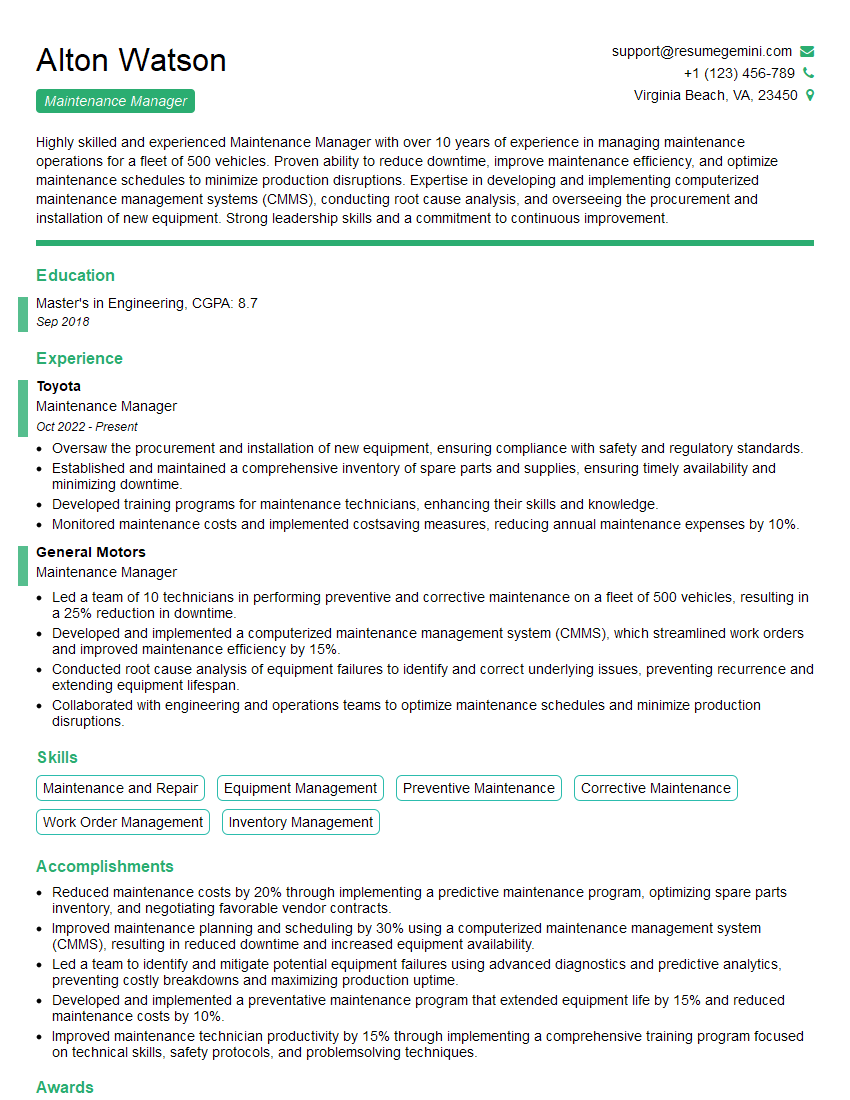
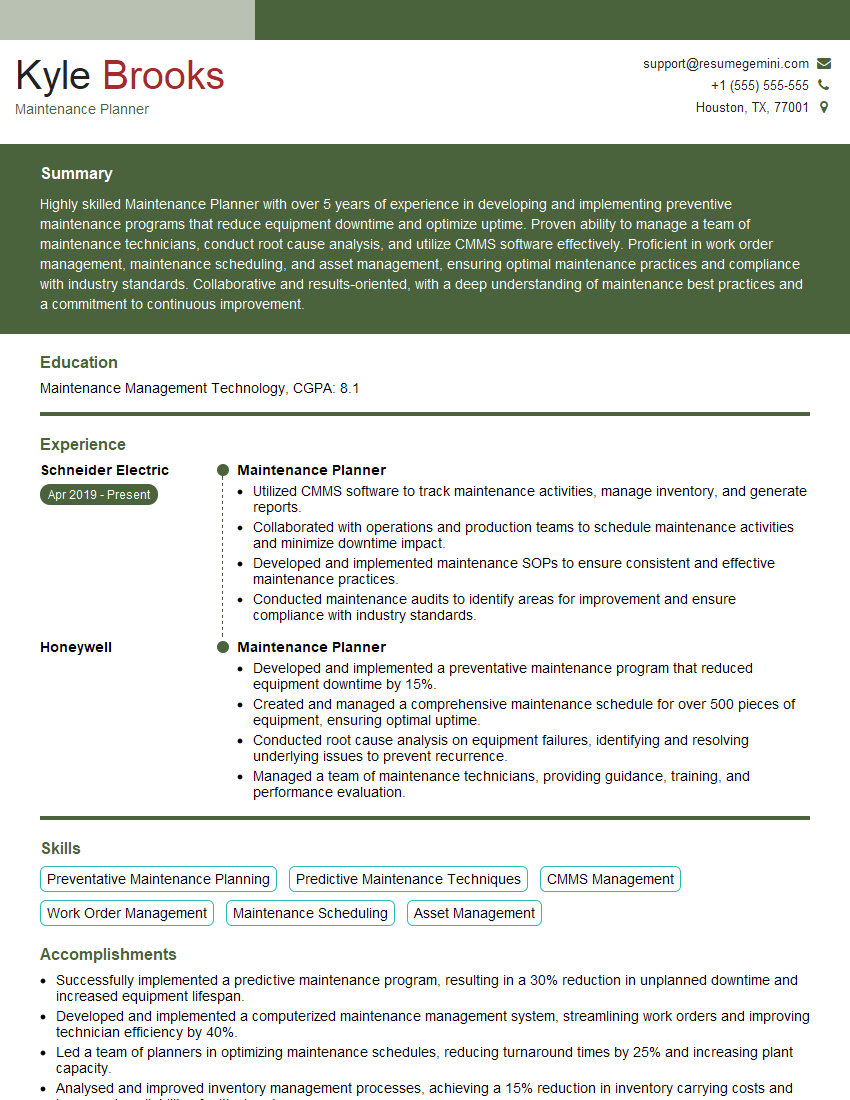
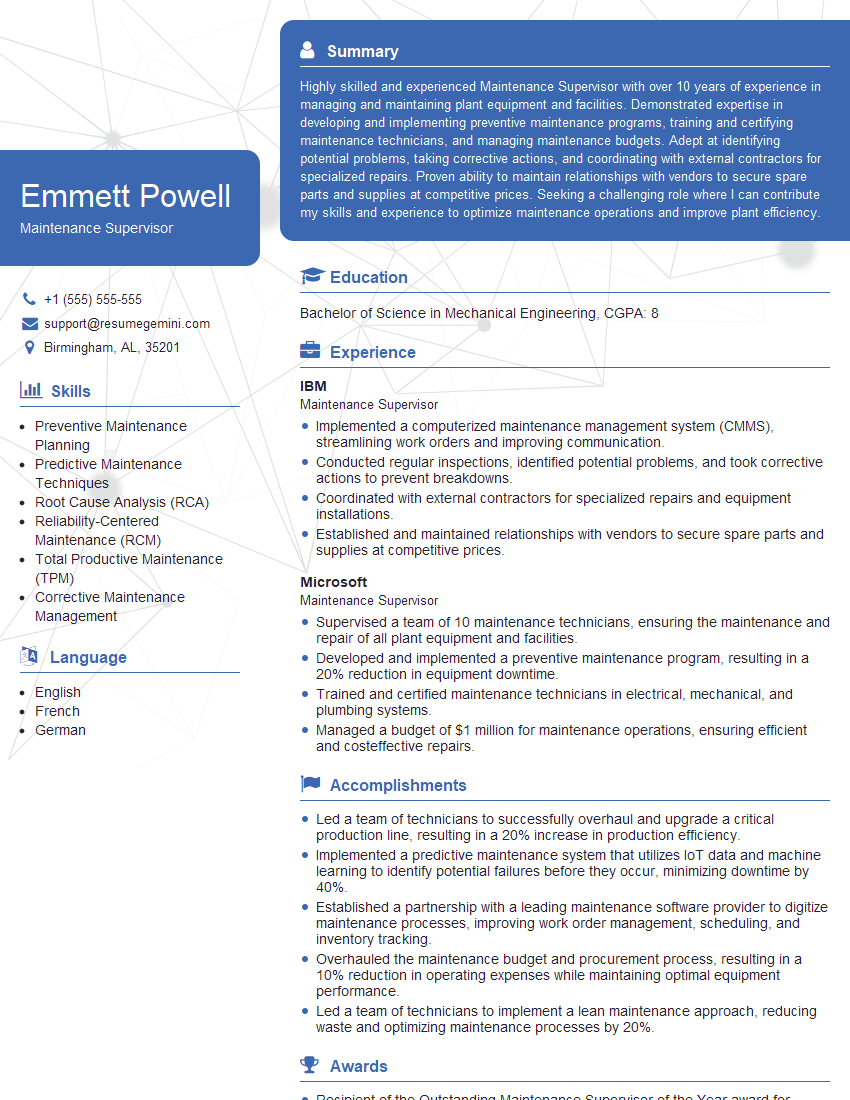
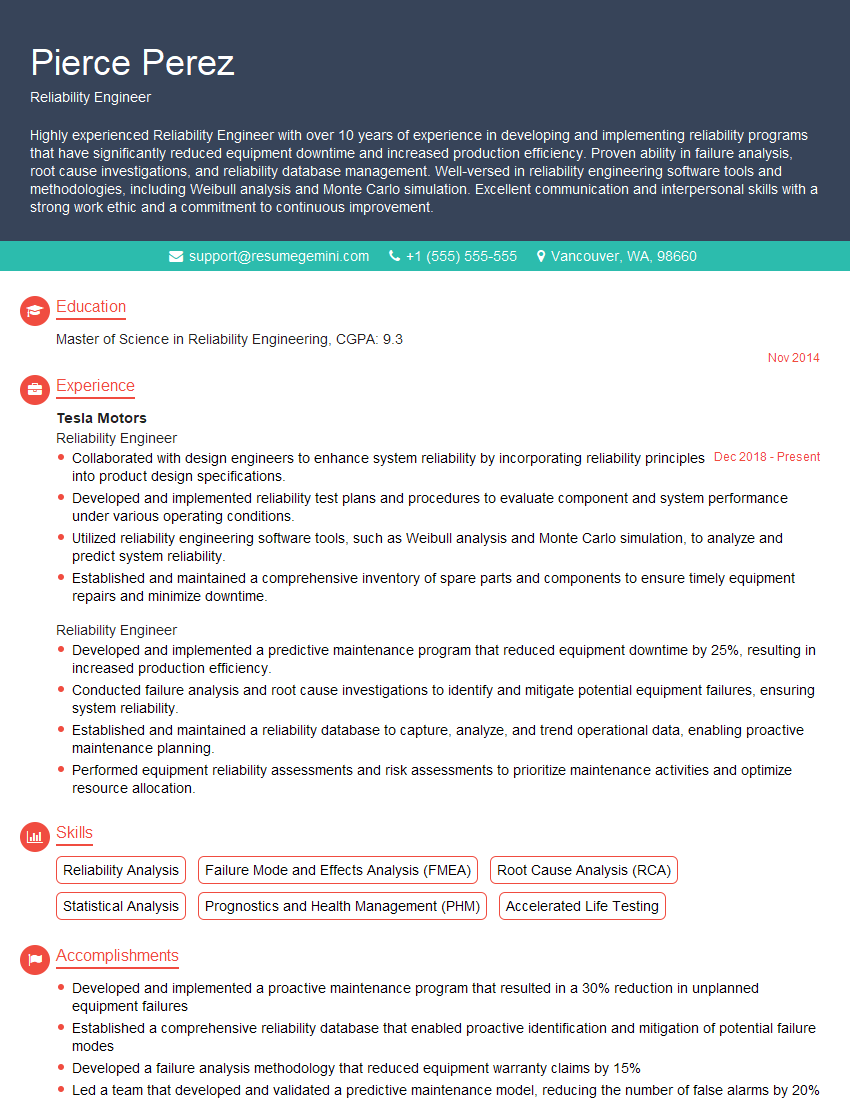
Mastering Enterprise Asset Management opens doors to exciting career opportunities with significant growth potential. A strong understanding of EAM principles and practical applications is highly sought after by employers. To maximize your chances, creating an ATS-friendly resume is crucial. ResumeGemini is a trusted resource that can help you build a professional and impactful resume tailored to the EAM field. Examples of EAM-focused resumes are available to guide you. Invest time in crafting a compelling resume; it’s your first impression and a key to unlocking your career aspirations.
Explore more articles
Users Rating of Our Blogs
Share Your Experience
We value your feedback! Please rate our content and share your thoughts (optional).
What Readers Say About Our Blog
Really detailed insights and content, thank you for writing this detailed article.
IT gave me an insight and words to use and be able to think of examples