The thought of an interview can be nerve-wracking, but the right preparation can make all the difference. Explore this comprehensive guide to Epidemiology and Disease Surveillance interview questions and gain the confidence you need to showcase your abilities and secure the role.
Questions Asked in Epidemiology and Disease Surveillance Interview
Q 1. Define the epidemiological triad and explain its significance in disease investigation.
The epidemiological triad is a fundamental model for understanding the etiology of infectious diseases. It illustrates the interaction between three elements: the agent (the infectious organism, e.g., bacteria, virus, parasite), the host (the susceptible human or animal), and the environment (the external factors that influence the interaction between the agent and host, such as climate, sanitation, and socio-economic conditions).
Imagine a triangle: each corner represents one element. For an infectious disease to occur, all three elements must be present and interact. For example, Salmonella (agent) contaminates chicken (environment), which is then consumed by a person (host) with a compromised immune system. This results in a salmonellosis outbreak. Understanding the triad is crucial for disease investigation because it guides the process of identifying risk factors and implementing effective control measures. We can disrupt the chain of infection by targeting any of these three elements. We might improve sanitation (environment) to reduce contamination, vaccinate the host population to enhance immunity, or develop better food safety guidelines to reduce the agent’s spread.
Q 2. What are the key steps involved in conducting a disease outbreak investigation?
Investigating a disease outbreak is a systematic process. Key steps include:
- Verify the diagnosis: Confirm that the cases are truly instances of the disease in question using lab testing or clinical confirmation.
- Define and identify cases: Establish a case definition (criteria for classifying someone as a case) and systematically identify and record cases through active surveillance (actively searching for cases) and passive surveillance (waiting for reports).
- Describe the outbreak by time, place, and person: This crucial step helps identify patterns and potential risk factors using epidemiological curves (plotting cases over time), mapping cases geographically, and characterizing affected populations.
- Formulate a hypothesis: Propose potential explanations for the outbreak based on the descriptive epidemiology. This may involve identifying a common source of exposure.
- Test the hypothesis: Conduct analytical studies, such as case-control or cohort studies, to evaluate the strength of the association between the suspected exposure(s) and the disease.
- Implement control measures: Put into effect strategies to prevent further spread, such as quarantine, vaccination, or improved sanitation, based on the findings of the investigation.
- Communicate findings: Share the results of the investigation with relevant stakeholders, including public health officials, the media, and the affected community.
A successful investigation requires meticulous data collection, clear communication, and collaborative work among various professionals.
Q 3. Explain the difference between incidence and prevalence.
Incidence and prevalence are two key measures used to describe the frequency of a disease in a population. They differ in what they measure:
- Incidence refers to the rate of new cases of a disease that occur during a specific time period in a defined population. Think of it as the speed of new disease occurrence. It is usually expressed as the number of new cases per 100,000 person-years, for example.
- Prevalence refers to the proportion of individuals in a population who have a disease at a specific point in time. It’s a snapshot of how common the disease is at a given moment. It’s expressed as the number of existing cases per 100,000 people at that moment.
For example, consider influenza during a typical winter season. The incidence would represent the number of new flu cases reported each week, while the prevalence would represent the total number of people with the flu at any particular time during the winter.
Q 4. Describe different study designs used in epidemiological research (e.g., cohort, case-control, cross-sectional).
Epidemiological studies use various designs to investigate disease patterns and causes:
- Cohort study: Follows a group of people (cohort) over time to observe the incidence of disease in those exposed to a risk factor compared to those not exposed. This is like following two groups, one exposed to something and one not, over time to see which group develops the disease more often.
- Case-control study: Compares people with a disease (cases) to a group of people without the disease (controls) to identify risk factors. We start by identifying who has the disease (cases) and who doesn’t (controls) and then look backwards to see what exposures differed between the two groups. This is more efficient than a cohort study but is more susceptible to bias.
- Cross-sectional study: Assesses the prevalence of disease and exposures in a population at a single point in time. It provides a snapshot of the situation at that specific time. This design is useful for quickly estimating prevalence but doesn’t establish causality.
The choice of study design depends on several factors, including the research question, available resources, and the nature of the disease.
Q 5. How do you calculate and interpret relative risk and odds ratio?
Relative risk (RR) and odds ratio (OR) are measures of association used to quantify the relationship between an exposure and an outcome in epidemiological studies. They both assess whether the exposure increases or decreases the likelihood of the outcome:
- Relative Risk (RR): The ratio of the incidence rate of disease in the exposed group to the incidence rate of disease in the unexposed group. It’s used primarily in cohort studies. An RR of 2 means that the exposed group is twice as likely to develop the disease.
- Odds Ratio (OR): The ratio of the odds of exposure among cases to the odds of exposure among controls. It’s primarily used in case-control studies. An OR of 2 indicates that cases were twice as likely to have been exposed to the risk factor.
Both are interpreted similarly; an RR or OR > 1 suggests an increased risk, = 1 indicates no association, and < 1 suggests a decreased risk (protective effect). However, the OR is an approximation of the RR, and it becomes less accurate as the disease becomes more common.
Q 6. What are confounding factors, and how can they be controlled in epidemiological studies?
Confounding factors are extraneous variables that influence both the exposure and the outcome, leading to a spurious association between them. They can distort the true relationship we are trying to measure. For example, let’s say we are studying the link between coffee consumption (exposure) and lung cancer (outcome). Smoking is a confounder because it influences both coffee drinking (some smokers drink more coffee) and lung cancer (smoking significantly increases the risk of lung cancer). It appears as if coffee may be causing lung cancer but that’s because both are related to smoking.
Methods for controlling confounding include:
- Randomization: Randomly assigning participants to exposure groups in experimental studies.
- Restriction: Including only participants with similar characteristics (e.g., non-smokers) in the study.
- Stratification: Analyzing the data separately for different levels of the confounding variable (e.g., analyzing separately for smokers and non-smokers).
- Statistical adjustment: Using statistical techniques such as multiple regression to adjust for the effects of confounders.
Q 7. Explain the concept of bias in epidemiological research and how to mitigate it.
Bias is a systematic error in the design, conduct, or analysis of a study that leads to inaccurate results. Several types of bias exist, including:
- Selection bias: Occurs when the selection of participants into the study is not representative of the population of interest. For example, if you only interview patients who visit a specific clinic you might obtain biased results.
- Information bias: Occurs when information about exposure or outcome is measured inaccurately or inconsistently. For example, using recall bias (when someone doesn’t accurately remember past exposures) can create errors.
- Interviewer bias: Occurs when the interviewer influences the respondent’s answers. For example, an interviewer may subtly influence responses based on their preconceived notions.
Mitigation strategies include:
- Careful study design: Using appropriate sampling methods and well-defined inclusion/exclusion criteria.
- Standardized data collection methods: Using validated questionnaires, standardized protocols, and blinding (when possible), to reduce subjectivity.
- Objective outcome measures: Using objective measures whenever possible to avoid reliance on subjective assessment.
- Statistical adjustments: Employing techniques to account for some biases in the analysis phase.
Careful planning and rigorous execution are crucial to minimize bias and ensure the validity of epidemiological findings.
Q 8. Describe different types of surveillance systems used in public health.
Public health surveillance systems are crucial for monitoring disease patterns and informing interventions. They come in various types, each with its strengths and weaknesses. We broadly categorize them as passive, active, and sentinel systems.
- Passive Surveillance: This is the most common type, relying on the routine reporting of cases by healthcare providers to public health agencies. Think of it like a mailbox – reports arrive, but we don’t actively seek them out. While cost-effective, it’s susceptible to underreporting, especially for diseases with mild symptoms or those not routinely tested for. For example, many cases of the common cold go unreported.
- Active Surveillance: This is a more proactive approach. Public health officials actively contact healthcare providers and laboratories to identify cases, often during an outbreak investigation or when there’s a concern about a specific disease. Imagine a detective actively investigating a crime – they’re not waiting for reports, they’re actively searching for clues. This method is more accurate but requires significantly more resources.
- Sentinel Surveillance: This uses a selected network of healthcare providers or laboratories to monitor disease trends. It’s like having strategically placed weather stations – a smaller sample provides a reliable representation of the larger picture. Sentinel surveillance is particularly useful for tracking emerging infectious diseases or monitoring the effectiveness of vaccination programs. For instance, monitoring influenza outbreaks often uses sentinel surveillance.
- Syndromic Surveillance: This monitors pre-diagnosis symptoms and other indicators (like absenteeism from school) to detect potential outbreaks early. This system is valuable for rapid response to emerging health threats. This is akin to a smoke detector that warns you about a potential fire *before* it is fully ablaze.
The choice of surveillance system depends on factors such as the disease being monitored, available resources, and the objectives of the surveillance program.
Q 9. What are the key performance indicators (KPIs) used to assess the effectiveness of a disease surveillance system?
Key Performance Indicators (KPIs) for disease surveillance systems are crucial for evaluating their effectiveness. They can be grouped into indicators of timeliness, sensitivity, completeness, and representativeness.
- Timeliness: How quickly data is collected, processed, and disseminated. A shorter reporting delay is better, allowing for rapid public health responses.
- Sensitivity: The ability of the system to detect true cases of the disease. High sensitivity means fewer missed cases. This can be measured by comparing the surveillance data to a gold standard, like a comprehensive population-based survey.
- Completeness: The proportion of actual cases that are reported to the surveillance system. Completeness is essential for accurate estimations of disease burden.
- Representativeness: The extent to which the surveillance data accurately reflects the true incidence and distribution of the disease in the population. A bias towards reporting from certain areas or demographic groups would lower representativeness.
- Predictive Validity: The ability of the system to predict future outbreaks or trends.
- Positive Predictive Value (PPV): The proportion of reported cases that are actually true cases of the disease. A high PPV means fewer false alarms.
Regularly assessing these KPIs helps to identify areas for improvement and optimize the performance of the surveillance system. For example, low completeness might indicate that healthcare providers require additional training or that reporting mechanisms need to be streamlined.
Q 10. How do you assess the validity and reliability of epidemiological data?
Assessing the validity and reliability of epidemiological data is critical for drawing accurate conclusions. Validity refers to the accuracy of the data, while reliability refers to its consistency. We assess both using several approaches.
- Validity: We assess validity through internal and external validation. Internal validity examines if the study design and methods accurately measure what they intend to measure. External validity assesses if the findings can be generalized to other populations or settings. We might compare our data to data from other similar studies.
- Reliability: This is evaluated by examining the consistency of the data. We can use test-retest reliability (repeating measurements to see if results are similar), inter-rater reliability (comparing results from multiple observers), and internal consistency (measuring consistency among different items in a questionnaire).
For example, using a validated questionnaire with established reliability is crucial for data quality. Similarly, ensuring consistent data collection methods across different sites is vital. We can use statistical methods like Kappa statistics to measure agreement between different raters or methods. Systematic reviews and meta-analyses can further help to evaluate the overall validity and reliability of evidence across multiple studies.
Q 11. Explain the role of statistical software (e.g., R, SAS, Stata) in epidemiological analysis.
Statistical software like R, SAS, and Stata are indispensable tools in epidemiological analysis. They provide a powerful arsenal of statistical methods to analyze large and complex datasets, perform hypothesis testing, and create visualizations.
- Data Management: These packages facilitate efficient data cleaning, transformation, and management, handling missing data and ensuring data integrity.
- Descriptive Statistics: Calculating summary statistics (means, medians, standard deviations, frequencies), creating tables, and generating descriptive figures.
- Inferential Statistics: Performing regression analysis (linear, logistic, Cox proportional hazards), survival analysis, time series analysis, and hypothesis testing to draw inferences about populations from sample data. For instance, we might use logistic regression to model the risk of developing a disease based on various risk factors.
- Data Visualization: Generating graphs, charts, and maps to visualize data patterns and relationships, making complex information more accessible.
ggplot2in R is a particularly powerful tool for creating publication-quality graphics.
Example: #R code snippet for a simple linear regressionmodel <- lm(outcome ~ predictor, data = mydata)summary(model)
These tools are essential for researchers to analyze complex data, identify trends, and accurately interpret results for impactful public health actions.
Q 12. How do you interpret a p-value and confidence interval?
The p-value and confidence interval are crucial for interpreting statistical significance and the precision of estimates in epidemiological studies.
- P-value: The p-value represents the probability of observing the obtained results (or more extreme results) if there were no true effect (the null hypothesis is true). A p-value less than a pre-specified significance level (typically 0.05) suggests that the results are statistically significant, meaning we reject the null hypothesis. However, a small p-value doesn’t automatically imply practical significance or clinical importance. A p-value of 0.01 means there’s a 1% chance of observing the results if there’s no real effect. It does *not* mean there is a 99% chance the effect is real.
- Confidence Interval (CI): A CI provides a range of values within which the true population parameter is likely to fall with a specified level of confidence (e.g., 95%). A 95% CI means that if we repeated the study many times, 95% of the calculated CIs would contain the true population parameter. A narrower CI indicates greater precision in the estimate. For example, a 95% CI for the relative risk of lung cancer in smokers might be 1.5-2.0, indicating that smoking increases the risk of lung cancer by a factor of 1.5 to 2.0. A wide CI indicates more uncertainty.
It’s crucial to interpret both the p-value and the confidence interval together. A statistically significant result (p<0.05) with a wide confidence interval suggests that the result might be unreliable due to limited precision.
Q 13. Describe different methods for data visualization in epidemiology.
Data visualization is key to communicating epidemiological findings effectively. Various methods help present complex information in an easily understandable way.
- Line graphs: Ideal for showing trends over time, like the incidence of a disease over several years.
- Bar charts: Useful for comparing frequencies or proportions across different categories, for example, the prevalence of a disease across different age groups.
- Pie charts: Useful for displaying proportions of a whole, such as the distribution of cases across different geographic locations.
- Scatter plots: Showing the relationship between two continuous variables. For example, correlating age with blood pressure.
- Maps: Excellent for visualizing geographical distribution of diseases, identifying clusters or hotspots.
- Box plots: For comparing the distribution of a continuous variable across different groups.
Choosing the appropriate visualization method depends on the data type and the message being conveyed. Effective visualizations make complex data accessible to a wider audience, facilitating better communication and decision-making.
Q 14. Explain the importance of ethical considerations in epidemiological research.
Ethical considerations are paramount in epidemiological research. They guide the design, conduct, and reporting of studies to ensure the protection of human participants and the integrity of the research process.
- Informed Consent: Participants should be fully informed about the study’s purpose, procedures, risks, and benefits before participating. They should have the right to withdraw at any time without penalty.
- Confidentiality and Privacy: Protecting the anonymity and confidentiality of participants’ data is essential. Data should be de-identified whenever possible, and strict security measures should be implemented to prevent unauthorized access.
- Data Security: Ensuring appropriate security protocols are in place to safeguard sensitive data. Data should be stored securely and access should be restricted to authorized personnel.
- Justice and Equity: Studies should be designed and conducted in a way that avoids bias and ensures fairness to all populations. Vulnerable populations should be protected from exploitation.
- Conflicts of Interest: Researchers should disclose any potential conflicts of interest that might influence their research findings. Transparency is key in maintaining research integrity.
- IRB Review: All epidemiological research involving human subjects should undergo rigorous ethical review by an Institutional Review Board (IRB) to ensure adherence to ethical guidelines.
Adherence to ethical principles ensures that epidemiological research contributes to the advancement of public health while respecting the rights and well-being of all involved.
Q 15. How do you communicate complex epidemiological findings to a non-technical audience?
Communicating complex epidemiological findings to a non-technical audience requires translating technical jargon into plain language and focusing on the implications for public health. I use several strategies. First, I start with the ‘so what?’ – explaining the key finding in simple terms and its relevance to the audience. For example, instead of saying ‘the relative risk of contracting influenza was 1.8 among unvaccinated individuals,’ I might say, ‘People who didn’t get the flu shot were almost twice as likely to get the flu.’ Second, I use visuals such as charts and graphs that are easy to understand. Complex data are presented in simplified charts; a bar graph showing the incidence rates of a disease in different population groups is much more impactful than a table of raw numbers. Third, I use analogies and real-world examples to illustrate complex concepts. Explaining the concept of herd immunity using a visual analogy of a shield protecting a population is very effective. Fourth, I encourage questions and actively listen to ensure understanding. A Q&A session allows me to address specific concerns and clarify any remaining uncertainties. Finally, I tailor my communication style to the specific audience, considering their prior knowledge and level of interest. For instance, a presentation for policymakers would differ significantly from a presentation for the general public.
Career Expert Tips:
- Ace those interviews! Prepare effectively by reviewing the Top 50 Most Common Interview Questions on ResumeGemini.
- Navigate your job search with confidence! Explore a wide range of Career Tips on ResumeGemini. Learn about common challenges and recommendations to overcome them.
- Craft the perfect resume! Master the Art of Resume Writing with ResumeGemini’s guide. Showcase your unique qualifications and achievements effectively.
- Don’t miss out on holiday savings! Build your dream resume with ResumeGemini’s ATS optimized templates.
Q 16. Describe your experience with specific epidemiological modeling techniques.
My experience encompasses a variety of epidemiological modeling techniques. I’ve extensively used compartmental models, such as the SIR (Susceptible-Infectious-Recovered) model, to simulate the spread of infectious diseases and assess the impact of interventions like vaccination campaigns. For example, during a measles outbreak, I used an SIR model to project the number of expected cases under different vaccination coverage scenarios, informing public health resource allocation. I am also proficient in agent-based modeling, which allows for greater detail and complexity in simulating individual behaviors and their impact on disease transmission. I used agent-based modeling to simulate the spread of a sexually transmitted infection, accounting for factors like sexual networks and condom use. Additionally, I have experience with time series analysis to identify trends and seasonal patterns in disease incidence. This technique helped in predicting influenza outbreaks based on historical data and weather patterns. Finally, I’m familiar with Bayesian methods for incorporating prior knowledge into epidemiological models and statistical techniques for handling uncertainty.
Q 17. Explain your understanding of different types of infectious diseases (e.g., bacterial, viral, parasitic).
Infectious diseases are broadly categorized based on their causative agents. Bacterial infections are caused by bacteria, single-celled organisms. Examples include tuberculosis, caused by Mycobacterium tuberculosis, and cholera, caused by Vibrio cholerae. Bacterial infections are typically treated with antibiotics. Viral infections are caused by viruses, which are much smaller than bacteria and require a host cell to replicate. Examples include influenza (caused by influenza viruses), HIV (caused by human immunodeficiency virus), and measles (caused by measles virus). Antiviral medications are often used to treat viral infections, though their effectiveness varies. Parasitic infections are caused by parasites, organisms that live on or in a host and benefit at the host’s expense. These can be protozoa (single-celled organisms like Plasmodium falciparum, causing malaria), helminths (worms, such as those causing schistosomiasis), or ectoparasites (external parasites like ticks and lice). Treatment strategies for parasitic infections often involve antiparasitic drugs. Understanding these different categories is crucial for implementing appropriate prevention and control strategies.
Q 18. Describe your experience with data cleaning and preparation for epidemiological analysis.
Data cleaning and preparation are critical for accurate epidemiological analysis. My experience involves a systematic approach. First, I assess the data for completeness, checking for missing values and handling them appropriately, either through imputation or exclusion, depending on the extent of missing data and the chosen analytical method. Second, I identify and correct errors such as outliers and inconsistencies in data entry. For example, I’ve encountered age values that were clearly erroneous (e.g., an age of 150 years) and corrected these based on contextual information. Third, I transform the data into a suitable format for analysis. This often includes recoding variables, creating new variables (e.g., age groups), and standardizing units of measurement. I am proficient in using programming languages like R and Python with packages such as dplyr and pandas to automate this process efficiently. Finally, I carefully document all data cleaning and transformation steps to ensure transparency and reproducibility.
Q 19. How do you identify and address data quality issues?
Identifying and addressing data quality issues is paramount. My approach involves a multi-step process. First, I perform data validation checks. These include range checks (to ensure values fall within plausible ranges), consistency checks (comparing values across different variables), and plausibility checks (assessing whether the data make logical sense). Second, I use data visualization techniques like histograms and scatter plots to identify outliers and patterns that suggest data errors. Third, I investigate the source of data quality issues. This might involve contacting data providers, reviewing data collection protocols, or examining data entry procedures. For instance, I once discovered a systematic bias in reported symptoms due to a problem in the survey questionnaire; this was corrected in future data collections. Fourth, I implement appropriate strategies to address identified issues, such as data correction, imputation, or removal of problematic data points. My decisions about how to handle data quality issues are always carefully documented and justified.
Q 20. Describe your experience working with large datasets.
I have extensive experience working with large datasets, often involving millions of records. I leverage my skills in database management and programming languages like R and Python to efficiently process and analyze these datasets. I’m experienced with using distributed computing frameworks such as Hadoop or Spark to handle computationally intensive tasks involving large datasets. For example, I have worked with large electronic health record datasets to study the long-term effects of a particular disease. To manage the computational demands, I implemented parallel processing techniques in R to streamline the analysis. Furthermore, I utilize data sampling techniques to reduce computational burden without compromising the validity of the findings whenever possible. Effective data management and computational skills are crucial when dealing with the size and complexity of these large datasets.
Q 21. Explain your understanding of different data sources relevant to disease surveillance (e.g., electronic health records, vital statistics).
Disease surveillance relies on diverse data sources. Electronic health records (EHRs) offer detailed information on individual patients, including diagnoses, medications, and laboratory results. However, EHR data can have limitations, such as incomplete data or variations in coding practices across different healthcare systems. Vital statistics, including birth and death certificates, provide valuable data on mortality rates and causes of death, offering insights into population health trends. Notifiable disease reporting systems capture data on diseases that are mandated by law to be reported to public health agencies. These systems are essential for monitoring the incidence and spread of infectious diseases. Laboratory data, including microbiology results, provide vital information on the presence and characteristics of pathogens. Surveillance data from sentinel sites can provide early warning signs of outbreaks. Finally, data from syndromic surveillance, which uses non-traditional data sources such as emergency department visits or over-the-counter medication sales, can be employed for early detection of disease outbreaks. Integrating data from multiple sources offers a more comprehensive picture of disease trends and helps to improve the effectiveness of public health interventions.
Q 22. How familiar are you with the use of GIS in public health?
Geographic Information Systems (GIS) are indispensable tools in public health. They allow us to visualize and analyze spatial data, providing crucial insights into disease patterns and risk factors. Imagine trying to understand a cholera outbreak without a map showing the distribution of cases – it would be nearly impossible! GIS helps us pinpoint clusters of disease, identify high-risk areas, and target interventions effectively.
My experience includes using GIS software like ArcGIS to map disease outbreaks, analyze spatial relationships between cases and environmental factors (e.g., proximity to contaminated water sources), and model disease spread. For example, during a recent measles outbreak, I used GIS to identify areas with low vaccination coverage, allowing public health officials to prioritize vaccination campaigns in those specific regions. This improved resource allocation and ultimately helped contain the outbreak more efficiently.
Beyond mapping, GIS helps with resource allocation, planning health facilities, and evaluating the impact of interventions over time. It’s not just about making pretty maps; it’s about using spatial analysis to make data-driven decisions that improve public health outcomes.
Q 23. Describe your experience with outbreak prediction and modeling.
Outbreak prediction and modeling are crucial for proactive public health management. We utilize various statistical and computational methods, including compartmental models (like SIR models – Susceptible, Infected, Recovered) and agent-based models, to simulate the spread of infectious diseases. These models incorporate factors like transmission rates, population density, and intervention strategies to forecast the potential trajectory of an outbreak.
My experience includes using statistical software like R and specialized epidemiological modeling packages to build and calibrate these predictive models. For example, during the H1N1 pandemic, I worked on a team that developed a model to predict the peak of the outbreak and assess the impact of different mitigation strategies, such as social distancing and vaccination campaigns. The model’s projections helped guide resource allocation and public health messaging.
It’s important to remember that these models are not crystal balls; they are tools that help us understand potential scenarios and make informed decisions under uncertainty. Regular model validation and recalibration are vital to maintain their accuracy and relevance.
Q 24. How do you prioritize different public health interventions based on epidemiological data?
Prioritizing public health interventions requires a systematic approach that considers several factors. We use epidemiological data, cost-effectiveness analysis, and ethical considerations to make informed decisions.
- Impact: We assess the potential health impact of each intervention, considering factors like mortality, morbidity, and disability-adjusted life years (DALYs).
- Feasibility: We evaluate the practical aspects, such as resource availability, implementation challenges, and community acceptance.
- Cost-Effectiveness: We compare the cost of each intervention with its expected health benefit, using metrics like cost per DALY averted.
- Ethical Considerations: We ensure equity and fairness in the allocation of resources and interventions.
For example, if we have limited resources to combat two diseases, one with high mortality and another with high morbidity but low mortality, we might prioritize the high-mortality disease based on its immediate public health threat, but also consider long-term impacts and potential for preventative measures in the second disease.
Q 25. How familiar are you with different infectious disease control strategies?
Infectious disease control relies on a multifaceted approach. Strategies include:
- Vaccination: Preventing disease through immunization is one of the most effective strategies.
- Sanitation and Hygiene: Improving sanitation and promoting hand hygiene can significantly reduce transmission of many infectious diseases.
- Case Finding and Contact Tracing: Identifying and isolating cases, and tracing their contacts to prevent further spread are critical.
- Treatment and Management: Providing prompt and effective treatment to reduce disease severity and transmission.
- Vector Control: Controlling vectors like mosquitoes and ticks can limit the spread of vector-borne diseases.
- Public Health Messaging and Education: Informing the public about disease risks and prevention measures is essential.
The specific strategies used depend on the particular disease, its mode of transmission, and the context of the outbreak. For example, during an influenza outbreak, the focus might be on vaccination, hand hygiene, and public health messaging, whereas in a cholera outbreak, improving water sanitation and hygiene would be paramount.
Q 26. Explain your understanding of vaccine preventable diseases and vaccine effectiveness.
Vaccine-preventable diseases (VPDs) are illnesses that can be prevented through vaccination. Examples include measles, polio, and influenza. Vaccine effectiveness refers to the ability of a vaccine to prevent disease, measured by the reduction in disease incidence in a vaccinated population compared to an unvaccinated population. It’s typically expressed as a percentage.
Factors that influence vaccine effectiveness include the vaccine’s inherent properties (e.g., its efficacy and potency), the characteristics of the vaccinated population (e.g., age, immune status), and the circulating strains of the pathogen. For instance, the effectiveness of the influenza vaccine varies from year to year because the circulating strains can change, and the vaccine needs to be updated accordingly.
Understanding vaccine effectiveness is crucial for optimizing vaccination programs and making informed public health decisions. For example, if a vaccine has lower effectiveness against a specific variant of a virus, public health officials might need to adapt their strategies, such as recommending booster doses or exploring alternative vaccines.
Q 27. Describe your experience with the development and evaluation of public health programs.
My experience includes developing and evaluating public health programs using a variety of methods. This often involves a cyclical process of planning, implementation, monitoring, and evaluation.
- Planning: This phase involves defining program goals, identifying target populations, designing interventions, and developing implementation plans.
- Implementation: This involves putting the program into action, ensuring that the interventions are delivered effectively and efficiently.
- Monitoring: This involves tracking program progress and outcomes using various data collection methods.
- Evaluation: This involves assessing the program’s impact, identifying areas for improvement, and determining its overall effectiveness and cost-effectiveness. This often includes both qualitative and quantitative methods.
For example, I was involved in the evaluation of a school-based obesity prevention program. We collected data on student weight, physical activity levels, and dietary habits before and after the intervention, and conducted focus groups with students and teachers to gather qualitative data. This allowed us to assess the program’s effectiveness and identify areas for improvement.
Q 28. How would you address an unexpected increase in disease incidence?
An unexpected increase in disease incidence triggers a rapid and systematic response. The first step is to confirm the increase and rule out reporting biases or other artifacts. This involves verifying the data, reviewing case definitions, and conducting epidemiological investigations.
The next steps involve:
- Investigate the Cause: Conduct epidemiological investigations to determine the source of the increase, including analyzing case characteristics (age, sex, location), identifying potential risk factors (e.g., exposures, travel history), and determining the mode of transmission.
- Implement Control Measures: Based on the findings of the investigation, implement control measures to reduce transmission and mitigate the impact of the outbreak. This might involve interventions such as enhanced surveillance, isolation and quarantine, treatment, vaccination, or public health communication campaigns.
- Communicate with the Public and Stakeholders: Transparency and effective communication are vital. This involves keeping the public informed about the situation, the steps being taken to address it, and any potential risks.
- Monitor the Outbreak: Continuously monitor the situation to assess the effectiveness of control measures and make adjustments as needed.
Think of it like putting out a fire – you need to quickly assess the situation, contain the flames (the disease spread), and prevent further damage. A swift, organized, and data-driven response is critical to minimizing the impact of an outbreak.
Key Topics to Learn for Epidemiology and Disease Surveillance Interview
- Epidemiological Study Designs: Understanding different study designs (cohort, case-control, cross-sectional, etc.) and their strengths and weaknesses is crucial. Consider how to choose the appropriate design for a given research question.
- Measures of Disease Frequency and Association: Mastering concepts like incidence, prevalence, relative risk, odds ratio, and attributable risk is essential for interpreting epidemiological data and drawing valid conclusions. Practice calculating and interpreting these measures.
- Bias and Confounding: Learn to identify and address potential sources of bias (selection, information, etc.) and confounding in epidemiological studies. This demonstrates a critical understanding of study validity.
- Outbreak Investigation: Familiarize yourself with the steps involved in investigating disease outbreaks, from initial case identification to hypothesis generation and control measures. Think through practical scenarios and how you would approach them.
- Data Analysis and Interpretation: Develop strong skills in analyzing epidemiological data using statistical software (e.g., R, SAS, SPSS). Focus on interpreting results in the context of the research question and limitations of the data.
- Surveillance Systems and Data Sources: Understand the different types of surveillance systems (passive, active, sentinel) and data sources used in disease surveillance (e.g., vital records, hospital data, laboratory reports). Consider how different data sources can complement each other.
- Public Health Interventions and Evaluation: Familiarize yourself with different public health interventions to prevent and control disease outbreaks and how to evaluate their effectiveness. Be prepared to discuss cost-effectiveness and ethical considerations.
- Disease Modeling and Forecasting: Understanding the use of mathematical models to predict disease transmission and inform public health decisions is increasingly important. Consider exploring basic epidemiological modeling techniques.
Next Steps
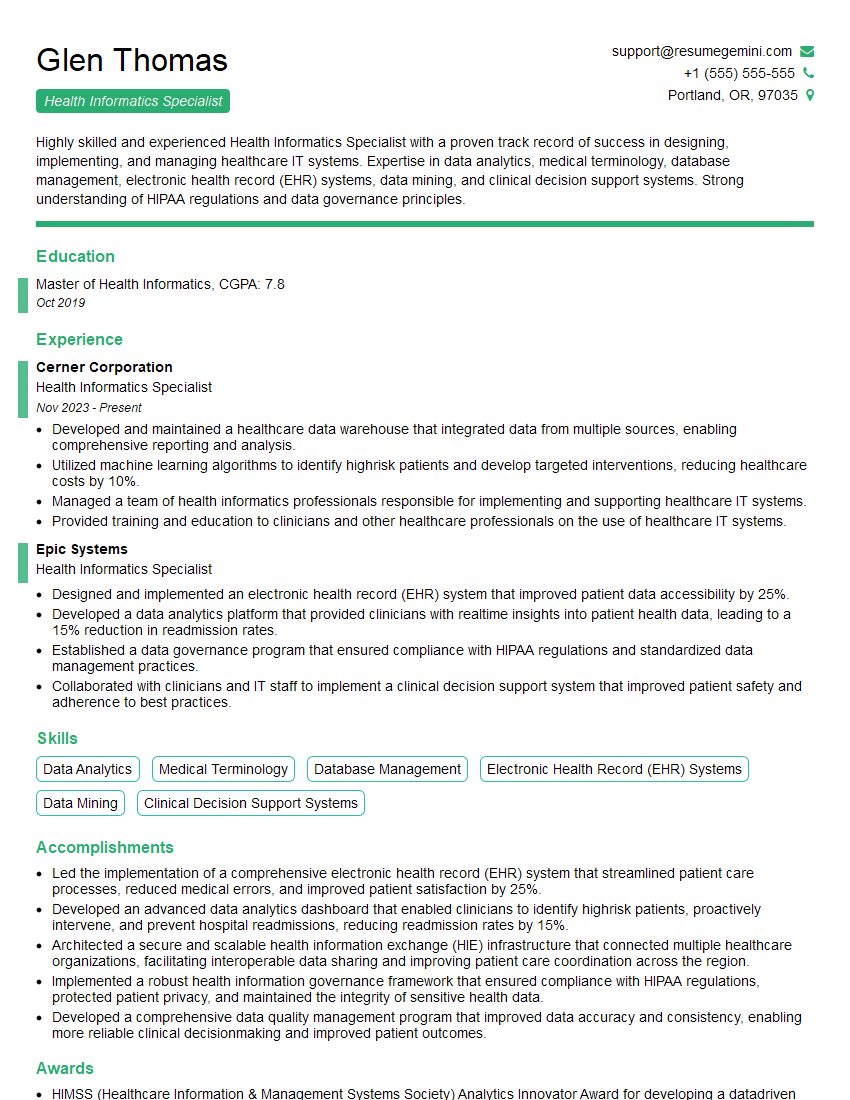
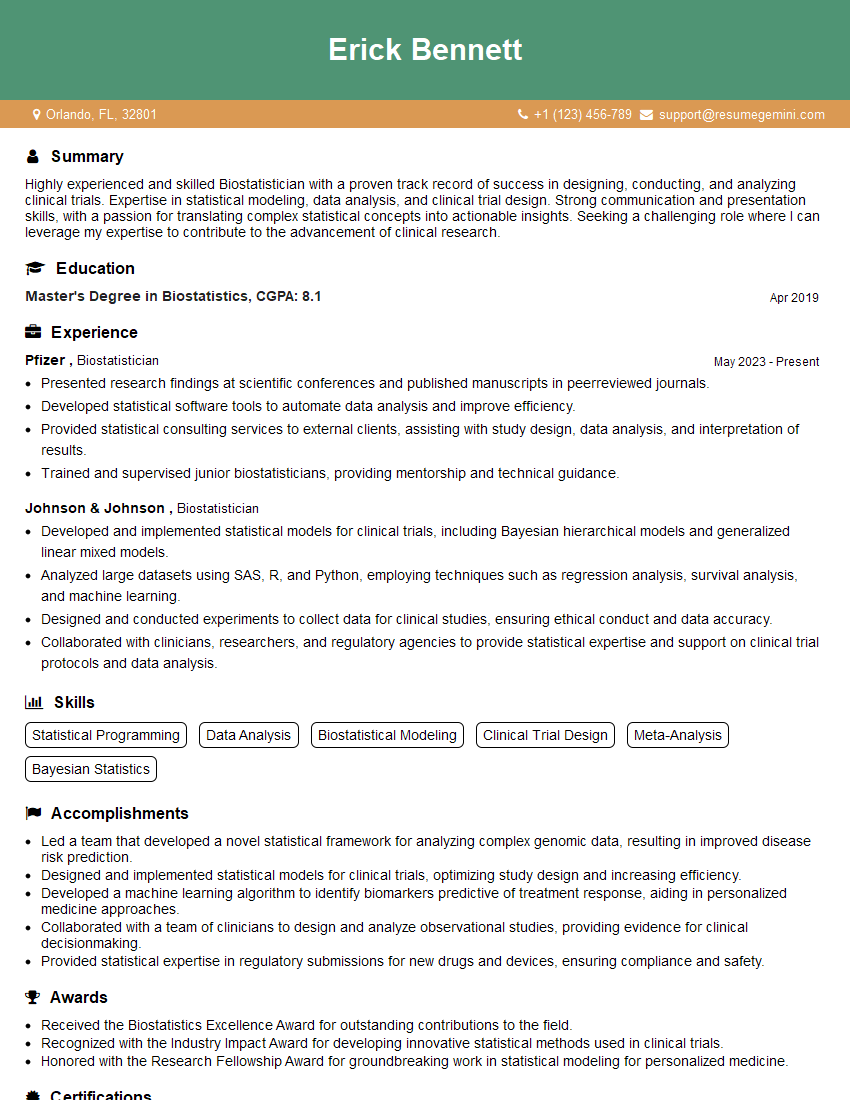
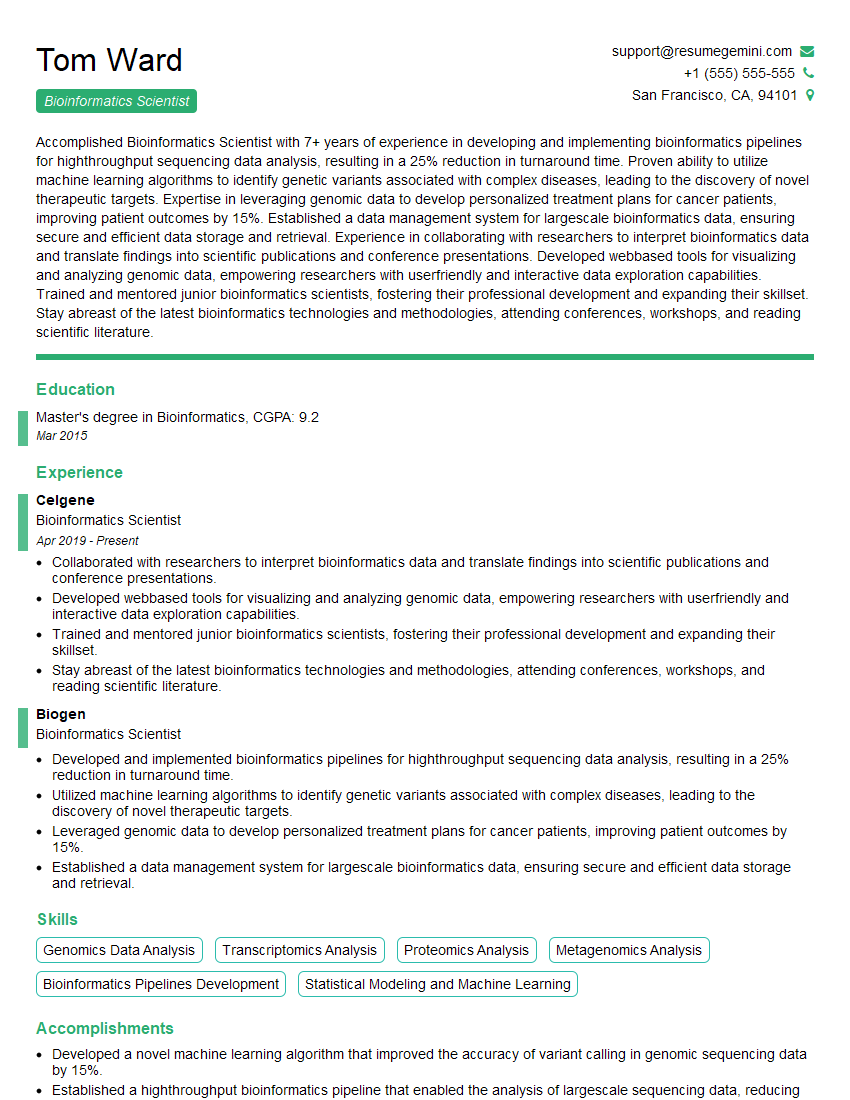
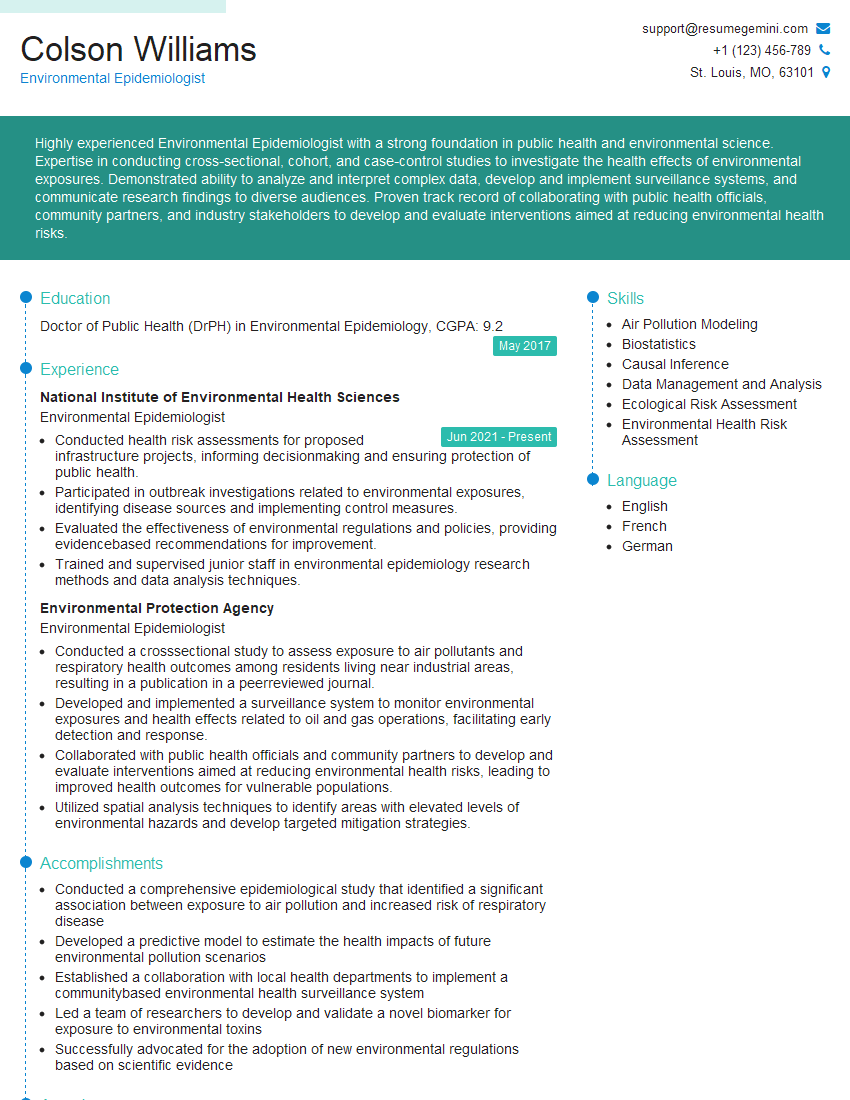
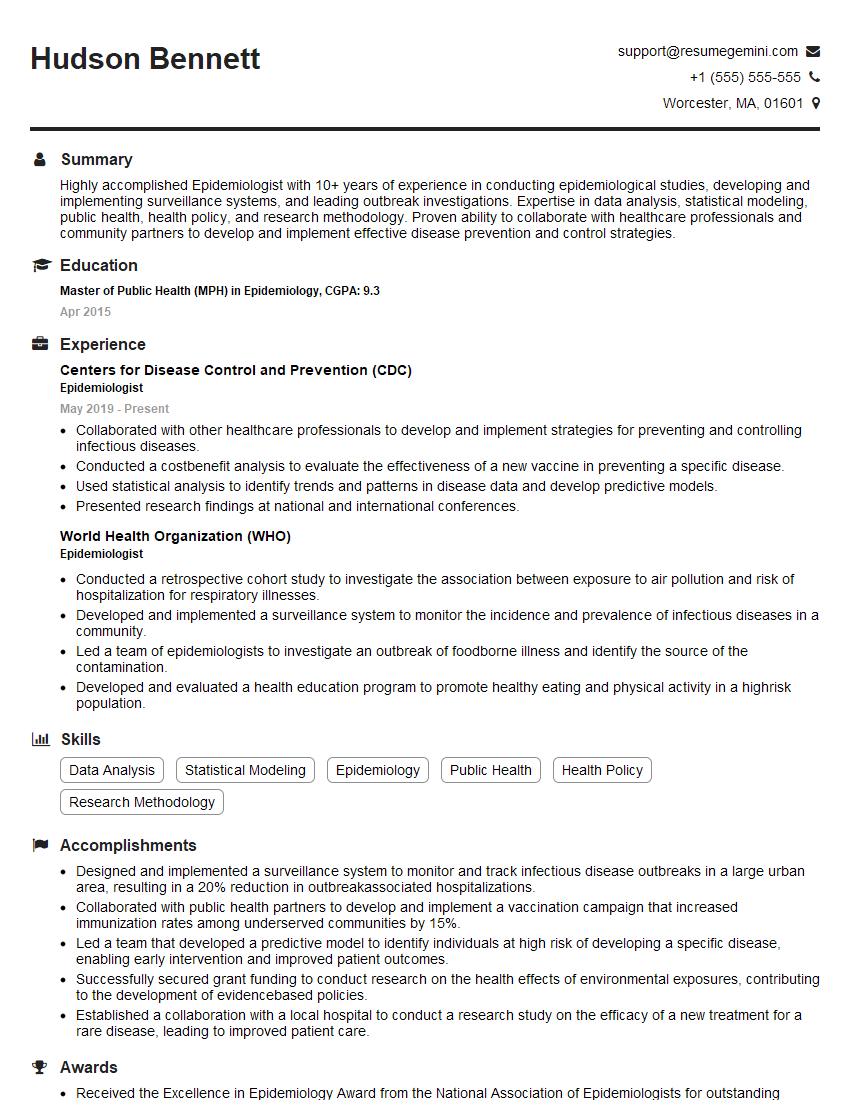
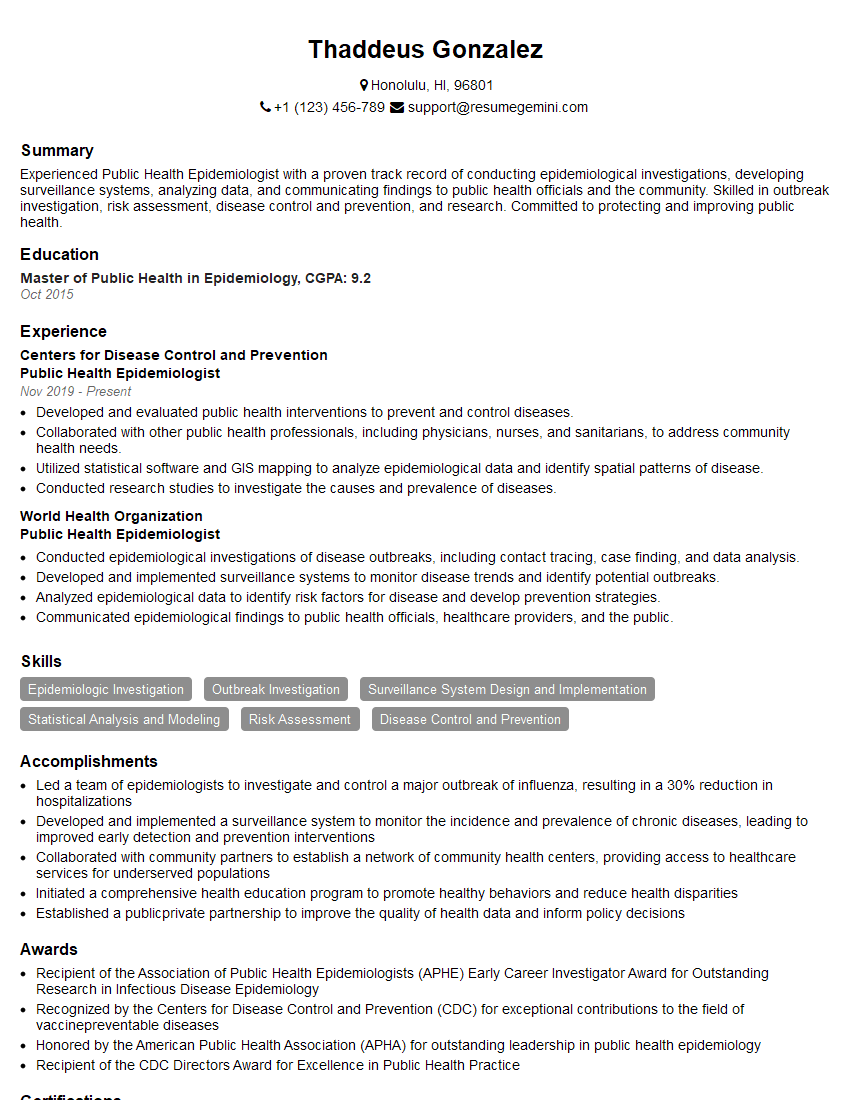
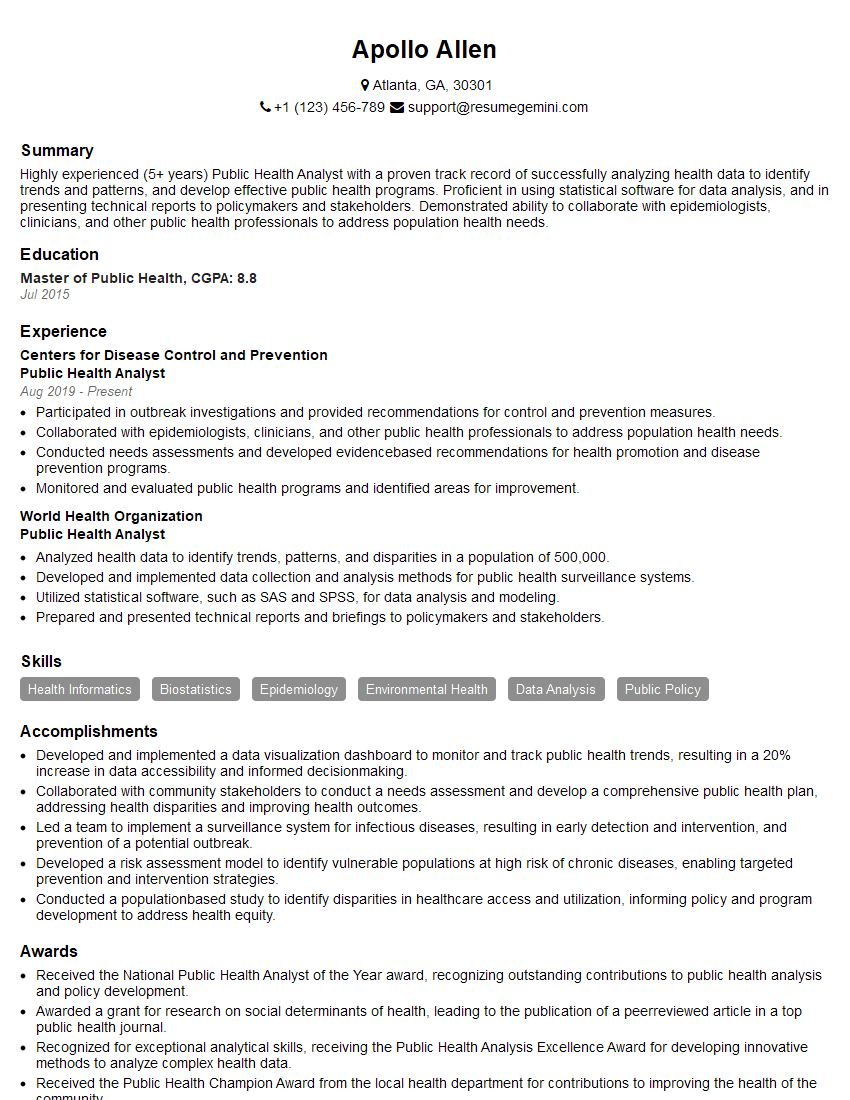
Mastering Epidemiology and Disease Surveillance opens doors to impactful careers in public health, research, and global health. To maximize your job prospects, creating a strong, ATS-friendly resume is critical. This ensures your qualifications are effectively communicated to hiring managers and Applicant Tracking Systems. ResumeGemini is a trusted resource to help you build a professional and impactful resume that showcases your skills and experience effectively. We provide examples of resumes tailored to Epidemiology and Disease Surveillance to help you get started. Invest the time to craft a compelling resume – it’s your first impression and a key to unlocking your career potential.
Explore more articles
Users Rating of Our Blogs
Share Your Experience
We value your feedback! Please rate our content and share your thoughts (optional).
What Readers Say About Our Blog
Really detailed insights and content, thank you for writing this detailed article.
IT gave me an insight and words to use and be able to think of examples