The right preparation can turn an interview into an opportunity to showcase your expertise. This guide to Paint Matching interview questions is your ultimate resource, providing key insights and tips to help you ace your responses and stand out as a top candidate.
Questions Asked in Paint Matching Interview
Q 1. Explain the difference between spectrophotometry and visual color matching.
Spectrophotometry and visual color matching are both methods used in paint matching, but they differ significantly in their approach and accuracy. Spectrophotometry is an objective, instrumental method that uses a spectrophotometer to measure the spectral reflectance of a color sample. This instrument quantifies the amount of light reflected at different wavelengths, providing a precise numerical representation of the color. Think of it like getting a precise recipe for a color. Visual color matching, on the other hand, is a subjective method relying on a human’s perception to compare the color of a sample against a set of standards. This is more of an art, dependent on lighting conditions and the individual’s color vision. While quicker for simple matches, it’s prone to human error and inconsistencies.
In short: Spectrophotometry is objective, precise, and uses instruments; visual matching is subjective, less precise, and relies on human perception. For critical color matching, spectrophotometry is far superior.
Q 2. Describe the process of using a spectrophotometer to obtain a color formula.
The process of obtaining a color formula using a spectrophotometer is fairly straightforward. First, the spectrophotometer is calibrated using a known standard, ensuring accurate measurements. Then, the instrument measures the spectral reflectance of the paint sample to be matched. This data, typically represented as L*a*b* values or other color spaces, is then fed into specialized paint matching software. This software contains a database of pigments and their spectral properties. The software compares the measured spectral data with its database and calculates the formula—the precise ratio of pigments needed to recreate the target color. The software often accounts for different paint base types and also factors in things like color variation due to different paint manufacturers. Finally, the calculated formula is used to mix the paint, and the result is then visually inspected and potentially fine-tuned for accuracy.
For example, let’s say the spectrophotometer gives L*a*b* values of L*= 60, a*= 10, b*= 20 for a particular blue paint. The software will then use its algorithm to find the optimal combination of blue, white, and potentially other pigments from its database to achieve these values in the chosen paint base.
Q 3. How do you handle discrepancies between the spectrophotometer reading and the visual appearance of the paint?
Discrepancies between spectrophotometer readings and visual appearance are common and often highlight limitations in either the instrument or the software algorithm, or the inherent complexity of color perception. Several factors can contribute to this, including metamerism (colors appearing different under various light sources), differences in the instrument’s calibration, substrate effects (the color of the surface the paint is applied to), or even variations in paint formulations across batches.
To handle these discrepancies, we meticulously investigate the source. We might re-calibrate the spectrophotometer, use different light sources for both the measurement and the visual assessment (to check for metamerism), examine the substrate carefully, or adjust the color formula in the software based on visual assessment. Sometimes, multiple iterations of adjustments—measuring, mixing, comparing—are required to achieve a perfect visual match. This iterative process involves both objective measurements and subjective visual evaluation to attain an accurate color reproduction.
Q 4. What are the common challenges in paint matching, and how do you overcome them?
Common challenges in paint matching include metamerism (colors appearing different under different light sources), achieving consistent color across large batches, dealing with fading and weathering effects, managing variations in paint bases (e.g., different gloss levels), and matching complex textures or special effects.
We overcome these challenges by using advanced spectrophotometers with various light sources to account for metamerism, implementing rigorous quality control measures during production to maintain color consistency, utilizing lightfast pigments resistant to fading, understanding the interaction between pigments and different paint bases, and employing advanced paint mixing techniques for textures.
Q 5. Explain different paint systems (e.g., water-based, solvent-based).
Paint systems can be broadly categorized as water-based and solvent-based. Water-based paints (also known as latex paints) use water as their primary solvent. They are generally less toxic, cleaner to work with, and have lower VOC (volatile organic compound) emissions. They tend to be more forgiving for beginners as they are generally easier to clean up. Solvent-based paints (also known as oil-based paints) use organic solvents such as mineral spirits or turpentine. They often offer superior durability, hardness, and gloss retention but have higher VOC emissions and require specialized cleanup processes. Understanding the differences is crucial for successful color matching as the pigments behave differently in the two types of paints.
Color matching software accounts for the different properties of water-based and solvent-based paints. The pigment formulas will differ as the pigment dispersion will vary according to the type of solvent.
Q 6. How do you manage color variations due to different lighting conditions?
Color perception is highly dependent on lighting. To manage color variations due to different lighting conditions, we use standardized lighting conditions when assessing colors. This usually involves using a light booth that mimics daylight (D65) or other specific light sources. Spectrophotometers themselves often have built-in light sources to ensure consistent measurement irrespective of the ambient light. Moreover, we use color management systems and software that incorporates different lighting conditions to predict how a color will appear under various illuminants. This allows us to create a formula that looks consistent across different lighting situations.
For instance, a color might look slightly different in a warm incandescent light compared to cool fluorescent light. Our process accounts for these variations by working with standardized light sources and simulating the effect of various light sources within our color management system.
Q 7. Describe your experience with various paint mixing software.
My experience encompasses a range of paint mixing software, including industry-standard programs like [mention specific software names, e.g., ColorRite, Datacolor’s MatchRite] and custom-developed proprietary solutions. These software packages vary in their capabilities, color space support, pigment databases, and algorithm sophistication. I am proficient in utilizing these tools to import spectral data, calculate color formulas, simulate color appearance under various lighting conditions, and optimize for different substrates and paint systems.
I find that effective software use requires a strong understanding of color science principles to interpret the data accurately and make informed decisions when discrepancies arise. Simply relying on software without visual inspection and understanding the limitations of both the hardware and software can lead to errors. Thus, a combination of practical experience and the ability to utilise different software programs efficiently is essential for successful paint matching.
Q 8. How do you ensure the accuracy and consistency of your paint matches?
Ensuring accurate and consistent paint matches is paramount in my work. It’s a multi-step process that begins with utilizing high-quality spectrophotometers. These devices measure the color of the original paint sample with incredible precision, generating a numerical formula that represents the color’s exact makeup. This formula is then used to create a custom paint mixture using a sophisticated tinting system.
To maintain consistency, I meticulously follow standardized procedures and regularly calibrate our equipment. This includes daily checks of the spectrophotometer and regular cleaning of the equipment. I also maintain detailed records of each batch, including the specific formula used, the date of creation, and the original sample’s identification. Any deviation from the established procedure is thoroughly documented, ensuring traceability and allowing for quick troubleshooting if inconsistencies occur. Think of it like a highly precise recipe – every ingredient and step matters to achieve the desired result.
Furthermore, regular training for technicians and strict quality control measures, including visual comparisons and final approval before delivery, guarantee that the final paint match is a flawless replica of the original sample. In this way, we achieve high accuracy and maintain consistency across all our paint matching projects.
Q 9. What is your experience with different types of paint bases (e.g., solid, metallic, pearl)?
My experience encompasses a broad spectrum of paint bases, from solid colors to complex metallic and pearl effects. Solid colors are the simplest to match, requiring a precise adjustment of the base color and sometimes a clear coat for the ultimate finish. However, metallic paints present a unique challenge. Their color is heavily influenced by the size, shape, and concentration of metallic flakes within the paint. This requires a highly sensitive spectrophotometer and a refined understanding of how these metallic elements affect light reflection and overall color perception.
Pearl paints are even more intricate, involving the dispersion of microscopic particles that create an iridescent effect. The angle of light strongly influences the color perceived. To achieve precise matching with pearl paints, specialized techniques and equipment may be needed to closely replicate the unique shimmer and luminosity. Imagine matching a rainbow; you must capture not just the colors but also the way they shift and change with the light source. I’ve worked extensively with various formulations of all these paint bases and have a strong grasp of the technical nuances of each.
Q 10. How do you handle special effect paints (e.g., pearlescent, chameleon)?
Special effect paints, such as pearlescent and chameleon paints, demand an even higher level of expertise. These paints are created using specialized pigments and additives that interact with light in unique ways to generate unusual visual effects. Matching these paints successfully requires a deep understanding of the optical properties of the pigments and the intricate relationship between pigment concentration, particle size, and the resulting color shift.
For example, chameleon paints shift color dramatically depending on the viewing angle. To match these paints, we need advanced spectrophotometric techniques and possibly digital image analysis to capture the full spectrum of color changes. This might involve taking multiple readings from various angles and then utilizing specialized software to create a composite formula that replicates the dynamic color shift. Think of it as capturing a moving target; the methodology needs to accommodate the complexity of the color change.
Similarly, pearlescent paints require precise control over pigment concentration to achieve the desired level of iridescence. The slightest variation can significantly impact the final visual effect. In both cases, rigorous testing and multiple iterations are often necessary to achieve a satisfactory match.
Q 11. How do you calculate the necessary amount of paint for a specific project?
Calculating the necessary paint amount for a specific project involves several key factors. First, I need precise dimensions of the area to be painted. This could involve measuring the surface area directly or using architectural plans. Then, I consider the type of paint and its coverage rate (usually provided by the manufacturer). The coverage rate is expressed as the number of square feet or square meters per gallon or liter.
Example: Let’s say we need to paint a wall that measures 10 feet by 12 feet. The area is 120 square feet. If the paint has a coverage rate of 350 square feet per gallon, the calculation would be: 120 square feet / 350 square feet/gallon ≈ 0.34 gallons. We would round up to one gallon to ensure sufficient paint.
Beyond the surface area, we must also account for the number of coats required. Most projects require at least two coats for optimal coverage and color consistency. We must also factor in potential paint loss due to spillage, application inefficiencies, or uneven surfaces. Adding a 10-20% buffer to the calculated amount is a common practice to prevent running short during the project.
Q 12. Explain the importance of proper surface preparation in paint matching.
Proper surface preparation is arguably the most critical step in paint matching. A poorly prepared surface can lead to adhesion problems, uneven color distribution, and ultimately, a disappointing end result, regardless of how accurate the paint match is. Think of it as building a house: a weak foundation will ultimately compromise the entire structure.
Surface preparation typically involves cleaning the surface to remove dirt, grease, and any previous coatings. This might involve using solvents, detergents, or pressure washing depending on the substrate and existing conditions. Once cleaned, any imperfections like cracks or dents must be repaired using appropriate fillers and sanding techniques to create a smooth, even surface. This sanding step is crucial for good paint adhesion. Lastly, a primer might be applied to improve the adhesion of the top coat and to ensure consistent color across the surface, especially if the substrate is porous or significantly varied in color.
Failure to properly prepare the surface can result in the paint peeling, chipping, or showing irregularities despite a perfect color match. Thus, meticulous surface preparation is non-negotiable for a successful and long-lasting paint job.
Q 13. What are the different types of clear coats and their impact on color?
Clear coats are essential for protecting the paint and enhancing its appearance. They come in several types, each impacting the final color in different ways. For example, high-gloss clear coats amplify the color vibrancy and create a deep, reflective shine. This can subtly alter the perceived color by increasing its saturation.
On the other hand, satin or matte clear coats provide a softer, less reflective finish, subtly reducing color intensity. Some clear coats even contain UV inhibitors to protect the underlying paint from sun damage. The choice of clear coat is a critical consideration, as it directly impacts the overall visual effect, including the final color appearance and the durability of the paint job. Different resins, additives, and curing processes influence the level of gloss, durability, and even slight shifts in color perception. Choosing the right clear coat requires considering factors like the application environment, the desired aesthetic, and the paint’s durability requirements.
Q 14. How do you troubleshoot common paint issues like orange peel or runs?
Troubleshooting common paint issues like orange peel and runs requires a systematic approach. Orange peel, characterized by a bumpy, uneven texture, often results from improper spray technique (too much air pressure or too thick a coat), incorrect spray distance, or poor quality spray equipment. The solution involves adjusting the spraying technique – perhaps slowing down, maintaining a consistent distance, and ensuring adequate airflow. The use of a higher quality spray gun can also help tremendously. In some cases, wet sanding and re-coating might be necessary to correct severe orange peel.
Runs, on the other hand, are caused by excessive paint build-up in one area. This commonly happens when too much paint is applied at once or if the surface is uneven or too cold. The solution often involves carefully removing the excess paint using a scraper or sanding before re-coating. In some cases, wet sanding is useful before re-applying a thinner coat. Careful preparation of the surface, using the right tools, and understanding how the paint behaves under different environmental conditions are key to prevent these defects.
Ultimately, the key to troubleshooting paint issues is careful observation, a thorough understanding of the paint application process, and a willingness to adapt your techniques based on the specific challenges encountered. Sometimes, consulting the paint manufacturer’s specifications is a helpful step in finding a solution.
Q 15. Describe your experience with different types of paint application equipment.
My experience with paint application equipment spans a wide range, from traditional methods to advanced technologies. I’m proficient with spray guns, both airless and HVLP (High Volume Low Pressure), understanding the nuances of each for different paint types and surface areas. Airless sprayers are great for large, fast jobs, but require careful technique to avoid runs and orange peel. HVLP offers more control and a finer finish, ideal for detailed work and delicate surfaces. I also have extensive experience with rollers – different nap lengths for various textures – and brushes, selecting the appropriate size and bristle type for optimal coverage and finish. For smaller or intricate projects, I use specialized tools like touch-up pens and aerosol cans. Finally, I’m familiar with automated painting systems used in high-volume industrial settings, understanding their calibration and maintenance protocols.
For example, when painting a large exterior wall, I’d opt for an airless sprayer for efficiency, but for a delicate antique piece of furniture, a high-quality brush and HVLP sprayer would be my preferred choice to ensure a flawless, even finish.
Career Expert Tips:
- Ace those interviews! Prepare effectively by reviewing the Top 50 Most Common Interview Questions on ResumeGemini.
- Navigate your job search with confidence! Explore a wide range of Career Tips on ResumeGemini. Learn about common challenges and recommendations to overcome them.
- Craft the perfect resume! Master the Art of Resume Writing with ResumeGemini’s guide. Showcase your unique qualifications and achievements effectively.
- Don’t miss out on holiday savings! Build your dream resume with ResumeGemini’s ATS optimized templates.
Q 16. What safety precautions do you take when working with paints and solvents?
Safety is paramount in my work. When handling paints and solvents, I always wear appropriate personal protective equipment (PPE), including respirators to prevent inhaling hazardous fumes, safety glasses to protect my eyes from splashes, and gloves to protect my skin from irritants and solvents. I work in well-ventilated areas, ideally outdoors or with sufficient ventilation systems to remove airborne particles and fumes. I meticulously follow the safety data sheets (SDS) provided with each product, paying close attention to flammability warnings and proper disposal procedures. I also ensure proper storage of materials to prevent spills or accidental ignition. Spills are immediately cleaned up using appropriate absorbent materials, and waste is disposed of according to local regulations. Before starting any project, I always conduct a thorough risk assessment.
For instance, when working with isocyanate-based paints, which can cause severe respiratory problems, I utilize a supplied-air respirator and ensure that the project area has adequate ventilation. Ignoring these precautions could lead to serious health risks.
Q 17. How do you maintain and calibrate your paint matching equipment?
Maintaining and calibrating paint matching equipment is crucial for accuracy. This typically involves regular cleaning of spectrophotometers (the instruments used for color measurement) to prevent build-up of paint particles affecting readings. I use specialized cleaning solutions and follow the manufacturer’s instructions. Calibration is done using certified color standards; these standards are periodically checked against master standards to ensure accuracy. This usually involves measuring a series of known color standards and adjusting the instrument’s settings until the readings match the certified values. I keep detailed logs of all calibrations and maintenance performed.
For example, I would regularly check the spectrophotometer’s light source for any signs of weakening or discoloration, as this can significantly affect color measurement. Any deviations from the calibrated readings require a complete recalibration to ensure that subsequent paint matches are accurate.
Q 18. Describe your experience with paint mixing ratios and formulas.
My experience with paint mixing ratios and formulas is extensive. I’m adept at interpreting color formulas provided by paint manufacturers, and I understand the impact of different pigments and bases on the final color. I have a strong grasp of tinting systems, whether it’s using computer-aided systems or manual methods. I’m comfortable calculating the precise amounts of each component needed to achieve a specific color match based on the color formula and the desired volume. I’m also familiar with different paint types and their respective mixing procedures, from water-based paints to oil-based paints and specialized coatings. Accurate measurement and mixing are crucial to get a consistent and repeatable result.
For instance, understanding the difference between additive and subtractive color mixing is vital. Additive mixing (light) is different than subtractive mixing (pigments). To match a color accurately, you must understand how to adjust the pigment levels to achieve the desired effect on the final color.
Q 19. How do you manage inconsistencies between paint batches?
Inconsistencies between paint batches can stem from various factors, including slight variations in pigment manufacturing, different batches of base paint, or even environmental factors affecting the mixing process. To manage this, I maintain detailed records of each batch, including the date, formula used, and any deviations observed. When inconsistencies are detected, I meticulously re-check the formula, and if necessary, I might need to make minor adjustments using my color-matching expertise. Using a spectrophotometer to consistently monitor and document color values helps catch and address any discrepancies before a significant problem arises. In some cases, a slightly different tint might be needed to make minor adjustments.
For instance, if I notice a slight color shift in successive batches, I’ll analyze the spectrophotometer readings to understand the nature and degree of the deviation and then create a minor adjustment to the formula to maintain consistency in future batches.
Q 20. How do you deal with customer dissatisfaction regarding paint matches?
Customer satisfaction is my top priority. If a customer expresses dissatisfaction with a paint match, I start by actively listening to their concerns and carefully examining the painted surface. I determine if the issue stems from the match itself, the application process, or environmental factors. If the match is indeed off, I would use my spectrophotometer to re-analyze the color and make the necessary adjustments. I’ll re-mix the paint until the customer is happy with the final outcome. My approach is to explain the process clearly and thoroughly, reassuring the customer that I’m dedicated to resolving the problem and provide excellent service.
I once had a situation where a customer felt the paint match was ‘too dark’, even after verification against the original sample. We realized that the lighting conditions during the initial color capture were different from where the paint was actually being used. By making the adjustment and conducting a thorough explanation, the customer was extremely satisfied with the result.
Q 21. What is your knowledge of color theory and its application in paint matching?
Color theory is fundamental to paint matching. I understand the color wheel – primary, secondary, and tertiary colors, and how they interact – and the concepts of hue, saturation, and value (HSV). I can use this knowledge to predict the effects of mixing different colors and to adjust formulas to achieve the desired results. For instance, I understand how to compensate for metamerism – the phenomenon where two colors match under one light source but appear different under another. I utilize different lighting sources during the color-matching process to ensure a consistent match across various lighting conditions. This ensures the final paint accurately matches the original sample across diverse lighting conditions. Understanding color theory ensures I can not only match colors accurately, but also to advise customers on color choices and create harmonious color schemes.
For example, by understanding that adding a small amount of a complementary color can desaturate a color, I can adjust the vibrancy of a paint match to perfectly suit the client’s needs.
Q 22. Explain your experience working with color charts and databases.
My experience with color charts and databases is extensive. I’ve worked with a wide range of systems, from traditional physical Pantone and RAL color books to sophisticated digital color libraries integrated with spectrophotometer software. Understanding the nuances of different color systems is crucial. For example, Pantone is known for its fashion and graphic design applications, while RAL is prevalent in the industrial coatings sector. Each system has its own color space and numbering conventions, which demands meticulous attention to detail. I’m proficient in navigating these systems, identifying specific colors, and interpreting color formulations from different sources. My experience with digital databases extends to using software that allows me to search for colors based on various parameters, including color name, numerical code, and even spectral data. This ability to cross-reference information is essential for accurate and efficient paint matching.
For instance, I once had to match a faded antique piece of furniture. The original color wasn’t readily identifiable, so I used both a spectrophotometer and the client’s provided images to generate spectral data. I then cross-referenced that data across multiple digital color libraries, finally finding a close match in a less common color chart that wouldn’t have been identified using just Pantone or RAL.
Q 23. How do environmental factors (temperature, humidity) affect paint matching?
Environmental factors, particularly temperature and humidity, significantly impact paint matching. Temperature affects the viscosity of the paint, influencing its application and drying time. Higher temperatures can lead to faster drying and potentially uneven finishes, while lower temperatures can cause the paint to be thicker and more difficult to work with. Humidity impacts the evaporation rate of solvents. High humidity slows down evaporation, potentially lengthening the drying time and increasing the risk of defects like blistering or peeling. Conversely, low humidity can cause the paint to dry too quickly, leading to cracking or a rough surface finish.
Therefore, precise color matching requires accounting for these variables. In practice, I use specialized environmental control systems in my workspace, maintaining consistent temperature and humidity levels. The spectrometer itself is calibrated regularly, also compensating for temperature changes. Even minor adjustments are made in the final paint formulation to account for the expected environmental conditions where the paint will be applied.
Q 24. Describe your experience with quality control procedures in paint matching.
Quality control is paramount in paint matching. My procedures involve a multi-step verification process. First, I carefully inspect the sample to determine the optimal method for analysis— whether that involves visual assessment, a spectrophotometer, or a combination of both. Then I carefully perform the color measurement, taking multiple readings from different areas of the sample to account for variations. After creating a formulation, I perform a test application on a sample panel to verify the color match visually, examining for uniformity and ensuring it adheres correctly to the specified substrate. Once I am satisfied, I perform a final comparison to the original sample under standardized lighting conditions, carefully evaluating for any discrepancies in hue, saturation, or brightness. Documentation at every stage is crucial, ensuring traceability and accountability. In a past project, a seemingly minor deviation in gloss level during the test application highlighted an issue in the formulation. This required a slight adjustment to the final mix which ultimately prevented potential field issues.
The whole process emphasizes precision and minimizing errors; my meticulous approach guarantees consistent and high-quality results.
Q 25. What software and tools are you proficient in for paint matching?
My proficiency encompasses both hardware and software tools essential for paint matching. I am highly skilled in operating various spectrophotometers, including X-Rite and Datacolor models. These instruments measure the spectral reflectance of colors, generating data that software uses to determine precise color formulations. I’m proficient in using color management software like those offered by X-Rite, which allows for precise color matching algorithms and conversion between various color spaces. Furthermore, I can use industry-specific paint formulation software to easily translate spectral data into specific pigment ratios and formulations within different base paints, enhancing efficiency and accuracy. Familiarity with these tools allows for precise and repeatable paint matching.
Q 26. How do you stay up-to-date with the latest advancements in paint matching technology?
Staying current in this rapidly evolving field requires continuous learning. I actively participate in industry conferences and workshops to learn about the latest spectrophotometer technology, software updates, and innovative paint formulations. I regularly subscribe to industry publications and online resources for information on advancements in color science and new techniques. This is critical as new pigment technologies and color measurement methods are continuously being developed. Keeping updated with these advancements ensures I can offer the most accurate and effective paint matching services, using the latest technology and techniques.
Q 27. Describe a situation where you had to solve a complex paint matching problem.
I once faced a challenge matching a highly specialized automotive paint—a metallic finish with a complex pearl effect. The original sample was severely faded and scratched, making accurate color measurement difficult. Traditional spectrophotometry wasn’t sufficient due to the interference from the scratches. My solution involved a multi-pronged approach:
- Careful Sample Preparation: I carefully cleaned the sample, removing as much debris as possible.
- Multiple Measurement Points: I took multiple spectrophotometer readings from different, less damaged areas of the sample, averaging the data to minimize the impact of scratches.
- Visual Assessment: I combined the spectral data with careful visual assessment under controlled lighting to determine subtle variations in the pearl’s intensity and color shift.
- Iterative Refinement: I created a base formula using the averaged spectral data and refined the formulation through several test mixes and visual comparisons until the color shift and pearlescence matched the client’s expectations.
This process was time-consuming, demanding meticulous attention to detail, but ultimately resulted in a very successful match, highlighting my adaptability and problem-solving skills.
Q 28. How do you prioritize tasks and manage your time effectively in a busy paint shop?
In a busy paint shop, efficient task prioritization is key. I use a combination of techniques: First, I employ a ‘first-in, first-out’ (FIFO) system for simple paint matching requests. For complex projects, I prioritize based on urgency and complexity. Customers with tight deadlines and projects requiring specialized techniques are given preference. I utilize project management software to track tasks, deadlines, and progress. This ensures transparency and allows me to monitor workload effectively. I also proactively communicate with customers about expected turnaround times, setting realistic expectations. Time management is achieved through careful planning and meticulous workflow; by optimizing each step of the paint matching process.
Key Topics to Learn for Paint Matching Interview
- Color Theory Fundamentals: Understanding color spaces (RGB, LAB), color mixing principles (additive and subtractive), and metamerism.
- Spectrophotometry: Practical application of spectrophotometers for accurate color measurement and data interpretation. Understanding different instrument types and their limitations.
- Paint Formulation Basics: Familiarity with the components of paint (pigments, binders, solvents), and how they affect color and appearance.
- Matching Techniques: Exploring various paint matching methods, including visual matching, instrumental matching, and formula adjustment techniques.
- Software and Databases: Proficiency in using paint matching software and accessing digital color libraries for formula retrieval and creation.
- Troubleshooting and Problem Solving: Identifying and resolving common issues in paint matching, such as metamerism, color inconsistencies, and variations in lighting conditions.
- Quality Control and Standards: Understanding industry standards and best practices for maintaining color accuracy and consistency.
- Health and Safety: Awareness of relevant health and safety regulations and procedures related to paint handling and application.
Next Steps
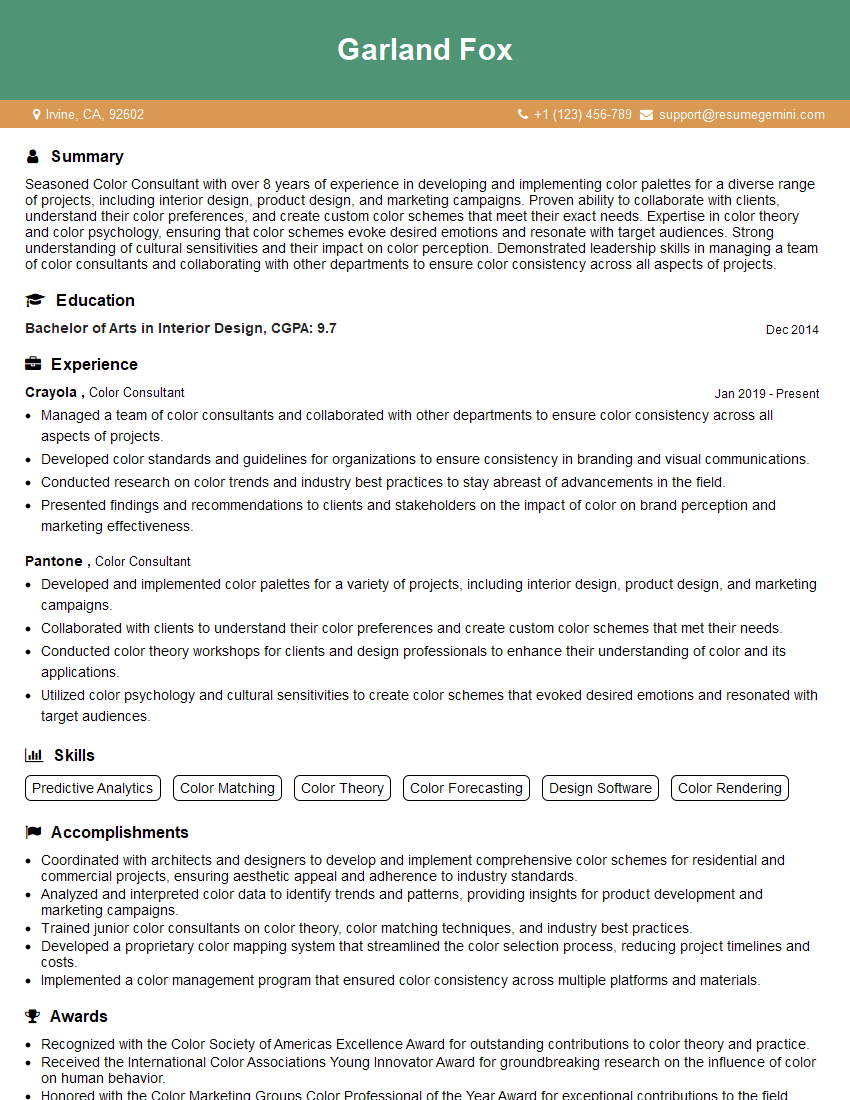
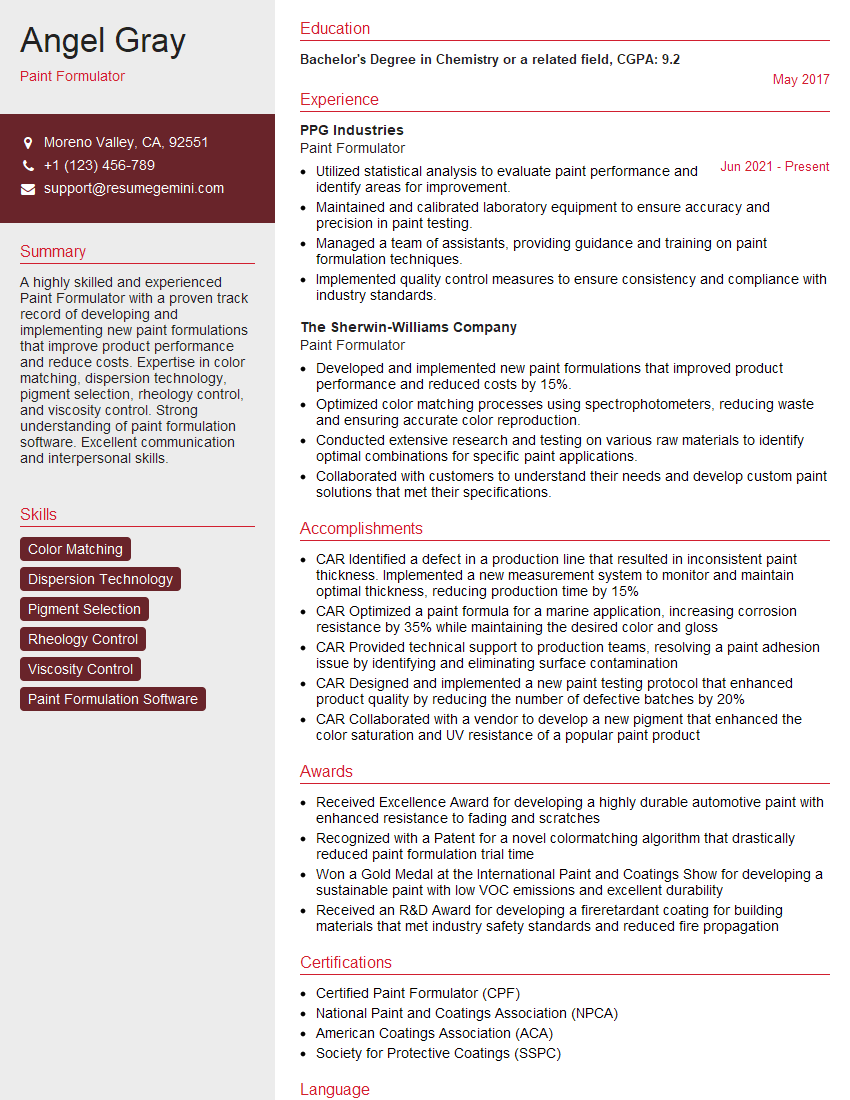
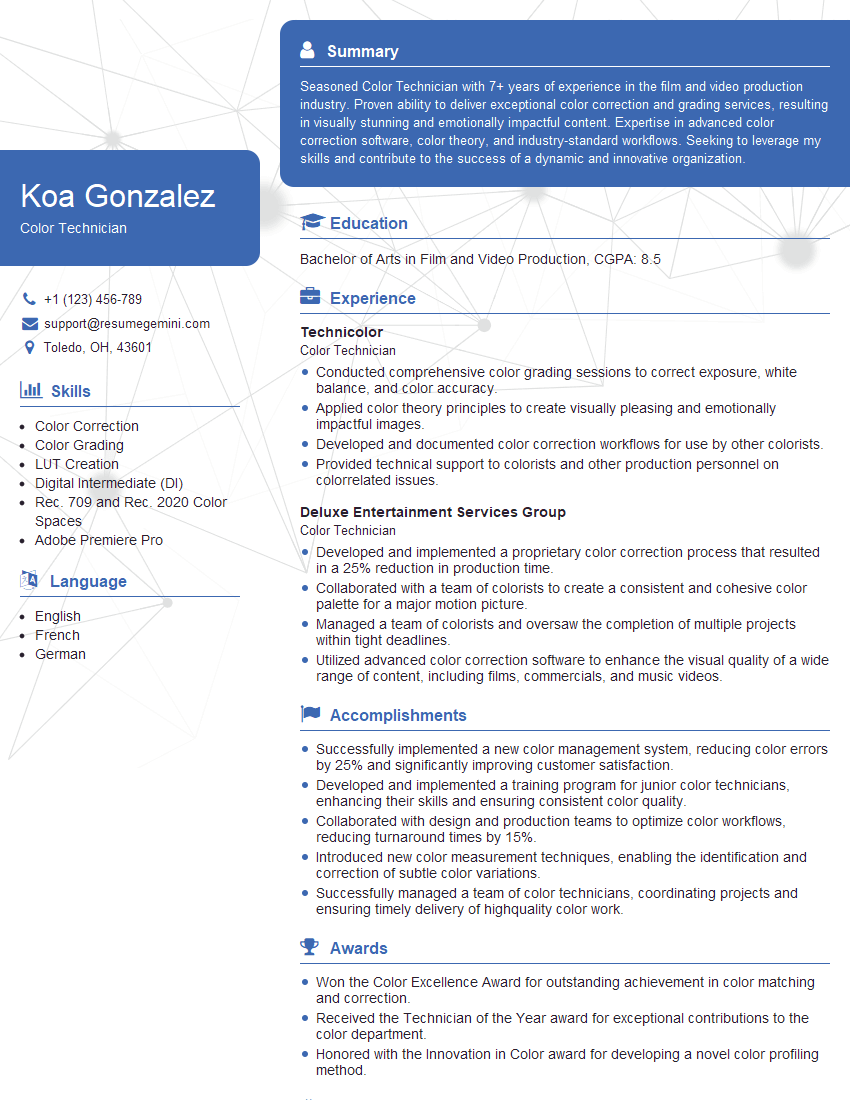
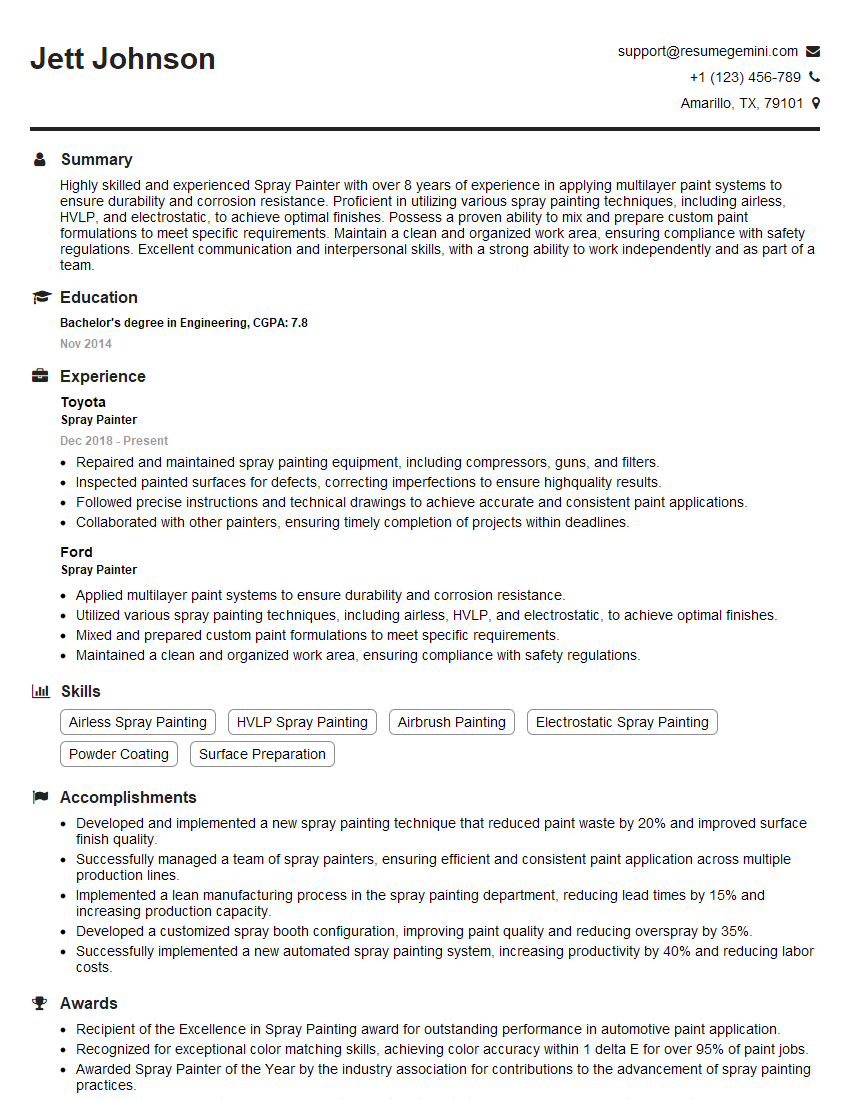
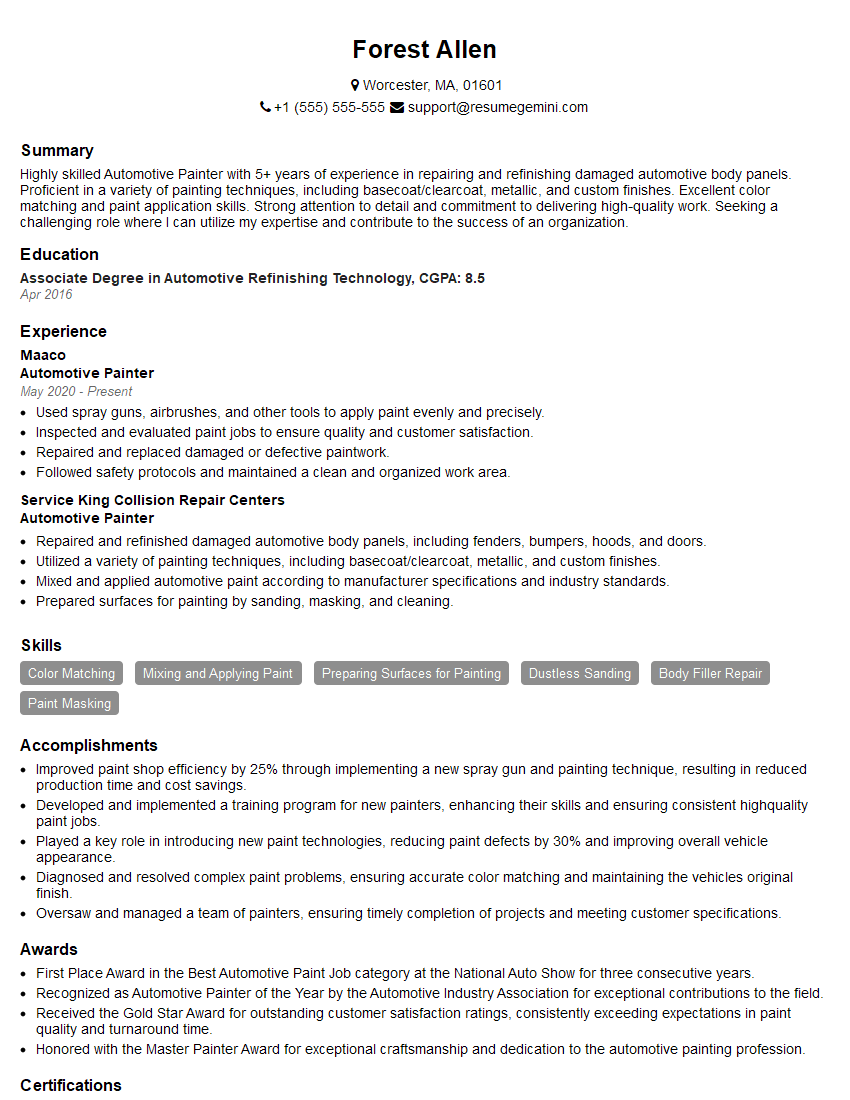
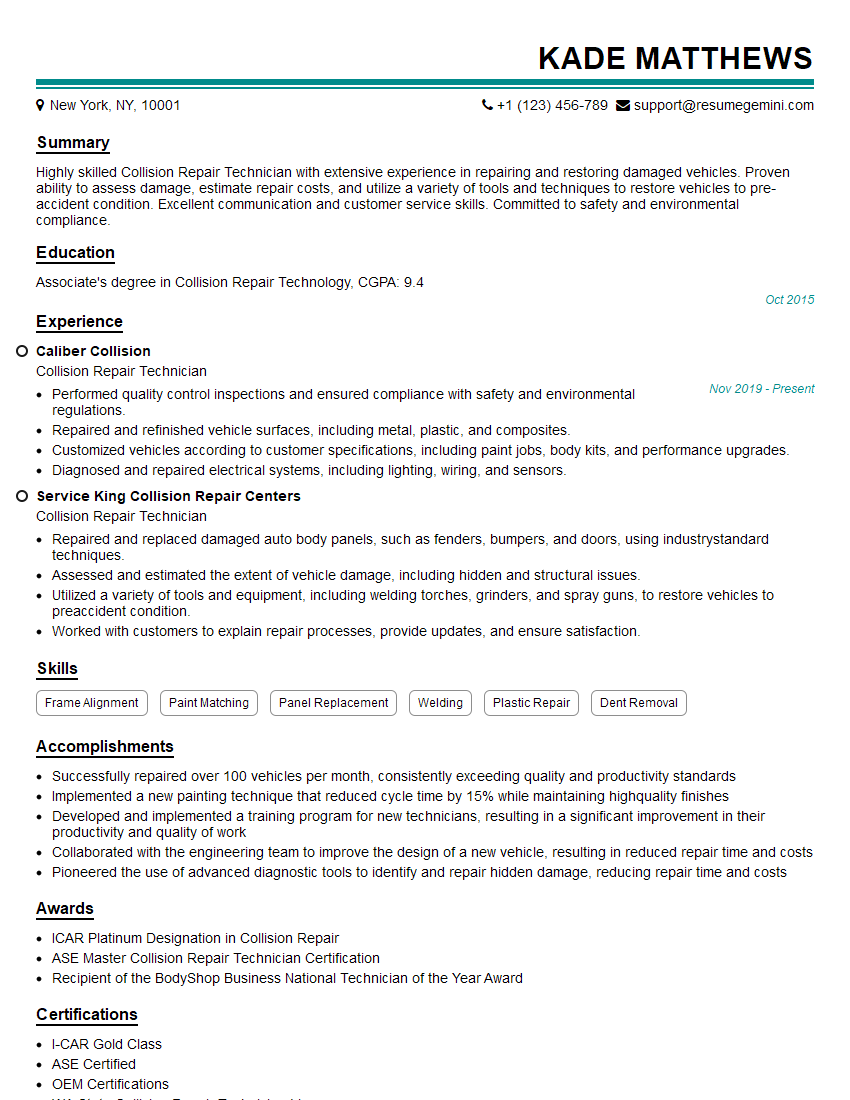
Mastering paint matching opens doors to exciting career opportunities in various industries, offering excellent growth potential and competitive salaries. To maximize your job prospects, creating a strong, ATS-friendly resume is crucial. ResumeGemini can help you build a professional and impactful resume tailored to the paint matching field. We provide examples of resumes specifically designed for this industry to help you showcase your skills and experience effectively. Invest time in crafting a compelling resume – it’s your first impression with potential employers.

Explore more articles
Users Rating of Our Blogs
Share Your Experience
We value your feedback! Please rate our content and share your thoughts (optional).
What Readers Say About Our Blog
Really detailed insights and content, thank you for writing this detailed article.
IT gave me an insight and words to use and be able to think of examples