Unlock your full potential by mastering the most common Exceptional Driving Skills interview questions. This blog offers a deep dive into the critical topics, ensuring you’re not only prepared to answer but to excel. With these insights, you’ll approach your interview with clarity and confidence.
Questions Asked in Exceptional Driving Skills Interview
Q 1. Describe your experience with defensive driving techniques.
Defensive driving is all about anticipating potential hazards and reacting proactively to minimize risks. It’s not just about following the rules, but about constantly scanning your surroundings and making informed decisions. My experience encompasses years of driving in diverse conditions, from congested city streets to open highways. I’ve developed a strong ability to predict the actions of other drivers and adapt my driving accordingly. This involves maintaining a safe following distance, scanning mirrors frequently, and constantly checking blind spots. For example, if I see a car approaching an intersection rapidly, I’ll slow down and be ready to brake, anticipating a potential collision. Similarly, if I see a pedestrian or cyclist approaching, I’ll slow down or change lanes to ensure safety. My training also emphasizes the importance of patience and avoiding aggressive maneuvers that could escalate dangerous situations.
Q 2. Explain your understanding of various road conditions and how you adapt your driving.
Understanding varying road conditions is paramount for safe driving. My experience includes navigating everything from slick, icy roads in winter to heavy rain and fog. My adaptation strategies depend heavily on the condition. On icy roads, I significantly reduce speed, increase following distance, and accelerate and brake gradually to avoid skidding. In heavy rain, I reduce speed, increase following distance, and use my wipers and headlights appropriately. In fog, I slow down dramatically, turn on my fog lights (if equipped), and increase my following distance even further. I also use my hazard lights in extremely low visibility situations. I always prioritize visibility and control, adjusting my speed and driving style to match the road’s challenges. For instance, on winding mountain roads, I decrease speed, carefully negotiate curves, and maintain extra space from the vehicle ahead.
Q 3. How do you maintain a safe following distance in varying traffic conditions?
Maintaining a safe following distance is a cornerstone of defensive driving. The general rule of thumb is the three-second rule: After the car in front of you passes a fixed point (like a sign or landmark), count three seconds. If you pass the same point before you finish counting, you’re following too closely. However, this needs adjustments based on conditions. In bad weather (rain, snow, ice), I increase this to at least four or five seconds, sometimes even more. In heavy traffic, maintaining a safe distance might mean even longer intervals because of the reduced reaction time due to less space for maneuvering. It’s not just about reacting to the car directly in front, but also anticipating the traffic flow ahead. For example, if traffic is slowing down ahead, I anticipate the need to slow and increase the following distance more proactively to avoid a sudden stop.
Q 4. Describe your approach to navigating challenging intersections or roundabouts.
Navigating challenging intersections and roundabouts requires a methodical approach. Before entering an intersection, I thoroughly check for oncoming traffic and pedestrians. I always yield to pedestrians and vehicles already in the intersection. At roundabouts, I yield to traffic already circulating within the roundabout and signal my intention to enter and exit clearly. I slow down significantly before approaching them and only proceed when there’s enough space to safely merge without disrupting other vehicles. I never assume that other drivers will obey the rules; I anticipate their potential mistakes and am prepared to react accordingly. For instance, if a driver is entering a roundabout without yielding, I’m ready to slow down or stop to avoid a collision. This is about proactive observation and defensive decision making.
Q 5. How do you handle unexpected events like sudden braking or lane changes by other drivers?
Handling unexpected events, such as sudden braking or lane changes by other drivers, demands immediate and appropriate responses. My training emphasizes maintaining a margin of safety to allow for reacting to these unpredictable events. If a car in front brakes suddenly, I immediately lift my foot off the accelerator and apply the brakes smoothly but firmly, avoiding any sudden jerking motions that could lead to skidding. If another driver changes lanes unexpectedly, I’ll adjust my speed and position accordingly to avoid a collision. This could involve slowing down, changing lanes, or even braking gently. The key is to remain calm, assess the situation quickly, and execute the appropriate maneuver. It’s also important to be aware of my surroundings and not rely solely on my rearview mirrors. Checking blind spots regularly is essential for safe driving.
Q 6. Explain your experience with vehicle maintenance and pre-trip inspections.
Vehicle maintenance and pre-trip inspections are crucial for ensuring safe and reliable operation. Before each trip, I perform a thorough check of the vehicle, including tire pressure, fluid levels (oil, coolant, brake fluid, windshield washer fluid), lights, wipers, and overall condition of the vehicle. I also check the brakes and steering response. I maintain a meticulous record of all maintenance activities. This includes regular servicing, tire rotations, and any necessary repairs. Understanding the vehicle’s capabilities and limitations is also a key part of safe driving. I ensure that everything is working properly before operating a vehicle and immediately address anything found to be in disrepair. Regular preventative maintenance is key to avoiding unexpected mechanical issues while driving.
Q 7. How do you manage fatigue and maintain alertness while driving for extended periods?
Managing fatigue while driving for extended periods is essential for safety. I never drive when feeling excessively tired. If I am anticipating a long drive, I ensure I get enough sleep before beginning. During long drives, I take regular breaks every two hours to stretch, walk around, and refresh myself. Keeping the cabin well ventilated helps maintain alertness. I also avoid activities that may cause drowsiness, such as eating large meals or consuming alcohol before or during driving. If I start to feel sleepy, I pull over to a safe location and rest until I feel fully alert and ready to continue my journey. Safety is always my top priority, and never driving while tired is a crucial element of this.
Q 8. Describe your knowledge of traffic laws and regulations.
My knowledge of traffic laws and regulations is comprehensive and up-to-date. I understand and strictly adhere to all local, state, and federal laws governing driving, including speed limits, right-of-way rules, signaling procedures, and parking regulations. This understanding extends to specialized regulations like those pertaining to hazardous materials transport or driving commercial vehicles. For example, I’m well-versed in the intricacies of the Commercial Driver’s License (CDL) regulations, including hours-of-service limits and vehicle inspection procedures. I regularly review updated legislation and attend relevant training sessions to maintain my proficiency and ensure I’m always compliant.
Beyond basic traffic laws, I possess a deep understanding of defensive driving techniques, which help anticipate potential hazards and react appropriately, even when other drivers make mistakes. This proactive approach is crucial for maintaining safety and preventing accidents. For instance, understanding the implications of following distances based on road conditions and speed contributes to preventing rear-end collisions.
Q 9. How do you prioritize safety when driving under pressure or in emergency situations?
Prioritizing safety under pressure or during emergencies is paramount. My approach is based on a structured process: Assess, Plan, Act, Review.
- Assess: Quickly and accurately assess the situation. Identify potential hazards, the severity of the emergency, and available escape routes.
- Plan: Formulate a safe and efficient plan of action. This might involve pulling over to the side of the road, using hazard lights, or taking evasive maneuvers, always prioritizing the safety of myself and others.
- Act: Execute the plan calmly and decisively, maintaining control of the vehicle and avoiding impulsive reactions. Deep breathing techniques can help manage stress and ensure clear thinking.
- Review: After the situation resolves, take time to review what happened. Identify what worked well and areas for improvement. This reflective process strengthens my decision-making skills for future emergencies.
For instance, if faced with a sudden tire blowout, I would immediately grip the steering wheel firmly, gradually ease off the accelerator, avoid braking abruptly, and gently steer the vehicle to a safe stop, away from traffic. My training has equipped me to handle such unexpected events efficiently and safely.
Q 10. Explain your experience with GPS navigation systems and map reading.
I’m proficient in using various GPS navigation systems and possess excellent map-reading skills. My experience encompasses a wide range of devices, from in-dash GPS units to mobile phone apps like Google Maps and dedicated trucking navigation systems. I understand how to input accurate destinations, interpret route instructions, and adjust for traffic delays or road closures. My map-reading skills are particularly valuable in areas with limited or unreliable GPS coverage, allowing me to navigate effectively using traditional maps.
I’m adept at identifying alternative routes based on real-time traffic data or road conditions. This includes understanding different map symbols and knowing how to interpret elevation changes or road classifications to plan routes efficiently and safely. For example, I can use a paper map to navigate a route based on elevation changes and route suitability, selecting the best road for a specific vehicle type and load.
Q 11. Describe your experience with different types of vehicles (e.g., cars, trucks, buses).
My experience encompasses a broad spectrum of vehicles, including cars, light trucks, heavy-duty trucks (both single and multiple trailers), and buses. I’m familiar with the unique handling characteristics, safety features, and operational requirements of each type. For example, driving a heavy-duty truck requires awareness of increased braking distances, turning radii, and blind spots, as well as adherence to weight and dimension regulations. Similarly, operating a bus requires a heightened awareness of passenger safety and requires proficient handling in crowded urban environments.
I’m comfortable operating vehicles with various transmission types (manual and automatic), and I’m well-versed in pre-trip inspections, understanding the importance of maintaining vehicles in optimal operating condition. This expertise allows me to adjust my driving style and techniques to suit the specific vehicle I’m operating, maximizing safety and efficiency.
Q 12. How do you handle challenging weather conditions (e.g., snow, rain, fog)?
Handling challenging weather conditions requires a significant adjustment in driving technique. My approach emphasizes reduced speed, increased following distances, and heightened awareness. In snowy conditions, I use gentle acceleration and braking, avoiding sudden movements that could cause loss of control. I increase following distance considerably, allowing ample stopping time. I’m also familiar with using tire chains when necessary and adjust my speed based on road conditions.
In rain or fog, I use my low beam headlights to increase visibility and reduce speed to maintain control. I increase following distance to account for increased braking distances and reduced visibility. I avoid sudden lane changes and maintain a steady speed, avoiding harsh braking or acceleration. My experience has taught me the importance of adjusting speed proactively based on the severity of the weather and road conditions. For example, in heavy fog, I may choose to stop driving entirely until the conditions improve or find a safe place to wait out the worst of it.
Q 13. Explain your approach to managing cargo or passengers.
Managing cargo or passengers involves careful planning and execution to ensure safety and efficiency. For cargo, I’m familiar with proper weight distribution, securing techniques, and compliance with regulations related to hazardous materials transport. This includes understanding weight limits, ensuring proper balance, and using appropriate securing methods to prevent shifting or damage during transit.
When transporting passengers, I prioritize their safety and comfort. This includes ensuring everyone is seated securely, following proper boarding and disembarking procedures, and maintaining a calm and professional demeanor. I’m well-versed in emergency procedures, such as evacuations and assisting passengers with disabilities.
Q 14. Describe your experience with loading and unloading procedures.
My experience with loading and unloading procedures is comprehensive and adheres to safety protocols. This includes using appropriate equipment, such as forklifts or loading ramps, and following proper lifting techniques to prevent injuries. For instance, when loading a truck, I ensure the weight is evenly distributed and properly secured, preventing imbalance and ensuring compliance with weight regulations.
In unloading procedures, I am meticulous in ensuring the safety of personnel and the goods themselves. This includes using appropriate safety equipment, directing traffic effectively, and ensuring the area is clear of obstacles to prevent accidents. My approach is always systematic and efficient, minimizing the risk of damage and injury while ensuring timely completion of the task.
Q 15. How do you communicate effectively with dispatchers or other drivers?
Effective communication with dispatchers and other drivers is paramount for safety and efficiency. I prioritize clear and concise language, avoiding jargon. For dispatchers, I confirm all instructions, repeat addresses and delivery details, and immediately report any delays or unexpected situations. For example, if I encounter an unexpected road closure, I immediately contact dispatch, providing the location and estimated time of arrival using alternative routes. With other drivers, courtesy and professionalism are key. I use my signals clearly, maintain safe following distances, and acknowledge their actions to promote smooth traffic flow. Think of it like a well-oiled machine; clear communication is the grease that keeps everything running smoothly.
- Active Listening: I pay close attention to instructions to ensure I understand them fully.
- Clear and Concise Language: I avoid ambiguous terms and use standard terminology.
- Professional Demeanor: Maintaining a respectful tone even during stressful situations is crucial.
Career Expert Tips:
- Ace those interviews! Prepare effectively by reviewing the Top 50 Most Common Interview Questions on ResumeGemini.
- Navigate your job search with confidence! Explore a wide range of Career Tips on ResumeGemini. Learn about common challenges and recommendations to overcome them.
- Craft the perfect resume! Master the Art of Resume Writing with ResumeGemini’s guide. Showcase your unique qualifications and achievements effectively.
- Don’t miss out on holiday savings! Build your dream resume with ResumeGemini’s ATS optimized templates.
Q 16. How do you handle stressful driving situations and maintain composure?
Stressful driving situations are inevitable, but managing them effectively is a core competency. My approach involves proactive risk mitigation and maintaining a calm demeanor. This includes anticipating potential hazards like heavy traffic or inclement weather and adjusting my driving accordingly. Deep breathing exercises and a conscious effort to focus on the immediate driving task helps me maintain composure. For instance, if I’m stuck in heavy traffic, instead of getting frustrated, I focus on maintaining a safe following distance and monitoring my surroundings, anticipating potential brake checks or sudden lane changes. I also prioritize sufficient rest and hydration to prevent fatigue, a major contributor to stress and impaired judgment behind the wheel.
- Anticipatory Driving: I constantly scan the road ahead for potential hazards.
- Stress Management Techniques: Deep breathing and mindfulness help me stay calm under pressure.
- Prioritization: I focus on the immediate task of safe driving and avoid distractions.
Q 17. Describe your experience with accident prevention and reporting procedures.
Accident prevention is my top priority. I practice defensive driving techniques, constantly scanning my surroundings and anticipating potential hazards. This includes maintaining a safe following distance, observing speed limits, and always being aware of blind spots. In the unlikely event of an accident, I follow a strict reporting procedure: 1. Ensure the safety of all involved. 2. Call emergency services immediately. 3. Gather information from witnesses and document the scene with photos if possible. 4. Cooperate fully with law enforcement. 5. Report the accident to my company according to their established protocols. In my previous role, I was involved in a minor fender bender; following these procedures ensured a smooth and efficient resolution. This experience reinforced the importance of meticulous reporting and the preventative power of defensive driving.
- Defensive Driving: Anticipating potential hazards and reacting accordingly.
- Emergency Response: Promptly calling emergency services and following established protocols.
- Documentation: Gathering information and documenting the incident.
Q 18. Explain your knowledge of vehicle safety features and how to use them.
Vehicle safety features are critical for safe operation. I am proficient in utilizing advanced driver-assistance systems (ADAS), such as lane departure warning, adaptive cruise control, and automatic emergency braking. Understanding how these systems work and their limitations is crucial. For instance, while adaptive cruise control can help maintain a safe following distance, I remain vigilant and prepared to take manual control if necessary. I am also well-versed in the proper use of seatbelts, airbags, and other passive safety features. Regular vehicle maintenance checks are also a part of my routine, ensuring all safety systems are functioning correctly. I treat every vehicle as if it were my own to ensure both personal and passenger safety.
- ADAS Proficiency: Understanding and utilizing advanced driver-assistance systems.
- Passive Safety Systems: Proper use of seatbelts, airbags, and other safety features.
- Vehicle Maintenance: Regular checks to ensure all safety systems are functioning correctly.
Q 19. How do you adapt your driving style to different vehicle types and sizes?
Adapting driving style to different vehicles requires understanding the vehicle’s characteristics. Larger vehicles like trucks or buses have longer stopping distances and require more space for maneuvering. I adjust my speed and following distances accordingly, taking into account factors such as turning radius, blind spots, and overall size. Smaller vehicles, conversely, are more agile but may be less visible. I compensate by being more assertive in maintaining my lane and visibility. The key is awareness and anticipation of the vehicle’s limitations and capacities. For example, when driving a large truck, I plan my route carefully, considering bridge clearances and tight turns. I also practice extra caution while merging onto freeways.
- Awareness of Vehicle Dimensions: Understanding the vehicle’s turning radius, stopping distance, and blind spots.
- Speed Adjustment: Adjusting speed based on vehicle size and road conditions.
- Maneuverability: Recognizing and adjusting to the agility or lack thereof in different vehicles.
Q 20. Describe your experience with driving in congested urban areas.
Navigating congested urban areas requires patience, planning, and a proactive approach. I anticipate heavy traffic and adjust my route accordingly, utilizing GPS navigation to find alternative routes when necessary. I maintain a safe following distance and avoid sudden braking or lane changes that could disrupt traffic flow. I anticipate challenges such as pedestrians, cyclists, and sudden stops. In high-density areas, I’m particularly attentive to my surroundings, making use of mirrors and checking blind spots frequently. Thinking of the urban landscape as a dynamic, unpredictable environment helps to prepare and respond effectively to the challenges it presents. I am adept at using techniques like anticipating traffic lights and adjusting speed to maintain momentum as effectively as possible.
- Route Planning: Utilizing GPS and considering traffic patterns.
- Defensive Driving Techniques: Maintaining a safe following distance and avoiding sudden maneuvers.
- Situational Awareness: Being constantly aware of pedestrians, cyclists, and other vehicles.
Q 21. How do you handle situations involving aggressive or distracted drivers?
Dealing with aggressive or distracted drivers requires a calm and defensive approach. I avoid engaging with aggressive drivers, maintaining a safe distance and letting them pass. I prioritize my safety and avoid actions that could escalate the situation. For distracted drivers, I increase my vigilance, anticipating potential sudden stops or lane changes. I maintain extra space around my vehicle. I avoid making eye contact and focus on maintaining a safe driving style. Remember, your safety is paramount, and de-escalation is often the best course of action. In these situations, patience and proactive driving habits are key, allowing you to mitigate risks posed by unpredictable drivers. If a situation becomes truly unsafe, contacting emergency services may be necessary.
- De-escalation Techniques: Avoiding engagement with aggressive drivers and prioritizing personal safety.
- Increased Vigilance: Maintaining awareness and anticipating potential actions of distracted drivers.
- Safety First: Prioritizing personal safety above all else.
Q 22. Explain your understanding of driver hours of service regulations (if applicable).
Driver Hours of Service (HOS) regulations are crucial for ensuring road safety and preventing driver fatigue. These regulations, primarily in the trucking industry, dictate the maximum number of hours a driver can operate a commercial vehicle within a specific timeframe. They include limits on driving time, break periods, and rest periods, all designed to minimize the risk of accidents caused by exhaustion.
For example, a common rule limits drivers to 11 hours of driving within a 14-hour workday, followed by a mandatory 10-hour rest period. These regulations are meticulously tracked, often using electronic logging devices (ELDs), which automatically record driving time, breaks, and other relevant data. Non-compliance can lead to serious penalties, including fines and loss of driving privileges.
Understanding HOS regulations is paramount for safety and legal compliance. It’s not just about the numbers; it’s about responsible planning and proactive management of driving schedules to avoid fatigue and ensure safe operations. I always prioritize adherence to HOS regulations, understanding that my well-being and the safety of others on the road depend on it.
Q 23. How do you maintain a clean driving record?
Maintaining a clean driving record is a continuous commitment to safe and responsible driving. It involves a proactive approach to safety, combined with awareness and respect for traffic laws. This includes consistently obeying speed limits, practicing defensive driving techniques, always wearing a seatbelt, and avoiding distractions behind the wheel.
For instance, I always anticipate potential hazards, such as sudden braking by other vehicles or unexpected changes in weather conditions. I maintain a safe following distance, allowing ample reaction time to prevent collisions. I regularly check my vehicle’s condition, ensuring proper functioning of brakes, lights, and tires. My commitment extends beyond basic compliance – it’s about building a driving habit that promotes safety for myself and others.
Beyond the daily practices, I also maintain accurate records and promptly report any minor incidents to relevant authorities. A clean driving record isn’t just about avoiding accidents; it’s a reflection of a disciplined approach to responsible driving.
Q 24. Describe your familiarity with different types of driving routes and logistics.
My experience encompasses a wide range of driving routes and logistics, from navigating bustling city streets to traversing long-haul highways and challenging off-road terrains. I’m proficient in using various navigation systems, including GPS and mapping software, to plan optimal routes based on factors like traffic conditions, road closures, and delivery deadlines. I understand the importance of route planning for efficient and timely delivery.
For example, I have experience with complex multi-stop routes requiring careful sequencing and time management to meet all delivery windows. I’m also familiar with different types of cargo and their specific handling requirements, adjusting my driving style and route to accommodate any sensitive or hazardous materials. Logistics considerations such as fuel stops, rest areas, and potential delays are always factored into my route planning, ensuring efficient and safe operation.
Adaptability is key. I’m comfortable working with various logistical constraints, and I can quickly adjust my plans if unforeseen circumstances arise, ensuring that deliveries are still completed on time and safely.
Q 25. How do you stay updated on changes in traffic laws and regulations?
Staying updated on changes in traffic laws and regulations is crucial for maintaining legal compliance and ensuring road safety. I actively utilize several methods to stay informed. I regularly review publications from relevant government agencies such as the Department of Transportation, and subscribe to industry newsletters and publications that focus on driving regulations and safety updates.
Furthermore, I actively participate in professional development courses and workshops that address evolving traffic laws and best driving practices. These events often provide in-depth insights and discussions with experts in the field, leading to a comprehensive understanding of the latest regulatory changes. Online resources and legal databases are also invaluable tools for staying up-to-date on current and proposed legislative changes. It is a continuous learning process and maintaining a professional license often involves mandated continuing education credits.
This proactive approach ensures I’m not only compliant but also equipped with the knowledge to drive safely and responsibly in any situation.
Q 26. How do you use technology to improve your driving efficiency and safety?
Technology plays a significant role in enhancing both the efficiency and safety of my driving. I utilize GPS navigation systems for optimal route planning, considering real-time traffic conditions to avoid congestion and minimize travel time. Furthermore, I rely on advanced driver-assistance systems (ADAS) like lane departure warnings, adaptive cruise control, and blind-spot monitoring to enhance situational awareness and prevent accidents. These technologies provide additional layers of safety, alerting me to potential hazards that might otherwise go unnoticed.
For instance, adaptive cruise control helps maintain a safe following distance, automatically adjusting speed to match the flow of traffic while preventing collisions. Similarly, lane departure warnings provide an audible alert if the vehicle drifts from its lane, helping prevent accidents from driver fatigue or distraction. Regular software updates and maintenance of these technologies are paramount in ensuring their continued effectiveness and reliability. Data logging systems, often integrated with ELDs, further enhance efficiency by providing detailed information on vehicle performance and driver behavior.
Technology helps create a safer and more efficient driving experience, allowing me to focus on the road while having peace of mind knowing I have access to several safety and route-optimization measures.
Q 27. Describe your experience with fuel-efficient driving techniques.
Fuel-efficient driving is a critical aspect of my approach, both environmentally and economically. It involves a combination of techniques focused on minimizing fuel consumption without compromising safety. These include maintaining a consistent speed, avoiding aggressive acceleration and braking, and properly planning routes to minimize idling time.
For example, anticipating traffic conditions and smoothly adjusting speed helps conserve fuel compared to repeated hard braking and accelerating. Maintaining proper tire pressure also significantly impacts fuel efficiency. Furthermore, minimizing the use of air conditioning, especially at lower speeds, contributes to reducing fuel consumption. I regularly monitor my vehicle’s fuel economy, tracking performance and identifying areas for improvement. Regular vehicle maintenance, such as ensuring proper engine tune-ups and keeping the vehicle properly aligned, plays a substantial role in maintaining optimal fuel economy.
My approach to fuel-efficient driving is a conscious effort to balance environmental responsibility with economic efficiency, ensuring cost-effectiveness and minimizing the environmental impact of my work.
Q 28. Explain your approach to driver training or mentoring (if applicable).
My approach to driver training and mentoring emphasizes a holistic approach, focusing not only on the technical skills but also on the development of responsible attitudes and safe driving habits. It involves a combination of classroom instruction, practical demonstrations, and on-the-road training. Classroom sessions cover topics ranging from traffic laws and defensive driving to vehicle maintenance and emergency procedures.
During practical demonstrations, I use a combination of real-world scenarios and simulations to reinforce theoretical knowledge and hone driving skills. On-the-road training involves supervised driving sessions where I provide constructive feedback and address specific areas for improvement. I focus on building confidence and promoting safe driving practices rather than simply teaching rules. I emphasize situational awareness, proactive hazard identification, and the importance of anticipating the actions of other drivers.
Mentoring involves ongoing support and guidance, fostering a culture of continuous improvement and safety. I encourage drivers to actively participate in discussions, share experiences, and address concerns, creating an environment where safety and continuous learning are paramount. The goal is to develop not just skilled drivers but responsible and safety-conscious professionals.
Key Topics to Learn for Exceptional Driving Skills Interview
- Defensive Driving Techniques: Understanding and applying proactive strategies to mitigate risks and prevent accidents. This includes anticipating potential hazards and reacting appropriately.
- Vehicle Control and Maneuvering: Demonstrating proficiency in various driving conditions, such as emergency braking, cornering, and navigating challenging terrains. Consider practical examples from your experience.
- Traffic Laws and Regulations: Thorough knowledge of all relevant traffic laws and regulations, including speed limits, right-of-way rules, and safe following distances. Be prepared to discuss how you ensure compliance.
- Route Planning and Navigation: Efficiently planning routes, considering traffic conditions, and utilizing navigation systems effectively. Highlight experiences where efficient route planning saved time or resources.
- Vehicle Maintenance and Safety Checks: Understanding basic vehicle maintenance procedures and conducting regular safety checks to ensure optimal vehicle performance and safety. This includes tire pressure, fluid levels, and light functionality.
- Communication and Professionalism: Maintaining professional conduct while driving, communicating effectively with passengers and other road users, and adhering to company policies and procedures.
- Logistical Considerations (if applicable): Understanding and adhering to regulations related to Hours of Service, load securing, and other relevant logistical aspects of driving, depending on the specific role.
- Problem-Solving in Driving Situations: Describe your approach to resolving unexpected driving challenges, such as mechanical issues, adverse weather conditions, or traffic incidents. Emphasize your ability to think critically and act decisively.
Next Steps
Mastering exceptional driving skills is crucial for career advancement in many fields, significantly enhancing your safety record and efficiency. A strong resume is your key to unlocking these opportunities. Creating an ATS-friendly resume is essential for getting your application noticed. We recommend using ResumeGemini, a trusted resource, to build a professional and impactful resume that highlights your exceptional driving skills. Examples of resumes tailored to Exceptional Driving Skills are available to help you get started.
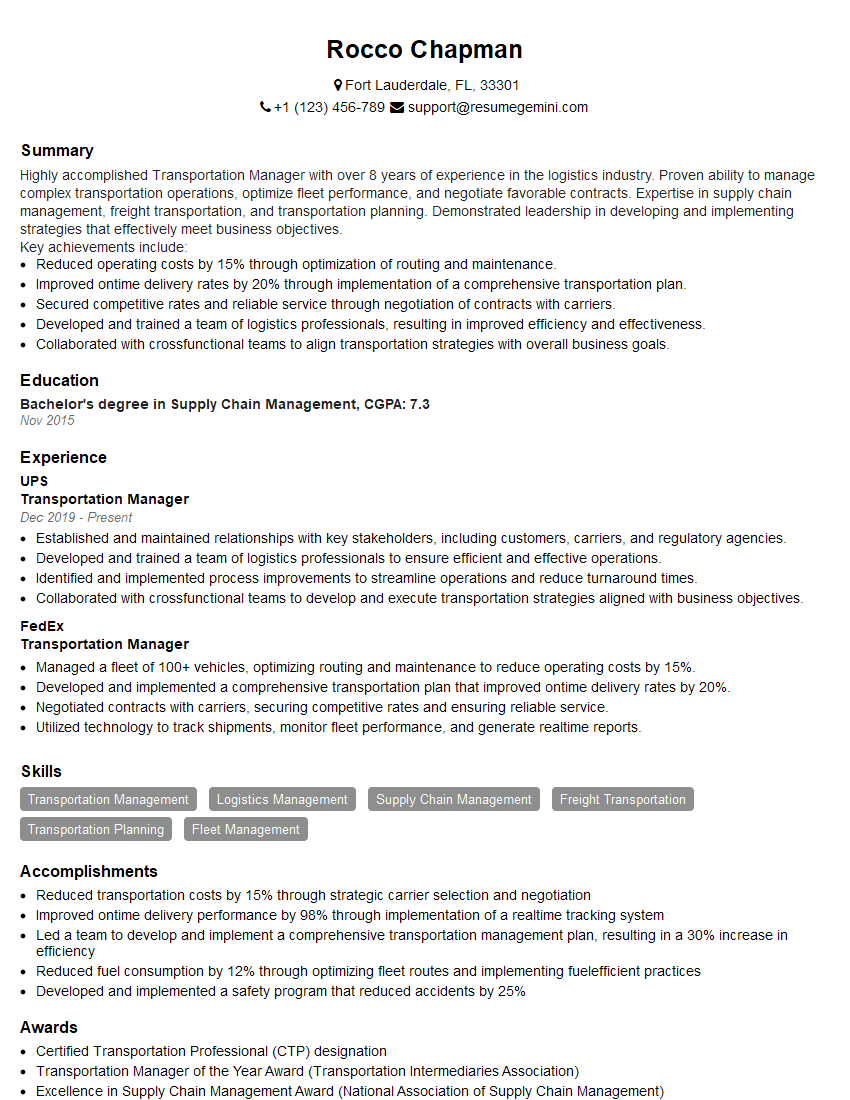
Transportation Manager Resume Sample
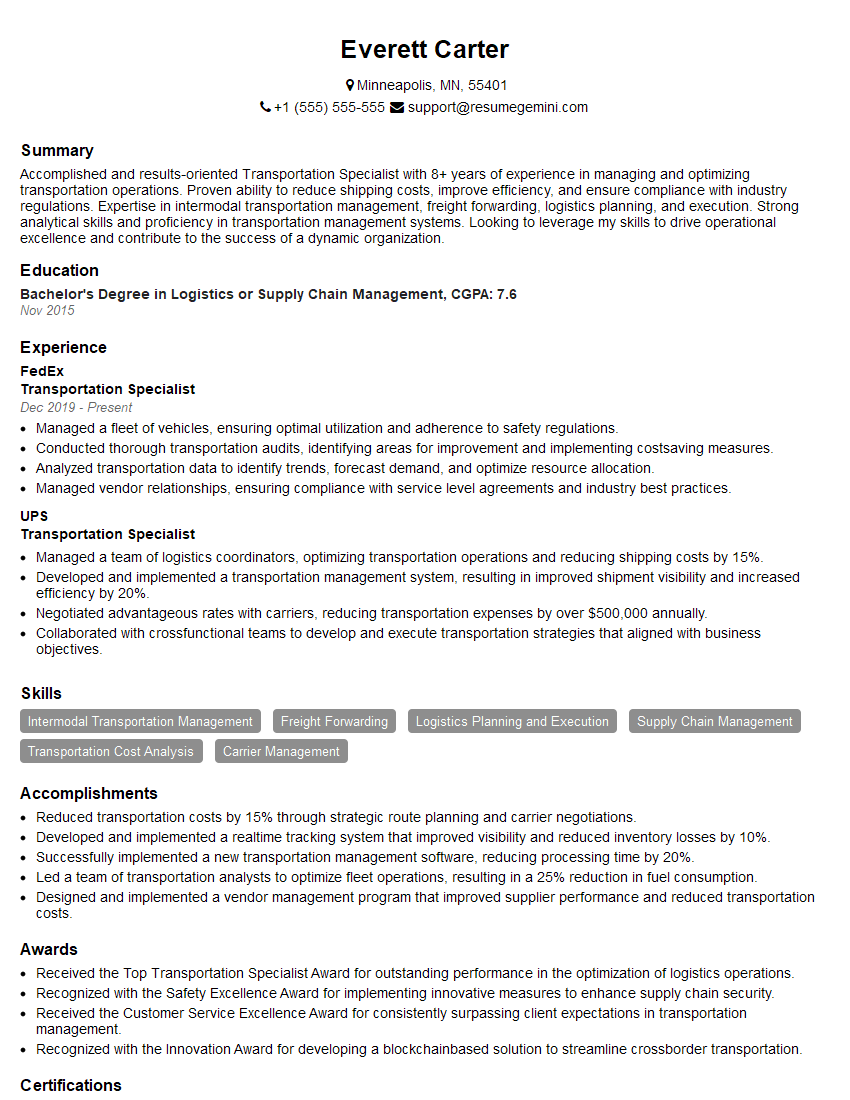
Transportation Specialist Resume Sample
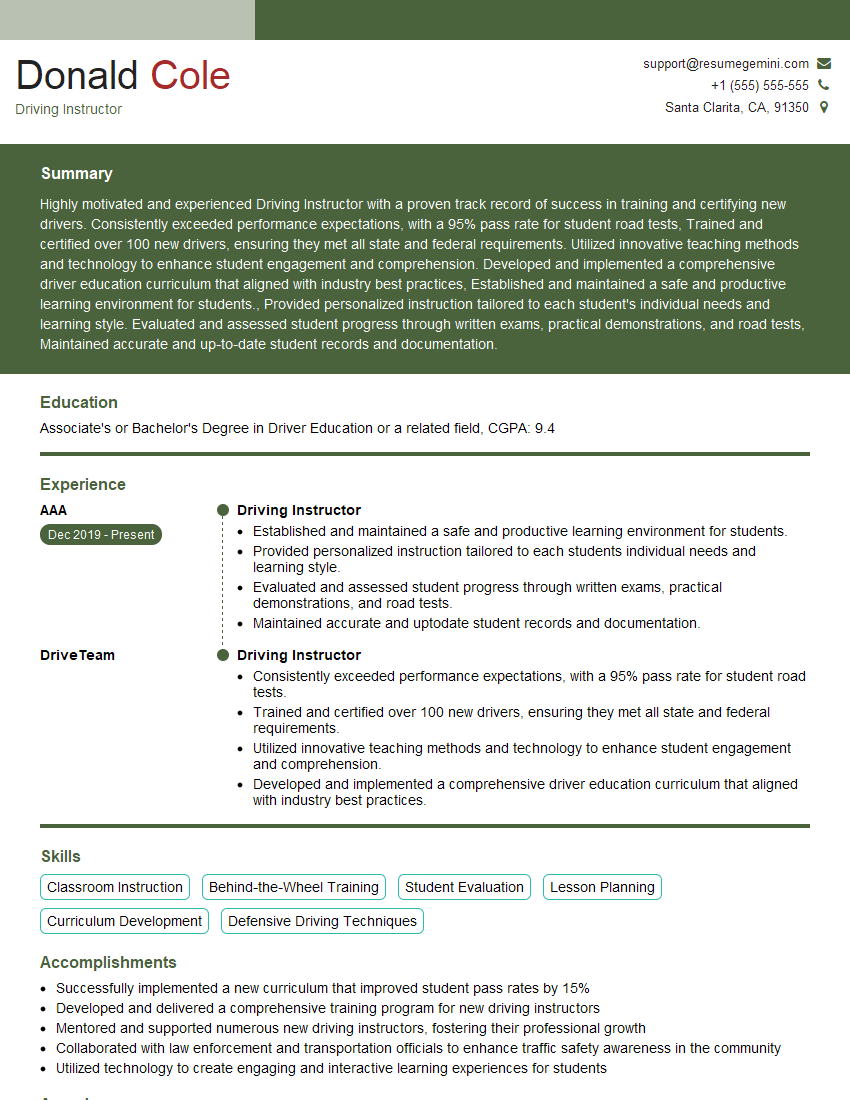
Driving Instructor Resume Sample
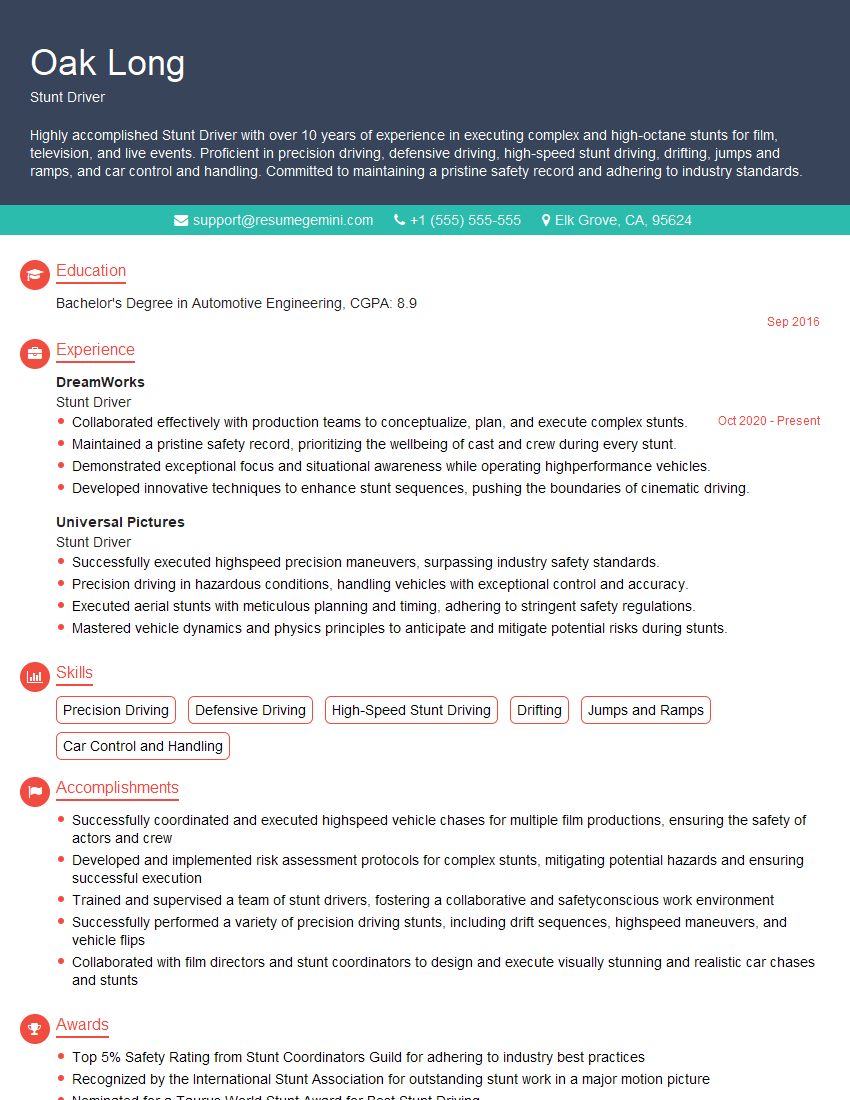
Stunt Driver Resume Sample
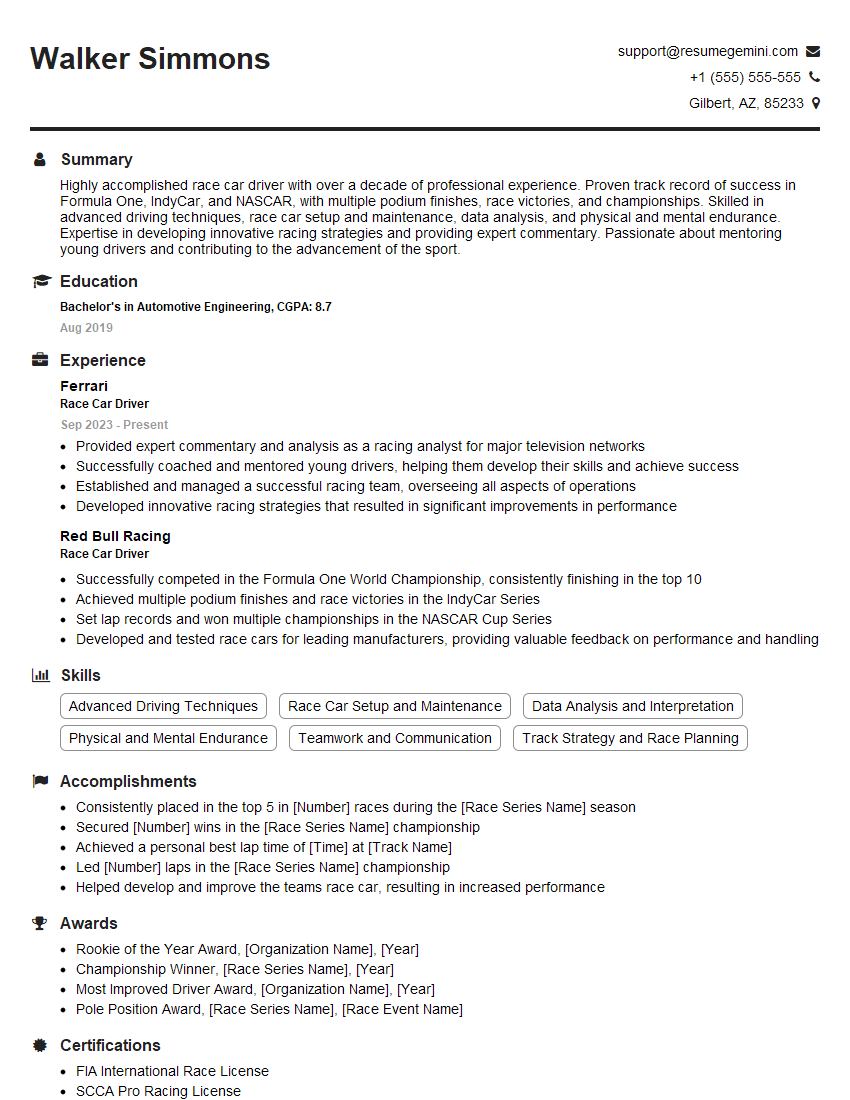
Race Car Driver Resume Sample
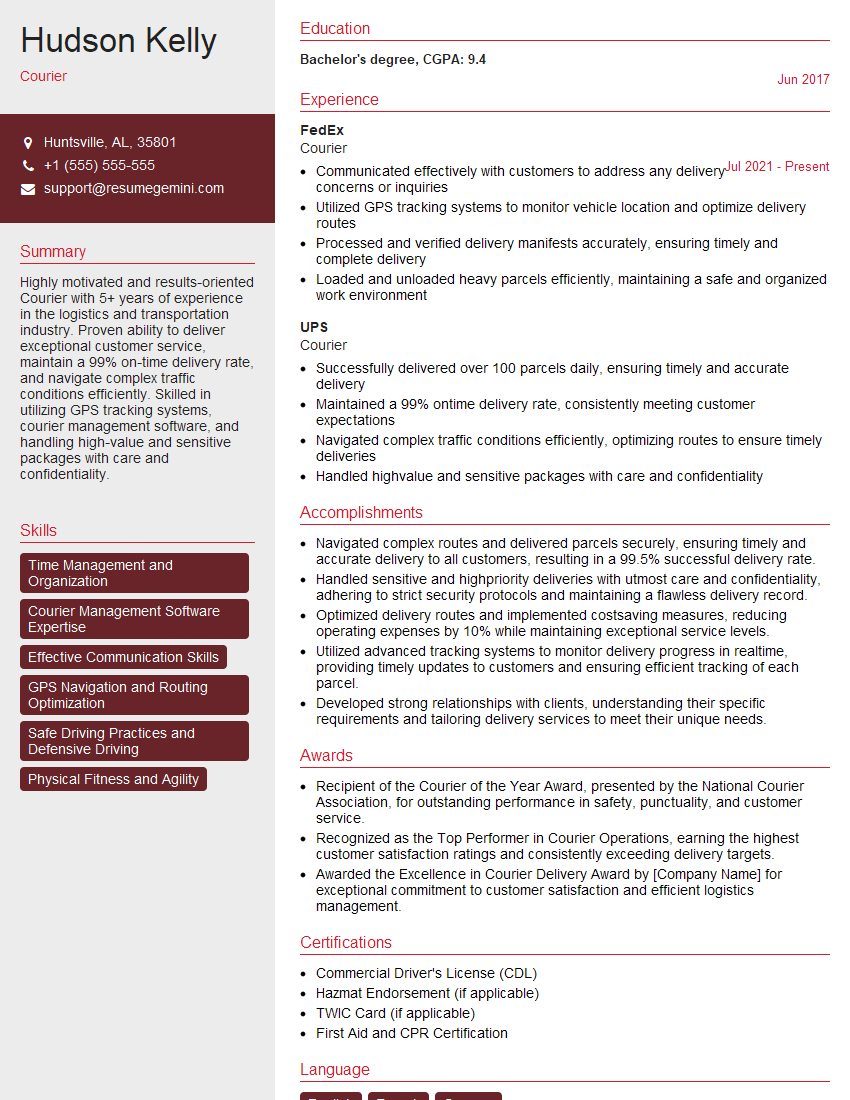
Courier Resume Sample
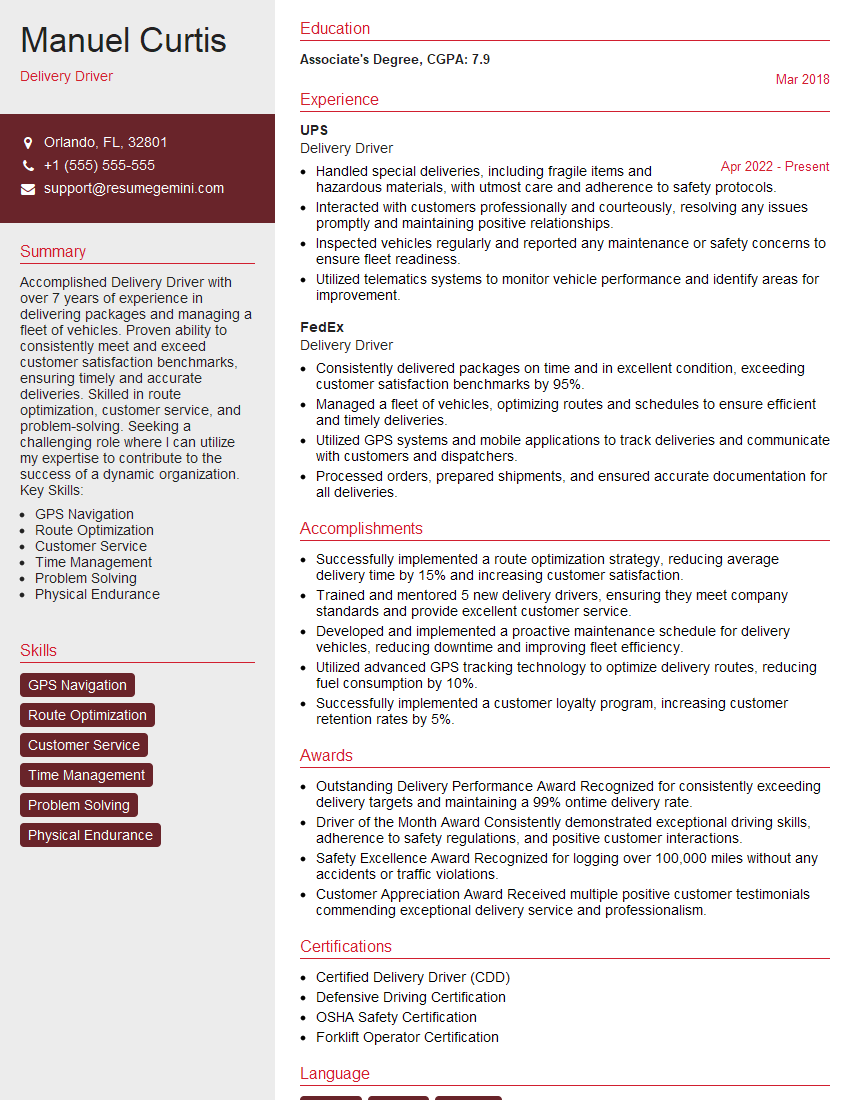
Delivery Driver Resume Sample
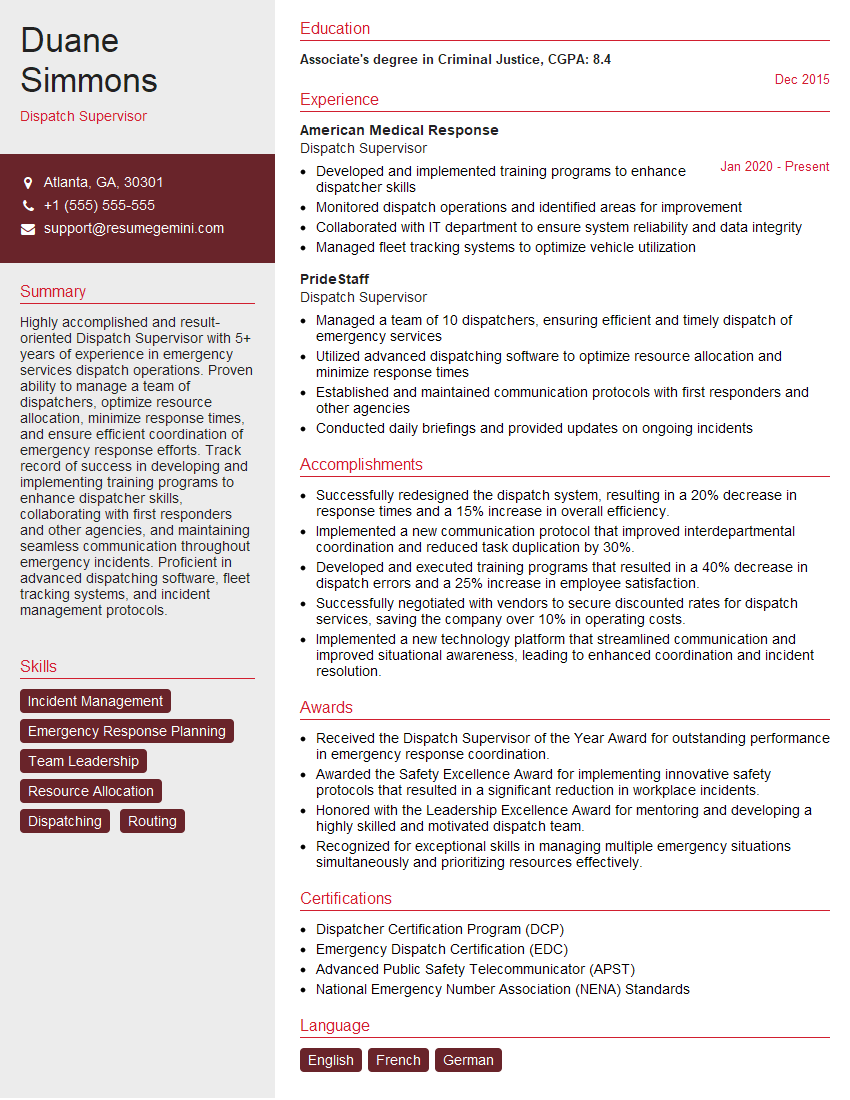
Dispatch Supervisor Resume Sample
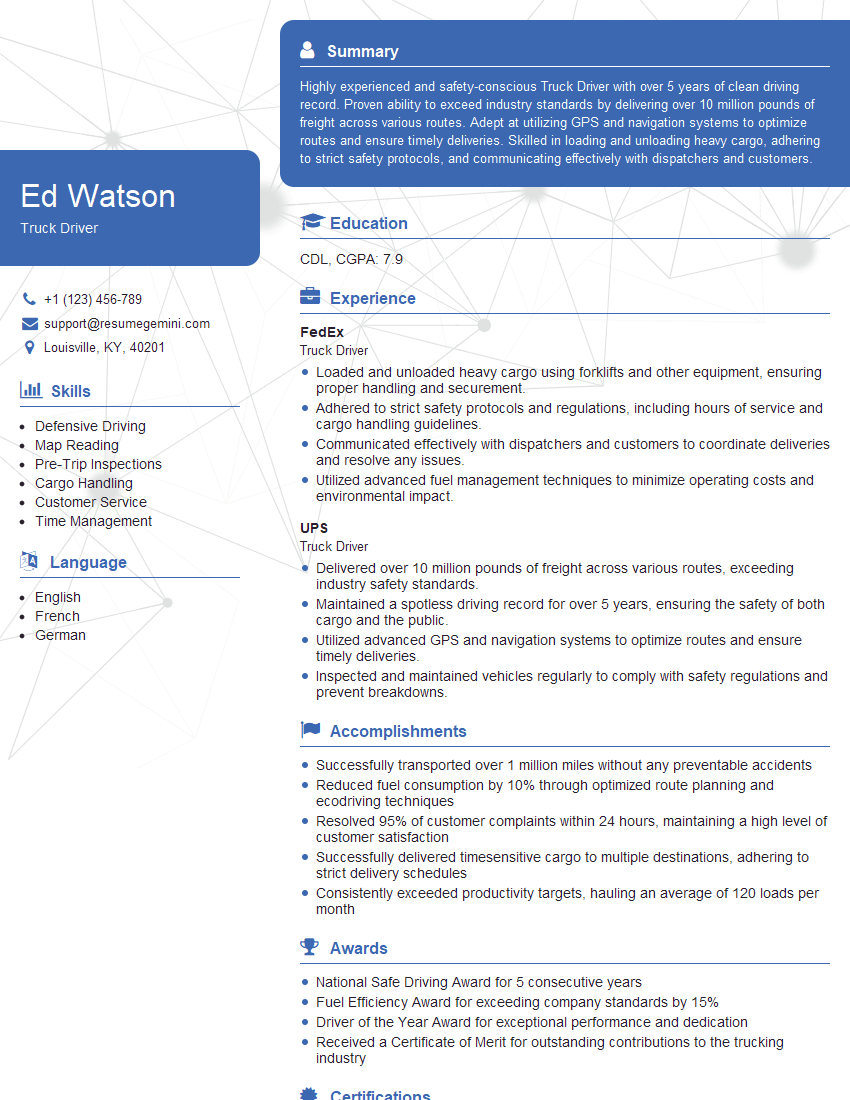
Truck Driver Resume Sample
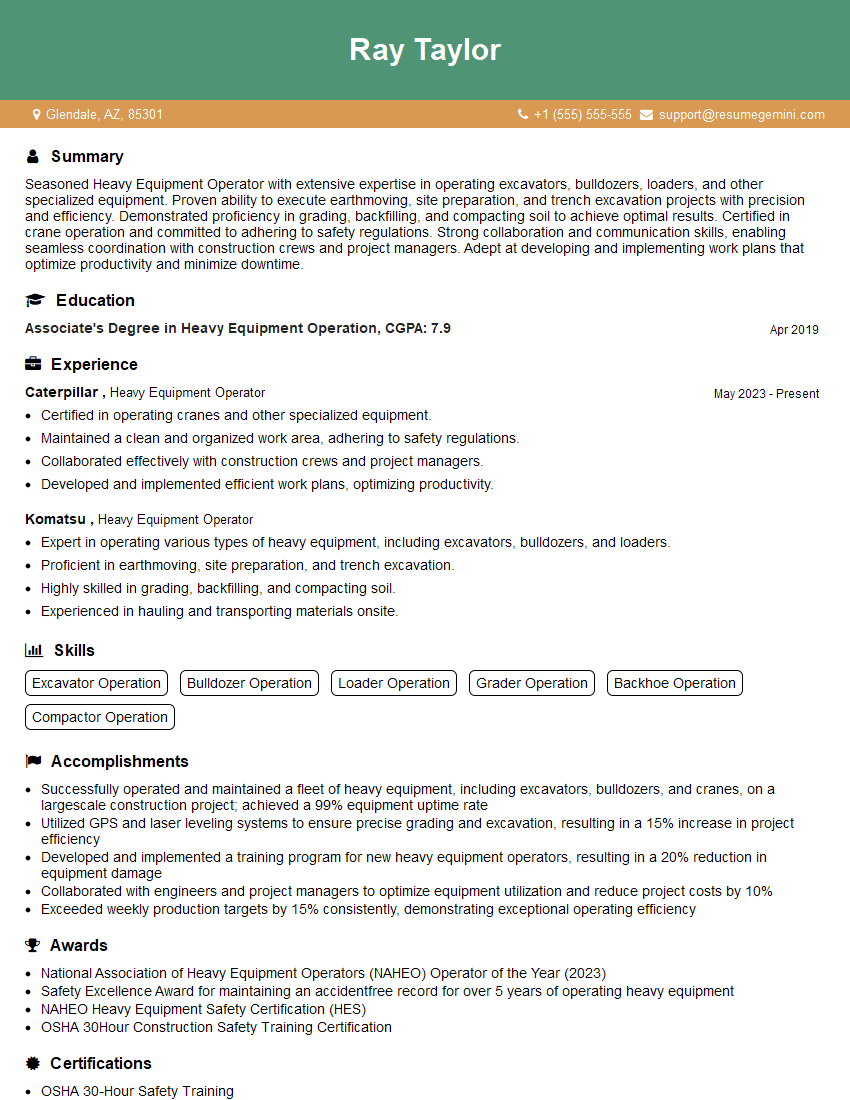
Heavy Equipment Operator Resume Sample
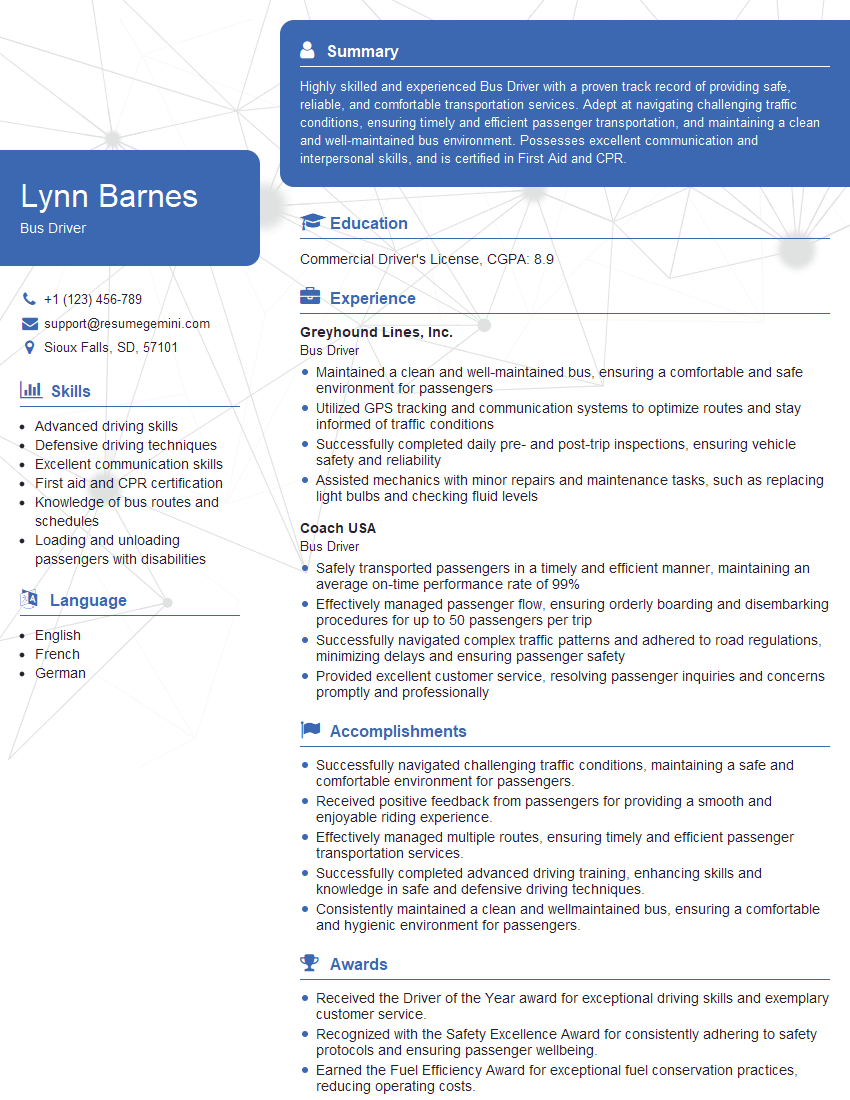
Bus Driver Resume Sample

Chauffeur Resume Sample
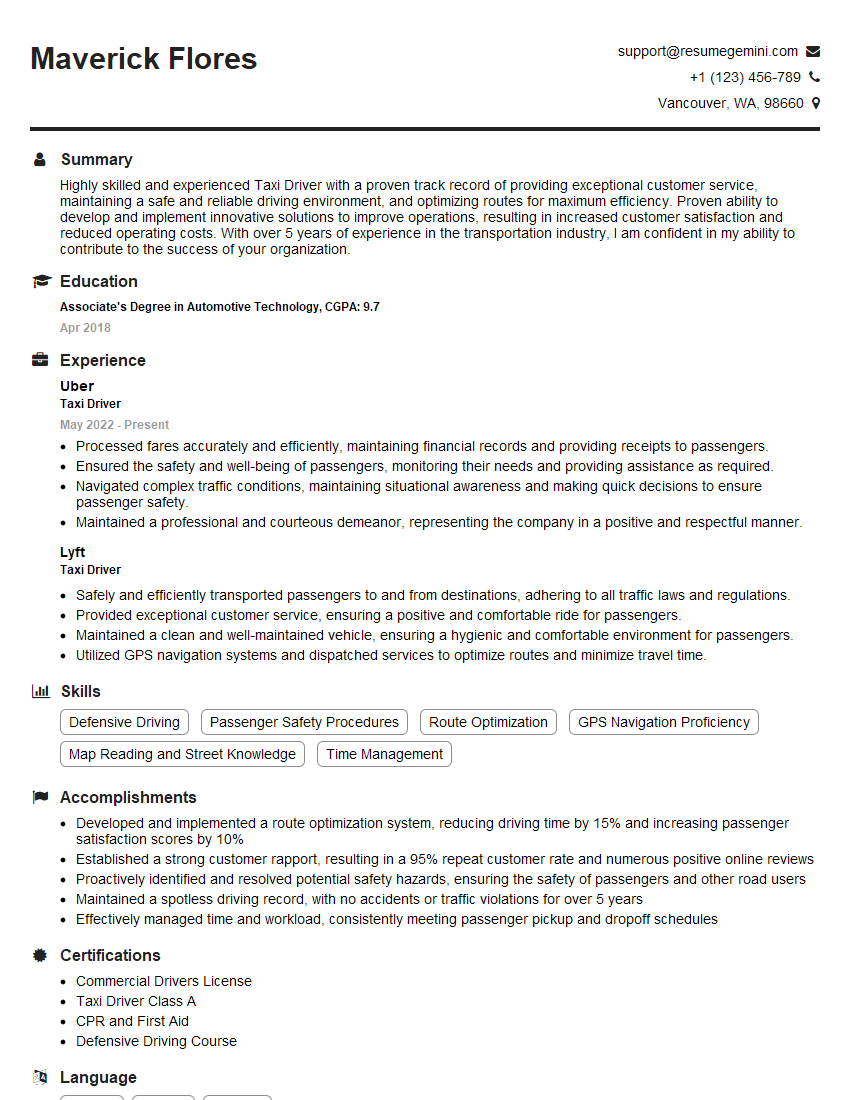
Taxi Driver Resume Sample
Explore more articles
Users Rating of Our Blogs
Share Your Experience
We value your feedback! Please rate our content and share your thoughts (optional).
What Readers Say About Our Blog
Really detailed insights and content, thank you for writing this detailed article.
IT gave me an insight and words to use and be able to think of examples