Feeling uncertain about what to expect in your upcoming interview? We’ve got you covered! This blog highlights the most important Experience in creating concept art and storyboards interview questions and provides actionable advice to help you stand out as the ideal candidate. Let’s pave the way for your success.
Questions Asked in Experience in creating concept art and storyboards Interview
Q 1. Describe your process for creating a concept sketch from a written description.
My process for transforming a written description into a concept sketch is iterative and involves several key stages. First, I thoroughly read and reread the description, identifying key elements like setting, characters, mood, and action. I then create a series of thumbnail sketches – quick, small drawings that explore different compositions and interpretations. This helps me visualize the scene from various angles and perspectives. Next, I select the most promising thumbnail and refine it into a more detailed sketch, focusing on character design, environment details, and overall visual appeal. This refined sketch might involve exploring different color palettes and lighting scenarios digitally, even at this stage, to better understand the atmosphere. Finally, I finalize the concept sketch, ensuring it accurately reflects the written description while also incorporating my artistic interpretation and stylistic choices. For example, if the description mentions a ‘dark, gothic castle on a windswept cliff,’ my thumbnails might explore different castle styles, cliff formations, and lighting conditions to find the most visually compelling representation before moving to a more polished sketch.
Q 2. Explain your workflow for creating a storyboard sequence.
My storyboard workflow begins with a careful review of the script or narrative. I break down the story into individual scenes and key moments, creating a shot list. Then, I sketch each scene as a thumbnail storyboard, focusing on the camera angle, composition, and character placement. This helps in sequencing and pacing. Following this, I move to a more detailed storyboard panel, creating more refined sketches with clear character expressions, action lines, and any necessary annotations. I frequently use digital software at this stage to enhance detail, add color blocking or a base color scheme to understand the overall aesthetic, and even incorporate basic animation. Throughout this process, I consider pacing, transitions between shots, and overall narrative flow. For example, in an action sequence, I’d need to ensure quick cuts and dynamic camera angles, whereas a dramatic scene might require longer shots and a slower pace. Finally, I review and refine the storyboard, ensuring a cohesive and engaging visual narrative before sharing it with stakeholders for feedback.
Q 3. How do you incorporate feedback into your concept art and storyboard revisions?
Incorporating feedback is crucial to the process. I generally hold a review meeting with the director or client to review both the concept art and storyboards. I actively listen to their comments, noting any changes needed regarding the overall look and feel or more specific elements, like character expressions or the background’s composition. I then prioritize feedback based on its impact on the story’s clarity and overall effectiveness. I create revised sketches and panels, addressing each comment carefully. Sometimes, simple adjustments suffice; other times, more extensive revisions might be needed. For example, if feedback suggests making a character more menacing, I might adjust their posture, facial expression, and even their clothing. After revisions, I present the updated work for final approval, reiterating that collaboration is essential to achieve the best possible result.
Q 4. What software and tools are you proficient in using for concept art and storyboarding?
My skill set includes proficiency in several software applications and tools. For sketching and painting, I primarily use Photoshop and Procreate. These tools allow me to achieve both traditional and digital painting styles effortlessly. For vector-based work and precise line art, I employ Adobe Illustrator. For storyboarding specifically, Storyboard Pro is an invaluable asset for creating polished, professional storyboards with its tools specifically designed for this workflow. In addition, I am comfortable working with other 3D software packages like Blender for environmental design concepts, as it can aid in creating more realistic renderings to guide and refine the 2D storyboards and concept art.
Q 5. How do you ensure consistency of style and visual language across a series of storyboards?
Maintaining stylistic consistency throughout a series of storyboards requires careful planning and attention to detail. I begin by creating a style guide document which dictates the overall visual style: color palettes, character designs, background elements, camera angles, and even font styles for any text annotations. Throughout the storyboarding process, I constantly refer back to this guide to ensure visual uniformity. I also create a mood board with example images that capture the desired aesthetic. Digital software is helpful as you can create templates or layer styles to maintain consistency across panels. For instance, reusing background elements consistently can help to maintain continuity, and maintaining a uniform color palette is also a key element in keeping a consistent look and feel. Regular reviews also help in catching any inconsistencies early on.
Q 6. How do you handle revisions and changes to existing storyboards?
Handling revisions to existing storyboards requires a systematic approach. I begin by understanding the nature of the changes. Are they minor adjustments or significant alterations to the plot or pacing? I maintain a version control system, saving all versions of my storyboards. This allows for easy tracking of revisions and allows for quick revert if needed. For minor revisions, I directly edit the existing panels. For major changes, I might need to redraw specific sections or even entire sequences, ensuring the overall flow remains coherent and consistent with the narrative and any previous feedback. The style guide and mood board created earlier become invaluable references in ensuring that revisions don’t stray from the overall aesthetic.
Q 7. What are some common challenges you face in creating concept art and storyboards?
Creating concept art and storyboards presents unique challenges. One common hurdle is effectively translating abstract ideas and descriptions into tangible visuals. Another challenge is meeting deadlines while maintaining a high level of quality. Balancing artistic freedom with client feedback can also be tricky. Sometimes, you need to compromise the artistic vision to meet the project requirements. Moreover, technical difficulties or software limitations can hinder the creative process. Sometimes, you may find yourself spending a significant amount of time on an aspect that does not end up serving the overall concept well. Finally, it’s crucial to avoid getting lost in the detail and focus on communication to understand requirements early on to keep the project on track.
Q 8. How do you balance artistic vision with client requirements?
Balancing artistic vision with client requirements is a crucial skill in concept art and storyboarding. It’s a delicate dance between personal creativity and fulfilling a project’s needs. My approach is collaborative and iterative. I begin by thoroughly understanding the client’s brief, asking clarifying questions to ensure we’re on the same page regarding the target audience, tone, and overall goals. I then present initial concepts, showcasing my artistic interpretation while staying within the defined parameters. This initial presentation often involves multiple variations, exploring different stylistic approaches and design choices. The subsequent feedback loop is key; I actively listen to the client’s comments, incorporating their suggestions while simultaneously advocating for artistic integrity. This often involves explaining the rationale behind specific design decisions, demonstrating how they contribute to the overall narrative or aesthetic. The process usually involves several revisions, refining the concepts until we achieve a design that satisfies both the client’s requirements and my artistic vision.
For instance, in a recent project for a fantasy RPG, the client initially envisioned a very dark and gritty world. My initial concept leaned into this, but after feedback, we discovered that a slightly brighter, more hopeful tone would better resonate with the target audience. We adjusted the color palette, character designs, and environment details accordingly, resulting in a concept that better served the project’s narrative while still retaining a strong visual identity.
Q 9. Describe your experience with different art styles (e.g., realistic, stylized, cartoonish).
My experience encompasses a wide range of art styles. I’m comfortable working in realistic styles, requiring meticulous detail and anatomical accuracy, as well as highly stylized approaches that prioritize visual impact and symbolic representation over strict realism. I’ve also worked extensively with cartoonish and graphic novel styles, employing bold lines, simplified forms, and exaggerated features for comedic or expressive effect. The key is adaptability; I understand that different projects require different stylistic approaches, and I can seamlessly transition between them. For example, I’ve created realistic character portraits for a historical fiction project and then transitioned to a vibrant, stylized aesthetic for a children’s animated series. My portfolio showcases these diverse skills, demonstrating my versatility and ability to adapt to various artistic demands. I’m proficient in various digital painting and drawing software, which allows me to easily switch between different brushes, textures, and techniques depending on the desired style.
Q 10. How do you convey mood, atmosphere, and character emotion through your visuals?
Conveying mood, atmosphere, and character emotion is paramount in concept art and storyboarding. It’s about creating a visual language that speaks volumes without words. I achieve this through several key techniques. Firstly, color plays a massive role. Warm colors (reds, oranges, yellows) evoke feelings of warmth, excitement, or danger, whereas cool colors (blues, greens, purples) often represent calmness, sadness, or mystery. Lighting is equally important; dramatic lighting with strong contrasts can create a sense of suspense or drama, while soft, diffused lighting can convey serenity or intimacy. Composition also plays a vital part – the placement of elements within the frame guides the viewer’s eye and influences their emotional response. For instance, a character positioned in a small, enclosed space might feel trapped and vulnerable, while one standing on a vast landscape might feel powerful and free. Finally, character expressions and body language are critical. Subtle nuances in facial features and posture can reveal a wealth of emotional information.
Imagine a scene depicting a lonely character lost in a forest at night. I would use a cool-toned color palette, dominated by dark blues and greens, with minimal lighting to enhance the sense of isolation. The character’s posture would be slumped, their expression downcast. The composition would emphasize the character’s smallness within the vast, shadowy environment.
Q 11. How do you incorporate perspective and composition effectively in your work?
Perspective and composition are fundamental to creating compelling visuals. Perspective gives a sense of depth and realism, making the scene feel believable and immersive. I utilize various techniques, from one-point and two-point perspectives for architectural elements to atmospheric perspective to create distance and depth in landscapes. Composition, on the other hand, refers to the arrangement of elements within the frame. It dictates the viewer’s gaze, creating focal points and guiding their eye through the scene. I use the rule of thirds, leading lines, and other compositional tools to create visually pleasing and engaging images. For example, placing the main character off-center, according to the rule of thirds, creates a more dynamic and interesting composition than centering them. Leading lines, such as a road or river, can guide the viewer’s eye towards the focal point of the image. Understanding these principles ensures that the artwork is not only visually appealing but also effectively communicates the intended narrative.
Q 12. Explain your understanding of color theory and its application in concept art and storyboarding.
Color theory is the backbone of effective visual storytelling. It’s not just about picking pretty colors; it’s about understanding how colors interact and evoke specific emotions and meanings. I’m familiar with the color wheel, understanding complementary colors (colors opposite each other on the wheel), analogous colors (colors next to each other), and triadic colors (three colors evenly spaced on the wheel). I understand the impact of color temperature (warm vs. cool), saturation (intensity), and value (lightness/darkness). In concept art, I might use complementary colors to create visual contrast and draw attention to specific elements. In storyboarding, I might use analogous colors to establish a consistent mood throughout a scene or sequence. For instance, using mostly warm, saturated colors could portray a tense or exciting scene, while muted, desaturated colors might create a more melancholic or subdued mood. The application of color theory is highly context-dependent, and I carefully tailor the color palette to each specific project and scene, keeping in mind the overall narrative and desired emotional impact.
Q 13. Describe your process for creating believable character designs.
Creating believable character designs involves a multifaceted process. It starts with understanding the character’s personality, backstory, and role within the narrative. I consider factors like age, occupation, culture, and societal status, all of which influence their physical appearance and attire. I often start with sketches, exploring different body types, facial features, and clothing styles. I pay attention to anatomical accuracy (even in stylized designs), ensuring proportions and musculature are believable, even if slightly exaggerated. I consider the character’s silhouette; a strong, memorable silhouette is crucial for visual impact. Then, I move on to detailing the character’s clothing and accessories, ensuring they are consistent with the character’s personality and setting. Finally, I refine the design, paying close attention to texture, color, and lighting to create a polished and engaging final product. Throughout this process, I regularly review the design, checking for inconsistencies and ensuring the visual design aligns with the character’s personality and backstory. For instance, if a character is described as a cunning thief, their design might include features like sharp eyes, nimble fingers, and dark, stealthy clothing.
Q 14. How do you design environments that support the narrative of a story?
Environment design is crucial for supporting the narrative. The environment should not only be visually appealing but also reflect the story’s mood, setting, and themes. I start by carefully studying the story’s script or synopsis, identifying key locations and events. I then design environments that enhance the narrative, reflecting the story’s themes and mood. For instance, a dark and claustrophobic environment might emphasize feelings of oppression or confinement, while a bright and open environment might convey a sense of freedom or hope. I consider practical elements like lighting, scale, and spatial relationships between objects and characters. I incorporate details that provide clues about the story’s setting and characters. For example, a dilapidated building might suggest a setting of decay or poverty, while a pristine palace could indicate wealth and power. The environment should always tell a part of the story, even without any characters present. I often create mood boards and concept sketches to explore different design options, ensuring the environment seamlessly supports the narrative and strengthens the emotional impact of the story.
Q 15. How do you manage your time and prioritize tasks when working on multiple projects?
Managing time effectively across multiple projects requires a structured approach. I utilize project management tools like Trello or Asana to create individual boards for each project, breaking down large tasks into smaller, manageable sub-tasks. This allows for clear visualization of progress and deadlines. I prioritize tasks based on urgency and importance using methods like the Eisenhower Matrix (urgent/important), assigning deadlines and allocating specific time blocks in my day. For example, if I’m working on three projects—a feature film storyboard, a short animated film’s concept art, and some character design commissions—I might dedicate mornings to the feature film (highest priority and largest deadline), afternoons to the animated film’s concept art (medium priority, slightly shorter deadline), and evenings to the commissions (lower priority, flexible deadlines). Regular review and adjustment of my schedule are crucial to ensure I’m on track and adaptable to unforeseen circumstances.
Career Expert Tips:
- Ace those interviews! Prepare effectively by reviewing the Top 50 Most Common Interview Questions on ResumeGemini.
- Navigate your job search with confidence! Explore a wide range of Career Tips on ResumeGemini. Learn about common challenges and recommendations to overcome them.
- Craft the perfect resume! Master the Art of Resume Writing with ResumeGemini’s guide. Showcase your unique qualifications and achievements effectively.
- Don’t miss out on holiday savings! Build your dream resume with ResumeGemini’s ATS optimized templates.
Q 16. How do you handle deadlines and pressure?
Deadlines are a crucial aspect of this profession, and I handle pressure by proactively planning and managing my workload. This includes building buffer time into my schedule for unexpected delays or creative blocks. I’ve learned to break down large projects into smaller, achievable goals, celebrating each milestone along the way to maintain momentum and prevent burnout. If I feel overwhelmed, I take short breaks to clear my head and reassess my approach. Communication with clients is key; I proactively update them on my progress and address any potential roadblocks early on. For instance, if I foresee a challenge that might delay a delivery, I immediately communicate it to the client and discuss alternative solutions together. Open communication prevents misunderstandings and fosters trust.
Q 17. What are your strengths and weaknesses as a concept artist and storyboard artist?
My strengths lie in my ability to visualize complex narratives visually and translate them effectively into both concept art and storyboards. I possess a strong understanding of composition, color theory, and visual storytelling techniques. My experience in working with a variety of styles and mediums allows me to adapt to different project needs. For example, I can seamlessly shift from a painterly style for concept art to a more streamlined, clear approach for storyboarding. However, I acknowledge that my weakness sometimes lies in over-detailing, especially during the initial concept stages. To counter this, I actively practice quick sketching and thumbnail creation to focus on the overall composition and narrative before diving into minute details.
Q 18. What steps do you take to ensure the accuracy of your storyboards based on the script?
Accuracy in storyboarding relies on meticulous attention to the script. My process starts with a thorough reading and analysis of the script, identifying key scenes, character actions, and dialogue. I then create a shot list outlining the crucial moments to be visualized. I meticulously track camera angles, character positions, and actions as described in the script. During the storyboarding process, I frequently revisit the script to ensure consistency and accuracy. I often use annotations and notes directly on my storyboards to clarify camera moves, character emotions, and any special effects. Finally, I share my storyboards with the client or director for feedback and revisions, making any necessary adjustments to maintain fidelity to the script’s vision.
Q 19. How familiar are you with different camera angles and their storytelling implications?
I am very familiar with different camera angles and their impact on storytelling. I understand that the angle affects not just the visual presentation but also the emotional impact on the viewer. For instance, a high angle shot can make a character appear smaller and vulnerable, while a low angle shot can create a sense of power and dominance. I use different camera angles strategically to emphasize specific emotions, relationships between characters, and the overall tone of the scene. I apply this knowledge extensively in storyboarding, planning the camera movements and angles to maximize the narrative impact of each scene. I’ve worked on projects ranging from intimate character studies that benefit from close-ups to sweeping epic battles that rely on wide shots and dynamic camera movements.
Q 20. Describe your experience using reference materials in your artwork.
Reference materials are essential to my process. I use a wide range of resources, including photography, anatomical studies, historical paintings, and even film stills. My approach is highly selective; I don’t just copy images, but I use them as inspiration and learning tools. For instance, when designing a character, I may use photos of real people to understand anatomy and posture, but I’ll adapt and stylize those references to fit the project’s visual style. I also carefully document my sources to avoid plagiarism and to keep a record of my inspiration. I maintain a vast online and offline library of images, categorized and organized for easy access during different project phases. Using references isn’t about imitation; it’s about gathering visual information to inform and enrich my creative process.
Q 21. How do you create a compelling visual narrative through storyboarding?
Creating a compelling visual narrative through storyboarding involves a combination of visual storytelling techniques and a deep understanding of pacing and emotional impact. I focus on clarity, using clear and concise visuals to convey the story’s essence. I carefully consider the composition of each panel, using visual elements like leading lines, framing, and color to guide the viewer’s eye and build tension. I also pay close attention to character expressions, body language, and camera angles to convey emotions and relationships. The flow and pacing of the story are vital; I ensure a smooth transition between shots, avoiding jarring changes that could disrupt the narrative. A well-crafted storyboard tells a story even without words, making it instantly understandable and emotionally resonant. The successful visual narrative depends on the right balance of visual and narrative coherence.
Q 22. Explain your understanding of visual storytelling techniques.
Visual storytelling is the art of communicating a narrative through images. It’s about using composition, character design, color palettes, and visual metaphors to convey emotion, plot points, and character development without relying heavily on text. Think of it like a silent movie – the visuals are doing all the heavy lifting. Effective visual storytelling requires a deep understanding of visual language, including:
- Composition: How elements are arranged within the frame to guide the viewer’s eye and create a specific mood (e.g., using the rule of thirds, leading lines).
- Character Design: Creating characters whose visual appearance instantly communicates personality, background, and even inner conflicts. A villain might have sharp angles and dark colors, while a hero might have softer lines and brighter tones.
- Color Palette: Specific color choices evoke strong emotional responses. Warm colors (reds, oranges, yellows) often suggest warmth, energy, or danger, while cool colors (blues, greens, purples) can represent calmness, sadness, or mystery.
- Symbolism and Metaphor: Using visual elements to represent abstract ideas or concepts. For instance, a wilting flower could symbolize loss or decay.
I’ve used these techniques extensively, for example, in a project where I had to visually depict the emotional deterioration of a character. By subtly changing the color palette from vibrant to muted and using increasingly distorted reflections in the character’s eyes, I was able to visually communicate his mental state without needing any dialogue.
Q 23. How would you approach creating storyboards for a scene with complex action sequences?
Storyboarding complex action sequences requires meticulous planning and a clear understanding of the pacing and flow of the action. I usually begin by breaking down the sequence into smaller, manageable beats. Each beat focuses on a specific action or moment within the larger sequence. For example, a fight scene might be broken down into beats like ‘Character A throws a punch,’ ‘Character B dodges,’ ‘Character A kicks,’ and so on.
Next, I create thumbnail sketches for each beat, focusing on the key poses and camera angles. This helps visualize the overall flow and identify any potential pacing issues. Then, I refine these thumbnails into more detailed storyboards, adding more specifics like character expressions, background details, and camera movement. I might use different camera angles (wide shots, medium shots, close-ups) to emphasize specific aspects of the action, and consider elements like motion lines and impact frames to enhance the clarity and dynamism of the sequence.
For complex sequences, it’s invaluable to create an animatic – a rough animation of the storyboards. This helps to visualize the timing and flow of the action before entering the more time-consuming stages of production. This process ensures the sequence reads well, is clear, and is engaging.
Q 24. How do you ensure your storyboards are easy to understand and follow for others?
Clarity is paramount in storyboarding. To ensure my storyboards are easily understood, I adhere to several key principles:
- Clear and Concise Panels: Each panel should clearly depict a single action or moment, avoiding visual clutter.
- Consistent Style: Maintaining a consistent style and level of detail throughout the storyboard ensures visual unity and avoids confusion.
- Panel Descriptions: I include concise descriptions beneath each panel, specifying camera angles, character actions, dialogue, and sound effects (e.g., ‘Camera angle: Medium shot. Character A throws a punch. Sound: Punch impact’).
- Use of Arrows and Symbols: I utilize arrows to indicate movement and camera transitions, using standard symbols (e.g., a circle with a slash for a cut, an arrow for a wipe) to depict editing choices.
- Storyboard Software: I use industry-standard software such as Storyboard Pro or Adobe Photoshop, which allows for organization and provides various tools to ensure professional presentation.
Think of it like giving directions. You wouldn’t just scribble down a map; you’d provide clear, step-by-step instructions. My storyboards aim to provide a similarly clear ‘map’ for the production team to follow.
Q 25. Explain your process for presenting your work to clients or directors.
Presenting my work involves a carefully planned presentation. I usually start by providing a brief overview of the project and my approach. Then, I present the storyboards or concept art chronologically, highlighting key design choices and explaining the rationale behind them. I avoid overwhelming the client with excessive details; instead, I focus on showcasing the core narrative and visual concepts. Interactive feedback is essential. I encourage questions and discussions, actively seeking clarification and addressing any concerns.
For concept art, I often present multiple variations to showcase different design explorations. I’ll usually present these in a mood board format, allowing clients to provide immediate feedback on the direction they prefer. I provide high-resolution versions of the final artworks along with lower-resolution versions for presentations and general review. For storyboards, I often accompany the presentation with an animatic, which helps visualize the story’s pacing and rhythm. Following the presentation, I document all feedback and revisions, ensuring all changes are clearly communicated and implemented.
Q 26. How do you handle critique and feedback on your storyboards and concept art?
Critique and feedback are integral to the creative process. I approach feedback with an open mind, viewing it as an opportunity for growth and improvement. I listen carefully to the feedback, asking clarifying questions to ensure I fully understand the concerns. I then analyze the feedback, considering its validity and relevance to the project’s goals. If the feedback is constructive, I incorporate it into my work, making appropriate revisions.
Sometimes, feedback might conflict with my creative vision. In such cases, I engage in a respectful dialogue with the client or director, explaining my design choices and exploring potential compromises. It’s about finding a balance between adhering to the client’s vision and maintaining artistic integrity. For example, if a director requests a significant change that compromises the visual storytelling, I might present alternative solutions that achieve the same narrative goals while preserving the visual quality.
Q 27. Describe your experience collaborating with other artists and designers.
Collaboration is crucial in my field. I thrive in collaborative environments, valuing the diverse perspectives and skills of other artists and designers. I believe in clear communication, active listening, and mutual respect. Before starting a collaborative project, I ensure all team members understand their roles and responsibilities. We establish a shared vision and workflow, ensuring consistent design language and creative direction. I actively participate in brainstorming sessions, offering my ideas and constructively critiquing the work of others.
I’ve had several positive collaborations, like one on a fantasy film. We had a team of concept artists, character designers, and environment artists. We met regularly to discuss our individual progress, ensuring seamless integration of the designs. Open communication, coupled with utilizing a shared digital platform for asset sharing and version control, facilitated efficient and cohesive project completion. This experience highlighted the importance of clear communication and collaborative feedback throughout all stages.
Q 28. How do you stay updated with the latest trends and technologies in your field?
Staying updated is essential in a rapidly evolving field. I actively engage in several strategies to maintain my knowledge and skills:
- Following Industry Publications and Websites: I regularly read industry blogs, magazines (both print and online), and websites dedicated to concept art, storyboarding, and animation. This keeps me abreast of emerging trends and techniques.
- Attending Conferences and Workshops: Participating in industry conferences and workshops allows me to network with other professionals, learn from leading experts, and experience the latest technologies firsthand.
- Online Courses and Tutorials: I regularly take online courses and follow tutorials on platforms like Skillshare, Udemy, and YouTube, enhancing my skillset in specific areas like digital painting, 3D modeling, and animation.
- Experimentation and Exploration: I actively experiment with new software, tools, and techniques, pushing my creative boundaries and exploring innovative approaches to visual storytelling.
- Networking and Community Engagement: Engaging with online art communities, attending portfolio reviews, and interacting with other professionals on social media platforms such as ArtStation keeps me informed about current trends and best practices.
Staying updated is a continuous process, and I’m committed to lifelong learning to maintain my competitiveness and innovative spirit within the industry.
Key Topics to Learn for Experience in creating concept art and storyboards Interview
- Software Proficiency: Demonstrate expertise in industry-standard software like Photoshop, Illustrator, Procreate, or similar digital painting and illustration tools. Be prepared to discuss your workflow and preferred techniques.
- Visual Communication & Storytelling: Explain how you use visual language to convey narrative, mood, and character. Practice articulating your design choices and their impact on the overall story.
- Concept Art Development Process: Detail your approach to creating concept art, from initial sketches and thumbnails to refined final pieces. Highlight your ability to iterate on designs based on feedback.
- Storyboard Creation & Principles of Animation: Discuss your understanding of visual storytelling through sequential art. Explain how you incorporate elements of composition, staging, and movement in your storyboards.
- Collaboration & Communication: Emphasize your ability to effectively communicate your ideas to directors, producers, and other team members. Share examples of how you’ve worked collaboratively on projects.
- Understanding of different art styles and their application: Be ready to discuss your familiarity with various art styles (realistic, stylized, cartoonish, etc.) and how you adapt your approach based on project needs.
- Problem-solving and Adaptability: Highlight instances where you overcame creative challenges or adapted your approach to meet specific project requirements. Showcase your resourcefulness and problem-solving skills.
- Portfolio Presentation & Critique: Practice articulating your design choices and receiving constructive criticism. Be prepared to discuss your artistic influences and inspirations.
Next Steps
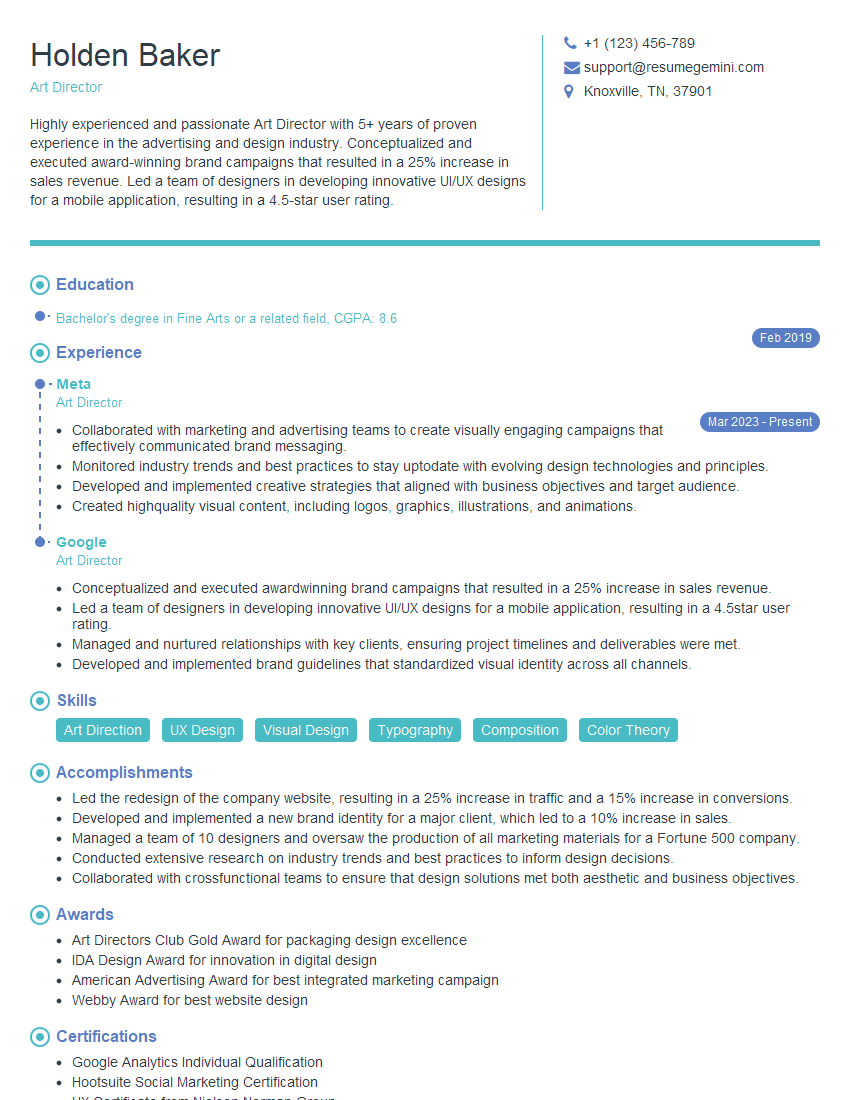
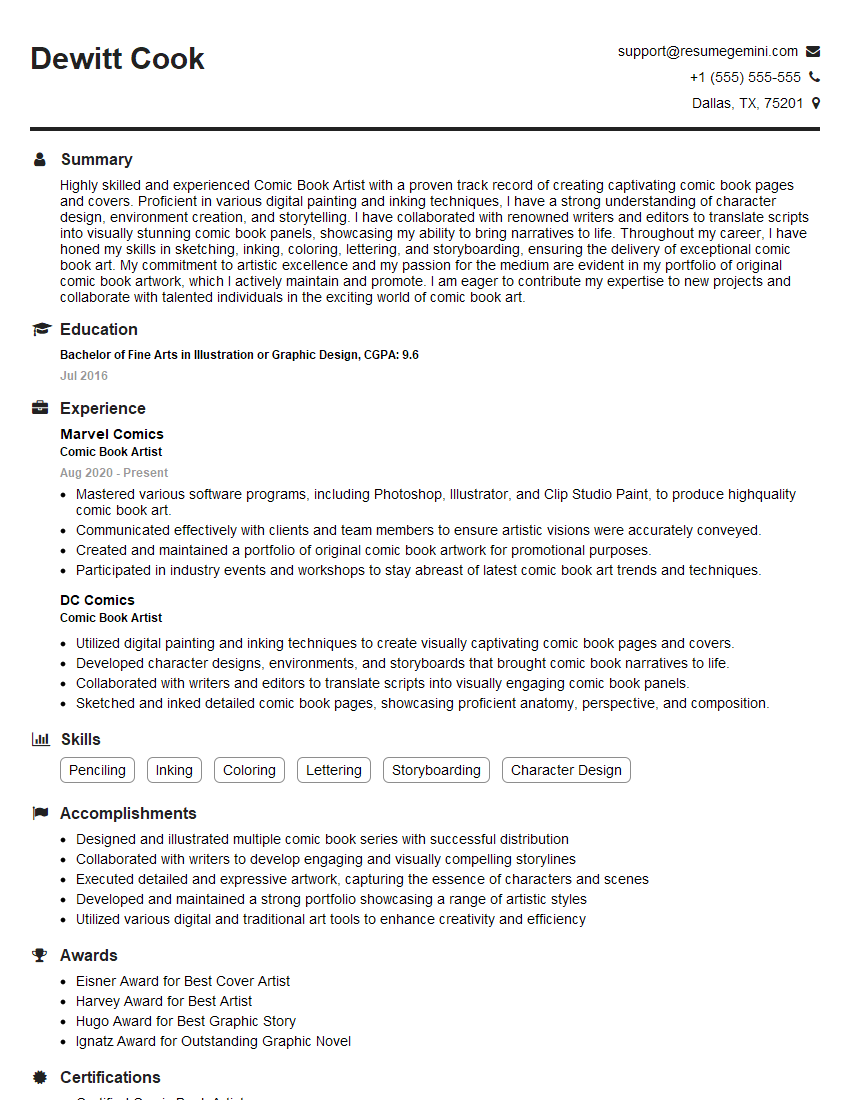
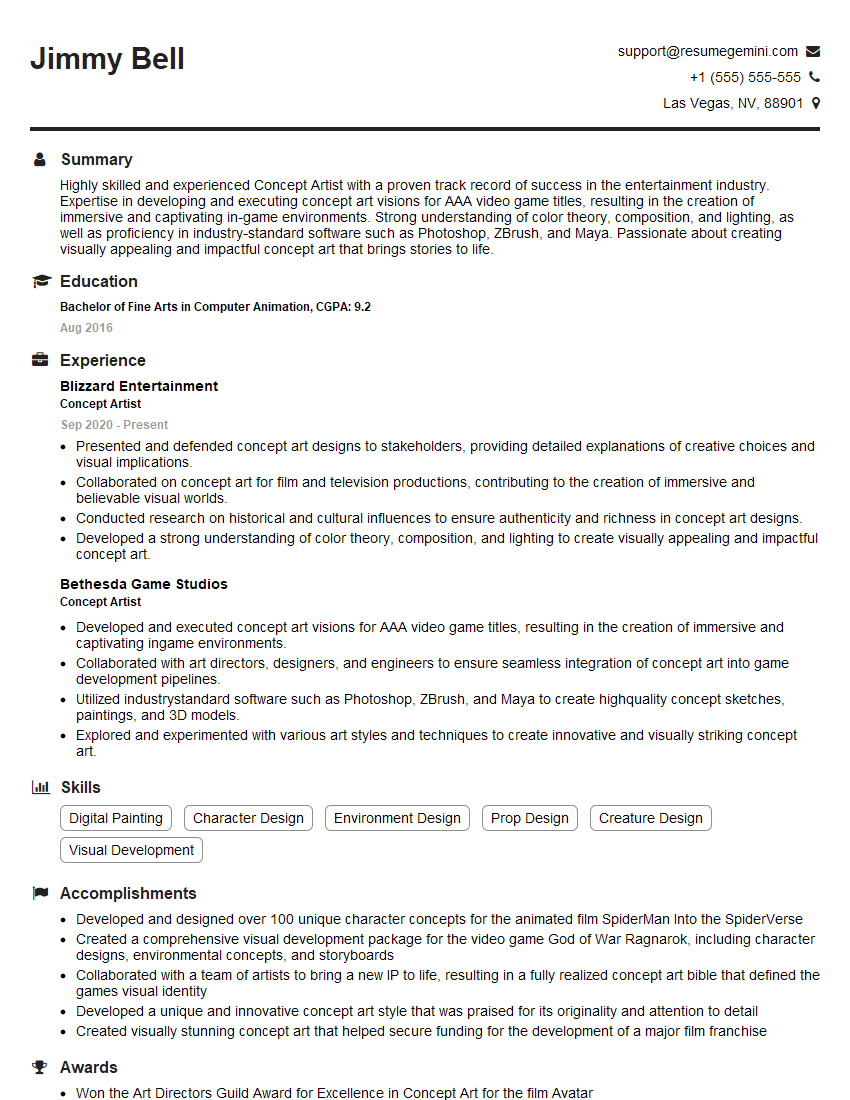
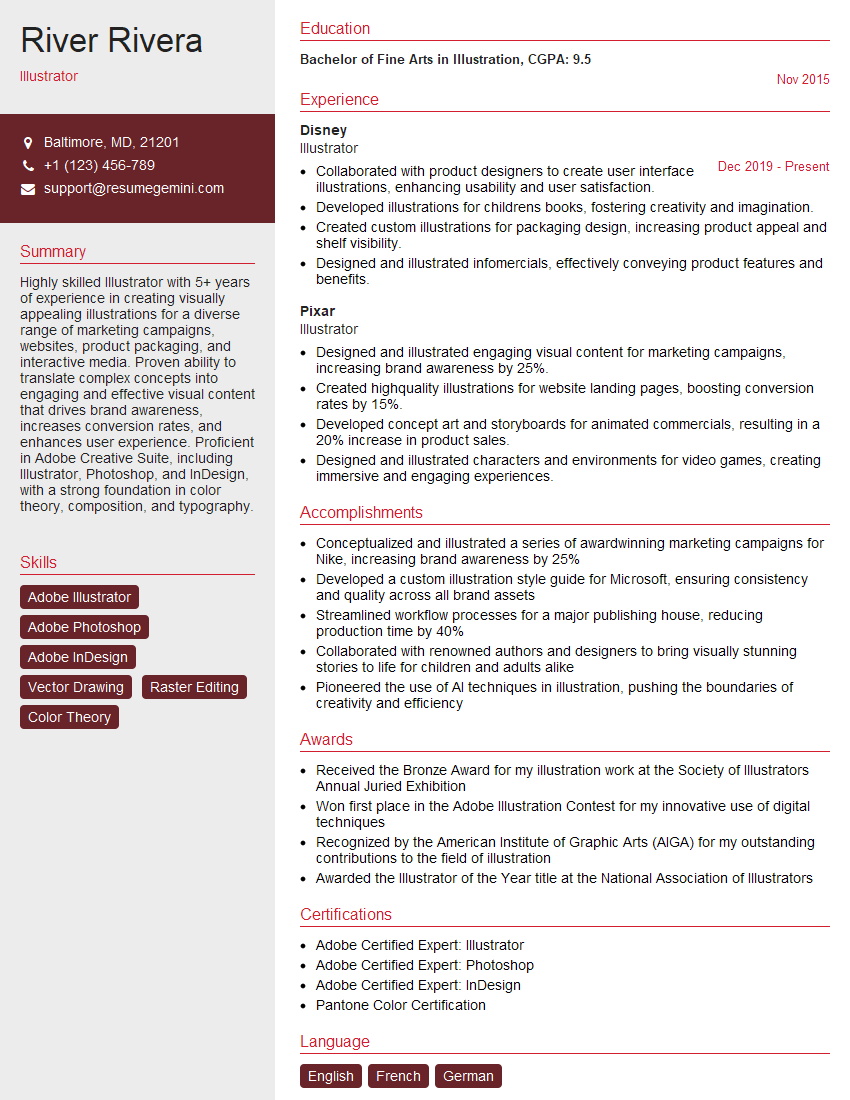
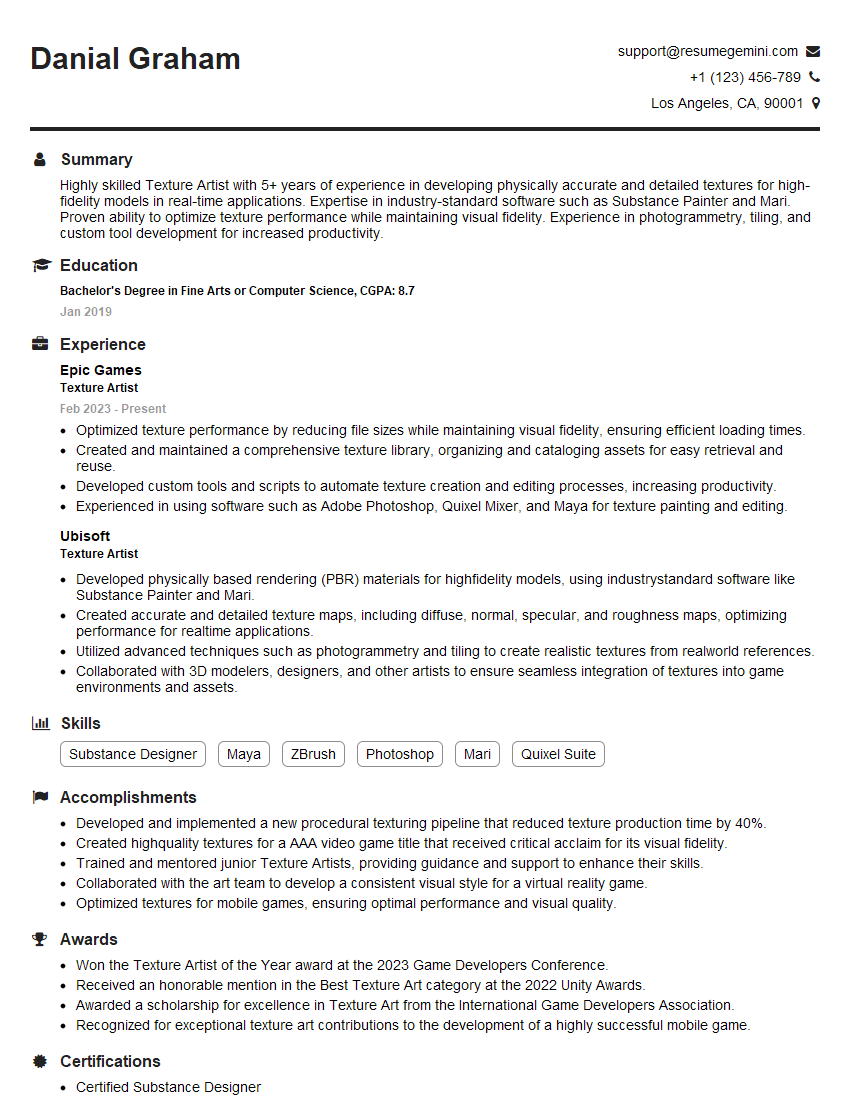
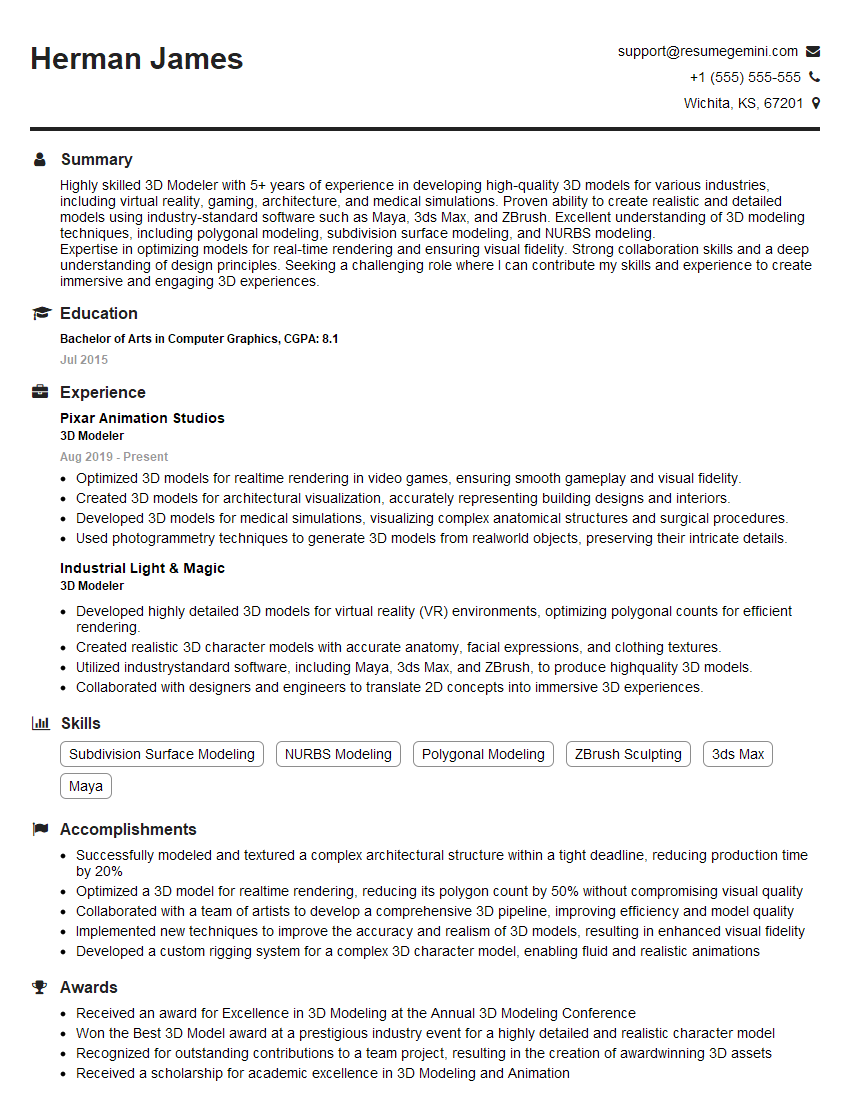
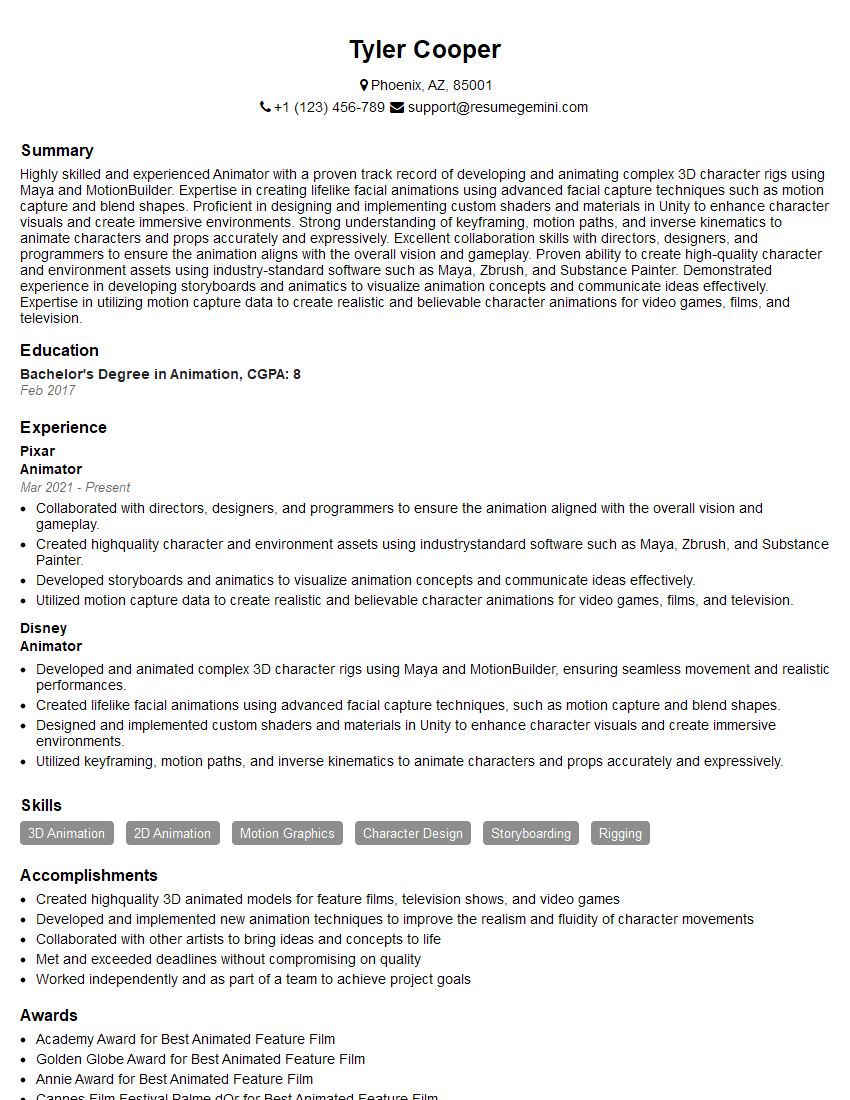
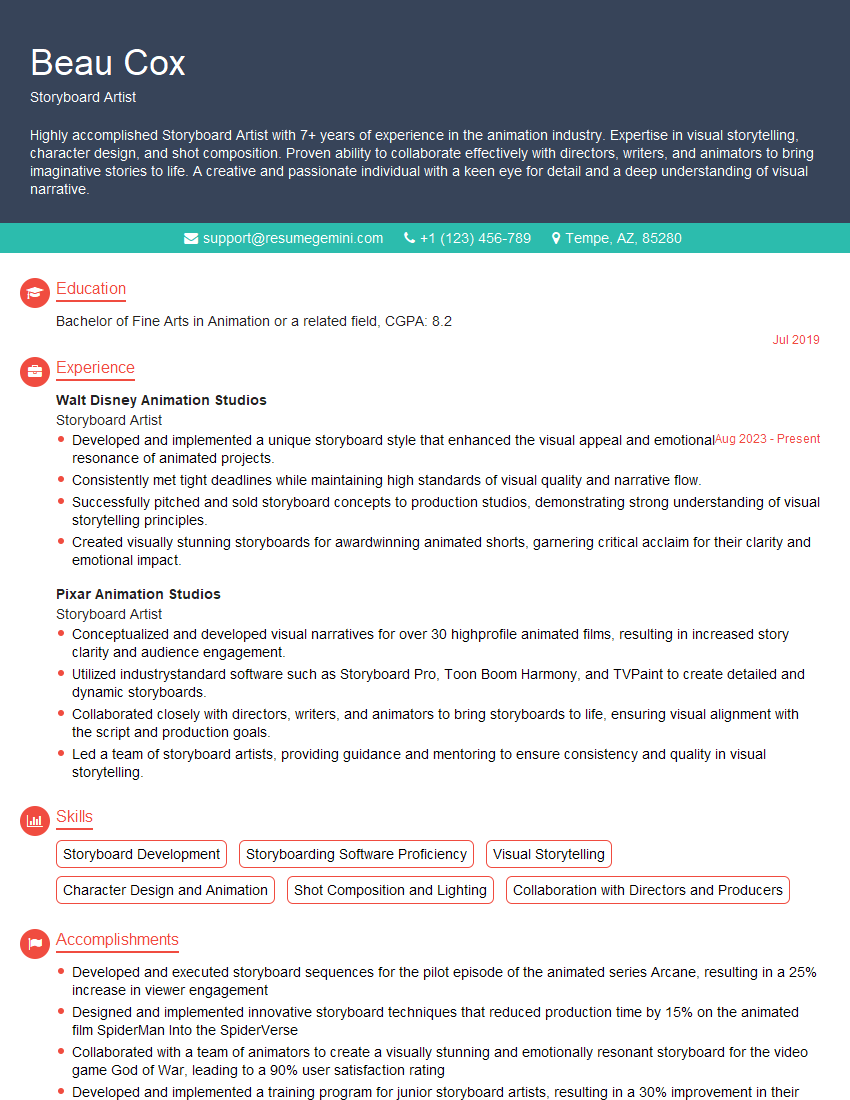
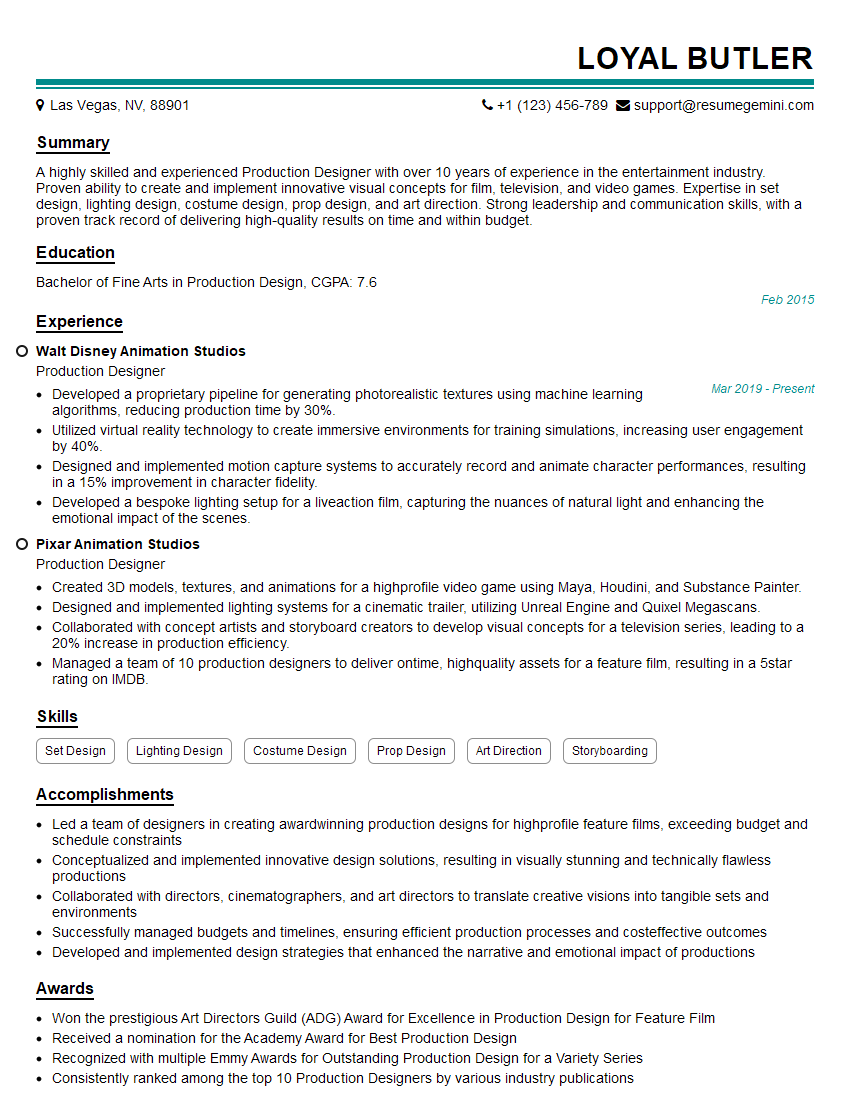
Mastering the art of creating compelling concept art and storyboards is crucial for career advancement in animation, game design, film, and other visual media industries. A strong portfolio is essential, but equally important is a resume that effectively showcases your skills and experience to potential employers. Crafting an ATS-friendly resume is key to getting your application noticed. To enhance your resume-building experience and increase your job prospects, leverage the power of ResumeGemini. ResumeGemini provides valuable tools and resources, including examples of resumes tailored to roles requiring experience in creating concept art and storyboards, to help you create a professional and impactful resume that highlights your unique skills and experience.
Explore more articles
Users Rating of Our Blogs
Share Your Experience
We value your feedback! Please rate our content and share your thoughts (optional).
What Readers Say About Our Blog
Really detailed insights and content, thank you for writing this detailed article.
IT gave me an insight and words to use and be able to think of examples