The thought of an interview can be nerve-wracking, but the right preparation can make all the difference. Explore this comprehensive guide to Experience in creating promotional artwork for comic books interview questions and gain the confidence you need to showcase your abilities and secure the role.
Questions Asked in Experience in creating promotional artwork for comic books Interview
Q 1. Describe your experience creating promotional artwork for comic books.
My experience in creating promotional artwork for comic books spans over a decade, encompassing a wide range of projects from independent titles to work for major publishers. I’ve crafted everything from eye-catching covers and dynamic action pieces to character designs and promotional posters. I’ve consistently aimed to capture the essence of the story and its target audience, ensuring the artwork generates excitement and encourages readership. For example, for a gritty crime noir comic, I focused on dark, atmospheric lighting and a more realistic style, while for a whimsical fantasy comic, I employed brighter colours and a more stylized approach. This flexibility allows me to tailor my art to resonate with the specific tone and themes of each project.
Q 2. What software and tools are you proficient in for creating comic book art?
My digital art toolkit is quite extensive. I’m highly proficient in industry-standard software like Adobe Photoshop and Illustrator, utilizing their features for everything from sketching and painting to digital inking, coloring, and final rendering. I also use Clip Studio Paint for its robust brush engine and animation capabilities, which sometimes come in handy for creating dynamic promotional material. I’m also comfortable using vector graphics editing software like Affinity Designer for tasks requiring precise linework and scalable assets. Beyond software, I employ a Wacom Cintiq tablet for precise control and natural drawing experience.
Q 3. Explain your process for designing a compelling comic book cover.
Designing a compelling comic book cover is a multi-step process that begins with a deep understanding of the story. I start by carefully reading the script, identifying key plot points, character relationships, and the overall tone. Then, I brainstorm visual concepts, sketching several thumbnails to explore different compositions and visual styles. I carefully select the most effective thumbnail and develop detailed sketches, refining the layout and character poses. This is followed by inking, coloring, and final touches to achieve the desired visual impact. For instance, for a horror comic, I might focus on creating a sense of dread and suspense through the use of dark colors and unsettling imagery, while a superhero comic might require bold colors and dynamic action poses.
Q 4. How do you adapt your style to meet the specific needs of different comic book projects?
Adaptability is key in this field. I’ve worked on projects ranging from realistic superhero comics to stylized fantasy tales. My approach involves thorough research of the comic’s specific style and visual language. For example, if a client requests a cover in the style of a classic golden age comic, I would study the characteristics of that era’s artwork, such as the linework, color palettes, and character designs. This research informs my approach to sketching, inking, and coloring, allowing me to effectively mimic the desired style while maintaining my own artistic flair. I believe strong communication with the client is crucial to ensuring the final product perfectly aligns with their vision.
Q 5. How do you handle critiques and feedback on your comic book artwork?
I view critiques and feedback as invaluable tools for growth. I actively solicit feedback during the creative process, not just at the end. I carefully consider each point, separating constructive criticism from subjective opinions. For example, if a client suggests adjusting the color palette for greater visual clarity, I analyze the feedback to see if it enhances the overall impact. I often create revisions based on valid critiques, always keeping open communication with the client to ensure we’re both happy with the final result. I am committed to turning constructive feedback into a learning opportunity to enhance my skillset and provide the best possible artwork.
Q 6. Describe your approach to working within deadlines and budgets.
Meeting deadlines and staying within budget are crucial aspects of professional work. I begin by establishing a clear project timeline with the client, breaking down the project into manageable phases with specific deadlines. This approach prevents last-minute rushes and maintains consistent progress. I also provide upfront estimates for my services, ensuring transparency and client understanding of potential costs. Throughout the project, I regularly update the client on my progress, promptly addressing any concerns or adjustments. I prioritize effective time management and utilize project management tools to track my work and maintain efficiency. This ensures that I can consistently deliver high-quality work on time and within budget.
Q 7. Explain your understanding of color theory and its application in comic book art.
Color theory plays a crucial role in creating mood and atmosphere in comic book art. Understanding color relationships—complementary, analogous, triadic—allows me to create visually appealing and emotionally resonant artwork. For example, using warm colors like reds and oranges can evoke feelings of excitement and energy, while cool colors like blues and greens can create a sense of calmness or mystery. I also consider the impact of color saturation and value, adjusting these elements to emphasize certain areas or create visual depth. Think of a dramatic scene—using dark, desaturated colors for a brooding atmosphere versus bright, vibrant colors for a celebratory moment. Mastering color theory is fundamental to crafting effective and impactful comic book illustrations.
Q 8. How do you incorporate storytelling elements into your promotional artwork?
Incorporating storytelling into promotional artwork for comics is crucial for grabbing attention and conveying the essence of the book. It’s not just about creating a visually appealing image; it’s about telling a micro-story that hints at the larger narrative within the comic.
I achieve this through several methods. For example, if the comic is a superhero story, I might depict the hero in a dynamic pose, mid-action, facing a compelling threat, perhaps with a villain partially visible in the background. This instantly creates a sense of conflict and excitement. For a horror comic, I might focus on a chilling detail – a shadowed figure, a menacing weapon, or a character’s terrified expression – to evoke suspense and intrigue. The key is to select a crucial moment from the comic’s plot, or to hint at a pivotal theme, and translate that into a visually arresting scene.
Another effective technique is using color palettes strategically. A dark, brooding palette might work for a gritty crime thriller, while bright, vibrant colors might better suit a lighthearted adventure. Finally, the composition itself is vital – the placement of characters and elements within the artwork directly impacts how the story is conveyed.
Q 9. What are some common challenges you face when creating comic book art and how do you overcome them?
Creating comic book art presents unique challenges. One common hurdle is balancing artistic vision with deadlines. Often, a tight turnaround time necessitates prioritizing efficiency without sacrificing quality. I overcome this by meticulously planning my workflow, breaking down complex illustrations into manageable stages and utilizing time management techniques.
Another frequent challenge is maintaining consistency in style and anatomy across multiple pages. Slight variations in character features or background detail can accumulate and disrupt the reader’s experience. To address this, I create detailed character and environment models and regularly refer to these references throughout the project. Digital tools like style guides and layer organization also contribute to this consistency.
Finally, feedback can be tricky to navigate. Working with editors, writers, and other stakeholders requires a collaborative spirit and a willingness to adapt based on constructive criticism. Open communication and a clear understanding of project goals from the outset are essential to overcoming this challenge.
Q 10. Discuss your experience with different printing techniques for comic books.
My experience with printing techniques for comic books is extensive. I’ve worked with both offset printing and digital printing, each with its own pros and cons. Offset printing, while more costly, offers higher print quality and allows for larger print runs, making it ideal for widespread distribution. The color accuracy and overall sharpness are generally superior to digital printing.
Digital printing is more cost-effective for smaller print runs, offering flexibility and faster turnaround times. This method is better suited for independent projects or limited editions where the quantity isn’t as high. I’ve become adept at adapting my artwork to suit the specific requirements of each printing method. Understanding color profiles and file preparation for optimal results is critical for either offset or digital printing.
For example, I’ve learned to adjust my digital files to account for the subtle differences in color reproduction between different printers and papers. Properly understanding the limitations and capabilities of each technique ensures a high-quality final product.
Q 11. How familiar are you with copyright laws regarding comic book art?
I am very familiar with copyright laws regarding comic book art. I understand that copyright protection is automatic upon creation of an original work, and that it protects the artistic expression, not the underlying idea. This means the specific style and rendering of characters, settings, and storylines are all legally protected. I am keenly aware of the importance of obtaining proper permissions before using copyrighted material, including existing characters, storylines, or pre-existing art styles that might be deemed derivative.
Furthermore, I know the importance of clearly understanding work-for-hire agreements when employed by a publisher or client. These contracts determine ownership and usage rights of the artwork. I also carefully maintain records of my own artwork, including date of creation and any associated documentation, which is crucial for establishing ownership in case of any dispute. It’s essential to consistently engage in best practices to avoid copyright infringement.
Q 12. How do you maintain consistency in style and quality across multiple projects?
Maintaining consistency in style and quality across multiple projects is a cornerstone of my professional approach. This is achieved through a multi-faceted strategy. Firstly, I maintain detailed style guides for each project, including character sketches, color palettes, and examples of preferred rendering techniques. This guide acts as a continuous reference point, ensuring uniformity across the project.
Secondly, I prioritize establishing a structured workflow. This ensures consistent quality by minimizing inconsistencies that might arise from rushed work or changes in process. Using digital tools such as custom brushes, layer styles, and automated tasks allows me to repeat elements while maintaining a high level of consistency. Finally, regular self-evaluation and reviewing of past work is integral; it allows me to identify any recurring style inconsistencies and correct them proactively.
Q 13. Describe your experience with collaborative projects involving other artists or designers.
Collaborative projects form a significant portion of my professional experience. I’ve worked extensively with writers, editors, other artists (inkers, colorists, letterers), and designers. Successful collaboration hinges on clear communication and mutual respect. I believe in establishing open lines of communication, regularly sharing updates and actively soliciting feedback. This ensures everyone is on the same page and any potential issues are addressed promptly.
For instance, when working with a colorist, I often provide detailed notes on my preferred color palette and techniques to ensure a cohesive visual style. When collaborating with writers, I’ll sometimes contribute to the development of visually interesting scenes that translate well to illustrations. Ultimately, teamwork and a willingness to adapt and compromise are crucial to producing high-quality collaborative work.
Q 14. How do you stay up-to-date on current trends in comic book art?
Staying current with trends in comic book art requires continuous effort. I actively engage in several strategies to remain up-to-date. I regularly attend industry conventions and workshops, networking with fellow artists and learning about the latest techniques and technologies. This provides opportunities to observe new styles and participate in creative discussions.
I also follow prominent artists and studios through online platforms, regularly reviewing their portfolios and observing innovative approaches. This includes browsing online communities, subscribing to relevant publications, and staying informed about art trends in related fields like animation and illustration. Reading industry publications and keeping abreast of comic book releases is a vital way to understand the evolving artistic landscape and to gauge the current preferences of readers and publishers.
Q 15. What is your process for creating character designs for comic books?
Creating compelling character designs for comics is a multi-stage process that blends artistic skill with a deep understanding of the story. It begins with thorough research and understanding of the character’s personality, backstory, and role within the narrative. I often start with sketches, exploring various poses, expressions, and clothing styles. This helps visualize the character’s essence. Next, I refine these sketches, focusing on key features like their body type, facial structure, and distinguishing marks. This stage involves choosing a style that fits the overall comic tone – realistic, cartoony, anime-inspired, etc. I’ll then add details like costumes and accessories, keeping in mind functionality and visual appeal. Once a preliminary design is solidified, I move into digital rendering using software like Photoshop or Clip Studio Paint, carefully paying attention to line weight, color palette, and shading to create depth and personality. Finally, I often incorporate feedback from the writer or editor to ensure the design accurately reflects their vision for the character.
For instance, when designing a villain, I might focus on sharp lines and dark colors to convey a sense of menace. For a hero, softer lines and brighter colors might be more appropriate. I always ensure the design is clear and easily recognizable, even at smaller sizes.
Career Expert Tips:
- Ace those interviews! Prepare effectively by reviewing the Top 50 Most Common Interview Questions on ResumeGemini.
- Navigate your job search with confidence! Explore a wide range of Career Tips on ResumeGemini. Learn about common challenges and recommendations to overcome them.
- Craft the perfect resume! Master the Art of Resume Writing with ResumeGemini’s guide. Showcase your unique qualifications and achievements effectively.
- Don’t miss out on holiday savings! Build your dream resume with ResumeGemini’s ATS optimized templates.
Q 16. How do you ensure your art accurately reflects the tone and narrative of the comic book?
Accurately reflecting the tone and narrative of a comic book in promotional art is crucial for attracting the right audience. I achieve this by carefully studying the script, paying close attention to the mood, themes, and major plot points. The color palette, composition, and overall style of the artwork should visually represent the emotional core of the story. For a dark and gritty story, I’d opt for a darker color palette and more dramatic composition, emphasizing conflict and tension. A light-hearted, comedic book would call for brighter colors and a more dynamic, playful composition. I often collaborate closely with the writer and editor throughout the process, receiving feedback and refining my design to ensure it perfectly captures the essence of the comic.
For example, if the comic involves a suspenseful chase scene, the artwork might show the characters in motion, with blurred lines and dynamic angles to convey speed and excitement.
Q 17. What are some of your favorite examples of successful comic book promotional art and why?
Many pieces of promotional art stand out for their ability to effectively capture the spirit of the comic. The artwork for the first Saga issue is a stunning example; its painterly style and unique character designs perfectly capture the fantastical and emotional nature of the story. Similarly, the promotional posters for Watchmen, with their iconic imagery and symbolic use of color, effectively conveyed the comic’s dark and complex themes. The simplicity and striking color choices used in the promotional art for some of the early Scott Pilgrim graphic novels also stands out as a really successful example of using minimal visual information to communicate style and tone.
These examples succeed because they are memorable, visually striking, and effectively communicate the core themes and tone of their respective comics without revealing too much of the plot. They serve as excellent examples of how effective promotional artwork can capture the essence of a story and entice readers.
Q 18. Explain your understanding of composition and its importance in comic book art.
Composition is the arrangement of visual elements within an artwork, and it’s paramount in comic book art. A well-composed piece is visually appealing, guides the viewer’s eye effectively, and creates a sense of balance and harmony. In comics, this means arranging characters, backgrounds, and other elements in a way that enhances the narrative and creates a compelling visual story. This might involve using the rule of thirds, leading lines, or other compositional techniques to create focal points and direct the viewer’s gaze. Understanding negative space is also essential; strategic use of empty space can enhance the impact of the key elements.
Poor composition, on the other hand, can create a cluttered and confusing image, detracting from the overall effect. For example, cramming too many elements into a small space can make the artwork difficult to read and understand. A strong composition ensures that the artwork is visually engaging and supports the narrative effectively.
Q 19. How would you create artwork to specifically target a particular demographic?
Targeting a specific demographic requires careful consideration of visual language and style. For example, artwork for a younger audience might employ brighter colors, simpler designs, and a more playful style. Think of the vibrant, almost cartoony style frequently used in children’s books and comics. For a more mature audience, a more realistic or stylized approach with a darker, more sophisticated color palette might be more appropriate. For instance, artwork aimed at teenagers might incorporate elements of current trends and fashion, which differs significantly from the kind of design that will resonate with an adult audience. Similarly, understanding the target demographic’s interests and cultural context is key to creating resonant artwork.
Understanding and leveraging visual cues associated with specific age groups is a critical skill in this process.
Q 20. How do you balance artistic vision with commercial considerations in your work?
Balancing artistic vision with commercial considerations is a constant juggling act. While maintaining artistic integrity is crucial, understanding market trends and audience preferences is equally important for successful promotional art. This means striking a balance between creating unique and expressive artwork that reflects my personal style and delivering a design that’s also commercially viable and appealing to the target audience. Sometimes, this means making subtle adjustments to the artwork, such as modifying the color palette or composition to align better with market expectations. However, this should never come at the expense of the overall quality and artistic integrity of the work. The key is to find creative solutions that satisfy both artistic aspirations and commercial requirements.
It’s a matter of finding creative solutions that meet both ends, rather than compromising the integrity of the artwork for purely commercial reasons.
Q 21. Explain your process for refining and improving your artwork based on feedback.
Feedback is essential for improvement. My process for refining artwork begins with carefully reviewing the feedback received, identifying areas for improvement. This might involve things like adjusting the composition, color palette, or character designs. I will actively seek out constructive criticism, paying attention to specific comments and suggestions. I then implement these changes iteratively, revisiting the artwork multiple times until I feel it’s at its best. I might experiment with different techniques or approaches, seeking out new perspectives and refining my technique based on experience. The goal is to produce artwork that is both visually appealing and effectively communicates the intended message. This iterative process is key to enhancing my skills and consistently producing high-quality work.
A willingness to accept and learn from feedback is essential for growth as an artist and is vital for building rapport with clients. The feedback loop is essential to the success of any project.
Q 22. Describe your experience with different illustration styles (e.g., realistic, cartoony, manga).
My experience spans a wide range of illustration styles, each demanding a unique approach. I’m comfortable working in realistic styles, striving for anatomical accuracy and detailed environments, perfect for conveying gritty realism in a crime comic, for example. I can just as easily shift to a cartoony style, employing exaggeration and simplified forms for a lighthearted adventure comic, prioritizing expressiveness and readability. My manga experience involves mastering dynamic linework, expressive eyes, and the distinct character designs that define the genre, ideal for a high-energy action series. I’ve successfully adapted my style for various projects, always prioritizing the style best suited to the project’s overall tone and target audience.
- Realistic: Think the detailed work of Frank Quitely in All-Star Superman.
- Cartoony: Similar to the style found in many works by Jim Davis (Garfield).
- Manga: Inspired by the stylistic choices found in the work of Eiichiro Oda (One Piece).
Q 23. How would you adapt your art style to a specific comic book genre (e.g., superhero, horror, romance)?
Adapting my style to a specific genre is crucial for effective storytelling. A superhero comic demands a dynamic, powerful style, often emphasizing muscular physiques and dramatic poses to showcase superhuman abilities. Horror, on the other hand, might utilize darker tones, unsettling imagery, and a focus on grotesque details to create suspense and fear. A romance comic would favor softer lines, expressive faces, and intimate compositions to convey emotional depth and connection. I consider the visual language of the genre— its established tropes and visual shorthand — to create art that not only looks good but also effectively communicates the story’s emotional core and genre conventions.
For instance, a superhero comic might benefit from bold lines and exaggerated anatomy, while a romance comic might prioritize softer shading and more subtle expressions.
Q 24. What is your approach to creating dynamic action sequences in comic book art?
Creating dynamic action sequences hinges on understanding motion and visual storytelling. I use several techniques: I begin by sketching multiple poses to capture the flow of movement, ensuring a clear narrative progression. I employ motion lines to guide the reader’s eye and emphasize speed and impact. Smart use of perspective and dynamic angles adds depth and excitement. Finally, careful consideration of visual weight and balance ensures the action is both visually compelling and easy to follow. Think of it like a well-choreographed dance; each panel contributes to the overall narrative flow. I frequently use references (both photographic and video) to get the body mechanics accurate, ensuring realism and believability.
Q 25. Describe your experience with creating different types of promotional materials (posters, banners, social media assets).
I have extensive experience creating various promotional materials. Posters require a striking visual that captures attention from a distance, often featuring a key character or scene. Banners need to be easily readable and eye-catching, designed to fit specific online platforms and dimensions. Social media assets require a more compact and shareable design, often utilizing attention-grabbing visuals and text overlays that work well on different screen sizes. I tailor my approach based on the platform and intended audience. For instance, a poster might be more illustrative, whereas a Twitter post will focus on a highly impactful single image.
Q 26. How do you manage your time efficiently when working on multiple comic book projects simultaneously?
Managing multiple projects requires a robust organizational system. I use project management software to track deadlines, assign tasks, and maintain a clear overview of my workflow. I break down each project into smaller, manageable chunks, prioritizing tasks based on deadlines and importance. Time blocking helps allocate specific time slots for each project. Regular review of my schedule and to-do list ensures I remain on track and promptly address any potential bottlenecks. Communication with clients or collaborators is key to avoid misunderstandings and delays.
Q 27. How would you approach creating a promotional piece that captures the essence of a complex storyline?
Capturing the essence of a complex storyline in a promotional piece requires careful planning. I start by identifying the core themes and emotional arc. Then, I select a visually compelling moment or scene that effectively embodies the story’s heart. This often involves collaborating closely with the writer or editor to accurately reflect the story’s nuances. The promotional piece should entice potential readers without revealing too much, using strong visual metaphors and symbolism to suggest the overall narrative. It’s a balancing act between intrigue and clarity.
Q 28. What are your salary expectations for this role?
My salary expectations depend on the specifics of the role, including responsibilities, project scope, and company benefits. However, based on my experience and expertise in creating promotional art for comic books, I expect a competitive salary commensurate with my skills and industry standards.
Key Topics to Learn for Experience in creating promotional artwork for comic books Interview
- Understanding the Comic Book Market: Researching target audiences, genre trends, and competitive analysis to inform your artwork’s style and messaging.
- Visual Storytelling & Composition: Applying principles of visual storytelling to create compelling promotional pieces that capture the essence of the comic book’s narrative and characters. This includes understanding panel layouts, character design, and visual metaphors.
- Software Proficiency: Demonstrating expertise in industry-standard software like Photoshop, Illustrator, and possibly Procreate or Clip Studio Paint. Be ready to discuss your workflow and preferred techniques.
- Style and Adaptation: Showcasing versatility in adapting your artistic style to match the tone and aesthetic of different comic books, from gritty realism to vibrant cartooning.
- Color Theory and Palette Selection: Explaining your understanding of color theory and how you use color to evoke specific moods and emotions in your promotional artwork. Show examples of effective color palettes.
- Client Collaboration & Feedback: Describing your process for receiving and incorporating feedback from clients or editors. Highlighting your ability to meet deadlines and adapt to changing requirements.
- Portfolio Presentation: Articulating your approach to showcasing your work in a portfolio, emphasizing the selection of pieces that best represent your skills and experience.
- Promotional Material Variety: Demonstrating knowledge of creating different promotional assets, such as covers, posters, social media graphics, and website banners.
- Copyright and Licensing: Understanding copyright law and licensing agreements related to comic book artwork and promotional materials.
- Problem-Solving & Creative Solutions: Giving examples of how you’ve overcome creative challenges or technical difficulties in your work. Discuss your iterative process and your ability to find creative solutions.
Next Steps
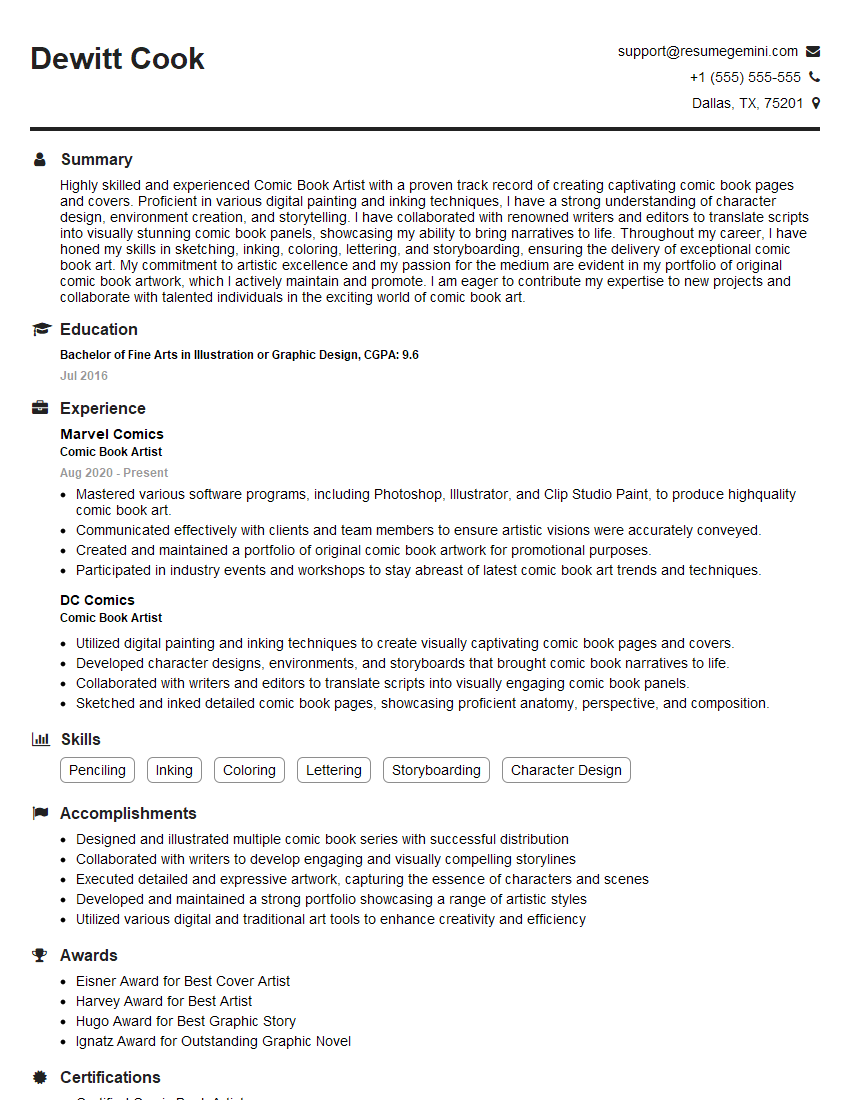
Mastering the art of creating promotional artwork for comic books opens doors to exciting career opportunities in the vibrant world of graphic novels and sequential art. Building a strong portfolio is crucial, but so is presenting it effectively through a well-crafted resume. An ATS-friendly resume significantly increases your chances of getting your application noticed by recruiters and hiring managers. ResumeGemini is a trusted resource that can help you craft a professional and impactful resume tailored to the specific requirements of this field. Examples of resumes tailored to showcasing Experience in creating promotional artwork for comic books are available – use them to inspire your own!
Explore more articles
Users Rating of Our Blogs
Share Your Experience
We value your feedback! Please rate our content and share your thoughts (optional).
What Readers Say About Our Blog
Really detailed insights and content, thank you for writing this detailed article.
IT gave me an insight and words to use and be able to think of examples