Cracking a skill-specific interview, like one for Experience in self-publishing and promoting comic books, requires understanding the nuances of the role. In this blog, we present the questions you’re most likely to encounter, along with insights into how to answer them effectively. Let’s ensure you’re ready to make a strong impression.
Questions Asked in Experience in self-publishing and promoting comic books Interview
Q 1. Describe your experience in self-publishing comic books, including platform selection and distribution channels.
My self-publishing journey started with careful platform selection. I initially explored platforms like Gumroad and Etsy for digital distribution, appreciating their ease of use and low barriers to entry. However, for print-on-demand, I found myself gravitating towards services like Printful and IngramSpark. Printful offers streamlined integration with online stores, making it ideal for smaller runs and direct-to-consumer sales. IngramSpark, on the other hand, provides access to a wider distribution network, including bookstores and libraries, which is crucial for reaching a larger audience. For digital distribution, I also utilized platforms like ComiXology and DriveThruComics, which are specifically tailored to the comic book market and offer features like digital rights management and reader-friendly interfaces. The key is understanding your target audience and selecting platforms that best reach them.
For example, a niche comic focusing on a specific subculture might thrive on a platform like Gumroad, where direct engagement with fans is prioritized, while a more mainstream title might benefit from wider distribution through IngramSpark.
Q 2. What marketing strategies have you successfully employed to promote self-published comics?
Successful comic book marketing requires a multifaceted approach. Social media marketing, particularly on platforms like Instagram, Twitter, and TikTok, has been instrumental in building brand awareness and generating buzz. Visually appealing content – sneak peeks of artwork, behind-the-scenes glimpses of the creative process, and engaging character introductions – are crucial. I’ve also leveraged paid advertising on these platforms, targeting specific demographics interested in similar genres. Furthermore, building relationships with comic book bloggers, reviewers, and podcasters through targeted outreach (e.g., sending review copies) has generated organic coverage and positive word-of-mouth. I’ve even organized small online and offline events, like online Q&A sessions and appearances at local comic conventions, to directly connect with fans. This personal touch cultivates loyalty and encourages repeat purchases.
For instance, a successful Instagram campaign I ran involved short animated clips showcasing key moments from my comic, paired with captivating captions that piqued curiosity and directed viewers to my online store.
Q 3. How do you track and analyze the performance of your comic book marketing campaigns?
Tracking marketing campaign performance is essential for optimizing strategies. I utilize a combination of methods: website analytics (Google Analytics) provide data on website traffic, bounce rates, and conversion rates (purchases). Platform-specific analytics (e.g., Instagram Insights, Facebook Ads Manager) provide data on reach, engagement, and click-through rates for each social media campaign. Sales data from my print-on-demand providers and online stores provide crucial information about revenue, sales volume, and best-selling products. I also actively monitor online reviews and feedback from readers to understand customer sentiment and identify areas for improvement. This data-driven approach allows for continuous refinement of marketing strategies, ensuring maximum ROI.
For example, analyzing Google Analytics might reveal that a particular social media post significantly increased website traffic, leading me to replicate similar strategies. Simultaneously, negative feedback on a specific aspect of the comic might point to the need for improvement in future issues.
Q 4. Explain your understanding of different comic book distribution models (e.g., print-on-demand, direct sales).
Understanding different comic book distribution models is crucial. Print-on-demand services like Printful or Amazon KDP are ideal for low-risk entry. You only print copies when someone orders them, minimizing upfront costs and storage issues. This is fantastic for smaller creators or those testing the waters. Direct sales (through your website or at conventions) offer higher profit margins but require more upfront investment in printing and inventory management. This approach works well for creators with an established fanbase or those confident in their sales projections. Distribution through larger platforms like IngramSpark provides access to a wider market, including bookstores and libraries, but involves relinquishing some control over pricing and marketing. The choice depends on your budget, production capabilities, and target market.
For example, a creator with a limited budget might start with print-on-demand, while an established artist with a large and dedicated following might choose direct sales to maximize profit.
Q 5. What are your strategies for building a readership and community around your self-published comics?
Building a readership and community is a long-term process. Consistent content creation is key. Regular updates on social media, release schedules, and behind-the-scenes glimpses into the creative process keep the audience engaged. Active engagement with fans – responding to comments, running Q&A sessions, and organizing contests – fosters a sense of community. Creating a newsletter allows for direct communication with readers, providing exclusive content and updates. Collaborating with other creators or participating in online communities can also broaden your reach. Importantly, offering excellent customer service demonstrates care and fosters loyalty.
For example, running a contest for readers to submit character designs for a future issue actively involves them in the creative process and deepens their connection to the comic.
Q 6. How do you manage the budget for self-publishing and promoting a comic book?
Budget management is crucial for self-publishing success. It involves careful planning and tracking of expenses. I start by creating a detailed budget that includes all anticipated costs: artwork, printing (if not using print-on-demand), marketing (advertising, social media management), distribution, and website hosting. I regularly monitor expenses and adjust the budget as needed. Prioritizing essential costs and exploring cost-effective options (like utilizing free or low-cost marketing tools) are vital. Tracking revenue and comparing it to expenses allows for analyzing profitability and identifying areas for optimization.
For instance, a detailed spreadsheet outlining projected expenses for each stage of production and marketing, with regular updates, ensures responsible financial management.
Q 7. What software or tools do you use for creating, editing, and publishing comic books?
My workflow involves several key software and tools. For creating the comic itself, I use Clip Studio Paint, which offers a comprehensive suite of tools for drawing, inking, coloring, and lettering. For editing, Adobe Photoshop is invaluable for refining artwork and ensuring consistency. For lettering and text, I utilize Comic Life and sometimes Adobe Illustrator. For publishing, depending on the platform, I use the tools and templates provided by each platform (e.g., IngramSpark’s formatting tools). For website management, I use WordPress, and for email marketing, Mailchimp. This combined software suite allows for a smooth and efficient process from creation to distribution.
Q 8. Describe your experience with crowdfunding platforms for comic book projects.
Crowdfunding platforms like Kickstarter and Indiegogo have been invaluable for launching my comic book projects. They offer a direct line to potential readers and allow you to pre-sell your work, securing funding before even printing a single copy. This minimizes financial risk and provides valuable feedback on your project’s viability early on.
My experience has shown that a successful crowdfunding campaign hinges on several key elements: a compelling pitch video showcasing your art and story; clear, achievable reward tiers offering tangible incentives (signed copies, prints, early access); active engagement with backers through regular updates and community building; and a strong social media campaign to drive traffic to your campaign page. For example, with my second comic, I leveraged social media to highlight behind-the-scenes work, which generated considerable excitement and exceeded my funding goal by 150%.
Moreover, the data gathered during the campaign — supporter demographics, feedback on reward tiers, engagement metrics — provides crucial insights for future marketing efforts and helps refine your understanding of your target audience.
Q 9. How do you handle negative reviews or feedback on your self-published comics?
Negative reviews are an inevitable part of self-publishing. Instead of dismissing them, I view them as opportunities for growth and improvement. I always respond to negative reviews professionally and empathetically, acknowledging the reader’s perspective. Sometimes, a simple apology for a missed mark is enough; other times, it’s a chance to address specific issues raised in the review. For example, if several reviews pointed towards confusing plot points, it indicated a need to revisit the narrative structure in future works.
However, constructive criticism is where the real value lies. Focusing on specific criticisms, not personal attacks, I can identify areas for improvement in my writing, art, or production. This iterative feedback loop is essential for refining my craft and improving future projects. If a criticism appears frequently, I actively address the issue, ensuring the next project avoids that same pitfall.
Q 10. Explain your process for setting pricing strategies for self-published comics.
Pricing strategy is a delicate balance between making a profit and remaining competitive. Several factors influence my pricing decisions, including:
- Production Costs: This includes printing, binding, shipping, and any other expenses related to production.
- Page Count: Longer comics generally warrant a higher price point.
- Target Audience: The affordability for my target audience is crucial. A niche market can afford higher prices than a mass-market.
- Competition: Analyzing prices of similar comics on the market provides a benchmark.
- Profit Margin: This must be sufficient to cover expenses, reinvest in future projects, and provide a reasonable return for the time and effort invested.
For example, a short, 24-page comic with simple printing might be priced between $5 and $8, while a longer, 60-page comic with higher-quality printing and added features could be priced between $12 and $15. It’s always best to test different pricing models to see what resonates best with your audience.
Q 11. What are your strategies for building relationships with comic book retailers or distributors?
Building relationships with retailers and distributors is critical for wider reach and increased sales. This is done through a multi-pronged approach:
- Direct Outreach: I identify local comic shops and online retailers and contact them directly. This involves providing a professional pitch, samples of my work, and clear wholesale pricing. A well-designed catalog or digital portfolio significantly enhances this process.
- Industry Events: Attending comic conventions and trade shows provides opportunities to network with retailers, distributors, and other creators.
- Online Presence: Maintaining a professional website and active social media presence can help retailers discover my work.
- Consignment Agreements: Beginning with consignment agreements can be a good way to test the market and establish trust with retailers, paying them once the books have sold.
Persistence and professionalism are key. Building rapport takes time, but the rewards are worth the investment. For instance, developing a strong relationship with a key retailer in a major city can lead to significant sales increases.
Q 12. How do you stay updated on industry trends and best practices in the self-publishing comic industry?
Staying abreast of industry trends is crucial for success in the self-publishing world. My strategies include:
- Industry Publications: Regularly reading trade magazines, blogs, and online news sources dedicated to comics and self-publishing.
- Comic Conventions: Attending conventions exposes me to new trends, technologies, and best practices.
- Online Communities: Engaging in online forums and social media groups dedicated to self-publishing and independent comics.
- Competitor Analysis: Monitoring the success and strategies of other self-published creators.
This helps me adapt to changing market demands and incorporate new technologies and marketing strategies into my workflow.
Q 13. How do you balance creative aspects with the business side of self-publishing comics?
Balancing the creative and business aspects requires a disciplined approach. My strategy is to treat the comic book creation as a project with distinct phases. The creative phase is focused solely on the art and story, minimizing distractions from the creative flow. Once the comic is complete, I transition to the business phase, focusing on marketing, pricing, distribution, and financial planning. This compartmentalized approach helps prevent creative burnout and ensures both aspects receive the attention they deserve.
Tools like project management software help keep everything organized. Setting realistic deadlines and sticking to them is essential. Regular breaks and a dedicated workspace are also crucial for maintaining focus and mental clarity throughout the entire process.
Q 14. What is your experience with copyright and intellectual property related to self-published comics?
Copyright and intellectual property are paramount in self-publishing. Understanding copyright law is non-negotiable. As a self-published creator, I retain the copyright for my work automatically upon creation. However, registering my copyright with the appropriate authorities provides additional legal protection and is strongly recommended.
It is crucial to clearly mark my work with the copyright symbol (©), my name, and the year of creation. I also take steps to prevent plagiarism and unauthorized use of my work. This includes regularly monitoring online platforms for infringements and, when necessary, pursuing legal action to protect my intellectual property. Having a well-defined understanding of fair use is also imperative. If you’re unsure about any aspect of copyright, consulting a legal professional specializing in intellectual property is always recommended.
Q 15. How do you approach international distribution or translation for your self-published comics?
International distribution for self-published comics can seem daunting, but it’s achievable with a strategic approach. It’s rarely a one-size-fits-all solution; you need to consider your comic’s content, target audience, and budget. My approach begins with research. I identify potential markets based on language and cultural relevance. Does my story resonate with a specific region? Are there existing fan communities I can tap into? Then, I explore distribution channels. This might involve partnering with international distributors specializing in graphic novels or using print-on-demand services that offer global shipping. For translation, I prioritize professional translators who understand the nuances of both the source and target language to avoid misinterpretations that could damage my brand. For example, I once successfully launched my fantasy comic in Japan by partnering with a distributor who had established relationships with local comic shops and online retailers. Their pre-existing network made the process far smoother than trying to build one from scratch. Budget is key; prioritize markets with the highest potential return based on your research. Smaller, focused campaigns often outperform broader, less-targeted efforts.
Career Expert Tips:
- Ace those interviews! Prepare effectively by reviewing the Top 50 Most Common Interview Questions on ResumeGemini.
- Navigate your job search with confidence! Explore a wide range of Career Tips on ResumeGemini. Learn about common challenges and recommendations to overcome them.
- Craft the perfect resume! Master the Art of Resume Writing with ResumeGemini’s guide. Showcase your unique qualifications and achievements effectively.
- Don’t miss out on holiday savings! Build your dream resume with ResumeGemini’s ATS optimized templates.
Q 16. Describe your experience with social media marketing for comic books.
Social media marketing is crucial for reaching comic book readers. I use a multi-platform strategy, focusing on platforms where my target audience is most active. Instagram is fantastic for visually showcasing artwork and behind-the-scenes content. I post high-quality images and videos, use relevant hashtags, and engage actively with comments and messages. Twitter allows for quick updates, engaging with other creators, and participating in relevant conversations. Facebook offers a broader reach and the ability to create targeted ad campaigns. TikTok is an emerging platform with significant potential for reaching younger audiences; creative shorts that showcase the energy of the comic can be quite effective. I’ve seen huge success using contests and giveaways, partnering with other creators for cross-promotion, and running targeted ads to reach specific demographics. Analyzing engagement metrics – likes, shares, comments, website clicks – helps me refine my content and targeting over time. Consistent posting and genuine engagement are key. It’s not just about self-promotion; it’s about building a community around your work.
Q 17. What are your strategies for building an email list for your comic book readership?
Building an email list is essential for direct communication with readers. I offer incentives, such as exclusive content like early previews of pages, character sketches, or bonus short stories, in exchange for email sign-ups. I place signup forms prominently on my website and social media pages. I also use lead magnets, such as offering free digital chapters or wallpapers featuring artwork from my comic. At comic conventions, I often have a dedicated signup sheet. I segment my list based on reader preferences – genre, specific characters, etc. – to tailor my email marketing. This allows me to send targeted messages, increasing engagement. I use email marketing software to automate emails, such as a welcome sequence for new subscribers or a newsletter announcing updates. Remember, respect your readers’ inboxes. Keep emails concise, informative, and avoid spamming them. Focus on building relationships rather than just selling.
Q 18. How do you measure the return on investment (ROI) of your marketing efforts?
Measuring ROI on marketing efforts requires careful tracking. I use analytics tools on my website and social media platforms to monitor website traffic, sales conversions, and social media engagement. I track unique website clicks from different marketing campaigns to determine which are most effective. For example, if I run a Facebook ad campaign and see a significant increase in website visits and sales from that specific traffic source, I can calculate the ROI by comparing the ad spend to the revenue generated. I also track email open and click-through rates to evaluate the effectiveness of email campaigns. It’s about understanding not only the immediate sales but also the long-term impact on brand awareness and reader engagement. What’s the lifetime value of a customer? Tracking these metrics helps optimize future marketing spend and identify the most successful strategies.
Q 19. How do you handle the complexities of print production and logistics for self-published comics?
Print production and logistics can be challenging, but there are solutions. I’ve used both print-on-demand services and traditional printers, depending on the project’s scale and budget. Print-on-demand is ideal for smaller runs, eliminating upfront costs and inventory management. However, it might have higher per-unit costs. Traditional printing is more cost-effective for larger runs but requires a significant upfront investment and careful inventory management. For logistics, I partner with fulfillment centers that handle shipping and order processing. This frees me to focus on creative aspects. I’ve learned to plan carefully for shipping costs, especially internationally; accurate weight and dimensions are crucial for accurate quotes. Thorough quality control of the printed books before shipping is a must to maintain customer satisfaction. Using a professional, reliable printing partner is key to ensuring a smooth and efficient process.
Q 20. Describe your experience working with freelance artists or writers on a comic book project.
Collaborating with freelance artists and writers is essential for many self-published comic projects. I build strong professional relationships based on clear communication, detailed briefs, and well-defined contracts. Contracts outline roles, responsibilities, payment terms, deadlines, and intellectual property rights, protecting both parties. Before starting, I provide comprehensive briefs to artists and writers, including character designs, story outlines, and style guides. Regular check-ins and feedback are crucial throughout the process. I use project management tools to track progress and deadlines. For example, Asana or Trello can help organize the workflow and ensure everyone is on the same page. Fair compensation and timely payments are vital for maintaining positive relationships and ensuring quality work. Building trust and a collaborative environment leads to successful projects.
Q 21. What is your approach to managing deadlines and project timelines in comic book self-publishing?
Managing deadlines and timelines in self-publishing is critical for project success. I use a detailed project plan with clearly defined milestones and deadlines for each stage, from scripting and artwork to printing and distribution. I break down larger tasks into smaller, manageable components to avoid feeling overwhelmed. Using project management software or a simple spreadsheet to track progress is essential. Regular check-ins with collaborators ensure everyone stays on track. I build buffer time into the schedule to account for unexpected delays. Flexibility is key; sometimes things don’t go as planned. Open communication and proactive problem-solving are crucial for addressing setbacks and keeping the project moving forward. Sticking to a realistic schedule, rather than an overly ambitious one, leads to a higher quality final product and reduced stress.
Q 22. How do you adapt your marketing strategies for different comic book genres or target audiences?
Adapting marketing strategies hinges on understanding your audience. A superhero comic aimed at teenagers requires a vastly different approach than a mature, horror-themed graphic novel for adults. For teenagers, I’d leverage platforms like TikTok and Instagram, using short, engaging video clips and vibrant visuals. I’d collaborate with relevant influencers and run targeted ads focusing on specific interests like anime, gaming, or fantasy. For the adult horror audience, I might focus on more atmospheric marketing on platforms like Reddit, utilizing subreddits dedicated to horror and comics. I’d employ darker, more evocative imagery and collaborate with horror-focused blogs and podcasts. The key is to tailor your message, platform selection, and visuals to resonate with the specific values, interests, and preferred media consumption habits of your target demographic.
- Genre-Specific Keywords: Using genre-relevant keywords in ads and social media posts significantly improves reach.
- Platform Selection: Choose platforms where your target audience is most active.
- Visual Style: The visual presentation should match the tone and style of the comic.
Q 23. Explain your understanding of different comic book file formats and their uses (e.g., PDF, CBR).
Understanding comic book file formats is crucial for both creation and distribution. PDF (Portable Document Format) is a universal format, easily viewable on most devices, but it doesn’t always offer the best reading experience for comics, particularly those with high resolutions or complex layouts. CBR (Comic Book RAR) and CBZ (Comic Book Zip) are archive formats that contain individual image files (usually JPEG or PNG) for each comic page. They’re excellent for preserving image quality and organizing large collections. CBR files are generally preferred for their improved compression compared to CBZ, resulting in smaller file sizes. For print, you’d use high-resolution TIFF or PDF files, but for online distribution, CBR/CBZ are generally ideal for their compatibility and ease of download. I always provide options, offering PDF for those who prefer it and CBR/CBZ for a better reading experience on devices like e-readers or tablets.
- PDF: Universal, but can be large and less ideal for comic reading.
- CBR/CBZ: Optimized for comic books, maintains image quality, smaller files than PDF.
- TIFF: High-resolution format ideal for print.
Q 24. Describe your experience with using analytics dashboards to track comic book sales and engagement.
Analytics dashboards are indispensable for tracking sales and engagement. I utilize platforms like Google Analytics for website traffic, Amazon’s sales dashboards for Kindle sales (if applicable), and social media analytics to monitor posts, reach, and engagement rates. These dashboards provide crucial data points like: unique visitors, bounce rate, time spent on the site, sales figures, download numbers, and social media interactions. This allows me to pinpoint what works and adjust my strategy accordingly. For example, a high bounce rate might indicate a problem with the website design or marketing message, prompting a redesign or A/B testing of different marketing copy. Low engagement on a particular social media post might suggest tweaking my content strategy or trying a different type of post. The data-driven insights allow for continuous improvement and optimization.
- Key Metrics: Website traffic, bounce rate, time on site, conversion rates, social media engagement.
- Data-Driven Decisions: Use data to adjust marketing strategies and improve content.
- A/B Testing: Experiment with different approaches to optimize results.
Q 25. How do you handle customer service inquiries or complaints related to your self-published comics?
Excellent customer service is crucial. I aim to respond to all inquiries and complaints promptly and professionally. I create multiple channels for communication: a dedicated email address, a contact form on my website, and active engagement on social media. For complaints, I actively listen, empathize, and strive to find a resolution. A simple apology for any inconvenience, coupled with a genuine effort to solve the issue (be it a refund, a replacement, or an explanation), can go a long way. Publicly addressing complaints professionally on platforms like Twitter can also help build trust and transparency. A satisfied customer is a returning customer, and positive word-of-mouth is invaluable in the self-publishing world.
- Multiple Communication Channels: Email, website contact form, social media.
- Prompt Responses: Aim for quick and professional replies.
- Problem Solving: Actively seek solutions and address concerns.
Q 26. What are some innovative marketing techniques you have used or considered for promoting comics?
Innovation is key. I’ve experimented with several techniques. One successful strategy was creating a short animated trailer for my comic, featuring voice acting and dynamic visuals. This trailer was shared widely on social media and generated significant interest. Another approach involved partnering with local comic book shops for signings and promotional events. These events allowed for direct interaction with potential readers, building a strong community and fostering personal connections. I also explore cross-promotion collaborations with other creators in related genres, broadening reach to new audiences. Currently, I’m exploring the potential of creating interactive comic experiences utilizing augmented reality technology.
- Animated Trailers: Compelling visuals to capture attention.
- Community Events: Direct interaction with readers.
- Cross-Promotions: Partnering with other creators.
- AR Experiences: Innovative, immersive interactions.
Q 27. How do you leverage SEO and other digital marketing strategies to increase comic book visibility?
SEO and digital marketing are vital. I optimize my website and online presence for relevant keywords, focusing on long-tail keywords specific to my comic’s genre and themes (e.g., “cyberpunk graphic novel,” “fantasy adventure comic,” etc.). I use tools like Google Search Console and SEMrush to track keyword rankings and website performance. Social media marketing is crucial. I create engaging content, use relevant hashtags, and run targeted ad campaigns on platforms like Facebook and Instagram. I also actively participate in online comic communities and forums to build awareness and engage with potential readers. Email marketing also plays a significant role, allowing me to cultivate a loyal subscriber base and announce new releases or promotions.
- Keyword Optimization: Targeting relevant search terms.
- Social Media Marketing: Engaging content and targeted ads.
- Email Marketing: Building a subscriber base and announcing updates.
- Community Engagement: Participating in online forums.
Q 28. Describe your experience with building a professional online presence for your self-published comic books.
Building a professional online presence is essential for reaching a wider audience. My website is central to my online strategy. It’s well-designed, user-friendly, and features high-quality images of my comics, character bios, a blog with behind-the-scenes content, and an easy-to-use online store or links to platforms where my work is sold. I maintain active profiles on various social media platforms, tailoring my content to each platform’s audience and utilizing a consistent branding style across all channels. I engage actively with my followers, responding to comments and messages promptly and fostering a sense of community. Consistency in posting, engaging content, and high-quality visuals are fundamental to establishing a trustworthy and recognizable brand.
- Professional Website: User-friendly design with high-quality visuals.
- Social Media Presence: Consistent branding and active engagement.
- Consistent Branding: Maintaining a unified visual and textual style.
- Community Building: Fostering connections with readers.
Key Topics to Learn for Experience in self-publishing and promoting comic books Interview
- Understanding the Self-Publishing Landscape: Explore different self-publishing platforms, their pros and cons, and the associated costs involved. Consider the legal aspects of copyright and intellectual property.
- Creating a Compelling Comic Book: Discuss your creative process, including scripting, storyboarding, art creation, and lettering. Highlight your understanding of different comic book styles and target audiences.
- Marketing and Promotion Strategies: Detail your experience with social media marketing, online advertising, community engagement (conventions, online forums), and building an email list. Analyze the effectiveness of different marketing campaigns.
- Print-on-Demand vs. Traditional Printing: Compare and contrast these methods, outlining the advantages and disadvantages of each in relation to cost, production time, and quality.
- Budget Management and Financial Planning: Explain how you manage budgets effectively, track expenses, and project revenue for self-published comic books. Discuss strategies for generating income beyond initial sales.
- Distribution Channels: Describe your experience with distributing your work through online retailers, direct sales, and potentially brick-and-mortar stores. Analyze the challenges and successes.
- Building a Brand and Community: Discuss strategies for building a strong brand identity for your comic book and cultivating a loyal readership through social media engagement and community building.
- Analyzing Sales Data and Making Adjustments: Explain your approach to tracking sales data, analyzing trends, and making informed decisions to optimize marketing and promotion efforts.
Next Steps
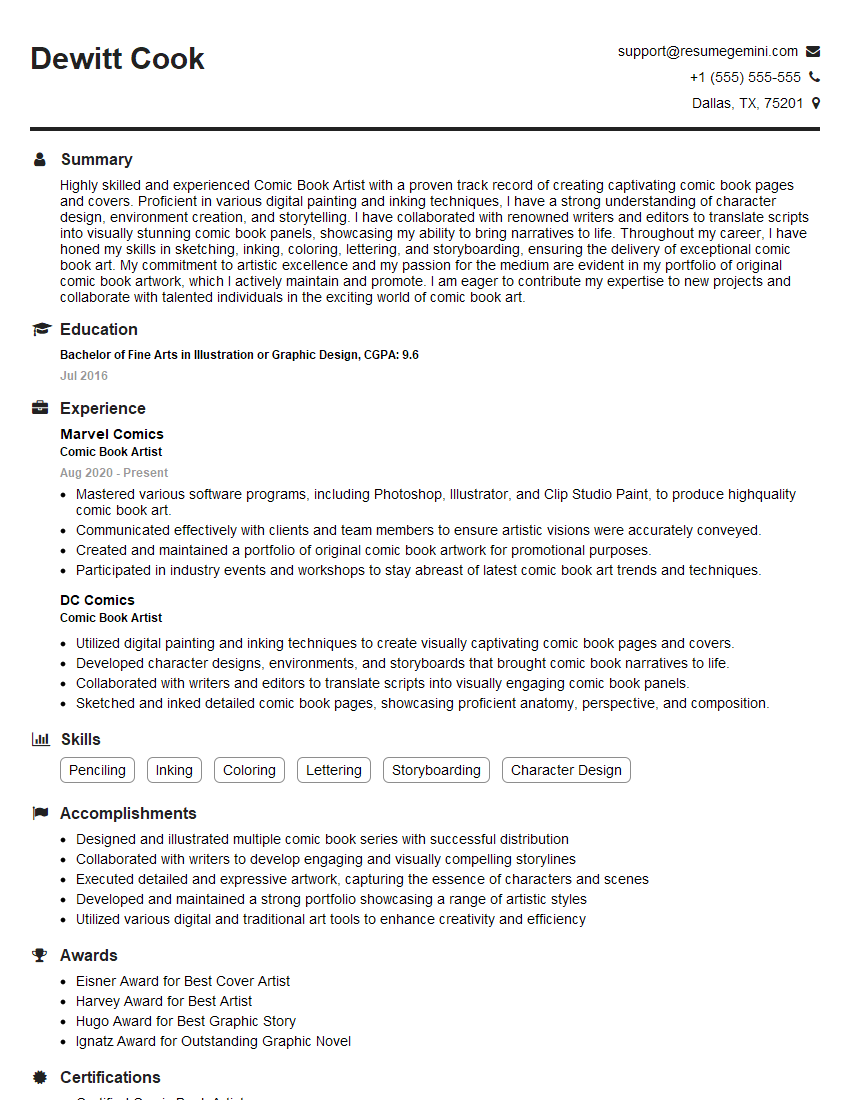
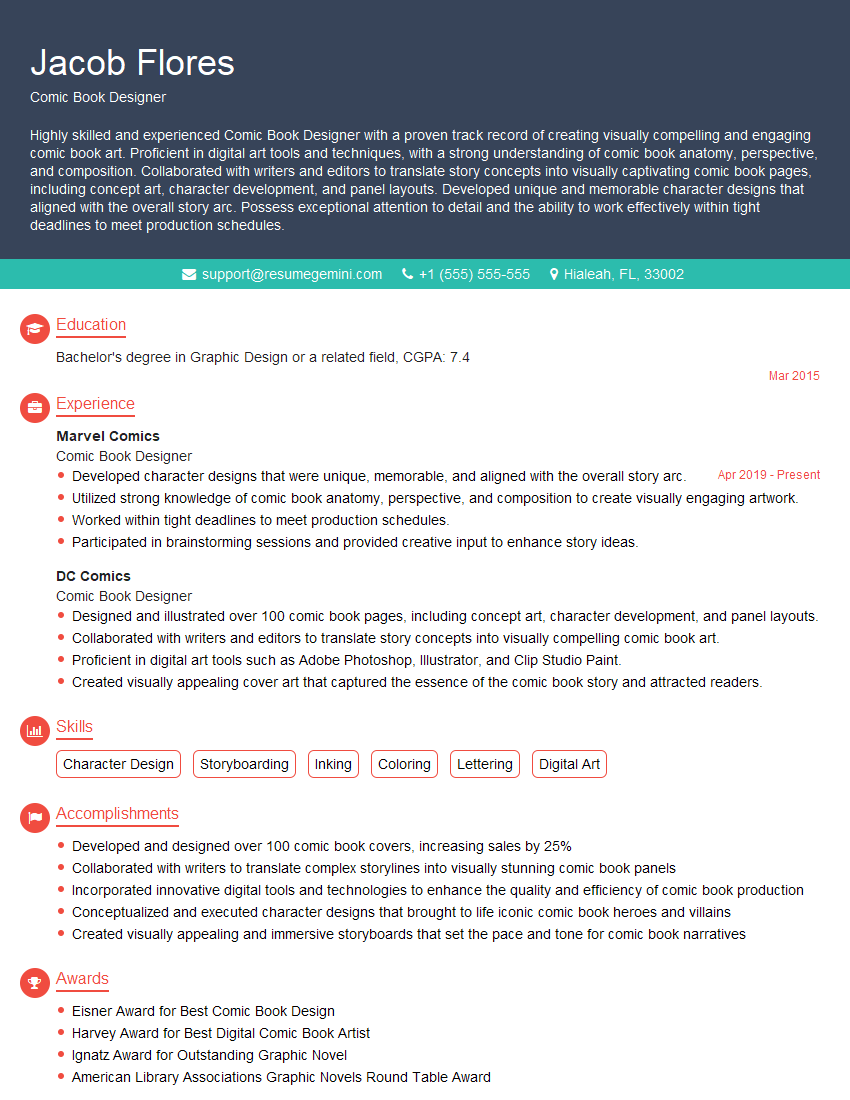
Mastering the art of self-publishing and promoting comic books significantly enhances your marketability, demonstrating entrepreneurial spirit, creative vision, and business acumen. These skills are highly transferable and valuable across various creative industries. To maximize your job prospects, creating an ATS-friendly resume is crucial. ResumeGemini is a trusted resource to help you build a professional resume that highlights your unique skills and experience. Examples of resumes tailored to experience in self-publishing and promoting comic books are available to guide you.
Explore more articles
Users Rating of Our Blogs
Share Your Experience
We value your feedback! Please rate our content and share your thoughts (optional).
What Readers Say About Our Blog
Really detailed insights and content, thank you for writing this detailed article.
IT gave me an insight and words to use and be able to think of examples