Feeling uncertain about what to expect in your upcoming interview? We’ve got you covered! This blog highlights the most important Experience in the food industry interview questions and provides actionable advice to help you stand out as the ideal candidate. Let’s pave the way for your success.
Questions Asked in Experience in the food industry Interview
Q 1. Explain your experience with HACCP principles.
HACCP, or Hazard Analysis and Critical Control Points, is a preventative food safety system. It focuses on identifying potential hazards in the food production process and establishing controls to prevent or eliminate them. My experience with HACCP spans over ten years, encompassing various roles from line supervisor to quality control manager.
- Hazard Identification: I’ve been involved in conducting thorough hazard analyses, identifying biological (bacteria, viruses), chemical (pesticides, cleaning agents), and physical (glass shards, foreign objects) hazards at each stage of production, from raw material receipt to finished product distribution. For example, in a bakery, a hazard analysis might include the risk of bacterial contamination during dough mixing.
- Critical Control Point (CCP) Determination: I’ve trained teams to identify CCPs – points in the process where control is essential to prevent or eliminate a hazard. In the same bakery example, baking temperature would be a CCP to eliminate bacterial growth.
- Critical Limits Establishment: We established measurable critical limits for each CCP. For the baking temperature, this might be a minimum temperature of 165°F (74°C) for a specific duration.
- Monitoring Procedures: I’ve developed and implemented monitoring procedures to regularly check CCPs against established critical limits. This often involves temperature logging, visual inspections, and microbiological testing.
- Corrective Actions: We’ve created documented corrective actions for when deviations from critical limits occur. This could range from adjusting oven temperature to discarding contaminated batches.
- Verification Procedures: I’ve been involved in regularly verifying that the HACCP plan is working effectively through internal audits, regular calibration of equipment, and record reviews.
- Record Keeping: Maintaining comprehensive and accurate records of all HACCP procedures is crucial. This ensures traceability and demonstrates compliance with regulations.
Through my experience, I’ve learned the importance of a proactive approach to food safety, rather than simply reacting to problems. HACCP has proven invaluable in minimizing risks and ensuring product safety.
Q 2. Describe your experience with GMP (Good Manufacturing Practices).
Good Manufacturing Practices (GMPs) are a set of guidelines that ensure the consistent production of high-quality products while maintaining hygiene and safety standards. My GMP experience includes working in various food processing environments, focusing on sanitation, personnel hygiene, and facility maintenance.
- Sanitation and Hygiene: I’ve overseen comprehensive sanitation programs, including the proper cleaning and sanitizing of equipment, utensils, and facilities. This involves training staff on correct procedures, selecting appropriate cleaning agents, and implementing regular cleaning schedules to prevent cross-contamination.
- Personnel Hygiene: I’ve enforced strict hygiene protocols for all personnel, including handwashing procedures, appropriate protective clothing, and controlling access to production areas. This is critical to minimize the risk of contamination from employees.
- Facility Maintenance: Maintaining a clean and well-maintained facility is crucial. I’ve been responsible for overseeing regular maintenance of equipment, pest control, and preventing any structural issues that could compromise food safety.
- Raw Material Handling: I’ve established procedures for receiving, storing, and handling raw materials to prevent spoilage and contamination. This includes proper temperature control and FIFO (First-In, First-Out) inventory management.
- Waste Management: Implementing effective waste management procedures is essential. This involves proper disposal of food waste, packaging materials, and cleaning supplies to prevent pest infestation and maintain hygiene.
My experience with GMPs emphasizes the importance of a holistic approach. A clean and well-maintained facility, combined with well-trained and hygienic personnel, is the foundation of producing safe and high-quality food products. I’ve consistently witnessed how adherence to GMPs leads to improved product quality, reduced waste, and better overall efficiency.
Q 3. How would you handle a food safety incident?
Handling a food safety incident requires a swift, organized, and decisive response. My approach is based on a structured protocol:
- Immediate Containment: The first step is to immediately isolate the potentially contaminated product to prevent further distribution. This might involve removing the product from shelves, halting production, or tracing affected shipments.
- Investigation: A thorough investigation is necessary to determine the root cause of the incident. This might involve reviewing production records, conducting interviews with employees, analyzing samples, and potentially collaborating with external experts.
- Corrective Actions: Once the root cause is identified, corrective actions are implemented to prevent recurrence. This could include retraining staff, modifying production processes, or replacing faulty equipment.
- Notification: Depending on the severity and nature of the incident, appropriate authorities (e.g., health department, regulatory agencies) and potentially consumers need to be notified. Open communication is key in managing public perception and preventing further harm.
- Documentation: Meticulous documentation of every step of the process is vital. This documentation will be used for internal review, regulatory compliance, and potential legal proceedings.
- Prevention: The final step involves implementing preventative measures to avoid similar incidents in the future. This could involve revising the HACCP plan, strengthening GMPs, or introducing additional monitoring procedures.
For instance, if a salmonella outbreak were suspected, the protocol would be enacted immediately, potentially leading to a product recall, thorough facility sanitation, and employee retraining on proper hygiene procedures. My experience has taught me that a transparent, proactive approach minimizes the impact of a food safety incident and safeguards both the company’s reputation and public health.
Q 4. What are your strategies for managing food costs?
Managing food costs effectively requires a multi-faceted approach. My strategies include:
- Menu Engineering: Analyzing menu profitability is crucial. Identifying high-profit, low-cost items and adjusting pricing or portion sizes for less profitable items can significantly impact the bottom line. This might involve removing underperforming dishes or promoting those with higher profit margins.
- Inventory Control: Implementing robust inventory management systems, including FIFO (First-In, First-Out) and regular stock checks, helps minimize waste and spoilage. This reduces losses due to expired or discarded products.
- Supplier Relationships: Negotiating favorable contracts with reliable suppliers is essential. Building strong relationships and leveraging bulk purchasing power can lead to significant cost savings on raw materials.
- Recipe Costing: Regularly reviewing and optimizing recipes to reduce the cost of ingredients without compromising quality is vital. This might involve substituting more expensive ingredients with suitable alternatives.
- Waste Reduction: Minimizing waste at every stage of the process is crucial. This includes proper storage, portion control, and creative use of leftovers. Employing techniques like composting food waste can also reduce disposal costs.
- Energy Efficiency: Optimizing energy consumption in the kitchen and storage areas can lead to long-term cost savings. This may involve upgrading equipment to more energy-efficient models or implementing energy-saving practices.
In one instance, by implementing a more efficient inventory management system and negotiating better prices with our suppliers, we managed to reduce our food costs by 15% within six months. This demonstrates the importance of a holistic approach to managing food costs, encompassing all aspects of the operation.
Q 5. Describe your experience with inventory management in the food industry.
Effective inventory management in the food industry is crucial for minimizing waste, ensuring product availability, and optimizing profitability. My experience has involved using various methods and technologies:
- First-In, First-Out (FIFO): Implementing a FIFO system ensures that older stock is used before newer stock, minimizing spoilage and reducing waste. This is particularly important for perishable goods.
- Inventory Tracking Systems: I’ve utilized both manual and computerized inventory tracking systems to monitor stock levels, predict demand, and manage ordering. Computerized systems offer more accuracy and efficiency, allowing for better forecasting and reduced stockouts.
- Par Stock Levels: Establishing par stock levels for each ingredient ensures adequate supply while preventing overstocking. This balances the need to meet demand with the risk of spoilage and storage limitations.
- Regular Stock Counts: Conducting regular physical stock counts helps verify inventory levels and identify discrepancies between recorded and actual stock. This helps pinpoint potential issues, such as theft or inaccurate ordering.
- Waste Analysis: Tracking waste systematically helps identify areas for improvement in inventory management and purchasing practices. This data can inform decisions about ordering quantities, storage procedures, and menu planning.
In a previous role, I implemented a new inventory management software that improved accuracy and reduced waste by 10%, leading to a significant improvement in our profitability.
Q 6. How do you ensure food quality and consistency?
Ensuring food quality and consistency requires attention to detail at every stage of production. My approach is based on establishing standardized procedures and implementing rigorous quality control measures:
- Standardized Recipes and Procedures: Using standardized recipes and documented procedures ensures consistency in product quality regardless of who prepares the food. This reduces variability and improves the overall quality.
- Ingredient Quality Control: Implementing rigorous quality checks on incoming ingredients is crucial. This might involve testing for quality, freshness, and adherence to specifications.
- Process Monitoring: Regularly monitoring the production process, including temperature checks, cooking times, and visual inspections, ensures consistent quality and adherence to standards.
- Taste Testing and Quality Assurance: Regular taste tests and quality assurance checks ensure the product meets the desired quality standards. This might involve blind taste tests by trained personnel or sensory analysis.
- Staff Training: Thoroughly training staff on food preparation techniques, hygiene practices, and quality control procedures is vital. Well-trained employees are crucial for maintaining consistent quality and safety standards.
- Feedback Mechanisms: Establishing mechanisms for receiving customer feedback on food quality allows for continuous improvement and adjustments to recipes or processes based on real-world experience.
For instance, in a restaurant setting, consistent portion sizes, standardized cooking times, and rigorous ingredient checks contribute to a positive and consistent customer experience. My experience has shown that prioritizing food quality through well-defined processes leads to increased customer satisfaction and improved brand reputation.
Q 7. Explain your experience with different food preservation methods.
I have extensive experience with a range of food preservation methods, each suited to different food types and shelf-life requirements:
- Refrigeration and Freezing: These are commonly used methods for extending the shelf life of perishable foods by slowing down microbial growth. Refrigeration maintains a temperature between 33°F and 40°F (0.5°C and 4°C), while freezing lowers the temperature to below 0°F (-18°C), effectively halting microbial activity.
- Canning: This involves sealing food in airtight containers and heating them to high temperatures to kill microorganisms. This method is suitable for preserving a variety of foods, including fruits, vegetables, and meats, with a long shelf life.
- Pasteurization: This heat treatment method involves heating food to a specific temperature for a specific time to kill pathogenic microorganisms, extending the shelf life while maintaining nutritional value. It’s commonly used for dairy products and juices.
- Dehydration: Removing water from food inhibits microbial growth, extending its shelf life. This method is used for fruits, vegetables, and meats, leading to a concentrated flavor and longer storage time.
- Pickling: This involves submerging food in a brine solution (usually vinegar and salt) to inhibit microbial growth and add flavor. Pickling is a long-standing preservation method, extending the shelf life of various vegetables and other foods.
- High-Pressure Processing (HPP): This emerging technology uses high pressure to inactivate microorganisms without the use of heat, preserving the texture, color, and nutritional value of the food. It is gaining popularity for various food products.
The choice of preservation method depends heavily on the type of food, desired shelf life, and the sensory qualities that need to be preserved. My experience has enabled me to make informed decisions about choosing the most appropriate preservation techniques to maximize quality and shelf life.
Q 8. Describe your experience with menu planning and costing.
Menu planning and costing are critical for a restaurant’s profitability and success. It’s a balancing act between creating a desirable menu, controlling costs, and ensuring reasonable profit margins. My experience encompasses the entire process, from initial concept development to final pricing.
- Concept Development: I begin by identifying the target market and analyzing competitor offerings. This informs the style of cuisine, price point, and menu items. For example, a high-end steakhouse would have a different menu than a casual burger joint.
- Recipe Development & Testing: Once the menu is drafted, I develop recipes, paying close attention to portion sizes, ingredient quality, and yield. Rigorous testing ensures consistent quality and taste.
- Costing: This is crucial. I meticulously track all ingredient costs, including purchasing prices, waste, and labor involved in preparation. I use a standardized costing system which includes factors like food cost percentage, labor cost percentage, and overhead. This allows me to determine the selling price that ensures profitability while remaining competitive. For instance, if a dish has a food cost of $5 and we aim for a 30% food cost percentage, the selling price would be approximately $16.67.
- Menu Engineering: This involves analyzing menu items based on their profitability and popularity. Star items (high profit, high popularity) should be highlighted, while plowhorses (low profit, high popularity) might need adjustments, and dogs (low profit, low popularity) should be removed or revamped.
- Menu Adjustments: Menus are dynamic and require regular review and adjustments based on seasonal availability, customer feedback, and sales data. This ensures optimal efficiency and profitability.
Q 9. How would you handle a customer complaint regarding food quality?
Handling customer complaints, especially those regarding food quality, requires a calm, empathetic, and professional approach. My strategy involves several key steps:
- Listen and Empathize: First, I listen attentively to the customer’s complaint without interruption, acknowledging their feelings. A phrase like, “I understand your frustration; I’m truly sorry you had this experience,” can go a long way.
- Apologize Sincerely: Even if the issue isn’t entirely our fault, a sincere apology demonstrates respect and professionalism. Avoid making excuses.
- Investigate the Issue: Gently probe to understand the specifics of the complaint – was the food undercooked? Was it spoiled? This investigation helps in finding a solution.
- Offer a Solution: Depending on the severity, solutions might include offering a replacement meal, a discount on their next visit, or a refund. The goal is to make amends and restore customer trust.
- Follow Up: After resolving the issue, I often follow up with a phone call or email to check in and ensure the customer’s satisfaction. This demonstrates a commitment to customer service.
For instance, if a customer complained about undercooked chicken, I would immediately apologize, replace their meal with freshly cooked chicken, and possibly offer a complimentary dessert or appetizer. I would also report the incident to the kitchen staff to address the root cause of the problem.
Q 10. How do you manage staff in a fast-paced food environment?
Managing staff in a fast-paced food environment requires strong leadership, clear communication, and efficient delegation. My approach focuses on:
- Clear Expectations and Training: I provide thorough training on all aspects of their roles, ensuring everyone understands their responsibilities and expectations. This minimizes confusion and maximizes efficiency.
- Effective Communication: Open and clear communication is vital. I utilize regular staff meetings, daily briefings, and individual check-ins to address issues promptly and maintain a positive work environment. For example, I use a visual system for ordering and preparing meals to ensure that everyone is aware of current needs.
- Delegation and Teamwork: I delegate tasks effectively, assigning responsibilities based on individual skills and strengths. I foster teamwork by encouraging collaboration and mutual support.
- Motivation and Recognition: I recognize and appreciate good work, fostering a positive and motivating atmosphere. This can be through verbal praise, bonuses, or employee of the month awards.
- Conflict Resolution: Addressing conflicts promptly and fairly is essential. I encourage open communication and strive to find solutions that are fair to everyone involved.
For example, during a busy lunch rush, I might assign one staff member to manage orders, another to prepare food, and another to serve customers. This division of labor maximizes efficiency.
Q 11. What is your experience with food labeling regulations?
Food labeling regulations are crucial for consumer safety and transparency. My experience covers various aspects of these regulations, including:
- Allergen Labeling: I am well-versed in labeling requirements for common allergens, such as milk, eggs, peanuts, tree nuts, soy, wheat, fish, and shellfish. This ensures compliance and prevents potential health risks for customers with allergies.
- Nutrition Facts: I understand the importance of accurately displaying nutrition information, including serving size, calories, fat, carbohydrates, protein, and other nutrients. This information must be clearly visible and follow the regulations specified by governing bodies.
- Ingredient Lists: I ensure that all ingredients are listed in descending order of weight, providing clear information to customers about the composition of the food product.
- Country-Specific Regulations: I’m aware that food labeling regulations can vary across different countries and regions. I have experience adapting to these differences and ensuring compliance in each market.
- Keeping Up to Date: Food safety and labeling regulations frequently evolve. I actively stay updated on changes to ensure continuous compliance.
Failure to comply with food labeling regulations can result in significant fines and legal repercussions. Therefore, maintaining accurate and complete labels is a top priority.
Q 12. Describe your experience with food sourcing and supplier relationships.
Sourcing high-quality ingredients and maintaining strong supplier relationships are vital for consistent food quality and cost-effectiveness. My experience involves:
- Supplier Selection: I carefully select suppliers based on factors such as quality, reliability, pricing, and ethical sourcing practices. I look for suppliers who share our commitment to quality and sustainability.
- Negotiation and Contracts: I negotiate favorable pricing and payment terms with suppliers, ensuring that we obtain the best possible value for our money. This involves establishing long-term contracts with reliable vendors.
- Quality Control: I implement rigorous quality control measures to ensure that the ingredients we receive meet our standards. This includes regular inspections and taste tests.
- Relationship Management: I maintain strong, collaborative relationships with our suppliers, fostering open communication and mutual respect. Regular communication ensures that issues are resolved quickly and that our needs are met.
- Sustainability and Ethical Sourcing: I prioritize sourcing ingredients from sustainable and ethical sources, aligning with environmental and social responsibility principles. This includes favoring local and organic suppliers whenever possible.
For example, I might build relationships with local farmers to source fresh produce directly, guaranteeing quality while supporting local businesses.
Q 13. What is your familiarity with different cooking techniques?
My familiarity with cooking techniques is extensive, encompassing a wide range of methods used in various cuisines. I’m proficient in:
- Basic Techniques: Sautéing, roasting, grilling, braising, steaming, poaching, boiling, frying (deep and shallow).
- Advanced Techniques: Sous vide, confit, smoking, searing, deglazing, reduction, flambéing.
- Baking and Pastry: I’m experienced in various baking techniques, from making bread and pastries to creating intricate desserts.
- Global Cuisines: My repertoire includes techniques specific to different culinary traditions, such as wok cooking (Chinese), tandoor cooking (Indian), and paella (Spanish).
Understanding the nuances of each technique is crucial for achieving desired results. For example, knowing the difference between searing and sautéing impacts the texture and flavor of the food. Searing creates a flavorful crust, whereas sautéing cooks food more evenly.
Q 14. Explain your understanding of food allergies and intolerances.
Understanding food allergies and intolerances is paramount for ensuring customer safety and satisfaction. My knowledge encompasses:
- Common Allergies: I am highly familiar with the eight major food allergens (milk, eggs, peanuts, tree nuts, soy, wheat, fish, and shellfish) and their potential severity.
- Cross-Contamination: I understand the risks of cross-contamination and implement strict procedures to prevent it in our kitchen. This includes using separate equipment and preparation areas for allergenic ingredients.
- Ingredient Awareness: I have a thorough understanding of food ingredients and their potential to trigger allergic reactions or intolerances. We utilize ingredient lists to identify potential hazards.
- Menu Modifications: I am capable of adapting recipes to accommodate various dietary restrictions and allergies. This might involve substituting ingredients or modifying cooking methods.
- Staff Training: I train our staff to handle food allergies with care and attention. This includes educating them on identifying allergens, avoiding cross-contamination, and communicating effectively with customers.
For instance, if a customer has a peanut allergy, I would ensure that their food is prepared in a separate area, using clean utensils and equipment, and would inform the kitchen staff of the allergy to prevent any cross-contamination.
Q 15. How would you improve efficiency in a food production line?
Improving efficiency in a food production line requires a holistic approach, focusing on optimizing processes, technology, and human resources. It’s like orchestrating a symphony – every section needs to be in sync for a harmonious and productive outcome.
Process Optimization: This involves analyzing the entire production flow, identifying bottlenecks, and streamlining operations. For example, in a bakery, we might implement a lean manufacturing approach, eliminating unnecessary steps in the bread-making process, like reducing the number of times dough is handled.
Technology Integration: Investing in automation, such as robotic arms for packaging or automated ingredient dispensing systems, can significantly increase speed and accuracy while reducing human error. Imagine the difference between manually weighing flour versus an automated system that ensures precise measurements every time.
Employee Training and Empowerment: Well-trained employees are crucial. Providing thorough training on proper procedures, equipment operation, and safety protocols leads to fewer errors and improved productivity. Empowering employees to suggest improvements fosters a culture of continuous improvement, where everyone is actively involved in optimizing the line.
Data-Driven Decision Making: Using data analytics to track production metrics, like cycle times and defect rates, allows for identifying areas needing improvement. For instance, if data reveals a specific machine is consistently causing delays, we can prioritize maintenance or replacement.
Career Expert Tips:
- Ace those interviews! Prepare effectively by reviewing the Top 50 Most Common Interview Questions on ResumeGemini.
- Navigate your job search with confidence! Explore a wide range of Career Tips on ResumeGemini. Learn about common challenges and recommendations to overcome them.
- Craft the perfect resume! Master the Art of Resume Writing with ResumeGemini’s guide. Showcase your unique qualifications and achievements effectively.
- Don’t miss out on holiday savings! Build your dream resume with ResumeGemini’s ATS optimized templates.
Q 16. Describe your experience with food waste reduction strategies.
Food waste reduction is a critical aspect of sustainable and profitable food production. My experience involves implementing strategies across the entire supply chain, from sourcing to consumption.
Improved Inventory Management: Implementing robust inventory control systems – using FIFO (First-In, First-Out) and forecasting demand – minimizes spoilage due to overstocking. Think of a restaurant precisely ordering ingredients based on predicted customer demand, reducing leftovers.
Optimized Production Processes: Reducing waste during production can be achieved through careful planning, precise portioning, and efficient use of ingredients. For example, in a canning factory, minimizing product loss during the filling process can drastically reduce waste.
Creative Upcycling and Repurposing: Turning food scraps into valuable products reduces waste and adds value. For instance, vegetable peels could be used in stock or compost, reducing landfill waste and producing valuable by-products.
Employee Training and Awareness: Educating employees on proper food handling, storage, and waste reduction techniques is crucial. A simple training program on date coding and proper storage can significantly reduce spoilage.
Donation and Composting: Partnering with local charities or composting facilities allows for diverting edible surplus food and organic waste, minimizing environmental impact.
Q 17. How do you ensure compliance with relevant food regulations?
Ensuring compliance with food regulations is paramount. It’s about safeguarding public health and maintaining consumer trust. This involves a multifaceted approach.
Comprehensive Knowledge of Regulations: Staying updated on local, national, and international food safety regulations (like HACCP, GMP, etc.) is crucial. We must understand the specific requirements for our products and operations.
Implementing HACCP Principles: Implementing Hazard Analysis and Critical Control Points (HACCP) helps identify and control potential hazards throughout the food production process. This is a systematic approach involving identifying potential hazards (biological, chemical, physical) at each step and establishing critical control points to mitigate risks.
Regular Audits and Inspections: Conducting regular internal audits and welcoming external inspections ensures continuous monitoring and improvement. This helps identify gaps and maintain compliance.
Record Keeping: Meticulous record-keeping of all production processes, including temperature logs, ingredient sourcing, and employee training, is vital for traceability and accountability.
Collaboration with Regulatory Bodies: Maintaining open communication with relevant authorities, such as the FDA or USDA, ensures we remain informed and proactively address any potential issues.
Q 18. What are your skills in food safety auditing?
My food safety auditing skills are extensive. I’m proficient in conducting both internal and external audits, adhering to globally recognized standards like BRC, IFS, and SQF. This involves a structured and systematic approach.
Audit Planning and Execution: I develop detailed audit plans, covering all aspects of food safety, from raw material sourcing to finished product distribution. During the audit, I observe operations, review documentation, and interview personnel.
Identifying Non-Conformances: I proficiently identify and document any non-conformances or deviations from established standards. I carefully document the observations, including photographic evidence, and prioritize the findings based on their severity.
Corrective Actions and Follow-up: I collaborate with management to develop and implement corrective actions to address identified non-conformances. Follow-up audits are conducted to verify the effectiveness of the implemented actions.
Reporting and Recommendations: I provide comprehensive audit reports, detailing the findings, non-conformances, and recommendations for improvement. This report helps management to make data-driven decisions.
Q 19. How do you handle pressure in a high-volume food service setting?
High-volume food service settings demand adaptability and resilience. My experience has equipped me to handle pressure effectively.
Prioritization and Time Management: I excel at prioritizing tasks based on urgency and importance, ensuring smooth workflow even under pressure. This includes effective delegation and teamwork.
Problem-Solving and Decision-Making: I can quickly assess and resolve unexpected issues, such as equipment malfunctions or ingredient shortages, minimizing disruptions to service.
Communication and Teamwork: Clear and concise communication with the team is essential for coordinating efforts and maintaining efficiency. A collaborative environment minimizes stress and improves productivity.
Maintaining Calmness Under Pressure: I remain calm and collected during stressful situations, providing a reassuring presence for my team. A composed leader inspires confidence and efficient problem solving.
Q 20. Describe your experience with food product development.
My food product development experience spans various stages, from concept ideation to market launch. I’ve been involved in developing new products, reformulating existing ones, and improving existing processes.
Concept Development: I’ve participated in brainstorming sessions, market research, and consumer testing to identify promising product ideas that meet market demands and consumer preferences.
Recipe Formulation and Testing: I’m skilled in developing and refining recipes, ensuring the product meets quality, taste, and nutritional standards. Extensive testing ensures consistency and product excellence.
Process Optimization: I contribute to optimizing production processes, focusing on efficiency, cost-effectiveness, and scalability. This often involves identifying the most cost-effective and time-efficient production methods.
Packaging and Labeling: I’m involved in the selection of appropriate packaging materials and development of compliant labeling that accurately reflects the product’s composition and nutritional information.
Regulatory Compliance: I ensure that the developed products comply with all relevant food safety and labeling regulations.
Q 21. How familiar are you with different food processing technologies?
My familiarity with food processing technologies is extensive. I’m comfortable working with a wide range of equipment and techniques, from traditional methods to advanced technologies.
Thermal Processing: I understand various thermal processing methods, including canning, pasteurization, and sterilization, and their impact on food quality and safety.
Non-Thermal Processing: I’m familiar with high-pressure processing (HPP), pulsed electric field (PEF), and other non-thermal technologies that preserve food quality while extending shelf life. I understand their applications and limitations.
Drying and Dehydration: I’m experienced in various drying methods such as air drying, freeze-drying, and spray drying. I know the impact on product quality and shelf-life based on different techniques.
Packaging Technologies: I’m knowledgeable about different packaging materials and techniques, including modified atmosphere packaging (MAP) and vacuum packaging, to maintain food quality and extend shelf life.
Automation and Robotics: I understand the integration of automation and robotics in food processing, increasing efficiency and reducing labor costs while maintaining hygiene standards.
Q 22. What is your experience with recipe standardization?
Recipe standardization is the process of creating consistent, repeatable recipes that deliver the same quality product every time, regardless of who prepares it. It’s crucial for maintaining brand consistency, streamlining production, and ensuring food safety. This involves detailed ingredient specifications, precise measurements, standardized cooking methods (times, temperatures, techniques), and clear instructions.
In my previous role at ‘Gourmet Delights’, we standardized over 50 recipes for our ready-to-eat meals. This involved collaborative work with chefs, food technologists, and quality control personnel. We meticulously documented every step, including ingredient sourcing, preparation methods, cooking parameters (e.g., exact oven temperature and baking time), and quality control checks. This resulted in a 15% reduction in production inconsistencies and a 10% increase in customer satisfaction.
For example, instead of saying ‘add salt to taste,’ our standardized recipe would specify ‘add 2 grams of fine sea salt.’ This level of detail ensures uniformity across all batches. We also used standardized equipment, like calibrated scales and timers, to eliminate variations caused by different tools.
Q 23. How would you troubleshoot a problem in food production?
Troubleshooting in food production requires a systematic approach. My method typically involves these steps:
- Identify the problem: Pinpoint the exact issue. Is it a quality issue (e.g., texture, color, taste), a yield issue (not enough product), or a safety issue (contamination)?
- Gather data: Collect information – production records, ingredient specifications, equipment logs, employee feedback. Where did the problem occur? When? What were the conditions?
- Analyze the data: Look for patterns. Did the problem occur only with a specific batch? Was there a change in ingredients, equipment, or personnel?
- Develop hypotheses: Based on the analysis, formulate possible causes.
- Test hypotheses: Conduct controlled experiments to verify the most likely cause. This might involve isolating variables (e.g., testing different batches of a specific ingredient).
- Implement corrective actions: Once the root cause is identified, implement solutions – adjust recipes, replace equipment, retrain staff, improve sanitation protocols.
- Monitor and evaluate: Track the effectiveness of the corrective actions. Did the problem reoccur?
For instance, if we found that our bread wasn’t rising properly, we’d check the yeast activity, oven temperature calibration, and the quality of flour used, systematically eliminating possible causes.
Q 24. Describe your experience with food packaging and its impact on shelf life.
Food packaging plays a crucial role in preserving food quality and extending shelf life. The choice of packaging material depends heavily on the food product’s properties (e.g., moisture content, oxygen sensitivity), its intended shelf life, and storage conditions.
My experience includes working with various packaging types, including modified atmosphere packaging (MAP), vacuum packaging, and retort pouches. MAP involves altering the gaseous atmosphere within the package (reducing oxygen and increasing nitrogen or carbon dioxide) to inhibit microbial growth and oxidation. Vacuum packaging removes air from the package, slowing down enzymatic and microbial activity. Retort pouches are heat-resistant and used for extended shelf-life products that undergo sterilization.
For example, at ‘Healthy Harvest’, we transitioned from standard plastic containers to MAP for our salads. This increased the shelf life from 3 days to 7 days without compromising the freshness or quality, significantly reducing waste and enhancing profitability. The selection of the right packaging material is critical to meet safety standards and maintain optimal product quality.
Q 25. What is your understanding of different food preservation techniques?
Food preservation techniques aim to extend the shelf life of food by inhibiting microbial growth and enzymatic activity. Common methods include:
- Thermal Processing: This involves using heat to kill microorganisms. Examples include canning, pasteurization, and sterilization (ultra-high temperature processing – UHT).
- Low-Temperature Preservation: Refrigeration and freezing slow down microbial growth and enzymatic activity.
- Water Activity Reduction: Methods like drying (dehydration, freeze-drying), concentration (evaporation), and fermentation reduce the water content, making it less favorable for microbial growth.
- Chemical Preservation: Using additives like salt, sugar, vinegar, or preservatives (e.g., sodium benzoate) to inhibit microbial growth.
- High-Pressure Processing (HPP): Applying high pressure to inactivate microorganisms without significant heat treatment.
- Irradiation: Using ionizing radiation to kill microorganisms and extend shelf life.
The choice of method depends on the food product, its intended shelf life, and consumer preferences. For instance, pasteurization is suitable for milk, while canning is suitable for many fruits and vegetables.
Q 26. How would you manage a team during a product recall?
Managing a team during a product recall requires swift, decisive action, transparent communication, and a focus on minimizing the impact on the business and consumers. My approach would involve:
- Immediate Response Team Activation: Assemble a team comprised of representatives from production, quality control, legal, customer service, and public relations.
- Traceability and Containment: Immediately identify and isolate the affected products to prevent further distribution. Trace the products back through the supply chain to pinpoint the source of the problem.
- Communication Plan: Develop and implement a clear communication plan to inform customers, regulatory agencies, and stakeholders. Transparency and honesty are paramount.
- Recall Execution: Oversee the efficient and effective execution of the recall, ensuring all affected products are removed from shelves and appropriately disposed of.
- Root Cause Analysis: Conduct a thorough investigation to identify the root cause of the problem and implement corrective actions to prevent future occurrences.
- Employee Support: Provide support and guidance to employees during this stressful period, emphasizing the importance of teamwork and collaboration.
In a previous situation, we implemented a multi-channel communication strategy (website, social media, press release, phone hotline) during a recall, ensuring all stakeholders were informed promptly and accurately. This open communication helped to mitigate negative publicity and rebuild customer trust.
Q 27. What is your approach to training staff on food safety procedures?
Training staff on food safety procedures is essential for ensuring product safety and compliance with regulations. My approach involves a multi-pronged strategy:
- Initial Training: Comprehensive initial training covering topics such as HACCP principles (Hazard Analysis and Critical Control Points), GMPs (Good Manufacturing Practices), allergen awareness, proper hygiene practices, and safe handling of food.
- On-the-Job Training: Hands-on training and mentoring by experienced supervisors to reinforce learning and develop practical skills.
- Regular Refresher Courses: Scheduled refresher courses to reinforce key concepts, address any changes in regulations or best practices, and provide opportunities for questions and discussions.
- Interactive Training Methods: Using interactive methods like videos, quizzes, and role-playing to enhance engagement and knowledge retention.
- Documentation and Testing: Maintaining detailed records of training sessions and conducting regular competency assessments to ensure staff proficiency.
- Incentivize participation: Recognition and rewards for employees who consistently demonstrate strong food safety practices.
For example, at ‘Fresh Foods Co.’, we introduced a gamified training program using online modules and interactive scenarios to improve employee engagement and knowledge retention, resulting in a 20% decrease in food safety incidents.
Q 28. Explain your experience with using food industry software and technology.
I have experience using a range of food industry software and technology, including ERP (Enterprise Resource Planning) systems, inventory management software, production scheduling software, and quality control databases. These systems help streamline operations, improve efficiency, and enhance data management.
For instance, I’ve utilized ERP systems like SAP to manage inventory levels, track production costs, and monitor quality control metrics. We used production scheduling software to optimize production lines, minimizing downtime and maximizing output. Quality control databases were utilized to track product quality parameters, identify trends, and prevent potential issues. I’m proficient in using data analytics tools to interpret data, identify trends, and make data-driven decisions to enhance food production processes.
Specifically, in my last role at ‘Global Foods’, we implemented a new inventory management system which reduced food waste by 12% by improving stock control and forecasting. This highlighted the importance of investing in the right technological systems.
Key Topics to Learn for Food Industry Interview Success
- Food Safety and Hygiene: Understanding and applying HACCP principles, GMPs, allergen control, and foodborne illness prevention. Practical application includes describing your experience with sanitation procedures and addressing potential contamination scenarios.
- Food Production and Processing: Knowledge of various food processing techniques, including preservation methods, packaging, and quality control. Consider highlighting experience with specific equipment or processes and how you ensured efficiency and quality.
- Supply Chain Management: Understanding the flow of food from farm to table, including sourcing, procurement, logistics, and inventory management. Practical application involves discussing your role in optimizing supply chains, managing costs, and ensuring timely delivery.
- Quality Control and Assurance: Implementing and maintaining quality control systems, conducting inspections, and addressing quality issues. Showcase your experience in identifying and resolving quality problems, and implementing corrective actions.
- Food Regulations and Compliance: Familiarity with relevant food safety regulations, labeling requirements, and industry standards. This includes demonstrating your understanding of legal requirements and your role in ensuring compliance.
- Teamwork and Communication: Effective communication and collaboration skills within a food production or service environment. Highlight instances where you successfully collaborated with colleagues to achieve team goals.
- Problem-Solving and Critical Thinking: Demonstrating the ability to identify and resolve problems efficiently and effectively within the food industry context. Prepare examples showcasing your problem-solving skills in past experiences.
Next Steps
Mastering these key areas significantly enhances your chances of career advancement in the competitive food industry. A strong, ATS-friendly resume is crucial for getting your application noticed by recruiters. To build a compelling resume that highlights your skills and experience effectively, we recommend using ResumeGemini. ResumeGemini provides a user-friendly platform to craft a professional resume tailored to the food industry, showcasing your unique qualifications. Examples of resumes tailored to the food industry are available within ResumeGemini to guide you. Take the next step towards your dream food industry career today!
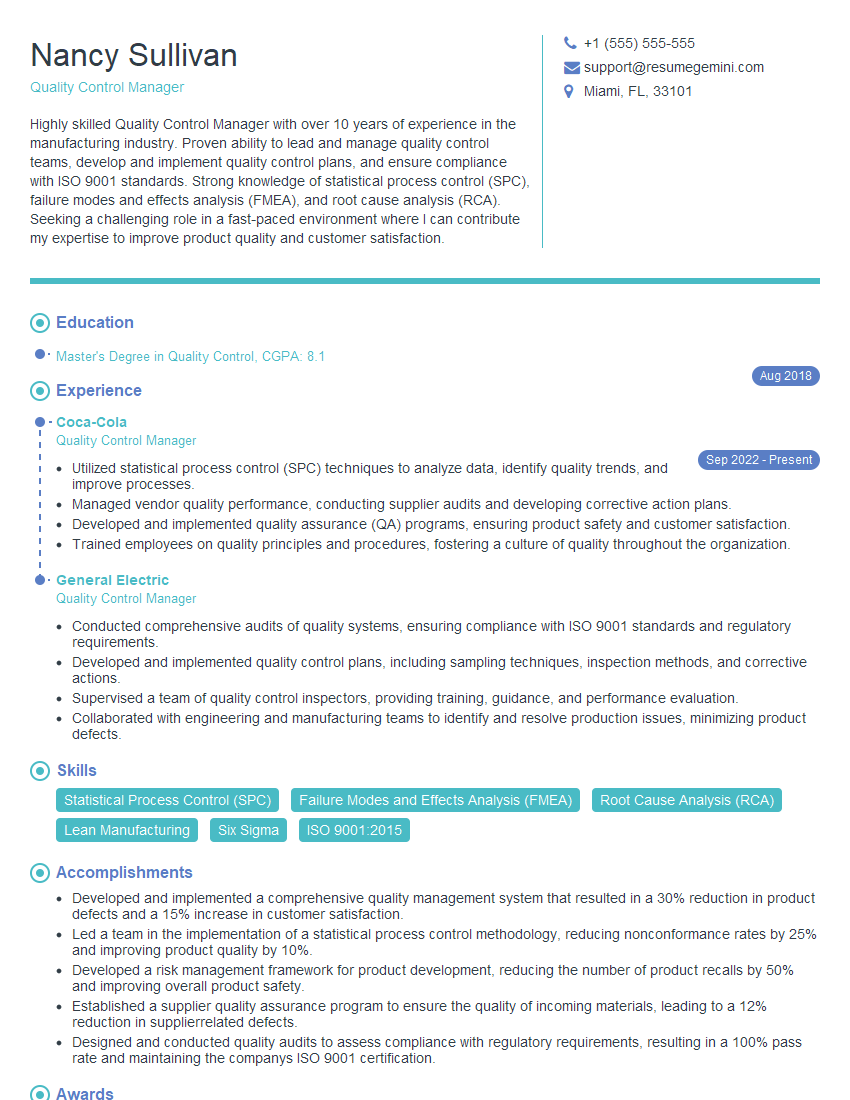
Quality Control Manager Resume Sample
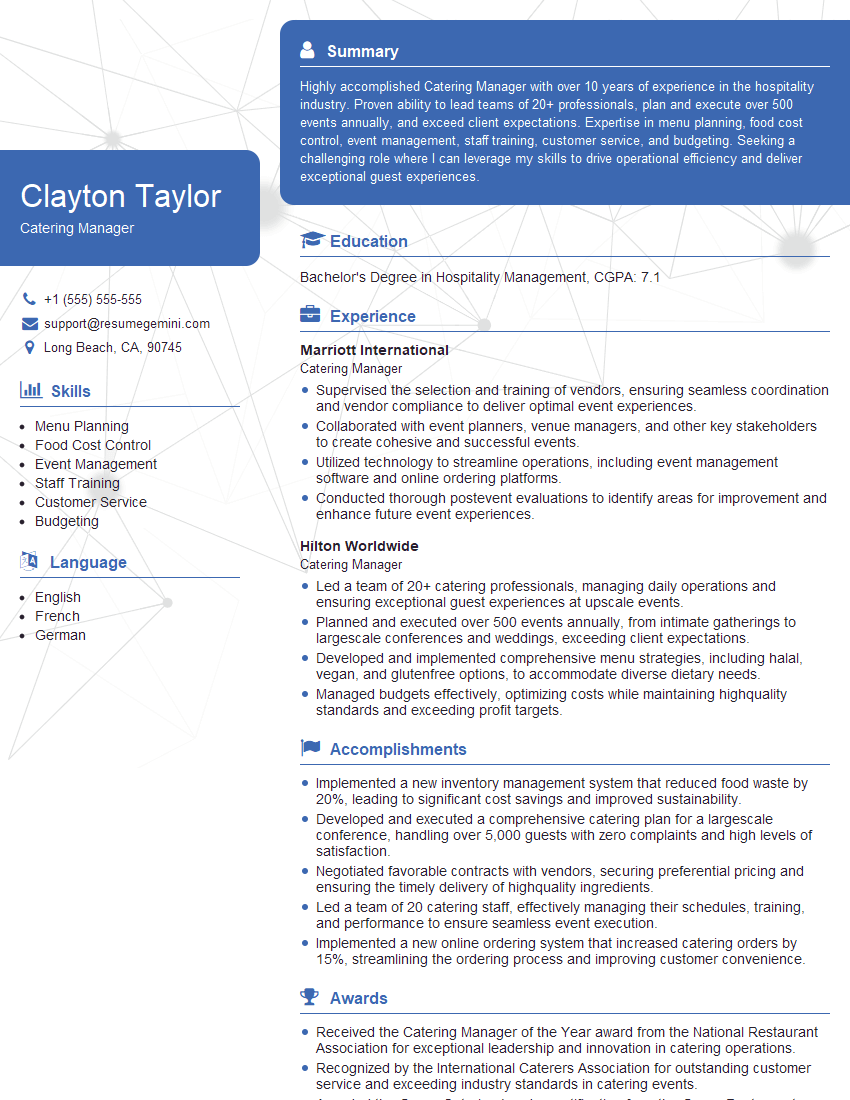
Catering Manager Resume Sample
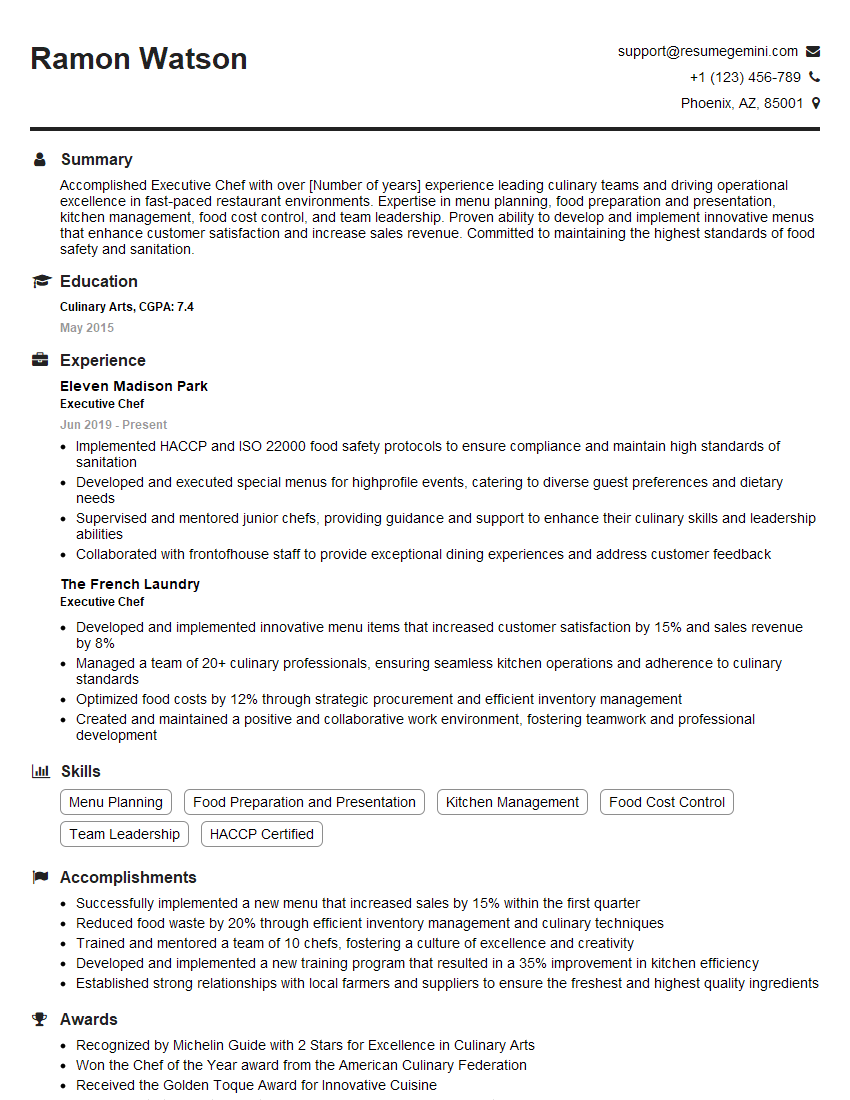
Executive Chef Resume Sample
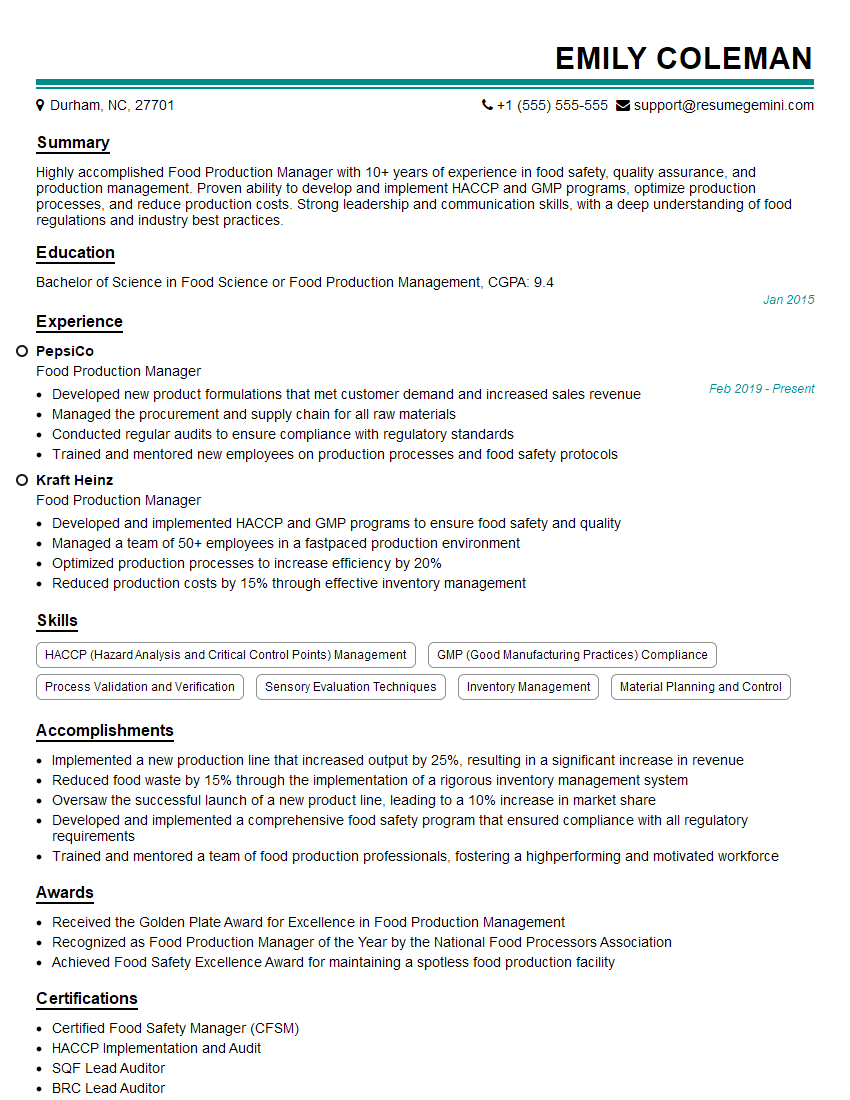
Food Production Manager Resume Sample
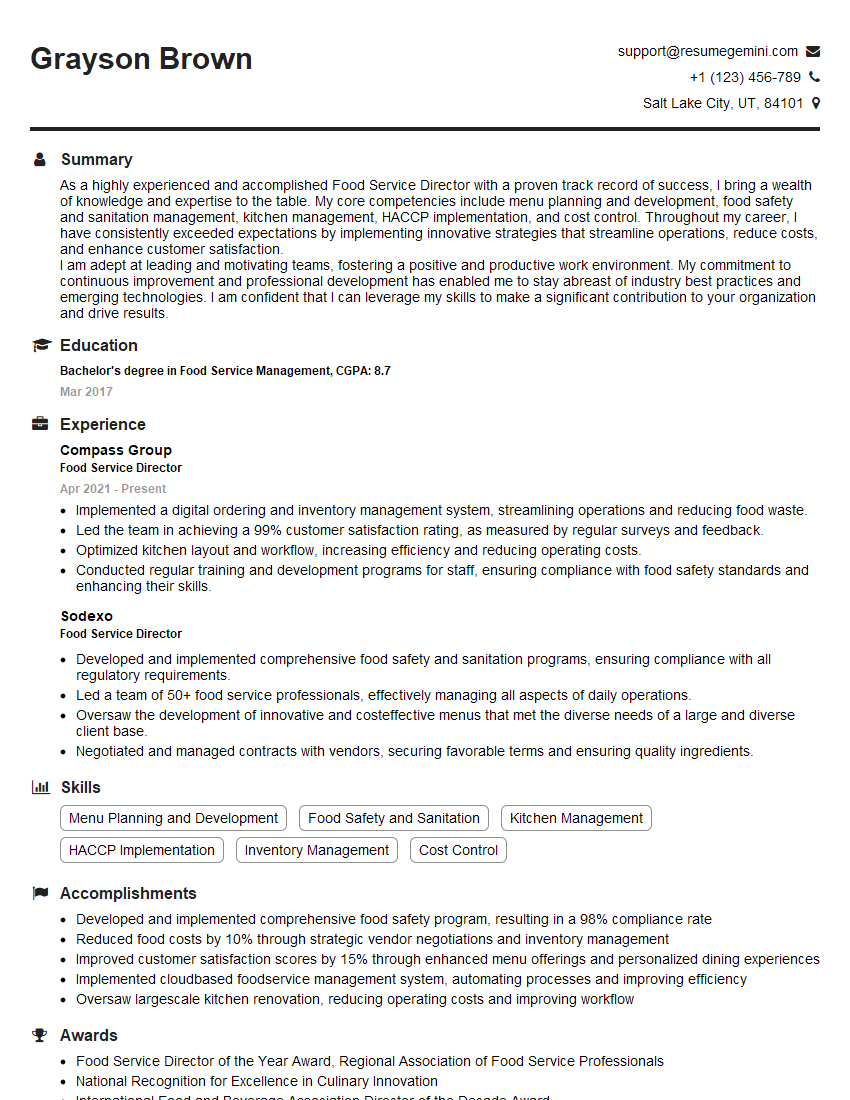
Food Service Director Resume Sample
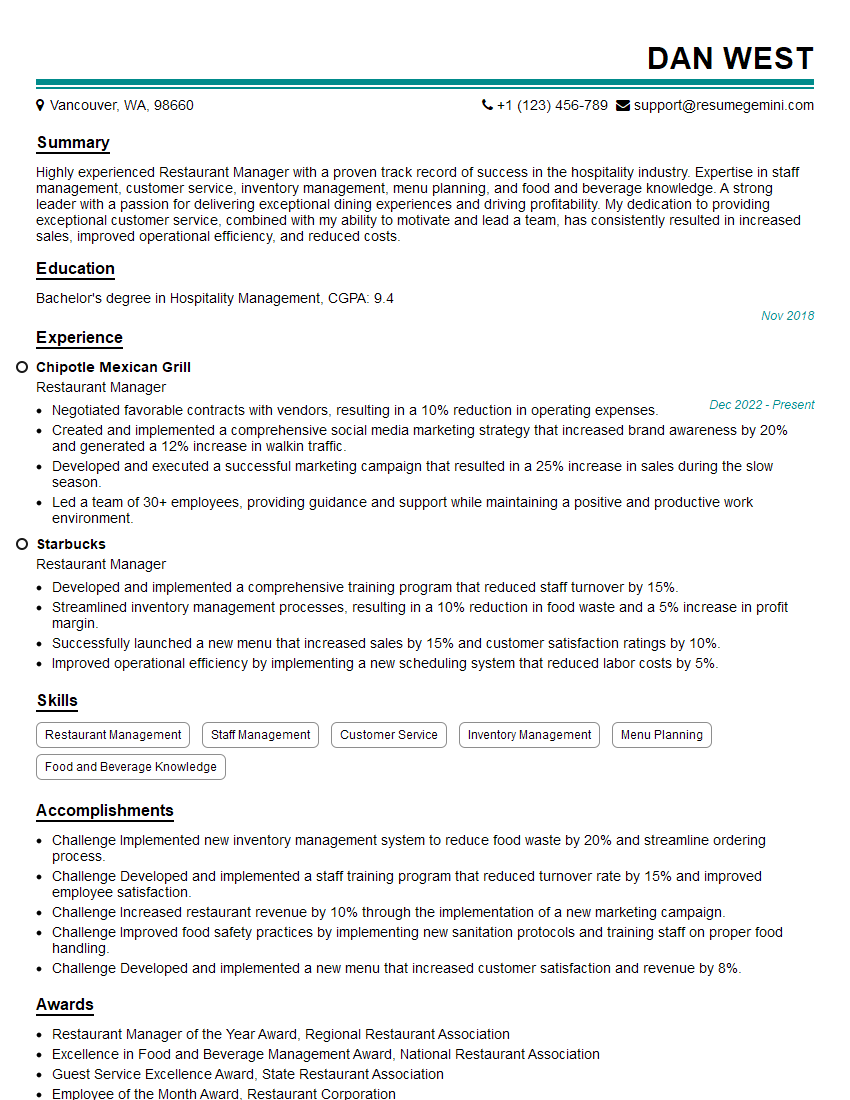
Restaurant Manager Resume Sample
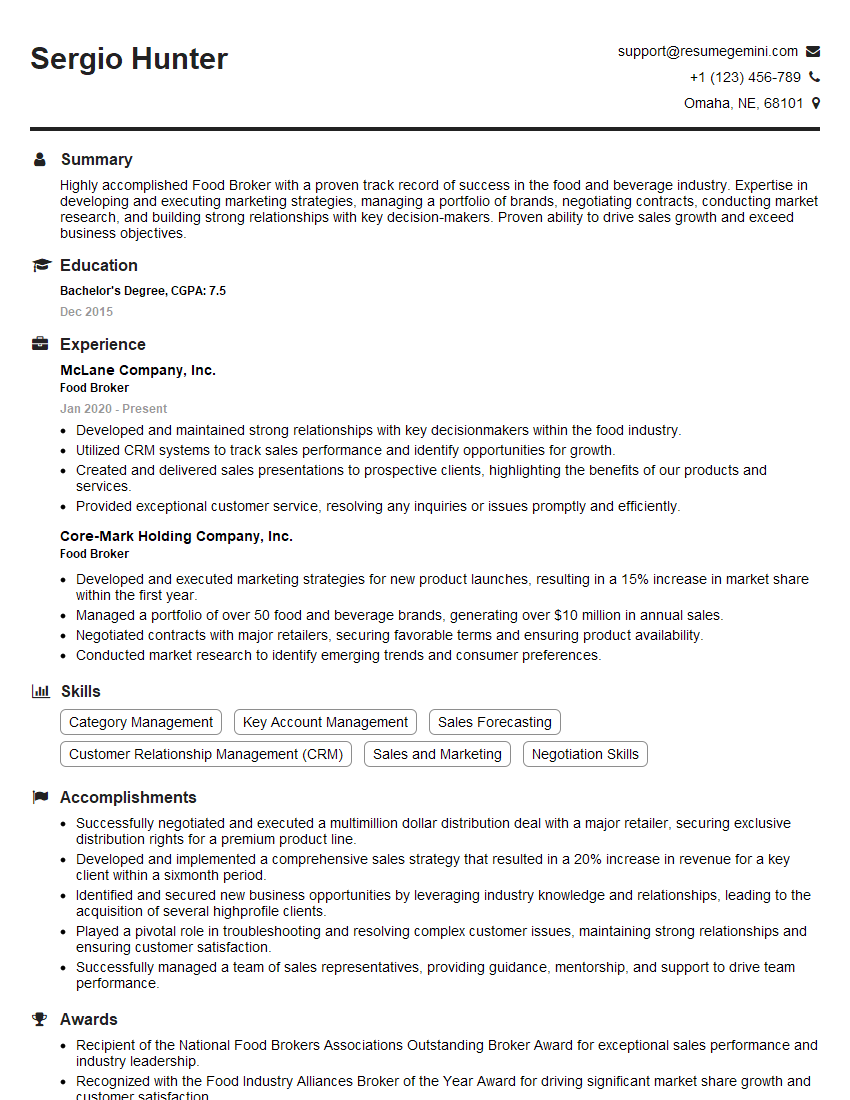
Food Broker Resume Sample
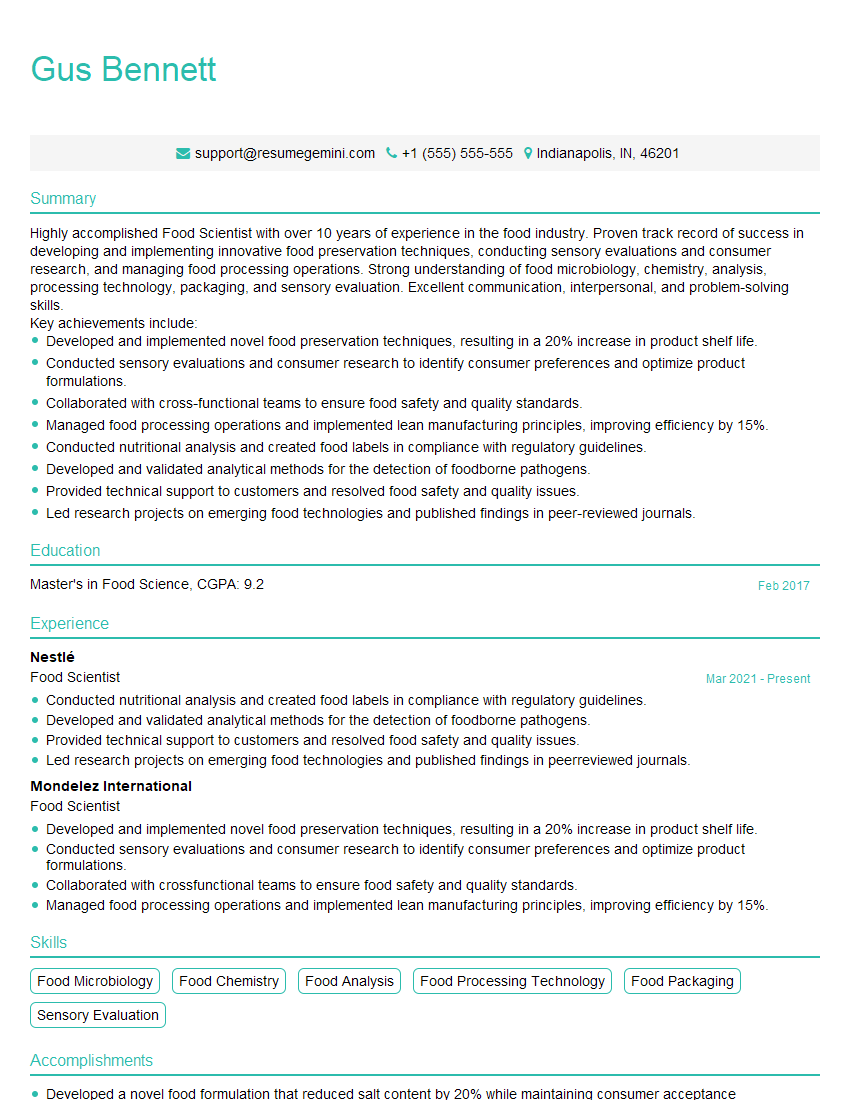
Food Scientist Resume Sample

Food Technologist Resume Sample
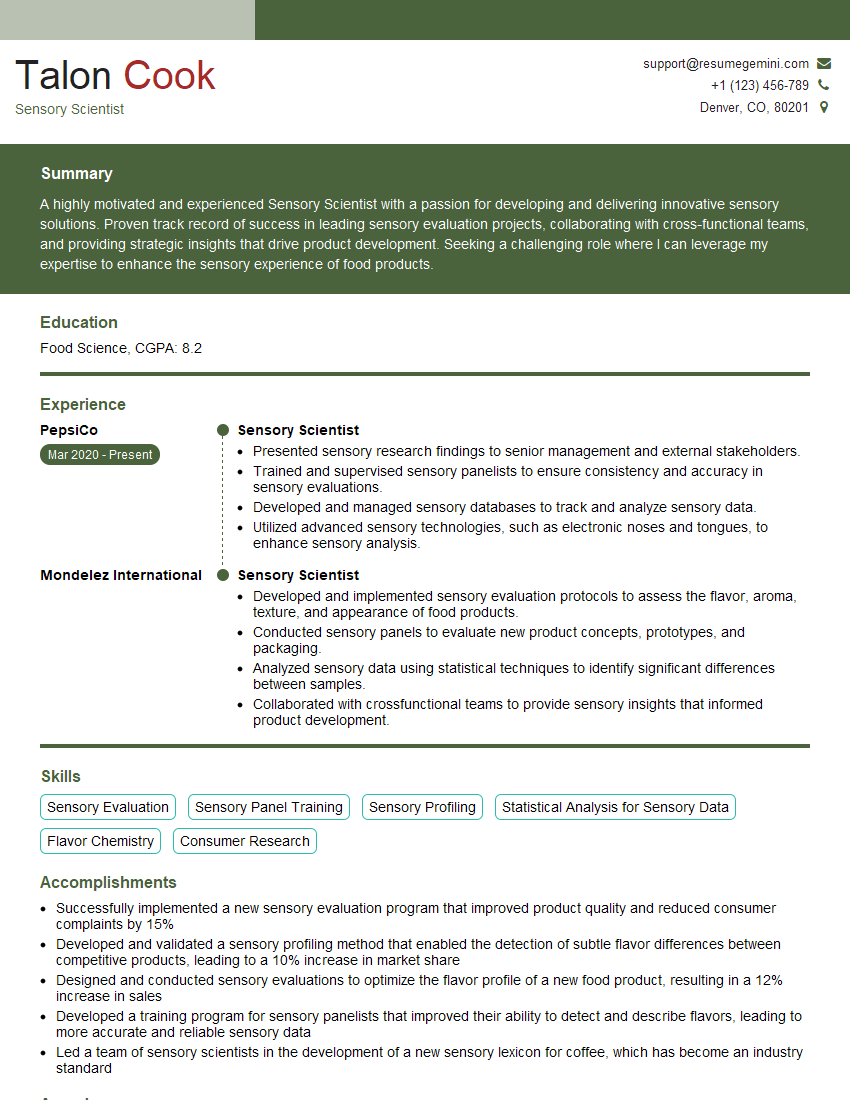
Sensory Scientist Resume Sample
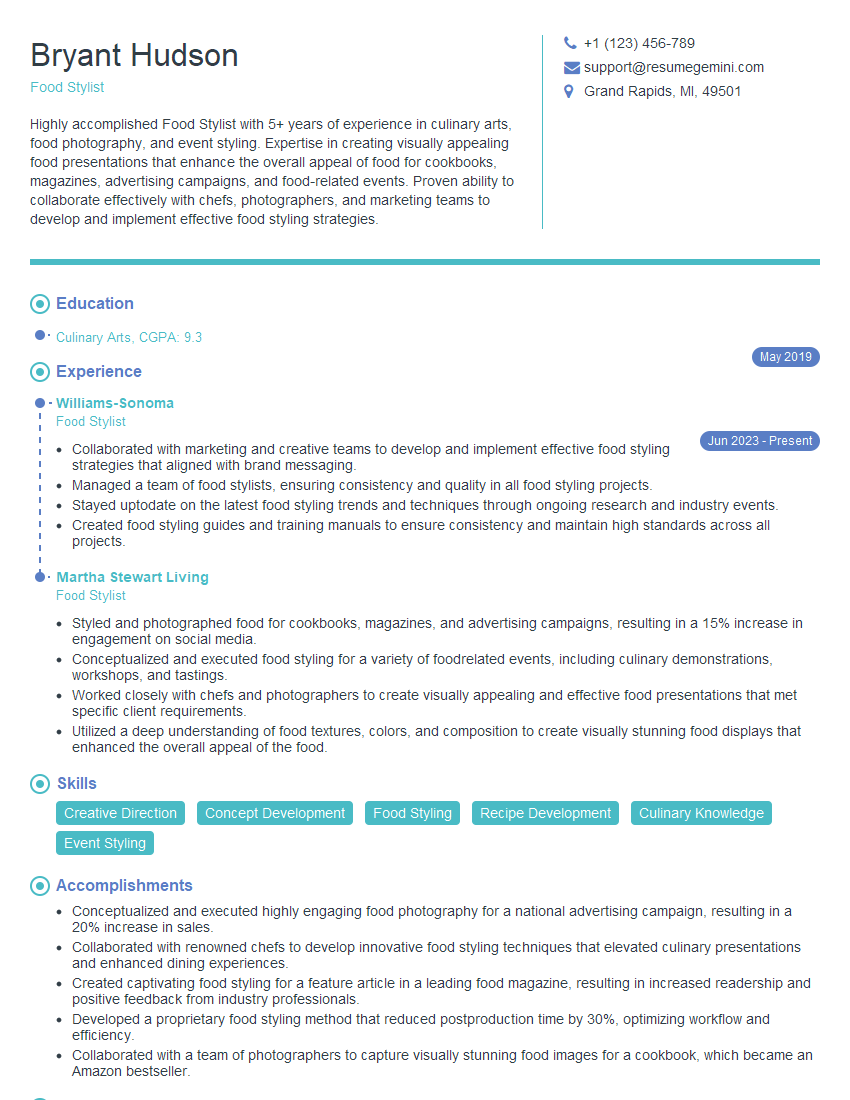
Food Stylist Resume Sample
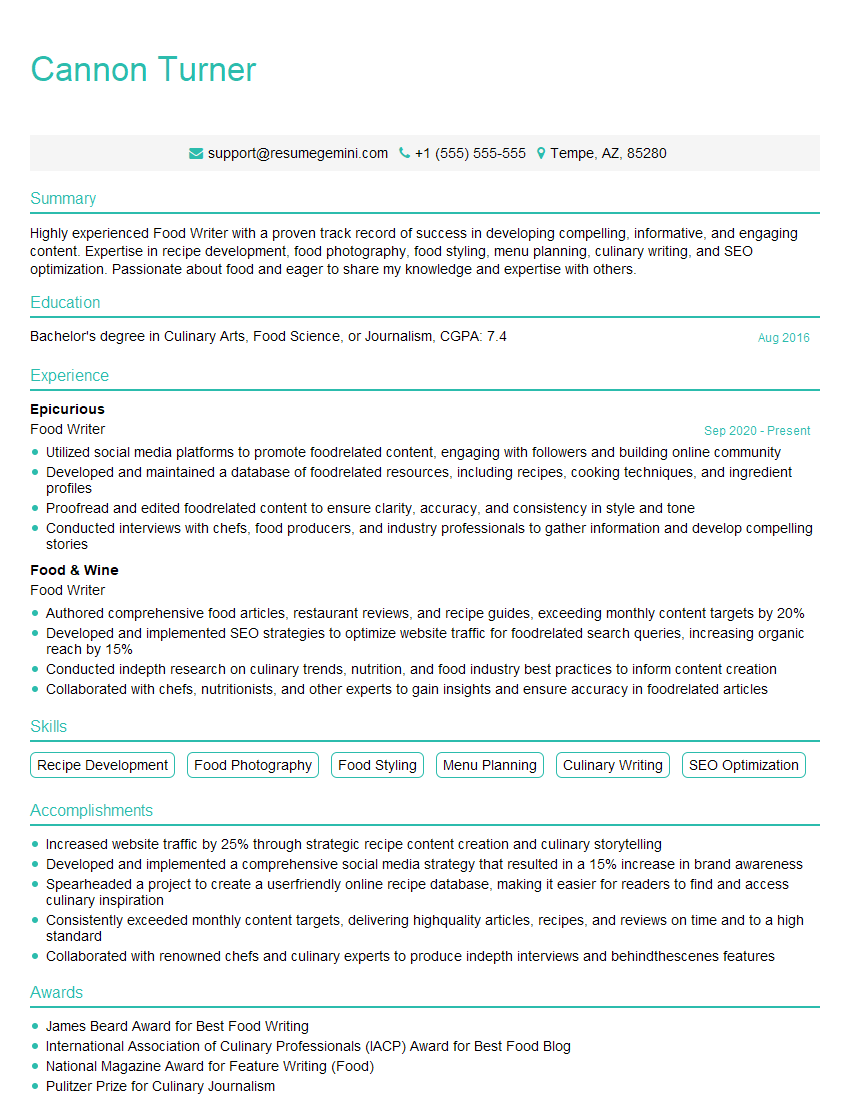
Food Writer Resume Sample
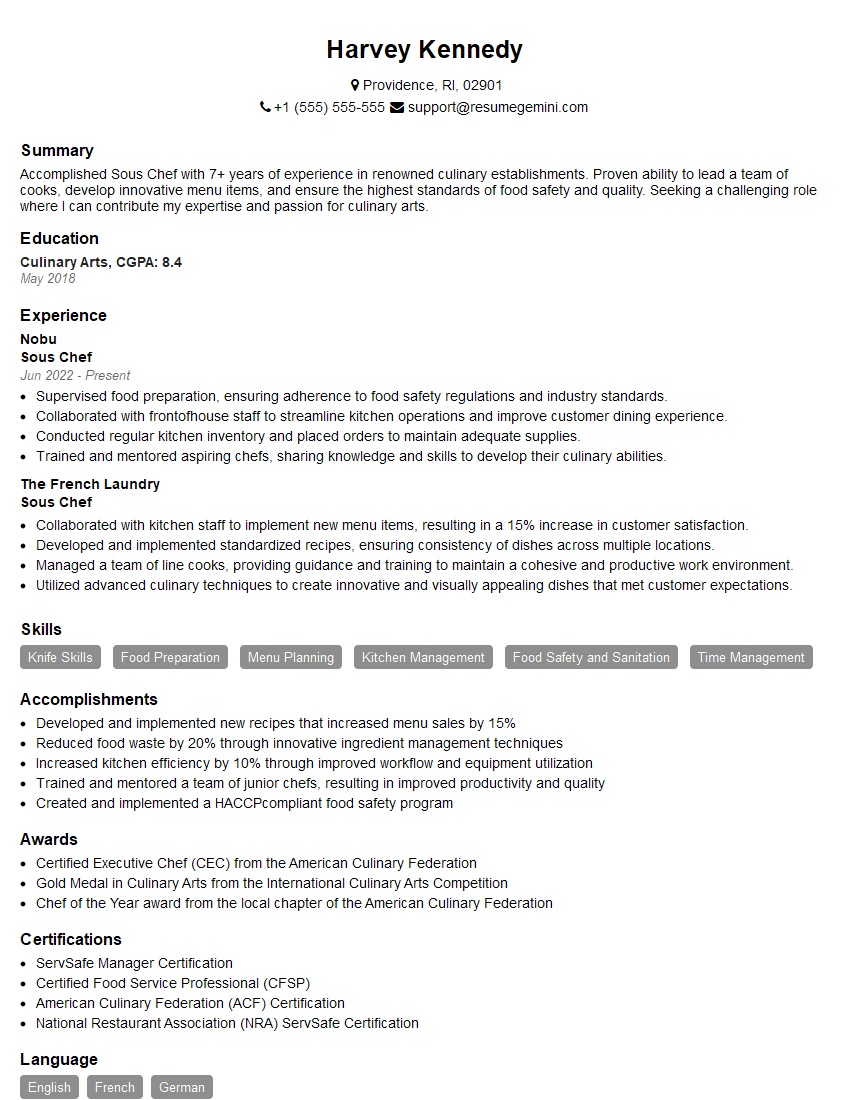
Sous Chef Resume Sample

Chef De Partie Resume Sample

Baker Resume Sample
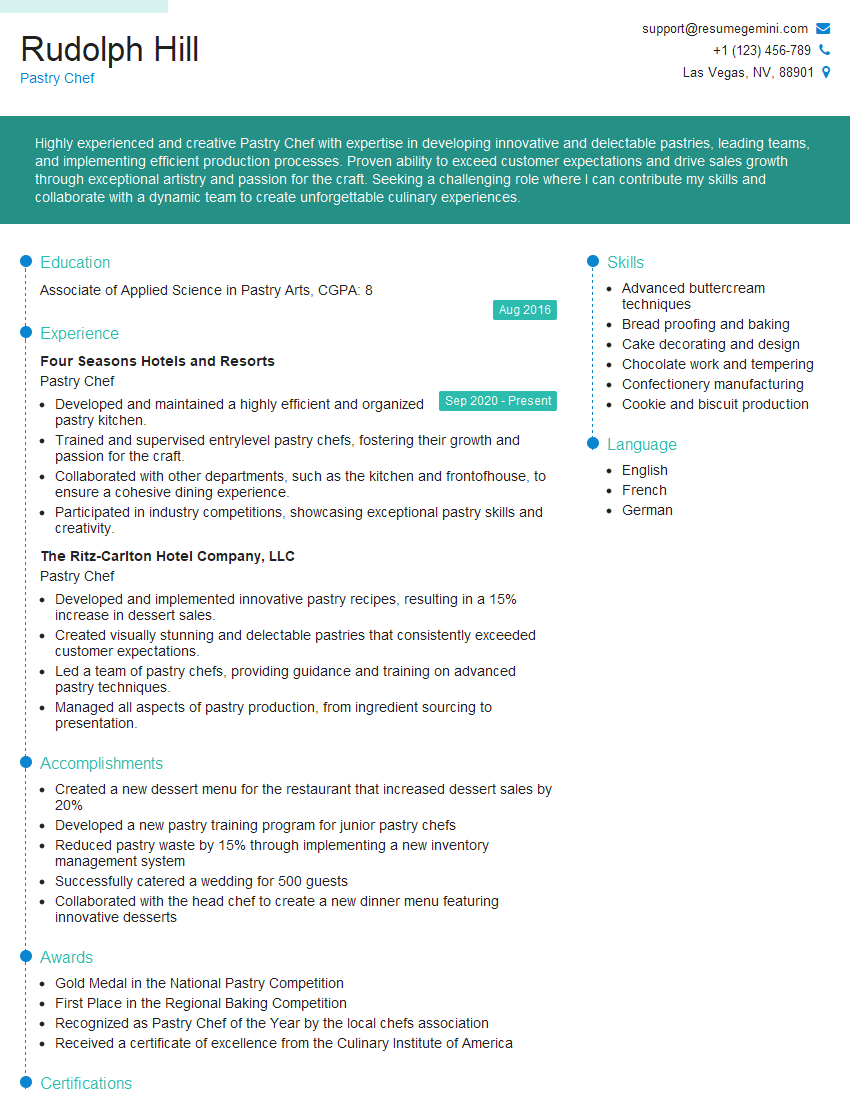
Pastry Chef Resume Sample
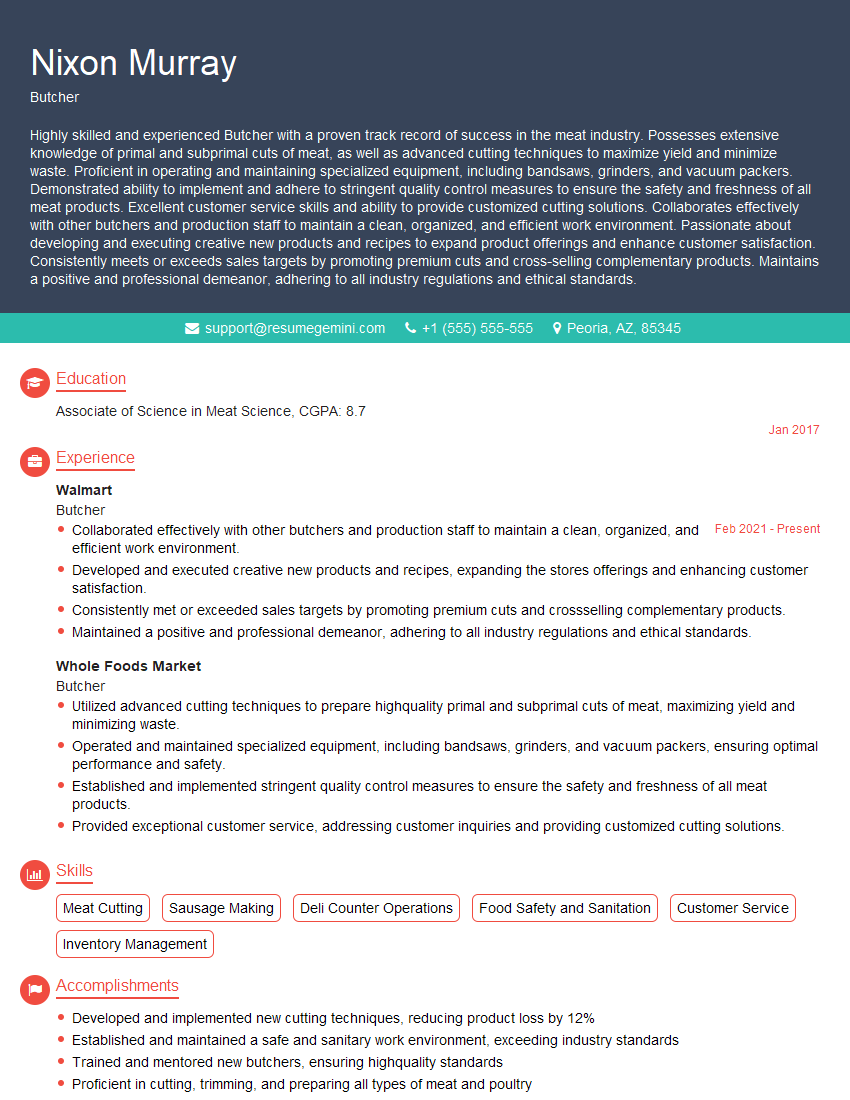
Butcher Resume Sample
Explore more articles
Users Rating of Our Blogs
Share Your Experience
We value your feedback! Please rate our content and share your thoughts (optional).
What Readers Say About Our Blog
Really detailed insights and content, thank you for writing this detailed article.
IT gave me an insight and words to use and be able to think of examples