Cracking a skill-specific interview, like one for Experience in working with students of diverse ages and abilities, requires understanding the nuances of the role. In this blog, we present the questions you’re most likely to encounter, along with insights into how to answer them effectively. Let’s ensure you’re ready to make a strong impression.
Questions Asked in Experience in working with students of diverse ages and abilities Interview
Q 1. Describe your experience adapting curriculum to meet the needs of diverse learners.
Adapting curriculum for diverse learners is crucial for ensuring equitable access to education. It involves moving beyond a ‘one-size-fits-all’ approach and recognizing that students learn at different paces and in different ways. My approach begins with a thorough understanding of each student’s individual needs, learning styles, and strengths. This includes reviewing Individualized Education Programs (IEPs) or 504 plans, if applicable, and conducting informal assessments to gauge their understanding of the subject matter.
For example, I once worked with a class where students ranged from those needing significant support in reading comprehension to those already proficient in advanced literature. To address this, I created tiered assignments. The basic level focused on summarizing main ideas, the intermediate level involved analyzing characters and plot, while the advanced level incorporated critical essays and creative writing prompts, all based on the same core text. I also utilized differentiated instruction methods including varied reading materials, technology-based tools for different learning styles (visual, auditory, kinesthetic), and flexible grouping strategies that allowed for both collaborative and independent learning. Regular monitoring and adjustment ensured the curriculum remained both challenging and accessible for every student.
Q 2. How do you identify and address learning disabilities in students?
Identifying learning disabilities requires a multi-faceted approach. It starts with careful observation of a student’s performance in the classroom. Are they struggling with specific skills like reading, writing, or math, despite putting in effort? Do they exhibit signs of difficulty with organization, attention, or memory? I look for patterns of consistent challenges, rather than isolated incidents. If I suspect a learning disability, I collaborate closely with the school’s special education team, which might involve referring the student for comprehensive testing by a psychologist or educational specialist. This assessment provides a formal diagnosis and helps determine appropriate interventions.
For example, I noticed a student consistently struggling in math, despite demonstrating strong problem-solving skills in other areas. After collaborating with the special education team, he was diagnosed with dyscalculia. Following the IEP recommendations, I implemented specific strategies like using manipulatives, breaking down complex problems into smaller steps, and providing extra time for assignments. The key is to provide support tailored to the specific needs identified by the assessment while maintaining high expectations for the student’s academic growth.
Q 3. What strategies do you use to create an inclusive classroom environment?
Creating an inclusive classroom means fostering a sense of belonging and respect for all students, regardless of their differences. I achieve this through several key strategies. Firstly, I establish clear classroom rules and expectations that emphasize kindness, empathy, and respect. Secondly, I create a physically accessible learning environment. This ensures that all students, including those with mobility challenges, have equal access to learning materials and spaces.
Beyond the physical, I use inclusive teaching practices. I incorporate diverse perspectives and learning materials into my lessons, celebrating different cultures and backgrounds. For instance, I might incorporate stories from different cultures or perspectives into reading time, or use real-world examples from various fields to demonstrate concepts. Finally, open communication with all students and celebrating their unique strengths and talents is vital. I foster collaboration among students through group projects and activities that encourage peer support and learning.
Q 4. Explain your approach to differentiating instruction for students with varying learning styles.
Differentiated instruction recognizes that students learn in various ways. My approach starts by identifying students’ preferred learning styles – visual, auditory, kinesthetic, or a combination – through observation and informal assessments. I then offer diverse learning activities to cater to these preferences. For visual learners, I might use diagrams, charts, and videos. Auditory learners benefit from discussions, lectures, and audio recordings. Kinesthetic learners thrive with hands-on activities, experiments, and movement-based learning.
For example, when teaching a science concept, I might provide a video demonstration for visual learners, a lecture with discussion for auditory learners, and a hands-on experiment for kinesthetic learners. I also use varied instructional materials – different texts, technology applications, and manipulatives – to cater to diverse learning needs and preferences. Flexible grouping strategies allow students to work collaboratively with others who share similar learning styles or different strengths, encouraging peer learning and support.
Q 5. How do you collaborate with parents and other professionals to support student success?
Collaboration is key to student success. I regularly communicate with parents through newsletters, emails, and parent-teacher conferences. These interactions provide opportunities to share progress reports, discuss challenges, and collaborate on strategies to support the student at home and in school. For instance, I might share learning strategies with parents so that they can support their children’s homework. I also actively work with other professionals, such as special education teachers, counselors, and administrators, to create a comprehensive support system for students with diverse needs. This might involve attending IEP meetings, sharing observations, and co-planning interventions.
One example involved a student struggling with anxiety. I collaborated with the school counselor and the student’s parents to create a plan that included mindfulness exercises in the classroom and strategies for managing anxiety at home. This collaborative approach significantly improved the student’s academic performance and overall well-being. Regular communication and shared decision-making are essential for creating a supportive network that helps students thrive.
Q 6. Describe a time you had to manage challenging behavior in a student.
Managing challenging behavior requires a calm and proactive approach. I once had a student who exhibited disruptive behavior in class, frequently interrupting and refusing to follow instructions. My first step was to understand the underlying cause of the behavior. I observed the student closely, noting the situations that triggered the behavior. I also spoke with the student privately to understand their perspective and any underlying issues they were facing. It turned out they were struggling with significant family issues.
I implemented several strategies. I created a visual schedule to improve their predictability and organization. I also established clear expectations and consequences, clearly communicated to the student. We developed a behavior chart with positive reinforcements, such as extra playtime or small privileges, to incentivize positive behavior. Importantly, I also sought support from the school counselor and the student’s parents to ensure a consistent approach. By understanding the root cause and implementing targeted interventions, we saw a significant reduction in disruptive behavior and the student’s engagement in class improved greatly.
Q 7. How do you assess student progress and adjust your teaching accordingly?
Assessing student progress is an ongoing process, not a single event. I utilize various methods, including formative and summative assessments. Formative assessments, like quizzes, classwork, and observations, provide ongoing feedback and allow me to adjust my teaching in real-time. Summative assessments, such as tests and projects, provide a comprehensive overview of student learning at the end of a unit or term.
I use data from these assessments to identify areas where students are excelling and areas needing improvement. This data guides my instructional decisions, including adjusting pacing, reteaching concepts, and differentiating instruction. For example, if I notice a large number of students struggling with a specific concept on a formative assessment, I might reteach it using different methods or provide additional practice opportunities. Regular communication with students about their progress and areas for improvement is crucial to fostering their self-awareness and motivation. This continuous cycle of assessment, feedback, and adjustment ensures that my teaching remains responsive to the ever-evolving needs of my students.
Q 8. What strategies do you use to motivate students with different levels of engagement?
Motivating students with varying engagement levels requires a multifaceted approach. It’s not a one-size-fits-all solution; understanding the why behind disengagement is crucial. I begin by building strong relationships with each student, fostering a safe and supportive classroom environment where risk-taking is encouraged.
- Differentiated Instruction: I tailor activities and assignments to cater to diverse learning styles and paces. For example, a highly engaged student might tackle an advanced extension project, while a less engaged student might benefit from a more structured, hands-on activity.
- Choice and Autonomy: Offering students choices in assignments, projects, or even how they demonstrate their learning empowers them and increases their investment. This could be as simple as letting them choose a topic for a presentation or allowing them to work individually or in groups.
- Positive Reinforcement and Feedback: Frequent, specific, and positive feedback – focusing on effort and improvement rather than just grades – is vital. Celebrating small wins and acknowledging effort boosts confidence and motivates continued engagement. I use a variety of methods including verbal praise, written comments, and personalized learning goal charts.
- Addressing Underlying Issues: Sometimes, disengagement stems from external factors – difficulties at home, learning disabilities, or social issues. Open communication with students and families, along with collaboration with school counselors or support staff, can help address these underlying problems.
For instance, I once had a student who consistently disengaged in class. After speaking with him, I discovered he felt overwhelmed by the workload and lacked confidence in his abilities. By breaking down assignments into smaller, more manageable steps, providing extra support, and celebrating his progress, I helped him regain confidence and his engagement skyrocketed.
Q 9. How familiar are you with IEPs and 504 plans?
I am very familiar with Individualized Education Programs (IEPs) and 504 plans. These are crucial documents that outline specific accommodations and support services for students with disabilities or learning needs. An IEP is a legally binding document developed for students with significant learning disabilities who require specialized instruction and support, while a 504 plan addresses students with disabilities that don’t necessarily require specialized instruction but may need accommodations to access the general education curriculum.
My experience includes reviewing and implementing both IEPs and 504 plans, collaborating with special education teachers and support staff to ensure students receive appropriate support, and adapting my instructional strategies to meet individual needs. I understand the legal requirements and ethical considerations involved in working with students who have IEPs and 504 plans. I am comfortable attending IEP meetings, communicating with parents/guardians, and actively participating in the development and implementation of these plans.
Q 10. Describe your experience working with students from diverse cultural backgrounds.
Working with students from diverse cultural backgrounds has been one of the most rewarding aspects of my career. I believe that embracing cultural diversity enriches the learning environment for all students. My approach centers around creating a classroom that is inclusive and respectful of all cultures and backgrounds.
- Culturally Responsive Teaching: I integrate diverse perspectives into the curriculum, using materials and examples that reflect the experiences and histories of different cultures. This helps students see themselves and their backgrounds reflected in the learning materials.
- Building Relationships: I make an effort to learn about my students’ cultural backgrounds, languages, and traditions. This helps me understand their unique learning styles and needs, and build rapport and trust.
- Communication: I strive to communicate effectively with families from diverse cultural backgrounds, being mindful of potential language barriers and cultural differences in communication styles.
- Creating a Safe Space: I foster an inclusive classroom environment where students feel safe to express their identities and share their perspectives without fear of judgment or discrimination.
For example, I once had a student who was new to the country and struggled with the language. By pairing her with a peer who spoke her native language and incorporating visual aids and hands-on activities into my lessons, I helped her overcome her initial challenges and thrive in the classroom.
Q 11. How do you ensure all students feel safe, respected, and valued in your classroom?
Creating a safe, respectful, and valued classroom is paramount. This isn’t just about rules; it’s about building a strong classroom community based on trust and mutual respect. My strategies include:
- Establishing clear expectations and routines: Students need to understand the classroom rules and expectations from the beginning. This helps create a predictable and secure environment.
- Promoting positive relationships: I foster a sense of community through cooperative learning activities, class discussions, and opportunities for students to interact positively with one another. I actively model respectful communication and conflict resolution.
- Celebrating diversity and individuality: I create a space where students feel comfortable expressing themselves and celebrating their unique identities. I make sure to incorporate diverse perspectives and experiences into my teaching.
- Providing opportunities for student voice and choice: Giving students a voice in shaping the classroom environment, through class meetings or suggestion boxes, demonstrates that their opinions and feelings matter.
- Addressing bullying and harassment promptly and effectively: I have a clear policy on bullying and harassment and address any incidents swiftly and fairly, involving parents and administrators as needed.
For example, we have regular class meetings where students can share their concerns, ideas, and suggestions for improving our classroom environment. This creates a sense of ownership and helps to foster a positive classroom community.
Q 12. How do you incorporate technology to support diverse learners?
Technology offers incredible opportunities to support diverse learners. I use technology strategically to differentiate instruction, provide individualized support, and engage students in exciting new ways.
- Assistive Technology: I am proficient in using assistive technology tools such as text-to-speech software, speech-to-text software, graphic organizers, and digital note-taking apps to support students with learning disabilities or other needs.
- Interactive Learning Platforms: I use online learning platforms like Khan Academy, IXL, and other educational apps to provide targeted practice and individualized feedback. These platforms often allow for differentiated learning paths based on student progress.
- Multimedia Resources: I incorporate videos, interactive simulations, and online games to cater to various learning styles and keep students engaged. Visual learners benefit from videos and animations, while auditory learners might prefer podcasts or audio books.
- Communication Tools: I use platforms like Google Classroom or other learning management systems to communicate with students and families, share assignments, and provide feedback. This ensures consistent communication, which is particularly helpful for students with diverse learning needs or those who may have difficulty with traditional classroom communication.
For instance, a student struggling with reading comprehension might benefit from using text-to-speech software, while a visually impaired student might use screen-reading technology. These tools level the playing field, allowing all students to access the curriculum.
Q 13. What are some common misconceptions about students with disabilities?
Several misconceptions surround students with disabilities. These misconceptions can lead to lower expectations and limited opportunities for these students.
- The ‘one-size-fits-all’ approach to disability: It’s crucial to remember that disabilities are diverse; no two students are alike. What works for one student might not work for another.
- Focusing solely on limitations: Often, the focus is placed on what a student *cannot* do, rather than their strengths and capabilities. This can be incredibly discouraging and limit opportunities.
- Assuming students with disabilities need constant help: While some students require significant support, many are capable of independent work and learning with the right accommodations and support. Overly assisting can hinder their independence and growth.
- Belief that students with disabilities can’t achieve high academic standards: With the appropriate support and accommodations, students with disabilities can achieve academic success.
It’s vital to challenge these misconceptions and celebrate the unique talents and abilities of all students, regardless of their learning differences. A strengths-based approach fosters a sense of accomplishment and self-efficacy.
Q 14. How do you use formative and summative assessments to inform your instruction?
Formative and summative assessments are both essential for effective instruction. They provide valuable insights into student learning and guide my instructional decisions.
- Formative Assessments: These are ongoing, low-stakes assessments used to monitor student learning and identify areas where students need additional support. Examples include exit tickets, quizzes, class discussions, observations, and informal questioning during lessons. Formative assessments help me adjust my teaching in real-time, addressing misconceptions and providing targeted support where needed.
- Summative Assessments: These are high-stakes assessments, such as tests, projects, and presentations, that evaluate student learning at the end of a unit or course. Summative assessments provide a comprehensive overview of student understanding and help me identify areas needing improvement in future instruction. They also inform report card grades.
I use the data from both types of assessments to inform my instruction. For example, if formative assessments reveal that many students are struggling with a particular concept, I might reteach the concept using different methods or provide additional practice activities. Summative assessment data helps me evaluate the effectiveness of my teaching and identify areas for improvement in my future curriculum design.
Q 15. Describe your experience using assistive technology to support students.
My experience with assistive technology spans various modalities, catering to diverse learning needs. I’ve worked with students using screen readers (like JAWS or NVDA) for visually impaired students, enabling them to access digital materials independently. For students with motor impairments, I’ve implemented switch access technology, allowing them to control computers and other devices using adapted switches or eye-gaze systems. In addition, I’ve utilized text-to-speech software to support students with reading difficulties and speech-to-text software to aid students with writing challenges. One particular example involved a student with dysgraphia who struggled significantly with handwriting. By implementing Dragon NaturallySpeaking, he was able to dictate his essays and assignments, drastically improving his academic performance and confidence. I also regularly collaborate with occupational therapists and special education professionals to ensure appropriate assistive technology selection and training, fostering a holistic and effective approach.
Beyond individual software, I’ve used adaptive learning platforms which provide customizable interfaces and built-in accessibility features. This allows for differentiated learning experiences, adapting to the needs of each student effectively.
Career Expert Tips:
- Ace those interviews! Prepare effectively by reviewing the Top 50 Most Common Interview Questions on ResumeGemini.
- Navigate your job search with confidence! Explore a wide range of Career Tips on ResumeGemini. Learn about common challenges and recommendations to overcome them.
- Craft the perfect resume! Master the Art of Resume Writing with ResumeGemini’s guide. Showcase your unique qualifications and achievements effectively.
- Don’t miss out on holiday savings! Build your dream resume with ResumeGemini’s ATS optimized templates.
Q 16. How do you identify and support gifted and talented students?
Identifying gifted and talented students involves a multifaceted approach beyond just high test scores. I look for evidence of advanced reasoning, creativity, and problem-solving skills. This includes observing their performance in class, analyzing their work for originality and depth of understanding, and utilizing formal and informal assessments that measure critical thinking and creative abilities. For example, I’ve used open-ended projects and challenges that allow students to demonstrate their independent thinking and problem-solving skills, offering opportunities for higher-level thinking and self-directed learning. Once identified, I support them through differentiated instruction, providing advanced projects and independent study opportunities that challenge them. I also facilitate participation in enrichment activities, such as mentoring programs, advanced courses, and competitions, to nurture their talents and provide them with opportunities to collaborate with peers who share similar interests. Regular communication with parents is crucial to ensure alignment in nurturing their child’s unique capabilities.
Q 17. What are some common challenges in working with diverse learners, and how have you overcome them?
Working with diverse learners presents unique challenges, including varying learning styles, language barriers, and differing cultural backgrounds. One common challenge is ensuring equitable access to learning for students with varying levels of English proficiency. To overcome this, I employ strategies like providing bilingual materials, utilizing visual aids and hands-on activities, and incorporating cooperative learning groups where students can support each other. Another challenge is addressing different learning styles. I incorporate a variety of instructional methods, including visual, auditory, and kinesthetic approaches, to cater to diverse learners. For students with attention deficits, I break down tasks into smaller, more manageable chunks and provide frequent breaks and movement opportunities. I also foster a supportive and inclusive classroom environment where all students feel comfortable sharing their ideas and perspectives, regardless of their background or learning style. This fosters a sense of belonging and reduces the risk of students feeling isolated or overwhelmed.
Q 18. How do you build positive relationships with students and their families?
Building positive relationships with students and their families is crucial for effective teaching and learning. I start by creating a welcoming and inclusive classroom environment where students feel safe and respected. I make an effort to learn about each student’s individual interests and backgrounds, showing genuine interest in their lives. Regular communication with parents, through email, phone calls, or parent-teacher conferences, helps to keep them informed about their child’s progress and address any concerns they might have. I believe in building partnerships with families; they are integral partners in the child’s education. One effective strategy I’ve found is utilizing tools like classroom communication apps to share updates regularly and encourage a two-way dialogue. This transparency keeps parents informed and fosters a sense of shared responsibility in their child’s academic journey. Open communication allows for quick addressing of issues before they escalate.
Q 19. Describe your experience with crisis intervention and de-escalation techniques.
My training includes crisis intervention and de-escalation techniques, which I utilize to maintain a safe and supportive learning environment. I’ve completed professional development in recognizing signs of distress, understanding triggers, and implementing appropriate responses. My approach focuses on de-escalation strategies that prioritize calming the student and establishing a safe space. This involves active listening, empathy, and remaining calm myself. I understand that each student’s needs are unique; thus, de-escalation techniques require flexibility and understanding. If a situation escalates beyond my capability, I know to immediately seek assistance from the school administration or counselors. Following any incident, I review the situation, identifying areas for improvement in crisis prevention and management. Maintaining comprehensive documentation of such events is essential for future reference and safety measures.
Q 20. How do you differentiate instruction based on students’ readiness levels?
Differentiating instruction based on students’ readiness levels is vital for ensuring all students learn at their optimal pace. I assess students’ prior knowledge and learning styles through various methods including pre-tests, observations, and informal assessments. Based on this information, I create learning experiences that cater to different levels of readiness. For students who are ahead, I provide extension activities, independent research projects, or opportunities for peer teaching. For students who need additional support, I offer small group instruction, one-on-one tutoring, and access to differentiated learning materials. I also utilize tiered assignments, offering varying levels of complexity and challenge within a single lesson. An example would be a research project where some students could write a simple report, while others undertake in-depth research and create a presentation. This approach ensures all students are challenged appropriately and make progress towards their individual learning goals.
Q 21. How do you promote student self-advocacy?
Promoting student self-advocacy is crucial for empowering students to take ownership of their learning. I start by explicitly teaching students about their rights and responsibilities as learners. I encourage open communication and provide opportunities for them to express their needs and preferences. I model self-advocacy behaviors by openly discussing my own decision-making processes in planning lessons and assessments. I involve students in setting goals and creating individualized learning plans (ILPs). Through this collaborative process, they learn to articulate their learning needs and preferences. I provide opportunities for students to practice self-advocacy skills in various contexts, such as meeting with teachers or seeking support from school personnel. Finally, I celebrate student successes in self-advocacy, reinforcing their ability to effectively communicate their needs and take control of their learning journeys. A classroom structure where students’ voice is valued and heard fosters this confidence.
Q 22. Describe your experience with behavior management strategies.
Behavior management is crucial for creating a positive and productive learning environment. My approach is multifaceted, focusing on proactive strategies and positive reinforcement rather than solely punitive measures. I believe in building strong, positive relationships with students, understanding their individual needs and learning styles. This forms the foundation for effective behavior management.
Positive Reinforcement: I consistently praise and reward positive behaviors, using a variety of techniques such as verbal praise, stickers, class rewards, and even small privileges. For example, I might implement a ‘Caught Being Good’ system where I publicly acknowledge students demonstrating responsible behavior.
Clear Expectations and Rules: I clearly communicate classroom expectations and rules at the beginning of the year, ensuring students understand the consequences of breaking them. These rules are co-created whenever possible, giving students a sense of ownership and responsibility.
Individualized Plans: I work with students who exhibit consistent behavioral challenges to develop individualized behavior plans. These plans often involve strategies like regular check-ins, functional behavioral assessments (FBAs) to identify the root cause of the behavior, and positive behavior support (PBS).
Restorative Practices: When conflict arises, I use restorative practices to help students understand the impact of their actions and repair relationships. This involves facilitating conversations between the involved parties and helping them find solutions collaboratively.
Collaboration with Parents/Guardians: I maintain open communication with parents/guardians, sharing strategies and concerns, and working together to support the student’s behavioral development.
Q 23. How do you ensure equitable access to education for all students?
Ensuring equitable access to education means creating a learning environment where all students, regardless of their background, learning style, or ability, have the opportunity to succeed. This requires a proactive and multi-faceted approach.
Differentiated Instruction: I differentiate my instruction to meet the diverse needs of my students. This involves adjusting the content, process, product, or learning environment based on individual student needs. For example, I might provide students with different reading materials at varying levels of difficulty, or offer various methods for demonstrating their understanding, such as written essays, oral presentations, or visual projects.
Universal Design for Learning (UDL): I incorporate UDL principles into my teaching, providing multiple means of representation, action & expression, and engagement. This might include using graphic organizers, providing audio versions of texts, offering choice boards, or utilizing assistive technology.
Culturally Responsive Teaching: I strive to create a classroom that is culturally responsive, valuing and celebrating the diverse backgrounds and experiences of my students. This includes incorporating diverse perspectives into my curriculum and creating a safe and inclusive learning environment where all students feel respected and valued.
Addressing Learning Disabilities and Special Needs: I collaborate closely with special education teachers and other support staff to ensure that students with learning disabilities and other special needs receive the appropriate support and accommodations. This might involve implementing Individualized Education Programs (IEPs) or 504 plans.
Advocacy: I advocate for equitable resource allocation for all students, ensuring that all students have access to the materials and support they need to succeed.
Q 24. How do you adapt assessments to meet the needs of diverse learners?
Adapting assessments to meet the needs of diverse learners is crucial for accurate and fair evaluation. It’s not about lowering standards, but providing appropriate opportunities for students to demonstrate their understanding.
Multiple Assessment Formats: I use a variety of assessment formats, including written tests, oral presentations, projects, portfolios, and performance tasks. This allows students to demonstrate their knowledge and skills in ways that best suit their learning styles and abilities.
Accommodations and Modifications: I provide appropriate accommodations and modifications for students with disabilities or other special needs. Accommodations change how a student accesses the assessment (e.g., extended time, use of a scribe, alternative format), while modifications change what a student is assessed on (e.g., reduced number of questions, simpler tasks).
Universal Design for Assessment: Similar to UDL in instruction, I apply UDL principles to assessment design. This ensures that the assessment is accessible and usable to the widest range of students.
Pre-assessment and Formative Assessment: I use pre-assessments to gauge students’ prior knowledge and tailor instruction accordingly. Formative assessments during the learning process provide regular feedback to guide instruction and identify areas needing additional support.
For instance, a student with dyslexia might be given extra time on a written test and allowed to use text-to-speech software. Another student might be given the option of creating a presentation instead of writing an essay.
Q 25. What professional development activities have you undertaken to enhance your skills in working with diverse learners?
I regularly participate in professional development activities to enhance my skills in working with diverse learners. This is an ongoing process of continuous learning and improvement.
Workshops and Conferences: I attend workshops and conferences focused on topics such as differentiated instruction, culturally responsive teaching, and working with students with disabilities.
Online Courses and Webinars: I regularly take online courses and webinars to stay up-to-date on best practices and new research in the field of education.
Mentorship and Collaboration: I actively seek out mentorship opportunities and collaborate with colleagues to share best practices and learn from each other’s experiences. This includes working with special education teachers and other support staff.
Reading Professional Literature: I regularly read professional journals and books on topics relevant to working with diverse learners.
For example, a recent workshop on trauma-informed teaching significantly impacted my classroom management and instructional strategies, allowing me to better support students who have experienced adversity.
Q 26. How do you promote a growth mindset in your students?
A growth mindset is crucial for student success. It emphasizes the belief that abilities and intelligence can be developed through dedication and hard work. I actively foster a growth mindset in my classroom through several strategies.
Language and Framing: I use language that emphasizes effort and learning from mistakes rather than focusing solely on grades or innate ability. Instead of saying ‘You’re so smart!’, I might say ‘I’m impressed with your effort and persistence!’.
Growth Mindset Activities: I incorporate activities that explicitly teach students about the growth mindset, such as reading books, watching videos, and discussing real-life examples of people who have achieved success through perseverance.
Encouraging Effort and Persistence: I praise students for their effort and persistence, even if they don’t immediately achieve success. I emphasize the importance of learning from mistakes and using them as opportunities for growth.
Challenging Tasks and Feedback: I provide students with challenging tasks that push them beyond their comfort zones. I offer constructive feedback that focuses on specific areas for improvement rather than solely on grades.
Modeling a Growth Mindset: I openly share my own struggles and learning process with students, demonstrating that making mistakes is a normal part of learning and growth.
Q 27. Describe your experience with co-teaching or collaborative teaching models.
I have extensive experience with co-teaching and collaborative teaching models. These models allow for differentiated instruction, specialized support, and shared expertise, ultimately benefiting all students.
Team Teaching: In team teaching, the co-teachers share responsibility for planning, instruction, and assessment. We might divide content, alternate teaching different groups of students, or simultaneously teach the same content from different perspectives.
Parallel Teaching: We split the class into two groups and teach the same content simultaneously. This allows for smaller group sizes and more individualized attention.
Station Teaching: We divide the class into groups and rotate through different learning stations, each led by a co-teacher or a designated student leader. This allows for a variety of learning experiences.
Alternative Teaching: One teacher works with a smaller group of students needing additional support or enrichment, while the other teacher works with the larger group.
One Teach, One Observe: One teacher leads the instruction while the other observes and provides feedback. This is useful for modeling effective teaching strategies or providing support to a struggling student.
In my experience, collaborative teaching models lead to more engaging and effective instruction, allowing us to better meet the diverse needs of all learners.
Q 28. How do you use data to inform your instructional decisions?
Data-driven decision making is essential for effective teaching. I use a variety of data sources to inform my instructional practices.
Formative Assessments: Formative assessments, such as quizzes, exit tickets, and class discussions, provide ongoing feedback on student learning. This data helps me identify areas where students are struggling and adjust my instruction accordingly.
Summative Assessments: Summative assessments, such as tests and projects, provide a comprehensive overview of student learning at the end of a unit or term. This data helps me assess the effectiveness of my instruction and identify areas for improvement.
Student Work Samples: Analyzing student work samples provides insights into individual student strengths and weaknesses. This allows me to personalize my instruction and provide targeted support.
Classroom Observations: Observations by colleagues or administrators provide valuable feedback on my teaching practices. This data helps me identify areas where I can improve my instruction.
Student Surveys and Feedback: Gathering student feedback through surveys or informal discussions provides valuable insights into their learning experiences and preferences. This helps me create a more engaging and supportive learning environment.
I use this data to inform my instructional decisions, such as adjusting pacing, modifying activities, providing additional support, and selecting appropriate learning materials.
Key Topics to Learn for Experience in working with students of diverse ages and abilities Interview
- Understanding Diverse Learning Styles: Explore various learning theories (e.g., visual, auditory, kinesthetic) and how to adapt your teaching methods to accommodate different preferences. Consider the impact of neurodiversity.
- Differentiated Instruction: Discuss practical strategies for creating inclusive learning environments where students of all abilities can thrive. Provide examples of how you’ve modified assignments, assessments, or teaching methods to meet individual needs.
- Building Rapport and Positive Relationships: Explain your approach to establishing trust and connection with students from diverse backgrounds and with varying levels of academic achievement. Highlight your communication skills and conflict-resolution strategies.
- Addressing Behavioral Challenges: Discuss your experience managing classroom behavior, including strategies for de-escalation, positive reinforcement, and collaboration with parents or guardians. Emphasize your understanding of developmental stages and their influence on behavior.
- Assessment and Evaluation: Describe your approaches to assessing student learning in a fair and equitable manner. Consider various assessment methods and how you adjust these based on student abilities and needs. Focus on how you provide constructive feedback.
- Collaboration and Teamwork: Showcase experiences working with colleagues, specialists (e.g., special education teachers, counselors), and parents to support student success. Highlight your ability to contribute to a collaborative team environment.
- Inclusive Curriculum Design: Explain how you ensure that curriculum materials and activities are accessible and engaging for all students, regardless of age, ability, or background. Provide examples of inclusive teaching practices.
Next Steps
Mastering the art of working with students of diverse ages and abilities is crucial for career advancement in education and related fields. Demonstrating this expertise on your resume significantly increases your chances of securing your dream role. Building an ATS-friendly resume is essential in today’s competitive job market. To create a powerful and effective resume that highlights your skills and experience, we highly recommend using ResumeGemini. ResumeGemini offers a user-friendly platform and provides examples of resumes tailored to showcase experience in working with students of diverse ages and abilities, helping you present yourself as the ideal candidate.
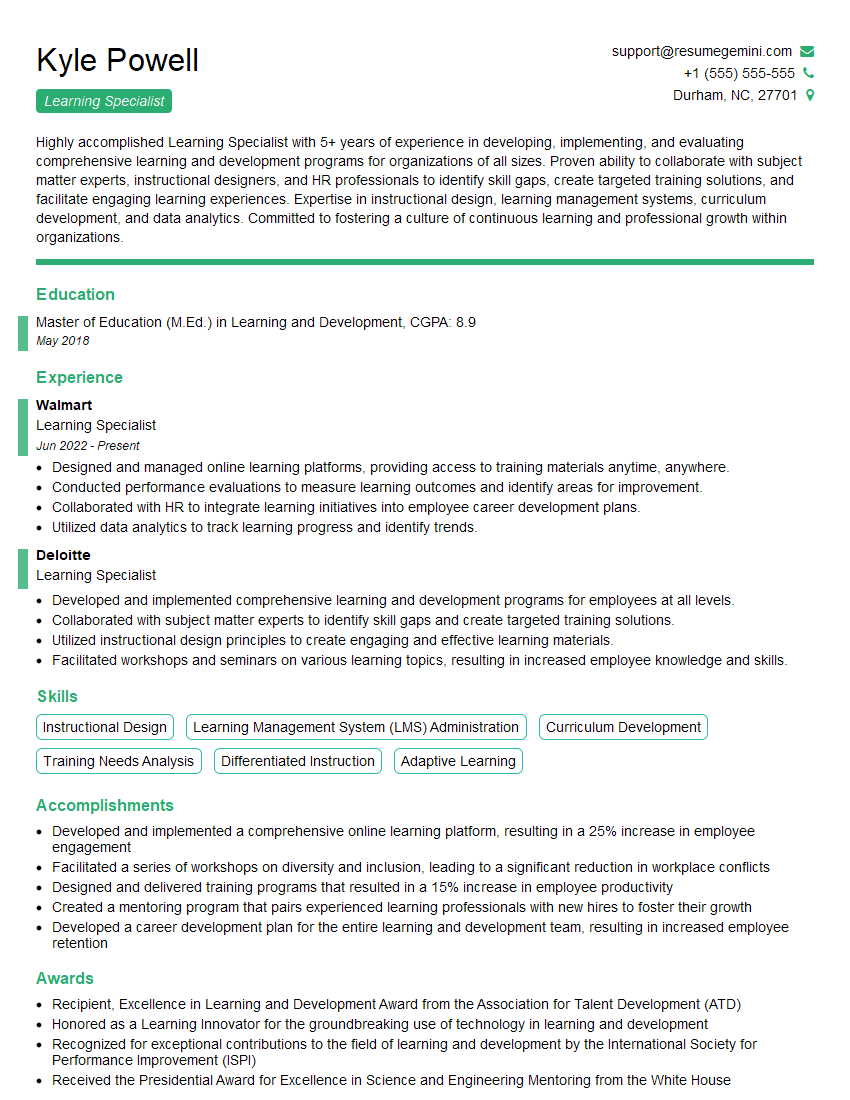
Learning Specialist Resume Sample
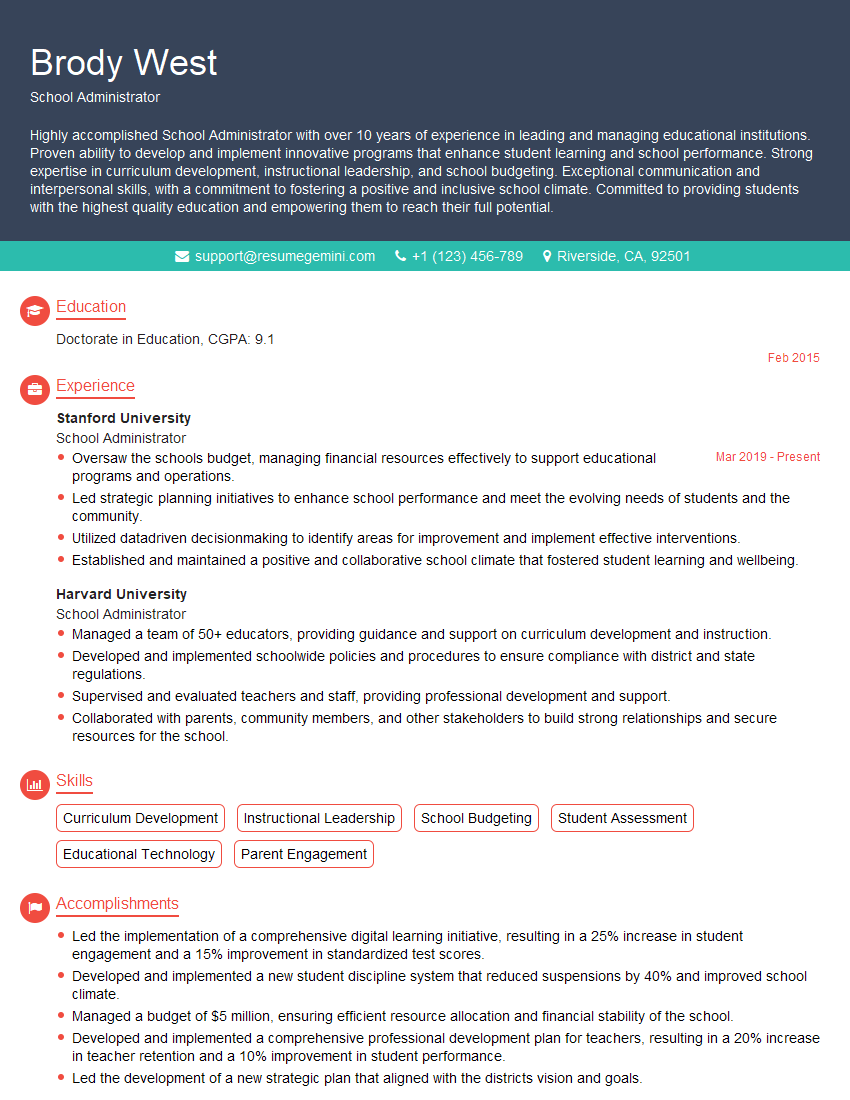
School Administrator Resume Sample
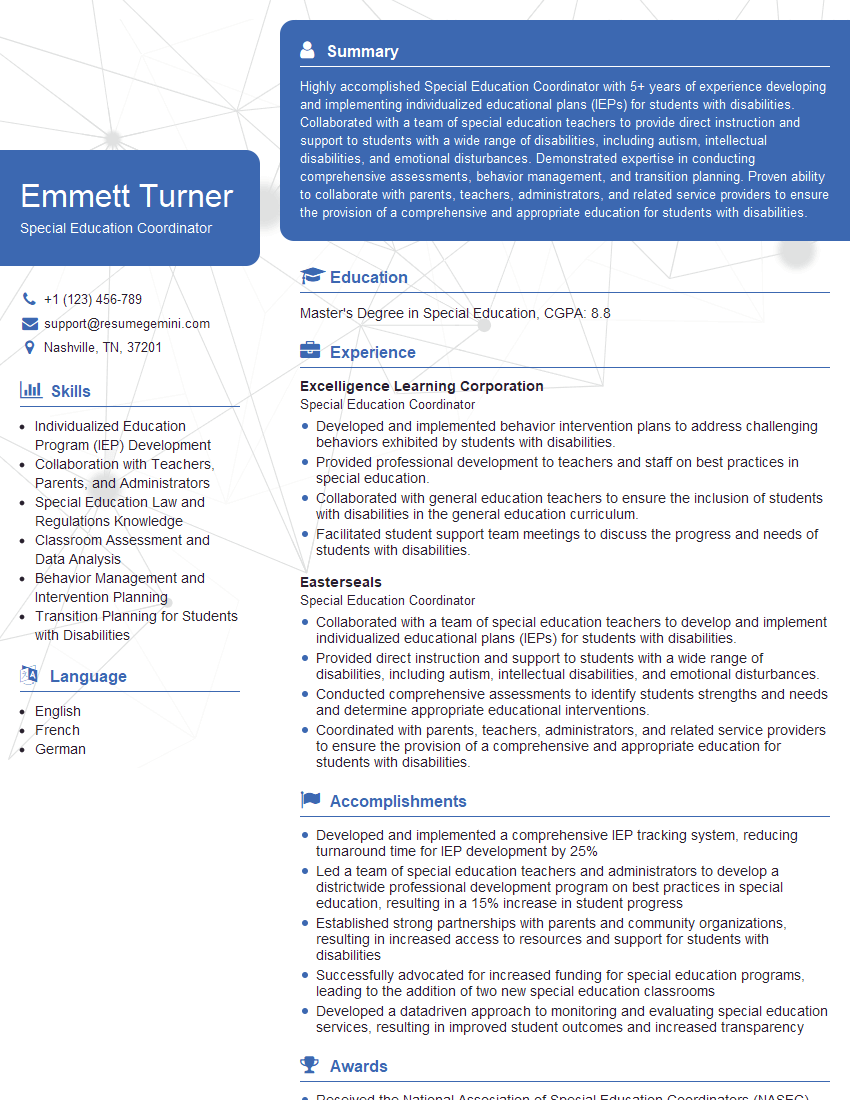
Special Education Coordinator Resume Sample

Curriculum Developer Resume Sample
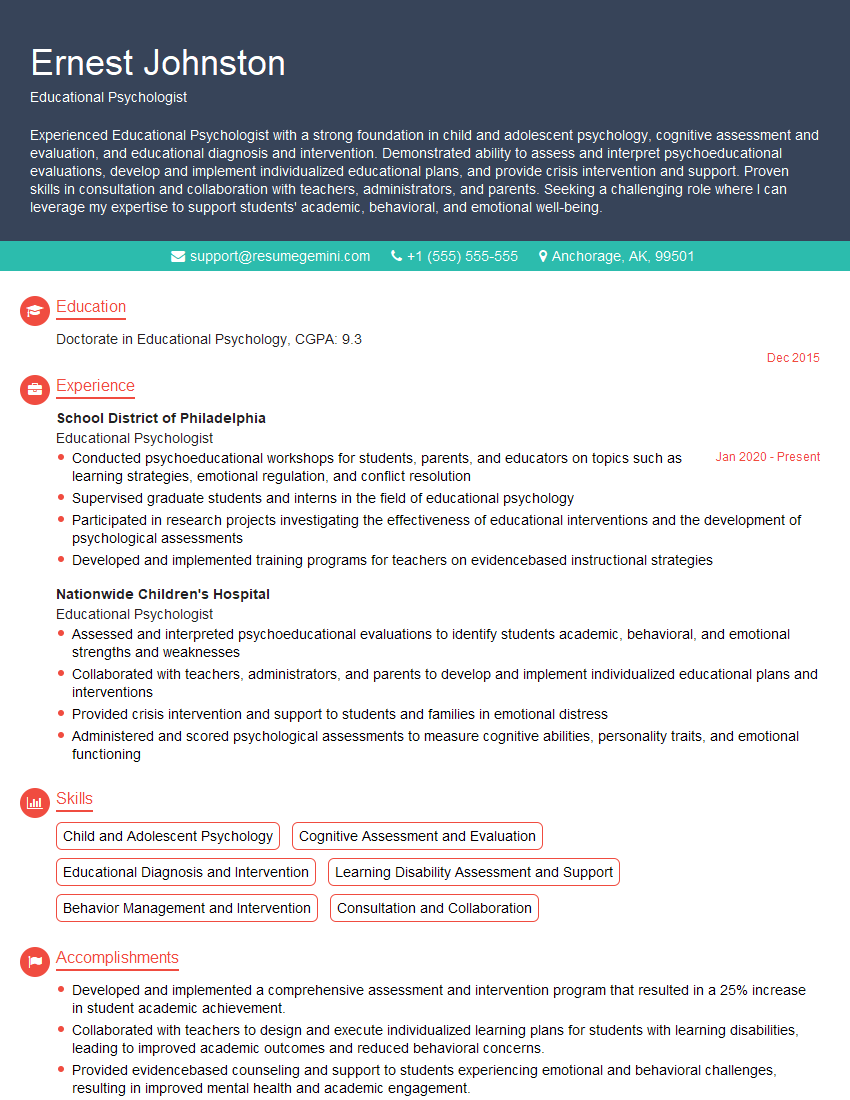
Educational Psychologist Resume Sample
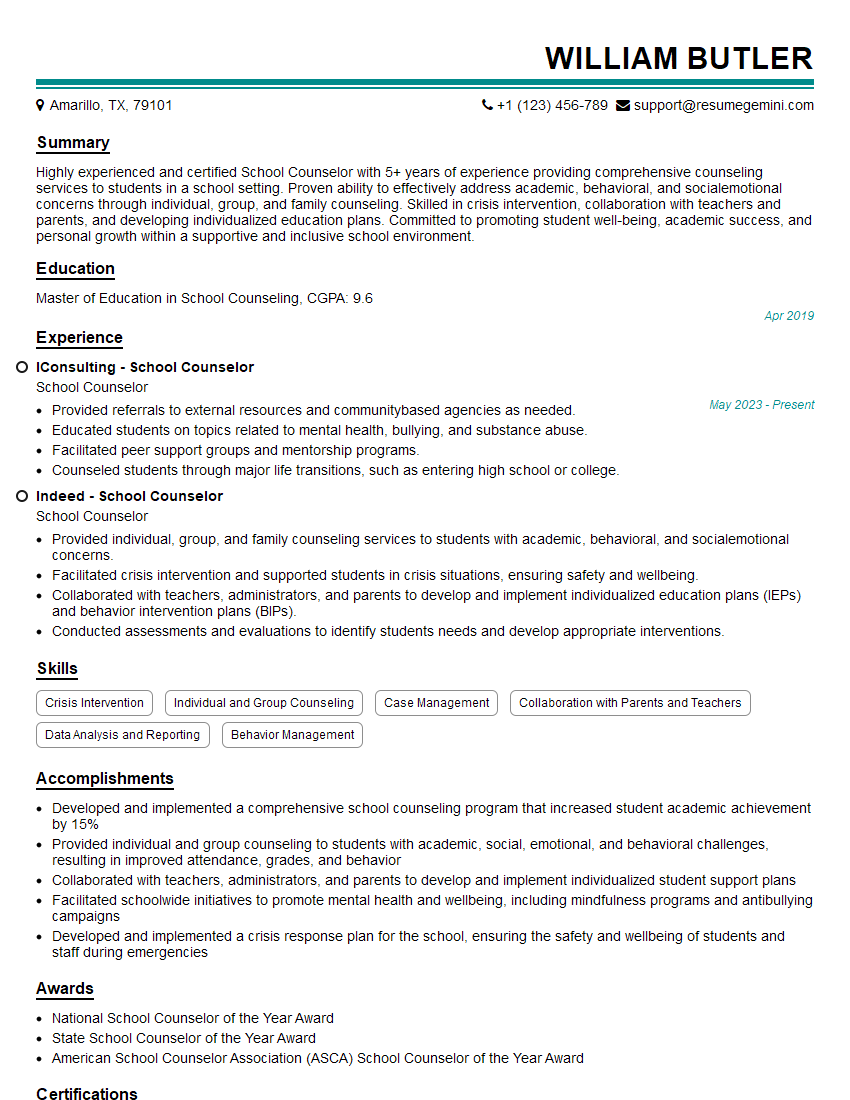
School Counselor Resume Sample

Adult Education Instructor Resume Sample
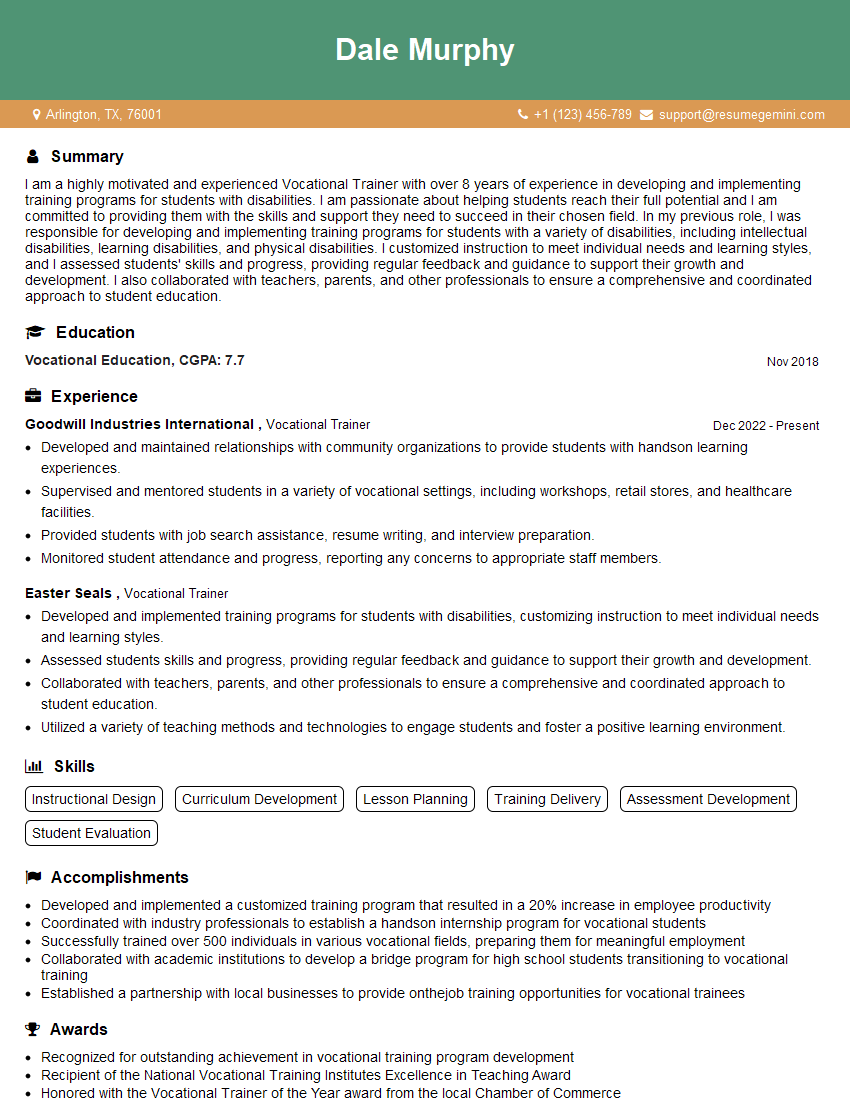
Vocational Trainer Resume Sample
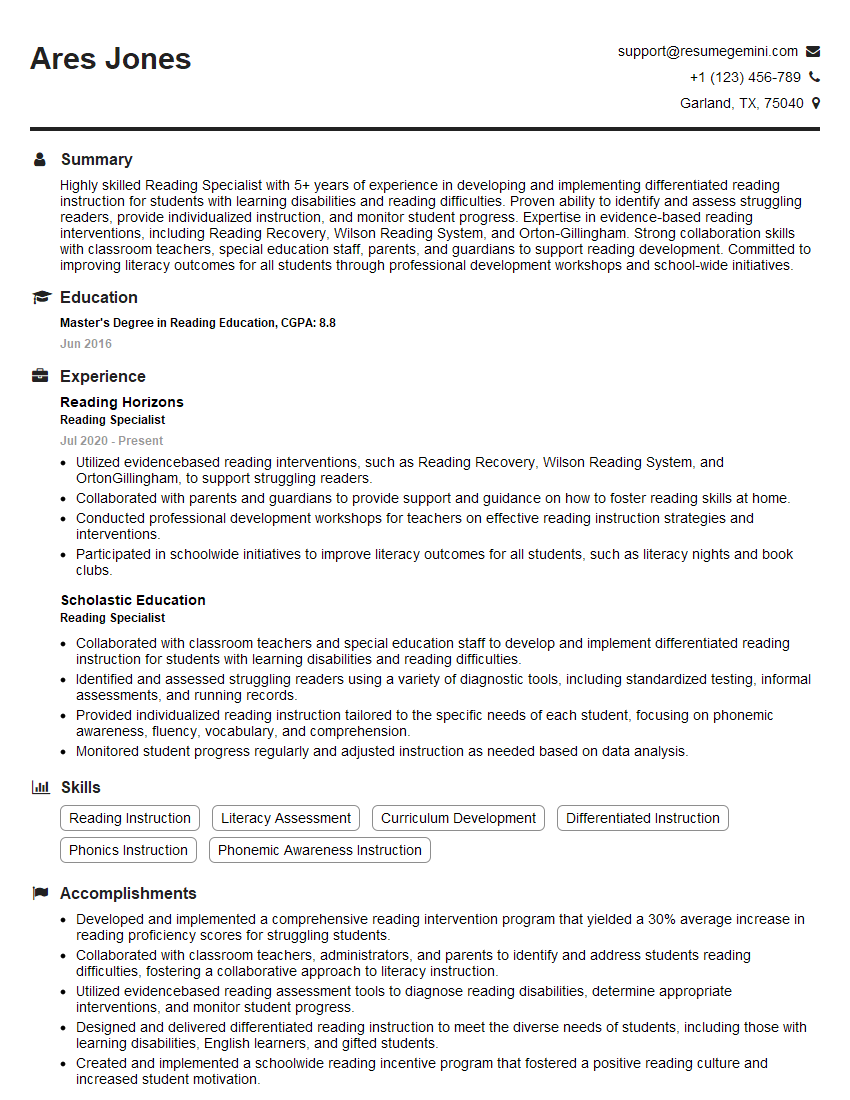
Reading Specialist Resume Sample
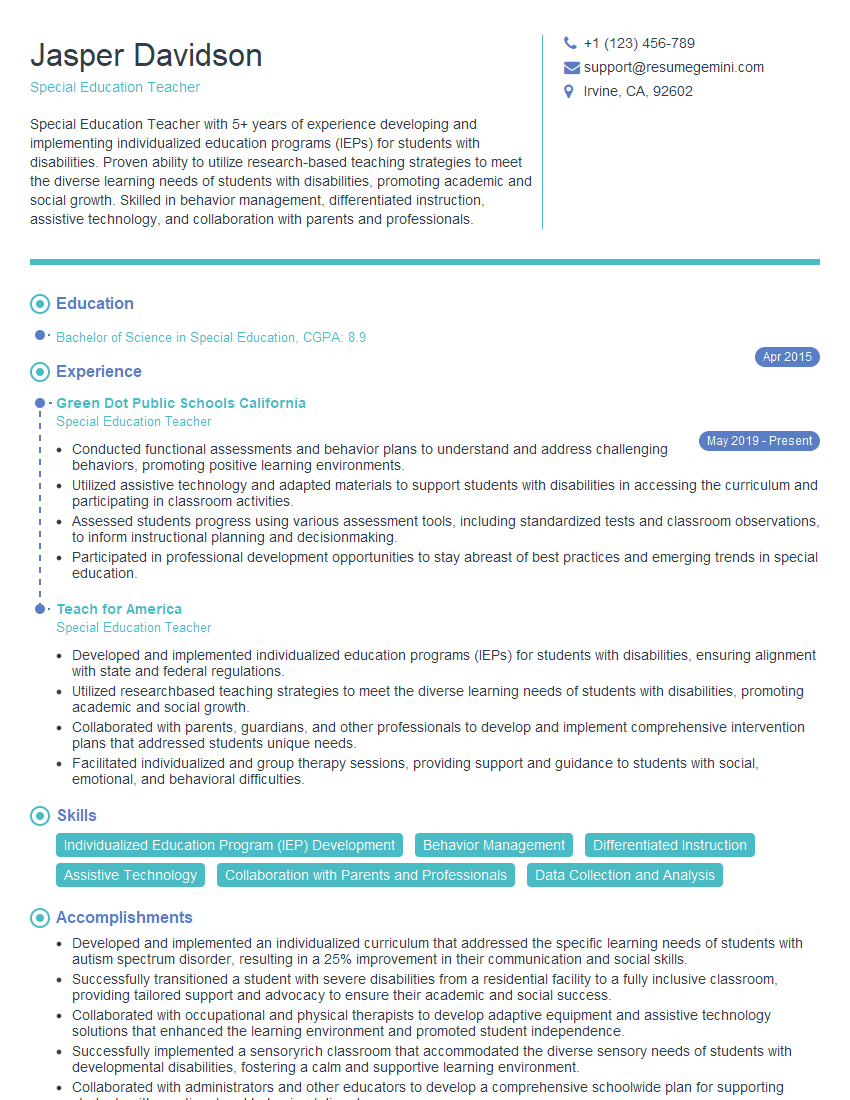
Special Education Teacher Resume Sample

Tutor Resume Sample
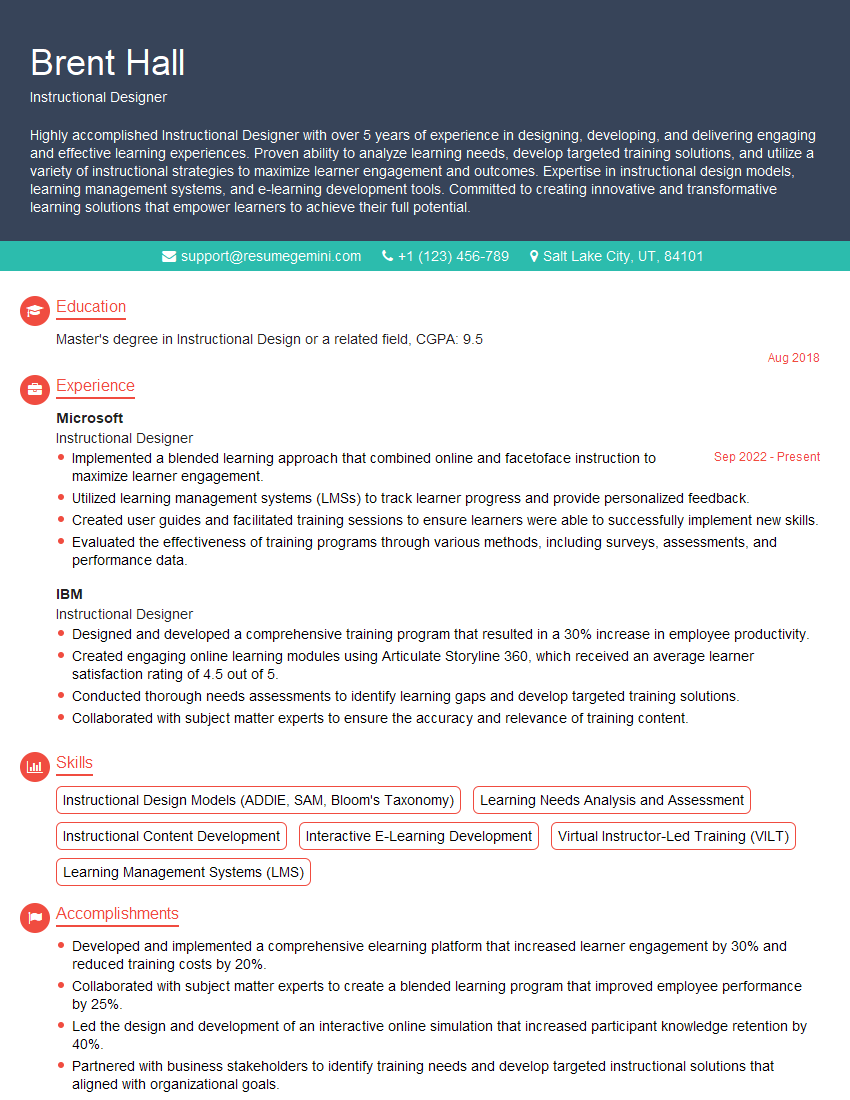
Instructional Designer Resume Sample
Explore more articles
Users Rating of Our Blogs
Share Your Experience
We value your feedback! Please rate our content and share your thoughts (optional).
What Readers Say About Our Blog
Really detailed insights and content, thank you for writing this detailed article.
IT gave me an insight and words to use and be able to think of examples