Are you ready to stand out in your next interview? Understanding and preparing for Experience with Air Cargo Handling interview questions is a game-changer. In this blog, we’ve compiled key questions and expert advice to help you showcase your skills with confidence and precision. Let’s get started on your journey to acing the interview.
Questions Asked in Experience with Air Cargo Handling Interview
Q 1. Describe your experience with different types of air cargo (e.g., hazardous materials, perishable goods).
My experience encompasses a wide range of air cargo, from delicate perishable goods like flowers and pharmaceuticals requiring specific temperature control and handling to hazardous materials (HazMat) such as lithium batteries and flammable liquids, which necessitate strict adherence to IATA regulations and specialized packaging. I’ve also handled general cargo, including electronics, clothing, and automotive parts. Each type demands a unique approach. For example, perishable goods require meticulous monitoring of temperature and humidity throughout the entire journey, often utilizing specialized ULDs (Unit Load Devices) with temperature controls. HazMat handling involves meticulous documentation, specialized packaging, and adherence to strict safety protocols to mitigate risks of accidents and environmental damage.
- Perishable Goods: I’ve managed the air freight of thousands of roses from Ecuador to the US, ensuring optimal temperature and humidity throughout transit to maintain their quality and market value.
- Hazardous Materials: I’ve overseen the safe transport of lithium-ion batteries, following strict guidelines on packaging, labeling, and documentation as per IATA Dangerous Goods Regulations (DGR).
- General Cargo: I’ve coordinated the shipment of large quantities of electronics, implementing strategies for efficient loading, securing, and tracking to minimize damage and delays.
Q 2. Explain your understanding of IATA regulations and their impact on air cargo handling.
IATA (International Air Transport Association) regulations are paramount in air cargo handling. They dictate standards for safety, security, and documentation, ensuring safe and efficient transportation of goods globally. Non-compliance can lead to significant penalties, delays, and even legal repercussions. My understanding covers various aspects including Dangerous Goods Regulations (DGR), which govern the transport of hazardous materials; security regulations concerning screening and handling of cargo to prevent illicit activities; and operational regulations that standardize procedures for handling and documentation. A thorough grasp of IATA regulations is crucial for efficient operations and risk mitigation.
For instance, understanding the specific packaging requirements for lithium batteries under IATA DGR is critical for avoiding shipment rejection or potential incidents. Similarly, proper documentation, including the Air Waybill (AWB), must be meticulously completed according to IATA standards to ensure smooth customs clearance and tracking.
Q 3. How do you prioritize tasks during peak operational periods in air cargo handling?
During peak periods, prioritization is key. I employ a multi-pronged approach combining urgency, importance, and resource availability. We use a combination of tools such as a real-time cargo tracking system and a prioritized task management system. My strategy involves:
- Prioritizing Time-Sensitive Shipments: Flights with tight deadlines, especially those involving perishable goods or time-critical medical supplies, get immediate attention.
- Handling High-Value Cargo: Protecting high-value items, like electronics or jewelry, requires swift and careful handling, taking precedence over less valuable cargo.
- Addressing Congestion Points: Identifying bottlenecks in the handling process (e.g., customs clearance delays) and allocating resources accordingly to minimize delays.
- Effective Communication: Maintaining open communication with all stakeholders – airlines, ground handlers, customs – to anticipate and resolve potential issues proactively.
Think of it like conducting an orchestra; each instrument (task) needs to be played at the right time and with the right intensity to create a harmonious whole (efficient operation).
Q 4. Detail your experience with cargo tracking and tracing systems.
I have extensive experience with various cargo tracking and tracing systems, both internal and those provided by third-party logistics providers. These systems allow for real-time monitoring of shipments, from origin to destination. This includes tracking shipment status (e.g., in transit, at customs, delivered), location, and any potential delays or anomalies. I’m proficient in using these systems to generate reports, identify potential problems, and proactively take corrective action. For example, if a shipment is delayed due to unforeseen circumstances, the tracking system allows us to promptly notify the shipper and receiver, provide updates, and implement remedial measures.
In a recent instance, we used a tracking system to locate a delayed shipment of pharmaceuticals, discovering it was held up at customs due to missing documentation. By quickly addressing the issue and providing the necessary documents, we were able to expedite its release and ensure it reached its destination on time.
Q 5. What is your experience with ULD (Unit Load Device) management and handling?
ULD (Unit Load Device) management is critical for efficient and safe air cargo handling. ULDs, such as pallets and containers, standardize cargo loading and unloading, improving efficiency and reducing damage. My experience includes overseeing the loading, unloading, and maintenance of various ULD types, ensuring their proper condition and securement of cargo within. This includes regular inspections for damage, proper labeling, and efficient allocation based on aircraft type and cargo dimensions. We also utilize ULD tracking systems to ensure efficient utilization and prevent loss or damage.
For example, I’ve implemented a system that optimizes ULD usage by analyzing historical data and forecasting demand, minimizing the number of empty ULDs transported and maximizing space utilization in aircraft cargo bays.
Q 6. How familiar are you with different types of aircraft and their cargo capacity limitations?
I’m familiar with various aircraft types, from narrow-body to wide-body aircraft, and understand their cargo capacity limitations, including dimensions and weight restrictions. This knowledge is crucial for efficient loading planning and maximizing the utilization of available cargo space. Each aircraft type has its unique characteristics – the Boeing 747 has a much larger cargo capacity than a Boeing 737, for example – and understanding these differences is vital for optimizing cargo operations and avoiding costly mistakes. We use specialized software to determine the optimal loading plan for each aircraft, ensuring maximum payload while respecting weight and balance limitations.
In practice, this means I can effectively plan the loading of various sized and weighted cargo items to optimize space utilization on any aircraft type, minimizing the number of flights needed and consequently reducing costs.
Q 7. Explain your experience in managing cargo documentation, including air waybills and customs declarations.
Managing cargo documentation is a critical aspect of air cargo handling. This involves meticulous preparation and handling of Air Waybills (AWBs) which act as the contract of carriage, and customs declarations which are essential for compliance and timely clearance. Accuracy is paramount to prevent delays and penalties. My experience includes preparing, verifying, and processing these documents according to IATA standards and local regulations. This often involves working closely with freight forwarders, airlines, and customs authorities to ensure smooth processing and compliance.
For example, I’ve developed procedures for automated data entry and verification of AWBs to reduce errors and ensure consistency, significantly improving processing times. Moreover, I have experience navigating complexities around specific import/export requirements, avoiding delays due to incorrectly filled out customs forms.
Q 8. Describe your experience with handling delayed or damaged cargo.
Handling delayed or damaged cargo requires a systematic approach prioritizing timely communication, accurate documentation, and adherence to established procedures. My experience involves immediately notifying all stakeholders – the shipper, consignee, and relevant airlines – about the delay or damage. This ensures transparency and allows for proactive problem-solving.
For damaged cargo, I meticulously document the extent of the damage using photographs and detailed descriptions. This documentation forms the basis of any insurance claims or potential disputes. Depending on the nature of the damage and the shipper’s instructions, we might attempt repairs, repackaging, or initiate a return process. I’ve managed situations involving everything from minor dents on packaging to complete loss of goods, employing different strategies based on the specifics of each case. For example, one time a shipment of temperature-sensitive pharmaceuticals experienced a significant delay due to unforeseen weather conditions. We immediately activated our contingency plan, including reefer tracking and securing alternative transport to minimize further temperature fluctuations and potential spoilage. This involved intense collaboration with ground transportation and the airline to ensure the shipment reached its destination swiftly and with minimal impact on product integrity.
Q 9. How would you address a discrepancy between the cargo manifest and the actual cargo received?
Discrepancies between the cargo manifest and actual cargo received necessitate immediate investigation and reconciliation. My approach involves a detailed physical count and verification of all items against the manifest. Any discrepancies are documented meticulously, including item numbers, quantities, and descriptions. This process often requires careful review of the handling history, checking for possible errors during loading, unloading, or transit.
If the discrepancy involves missing items, I immediately launch an internal investigation, potentially checking security footage and reviewing handling logs to determine where the error occurred. We then communicate the discrepancy to the shipper and consignee, providing updates throughout the investigation and resolution process. A common example would be a missing pallet; we would review manifests, CCTV footage to trace its whereabouts. We may need to reach out to the airline’s ground handling team at the origin or transit point if the discrepancy wasn’t detected earlier. For example, we once discovered a discrepancy involving mislabeled containers. By carefully cross-referencing information, we located the correct container in a nearby storage area, preventing a costly delay and resolving the issue efficiently.
Q 10. What safety procedures are you familiar with in air cargo handling, including hazard recognition?
Safety is paramount in air cargo handling. My experience encompasses a wide range of safety procedures, including hazard recognition, proper lifting techniques, and the safe operation of handling equipment. We follow strict regulations concerning dangerous goods (DG), ensuring proper classification, segregation, and packaging. This involves understanding the different hazard classes (explosives, flammable liquids, etc.) and their associated handling requirements. Furthermore, we utilize personal protective equipment (PPE) such as safety shoes, gloves, and high-visibility vests, depending on the task.
Hazard recognition includes identifying potential risks such as unstable stacks of cargo, damaged containers, and potential for slips, trips, and falls. Regular safety training is crucial to stay updated on best practices and new regulations. We conduct daily inspections of equipment, ensuring proper maintenance and functionality. For example, prior to operating a forklift, we perform a thorough pre-operational check, including verifying fluid levels, horn functionality, and brake effectiveness. Ignoring safety protocols could lead to accidents, injuries, and significant delays, thereby highlighting the critical nature of these measures. We also have detailed emergency response plans in place in case of incidents or accidents involving hazardous materials.
Q 11. Explain your experience with inventory management in an air cargo warehouse.
Efficient inventory management in an air cargo warehouse relies on accurate tracking and control of goods. My experience includes implementing and managing warehouse management systems (WMS) to track cargo throughout its journey, from receiving to dispatch. This involves scanning barcodes or RFID tags to monitor location, status, and quantity of goods. Regular cycle counting and stock verification help identify any discrepancies or losses.
We use first-in, first-out (FIFO) principles to manage perishable goods. This ensures that older items are shipped first, preventing spoilage and minimizing waste. Data analysis helps to optimize storage space and identify areas for improvement. For example, using inventory data, we identified slow-moving items and developed strategies to reduce storage costs by optimizing storage space. We also implemented a system for real-time inventory updates, improving efficiency and reducing delays.
Q 12. Describe your experience using specific cargo handling equipment (e.g., forklifts, belt loaders).
My experience encompasses the safe and efficient operation of various cargo handling equipment, including forklifts, belt loaders, and pallet jacks. I’m certified in the operation of forklifts, having completed the required safety training and possessing the necessary license. This includes understanding weight limits, load stability, and safe operating procedures.
Belt loaders are used for efficient loading and unloading of cargo onto and off aircraft. Pallet jacks are used for moving pallets around the warehouse. Regular maintenance checks are performed on all equipment to ensure safety and operational efficiency. For example, before using a forklift, I always conduct a pre-operation check, verifying its functionality and safety features are in optimal working order. Improper use could lead to serious accidents; thus, the importance of regular maintenance and adherence to safety protocols is imperative.
Q 13. How do you ensure compliance with security regulations in air cargo handling?
Ensuring compliance with security regulations is crucial in air cargo handling. We strictly adhere to regulations such as the International Civil Aviation Organization (ICAO) standards and national security directives. This involves thorough screening of cargo and personnel, implementing access control measures, and maintaining detailed records.
All cargo undergoes security checks to prevent the transport of prohibited or dangerous items. We utilize advanced screening technologies such as X-ray machines and explosive detection systems. Personnel undergo background checks and regular security training. Maintaining detailed records of all cargo movements, personnel access, and security incidents ensures accountability and facilitates investigations in case of any security breaches. For instance, we adhere to strict protocols when handling high-value goods, often involving additional security measures, such as specialized packaging and tracking systems.
Q 14. Explain your experience with customs procedures and regulations related to air cargo.
My experience involves handling customs procedures and regulations related to air cargo, which vary significantly between countries. I am familiar with the documentation required for customs clearance, including commercial invoices, packing lists, and certificates of origin. I know how to classify goods according to the Harmonized System (HS) code to determine applicable tariffs and duties.
Working with customs brokers is often essential for facilitating efficient clearance. I understand the importance of accurate documentation and timely submission to avoid delays and penalties. Experience has taught me the importance of understanding specific requirements for different types of goods, such as perishable goods, pharmaceuticals, and high-value items. Dealing with customs regulations requires attention to detail and a thorough understanding of relevant laws to ensure smooth and efficient processing. I’ve successfully navigated complex customs procedures for various types of goods, ensuring timely delivery and compliance with all relevant regulations. For example, a shipment of electronics to a particular country required specific documentation for electrical safety compliance before customs would release the goods. My knowledge of these specific regulations ensured a swift and hassle-free customs clearance.
Q 15. How do you handle communication with airlines, ground handlers, and other stakeholders in air cargo operations?
Effective communication is the bedrock of successful air cargo operations. I leverage a multi-faceted approach, employing various communication channels tailored to the specific stakeholder. For instance, with airlines, I primarily utilize standardized electronic data interchange (EDI) systems like IATA’s CargoIMP for seamless shipment tracking, booking confirmations, and status updates. This ensures accuracy and minimizes miscommunication. Direct phone calls and email are reserved for urgent issues or clarification needed outside of the EDI system.
Ground handlers receive instructions and updates through pre-defined workflows using ground handling systems (GHS) and direct communication via radio frequency (RF) communication when needed for real-time coordination, especially during critical phases like loading and unloading. This ensures real-time problem solving and prevents delays. Regular meetings and collaborative platforms are employed for more strategic communication with all stakeholders, allowing for proactive planning and conflict resolution.
Finally, transparent and consistent communication with customers is paramount. I ensure regular updates about their shipments, proactively addressing potential delays and keeping them informed every step of the way. This builds trust and manages expectations. The chosen communication method is always appropriate to the urgency of the situation and the customer’s preference.
Career Expert Tips:
- Ace those interviews! Prepare effectively by reviewing the Top 50 Most Common Interview Questions on ResumeGemini.
- Navigate your job search with confidence! Explore a wide range of Career Tips on ResumeGemini. Learn about common challenges and recommendations to overcome them.
- Craft the perfect resume! Master the Art of Resume Writing with ResumeGemini’s guide. Showcase your unique qualifications and achievements effectively.
- Don’t miss out on holiday savings! Build your dream resume with ResumeGemini’s ATS optimized templates.
Q 16. Describe your experience with performance monitoring and reporting in air cargo operations.
Performance monitoring and reporting in air cargo is crucial for identifying areas for improvement and maintaining efficiency. I utilize Key Performance Indicators (KPIs) to track performance across various aspects of the operation. These include on-time performance (OTP), which measures the percentage of flights departing and arriving on schedule; handling times, which track the time taken for various stages like unloading, processing, and loading; damage rates, measuring the percentage of shipments damaged during transit; and customer satisfaction scores, gauging feedback and improving services.
I use specialized software and data analytics tools to collect and analyze this data, generating comprehensive reports that highlight trends, identify bottlenecks, and offer actionable insights. For instance, consistently low OTP might suggest issues with ground handling procedures, prompting a review and improvement strategy. Similarly, high damage rates might indicate a need for better cargo securing techniques or improved handling practices. Regular reporting, both internal and to clients, is vital to maintain transparency and accountability. This transparency builds confidence and ensures the reliability of our operations.
Q 17. What is your understanding of the different modes of transport involved in air cargo logistics?
Air cargo logistics involves a complex interplay of various modes of transport, extending beyond just air freight. The journey often begins with road transport, carrying the goods from the origin to the airport. This is crucial for timely delivery to the airport and ensuring connectivity. Once at the airport, the cargo is handled using specialized ground support equipment. Air transport itself is the core of the process, where shipments are carried in the belly of passenger planes or dedicated freighters. Finally, after arrival, the goods are often transferred via road transport to their final destination. In some cases, rail transport or even sea transport might play a supporting role, depending on the origin and destination points. Effective coordination between these various modes is essential for seamless and efficient delivery.
For example, a shipment from a manufacturer in rural areas might involve a trucking company to deliver it to the nearest airport. An airline will then transport it internationally, potentially involving another road transport company at the destination airport for final delivery to the consignee. This multimodal approach is crucial for delivering goods efficiently, especially for shipments with complex routing requirements.
Q 18. How do you ensure timely delivery of air cargo while maintaining efficiency?
Ensuring timely and efficient air cargo delivery involves a proactive and meticulous approach. This starts with accurate and detailed planning. This includes precise scheduling, optimized routing, and efficient resource allocation, including personnel and equipment. Real-time tracking and monitoring of shipments using technology like GPS and RFID tags are essential for identifying potential delays and proactively mitigating them. For example, weather delays can be mitigated with alternate flight options or pre-planned storage solutions.
Close collaboration with airlines and ground handlers is crucial to maintain smooth operations. Clear communication and proactive problem-solving help address any unexpected issues immediately. Furthermore, implementing standardized operating procedures (SOPs) reduces variability and enhances predictability, ensuring consistent efficiency and minimizing potential delays. This approach prioritizes proactive measures to prevent delays rather than only reacting to them. Continuous improvement processes, including regular reviews of performance data and feedback analysis, further fine-tune the system’s efficiency.
Q 19. Explain your experience with problem-solving in challenging air cargo situations.
Air cargo operations often face unforeseen challenges. I approach problem-solving using a structured approach. For instance, during a recent incident involving a flight cancellation due to severe weather, I immediately activated our contingency plan, rerouting the cargo via an alternate route involving road and rail transport. This ensured timely delivery despite the unexpected disruption. We communicated transparently with all stakeholders, updating them on the changes and managing their expectations.
Another situation involved a shipment of temperature-sensitive pharmaceuticals facing delays. We quickly identified the cause – an equipment malfunction at the ground handling facility. We worked collaboratively with the ground handler, coordinating temporary equipment and prioritizing the shipment to minimize temperature exposure and maintain the product’s integrity. Root cause analysis was conducted to identify weaknesses in the system and implement improvements to prevent future occurrences. This collaborative problem-solving highlights the importance of teamwork and quick decision-making in handling unexpected events.
Q 20. What methods do you use to improve efficiency and reduce costs in air cargo handling?
Improving efficiency and reducing costs in air cargo handling requires a multi-pronged approach. Optimizing processes through automation is critical. This includes implementing automated cargo tracking systems and utilizing automated guided vehicles (AGVs) for ground handling, reducing manual handling and labor costs. Streamlining documentation procedures through digitalization, such as e-AWBs (electronic Air Waybills), minimizes paperwork and improves processing speed.
Negotiating favorable contracts with airlines and ground handlers ensures cost-effectiveness while maintaining service quality. Continuous monitoring of KPIs and identifying areas for improvement is essential for ongoing cost optimization. For example, optimizing routes based on fuel costs and transit times can significantly reduce expenditure. Investing in employee training and development promotes efficiency and improves problem-solving capabilities, ultimately leading to better performance and cost savings. Data analysis plays a significant role in determining the best areas to focus on for cost reduction while also improving efficiency.
Q 21. How do you handle customer complaints regarding air cargo delivery?
Handling customer complaints is a crucial aspect of maintaining a positive reputation. I prioritize a prompt and empathetic response. I begin by actively listening to the customer’s concerns and validating their feelings. I gather all the relevant information about the shipment and thoroughly investigate the issue, identifying the root cause of the problem.
Transparency is key. I keep the customer informed about the investigation’s progress and provide regular updates. Depending on the nature of the complaint, I offer appropriate solutions, which might include compensation, expedited delivery, or a refund. A formal record of the complaint, the investigation, and the resolution is maintained for future reference and continuous improvement. Customer feedback is invaluable for identifying areas where processes can be improved to prevent similar complaints in the future. Maintaining a customer-centric approach and focusing on resolution builds trust and loyalty.
Q 22. Describe your understanding of international trade regulations and their impact on air cargo.
International trade regulations significantly impact air cargo operations. They dictate what can be shipped, how it’s documented, and the procedures for customs clearance. Think of it like this: every country has its own set of rules for importing and exporting goods, much like different states might have varying driving regulations. These regulations are crucial for preventing illegal activities like smuggling and ensuring fair trade practices.
- Customs Regulations: Each country has its own customs authority, and you must comply with their specific regulations for import/export declarations, tariffs, and inspections. Failure to do so can result in significant delays, fines, or even seizure of cargo.
- Sanctions and Embargoes: Certain countries or goods may be subject to international sanctions or embargoes, restricting their transport. Air cargo handlers must be acutely aware of these restrictions to avoid legal complications.
- Safety Regulations: International organizations like the International Civil Aviation Organization (ICAO) set standards for the safe transportation of dangerous goods (DG). These regulations govern packaging, labeling, and documentation requirements for hazardous materials. Proper handling is paramount to prevent accidents.
- Trade Agreements: Agreements like the WTO’s agreements on trade facilitation aim to simplify customs procedures and reduce barriers to international trade. These impact air cargo by streamlining the process, making it faster and more efficient.
For example, a shipment of textiles from Bangladesh to the US must comply with both Bangladeshi export regulations and US import regulations, including tariffs, labeling, and potentially safety testing. Ignoring these regulations can lead to the shipment being rejected at the border or significant financial penalties.
Q 23. What strategies do you use to prevent cargo theft or loss during handling?
Preventing cargo theft or loss requires a multi-layered approach combining robust security measures, stringent procedures, and technology. Think of it like protecting a high-value item – you wouldn’t just leave it lying around!
- Secure Facilities: Warehouses and terminals need secure fencing, access control systems (e.g., keycard access, CCTV surveillance), and regular security patrols.
- Cargo Tracking: Real-time tracking systems using RFID tags or GPS devices provide visibility throughout the supply chain. This allows us to monitor the location of the shipment at any time and quickly identify any deviation from the expected route.
- Proper Documentation: Meticulous record-keeping, including manifests, waybills, and customs declarations, ensures accountability throughout the handling process. Any discrepancies are immediately flagged.
- Background Checks and Staff Training: Thorough background checks for all personnel involved, coupled with comprehensive training in security protocols, minimize insider threats.
- Insurance and Bonding: Cargo insurance protects against loss or damage, while bonding provides financial protection against employee theft or dishonesty.
- Collaboration: Close collaboration with airlines, ground handlers, and security agencies is crucial to share information and coordinate security efforts.
For instance, in one case I managed, we were able to recover a stolen shipment by using real-time GPS tracking to pinpoint its location and alert authorities. The quick response minimized losses and prevented further theft.
Q 24. What software or systems are you familiar with using in air cargo operations?
My experience encompasses a variety of software and systems commonly used in air cargo operations. These tools are essential for efficient management and tracking.
- Cargo Management Systems (CMS): These systems manage the entire lifecycle of a shipment, from booking to delivery, including tracking, documentation, and invoicing. Examples include Ramco Aviation, IBS Software, and CHAMP Cargosystems.
- Ground Handling Systems (GHS): These systems optimize ground handling processes, including aircraft loading, unloading, and baggage handling. They are often integrated with CMS.
- Warehouse Management Systems (WMS): These manage inventory within warehouses, tracking location, status, and movement of cargo. Many modern WMS integrate with CMS for seamless tracking.
- Transportation Management Systems (TMS): TMS helps optimize transportation routes and schedules, reducing costs and improving efficiency. It’s particularly crucial for managing multiple carriers and routes.
- Customs Management Systems: These facilitate the electronic submission of customs declarations, speeding up clearance times and reducing paperwork.
I am proficient in using these systems to efficiently manage cargo, track shipments, and generate reports. For example, I utilized a particular CMS to identify a bottleneck in our customs clearance process, which led to implementing a new procedure that improved turnaround time by 20%.
Q 25. How do you stay updated on the latest regulations and best practices in air cargo handling?
Staying updated is crucial in the dynamic air cargo industry. Regulations change frequently, and best practices evolve to accommodate technological advances and security concerns.
- Industry Associations: Active membership in organizations like the International Air Transport Association (IATA) provides access to updates, training, and networking opportunities.
- Regulatory Websites: Regularly checking websites of relevant aviation authorities (e.g., FAA, EASA) and customs agencies is essential for staying informed about regulatory changes.
- Industry Publications and Conferences: Reading trade publications and attending industry conferences allows me to stay current with emerging trends and best practices.
- Online Courses and Webinars: Various online platforms offer training courses and webinars on air cargo regulations, security, and best practices.
- Networking: Connecting with colleagues and professionals in the industry facilitates the exchange of knowledge and insights.
For instance, I recently completed an IATA-certified Dangerous Goods course to maintain my proficiency in handling hazardous materials, ensuring we always comply with the latest regulations.
Q 26. Describe your experience with staff training and supervision in air cargo operations.
Staff training and supervision are critical to ensure safe and efficient air cargo handling. A well-trained team is the backbone of a successful operation. I’ve developed and implemented training programs focusing on both technical skills and safety awareness.
- On-the-Job Training: Providing hands-on training under the guidance of experienced staff helps new employees learn practical skills and safety procedures.
- Formal Training Programs: Developing structured training programs covering topics like cargo handling techniques, safety regulations, and documentation procedures ensures consistency and compliance.
- Regular Audits and Assessments: Conducting regular audits and assessments evaluates staff performance and identifies areas for improvement.
- Safety Training: Thorough safety training emphasizes hazard identification, risk assessment, and emergency response procedures.
- Security Training: Training focuses on security protocols, cargo theft prevention, and suspicious activity reporting.
- Supervisory Roles: Clear supervisory roles and responsibilities ensure effective oversight of operations and provide support to staff.
In a previous role, I implemented a new training program that reduced accidents by 15% within the first year, demonstrating the effectiveness of targeted and continuous training.
Q 27. Explain your experience with capacity planning and resource allocation in air cargo handling.
Capacity planning and resource allocation are essential for efficient air cargo handling. This involves forecasting demand, optimizing resources, and managing costs.
- Demand Forecasting: Analyzing historical data, market trends, and seasonal fluctuations to accurately predict future demand for air cargo services.
- Resource Allocation: Matching available resources (personnel, equipment, space) with anticipated demand to ensure smooth operations.
- Warehouse Space Management: Efficiently utilizing warehouse space to minimize storage costs and maximize throughput.
- Equipment Optimization: Selecting appropriate equipment (forklifts, conveyors, etc.) to handle different cargo types and optimize processing time.
- Staff Scheduling: Developing effective staff scheduling to meet fluctuating demand while controlling labor costs.
- Performance Monitoring: Continuously monitoring key performance indicators (KPIs) like throughput, processing time, and error rates to identify areas for improvement.
In one instance, I successfully implemented a new warehouse layout that reduced processing time by 10% and improved space utilization by 15%, leading to significant cost savings.
Q 28. How would you improve the efficiency of a current air cargo handling process?
Improving the efficiency of an air cargo handling process requires a systematic approach focusing on identifying bottlenecks, optimizing workflows, and leveraging technology.
- Process Mapping: Creating a detailed map of the current process to pinpoint bottlenecks and inefficiencies.
- Automation: Automating repetitive tasks such as documentation, data entry, and tracking using software and systems can reduce errors and improve speed.
- Lean Principles: Applying Lean principles to eliminate waste and streamline workflows can significantly improve efficiency.
- Technology Integration: Integrating different systems (CMS, WMS, TMS) to create a seamless flow of information and reduce manual data entry.
- Data Analytics: Using data analytics to identify trends, optimize resource allocation, and make informed decisions.
- Continuous Improvement: Establishing a culture of continuous improvement through regular reviews, feedback mechanisms, and staff training.
For example, I once identified a significant delay in the customs clearance process. By implementing an automated customs declaration system and improved communication with customs officials, we reduced clearance time by 30%, significantly enhancing efficiency.
Key Topics to Learn for Your Air Cargo Handling Interview
- Air Cargo Regulations and Compliance: Understanding IATA regulations, customs procedures, and security protocols. Practical application: Describe your experience ensuring shipments comply with all relevant regulations and your role in preventing delays due to non-compliance.
- Cargo Handling Procedures: Familiarize yourself with different handling techniques for various cargo types (perishables, hazardous materials, oversized cargo). Practical application: Detail your experience in safe and efficient loading, unloading, and sorting processes, highlighting any specialized handling you’ve performed.
- Warehouse Management and Inventory Control: Learn about inventory tracking systems, warehouse layout optimization, and efficient storage techniques. Practical application: Discuss your experience managing inventory, optimizing space, and minimizing damage or loss within a warehouse environment.
- Logistics and Supply Chain Management: Understand the entire air cargo journey from origin to destination, including documentation, tracking, and problem-solving. Practical application: Describe your experience coordinating with different stakeholders (e.g., airlines, ground handlers, customs brokers) to ensure timely and efficient cargo delivery.
- Safety and Security Procedures: Deep understanding of safety protocols, hazard identification, and risk mitigation strategies within air cargo operations. Practical application: Explain your experience implementing and adhering to safety procedures, including handling hazardous materials and preventing accidents.
- Technology in Air Cargo: Familiarize yourself with common technologies used in air cargo, such as tracking systems, warehouse management systems (WMS), and cargo information systems. Practical application: Describe your experience using these technologies to improve efficiency and accuracy in your work.
Next Steps
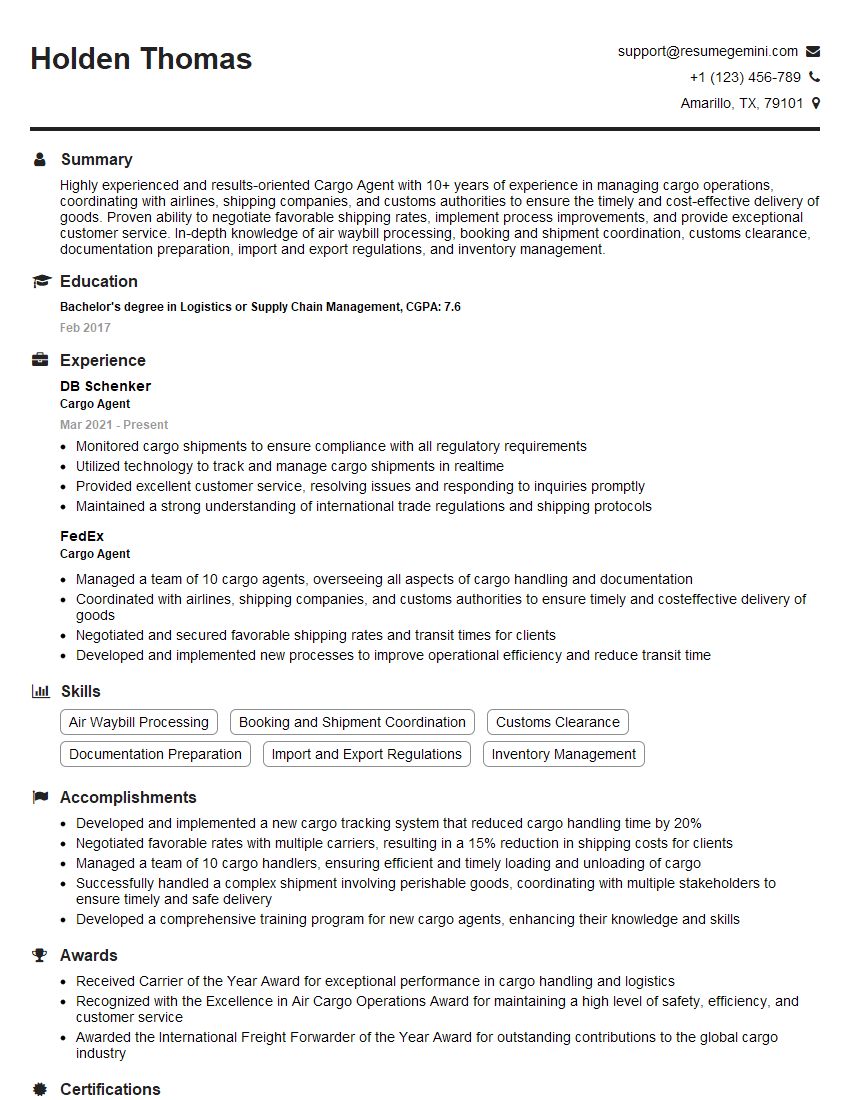
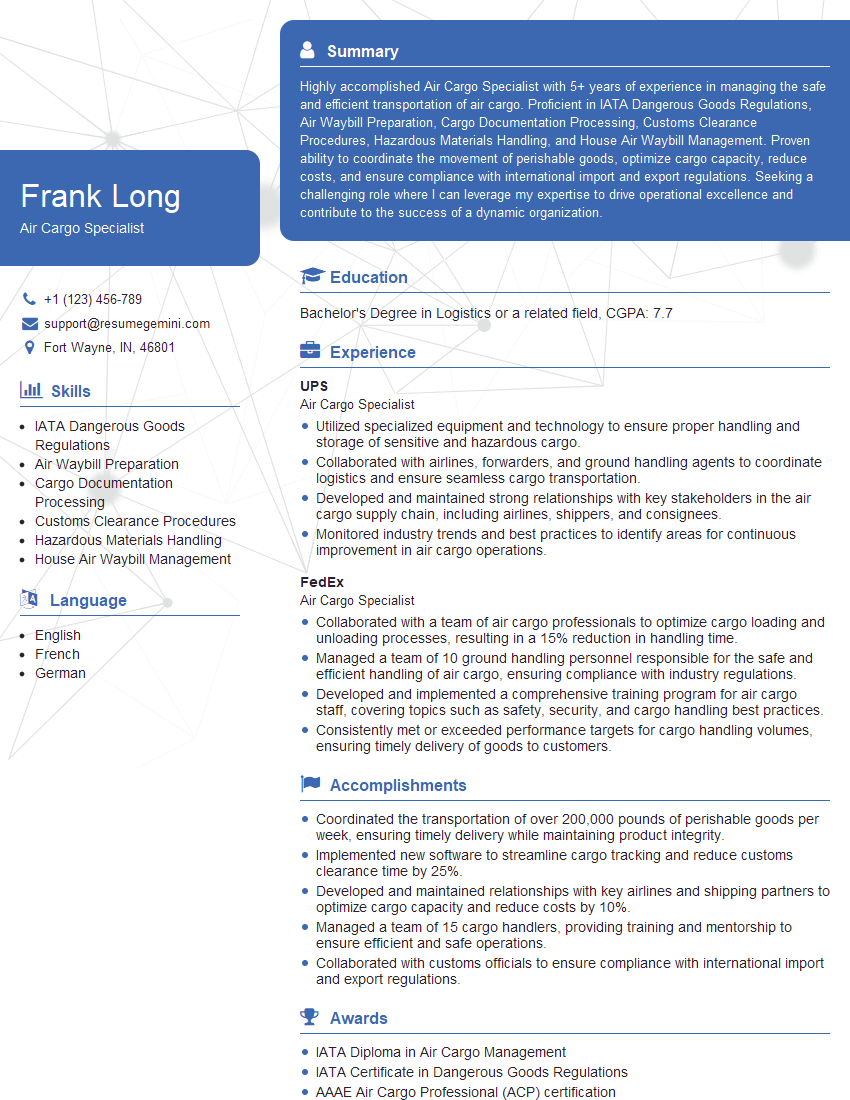
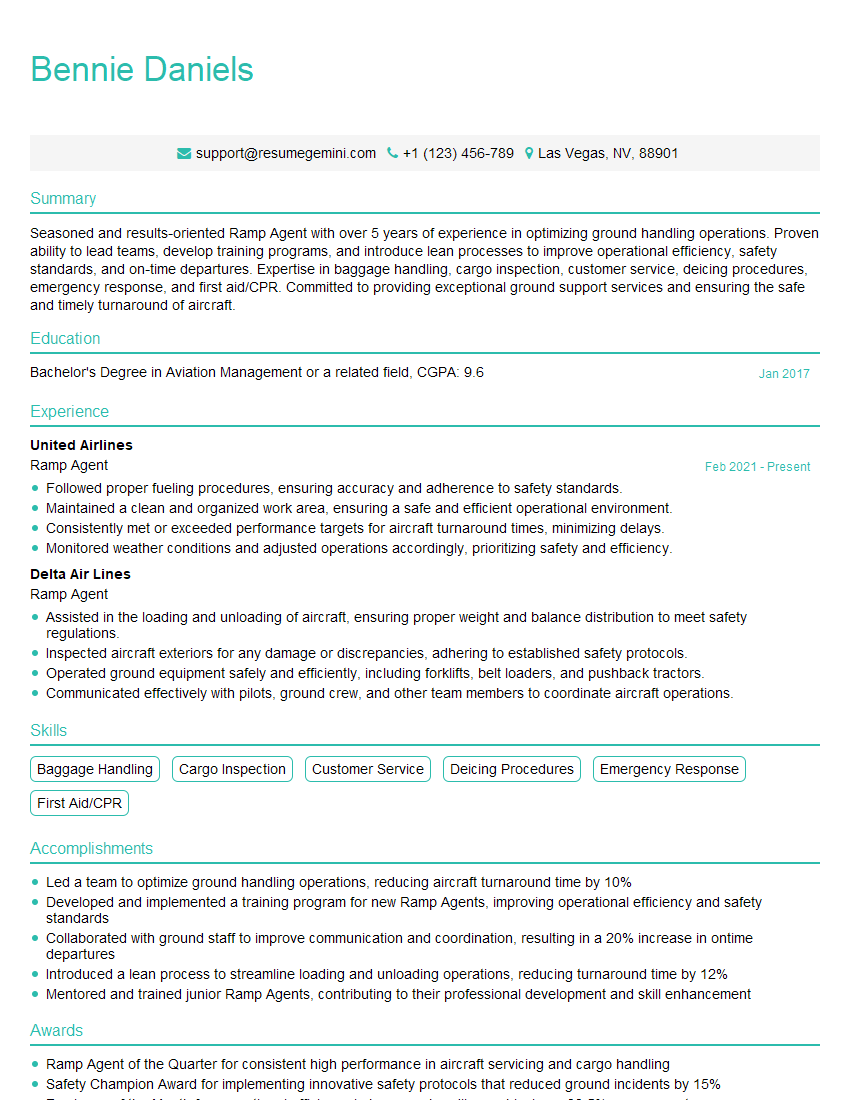
Mastering air cargo handling knowledge significantly boosts your career prospects, opening doors to specialized roles and higher earning potential. An ATS-friendly resume is crucial for getting your application noticed by recruiters. To maximize your chances, we strongly encourage you to build a compelling resume using ResumeGemini. ResumeGemini offers a user-friendly platform to craft a professional resume, showcasing your skills and experience effectively. Examples of resumes tailored specifically to air cargo handling experience are available to guide you through the process.
Explore more articles
Users Rating of Our Blogs
Share Your Experience
We value your feedback! Please rate our content and share your thoughts (optional).
What Readers Say About Our Blog
Really detailed insights and content, thank you for writing this detailed article.
IT gave me an insight and words to use and be able to think of examples