Every successful interview starts with knowing what to expect. In this blog, we’ll take you through the top ANSI A300 Pruning Standards interview questions, breaking them down with expert tips to help you deliver impactful answers. Step into your next interview fully prepared and ready to succeed.
Questions Asked in ANSI A300 Pruning Standards Interview
Q 1. Define the three pruning cuts described in ANSI A300.
ANSI A300 outlines three fundamental pruning cuts: the heading cut, the thinning cut, and the reduction cut. Understanding these cuts is crucial for proper pruning practices.
- Heading Cut: This cut removes a branch back to a lateral branch or bud. Think of it like trimming a hedge; you’re cutting back to a point where the branch can easily regenerate. However, heading cuts often result in larger wounds and multiple leader development which weakens the branch structure over time. They should be avoided unless absolutely necessary, such as removing a dead or diseased portion of a branch.
- Thinning Cut: This involves removing an entire branch at its point of origin – the branch collar. It’s like cleanly removing a single tree from a forest. This leaves a clean, smaller wound that the tree can more efficiently compartmentalize and heal.
- Reduction Cut: This cut reduces the length of a branch, but unlike the heading cut, it’s made on a lateral branch to create a new branch leader. This aims for a more natural appearance and lessens the stress on the tree compared to a heading cut. It requires precise placement to ensure the remaining branch is structurally sound.
Imagine a tree with a branch that’s grown too long and heavy. A heading cut would simply chop it off, leaving a large stub. A reduction cut would shorten the branch by selecting a strong lateral branch, ensuring a more gradual, visually pleasing, and structurally sound reduction.
Q 2. Explain the difference between thinning and reduction pruning.
Thinning and reduction pruning are distinct techniques that serve different purposes in tree care. While both aim to improve tree health and structure, they achieve this through different methods.
- Thinning: This involves removing entire branches to reduce density within the tree’s crown. Think of it as creating more space within a crowded forest. It reduces overall weight and improves air circulation, reducing the risk of disease and improving light penetration within the canopy. This enhances the structural integrity of the crown, preventing breakage.
- Reduction: This aims to decrease the size or length of branches, often to decrease the tree’s overall size or to balance its structure. It’s like selectively removing some of the tallest trees in a forest to create a more even height. Reduction is often used when trees are too close to buildings or power lines. It’s important to note that improper reduction can severely harm the tree, particularly if multiple cuts are made without creating new leaders.
For instance, a tree with overly dense foliage would benefit from thinning to reduce disease risk. A tree that’s grown too tall near a house would require reduction to decrease its overall height.
Q 3. Describe the proper techniques for pruning scaffold branches.
Scaffold branches are the main structural branches of a tree. Pruning them requires careful consideration to maintain the tree’s health and long-term structure. Improper pruning can lead to significant weakening and increase the risk of damage from wind or snow.
- Select the appropriate cut: Use a thinning cut to remove scaffold branches entirely. This ensures a clean wound that’s easy for the tree to heal. Heading cuts should be avoided, as they create large wounds and may lead to structural weaknesses.
- Avoid included bark: Make sure the cut is made at the branch collar to avoid included bark (where the bark of the branch grows over the bark of the main stem). This is a common mistake that hinders healing and can cause decay.
- Proper tool selection: Use sharp, clean pruning tools to ensure a clean cut which promotes rapid healing. Dull tools cause more damage and increase the risk of disease.
- Reduce weight gradually: If a large branch needs to be reduced, make multiple smaller cuts rather than one large cut to avoid stripping the bark. The first cut should be made underneath the branch and at about one third the diameter from the trunk.
Imagine you’re shaping a bonsai. Each cut to a scaffold branch needs to be precise to maintain the overall balance and health of the plant. This analogy highlights the precision and planning required when pruning scaffold branches.
Q 4. What are the key considerations for pruning trees near power lines?
Pruning trees near power lines requires specialized knowledge and, often, professional arborists who are qualified to work near power lines. Safety is paramount. Incorrect pruning can lead to power outages, property damage, and serious injury.
- Contact utility companies: Before undertaking any pruning near power lines, contact your local utility company. They may have specific requirements or regulations.
- Specialized equipment and training: Use appropriate tools and equipment for working at height, including harnesses, ropes, and insulated tools. Training in proper safety protocols is critical.
- Avoid unnecessary pruning: Only prune branches that pose a clear and present danger to the power lines. Excessive pruning is more harmful to the tree’s health.
- Proper cut technique: Employ techniques to minimize stress on the remaining branches, preventing damage and promoting rapid healing.
- Proper disposal: Ensure debris is disposed of safely and doesn’t interfere with power lines.
Remember, working near power lines is extremely dangerous. It’s best to leave this task to qualified professionals who possess the necessary training, equipment, and insurance.
Q 5. How does ANSI A300 address the pruning of trees with specific structural issues?
ANSI A300 doesn’t directly address specific structural issues with a numbered list of solutions; rather, it provides a framework for assessing the tree’s condition and guiding the pruning process. Proper pruning, aligned with the standard, addresses structural weaknesses indirectly.
For example, a tree with codominant leaders (two main stems arising from the base) is structurally weak. ANSI A300 suggests the need to address this through pruning by removing one of the leaders early in the tree’s development. If left unresolved, these trees are prone to failure at the branch union. The standard underscores the significance of prioritizing proper structural pruning to ensure long-term health and stability.
Another example is a tree with weak branch attachments, which are prone to breaking. ANSI A300 guides the practitioner to make cuts that avoid damage to the branch collar and promote proper wound closure and compartmentalization to prevent decay. The standard emphasizes the importance of choosing cuts that prevent further stress on the tree and that are conducive to healing.
Q 6. Explain the concept of crown reduction and its limitations as per ANSI A300.
Crown reduction is a pruning technique used to decrease the size of a tree’s crown. However, ANSI A300 cautions against excessive crown reduction, as it can severely stress the tree and leave it vulnerable to disease and structural failure.
Limitations:
- Significant wounding: Crown reduction often involves large cuts that take a long time to heal, potentially leading to decay.
- Weak branch development: It can lead to weak branch development as the tree attempts to regenerate, compromising structural stability.
- Stressed trees: Over-reduction can dramatically stress the tree, reducing its vigor and resilience to environmental stressors.
- Poor aesthetics: Improperly executed crown reduction can result in an unnatural and unsightly appearance.
ANSI A300 recommends crown reduction only as a last resort and only when it’s carried out by qualified arborists using the reduction method previously discussed. For example, if a tree needs to be reduced to avoid obstruction, careful planning is needed to minimize the impact on the tree’s health and long-term survivability.
Q 7. What are the safety precautions to be followed while pruning trees according to ANSI A300?
Safety is paramount when pruning trees. ANSI A300, while not a safety manual, implicitly emphasizes the importance of safe work practices. Here are some key safety precautions:
- Proper personal protective equipment (PPE): Always wear appropriate PPE, including safety glasses, gloves, sturdy footwear, and a hard hat. For elevated work, a harness and other fall protection equipment are essential.
- Safe tool handling: Use sharp, well-maintained tools, and practice proper tool handling techniques. Keep your tools clean and sharp.
- Awareness of surroundings: Be aware of your surroundings and potential hazards such as power lines, other trees, and obstacles.
- Weather conditions: Avoid pruning in inclement weather, such as rain, snow, or high winds.
- First aid knowledge: Be prepared for potential injuries and have basic first aid knowledge readily available.
- Appropriate training and experience: For large or complex pruning tasks, it is advisable to contact certified arborists, who have the necessary expertise, equipment, and insurance.
Consider this: pruning without proper safety precautions is like driving a car without a seatbelt – you’re putting yourself at unnecessary risk. Safety measures are not optional; they’re essential to protect your health and the well-being of others.
Q 8. Describe the different types of pruning tools and their appropriate uses.
Selecting the right pruning tool is crucial for efficient and safe tree care. The ANSI A300 standard doesn’t explicitly list tools, but implies appropriate tool selection based on branch size and desired cut. Think of it like choosing the right tool for a carpentry job; you wouldn’t use a hammer to saw wood.
- Hand Pruners (Bypass or Anvil): Best for small-diameter branches (less than ¾ inch). Bypass pruners have blades that pass each other like scissors, providing a clean cut. Anvil pruners have a blade that strikes an anvil, better for deadwood but potentially more damaging to live tissue.
- Loppers: Used for branches up to 1 ½ inches in diameter. They extend your reach and provide more leverage than hand pruners.
- Pruning Saws: Essential for larger branches (over 1 ½ inches). Different types exist: bow saws are lightweight and maneuverable; pole saws extend your reach for higher branches; reciprocating saws are power tools used for larger cuts.
- Chainsaws: Used only by trained professionals for very large branches or tree removal. Safety is paramount with chainsaws.
Example: When removing a small, dead branch from a rose bush, hand pruners are ideal. For a larger limb on a young tree requiring more leverage, loppers are suitable. A large, lower limb requiring removal on a mature oak? That calls for a pruning saw.
Q 9. How does ANSI A300 guide the selection of pruning methods based on tree species?
ANSI A300 doesn’t prescribe specific pruning methods for each species, but emphasizes understanding a tree’s growth habit and natural structure to inform pruning decisions. The goal is to maintain the tree’s health and structural integrity, avoiding practices that weaken it.
For example, a fast-growing tree like a poplar will likely need more frequent, lighter pruning to control its size and shape than a slow-growing oak. A species known for weak branch attachments might necessitate more careful pruning to avoid structural damage. Pruning techniques should always prioritize maintaining the tree’s natural form.
The standard promotes a holistic approach. Consider factors like:
- Species-specific branching patterns: Knowing whether a tree branches alternately or oppositely influences cut placement to avoid creating weak branch unions.
- Disease susceptibility: Certain species are more prone to diseases, so careful pruning is crucial to prevent entry points for pathogens. A wound created during pruning is a potential entry point for diseases.
- Growth rate: Fast-growing trees require more frequent, but less aggressive, pruning to maintain shape than slow-growing species.
Q 10. What are the potential risks of improper pruning as outlined in ANSI A300?
Improper pruning can severely compromise a tree’s health and longevity. ANSI A300 highlights the potential risks:
- Structural Weakness: Incorrect cuts that leave stubs or create large wounds can create stress concentrations, making the tree vulnerable to breakage during storms.
- Decay: Large wounds provide entry points for decay fungi and insects, causing rot and weakening the tree.
- Disease & Insect Infestation: Wounds can become entry points for diseases and insect pests, potentially killing the tree or causing significant damage.
- Reduced Aesthetic Value: Poor pruning can result in an unbalanced, unnatural appearance.
- Safety Hazards: Weak branches resulting from poor pruning pose a risk of falling and causing injury or property damage.
Example: Topping a tree (removing the central leader) creates numerous large wounds, promoting decay, weakening the structure, and altering its natural shape. It’s a practice strongly discouraged by ANSI A300.
Q 11. Explain the importance of wound dressing in tree pruning.
The application of wound dressing after pruning is a topic of ongoing debate. ANSI A300 generally discourages the routine use of wound dressings on most tree species. The belief is that most healthy trees can effectively compartmentalize decay on their own. Wound dressings can sometimes trap moisture, inhibiting the healing process and potentially promoting decay.
Exceptions may include cases where there is a very large wound, evidence of decay, or situations where disease prevention is critical (e.g., a tree with known susceptibility to a specific pathogen). Even then, the application should be done by a trained arborist who understands the limitations and potential drawbacks of the chosen product.
In essence, ANSI A300 emphasizes natural wound closure. The focus is on making the correct cut in the first place, minimizing the wound size and allowing the tree’s natural defenses to handle healing.
Q 12. How does ANSI A300 address the pruning of trees in urban environments?
ANSI A300 acknowledges the unique challenges of pruning trees in urban environments. Space constraints, proximity to buildings and infrastructure, and aesthetic considerations influence pruning choices. The standard emphasizes:
- Safety: Pruning in urban settings requires extra attention to safety due to potential risks to people and property. Methods must minimize the risk of falling branches.
- Structural Integrity: Pruning should maintain the tree’s structural integrity, preventing potential damage to adjacent structures. This might involve more frequent, lighter pruning to manage growth and reduce stress.
- Aesthetic Considerations: Urban trees are often valued for their aesthetic contribution to the landscape. Pruning should aim to maintain a natural appearance while addressing space limitations and safety concerns.
- Utility Conflicts: Pruning may be necessary to prevent conflict with overhead power lines or other utilities. Coordination with utility companies is usually required for such work.
Example: A street tree growing too close to power lines will require careful pruning to create sufficient clearance without sacrificing the tree’s health or appearance. This might involve raising the canopy or reducing its overall width.
Q 13. What are the long-term implications of following (or not following) ANSI A300 standards?
Adhering to ANSI A300 standards has significant long-term implications for tree health and safety.
Following the standards leads to:
- Improved tree health and longevity: Proper pruning techniques promote wound closure, reduce stress, and prevent disease and decay.
- Enhanced structural integrity: Correctly pruned trees are more resistant to wind damage and breakage.
- Reduced safety hazards: Avoiding improper pruning techniques eliminates the risk of falling branches and improves public safety.
- Enhanced aesthetic value: Properly maintained trees have better form and visual appeal.
Not following the standards leads to:
- Reduced tree lifespan: Improper pruning practices weaken trees, making them susceptible to disease, decay, and breakage.
- Increased risk of damage or injury: Weak branches are more likely to fall, causing property damage and injuries.
- Reduced aesthetic value: Poorly pruned trees often look unnatural and unsightly.
- Increased maintenance costs: Corrective pruning to remedy previous mistakes can be expensive and time-consuming.
Q 14. Describe the proper pruning techniques for different tree growth habits.
Pruning techniques should adapt to a tree’s growth habit. Understanding its natural form is essential for effective and safe pruning.
- Excurrent (Central Leader): Trees like pines and spruces have a dominant central leader. Pruning should focus on maintaining the central leader, removing competing branches, and selectively thinning out the crown to prevent overcrowding. Avoid topping.
- Decurrent (Multiple Leaders): Trees such as oaks and maples often have multiple stems or co-dominant leaders. Pruning focuses on selecting and maintaining the strongest leaders and removing weak, crossing, or rubbing branches. Careful consideration is needed to avoid weakening the structure.
- Weeping Habit: Weeping trees like willows or some cultivars of cherry trees have gracefully drooping branches. Pruning aims to maintain the natural cascade, removing only dead, diseased, or crossing branches while avoiding any drastic changes in form.
In all cases, cuts should be made just outside of the branch collar (the slightly swollen area at the base of the branch), avoiding stubs. The three-cut method minimizes bark tearing, particularly on larger branches. Remember, the less invasive the pruning, the better.
Q 15. How does ANSI A300 address the pruning of trees in relation to health and vigor?
ANSI A300 prioritizes tree health and vigor by promoting pruning practices that minimize stress and maximize the tree’s ability to defend itself against disease and pests. It advocates for selective pruning, removing only dead, diseased, damaged, or interfering branches. This approach avoids excessive pruning that can weaken the tree, leaving it vulnerable. Think of it like a haircut – you wouldn’t want to cut off so much hair that it damages your scalp; similarly, over-pruning a tree can harm its health.
The standard emphasizes proper wound closure techniques to minimize the risk of infection. Large wounds are more susceptible to decay, so ANSI A300 guides arborists on how to make cuts that promote faster and more effective healing. Ultimately, the goal is to maintain the tree’s structural integrity and natural growth patterns, promoting long-term health and vitality.
Career Expert Tips:
- Ace those interviews! Prepare effectively by reviewing the Top 50 Most Common Interview Questions on ResumeGemini.
- Navigate your job search with confidence! Explore a wide range of Career Tips on ResumeGemini. Learn about common challenges and recommendations to overcome them.
- Craft the perfect resume! Master the Art of Resume Writing with ResumeGemini’s guide. Showcase your unique qualifications and achievements effectively.
- Don’t miss out on holiday savings! Build your dream resume with ResumeGemini’s ATS optimized templates.
Q 16. Explain the role of ANSI A300 in minimizing tree damage during pruning.
ANSI A300 minimizes tree damage by providing detailed guidelines on pruning techniques. It emphasizes using sharp, clean tools to prevent tearing or crushing of tissues which can create large wounds vulnerable to disease. The standard advocates for proper branch collar and branch bark ridge recognition and preservation. These are naturally occurring structures that allow for rapid wound closure. Removing these can significantly hinder the tree’s healing process. Imagine trying to mend a torn piece of fabric; using blunt scissors will create a larger, messier tear than using sharp ones. Similarly, sharp tools minimize damage during pruning.
The standard also promotes understanding of tree growth patterns and structure to avoid unnecessary cuts. By focusing on removing only the necessary branches, the tree experiences minimal stress and disturbance, facilitating quicker recovery. Furthermore, the selection of appropriate pruning techniques, like thinning cuts rather than heading cuts, reduce the risk of structural weakness and decay.
Q 17. What are the key factors to consider when selecting pruning times according to ANSI A300?
Selecting the right pruning time is crucial for minimizing stress on the tree and optimizing wound closure. ANSI A300 considers several factors, including species-specific dormancy periods and the tree’s overall health. For example, many deciduous trees are best pruned during late winter or early spring before the start of active growth. This allows the tree to compartmentalize wounds effectively before the onset of new growth. However, some species are more susceptible to bleeding if pruned during this time. Likewise, evergreens might be pruned at different times depending on the species and the climate.
The standard also cautions against pruning during periods of extreme weather or when the tree is under stress from drought or disease. Choosing the right time involves observing the tree’s condition and understanding its natural growth cycle to ensure minimal impact and optimal healing.
Q 18. How does ANSI A300 address the ethical considerations of tree pruning?
ANSI A300 incorporates ethical considerations by emphasizing the importance of responsible tree care. It discourages unnecessary or overly aggressive pruning practices that can harm or disfigure a tree for aesthetic reasons alone. The standard promotes a holistic approach, considering the tree’s long-term health and well-being as well as the surrounding ecosystem. Unnecessary pruning can weaken the tree, making it susceptible to damage and reducing its lifespan.
Ethical considerations also extend to preserving the tree’s natural form and character. The standard encourages arborists to work in a way that preserves the tree’s beauty and unique characteristics. This involves respecting its natural structure rather than conforming to arbitrary aesthetic standards.
Q 19. Describe the proper methods for dealing with diseased or damaged branches as per ANSI A300.
Dealing with diseased or damaged branches requires careful attention to detail to prevent the spread of disease. ANSI A300 recommends removing diseased branches well beyond the visible signs of infection. This usually involves removing several inches of healthy tissue beyond the affected area to ensure the removal of any hidden pathogens. For example, if a branch shows signs of canker, the cut should extend several inches beyond the visible canker to prevent re-infection. Improper removal can lead to the disease spreading throughout the tree.
Damaged branches should be removed promptly to prevent further injury and infection. The cuts should be made cleanly and smoothly, using appropriate tools to minimize tissue damage, as described above. After removing diseased or damaged branches, it’s important to sanitize the tools to prevent the spread of disease to other trees. In severe cases, professional consultation might be necessary.
Q 20. Explain the importance of proper training and certification in following ANSI A300.
Proper training and certification are vital for adhering to ANSI A300 standards and ensuring safe and effective tree pruning. Certification programs provide arborists with the necessary knowledge and skills to properly assess tree health, select appropriate pruning techniques, and utilize safe practices. Certified arborists have a deep understanding of tree biology, pruning techniques, and safety regulations, which translates directly into healthier trees and safer work environments. Imagine a surgeon operating without proper medical training; the outcome would be disastrous. Similarly, improper pruning techniques can severely harm or even kill a tree.
Training programs cover a wide range of topics, including tree identification, risk assessment, safety procedures, and proper use of equipment. These programs prepare arborists to follow ANSI A300 guidelines effectively and responsibly.
Q 21. What are the potential consequences of non-compliance with ANSI A300 standards?
Non-compliance with ANSI A300 standards can have several serious consequences. Improper pruning techniques can lead to tree injury, disease, and even death. This could result in property damage, increased maintenance costs, and potential liability for the arborist or property owner. For instance, a poorly pruned tree might fall and damage a nearby building or vehicle. Furthermore, failure to adhere to safety regulations during pruning can lead to serious injury or even death for the arborist or those nearby.
In addition to these risks, non-compliance could also result in legal repercussions, depending on local regulations and the severity of the consequences. Therefore, following ANSI A300 standards is critical for maintaining tree health, ensuring worker safety, and avoiding legal liability.
Q 22. How does ANSI A300 guide the removal of dead or dying branches?
ANSI A300 guides the removal of dead or dying branches by emphasizing the importance of removing them completely, back to the branch collar. This collar is the slightly swollen area at the base of the branch where it joins the main stem or another branch. Cutting within the branch collar prevents damage to the living tissue and allows for proper wound closure. Leaving stubs invites decay and disease. Think of it like a surgical procedure – clean and precise cuts are crucial for healing. For example, a dead branch extending from a mature oak should be removed completely at its point of origin, taking care not to damage the bark surrounding the branch collar. Improper removal, such as leaving a stub, creates an entry point for pathogens.
Q 23. Explain the concept of maintaining the natural form of a tree during pruning.
Maintaining a tree’s natural form during pruning means respecting its inherent structure and growth habit. It’s about selectively removing branches to improve its health and aesthetics without drastically altering its shape. We should aim for a pruning style that enhances the tree’s inherent beauty rather than imposing a human-defined shape. For instance, if you’re pruning a weeping cherry, you wouldn’t want to prune it into a formal shape; instead, you would focus on removing dead, crossing, or rubbing branches, which maintain its graceful, cascading form. Consider the overall silhouette and branch structure; cuts should be subtle and blend seamlessly into the natural growth pattern.
Q 24. How does ANSI A300 address the pruning of trees in different stages of development?
ANSI A300 acknowledges that pruning needs change as a tree develops. Young trees require different pruning techniques compared to mature trees. Young trees often benefit from formative pruning to establish a strong central leader and scaffold branches. This involves selecting and removing branches to create a balanced framework that will support the tree’s future growth. Mature trees, however, generally require more selective pruning, focusing on removing dead, damaged, or diseased wood, and reducing excessive density. Over-pruning a young tree can hinder its development, whereas over-pruning a mature tree can create stress and weaken its structure. For example, a young maple needs training cuts to develop a strong structure, while an old oak requires mostly removal of deadwood to maintain health.
Q 25. Describe the difference between heading cuts and thinning cuts according to ANSI A300.
According to ANSI A300, heading cuts and thinning cuts are distinct pruning techniques. A heading cut removes the terminal portion of a branch, stimulating growth from lateral buds below the cut. This can lead to multiple smaller shoots sprouting, potentially weakening the branch over time and creating a dense, unsightly growth habit. Thinning cuts, on the other hand, remove entire branches back to their point of origin at the branch collar. Thinning cuts are generally preferred over heading cuts because they promote the development of stronger, longer branches and open the canopy for better light penetration and air circulation. Think of it this way: heading cuts are like trimming your hair – you’re taking off the ends but it still grows back in the same place; thinning cuts are like getting layers cut – you remove sections entirely, impacting the overall shape.
Q 26. What are the potential legal implications of improper pruning?
Improper pruning can have significant legal implications. If your pruning causes damage to a neighboring property (for example, a falling branch), you could face legal liability for property damage. Similarly, if your pruning significantly damages or kills a tree, you might be liable for its replacement cost. In some jurisdictions, particularly where protected heritage trees are involved, improper pruning can lead to fines or even criminal charges. Always be aware of local ordinances and regulations related to tree care and pruning. Proper pruning techniques, as outlined in ANSI A300, help avoid these legal risks.
Q 27. How do you determine the appropriate pruning intensity based on tree species and site conditions?
Determining appropriate pruning intensity involves considering both the tree species and the site conditions. Some tree species are naturally more tolerant to pruning than others. Site conditions like sunlight, soil moisture, and prevailing winds also influence a tree’s response to pruning. Over-pruning a stressed tree will further weaken it. For example, a young oak growing in full sun and fertile soil can tolerate more aggressive pruning than a mature oak under shade conditions. A thorough tree assessment is essential, accounting for species-specific growth habits, disease susceptibility, and the overall stress levels of the tree. The goal is to strike a balance between maintaining tree health and aesthetics without causing undue stress.
Q 28. Explain how you would assess a tree’s health and structural integrity before pruning
Assessing a tree’s health and structural integrity before pruning is crucial. This involves a visual inspection to identify any signs of disease, pest infestation, decay, or structural weakness. We should look for dead or dying branches, cracks in the trunk or branches, leaning or codominant stems, and signs of fungal growth. Inspecting the root flare to ensure it’s not buried is also vital. Sometimes, additional assessments may be necessary, such as using specialized tools to evaluate internal decay. Knowing the tree’s history—past pruning, pest issues, or weather damage—can also be beneficial. The ultimate goal is to identify any potential problems that need to be addressed during the pruning process, such as removing structurally unsound branches before they pose a hazard. The assessment allows you to develop a sound pruning plan that prioritizes the safety and longevity of the tree.
Key Topics to Learn for ANSI A300 Pruning Standards Interview
- Understanding Tree Growth and Structure: Grasping the fundamentals of tree biology is crucial for applying pruning principles effectively. This includes understanding branch dominance, apical buds, and the impact of pruning cuts on future growth.
- Pruning Techniques and Cuts: Mastering various pruning techniques like thinning, heading, and reduction cuts is essential. Understand the appropriate use of each technique based on tree species, health, and desired outcome.
- Recognizing and Addressing Tree Hazards: Learn to identify potential hazards like weak branches, structural defects, and diseases. Understanding how pruning can mitigate these risks is vital.
- Safety Procedures and Equipment: Demonstrate knowledge of safe climbing and pruning practices, including proper use of tools and personal protective equipment (PPE).
- Pruning for Specific Tree Species: Familiarize yourself with the unique pruning needs of different tree species. Understanding species-specific considerations is a key aspect of successful pruning.
- Legal and Ethical Considerations: Be prepared to discuss the legal and ethical responsibilities related to tree care and the potential consequences of improper pruning.
- Practical Application: Case Studies and Problem Solving: Practice applying your knowledge to hypothetical scenarios. Consider how you would approach different pruning challenges and justify your decisions based on ANSI A300 standards.
Next Steps
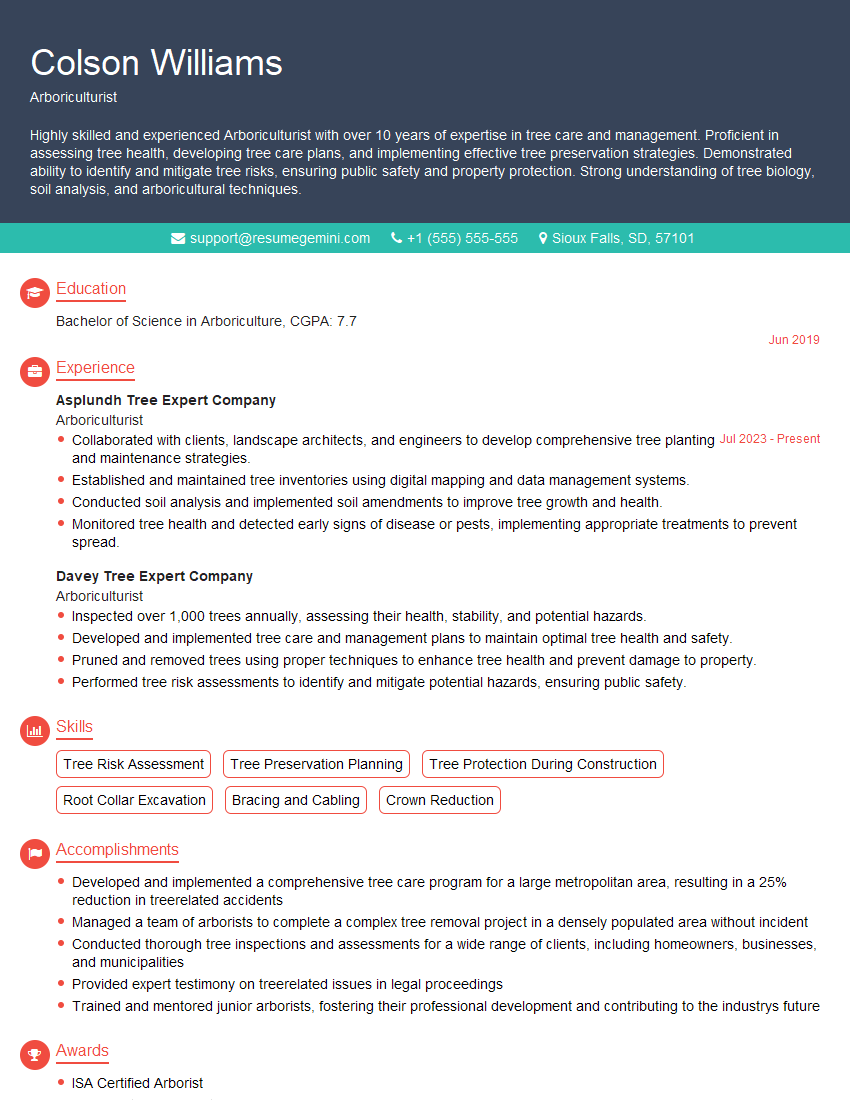
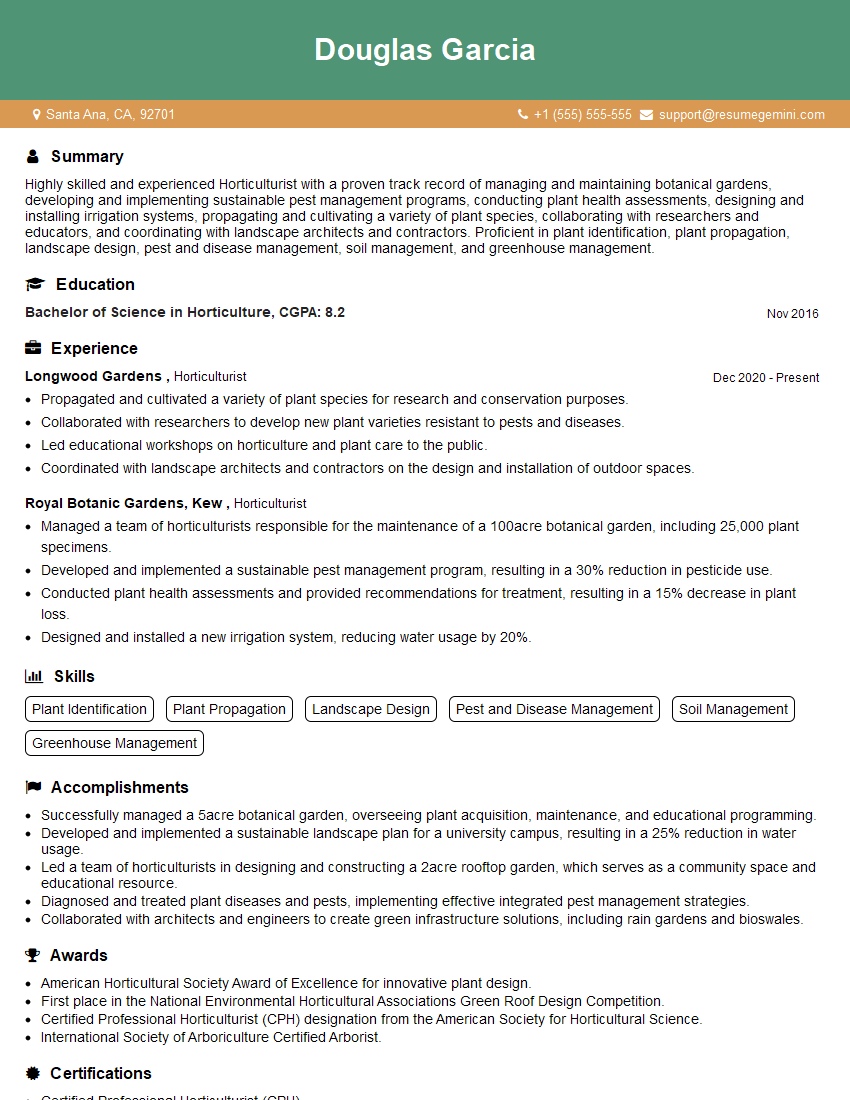
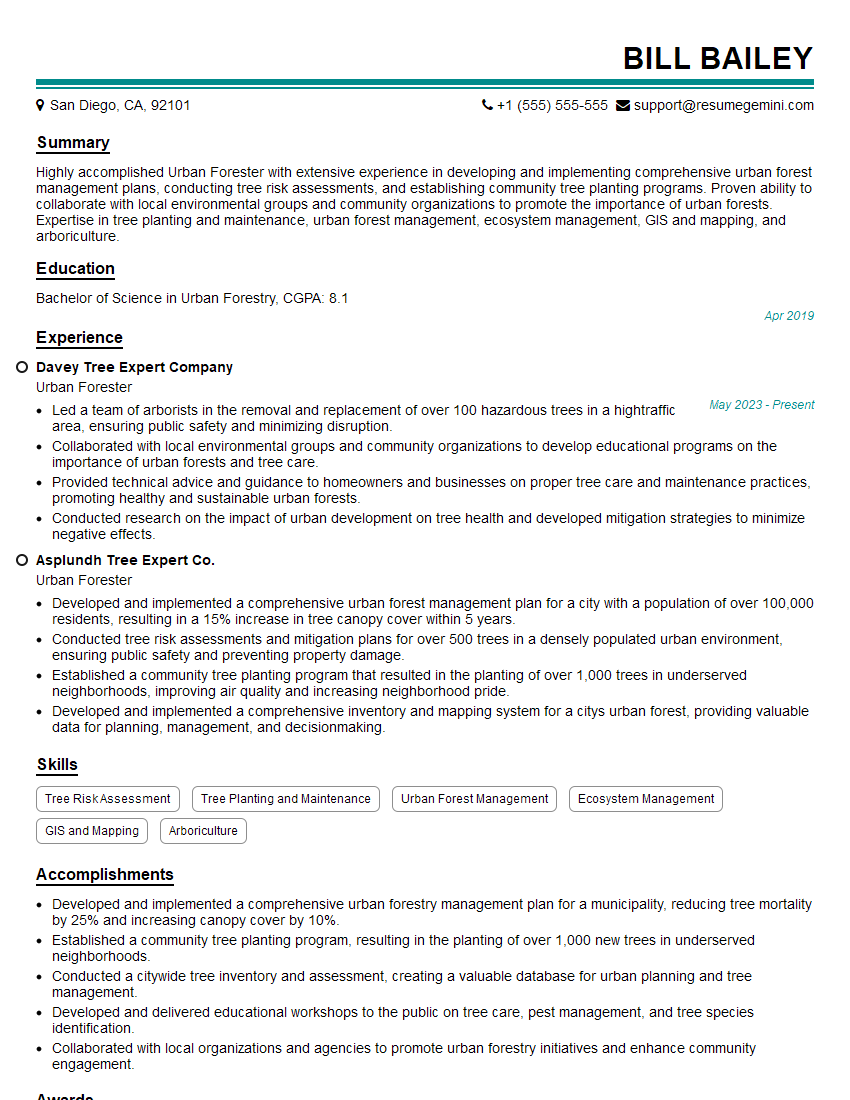
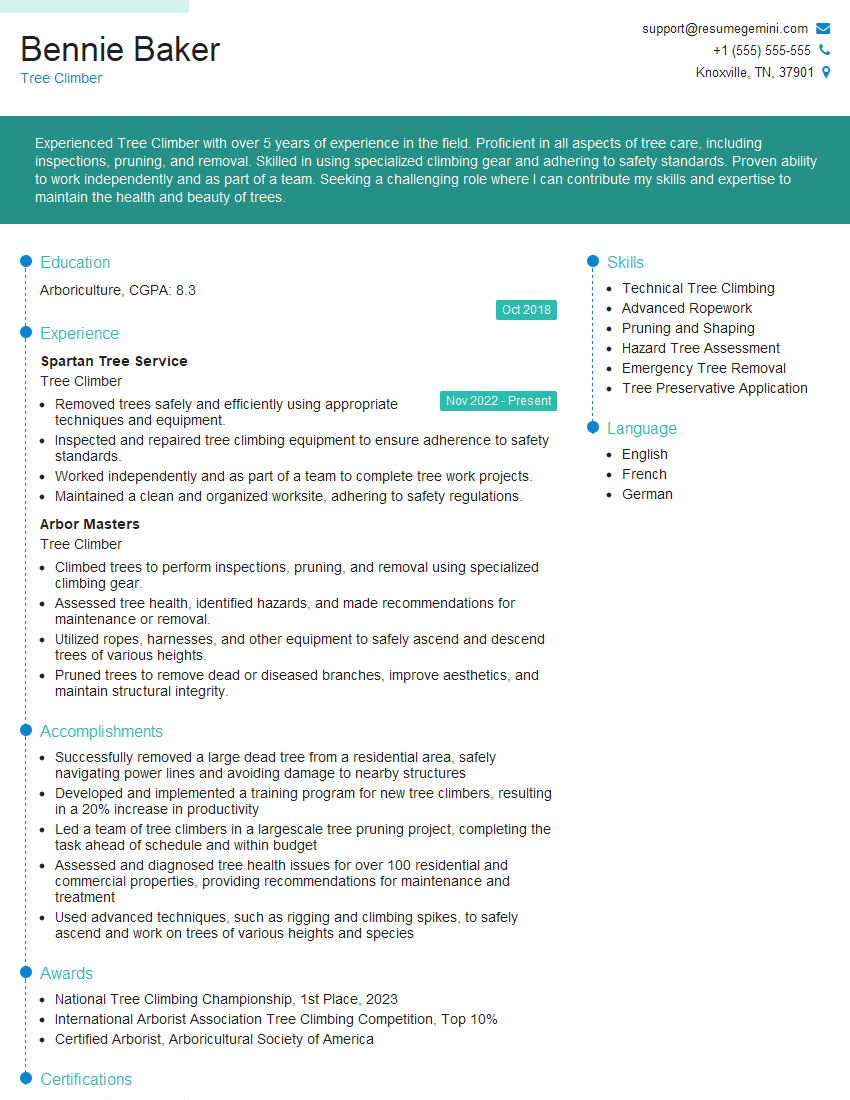
Mastering ANSI A300 Pruning Standards significantly enhances your professional credibility and opens doors to advanced roles within arboriculture and related fields. A strong understanding of these standards demonstrates your commitment to safe and effective tree care, making you a highly desirable candidate. To further boost your job prospects, create an ATS-friendly resume that effectively highlights your skills and experience. ResumeGemini is a trusted resource that can help you build a professional resume that gets noticed. Examples of resumes tailored to ANSI A300 Pruning Standards are available to help you craft the perfect application.




Explore more articles
Users Rating of Our Blogs
Share Your Experience
We value your feedback! Please rate our content and share your thoughts (optional).
What Readers Say About Our Blog
Really detailed insights and content, thank you for writing this detailed article.
IT gave me an insight and words to use and be able to think of examples