Unlock your full potential by mastering the most common Experience with CrossDocking and Consolidation interview questions. This blog offers a deep dive into the critical topics, ensuring you’re not only prepared to answer but to excel. With these insights, you’ll approach your interview with clarity and confidence.
Questions Asked in Experience with CrossDocking and Consolidation Interview
Q 1. Explain the process of cross-docking.
Cross-docking is a logistics strategy that streamlines the flow of goods by eliminating the need for traditional warehousing. Instead of storing products, goods are unloaded from inbound shipments and immediately loaded onto outbound shipments, effectively transferring them directly from one transportation mode to another. Think of it like a well-orchestrated relay race where the baton (goods) is passed seamlessly between runners (transport vehicles) without a pause.
The process typically involves receiving inbound shipments, sorting them based on destination, and then immediately loading them onto outgoing trucks or other transport vehicles bound for their final destinations. This requires precise coordination, efficient material handling equipment, and a well-defined process to minimize delays.
For example, a large retailer might receive shipments of clothing from various suppliers. Instead of storing them in a warehouse, the retailer uses cross-docking to directly allocate them to their various distribution centers based on real-time demand, ensuring speed and responsiveness.
Q 2. What are the benefits and drawbacks of cross-docking?
Benefits of Cross-Docking:
- Reduced warehousing costs: Eliminates the need for significant warehouse space and associated costs like rent, utilities, and maintenance.
- Faster delivery times: Goods move more quickly from supplier to customer, leading to improved order fulfillment and customer satisfaction.
- Lower inventory holding costs: Reduces the amount of inventory held in storage, minimizing obsolescence and storage expenses.
- Increased efficiency: Streamlines the logistics process, minimizing handling and reducing labor costs.
Drawbacks of Cross-Docking:
- Requires high level of coordination: Effective cross-docking demands precise scheduling, accurate forecasting, and real-time communication between various stakeholders.
- Vulnerable to disruptions: Any delay in inbound or outbound transportation can significantly impact the entire operation.
- High upfront investment: Requires significant investment in efficient material handling systems and advanced technology like Warehouse Management Systems (WMS).
- Not suitable for all products: Only suitable for products with high demand and low storage requirements. Perishable goods or items requiring special handling might not be ideal for cross-docking.
Q 3. Describe different cross-docking methods.
Several cross-docking methods exist, each with its own advantages and disadvantages:
- Traditional Cross-Docking: Involves sorting inbound shipments directly onto outbound trailers based on their final destination. This is the most common type.
- Consolidation Cross-Docking: Smaller shipments from multiple sources are combined into larger, more efficient outbound shipments. This minimizes transportation costs.
- Breakbulk Cross-Docking: Large shipments are broken down into smaller ones for distribution to various locations. This is often used for large-volume deliveries.
- Flow-Through Cross-Docking: Goods are received, scanned, and moved onto designated outbound doors almost immediately. This method is highly automated and demands very accurate forecasting.
- Milk-Run Cross-Docking: Involves regular collection of smaller shipments from various sources and combining them into larger shipments for transport. This is frequently used by manufacturers.
Q 4. How do you optimize space utilization in a cross-dock facility?
Optimizing space utilization in a cross-dock facility is crucial for efficiency. This involves:
- Strategic Layout: Designing the facility with efficient flow paths to minimize movement and wasted space. Inbound and outbound docks should be positioned strategically.
- Vertical Space Utilization: Using high-bay racking systems or other vertical storage solutions for temporary storage of items awaiting outbound transport.
- Automation: Implementing automated guided vehicles (AGVs), conveyor systems, and sortation systems to optimize material handling and space usage.
- Lean Principles: Applying lean manufacturing principles to eliminate waste and maximize efficiency in every process and space.
- Dynamic Space Allocation: Using technology to track space usage in real-time and adjust layouts based on demand.
Q 5. How do you manage inbound and outbound freight in a cross-docking environment?
Managing inbound and outbound freight in a cross-docking environment necessitates meticulous planning and execution:
- Advanced Scheduling: Utilizing a Transportation Management System (TMS) and WMS to coordinate inbound and outbound deliveries with high precision. This includes precise timing of arrival and departure of trucks.
- Real-time Tracking: Employing RFID or barcode scanning to track goods as they move through the facility, ensuring accurate inventory visibility.
- Efficient Material Handling: Implementing appropriate equipment – forklifts, conveyors, sortation systems – for smooth and rapid movement of goods.
- Dock Scheduling Software: Using dock scheduling software to manage dock space efficiently, minimizing congestion and delays.
- Cross-Functional Collaboration: Strong communication and collaboration are vital amongst receiving, sorting, and shipping teams to ensure seamless flow.
Q 6. What metrics do you use to measure the efficiency of a cross-docking operation?
Key metrics for measuring cross-docking efficiency include:
- Throughput Time: The total time it takes for goods to move from inbound to outbound docks.
- Order Fill Rate: Percentage of orders filled completely and accurately.
- Dock-to-Dock Time: The time spent moving goods between inbound and outbound docks.
- Inventory Turnover Rate: Measures how quickly inventory is sold and replenished.
- Damage Rate: The percentage of goods damaged during the cross-docking process.
- Labor Productivity: Measures the efficiency of the workforce in handling goods.
- Cost per unit handled: Captures the overall cost-effectiveness.
Q 7. How do you handle potential delays or disruptions in a cross-docking operation?
Handling delays or disruptions requires a proactive approach:
- Contingency Planning: Developing backup plans for potential disruptions, like transportation delays or equipment malfunctions.
- Real-time Monitoring: Continuously monitoring inbound and outbound shipments to identify potential issues early.
- Flexible Scheduling: Having the ability to adjust schedules quickly to accommodate unexpected events.
- Communication: Maintaining open communication with suppliers, carriers, and customers to keep everyone informed.
- Problem-solving Team: Designating a dedicated team to address and resolve disruptions efficiently.
- Redundancy: Building some level of redundancy into the system, such as having backup carriers or equipment.
Q 8. Explain the concept of consolidation in logistics.
Consolidation in logistics is the process of combining multiple smaller shipments from various sources into a larger, more efficient shipment. Think of it like packing a suitcase – instead of taking lots of small bags, you efficiently organize everything into one larger, easier-to-manage container. This reduces transportation costs and improves overall efficiency.
For example, a retailer might receive shipments from multiple suppliers. Instead of having each supplier ship individually to a distribution center, they consolidate these smaller shipments into a single, larger truckload shipment, dramatically reducing shipping fees and improving delivery times.
Q 9. What are the different types of consolidation strategies?
Several consolidation strategies exist, each suited to different needs. These include:
- Geographic Consolidation: Combining shipments destined for the same geographic region. This optimizes delivery routes and minimizes transportation time.
- Product Consolidation: Grouping shipments of similar products. This simplifies handling, storage, and potentially reduces damage during transit.
- Customer Consolidation: Consolidating shipments destined for the same customer, regardless of origin or product type. This improves customer service by providing a single delivery.
- Mode Consolidation: Combining different transportation modes (e.g., truck and rail) to leverage the strengths of each for optimal cost and speed.
The choice depends on factors such as shipment volume, product characteristics, customer requirements, and geographic distances.
Q 10. How do you choose the appropriate consolidation strategy for a given shipment?
Selecting the right consolidation strategy involves carefully analyzing several key factors:
- Shipment Volume and Weight: Larger volumes often benefit from higher levels of consolidation.
- Product Type and Fragility: Fragile items might require more careful handling, potentially limiting consolidation options.
- Delivery Time Requirements: Urgent shipments might need to bypass some consolidation opportunities to meet deadlines.
- Customer Requirements: Certain customers might have specific consolidation preferences or restrictions.
- Cost Analysis: Comparing the cost of different consolidation options against the costs of individual shipments is crucial.
A cost-benefit analysis, considering all these factors, will guide the selection of the most appropriate strategy. For example, if you are shipping high-value, fragile electronics across the country, prioritizing security and speed over maximizing consolidation might be necessary. However, if shipping non-perishable goods in bulk within a region, maximizing geographic consolidation is likely optimal.
Q 11. How do you optimize the packaging and labeling process for consolidated shipments?
Optimizing packaging and labeling for consolidated shipments is vital for efficient handling and reduces damage risk. Here’s how:
- Standardized Packaging: Using uniform-sized containers simplifies loading and handling, maximizing space utilization. This includes using pallets of standard sizes.
- Protective Packaging: Employing appropriate cushioning and bracing prevents damage to individual items within the larger shipment.
- Clear and Concise Labeling: Labels must clearly identify the contents, destination, and handling instructions. This includes using barcodes and RFID tags for automated tracking.
- Proper Weight Distribution: Ensure weight is evenly distributed within the container to prevent instability during transport.
Imagine attempting to consolidate shipments without clear labels – it would be chaos! Efficient labeling and packaging saves time, reduces errors, and ensures the safe delivery of goods.
Q 12. How do you manage inventory levels during consolidation?
Inventory management during consolidation is crucial to avoid stockouts or excess inventory. Strategies include:
- Demand Forecasting: Accurate demand forecasting helps determine the optimal quantity to consolidate.
- Just-in-Time (JIT) Inventory: Minimizing inventory holding costs by coordinating consolidation with production and delivery schedules.
- Inventory Tracking Systems: Real-time tracking of inventory levels throughout the consolidation process helps identify potential bottlenecks or discrepancies.
- Warehouse Management Systems (WMS): WMS tools automate inventory tracking, order management, and warehouse operations, improving efficiency and accuracy.
Effective inventory management minimizes storage costs, reduces waste, and ensures smooth order fulfillment. Think of it like managing a restaurant’s stock – you need enough ingredients to meet demand but not so much that it spoils before being used.
Q 13. What are the key challenges in managing consolidation processes?
Managing consolidation processes presents several challenges:
- Capacity Constraints: Limited warehouse space or transportation capacity can bottleneck the process.
- Communication Issues: Effective communication among suppliers, carriers, and customers is essential for smooth operations.
- Inventory Control: Maintaining accurate inventory levels and avoiding stockouts or overstocking can be complex.
- Damage Risk: Consolidating various items increases the risk of damage during transit if not handled carefully.
- Labeling and Tracking Errors: Incorrect labeling or tracking information can lead to delays and misdeliveries.
Overcoming these requires robust planning, effective communication systems, and reliable technology to track shipments and inventory levels.
Q 14. How do you ensure the security and integrity of consolidated shipments?
Ensuring the security and integrity of consolidated shipments requires a multi-layered approach:
- Secure Warehousing: Employing secure facilities with access control and surveillance systems.
- Shipment Tracking: Using GPS tracking and other technologies to monitor shipments in real-time.
- Proper Packaging and Sealing: Using tamper-evident packaging and seals to deter theft or unauthorized access.
- Insurance: Obtaining adequate insurance coverage to protect against loss or damage.
- Carrier Selection: Choosing reputable and reliable carriers with a strong security record.
A layered security approach is essential to protect valuable goods throughout the consolidation and transportation process. It’s like having multiple locks on a door – each adds an extra layer of protection.
Q 15. Describe your experience with warehouse management systems (WMS) in cross-docking and consolidation.
Warehouse Management Systems (WMS) are crucial for efficient cross-docking and consolidation. A robust WMS streamlines the entire process, from receiving inbound shipments to dispatching outbound orders. In my experience, effective WMS solutions for these operations prioritize real-time tracking and visibility. This means the system accurately reflects the location and status of every item, enabling immediate decisions on routing and allocation. For example, in one project, we used a WMS with integrated barcode scanning to track inbound shipments, instantly assigning them to specific outbound orders. This eliminated manual data entry, minimized errors, and significantly sped up the cross-dock process.
Furthermore, a good WMS handles slotting optimization, ensuring items destined for the same outbound order are placed strategically for quick picking and loading. Advanced features like automated task assignment and labor management tools also improve productivity and reduce bottlenecks. In another project involving consolidation, the WMS’s forecasting capabilities enabled us to efficiently consolidate smaller shipments from various suppliers into larger, more cost-effective outbound loads. This optimized transportation costs and delivery schedules.
Career Expert Tips:
- Ace those interviews! Prepare effectively by reviewing the Top 50 Most Common Interview Questions on ResumeGemini.
- Navigate your job search with confidence! Explore a wide range of Career Tips on ResumeGemini. Learn about common challenges and recommendations to overcome them.
- Craft the perfect resume! Master the Art of Resume Writing with ResumeGemini’s guide. Showcase your unique qualifications and achievements effectively.
- Don’t miss out on holiday savings! Build your dream resume with ResumeGemini’s ATS optimized templates.
Q 16. How do you utilize technology to improve efficiency in cross-docking and consolidation?
Technology plays a vital role in boosting efficiency in cross-docking and consolidation. Beyond the WMS, Radio Frequency Identification (RFID) technology is invaluable. RFID tags attached to pallets or individual items allow for automated tracking and identification, eliminating manual scanning and reducing human error. Imagine a scenario where a truck arrives with hundreds of pallets; RFID enables automated tracking of every single pallet’s progress throughout the entire cross-dock process, significantly increasing speed and accuracy.
Real-time data analytics also provide valuable insights. Analyzing data from the WMS, TMS (discussed later), and RFID systems helps identify bottlenecks, optimize resource allocation, and predict potential issues. For example, by analyzing historical data on inbound shipment arrival times, we can better forecast resource requirements, ensuring adequate personnel and equipment are available during peak periods. Automated scheduling and route optimization software further enhance efficiency by streamlining transportation logistics and minimizing idle time.
Q 17. Explain your experience with transportation management systems (TMS).
Transportation Management Systems (TMS) are essential for managing the transportation aspect of cross-docking and consolidation. My experience with TMS involves using these systems to plan and optimize carrier selection, route planning, and shipment tracking. A good TMS provides real-time visibility into shipment location and estimated time of arrival (ETA), enabling proactive management of potential delays. For example, in a recent project, our TMS integrated with carrier tracking systems to provide real-time updates on inbound and outbound shipments, enabling us to adjust our cross-dock schedule as needed and notify customers of any potential delays proactively. This transparency builds trust and minimizes disruptions.
Beyond tracking, the TMS facilitates cost optimization by allowing for carrier comparisons, negotiation of better rates, and the selection of the most efficient transportation modes based on factors such as shipment volume, urgency, and distance. We often leverage TMS features for load planning and consolidation, ensuring optimal utilization of trailer space to reduce transportation costs. Effective TMS implementation results in reduced transportation expenses, improved on-time delivery, and enhanced customer satisfaction.
Q 18. How do you manage supplier relationships in a cross-docking environment?
Managing supplier relationships in a cross-docking environment requires clear communication, collaboration, and a shared understanding of goals. It’s crucial to establish standardized procedures for shipment preparation, labeling, and documentation. This ensures seamless integration into the cross-dock process. Regular communication with suppliers is key, including sharing performance metrics such as on-time delivery rates and error rates. This helps identify and address any issues proactively. For example, if a supplier consistently experiences delays, we work with them to find solutions, such as adjusting delivery schedules or improving their internal processes.
Building strong relationships requires establishing trust and mutual respect. Collaborative problem-solving, focusing on mutual benefit, is critical. We often use technology to facilitate communication, such as shared online portals for real-time updates and document sharing. Incentivizing suppliers for superior performance, such as on-time delivery and accuracy, further strengthens the collaboration. Open and honest communication fosters a positive working relationship and contributes to the overall efficiency and success of the cross-dock operation.
Q 19. How do you manage customer expectations in a cross-docking and consolidation operation?
Managing customer expectations in a cross-docking and consolidation operation involves proactive communication and transparency. Customers need to understand the benefits of cross-docking, such as faster delivery times and cost savings. We achieve this by providing regular updates on their orders, including estimated delivery times, shipment tracking information, and potential delays. In my experience, clear and timely communication helps build customer confidence and manage expectations effectively.
Establishing clear service level agreements (SLAs) that define key performance indicators (KPIs) such as on-time delivery, order accuracy, and damage rates is essential. Meeting or exceeding these SLAs demonstrates our commitment to customer satisfaction. Using technology to provide real-time tracking and visibility into order status empowers customers to monitor their shipments independently, reinforcing transparency and trust. Proactive communication regarding potential delays or issues, coupled with clear explanations and proposed solutions, further strengthens customer relationships.
Q 20. How do you handle discrepancies or errors in shipments?
Handling discrepancies or errors in shipments requires a systematic approach. Our process begins with immediate identification of the discrepancy, whether through automated systems or manual inspection. Once identified, the type of error dictates the response. For instance, if there’s a quantity mismatch, we conduct a thorough inventory check to locate the missing items. If damaged goods are found, we document the damage using photos and detailed descriptions and work with the carrier to file a claim.
We prioritize resolving discrepancies quickly to minimize disruption to downstream processes. We maintain detailed records of all discrepancies, identifying patterns or root causes to prevent similar errors in the future. This often involves working collaboratively with suppliers and carriers to address underlying issues, such as improving packaging or handling procedures. Clear communication with customers is crucial to manage expectations and provide timely updates throughout the resolution process. A well-defined escalation protocol is in place to handle complex or persistent problems.
Q 21. What is your experience with different types of transportation modes in cross-docking?
My experience encompasses various transportation modes in cross-docking, including truckload (TL), less-than-truckload (LTL), intermodal (combining rail and truck), and even air freight for time-sensitive shipments. The choice of mode depends on factors such as shipment volume, distance, delivery speed, and cost. For high-volume shipments over longer distances, TL or intermodal are typically cost-effective. LTL is suitable for smaller shipments, while air freight is used when speed is paramount.
Effective management involves coordinating with various carriers and ensuring seamless transitions between modes. This includes managing documentation, tracking shipments across different modes, and addressing potential delays or disruptions. Our experience in optimizing the selection and coordination of these modes results in cost-efficient and timely delivery, meeting the diverse needs of our customers and ensuring a fluid cross-docking operation. In-depth knowledge of each mode’s capabilities and limitations is critical for successful cross-docking operations.
Q 22. Describe a situation where you had to problem-solve a significant issue during cross-docking.
One time, we experienced a significant delay in inbound shipments due to an unexpected port strike. This directly impacted our cross-docking operation, as several outgoing orders were dependent on the timely arrival of these inbound goods. To solve this, I immediately initiated a multi-pronged approach. First, we leveraged our real-time inventory management system to identify alternative inbound routes and suppliers for the affected products. This involved contacting our transportation partners to explore expedited shipping options, even if it meant incurring higher costs. Simultaneously, we prioritized the available inbound shipments based on urgency and order fulfillment deadlines. We implemented a temporary re-sequencing of the cross-docking process, giving priority to critical outbound shipments. Finally, we proactively communicated with our customers about potential delays, providing transparent updates and managing expectations. This proactive communication was key to mitigating negative impacts on customer relationships. The situation demonstrated the importance of having robust contingency plans and flexible operational procedures in cross-docking, along with a strong communication network.
Q 23. How do you ensure compliance with relevant regulations in cross-docking and consolidation?
Compliance in cross-docking and consolidation is crucial. It covers a range of regulations, including food safety (like FDA regulations), transportation safety (DOT regulations), and customs regulations (if dealing with international shipments). We ensure compliance through several key measures: First, we maintain meticulous documentation of all inbound and outbound shipments, including detailed manifests, tracking numbers, and temperature logs (where applicable). This ensures traceability and accountability throughout the process. Second, we conduct regular training programs for our staff on relevant regulations and best practices. This includes updating training materials whenever regulations change. Third, we regularly audit our operations to identify potential non-compliance issues and rectify them promptly. This audit includes both internal checks and external audits (where required by regulation). Finally, we collaborate closely with regulatory bodies and industry associations to stay informed of updates and changes in regulations, allowing us to proactively adjust our operations.
Q 24. How do you implement quality control measures in cross-docking operations?
Quality control in cross-docking is paramount to maintaining customer satisfaction and minimizing losses. Our approach uses a multi-layered system. Firstly, we implement rigorous incoming inspections of all shipments. This involves verifying quantities, checking for damage, and ensuring that product quality meets specifications. We use barcode scanners and inventory management systems to automate this process and minimize human error. Secondly, we conduct regular quality checks during the cross-docking process itself. This includes visual inspections of products as they move through the facility and verification of correct sorting and loading. Thirdly, we track key performance indicators (KPIs) such as damaged goods rate, order accuracy, and on-time delivery. These KPIs provide real-time insights into the quality of our operations, allowing for quick identification of areas needing improvement. Fourthly, we engage in continuous improvement initiatives, such as implementing lean manufacturing principles to streamline workflows and reduce the potential for errors.
Q 25. How do you measure the return on investment (ROI) for cross-docking and consolidation initiatives?
Measuring the ROI of cross-docking and consolidation involves comparing the cost savings and efficiency gains against the initial investment. We calculate ROI by tracking key metrics such as reduction in warehousing costs (due to less storage space needed), decreased transportation expenses (through optimized routes and consolidated shipments), and improved inventory turnover. These cost savings are then compared to the costs associated with implementing the cross-docking system, including investment in equipment, software, and training. For example, we might calculate a reduction in warehousing costs of $50,000 annually, coupled with a $20,000 decrease in transportation costs. If the total investment in implementing the system was $30,000, the net ROI would be significant. However, we also factor in qualitative aspects such as improved order accuracy and faster delivery times, which lead to increased customer satisfaction and potentially higher revenue. A comprehensive ROI analysis helps us justify the investments and demonstrate the value of cross-docking initiatives to the business.
Q 26. How do you handle peak season demands in cross-docking and consolidation?
Peak season demands require proactive planning and flexible operations. We address this by forecasting anticipated volumes well in advance, enabling us to secure additional resources as needed, such as temporary staff, extra equipment, and increased transportation capacity. We also optimize our cross-docking process flows to accommodate the higher volumes. This often involves prioritizing high-demand items and implementing overtime schedules for our workforce. Furthermore, we strengthen communication with our suppliers and transportation partners to ensure seamless inbound and outbound movements. This often includes establishing priority lanes for peak-season shipments and developing contingency plans to mitigate potential disruptions. We also engage in capacity planning, using historical data to predict peak-season volumes accurately and scale our operations accordingly. Finally, regular performance monitoring during peak season allows us to identify and quickly resolve any bottlenecks, ensuring smooth operations.
Q 27. Explain your experience with different types of warehouse layouts and their impact on cross-docking.
Different warehouse layouts significantly impact cross-docking efficiency. I’ve worked with several, including U-shaped layouts, I-shaped layouts, and dedicated cross-docking areas within larger facilities. U-shaped layouts, for instance, are effective for high-volume cross-docking as they allow for a continuous flow of inbound and outbound goods, minimizing travel time and improving throughput. However, this layout can be space-intensive. I-shaped layouts are simpler and require less space but can lead to congestion if not managed carefully. Dedicated cross-docking areas within a larger warehouse offer flexibility, especially if you also need space for traditional storage. The ideal layout depends on factors such as volume, product types, and available space. For example, a facility handling predominantly palletized goods might benefit from a U-shaped layout, while a facility dealing with smaller, mixed-item shipments might opt for a more flexible layout with designated zones for sorting and staging.
Q 28. How do you balance cost savings with service levels in cross-docking and consolidation?
Balancing cost savings with service levels is a crucial aspect of effective cross-docking. Cost reduction is a key driver, but compromising service levels can damage customer relationships and brand reputation. We approach this balance through strategic decision-making. First, we analyze the cost-benefit of different operational strategies. For instance, using slower, less expensive transportation might save money but extend delivery times. We weigh these trade-offs carefully, considering the impact on customer expectations. Second, we implement technologies such as warehouse management systems (WMS) and transportation management systems (TMS) to optimize efficiency and reduce errors. These systems provide real-time visibility, enabling us to make informed decisions about resource allocation and order prioritization. Third, we continuously monitor key performance indicators (KPIs) such as on-time delivery rates, order accuracy, and customer satisfaction. These metrics allow us to track the impact of cost-saving measures on service levels and make adjustments as needed. The goal is to find the optimal point where cost savings are maximized without sacrificing customer service.
Key Topics to Learn for Experience with CrossDocking and Consolidation Interview
- Understanding Cross-Docking Principles: Defining cross-docking, its benefits (reduced storage costs, faster delivery times), and its limitations.
- Consolidation Strategies: Exploring different consolidation techniques, including inbound and outbound consolidation, and their impact on efficiency and cost.
- Inventory Management in Cross-Docking: Discussing the crucial role of real-time inventory tracking and management in optimizing cross-docking operations.
- Warehouse Layout and Design for Cross-Docking: Analyzing the importance of efficient warehouse design and layout to support streamlined cross-docking processes.
- Technology and Software in Cross-Docking: Familiarizing yourself with Warehouse Management Systems (WMS) and other technologies used to manage cross-docking operations.
- Transportation Management: Understanding the coordination of inbound and outbound transportation to maximize efficiency in cross-docking.
- Metrics and KPIs: Knowing key performance indicators (KPIs) used to measure the success of cross-docking operations (e.g., on-time delivery, order accuracy, inventory turnover).
- Problem-Solving and Optimization: Demonstrating the ability to identify and solve challenges related to cross-docking processes, such as delays, inefficiencies, and errors.
- Safety Procedures and Regulations: Highlighting knowledge of safety protocols and compliance regulations within a cross-docking environment.
- Communication and Teamwork: Emphasizing the importance of effective communication and collaboration within the cross-docking team and with external partners.
Next Steps
Mastering cross-docking and consolidation expertise significantly enhances your career prospects in logistics and supply chain management, opening doors to higher-paying roles and greater responsibilities. An ATS-friendly resume is crucial for getting your application noticed by recruiters. To significantly improve your chances, we highly recommend using ResumeGemini to craft a professional and impactful resume tailored to highlight your skills and experience. ResumeGemini provides examples of resumes specifically designed for candidates with experience in cross-docking and consolidation, helping you present your qualifications effectively. Take the next step towards your dream job today!

Operations Manager Resume Sample
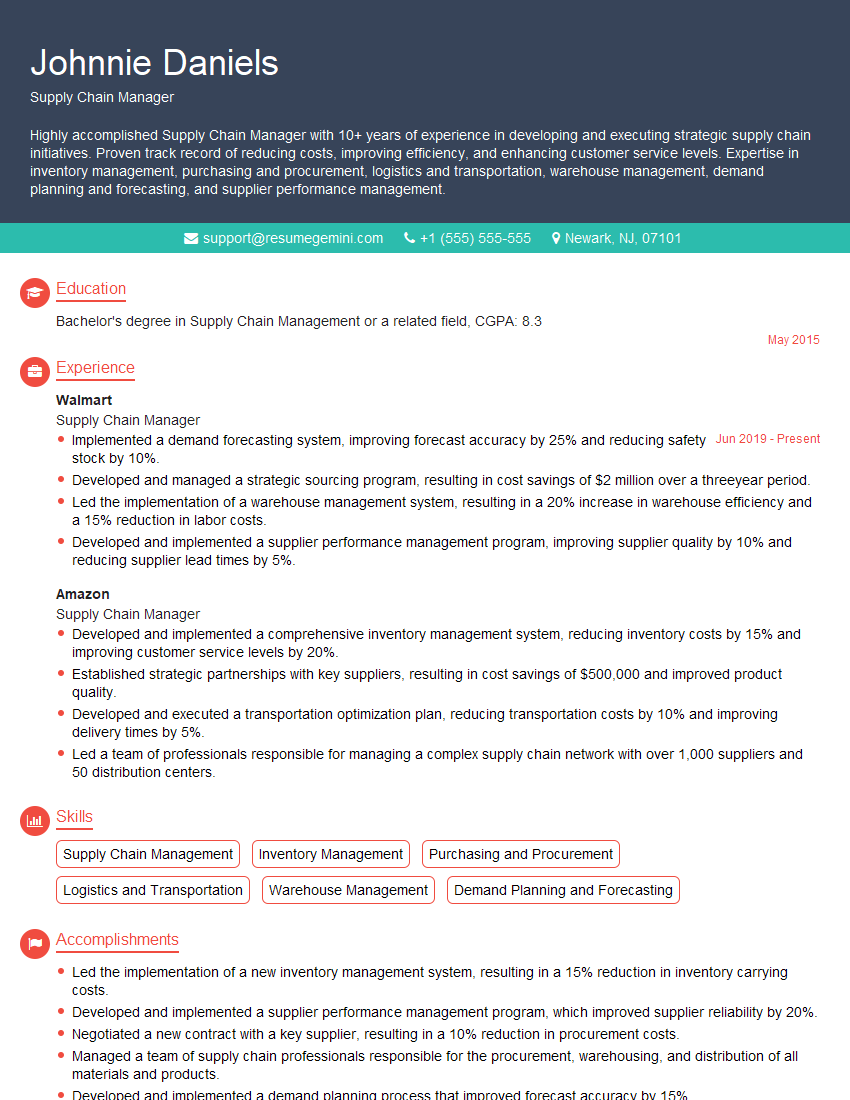
Supply Chain Manager Resume Sample
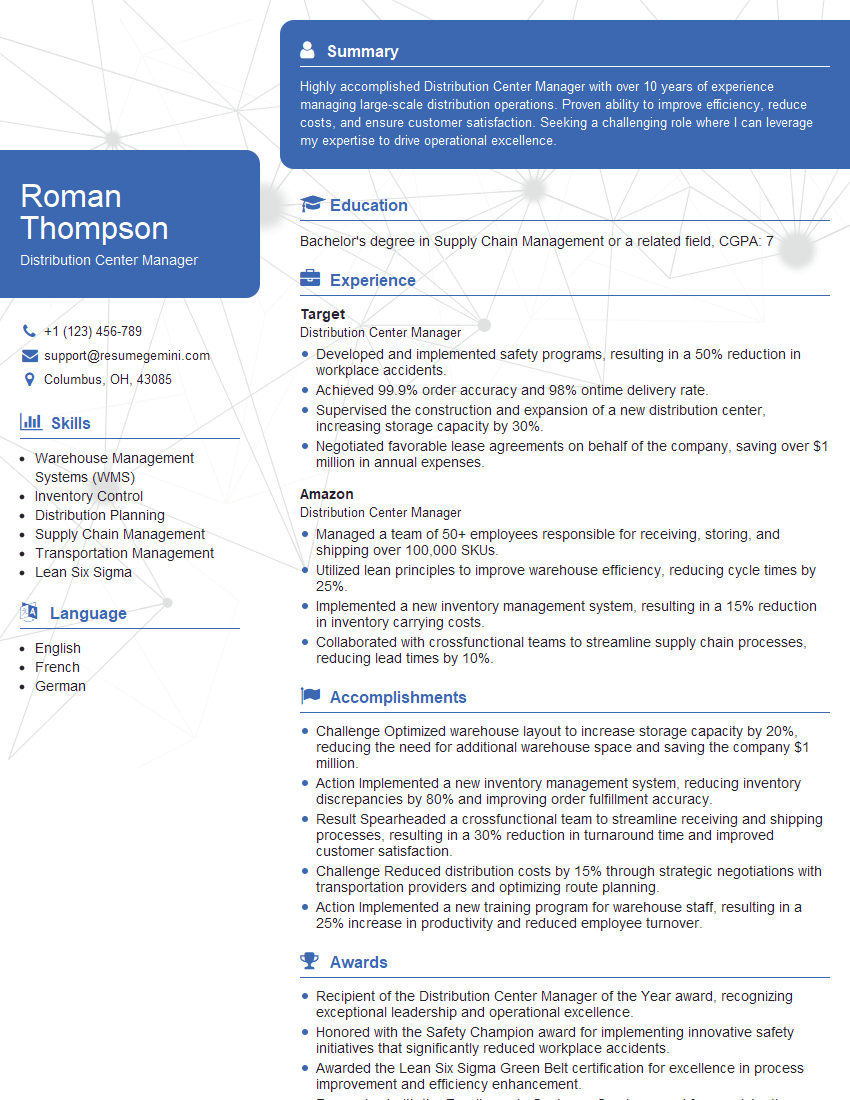
Distribution Center Manager Resume Sample
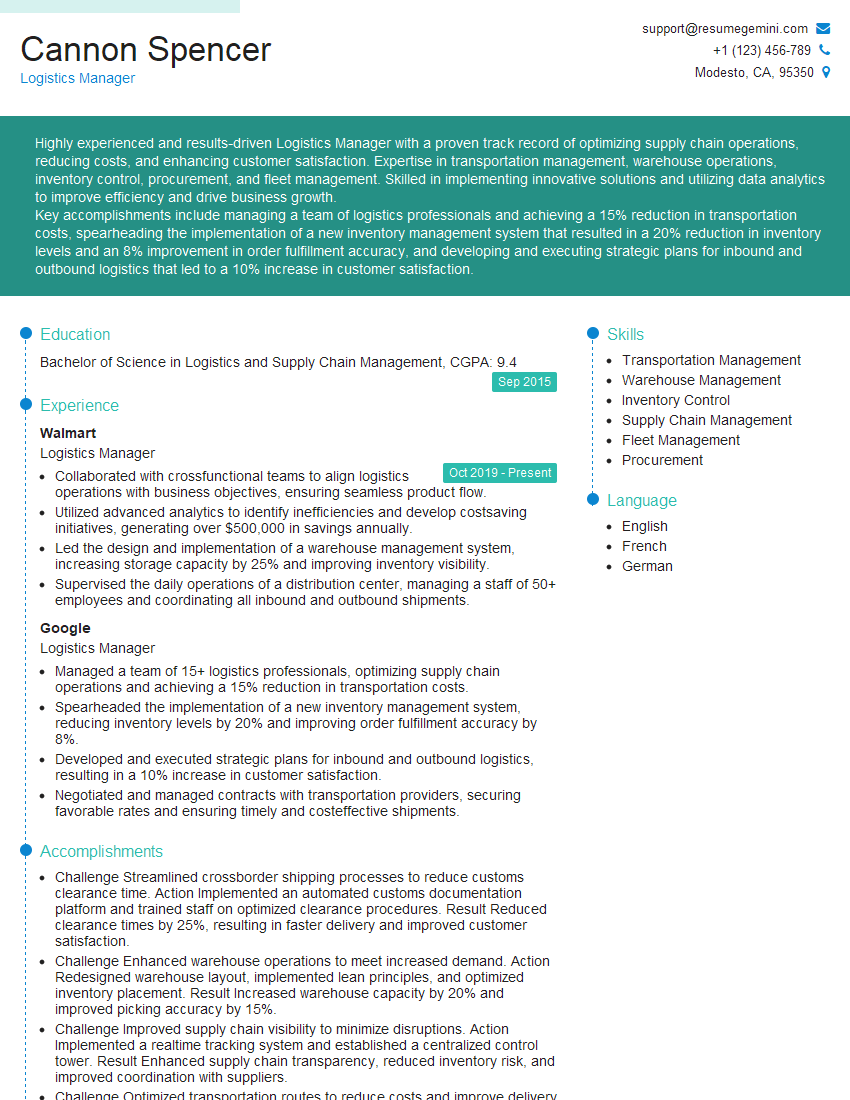
Logistics Manager Resume Sample
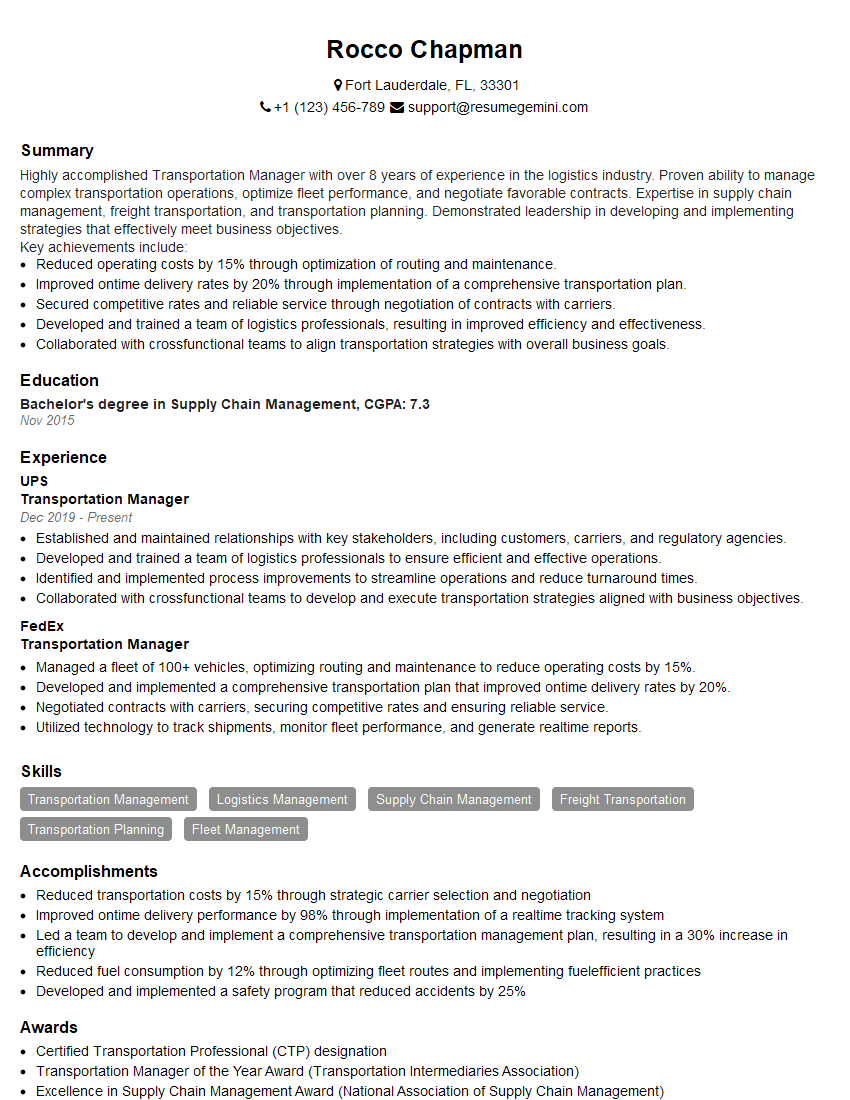
Transportation Manager Resume Sample
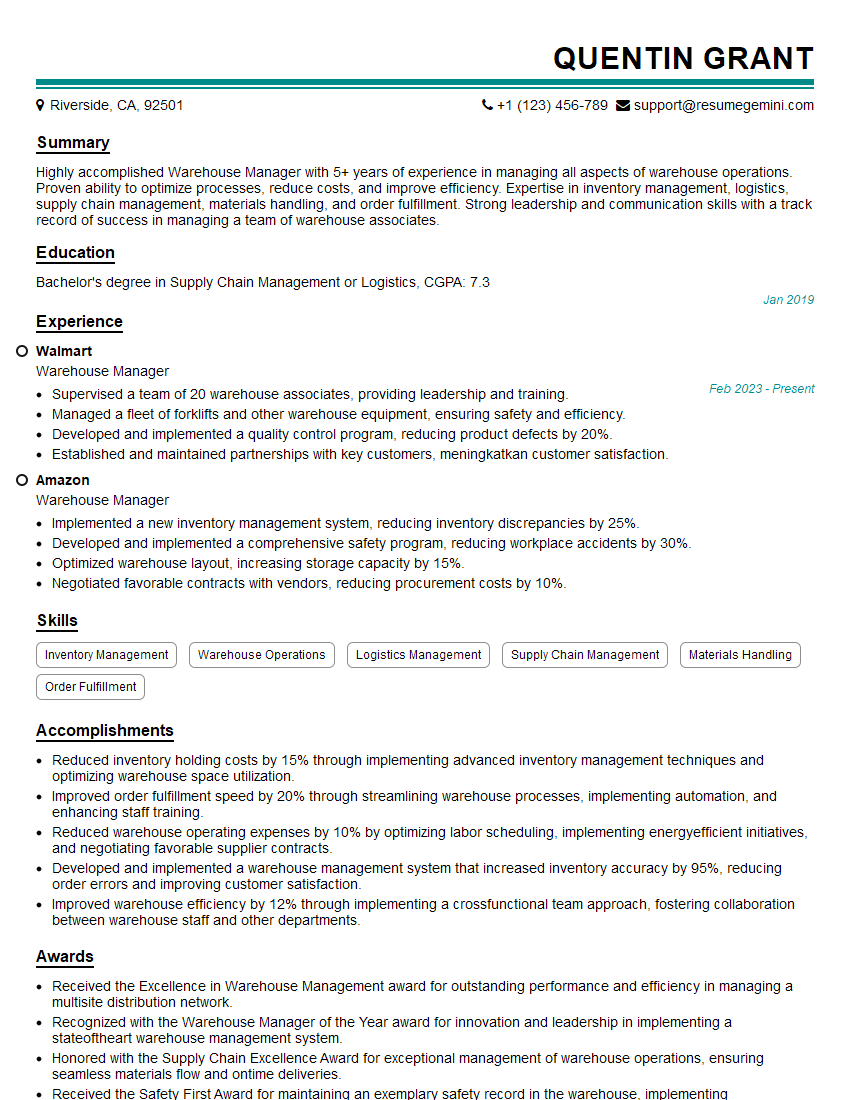
Warehouse Manager Resume Sample
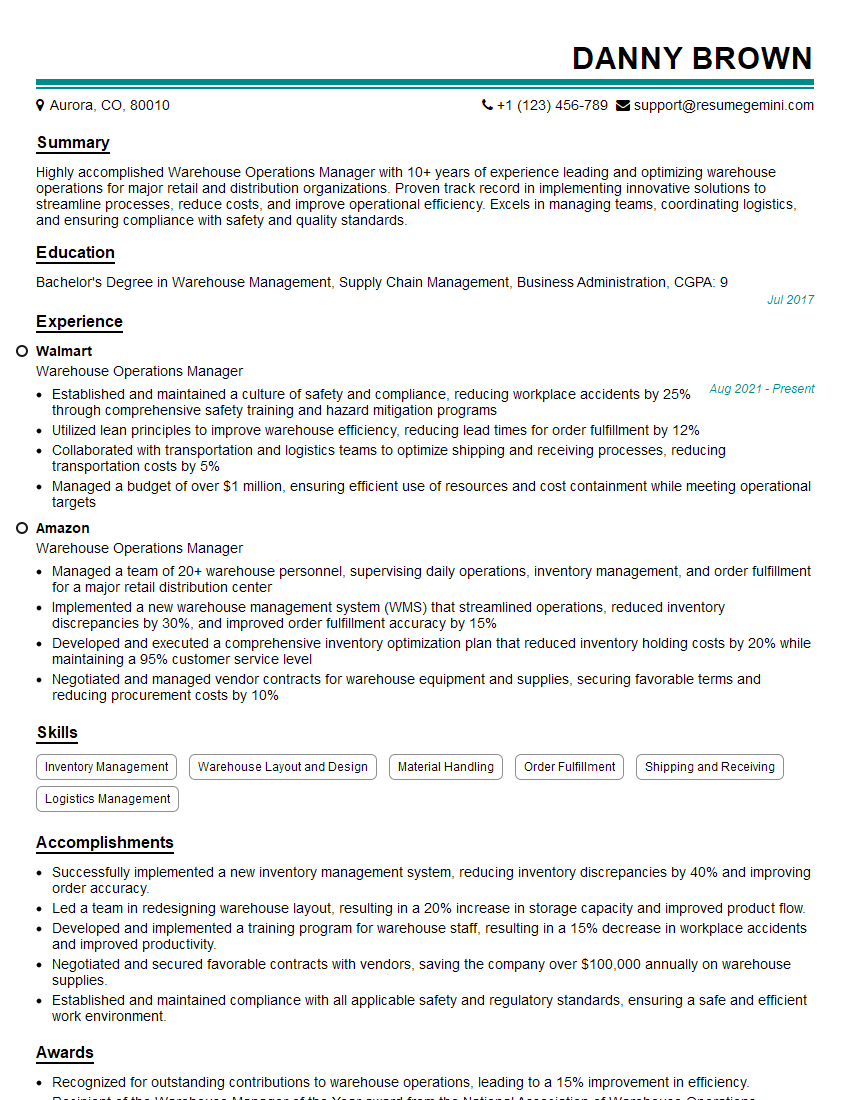
Warehouse Operations Manager Resume Sample
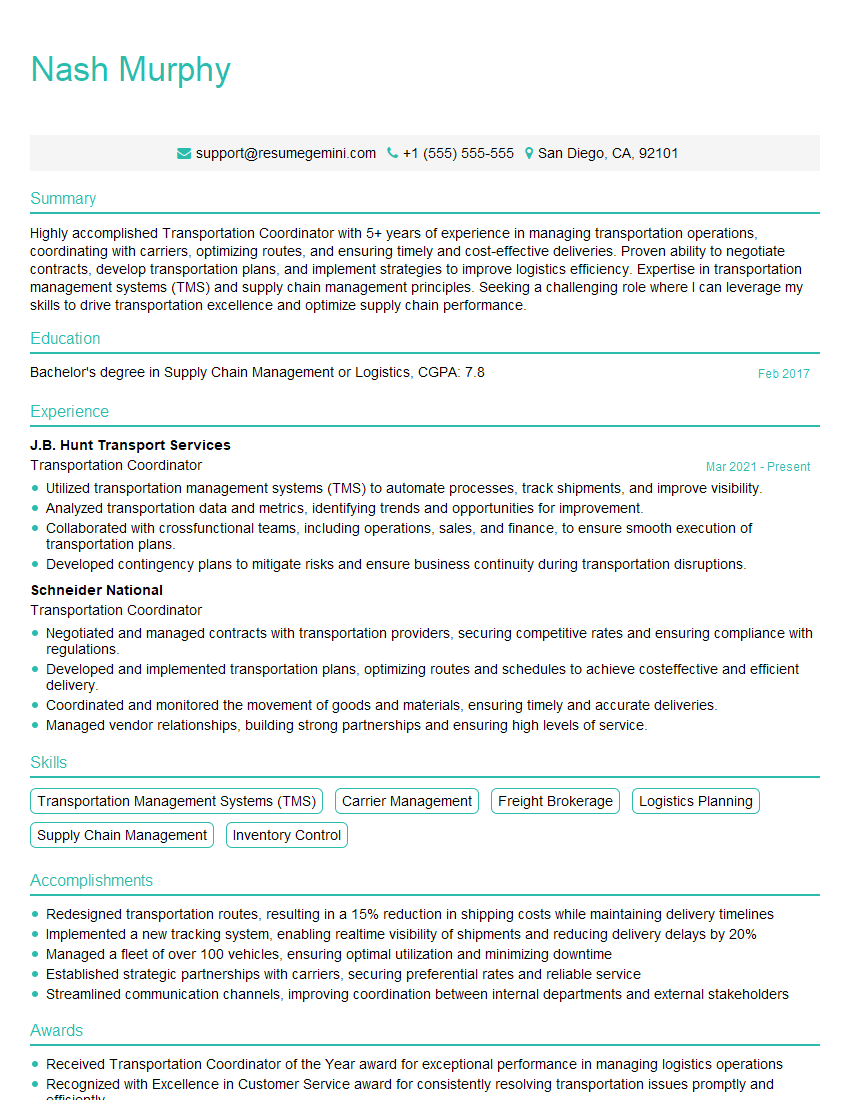
Transportation Coordinator Resume Sample
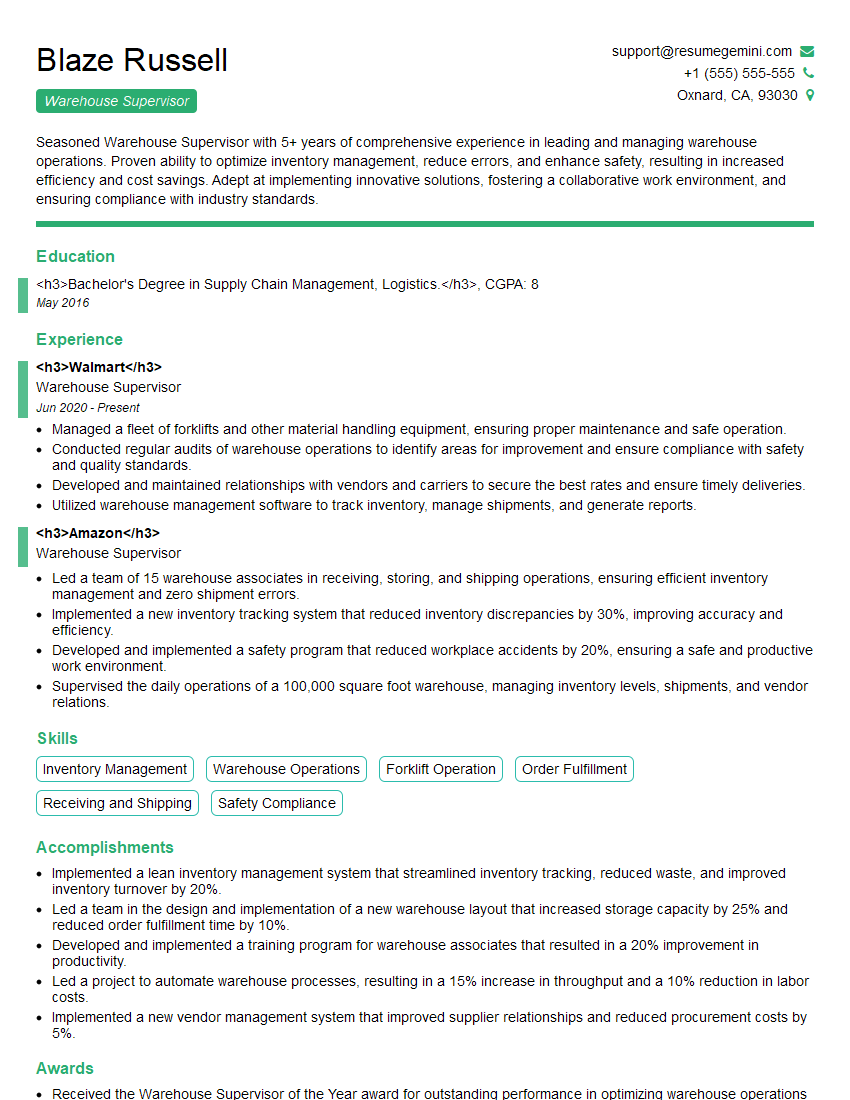
Warehouse Supervisor Resume Sample
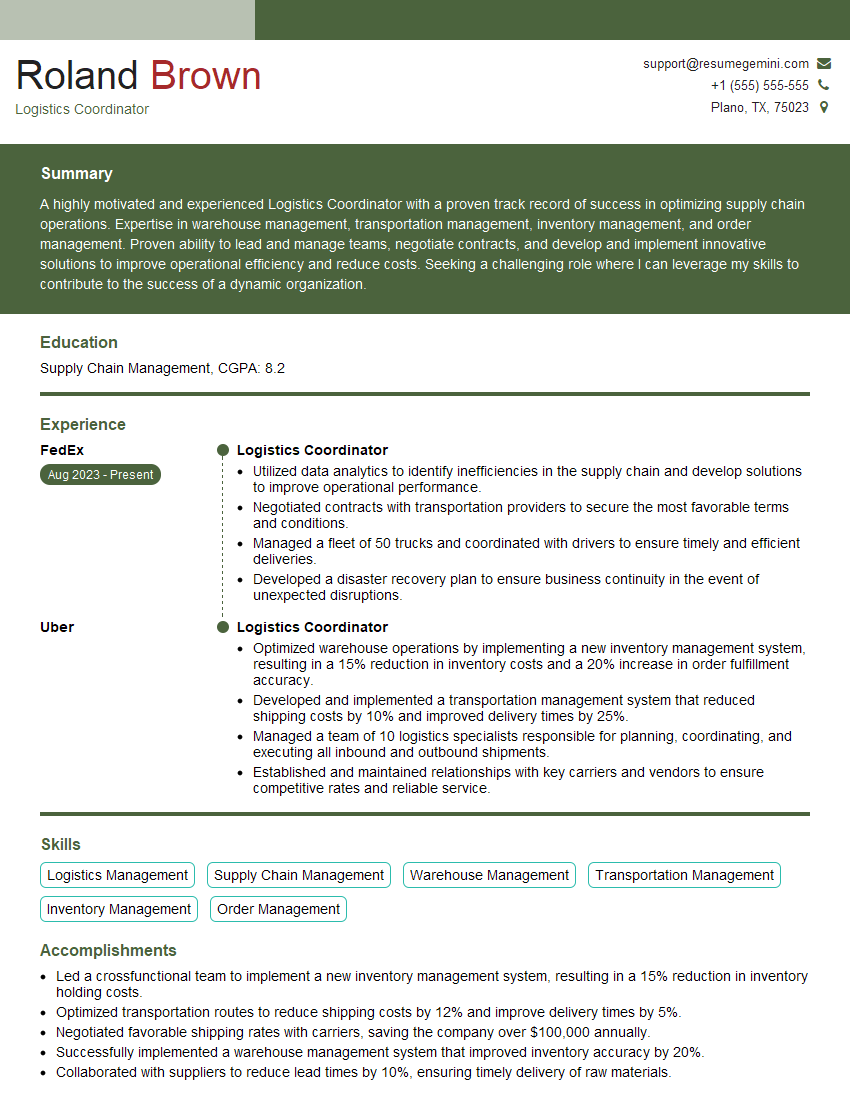
Logistics Coordinator Resume Sample
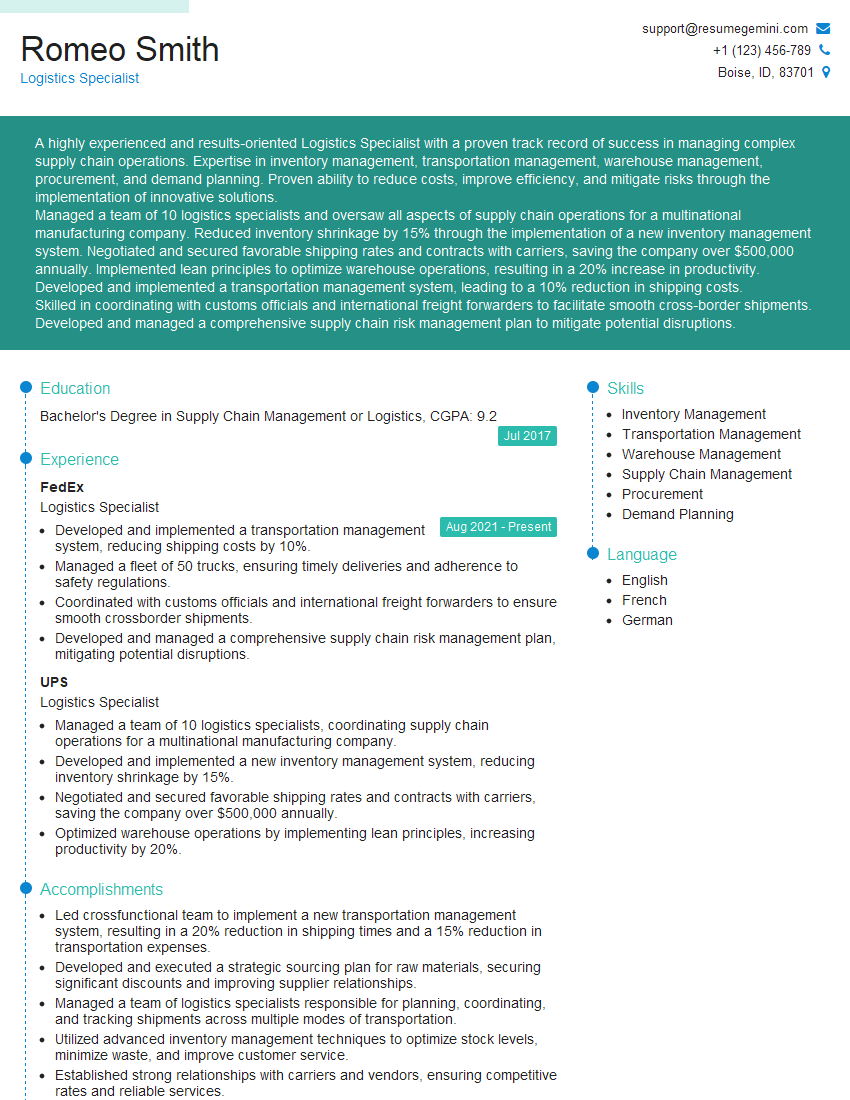
Logistics Specialist Resume Sample
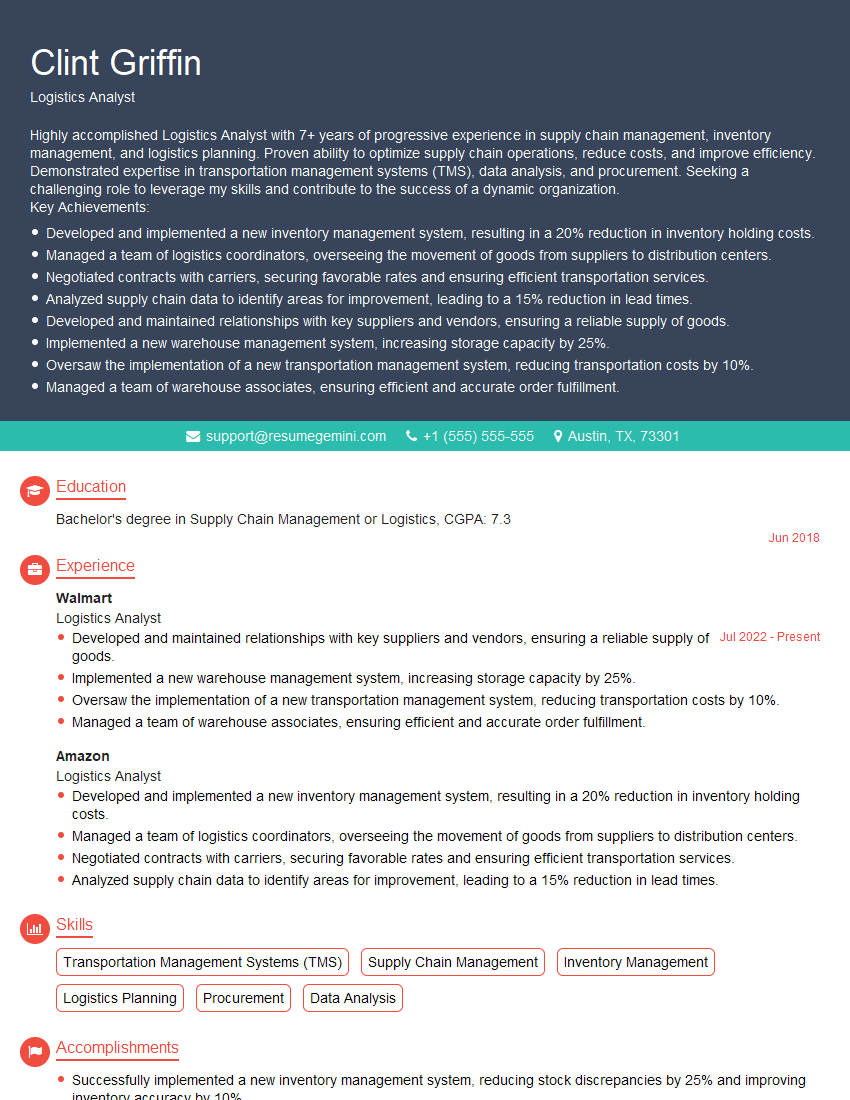
Logistics Analyst Resume Sample
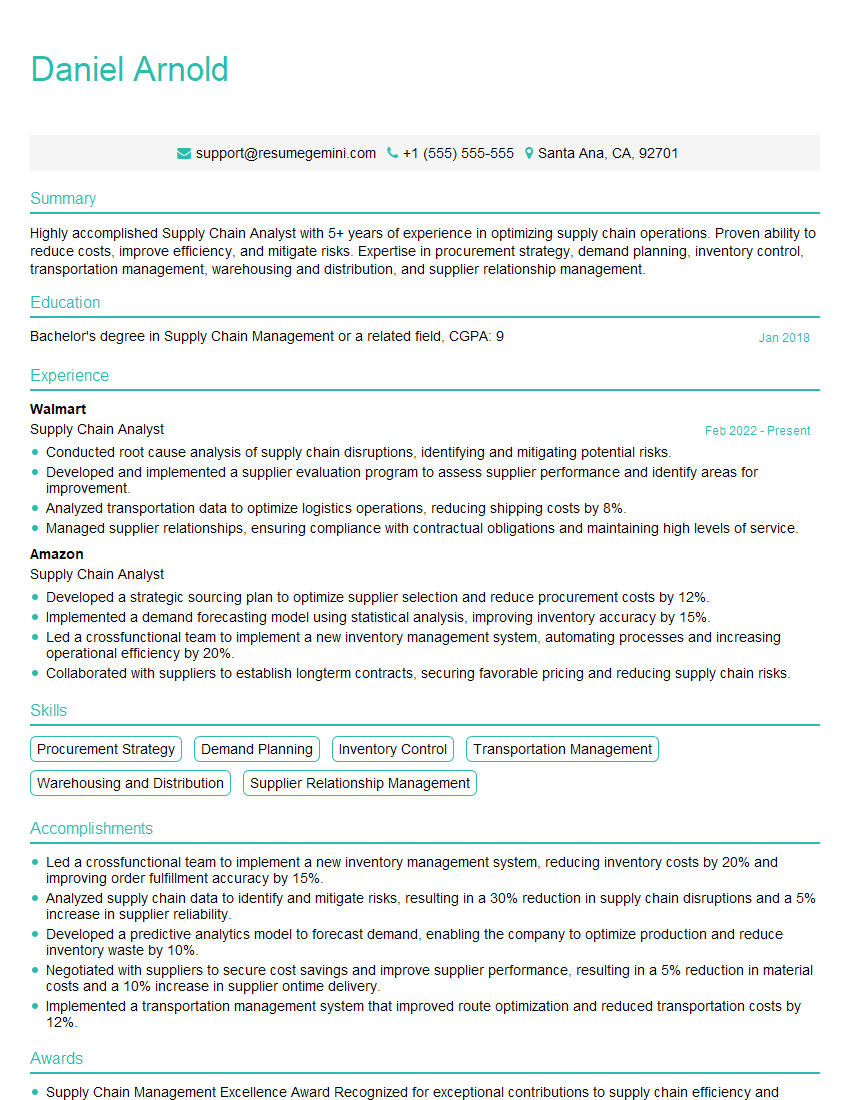
Supply Chain Analyst Resume Sample
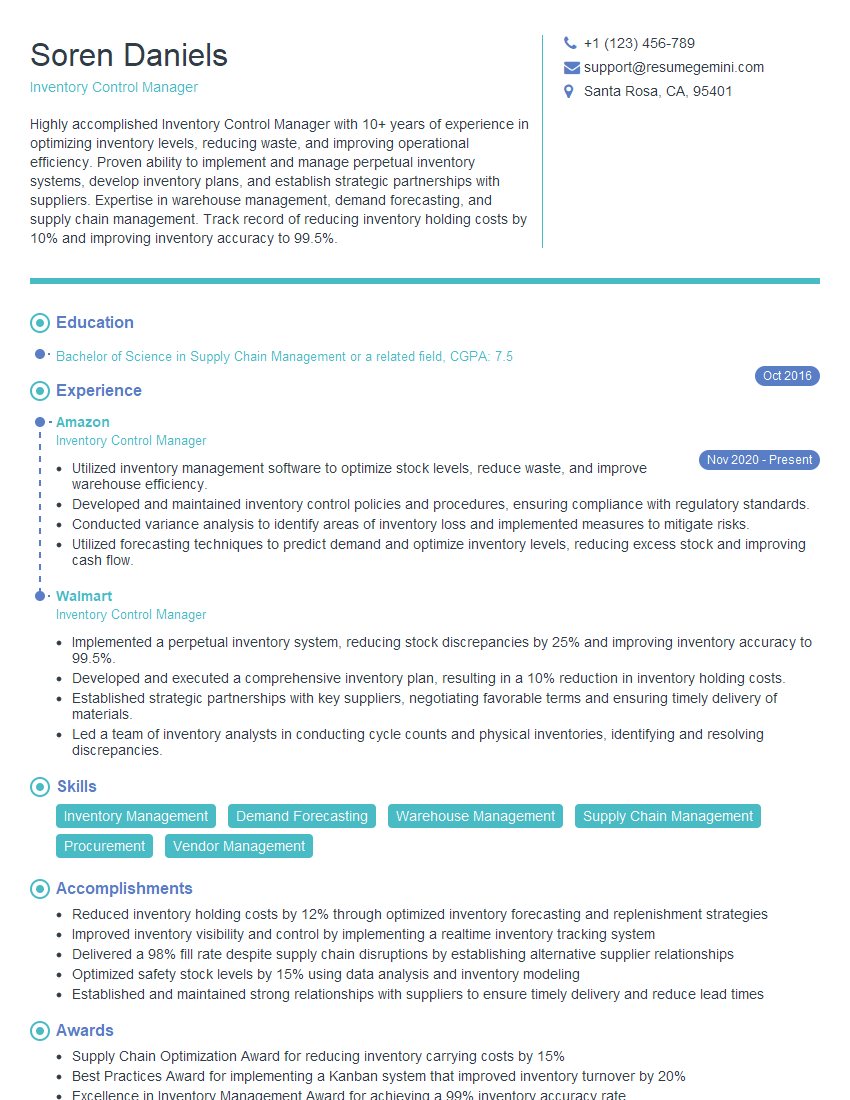
Inventory Control Manager Resume Sample
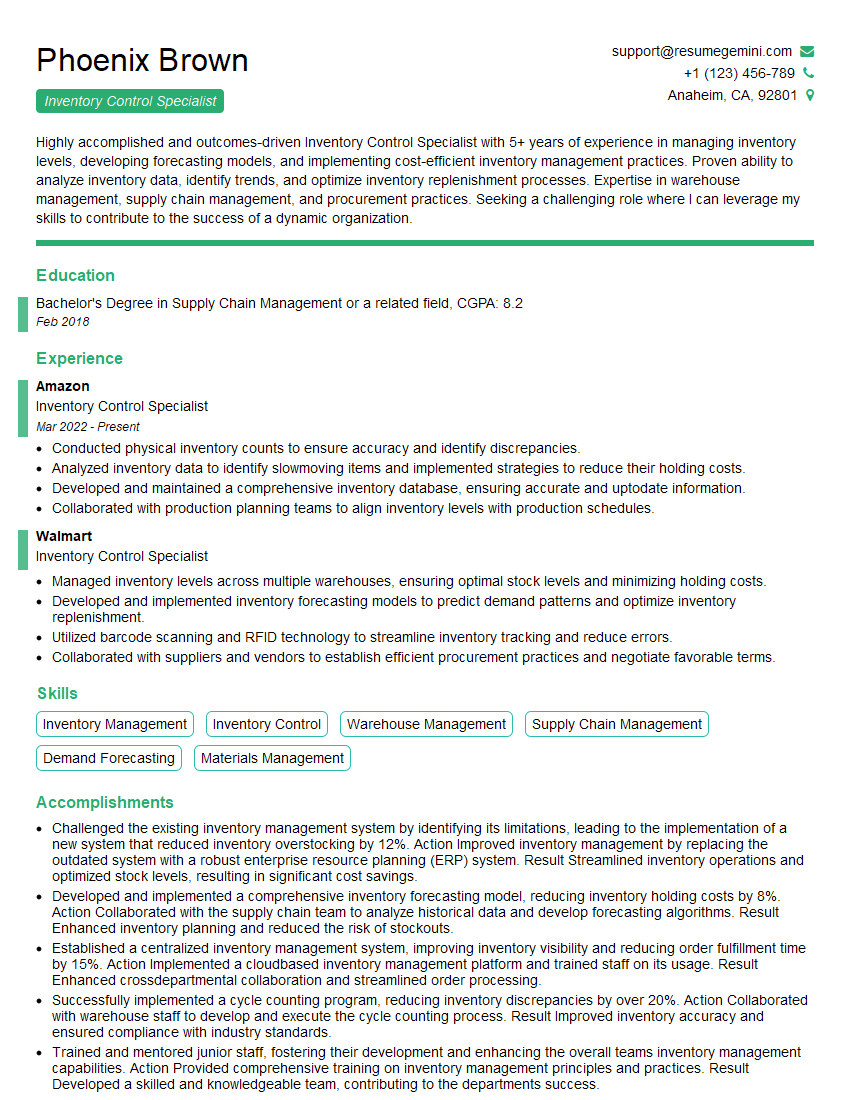
Inventory Control Specialist Resume Sample
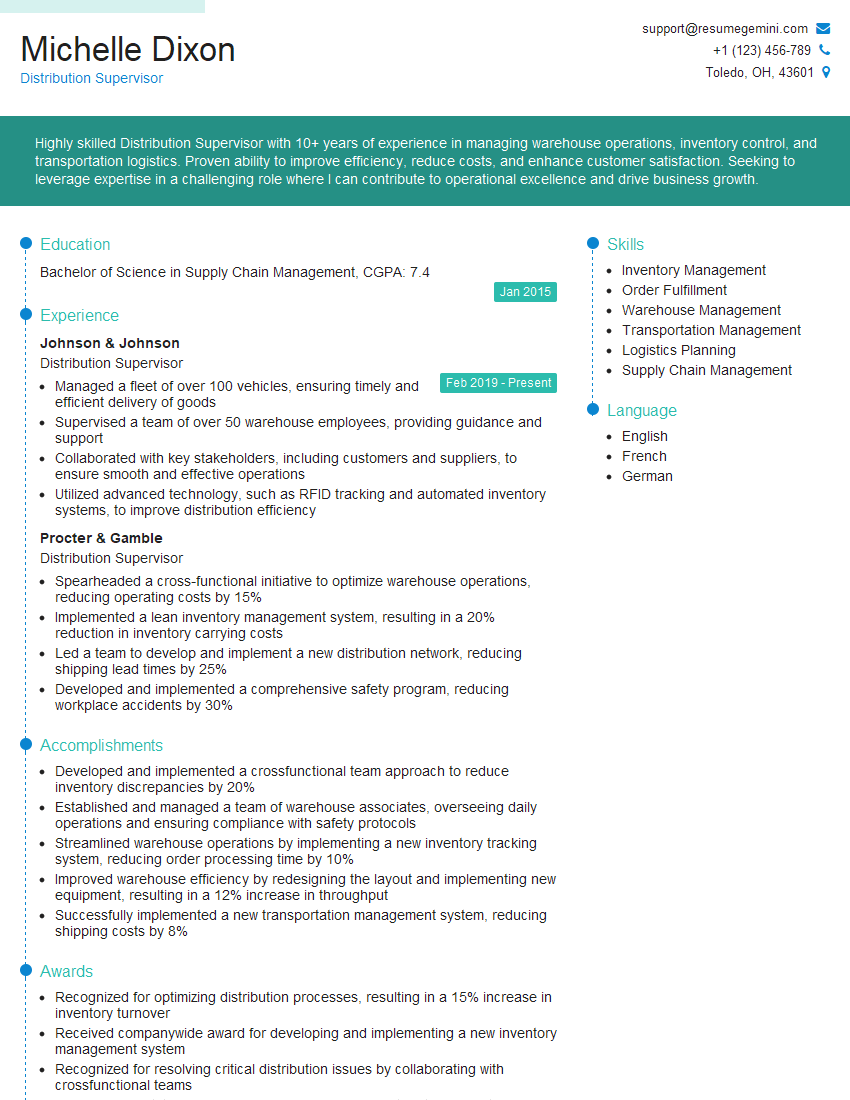
Distribution Supervisor Resume Sample
- Operations Manager
- Supply Chain Manager
- Distribution Center Manager
- Logistics Manager
- Transportation Manager
- Warehouse Manager
- Warehouse Operations Manager
- Transportation Coordinator
- Warehouse Supervisor
- Logistics Coordinator
- Logistics Specialist
- Logistics Analyst
- Supply Chain Analyst
- Inventory Control Manager
- Inventory Control Specialist
- Distribution Supervisor
Explore more articles
Users Rating of Our Blogs
Share Your Experience
We value your feedback! Please rate our content and share your thoughts (optional).
What Readers Say About Our Blog
Really detailed insights and content, thank you for writing this detailed article.
IT gave me an insight and words to use and be able to think of examples