Cracking a skill-specific interview, like one for Experience with Government Regulations, requires understanding the nuances of the role. In this blog, we present the questions you’re most likely to encounter, along with insights into how to answer them effectively. Let’s ensure you’re ready to make a strong impression.
Questions Asked in Experience with Government Regulations Interview
Q 1. Explain your understanding of the Administrative Procedure Act.
The Administrative Procedure Act (APA) is the cornerstone of federal agency rulemaking in the United States. It establishes the procedures federal agencies must follow when creating and enforcing regulations. Think of it as a rulebook for how government agencies create rules that affect us all. It ensures transparency, fairness, and accountability in the regulatory process.
The APA outlines several key requirements, including:
- Notice and Comment Rulemaking: Agencies must publish proposed rules in the Federal Register, providing the public with an opportunity to comment before the rule becomes final. This allows for public participation and input into the regulatory process.
- Formal and Informal Rulemaking: The APA distinguishes between formal and informal rulemaking. Formal rulemaking involves a full hearing, while informal rulemaking, much more common, involves notice and comment.
- Judicial Review: The APA provides for judicial review of agency actions. If you believe an agency has acted improperly, you can challenge the decision in court.
For example, imagine the EPA is proposing a new rule to reduce emissions from power plants. The APA mandates they publish this proposal in the Federal Register, allowing affected industries, environmental groups, and the public to submit their feedback. The EPA then considers these comments before finalizing the rule.
Q 2. Describe your experience with navigating the Federal Register.
Navigating the Federal Register is a crucial skill for anyone working with government regulations. It’s the daily publication that contains proposed and final rules, presidential documents, and other government notices. I’ve used the Federal Register extensively throughout my career, both for researching existing regulations and monitoring proposed changes.
My experience includes:
- Searching for specific regulations: I’m proficient in using the Federal Register’s online search functionality to locate relevant documents based on keywords, agency, or date.
- Tracking proposed rules: I regularly monitor the Federal Register to track the progress of proposed rules affecting my area of expertise, ensuring I’m aware of upcoming changes and deadlines for comment submission.
- Analyzing regulatory text: I possess the skills to effectively interpret and analyze the complex language commonly found in legal documents like those in the Federal Register, understanding the implications of proposed and finalized rules.
For instance, when working on a project involving transportation regulations, I used the Federal Register to find the specific requirements for hazardous materials transport, ensuring our operations remained fully compliant.
Q 3. How familiar are you with the process of obtaining a government permit or license?
Obtaining a government permit or license can be a complex process, varying widely depending on the type of permit and the issuing agency. My experience covers numerous scenarios, and I understand the importance of thorough preparation and adherence to specific procedural requirements.
The process typically involves:
- Identifying the required permit: Determining the appropriate permit or license needed for a specific activity is the first crucial step. This often involves researching federal, state, and local regulations.
- Completing and submitting the application: Applications typically require detailed information, supporting documentation, and sometimes significant fees.
- Meeting agency requirements: Agencies may require inspections, environmental impact studies, or other assessments before issuing a permit. Delays can occur if requirements aren’t met completely.
- Navigating potential appeals processes: If a permit application is denied, understanding and navigating the appeals process is crucial.
For example, I assisted a client in obtaining an air quality permit from the EPA, guiding them through the application process, addressing agency concerns, and ensuring all required documentation was submitted accurately and on time.
Q 4. What is your experience with environmental regulations (e.g., EPA compliance)?
My experience with environmental regulations, particularly EPA compliance, is substantial. I have a deep understanding of various environmental laws, such as the Clean Air Act, Clean Water Act, and Resource Conservation and Recovery Act (RCRA). This includes practical experience in ensuring regulatory compliance for various industries.
This experience includes:
- Environmental impact assessments: I’ve conducted and reviewed environmental impact assessments, identifying potential environmental risks and mitigation strategies.
- Permitting and compliance monitoring: I have experience obtaining and maintaining various environmental permits, and routinely monitor compliance with relevant regulations to prevent costly fines and legal issues.
- Environmental reporting and record-keeping: I’m proficient in preparing and submitting environmental reports and ensuring accurate and comprehensive record-keeping to meet regulatory requirements.
- Environmental audits: Conducting internal and external environmental audits to identify potential compliance gaps.
In one project, I helped a manufacturing company develop a comprehensive environmental management system (EMS) to ensure compliance with RCRA regulations, which resulted in significantly reduced waste generation and improved efficiency.
Q 5. Describe your experience with contract compliance and government procurement regulations.
Contract compliance and government procurement regulations are intricate and crucial for any organization working with government entities. My experience spans various aspects of this domain.
My expertise includes:
- Understanding the Federal Acquisition Regulation (FAR): I have extensive knowledge of the FAR, the primary set of regulations governing government procurement. This includes navigating complex contracting procedures, cost accounting, and contract closeout processes.
- Compliance with ethical standards: I’m deeply familiar with ethical considerations related to government contracting, including conflict of interest regulations and the importance of transparency in bidding and procurement activities.
- Contract negotiation and management: I have experience in negotiating contracts with government agencies and managing contractual obligations to ensure both performance and regulatory compliance.
For instance, I helped a small business navigate the intricacies of bidding on a government contract, guiding them through the proposal development, compliance requirements, and successful negotiation stages. Understanding the FAR was essential for their success.
Q 6. How do you stay updated on changes in government regulations?
Staying updated on changes in government regulations is an ongoing process that requires a multifaceted approach. The regulatory landscape is dynamic, and continuous learning is essential.
My strategies include:
- Regularly monitoring the Federal Register: As mentioned earlier, I consistently check the Federal Register for new proposed and final rules relevant to my field.
- Subscribing to relevant newsletters and publications: I subscribe to industry-specific publications and newsletters that provide updates on regulatory changes.
- Attending industry conferences and workshops: Networking with other professionals and participating in conferences and workshops allow me to learn about emerging issues and regulatory trends.
- Utilizing online resources: There are many online resources and legal databases dedicated to tracking regulatory changes that I use for up-to-date information.
For example, I use a legal database to receive alerts for changes in regulations related to data privacy, ensuring I remain informed on relevant legislation and compliance requirements.
Q 7. Explain your understanding of lobbying regulations and ethics.
Lobbying regulations and ethics are critical for maintaining transparency and fairness in the policymaking process. Lobbying involves attempting to influence government decision-making, and regulations exist to ensure this process is conducted ethically and transparently.
My understanding encompasses:
- Disclosure requirements: Lobbyists are required to register and disclose their activities, clients, and compensation. This helps ensure transparency and accountability.
- Restrictions on gifts and gratuities: Strict rules govern gifts and gratuities to government officials to prevent undue influence.
- Ethics codes and standards of conduct: Many organizations have internal ethics codes to guide lobbying activities and prevent conflicts of interest.
I understand the importance of abiding by these regulations and promoting ethical practices in all lobbying efforts. Understanding and applying these ethical guidelines helps ensure a fair and transparent regulatory environment.
Q 8. Describe a time you had to interpret complex regulations to solve a problem.
Interpreting complex regulations often requires a methodical approach. Think of it like deciphering a complex code – you need to break it down into smaller, understandable parts. During my time at [Previous Company Name], we were implementing a new environmental compliance program under the Clean Water Act. The regulations were incredibly dense, covering everything from discharge permits to effluent limitations. To tackle this, I first created a detailed flowchart mapping out the relevant sections and sub-sections of the regulation to the specific processes within our company. Then, I organized a series of workshops with different departments (Engineering, Production, Legal) to clarify the individual responsibilities and how their processes impacted compliance. This collaborative approach ensured a clear understanding and mitigated potential compliance issues. For instance, the flowchart helped the engineering team understand precisely how modifications to their wastewater treatment system were linked to specific permit requirements. We avoided costly fines and reputational damage by meticulously following this approach.
Q 9. How do you ensure compliance within a large organization?
Ensuring compliance in a large organization requires a multi-faceted strategy, akin to building a robust security system. It’s not just about one thing, but a combination of different layers of protection. First, you need a strong foundation of clearly defined policies and procedures that are readily accessible to all employees. These policies must reflect the current regulations and be updated regularly. Second, comprehensive training programs are crucial. Regular training keeps employees informed about changes in regulations and best practices. Third, a robust system for monitoring and auditing is essential. This can include regular internal audits, self-assessments, and the use of compliance software to track key performance indicators. Finally, fostering a strong culture of compliance is key. This means creating an environment where employees feel comfortable reporting potential non-compliance issues without fear of reprisal. In my previous role at [Previous Company Name], we implemented a compliance management system (CMS) that automated many of these processes, including assigning responsibilities, tracking deadlines, and generating reports. This significantly improved our ability to manage and monitor compliance across the organization.
Q 10. What are some common pitfalls in government regulatory compliance?
Common pitfalls in government regulatory compliance often stem from a lack of proactive planning and understanding. One frequent mistake is failing to keep up with regulatory changes. Regulations evolve, and companies must stay informed about amendments, updates, and new regulations. Another common pitfall is inadequate training for employees. Even the best policies are useless if employees don’t understand them. A third significant pitfall is poor record-keeping. Accurate and readily accessible records are essential for demonstrating compliance to regulators. Finally, neglecting risk assessment is a major issue. Proactively identifying and mitigating risks is crucial in preventing costly non-compliance issues. I’ve seen companies fail due to a lack of robust data management; they couldn’t prove compliance because their data was disorganized or inaccessible. To avoid such issues, a strong compliance program requires continuous monitoring, regular employee training, and a well-structured record-keeping system.
Q 11. How would you handle a situation where a regulation is unclear or ambiguous?
When faced with unclear or ambiguous regulations, a structured approach is essential. The first step is to thoroughly research the regulation, including reviewing supporting documents, guidance materials, and any relevant case law or agency interpretations. Next, it’s crucial to consult with legal counsel specializing in regulatory compliance. They can provide expert guidance on interpreting the ambiguous parts and advise on the safest course of action. If the ambiguity persists, proactive engagement with the relevant regulatory agency is necessary. This could involve submitting a written request for clarification or attending a meeting to discuss the issue. Documenting all actions, research, and communications is crucial to demonstrate due diligence. Think of it like navigating a road with unclear signage – you wouldn’t blindly drive ahead; you’d seek directions and clarify the route before proceeding. Similarly, acting decisively based on incomplete understanding can lead to serious consequences.
Q 12. Explain your experience with risk assessment related to regulatory compliance.
Risk assessment in regulatory compliance is a systematic process of identifying, analyzing, and evaluating potential risks associated with non-compliance. It’s a proactive approach, not reactive. I utilize a framework that identifies potential areas of non-compliance, assesses the likelihood and potential impact of those risks, and then develops mitigation strategies. For example, in a previous role we conducted a risk assessment of our data security procedures concerning HIPAA compliance. We identified potential risks, such as unauthorized access or data breaches, assessed the likelihood and impact of those breaches (both financially and reputationally), and implemented controls, such as enhanced access controls, regular security audits, and employee training. This risk-based approach allowed us to prioritize resources and focus on the most critical areas of risk, effectively minimizing our exposure to potential penalties and reputational damage.
Q 13. Describe your experience with internal audits related to regulatory compliance.
Internal audits are a cornerstone of a strong compliance program. They provide an independent assessment of the effectiveness of our compliance procedures. My experience with internal audits involves developing audit plans that align with the relevant regulations and internal policies, selecting appropriate audit samples, and executing the audits with rigor and objectivity. I also ensure comprehensive documentation of findings, including evidence of compliance and any identified gaps. Furthermore, I collaborate with management to develop corrective action plans to address identified deficiencies and to improve the effectiveness of the compliance program. For example, during an internal audit focusing on financial reporting compliance, we discovered a minor discrepancy in our expense reporting process. This was addressed promptly with revised training and improved internal controls, preventing more significant issues down the line. Regular, well-structured audits help uncover and address issues before they escalate into major problems.
Q 14. How familiar are you with Sarbanes-Oxley Act (SOX) compliance?
I am very familiar with Sarbanes-Oxley Act (SOX) compliance, particularly focusing on the areas relevant to internal controls over financial reporting (ICFR). SOX requires publicly traded companies to maintain robust internal controls to ensure the accuracy and reliability of their financial reporting. My understanding encompasses the key elements of SOX, including the requirements for documentation, testing, and reporting on internal controls. I have experience in designing and implementing SOX-compliant internal controls, conducting SOX audits, and working with external auditors to ensure compliance. Understanding SOX involves not only knowing the regulations but also applying them within the specific context of a company’s processes and systems. This requires a deep understanding of internal controls, risk assessment, and audit methodologies. For instance, my experience at [Previous Company Name] involved overseeing the implementation of several key SOX controls related to revenue recognition and financial reporting processes, which required close collaboration with multiple departments to establish clear roles, responsibilities, and processes.
Q 15. What is your experience with HIPAA compliance?
My experience with HIPAA compliance spans over seven years, encompassing roles from initial implementation to ongoing maintenance and auditing. HIPAA, the Health Insurance Portability and Accountability Act, is a US law designed to protect the privacy and security of Protected Health Information (PHI). My work has involved developing and implementing comprehensive HIPAA compliance programs, including the creation and regular updates of policies and procedures, risk assessments, employee training programs, and the implementation of technical safeguards like encryption and access controls.
For example, I led a project to transition a healthcare client’s electronic health record (EHR) system to a cloud-based platform while ensuring strict adherence to HIPAA’s security rule. This involved a meticulous risk analysis, the selection of a HIPAA-compliant vendor, and rigorous testing to ensure the system met all required standards. We also conducted thorough staff training on the new system and its security features, including appropriate access controls and data breach response procedures.
Beyond this, I’ve been involved in conducting internal audits and preparing for external audits by regulatory bodies like the Office for Civil Rights (OCR). Understanding HIPAA’s intricacies, including its various rules concerning privacy, security, and breach notification, is crucial, and this experience has honed my ability to navigate the complexities of this vital legislation.
Career Expert Tips:
- Ace those interviews! Prepare effectively by reviewing the Top 50 Most Common Interview Questions on ResumeGemini.
- Navigate your job search with confidence! Explore a wide range of Career Tips on ResumeGemini. Learn about common challenges and recommendations to overcome them.
- Craft the perfect resume! Master the Art of Resume Writing with ResumeGemini’s guide. Showcase your unique qualifications and achievements effectively.
- Don’t miss out on holiday savings! Build your dream resume with ResumeGemini’s ATS optimized templates.
Q 16. Describe your experience with data privacy regulations (e.g., GDPR, CCPA).
My experience with global data privacy regulations like GDPR (General Data Protection Regulation) and CCPA (California Consumer Privacy Act) involves a deep understanding of their distinct requirements and overlaps. GDPR, the European Union’s comprehensive data protection law, places significant emphasis on data subject rights, including the right to access, rectification, erasure, and data portability. CCPA, a California state law, focuses on consumer privacy rights regarding the collection, use, and sale of personal information.
In practice, this means working with organizations to conduct data mapping exercises to identify all personal data collected, implementing robust consent mechanisms, and ensuring data security measures align with each regulation’s specific mandates. For instance, I advised a company expanding into the European market on how to meet GDPR’s stringent requirements for data processing, including appointing a Data Protection Officer (DPO) and establishing a comprehensive data breach notification plan. Simultaneously, I guided another organization on adapting its data handling practices to comply with CCPA’s requirements concerning consumer rights and data disclosures.
The key here is recognizing the nuances of these laws, including territorial scope, different definitions of ‘personal data’, and unique enforcement mechanisms. It requires a proactive and adaptable approach to manage the compliance landscape.
Q 17. How do you prioritize competing regulatory requirements?
Prioritizing competing regulatory requirements involves a systematic approach that considers several factors. I employ a risk-based framework, starting with a thorough assessment of each regulation’s potential impact on the organization. This assessment considers the likelihood and severity of non-compliance, including potential fines, reputational damage, and legal repercussions.
Next, I prioritize regulations based on their level of risk. Those posing the most significant risk—for instance, those with high potential fines or those impacting core business operations—receive immediate attention. Less critical requirements may be addressed later or delegated based on resource allocation. This often involves creating a compliance roadmap, with clear timelines, responsibilities, and measurable objectives for each requirement. Regular monitoring and review of this roadmap ensure adaptability to changing regulatory environments.
For example, if a company faces both GDPR and a less stringent industry-specific regulation, I would first focus on achieving GDPR compliance because of its broader scope, higher potential fines, and impact on international operations. The industry-specific regulation, while still important, might be addressed concurrently but with a lower priority, allowing efficient resource allocation.
Q 18. Describe your experience with developing and implementing compliance programs.
My experience in developing and implementing compliance programs includes designing and overseeing all aspects of a comprehensive compliance framework. This involves: 1) Conducting thorough risk assessments to identify vulnerabilities and potential compliance gaps. 2) Developing and documenting policies and procedures that reflect best practices and adhere to relevant regulations. 3) Implementing technical safeguards such as access controls, encryption, and data loss prevention measures. 4) Creating and delivering comprehensive employee training programs to ensure awareness and understanding of compliance requirements. 5) Establishing monitoring and auditing processes to evaluate the effectiveness of the program and identify areas for improvement. 6) Developing incident response plans to address potential compliance breaches promptly and effectively.
For example, I once developed a comprehensive compliance program for a financial institution, encompassing all relevant regulations, including data security standards, anti-money laundering (AML) compliance, and know your customer (KYC) regulations. This involved collaborating with different departments, conducting thorough risk assessments, implementing secure data storage and access controls, and providing regular training to employees. The program’s success was demonstrated through successful regulatory audits and a significantly reduced risk of compliance violations.
Q 19. How do you communicate complex regulatory information to non-technical audiences?
Communicating complex regulatory information to non-technical audiences requires a clear, concise, and relatable approach. I avoid jargon and technical terms whenever possible, using analogies and real-world examples to illustrate key concepts. For instance, explaining data encryption might involve comparing it to locking a physical box to protect its contents. Visual aids, such as flowcharts or infographics, can be extremely helpful in conveying complex processes or data flows.
I also break down complex information into smaller, manageable chunks, using plain language and focusing on the practical implications of compliance. This ensures the audience understands the ‘why’ behind the regulations, increasing engagement and buy-in. Interactive training sessions, quizzes, and follow-up discussions reinforce learning and address any remaining questions or concerns. Tailoring the communication style to the specific audience, considering their level of understanding and their roles within the organization, is also critical for effective knowledge transfer. For example, a presentation for senior management would focus on the business impact of non-compliance, while a presentation for junior staff would emphasize their individual responsibilities.
Q 20. Explain your experience with regulatory reporting and documentation.
My experience with regulatory reporting and documentation encompasses all aspects of creating and maintaining accurate, complete, and readily accessible records. This involves meticulously documenting all compliance-related activities, including risk assessments, policy updates, training records, and audit findings. I utilize a combination of digital tools and physical files, ensuring data security and version control. The format and content of reports are tailored to the specific regulatory requirements, whether it’s a formal report for a government agency or an internal audit report. This includes generating reports and documentation for audits, both internal and external, providing clear evidence of compliance with regulations.
For instance, I have created and maintained comprehensive compliance documentation for ISO 27001 certification, a widely recognized information security standard. This involved meticulously documenting our information security management system (ISMS), including policies, procedures, risk assessments, and incident response plans. This rigorous documentation ensured a smooth and successful audit process and demonstrated our commitment to maintaining robust information security standards.
Q 21. Describe a time you identified a potential compliance issue and your actions.
During a recent project involving the implementation of a new CRM system for a client, I identified a potential compliance issue concerning the storage of sensitive customer data. The initial system configuration did not meet the data residency requirements outlined in a specific regional regulation. My action plan involved immediately halting the deployment, conducting a thorough risk assessment, and engaging with the vendor and the client’s IT department to find a compliant solution.
This included researching alternative cloud providers that met the data residency requirements, reviewing the system’s data encryption and access control mechanisms, and developing a remediation plan with clear timelines and responsibilities. We then implemented the necessary changes and conducted rigorous testing before resuming the deployment. This proactive approach prevented a potential compliance violation and underscored the importance of vigilance throughout the entire project lifecycle. Thorough documentation of the issue, the risk assessment, and the remediation steps was crucial in ensuring accountability and demonstrating a robust compliance approach.
Q 22. How would you handle a situation where a regulatory violation occurs?
Handling a regulatory violation requires a swift, methodical approach prioritizing transparency and remediation. First, I would immediately initiate an internal investigation to fully understand the nature and extent of the violation. This involves gathering all relevant documentation, interviewing involved personnel, and analyzing processes to identify the root cause. Once the facts are established, we’d develop a comprehensive corrective action plan. This plan should not only address the immediate violation but also prevent future occurrences. It might involve retraining staff, implementing new control procedures, or even modifying existing systems. Next, we’d voluntarily disclose the violation to the relevant regulatory agency, providing them with the results of our internal investigation and our proposed corrective action plan. Open communication and proactive cooperation are key to mitigating potential penalties. Finally, we’d implement the corrective action plan, meticulously tracking progress and documenting all steps taken. Regular audits would ensure continued compliance.
For example, if a data breach occurred violating privacy regulations like GDPR, we’d immediately secure the compromised data, notify affected individuals, and cooperate fully with any investigations by the relevant data protection authority. Our corrective action plan would include enhanced security measures, improved employee training on data protection, and a more robust incident response plan.
Q 23. What is your experience with conducting regulatory research?
My regulatory research experience spans several industries, including healthcare and finance. I’m adept at navigating complex legal databases, utilizing tools like Westlaw and LexisNexis to identify relevant statutes, regulations, and case law. I’m proficient in interpreting legislative language, recognizing ambiguities, and anticipating potential challenges. My approach is systematic, beginning with a thorough understanding of the specific regulatory environment. This includes not just the primary legislation but also relevant agency guidance documents, interpretive rulings, and enforcement actions. I consider the practical implications of regulations, how they intersect with other compliance obligations, and the potential business risks associated with non-compliance. I’m skilled in synthesizing large volumes of information to create concise, accurate, and actionable summaries for internal stakeholders.
For instance, when researching HIPAA compliance for a healthcare client, I went beyond simply reading the regulation itself. I also analyzed relevant Office for Civil Rights guidance, looked at enforcement actions to understand areas of particular focus, and reviewed industry best practices to develop practical solutions that minimize risk.
Q 24. Explain your understanding of different types of regulatory penalties.
Regulatory penalties vary significantly depending on the severity of the violation, the regulatory agency involved, and the history of the offending entity. Penalties can be broadly categorized into:
- Civil penalties: These are monetary fines levied against an organization or individual for non-compliance. The amount can range from relatively small sums to millions of dollars depending on the seriousness of the offense.
- Criminal penalties: In cases of severe or willful violations, criminal charges can be filed, resulting in significant fines, imprisonment, or both.
- Administrative penalties: These may include warnings, cease-and-desist orders, suspension or revocation of licenses, or mandatory compliance programs.
- Injunctions: Court orders requiring an entity to stop a specific activity or to take corrective action.
For example, a small business might face a civil penalty for a minor paperwork error, whereas a large corporation knowingly violating environmental regulations could face substantial criminal penalties, including fines and imprisonment for executives.
Q 25. How do you measure the effectiveness of your regulatory compliance efforts?
Measuring the effectiveness of regulatory compliance efforts requires a multifaceted approach. Key performance indicators (KPIs) are crucial. These might include the number of regulatory audits successfully completed without findings, the frequency of internal audits, employee training completion rates, the number of reported compliance incidents, and the time taken to resolve compliance issues. We can also track the cost of compliance, such as legal fees, training expenses, and system upgrades. Furthermore, regular internal audits and mock inspections help identify weaknesses in the compliance program. Analyzing the results of these audits reveals areas needing improvement and allows for proactive adjustments to our approach. By tracking trends in these KPIs over time, we can assess the overall effectiveness of our efforts and identify any patterns that might signal emerging risks.
For a manufacturing company, for example, KPIs might include the number of products recalled due to non-compliance, the rate of successful environmental inspections, and the number of worker safety incidents.
Q 26. Describe your experience with working with government agencies.
I have extensive experience working with various government agencies, including the EPA, FDA, and the Department of Transportation. My interactions have primarily involved submitting regulatory filings, responding to agency inquiries, and participating in compliance audits. In many cases, I’ve built strong working relationships with agency personnel, fostering open communication and trust. This collaborative approach allows for efficient resolution of compliance issues and ensures a proactive, rather than reactive, approach to regulatory compliance. Proactive engagement demonstrates a commitment to compliance and helps prevent escalating issues into more serious problems. Moreover, a good relationship allows for early identification of potential regulatory changes impacting our operations, allowing us to adapt in advance.
For instance, working with the EPA on a client’s environmental permit application involved regular communication, addressing their concerns and clarifying details promptly. This collaborative effort resulted in a timely approval without significant delays.
Q 27. How familiar are you with the process of submitting regulatory comments?
I’m highly familiar with the process of submitting regulatory comments. This involves carefully reviewing proposed regulations, identifying potential impacts on our clients, and preparing well-structured, evidence-based comments outlining our position. This requires a deep understanding of the relevant regulatory framework and the ability to articulate our arguments clearly and persuasively. The process typically involves adhering to specific deadlines and formatting requirements established by the regulatory agency. Successfully submitting comments requires meticulous attention to detail to ensure accuracy and completeness. In addition, we need to be familiar with the applicable regulations for the electronic filing system used by the agency, along with any requirements for public disclosure.
For instance, when commenting on a proposed change to a financial regulation, we analyzed the potential consequences of the proposed rule on our client’s operations, prepared detailed economic analysis, and submitted our comments well in advance of the deadline.
Q 28. What are your strategies for building and maintaining positive relationships with regulatory bodies?
Building and maintaining positive relationships with regulatory bodies requires a proactive, transparent, and collaborative approach. This starts with establishing open lines of communication. Regular communication keeps the agency informed of our activities and allows us to address potential issues early. Demonstrating a commitment to compliance, both in letter and spirit, is crucial. Proactively engaging with the agency, such as participating in advisory committees, demonstrates our good faith and willingness to collaborate. Additionally, building relationships with agency staff through professional interactions, such as attending industry conferences and participating in agency-sponsored events, helps foster trust and understanding. Finally, when issues arise, responding promptly, transparently, and collaboratively helps to mitigate negative impacts.
For example, regularly attending industry meetings with representatives from the FDA helped build relationships and allowed for early insights into upcoming regulatory changes and potential areas of concern.
Key Topics to Learn for Experience with Government Regulations Interview
- Understanding Regulatory Frameworks: Grasp the foundational principles behind relevant government regulations. Explore the legislative process and how regulations are created and enforced.
- Compliance and Risk Management: Learn practical applications of regulatory compliance. Discuss strategies for identifying, assessing, and mitigating regulatory risks within an organization. Consider examples of real-world scenarios and how compliance failures were addressed.
- Data Privacy and Security Regulations (e.g., HIPAA, GDPR): Understand the nuances of data handling within a regulatory environment. Explore the practical implications of data breaches and how to prevent them.
- Industry-Specific Regulations: Research the specific regulations impacting your target industry. Demonstrate your understanding of how these regulations shape business practices and operational procedures.
- Auditing and Reporting: Familiarize yourself with regulatory reporting requirements and internal audit processes. Understand how to ensure compliance and demonstrate effective documentation.
- Problem-solving and Adaptability: Prepare to discuss situations where you had to navigate complex regulatory changes or overcome compliance challenges. Highlight your problem-solving skills and ability to adapt to evolving regulations.
- Ethical Considerations: Discuss the ethical implications of non-compliance and the importance of maintaining integrity within a regulated environment.
Next Steps
Mastering Experience with Government Regulations is crucial for career advancement in many high-demand fields. A strong understanding of compliance and risk management will significantly enhance your job prospects and demonstrate your value to potential employers. To stand out, create an ATS-friendly resume that highlights your relevant skills and experience. ResumeGemini is a trusted resource to help you build a professional and impactful resume. We offer examples of resumes tailored to showcasing experience with Government Regulations, helping you present yourself effectively to recruiters and hiring managers.
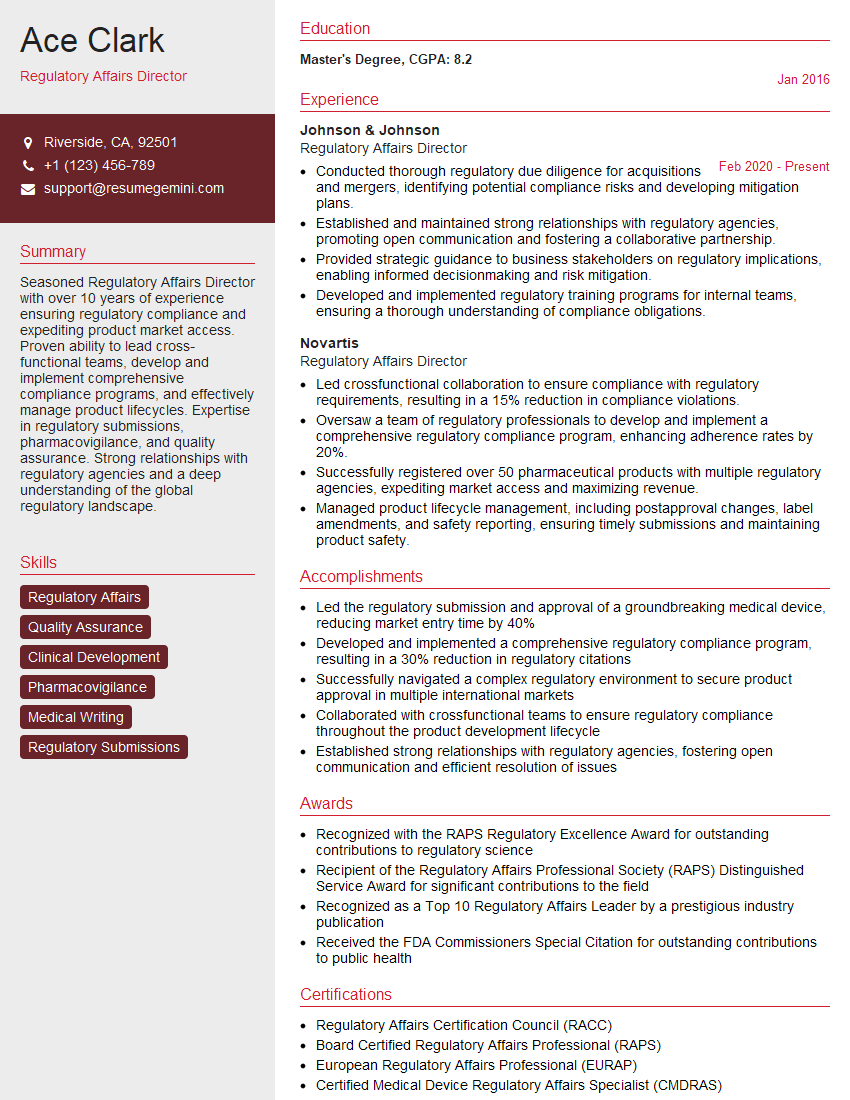
Regulatory Affairs Director Resume Sample
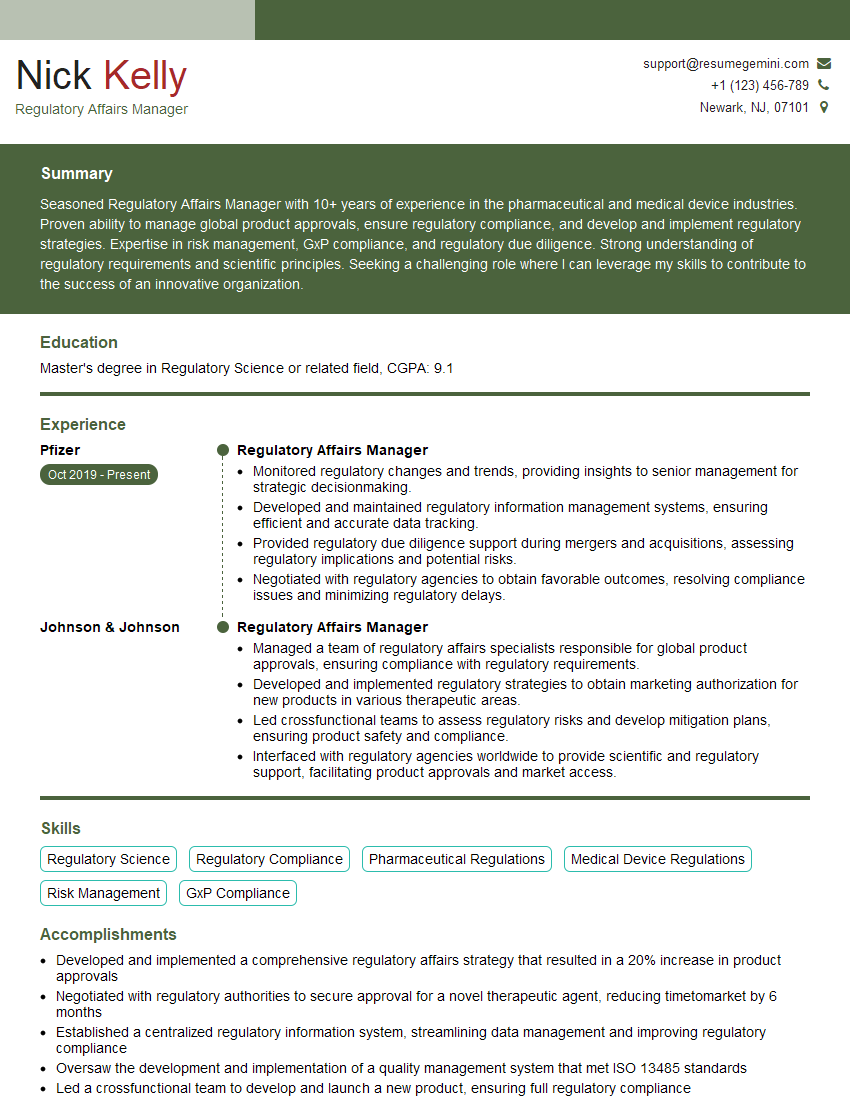
Regulatory Affairs Manager Resume Sample
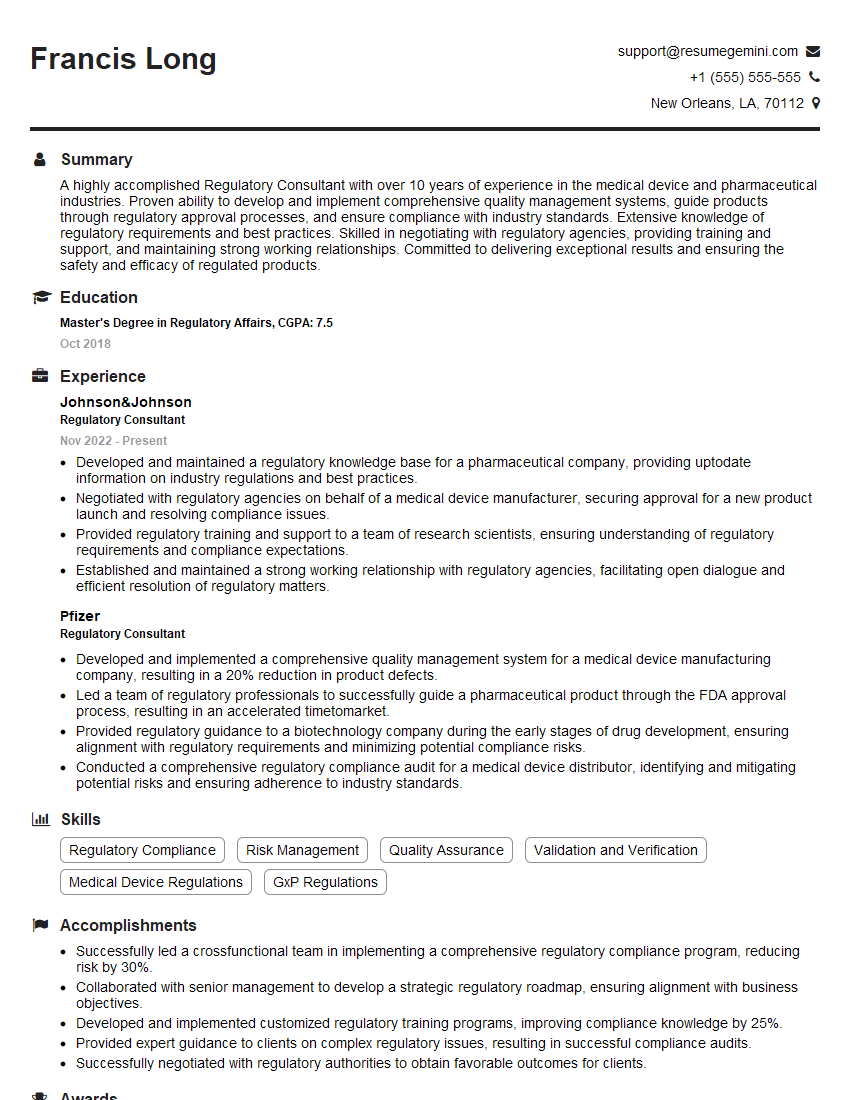
Regulatory Consultant Resume Sample
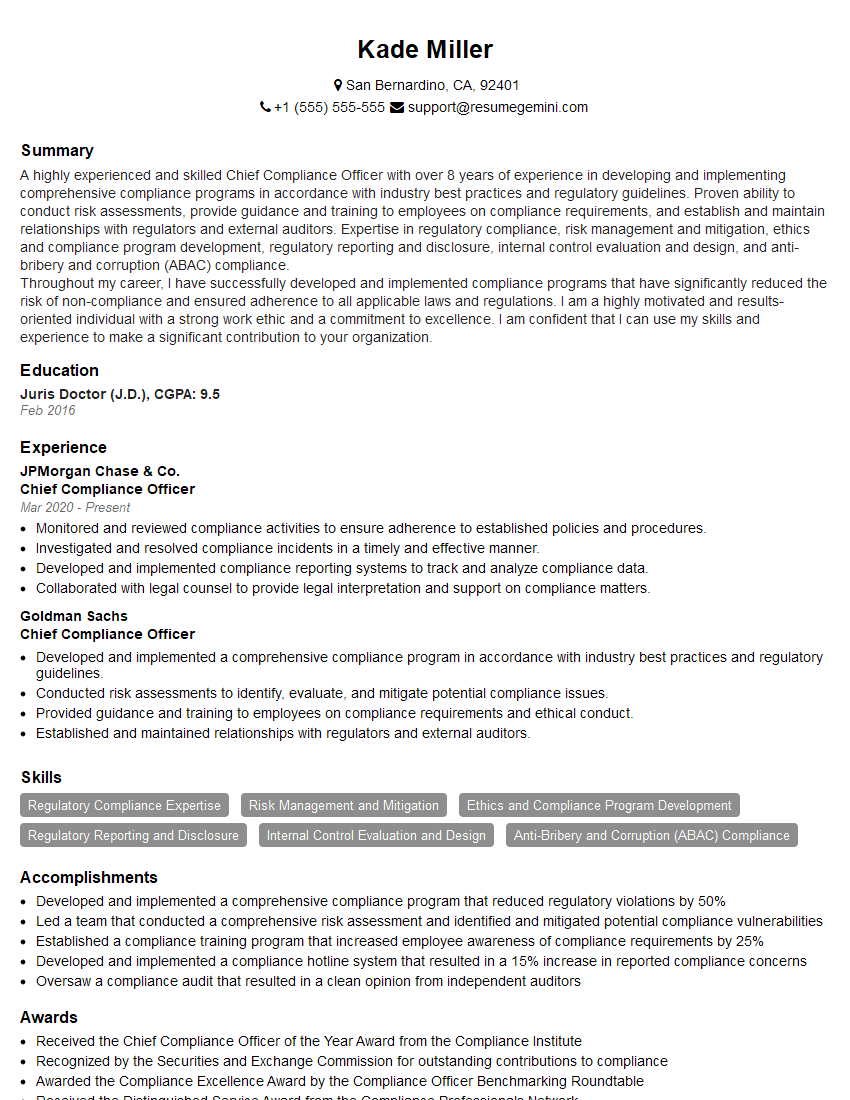
Chief Compliance Officer Resume Sample

Compliance Officer Resume Sample
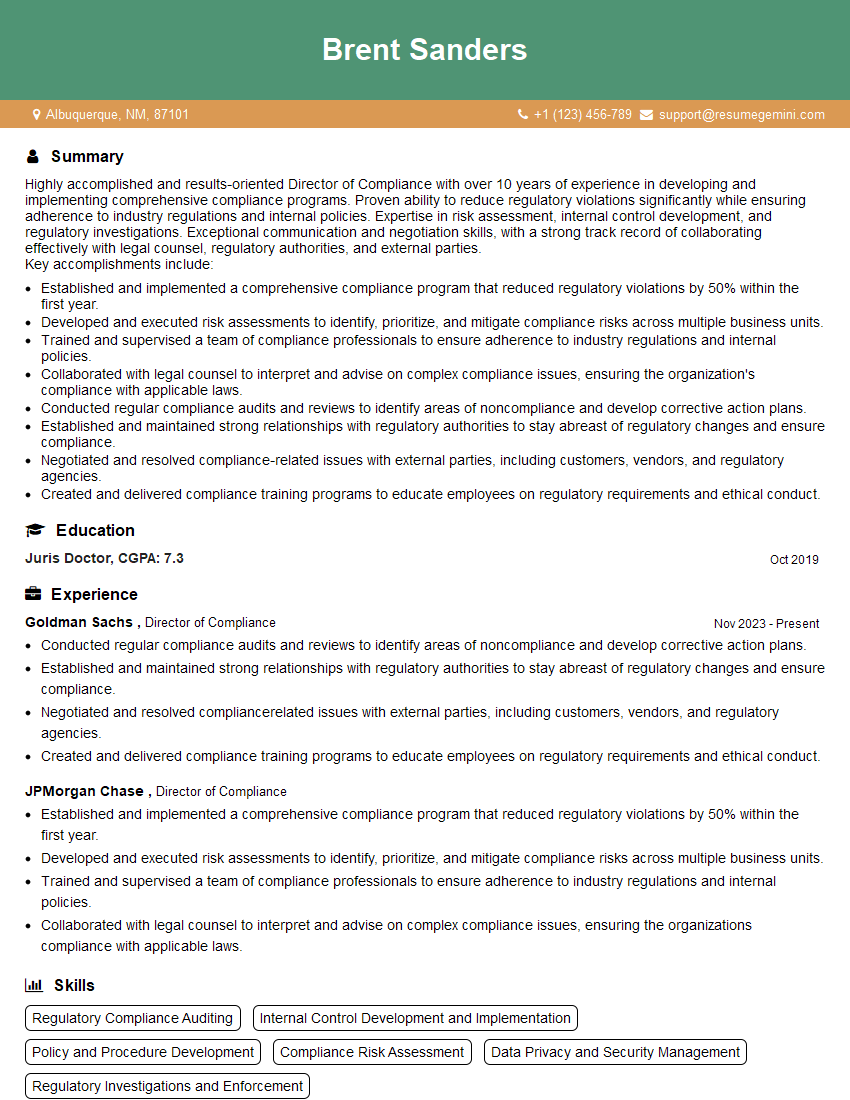
Director of Compliance Resume Sample
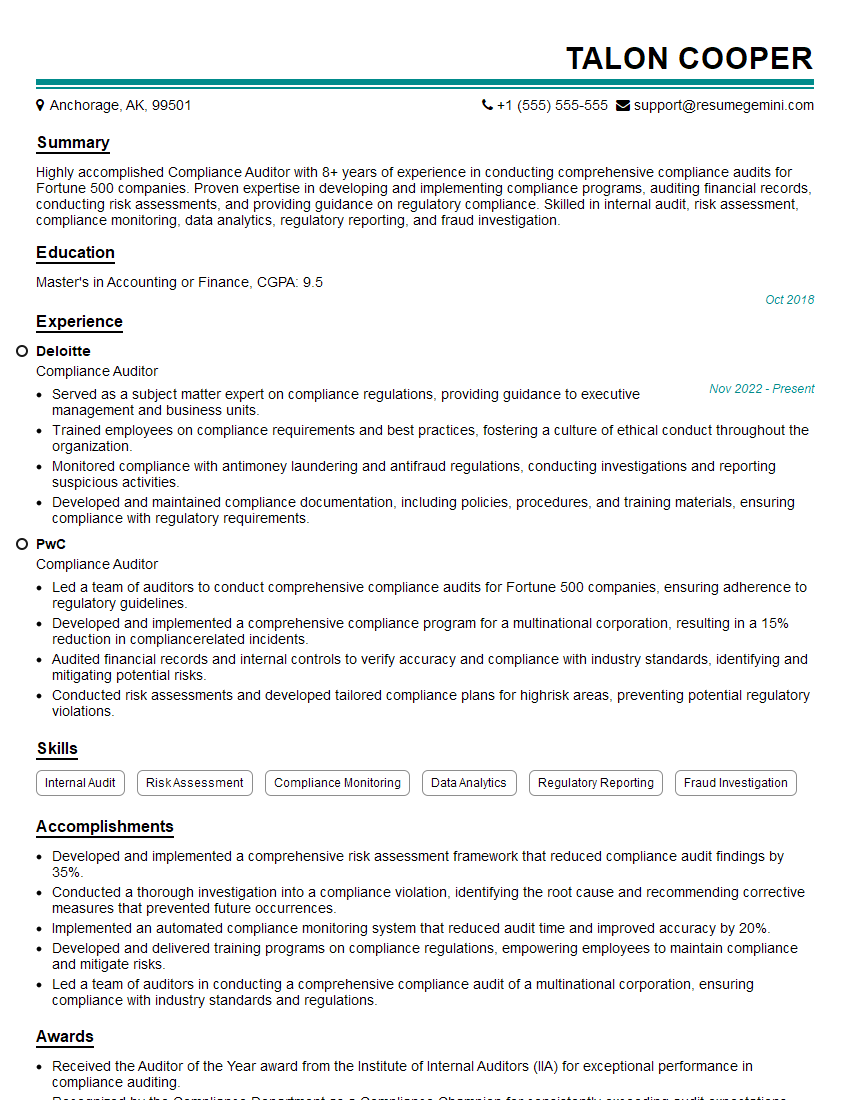
Compliance Auditor Resume Sample
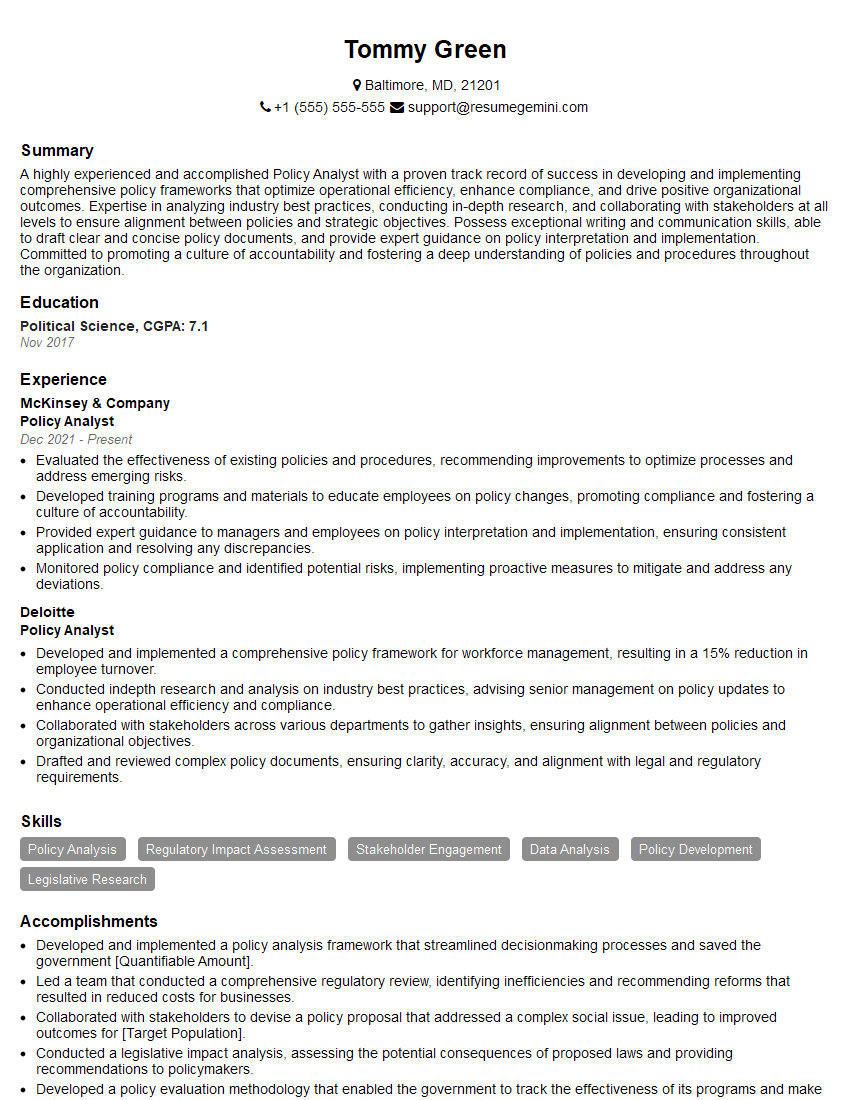
Policy Analyst Resume Sample

Lobbyist Resume Sample
Explore more articles
Users Rating of Our Blogs
Share Your Experience
We value your feedback! Please rate our content and share your thoughts (optional).
What Readers Say About Our Blog
Really detailed insights and content, thank you for writing this detailed article.
IT gave me an insight and words to use and be able to think of examples