Interviews are more than just a Q&A session—they’re a chance to prove your worth. This blog dives into essential Publishing Knowledge interview questions and expert tips to help you align your answers with what hiring managers are looking for. Start preparing to shine!
Questions Asked in Publishing Knowledge Interview
Q 1. Explain the difference between copyediting and proofreading.
Copyediting and proofreading are both crucial stages in the publishing process, but they focus on different aspects of manuscript preparation. Think of copyediting as the ‘big picture’ edit and proofreading as the ‘final polish’.
Copyediting: This involves a comprehensive review of the manuscript’s content, style, consistency, and clarity. Copyeditors check for factual accuracy, grammatical correctness, stylistic consistency, and structural issues. They might reorganize paragraphs, suggest improvements to sentence structure, and ensure the writing is clear and engaging. They also check for consistency in things like spelling, capitalization, and punctuation. For example, a copyeditor might change ‘alot’ to ‘a lot’, ensure consistent use of a particular style guide (like the Chicago Manual of Style), and might rewrite a confusing sentence for better clarity.
Proofreading: This is the final check for errors after the copyediting stage is complete. Proofreaders focus on catching typographical errors, spelling mistakes, punctuation errors, and inconsistencies in formatting that may have slipped through during copyediting. They examine the final layout, ensuring everything is correctly placed and looks professional. It’s like a final quality control check before printing or publishing.
In short, copyediting improves the manuscript’s substance and style, while proofreading ensures its surface accuracy.
Q 2. Describe your experience with style guides (e.g., Chicago Manual of Style, AP Stylebook).
I have extensive experience with various style guides, including the Chicago Manual of Style (CMOS) and the Associated Press Stylebook (AP). My familiarity with these guides extends beyond simply knowing the rules; I understand the underlying principles behind them and how to apply them effectively in diverse publishing contexts. I’ve worked on projects ranging from academic journals that adhere strictly to CMOS to news articles and press releases following AP style. I’m proficient at navigating the nuances within each style guide, understanding when exceptions might be necessary, and maintaining consistency throughout a document.
For example, I’ve handled projects where authors are used to different styles. In such cases, understanding the principles behind each style enables me to explain why a specific change is necessary, and in doing so, I can make the process of stylistic consistency easier for the author.
My expertise extends to using style guide resources effectively. I’m adept at using online style guide databases and reference tools to quickly find answers to stylistic questions that arise during the editing process. This helps to ensure speed and accuracy in my work.
Q 3. What software are you proficient in (e.g., InDesign, QuarkXPress, MS Word)?
I’m proficient in several industry-standard software applications, including Adobe InDesign, Microsoft Word, and I have also used QuarkXPress in the past. InDesign is my primary tool for page layout and typesetting, especially for complex documents like books and magazines. I utilize InDesign’s features, such as master pages, styles, and tables, to create visually appealing and consistent layouts. Microsoft Word is essential for general editing and collaboration, particularly in the early stages of manuscript development. My experience with QuarkXPress provides me with a broader understanding of publishing software and allows me to adapt easily to new systems if needed.
Q 4. How do you manage multiple projects with competing deadlines?
Managing multiple projects with competing deadlines requires a highly organized and adaptable approach. I employ several strategies to successfully juggle various tasks:
Prioritization: I carefully assess each project’s urgency and importance, creating a prioritized to-do list that ensures the most critical tasks are tackled first. This may involve using project management software to track progress and deadlines.
Time Management: I break down large projects into smaller, manageable tasks, allocating specific time slots for each. This ensures that I’m working efficiently and making steady progress across all projects.
Communication: Clear communication with clients and authors is vital. Proactive updates keep everyone informed of progress and any potential challenges. This also helps in managing expectations and preventing misunderstandings.
Flexibility: I am prepared to adjust my schedule as needed to accommodate unexpected delays or urgent requests. Flexibility is crucial in handling the dynamic nature of publishing projects.
I view managing competing deadlines not as a source of stress, but as a challenge requiring strategic planning and efficient execution. My experience has honed my ability to adapt and excel under pressure.
Q 5. Describe your experience with manuscript assessment and development.
My experience in manuscript assessment and development involves a multifaceted approach that goes beyond simple proofreading or copyediting. I’ve been involved in reviewing manuscripts from initial concept to final polish, offering feedback on everything from plot structure and character development (in fiction) to the clarity of arguments and overall structure in non-fiction. This includes:
Structural Assessment: Analyzing the manuscript’s overall structure, flow, and pacing to identify areas needing improvement or reorganization. This could mean suggesting a different chapter order or providing guidance on plot points.
Content Development: Providing feedback on content quality, accuracy, consistency and originality, identifying gaps in the narrative or argument. This may involve proposing additional research or providing suggestions to enhance the storytelling or strengthen the academic argument.
Style and Tone: Evaluating the writing style and tone to ensure it aligns with the target audience and the overall publishing goals. I’ll work with the author to refine the manuscript’s voice and ensure clarity and consistency.
Essentially, manuscript assessment and development is about working collaboratively with the author to shape the manuscript into the best possible version. I am comfortable providing constructive criticism and guidance without discouraging the author’s creative process.
Q 6. How do you handle disagreements with authors regarding editorial changes?
Disagreements with authors are a normal part of the editorial process. I handle them professionally and diplomatically by focusing on collaborative problem-solving.
Clear and Respectful Communication: I always present my suggestions clearly and respectfully, explaining the reasoning behind the changes using concrete examples. I emphasize that my goal is to improve the manuscript and enhance its impact.
Understanding the Author’s Perspective: I take the time to understand the author’s intent and the reasons behind their choices. This allows me to find common ground and tailor my suggestions to address their concerns.
Compromise and Negotiation: If a disagreement persists, I am willing to compromise and find alternative solutions that satisfy both the author’s vision and editorial standards. I’ll also explain the reasons behind the standards and offer alternative wording or structural choices that maintain editorial quality while satisfying the author.
Documentation: Keeping careful records of all communication and decisions ensures transparency and helps prevent future misunderstandings. I will always document all changes suggested, the rationale, and the author’s response in a manner that is clear and can be referred to easily by both parties.
Ultimately, the goal is to reach a consensus that results in a polished and high-quality manuscript while maintaining a positive working relationship with the author.
Q 7. What is your understanding of copyright law as it pertains to publishing?
My understanding of copyright law as it relates to publishing is extensive. I know that copyright protects original works of authorship, including literary, dramatic, musical, and certain other intellectual works. This protection automatically applies once the work is created in a tangible form (like a written manuscript). Copyright grants the author exclusive rights to reproduce, distribute, display, and create derivative works from their creation.
In publishing, this means understanding:
Copyright Ownership: Who owns the copyright (generally the author, unless there’s an agreement assigning it to another party, such as a publisher).
Copyright Transfer: How and when copyright is transferred from the author to a publisher, outlining the terms of usage, reproduction, and distribution.
Fair Use: The limited circumstances under which copyrighted material can be used without permission (e.g., for criticism, commentary, news reporting, etc.). This involves a complex analysis that needs to be carefully considered case-by-case.
Copyright Infringement: The legal consequences of unauthorized use of copyrighted material. This includes the potential for costly legal action.
Permissions: The process of obtaining permission from copyright holders to use their material in a publication.
My awareness of copyright law allows me to ensure that all publishing activities comply with legal standards, protecting both the author’s and publisher’s interests. I’m familiar with best practices and resources to help navigate the intricacies of copyright management.
Q 8. Explain the different stages of the publishing process.
The publishing process is a complex journey, much like crafting a fine tapestry. It involves several distinct stages, each crucial to the final product’s success.
- Manuscript Development: This initial stage focuses on the creation and refinement of the manuscript itself. It includes writing, editing, and revisions, often involving multiple rounds of feedback from authors, editors, and even beta readers. Think of this as sketching out the design of our tapestry – the base framework.
- Acquisition and Editorial Development: This stage involves the selection of a manuscript for publication (if working within a publishing house) and then further development, including copyediting, proofreading, and fact-checking to ensure accuracy and consistency. Here, we’re choosing the colors and materials for our tapestry.
- Design and Production: This is where the manuscript takes visual form. It involves designing the book’s cover, interior layout, typography, and any illustrations or other visual elements. This stage is akin to weaving the selected threads together.
- Pre-press and Printing: The files are prepared for printing, and the actual printing process takes place. This involves meticulous attention to detail, ensuring accurate color reproduction and high-quality print. This is the final stage of weaving the tapestry.
- Marketing and Distribution: Once printed, the book needs to reach readers. This stage encompasses marketing and promotion efforts, as well as distribution to bookstores, libraries, and online retailers. This is akin to presenting our completed tapestry to the world.
Each stage is interconnected; a problem in one area can affect the entire process, highlighting the importance of collaboration and communication throughout.
Q 9. What strategies do you use to ensure accuracy and consistency in publications?
Accuracy and consistency are paramount in publishing. To ensure these, I employ a multi-layered approach. Think of it like building a robust castle – multiple layers of defense against errors.
- Style Guides: We establish and adhere to comprehensive style guides that dictate everything from punctuation and capitalization to formatting and citation styles. Consistency is key here; this is our architectural blueprint, ensuring uniformity throughout the publication.
- Multiple Proofreaders: Different pairs of eyes catch different errors. We utilize multiple proofreaders at various stages, each with their expertise. One might focus on grammar, another on fact-checking, and another on consistency.
- Automated Tools: Software like grammar and spell-checkers are invaluable, providing a first line of defense against common errors. However, these tools are not a replacement for human review.
- Version Control: Using version control systems (like Git) allows for tracking changes, reverting to previous versions if necessary, and collaborative editing without causing conflicts.
- Final Checks: Before the final product goes to print, we conduct thorough final checks involving multiple team members. This final review is crucial, akin to a final inspection of our completed castle before opening it to the public.
Q 10. How do you prioritize tasks in a fast-paced environment?
Prioritizing tasks in a fast-paced publishing environment requires a systematic approach. I find the Eisenhower Matrix (urgent/important) particularly useful.
I categorize tasks based on urgency and importance:
- Urgent and Important: These are immediate deadlines that directly impact the project’s success, such as copy deadlines or printer submissions. These tasks need immediate attention.
- Important but Not Urgent: These are long-term goals that ensure overall project quality, like research or strategic planning. These get scheduled, preventing last-minute rush.
- Urgent but Not Important: These often involve distractions; I delegate or eliminate these wherever possible to focus on higher priority items.
- Not Urgent and Not Important: These are often eliminated or postponed. They’re time-wasters in a fast-paced industry.
I use project management tools like Asana or Trello to track tasks, set deadlines, and collaborate effectively, providing a visual overview and allowing for seamless task management.
Q 11. Describe your experience with working with printers and other vendors.
I have extensive experience collaborating with printers and other vendors. Effective communication and building strong relationships are key. This requires a deep understanding of their capabilities and limitations.
I ensure smooth collaboration by:
- Clear Communication: Providing clear and concise briefs with detailed specifications regarding paper quality, printing methods, binding styles, and other requirements. I often provide physical mock-ups or samples to avoid misunderstandings.
- Regular Check-Ins: Maintaining regular communication with printers and vendors throughout the entire process to track progress and address any issues promptly. This proactive approach keeps the process on track.
- Negotiation and Contract Management: Negotiating favorable terms and managing contracts effectively to ensure value for money and adherence to deadlines. Understanding the industry’s pricing structure is crucial here.
- Quality Control: Thorough inspection of print proofs and samples before final approval to ensure the quality meets our standards. I have a keen eye for detail, ensuring the final product is of the highest quality.
Building trust with vendors leads to more efficient and effective collaborations, resulting in better projects and relationships.
Q 12. How do you stay updated on industry trends and best practices?
Staying updated is essential in the dynamic publishing world. I use a multi-pronged approach:
- Industry Publications: I regularly read industry publications (both print and online) such as Publishers Weekly and The Bookseller to keep abreast of trends and news. This provides a panoramic view of the industry’s landscape.
- Conferences and Webinars: I attend industry conferences and webinars to network with professionals and learn about the latest technologies and best practices. These events offer valuable networking opportunities and direct insights.
- Professional Organizations: I actively participate in professional organizations, such as the [mention relevant organization name], to engage in discussions and collaborate with peers. This collective learning is immensely beneficial.
- Online Courses and Resources: I regularly take online courses and utilize various online resources that enhance my knowledge in areas such as digital publishing and marketing strategies. Continuous learning is imperative.
Staying updated involves a commitment to lifelong learning – it’s not a one-time effort, but a continuous process to remain competitive and relevant.
Q 13. What is your experience with ISBNs and other metadata?
ISDNs (International Standard Book Numbers) and other metadata are fundamental to book publishing. My experience includes:
- ISBN Assignment: I have extensive experience in obtaining ISBNs from the appropriate agencies for both print and electronic publications. This is a crucial step for ensuring discoverability.
- Metadata Creation and Management: I am proficient in creating and managing accurate metadata records, including title, author, publisher, subject, and other relevant information. Accurate metadata improves searchability and discoverability within online bookstores and libraries.
- Metadata Standards: I am familiar with various metadata standards, such as ONIX and MARC, used for data exchange and cataloging. Understanding and using these standards ensures interoperability with different systems.
- Database Management: I manage metadata within various databases to facilitate efficient search and retrieval. This efficient management optimizes the discovery process.
Accurate and comprehensive metadata is critical for a book’s visibility and accessibility in the digital marketplace, essentially acting as a book’s digital identity.
Q 14. How familiar are you with different publishing formats (e.g., print, ebook, audio)?
I possess a solid understanding of different publishing formats, recognizing the unique considerations and workflows associated with each. This includes:
- Print: I am well-versed in traditional print publishing, including the entire production process from manuscript preparation to final printing and binding. I understand the nuances of paper stock, printing techniques, and binding methods.
- Ebook: I am experienced in ebook publishing, including file conversion, formatting for different e-readers (e.g., Kindle, Kobo), and digital rights management (DRM). I understand the intricacies of ebook formatting and optimization.
- Audio: I am familiar with audiobook production, including recording, editing, mastering, and distribution. I understand the process of converting text into audio and the technical aspects of audio production.
The growth of digital formats has significantly impacted the publishing industry, and understanding the nuances of each format is crucial for effective publishing today.
Q 15. Explain your approach to managing budgets and resources.
Budget management in publishing is a delicate dance between creative vision and fiscal responsibility. My approach begins with a thorough understanding of the project’s scope – from manuscript acquisition to marketing and distribution. I start by creating a detailed budget that outlines every anticipated expense, from author advances and editing costs to printing, marketing, and distribution. This isn’t a static document; it’s a living, breathing roadmap that’s regularly reviewed and adjusted based on actual spending and market performance.
I use project management software to track expenses, milestones, and resource allocation. For example, I might allocate a certain percentage of the budget to marketing activities based on projected sales and target audience demographics. Regular progress reports, comparing actual spending to the budgeted amounts, allow for proactive adjustments. This prevents cost overruns and ensures that funds are used efficiently to maximize the project’s return on investment. I always build in contingency funds to handle unforeseen circumstances, such as unexpected printing costs or delays in the supply chain.
Career Expert Tips:
- Ace those interviews! Prepare effectively by reviewing the Top 50 Most Common Interview Questions on ResumeGemini.
- Navigate your job search with confidence! Explore a wide range of Career Tips on ResumeGemini. Learn about common challenges and recommendations to overcome them.
- Craft the perfect resume! Master the Art of Resume Writing with ResumeGemini’s guide. Showcase your unique qualifications and achievements effectively.
- Don’t miss out on holiday savings! Build your dream resume with ResumeGemini’s ATS optimized templates.
Q 16. How do you handle feedback and criticism?
Feedback is crucial for refining a publication and achieving its full potential. I actively solicit feedback at every stage of the publishing process, from manuscript review to cover design and marketing strategies. I approach criticism constructively, viewing it as an opportunity for growth and improvement, rather than a personal attack. I believe in active listening and asking clarifying questions to fully understand the feedback’s context and intent.
For instance, if a reviewer suggests that a manuscript lacks clarity in a particular section, I wouldn’t simply dismiss it. Instead, I’d work with the author to clarify the points, perhaps by providing additional examples or rewriting certain passages. I believe in creating a safe and collaborative environment where all feedback is valued and acted upon to achieve the best possible outcome. If there are conflicting opinions, I would mediate discussions to find common ground and create a consensus.
Q 17. How do you collaborate effectively within a team?
Effective teamwork is the cornerstone of successful publishing. My approach to collaboration centers around open communication, clear roles, and mutual respect. I foster a team environment where everyone feels comfortable sharing their ideas and concerns. Regular team meetings, both formal and informal, are crucial for keeping everyone informed and aligned on project goals.
For instance, in a recent project, we used project management software to track progress, assign tasks, and maintain a shared editorial calendar. This ensured transparency and prevented duplicated efforts. We utilized collaborative document editing tools to streamline the revision process, allowing the editor, author, and designer to work simultaneously on the manuscript. Open communication and transparent decision-making ensured everyone’s input was valued, leading to a high-quality final product delivered on time and within budget.
Q 18. Describe your experience with market research and analysis in publishing.
Market research and analysis are indispensable for making informed publishing decisions. My experience involves leveraging various tools and techniques to understand market trends, reader preferences, and competitive landscapes. This includes analyzing sales data of similar publications, conducting reader surveys, and employing social media listening tools to gauge public opinion. I also examine competitor publications, looking at their strengths, weaknesses, and pricing strategies.
For example, before launching a new series of children’s books, I conducted thorough market research to identify gaps in the current market, understand the target age group’s preferences, and analyze the sales performance of similar books. This included analyzing sales data from major retailers, reviewing online reviews and ratings, and even conducting focus groups with children and parents. The insights gained helped us fine-tune the series’ concept, target audience, and marketing strategy, thereby significantly increasing the likelihood of success.
Q 19. What strategies do you use to promote books or publications?
Promoting books requires a multi-faceted strategy tailored to the specific publication and its target audience. My approach involves a mix of traditional and digital marketing techniques. Traditional methods may include working with book reviewers, attending book fairs, and securing media coverage. Digital strategies often involve using social media platforms, running targeted online advertising campaigns, and collaborating with book bloggers and influencers.
For example, to promote a historical fiction novel, I might target literary blogs and reviewers specializing in historical fiction. I would also collaborate with relevant book influencers on social media, creating engaging content such as author interviews or excerpts from the book. The goal is to create a buzz around the book, build anticipation, and reach potential readers where they spend their time.
Q 20. How do you measure the success of a publishing project?
Measuring the success of a publishing project is multifaceted and goes beyond simply tracking sales figures. While sales are a key indicator, I also consider other factors such as critical acclaim, reader engagement, and return on investment (ROI). This involves monitoring sales data, analyzing reader reviews, tracking social media engagement, and evaluating the overall marketing campaign’s effectiveness.
For instance, we might use analytics tools to track website traffic and online sales, monitor social media engagement, and analyze reader reviews to gauge overall satisfaction. We would also compare the actual sales figures with the projected sales to determine the ROI of the project. A combination of quantitative data (sales figures, ROI) and qualitative data (reviews, social media engagement) provides a holistic view of the project’s success.
Q 21. Explain your experience with digital rights management (DRM).
Digital Rights Management (DRM) is crucial for protecting intellectual property in the digital publishing world. My experience includes working with various DRM technologies to secure ebooks and other digital publications. This involves selecting appropriate DRM solutions based on the specific needs of each project, considering factors such as the target audience, distribution channels, and the level of security required. I also stay updated on the latest developments in DRM technology and best practices to ensure that we are using the most effective and user-friendly methods.
Understanding the implications of different DRM systems on the user experience is key. Overly restrictive DRM can hinder sales and reader engagement. We balance copyright protection with the need to provide readers with a positive and convenient experience. For example, choosing a DRM solution that allows for reading across multiple devices while still preventing unauthorized copying is a vital consideration. We carefully weigh the advantages and disadvantages of various DRM systems to strike the right balance between protection and usability.
Q 22. What is your experience with content management systems (CMS)?
My experience with Content Management Systems (CMS) spans over ten years, working with various platforms including WordPress, Drupal, and Contentful. I’m proficient in using CMS functionalities for content creation, editing, workflow management, and publishing. I understand the importance of choosing the right CMS based on project needs – for example, WordPress is excellent for blogs and smaller websites, while Drupal offers greater scalability and customization for larger, complex projects. I’ve also managed content migration between different CMS platforms, ensuring data integrity and minimal disruption during the transition. Furthermore, I’m experienced in customizing CMS functionalities through plugins and themes to enhance user experience and streamline workflows. For instance, I once implemented a custom plugin in WordPress to automate the process of generating metadata for thousands of articles, significantly improving efficiency.
Q 23. How do you ensure accessibility in your publications?
Ensuring accessibility in publications is paramount. My approach involves adhering to WCAG (Web Content Accessibility Guidelines) standards throughout the entire publishing process. This includes using appropriate heading structures (<h1> to <h6>), providing alternative text for all images (<img alt="Descriptive text">), using sufficient color contrast, and creating clear and concise language. I also carefully consider the use of tables, ensuring they are properly structured with clear captions and headers. For documents like PDFs, I employ tools to check for accessibility issues and ensure they are tagged properly for screen readers. Beyond technical aspects, I also strive for inclusive language, avoiding jargon and ensuring content is understandable to a broad audience, including those with cognitive disabilities. For example, on a recent project, we ensured all our infographics included text descriptions for individuals using screen readers. This proactive approach contributes to a more inclusive and equitable publishing experience for everyone.
Q 24. Describe your experience with fact-checking and verification.
Fact-checking and verification are critical to my publishing workflow. My process begins with identifying potential sources of misinformation. I cross-reference information from multiple reputable sources, looking for corroboration and inconsistencies. I employ advanced search techniques to validate claims and identify any bias or inaccuracies. For instance, I might use advanced search operators on Google Scholar or specific databases to check the validity of research cited in an article. I also utilize fact-checking websites and tools to verify claims related to specific events or data points. Additionally, I’m adept at identifying and mitigating the spread of misinformation by ensuring proper attribution and providing context for all claims. In cases where complete verification is impossible, I clearly state the limitations of the available evidence. The ultimate goal is to publish accurate and reliable information.
Q 25. What is your understanding of different publishing contracts?
My understanding of publishing contracts encompasses various types, including author agreements, sub-licensing agreements, and freelance contracts. I’m familiar with the key clauses in each contract type, including copyright ownership, royalties, payment terms, and rights granted to the publisher. I understand the implications of different contract clauses on the author’s rights and the publisher’s responsibilities. For example, I know the difference between a ‘work for hire’ agreement, where the copyright rests with the publisher, and a contract where the author retains copyright. I’ve been involved in negotiating contracts, ensuring fair and equitable terms for all parties involved. Furthermore, I’m aware of the legal ramifications of breaching contract terms and the importance of adhering to legal compliance. My experience ensures that all contracts are reviewed meticulously before signing to protect both authors and the publishing house.
Q 26. How do you identify and address potential risks in a publishing project?
Identifying and addressing potential risks in a publishing project involves a proactive and multifaceted approach. I start by conducting a thorough risk assessment, identifying potential issues such as copyright infringement, delays in production, or inaccurate information. This assessment involves considering various factors, including the complexity of the project, the availability of resources, and the potential for external factors to impact the timeline. I then develop mitigation strategies for each identified risk. For example, if the risk is copyright infringement, the strategy might involve implementing a robust image and text verification process. If the risk is a delay in production, contingency plans might involve finding alternative vendors or adjusting the project timeline. Regular monitoring and communication throughout the project are essential to track progress and promptly address any emerging issues. Effective risk management significantly increases the likelihood of successful project completion.
Q 27. Describe your experience with open-access publishing.
My experience with open-access publishing includes working with various open-access journals and platforms. I understand the benefits of making research freely available, including increased dissemination of knowledge and broader impact. However, I’m also aware of the challenges, such as funding models and potential for predatory publishing. I’m familiar with different open-access licensing models, such as Creative Commons licenses, and their implications for authors and readers. I have helped authors navigate the submission process for open-access journals, including understanding the specific requirements for each platform and ensuring compliance with open-access policies. I have also been involved in discussions about the ethical implications of open access and the sustainability of open-access publishing models, recognizing the crucial role of open-access in achieving broader scientific and scholarly dissemination.
Q 28. Explain your understanding of metadata schemas and their importance.
Metadata schemas are structured sets of data that describe the content of a publication. They are crucial for discoverability, searchability, and interoperability of digital resources. Examples include Dublin Core, MODS (Metadata Object Description Schema), and MARC (Machine-Readable Cataloging). Each schema uses different elements to describe content, such as title, author, subject, and publication date. My understanding of metadata schemas allows me to ensure that publications are properly tagged with relevant metadata. This is essential for effective indexing by search engines and discovery by users. Improper or missing metadata can hinder discoverability, limiting the reach and impact of the publication. I use metadata creation tools and workflows that ensure consistency and accuracy. For example, I recently implemented a system using controlled vocabularies to create accurate subject metadata across a vast digital library, greatly enhancing search efficiency.
Key Topics to Learn for a Publishing Knowledge Interview
- Copyright and Intellectual Property: Understanding copyright law, licensing agreements, and the ethical considerations surrounding intellectual property rights in publishing.
- Editorial Processes: Familiarity with manuscript acquisition, editing (developmental, copyediting, proofreading), fact-checking, and the overall workflow of book or journal production.
- Production and Manufacturing: Knowledge of print and digital production processes, including file preparation, printing techniques, and binding methods. Understanding the role of different publishing formats (e.g., ebooks, audiobooks, print-on-demand).
- Marketing and Sales: Awareness of different marketing strategies for publications, including targeting specific audiences, utilizing social media, and analyzing sales data.
- Publishing Contracts and Agreements: Understanding the key clauses and implications of author contracts, subsidiary rights agreements, and other legal documents in publishing.
- Industry Trends and Technologies: Staying updated on current trends in the publishing industry, including the impact of digital publishing, self-publishing, and evolving technologies.
- Financial Aspects of Publishing: Understanding budgeting, cost analysis, and revenue models within the publishing context.
- Project Management in Publishing: Demonstrating an understanding of timelines, resource allocation, and effective communication within a publishing project.
Next Steps
Mastering publishing knowledge is crucial for career advancement in this dynamic industry. A strong understanding of these core areas will significantly enhance your interview performance and open doors to exciting opportunities. To maximize your job prospects, it’s essential to create an ATS-friendly resume that highlights your skills and experience effectively. ResumeGemini is a trusted resource that can help you build a professional and impactful resume. We provide examples of resumes tailored to showcase Publishing Knowledge, helping you present yourself in the best possible light to prospective employers. Take advantage of these resources to propel your publishing career forward.
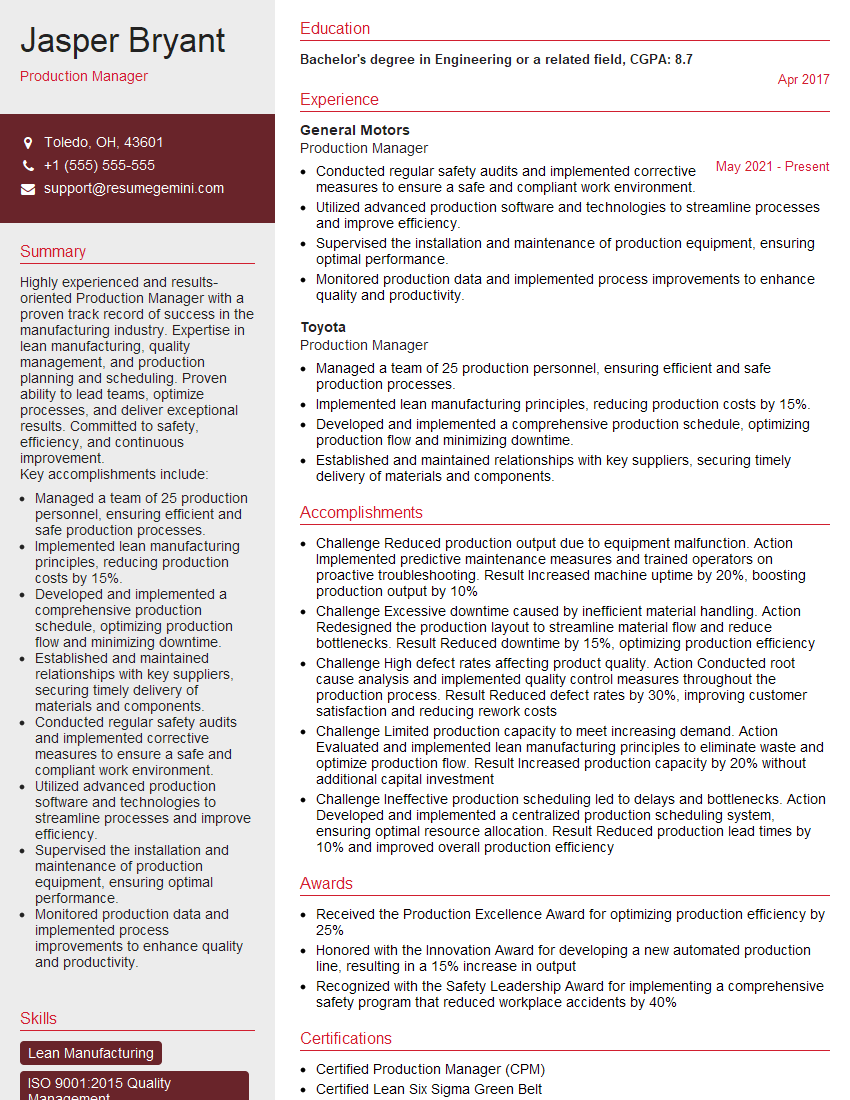
Production Manager Resume Sample
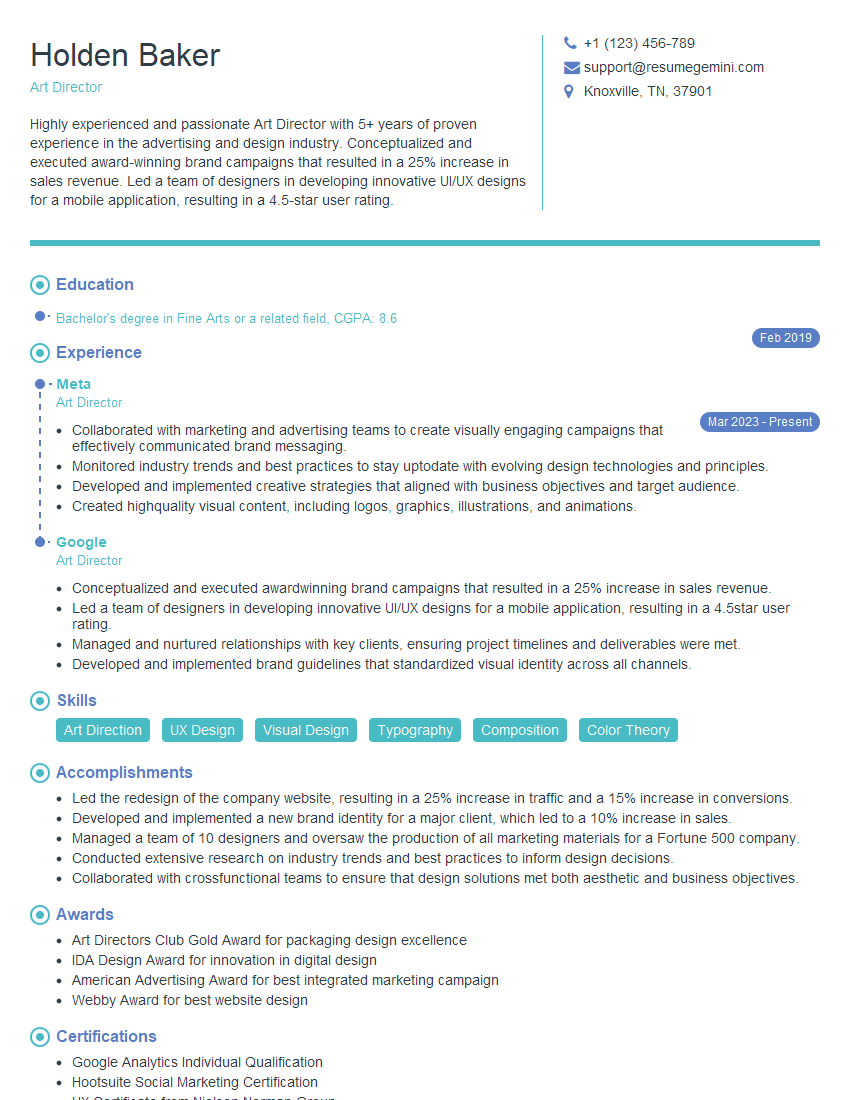
Art Director Resume Sample
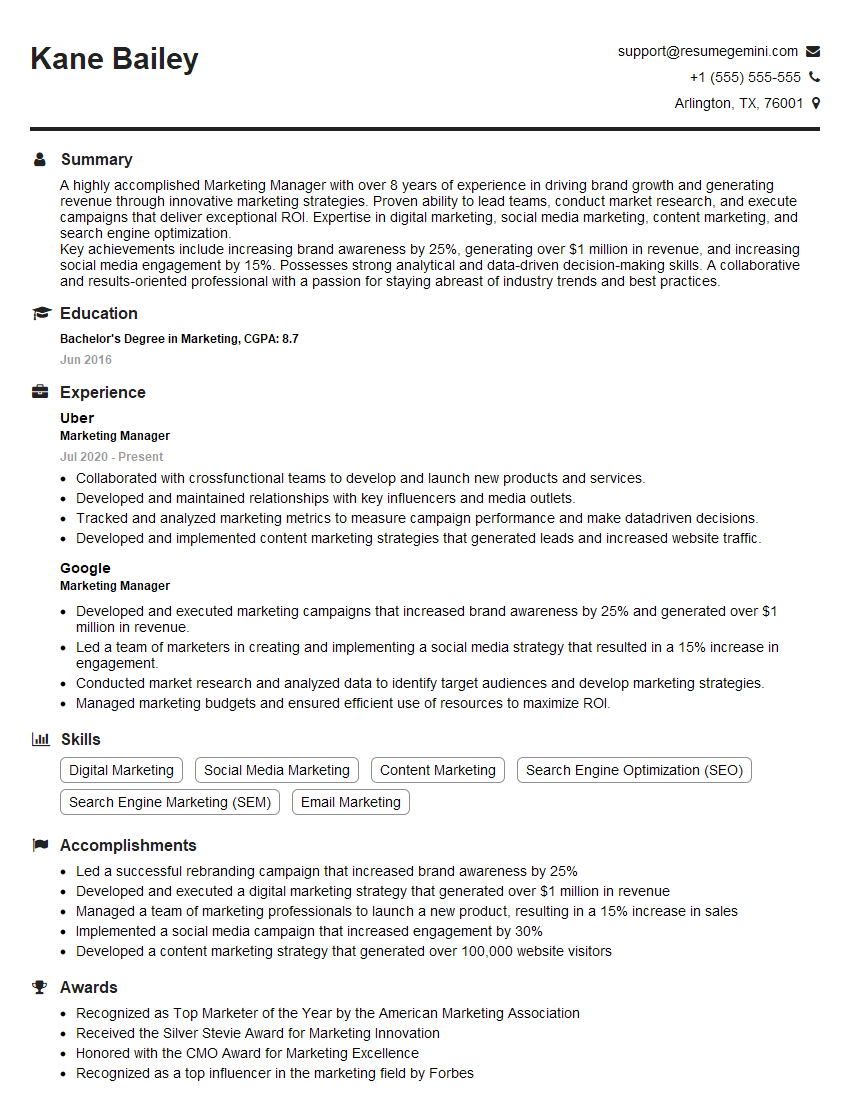
Marketing Manager Resume Sample
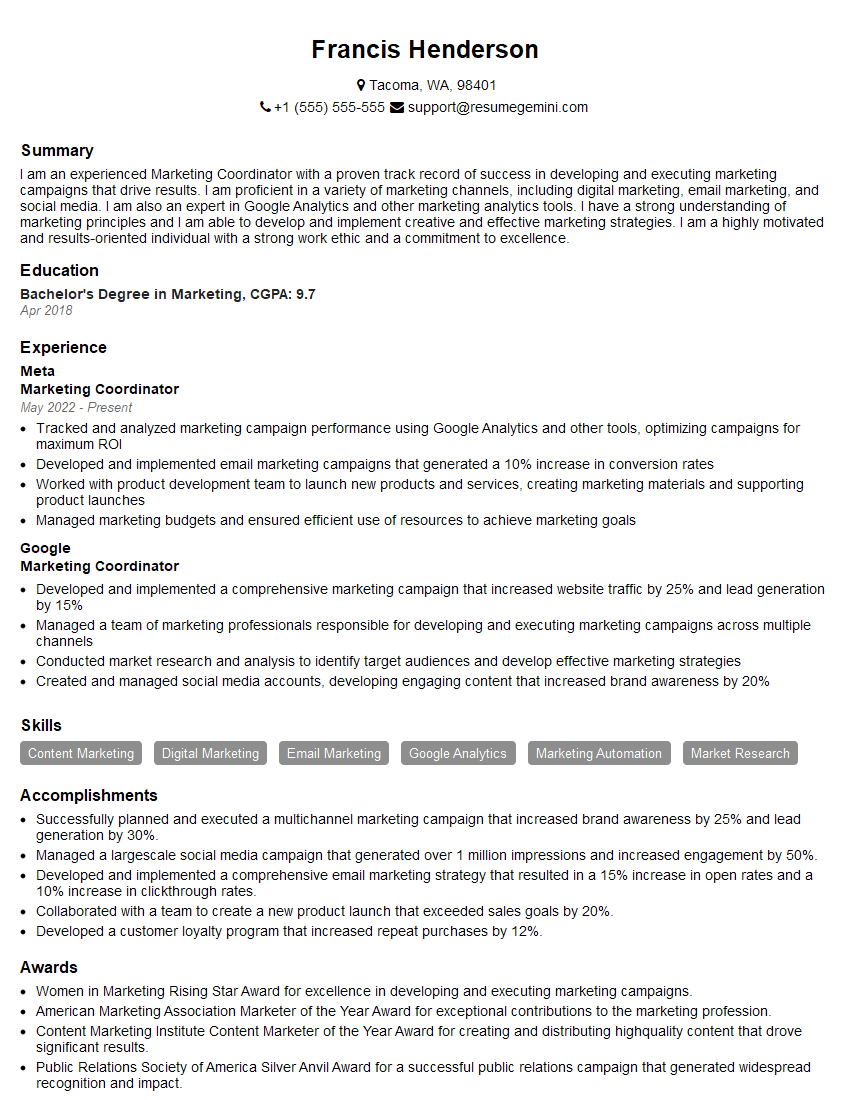
Marketing Coordinator Resume Sample
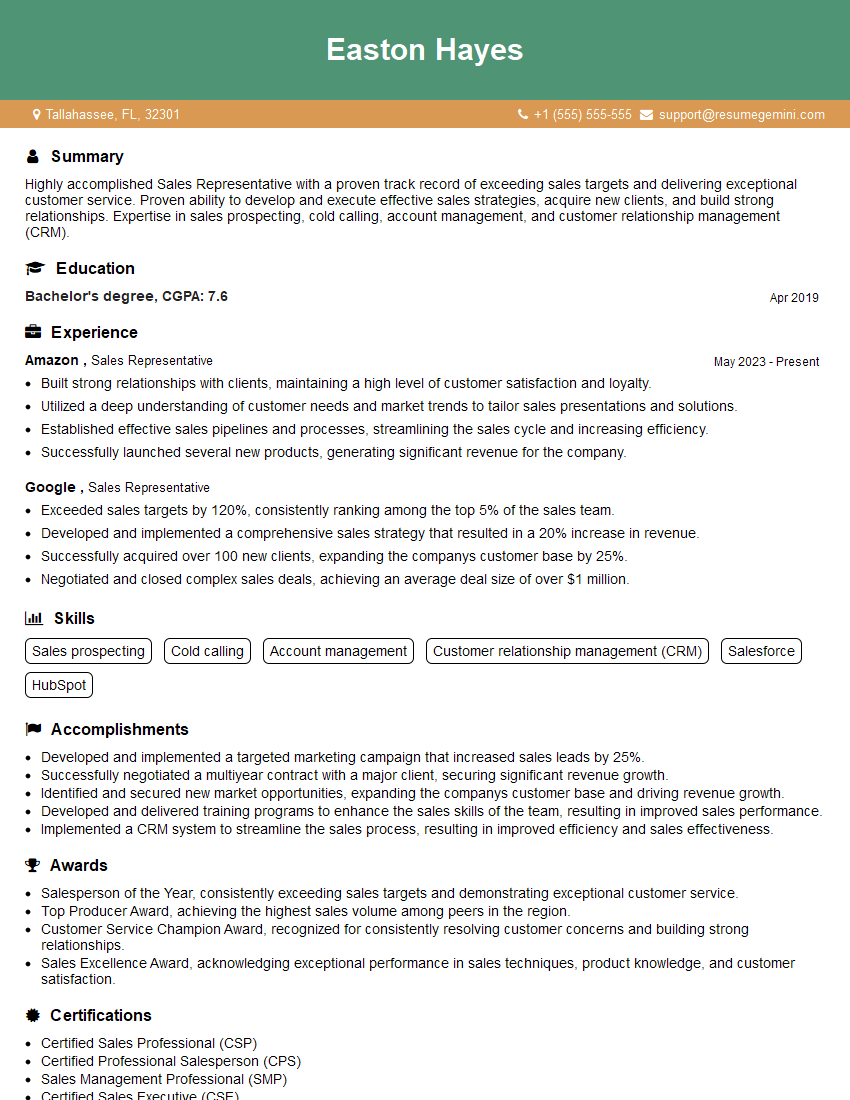
Sales Representative Resume Sample
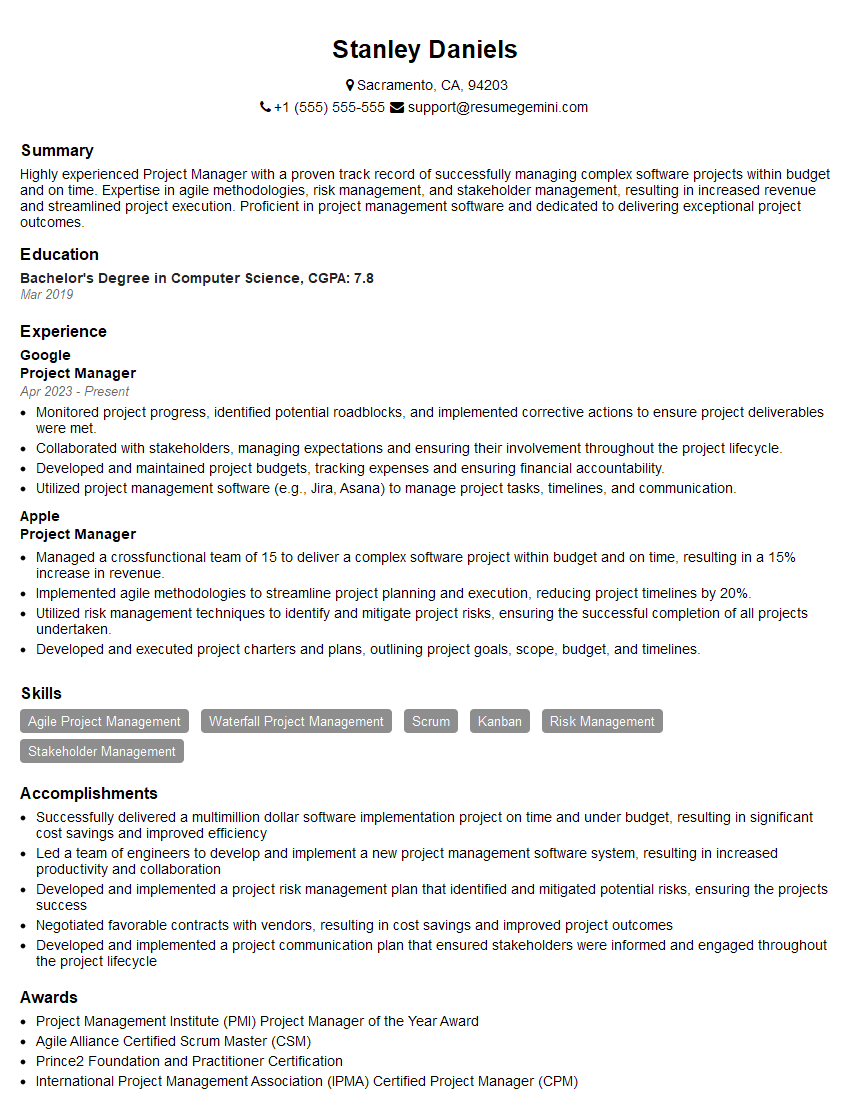
Project Manager Resume Sample

Social Media Manager Resume Sample
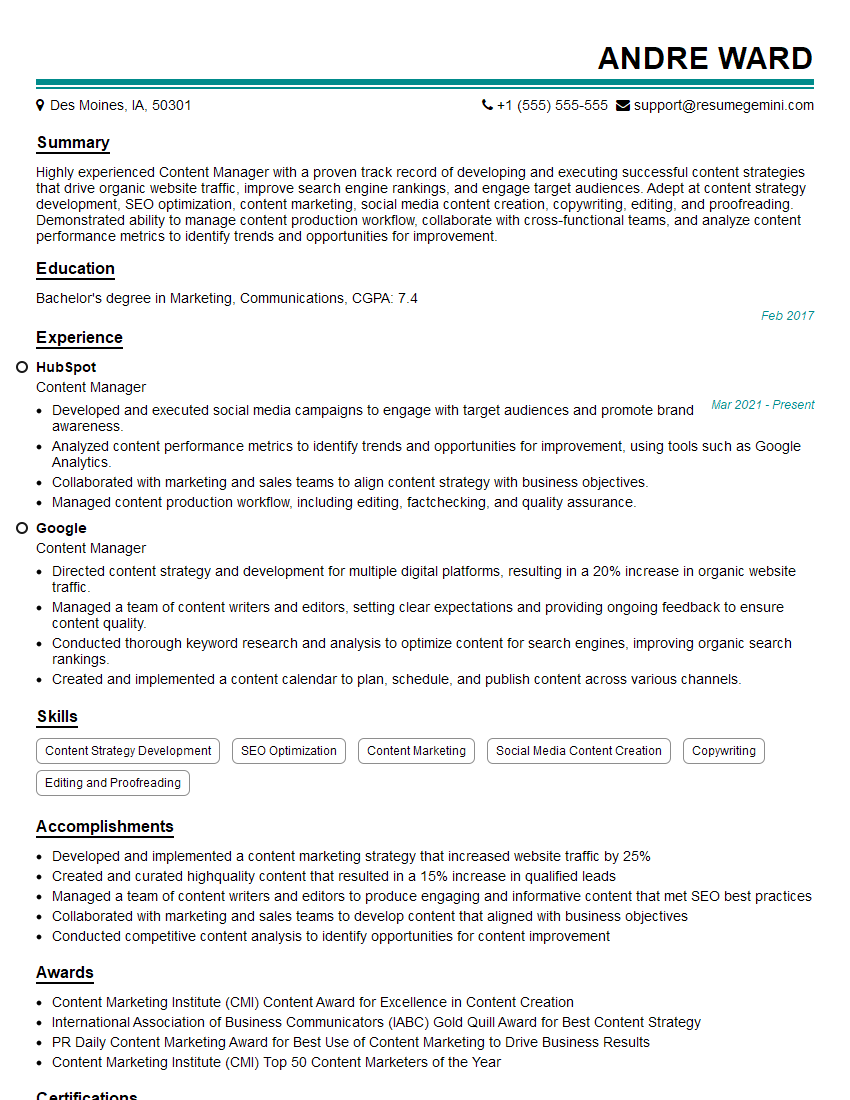
Content Manager Resume Sample
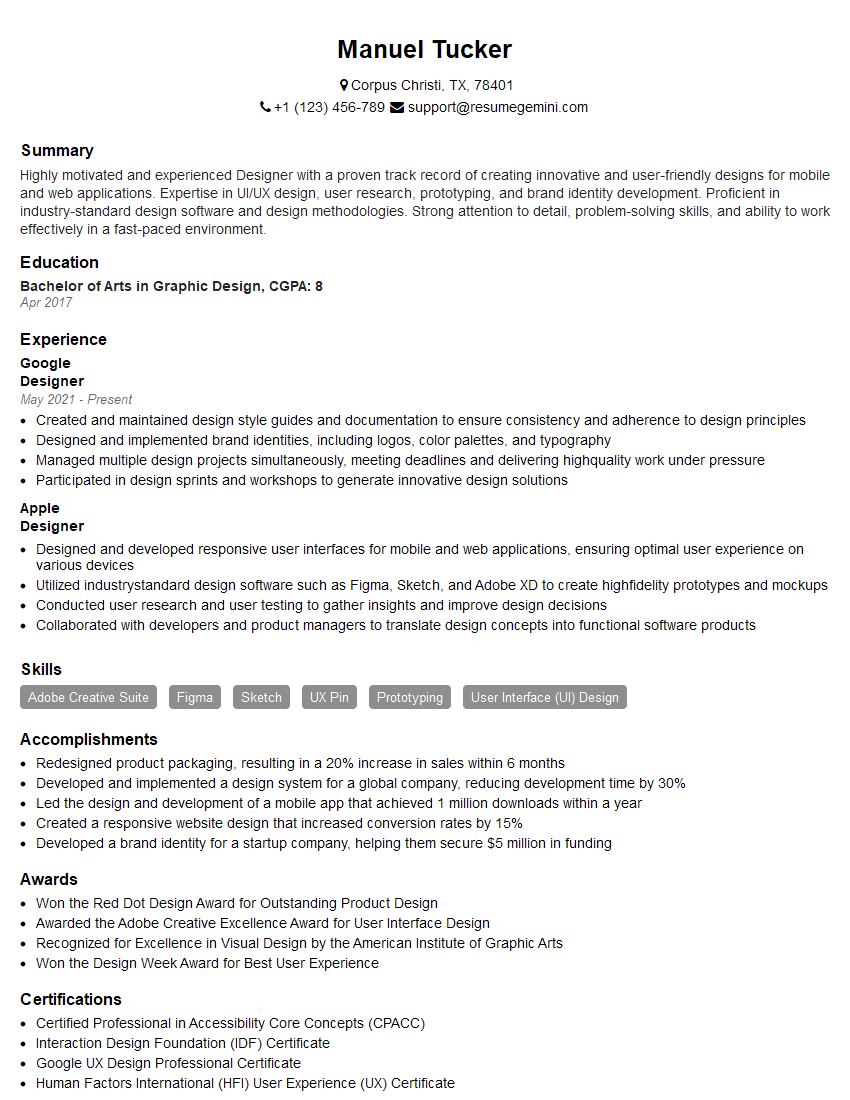
Designer Resume Sample
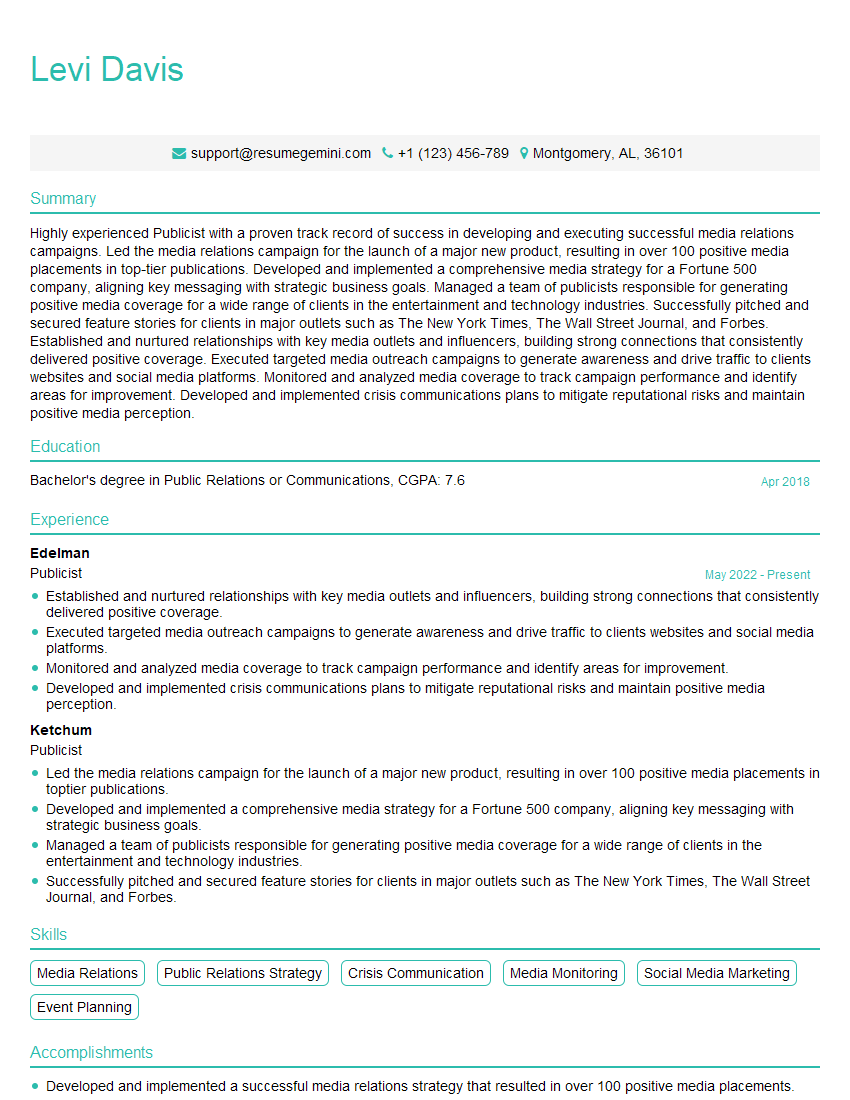
Publicist Resume Sample
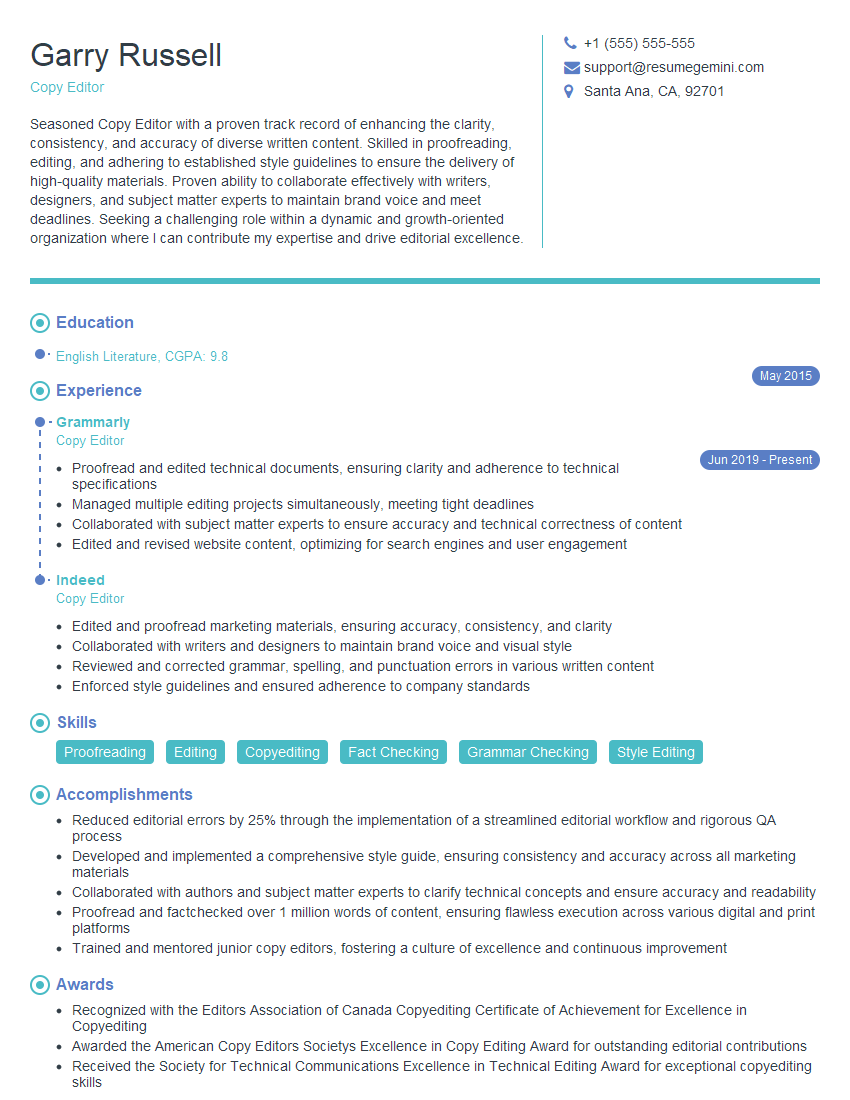
Copy Editor Resume Sample
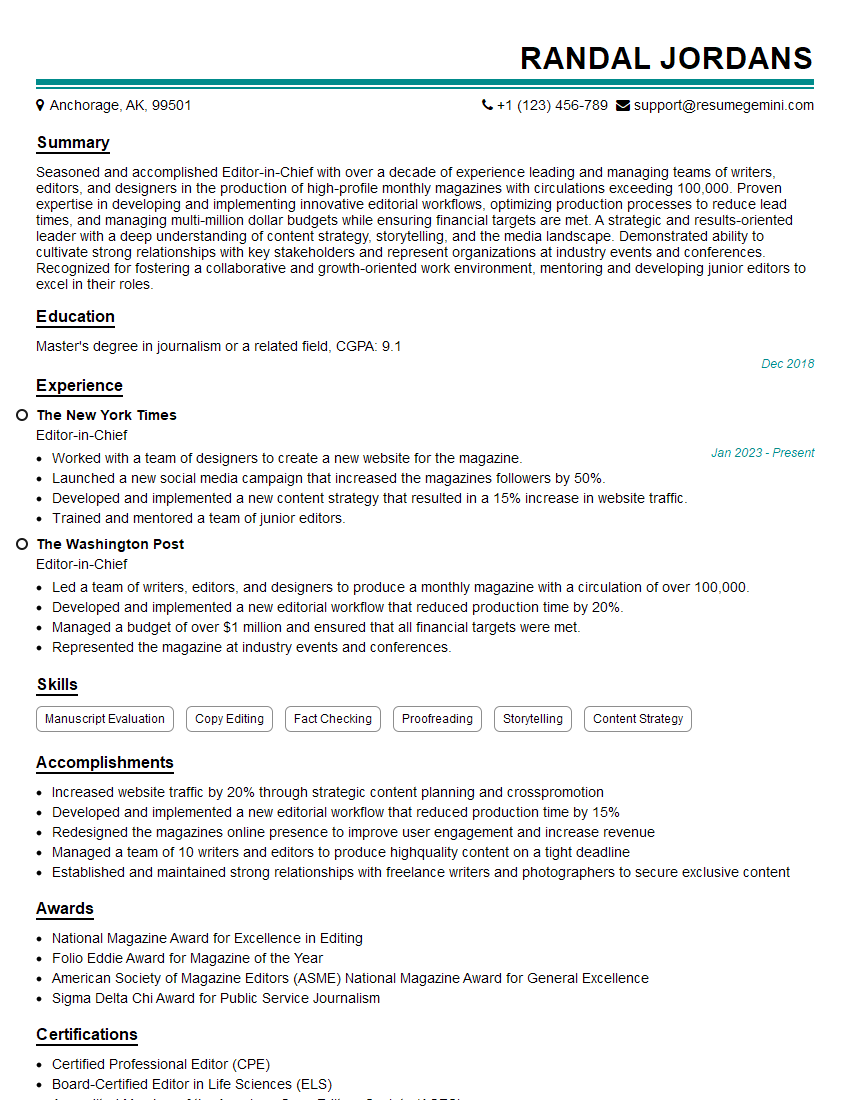
Editor-in-Chief Resume Sample
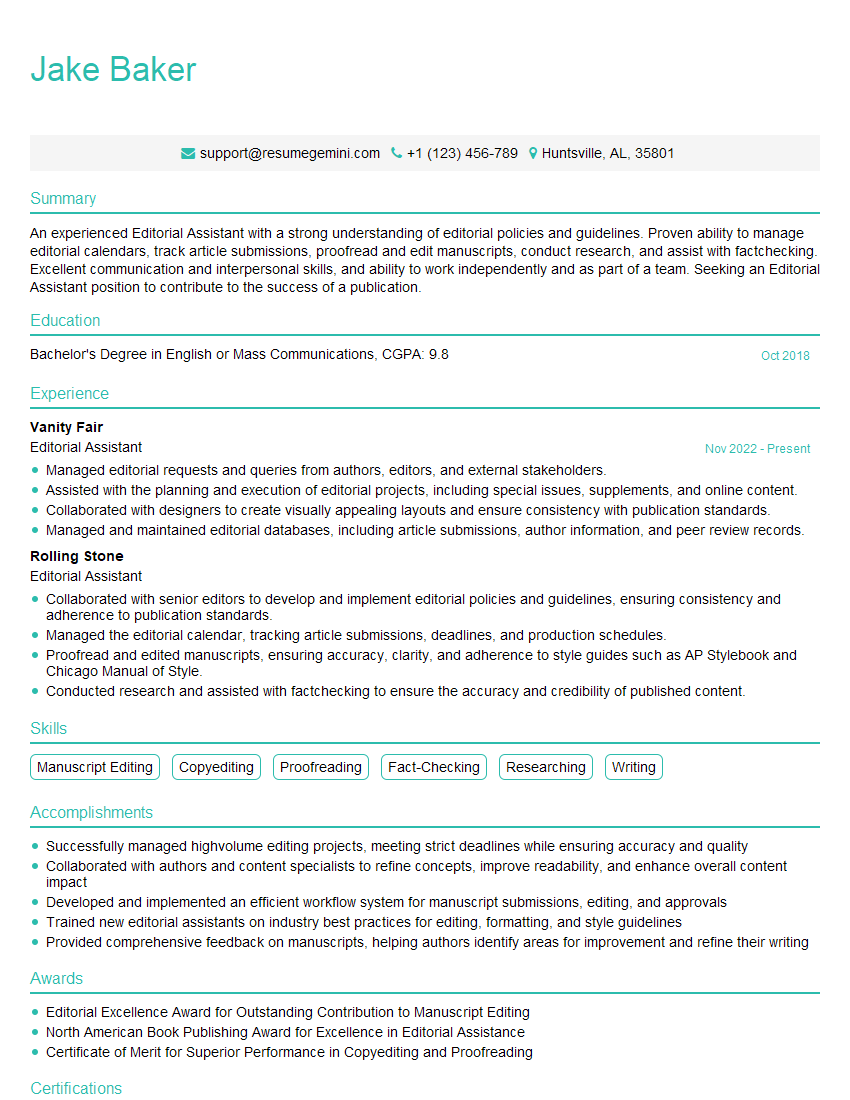
Editorial Assistant Resume Sample
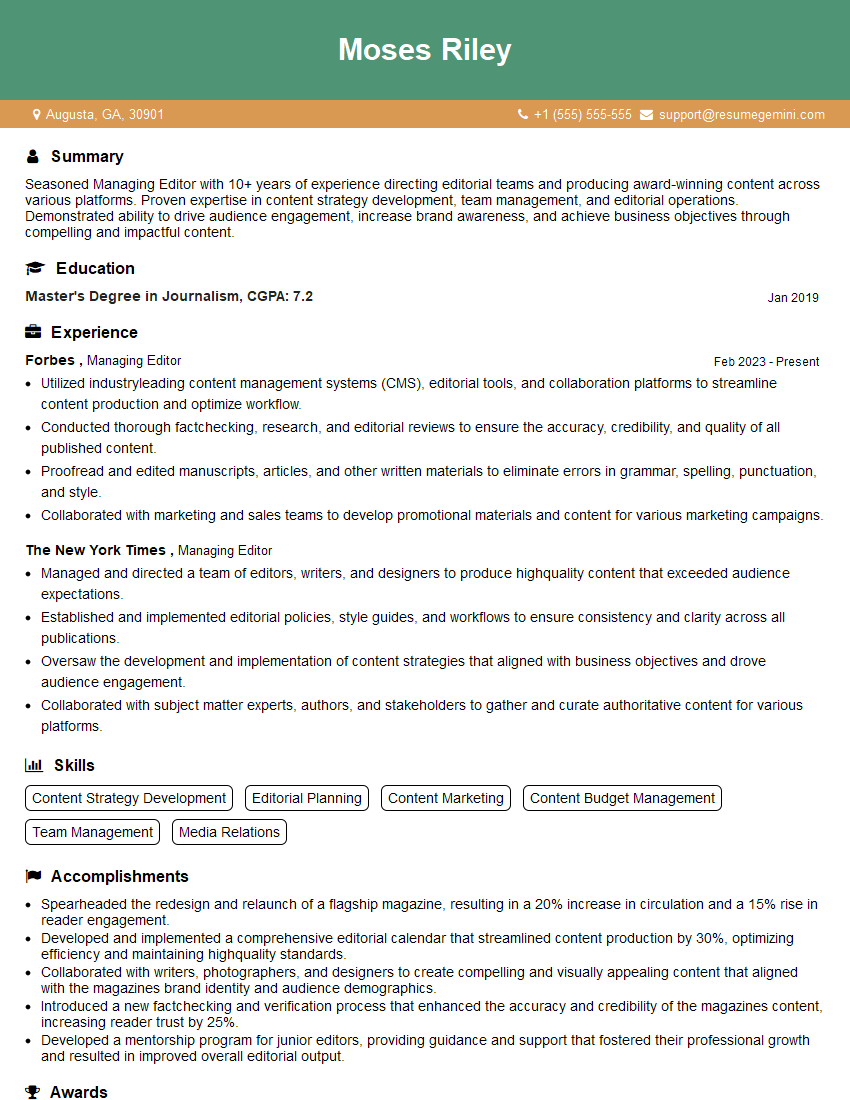
Managing Editor Resume Sample
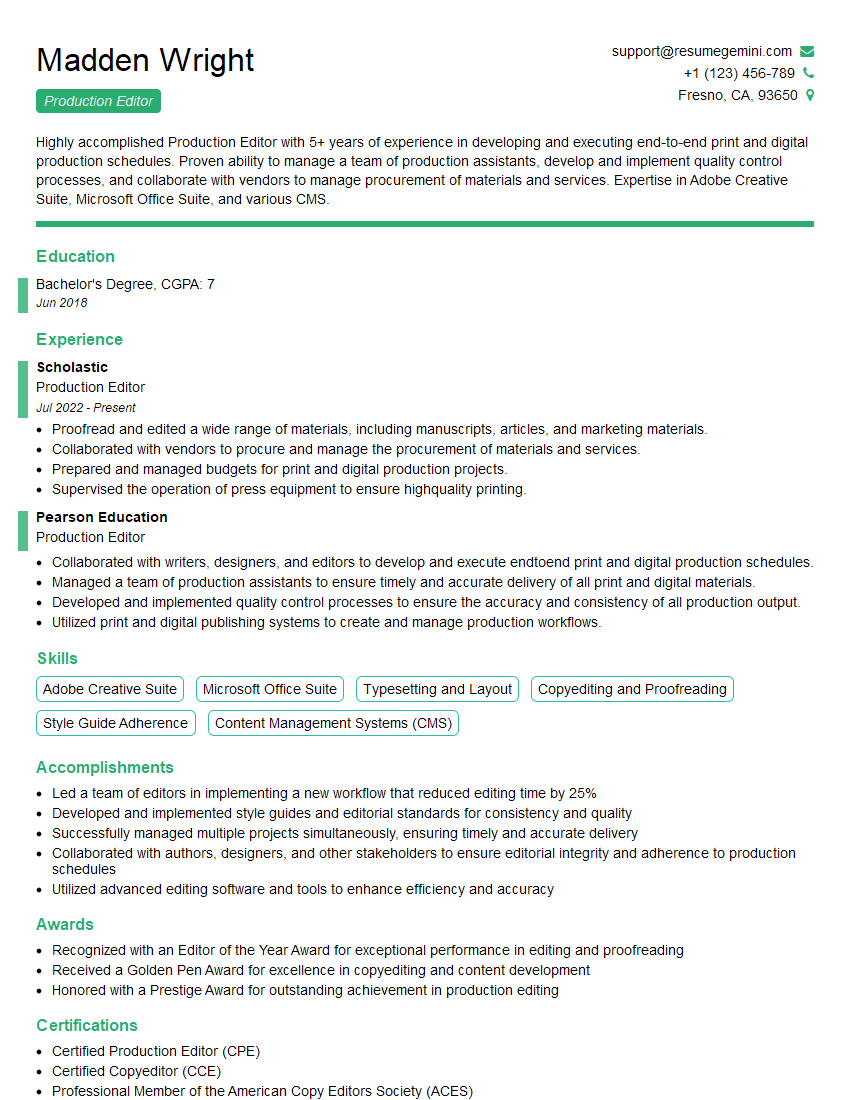
Production Editor Resume Sample
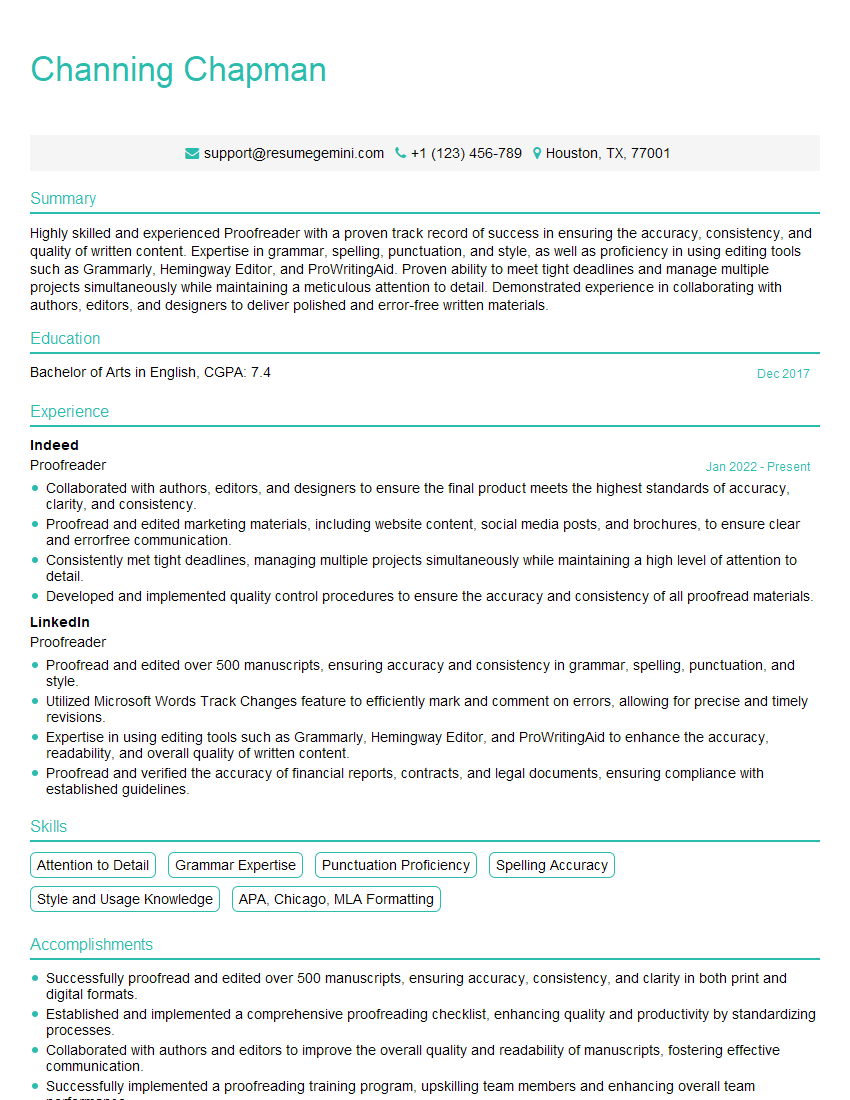
Proofreader Resume Sample
Explore more articles
Users Rating of Our Blogs
Share Your Experience
We value your feedback! Please rate our content and share your thoughts (optional).
What Readers Say About Our Blog
Really detailed insights and content, thank you for writing this detailed article.
IT gave me an insight and words to use and be able to think of examples