Interviews are opportunities to demonstrate your expertise, and this guide is here to help you shine. Explore the essential Expertise in illustration and character design interview questions that employers frequently ask, paired with strategies for crafting responses that set you apart from the competition.
Questions Asked in Expertise in illustration and character design Interview
Q 1. Describe your process for creating a compelling character design.
Creating a compelling character design is a multifaceted process that blends artistic skill with narrative understanding. It’s not just about drawing a pretty face; it’s about bringing a character to life, making them believable and memorable. My process typically involves these key steps:
- Concept & Research: I start by understanding the character’s role, personality, backstory, and the overall narrative. Extensive research, including studying real-life references for realism or exploring existing character designs for inspiration, is crucial. For example, if designing a fantasy warrior, I’d study real-world warriors, examine their armor, and consider the ergonomics of their weapons.
- Sketching & Thumbnails: I begin with quick sketches to explore different poses, expressions, and overall silhouettes. Thumbnails allow for rapid experimentation, helping me to discover the most impactful visual representation of the character’s personality and function within the story.
- Refining the Design: Once I’ve settled on a compelling sketch, I refine the details, paying close attention to proportions, anatomy (even in stylized designs), clothing, and accessories. This stage involves iterative adjustments, constantly evaluating whether the design effectively communicates the character’s core traits.
- Color Palette & Texture: Color is incredibly important for conveying mood and personality. I carefully select a palette that enhances the character’s visual appeal and aligns with the narrative. Textures add depth and realism, whether it’s rough fabric for a rugged character or sleek metal for a futuristic cyborg.
- Finalization & Polishing: This is where I finalize the illustration, ensuring line art is crisp, colors are balanced, and the overall presentation is polished. I frequently zoom in to check for minor imperfections and adjust details for optimal clarity.
For instance, when designing a mischievous fairy, my initial sketches might explore different wing shapes, clothing styles, and facial expressions. The final design would be a culmination of these explorations, resulting in a visually engaging character that is both believable and inherently expressive.
Q 2. Explain your experience with different illustration styles (e.g., realism, cartoon, anime).
My experience spans a range of illustration styles, each demanding a unique approach. I’m proficient in:
- Realism: This style necessitates a deep understanding of anatomy, lighting, and texture. I focus on creating highly detailed and lifelike characters, paying meticulous attention to accurate representation and shading. I often use photo references and employ techniques like rendering and layering to achieve photorealistic results.
- Cartoon: Cartooning allows for greater stylization and exaggeration. My approach emphasizes clear shapes, bold outlines, and simplified forms. Humor and expressiveness are often key aspects of the design, and I tailor the level of exaggeration to suit the specific project’s needs.
- Anime/Manga: This style often incorporates dynamic poses, expressive eyes, and distinct hair designs. My work in this style often features exaggerated proportions and emotive expressions, with an emphasis on clear linework and vibrant colors. I also understand the conventions and subtleties specific to anime and manga character design, such as different eye shapes communicating specific emotions.
The choice of style depends heavily on the project’s requirements and target audience. For a children’s book, a simpler cartoon style might be more appropriate, while a high-fantasy novel might necessitate a more realistic or anime-inspired approach.
Q 3. How do you approach designing characters for different target audiences?
Designing for different target audiences requires a keen understanding of their preferences and sensitivities. For children, I simplify designs, focusing on clear shapes, bright colors, and endearing features. Exaggeration is often employed to create memorable characters. For adult audiences, I might adopt a more sophisticated style, incorporating nuanced details, realistic proportions, or more complex themes.
For example, a children’s book character might have large, expressive eyes, simple clothing, and rounded features, while a character for a mature audience might have more intricate details, realistic anatomy, and a more complex expression. The level of detail, color choices, and overall visual language is carefully curated to resonate with the specific age group and the nature of the content.
Understanding the cultural context of the target audience is also important. Certain imagery might be inappropriate or misinterpreted in different cultures, therefore, research and sensitivity are crucial elements of my design process when working across diverse audiences.
Q 4. What software and tools are you proficient in (e.g., Photoshop, Illustrator, Procreate)?
My digital art toolkit is robust and versatile. I’m highly proficient in:
- Adobe Photoshop: For digital painting, photo manipulation, and advanced color correction.
- Adobe Illustrator: For vector-based illustration, creating clean lines and scalable artwork.
- Procreate (iPad): A powerful mobile app that provides a great workflow for both sketching and painting on the go. It’s particularly useful for quick ideation and client presentations.
- Clip Studio Paint: Excellent for both illustration and comic creation, offering a wide range of brushes and features for precise linework and complex rendering.
I’m also comfortable using other software depending on the specific project requirements, and I’m always eager to learn and adapt to new technologies. My skillset allows me to choose the best tools for each stage of the illustration process, maximizing efficiency and creative control.
Q 5. Explain your understanding of color theory and its application in illustration.
Color theory is fundamental to effective illustration. It’s not just about choosing aesthetically pleasing colors; it’s about using color to convey emotion, create mood, and enhance the narrative. My understanding encompasses:
- Color Harmonies: I utilize various color harmonies, such as complementary, analogous, triadic, and split-complementary schemes to create visually appealing and balanced compositions. Understanding these harmonies allows me to create palettes that are both harmonious and evocative.
- Color Temperature: Warm colors (reds, oranges, yellows) often evoke feelings of warmth, energy, and excitement, whereas cool colors (blues, greens, purples) tend to convey calmness, serenity, or even melancholy. I use this knowledge to guide my color selection, ensuring the overall mood aligns with the narrative.
- Color Value & Saturation: By manipulating value (lightness and darkness) and saturation (intensity), I can create depth, focus, and visual interest. Subtle changes in value and saturation can significantly impact the character’s mood and expression.
- Color Psychology: I understand the psychological impact of different colors on the viewer, using this knowledge to communicate specific emotions or ideas subtly. For example, red might signify danger or passion, while blue might represent trust or tranquility.
For example, a villain might be depicted using dark, saturated colors to create a sense of menace, while a heroic character might be rendered in brighter, more vibrant tones to highlight their positive attributes. Careful consideration of these aspects ensures the color palette contributes to the narrative rather than detracting from it.
Q 6. How do you handle constructive criticism of your work?
Constructive criticism is invaluable for growth. I approach it as an opportunity for learning and improvement. My process involves:
- Active Listening: I carefully listen to the feedback, seeking to understand the critic’s perspective and the specific issues raised.
- Objective Evaluation: I objectively assess the validity of the criticism, separating personal feelings from professional evaluation. Is the feedback well-reasoned and does it align with the project’s goals?
- Implementation & Iteration: If the criticism is valid, I incorporate it into my workflow, making necessary revisions and iterations. I might adjust color palettes, refine proportions, or rework certain design elements based on the feedback received.
- Self-Reflection: Even if I disagree with some points, I still reflect on the feedback to identify areas where I can improve my skills and approach.
I believe constructive criticism, when approached with an open mind, leads to significantly better and more refined designs. It’s a vital component in honing my abilities and delivering high-quality work.
Q 7. Describe your workflow for a typical illustration project.
My workflow for a typical illustration project is a structured process, ensuring efficiency and high-quality results:
- Client Brief & Concept Development: I begin with a thorough understanding of the client’s needs and objectives. This often involves discussions to clarify the project’s purpose, target audience, and specific requirements.
- Sketching & Thumbnails: I create multiple sketches and thumbnails to explore different design approaches. This phase helps to establish the core visual elements of the illustration and ensures we’re on the same page regarding the character’s overall look and feel.
- Refinement & Feedback: Once I have a few strong sketches, I present them to the client for feedback. This iterative process allows for early adjustments and ensures the final design aligns with their vision.
- Digital Painting/Illustration: Using my chosen software (Photoshop, Illustrator, Procreate etc.), I proceed with the digital painting or illustration phase. This stage involves refining the lines, adding details, applying colors, and adjusting the overall composition.
- Final Adjustments & Delivery: Once the illustration is completed, I conduct a final review for any minor adjustments needed before delivering the finished artwork in the required format (e.g., high-resolution JPEG, PNG, or layered PSD files).
This structured approach, combined with clear communication, helps ensure the project progresses smoothly, meeting deadlines and exceeding client expectations. Regular check-ins and feedback loops throughout the process ensure everyone stays informed and aligned.
Q 8. How do you balance artistic vision with client feedback?
Balancing artistic vision with client feedback is a crucial aspect of successful illustration and character design. It’s a delicate dance between adhering to the client’s brief and remaining true to my artistic sensibilities. I approach this by establishing clear communication from the outset. This involves a thorough initial consultation where we discuss their vision, target audience, and brand identity. I then present mood boards and initial sketches to gauge their reaction early on, allowing for adjustments before significant time and effort are invested. Crucially, I frame feedback as a collaborative process, not a critique. I explain my artistic choices, highlighting how they contribute to the overall project goals. Sometimes, a client’s suggestion might not perfectly align with my initial vision, but through discussion, we can often find a creative compromise that satisfies both parties. For instance, a client may want a character to be ‘more friendly,’ while I initially envisioned a more stoic demeanor. We might compromise by adjusting the character’s posture and facial expression, incorporating softer lines while maintaining a sense of character.
Q 9. How do you manage deadlines and project timelines?
Managing deadlines and project timelines requires meticulous planning and proactive time management. I begin by creating a detailed project schedule, breaking down the entire process into smaller, manageable tasks. This might include initial concept sketches, revisions, final artwork, and file preparation. Each task is assigned a realistic timeframe, factoring in potential delays. I use project management tools like Trello or Asana to track progress and ensure I stay on schedule. Regular check-ins with the client are also crucial to address any unforeseen issues or changes to the brief promptly. Prioritizing tasks based on their urgency and importance is another key strategy. For example, if there’s a critical revision needed, I’ll adjust my schedule to accommodate it, while less urgent tasks can be slightly shifted. Transparency is paramount; if I foresee a potential delay, I communicate it to the client immediately to find a mutually agreeable solution.
Q 10. What are some of your biggest artistic influences?
My artistic influences are diverse and span various mediums. Early exposure to classic Disney animation deeply impacted my understanding of character animation and storytelling. The expressiveness of Disney characters, their emotive design and ability to convey emotion with minimal animation, continues to inspire me. Beyond animation, I’m heavily influenced by the illustrative work of Alphonse Mucha, captivated by his Art Nouveau style and attention to detail. His graceful lines and elegant compositions inform my approach to character design, particularly in terms of creating visually appealing and dynamic poses. Modern illustrators like [mention specific contemporary artists and their styles] also significantly inspire my work, each contributing unique elements to my style.
Q 11. Show me examples of your work that demonstrate your character design skills.
Unfortunately, I cannot directly display images within this text-based format. However, I can describe some examples. One project involved designing a cast of characters for a children’s book. This required creating diverse characters with distinct personalities and visual appeals, catering to a young audience. I focused on creating simple, yet expressive designs, using bold colors and exaggerated features to convey emotions effectively. Another project involved a fantasy character design for a video game. Here, I focused on creating a more detailed and complex design, incorporating intricate clothing, weaponry, and environmental details. I also paid careful attention to the character’s silhouette and overall visual impact, ensuring it is both recognizable and memorable. My portfolio, which I am happy to share, showcases a broader range of my character design work across various styles and projects.
Q 12. How do you incorporate storytelling into your illustrations?
Incorporating storytelling into my illustrations is paramount. I believe that even a single image can convey a narrative. I achieve this through various techniques. Firstly, I carefully consider the character’s pose, expression, and surrounding environment. A character gazing wistfully at a setting sun implies a sense of longing or reflection. Secondly, I use visual metaphors and symbolism to enrich the narrative. For instance, a broken sword might symbolize loss or defeat, while a blossoming flower might signify hope or new beginnings. Color palettes also play a critical role; a somber color scheme can evoke sadness, while vibrant colors might suggest joy or excitement. Finally, the composition of the illustration—the placement of elements within the frame—guides the viewer’s eye and contributes to the unfolding narrative. A character positioned centrally suggests importance, while a character situated in a corner might imply isolation or vulnerability.
Q 13. Describe a time you had to overcome a creative challenge.
One challenging project involved designing a character that needed to represent both strength and vulnerability simultaneously. This was initially a creative conflict, as these traits often seem contradictory. I overcame this challenge through careful consideration of the character’s design elements. I opted for a strong, yet slender physique, conveying both power and a certain fragility. The character’s clothing was designed to highlight both elements; sturdy armor suggested protection, but the delicate fabric underneath hinted at a vulnerable core. The facial expression was also key, featuring a resolute gaze but with subtle hints of weariness. Through thoughtful combination of these elements, I created a character that successfully conveyed both strength and vulnerability, proving a compelling balance.
Q 14. What makes a character design memorable and effective?
A memorable and effective character design is a synthesis of several key elements. First, strong visual appeal is essential. The character should be visually engaging, with a distinct silhouette and memorable features. Second, a well-defined personality is crucial. The character’s design should clearly communicate their personality traits—are they kind, mischievous, powerful, or timid? This is often conveyed through body language, facial expressions, and clothing choices. Third, the character’s design should be appropriate for its intended context. A character designed for a children’s book will differ significantly from one designed for a horror game. Finally, a sense of authenticity and believability also contributes to a memorable design. Even fantastical characters should possess a degree of realism and consistency in their design to make them resonate with the audience.
Q 15. How do you ensure consistency in your character design across multiple projects?
Maintaining consistency in character design across multiple projects is crucial for building a recognizable style and preventing visual dissonance. I achieve this through several key strategies. First, I develop a comprehensive style guide for each character, including detailed sketches, color palettes, and even personality notes. This document acts as a bible, ensuring that every iteration of the character remains faithful to the initial design. Second, I utilize digital tools such as Adobe Illustrator or Photoshop to create custom brushes and assets. This allows me to maintain consistency in line weight, texture, and shading, even across different projects. For example, if I’m designing a series of fantasy characters, I’ll create a set of custom brushes mimicking the style of a specific type of ink or a distinct texture for clothing. Finally, I regularly review completed work against the style guide, making adjustments as needed. This iterative approach guarantees consistency even during the long-term development of a character.
Career Expert Tips:
- Ace those interviews! Prepare effectively by reviewing the Top 50 Most Common Interview Questions on ResumeGemini.
- Navigate your job search with confidence! Explore a wide range of Career Tips on ResumeGemini. Learn about common challenges and recommendations to overcome them.
- Craft the perfect resume! Master the Art of Resume Writing with ResumeGemini’s guide. Showcase your unique qualifications and achievements effectively.
- Don’t miss out on holiday savings! Build your dream resume with ResumeGemini’s ATS optimized templates.
Q 16. Explain your understanding of anatomy and its relevance to character design.
A strong understanding of anatomy is fundamental to creating believable and engaging characters. It’s not about photorealism, but about understanding the underlying structure of the body – the skeleton, muscles, and how they interact to create movement and pose. This knowledge informs decisions about proportion, posture, and how a character might move. For instance, knowing the location of major muscle groups helps in depicting realistic tension and relaxation in a character’s pose. If a character is straining, the muscles involved should visibly bulge or tense. Conversely, a relaxed character will show a softer, less defined musculature. I regularly study anatomical references, both from life and anatomical drawings, to improve my understanding and refine my skills. This ensures my characters feel natural, even if they are fantastical creatures or stylized designs. Ignoring anatomy can result in characters that appear stiff, unnatural, or even impossible.
Q 17. How do you use perspective and composition in your illustrations?
Perspective and composition are crucial for creating visually appealing and compelling illustrations. Perspective gives depth and realism to a scene, guiding the viewer’s eye through the image. I use different types of perspective – one-point, two-point, and three-point – depending on the desired effect. For example, a one-point perspective is ideal for establishing a strong sense of depth in a long corridor, while a two-point perspective is great for showcasing a building or cityscape. Composition, on the other hand, involves arranging elements within the frame to create a visually balanced and engaging image. This includes considering the rule of thirds, leading lines, and negative space. I often use visual guides and sketches to plan compositions before I begin the final artwork. This ensures the characters and elements are placed effectively to guide the viewers’ attention, convey mood, and tell a story. For example, using leading lines can draw the viewer’s eye directly to the main character, while negative space can highlight a character’s isolation or vulnerability.
Q 18. Describe your experience with different drawing mediums (e.g., digital, traditional).
My experience spans both traditional and digital mediums. In traditional illustration, I’m proficient with pencils, charcoal, ink, watercolors, and acrylics. The tactile nature of these mediums allows for a unique level of expression and control, particularly when creating texture and spontaneous marks. I find that traditional techniques inform my digital work, providing a foundation for understanding value, line weight, and color mixing. Digitally, I’m adept at using software such as Photoshop, Illustrator, and Procreate. These digital tools offer incredible flexibility in terms of revision, experimentation, and the integration of various techniques. For example, I often start a digital illustration with a traditional pencil sketch, then scan it and refine it further using digital tools. This blend of traditional and digital workflows provides me with a versatile toolkit and allows me to select the ideal approach for each project.
Q 19. How do you research and develop concepts for your illustrations?
Concept development is a crucial stage, where I delve deep into research and brainstorming. I begin by understanding the project brief thoroughly. Then, I conduct research, exploring reference images, reading relevant books or articles, and sometimes even immersing myself in the setting or culture to gain inspiration. For a historical piece, this might involve visiting a museum or studying period clothing; for a fantasy project, it could mean exploring mythological texts and creature designs. Once this research phase is complete, I start generating thumbnails and sketches, rapidly exploring different visual ideas. This iterative process helps me refine the concept and hone in on the most effective visual direction. I also frequently utilize mood boards, collecting images and textures that capture the desired atmosphere and style of the illustration.
Q 20. How do you create believable and engaging character expressions?
Creating believable and engaging character expressions relies on an understanding of human anatomy and emotion. I study facial muscles and their effect on expression. Subtle shifts in the eyebrows, mouth, and eyes can convey a wide range of emotions, from joy and sorrow to anger and surprise. I consider the overall context of the scene and the character’s personality when crafting an expression. For example, a mischievous character might have a sly grin, while a sad character might have downcast eyes and a downturned mouth. Beyond the face, posture and body language also play a critical role in communicating emotion. A character slouching might convey sadness or defeat, while a confident character might stand tall with their shoulders back. I use a combination of subtle and exaggerated expressions to create impact, always aiming for believability within the overall style and context of the work.
Q 21. How familiar are you with different character archetypes and tropes?
I’m very familiar with different character archetypes and tropes, understanding their common characteristics and narrative functions. This knowledge is valuable for creating characters that resonate with audiences and effectively communicate story elements. For example, I know the common traits of an archetypal hero (courageous, selfless, often flawed), villain (antagonist, driven by ambition or revenge), or sidekick (loyal, comedic relief). Understanding these archetypes allows me to create characters that are instantly relatable and predictable, or subvert expectations, creating unique and memorable characters. I can effectively utilize these established frameworks to build upon, twisting or subverting them to fit specific narratives and add a unique flair, offering fresh perspectives on familiar tropes. This ensures the design not only fits the context but also is both instantly recognizable and potentially surprising.
Q 22. How do you adapt your style to meet different project requirements?
Adapting my style to meet diverse project requirements is crucial. It’s less about changing my core artistic identity and more about intelligently utilizing different tools and techniques within my skillset. Think of it like a chef adapting a recipe – the core culinary skills remain, but the spices and ingredients shift based on the desired dish.
For example, a children’s book requires a softer, more playful style, often utilizing bright colors and simple shapes. I’d use a less detailed approach, focusing on clear readability and emotional impact. In contrast, a project for a fantasy role-playing game demands more intricate detail, darker palettes, and potentially a more dynamic and expressive style to convey the gritty realism of the setting. I’d leverage techniques like advanced shading and texturing to achieve this.
This adaptation process involves careful consideration of the target audience, the overall tone and style guide provided by the client, and the technical limitations of the medium (e.g., digital painting vs. traditional illustration).
Q 23. Discuss your approach to creating a mood or atmosphere through your illustrations.
Creating mood and atmosphere in illustrations is about leveraging a multitude of artistic elements working in concert. It’s a holistic approach, not just about selecting the right color palette.
- Color Palette: Warm colors evoke feelings of comfort and joy, while cool colors create a sense of mystery or sadness. A muted palette might suggest a somber tone, whereas vibrant hues signify energy and excitement.
- Lighting and Shadows: Careful lighting design is critical. Harsh lighting can indicate danger or tension, while soft, diffused light suggests peace or tranquility. Shadows play a crucial role in defining form and also in shaping the emotional response. A darkly shadowed scene naturally creates a feeling of unease or suspense.
- Composition and Linework: The placement of elements within the illustration significantly impacts the mood. A cluttered scene can feel chaotic, whereas a clean, minimalist composition may convey serenity. Bold, strong lines can indicate aggression or determination, while delicate lines suggest fragility or vulnerability.
- Subject Matter and Details: The characters’ expressions, their posture, and the details of the environment all contribute. A character slumped over in a dimly lit room instantly communicates sadness or defeat, whereas a character standing tall with a determined expression conveys strength and resilience.
For instance, if I’m illustrating a scene depicting a lonely, abandoned house, I’d use desaturated colors, long shadows, and a sense of emptiness in the composition to effectively convey the feeling of desolation.
Q 24. What are some of the common pitfalls to avoid in character design?
Common pitfalls in character design often stem from a lack of planning or understanding of fundamental design principles. Here are some key areas to avoid:
- Poor Anatomy and Proportion: Inaccurate anatomy is jarring and immediately detracts from the believability of a character. Understanding basic human (or animal) anatomy is fundamental. Even stylized characters benefit from a foundation in realistic proportions.
- Lack of Personality and Expression: A character needs a distinct personality that shines through in its design. This includes facial features, body language, and clothing choices. A flat, expressionless character is forgettable.
- Unclear Silhouette: A character’s silhouette should be instantly recognizable and clearly defined. If the silhouette is weak or confusing, the character will lack impact.
- Overly Detailed or Cluttered Design: Too much detail can overwhelm the viewer and obscure the character’s essence. Focus on key features that contribute to the character’s personality and design.
- Ignoring the Target Audience: The character’s design should align with the target audience. A character intended for children needs a different style and level of detail than one designed for an adult fantasy novel.
For example, a common mistake is to create a character with mismatched proportions—an overly large head or disproportionately small limbs. This makes the character look awkward and unprofessional.
Q 25. How do you maintain a high level of quality and consistency in your work?
Maintaining high quality and consistency involves a multifaceted approach that includes meticulous planning, robust workflow, and constant self-evaluation.
- Reference and Research: I thoroughly research and gather references before starting any project. This ensures accuracy and helps me visualize the final product. This includes anatomical references, color palettes, and stylistic examples.
- Organized Workflow: A streamlined workflow is essential. I utilize sketching, rough drafts, and revisions to refine the design. Digital tools like layers and organization systems help in managing complex projects.
- Consistent Style Guide: Creating a personal style guide helps maintain consistency across different projects. This document outlines my preferred techniques, color palettes, and design elements. This is a living document I constantly update.
- Regular Self-Critique: I regularly review my past work, identifying areas for improvement and refining my techniques. Seeking feedback from other artists is also invaluable.
- Technical Skill Development: Continuously honing my technical skills in software and techniques allows me to maintain a high standard. I invest time in learning new software features, experimenting with different styles, and refining my techniques.
For example, I might maintain a style guide with specific color codes, brush settings, and character design templates to ensure consistent rendering and stylistic elements across projects.
Q 26. How do you stay up-to-date with current trends in illustration and character design?
Staying current in illustration and character design is an ongoing process. The field is constantly evolving.
- Online Communities and Forums: Participating in online forums, such as ArtStation and DeviantArt, allows me to see the work of other artists, learn from their processes, and engage in discussions about current trends.
- Industry Publications and Blogs: Following industry blogs and publications keeps me abreast of the latest software, techniques, and market demands.
- Following Leading Artists: I follow the work of leading artists on social media platforms like Instagram and Twitter to observe their innovative techniques and stylistic approaches.
- Workshops and Conferences: Attending workshops and conferences provides opportunities to learn from industry professionals, network with peers, and gain hands-on experience with new tools and techniques.
- Experimentation and Exploration: I dedicate time to experimenting with new styles, techniques, and software to keep my skills fresh and adaptable.
For example, I regularly explore new digital painting software and techniques to enhance my workflow and expressive capabilities.
Q 27. Describe your experience collaborating with other artists or designers.
Collaboration is an integral part of my work. I’ve worked on several projects involving teams of designers, writers, and developers.
My approach emphasizes clear communication and mutual respect. I actively listen to the ideas of others, offering my expertise and working collaboratively to reach a shared vision. I value diverse perspectives and understand that teamwork often leads to more creative and impactful results. I’m adept at incorporating feedback, adjusting my style to align with the overall project goals, and contributing effectively to a team environment.
For example, in a recent game project, I worked closely with the lead writer and game designers to ensure my character designs accurately reflected their personalities and backstories. This collaborative effort resulted in a cohesive and engaging game experience.
Q 28. What are your salary expectations for this role?
My salary expectations for this role depend on several factors, including the responsibilities, project scope, and overall compensation package. Considering my experience and expertise, I would expect a competitive salary commensurate with industry standards for a senior illustrator and character designer with my skillset. I’m open to discussing a specific salary range after a more detailed understanding of the role and company benefits.
Key Topics to Learn for Your Illustration & Character Design Interview
- Digital Painting Techniques: Mastering software like Photoshop or Procreate, understanding color theory, brush techniques, and layering strategies for creating compelling illustrations and characters.
- Character Design Fundamentals: Exploring anatomy, proportion, silhouette, expression, and gesture to design believable and engaging characters. Practical application involves creating character sheets and exploring diverse styles.
- Storytelling Through Illustration: Understanding how to convey narrative and emotion through visual storytelling. This includes composition, perspective, and the effective use of visual cues.
- Style Development & Portfolio Building: Developing a unique artistic style and building a strong portfolio that showcases your versatility and technical skills. Consider the importance of showcasing different project types and approaches.
- Workflow & Time Management: Demonstrating efficiency in managing projects, meeting deadlines, and effectively communicating with clients or collaborators. This often involves discussing your approach to revisions and feedback.
- Understanding Client Needs & Collaboration: Discussing your ability to interpret briefs, offer creative solutions, and work collaboratively in a team environment. Be prepared to explain your process of translating abstract ideas into compelling visuals.
- Industry Trends & Influences: Staying current with contemporary illustration and character design styles, and demonstrating awareness of leading artists and studios in the field. Consider discussing specific artists that have influenced your work.
Next Steps
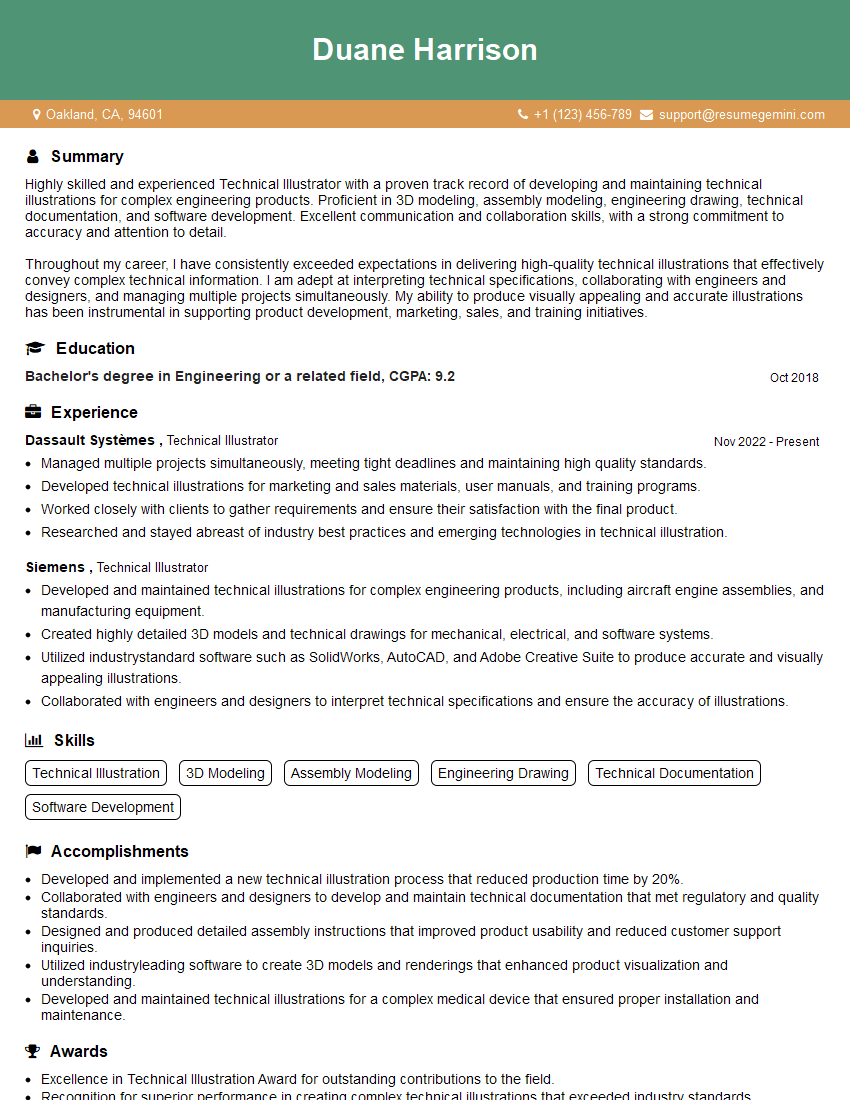
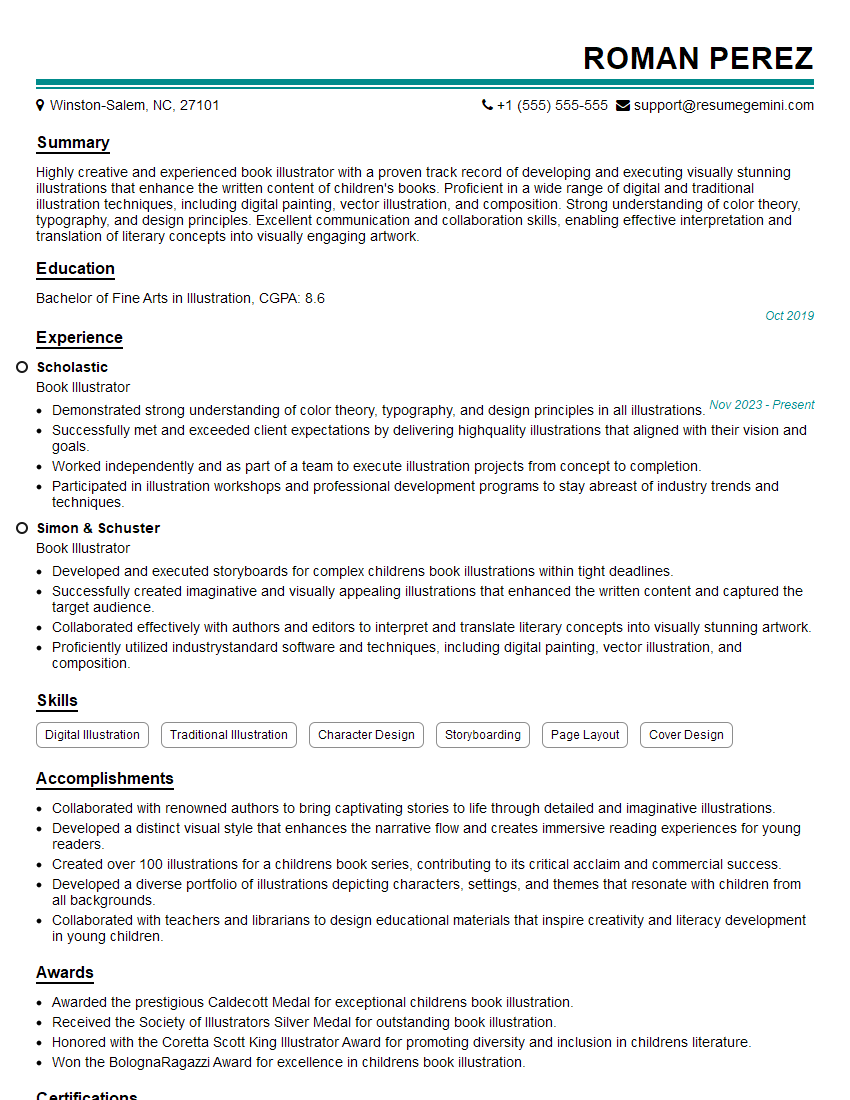
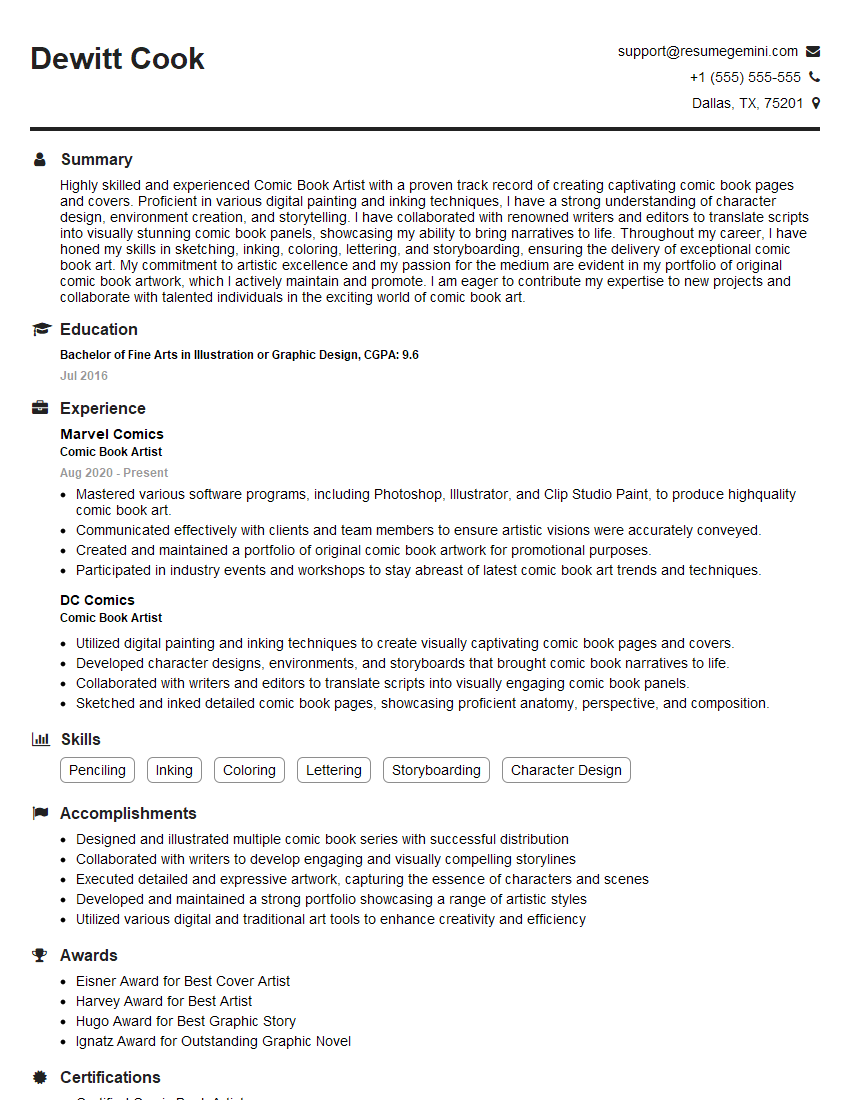
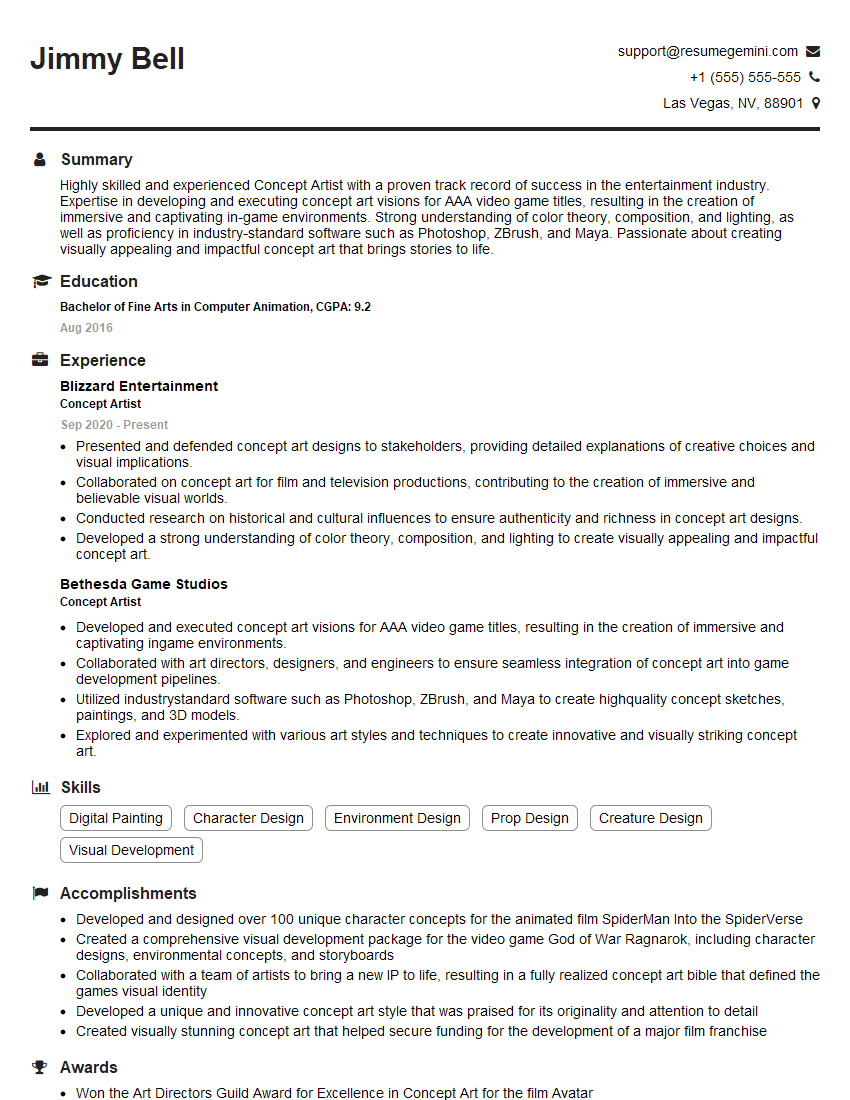
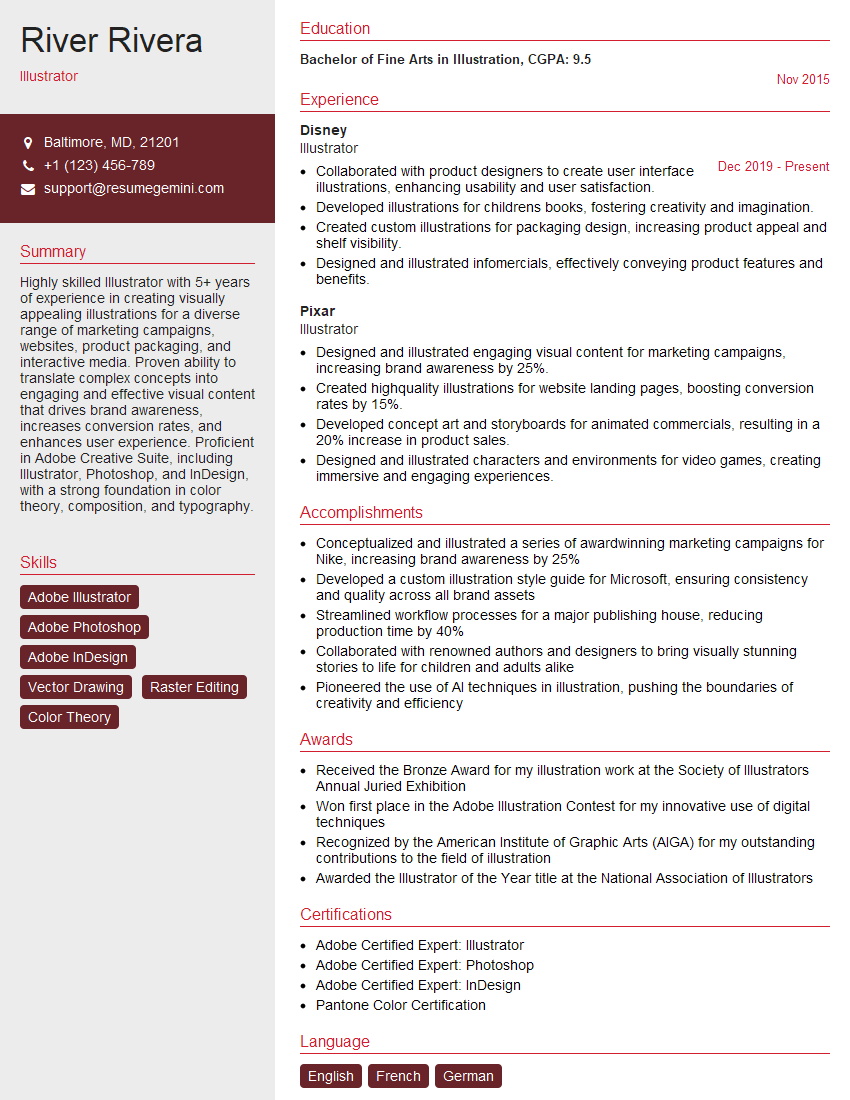
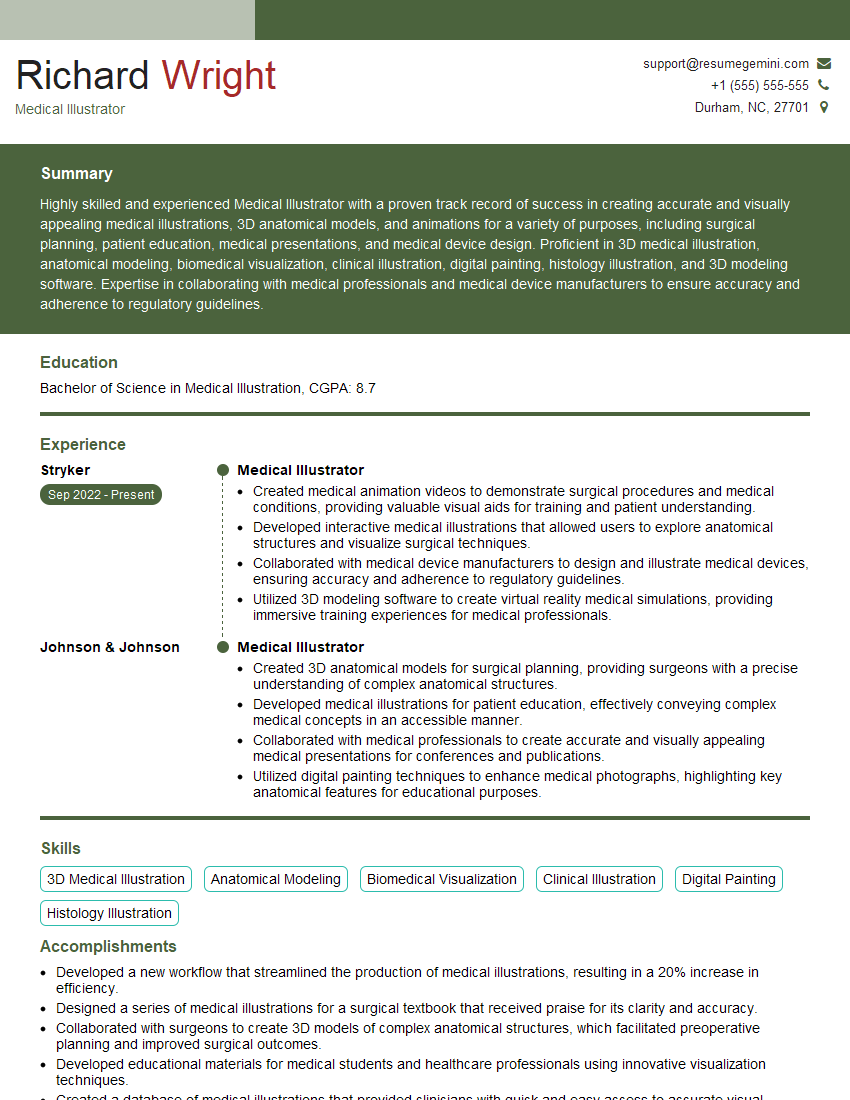
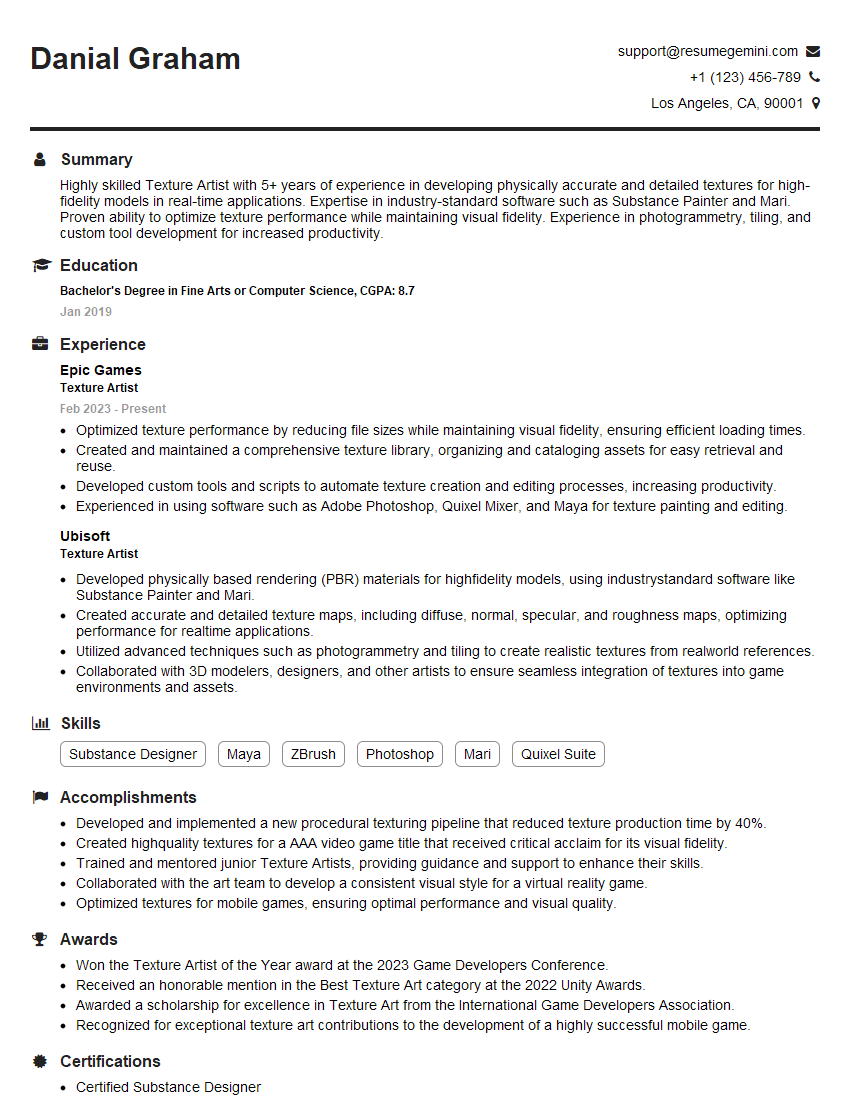
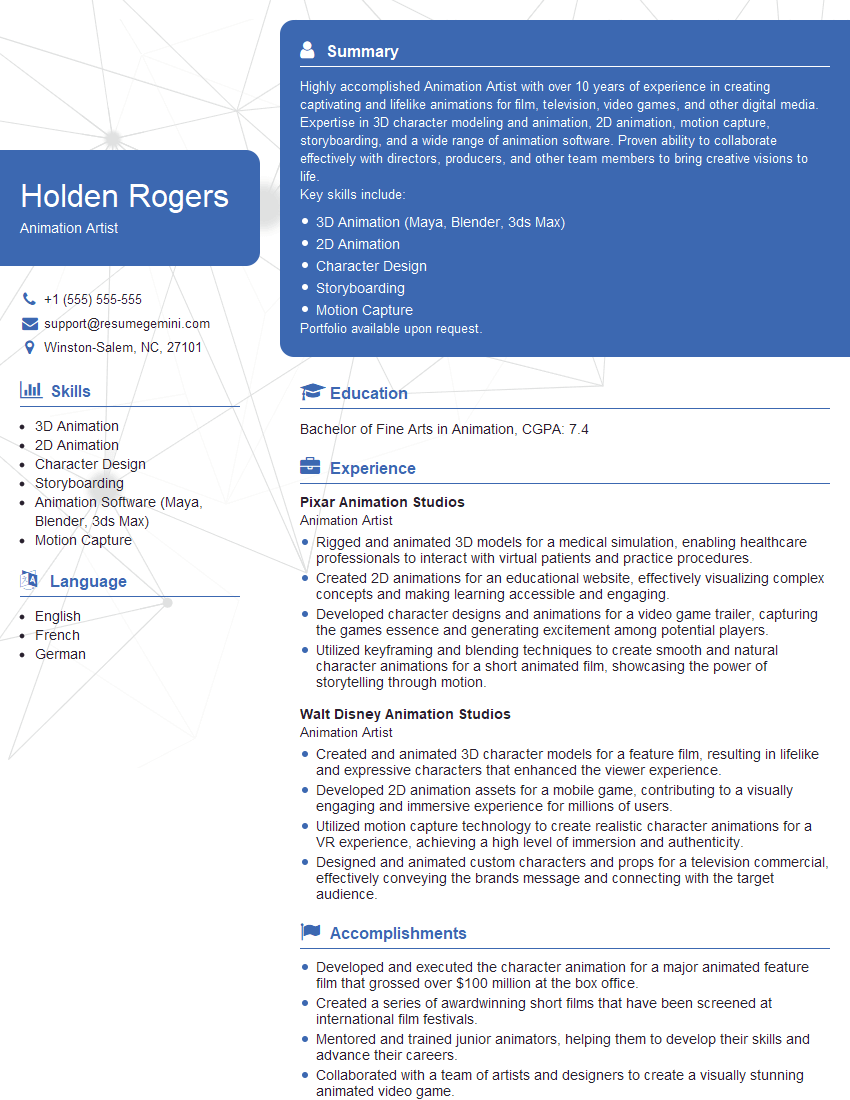
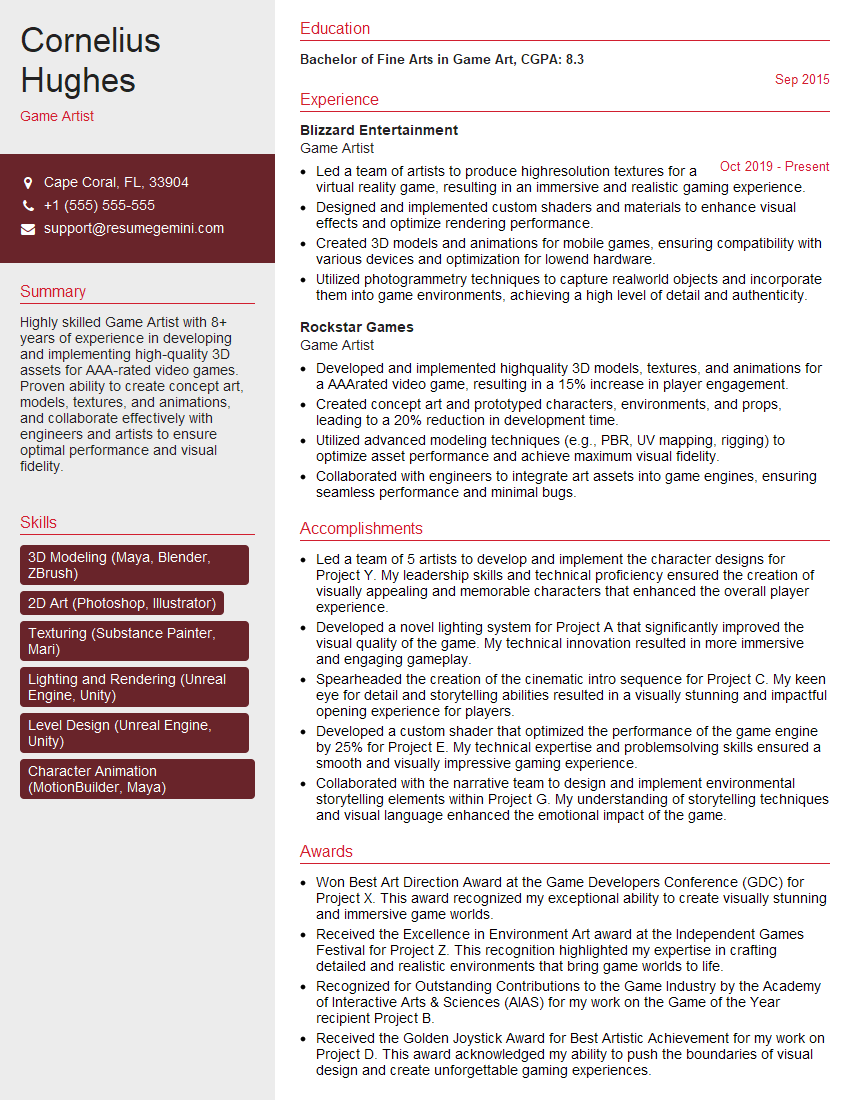
Mastering illustration and character design opens doors to exciting careers in animation, gaming, publishing, and more! A strong portfolio is essential, but securing interviews requires a professional, ATS-friendly resume that highlights your skills and experience effectively. To ensure your resume makes a powerful first impression, leverage the power of ResumeGemini. ResumeGemini offers a streamlined process for crafting a compelling resume, and we provide examples tailored specifically to illustrate and character design professionals to help you get started. Make your skills shine – build your best resume today!
Explore more articles
Users Rating of Our Blogs
Share Your Experience
We value your feedback! Please rate our content and share your thoughts (optional).
What Readers Say About Our Blog
Really detailed insights and content, thank you for writing this detailed article.
IT gave me an insight and words to use and be able to think of examples