Cracking a skill-specific interview, like one for ISO 13373, requires understanding the nuances of the role. In this blog, we present the questions you’re most likely to encounter, along with insights into how to answer them effectively. Let’s ensure you’re ready to make a strong impression.
Questions Asked in ISO 13373 Interview
Q 1. Explain the concept of measurement uncertainty as defined in ISO 13373.
Measurement uncertainty, as defined in ISO 13373, is a parameter associated with the result of a measurement that characterizes the dispersion of the values that could reasonably be attributed to the measurand. In simpler terms, it’s a quantification of the doubt surrounding a measurement result. It acknowledges that no measurement is perfectly precise; there’s always some degree of uncertainty. Imagine shooting an arrow at a target – the uncertainty represents the spread of your shots around the bullseye. A smaller spread indicates lower uncertainty, and a larger spread indicates higher uncertainty. This uncertainty isn’t a mistake; it’s an inherent part of the measurement process.
Q 2. Describe the different types of uncertainty components.
Uncertainty components arise from various sources within the measurement process. They can be broadly categorized, though the lines can sometimes blur:
- Random Effects (Type A): These are variations observed in repeated measurements under the same conditions. Think of slightly different readings when repeatedly weighing the same object. These are statistically analyzed, often using standard deviation.
- Systematic Effects (Type B): These are biases or consistent errors stemming from factors like calibration imperfections of instruments, environmental influences (temperature, pressure), or inherent limitations of the measurement method. These are evaluated using other information, such as manufacturer’s specifications or past experience.
- Uncertainty from Calibration: The uncertainty of the standard or instrument used for calibration directly impacts the measurement uncertainty. A poorly calibrated scale will add substantial uncertainty.
- Uncertainty from Resolution: The smallest increment a measuring device can resolve contributes to uncertainty. A ruler with 1mm markings can’t measure to 0.1mm precision.
Identifying and quantifying these components is crucial for a comprehensive uncertainty assessment.
Q 3. How do you determine the combined standard uncertainty?
The combined standard uncertainty (uc) is the overall uncertainty of a measurement result, taking into account all identified uncertainty components. It’s calculated by combining the individual standard uncertainties (ui) using the law of propagation of uncertainty. This typically involves a square root of the sum of squares (RSS) calculation. If the uncertainty components are uncorrelated, the formula simplifies to:
uc = √(u12 + u22 + ... + un2)where u1, u2, …, un are the standard uncertainties of the individual components. However, when components are correlated, a more complex calculation that considers covariance terms is needed. Sophisticated software tools are often employed for this calculation, especially when dealing with many correlated components.
Q 4. Explain the difference between Type A and Type B uncertainty evaluation.
The difference between Type A and Type B uncertainty evaluation lies in how the uncertainty is determined.
- Type A evaluation uses statistical methods to evaluate uncertainty based on repeated measurements. You obtain several readings, calculate the mean, and then the standard deviation of the readings quantifies the Type A uncertainty. This is a very practical approach whenever you can repeat your measurement.
- Type B evaluation uses other information, like manufacturer’s specifications, calibration certificates, or scientific literature, to estimate uncertainty. This is needed when repeated measurements are impractical or impossible (e.g., the uncertainty of a material constant). For example, if a device specification states that its accuracy is ±0.5%, you use this information to estimate its uncertainty contribution.
In practice, most measurements involve a combination of both Type A and Type B uncertainty components.
Q 5. How do you express the expanded uncertainty?
Expanded uncertainty (U) provides a wider interval around the measurement result, with a higher level of confidence that the true value lies within that interval. It’s expressed as:
U = k * ucwhere k is the coverage factor and uc is the combined standard uncertainty. The expanded uncertainty is reported along with the measurement result, usually using a format like:
Measurement Result ± Expanded UncertaintyFor example: 25.00 ± 0.20 units. This indicates there’s a high level of confidence that the true value falls between 24.80 and 25.20 units.
Q 6. What is the coverage factor (k) and how is it selected?
The coverage factor (k) is a numerical factor that is multiplied by the combined standard uncertainty to obtain the expanded uncertainty. It is chosen based on the desired level of confidence that the true value lies within the expanded uncertainty interval. The most common coverage factor is 2, corresponding to approximately a 95% confidence level assuming a normal distribution of the measurement errors. However, the selection of k and the associated confidence level should be clearly stated and justified; other values might be more appropriate depending on the context and the distribution of the measurement errors.
Choosing a different coverage factor implies a change in the level of confidence, for example, k=3 implies a higher confidence level (approximately 99.7%). The choice should be aligned with the risk associated with an incorrect measurement result.
Q 7. What are the key principles of calibration traceability?
Calibration traceability, a fundamental aspect of ISO 13373, ensures the accuracy and reliability of measurements by linking them to national or international standards. Key principles include:
- Unbroken Chain of Comparisons: The measuring instrument’s calibration must be traceable to a known standard through an unbroken chain of comparisons, each step with its own associated uncertainty.
- Documented Calibration History: Comprehensive records of all calibration procedures, dates, results, and associated uncertainties are essential. This documentation establishes the traceability chain.
- Accredited Calibration Laboratories: Using accredited calibration laboratories ensures that the calibration procedures adhere to internationally recognized standards, thus enhancing the credibility of the traceability.
- Uncertainty Propagation: The uncertainties associated with each calibration step are propagated through the chain to determine the overall uncertainty of the measurement. This demonstrates a clear understanding of the uncertainty contribution of each step in the process.
Calibration traceability is critical for ensuring reliable measurements across diverse industries, particularly those with strict regulatory requirements (e.g., pharmaceuticals, aerospace).
Q 8. Explain the role of calibration certificates in demonstrating traceability.
Calibration certificates are crucial for demonstrating traceability in measurement systems. Traceability, in the context of ISO 13373, means establishing an unbroken chain of comparisons to national or international measurement standards. A calibration certificate acts as a link in this chain, providing documented evidence that a specific measuring instrument has been compared to a known standard of higher accuracy. Think of it like a family tree for your measuring device – each certificate shows its relationship to a more precise ancestor, ultimately linking back to the fundamental standards.
For example, a certificate might show that a digital thermometer was calibrated against a reference thermometer traceable to the National Institute of Standards and Technology (NIST). This confirms the thermometer’s accuracy and allows you to trust its readings within specified limits.
Without calibration certificates, you lose traceability. You wouldn’t know how accurate your measurements are or if your instruments are still performing correctly. This can lead to significant errors and inconsistencies in your data, impacting product quality, research findings, or even safety.
Q 9. Describe the process of a calibration procedure.
A calibration procedure is a systematic process for verifying the accuracy and performance of a measuring instrument against a known standard. It typically involves several key steps:
- Preparation: Selecting the appropriate standard, instrument, and environment. Checking for any instrument damage or drift.
- Measurement: Making multiple measurements of a known standard using the instrument being calibrated. This often involves comparing the instrument reading to the known value of the standard.
- Analysis: Comparing the instrument’s readings to the standard’s values. Calculating the deviation or error and assessing it against predefined acceptance criteria.
- Reporting: Documenting the entire procedure, including the results, uncertainties, and any corrective actions. This typically results in a calibration certificate.
- Adjustment (if needed): If the instrument’s deviation exceeds the acceptance criteria, adjustments or repairs might be necessary before re-calibration.
Imagine calibrating a weight scale. You’d use known weights (your standard) and compare the scale’s readings to the actual weights. If the scale consistently reads 1 gram heavier than the known weight, it needs adjustment.
Q 10. How do you identify and manage sources of measurement uncertainty?
Identifying and managing sources of measurement uncertainty is crucial for ensuring the reliability of measurement results. Uncertainty refers to the doubt associated with a measurement. It encompasses all the factors that can influence the accuracy of a measurement, from instrument limitations to environmental conditions. ISO 13373 guides you on quantifying and managing this uncertainty.
Sources of uncertainty can be categorized as:
- Instrument limitations: Resolution, drift, linearity, and stability.
- Environmental factors: Temperature, humidity, pressure, electromagnetic fields.
- Operator errors: Reading errors, setup errors, improper handling.
- Method limitations: Bias, reproducibility, precision of the measurement method.
- Reference standard uncertainty: The inherent uncertainty associated with the calibration standard used.
Managing uncertainty involves a combination of techniques. These could include using higher-accuracy instruments, controlling environmental conditions, employing standardized procedures, and using statistical methods to analyze and report uncertainties.
For instance, when measuring the length of a component, you must account for the uncertainty of the measuring tool (e.g., a micrometer), the operator’s reading skill, and the temperature variation affecting the component’s length.
Q 11. What are the key elements of a measurement system analysis?
A measurement system analysis (MSA) is a crucial part of ensuring the reliability of measurement data. It’s a structured investigation to evaluate the performance characteristics of a measurement system, identifying and quantifying potential sources of error. The key elements include:
- Gauge R&R (Repeatability and Reproducibility): This assesses the variation within a measurement system caused by the instrument itself (repeatability) and different operators using the instrument (reproducibility).
- Bias/Accuracy: This determines the systematic error or deviation from the true value. A biased measurement consistently reads higher or lower than the actual value.
- Linearity: Assesses how consistent the measurement system’s response is across its entire operating range. Does the system respond proportionally to changes in the measured quantity?
- Stability: Evaluates how stable the measurement system is over time. Does it maintain its accuracy consistently?
- Drift: Measures any gradual change in the measurement system’s output over time. This is different from instability in that it’s a progressive change rather than random fluctuation.
A properly conducted MSA will provide a quantitative understanding of the measurement system’s capabilities, helping determine if it is suitable for its intended purpose. This helps to avoid costly mistakes in production and quality control.
Q 12. Explain the concept of measurement repeatability and reproducibility.
Measurement repeatability and reproducibility are both aspects of precision, reflecting how consistent a measurement system is. However, they focus on different sources of variation:
- Repeatability: This refers to the variation obtained when the same operator makes multiple measurements of the same item using the same instrument under the same conditions. It reflects the instrument’s inherent variability and the operator’s skill in using it consistently.
- Reproducibility: This refers to the variation obtained when different operators make measurements of the same item using the same instrument under the same conditions. It reflects the variability due to operator differences.
Imagine a team measuring the diameter of a ball bearing. Repeatability measures how consistent a single person’s measurements are. Reproducibility measures the consistency among several people’s measurements. Both are important for understanding how reliable the overall measurement system is. Low repeatability and reproducibility indicate a problem with either the instrument, the measurement procedure, or the operators’ training.
Q 13. How do you assess the suitability of a measurement method?
Assessing the suitability of a measurement method involves evaluating whether the method is fit for its intended purpose. This involves considering various factors:
- Accuracy: Does the method produce results close to the true value?
- Precision: Does the method produce consistent results? This considers both repeatability and reproducibility.
- Sensitivity: Can the method detect small changes in the measured quantity?
- Range: Does the method cover the required measurement range?
- Resolution: What is the smallest change that the method can reliably detect?
- Cost-effectiveness: Is the method economically feasible?
- Time efficiency: How long does the method take to complete?
- Safety: Is the method safe to perform?
- Suitability for the sample: Does the method work well with the samples being measured?
For example, choosing a method to measure the thickness of a hair would require a method with high resolution and precision. In contrast, measuring the height of a building might use a less precise method but would still need to be accurate enough for the purpose.
Q 14. What are the requirements for maintaining calibration records?
Maintaining calibration records is essential for demonstrating traceability and complying with ISO 13373. These records must include:
- Unique identification of the instrument: Serial number, asset tag, etc.
- Calibration date and time: When the calibration was performed.
- Calibration procedure used: A reference to the specific procedure followed.
- Calibration results: The measured values, deviations from the standard, and uncertainties.
- Name and qualifications of the calibrator: The person who performed the calibration.
- Calibration certificate or report: A formal document that summarizes the calibration results.
- Next scheduled calibration date: Based on the instrument’s stability and usage.
- Any corrective actions taken: If the instrument required adjustments or repairs.
- Approval signature: A signature indicating that the calibration was approved and the records are accurate.
These records should be stored in a secure and organized manner, readily available for review by auditors or other interested parties. They are essential for demonstrating compliance with ISO 13373 and supporting the quality and reliability of measurements.
Q 15. How do you handle outliers in measurement data?
Handling outliers in measurement data, crucial for accurate results in accordance with ISO 13373, requires careful consideration. Outliers are data points significantly deviating from the expected pattern. Ignoring them can lead to biased results. The first step is to identify potential outliers using techniques like box plots or the Grubbs’ test. Then, investigate the cause. Was there a mistake in the measurement process? Was there an unexpected event? If a demonstrable error is found, the outlier can be removed. However, if no clear error is identified, the outlier’s impact on uncertainty needs assessment. One approach is to perform the analysis both with and without the outlier, comparing the results. This shows the outlier’s influence on the final uncertainty statement. Reporting should clearly state the outlier handling method.
Example: In a series of temperature measurements, one reading is unexpectedly high. Investigation reveals a malfunctioning sensor during that specific measurement. This outlier is justifiable to remove.
Career Expert Tips:
- Ace those interviews! Prepare effectively by reviewing the Top 50 Most Common Interview Questions on ResumeGemini.
- Navigate your job search with confidence! Explore a wide range of Career Tips on ResumeGemini. Learn about common challenges and recommendations to overcome them.
- Craft the perfect resume! Master the Art of Resume Writing with ResumeGemini’s guide. Showcase your unique qualifications and achievements effectively.
- Don’t miss out on holiday savings! Build your dream resume with ResumeGemini’s ATS optimized templates.
Q 16. Explain the significance of the ISO Guide 98-3.
ISO Guide 98-3, “Uncertainty of Measurement Part 3: Guide to the Expression of Uncertainty in Measurement (GUM) Supplement 1,” provides supplementary guidance to the main GUM document (ISO/IEC Guide 98-1). It’s crucial because it extends the application of uncertainty principles to more complex measurement situations. It offers detailed methods for dealing with challenges not fully addressed in the core GUM, such as multivariate measurements, non-linear models, and situations with correlated components of uncertainty. This is essential for ensuring comprehensive and realistic uncertainty assessments. Its importance lies in ensuring the accuracy and reliability of uncertainty evaluations in a wider variety of real-world applications.
Q 17. Describe different methods for estimating uncertainty components.
Estimating uncertainty components, which contribute to the overall measurement uncertainty, employs several methods. The choice depends on available information and the nature of the uncertainty source.
- Type A: This uses statistical methods to evaluate uncertainty based on repeated measurements. For example, calculating the standard deviation from multiple readings provides a Type A uncertainty estimate.
- Type B: This relies on all available information, often non-statistical, like calibration certificates, manufacturer’s specifications, or scientific knowledge. This might involve considering a reasonable range of possible values and assigning a probability distribution to it.
Example (Type A): Repeated weighing of an object yields readings with a standard deviation of 0.1g. This standard deviation is directly used in the uncertainty calculation.
Example (Type B): A thermometer has a stated accuracy of ±0.5°C. Based on this, a rectangular distribution is assigned, and its contribution to uncertainty is calculated.
Q 18. How do you evaluate the uncertainty of a composite measurement?
Evaluating the uncertainty of a composite measurement, where the final result depends on multiple individual measurements, involves combining the uncertainties of the individual components. The key here is to account for any correlations between these components. If the components are uncorrelated, the combined uncertainty is often obtained by using the law of propagation of uncertainty (root-sum-of-squares method):
uc = √( (∂f/∂x1)2u12 + (∂f/∂x2)2u22 + ... )
Where:
ucis the combined uncertainty.uiare the uncertainties of individual measurements.∂f/∂xiare the partial derivatives of the functionfrelating the measurements to the final result.
If correlations exist between measurement components, a more complex calculation using a covariance matrix is required.
Example: Calculating the area of a rectangle requires measuring length (l) and width (w). The area A = l * w. The combined uncertainty will depend on the uncertainties of l and w, considering any correlation between them (e.g., if both measurements are made with the same instrument). If uncorrelated, it’s a simple root-sum-of-squares approach.
Q 19. How do you interpret the results of a measurement uncertainty analysis?
Interpreting the results of a measurement uncertainty analysis means understanding the range within which the true value likely lies. The reported result is usually expressed as:
Result ± Expanded Uncertainty
The expanded uncertainty is obtained by multiplying the combined standard uncertainty (uc) by a coverage factor (k), usually 2 for a confidence level of approximately 95%. This means there is a high probability (95%) that the true value lies within the interval defined by the reported result plus or minus the expanded uncertainty. The interpretation must acknowledge that this is a probabilistic statement, not an absolute guarantee.
Example: A measurement of length is reported as 10.0 cm ± 0.2 cm (k=2). This indicates a 95% confidence that the true length is between 9.8 cm and 10.2 cm.
Q 20. What are the practical implications of measurement uncertainty in your field?
Measurement uncertainty has significant practical implications, especially in fields demanding high precision and accuracy. In manufacturing, it affects product quality, as uncertainty influences whether a product meets specifications. For example, if the measurement uncertainty of a critical dimension is large relative to the tolerance, there’s a higher chance of producing non-conforming products. Similarly, in environmental monitoring, uncertainties in measurements of pollutants can lead to inaccurate assessments of environmental quality and potentially flawed regulatory decisions. In healthcare, inaccurate measurements in diagnostics and treatments can have severe consequences. Understanding and managing uncertainty allows for better decision-making and risk assessment across these fields.
Q 21. Discuss the role of ISO 13373 in quality management systems.
ISO 13373, while not a direct part of most quality management systems (QMS) like ISO 9001, plays a vital supporting role. It provides the framework for evaluating and expressing measurement uncertainty, which is essential for demonstrating the accuracy and reliability of measurement results used within a QMS. A robust QMS relies on reliable data, and ISO 13373 contributes to this reliability. This is particularly important for calibration processes, monitoring product characteristics, and validating the effectiveness of production processes. By incorporating the principles of ISO 13373 into their QMS, organizations can demonstrate a stronger commitment to quality and provide confidence in the accuracy of their measurements and resultant data analysis.
Q 22. How do you ensure the quality of your calibration process?
Ensuring the quality of our calibration process is paramount and hinges on adhering strictly to ISO 13373. This involves a multi-faceted approach encompassing traceability, equipment maintenance, and meticulous record-keeping.
- Traceability: We ensure that all our calibration standards are traceable to national or international standards. This unbroken chain of comparisons allows us to confidently relate our measurements to universally accepted values. Think of it like a family tree for measurements; each calibration links back to a more authoritative source.
- Equipment Maintenance: Regular preventative maintenance on our calibration equipment is crucial. This includes cleaning, adjustments, and verification checks to prevent errors and ensure the equipment is functioning within its specified tolerances. Neglecting maintenance is like driving a car without regular servicing – it increases the risk of failure and inaccurate readings.
- Record-Keeping: Meticulous documentation is essential. Every calibration procedure, including the equipment used, results, and uncertainties, is meticulously documented and archived. This not only ensures compliance but also provides valuable data for analysis and continuous improvement. Imagine it as a detailed lab notebook, but for all our calibrations.
- Method Validation: We validate our calibration methods regularly to ensure they are appropriate and effective. This includes evaluating the measurement uncertainty associated with our methods and ensuring that it meets the required levels of accuracy.
By employing these strategies, we guarantee that our calibration processes are reliable, accurate, and compliant with ISO 13373 standards.
Q 23. How do you maintain the competence of personnel involved in calibration?
Maintaining personnel competence is equally vital. We achieve this through a structured program involving training, assessment, and continuous professional development.
- Initial Training: All personnel undergo comprehensive initial training on relevant calibration techniques, ISO 13373 standards, and proper use of equipment. This training is tailored to their specific roles and responsibilities.
- Regular Refresher Training: We conduct regular refresher training to keep personnel updated on new techniques, advancements in measurement technology, and any changes to ISO 13373 standards. Think of it as ongoing education to maintain their expertise.
- Competency Assessment: We regularly assess the competence of our personnel through practical tests and evaluations. This ensures that they are consistently performing calibrations to the required standards and adhering to the proper procedures. This process is essential to identify any gaps in understanding or skill.
- Continuous Professional Development: We actively encourage and support continuous professional development through attending workshops, conferences, and pursuing relevant certifications. This ensures our team stays at the forefront of the field.
By providing ongoing training and assessment, we ensure our team possesses the necessary skills and knowledge to maintain the highest standards of calibration quality.
Q 24. Explain your experience with specific measurement equipment and its calibration.
My experience encompasses a wide range of measurement equipment, including pressure gauges, temperature sensors, and dimensional measuring instruments (like micrometers and calipers). I’ve extensively worked with calibrating:
- Pressure Gauges: Utilizing deadweight testers traceable to national standards, I’ve calibrated pressure gauges across various pressure ranges and types (Bourdon tube, diaphragm, etc.), meticulously documenting uncertainties at each pressure point.
- Temperature Sensors: I’ve calibrated thermocouples, RTDs, and thermistors using calibrated temperature baths and fixed-point cells. This involves comparing the sensor readings against the reference values and calculating the uncertainties associated with the calibration process.
- Dimensional Measuring Instruments: My experience also involves calibrating micrometers, calipers, and gauge blocks using calibrated master gauges. This requires a thorough understanding of measurement uncertainties associated with these instruments and the calibration methods employed.
For each instrument, the calibration process followed the established ISO 13373 guidelines, ensuring traceability, accuracy, and proper documentation of the uncertainty analysis.
Q 25. How do you deal with uncertainties that are difficult to quantify?
Dealing with difficult-to-quantify uncertainties requires a systematic approach that combines best-judgment estimations with sensitivity analysis and other uncertainty propagation techniques.
- Sensitivity Analysis: We perform sensitivity analysis to identify the parameters that contribute most significantly to the overall measurement uncertainty. This helps us focus our efforts on quantifying the most important sources of uncertainty.
- Best-Judgment Estimation: When direct quantification is impossible, we use best-judgment estimations based on available information and expert knowledge. This is documented transparently and conservatively to ensure the overall uncertainty estimate is not underestimated.
- Conservative Approach: In cases of significant uncertainty, we adopt a conservative approach, expanding the uncertainty interval to account for the potential lack of precise quantification. It’s better to overestimate the uncertainty than underestimate it.
- Uncertainty Propagation: We meticulously propagate uncertainties through the measurement process, taking into account all sources of uncertainty and their combined effect on the final result. This involves understanding the mathematical relationships between the different measurement variables.
While we strive for precise quantification, acknowledging and carefully handling uncertainties that are hard to quantify is crucial for maintaining the integrity of our calibration processes.
Q 26. What software or tools are you familiar with for uncertainty calculations?
I’m proficient in several software and tools for uncertainty calculations. These include:
- GUM Workbench: This software is specifically designed for performing uncertainty calculations according to the Guide to the Expression of Uncertainty in Measurement (GUM), offering a structured approach to evaluating and propagating uncertainties.
- Spreadsheet Software (Excel, LibreOffice Calc): Spreadsheets are versatile tools for organizing data and performing calculations, including uncertainty propagation, particularly for simpler scenarios. Custom functions and macros can increase their capabilities.
- Specialized Calibration Software: Several commercial software packages are available that automate parts of the calibration process, including uncertainty calculation, reporting, and data management.
The choice of software depends on the complexity of the measurement system and the required level of detail in the uncertainty analysis. For simpler scenarios, spreadsheets might suffice; for complex systems, GUM Workbench or dedicated calibration software is often preferred.
Q 27. Describe a situation where a measurement uncertainty analysis helped solve a problem.
During a recent calibration of a high-precision pressure transducer used in a pharmaceutical manufacturing process, we observed inconsistencies in the calibration results. Initial analysis showed only minor deviations, but a thorough measurement uncertainty analysis revealed that the uncertainties associated with the calibration equipment and environmental factors (temperature fluctuations) were significantly higher than anticipated.
By quantifying these uncertainties, we identified the temperature fluctuations as the primary source of error. This led us to implement a temperature-controlled environment for the calibration process. This resulted in a significant reduction in measurement uncertainty and improved the overall accuracy and reliability of the pressure transducer measurements, preventing potential issues in the pharmaceutical manufacturing process.
Q 28. How would you communicate measurement uncertainty results to non-technical audiences?
Communicating measurement uncertainty to a non-technical audience requires clear, concise, and relatable language, avoiding technical jargon. Instead of stating a numerical uncertainty value, I’d focus on the confidence level and the implications of the uncertainty on the overall measurement.
For example, instead of saying “The measurement uncertainty is ±0.5%,”, I might say “We’re 95% confident that the actual value is within ±0.5% of the reported value.” This emphasizes the level of certainty and makes the uncertainty more understandable. I would also provide a visual representation, such as a simple bar graph, to illustrate the range of possible values.
I would relate the uncertainty to the practical implications, for instance, explaining how the uncertainty affects the product quality or safety. This makes the uncertainty relatable and highlights its importance in real-world applications.
Key Topics to Learn for ISO 13373 Interview
Mastering ISO 13373 opens doors to exciting opportunities. To ace your interview, focus on these key areas:
- Understanding the Scope and Purpose: Clearly articulate the goals and applications of ISO 13373 within various industries. Consider its relevance to different organizational structures and workflows.
- Key Terminology and Definitions: Familiarize yourself with the core terminology and definitions within the standard. Be prepared to explain these concepts clearly and concisely.
- Data Acquisition and Analysis Techniques: Understand the various methods used for collecting and analyzing data relevant to the standard. This includes the practical implications and limitations of each technique.
- Implementation and Practical Applications: Explore real-world case studies demonstrating the successful implementation of ISO 13373 principles. Be ready to discuss practical challenges and solutions.
- Compliance and Auditing Procedures: Grasp the procedures involved in ensuring compliance with ISO 13373, including auditing and verification methods. Consider potential pitfalls and mitigation strategies.
- Risk Assessment and Management: Understand how ISO 13373 contributes to risk assessment and management within organizations. Be able to discuss the mitigation of potential risks related to non-compliance.
- Ethical Considerations and Best Practices: Discuss the ethical implications of implementing ISO 13373 and the importance of adhering to best practices to maintain integrity and trust.
Next Steps
Demonstrating a strong understanding of ISO 13373 significantly enhances your career prospects in quality management and related fields. To maximize your chances, a well-crafted resume is crucial. Make sure your resume is ATS-friendly to ensure it gets noticed by recruiters. ResumeGemini is a trusted resource to help you build a professional and impactful resume that highlights your ISO 13373 expertise. We provide examples of resumes tailored specifically to ISO 13373 to guide you in creating a winning application. Take the next step towards your dream job today!
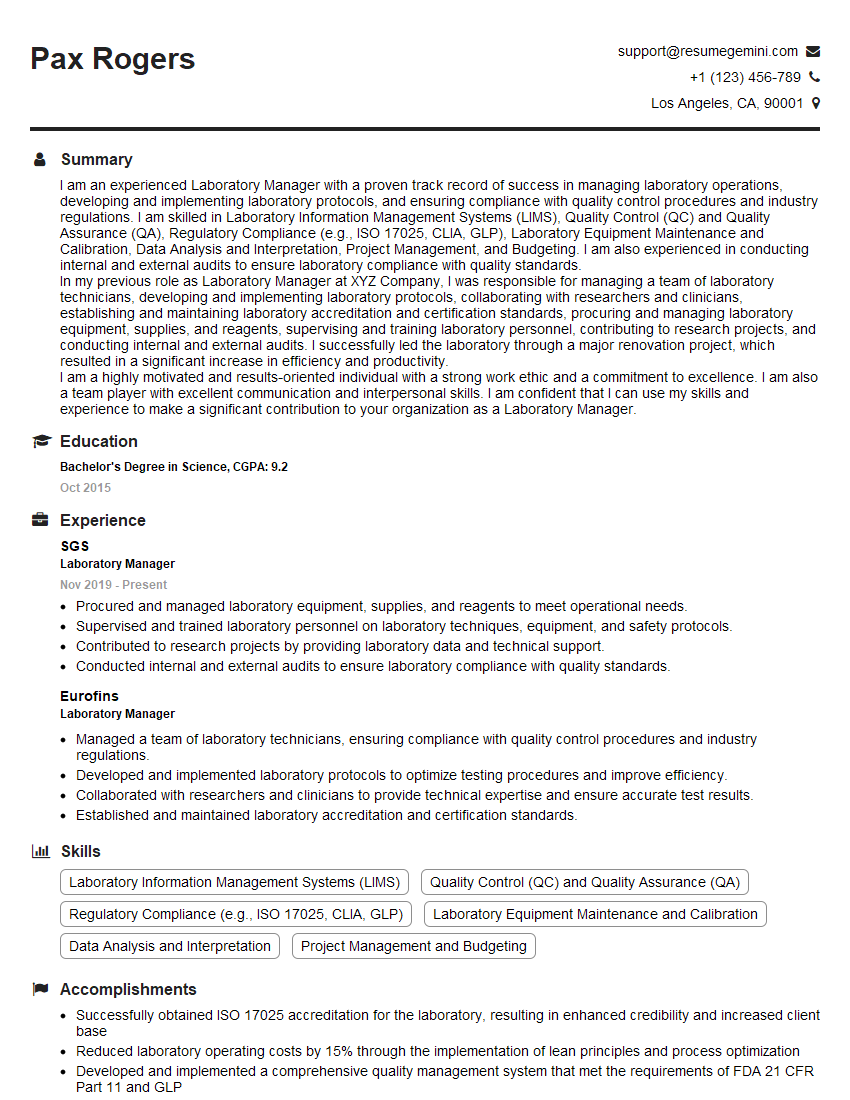
Laboratory Manager Resume Sample

Quality Control Manager Resume Sample

Compliance Officer Resume Sample
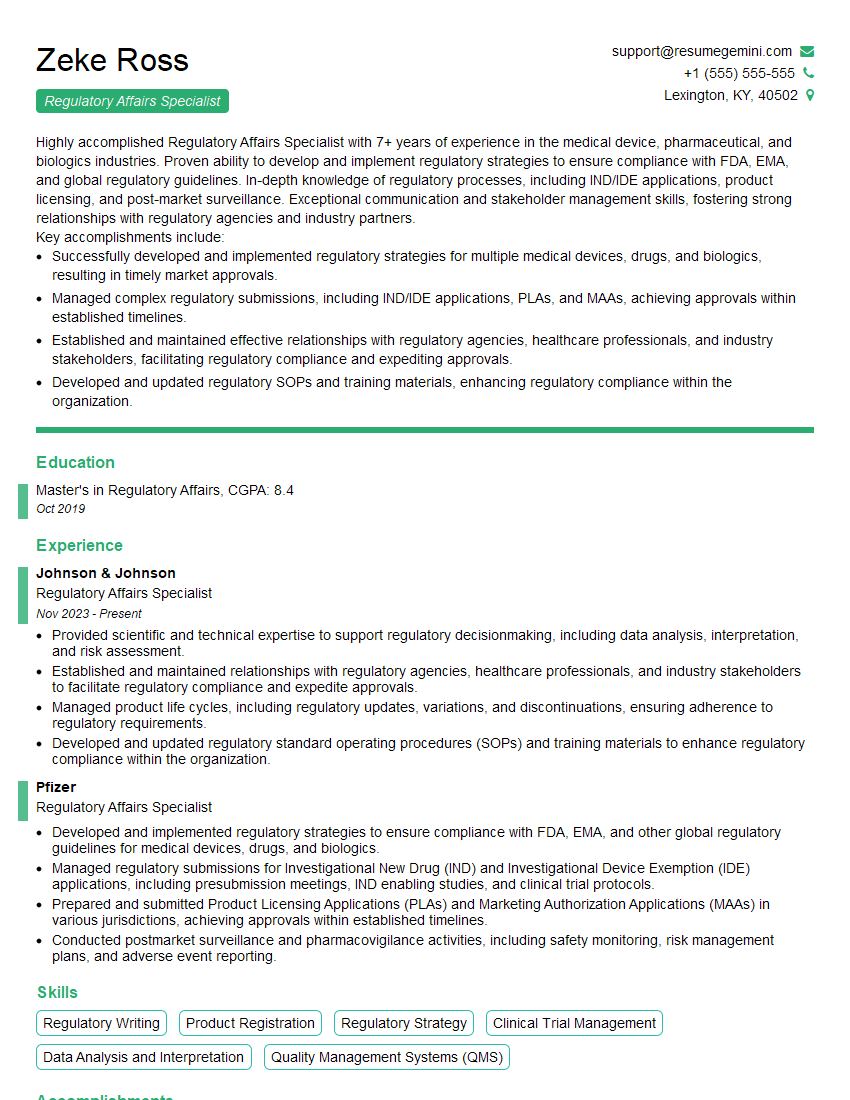
Regulatory Affairs Specialist Resume Sample

Quality Control Specialist Resume Sample

Quality Assurance Engineer Resume Sample
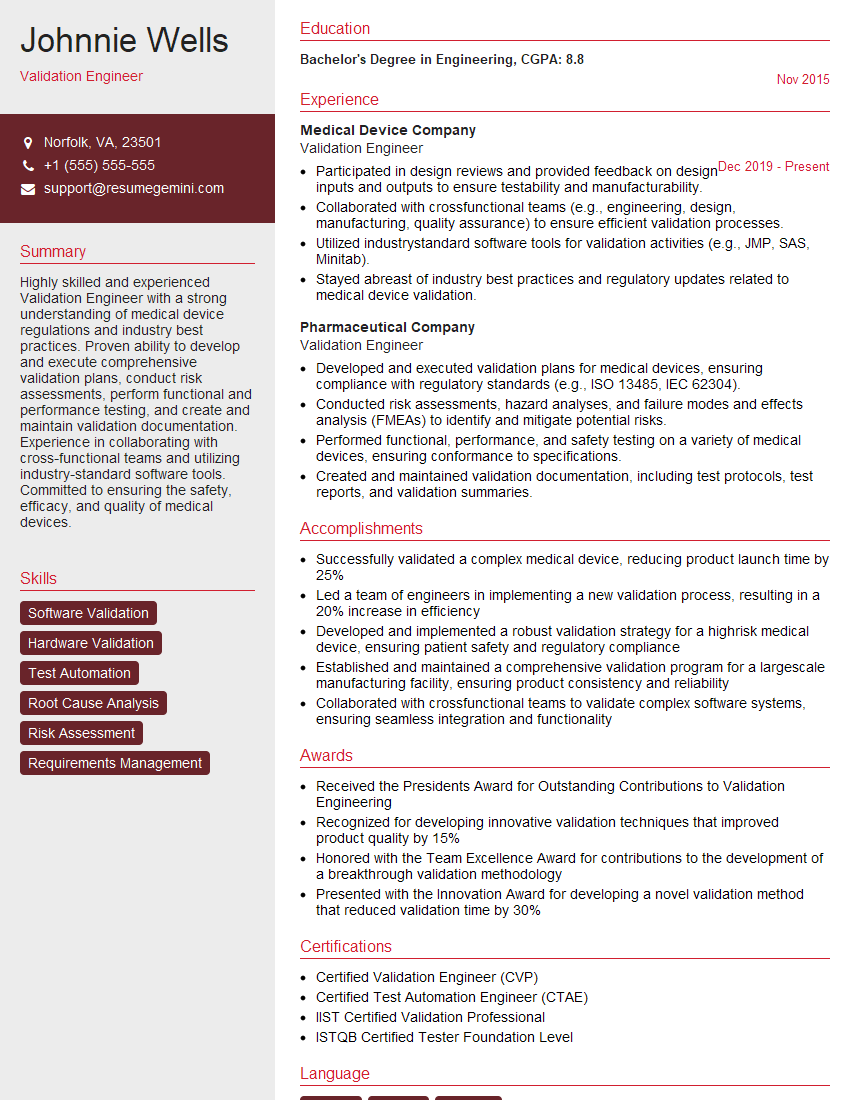
Validation Engineer Resume Sample
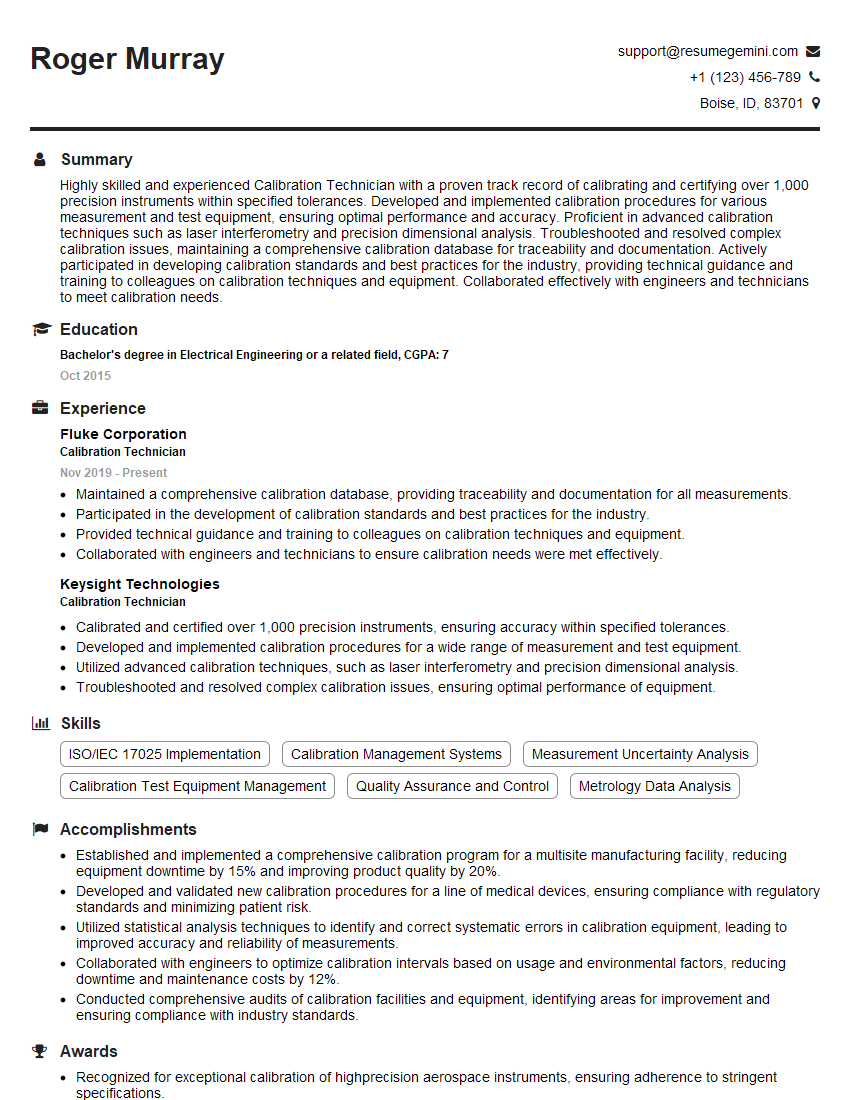
Calibration Technician Resume Sample
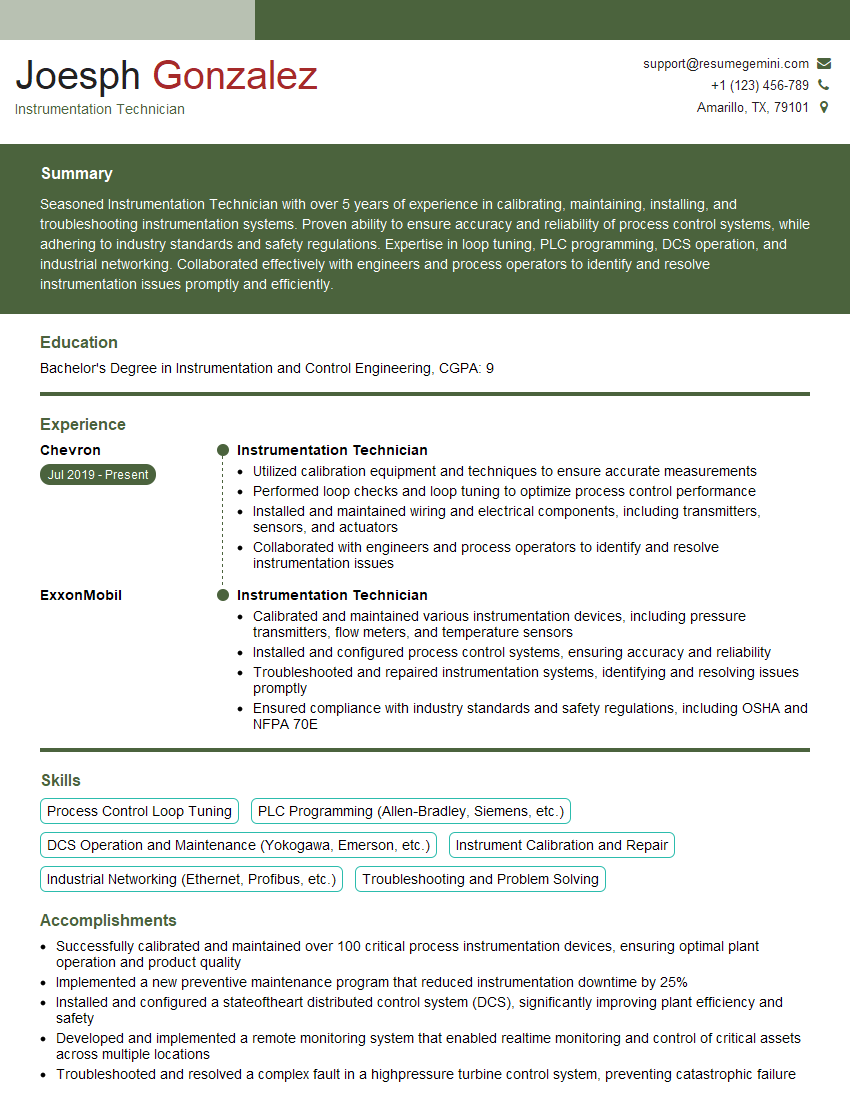
Instrumentation Technician Resume Sample

Metrology Technician Resume Sample

Measurement Specialist Resume Sample
Explore more articles
Users Rating of Our Blogs
Share Your Experience
We value your feedback! Please rate our content and share your thoughts (optional).
What Readers Say About Our Blog
Really detailed insights and content, thank you for writing this detailed article.
IT gave me an insight and words to use and be able to think of examples