Feeling uncertain about what to expect in your upcoming interview? We’ve got you covered! This blog highlights the most important Exterior Painting interview questions and provides actionable advice to help you stand out as the ideal candidate. Let’s pave the way for your success.
Questions Asked in Exterior Painting Interview
Q 1. What types of exterior paints are you familiar with (e.g., acrylic, latex, oil-based)?
Exterior paints are broadly categorized into several types, each with its own properties and applications. My experience encompasses all the major categories:
- Acrylic Latex Paints: These are water-based, low-odor, and generally easy to clean up. They offer excellent flexibility, durability, and mildew resistance, making them a popular choice for many siding types. They are also relatively quick-drying. Think of them as the ‘workhorse’ of exterior paints.
- Oil-Based Paints: Traditionally used, oil-based paints offer superior durability and adhesion, particularly on surfaces that are prone to cracking or peeling. However, they are slower to dry, have a strong odor, and require solvents for cleanup. They’re less environmentally friendly than their water-based counterparts and I typically only choose them for specific projects needing superior durability in challenging conditions.
- 100% Acrylic Paints: A premium option, these paints provide even greater durability and longevity than standard acrylic latex paints. They are generally more expensive but offer superior resistance to fading, chalking, and cracking. They’re best suited for high-end projects where longevity is prioritized.
- Specialty Paints: There are also specialty paints formulated for specific materials like stucco, masonry, or metal. Choosing the right paint is crucial for optimal performance and longevity.
Understanding the characteristics of each type allows me to select the best option for each project based on the client’s budget, the building’s material, and the local climate.
Q 2. Describe your experience with surface preparation techniques (e.g., scraping, sanding, priming).
Surface preparation is the most crucial step in any successful exterior painting project. It directly impacts the paint’s adhesion, longevity, and overall finish. My experience includes a thorough and meticulous approach, starting with:
- Scraping: Removing loose or peeling paint is paramount. I use a variety of scrapers, from putty knives to specialized power tools, ensuring the surface is clean and sound before moving on.
- Sanding: After scraping, I’ll sand any rough patches to create a smooth, uniform surface. This allows for better paint adhesion and a more professional finish. I use different grit sandpaper depending on the surface and the level of roughness.
- Priming: Priming is vital, especially on bare wood or previously painted surfaces showing signs of wear. Primer provides a consistent base for the top coat, enhancing adhesion, blocking stains, and improving the overall finish. I carefully select primers based on the surface type and the chosen paint, for example using an oil-based primer on surfaces that have shown some moisture issues.
- Cleaning: Before any other work, I ensure the surface is thoroughly cleaned using appropriate detergents and pressure washing (when applicable). This removes dirt, mildew, and other contaminants that can hinder the adhesion of the paint.
The goal is a flawlessly prepared surface; this is the foundation for a long-lasting, beautiful paint job. Cutting corners here almost always leads to problems down the line.
Q 3. What safety measures do you employ when working at heights?
Safety is my top priority, especially when working at heights. I strictly adhere to all safety regulations and utilize appropriate equipment and techniques. This includes:
- Proper Scaffolding: I always use sturdy, properly erected scaffolding that meets all safety standards. This provides a stable and secure platform for working.
- Safety Harnesses and Lanyards: When working at heights, I wear a full-body safety harness connected to a secure anchor point on the scaffolding or building. This prevents falls should any unforeseen circumstances occur.
- Fall Protection Systems: I use fall arrest systems when necessary, ensuring that a fall is arrested before it becomes serious.
- Regular Inspections: I conduct regular inspections of my equipment and working area to identify and address any potential hazards.
- Appropriate Footwear: I wear non-slip, steel-toed boots to prevent accidents.
I never compromise on safety, ensuring both my safety and the safety of my crew. A safe working environment is paramount to successful and efficient work.
Q 4. How do you handle different types of siding (e.g., wood, vinyl, brick)?
Different siding materials require different painting techniques and considerations:
- Wood Siding: Wood requires thorough preparation, including scraping, sanding, and caulking any gaps. Choosing the right primer is essential to prevent moisture problems. I often use a good quality exterior-grade acrylic latex for wood siding.
- Vinyl Siding: Vinyl is a relatively low-maintenance material. Preparation is simpler; typically involving cleaning and light sanding if needed. It’s important to use a paint specifically formulated for vinyl to prevent damage and maintain flexibility. Acrylic latex paints are generally well-suited.
- Brick Siding: Brick requires careful cleaning to remove dirt and efflorescence (white salt deposits). It’s crucial to select a breathable paint that allows moisture to escape to prevent damage to the brick. Specialty paints designed for masonry are often used.
I always research the type of siding before commencing a project, tailoring my approach accordingly to guarantee optimal results and avoid damage to the material.
Q 5. Explain your process for estimating the cost of an exterior painting project.
Estimating the cost of an exterior painting project involves a detailed and methodical process. I begin by:
- Site Visit & Assessment: A thorough on-site inspection is crucial. I measure the surface area to be painted, assess the condition of the existing paint, identify any necessary repairs or preparations, and note any unique challenges.
- Material Costs: I calculate the cost of paints, primers, sealers, brushes, rollers, and other necessary materials. This includes factoring in the quantity needed based on surface area and the number of coats required.
- Labor Costs: I estimate the time required for the project based on the complexity, surface area, and required preparation work. I then calculate labor costs based on my hourly rate or project-based fees.
- Contingency Costs: A crucial factor, I add a contingency for unexpected issues, such as extensive repairs or unfavorable weather conditions.
- Profit Margin: Finally, I include a reasonable profit margin to cover my overhead and ensure profitability.
I then present a detailed, transparent estimate to the client, outlining all costs. I provide options where possible allowing the client to select the level of quality that best fits their budget.
Q 6. What are the common challenges you encounter during exterior painting projects?
Exterior painting projects often present various challenges. Common ones include:
- Weather Conditions: Rain, wind, extreme heat, or cold can significantly impact project timelines and quality. Careful planning and flexibility are essential.
- Surface Conditions: Dealing with aged, damaged, or poorly maintained surfaces requires extra preparation and time.
- Difficult Access: Reaching high areas or intricate details on a building can pose physical challenges, requiring specialized equipment and safety measures.
- Material Compatibility: Ensuring the compatibility of primers and paints with the existing surface is critical to avoid issues like peeling or cracking.
- Unforeseen Repairs: Underlying issues like rotted wood or damaged siding may require repairs before painting can commence.
Experienced professionals, like myself, are adept at anticipating and managing these challenges proactively, minimizing disruptions and delivering high-quality results.
Q 7. How do you manage weather-related delays during a project?
Weather is a significant variable in exterior painting. My approach involves:
- Weather Monitoring: I closely monitor the forecast throughout the project, adjusting the schedule as needed. This includes utilizing reliable weather apps and utilizing satellite imagery.
- Flexible Scheduling: I maintain a flexible schedule, prioritizing tasks that can be completed indoors or when weather conditions are favorable.
- Protective Measures: When rain is anticipated, I implement measures to protect the partially completed work from damage.
- Communication with Clients: I keep clients informed of any weather-related delays and work collaboratively to reschedule affected work as needed.
Open communication and proactive planning are vital in mitigating weather-related delays and ensuring project success. This includes building in buffer time to account for potential setbacks.
Q 8. Describe your experience with different painting tools and equipment.
My experience with painting tools and equipment is extensive, encompassing a wide range of brushes, rollers, sprayers, and other specialized tools. I’m proficient with various brush types – from fine detail brushes for intricate trim work to large-surface brushes for siding. I understand the importance of choosing the right roller cover for different paint types and surface textures; for example, a high-density roller is ideal for smooth surfaces and applying thick paint, while a low-density roller is better for porous surfaces and thinner paints. I’m experienced with both airless and HVLP sprayers, understanding the advantages and limitations of each – airless for speed and coverage on large areas, and HVLP for finer finishes and less overspray. Beyond brushes and rollers, I regularly use tools like paint scrapers, putty knives for filling imperfections, and various sanding tools for surface preparation. Proper equipment maintenance is crucial, and I meticulously clean and store all my tools after each job to ensure their longevity and performance.
- Example: On a recent large-scale project painting a multi-story building, I utilized airless sprayers for the exterior walls for efficiency, followed by brushes and rollers for detail work around windows and trim.
- Example: For delicate trim work on a Victorian home, I used high-quality sable brushes to achieve a flawless, professional finish.
Q 9. How do you determine the appropriate amount of paint needed for a project?
Accurately determining paint quantity is crucial for avoiding waste and ensuring project completion. I typically begin by precisely measuring the area to be painted. For simple shapes, this is straightforward; however, for complex geometries, I use digital measuring tools and software to calculate surface area more accurately. Once the area is determined, I consult the paint manufacturer’s specifications to determine the coverage rate per gallon (or liter) of paint. This coverage is often expressed in square feet (or square meters) per gallon, and it varies depending on the paint type, surface porosity, and number of coats required. I always add a 10-15% buffer to account for unforeseen circumstances like spills, uneven surfaces, or extra coats needed due to poor initial coverage.
Example: For a project painting a 1500 sq ft house with two coats, and assuming a paint coverage of 350 sq ft per gallon, I would calculate: (1500 sq ft * 2 coats) / 350 sq ft/gallon ≈ 8.6 gallons. Adding a 15% buffer, this becomes roughly 10 gallons to ensure sufficient paint is available.
Q 10. What is your experience with color matching and selecting paint colors?
Color matching and selection are critical aspects of exterior painting. I have extensive experience using color charts, spectrophotometers, and software to precisely match existing colors or select new ones. Understanding color theory, including undertones and how colors appear in different lighting conditions, is essential for achieving the desired aesthetic. I work closely with clients to understand their preferences and help them choose colors that complement their home’s architecture and surrounding environment. When dealing with older homes where original paint colors may be unavailable, I use specialized techniques to analyze existing paint chips and create accurate matches. I also advise on color durability and fading considering the geographical location and exposure to sunlight.
- Example: For a client who wanted a historically accurate color for their colonial-era home, I meticulously analyzed paint chips and used a spectrophotometer to create a precise match.
- Example: For a modern home, I advised on the use of earth-tone colors to complement the surrounding landscape, while ensuring they offered good UV resistance for longevity.
Q 11. How do you handle unexpected issues or problems during a project?
Unexpected issues are a part of every painting project. My approach emphasizes proactive problem-solving. Before starting, I thoroughly inspect the surface to identify potential issues like rotted wood, loose paint, or damaged stucco. During the project, if unforeseen problems arise – like discovering extensive water damage or finding areas requiring additional preparation – I immediately communicate these to the client, outlining the necessary adjustments to the project scope, timeline, and budget. I’m adept at finding creative solutions to overcome obstacles. For example, if severe wood rot is discovered, I will consult with a qualified carpenter to address the structural issue before resuming painting.
Example: On a project, I discovered extensive water damage behind loose paint. Instead of simply repainting, I communicated the problem to the client and recommended a consultation with a roofing expert to address the underlying cause.
Q 12. What is your experience with caulking and sealing cracks?
Caulking and sealing are crucial steps in exterior painting to prevent water intrusion and improve the overall finish. My experience covers the use of various caulking materials, selecting the appropriate type based on the specific application and substrate. I’m proficient in applying caulk neatly and smoothly, ensuring proper adhesion and a durable seal. This includes using specialized tools like caulking guns and smoothing tools to create a professional finish. I pay close attention to detail, meticulously filling all cracks and gaps to prevent future problems.
- Example: Around window frames, I use a high-quality paintable caulk to ensure a watertight seal and a smooth surface for the paint to adhere to.
- Example: On larger gaps, I utilize backer rod before applying caulk to ensure efficient material use and a better seal.
Q 13. Describe your experience with pressure washing.
Pressure washing is an essential part of exterior painting preparation. I’m experienced in operating different pressure washing equipment, adjusting the pressure and nozzle type to suit the surface being cleaned. I understand the importance of using the appropriate pressure to effectively remove dirt, mildew, and loose paint without damaging the underlying substrate. I also know the importance of safety precautions, using protective gear and employing safe operating practices. For delicate surfaces, I might opt for a lower pressure wash or soft washing techniques to avoid damage.
- Example: Before painting vinyl siding, I use a pressure washer with a wide nozzle and lower pressure to gently clean the surface.
- Example: For cleaning brick or stone, I adjust the pressure and nozzle to avoid damaging the surface.
Q 14. How do you ensure the quality of your work?
Ensuring quality is paramount. My approach involves meticulous surface preparation, careful attention to detail during the painting process, and a focus on using high-quality materials. I regularly inspect my work throughout the project and perform final quality checks before considering the job complete. I use techniques like proper masking and drop cloths to prevent paint splatters and ensure clean lines. I believe in transparent communication with clients, keeping them informed of progress and addressing any concerns promptly. My commitment to excellence results in a long-lasting, beautiful finish that protects the building and enhances its curb appeal.
Example: I always double-check my work for any missed spots or imperfections before applying a second coat. I use high-quality brushes and rollers to ensure even coverage and a smooth, professional finish.
Q 15. What are your methods for maintaining a clean and organized worksite?
Maintaining a clean and organized worksite is paramount for safety, efficiency, and professional image. My approach is multifaceted and begins before we even start painting.
- Pre-Project Planning: We meticulously plan the project, designating specific areas for materials, tools, and waste. This includes creating a detailed layout to minimize movement and maximize workflow.
- Daily Cleanup: At the end of each workday, we thoroughly clean the work area, removing debris, unused materials, and disposing of waste properly. This prevents accidents and keeps the site presentable for the homeowner and neighbors.
- Designated Drop Zones: We establish designated areas for different types of materials—paint cans in one spot, brushes in another, drop cloths neatly folded in a third. This minimizes tripping hazards and keeps everything easily accessible.
- Protective Covering: We use drop cloths to protect surfaces not being painted, and we tape edges precisely to prevent paint splatters. This minimizes cleanup time and protects the homeowner’s property.
- Waste Disposal: We follow all local regulations for paint disposal, ensuring environmentally responsible practices. Leftover paint is either properly stored for future touch-ups or taken to a designated hazardous waste facility.
Think of it like a well-oiled machine: every part needs its designated space to function efficiently and safely. A clean and organized site translates directly to a more efficient painting process and a higher-quality finish.
Career Expert Tips:
- Ace those interviews! Prepare effectively by reviewing the Top 50 Most Common Interview Questions on ResumeGemini.
- Navigate your job search with confidence! Explore a wide range of Career Tips on ResumeGemini. Learn about common challenges and recommendations to overcome them.
- Craft the perfect resume! Master the Art of Resume Writing with ResumeGemini’s guide. Showcase your unique qualifications and achievements effectively.
- Don’t miss out on holiday savings! Build your dream resume with ResumeGemini’s ATS optimized templates.
Q 16. What is your experience with lead paint abatement?
Lead paint abatement is a critical safety concern, and I have extensive experience handling it. I’m fully aware of the dangers of lead poisoning and adhere strictly to all EPA regulations and best practices. This involves several key steps:
- Lead Testing: We always begin by conducting thorough lead testing to confirm the presence of lead-based paint. This is a crucial first step to determine the appropriate safety measures.
- Containment: If lead paint is present, we implement strict containment procedures, using plastic sheeting, sealants, and proper ventilation to prevent the spread of lead dust. Think of it as creating a sealed-off work zone.
- Personal Protective Equipment (PPE): Our team utilizes the appropriate PPE, including respirators, Tyvek suits, gloves, and eye protection, to minimize exposure. Safety is our number one priority.
- Lead-Safe Work Practices: We employ specific techniques for removing or encapsulating lead-based paint, meticulously following all guidelines for handling and disposing of lead-contaminated materials. This includes wet sanding to minimize dust generation and using HEPA-filtered vacuums.
- Post-Abatement Cleanup: After the abatement, we perform a thorough post-abatement cleanup, using HEPA vacuums and damp wiping to eliminate any remaining lead dust. This is essential to ensure a safe environment. Often, a final professional lead dust testing is conducted to confirm the project’s success.
Lead paint abatement is not something to take lightly. My team’s experience and adherence to regulations ensure a safe and successful project for both the client and the environment.
Q 17. How do you manage a team of painters?
Managing a team of painters involves more than just assigning tasks. It’s about fostering collaboration, clear communication, and mutual respect. My approach focuses on several key elements:
- Clear Communication: I maintain open and transparent communication, ensuring that every team member understands their role, responsibilities, and the project’s goals. Daily briefings and open forums encourage feedback and problem-solving.
- Delegation and Skill Matching: I delegate tasks based on individual skillsets, ensuring that each painter is working on areas where they excel. This boosts morale and efficiency. For example, our most experienced painter might lead a complex section while newer team members can focus on prep work.
- Positive Reinforcement and Training: I provide regular feedback, both positive and constructive, and encourage continuous learning and skill development. A supportive environment promotes growth and a better work experience.
- Safety First: Safety is non-negotiable. Regular safety training and on-site oversight ensure that everyone works safely and adheres to industry best practices.
- Team Building: A positive work environment encourages teamwork. We occasionally take breaks together or have team lunches to promote camaraderie and collaborative problem-solving.
Leading a team is about empowering individuals to work together effectively. My aim is to create a positive, efficient, and safe work environment where everyone feels valued and respected.
Q 18. How do you handle customer complaints or concerns?
Handling customer complaints or concerns is crucial for maintaining a strong client relationship and reputation. My approach is proactive and centered on resolution and communication.
- Active Listening: I begin by actively listening to the customer’s concerns without interruption, allowing them to fully express their dissatisfaction. Empathy is key.
- Understanding the Issue: I carefully analyze the situation, asking clarifying questions to understand the root cause of the complaint. This helps me propose a fair and effective solution.
- Prompt Response: I respond to complaints promptly, usually within 24 hours, acknowledging the issue and outlining the steps I’ll take to resolve it.
- Finding a Solution: I work collaboratively with the customer to find a mutually acceptable solution, whether it’s a repair, a partial refund, or a different approach to the project. Flexibility is essential.
- Follow Up: After the issue is resolved, I follow up with the customer to ensure they are satisfied and to prevent future issues. A positive resolution often strengthens client relationships.
Addressing complaints professionally not only resolves immediate problems but also builds trust and enhances reputation. Turning a negative experience into a positive one is a mark of a truly professional service.
Q 19. Explain your understanding of paint VOCs and their impact on the environment.
Volatile Organic Compounds (VOCs) are chemicals that easily become vapors or gases at room temperature. In paints, these can include solvents, resins, and other additives. High VOC paints release significant amounts of these compounds into the air, contributing to air pollution and harming human health. They contribute to smog formation and respiratory problems.
Low-VOC or zero-VOC paints are formulated to significantly reduce or eliminate these harmful emissions. This is environmentally beneficial and improves indoor air quality, particularly crucial in enclosed spaces. The impact on the environment can be significant: reduced smog, cleaner air, and less contribution to greenhouse gas effects.
As a professional painter, I prioritize using low-VOC paints whenever possible. This reflects not only my commitment to environmental responsibility but also my concern for the health and well-being of my clients and my team. The increased cost is easily justified by the long-term health and environmental benefits.
Q 20. What is your experience with different types of painting techniques (e.g., spraying, brushing, rolling)?
My experience encompasses a wide range of painting techniques, each chosen based on the specific project requirements and surface characteristics.
- Spraying: Ideal for large surfaces, such as siding or fences, spraying provides a smooth, even finish. It is time-efficient but requires careful preparation to avoid overspray and ensure even coverage. We use HVLP (High Volume Low Pressure) sprayers which minimize overspray.
- Brushing: Best for detail work, such as trim, doors, or intricate designs, brushing offers precise control and allows for a more textured finish if desired. We use high-quality brushes, choosing the appropriate size and bristle type for each project.
- Rolling: Efficient for large, flat surfaces, such as walls, rolling provides consistent coverage and is relatively quick. Different roller covers are used depending on the surface and paint type, such as a lambswool for smooth surfaces and a thicker nap for textured walls.
The choice of technique depends on factors such as surface area, type of paint, desired finish, and access to the area. My expertise lies in selecting and skillfully applying the most appropriate technique for optimal results.
Q 21. How do you deal with difficult clients?
Dealing with difficult clients requires patience, understanding, and a professional approach. My strategy focuses on de-escalation and finding common ground.
- Empathy and Understanding: I try to understand the client’s perspective, even if I don’t necessarily agree with it. Often, underlying concerns or frustrations drive difficult behavior.
- Active Listening and Clear Communication: I listen carefully to their concerns, clarifying any misunderstandings, and communicating my plan to resolve the issue clearly and concisely. This helps avoid further misinterpretations.
- Setting Boundaries Professionally: While maintaining a respectful demeanor, I set clear professional boundaries. This ensures that the project stays on track while addressing the client’s needs.
- Seeking Collaboration: I involve the client in the decision-making process whenever possible. This gives them a sense of control and can help in reaching a mutually acceptable outcome.
- Document Everything: I meticulously document all communications and agreements. This protects both the client and myself in case of disputes. A clear paper trail removes ambiguity.
Dealing with difficult clients is a challenge, but with a calm, professional, and solution-oriented approach, most situations can be resolved positively. Maintaining a professional demeanor and focusing on finding solutions are critical.
Q 22. What is your process for preparing a surface for painting?
Surface preparation is the most crucial step in exterior painting, ensuring a long-lasting and aesthetically pleasing finish. It’s like preparing a canvas before painting a masterpiece – without proper prep, the paint won’t adhere well and the final result will suffer.
- Cleaning: This involves removing all loose paint, dirt, mildew, cobwebs, and other contaminants. Power washing is often effective, but I carefully adjust the pressure to avoid damaging the surface. For delicate surfaces, I might opt for a soft brush and appropriate cleaning solutions.
- Repairing: Any cracks, holes, or damaged areas need to be filled and smoothed using appropriate fillers and patching compounds. This step is vital for a seamless, even finish and prevents future problems. I typically use high-quality fillers designed for exterior use and allow sufficient drying time.
- Caulking: Gaps and cracks around windows, doors, and other trim need to be caulked to seal out moisture and prevent drafts. This is a crucial step in preventing water damage and improving energy efficiency.
- Priming: Once the surface is clean, repaired, and caulked, priming is essential. Primer provides a uniform base for the topcoat, improving adhesion and ensuring even color coverage. The choice of primer depends on the surface material and the type of paint being used. For example, I might use an oil-based primer on wood to prevent knot bleeding or an alkali-resistant primer on masonry.
- Sanding: After the primer dries, I carefully sand down any imperfections to create a perfectly smooth surface. I use fine-grit sandpaper to avoid scratching the surface. This step is crucial for achieving a professional, flawless finish.
For instance, I recently worked on a Victorian home with extensive peeling paint. After thorough power washing and scraping, we repaired significant damage to the trim using wood filler, caulked all the window frames, and applied two coats of primer before the final coat of paint. The result was a stunning transformation.
Q 23. Describe your experience with working on different types of projects (e.g., residential, commercial, industrial)?
My experience spans a wide range of projects. I’ve worked on numerous residential projects, from small repainting jobs to large-scale renovations, gaining extensive experience with various siding materials like wood, vinyl, stucco, and brick. I’ve also worked on several commercial projects, such as repainting office buildings and retail spaces. This involved managing larger teams and adhering to stricter deadlines and safety regulations. Additionally, I have some experience in light industrial settings, focusing on durable, protective coatings for exterior metal structures. Each type of project requires a different approach, from material selection to safety protocols and project management.
Working on diverse projects has allowed me to hone my skills in various painting techniques and to adapt my approach based on the specific challenges presented by each environment. For example, residential projects often require a high degree of attention to detail and color matching, while commercial projects demand a more efficient and organized approach due to larger scale and often tighter timelines.
Q 24. What software or tools are you proficient in for estimating or project management?
I’m proficient in several software tools commonly used in estimating and project management. I use software like Paint Pro Estimator for quick and accurate cost estimation based on surface area, paint type, labor costs, and other factors. I also utilize project management software such as Asana and Trello to organize tasks, track progress, manage teams, and communicate effectively with clients. My proficiency in these tools helps ensure projects are completed on time and within budget.
Beyond software, I’m adept at using spreadsheets like Microsoft Excel to create detailed budgets, track expenses, and generate reports. I’m also comfortable using mobile applications for time tracking and communication.
Q 25. What are your salary expectations?
My salary expectations are competitive and commensurate with my experience and skills. I’m open to discussing a salary range based on the specific details of the position and benefits package offered. I am confident that my expertise and dedication will provide significant value to your organization.
Q 26. What are your long-term career goals?
My long-term career goals include becoming a highly respected and sought-after exterior painting specialist. I aim to continue expanding my knowledge of new materials, techniques, and technologies within the industry. I also aspire to potentially lead and mentor a team of painters, sharing my expertise and fostering a culture of excellence. Eventually, I see myself possibly starting my own successful painting business.
Q 27. What is your availability to start?
I am available to start immediately. I understand the importance of timely project commencement and am eager to begin contributing to your team.
Q 28. Are you comfortable working at heights and using safety equipment?
Yes, I am completely comfortable working at heights and using all necessary safety equipment. Safety is my top priority, and I have extensive experience using harnesses, scaffolding, and other safety gear to ensure a safe work environment for myself and my team. I always adhere to all relevant safety regulations and best practices. My experience includes working on multi-story buildings and high-rise structures using appropriate fall protection systems.
Key Topics to Learn for Your Exterior Painting Interview
- Surface Preparation: Understanding different surface types (wood, stucco, brick, etc.), identifying necessary repairs (caulking, wood rot repair), and proper cleaning techniques for optimal paint adhesion.
- Paint Selection & Application: Knowing the properties of various paints (oil-based, latex, acrylic), choosing the right paint for different surfaces and climates, and mastering different application techniques (brushing, rolling, spraying) for a professional finish.
- Color Theory & Matching: Understanding basic color theory to advise clients on color choices, accurately matching existing colors, and knowing how to create custom blends.
- Safety Procedures & Regulations: Familiarity with OSHA safety regulations related to working at heights, handling hazardous materials, and proper disposal of waste. Understanding the importance of personal protective equipment (PPE).
- Estimating & Project Management: Accurately estimating project costs based on materials, labor, and time. Understanding project scheduling and timelines, and effectively communicating with clients.
- Troubleshooting & Problem-Solving: Identifying and resolving common painting problems such as blistering, peeling, cracking, and mildew. Knowing how to adjust techniques based on unexpected challenges.
- Tools & Equipment: Demonstrating familiarity with various painting tools (brushes, rollers, sprayers, ladders, scaffolding) and their proper maintenance and use.
Next Steps
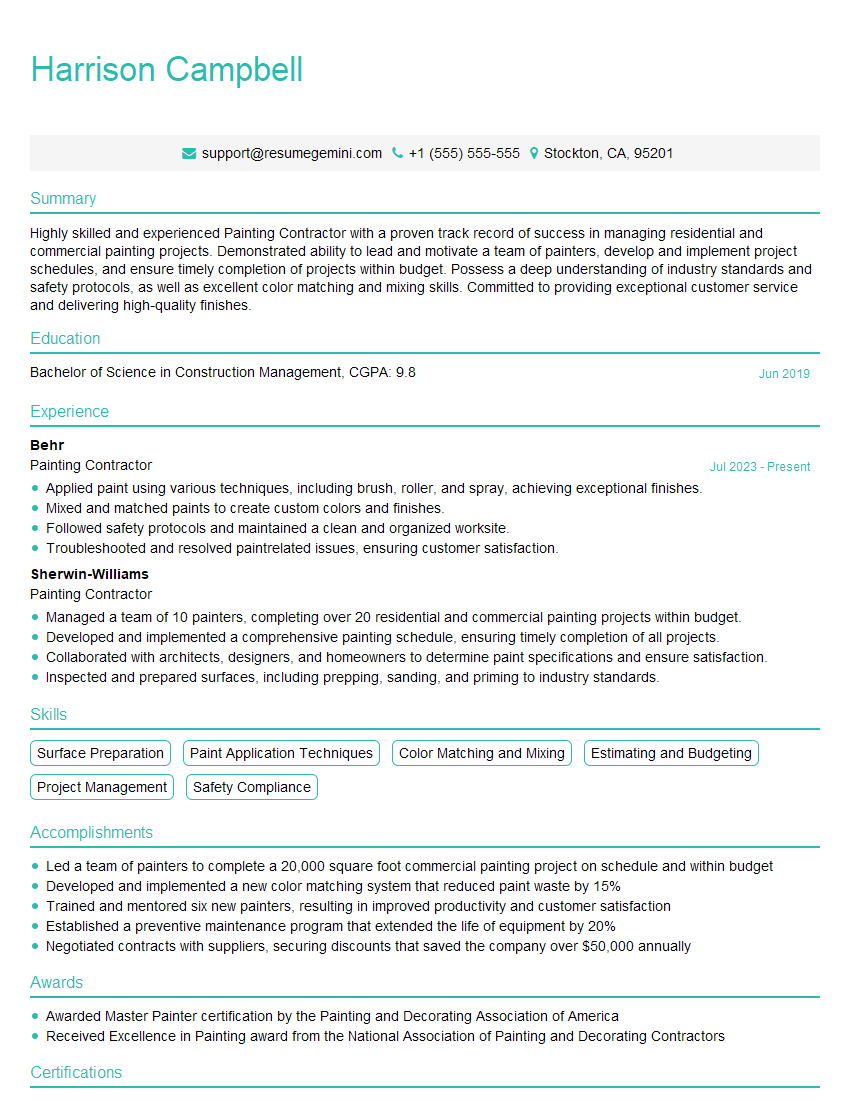
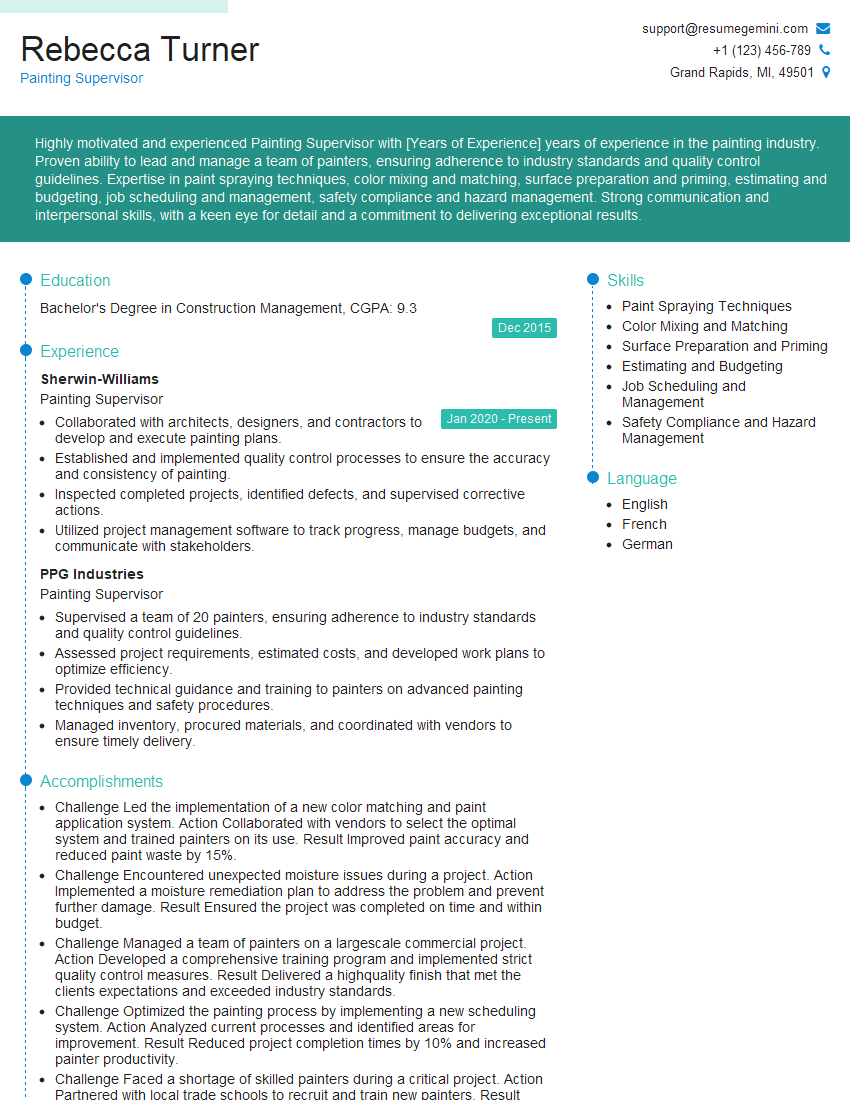
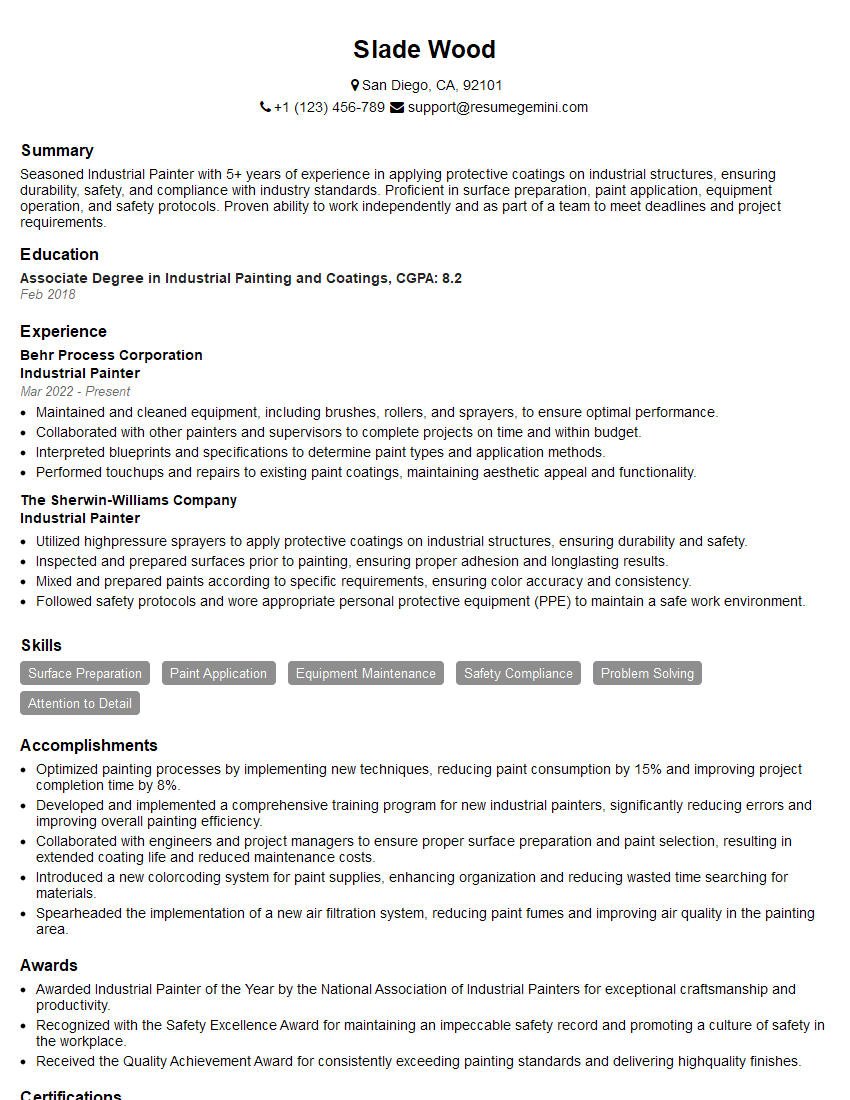
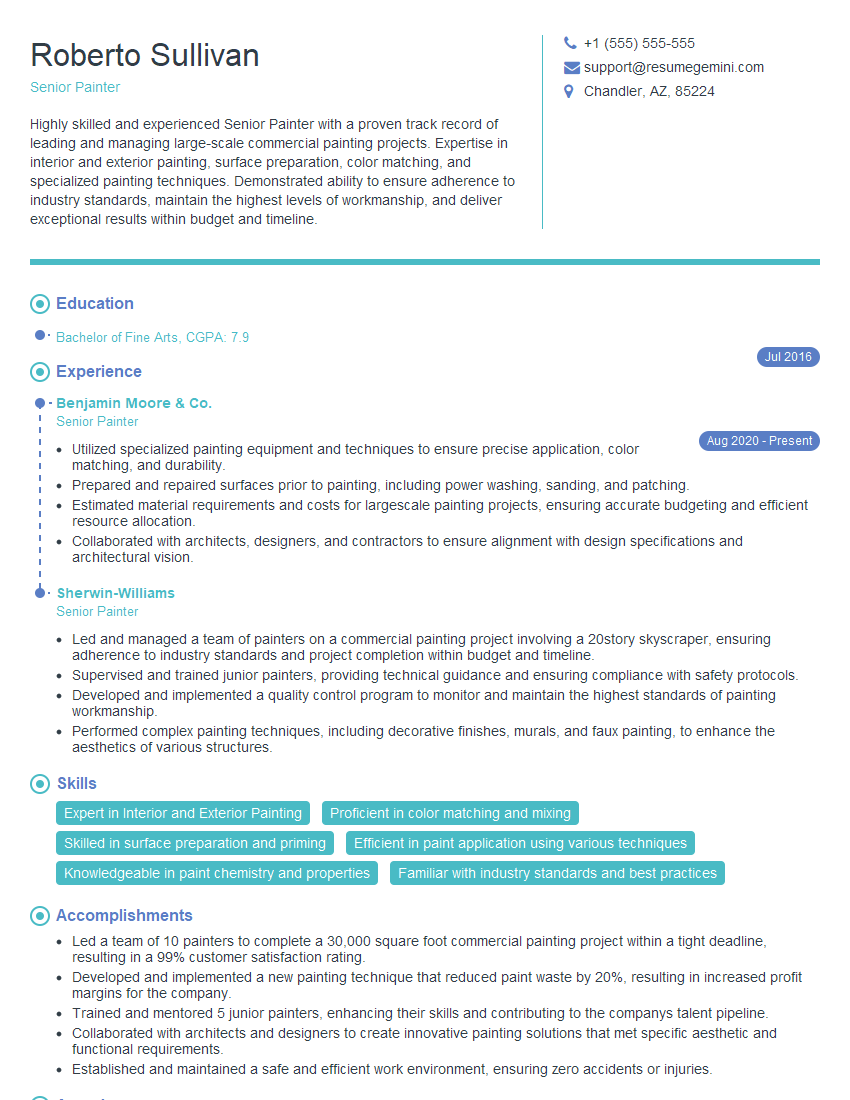
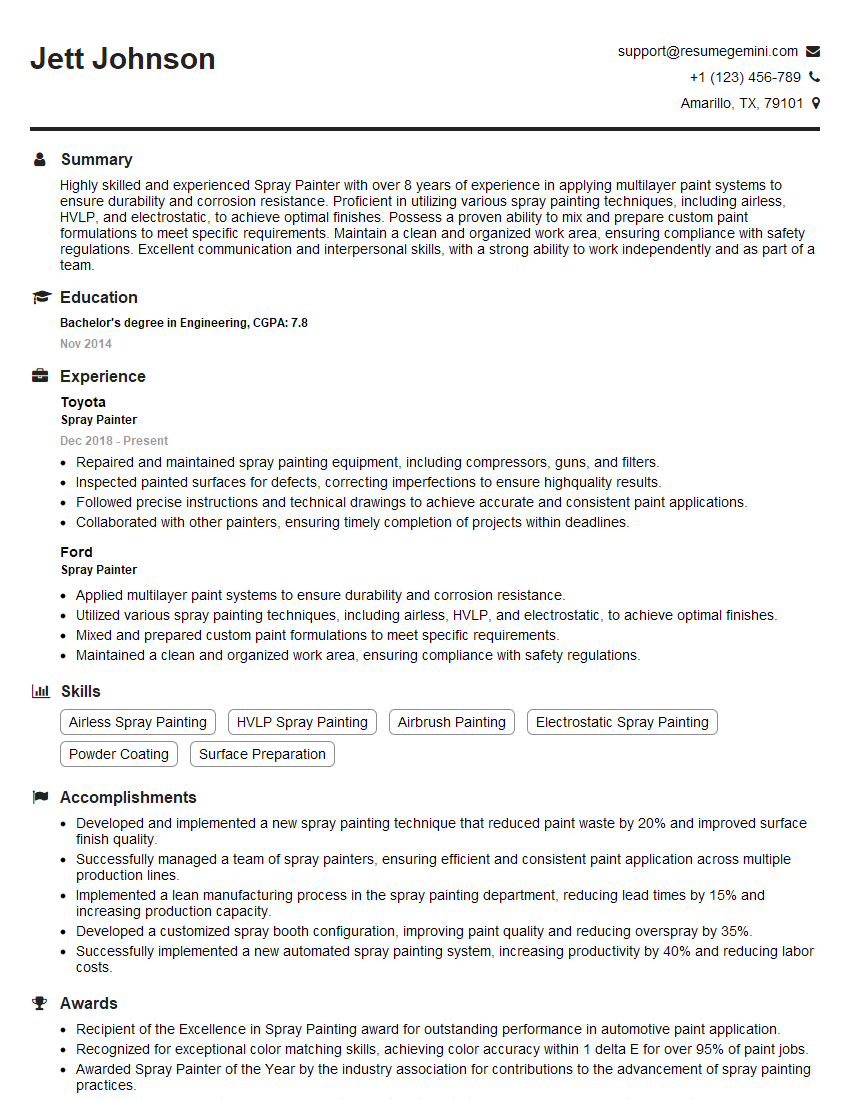
Mastering exterior painting opens doors to a rewarding career with opportunities for growth, from independent contractor to project management roles. A strong resume is crucial for showcasing your skills and experience to potential employers. Creating an ATS-friendly resume increases your chances of getting your application noticed. ResumeGemini is a trusted resource to help you build a professional and effective resume. We provide examples of resumes tailored to the exterior painting industry to give you a head start. Invest time in crafting a compelling resume – it’s your first impression!
Explore more articles
Users Rating of Our Blogs
Share Your Experience
We value your feedback! Please rate our content and share your thoughts (optional).
What Readers Say About Our Blog
Really detailed insights and content, thank you for writing this detailed article.
IT gave me an insight and words to use and be able to think of examples