Interviews are opportunities to demonstrate your expertise, and this guide is here to help you shine. Explore the essential Fabric Technology interview questions that employers frequently ask, paired with strategies for crafting responses that set you apart from the competition.
Questions Asked in Fabric Technology Interview
Q 1. Explain the differences between woven, knitted, and non-woven fabrics.
The three main categories of fabric – woven, knitted, and non-woven – differ significantly in their construction and resulting properties. Think of it like building with different materials: bricks (woven), interlocking chains (knitted), and felt (non-woven).
- Woven fabrics are created by interlacing two sets of yarns at right angles – the warp (lengthwise) and weft (crosswise). This creates a strong, stable structure with a distinct grain. Examples include cotton twill, linen, and silk. The strength and durability depend on the yarn type and weave structure. A tightly woven fabric will be more durable than a loosely woven one.
- Knitted fabrics are produced by interlooping a single yarn in a series of connected loops. This creates a more flexible and drapey fabric compared to woven fabrics. They tend to have better stretch and recovery. Examples include jersey, rib knit, and purl knit. The type of stitch used greatly affects the fabric’s properties. A finer gauge knit will feel smoother than a coarser one.
- Non-woven fabrics are made from fibers bonded together mechanically, thermally, or chemically, without spinning or weaving. This results in fabrics that are often less durable but potentially cheaper and faster to produce. Examples include felt, geotextiles, and some types of medical dressings. The bonding method heavily influences the fabric’s strength and water resistance.
In short, the choice between woven, knitted, and non-woven depends entirely on the desired properties of the final product: strength, drape, stretch, cost, and manufacturing speed.
Q 2. Describe the various fabric testing methods you are familiar with.
Fabric testing is crucial for ensuring quality and meeting performance standards. Many tests exist, and the specifics depend on the intended use of the fabric. I am familiar with a wide range of methods, including:
- Tensile Strength Test: Measures the fabric’s resistance to breaking under tension, indicating its strength and durability.
- Bursting Strength Test: Determines the pressure required to rupture the fabric, providing information about its ability to withstand pressure.
- Abrasion Resistance Test: Evaluates the fabric’s resistance to wear and tear, crucial for garments or upholstery.
- Colorfastness Test: Assesses the fabric’s resistance to fading due to washing, light, or rubbing.
- Shrinkage Test: Measures the fabric’s tendency to shrink after washing or dry cleaning.
- Drape Test: Quantifies how a fabric falls and hangs – important for garments or decorative applications.
- Air Permeability Test: Measures the fabric’s ability to allow air to pass through, affecting breathability and comfort.
- Water Resistance/Proofing Test: Evaluates the fabric’s ability to repel water, essential for outdoor gear or protective clothing.
These tests often involve specialized equipment and standardized procedures to ensure reliable and comparable results. The data obtained guides design decisions and quality control throughout the manufacturing process.
Q 3. What are the key properties to consider when selecting a fabric for a specific application?
Choosing the right fabric for a specific application is a critical decision based on several key properties. The application dictates the priority of these properties.
- Strength and Durability: Crucial for applications like workwear, upholstery, or outdoor gear. A heavier, tightly woven fabric would be appropriate.
- Comfort and Breathability: Essential for clothing and bedding. Lighter fabrics with good air permeability, like cotton or linen, are preferred.
- Drape and Hand: Determine the fabric’s aesthetic appeal and how it falls. Flowing fabrics are ideal for dresses, while stiffer fabrics are suitable for structured garments.
- Water Resistance/Proofing: Important for outdoor clothing, protective gear, or umbrellas. Specialized treatments or inherently water-resistant fabrics are necessary.
- Shrinkage Resistance: Prevents garments from shrinking after washing. Pre-shrunk fabrics or treatments minimizing shrinkage are key.
- Colorfastness: Ensures the fabric retains its color over time and after washing. Fabric dye selection and treatment methods play a significant role.
- Cost: The budget often dictates material selection. A balance between performance requirements and cost is essential.
For example, choosing fabric for a hospital gown necessitates prioritising comfort, breathability, and easy cleaning and sterilization, while selecting fabric for a sail prioritizes durability, water resistance, and strength.
Q 4. How do you determine the drape and hand of a fabric?
Drape and hand are subjective but important properties affecting fabric aesthetic and feel. They are assessed through a combination of visual observation and tactile evaluation.
- Drape: Refers to how a fabric hangs and folds under its own weight. It’s assessed visually by observing how the fabric flows when draped over a form or held up. A fabric with good drape will have smooth, graceful folds.
- Hand: Describes the tactile feel of the fabric. It’s evaluated by touching and manipulating the fabric, noting its texture, softness, stiffness, smoothness, and other tactile qualities. This requires experience and a trained sense of touch.
Several factors influence drape and hand including fiber type, yarn structure, fabric construction (woven, knitted, non-woven), and finishing treatments. For instance, silk generally has excellent drape, whereas denim tends to be stiffer with a firmer hand. Quantitative testing methods exist, but subjective assessment remains a vital aspect of evaluation.
Q 5. Explain the concept of fabric shrinkage and how it can be controlled.
Fabric shrinkage is the reduction in fabric dimensions after washing or exposure to moisture and heat. It occurs due to the relaxation of fibers after manufacturing processes or the inherent properties of certain fibers like wool or cotton.
Controlling shrinkage is essential to prevent garments from becoming smaller after laundering. Strategies include:
- Pre-shrinking: The fabric is subjected to washing and drying processes before the garment is manufactured. This sets the fibers, minimizing future shrinkage.
- Using shrinkage-resistant fibers: Synthetics like polyester generally have low shrinkage rates compared to natural fibers. Blends can offer a compromise between performance and cost.
- Applying chemical treatments: Resin finishes can help to control shrinkage by bonding fibers together.
- Careful washing and drying: Following care instructions (e.g., washing in cold water, air-drying) can minimize shrinkage.
Understanding the cause of shrinkage (e.g., fiber relaxation, yarn construction) is key to developing appropriate control strategies. Incorrectly handled shrinkage can lead to significant quality problems and customer dissatisfaction.
Q 6. What are the different types of fabric finishes and their effects?
Fabric finishes enhance the performance and aesthetics of fabrics. They are applied during or after manufacturing and can significantly alter the fabric’s properties.
- Calendering: Pressing the fabric under high pressure to improve smoothness and luster.
- Mercerization: Treating cotton with caustic soda to increase luster, strength, and dye affinity.
- Waterproofing/Water-repellent finishes: Applying coatings or treatments to repel water. This could be achieved using fluorocarbons or other polymers.
- Flame-retardant finishes: Treating the fabric to make it resistant to ignition, crucial for safety applications.
- Soil-release finishes: Making the fabric easier to clean and less prone to staining.
- Anti-microbial finishes: Incorporating agents to inhibit bacterial growth, important for medical or hygiene applications.
- Soft hand finishes: Improving the softness and smoothness of the fabric, often involving resin treatments.
The selection of a finish depends on the desired properties and the application. For instance, a water-repellent finish might be essential for rain jackets, while a soft hand finish might be desirable for clothing intended for sensitive skin.
Q 7. Describe your experience with fabric dyeing and printing techniques.
My experience encompasses various dyeing and printing techniques, understanding both the chemical and physical aspects of these processes. I am proficient in both traditional methods and modern advancements.
- Dyeing: I’m familiar with various dyeing methods, including vat dyeing (for deep, fast colors in cotton), reactive dyeing (for cellulosic fibers like cotton and rayon), and disperse dyeing (for synthetic fibers like polyester). The choice of dye and dyeing method depends on fiber type, desired color, and cost.
- Printing: I have experience with screen printing, rotary screen printing, inkjet printing, and digital printing. Screen printing allows for sharp, detailed prints, rotary screen printing is cost-effective for large volumes, inkjet printing offers flexibility, and digital printing enables personalization and quick prototyping.
My experience also involves color matching, ensuring consistency across different batches and managing the environmental impact of dye processes through responsible waste management and efficient water usage. Each technique has its own strengths and weaknesses; the ideal method is determined by factors such as cost, quality, production scale, and design complexity.
Q 8. How do you assess the quality of a fabric sample?
Assessing fabric quality involves a multi-faceted approach, going beyond just visual inspection. It requires understanding the fiber content, yarn construction, fabric structure, and finishing processes. Think of it like a detective investigating a crime scene – you need to gather evidence from various sources.
Visual Inspection: This is the first step, checking for flaws like holes, discoloration, unevenness in weave or knit, and slubs (thickened areas in the yarn).
Fiber Content Analysis: Identifying the fiber type (cotton, silk, polyester, etc.) and its percentage is crucial. This determines the fabric’s properties like drape, strength, and comfort. Burn tests (carefully!) can be used for basic identification, but lab testing provides precise composition.
Yarn Examination: Examining the yarn’s twist, thickness, and evenness helps assess its strength and durability. A tightly twisted yarn will generally result in a stronger fabric.
Fabric Structure Analysis: Understanding the weave (plain, twill, satin, etc.) or knit structure reveals information about the fabric’s drape, durability, and breathability. A plain weave is simpler and more durable, while a satin weave is smoother but less durable.
Weight and Density: Measuring the fabric’s weight per square yard (GSM – Grams per Square Meter) and density indicates its thickness and quality. A higher GSM generally suggests a heavier and more durable fabric.
Tensile Strength Testing: This measures the fabric’s resistance to tearing and breaking. It’s crucial for fabrics used in applications requiring high durability, such as workwear or upholstery.
Abrasion Resistance Testing: This assesses the fabric’s resistance to wear and tear from rubbing. This is especially important for fabrics that experience frequent friction, like carpets or clothing.
For example, in one project, I noticed inconsistencies in the dye lot of a large fabric order. By carefully examining the fabric rolls and performing colorfastness tests, I was able to identify and isolate the faulty batch, preventing a costly production delay.
Q 9. Explain the importance of colorfastness in fabric selection.
Colorfastness is paramount in fabric selection, as it determines how well a fabric’s color retains its vibrancy when exposed to various elements. Poor colorfastness can result in fading, bleeding (color transferring to other fabrics), or discoloration, ruining the garment or product’s appearance and potentially harming the brand’s reputation.
Colorfastness is assessed through various tests, including:
Wash Fastness: Tests how well the color resists fading and bleeding during washing.
Lightfastness: Evaluates the color’s resistance to fading from sunlight exposure. Fabrics meant for outdoor use need high lightfastness.
Perspiration Fastness: Measures the color’s resistance to fading or discoloration from body sweat.
Rub Fastness: Tests how well the color withstands rubbing against other surfaces. This is important for upholstery fabrics.
Imagine a vibrant red dress fading to pink after just a few washes! That’s poor colorfastness and would be a huge customer complaint. Choosing fabrics with excellent colorfastness is key to producing high-quality, durable, and appealing products that retain their color over time.
Q 10. What are the common fabric defects and how are they identified?
Fabric defects can arise at various stages of production, from fiber cultivation to finishing. Recognizing these defects is critical for quality control and minimizing waste. Some common defects include:
Slubs: Thickened areas in the yarn.
Neps: Small entangled fibers.
Holes: Breaks in the fabric structure.
Broken Ends: Snapped yarns.
Mispicks: Missed or extra interlacings in woven fabrics.
Slubs: Thickened areas in the yarn.
Bowing and Skewing: Uneven fabric width and lengthwise distortion.
Wrinkles and Creases: Permanent or temporary creases in the fabric.
Identifying these defects requires visual inspection, often with magnification tools, and sometimes specialized testing equipment. For example, using a magnifying glass allows for closer examination of the yarn structure to identify neps or slubs. Bowing and skewing are detected by measuring the fabric width at different points. Experience plays a significant role in recognizing subtle imperfections.
In my experience, I’ve developed a systematic approach to defect detection, starting with a visual check followed by more detailed examination using different tools depending on the type of fabric and the suspected defect.
Q 11. How familiar are you with CAD software for fabric design and development?
I’m proficient in using CAD software for fabric design and development. My experience includes working with industry-standard software like Adobe Illustrator, and specialized textile design software. These tools are essential for creating realistic fabric designs, generating repeats, and simulating different weaves and knits.
I can use CAD to create intricate patterns, experiment with different color palettes, and generate technical drawings for production. The software also allows for efficient collaboration among designers and technicians throughout the design process. For example, I used CAD to develop a complex jacquard weave pattern for a luxury upholstery fabric, allowing for precise control over the design and yarn placement.
Furthermore, I understand the importance of integrating CAD with other production systems for a streamlined workflow.
Q 12. Describe your experience working with different types of fibers (e.g., cotton, silk, polyester).
My experience encompasses a wide range of fibers, each with its unique properties and processing requirements.
Cotton: A natural fiber known for its breathability, absorbency, and softness. I’ve worked extensively with various cotton types, from long-staple Egyptian cotton for premium garments to shorter-staple cotton for everyday wear. I’m familiar with different cotton finishes, such as mercerization (for increased luster and strength).
Silk: A luxurious natural fiber with a beautiful drape, luster, and strength. I have experience working with silk in various forms, from raw silk to charmeuse and twill weaves. The delicate nature of silk requires specialized handling and processing techniques.
Polyester: A synthetic fiber known for its durability, wrinkle resistance, and water repellency. I’ve worked with polyester blends and pure polyester fabrics used in a variety of applications, from sportswear to home furnishings. Understanding how polyester blends with other fibers to achieve desired properties is crucial.
Working with these diverse fibers has given me a deep understanding of their inherent properties and how these properties influence the final fabric’s performance and aesthetic qualities. This knowledge is essential for making informed decisions during fabric selection and design.
Q 13. How do you manage fabric sourcing and procurement?
Fabric sourcing and procurement is a strategic process that significantly impacts product cost, quality, and delivery. My approach involves a structured process:
Needs Assessment: Defining the specific requirements for the fabric based on the end product’s specifications (e.g., GSM, fiber content, colorfastness, drape, etc.).
Supplier Selection: Identifying and evaluating potential suppliers based on factors like quality, price, capacity, ethical sourcing practices, and lead times. This often involves requesting fabric samples and conducting thorough quality checks.
Negotiation: Negotiating favorable terms and conditions with selected suppliers, focusing on price, payment terms, and delivery schedules.
Order Placement and Monitoring: Placing the fabric order with the chosen supplier and closely monitoring the production progress and quality control measures.
Quality Control Upon Arrival: Inspecting the received fabric upon arrival to ensure it meets the required specifications. This includes checking for defects, color consistency, and adherence to agreed-upon standards.
Building strong relationships with reliable suppliers is vital. Over time, I’ve developed a network of reputable suppliers who consistently deliver high-quality fabrics on time and within budget. This proactive approach ensures a smooth and efficient procurement process, minimizing delays and avoiding unnecessary costs.
Q 14. Explain your understanding of sustainability in fabric production.
Sustainability in fabric production is no longer a trend; it’s a necessity. It involves minimizing the environmental impact of textile manufacturing throughout its lifecycle, from fiber cultivation to garment disposal. My understanding encompasses several key areas:
Sustainable Fiber Sources: Prioritizing organically grown cotton, recycled fibers (like recycled polyester), and innovative materials like Tencel (made from sustainably sourced wood pulp). This reduces the reliance on conventional agriculture’s high water and pesticide usage.
Reduced Water Consumption: Implementing water-efficient dyeing and finishing processes is crucial. Using closed-loop systems to recycle and reuse water minimizes environmental impact.
Energy Efficiency: Adopting energy-efficient machinery and processes, and utilizing renewable energy sources where possible, is essential to minimize carbon emissions.
Waste Reduction: Implementing effective waste management strategies throughout the production chain reduces landfill waste and pollution. This includes minimizing fabric scraps and developing innovative ways to reuse or recycle waste materials.
Ethical Labor Practices: Ensuring fair wages, safe working conditions, and environmentally responsible manufacturing processes in all stages of the supply chain is paramount.
I believe that sustainable practices not only benefit the environment but also enhance a brand’s reputation and attract environmentally conscious consumers. In my work, I actively seek out suppliers committed to sustainable practices and incorporate sustainable materials into my fabric choices whenever possible.
Q 15. Describe your experience with fabric cost analysis and budgeting.
Fabric cost analysis and budgeting is crucial for profitability in the textile industry. It involves a detailed breakdown of all costs associated with fabric production, from raw materials to manufacturing and distribution. My approach involves a multi-stage process.
- Raw Material Costing: This includes the cost of fibers (cotton, polyester, silk etc.), dyes, and any other chemicals used. I meticulously track price fluctuations in the global market and leverage my knowledge of sourcing to negotiate favorable contracts.
- Manufacturing Costing: This encompasses labor costs, machinery expenses (including maintenance and depreciation), energy consumption, and factory overhead. I utilize data analysis tools to identify areas for cost optimization, such as improving production efficiency or negotiating better rates with suppliers.
- Distribution and Logistics: Costs related to transportation, warehousing, and handling are carefully considered. I explore various logistics options to minimize expenses while ensuring timely delivery.
- Budgeting and Forecasting: Based on the comprehensive cost analysis, I develop detailed budgets and forecasts, factoring in potential risks and market trends. This allows for proactive adjustments and informed decision-making.
For example, in a recent project, I identified a 15% cost reduction by switching to a more efficient dyeing process and negotiating a better deal with a logistics provider. This resulted in significant savings for the company and increased our profit margin.
Career Expert Tips:
- Ace those interviews! Prepare effectively by reviewing the Top 50 Most Common Interview Questions on ResumeGemini.
- Navigate your job search with confidence! Explore a wide range of Career Tips on ResumeGemini. Learn about common challenges and recommendations to overcome them.
- Craft the perfect resume! Master the Art of Resume Writing with ResumeGemini’s guide. Showcase your unique qualifications and achievements effectively.
- Don’t miss out on holiday savings! Build your dream resume with ResumeGemini’s ATS optimized templates.
Q 16. How do you handle challenges in meeting deadlines in fabric production?
Meeting deadlines in fabric production requires meticulous planning and proactive problem-solving. My strategy involves several key steps:
- Detailed Scheduling: I work closely with the production team to create a detailed schedule, identifying potential bottlenecks and allocating resources effectively. This includes using Gantt charts or project management software to visualize timelines and dependencies.
- Communication and Collaboration: Open communication with all stakeholders, including suppliers, manufacturers, and clients, is paramount. Regular updates and progress reports help identify and address issues early on.
- Risk Management: I anticipate potential challenges (e.g., delays in raw material delivery, equipment malfunction) and develop contingency plans. This may include having backup suppliers or alternative manufacturing processes.
- Continuous Monitoring: I closely monitor production progress, using key performance indicators (KPIs) to track efficiency and identify deviations from the schedule. This allows for timely intervention and course correction.
For instance, during a high-demand project, a supplier experienced an unexpected delay. By proactively engaging with them and exploring alternative sourcing options, I managed to minimize the impact on our deadline, avoiding costly penalties.
Q 17. Explain your experience with quality control procedures in fabric manufacturing.
Quality control is fundamental to fabric manufacturing. My experience encompasses a comprehensive approach, starting from raw material inspection through to finished product verification.
- Incoming Inspection: Raw materials are rigorously inspected for quality, consistency, and compliance with specifications. This may involve testing for fiber content, strength, color fastness, and other relevant properties.
- In-Process Inspection: Throughout the manufacturing process, regular checks are conducted at various stages (spinning, weaving, dyeing, finishing) to ensure adherence to standards. This often involves visual inspection, sampling, and laboratory testing.
- Final Inspection: The finished fabric undergoes thorough inspection to detect any defects or inconsistencies before packaging and shipment. This may include checks for color uniformity, fabric flaws, and dimensions.
- Statistical Process Control (SPC): I utilize SPC techniques to monitor the production process and identify trends or anomalies that could impact quality. This helps in proactively preventing defects and improving process consistency.
For example, using SPC, I identified a slight variation in the dyeing process that was leading to minor color inconsistencies. By adjusting the parameters, we eliminated the problem and ensured consistent color quality across all batches.
Q 18. How do you communicate technical information about fabrics to non-technical audiences?
Communicating technical information about fabrics to non-technical audiences requires clear, concise, and relatable language. I avoid jargon and use simple analogies where appropriate.
- Visual Aids: I use charts, graphs, and images to illustrate complex concepts. A picture is worth a thousand words, especially when explaining technical specifications.
- Real-World Examples: Relating fabric properties to everyday experiences makes it more understandable. For example, comparing the drape of a fabric to the feel of silk or the softness of cotton.
- Focus on Benefits: Instead of focusing on technical details, I emphasize the benefits of the fabric’s properties (e.g., durability, comfort, ease of care).
- Interactive Communication: Encourage questions and actively listen to ensure understanding. This allows for adjustments to my communication style based on the audience’s comprehension.
For example, when explaining the difference between different thread counts to a client, I would use a visual representation showing the density of threads and relate it to the fabric’s softness and durability, rather than just quoting numbers.
Q 19. Describe your experience in working with global supply chains for fabric sourcing.
My experience with global supply chains for fabric sourcing involves navigating complex logistical and ethical considerations. I have extensive knowledge of sourcing fabrics from various regions worldwide.
- Supplier Selection: I carefully evaluate potential suppliers based on factors such as quality, capacity, price, ethical practices, and sustainability initiatives. This often involves site visits and thorough due diligence.
- Contract Negotiation: I negotiate favorable contracts with suppliers, ensuring clear specifications, pricing, and delivery timelines. I am adept at managing risk and mitigating potential disruptions.
- Logistics and Transportation: I coordinate the transportation of fabrics from the supplier to our manufacturing facilities, optimizing shipping methods to minimize costs and transit times. This often involves working with international freight forwarders.
- Quality Control: I implement rigorous quality control procedures at every stage of the supply chain, ensuring that the fabric meets our standards throughout the process.
For example, in a recent project sourcing organic cotton from India, I ensured compliance with fair trade practices and collaborated with the supplier to achieve sustainable farming methods. This demonstrates not only my expertise in sourcing but also my commitment to ethical practices.
Q 20. What are the latest trends in fabric technology?
The fabric technology landscape is constantly evolving. Some of the latest trends include:
- Sustainable Fabrics: There’s a growing demand for eco-friendly fabrics made from recycled materials, organic cotton, or innovative plant-based fibers (e.g., Tencel, hemp).
- Smart Fabrics: These fabrics incorporate sensors and electronics, providing features like temperature regulation, health monitoring, and even energy harvesting.
- 3D-Printed Fabrics: Additive manufacturing techniques are revolutionizing fabric creation, allowing for complex designs and customized structures.
- Bio-based Fabrics: Research is focused on developing fabrics from bio-based materials, offering sustainable and biodegradable alternatives to traditional textiles.
- Performance Fabrics: Innovations continue in the development of high-performance fabrics with enhanced properties like water resistance, breathability, and stain resistance.
These trends are driven by consumer demand for sustainability, functionality, and technological integration in textiles.
Q 21. How do you stay updated on new fabric developments and innovations?
Staying updated on new fabric developments requires a multi-faceted approach:
- Industry Publications and Journals: I regularly read trade publications, journals, and online resources to stay informed about the latest research, innovations, and market trends. Examples include Textile World, Apparel, and other industry-specific magazines.
- Industry Conferences and Trade Shows: Attending conferences and trade shows provides opportunities to network with experts, see new technologies firsthand, and learn about emerging trends.
- Online Resources and Databases: I utilize online databases and research platforms to access scientific publications and technical information on fabric innovations.
- Networking with Professionals: Engaging with peers and experts in the field allows me to stay updated on the latest advancements through discussions and knowledge sharing.
Continuously learning and adapting to these developments is crucial to my role as a fabric technology expert.
Q 22. Describe your problem-solving approach when faced with fabric-related issues.
My problem-solving approach to fabric-related issues is systematic and data-driven. I follow a structured process:
- Identify the Problem: Thoroughly analyze the issue. This involves examining the fabric itself, understanding its intended use, and gathering information on the manufacturing process. Is it a color issue? A texture problem? A strength deficiency? I often use visual aids like microscopes and other testing equipment to aid in this phase.
- Gather Data: Collect relevant data. This might involve testing the fabric’s properties (strength, abrasion resistance, colorfastness), reviewing production logs, and interviewing relevant personnel. Data is key to isolating the root cause.
- Formulate Hypotheses: Based on the data, I develop several potential explanations for the problem. For example, a weakened fabric might be due to improper dyeing, incorrect yarn selection, or machine malfunction.
- Test Hypotheses: I design and execute tests to validate or invalidate my hypotheses. This might involve replicating the process under controlled conditions, adjusting variables one at a time, and analyzing the results.
- Implement Solution: Once the root cause is identified, I implement the appropriate solution. This might involve adjusting the manufacturing process, sourcing different materials, or upgrading equipment.
- Verify Solution: I rigorously test the solution to ensure it effectively addresses the problem and doesn’t create new ones. This may involve long-term monitoring of the fabric’s performance.
For instance, I once solved a problem of inconsistent color in a batch of dyed cotton fabric by identifying that variations in humidity during the drying process were impacting dye absorption. By controlling humidity levels, we achieved consistent color across all future batches.
Q 23. How do you prioritize tasks when working on multiple fabric projects simultaneously?
Prioritizing tasks across multiple fabric projects requires a strategic approach. I utilize a combination of techniques:
- Urgency and Importance Matrix: I categorize each task based on its urgency and importance. High-urgency, high-importance tasks get immediate attention. Low-urgency, low-importance tasks are delegated or scheduled for later.
- Project Timeline and Deadlines: I create detailed project timelines with clearly defined deadlines for each project and its sub-tasks. This helps visualize the workload and ensures timely completion.
- Resource Allocation: I efficiently allocate resources—including personnel, equipment, and materials—to ensure that tasks are completed according to the established timeline. This might involve adjusting project plans based on unforeseen circumstances and resource availability.
- Regular Monitoring and Adjustment: I regularly monitor progress on all projects and make adjustments as needed. This includes proactively addressing potential bottlenecks and re-prioritizing tasks if necessary.
For example, if I have two simultaneous projects, one with an immediate deadline for a small order of high-end fabric and another larger project with a longer deadline, I would prioritize the urgent, smaller project to meet the customer’s needs, while concurrently delegating certain aspects of the larger project to ensure both are completed on time.
Q 24. What is your experience with different fabric certifications (e.g., OEKO-TEX, GOTS)?
I have extensive experience with various fabric certifications, focusing on those that ensure both quality and ethical production practices.
- OEKO-TEX Standard 100: This is a globally recognized certification that tests textiles for harmful substances. My experience includes verifying compliance with this standard in numerous projects, ensuring the absence of harmful chemicals in finished fabrics and throughout the supply chain.
- Global Organic Textile Standard (GOTS): This certification ensures that organic fibers are processed and handled responsibly, from harvesting to the final product. I’ve worked with GOTS-certified materials frequently, understanding the rigorous standards involved in tracing the entire supply chain and maintaining the integrity of organic cotton or other certified materials.
- Other Certifications: My knowledge extends to other certifications such as bluesign®, which focuses on environmental responsibility throughout the textile supply chain. I understand the specific requirements of each certification and can guide clients in choosing the most relevant ones for their products.
Understanding these certifications isn’t just about compliance; it’s about ensuring the quality, safety, and sustainability of the fabric. Knowing the details of these standards enables me to select appropriate materials and manufacturing processes, and to collaborate effectively with suppliers who share a commitment to ethical and sustainable practices.
Q 25. Explain your understanding of fabric flammability testing and standards.
Fabric flammability testing and standards are critical for ensuring safety. My understanding encompasses various aspects:
- Testing Methods: I’m familiar with several standardized flammability tests, including the vertical burn test (ASTM D6413), the horizontal burn test (ASTM D1929), and the smolder resistance test (DOC-FF-1-70). Each method evaluates a different aspect of flammability.
- Standards and Regulations: I’m well-versed in various national and international flammability standards and regulations, such as those set by the Consumer Product Safety Commission (CPSC) in the United States and the relevant European standards. These standards define acceptable flammability limits for different types of fabrics and products.
- Interpreting Results: I can accurately interpret the results of flammability tests to assess the fabric’s safety. This involves understanding the different classifications and what they mean in terms of fire risk.
- Flame Retardant Treatments: I’m familiar with various flame retardant treatments that can be applied to fabrics to improve their fire resistance. However, this must be done carefully to ensure the treatment doesn’t compromise other properties like durability or hand feel.
For example, in a project involving children’s sleepwear, understanding and adhering to stringent flammability standards was paramount to ensure the safety of the final product. We chose a fabric that inherently had low flammability and then conducted rigorous testing to confirm compliance with all relevant regulations.
Q 26. Describe your experience with different fabric care instructions and labeling requirements.
Fabric care instructions and labeling requirements are crucial for consumer satisfaction and product longevity. My experience covers a wide range:
- Understanding Fiber Properties: My knowledge of different fiber types (cotton, wool, silk, synthetics) directly influences my understanding of their care requirements. For example, delicate fibers like silk might require hand-washing, while more durable fibers like cotton can withstand machine washing.
- Labeling Regulations: I’m familiar with various national and international labeling requirements regarding care instructions. This includes understanding symbols and terminology used to communicate washing, drying, ironing, and dry-cleaning instructions.
- Durability and Longevity: I aim to create care instructions that balance consumer convenience with the need to prolong the fabric’s lifespan. For example, suggesting specific wash temperatures and detergents can significantly impact a garment’s durability.
- Developing Accurate Instructions: I work closely with testing labs and follow established procedures to ensure care instructions accurately reflect the fabric’s properties and its resistance to various cleaning methods. This often involves standardized testing procedures.
In a recent project, we worked with a high-performance fabric used in athletic wear. Developing care instructions that balanced the need for frequent washing with maintaining the fabric’s performance characteristics required careful consideration. We conducted extensive testing and collaborated with textile chemists to create clear and effective instructions.
Q 27. How do you utilize data analytics to improve fabric production efficiency?
Data analytics plays a crucial role in improving fabric production efficiency. I utilize various methods:
- Production Data Analysis: Analyzing data from manufacturing processes (e.g., machine speeds, yarn usage, defect rates) helps to identify bottlenecks and areas for improvement. For example, tracking machine downtime allows us to pinpoint maintenance needs and reduce production delays.
- Quality Control Data Analysis: Analyzing data from quality control tests (e.g., strength, colorfastness, shrinkage) helps identify trends and prevent defects. Real-time data monitoring allows for immediate intervention and reduces waste.
- Predictive Modeling: Using historical data, we can develop predictive models to anticipate potential problems and optimize production planning. This can minimize production disruptions and improve overall efficiency.
- Supply Chain Optimization: Analyzing data on material costs, lead times, and supplier performance can help optimize the entire supply chain, reducing costs and improving delivery times.
For example, by analyzing data on yarn breakage rates, we identified a correlation between yarn quality and machine tension. Adjusting the machine settings reduced yarn breakage and significantly increased production efficiency.
Q 28. Describe a time you had to troubleshoot a complex fabric-related issue.
One challenging situation involved a high-volume order of a specialized performance fabric experiencing unexpected shrinkage after washing.
The initial hypothesis focused on the finishing process. We meticulously reviewed the process parameters, including temperature, time, and chemical concentrations. Detailed testing showed no significant deviations from the established standards.
We then shifted our focus to the yarn itself. Through rigorous testing, we discovered a hidden issue in the yarn’s composition. A slight change in the supplier’s manufacturing process had introduced a higher-than-usual percentage of a specific fiber, causing the unexpected shrinkage.
To resolve this, we worked closely with the yarn supplier to understand the root cause of the change. We collaborated to find a solution that involved modifying their process to restore the original yarn composition. This involved strict quality control checks with the supplier and implemented corrective actions to prevent it from happening again. The collaboration not only solved the immediate problem but strengthened our relationship with the supplier and improved quality control procedures throughout the supply chain. This experience highlighted the importance of a thorough investigation and collaborative problem-solving across the entire supply chain.
Key Topics to Learn for Fabric Technology Interview
- Fabric Composition and Properties: Understanding fiber types (natural vs. synthetic), yarn structures, fabric weaves, and their impact on drape, strength, durability, and performance characteristics.
- Fabric Manufacturing Processes: Knowledge of spinning, weaving, knitting, dyeing, finishing, and printing techniques. Be prepared to discuss the advantages and disadvantages of different methods and their effects on fabric quality.
- Fabric Testing and Quality Control: Familiarity with standard testing methods for assessing fabric properties like tensile strength, abrasion resistance, colorfastness, and shrinkage. Understanding quality control procedures and their importance in the industry.
- Fabric Selection and Application: Ability to analyze fabric properties and select appropriate materials for specific end-uses, considering factors like cost, performance requirements, and sustainability.
- Sustainability and Ethical Sourcing: Understanding current trends in sustainable fabric production, including organic cotton, recycled materials, and eco-friendly dyeing processes. Knowledge of ethical sourcing practices and their impact on the industry.
- Textile Design and Trends: Awareness of current fashion trends and their influence on fabric choices. Ability to discuss innovative fabric technologies and design concepts.
- Problem-Solving in Fabric Technology: Be prepared to discuss how you would approach common challenges in fabric production, such as quality defects, production delays, or issues related to sustainability.
Next Steps
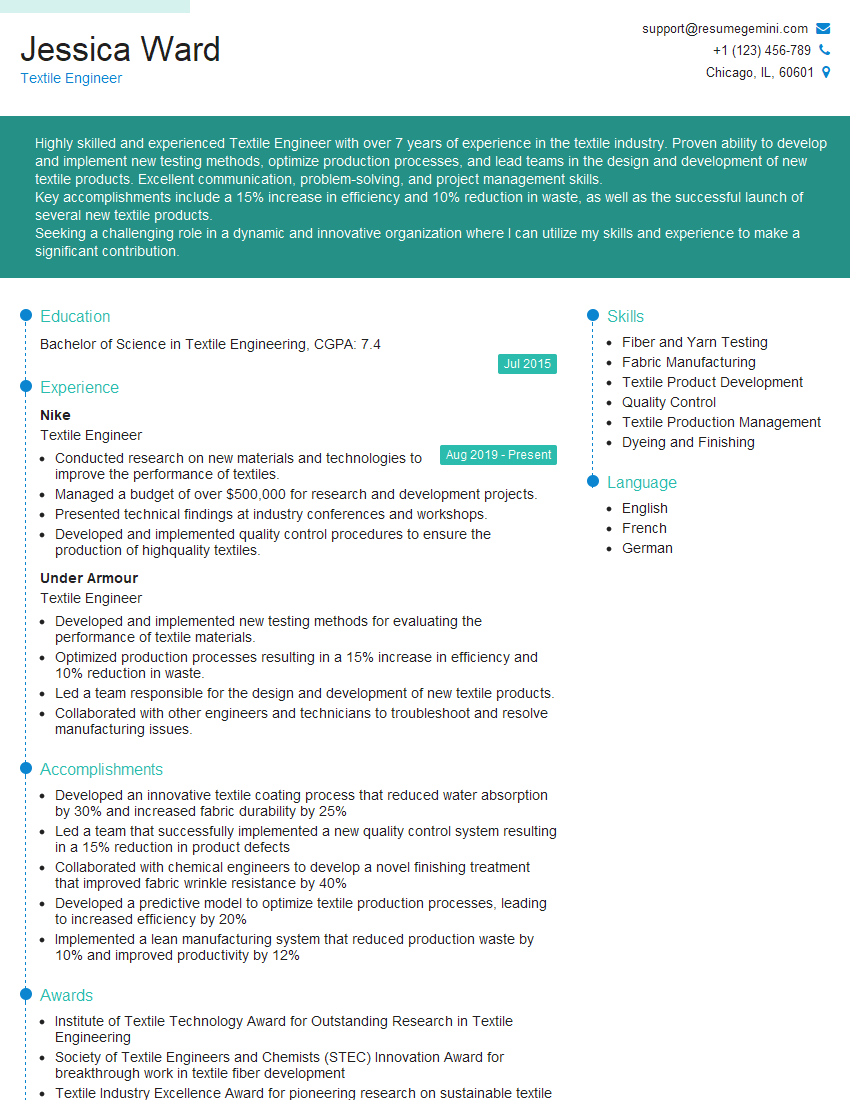
Mastering Fabric Technology opens doors to exciting career opportunities in a dynamic and ever-evolving industry. A strong understanding of these concepts is crucial for securing your dream role. To maximize your chances, focus on creating an ATS-friendly resume that effectively highlights your skills and experience. ResumeGemini is a trusted resource that can help you build a professional and impactful resume, ensuring your qualifications shine. Examples of resumes tailored to Fabric Technology are available to guide you.

Explore more articles
Users Rating of Our Blogs
Share Your Experience
We value your feedback! Please rate our content and share your thoughts (optional).
What Readers Say About Our Blog
Really detailed insights and content, thank you for writing this detailed article.
IT gave me an insight and words to use and be able to think of examples