Preparation is the key to success in any interview. In this post, we’ll explore crucial Familiarity with Data Lakes and Data Marts interview questions and equip you with strategies to craft impactful answers. Whether you’re a beginner or a pro, these tips will elevate your preparation.
Questions Asked in Familiarity with Data Lakes and Data Marts Interview
Q 1. Explain the difference between a data lake and a data mart.
Data lakes and data marts are both used for data storage and analysis, but they differ significantly in their approach. Think of a data lake as a raw, unorganized reservoir of data in its native format – like a vast, untouched lake. A data mart, on the other hand, is a curated, structured subset of data, specifically designed for a particular business function or analysis – like a neatly organized swimming pool, perfect for a specific purpose.
A data lake stores data in various formats (structured, semi-structured, and unstructured), while a data mart typically stores only structured data, often extracted and transformed from the data lake or other sources. The data lake prioritizes volume and variety, accepting all incoming data without immediate transformation. The data mart, conversely, prioritizes business-specific needs, focusing on relevant, clean, and readily analyzable data.
For instance, a data lake might contain raw sensor data, social media posts, and sales transactions all together. A data mart might then extract sales transaction data from the data lake, clean and transform it, and store it for sales analysis.
Q 2. What are the advantages and disadvantages of using a data lake?
Advantages of Data Lakes:
- Schema-on-read: Data is ingested without pre-defined schemas, offering flexibility to analyze different data types later.
- Variety of data: Accepts various data formats, including unstructured data (images, videos, text).
- Scalability: Easily scales to accommodate large volumes of data.
- Cost-effective storage: Often uses cheaper storage solutions compared to traditional data warehouses.
Disadvantages of Data Lakes:
- Data governance challenges: Managing and governing large volumes of unstructured data can be complex.
- Data security risks: Ensuring the security of diverse data formats requires robust security measures.
- Data discovery and exploration complexities: Finding relevant data within a vast lake can be challenging without proper metadata management.
- Processing overhead: Processing raw data can be computationally expensive.
Q 3. What are the advantages and disadvantages of using a data mart?
Advantages of Data Marts:
- Improved performance: Data is structured and optimized for specific queries, leading to faster query response times.
- Easier data accessibility: Business users can easily access relevant data for analysis and reporting.
- Enhanced data quality: Data is cleaned and transformed before loading, ensuring data accuracy and consistency.
- Simplified data governance: Managing a smaller, well-defined dataset is simpler than managing a large data lake.
Disadvantages of Data Marts:
- Data redundancy: If multiple data marts are created, data redundancy can occur.
- Limited scalability: Scaling a data mart can be challenging and expensive compared to a data lake.
- Data silos: Data marts can lead to data silos if not properly integrated.
- Less flexibility: Adding new data sources or modifying the data structure can be difficult.
Q 4. Describe the process of ETL (Extract, Transform, Load) in the context of data lakes and data marts.
ETL (Extract, Transform, Load) is the process of moving data from various sources into a target system like a data lake or data mart. In the context of data lakes, ETL often involves extracting data in its raw format, with minimal transformation in the initial stage. This allows for preserving the original data for future analysis. Transformation may happen later, as needed, at the point of query.
For data marts, ETL focuses on extracting, transforming, and then loading specific data into the target mart. This typically involves significant transformation to clean, standardize, and aggregate data into a structured format optimized for specific business use cases. The transformation step in data mart ETL is far more intensive.
For example, extracting customer data from an operational database, transforming it by cleaning addresses and consolidating similar entries, and then loading it into a customer data mart for marketing analysis.
Q 5. What are some common data lake architectures?
Common data lake architectures are often layered and include:
- Data Ingestion Layer: This handles the intake of data from various sources, using tools such as Kafka, Flume, or Sqoop.
- Storage Layer: This layer houses the raw data using various technologies like Hadoop Distributed File System (HDFS), cloud storage (AWS S3, Azure Blob Storage, Google Cloud Storage).
- Processing Layer: This layer processes data using technologies such as Spark, Hadoop MapReduce, or Presto.
- Metadata Layer: This is crucial for data discovery and governance, providing information about the data’s origin, format, and quality.
- Security Layer: This ensures data security and access control.
The architecture can vary based on the specific needs and technologies used.
Q 6. What are some common data lake storage solutions?
Popular data lake storage solutions include:
- Cloud Storage Services: AWS S3, Azure Blob Storage, Google Cloud Storage offer scalable, cost-effective object storage.
- Hadoop Distributed File System (HDFS): A distributed file system designed for large-scale data storage and processing.
- Data Lakehouse Platforms: These integrate the best features of data lakes and data warehouses, such as Databricks Lakehouse, and Snowflake.
The choice of storage solution depends on factors such as scalability needs, cost considerations, and integration with other tools.
Q 7. How do you ensure data quality in a data lake?
Ensuring data quality in a data lake requires a multi-faceted approach:
- Metadata Management: Implement a robust metadata management system to track data lineage, quality metrics, and other important information.
- Data Profiling and Discovery: Conduct regular data profiling to understand the characteristics of your data and identify potential issues.
- Data Quality Rules and Validation: Define data quality rules and validation processes to ensure data consistency and accuracy.
- Data Cleansing and Transformation: Implement processes to clean and transform data as needed, but consider doing this on a subset rather than the entire lake.
- Monitoring and Alerting: Monitor data quality metrics and set up alerts to detect anomalies or issues.
- Data Governance Policies: Establish clear data governance policies to ensure that data is handled consistently and securely.
It’s crucial to remember that data quality in a data lake is an ongoing process, not a one-time event.
Q 8. How do you handle data governance in a data lake environment?
Data governance in a data lake is crucial for ensuring data quality, consistency, and compliance. It’s like being the librarian of a massive, ever-growing library – you need a system to organize, catalog, and manage everything effectively. This involves establishing clear policies and procedures covering data discovery, access control, data quality, and metadata management.
- Data Discovery and Cataloguing: Implement a robust metadata management system to track data lineage, schema, and quality metrics. This allows users to easily discover and understand the data available.
- Access Control: Use role-based access control (RBAC) to restrict access to sensitive data based on user roles and responsibilities. This prevents unauthorized access and ensures data security.
- Data Quality: Define clear data quality rules and implement automated processes for data validation and cleansing. This ensures the data in the lake is reliable and trustworthy.
- Data Lineage Tracking: Track the journey of each dataset from its source to its final destination within the data lake. This helps in understanding data transformations and identifying potential issues.
- Compliance and Auditing: Establish procedures to ensure compliance with relevant regulations (e.g., GDPR, CCPA). Regularly audit data access and usage patterns to identify and address potential risks.
For example, a financial institution might implement strict access controls to sensitive customer data, while also employing automated data quality checks to ensure the accuracy of transaction records.
Q 9. What are some common data modeling techniques used in data lakes and data marts?
Data modeling in data lakes and data marts differs significantly due to their contrasting architectures. Data lakes prioritize flexibility and schema-on-read, while data marts emphasize structured data and schema-on-write.
- Data Lakes: Common techniques include:
- Nested JSON/Avro: Storing semi-structured data in its native format, allowing for flexibility.
- Parquet/ORC: Columnar storage formats for efficient query processing of large datasets.
- Data Lakehouse architecture: Combining the benefits of data lakes (schema-on-read, scalability) and data warehouses (ACID transactions, query optimization)
- Data Marts: Typically utilize more traditional techniques:
- Star Schema: A central fact table surrounded by dimension tables, providing a structured and easily queryable representation of business data.
- Snowflake Schema: An extension of the star schema, with normalized dimension tables to reduce data redundancy.
- Data Vault Modeling: A flexible approach designed for handling changes in business requirements and data sources.
Consider a retail company: their data lake might store raw transaction data in Parquet format, while their data mart might use a star schema to represent sales data for reporting purposes, summarizing data from the data lake.
Q 10. Explain the concept of schema-on-read vs. schema-on-write.
Schema-on-read and schema-on-write are two fundamental approaches to data modeling. Think of it like building with LEGOs: schema-on-write is like building with pre-assembled sections, while schema-on-read allows for building freely and defining the structure only when needed.
- Schema-on-write: The schema is defined before data is written. This is common in relational databases and data marts. It ensures data consistency and simplifies querying, but can be less flexible for handling evolving data structures.
- Schema-on-read: The schema is defined when the data is read. This is characteristic of data lakes, allowing for greater flexibility in storing diverse data types. However, querying can be more complex, and data quality issues are easier to introduce if not managed properly.
Example: In a schema-on-write system (like a traditional database), you’d define table structures with specific column types beforehand. In a schema-on-read system (like a data lake), you might store JSON documents, only defining the schema when querying the data using tools capable of processing semi-structured data.
Q 11. What are some common tools used for data lake development and management?
The data lake ecosystem boasts a wide array of tools, each serving specific purposes in development and management.
- Data Ingestion: Apache Kafka, Apache Flume, AWS Kinesis for streaming data; Sqoop, Talend for batch data.
- Data Storage: Hadoop Distributed File System (HDFS), Amazon S3, Azure Data Lake Storage Gen2.
- Data Processing: Apache Spark, Apache Hadoop MapReduce, AWS Glue, Azure Databricks.
- Data Warehousing & Query Engines: Apache Hive, Presto, Apache Impala, Snowflake, Amazon Redshift.
- Metadata Management: Apache Atlas, Alation.
- Data Orchestration: Apache Airflow, Prefect.
A typical workflow might involve ingesting data from various sources using Kafka, storing it in S3, processing it with Spark, and then querying it using Presto for analysis. The choice of specific tools depends on the specific needs and architecture of the data lake.
Q 12. How do you optimize query performance in a data lake?
Optimizing query performance in a data lake is crucial for efficient data analysis. It’s like optimizing a highway system – you want smooth and fast traffic flow.
- Data Partitioning: Divide data into smaller, manageable partitions based on relevant attributes (e.g., date, region). This allows queries to only scan the necessary partitions.
- Data Compression: Use efficient compression algorithms (e.g., Parquet’s columnar compression) to reduce storage space and improve read speeds.
- Data Indexing: Create indexes on frequently queried columns to speed up data retrieval. However, avoid excessive indexing as this can impact write performance.
- Query Optimization: Use appropriate query execution engines (e.g., Presto, Spark SQL) with optimized query plans and resource allocation.
- Schema Optimization: Design efficient schemas that align with query patterns. Avoid overly complex nested structures.
For example, partitioning data by date allows faster retrieval of data for specific time periods, while using appropriate compression reduces the time taken to load the data.
Q 13. What are some best practices for designing a data lake?
Designing a successful data lake requires careful planning and consideration of several factors. Think of it as designing a well-organized city – you need to plan for infrastructure, zoning, and accessibility.
- Define Clear Objectives: Clearly define the purpose and scope of the data lake. What business problems will it solve? What types of data will be stored?
- Choose the Right Technology Stack: Select technologies based on scalability, performance, and cost requirements.
- Implement Robust Data Governance: Establish policies and procedures for data quality, access control, and metadata management.
- Establish a Modular Architecture: Design the data lake in a modular way, allowing for easy scalability and maintenance.
- Prioritize Data Security: Implement appropriate security measures to protect sensitive data.
- Monitor and Optimize: Continuously monitor the performance of the data lake and make adjustments as needed.
Failing to define clear objectives can lead to a sprawling, unmanageable data lake. A well-defined architecture, on the other hand, promotes efficient data access and analysis.
Q 14. How do you handle data security in a data lake?
Data security in a data lake is paramount, given the vast amount of data involved. It’s like securing a valuable treasure – you need multiple layers of protection.
- Access Control: Implement role-based access control (RBAC) to restrict access to sensitive data based on user roles and responsibilities.
- Data Encryption: Encrypt data at rest and in transit to protect against unauthorized access.
- Network Security: Secure the network infrastructure connecting to the data lake, using firewalls and intrusion detection systems.
- Data Masking and Anonymization: Mask or anonymize sensitive data to protect privacy while still allowing analysis.
- Regular Security Audits: Conduct regular security audits to identify and address potential vulnerabilities.
- Data Loss Prevention (DLP): Implement DLP tools to monitor and prevent sensitive data from leaving the data lake.
For example, a healthcare provider would need stringent access controls and encryption to protect patient data, complying with HIPAA regulations.
Q 15. Describe your experience with different types of NoSQL databases used in data lakes.
My experience with NoSQL databases in data lakes centers around their ability to handle diverse, unstructured data. I’ve extensively worked with several types, each suited to different needs. For example, I’ve used Cassandra for its high availability and scalability, ideal when dealing with large volumes of sensor data or streaming events where fault tolerance is paramount. Imagine a smart city project; Cassandra’s ability to handle geographically distributed data from various sensors (temperature, traffic, etc.) is invaluable.
MongoDB, with its document-oriented structure, has proven extremely useful for storing semi-structured data like JSON logs or web analytics. Its flexibility in schema design allows for easy adaptation to evolving data structures. For instance, in an e-commerce application, customer profiles with varying attributes are effortlessly managed.
I’ve also leveraged HBase, a column-oriented database, in scenarios where quick access to specific data columns is critical. Think of financial transactions—HBase excels in retrieving specific transaction details without scanning the entire row. Finally, Apache Kafka, while not a traditional database, plays a crucial role in data ingestion pipelines, acting as a high-throughput, low-latency streaming platform, enabling real-time data processing and feeding into the data lake’s underlying NoSQL stores.
Career Expert Tips:
- Ace those interviews! Prepare effectively by reviewing the Top 50 Most Common Interview Questions on ResumeGemini.
- Navigate your job search with confidence! Explore a wide range of Career Tips on ResumeGemini. Learn about common challenges and recommendations to overcome them.
- Craft the perfect resume! Master the Art of Resume Writing with ResumeGemini’s guide. Showcase your unique qualifications and achievements effectively.
- Don’t miss out on holiday savings! Build your dream resume with ResumeGemini’s ATS optimized templates.
Q 16. What is a Data Lakehouse, and how does it differ from a traditional data lake?
A Data Lakehouse is a relatively new architecture that combines the best features of data lakes and data warehouses. Think of it as a data lake with the structure and governance of a data warehouse. Unlike a traditional data lake which often stores raw, unstructured data in its native format, a Data Lakehouse provides a structured, schema-on-read approach. This means that while data can initially be ingested in its raw form, a layer of organization and structure is applied as needed for analysis, often through techniques like partitioning and indexing.
The key difference lies in the enhanced governance and data quality. Data Lakehouses typically use technologies like Apache Iceberg or Delta Lake, which offer features like ACID transactions, data versioning, and schema enforcement, all absent in traditional data lakes. This results in more reliable, consistent, and manageable data, making it easier to conduct complex analytics without the significant pre-processing required in a typical data lake environment.
Q 17. Explain how you would design a data pipeline for ingesting data into a data lake.
Designing a data pipeline for ingesting data into a data lake is a multi-step process that requires careful planning. It typically involves these stages:
- Data Extraction: Identifying the sources of your data (databases, APIs, files, streaming services, etc.). This step involves choosing the right connectors and tools based on the data source.
- Data Transformation: Cleaning, validating, and transforming the data into a format suitable for storage in the data lake. This might involve tasks like data type conversion, data enrichment, and deduplication. This often involves tools like Apache Spark or Apache Kafka Streams.
- Data Loading: Transferring the transformed data into the data lake storage. Tools like Apache Sqoop (for relational databases), Apache Flume (for log files), or cloud-based storage services can be used.
- Data Validation: Implementing checks to ensure data quality and integrity throughout the pipeline. This could include schema validation, data profiling, and anomaly detection.
For example, a retail company might ingest sales data from its transactional database, website logs, and marketing campaign data, transforming them into a unified format before storing them in the data lake for further analysis. The pipeline would incorporate data validation to flag any inconsistencies or errors.
Q 18. How do you handle data versioning in a data lake?
Data versioning in a data lake is crucial for maintaining data lineage and enabling reproducibility. It allows you to track changes over time, revert to previous versions if needed, and understand how the data has evolved. Several approaches exist:
- Time-based partitioning: Organizing data into partitions based on time (e.g., daily, hourly). This allows for efficient querying and easier deletion of outdated data.
- Using version control systems (e.g., Git): While not directly applied to the data itself, Git can track changes in scripts and configuration files that are responsible for data transformations. This indirectly provides version control over the data processing.
- Leveraging data lakehouse technologies (e.g., Delta Lake, Apache Iceberg): These frameworks offer built-in versioning capabilities, allowing for tracking changes in the data itself, including schema evolution. They offer features like time travel, enabling you to query past versions of your data.
Imagine a scenario where an erroneous transformation script is applied to a data set. Data versioning allows you to quickly revert to the previous correct version of the data, minimizing disruption.
Q 19. What are some common challenges faced when working with data lakes?
Working with data lakes presents several challenges:
- Data discoverability and organization: Without proper metadata management, finding and understanding the data can be challenging.
- Data quality and consistency: Raw data in a data lake often lacks structure and consistency, requiring substantial effort for cleaning and validation.
- Security and access control: Protecting sensitive data within the data lake requires robust security measures.
- Scalability and cost management: Managing the costs associated with storage, processing, and infrastructure can become significant for large data lakes.
- Schema evolution: Managing changes to data schemas requires careful planning and efficient schema evolution capabilities.
These challenges often lead to increased development time and cost, highlighting the need for proper planning and tooling to mitigate these issues.
Q 20. How do you choose the right tools and technologies for a specific data lake project?
Choosing the right tools and technologies for a data lake project depends heavily on various factors, including:
- Data volume and velocity: For massive datasets and high-velocity data streams, distributed processing frameworks like Apache Spark are essential.
- Data variety and structure: The type of data (structured, semi-structured, unstructured) will influence the choice of storage and processing engines.
- Budget and resources: Cloud-based solutions often offer cost-effective scalability, while on-premises deployments might be suitable for organizations with significant existing infrastructure.
- Existing infrastructure: Integrating with existing systems and technologies should be a key consideration.
- Team skills and experience: Selecting tools that your team is comfortable working with can improve efficiency and productivity.
For example, a company with a large amount of sensor data might choose a cloud-based data lake solution combined with Apache Kafka and Spark for efficient ingestion and processing, while a smaller company with a limited budget might opt for a more cost-effective solution that prioritizes simplicity and ease of use. A thorough needs assessment is vital to the selection process.
Q 21. Describe your experience with data lake metadata management.
Data lake metadata management is crucial for data discoverability, governance, and usability. Without it, the data lake becomes a disorganized repository, rendering data largely unusable. My experience encompasses various aspects, including:
- Automated metadata extraction: Using tools to automatically extract metadata from data files (e.g., file size, creation date, schema information).
- Manual metadata tagging: Adding business context and descriptions to data assets for improved searchability and understanding.
- Metadata storage and management: Choosing a suitable metadata repository (e.g., Hive Metastore, a dedicated metadata catalog service) to store and manage metadata effectively.
- Metadata search and discovery: Implementing tools and functionalities that enable users to easily search and discover data based on metadata attributes.
- Metadata governance: Establishing policies and procedures to ensure the quality, accuracy, and consistency of metadata.
In practice, I’ve used solutions like Apache Atlas to manage metadata in complex data lakes. It allows for automated metadata discovery, business glossary integration and facilitates implementing data governance policies. Without proper metadata management, data discovery within a data lake quickly becomes a significant bottleneck.
Q 22. How do you monitor and maintain the performance of a data lake?
Monitoring a data lake’s performance is crucial for ensuring efficient data processing and analysis. It’s like monitoring the health of a large, sprawling city – you need to keep an eye on multiple aspects simultaneously.
My approach involves a multi-pronged strategy focusing on several key areas:
- Data Ingestion Monitoring: I track the speed and volume of data ingested, looking for bottlenecks. Tools like Apache Kafka provide metrics on message throughput and latency. If ingestion slows, I’d investigate potential issues with source systems, network connectivity, or the ingestion pipeline itself. For example, I might find that a specific data source is producing unusually large files, causing delays.
- Storage Monitoring: I monitor storage utilization and costs closely. Cloud providers offer dashboards showing storage capacity, usage patterns, and costs. I’d look for trends indicating potential space exhaustion or inefficient storage usage. For instance, identifying and deleting obsolete data would be a priority.
- Query Performance Monitoring: Slow query performance is a major concern. I use query profiling tools to identify slow queries and optimize them. Techniques include indexing, query rewriting, and using appropriate data formats like Parquet or ORC. If queries consistently take too long, I’d investigate whether indexing needs improvement or if data partitioning is necessary.
- Metadata Management: Keeping metadata up-to-date is vital. I use metadata management tools to ensure data discoverability and understand data lineage. This helps in debugging and optimization. A lack of metadata can be a major impediment to performance tuning.
- Resource Utilization: I monitor CPU, memory, and network usage of the data lake’s infrastructure. Cloud monitoring services provide these metrics. High resource usage could indicate the need for scaling up or optimizing resource allocation.
Ultimately, a combination of automated monitoring tools and manual checks ensures the data lake remains performant and cost-effective.
Q 23. Explain your experience with data virtualization in relation to data lakes.
Data virtualization is a powerful technique for accessing and integrating data from diverse sources without physically moving the data. In the context of a data lake, it’s particularly valuable because data lakes often contain numerous data sets in varying formats and locations. Think of it as a sophisticated layer that provides a unified view of your data lake without requiring complex ETL processes.
In my experience, I’ve used data virtualization to create logical views of data within a data lake. This allows analysts and data scientists to access the data they need through a simplified interface without needing to be experts in the underlying data storage. For example, I might create a virtual table that combines data from different sources within the data lake, offering a single point of access for a specific analytical task. This avoids the overhead of physically copying and transforming the data. I’ve utilized tools like Denodo and Informatica PowerCenter for this purpose.
The key benefit is agility. Business needs change rapidly, and data virtualization allows for quick adaptation without incurring the costs and delays associated with traditional data integration methods.
Q 24. How do you ensure data consistency between a data lake and data mart?
Maintaining data consistency between a data lake and a data mart requires a well-defined data pipeline and governance strategy. It’s like keeping two branches of a company synchronized – you need consistent communication and processes.
My approach typically involves:
- Data Lineage Tracking: Thorough tracking of data as it moves from the lake to the mart is crucial. This helps in identifying discrepancies. Tools that manage metadata and data lineage are invaluable here.
- Incremental Updates: Instead of completely reloading the data mart every time, I implement incremental updates. This significantly improves efficiency and minimizes disruptions. This is akin to making only necessary updates to a document instead of re-writing it every time a small change is needed.
- Data Quality Checks: Rigorous data quality checks are performed at both the data lake and data mart levels. Data profiling helps in identifying anomalies. I’d look for missing values, inconsistencies, and data type errors. This is critical for maintaining accuracy.
- Change Data Capture (CDC): I frequently use CDC mechanisms to capture only changes in the data lake and efficiently propagate those changes to the data mart. This technique only processes changes, drastically reducing processing time and resources.
- Automated Testing and Validation: Automation plays a vital role. I use automated tests to verify that data accurately moves from the lake to the mart and that the data transformation steps are correct.
By combining these techniques, I can ensure consistency and minimize data discrepancies between these two environments.
Q 25. Discuss your experience with different cloud platforms for hosting data lakes (AWS, Azure, GCP).
I have extensive experience with AWS, Azure, and GCP for hosting data lakes. Each platform offers unique strengths and caters to different needs.
- AWS: AWS offers a mature ecosystem with services like S3 for storage, EMR for processing, and Glue for data cataloging and ETL. I’ve built several data lakes on AWS leveraging these services, and its scalability is unparalleled. I found AWS particularly strong in handling large-scale data processing and analytics tasks.
- Azure: Azure’s Data Lake Storage Gen2 provides a robust and cost-effective storage solution integrated with its data processing services like Azure Databricks and Azure Synapse Analytics. I appreciate Azure’s focus on data governance and security features.
- GCP: Google Cloud Storage and BigQuery are powerful tools in GCP’s data lake offerings. BigQuery’s performance on analytical queries is impressive. I’ve found GCP’s integration with other Google services, like Data Studio, to be seamless for visualization and reporting.
The choice of platform depends on various factors such as existing infrastructure, budget constraints, and specific data processing requirements. Each platform has its own strengths, and I can adapt my approach to effectively utilize each one.
Q 26. What are some common performance bottlenecks in data lake architectures?
Performance bottlenecks in data lake architectures can stem from various sources. It’s like traffic congestion in a city – pinpointing the cause is crucial to resolving it.
- Inadequate Ingestion Pipeline: Slow or inefficient data ingestion pipelines are a major culprit. This can be due to network limitations, insufficient processing power, or poorly designed ingestion processes.
- Storage I/O Bottlenecks: Slow data retrieval from storage due to lack of optimization or inefficient data formats is another common problem. For example, using inefficient file formats like CSV instead of Parquet or ORC can significantly impact performance.
- Lack of Data Partitioning: Without proper partitioning, queries can become excessively slow as they must scan enormous amounts of data. Proper data partitioning can greatly improve query performance.
- Insufficient Compute Resources: Not allocating enough compute resources to handle processing and query workloads is another frequent cause of bottlenecks. Scaling up resources is often the solution.
- Inefficient Query Optimization: Poorly written or unoptimized queries can greatly impact performance. Using appropriate indexing strategies, query rewriting, and analyzing query plans are essential for optimization.
- Metadata Management Issues: Lack of proper metadata management hinders query optimization and data discovery, leading to performance issues.
Identifying these bottlenecks requires careful analysis of system logs, performance metrics, and query execution plans.
Q 27. How would you approach troubleshooting a data ingestion issue in a data lake?
Troubleshooting data ingestion issues involves a systematic approach. It’s akin to detective work – you need to gather clues and follow the trail.
My approach typically involves:
- Identify the Problem: Start by clearly defining the issue. Is the ingestion completely stalled? Is it slow? Are there errors in the logs?
- Check Ingestion Logs and Monitoring Tools: Examine logs for error messages or warnings. Cloud monitoring services and tools like Apache Kafka provide insights into the ingestion pipeline’s health.
- Investigate Source Systems: Ensure that the source systems are functioning correctly and delivering data as expected. Are there issues with the source system itself, or is the data being formatted correctly?
- Examine the Ingestion Pipeline: Analyze each stage of the pipeline to pinpoint the exact location of the problem. Are there errors in data transformation or validation steps? Are there any network issues?
- Test with a Smaller Dataset: Try ingesting a small sample of data to isolate the problem. This helps in determining if the issue is related to data volume or format.
- Verify Data Formats and Schemas: Confirm that the data formats and schemas are correct and consistent throughout the pipeline.
- Check Resource Allocation: Verify that sufficient compute resources are allocated to the ingestion process.
By following these steps, the root cause of the ingestion issue can typically be isolated and addressed.
Q 28. Describe your experience with implementing data lake security best practices.
Implementing robust data lake security is paramount. It’s about building a secure perimeter around your valuable data – a digital fortress.
My experience encompasses several key best practices:
- Access Control: Implementing granular access controls using IAM roles and policies is essential. Only authorized users and services should have access to specific data. This ensures that only appropriate personnel can interact with sensitive data.
- Data Encryption: Encrypting data both at rest and in transit is critical. This protects data from unauthorized access even if a security breach occurs. I’d use encryption at various levels of the data lake, including storage, network, and application layers.
- Network Security: Securing the network infrastructure is key. This includes using firewalls, VPNs, and intrusion detection systems to prevent unauthorized access.
- Data Masking and Anonymization: Sensitive data should be masked or anonymized when not needed for analysis. This protects personal information while still enabling analytical work.
- Regular Security Audits and Vulnerability Assessments: Conduct regular audits and vulnerability assessments to identify and address security weaknesses.
- Data Loss Prevention (DLP): Implement DLP tools and mechanisms to prevent sensitive data from being accidentally leaked or stolen. These tools monitor data movement and alert to potential data breaches.
- Monitoring and Logging: Continuous monitoring and logging of access attempts and data activity are essential for detecting and responding to security incidents. This enables early detection of suspicious behavior.
A comprehensive approach combining these elements creates a secure data lake environment, protecting valuable data and ensuring compliance.
Key Topics to Learn for Data Lakes and Data Marts Interviews
- Data Lake Fundamentals: Understanding the concept of a data lake, its architecture (schema-on-read vs. schema-on-write), and common use cases. Explore different storage solutions like cloud storage (AWS S3, Azure Blob Storage, Google Cloud Storage) and their implications.
- Data Mart Fundamentals: Defining data marts, their purpose, and how they differ from data lakes. Understand dimensional modeling and star/snowflake schemas in the context of data marts.
- Data Lake vs. Data Mart Comparison: Critically analyze the strengths and weaknesses of each approach. Be prepared to discuss when to choose a data lake over a data mart and vice-versa, based on specific business requirements and data characteristics.
- Data Ingestion and Processing: Familiarize yourself with various data ingestion methods (batch, streaming), data transformation techniques (ETL/ELT), and data quality considerations. Understand the role of tools like Apache Spark, Hadoop, and cloud-based data processing services.
- Data Governance and Security: Discuss data security best practices within data lakes and data marts, including access control, encryption, and compliance considerations. Understand metadata management and data lineage.
- Practical Applications: Be ready to discuss real-world scenarios where data lakes and data marts are effectively used, such as customer 360 initiatives, fraud detection, predictive modeling, and business intelligence reporting.
- Problem-Solving Approaches: Practice identifying and resolving common challenges related to data lake and data mart implementation, such as data scalability, performance optimization, and cost management. Consider scenarios involving data volume, velocity, and variety.
Next Steps
Mastering data lake and data mart concepts significantly enhances your marketability in today’s data-driven job market, opening doors to exciting roles with higher earning potential. To maximize your chances of landing your dream job, it’s crucial to present your skills effectively. An ATS-friendly resume is essential for getting past Applicant Tracking Systems and into the hands of hiring managers. ResumeGemini is a trusted resource to help you craft a compelling and effective resume that highlights your expertise in data lakes and data marts. Examples of resumes tailored to these skills are available to help you get started.
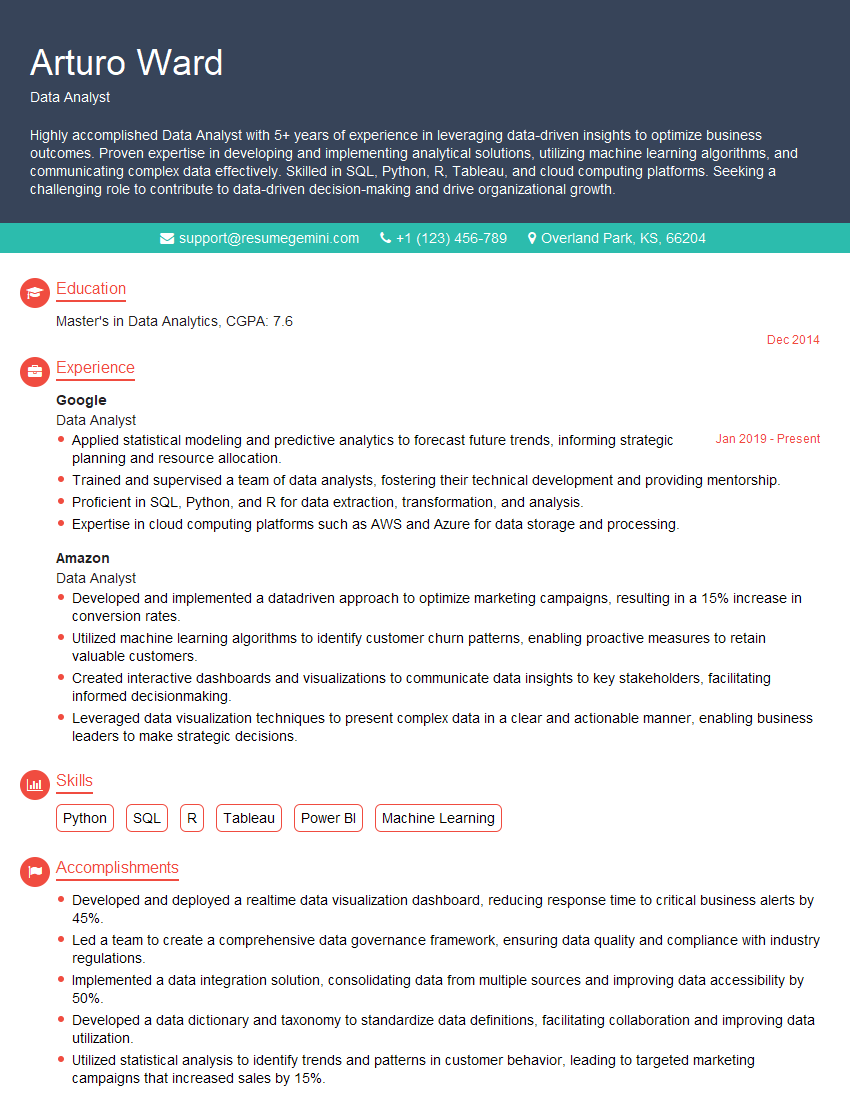
Data Analyst Resume Sample
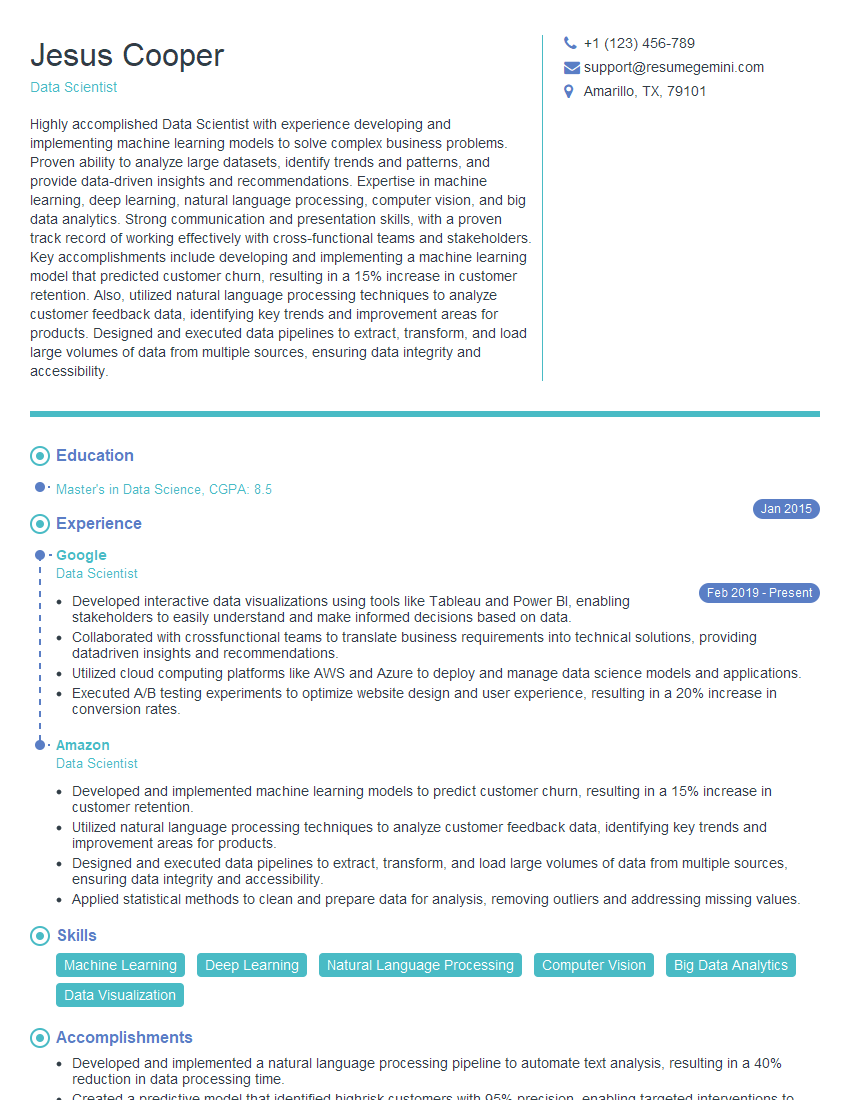
Data Scientist Resume Sample
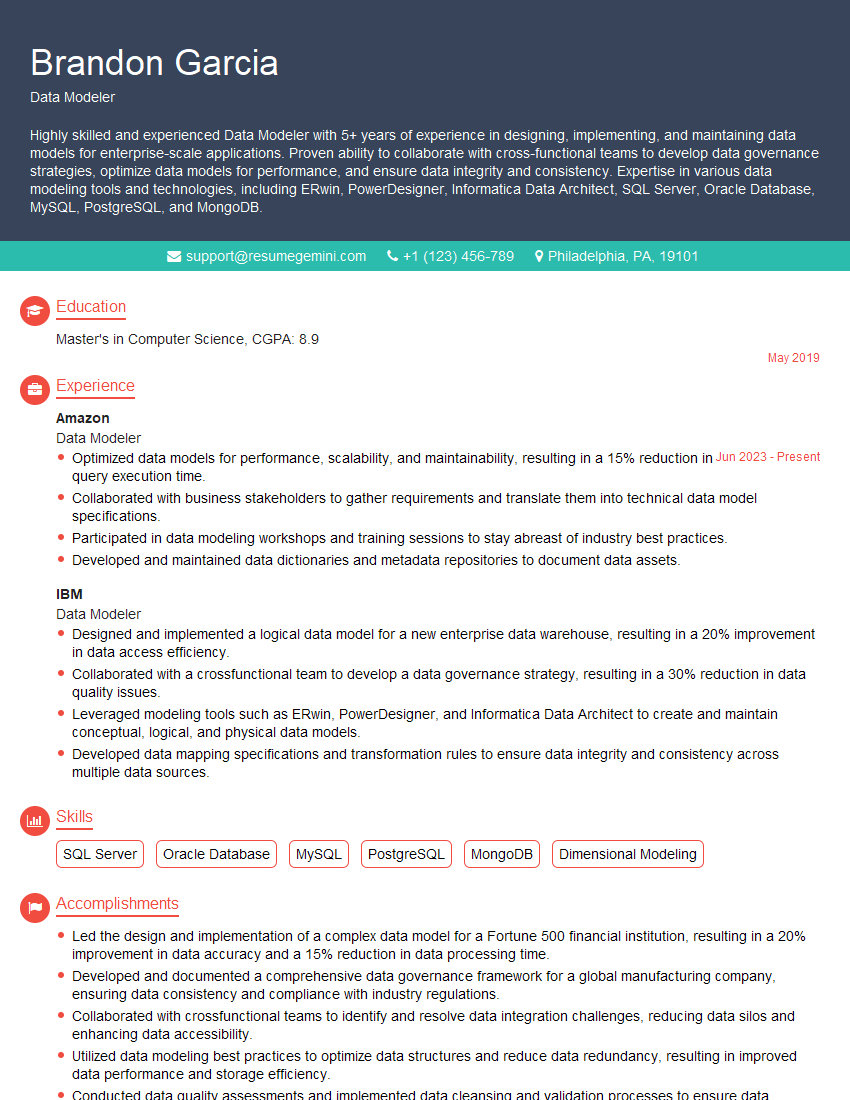
Data Modeler Resume Sample
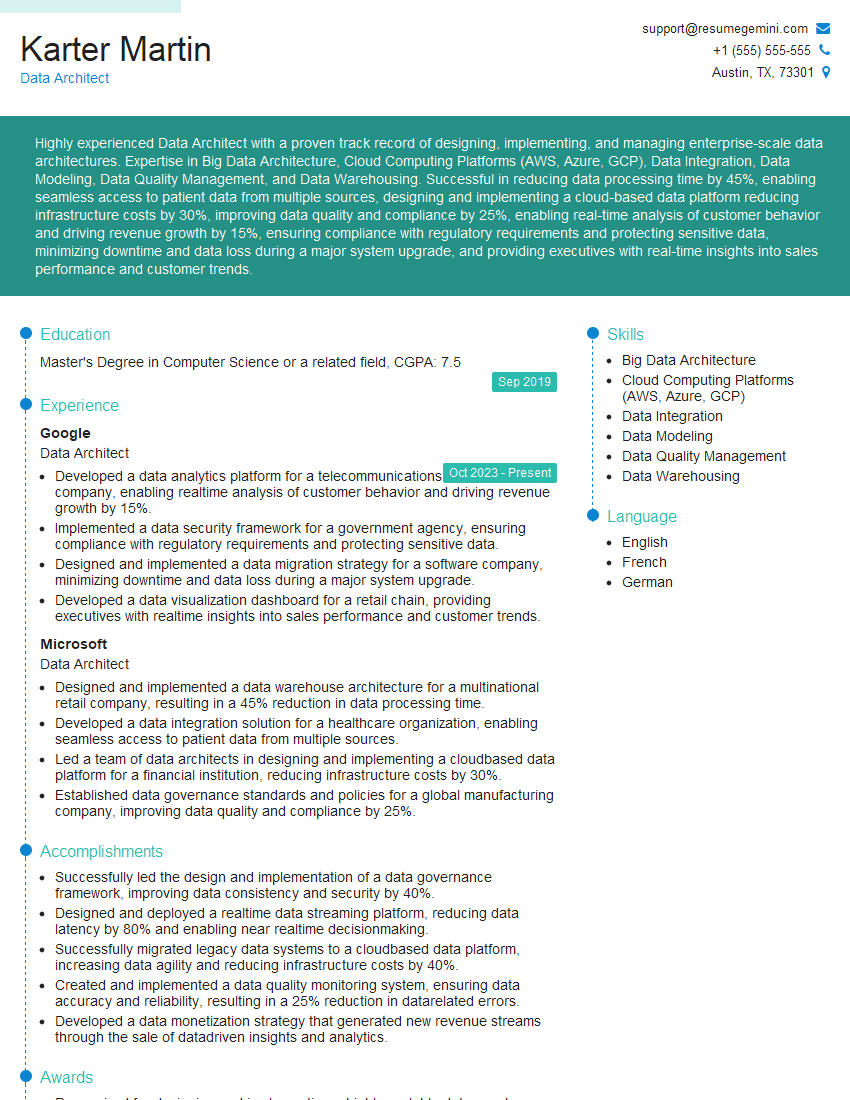
Data Architect Resume Sample
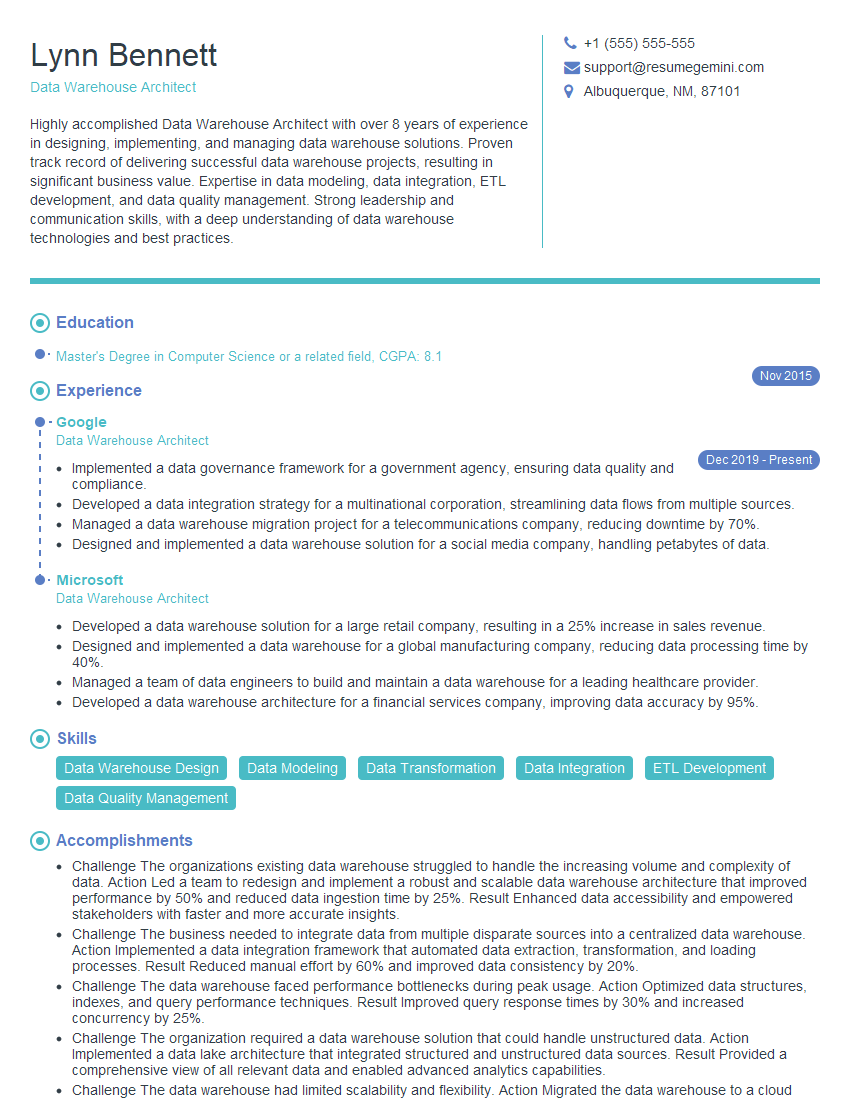
Data Warehouse Architect Resume Sample
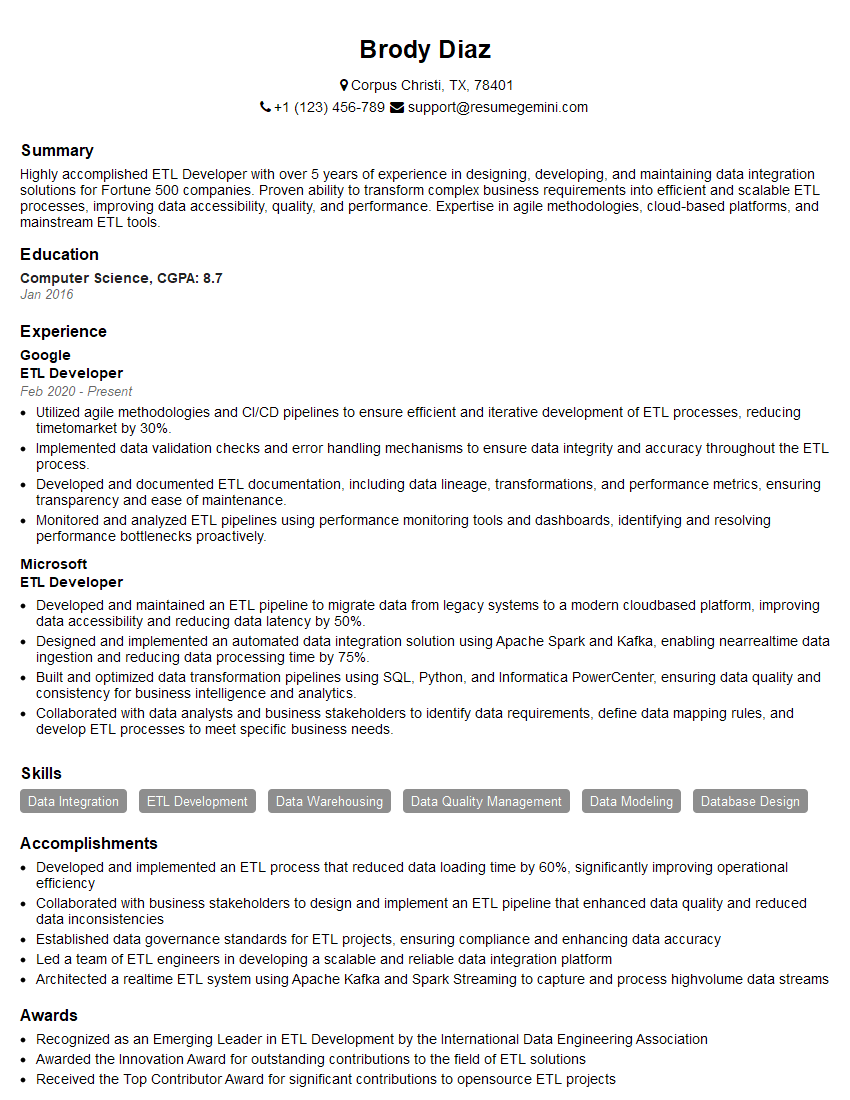
ETL Developer Resume Sample

Data Warehouse Developer Resume Sample
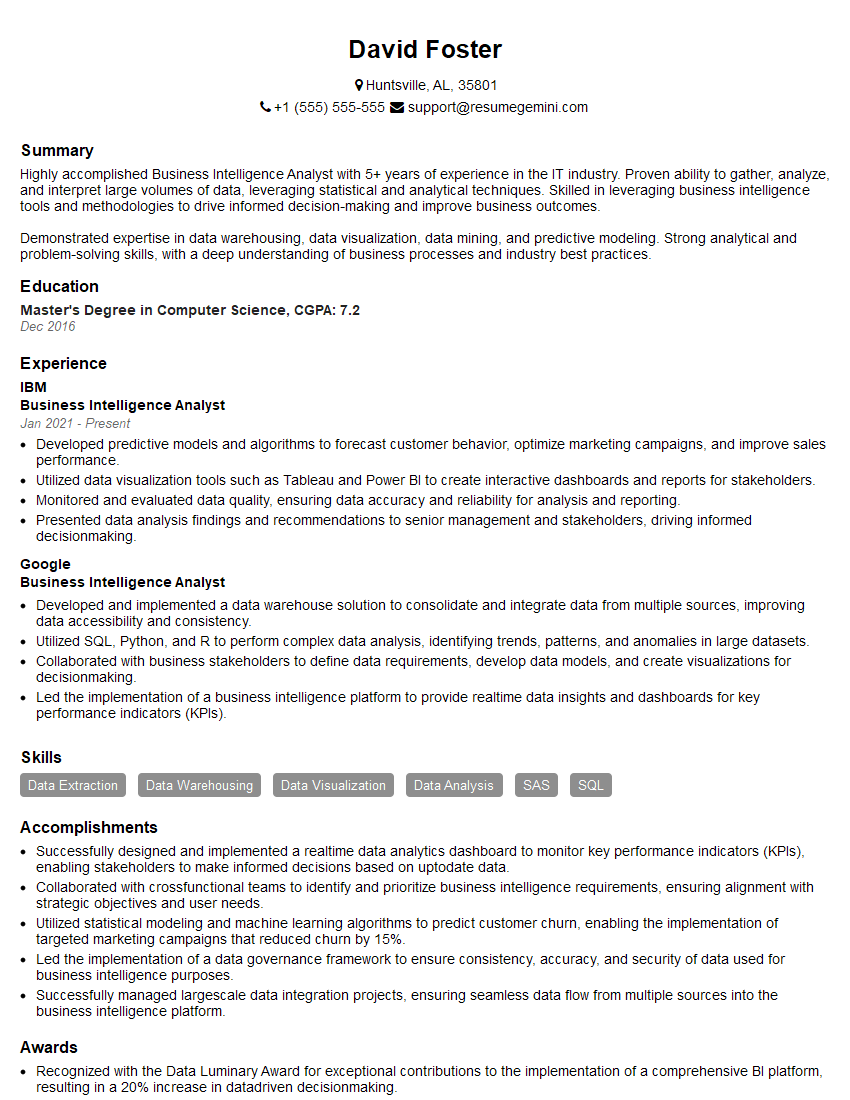
Business Intelligence Analyst Resume Sample
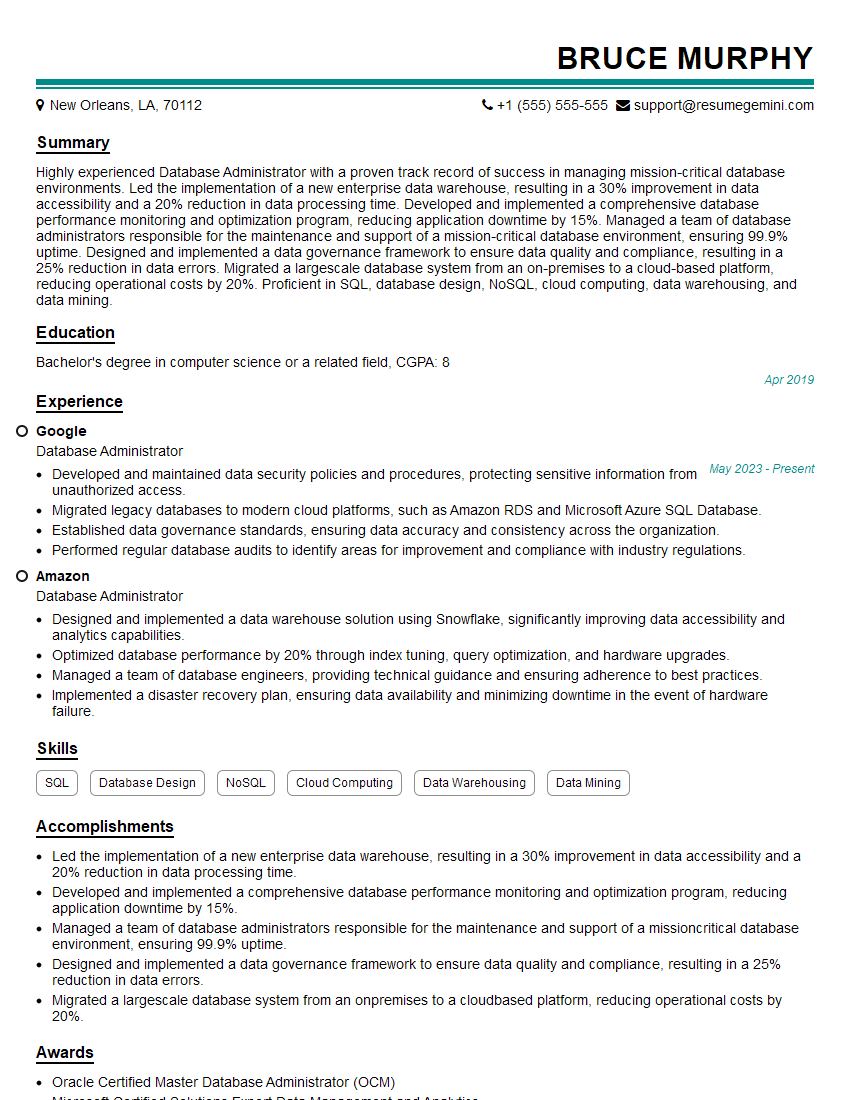
Database Administrator Resume Sample
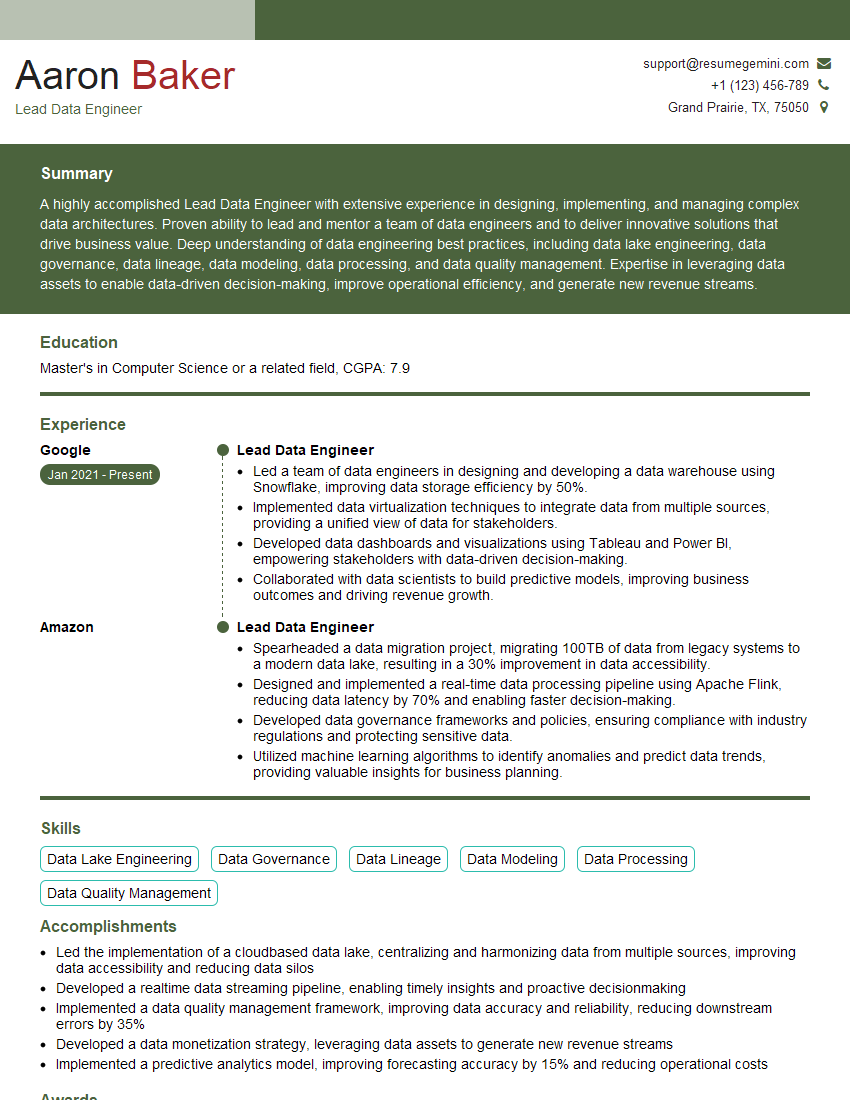
Lead Data Engineer Resume Sample
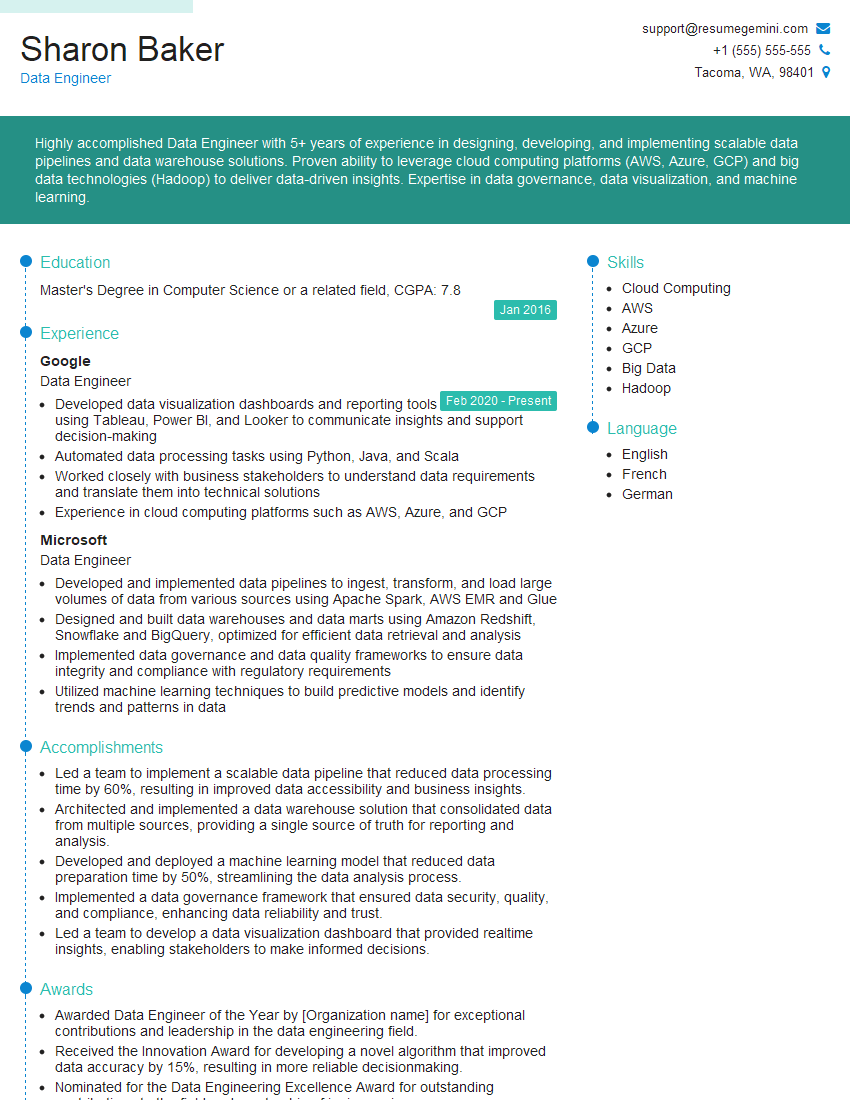
Data Engineer Resume Sample
Explore more articles
Users Rating of Our Blogs
Share Your Experience
We value your feedback! Please rate our content and share your thoughts (optional).
What Readers Say About Our Blog
Really detailed insights and content, thank you for writing this detailed article.
IT gave me an insight and words to use and be able to think of examples