Unlock your full potential by mastering the most common FCAW – Flux Cored interview questions. This blog offers a deep dive into the critical topics, ensuring you’re not only prepared to answer but to excel. With these insights, you’ll approach your interview with clarity and confidence.
Questions Asked in FCAW – Flux Cored Interview
Q 1. Explain the difference between self-shielded and gas-shielded FCAW.
The core difference between self-shielded and gas-shielded Flux Cored Arc Welding (FCAW) lies in how the weld is protected from atmospheric contamination. Think of it like this: self-shielded FCAW is like a self-contained package, while gas-shielded FCAW needs an external assist.
Self-shielded FCAW uses a flux core that contains all the necessary shielding components – deoxidizers, slag formers – within the wire itself. As the wire melts, the flux generates a protective gas shield around the weld puddle, preventing oxidation and porosity. This makes it ideal for outdoor applications where wind might disrupt a gas shield or where a gas supply isn’t readily available. It’s simpler and often more portable.
Gas-shielded FCAW, on the other hand, uses a flux core that typically provides a smaller amount of shielding, and relies heavily on an external supply of shielding gas (usually CO2, Argon, or a mixture) to fully protect the weld. This method often produces higher quality welds with improved penetration and mechanical properties, but requires more specialized equipment and a constant supply of gas.
Imagine baking a cake: self-shielded FCAW is like using a pre-mixed cake batter – everything is included. Gas-shielded FCAW is like using separate ingredients – you need to carefully combine them for the best results, but you have more control over the final product.
Q 2. Describe the various types of FCAW flux cores and their applications.
FCAW flux cores are broadly classified based on their shielding gas requirements and metallurgical properties. The choice depends heavily on the application and the desired weld characteristics.
- Self-shielded (Solid): These wires contain all the necessary shielding elements within the flux core. They’re versatile and easy to use, suitable for various steels and in challenging environments. Examples include wires for general purpose applications, high strength low alloy steels, and some stainless steel applications.
- Gas-shielded (Gas-metal arc welding): These wires rely on an external shielding gas for optimal protection. They offer better control over the weld puddle and typically produce cleaner welds with improved mechanical properties. Specific gas mixtures tailored to the base metal are crucial for success. Applications span a range of steel types, including high-strength steels, stainless steels, and low-alloy steels.
- Rutile flux cores: These produce a smooth, easily cleaned slag, making them suitable for applications where aesthetics are important. They tend to have good arc stability and are often used for thin materials.
- Basic flux cores: Offer deep penetration and produce strong welds. They are ideal for thicker materials and those requiring high strength. They often require careful control of welding parameters.
- Cellulosic flux cores: These produce a highly fluid slag and are known for their deep penetration capabilities. They’re well-suited for welding thicker materials, such as in pipeline construction.
The selection of a specific type of flux core will depend on the base material, desired weld properties, joint design, and the overall welding environment.
Q 3. What are the common defects found in FCAW welds and their causes?
Several defects can occur in FCAW welds, often stemming from improper technique, incorrect parameter settings, or poor material preparation. Some common defects include:
- Porosity: Small holes in the weld caused by gas entrapment. This can be due to moisture in the wire, insufficient shielding gas, or poor joint fit-up.
- Slag inclusions: Trapped slag from the flux core within the weld. This arises from inadequate slag removal or improper welding techniques such as insufficient travel speed.
- Undercutting: A groove melted into the base metal at the weld toe. This often results from excessive current, incorrect travel speed, or improper angle of the welding gun.
- Lack of fusion: Incomplete fusion between the weld metal and the base material, resulting in a weak joint. It can be caused by insufficient heat input, poor joint preparation, or incorrect welding technique.
- Spatter: Small molten metal droplets that solidify outside the weld bead. This can be reduced by using proper welding parameters, good joint fit-up, and selecting appropriate wire and shielding gas.
- Excessive penetration: Weld penetration extending too deeply into the base material. This often results from using too high a current, an improper wire angle, or insufficient travel speed.
Identifying the cause of defects requires careful analysis of the welding process and visual inspection of the weld. Proper training, consistent procedures, and regular equipment maintenance are critical for preventing defects.
Q 4. How do you select the appropriate FCAW wire diameter for a given application?
Selecting the appropriate FCAW wire diameter is crucial for achieving optimal weld quality and productivity. The diameter is directly related to the current capacity, penetration depth, and deposition rate. It’s essentially choosing the right tool for the job.
Thicker wires (e.g., 1/8 inch or larger) are used for welding thicker materials and require higher currents to melt the wire adequately. They yield higher deposition rates, suitable for large-scale projects. Think of it like using a larger drill bit to bore a larger hole.
Thinner wires (e.g., 1/16 inch or smaller) are suitable for welding thinner materials and intricate joints. They require lower currents and provide more precise control over penetration and bead geometry, useful for detailed work. It’s like using a smaller drill bit for finer detail.
The selection process should consider:
- Base metal thickness: Thicker materials require thicker wires to achieve adequate penetration.
- Joint design: Complex joints or those requiring a deep penetration might need larger diameter wires.
- Welding position: Overhead welding often requires smaller diameter wires for better control.
- Welding power source capacity: The power source must be capable of supplying enough current for the chosen wire diameter.
Consult the wire manufacturer’s specifications and guidelines to ensure compatibility and optimal performance.
Q 5. Explain the importance of preheating and post-heating in FCAW welding.
Preheating and post-heating are crucial steps in FCAW welding, especially when working with materials prone to cracking or those having high hardness or high carbon content. They help manage the thermal stresses induced during the welding process.
Preheating raises the base metal temperature before welding, reducing the cooling rate. This is particularly important for materials susceptible to cold cracking, like high-carbon steels. A slower cooling rate allows for stress relief and reduces the likelihood of cracks forming. The preheat temperature depends on the material and its thickness, as defined in welding codes and standards.
Post-heating involves heating the weldment after welding to further reduce residual stresses. This is a particularly beneficial step for large welds or those with complex geometries. Similar to preheating, it slows down the cooling process, promoting stress relief and improving the overall mechanical properties of the weld.
Think of it like tempering steel: preheating and post-heating help to reduce the internal stresses created during the welding process, similar to the careful heating and cooling used in the tempering process to make the steel more durable and less prone to cracking.
Q 6. How do you control penetration and bead geometry in FCAW welding?
Controlling penetration and bead geometry in FCAW is essential for achieving high-quality welds. These parameters are intrinsically linked and influenced by several variables:
- Current: Higher currents lead to increased penetration and wider beads. Lower currents result in shallower penetration and narrower beads.
- Voltage: Higher voltages generally increase penetration and bead width. Lower voltages might result in poor penetration.
- Travel speed: Slower travel speeds lead to greater heat input, resulting in deeper penetration and wider beads. Faster speeds cause shallower penetration and narrower beads.
- Wire feed speed: A higher wire feed speed increases the deposition rate, generally leading to a wider bead. A slower speed reduces the deposition rate.
- Contact tip-to-work distance (CTWD): Maintaining the correct CTWD is critical for arc stability and penetration. Too close may result in excessive spatter, and too far may cause insufficient penetration.
- Wire angle: The angle at which the wire is fed into the weld puddle affects penetration. A more vertical angle typically results in deeper penetration.
Careful control of these parameters through experimentation and adherence to appropriate welding procedures is crucial for achieving the desired penetration and bead geometry for a given application. It often requires practice and fine-tuning.
Q 7. Describe the different FCAW welding techniques (e.g., weave, stringer).
FCAW welding offers several techniques depending on the application and the desired weld profile. The most common are:
- Stringer Bead Technique: This involves making a single continuous bead, moving the welding gun in a straight line. This is best suited for simple welds, especially those in the flat or horizontal position where achieving good penetration and controlled bead geometry is easier.
- Weaving Technique: This involves oscillating the welding gun back and forth, creating a wider, more filled bead. It is often used for larger gaps, thicker materials, and situations where wider coverage is needed. The weaving pattern can be adjusted to control the width and depth of the weld. It is important to maintain a consistent speed and width during the weaving movement.
- Circular Welding Technique: This technique uses a circular motion of the welding gun. It’s often used for circular welds or filling large gaps, ensuring consistent heat input along the entire joint.
- Tack Welding: This is an important step before continuous welding and involves making short, temporary welds to hold parts in position for the main weld. It ensures accurate alignment and proper joint fit-up.
The choice of welding technique depends on the joint design, material thickness, and the overall requirements of the weld. Experience and proper training are essential to master these techniques and ensure consistent weld quality.
Q 8. What safety precautions are crucial while performing FCAW welding?
FCAW welding, while incredibly versatile, presents inherent safety risks. Prioritizing safety is paramount. Think of it like this: every precaution is a layer of protection, and multiple layers are far stronger than one.
- Eye Protection: Always wear a welding helmet with a shade appropriate for the welding process and amperage. This isn’t just about protecting your eyes; it’s about preventing blindness. I’ve seen welders underestimate this, and the consequences can be devastating.
- Respiratory Protection: FCAW produces fumes, especially with certain fluxes. A respirator with appropriate filters is crucial, especially in confined spaces. Imagine breathing in metal fumes all day – it’s not just uncomfortable; it’s extremely unhealthy.
- Hearing Protection: The arc and the equipment generate significant noise. Ear muffs or earplugs are essential to prevent hearing damage. I’ve worked with welders who developed tinnitus over time due to neglecting this.
- Clothing Protection: Wear flame-resistant clothing, including long sleeves, long pants, and sturdy work boots. Cotton clothing can ignite easily near the welding arc. Think of it as your own personal fire suit.
- Fire Prevention: Ensure a fire extinguisher is readily available, and that the welding area is clear of flammable materials. A small spark can ignite a large fire in the wrong circumstances. Regular fire safety training is essential.
- Proper Ventilation: Ensure adequate ventilation to remove fumes and gases produced during welding. Poor ventilation can lead to both respiratory issues and fire hazards.
- Electrical Safety: Always disconnect the power source before making adjustments or performing maintenance on the welding equipment. Electricity is a silent killer.
Regular safety training and adherence to established safety procedures are essential for preventing accidents. Safety isn’t just a checklist; it’s a mindset.
Q 9. How do you identify and address porosity in FCAW welds?
Porosity in FCAW welds, those tiny holes, indicates gas entrapment during solidification. It weakens the weld and compromises its integrity. Think of it like Swiss cheese – it might look the same on the surface, but it’s structurally weaker.
Identifying porosity often involves visual inspection, sometimes aided by magnification. Larger pores are easily visible, while smaller ones might require a magnifying glass or even dye penetrant testing.
Addressing porosity requires identifying the root cause. Common causes include:
- Moisture in the flux core wire: This is one of the most frequent causes. Proper storage of the wire in a dry environment is crucial.
- Incorrect welding parameters: Improper wire feed speed, voltage, or travel speed can trap gases.
- Contaminated materials: Rust, oil, or paint on the base material can cause porosity.
- Poor joint fit-up: Gaps or misalignment in the joint can prevent proper fusion and lead to porosity.
Solutions involve addressing these root causes. For example, if moisture is the issue, dry the wire using a suitable method. If it’s welding parameters, adjust the settings based on the wire type and material. Always clean the base material thoroughly before welding. Sometimes, rewelding the affected area is necessary after correcting the underlying problem.
Q 10. Explain the importance of proper wire feed speed and voltage in FCAW.
Wire feed speed and voltage are crucial parameters that directly influence the welding process and weld quality in FCAW. They are intertwined; adjusting one often requires adjusting the other to maintain a stable arc and proper penetration.
Wire feed speed controls the amount of filler metal deposited. Too low, and you get a weak weld. Too high, and you can end up with spatter, burn-through, or excessive penetration. Think of it like the flow of paint from a spray can – you need the right flow rate for an even coat.
Voltage affects the arc length and heat input. Higher voltage means a longer arc and more heat; lower voltage means a shorter arc and less heat. Too little heat, and you’ll struggle to achieve fusion. Too much heat, and you risk burn-through.
The optimal combination of wire feed speed and voltage depends on the specific application, including the wire type, material thickness, and desired weld bead profile. This knowledge is gained through experience and experimentation and often requires consulting the manufacturer’s recommendations. In essence, it’s a delicate dance between these two parameters to create a perfect weld.
Q 11. How do you troubleshoot common FCAW welding problems such as spatter, burn-through, and lack of fusion?
Troubleshooting common FCAW problems requires a systematic approach. It’s like detective work – you need to gather clues and identify the root cause.
- Spatter: Excessive spatter often indicates incorrect welding parameters (too high wire feed speed, too high voltage, or improper shielding gas flow), contaminated materials, or a worn contact tip. Adjust parameters, clean the materials, and replace the contact tip if necessary. The solution often involves slight adjustments until optimal parameters are found.
- Burn-through: This usually results from excessive heat input (too high voltage, too slow travel speed, or insufficient material thickness). Lower the voltage, increase the travel speed, or preheat the material as necessary.
- Lack of fusion: This implies inadequate heat input or poor joint fit-up. Increase the voltage or reduce the travel speed. Ensure proper joint preparation and clean base metals before welding. You might need to adjust the amperage, too.
Remember to carefully observe the weld puddle characteristics. A properly controlled weld puddle will be smooth and consistent, indicative of good penetration and fusion. A systematic approach, coupled with careful observation, is key to identifying and resolving these issues efficiently.
Q 12. Describe your experience with different FCAW power sources (e.g., constant voltage, constant current).
My experience encompasses both constant voltage (CV) and constant current (CC) power sources for FCAW. Both have their advantages and disadvantages.
Constant Voltage (CV) power sources are more common for FCAW. They maintain a constant voltage at the arc, while the current varies depending on the arc length. CV sources are generally easier to use and provide a more stable arc, particularly for beginners. They’re less sensitive to changes in arc length, making them forgiving. I’ve found them particularly useful for out-of-position welding.
Constant Current (CC) power sources, while less common in FCAW, maintain a constant current while the voltage varies. They are typically used in situations requiring precise control over the heat input, such as welding thin materials or applications requiring very specific penetration control. I’ve used these on specialized projects, where the precision they offer was essential.
Ultimately, the choice between CV and CC depends on the specific application and the welder’s experience and preferences. I am proficient in working with both.
Q 13. How do you interpret welding symbols and blueprints related to FCAW welds?
Interpreting welding symbols and blueprints is fundamental to successful FCAW welding. It’s the roadmap for the weld. Think of the welding symbol as a miniature instruction manual for the weld joint.
The welding symbol typically includes:
- Reference line: The basic line indicating where the weld is located.
- Arrow side: The side of the joint where the symbol applies.
- Other side: Often has a different symbol or is left blank if identical to the arrow side.
- Weld type: The type of weld to be used, often identified by symbols, including the weld size, length, spacing, etc.
- Contour: Indicating the shape of the weld.
Blueprints provide the overall context, showing the location of welds within the larger assembly. They outline the dimensions, tolerances, and other critical details of the welded structure. My experience includes interpreting a wide variety of welding symbols and blueprints, ensuring accurate and efficient welding procedures.
Combining the information from the symbol and the blueprint is essential to ensure that the weld meets all specifications. It’s a collaborative effort between engineering and welding.
Q 14. What is the role of shielding gas in gas-shielded FCAW?
In gas-shielded FCAW, the shielding gas plays a crucial role in protecting the molten weld puddle from atmospheric contamination. Think of it as a protective blanket around the weld. Without it, the molten metal would react with oxygen and nitrogen in the air, resulting in weld defects such as porosity, cracking, and reduced mechanical properties.
Common shielding gases for FCAW include:
- Argon (Ar): Provides excellent arc stability and protection, but is relatively expensive.
- Carbon Dioxide (CO2): A less expensive option, but it can lead to more spatter and less stable arc compared to argon.
- Argon-CO2 mixtures: Offer a balance between cost and performance, combining the benefits of both gases.
The choice of shielding gas depends on factors such as the base material, weld type, and desired weld quality. Proper gas flow rate is also essential. Too little, and atmospheric contamination can occur. Too much, and it’ll increase costs and potentially create turbulence affecting arc stability. The shielding gas selection and flow rate must be optimized for the specific application and always needs consideration of safety for the welder.
Q 15. Explain the process of setting up and adjusting an FCAW machine.
Setting up an FCAW machine involves several key steps, ensuring both safety and optimal weld quality. First, you need to connect the power source to a properly grounded outlet, ensuring the amperage rating matches the machine’s capacity and the wire feeder’s specifications. Then, you’ll attach the welding gun, making sure the gas hose is securely connected. Next, you thread the appropriate FCAW wire into the feeder, ensuring smooth and consistent feed. The wire speed and voltage are then adjusted based on the material thickness, joint type, and desired weld penetration. Think of it like adjusting the water pressure and flow in a hose – too little and you get a weak stream; too much and it’s uncontrolled. Many modern machines allow for digital control, making this process highly precise. Finally, you need to select the correct gas flow rate (typically argon-CO2 mix for many applications) which depends on factors like the wire type and the joint design. Fine-tuning is often done by making small adjustments and monitoring the weld bead appearance – a smooth, consistent bead indicates correct settings.
For example, welding thin sheet metal requires a lower voltage and wire feed speed compared to welding thick steel plates. If your bead is too narrow and lacks penetration, you’ll increase the voltage and wire speed. If it’s excessively wide and spatter-heavy, you’ll reduce these parameters. This is all dependent on the specific job parameters.
Career Expert Tips:
- Ace those interviews! Prepare effectively by reviewing the Top 50 Most Common Interview Questions on ResumeGemini.
- Navigate your job search with confidence! Explore a wide range of Career Tips on ResumeGemini. Learn about common challenges and recommendations to overcome them.
- Craft the perfect resume! Master the Art of Resume Writing with ResumeGemini’s guide. Showcase your unique qualifications and achievements effectively.
- Don’t miss out on holiday savings! Build your dream resume with ResumeGemini’s ATS optimized templates.
Q 16. What are the limitations of FCAW welding?
FCAW, while versatile, has limitations. One major constraint is the porosity that can occur if the shielding gas coverage isn’t sufficient, leading to defects. This is often due to drafts or improper gas flow settings. Another limitation is the spatter produced, which can be more significant compared to other welding processes, requiring additional cleaning. The process is also less suited for welding in the overhead position due to gravity affecting the molten metal and flux. Furthermore, the flux can sometimes create a less aesthetically pleasing weld appearance than methods like MIG. Finally, the use of flux results in a post-weld cleanup requirement to remove the slag. This could be significant depending on the work environment.
For instance, welding thin materials in the vertical up position is more challenging due to the gravity-assisted downward movement of the molten weld pool; achieving a consistent bead becomes difficult without advanced techniques.
Q 17. How do you maintain and clean your FCAW equipment?
Maintaining FCAW equipment is crucial for safety and consistent performance. Regular cleaning is paramount, removing any accumulated spatter from the contact tip and drive rollers using a wire brush. The liner tube inside the wire feeder also needs periodic cleaning to prevent wire jams and ensure smooth wire feed. Check and replace the contact tip regularly; a worn contact tip leads to increased spatter and poor arc stability. Inspection of the gas hose for any cracks or leaks is also critical for safety. Always disconnect the power before performing any maintenance. The drive rollers also need regular lubrication depending on the machine’s specifications. This is essential for longevity and efficient wire feeding. Keeping the machine itself clean of dust and debris is crucial to prevent premature wear.
A good analogy is caring for a car – regular maintenance, like oil changes and tire rotations, prevents bigger issues down the road. Neglecting this can result in costly repairs and safety hazards.
Q 18. Describe your experience with different FCAW wire types (e.g., solid, metal-cored).
My experience encompasses both solid and metal-cored FCAW wires. Solid wires generally provide cleaner welds with less spatter, but are more susceptible to oxidation and require a more stable arc. Metal-cored wires, on the other hand, have a greater tolerance for variations in arc length and provide better penetration, especially in thicker materials. The choice depends greatly on the application. For example, a project requiring a smooth finish on a thin sheet metal component would favor solid wire for its cleaner weld appearance. Conversely, in an application needing deep penetration, such as joining thick steel plates, a metal-cored wire is often preferred.
I’ve worked with various compositions of both types, including those optimized for carbon steel, stainless steel, and aluminum. Each wire type has its specific characteristics regarding weld strength, spatter, and penetration; these characteristics are dictated by its specific chemical composition and flux components.
Q 19. What are the different types of joint preparations used in FCAW welding?
Joint preparation is critical for achieving strong, reliable FCAW welds. Common joint preparations include butt joints (with or without beveling), lap joints, T-joints, and corner joints. The preparation method depends on the material thickness and the desired weld strength. For thicker materials, beveling the edges of butt joints is often necessary to allow for sufficient penetration and prevent lack of fusion. In lap and T-joints, the fit-up (how closely the pieces are aligned) is crucial, needing to be precise to prevent gaps or overlaps that could weaken the weld. The design chosen needs to consider factors such as material thickness, access to the joint and weldability of the material.
Imagine building with Lego bricks: carefully aligning and preparing the bricks (joint preparation) results in a much stronger and more stable structure compared to simply stacking them haphazardly.
Q 20. How do you ensure the quality of FCAW welds?
Ensuring FCAW weld quality involves a multi-faceted approach. Firstly, proper joint preparation and fit-up are essential. Secondly, correct machine settings, including voltage, wire feed speed, and gas flow, play a crucial role in achieving the desired weld bead profile and penetration. Thirdly, visual inspection of the weld is important, checking for lack of fusion, porosity, undercuts, and excessive spatter. Beyond visual inspection, destructive and non-destructive testing methods like radiographic testing (RT), ultrasonic testing (UT), or mechanical testing can be employed for critical applications to quantify the weld’s properties. Maintaining a consistent welding technique also contributes to uniform and high-quality welds.
Regular calibration of the equipment and the use of certified welders significantly contribute to the overall quality assurance process.
Q 21. What is your experience with different FCAW welding positions?
I have extensive experience welding in various positions, including flat, horizontal, vertical up, and vertical down. While FCAW is more challenging in the overhead position due to flux and molten metal behavior, I can still perform welds effectively in this position with specialized techniques and by paying close attention to maintaining a consistent arc and controlling the weld pool. The vertical up position often requires specific techniques to prevent the molten metal from running down before solidifying. In the flat and horizontal positions, achieving a consistent weld is generally easier due to gravity assisting in the molten metal flow. Each position requires adjustments in welding technique and machine settings, and my experience allows me to adapt to different scenarios.
Consider it akin to painting a wall; different techniques and strategies apply when painting ceilings versus floors. The same applies to welding in various positions.
Q 22. Explain the concept of weldability and its importance in FCAW.
Weldability, in the context of FCAW, refers to a material’s ability to be successfully joined using the flux-cored arc welding process. It encompasses several factors that influence the ease and quality of the weld. A material with good weldability will produce strong, sound welds with minimal defects, regardless of the welding parameters. Conversely, poor weldability leads to difficulties in achieving a satisfactory weld, potentially resulting in defects like porosity, cracking, or incomplete fusion.
In FCAW, weldability is significantly impacted by the base metal’s chemical composition. Elements like carbon, sulfur, and phosphorus can negatively influence weldability, leading to increased susceptibility to cracking. For example, high-carbon steels are known to be more prone to cracking during FCAW than low-carbon steels due to the increased hardness of the weld metal. The thickness of the base metal also plays a role; thicker sections require higher energy input and meticulous control to avoid issues like incomplete penetration.
Understanding weldability is critical because it directly impacts the quality, safety, and cost-effectiveness of any welding project. Using a welding process and filler material appropriate for the base metal’s weldability is paramount to avoid costly rework, delays, or safety concerns.
Q 23. How do you perform a visual inspection of an FCAW weld?
A visual inspection of an FCAW weld is the first and most crucial step in quality control. It involves a careful examination of the weld and surrounding areas to identify any visible defects. This requires good lighting and, often, magnification tools like a magnifying glass.
- Weld bead profile: I examine the bead’s width, height, and shape for uniformity. An uneven bead suggests inconsistencies in welding parameters or operator technique. I look for excessive spatter, which might indicate issues with the welding current or shielding gas.
- Surface cracks: Cracks are a serious defect, indicating potential weakness in the weld. I examine the weld surface for any visible cracks, even very fine ones, using careful observation and potentially a magnifying glass.
- Undercut and underfill: Undercut refers to grooves along the edge of the weld, while underfill means the weld doesn’t completely fill the joint. Both indicate lack of fusion and reduce the weld’s strength. I check carefully for these defects.
- Porosity: Pores, which appear as small holes in the weld bead, indicate gas entrapment during welding. A high porosity level suggests problems with the flux, shielding gas, or improper welding techniques.
- Burn-through: Excessive heat can cause burn-through, a hole in the weld. This is typically visually obvious and points to improper welding parameters (current and travel speed).
Documentation is key. Any visible defects detected during the visual inspection are recorded, along with their location and a description. This provides valuable input for subsequent NDT and corrective actions if needed.
Q 24. Describe your experience with non-destructive testing (NDT) methods for FCAW welds.
My experience with non-destructive testing (NDT) methods for FCAW welds is extensive. I’m proficient in several techniques, including:
- Radiographic Testing (RT): RT utilizes X-rays or gamma rays to reveal internal defects like porosity, cracks, and lack of fusion. I’ve used RT to inspect critical welds where internal soundness is paramount.
- Ultrasonic Testing (UT): UT employs high-frequency sound waves to detect internal flaws. It’s particularly useful for locating cracks and lack of fusion in thicker welds. I’m experienced in interpreting UT scans and correlating findings to potential weld defects.
- Magnetic Particle Testing (MT): MT is suitable for detecting surface and near-surface cracks in ferromagnetic materials. I’ve used MT to inspect welds for indications of surface cracking, especially after pre-heating or post-weld heat treatments.
- Liquid Penetrant Testing (PT): PT is used to locate surface-breaking defects. A penetrant is applied, followed by a developer that draws the penetrant out of the flaw, making it visible. This is a quick and relatively inexpensive method for identifying surface cracks.
The choice of NDT method depends on factors like the weld’s thickness, accessibility, the type of anticipated defect, and project requirements. I always ensure the selected NDT method aligns with applicable codes and standards.
Q 25. What is your experience with different types of FCAW flux (e.g., granular, cored)?
My experience with different types of FCAW flux encompasses both granular and cored fluxes. Granular flux was predominantly used in earlier FCAW processes, requiring separate handling and often leading to more spatter. Modern FCAW primarily utilizes cored wire, where the flux is incorporated within the electrode.
Cored wire offers significant advantages, including improved shielding, reduced spatter, and cleaner welds. Different core compositions result in varied mechanical properties of the weld metal. I have worked with fluxes optimized for various base metals, including carbon steel, stainless steel, and aluminum alloys. For instance, a flux designed for stainless steel welding will typically contain deoxidizers and alloying elements to maintain the stainless steel’s corrosion resistance in the weld.
Granular flux requires more careful handling and presents more challenges in terms of fume control and consistency. However, it can offer advantages in specific applications or when welding in difficult positions. My experience includes working with granular fluxes tailored for specific needs like high deposition rates or welding in vertical or overhead positions.
Choosing the right flux is crucial for achieving optimal weld quality, and my selection is always guided by the base metal, welding parameters, and desired weld properties.
Q 26. Explain your understanding of the effects of different parameters (e.g., amperage, voltage) on weld quality in FCAW.
Welding parameters like amperage and voltage significantly affect FCAW weld quality. They determine the heat input, penetration, and overall weld bead geometry.
- Amperage: Higher amperage leads to increased heat input and deeper penetration. However, excessively high amperage can cause burn-through, excessive spatter, and a wide, irregular weld bead. Conversely, low amperage results in shallow penetration, insufficient fusion, and a narrow weld bead. Optimal amperage depends on factors like base metal thickness, wire diameter, and travel speed.
- Voltage: Voltage influences the arc length and stability. A higher voltage typically results in a longer arc length and increased penetration, but also may increase spatter. Conversely, lower voltage results in shorter arc length and potentially lower penetration. Arc length must be carefully controlled for consistent weld quality.
- Travel Speed: The speed at which the welder moves the torch affects the heat input per unit length. Slower speeds result in higher heat input and deeper penetration, while faster speeds produce lower heat input and shallow penetration.
Finding the optimal balance of these parameters requires experience and understanding of the specific materials and application. For example, welding thicker sections requires higher amperage and possibly lower travel speed than welding thinner sections. Using appropriate monitoring equipment can help in real-time adjustments to maintain consistent parameters and consequently improve weld quality.
Q 27. How do you handle different types of base metals in FCAW welding?
Handling different base metals in FCAW requires careful consideration of the material’s properties and selection of the appropriate welding parameters, flux, and shielding gas. Each material poses unique challenges and requires tailored approaches.
- Carbon Steels: These are commonly welded using FCAW with standard fluxes and shielding gases like CO2 or a mixture of CO2 and Argon. Parameter selection depends on the thickness and carbon content.
- Stainless Steels: Stainless steel welding demands specialized fluxes that contain deoxidizers and alloying elements to prevent the formation of oxides and ensure proper weld metal composition. Shielding gas is often Argon or Argon-based mixtures. Preheating or post-weld heat treatment may be necessary.
- Aluminum: Aluminum welding typically uses specialized fluxes and either pure argon or Argon-helium mixtures as shielding gas. Cleanliness is crucial, and specialized techniques are often used to avoid porosity and other defects.
In my experience, pre-qualifying the weld procedure is essential for each base metal type. This involves testing the welding parameters and materials to ensure that they produce welds that meet the specified requirements for strength, toughness, and other properties. I always follow relevant codes and standards, like AWS D1.1, to ensure safe and compliant welds.
Q 28. What are some best practices to minimize the occurrence of undercut and underfill in FCAW welds?
Undercut and underfill are common defects in FCAW that can compromise weld integrity. Minimizing their occurrence requires attention to various factors.
- Proper Welding Parameters: Maintaining appropriate amperage, voltage, and travel speed is paramount. Too low of amperage or too high travel speed leads to underfill, while excessive amperage and too slow a speed can result in undercut.
- Correct Joint Design: A well-designed joint provides better shielding for the weld pool, reducing the likelihood of undercut. Joint designs that focus on proper gap and fit-up are crucial.
- Electrode Angle and Travel Technique: The angle of the electrode and the welder’s travel technique significantly influence weld bead geometry. Maintaining a consistent angle and smooth, controlled movements helps to avoid undercut.
- Proper Shielding Gas Coverage: Inadequate shielding gas can allow atmospheric contamination, leading to defects. Ensuring proper gas coverage is achieved through appropriate shielding gas flow rates and nozzle placement.
- Preheating (When Needed): For some materials, especially those with high hardness or low weldability, preheating helps in achieving better penetration and reducing the risk of defects.
In addition to these techniques, regular inspection and careful attention to detail are crucial for eliminating these defects. Monitoring the weld pool for adequate fusion and adjusting parameters as needed is an important aspect of successful FCAW welding.
Key Topics to Learn for FCAW – Flux Cored Interview
- Understanding the FCAW Process: Explore the fundamental principles of Flux Cored Arc Welding, including the role of the flux and the shielding gas (or lack thereof).
- Wire Feed Systems & Parameters: Learn about different wire feed systems, their advantages and disadvantages, and how to adjust parameters like voltage, amperage, and wire speed for optimal weld quality.
- Types of Flux Cored Wire: Gain a solid understanding of various flux core wire types (e.g., self-shielded, gas-shielded) and their applications in different materials and thicknesses.
- Weld Bead Geometry & Control: Master techniques for controlling weld bead shape, size, and penetration. Understand the impact of welding parameters on these aspects.
- Joint Design & Preparation: Learn how joint design affects weldability and how to properly prepare joints for optimal FCAW welds (e.g., beveling, cleaning).
- Troubleshooting Common FCAW Problems: Develop the ability to diagnose and solve common problems like porosity, spatter, lack of fusion, and undercut. Understand root causes and corrective actions.
- Safety Procedures & Regulations: Familiarize yourself with all relevant safety regulations and procedures associated with FCAW welding, including PPE and hazard mitigation.
- Welding Codes & Standards: Develop familiarity with relevant welding codes and standards (e.g., AWS D1.1) and their implications for FCAW welding practices.
- Practical Applications: Explore diverse applications of FCAW welding in various industries (e.g., construction, manufacturing, pipelines).
- Advanced FCAW Techniques: Consider researching more advanced techniques such as pulsed FCAW or FCAW with specialized flux core compositions.
Next Steps
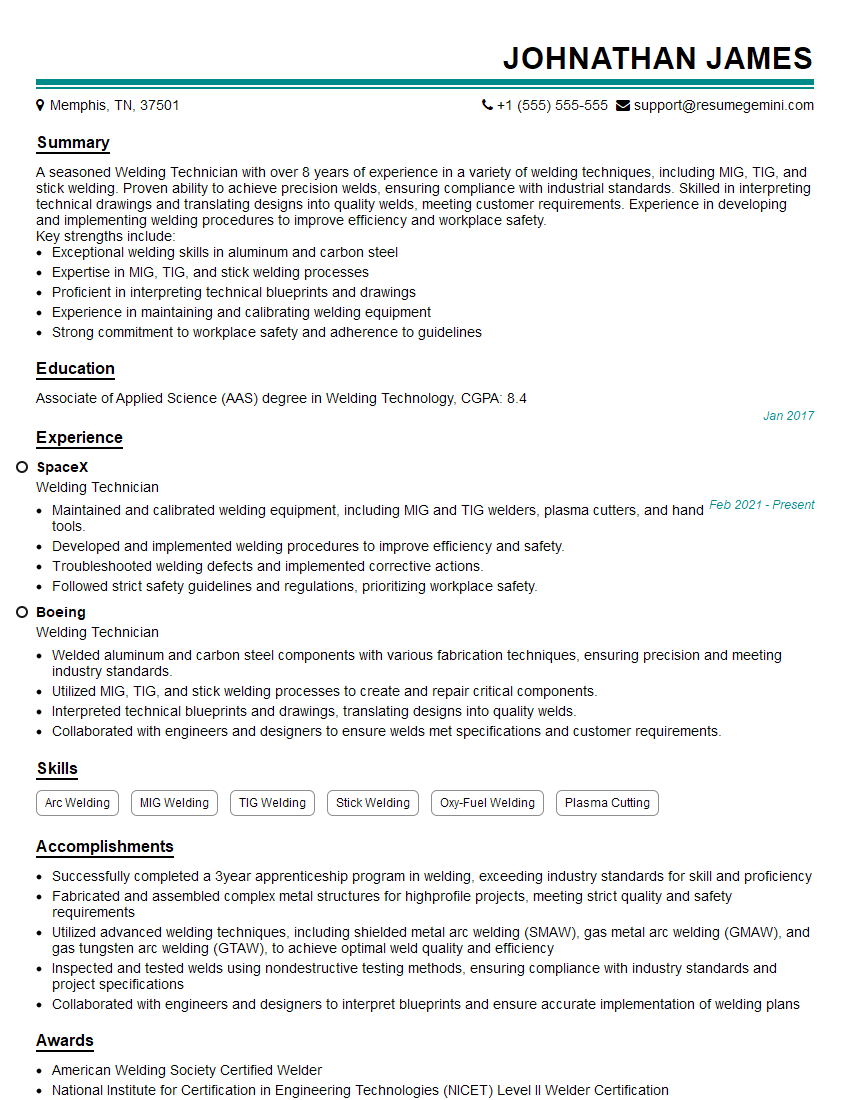
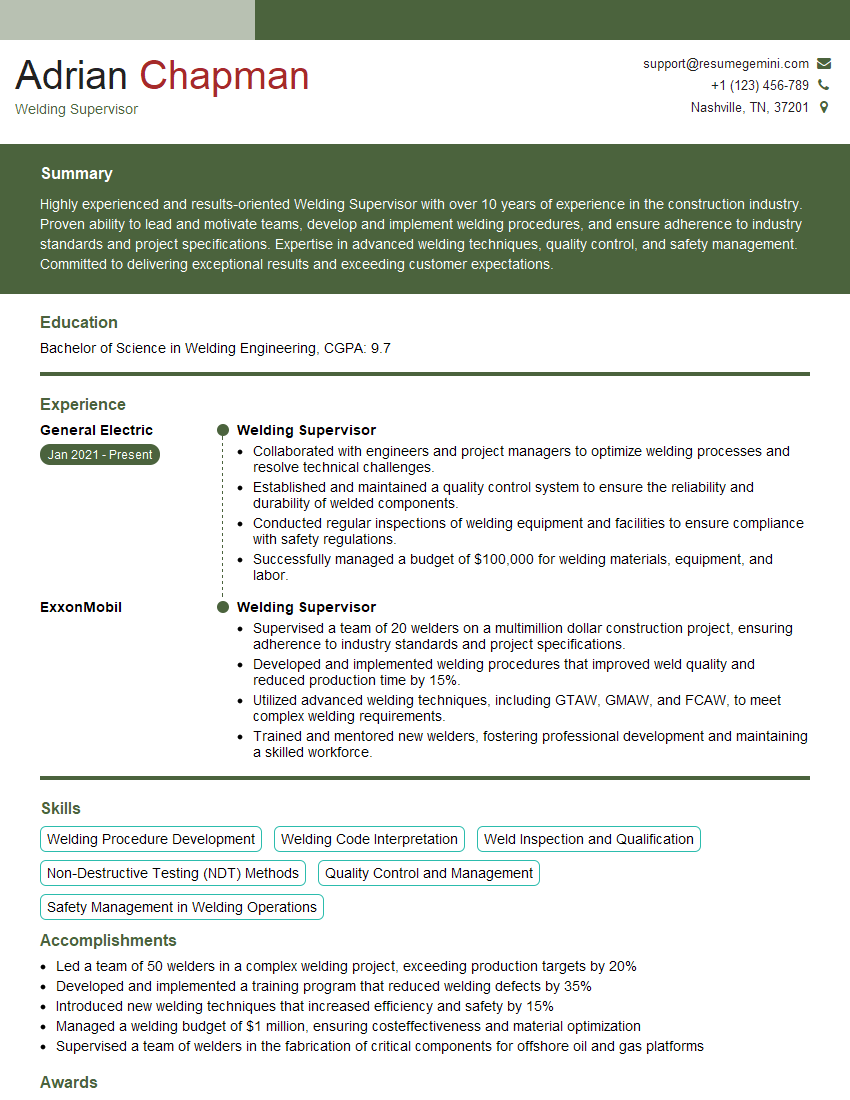
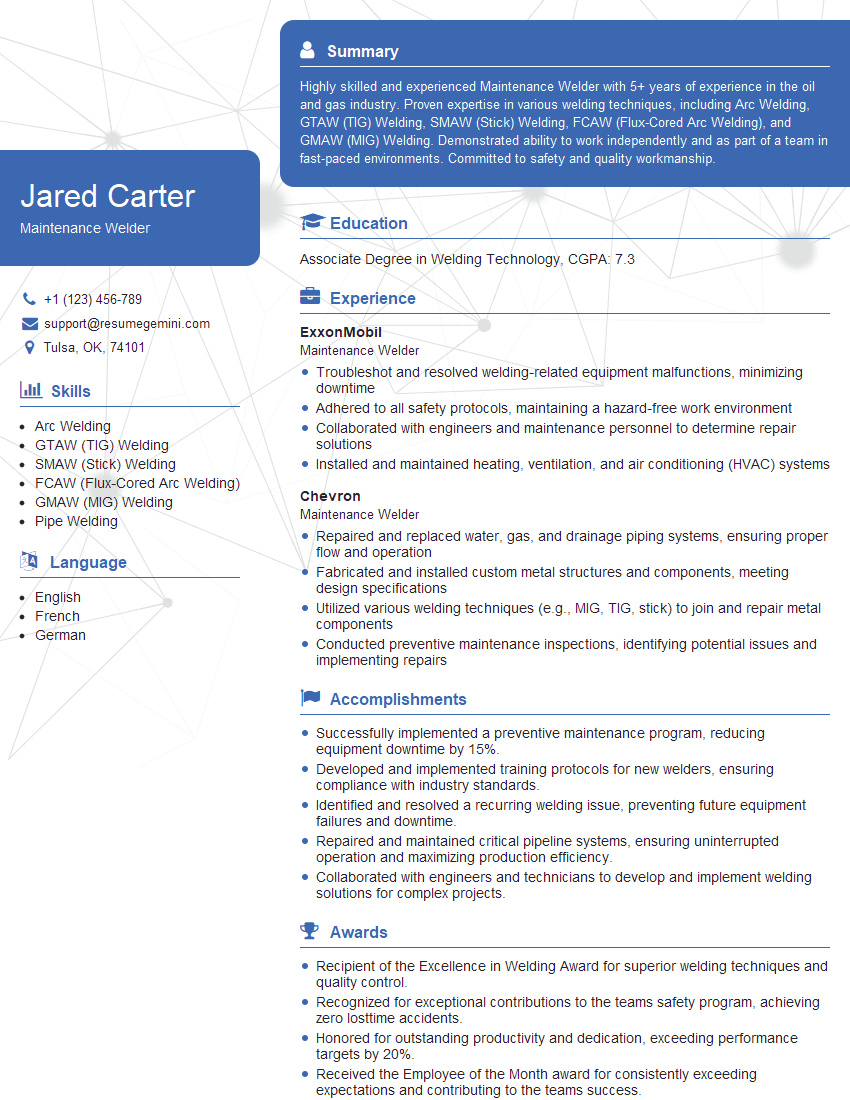
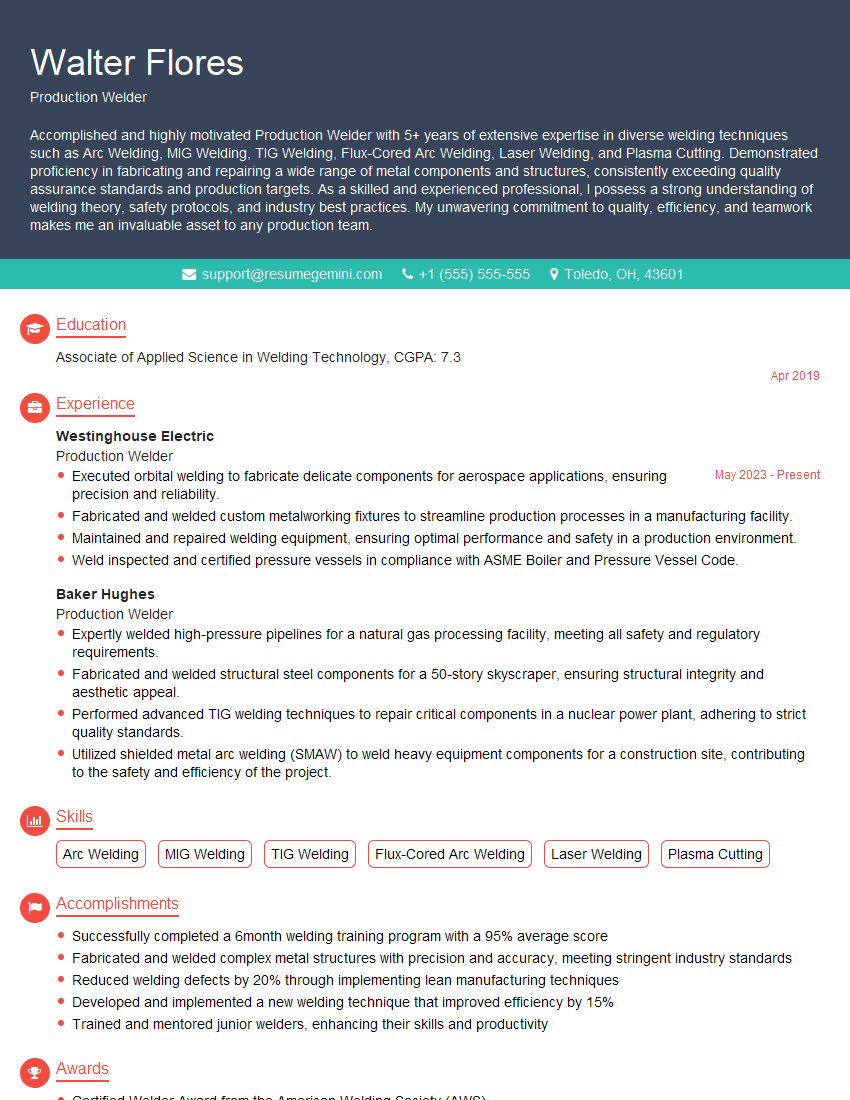
Mastering FCAW – Flux Cored welding opens doors to diverse and rewarding career opportunities in various high-demand industries. To maximize your job prospects, creating a strong, ATS-friendly resume is crucial. ResumeGemini is a trusted resource that can help you build a professional resume that highlights your skills and experience effectively. Examples of resumes tailored to FCAW – Flux Cored welding are available to help guide you. Take the next step towards your dream career today!



Explore more articles
Users Rating of Our Blogs
Share Your Experience
We value your feedback! Please rate our content and share your thoughts (optional).
What Readers Say About Our Blog
Really detailed insights and content, thank you for writing this detailed article.
IT gave me an insight and words to use and be able to think of examples