Every successful interview starts with knowing what to expect. In this blog, we’ll take you through the top File Systems Management interview questions, breaking them down with expert tips to help you deliver impactful answers. Step into your next interview fully prepared and ready to succeed.
Questions Asked in File Systems Management Interview
Q 1. Explain the difference between FAT32, NTFS, and ext4 file systems.
FAT32, NTFS, and ext4 are all file systems, but they differ significantly in their features, capabilities, and target platforms. Think of a file system as the organizational structure of your hard drive – it dictates how data is stored and accessed.
- FAT32 (File Allocation Table 32): This is an older file system, known for its simplicity and broad compatibility. It’s commonly found on older devices like USB drives and memory cards. Its main limitation is its maximum file size limit of 4GB, making it unsuitable for storing large files like modern videos. It also lacks robust features for security and data integrity.
- NTFS (New Technology File System): Developed by Microsoft, NTFS is the standard file system for Windows. It offers significantly improved features over FAT32, including larger file size support, advanced security features (like access control lists), and journaling for enhanced data integrity. This makes it a reliable choice for system drives and data storage on Windows machines.
- ext4 (Fourth Extended file system): This is the most common file system used on Linux systems. It’s known for its performance, scalability, and support for large files and volumes. It also incorporates journaling for data integrity and features designed for handling large datasets efficiently. It generally offers better performance than NTFS for Linux-based systems.
In short: Choose FAT32 for simple, broadly compatible storage of small files; NTFS for reliable storage on Windows; and ext4 for optimal performance and scalability on Linux.
Q 2. Describe the concept of journaling in file systems.
Journaling in a file system is like having a detailed logbook of all the changes made. Before a change is permanently written to the disk, the file system first records the intended change in a log (the journal). Once the change is successfully written to the disk, the entry is removed from the journal. This ensures that even if the system crashes during the write operation, the file system can reconstruct the changes from the journal during the next boot. This prevents data corruption and ensures data consistency.
Imagine you’re writing a letter; without journaling, if you drop your pen mid-sentence, your letter is incomplete. With journaling, you’ve already made a draft, and even if things go wrong, you still have that draft to help you recover.
Journaling provides improved data integrity and speeds up recovery from system crashes and power outages.
Q 3. What are the advantages and disadvantages of using RAID systems?
RAID (Redundant Array of Independent Disks) systems combine multiple hard drives to improve performance, increase storage capacity, and provide redundancy. Think of it as team work amongst hard drives.
- Advantages:
- Increased Performance (RAID 0, 10): RAID levels like RAID 0 and RAID 10 offer significant performance boosts through striping (data is spread across multiple drives) and potentially mirroring (data is duplicated).
- Redundancy and Data Protection (RAID 1, 5, 6, 10): RAID levels 1, 5, 6, and 10 offer data redundancy, protecting against drive failure. If one drive fails, the system can continue to operate and the data can be recovered.
- Increased Storage Capacity (RAID 0, 5, 6): RAID levels allow you to combine multiple smaller drives into a larger virtual drive.
- Disadvantages:
- Cost: RAID requires multiple hard drives, increasing the initial investment.
- Complexity: Setting up and managing a RAID system can be more complex than using single drives.
- Single Point of Failure (some RAID levels): While some RAID levels offer redundancy, others (like RAID 0) don’t, meaning a single drive failure can lead to data loss.
- Performance Overhead (some RAID levels): Some RAID levels, especially those focusing on redundancy, may experience some performance overhead compared to single drives.
The choice of RAID level depends on the specific needs – prioritizing performance, redundancy, or storage capacity.
Q 4. How does a file system handle fragmented files?
File fragmentation occurs when a file’s data is scattered across non-contiguous sectors on the hard drive. This slows down file access because the read/write head has to jump around to different locations to retrieve or write the file’s data. Think of it like having the pages of a book scattered everywhere rather than in order.
File systems handle fragmented files differently. Some, like NTFS, employ techniques to defragment the hard drive periodically, reorganizing the files to improve performance. Defragmentation is the process of consolidating these scattered pieces of a file back together.
Modern file systems like ext4 and modern NTFS implementations often manage file fragmentation more effectively using techniques like optimized allocation strategies, lessening the need for frequent defragmentation. SSDs (Solid State Drives) practically eliminate the issue of fragmentation because they don’t suffer from the same physical limitations of traditional hard drives (HDDs).
Q 5. Explain the concept of inode in Unix-like file systems.
In Unix-like file systems (like ext4), an inode (index node) is a data structure that stores metadata about a file, rather than the file’s actual data. Think of it as a file’s passport, containing crucial information about it.
The inode contains information such as:
- File type (regular file, directory, etc.)
- File permissions (read, write, execute)
- File size
- Timestamps (creation, last modification, last access)
- Pointers to the data blocks where the file’s content is stored
The file system uses inodes to quickly locate and access file data without having to read the entire file. Every file and directory has an associated inode.
Q 6. What are the different types of file system metadata?
File system metadata is data about data. It’s the information the file system uses to manage and organize files. Think of it as the organizational system behind your files.
Different types of file system metadata include:
- File Attributes: Includes file name, size, type, creation date, modification date, last access date, and permissions.
- Directory Entries: Information about files and subdirectories within a directory. This includes the file’s name and the inode number associated with it.
- Allocation Information: Details about which disk blocks are used by each file. This is crucial for tracking data and managing storage space.
- Volume Information: Attributes related to the overall file system, including its size, type, label, and other relevant information.
- Security Descriptors (NTFS): Access control lists (ACLs) in NTFS control which users or groups have permission to access a file.
Q 7. How does a file system ensure data integrity?
File systems employ multiple mechanisms to ensure data integrity, meaning ensuring that the data is accurate, complete, and hasn’t been corrupted. Think of it as protecting your files from errors and damage.
- Checksums and Error-Correcting Codes: File systems can use checksums (like CRC32 or SHA) to verify the integrity of data. If a checksum doesn’t match what’s expected, it indicates corruption. Error-correcting codes can detect and correct minor errors.
- Journaling: As explained earlier, journaling ensures data consistency by recording changes before they are written to the disk.
- Redundancy: RAID systems provide data redundancy to protect against data loss in the event of hard drive failure.
- Regular File System Checks (chkdsk, fsck): Utilities like
chkdsk(Windows) andfsck(Linux) can scan the file system for errors and attempt to repair them. - Data Backup and Recovery: Regular backups are crucial for protecting against data loss caused by hardware failure, software bugs, or other unforeseen events.
A combination of these techniques provides a robust approach to ensuring data integrity within a file system.
Q 8. Describe the process of file system mounting and unmounting.
Mounting a file system makes it accessible to the operating system. Think of it like connecting a hard drive to your computer – you can’t use the files on it until it’s properly connected. Unmounting is the reverse; it disconnects the file system, making it inaccessible to prevent data loss or corruption. The process usually involves using system commands.
Mounting: This involves specifying the device (like a partition or network share) and the mount point (a directory where the file system will appear). For example, in Linux, you might use the command mount /dev/sdb1 /mnt/data to mount the partition /dev/sdb1 at the directory /mnt/data. Before mounting, the file system needs to be properly formatted. The specifics depend on the operating system and the type of file system (ext4, NTFS, etc.).
Unmounting: This is equally crucial. Before unmounting, ensure no applications are using the file system; otherwise, you risk data loss. In Linux, the command is umount /mnt/data. Windows uses a graphical interface, but the underlying principle is the same: you safely disconnect the file system. Failure to properly unmount, especially on removable media, can lead to file system errors.
Q 9. Explain the difference between logical and physical volumes.
The difference between logical and physical volumes lies in how they’re presented to the operating system. A physical volume is a raw, unpartitioned storage device, like a hard drive or a partition on it. Think of it as the actual physical space on your hard drive. A logical volume is a section of one or more physical volumes that’s presented to the operating system as a single, independent file system. This abstraction allows for flexibility and management of storage space.
For instance, you might have a single 1TB hard drive (physical volume). You can use logical volume managers (like LVM in Linux) to divide that single drive into multiple logical volumes – perhaps a 500GB logical volume for the operating system and a 500GB logical volume for user data. This provides better organization and allows for easier management and resizing of disk space without the need to reformat partitions. RAID configurations also often use logical volumes built from multiple physical drives.
Q 10. What are the common causes of file system corruption?
File system corruption can stem from various issues, many caused by unexpected interruptions during write operations. Imagine writing a sentence and the power suddenly goes out mid-word—the sentence is incomplete and unreadable. Similarly, file systems depend on the integrity of their metadata to locate files. Here are the common culprits:
- Power failures or system crashes: These abruptly halt write operations, leaving the file system in an inconsistent state.
- Hardware failures: Failing hard drives or SSDs can introduce errors, rendering parts of the file system inaccessible.
- Software bugs or errors: Faulty drivers or applications could corrupt the file system’s metadata or data structures.
- Malware or viruses: Malicious software can intentionally damage or alter file system data.
- Full file systems: Attempting to write data to a full file system can lead to corruption.
- Improper unmounting: Not correctly unmounting a file system before removing media or shutting down can damage the file system.
Q 11. How do you troubleshoot a full file system?
A full file system means there’s no free space left. Troubleshooting involves identifying what’s consuming the space and freeing it up. Here’s a systematic approach:
- Identify space hogs: Use disk space analysis tools (e.g.,
du -sh *in Linux or Windows Disk Cleanup) to pinpoint large files or directories consuming most of the space. - Delete unnecessary files: Remove temporary files, old logs, and unused applications. Remember to back up important data before deleting anything.
- Move data to external storage: Transfer large files or directories to an external drive to free up space.
- Increase disk space: If deleting files isn’t enough, consider adding more storage – upgrading to a larger hard drive or using cloud storage.
- Investigate file system errors: Check for any file system errors using system utilities. Correcting these might free up space occupied by damaged files.
- Review system logs: Examine the system logs for error messages that could indicate processes using excessive space.
Remember, regularly checking disk space is crucial for proactive management. Early detection can prevent a full file system from causing corruption.
Q 12. Describe different methods for backing up and restoring file systems.
Backing up and restoring file systems ensures data protection. Several methods exist, each with its strengths and weaknesses:
- Full backups: Copy the entire file system to a backup location. Simple but time-consuming and space-intensive.
- Incremental backups: Only back up changes made since the last backup. Saves time and space but restoring requires multiple backups.
- Differential backups: Back up changes since the last full backup. Faster than full backups and easier to restore than incremental backups.
- Image-based backups: Create an exact copy of the entire file system, including boot sectors and metadata. Useful for disaster recovery. Popular tools include Acronis True Image, Macrium Reflect.
- Cloud backups: Store backups in the cloud, offering redundancy and offsite protection.
Restoration involves using the chosen backup method to restore the file system. Image-based backups typically offer the most complete recovery but can be less flexible depending on the tool.
Q 13. Explain the concept of snapshots in file system management.
Snapshots capture a point-in-time image of a file system. Think of it as taking a photograph – you preserve the state of the file system at that exact moment. They’re crucial for rollback and disaster recovery.
Snapshots are typically space-efficient; they don’t copy the entire file system but rather track changes. If a file is modified, the snapshot keeps a pointer to the original version and the new one. This allows for quick restoration to a previous state. If the file is deleted, the snapshot retains access to it. This capability is critical for preventing data loss from accidental deletions or software failures. Many file systems and virtualization technologies (like VMware and Hyper-V) support snapshots.
Q 14. What are the performance implications of different file system types?
Different file systems have varying performance characteristics depending on factors like metadata management, journaling, and block size. For example:
- ext4 (Linux): Generally provides good performance and features like journaling for data integrity.
- NTFS (Windows): Widely used on Windows systems, it offers robust features but might have slightly lower performance compared to ext4 in certain scenarios.
- XFS (Linux): Known for excellent performance on large file systems and scalability.
- Btrfs (Linux): Focuses on features like data integrity, snapshots, and self-healing capabilities, potentially at the cost of some performance in specific operations.
- APFS (Apple): Optimized for SSDs and features like copy-on-write for efficient snapshots and space management. Offers good performance and integration with Apple’s ecosystem.
The best choice depends on the specific needs of the system and workload. High-performance computing environments might prioritize file systems like XFS, while others might value the features of Btrfs or APFS more.
Q 15. How do you monitor file system performance?
Monitoring file system performance is crucial for maintaining system stability and ensuring optimal application performance. It involves tracking key metrics to identify potential bottlenecks or impending failures. Think of it like monitoring your car’s vital signs – oil pressure, temperature, etc. – to prevent breakdowns.
- Disk I/O: This measures how efficiently data is read from and written to the disk. High I/O wait times indicate a potential bottleneck. Tools like
iostat(Linux) and Performance Monitor (Windows) provide this data. - CPU Usage: High CPU usage related to file system operations suggests the system might be struggling to process data requests. Again,
top(Linux) and Task Manager (Windows) are helpful here. - Disk Space Utilization: Constantly monitoring free space helps prevent critical failures due to disk exhaustion.
df -h(Linux) and Disk Management (Windows) provide this information. - File System Errors: Regularly checking for file system errors using tools like
fsck(Linux) or CHKDSK (Windows) can proactively address inconsistencies. - Throughput and Latency: These metrics, often obtained through specialized monitoring tools, give insights into the speed and responsiveness of file system operations.
In a real-world scenario, I once used iostat to identify a specific disk exhibiting extremely high I/O wait times. This led us to replace a failing hard drive before it caused a major outage.
Career Expert Tips:
- Ace those interviews! Prepare effectively by reviewing the Top 50 Most Common Interview Questions on ResumeGemini.
- Navigate your job search with confidence! Explore a wide range of Career Tips on ResumeGemini. Learn about common challenges and recommendations to overcome them.
- Craft the perfect resume! Master the Art of Resume Writing with ResumeGemini’s guide. Showcase your unique qualifications and achievements effectively.
- Don’t miss out on holiday savings! Build your dream resume with ResumeGemini’s ATS optimized templates.
Q 16. Describe your experience with different storage technologies (e.g., SAN, NAS, cloud storage).
My experience spans various storage technologies, each with its strengths and weaknesses. Choosing the right technology depends heavily on the specific needs of the application and the organization.
- SAN (Storage Area Network): I’ve worked extensively with SAN environments, providing block-level storage accessed over a dedicated network. SANs are excellent for high-performance applications requiring low latency, like database servers. However, they can be more complex and expensive to implement and manage than other solutions.
- NAS (Network Attached Storage): NAS devices offer file-level storage accessed over a network. They’re simpler to manage and often more cost-effective than SANs. I’ve used NAS solutions for file sharing and backup in smaller organizations where the performance requirements are less demanding.
- Cloud Storage: Cloud storage, such as AWS S3 or Azure Blob Storage, offers scalability and flexibility. I have experience leveraging cloud storage for archiving, disaster recovery, and large-scale data processing. The cost model is often pay-as-you-go, making it suitable for fluctuating storage needs.
For example, in a previous role, we migrated from a local SAN to a hybrid cloud storage solution. This significantly reduced our capital expenditure while ensuring high availability and scalability for our growing data storage needs.
Q 17. How do you ensure the security of a file system?
Ensuring file system security requires a multi-layered approach. It’s like building a fortress, with multiple defenses in place.
- Access Control Lists (ACLs): Implementing granular permissions using ACLs is fundamental. This ensures that only authorized users and processes can access specific files and directories.
- Encryption: Encrypting data at rest (on the disk) and in transit (during network transfer) protects against unauthorized access, even if the system is compromised. Tools like BitLocker (Windows) and dm-crypt (Linux) are commonly used.
- Regular Backups: Regular and reliable backups are essential for data recovery in case of accidental deletion, corruption, or ransomware attacks. A robust backup strategy should include multiple backups in different locations.
- Intrusion Detection and Prevention Systems (IDS/IPS): Monitoring file system activity for suspicious behavior can help detect and prevent malicious actions.
- Regular Security Audits: Periodic audits help identify vulnerabilities and ensure compliance with security policies.
In one project, we implemented full disk encryption and multi-factor authentication to safeguard sensitive client data, significantly enhancing the security posture of our file system.
Q 18. Explain the importance of file system permissions and access control.
File system permissions and access control are paramount for maintaining data integrity and confidentiality. They determine who can access, modify, or delete files and directories. Think of it like assigning keys to a house – only those with the right key can enter.
- Data Confidentiality: Permissions prevent unauthorized access to sensitive data, protecting it from prying eyes.
- Data Integrity: Restricting write access prevents unauthorized modification of crucial files, ensuring data accuracy.
- Data Availability: Proper permissions ensure that authorized users can access the data they need when they need it.
- Compliance: Many regulatory frameworks (like HIPAA and GDPR) require strict access control measures.
For instance, in a collaborative project, we used granular permissions to ensure that only specific team members could modify shared project documents while others had read-only access.
Q 19. How do you handle file system errors and inconsistencies?
Handling file system errors and inconsistencies requires a systematic approach. It’s like diagnosing a medical problem – you need to identify the symptoms, find the root cause, and apply the appropriate treatment.
- Identify the Error: Determine the type and location of the error. System logs and error messages are crucial here.
- Isolate the Problem: Identify the affected files or directories to limit the scope of the issue.
- Attempt Repair: Use appropriate tools like
fsck(Linux) orchkdsk(Windows) to attempt automated repairs. Always back up the data before running these tools. - Manual Recovery: If automated repair fails, manual recovery might be necessary. This could involve recovering data from backups or using data recovery tools.
- Prevention: Implement measures to prevent future errors. This might include regular maintenance, disk health monitoring, and implementing redundant storage.
I once successfully recovered crucial project data from a corrupted file system using a combination of data recovery software and backups after a power outage. This underscored the importance of a robust backup strategy and the ability to apply different recovery techniques.
Q 20. Describe your experience with file system defragmentation.
File system defragmentation is the process of reorganizing fragmented files on a hard drive to improve access times. Imagine having all your books scattered across many shelves instead of organized neatly. Defragmentation gathers the scattered pieces and places them together, improving access.
- Hard Drives vs. SSDs: Defragmentation is primarily relevant for traditional hard disk drives (HDDs). Solid-state drives (SSDs) don’t require defragmentation as they don’t suffer from the same physical limitations as HDDs.
- Performance Improvement: By reducing the time the read/write heads spend searching for fragmented files, defragmentation can lead to faster file access and potentially improved overall system performance.
- Potential Drawbacks: Defragmentation can be time-consuming, especially on large drives. It also involves increased disk I/O, so it shouldn’t be done excessively.
- Modern Operating Systems: Modern operating systems often have built-in defragmentation tools, which can be scheduled automatically.
In my experience, defragmentation is rarely necessary on modern systems with SSDs. However, in older systems with HDDs, I’ve seen performance improvements after scheduled defragmentation, especially in situations where disk fragmentation was high.
Q 21. Explain the concept of data deduplication in storage management.
Data deduplication is a storage optimization technique that eliminates redundant copies of data. Instead of storing multiple identical copies, it stores only one copy and maintains pointers to it. Think of it like having a library – you wouldn’t store multiple copies of the same book; you’d have one copy and a catalog pointing to it.
- Storage Savings: The primary benefit is significant reduction in storage capacity requirements.
- Backup Optimization: It’s particularly useful for backup and archiving, where identical data files are commonly found.
- Network Efficiency: Reduces the amount of data transferred over the network, improving network bandwidth utilization.
- Implementation: Data deduplication can be implemented at various levels: file-level, block-level, or even within individual files.
I’ve utilized deduplication in various projects involving large-scale data backups and archives. The results have consistently shown substantial storage savings, typically in the range of 50% to 70%, depending on the nature of the data.
Q 22. What are your experiences with various RAID levels (RAID 0, RAID 1, RAID 5, RAID 10, etc.)?
RAID (Redundant Array of Independent Disks) levels offer different combinations of performance and redundancy. My experience spans several common levels:
- RAID 0 (Striping): Data is striped across multiple disks without redundancy. This offers excellent performance for read and write operations but no data protection. A single disk failure results in complete data loss. I’ve used RAID 0 in situations where performance was paramount and data loss was acceptable, such as video editing workstations with frequent backups.
- RAID 1 (Mirroring): Data is mirrored across two or more disks. This provides excellent data redundancy; a single disk failure doesn’t result in data loss. However, storage capacity is halved because it requires twice the physical disks. I implemented RAID 1 for mission-critical databases where data integrity was absolute priority.
- RAID 5 (Striping with Parity): Data is striped across multiple disks with parity information distributed across all disks. It offers a balance between performance and redundancy, tolerating a single disk failure. However, write performance can be slightly slower due to parity calculations. I’ve extensively used RAID 5 for file servers where redundancy was important without sacrificing too much performance, though the risk of a catastrophic data loss from multiple disks failures was something we carefully addressed through regular backups and monitoring.
- RAID 10 (Mirroring and Striping): Combines RAID 1 and RAID 0. Data is striped across mirrored sets of disks. This provides both high performance and excellent redundancy, tolerating multiple disk failures (depending on the configuration). This is generally the most robust but also the most expensive solution. I’ve utilized RAID 10 for high-performance transactional databases where both speed and reliability were critical.
In choosing a RAID level, the critical factors are performance requirements, data redundancy needs, and budget. Understanding the trade-offs is essential for making an informed decision.
Q 23. How would you design a highly available file system?
Designing a highly available file system involves several key strategies:
- Redundancy: Employing RAID technology (as discussed above) is crucial. RAID 10 or RAID 6 are good options, offering high performance and fault tolerance.
- Clustering: Using a clustered file system like GlusterFS or Ceph allows for data replication across multiple servers. If one server fails, the others can continue providing access to the data. This is often combined with a high-availability load balancer that directs traffic to the active nodes.
- Replication: Replicating data to a geographically separate location ensures business continuity in case of a major disaster. Techniques like DRBD (Distributed Replicated Block Device) or network-based replication solutions are useful here.
- Regular Backups: Even with high availability, backups are essential. They protect against unforeseen circumstances and ensure you can restore data if necessary. A robust backup strategy should include regular snapshots and offsite storage.
- Monitoring and Alerting: Real-time monitoring of disk space, I/O performance, and system health is vital. Setting up alerts for critical events ensures prompt responses to potential issues.
For example, in a large enterprise setting, a high-availability file system might utilize a Ceph cluster with data replication across multiple data centers, supplemented by regular offsite backups and comprehensive monitoring using tools like Nagios or Zabbix.
Q 24. How do you manage and monitor disk space usage efficiently?
Efficient disk space management and monitoring are vital for optimal system performance and preventing data loss. My approach involves a multi-pronged strategy:
- Regular Audits: Employing tools like
du(disk usage) on Linux or Windows’ built-in disk management tools to regularly identify directories and files consuming large amounts of space. These audits are scheduled regularly to catch issues early. - Automated Reporting: Automating disk space reports using scripting languages (like Python or bash) allows for regular monitoring without manual intervention. The reports can be emailed or logged for easy analysis.
- File System Analysis Tools: Employing specialized tools like ncdu (NCurses Disk Usage) which provides a visual representation of disk usage and helps in quickly identifying space hogs.
- Data Deduplication: For environments with significant redundant data, data deduplication tools can significantly reduce storage needs by storing only unique data blocks.
- Archive and Delete Policies: Implementing clear policies for archiving old data and deleting unnecessary files helps reduce long-term storage requirements. Regular purging of logs and temporary files is vital.
For instance, a large email server would benefit from a scheduled script which runs nightly, identifying email accounts with large mailboxes and alerting administrators, allowing for proactive management to prevent storage exhaustion.
Q 25. Explain the concept of file system quotas.
File system quotas are limits imposed on the amount of disk space a user or group can consume. They prevent individual users from monopolizing storage resources, ensuring fair resource allocation and preventing disk space exhaustion.
Quotas are typically implemented at the file system level. When a user exceeds their allocated quota, they’re prevented from creating new files or directories until they free up space.
For example, on a Linux system, quotas can be managed using the quotaon, quotaoff, and edquota commands. Similar functionality exists in other operating systems, though the specific commands may differ.
Managing quotas involves setting appropriate limits for users and groups based on their needs and the overall storage capacity available. Regular monitoring is essential to identify users approaching their quota limits.
Q 26. Describe your experience with automation tools for file system management.
My experience with automation tools for file system management is extensive, covering various systems and scenarios. I’ve successfully utilized tools such as:
- Ansible: For automating tasks like creating file systems, setting permissions, managing quotas, and configuring RAID arrays across multiple servers. Ansible’s idempotent nature guarantees consistent configurations regardless of how many times the playbook is run.
- Puppet/Chef: Similar to Ansible, these are configuration management tools that allow for centralized management of file system configurations across large environments. They provide infrastructure as code, enabling version control and auditability.
- Bash/Python scripting: I regularly use scripting languages to automate routine tasks such as generating disk space reports, cleaning up temporary files, or backing up crucial data. Custom scripts allow tailoring automation to very specific needs.
- Cloud-based tools: For cloud-based infrastructure, I’m proficient in using cloud provider APIs (AWS, Azure, GCP) to manage file systems programmatically. This offers scalability and automation capabilities specifically designed for cloud environments.
Automation helps in streamlining repetitive tasks, improves efficiency, reduces human error, and allows for better scalability and consistency in file system management.
Q 27. How do you handle file system migration and upgrades?
File system migration and upgrades require a careful and planned approach to minimize downtime and data loss. The process typically involves several steps:
- Planning and Assessment: Thoroughly evaluate the current file system, the target file system, and the data migration strategy. Assess the downtime tolerance and create a detailed migration plan.
- Testing: Perform a thorough test migration on a non-production environment to identify and resolve potential issues before affecting the production system.
- Data Backup: Before beginning any migration, creating a full backup is essential to provide a safety net in case of unforeseen problems.
- Migration Tools: Utilize appropriate migration tools and techniques depending on the file system involved. Some tools offer direct migration capabilities, while others may require scripting or manual intervention.
- Verification: After the migration, thoroughly verify the integrity and accessibility of all data.
- Roll Back Plan: Have a clearly defined roll-back plan in place to revert to the previous file system in case of failure.
For example, migrating from an older ext3 file system to ext4 on a Linux server might involve using tools like rsync for data transfer and then converting the file system using appropriate command-line utilities. Thorough testing and verification at each stage is critical for a successful migration.
Key Topics to Learn for File Systems Management Interview
- File System Architectures: Understanding different file system types (e.g., FAT, NTFS, ext4, XFS) and their strengths and weaknesses. Consider the implications of choosing one architecture over another in different scenarios.
- Data Structures and Algorithms: Explore how file systems utilize data structures like B-trees and linked lists for efficient data organization and retrieval. Analyze the time and space complexity of common file system operations.
- Disk Management and I/O Operations: Grasp the concepts of disk scheduling algorithms (e.g., FCFS, SCAN, C-SCAN) and their impact on performance. Understand how buffering and caching improve I/O efficiency.
- File System Metadata and Inodes: Learn how metadata is stored and used to manage file attributes and access control. Understand the role of inodes in locating and managing files within the file system.
- File System Consistency and Recovery: Explore techniques for ensuring data integrity and recovering from system failures. Discuss journaling and other methods for maintaining file system consistency.
- Security and Permissions: Understand how file permissions and access control lists (ACLs) are implemented and managed within different file systems. Discuss best practices for securing file systems against unauthorized access.
- Performance Tuning and Optimization: Learn how to analyze file system performance bottlenecks and implement strategies for optimization, including strategies for improving I/O throughput and reducing latency.
- Cloud Storage and Distributed File Systems: Explore the concepts of cloud-based storage solutions and distributed file systems (e.g., Hadoop Distributed File System (HDFS), Ceph). Understand the trade-offs and challenges associated with these technologies.
- Troubleshooting and Problem Solving: Practice diagnosing and resolving common file system issues, such as disk errors, file corruption, and performance degradation. Develop strategies for identifying the root cause of problems and implementing effective solutions.
Next Steps
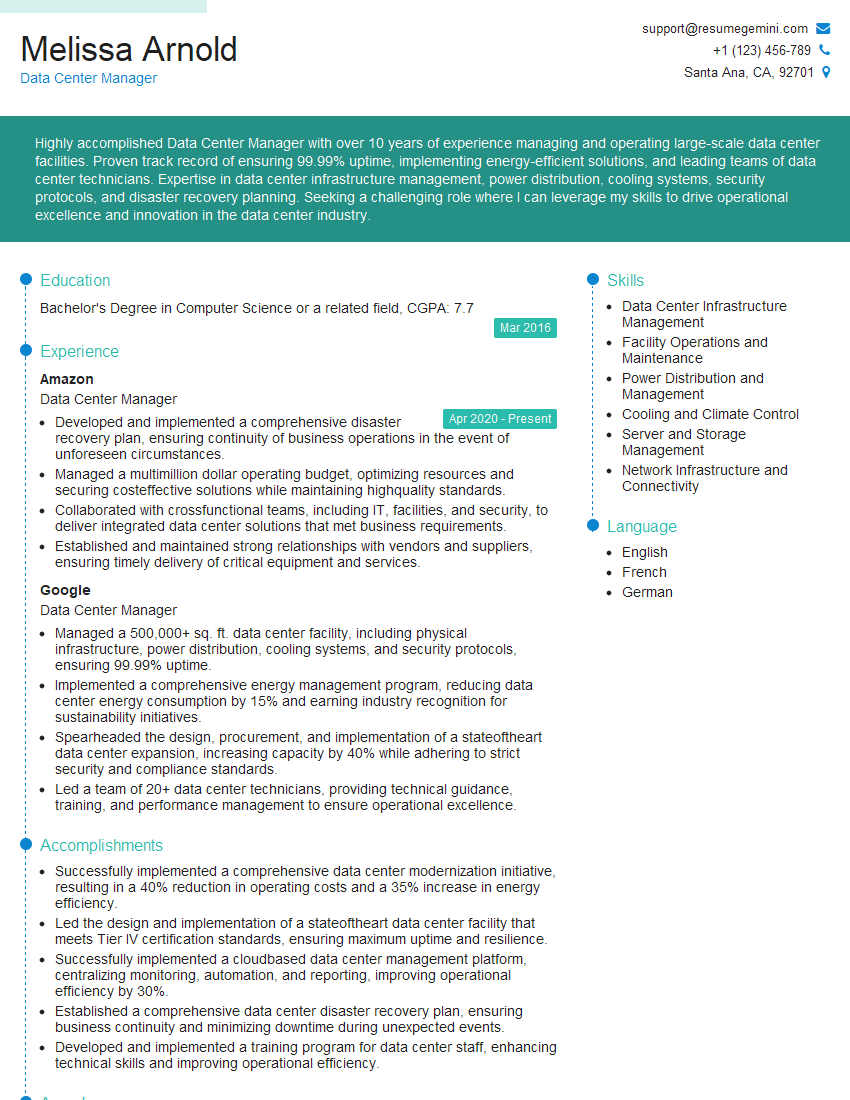
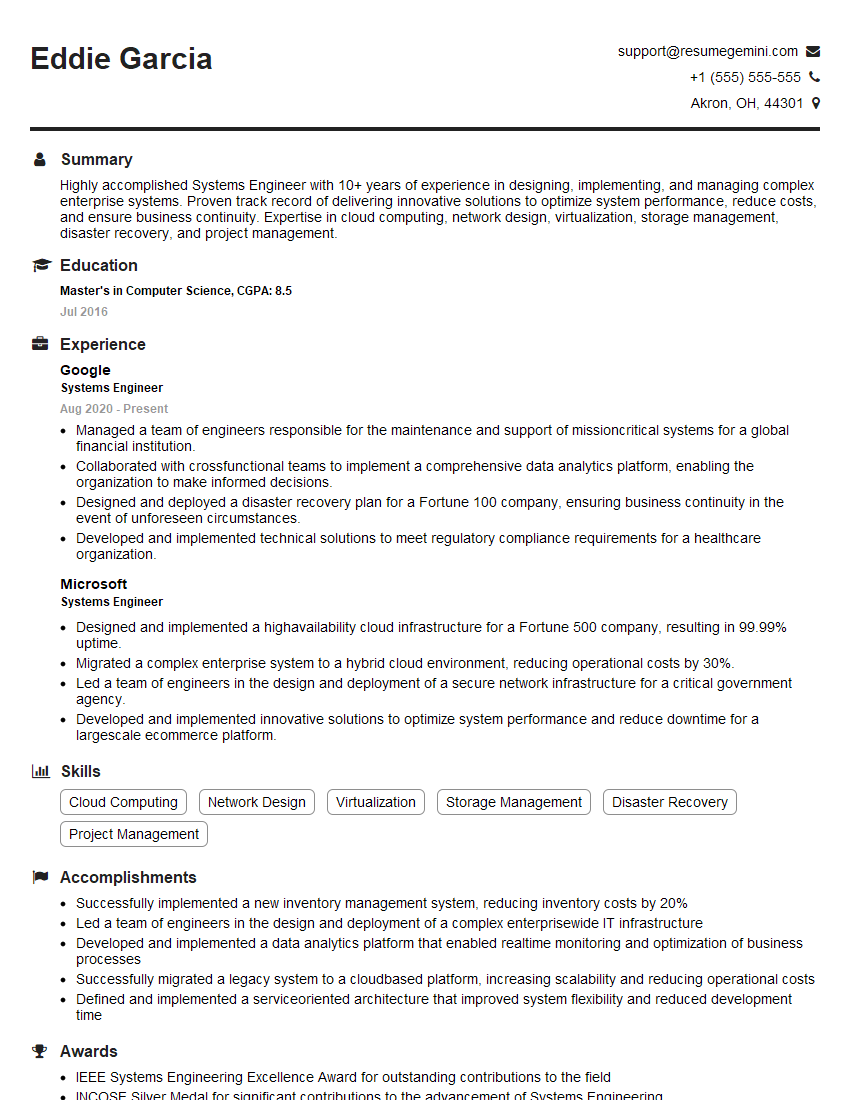
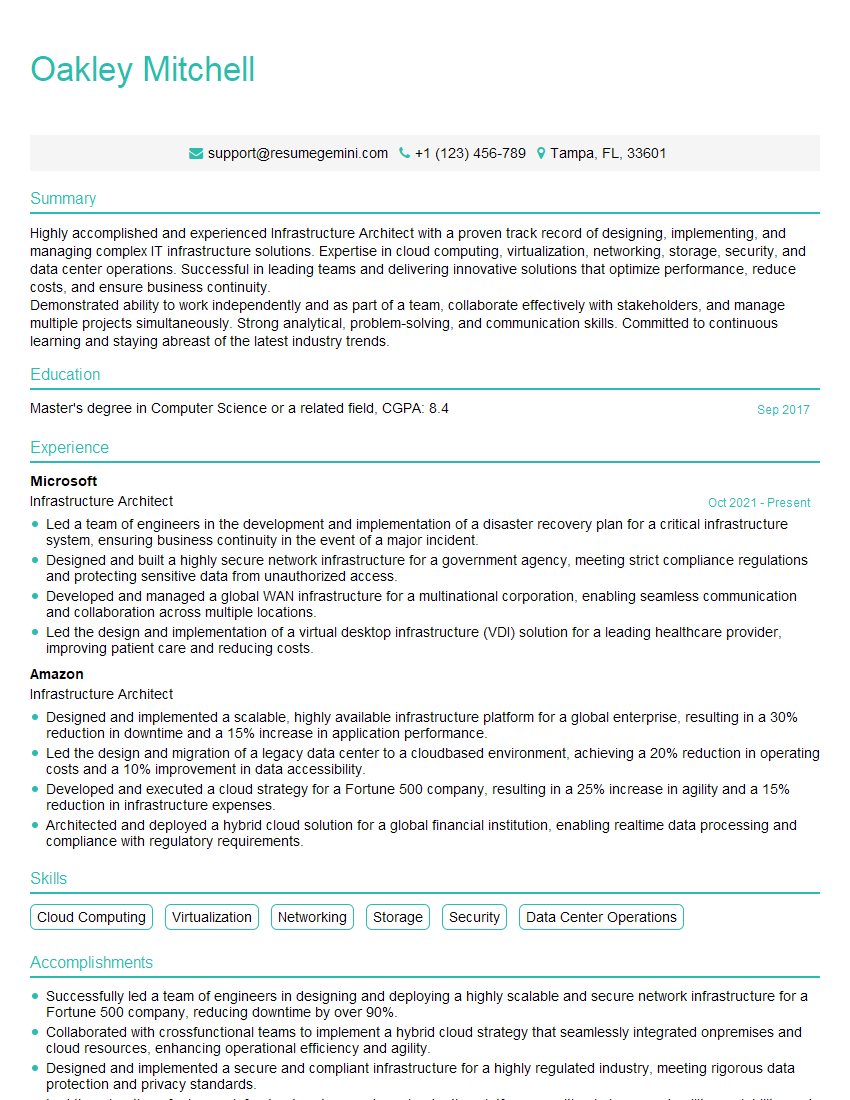
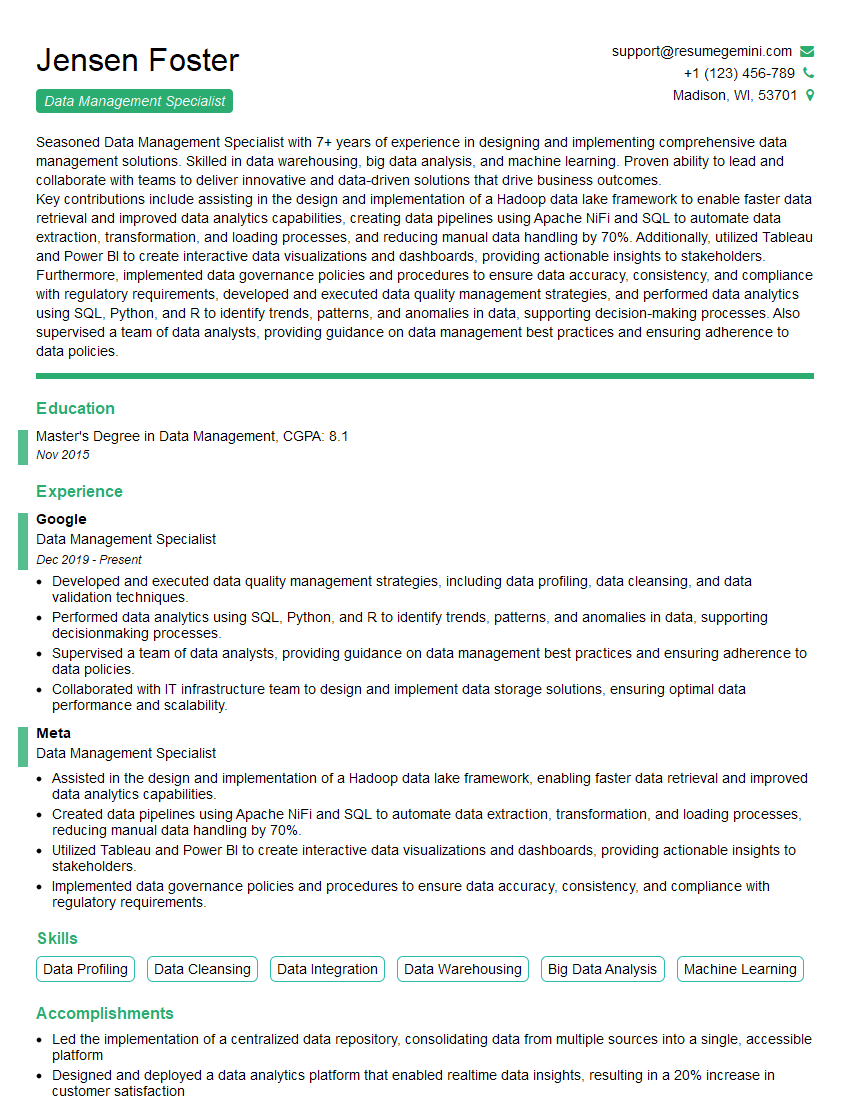
Mastering File Systems Management is crucial for career advancement in IT infrastructure, systems administration, and data management roles. A strong understanding of these concepts demonstrates valuable technical skills highly sought after by employers. To maximize your job prospects, creating an ATS-friendly resume is essential. ResumeGemini is a trusted resource that can help you build a professional resume showcasing your skills effectively. Examples of resumes tailored to File Systems Management are available to guide you through the process, ensuring your qualifications shine.
Explore more articles
Users Rating of Our Blogs
Share Your Experience
We value your feedback! Please rate our content and share your thoughts (optional).
What Readers Say About Our Blog
Really detailed insights and content, thank you for writing this detailed article.
IT gave me an insight and words to use and be able to think of examples