Cracking a skill-specific interview, like one for ISO 9712 Qualification of Welding Procedures and Welders, requires understanding the nuances of the role. In this blog, we present the questions you’re most likely to encounter, along with insights into how to answer them effectively. Let’s ensure you’re ready to make a strong impression.
Questions Asked in ISO 9712 Qualification of Welding Procedures and Welders Interview
Q 1. Explain the purpose and scope of ISO 9712.
ISO 9712 is the international standard that specifies the requirements for the qualification and certification of personnel who perform fusion welding and brazing of metallic materials. Its purpose is to ensure consistent and reliable weld quality, improving safety and preventing failures in various industries. The scope covers personnel qualification across different welding processes, materials, and joint designs. It essentially provides a globally recognized framework for demonstrating competence in welding.
Think of it like a driver’s license, but for welders. Just as a driver’s license proves competence in operating a vehicle, ISO 9712 certification confirms a welder’s skill in producing sound welds. This certification is vital for ensuring quality and safety in industries where welding is critical, such as aerospace, automotive, and construction.
Q 2. Describe the different levels of welder qualification according to ISO 9712.
ISO 9712 defines welder qualification levels based on the complexity of the welding task and the welder’s demonstrated skill. Levels are categorized by increasing responsibility and complexity:
- Level 1: Basic welding skills, typically for simple joints and less critical applications.
- Level 2: More advanced skills, often involving more complex joint designs and potentially higher responsibility projects.
- Level 3: Highest level of qualification, demonstrating mastery of the welding process and extensive experience with complex welds and stringent quality requirements. This often involves the ability to interpret and apply complex welding procedures and troubleshoot potential welding issues.
The specific requirements for each level will vary depending on the chosen welding process and the materials being welded. Higher levels demand more extensive testing and demonstration of skills and competence.
Q 3. What are the essential requirements for a Welding Procedure Specification (WPS)?
A Welding Procedure Specification (WPS) is a documented set of instructions outlining how a specific weld is to be executed. It’s the recipe for a successful weld. Essential requirements include:
- Base Materials: Precise specification of the materials to be welded (e.g., grade, thickness).
- Welding Process: Clearly defined welding process to be used (e.g., Gas Metal Arc Welding (GMAW), Shielded Metal Arc Welding (SMAW)).
- Joint Design: Detailed description of the joint geometry (e.g., butt, fillet, tee joint).
- Preheating/Postheating: Any required pre- or post-heating temperatures.
- Welding Parameters: Precise settings for the welding process (e.g., voltage, current, travel speed, shielding gas type and flow rate).
- Filler Material: Specification of the filler metal to be used (e.g., type, diameter).
- Qualification Range: Parameters defining the acceptable range of variation for base material thickness, welding parameters, etc., still producing acceptable weld quality.
A well-written WPS ensures repeatability and consistent weld quality. Think of it as a precise recipe: if you follow it meticulously, you’ll consistently get the desired result.
Q 4. How is a Welding Procedure Qualification Record (WPQR) generated and what information does it contain?
A Welding Procedure Qualification Record (WPQR) is the documented evidence that a WPS produces acceptable welds. It’s generated by performing test welds according to the WPS and subjecting them to various tests (visual, mechanical, and sometimes non-destructive testing). The WPQR contains:
- Reference to WPS: Clearly identifies the WPS used for the qualification.
- Test Results: Detailed results of all tests performed on the test welds (visual inspection, mechanical testing (e.g., tensile strength, bend tests), radiographic testing, etc.).
- Material Certificates: Certification of the base and filler materials used.
- Welder Details: Information on the welder(s) who performed the test welds.
- Test Specimen Details: Detailed descriptions of the test specimens, including dimensions and preparation methods.
The WPQR essentially serves as proof that the WPS is valid and produces welds that meet the specified requirements. It is a crucial document for demonstrating compliance and ensuring weld quality.
Q 5. What are the essential visual inspection criteria for welds according to ISO 9712?
Visual inspection is a fundamental part of weld assessment according to ISO 9712. Essential criteria include:
- Surface Finish: Absence of excessive porosity, undercutting, cracks, or other surface defects.
- Weld Profile: Correct weld reinforcement and shape, according to the WPS and acceptable standards.
- Fusion: Complete fusion between the weld metal and the base material, ensuring a sound metallurgical bond.
- Root Penetration (for joints with a root): Sufficient penetration of the weld metal into the root of the joint.
- Overall Appearance: Absence of any major flaws that could compromise the integrity of the weld.
These criteria are assessed visually, often using magnification tools to identify smaller defects. The acceptability of defects is usually defined within the WPS and relevant codes and standards.
Q 6. Explain the process of welder qualification according to ISO 9712.
Welder qualification under ISO 9712 involves a series of steps to demonstrate proficiency:
- Selection of WPS and WPQR: The welder must be qualified to the specific welding procedure qualified by a WPQR, selecting a suitable procedure for the relevant materials, joint design, and process.
- Practical Test: The welder performs a series of test welds according to the chosen WPS.
- Visual Inspection: The welds are inspected visually for surface defects and conformance to WPS criteria.
- Non-destructive testing (NDT): Depending on the WPS and application, further testing (e.g., radiography, ultrasonic testing) may be carried out.
- Mechanical Testing (if required): Mechanical tests (e.g., tensile, bend tests) on prepared test coupons may be required to verify the strength and ductility of the weld.
- Certification: Successful completion of all tests leads to certification at the appropriate level.
This rigorous process ensures that only competent welders are allowed to perform welds in critical applications.
Q 7. What are the requirements for welder re-qualification under ISO 9712?
Re-qualification under ISO 9712 is necessary to maintain welder competence and ensure continued adherence to quality standards. The frequency of re-qualification is typically determined by factors such as the welder’s experience, the complexity of the work, and the organization’s internal quality control procedures. It may involve:
- Periodic Retesting: Undertaking practical welding tests, and visual inspection similar to initial qualification.
- Review of Records: Checking to ensure that the welder has maintained a sufficient level of welding experience and consistency in accordance with company procedures.
- Competency Assessment: An assessment of skills and knowledge, which could include written and/or practical examinations.
Re-qualification ensures that welders maintain their proficiency and are up-to-date with current best practices. Think of it as a periodic check-up to maintain the validity of a driver’s license.
Q 8. Describe the different types of welding processes covered by ISO 9712.
ISO 9712 doesn’t explicitly list ‘types’ of welding processes in a categorized manner. Instead, it provides a framework for qualifying welding procedures and welders regardless of the specific welding process used. The standard applies to various processes, as long as they are suitable for the application. Think of it as a universal qualification system adaptable to many welding methods. This means you can qualify welders and procedures for processes such as:
- Gas Metal Arc Welding (GMAW): Commonly known as MIG welding, this uses a continuous consumable electrode.
- Gas Tungsten Arc Welding (GTAW): Often called TIG welding, this employs a non-consumable tungsten electrode.
- Shielded Metal Arc Welding (SMAW): More familiarly known as stick welding, this utilizes a consumable electrode coated with flux.
- Submerged Arc Welding (SAW): This uses a consumable electrode and a granular flux covering the weld pool.
- Resistance Welding (Spot, Seam, Projection): This involves joining materials by using electrical resistance heat.
Essentially, if you can demonstrate consistent weld quality and meet the requirements outlined in ISO 9712 for a specific process and material, that process is covered under the standard’s scope. The critical factor is not the *type* of welding but the *proven ability* to produce sound welds according to the specified requirements.
Q 9. How do you ensure traceability of welding procedures and welder qualifications?
Traceability in ISO 9712 is paramount. Imagine a situation where a critical weld fails – you need to be able to quickly trace back every step of the process to find the root cause. This is achieved through meticulous record-keeping and documentation. For welding procedures, this involves:
- Unique Procedure Identification Number: Each welding procedure should have a unique identifier, allowing for easy tracking.
- Detailed Procedure Specification: The document should precisely outline all parameters like material, process, pre- and post-weld heat treatments, etc.
- Qualification Records: Results of procedure qualification tests (PQRs) including test pieces, radiographs, and mechanical test data should be securely stored.
For welder qualifications, the traceability is equally important:
- Welder Identification Number: Each welder needs a unique identifier.
- Qualification Records: These include details of the tests performed (e.g., bend tests, visual inspection), test results, and the qualification level achieved.
- Training Records: Documents should prove the welder has received adequate training.
- Periodic Re-qualification Records: Regular testing to maintain qualification, with date and results clearly documented.
A well-maintained database or a physical filing system with proper indexing is crucial for effective traceability. A digital system is generally preferred for ease of access and searchability.
Q 10. What are the responsibilities of a Welding Coordinator under ISO 9712?
The Welding Coordinator is a crucial role in ensuring compliance with ISO 9712. They act as the central point of contact for all welding-related activities. Their responsibilities include:
- Procedure Development and Qualification: Overseeing the creation and qualification of welding procedures (PQRs) to ensure they meet the required standards.
- Welder Qualification: Managing the qualification and re-qualification of welders, including scheduling tests and ensuring proper documentation.
- Maintenance of Records: Ensuring all necessary documents are properly maintained and readily accessible.
- Compliance Monitoring: Regularly auditing the welding process to identify and address any non-conformances.
- Training and Supervision: Providing training to welders and overseeing their work to maintain consistent quality.
- Communication: Maintaining effective communication with other relevant parties such as inspectors, engineers, and management.
Think of the Welding Coordinator as the ‘air traffic controller’ for all welding operations, ensuring smooth and compliant execution.
Q 11. Explain the role of a Welding Inspector in relation to ISO 9712.
The Welding Inspector’s role is independent verification and validation of the welding process. They ensure that welders and procedures are qualified according to ISO 9712 and that welds are produced to the required standards. Their responsibilities include:
- Review of Welding Procedures: Checking the welding procedures (WPS) for completeness and compliance with ISO 9712 and other relevant standards.
- Witnessing Weld Qualification Tests: Observing welder qualification tests to verify their competency.
- Inspection of Welds: Performing visual inspections and other non-destructive testing (NDT) methods, such as radiography or ultrasonic testing, to verify weld quality.
- Reporting Non-conformances: Identifying and reporting any deviations from the approved welding procedures or quality standards.
- Monitoring Welding Practices: Ensuring welders adhere to approved procedures and safe working practices.
The inspector is the ‘quality gatekeeper’, independently assessing the welding process to confirm its integrity and safety.
Q 12. How does ISO 9712 relate to other relevant welding standards?
ISO 9712 is closely related to other welding standards, forming a cohesive system for ensuring quality and safety. For example:
- ISO 15609: This standard defines symbols and notations used in welding drawings and specifications. ISO 9712 relies on clear communication, and ISO 15609 ensures this clarity.
- ISO 14731: This addresses the requirements for welding consumables. Knowing the characteristics of your filler metal is crucial for a successful weld, linking ISO 9712 to material selection.
- National or regional standards: Many countries have their national standards (e.g., ASME Section IX in the US, EN 288 in Europe), often harmonized with ISO, which provides specific details for specific types of welds and materials.
The relationship is one of synergy; they work together to define the entire process from design and material selection through to qualified welder performance and quality assurance.
Q 13. What are the consequences of non-compliance with ISO 9712?
Non-compliance with ISO 9712 can have severe consequences, impacting safety, product quality, and legal liability. These consequences can range from:
- Product Failure: Leading to malfunction, potential injury, or even catastrophic failure in critical applications (e.g., pipelines, pressure vessels).
- Recalls and Rework: Expensive and time-consuming corrective actions to address faulty welds.
- Legal and Regulatory Penalties: Fines, suspension of operations, or legal action depending on the severity and implications of non-compliance.
- Damage to Reputation: Loss of trust and credibility with clients and stakeholders.
- Increased Insurance Premiums: Higher insurance costs due to increased risk assessment.
The costs of non-compliance far outweigh the investment in proper implementation of ISO 9712.
Q 14. Describe the different types of welding defects and their causes.
Welding defects can significantly compromise the integrity and strength of the weld. They can stem from various sources, including improper welding techniques, material defects, or inadequate equipment. Some common welding defects are:
- Porosity: Small holes in the weld metal caused by trapped gas. Cause: Insufficient shielding gas coverage (GMAW/GTAW), moisture in electrodes (SMAW), improper cleaning of base materials.
- Cracks: Fractures in the weld metal or heat-affected zone (HAZ). Cause: Excessive restraint during welding, hydrogen embrittlement, improper preheating, insufficient interpass temperature.
- Undercut: A groove melted into the base material at the edge of the weld. Cause: Excessive welding current, incorrect travel speed, improper electrode angle.
- Lack of Fusion: Incomplete bonding between the weld metal and the base material. Cause: Insufficient heat input, poor weld cleaning, incorrect electrode angle.
- Slag Inclusion: Non-metallic impurities trapped within the weld metal. Cause: Inadequate slag removal between weld passes (SMAW, SAW), improper shielding.
- Incomplete Penetration: The weld does not extend fully through the joint thickness. Cause: Insufficient heat input, incorrect welding parameters, too small of an electrode.
Identifying these defects during inspection is crucial to prevent catastrophic failures. Thorough training, proper procedures, and rigorous quality control measures are essential to minimize their occurrence.
Q 15. How are welding defects detected and assessed?
Detecting and assessing welding defects is crucial for ensuring structural integrity. We employ a combination of visual inspection and non-destructive testing (NDT) methods. Visual inspection, the first line of defense, involves carefully examining the weld for surface imperfections like cracks, porosity, undercuts, and lack of fusion. These are often identified with the naked eye or with magnification tools.
NDT methods provide a deeper analysis. Common techniques include radiographic testing (RT), which uses X-rays or gamma rays to reveal internal flaws; ultrasonic testing (UT), which employs high-frequency sound waves to detect discontinuities; and magnetic particle testing (MT), which is used to detect surface and near-surface cracks in ferromagnetic materials. The severity of a defect is assessed based on its type, size, location, and its potential impact on the weld’s overall strength and performance. Acceptance criteria are usually defined in relevant codes and standards, like AWS D1.1 or ASME Section IX, and may depend on the application’s criticality. For example, a small, isolated porosity in a low-stress application might be acceptable, while a crack in a high-stress component would be a major cause for rejection. Detailed records, including photographs and NDT reports, are meticulously maintained for traceability and future reference.
Career Expert Tips:
- Ace those interviews! Prepare effectively by reviewing the Top 50 Most Common Interview Questions on ResumeGemini.
- Navigate your job search with confidence! Explore a wide range of Career Tips on ResumeGemini. Learn about common challenges and recommendations to overcome them.
- Craft the perfect resume! Master the Art of Resume Writing with ResumeGemini’s guide. Showcase your unique qualifications and achievements effectively.
- Don’t miss out on holiday savings! Build your dream resume with ResumeGemini’s ATS optimized templates.
Q 16. How do you manage and handle non-conformances in welding processes?
Managing non-conformances in welding is a systematic process. When a defect is identified, the first step is thorough documentation. This includes detailed descriptions of the defect, its location, and the associated welding parameters. Next, a root cause analysis is performed to determine the reason for the non-conformance. This might involve reviewing the welding procedure specification (WPS), welder qualification records, equipment settings, or material properties. Based on this analysis, corrective actions are implemented. This could range from simple rework (repairing the defective weld) to adjustments in the WPS, operator retraining, or even changes to the welding equipment. A crucial aspect is ensuring that corrective actions effectively address the root cause, preventing recurrence. Formal verification is then conducted, often involving repeat NDT, to confirm that the corrective action has successfully resolved the issue. All these steps, including the non-conformances themselves, the corrective actions, and verification results, are meticulously documented and retained as part of the quality control records. This ensures traceability and allows for continuous improvement in the welding process.
Q 17. What are the requirements for maintaining welder qualification records?
Maintaining accurate and up-to-date welder qualification records is paramount. These records should include the welder’s identification, the specific WPS they are qualified to use, the test results demonstrating their competency, and the dates of the qualification tests and any subsequent requalification tests. Records should also indicate any retraining or refresher training received. ISO 9712 mandates a retention period, typically outlined in the company’s quality management system, for these records. It’s commonly several years, and the records must be readily accessible for audits. The format of these records can vary, but they must be legible, unambiguous, and securely stored to prevent loss or damage. Digital record-keeping systems are increasingly common, offering better organization and easier accessibility. However, proper data security and backup procedures are critical to maintain data integrity. A well-maintained record-keeping system is vital for demonstrating compliance with ISO 9712 and maintaining consistent welding quality.
Q 18. Explain the importance of pre-qualification procedures and testing.
Pre-qualification procedures and testing are essential steps to ensure that the welding process will produce sound welds that meet the required specifications. Pre-qualification involves defining the parameters of the welding process, such as the type of welding process, electrode type, material, and preheat temperature, before actual welding begins. This is often documented in a Welding Procedure Specification (WPS). Testing involves producing test welds according to the WPS and then subjecting these welds to rigorous NDT and sometimes destructive testing (DT) to verify that the defined parameters result in welds that meet the required quality standards. If the test welds pass the required inspections, the WPS is deemed qualified for use, allowing the production welds to be made under that specific set of parameters. This approach significantly reduces the risk of producing defective welds, saving time, resources, and preventing costly rework or failures in the final product. Without pre-qualification, there’s a substantial risk of producing substandard welds, which can lead to safety hazards and economic losses.
Q 19. What are the differences between destructive and non-destructive testing methods?
Destructive testing (DT) and non-destructive testing (NDT) are both crucial for assessing weld quality, but they differ significantly in their approach. DT involves destroying the tested specimen to determine its properties. This might include tensile testing to determine tensile strength, bend testing to check ductility, or impact testing to assess toughness. DT provides precise quantitative data about the weld’s mechanical properties but is obviously more costly since the test piece is sacrificed. NDT, on the other hand, evaluates weld quality without causing damage. Methods such as RT, UT, MT, and liquid penetrant testing (PT) allow for the inspection of welds for both surface and internal flaws. NDT is typically faster, cheaper, and allows for inspection of the finished product. The choice between DT and NDT often depends on the criticality of the application and the information required. For critical components, a combination of both approaches might be used to provide a complete assessment of weld quality. For example, a pressure vessel might undergo both UT for internal flaw detection and tensile testing to verify strength.
Q 20. Describe your experience in interpreting welding symbols and drawings.
Interpreting welding symbols and drawings is fundamental to my role. Welding symbols are a standardized way of communicating complex weld requirements concisely on engineering drawings. I’m proficient in understanding the various elements of a welding symbol, including the reference line, arrow side, opposite side, weld symbol, dimensions, and other specifications. For example, I can readily interpret symbols indicating the type of weld (e.g., fillet weld, groove weld), weld size, length, spacing, and the surface preparation required. My experience extends to interpreting complex drawings, including those specifying multiple welds, various weld types on different components, and intricate details such as weld reinforcement requirements and tolerances. I consistently utilize relevant standards, like ASME Y14.3M, to ensure accurate interpretation and avoid misunderstandings. In my previous role, I successfully interpreted complex weld symbols and drawings for a large-scale pipeline project, ensuring that all welds were executed according to the design specifications.
Q 21. Explain your understanding of different types of welding electrodes and their applications.
My understanding of welding electrodes and their applications is comprehensive. Welding electrodes are essential consumables that determine the properties of the weld. Different types of electrodes are designed for various materials and applications. For example, E6010 electrodes are known for their excellent penetration and are suitable for all-position welding of mild steel. On the other hand, E7018 electrodes are low-hydrogen electrodes used for high-strength steel welding requiring minimal porosity. Stainless steel welding requires electrodes specifically formulated for stainless steels, such as 308L or 316L, which maintain the corrosion resistance of the base material. The electrode coating is also crucial. Rutile electrodes produce a smooth arc and are easy to use, while basic electrodes produce high-quality welds with excellent mechanical properties. I have extensive practical experience selecting the appropriate electrodes based on the base material, welding process, and desired weld properties. In a recent project, the successful choice of low-hydrogen electrodes (E7018) was crucial in preventing hydrogen cracking in a high-strength steel structure, ensuring the longevity and safety of the construction.
Q 22. How do you ensure the quality of welding consumables used?
Ensuring the quality of welding consumables is paramount for producing sound welds that meet the required specifications. This starts with meticulous supplier selection. We choose suppliers with proven track records and robust quality control systems, often audited to ISO 9001 standards. We then verify the consumables’ certifications, ensuring they meet the specified material grades and chemistry per the welding procedure specification (WPS).
Beyond initial verification, we employ a multi-pronged approach. This includes visual inspection for any signs of damage or degradation before use. For specific applications, we might conduct further testing, such as tensile testing or chemical analysis, to independently verify material properties. Maintaining proper storage conditions—temperature, humidity, and cleanliness—is crucial to preventing degradation and ensuring the consumables remain fit for use throughout their shelf life. Finally, we meticulously track and document the entire process, from procurement to usage, ensuring full traceability.
For example, during a recent project involving stainless steel, we discovered a batch of welding wire showed slight inconsistencies in its diameter. Although within the allowable tolerance, we opted for further testing to confirm its mechanical properties met the WPS requirements. This proactive approach ensured the integrity of the final welds.
Q 23. Describe your experience with different welding techniques (e.g., MIG, TIG, SMAW).
My experience spans a broad range of welding techniques, including MIG (Gas Metal Arc Welding), TIG (Gas Tungsten Arc Welding), and SMAW (Shielded Metal Arc Welding). Each technique has its strengths and is best suited for different applications.
- MIG welding is versatile and efficient, ideal for high-volume production and joining thicker materials. My experience with MIG welding includes various wire types and shielding gases, allowing for precise control over weld penetration and bead shape.
- TIG welding excels in producing high-quality welds with excellent appearance, particularly for thin materials and critical applications requiring precise control. I am proficient in both AC and DC TIG welding, including different filler metal selection techniques, allowing adaptation to various base materials.
- SMAW, while less precise than TIG, is often favored in outdoor settings or confined spaces due to its portability and simplicity. My experience includes various electrode types and shielding techniques, optimizing the process for different material thicknesses and weld positions.
In my experience, selecting the appropriate welding technique depends heavily on the material, joint design, access, and the required weld quality. Choosing the wrong technique can result in defects and compromised structural integrity.
Q 24. How do you handle variations in base materials during the welding process?
Variations in base materials are a common challenge in welding. Addressing them effectively requires a thorough understanding of metallurgy and welding processes. The first step is proper material identification and verification, using techniques such as spark testing or chemical analysis to confirm the material grade and composition.
Once identified, the WPS must be carefully reviewed or adapted to accommodate the specific characteristics of the base material. This might involve adjusting parameters such as current, voltage, travel speed, or preheating temperature to compensate for differences in thermal conductivity, melting point, and susceptibility to cracking.
Preheating and post-weld heat treatment (PWHT) are often employed to mitigate the risk of cracking in materials with higher carbon content or those prone to hydrogen embrittlement. Furthermore, meticulous weld preparation is critical. Proper edge preparation, including beveling and cleaning, helps ensure consistent penetration and avoids weld defects.
For instance, when welding low-alloy steels with higher carbon equivalents, I’d implement a preheating protocol to reduce the risk of cold cracking. Similarly, for dissimilar metal welds, I’d use specific filler materials and adjust the welding parameters to minimize the risk of intermetallic formation and subsequent weld failure.
Q 25. Explain your experience in root cause analysis of welding defects.
Root cause analysis of welding defects is crucial for preventing future occurrences. My approach is systematic, involving a structured methodology. It typically begins with a thorough visual inspection of the defect, documenting its location, type, and size using photographs and detailed notes.
Next, I investigate potential contributing factors, considering aspects such as the welding procedure, consumables, equipment settings, base material properties, welder qualifications, and environmental conditions. This may involve destructive testing like metallographic examination to analyze the microstructure of the weld and identify the root cause at a microscopic level.
A key part of my approach is to gather information from various sources including welder feedback, quality control records, and maintenance logs. I would often use a fishbone diagram (Ishikawa diagram) to help visually organize potential causes and their relationships. Finally, I document all findings, propose corrective actions, and implement verification steps to ensure the defect is truly remedied. This prevents recurrence and helps improve the overall welding quality.
In one instance, repeated porosity in aluminum welds was identified. Through careful analysis, we traced it to a moisture contamination issue in the shielding gas supply. Implementing stringent drying procedures and regular gas purity checks resolved the problem.
Q 26. Describe your knowledge of relevant safety regulations and procedures in welding.
Safety is paramount in welding. My knowledge of safety regulations and procedures is comprehensive. I am familiar with OSHA standards (and equivalent local regulations), encompassing personal protective equipment (PPE) requirements such as eye protection (auto-darkening helmets), respiratory protection (air-fed helmets or respirators), and flame-resistant clothing.
I’m well-versed in fire prevention and control measures, including the proper handling and storage of flammable materials and the use of fire extinguishers. I understand the risks associated with electric shock, radiation exposure, and potential burns. Before commencing any welding operation, I always ensure the work area is properly prepared, including the appropriate ventilation and fire watch.
Furthermore, I’m trained in emergency response protocols, including how to respond to electrical shocks, burns, and fire incidents. Regular safety training and toolbox talks keep my knowledge current and ensure consistent safe practices.
Q 27. How do you ensure compliance with regulatory requirements and industry best practices?
Compliance with regulatory requirements and industry best practices is achieved through a multifaceted approach. We begin by maintaining a comprehensive quality management system, often certified to ISO 9001, providing a framework for consistent process control and adherence to standards. This includes maintaining up-to-date records of welder qualifications (per ISO 9712), welding procedure specifications (WPS), procedure qualification records (PQR), and inspection and testing data.
Regular audits are conducted—both internal and external—to ensure continuous compliance with relevant standards. This encompasses traceability of materials, processes, and personnel. Corrective actions are swiftly implemented whenever non-conformances are identified. We actively participate in industry initiatives and training programs to stay abreast of any updates to regulations and best practices.
Additionally, we use certified welders and ensure all work is performed according to established procedures. This proactive approach ensures that our welding operations consistently meet the highest quality and safety standards.
Q 28. How do you stay current with the latest advancements in welding technologies and standards?
Staying current with advancements in welding technologies and standards is an ongoing commitment. I actively participate in professional organizations such as the American Welding Society (AWS) and regularly attend conferences and workshops to learn about the latest developments.
I regularly review industry publications and journals, focusing on emerging technologies such as robotic welding, additive manufacturing (3D printing), and advanced welding processes. I also actively engage in online learning platforms and webinars, broadening my knowledge base.
Moreover, I maintain contact with industry peers and experts, engaging in discussions and sharing best practices. This continuous learning process ensures that I remain at the forefront of welding technology, allowing me to adapt my techniques and knowledge to meet ever-evolving industry demands.
Key Topics to Learn for ISO 9712 Qualification of Welding Procedures and Welders Interview
- Welding Procedure Qualification (WPQ): Understanding the process of qualifying welding procedures according to ISO 9712, including test piece design, welding parameters, and acceptance criteria. Consider practical applications like choosing the appropriate testing methods for different weld joints and materials.
- Welder Qualification: Mastering the requirements for welder qualification, focusing on the different qualification levels (e.g., basic, advanced), the role of testing and certification, and the importance of maintaining welder qualifications through periodic testing and retesting.
- Non-Destructive Examination (NDE): Familiarize yourself with the various NDE methods used to assess weld quality (e.g., visual inspection, radiography, ultrasonic testing). Understand their application in the context of ISO 9712 and how they contribute to ensuring weld integrity.
- Interpretation of Standards: Develop the skill to accurately interpret the clauses and requirements of ISO 9712. Practice applying the standard’s provisions to real-world scenarios and problem-solving.
- Documentation and Traceability: Understand the importance of meticulous record-keeping in welding qualification, including the creation and maintenance of Welding Procedure Specifications (WPS) and Welder Performance Qualification Records (WPQR).
- Material Selection and its Impact: Explore how the selection of base materials influences welding procedures and welder qualification requirements. Understanding the properties of different materials and their implications for weldability is crucial.
- Common Defects and Their Causes: Gain a comprehensive understanding of common welding defects, their causes, and how they are identified and prevented. This includes practical application in recognizing defects during visual inspection or through NDE methods.
Next Steps
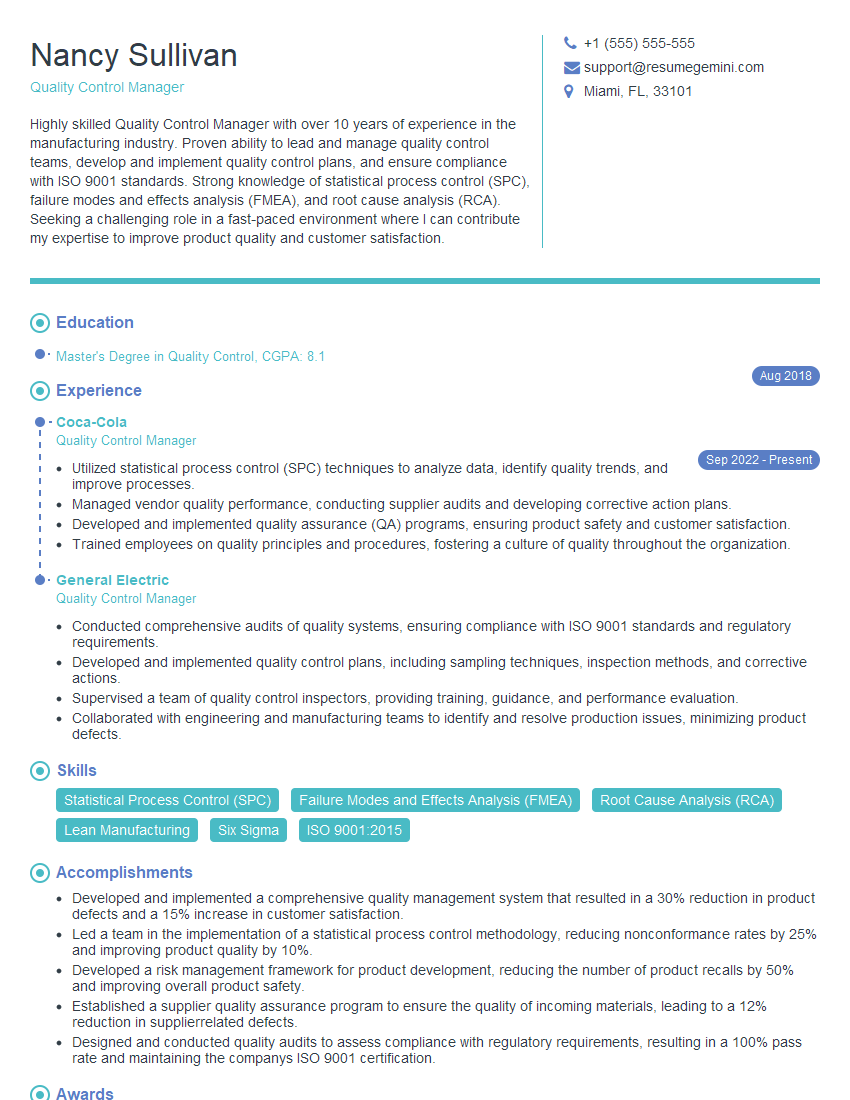
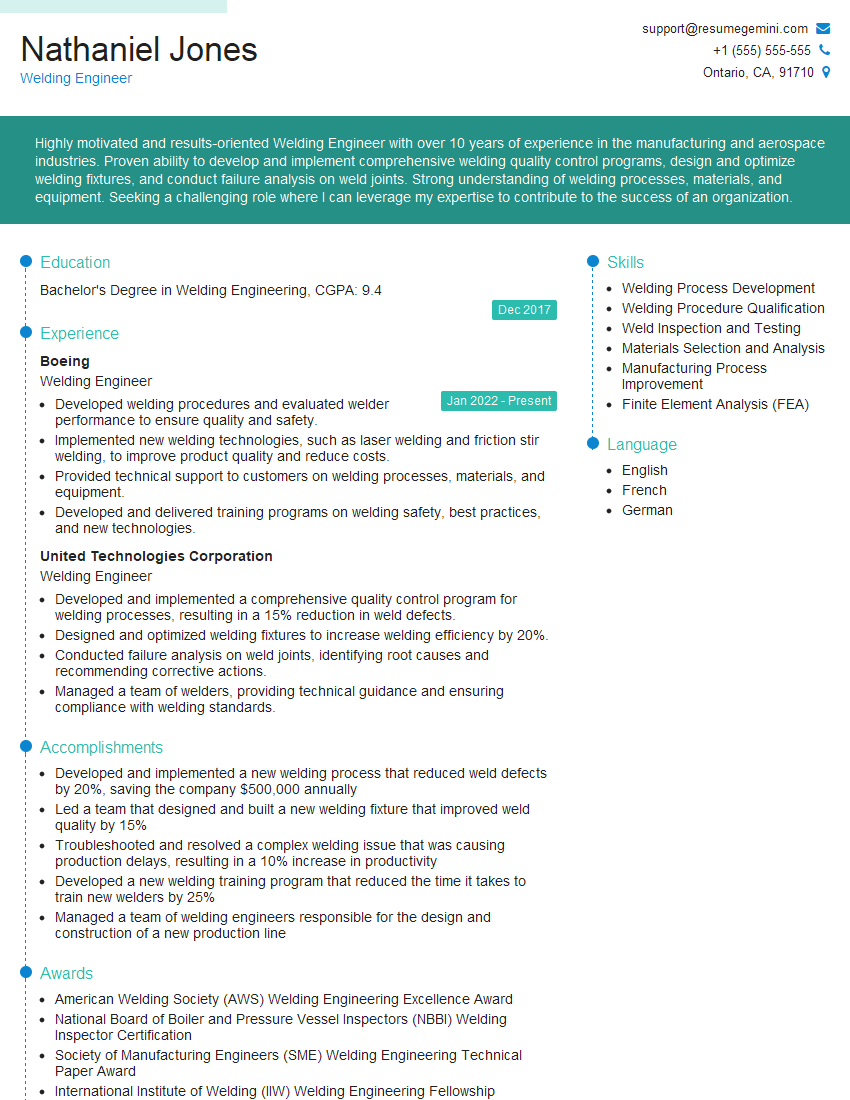
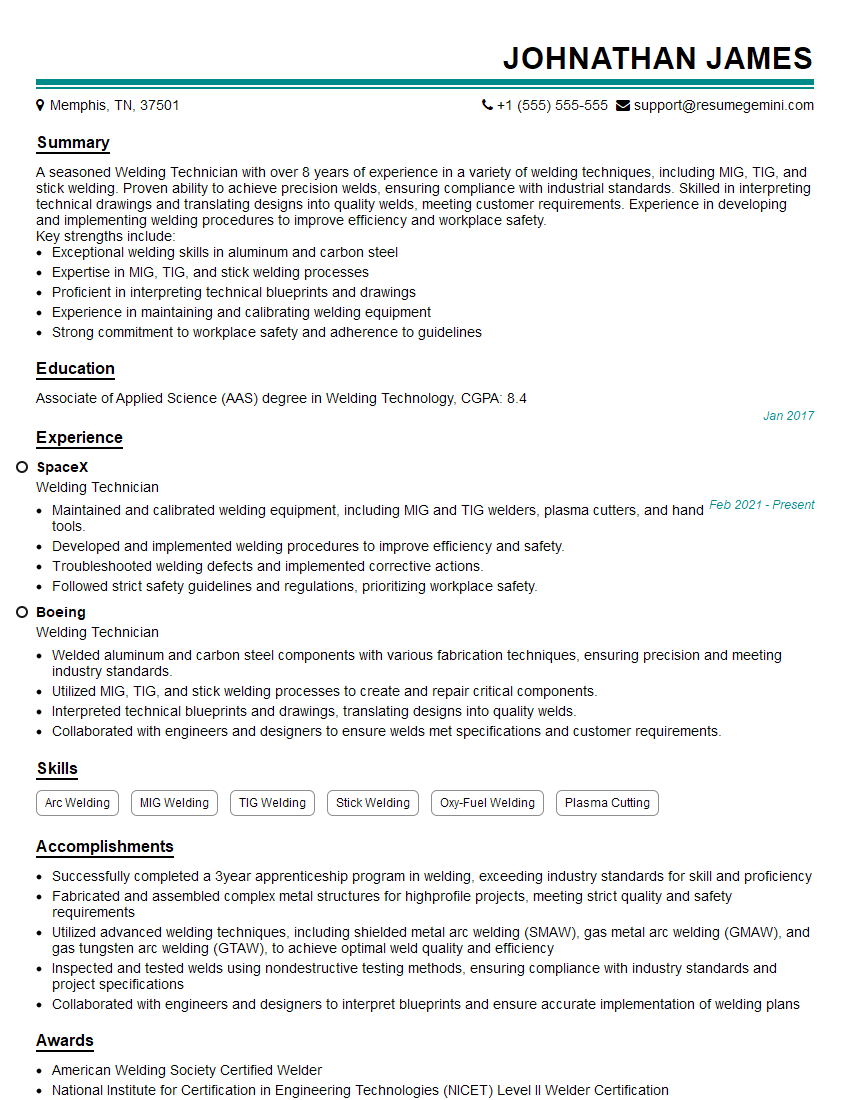
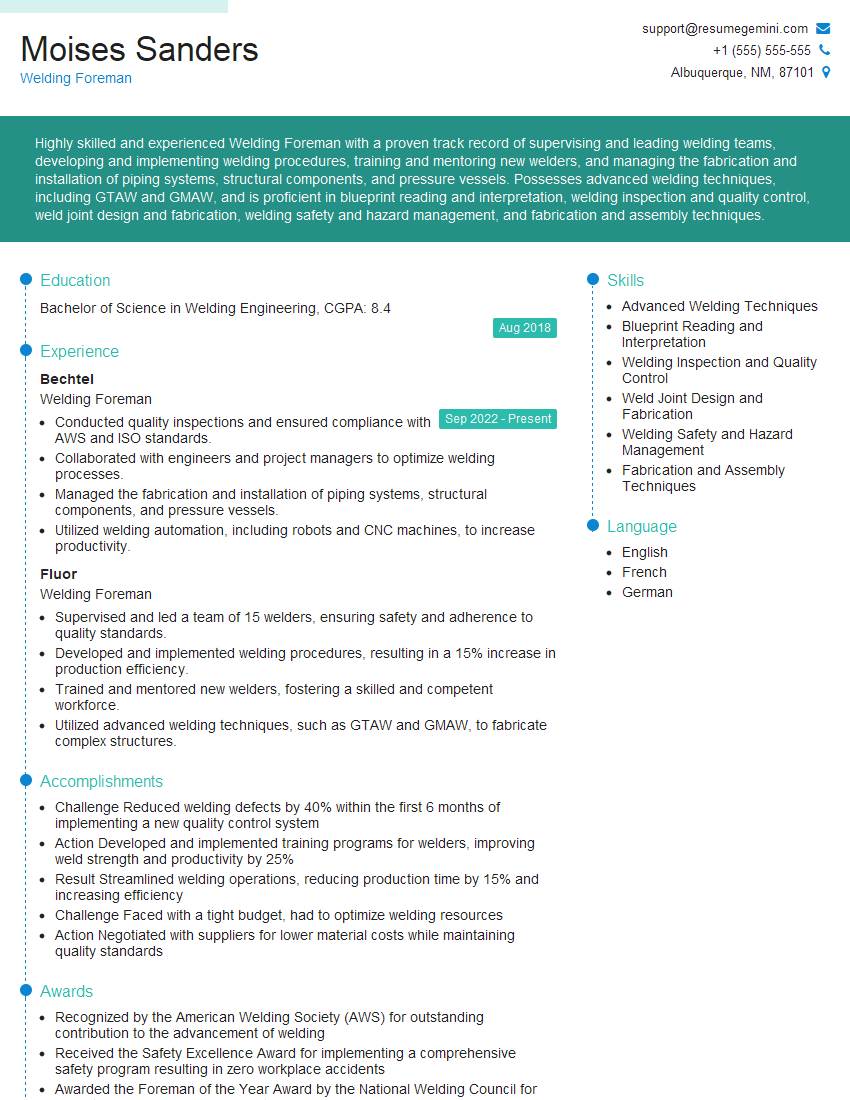
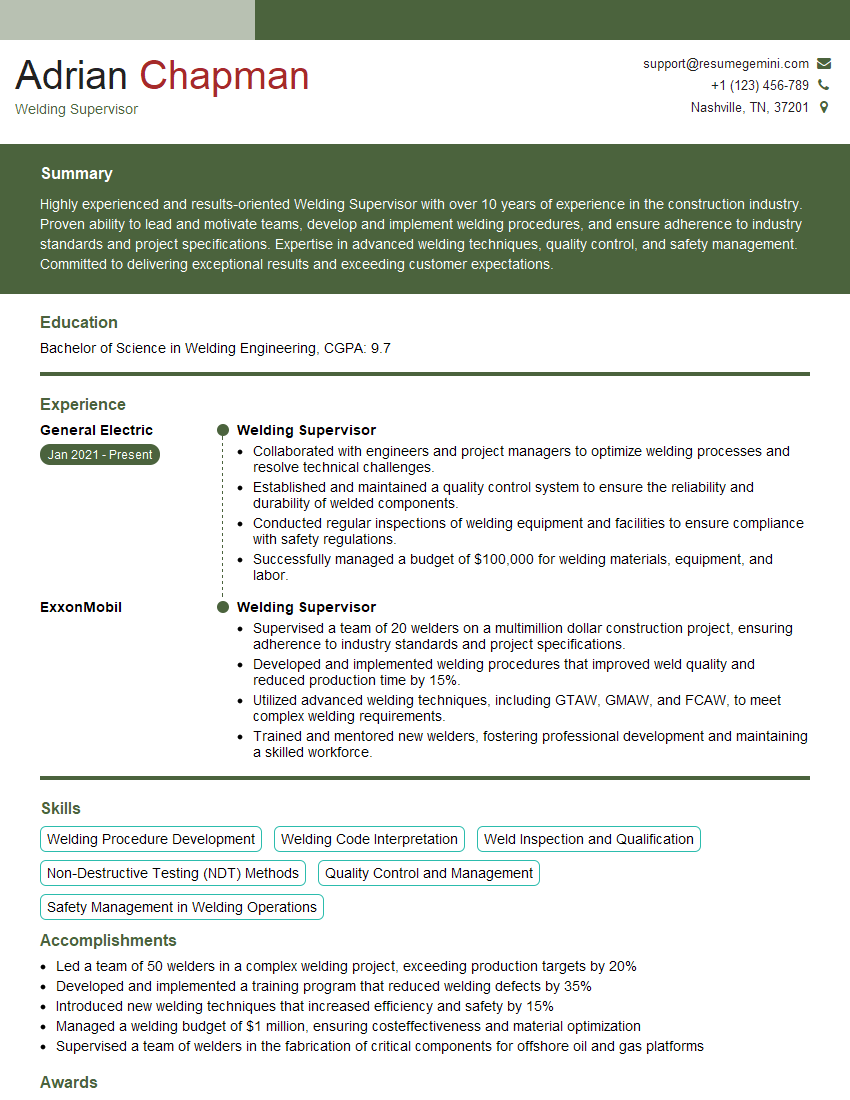
Mastering ISO 9712 is key to advancing your career in welding engineering and related fields. It demonstrates a commitment to quality, safety, and professional standards, significantly enhancing your job prospects. To further improve your chances of landing your dream role, focus on crafting an ATS-friendly resume that highlights your skills and experience effectively. ResumeGemini is a trusted resource to help you build a professional and impactful resume that will get noticed. Examples of resumes tailored specifically to showcase ISO 9712 Qualification of Welding Procedures and Welders expertise are available; use them to create a winning application!
Explore more articles
Users Rating of Our Blogs
Share Your Experience
We value your feedback! Please rate our content and share your thoughts (optional).
What Readers Say About Our Blog
Really detailed insights and content, thank you for writing this detailed article.
IT gave me an insight and words to use and be able to think of examples