Interviews are more than just a Q&A session—they’re a chance to prove your worth. This blog dives into essential Flow Measurements interview questions and expert tips to help you align your answers with what hiring managers are looking for. Start preparing to shine!
Questions Asked in Flow Measurements Interview
Q 1. Explain the different types of flow meters and their operating principles.
Flow meters are instruments used to measure the rate of fluid flow (liquid or gas) through a pipe or channel. There are many types, each operating on a different principle. Here are a few key examples:
- Differential Pressure Flow Meters: These meters, like orifice plates, venturi tubes, and flow nozzles, work by creating a pressure drop across a restriction in the pipe. The pressure difference is proportional to the square of the flow rate. Think of it like putting your thumb partially over a garden hose – the smaller the opening, the higher the water pressure upstream and the faster the water flows out.
- Positive Displacement Flow Meters: These meters, such as rotary vane, oval gear, and piston meters, directly measure the volume of fluid passing through them. Imagine a water meter in your house; it has a chamber that fills and empties, physically counting the volume of water.
- Velocity Flow Meters: These meters, such as turbine, paddle wheel, and propeller meters, measure the velocity of the fluid. The flow rate is then calculated by multiplying the velocity by the cross-sectional area of the pipe. This is analogous to a speed sensor on a car, measuring the speed of the wheels to determine the vehicle’s speed.
- Mass Flow Meters: These meters, such as Coriolis and thermal mass flow meters, directly measure the mass flow rate of the fluid. Coriolis meters use the Coriolis effect to measure mass flow, while thermal mass flow meters measure the heat transfer rate to determine mass flow.
- Ultrasonic Flow Meters: These meters use ultrasonic sound waves to measure the velocity of the fluid. They send sound waves across the pipe, and the difference in transit time due to the fluid’s velocity is used to determine flow rate. Think of it like sonar, but for measuring flow.
The choice of meter depends heavily on the specific application and the properties of the fluid.
Q 2. Describe the advantages and disadvantages of various flow measurement technologies (e.g., orifice plate, Coriolis, ultrasonic).
Each flow measurement technology has its own set of advantages and disadvantages:
- Orifice Plate:
- Advantages: Simple, low cost, well-established technology.
- Disadvantages: Permanent pressure drop, susceptible to wear and erosion, relatively low accuracy.
- Coriolis:
- Advantages: High accuracy, measures mass flow directly, handles a wide range of fluids.
- Disadvantages: High cost, relatively complex, can be sensitive to vibrations.
- Ultrasonic:
- Advantages: Non-invasive, no pressure drop, suitable for a wide range of fluids and pipe sizes.
- Disadvantages: Can be affected by fluid properties (e.g., high viscosity, entrained gas), more expensive than some other options.
For example, an orifice plate might be suitable for a low-cost application where high accuracy isn’t critical, while a Coriolis meter would be preferred for accurate measurement of high-value liquids.
Q 3. How do you select the appropriate flow meter for a specific application?
Selecting the right flow meter requires careful consideration of several factors:
- Fluid properties: Viscosity, density, temperature, pressure, conductivity, and the presence of solids or gases.
- Flow rate range: The minimum and maximum expected flow rates.
- Accuracy requirements: The level of precision needed for the measurement.
- Pipe size and material: The diameter and material of the pipe.
- Installation constraints: Space limitations, accessibility, and the potential for vibration or other environmental factors.
- Cost: The budget available for the flow meter and its installation.
- Maintenance requirements: The ease and cost of maintaining the flow meter.
A structured decision-making process, potentially involving a flow meter selection chart, is highly recommended to ensure optimal selection. For instance, a highly viscous fluid might require a positive displacement meter to ensure accurate measurement, while a clean, low-viscosity fluid might be better suited for an ultrasonic meter.
Q 4. What are the common sources of error in flow measurement?
Several factors can introduce errors in flow measurement:
- Installation errors: Improper installation of the flow meter, such as misalignment or insufficient straight pipe runs upstream and downstream, can significantly affect accuracy.
- Calibration errors: Inaccurate calibration of the flow meter can lead to systematic errors.
- Fluid properties: Variations in fluid properties (density, viscosity, temperature) can affect the accuracy of the measurement. For example, changes in temperature can significantly affect viscosity and density, thus influencing readings.
- Environmental factors: Vibrations, magnetic fields, and ambient temperature fluctuations can affect the readings of some flow meters.
- Wear and tear: Wear and tear of the flow meter components, such as erosion of the orifice plate or clogging of the sensor, can also introduce errors.
- Signal noise: Noise in the electronic signals can affect the accuracy of some flow meters, especially those which require sophisticated signal processing.
A well-designed measurement system will address these issues through proper selection, installation, and calibration practices.
Q 5. How do you calibrate a flow meter?
Flow meter calibration involves comparing the meter’s readings to a known standard, often a traceable standard from a national metrology institute. The process typically involves:
- Selecting a suitable standard: This could be a calibrated flow prover, a weight-and-time method (for liquids), or a gas meter.
- Establishing a flow range: The range of flow rates over which the meter will be calibrated.
- Collecting data: Measuring the flow rate using both the meter being calibrated and the standard, at several points within the flow range.
- Generating a calibration curve: Plotting the meter’s readings against the standard’s readings. This curve is used to correct future readings.
- Documenting the results: Recording the calibration data, including the date, time, and conditions under which the calibration was performed.
Calibration frequency depends on several factors including the meter’s type, the application, and regulatory requirements. For critical applications, regular calibration is essential to ensure accuracy.
Q 6. Explain the concept of flow rate and its units.
Flow rate is the volume or mass of fluid passing a point per unit of time. It describes how quickly the fluid is moving. The most common units are:
- Volumetric flow rate: Units are cubic meters per second (m³/s), liters per minute (L/min), gallons per minute (gpm), etc. This represents the volume of fluid passing a point per unit time.
- Mass flow rate: Units are kilograms per second (kg/s), pounds per minute (lbm/min), etc. This represents the mass of fluid passing a point per unit time.
The choice between volumetric and mass flow rate depends on the specific application. Mass flow rate is often preferred in applications where the fluid’s density might change significantly, such as in gas flows where pressure and temperature vary.
Q 7. What is the Reynolds number and its significance in flow measurement?
The Reynolds number (Re) is a dimensionless quantity used to predict whether fluid flow will be laminar or turbulent. It’s calculated as:
Re = (ρVD)/μ
Where:
- ρ is the fluid density
- V is the fluid velocity
- D is the characteristic length (usually the pipe diameter)
- μ is the dynamic viscosity of the fluid
A low Reynolds number (typically less than 2300) indicates laminar flow, where the fluid flows in smooth, parallel layers. A high Reynolds number (typically greater than 4000) indicates turbulent flow, where the fluid flow is chaotic and irregular. The transition region lies between 2300 and 4000.
The Reynolds number is crucial in flow measurement because the flow regime significantly impacts the accuracy of many flow meters. Differential pressure flow meters, for example, are based on empirical correlations that are valid only within specific Reynolds number ranges. Understanding the Reynolds number helps select the appropriate flow meter and interpret the measurements accurately.
Q 8. Describe different methods for flow measurement in different pipe sizes and fluids.
Flow measurement techniques vary significantly depending on pipe size and fluid properties. For small pipes (less than 2 inches), devices like variable area flow meters (rotameters) are common. These work by allowing the fluid to lift a float within a tapered tube; the height of the float is directly proportional to the flow rate. For larger pipes, we often use differential pressure devices such as orifice plates, Venturi meters, and flow nozzles. These create a pressure drop across a constriction, and the flow rate is calculated using the pressure difference and pipe dimensions. Magnetic flow meters are excellent for conductive fluids regardless of pipe size, measuring flow based on Faraday’s law of induction. Ultrasonic flow meters utilize sound waves to measure flow velocity, suitable for various fluids and pipe sizes. Finally, turbine flow meters, with a rotating turbine sensing flow rate, are useful for a wide range of applications. The choice depends on factors such as fluid viscosity, pressure, temperature, and the required accuracy.
- Small pipes (e.g., medical tubing): Rotameters, ultrasonic flow meters.
- Medium pipes (e.g., industrial process lines): Orifice plates, Venturi meters, magnetic flow meters.
- Large pipes (e.g., pipelines): Ultrasonic flow meters, magnetic flow meters.
Consider a project involving a viscous fluid in a small diameter pipe: A rotameter would be a simple and cost-effective solution. However, for high-accuracy measurements in a large diameter pipeline carrying water, an ultrasonic flow meter might be preferred due to its non-invasive nature and wide range of applicability.
Q 9. How do you handle flow measurement challenges in high-pressure or high-temperature applications?
High-pressure and high-temperature applications demand specialized flow measurement solutions. Standard flow meters may fail or provide inaccurate readings under such extreme conditions. Therefore, material selection is crucial. We might use meters constructed from high-temperature alloys like stainless steel or special ceramics. For instance, a high-pressure application might utilize a high-pressure differential pressure flow meter with robust construction and pressure ratings. Furthermore, we’d need to consider the effects of thermal expansion on meter accuracy and implement appropriate temperature compensation mechanisms. Regular calibration and maintenance are critical to ensure accuracy and safety. In some cases, we use flow measurement techniques less directly affected by temperature and pressure, like clamp-on ultrasonic flow meters, which measure flow from the outside of the pipe, minimizing exposure to harsh conditions.
Imagine measuring steam flow in a power plant. We need a meter capable of withstanding extreme temperatures and pressures. A specially designed high-pressure differential pressure flow meter, meticulously calibrated and regularly maintained, would be the appropriate choice. We would also incorporate measures to safely manage the high-pressure steam to mitigate safety risks.
Q 10. Explain the importance of proper piping and installation for accurate flow measurement.
Proper piping and installation are paramount for accurate flow measurement. Upstream and downstream straight pipe sections are essential to ensure a stable and predictable flow profile before and after the flow meter. Insufficient straight pipe lengths can cause swirling or turbulent flow, leading to inaccurate readings. The recommended lengths depend on the type of flow meter and pipe diameter. Furthermore, the piping should be free from leaks, bends, and obstructions close to the meter that could disrupt the flow. Incorrect installation angles can also introduce errors. The meter must be installed correctly according to the manufacturer’s specifications, ensuring proper alignment and connection to avoid leaks and damage. For differential pressure meters, the pressure taps must be precisely located to avoid errors. These details are crucial to minimize errors and ensure the accuracy of flow measurement. Neglecting these factors can lead to substantial measurement errors, potentially impacting process control and efficiency.
Imagine an orifice plate incorrectly installed with insufficient straight pipe upstream. The swirling flow would create a pressure drop different from that predicted by the calculation formulas, leading to a significantly incorrect flow measurement. The consequences could be costly, resulting in inaccurate process control or even safety issues.
Q 11. How do you troubleshoot common problems with flow meters?
Troubleshooting flow meter issues requires a systematic approach. First, verify the meter’s calibration status. Has it been calibrated recently, and are the calibration factors correctly applied? Second, check for any obvious physical damage or obstructions in the pipework. Is the meter clogged or damaged? Examine the upstream and downstream pipe sections for problems. Check the pressure readings (for differential pressure meters) to see if they are within expected ranges. If using a magnetic flow meter, verify the correct signal from the electrodes and check for any build-up of insulating material on the pipe walls. If the problem persists, examine the data acquisition system: Are there any communication issues or data logging errors? Consulting the manufacturer’s troubleshooting guide is essential. A methodical approach, starting from the simplest checks and progressively investigating more complex aspects, usually pinpoints the source of the problem.
For example, if an orifice plate meter shows unusually low flow readings, I’d first check for any pipe obstructions. Then, I would verify the pressure taps’ readings, considering potential leaks or blockages. If the problem persists, I’d consider a recalibration.
Q 12. What are the safety considerations when working with flow measurement equipment?
Safety is paramount when working with flow measurement equipment. High-pressure systems pose significant risks. Proper lockout/tagout procedures are essential before working on any high-pressure piping or equipment. Always use appropriate personal protective equipment (PPE), including safety glasses, gloves, and protective clothing, depending on the fluid and pressure. Be aware of potential hazards related to the measured fluid—it might be toxic, corrosive, or flammable. Regular inspections of the equipment and piping are necessary to detect leaks or damage before they become hazardous. Proper training and adherence to safety protocols are crucial to mitigate potential risks. If dealing with potentially explosive fluids, strict adherence to explosion-proof equipment and procedures is mandatory.
Consider working with a highly flammable gas like propane. We must use explosion-proof flow meters, follow strict safety protocols, wear appropriate PPE, and maintain a safe work environment to prevent accidents and fires.
Q 13. Describe your experience with data acquisition and analysis in flow measurement systems.
My experience with data acquisition and analysis in flow measurement systems is extensive. I’ve worked with various data acquisition systems, from simple analog to sophisticated digital systems, integrating flow meter signals into SCADA (Supervisory Control and Data Acquisition) systems. Data analysis techniques include checking for data consistency, identifying outliers, and using statistical methods to characterize flow behavior. I’m proficient in using software tools like LabVIEW and MATLAB for data analysis and visualization. Experience includes developing custom algorithms for data processing, noise reduction, and flow rate calculation. I’m capable of generating reports and presentations that effectively communicate flow measurement data to clients and management. I can also design and implement data logging systems tailored to specific applications, which is very important in predictive maintenance and process optimization. A recent project involved analyzing flow rate data from multiple flow meters to optimize a chemical reactor, leading to a 15% increase in efficiency.
Q 14. Explain your understanding of different flow regimes (laminar, turbulent).
Flow regimes describe the nature of fluid movement. Laminar flow is characterized by smooth, parallel layers of fluid moving at consistent velocities. Imagine honey flowing slowly – it moves in smooth, orderly layers. The Reynolds number (Re), a dimensionless quantity, helps classify flow regimes. A low Re indicates laminar flow. Turbulent flow is chaotic, with irregular swirling patterns and velocity fluctuations. Think of a rapidly flowing river; the water is turbulent and swirling. High Re values indicate turbulent flow. The transition between laminar and turbulent flow isn’t abrupt; it’s gradual, with a transitional regime in between. Understanding the flow regime is crucial for selecting appropriate flow measurement methods. For example, some flow meters, like orifice plates, are more accurate in turbulent flow, while others are more suitable for laminar flow. Inaccurate flow regime assumptions can lead to errors in the flow measurement. The Reynolds number is key in determining the appropriate flow regime and therefore the best type of flow meter to use.
Q 15. How do you ensure the accuracy and reliability of flow measurement data?
Ensuring accurate and reliable flow measurement data hinges on a multi-pronged approach that addresses every stage, from sensor selection to data analysis. It’s like building a strong foundation for a house – you can’t have a sturdy house without a solid base.
- Careful Sensor Selection: Choosing the right flow meter is crucial. The accuracy and reliability of a turbine meter, for instance, differ drastically from an ultrasonic meter, and the ideal choice depends on factors like fluid type, flow rate range, and the required accuracy. For example, a Coriolis meter offers high accuracy for viscous fluids, while a vortex meter is suitable for gases and liquids with suspended solids.
- Proper Installation and Setup: Incorrect installation can introduce significant errors. Straight pipe runs upstream and downstream of the meter are vital to ensure laminar flow, preventing swirling or turbulence that distorts readings. We use accepted standards like ASME MFC-3M to guide installation best practices. In one project involving a large-diameter pipeline, we meticulously checked for pipe straightness using laser alignment tools to minimize errors.
- Regular Calibration and Maintenance: Flow meters, like any precision instrument, drift over time. A scheduled calibration against a known standard ensures that the meter remains accurate. Maintenance activities such as cleaning the sensor or replacing worn parts prevent degradation and maintain long-term reliability. We often use traceable calibration standards to validate our measurements and meet regulatory compliance.
- Data Validation and Analysis: Even with proper installation and calibration, anomalies can occur. Data validation techniques, including comparing flow readings with other process parameters and applying statistical process control (SPC) methods, help identify and correct errors or outliers. A recent project involved detecting a faulty valve causing inconsistent flow using data analysis that showed unexpected flow rate spikes.
Career Expert Tips:
- Ace those interviews! Prepare effectively by reviewing the Top 50 Most Common Interview Questions on ResumeGemini.
- Navigate your job search with confidence! Explore a wide range of Career Tips on ResumeGemini. Learn about common challenges and recommendations to overcome them.
- Craft the perfect resume! Master the Art of Resume Writing with ResumeGemini’s guide. Showcase your unique qualifications and achievements effectively.
- Don’t miss out on holiday savings! Build your dream resume with ResumeGemini’s ATS optimized templates.
Q 16. Describe your experience with different types of flow meter controllers.
My experience encompasses a wide range of flow meter controllers, from simple analog devices to sophisticated digital systems with advanced features. Think of these controllers as the brains behind the flow measurement operation. They process signals from the flow meter, convert them into meaningful flow rate data and often incorporate advanced control algorithms.
- Analog Controllers: These are relatively simple and inexpensive, primarily used for basic on/off control or simple proportional control. I’ve used these in older industrial processes where simple flow regulation is sufficient.
- Digital Controllers: These offer greater flexibility and precision. They can implement advanced control algorithms like PID (Proportional-Integral-Derivative) control, allowing for more precise flow regulation and compensation for disturbances. I’ve worked extensively with digital controllers integrated into SCADA (Supervisory Control and Data Acquisition) systems for complex process monitoring and control.
- Smart Flow Meters with Integrated Controllers: These combine the flow sensor and controller into a single unit, streamlining installation and simplifying maintenance. They often offer enhanced diagnostics and communication capabilities. For example, I’ve incorporated smart flow meters in applications where remote monitoring and real-time data acquisition are essential.
My experience includes working with controllers from various manufacturers such as Yokogawa, Emerson, and Siemens, each with its own unique features and communication protocols.
Q 17. What is the importance of regular maintenance and calibration of flow meters?
Regular maintenance and calibration are paramount for ensuring the accuracy and longevity of flow meters. Think of it as regular servicing for your car – neglecting it will eventually lead to performance degradation and potential failures.
- Maintaining Accuracy: Over time, factors such as wear and tear, fouling, and changes in ambient conditions can affect the accuracy of a flow meter. Regular calibration ensures measurements remain within acceptable tolerances. It’s like regularly checking your bathroom scale to ensure its accuracy.
- Preventing Failures: Proactive maintenance, such as cleaning the sensor or replacing worn parts, prevents premature failure and downtime. Imagine a clogged pipe in a flow meter; this drastically affects the measurement and can be prevented through routine maintenance.
- Safety and Compliance: In many industries, accurate flow measurement is critical for safety and regulatory compliance. For example, in the chemical industry, precise flow control is vital to prevent hazardous situations. Regular maintenance and calibration help ensure adherence to safety standards.
- Cost Savings: While maintenance and calibration involve some costs, the potential savings from preventing costly equipment downtime and avoiding inaccurate process control far outweigh the expenses.
Q 18. How do you interpret flow measurement data to identify process inefficiencies?
Interpreting flow measurement data to identify process inefficiencies involves a systematic approach, similar to a detective investigating a crime scene. We look for patterns and anomalies that indicate problems.
- Baseline Data: Establishing a baseline of normal flow rates is the first step. This provides a benchmark against which deviations can be measured.
- Deviation Analysis: Analyzing deviations from the baseline helps identify potential problems. For example, consistently lower than expected flow rates might indicate a blockage or a malfunctioning pump.
- Correlation with other Process Parameters: Analyzing flow data in conjunction with other parameters, such as pressure, temperature, and energy consumption, helps pinpoint the root cause of inefficiencies. A sudden drop in flow rate accompanied by a rise in pressure could suggest a valve problem.
- Data Visualization: Visualizing data using charts and graphs helps identify trends and patterns more easily. A simple line graph showing flow rate over time can reveal gradual declines or sudden drops, which would be difficult to detect simply by looking at raw data.
By carefully analyzing the data, we can often pinpoint the source of the problem and suggest corrective actions, leading to improved process efficiency and cost savings.
Q 19. Explain your experience with various flow measurement standards and regulations.
My experience with flow measurement standards and regulations is extensive, covering various industries and geographical locations. Adherence to these standards is vital for ensuring data accuracy, safety, and regulatory compliance.
- ISO 5167: This international standard provides guidelines for the measurement of fluid flow in closed conduits, covering various meter types and installation practices. It’s a critical reference for ensuring the accuracy and reliability of our flow measurements.
- ASME MFC-3M: This standard details the measurement of fluid flow using various techniques, offering guidelines for meter selection, installation, calibration, and uncertainty analysis. We use it extensively in our projects.
- Industry-Specific Regulations: Many industries have specific regulations governing flow measurement, such as those related to environmental monitoring or safety standards. I’ve worked with regulations relevant to oil and gas, water treatment, and chemical processing.
- National Standards: National standards bodies like NIST (National Institute of Standards and Technology) in the U.S. and similar organizations in other countries also provide guidance and traceability for flow measurements. We ensure our calibration procedures adhere to these national standards.
My understanding of these standards enables us to select appropriate flow meters, ensure proper installation, perform accurate calibrations, and provide traceable and reliable flow measurement data that meets all regulatory requirements.
Q 20. Describe your experience working with different types of fluids (e.g., gases, liquids, slurries).
My experience spans a diverse range of fluids, each presenting unique challenges in flow measurement. It’s like having a toolbox filled with different instruments – each designed for a specific task.
- Liquids: I’ve worked with a wide variety of liquids, from clean water to highly viscous oils and slurries containing suspended solids. The choice of flow meter depends heavily on the fluid’s properties, such as viscosity, density, and the presence of solids.
- Gases: Measuring gas flow often involves different considerations, such as compressibility and temperature effects. I’ve used different types of gas flow meters, including orifice plates, vortex meters, and thermal mass flow meters, each suitable for different gas types and flow ranges.
- Slurries: Measuring the flow of slurries – mixtures of liquids and solids – presents unique challenges due to the abrasive nature of the solids and the potential for clogging. I’ve used specialized flow meters designed to handle slurries, such as magnetic flow meters or positive displacement meters.
This broad experience allows me to select the most appropriate flow meter technology for each specific application, ensuring accurate and reliable flow measurements regardless of the fluid characteristics.
Q 21. How do you account for factors like viscosity and temperature in flow measurement?
Viscosity and temperature significantly impact flow measurement, requiring careful consideration and, often, compensation. Ignoring these factors can lead to significant errors. It’s like baking a cake – if you don’t consider the ingredients and their interactions correctly, you won’t get a good outcome.
- Viscosity: High-viscosity fluids flow more slowly than low-viscosity fluids for the same pressure difference. Many flow meters are affected by viscosity. For example, the Reynolds number, a dimensionless quantity relating inertial forces to viscous forces, plays a crucial role in characterizing the flow regime and selecting appropriate flow meters. We often utilize viscosity correction factors or select meters less sensitive to viscosity, such as Coriolis meters.
- Temperature: Temperature affects fluid density and viscosity. Changes in temperature can directly affect the flow rate readings if not accounted for. Many flow meters compensate for temperature changes, but understanding these effects is important for interpreting the data correctly. We often use temperature sensors in conjunction with flow meters to correct for temperature variations.
- Compensation Methods: Various methods exist to account for viscosity and temperature, such as using empirical correlations, employing temperature sensors, and applying correction factors based on manufacturer-provided data. The choice of compensation method depends on the specific flow meter and the fluid being measured.
By properly accounting for viscosity and temperature, we can obtain more accurate and reliable flow measurements and improve the overall accuracy and reliability of our process control systems.
Q 22. Explain your understanding of differential pressure flow measurement.
Differential pressure flow measurement is a widely used technique that relies on the principle of Bernoulli’s equation. It works by measuring the pressure difference created across a restriction in a pipe, such as an orifice plate, venturi tube, or flow nozzle. The greater the flow rate, the larger the pressure drop across the restriction. This pressure difference is then converted into a flow rate using a calibrated equation specific to the flow meter type and installation.
Think of it like this: imagine trying to squeeze water through a narrow section of a hose. The water speeds up, and the pressure drops across that constriction. A differential pressure flow meter measures this pressure drop, allowing us to infer the flow rate. The relationship isn’t linear, however; it’s usually described by an equation that takes into account factors like fluid density, pipe diameter, and the specific characteristics of the restriction device.
Different types of differential pressure flow meters exist each offering trade-offs in accuracy, pressure loss, and cost. Orifice plates are inexpensive but can cause significant pressure loss. Venturi tubes offer lower pressure loss but are more expensive. Flow nozzles provide a compromise between cost and pressure drop. Each type has a specific calibration equation to translate the pressure differential into flow rate.
Q 23. How do you handle non-Newtonian fluids in flow measurement?
Non-Newtonian fluids, unlike water or air (Newtonian fluids), don’t have a constant viscosity. Their viscosity changes with shear rate – how quickly they’re flowing. This complicates flow measurement because the pressure drop across a restriction isn’t directly proportional to flow rate as in Newtonian fluids.
Handling these fluids requires specialized techniques. We often employ flow meters designed specifically for non-Newtonian fluids, such as ultrasonic flow meters which measure flow velocity directly without relying on pressure drop. Alternatively, we might use a viscometer in conjunction with a differential pressure flow meter, measuring both viscosity and pressure drop to better estimate flow rate. Rheological models describing the fluid behavior are often crucial for the accurate calculation. The selection of the appropriate flow meter will depend greatly on the characteristics of the fluid and the process requirements. Accurate calibration and thorough understanding of the fluid’s rheological properties is essential. Empirical correlations or more complex computational fluid dynamics (CFD) simulations might be needed to determine accurate flow rates.
Q 24. Describe your experience with flow measurement in complex systems or processes.
I have extensive experience in flow measurement within complex systems, including multiphase flows (gas-liquid, liquid-solid) and those with significant temperature and pressure variations. For example, I worked on a project involving flow measurement in a refinery’s catalytic cracking unit, where high temperatures and pressures made accurate measurement challenging. We used a combination of techniques including advanced ultrasonic flow metering, robust thermal mass flow metering to handle high temperature fluctuations, and regular calibration to ensure data accuracy. We also implemented redundancy in the system with multiple flow meters and cross-checking the data to minimize errors.
Another project involved measuring flow in a pipeline carrying a slurry with varying solids concentration. To compensate for the changing viscosity and density of the slurry, we used a Coriolis flow meter which is insensitive to variations in viscosity and density. We integrated online density measurement to further refine our flow rate calculations. This required meticulous data acquisition and advanced data processing to account for the complex rheological behavior of the slurry.
Q 25. What software or tools are you familiar with for flow data analysis and reporting?
I’m proficient in various software and tools for flow data analysis and reporting. My experience includes using data acquisition systems such as LabVIEW and AspenTech. I’m also familiar with data analysis packages like MATLAB and Python (using libraries like NumPy, Pandas, and SciPy) for data processing, statistical analysis, and visualization. I can use these tools to generate comprehensive reports, including flow rate calculations, mass balance analysis, and trend analysis to identify potential issues or areas for improvement. I’m also familiar with database management systems like SQL for storing and managing large volumes of flow data for long-term monitoring and trend analysis.
Q 26. Describe a time you had to troubleshoot a complex flow measurement problem.
In one project, we experienced significant discrepancies between the measured flow rate and the expected flow rate based on process parameters in a chemical reactor. Initial investigations suggested a problem with the flow meter itself, but thorough checks showed the meter was functioning within its specified accuracy. We then systematically checked all aspects of the system: pipework for leaks, pressure drops across various sections, and the accuracy of temperature and pressure sensors used in the flow rate calculation. It turned out the problem stemmed from a faulty pressure sensor providing erroneous readings impacting the calculations. Replacing the faulty sensor immediately resolved the issue. This experience reinforced the importance of thorough system validation and not jumping to conclusions before meticulously investigating all potential sources of error.
Q 27. How do you ensure data integrity and traceability in flow measurement applications?
Data integrity and traceability are paramount in flow measurement. We implement rigorous procedures to ensure this. Calibration of flow meters is done regularly according to a strict schedule with traceable standards and documented results. All calibration data, along with maintenance logs and sensor readings, are meticulously recorded and stored in a secure database, ensuring complete audit trails. This allows us to trace the accuracy and reliability of measurements over time. We also employ redundant measurement systems whenever possible, cross-checking data from multiple sources to detect inconsistencies or errors. Additionally, data validation protocols are built into the data acquisition and analysis procedures to filter out outliers and identify anomalies, ensuring we only utilize reliable information for reporting.
Q 28. Explain your familiarity with different types of flow meter signal outputs (e.g., 4-20mA, pulse).
I am very familiar with various flow meter signal outputs. The most common are 4-20 mA and pulse signals. A 4-20 mA signal is an analog signal where the current (in milliamperes) is proportional to the measured flow rate. For example, 4 mA might represent zero flow, and 20 mA might represent the maximum flow rate. This analog signal is easily integrated into most industrial control systems. Pulse signals, on the other hand, generate a pulse for a certain volume of fluid passed through the meter. The frequency of the pulses is directly proportional to the volumetric flow rate. The number of pulses is counted and converted to flow rate. The choice between 4-20 mA and pulse signals depends on factors such as the required accuracy, the distance between the meter and the control system, and the capabilities of the control system itself. Other less common but still significant signals include frequency signals and digital communication protocols like Modbus or Profibus which provide digital flow data along with diagnostic information.
Key Topics to Learn for Flow Measurements Interview
- Fundamentals of Fluid Mechanics: Understanding concepts like pressure, velocity, viscosity, and their relationships is crucial. This forms the theoretical basis for all flow measurement techniques.
- Flow Measurement Technologies: Familiarize yourself with various methods including differential pressure (orifice plates, Venturi meters, flow nozzles), positive displacement, ultrasonic, and electromagnetic flowmeters. Understand their operating principles, applications, and limitations.
- Calibration and Accuracy: Grasp the importance of calibration procedures and error analysis in ensuring accurate flow measurements. Be prepared to discuss different calibration techniques and sources of error.
- Practical Applications: Explore the diverse applications of flow measurement across industries like oil & gas, water treatment, chemical processing, and pharmaceuticals. Be ready to discuss specific examples and challenges in different contexts.
- Data Acquisition and Analysis: Understand how flow data is acquired, processed, and analyzed. Familiarity with relevant software and data interpretation techniques is beneficial.
- Troubleshooting and Problem Solving: Prepare to discuss common issues encountered in flow measurement systems and how to troubleshoot them effectively. This demonstrates practical experience and analytical skills.
- Selection Criteria for Flow Meters: Learn to assess different flow meter types based on factors like fluid properties, flow range, accuracy requirements, and cost considerations.
Next Steps
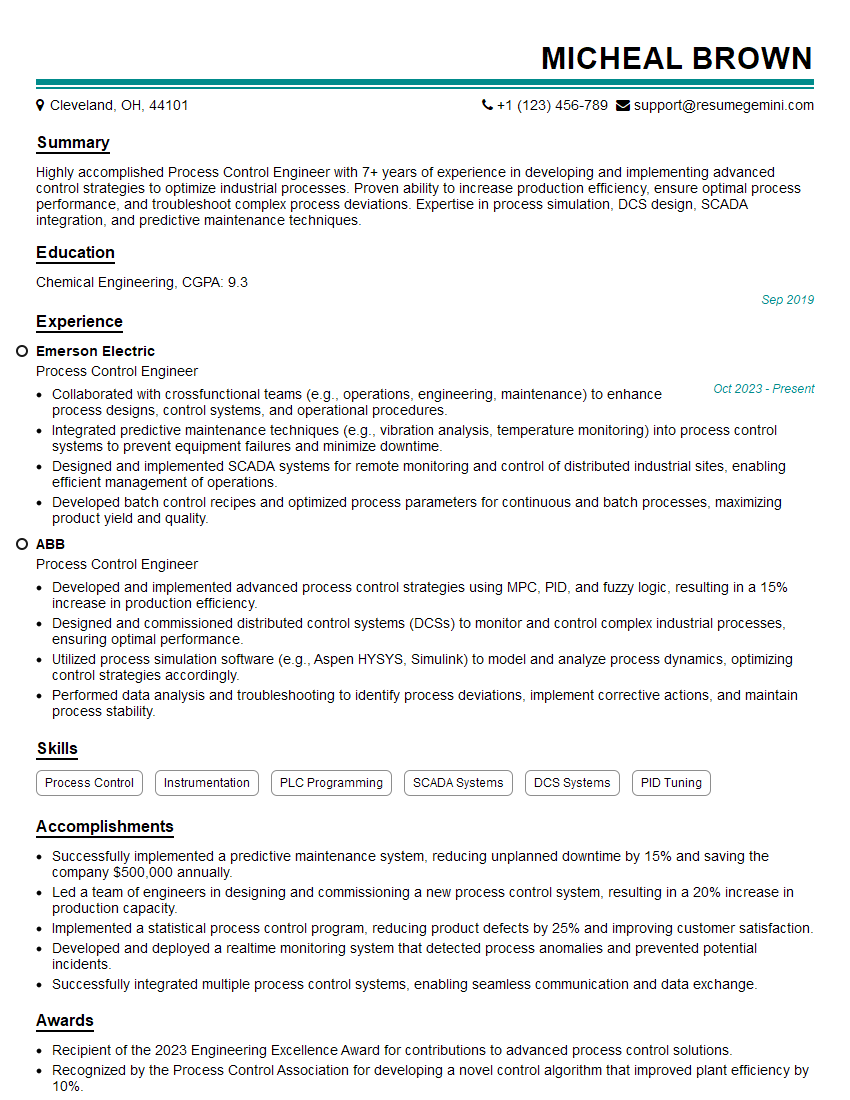
Mastering flow measurements significantly enhances your career prospects in engineering, process control, and related fields. It opens doors to challenging and rewarding roles requiring a deep understanding of fluid dynamics and measurement technologies. To maximize your job search success, creating an ATS-friendly resume is vital. ResumeGemini is a trusted resource to help you build a professional and impactful resume that highlights your skills and experience effectively. Examples of resumes tailored to Flow Measurements are available through ResumeGemini to guide your creation process. Invest the time to craft a compelling resume; it’s your first impression with potential employers.
Explore more articles
Users Rating of Our Blogs
Share Your Experience
We value your feedback! Please rate our content and share your thoughts (optional).
What Readers Say About Our Blog
Really detailed insights and content, thank you for writing this detailed article.
IT gave me an insight and words to use and be able to think of examples