Every successful interview starts with knowing what to expect. In this blog, we’ll take you through the top Food Safety Regulations and Standards interview questions, breaking them down with expert tips to help you deliver impactful answers. Step into your next interview fully prepared and ready to succeed.
Questions Asked in Food Safety Regulations and Standards Interview
Q 1. Explain the principles of HACCP.
HACCP, or Hazard Analysis and Critical Control Points, is a preventative food safety management system. Instead of simply reacting to contamination, HACCP focuses on identifying and controlling potential hazards throughout the entire food production process, from farm to table. It’s based on seven core principles:
- Conduct a hazard analysis: Identify biological, chemical, and physical hazards that could occur at each stage of production.
- Determine critical control points (CCPs): These are steps in the process where control can prevent or eliminate a hazard. For example, cooking temperature is a CCP for preventing bacterial contamination.
- Establish critical limits: Set specific measurable values for each CCP. For cooking, this might be a minimum internal temperature of 165°F (74°C).
- Establish monitoring procedures: Regularly check CCPs to ensure they’re within the critical limits. This might involve using thermometers and recording temperatures.
- Establish corrective actions: Define what to do if a CCP goes out of control (e.g., if the temperature drops, immediately reheat the food).
- Establish verification procedures: Regularly check if the HACCP plan is working effectively. This could involve reviewing records, auditing procedures, and conducting product testing.
- Establish record-keeping and documentation procedures: Maintain detailed records of all HACCP activities.
For example, a canning factory using HACCP would identify the pressure and temperature during the sterilization process as CCPs. They’d set critical limits for those parameters, monitor them continuously, and have procedures for dealing with deviations.
Q 2. Describe your experience with food safety audits.
I have extensive experience conducting and participating in food safety audits, both internal and external, across various food production facilities. This includes audits based on GFSI (Global Food Safety Initiative) benchmarking schemes such as BRC, SQF, and IFS. My role typically involves reviewing HACCP plans, GMP documentation, and traceability records. I also conduct on-site observations of production processes, checking for adherence to established protocols and identifying potential areas for improvement. For instance, during an audit of a bakery, I identified a lack of proper allergen control protocols, leading to a recommendation for enhanced segregation of ingredients and improved cleaning procedures. Another example includes identifying a weakness in temperature monitoring at a meat processing plant, which could lead to bacterial growth. My experience encompasses providing constructive feedback to management, developing corrective action plans, and following up to ensure implementation and effectiveness.
Q 3. What are the key differences between GMP and HACCP?
While both GMP (Good Manufacturing Practices) and HACCP are crucial for food safety, they have distinct focuses. GMPs are a set of general principles covering hygiene, sanitation, and facility maintenance to prevent contamination. Think of them as the foundation for a safe food production environment. HACCP, on the other hand, is a more systematic approach that focuses on identifying and controlling specific hazards at critical points in the food production process. It builds upon GMPs.
- GMPs are preventative, general practices focusing on maintaining a clean and sanitary environment. Examples include proper handwashing, cleaning and sanitizing equipment, and pest control.
- HACCP is a science-based, preventative system focusing on identifying and controlling specific hazards at critical control points. It uses a structured plan to manage risks from raw materials to finished product.
Imagine building a house: GMP is like ensuring you have a solid foundation, strong walls, and a structurally sound building. HACCP is like specifically designing the house to prevent hazards like fire (e.g., installing fire sprinklers and smoke alarms) and ensuring proper electrical wiring to avoid electrical hazards.
Q 4. How do you handle a food safety incident?
Handling a food safety incident requires a swift and systematic response. My approach follows these steps:
- Immediate Containment: Isolate the affected product to prevent further distribution.
- Investigation: Determine the root cause of the incident through thorough investigation, including interviews with staff, review of records, and potentially lab testing.
- Corrective Actions: Implement immediate corrective actions to address the identified cause and prevent recurrence. This could involve discarding contaminated products, enhancing cleaning procedures, or retraining staff.
- Notification: Notify relevant authorities (e.g., regulatory agencies, customers) as required by law and company policy.
- Documentation: Meticulously document every step of the process, including the incident details, investigation findings, corrective actions, and follow-up measures.
- Review and Improvement: Conduct a thorough review of the HACCP plan and related procedures to identify areas for improvement and prevent similar incidents in the future.
For instance, if a salmonella outbreak is linked to a particular batch of poultry, I would initiate a recall, investigate the source of contamination (e.g., improper cooking temperatures, cross-contamination), implement corrective actions (e.g., additional training on safe food handling), and notify relevant regulatory bodies.
Q 5. What is your understanding of foodborne illness prevention?
Foodborne illness prevention relies on a multi-faceted approach encompassing various control measures at every stage of the food chain. It’s about minimizing the risk of harmful bacteria, viruses, parasites, or toxins entering the food supply. This involves:
- Proper Hygiene Practices: Frequent handwashing, maintaining clean surfaces and equipment, and proper personal hygiene.
- Temperature Control: Maintaining appropriate temperatures during food storage, preparation, and cooking to inhibit the growth of microorganisms.
- Prevent Cross-Contamination: Separating raw and cooked foods, using separate cutting boards and utensils, and avoiding contact between contaminated and uncontaminated surfaces.
- Supplier Control: Selecting reliable and reputable suppliers who adhere to food safety standards.
- Employee Training: Educating employees about proper food handling procedures, hygiene practices, and allergen awareness.
- Effective Pest Control: Preventing pests from accessing and contaminating food products.
Think of it like building a fortress against invaders: each preventative measure is a wall, and a combination of these walls makes the fortress strong and protects against foodborne illness.
Q 6. Explain the importance of allergen control in food production.
Allergen control is paramount in food production to prevent accidental contamination and protect consumers with food allergies. Strict control measures are vital to avoid serious health consequences, even death. These measures include:
- Ingredient Sourcing and Identification: Clearly identifying and tracking allergenic ingredients throughout the supply chain.
- Segregation and Storage: Storing allergenic ingredients separately from non-allergenic ingredients to prevent cross-contamination.
- Equipment Cleaning and Sanitization: Thoroughly cleaning and sanitizing equipment between production runs to remove traces of allergens.
- Labeling: Accurately labeling products to clearly indicate the presence of allergenic ingredients.
- Employee Training: Educating employees about allergen awareness, proper handling procedures, and the importance of preventing cross-contamination.
- Traceability Systems: Implementing robust traceability systems to quickly identify the source of contamination in case of an incident.
For example, a bakery producing products with nuts must have dedicated equipment and areas to prevent cross-contamination with nut-free products. Failure to control allergens could result in severe consequences and legal repercussions.
Q 7. Describe your experience with food safety record-keeping and documentation.
Effective food safety record-keeping and documentation are vital for demonstrating compliance with regulations and for tracing potential sources of contamination. My experience involves maintaining comprehensive records, including:
- HACCP Plan: A detailed and documented HACCP plan with all seven principles.
- GMP Records: Documentation of cleaning and sanitation procedures, pest control activities, and employee training.
- Temperature Logs: Records of temperatures at critical control points throughout the production process.
- Traceability Records: Detailed records of the origin, processing, and distribution of ingredients and finished products.
- Calibration Records: Documentation of the calibration and maintenance of measuring equipment such as thermometers.
- Incident Reports: Detailed reports of any food safety incidents, including investigations, corrective actions, and preventative measures.
Accurate and timely documentation not only ensures compliance but also serves as a valuable tool for continuous improvement and problem-solving. For example, reviewing temperature logs can help identify patterns and pinpoint areas needing improvement in temperature control.
Q 8. What are your strategies for ensuring compliance with food safety regulations?
Ensuring food safety regulatory compliance is a multifaceted process demanding a proactive and systematic approach. My strategy centers around a strong foundation of knowledge, meticulous record-keeping, and a commitment to continuous improvement.
- Thorough Understanding of Regulations: I stay updated on all relevant legislation, such as the FDA Food Safety Modernization Act (FSMA) in the US, or equivalent regulations in other jurisdictions. This includes understanding specific requirements for my industry, product type, and facility size.
- Implementation of a Food Safety Management System (FSMS): I would implement a robust FSMS, like HACCP (Hazard Analysis and Critical Control Points), to identify and control potential hazards throughout the food production process. This includes implementing Standard Operating Procedures (SOPs) for every critical step.
- Regular Audits and Inspections: Internal audits are crucial for identifying gaps in our compliance, and I would schedule these regularly. I also welcome external audits and inspections to identify areas for improvement and demonstrate our commitment to food safety.
- Employee Training: All employees receive comprehensive training on food safety regulations, hygiene practices, and their specific roles in maintaining compliance. Training is regularly updated and reinforced.
- Documentation and Record Keeping: Meticulous record-keeping is essential. This includes maintaining records of all training, inspections, audits, and any corrective actions taken. These records are crucial for demonstrating compliance and traceability.
- Proactive Hazard Identification: Instead of simply reacting to problems, I actively seek out and address potential hazards through hazard analysis and risk assessments.
For example, in a previous role, I identified a potential allergen cross-contamination risk during our production process. Through implementing a color-coded system for equipment and utensils, along with enhanced cleaning and sanitation procedures, we effectively mitigated this risk and improved our overall compliance.
Q 9. How do you identify and mitigate food safety risks?
Identifying and mitigating food safety risks requires a systematic approach based on a thorough understanding of the entire production process. I use a combination of techniques to effectively manage these risks.
- Hazard Analysis and Critical Control Points (HACCP): HACCP is a preventative system that identifies potential biological, chemical, and physical hazards at each stage of food production. By analyzing these hazards, we can determine the critical control points (CCPs) needing special attention.
- Good Manufacturing Practices (GMPs): GMPs ensure that food is produced in a clean and sanitary environment. Following GMPs minimizes the risk of contamination. This includes proper hand hygiene, equipment sanitation, and pest control.
- Supplier Verification: Ensuring our suppliers adhere to the same high standards of food safety is crucial. This includes verifying their compliance with relevant regulations and their own food safety management systems.
- Regular Monitoring and Testing: Ongoing monitoring of CCPs through regular testing (e.g., temperature monitoring, microbial testing) ensures control remains effective. Environmental monitoring helps identify potential contamination sources.
- Corrective Actions: When deviations occur, a thorough investigation is carried out, and appropriate corrective actions are implemented to prevent recurrence. These are documented and reviewed.
For instance, if a temperature logger shows a deviation during storage, I’d immediately investigate the cause (equipment malfunction, power outage), take corrective action (discard affected products, repair equipment), and implement preventative measures (backup generator, more frequent temperature checks). All actions are documented.
Q 10. What is your experience with implementing and maintaining a food safety management system?
I have extensive experience implementing and maintaining FSMS, specifically HACCP. In my previous role at [Previous Company Name], I was responsible for developing and implementing a comprehensive HACCP plan for our [Product Type] production line. This involved a detailed hazard analysis, identifying CCPs, establishing monitoring procedures, and developing corrective actions.
- HACCP Plan Development: I led the team in conducting a thorough hazard analysis, using validated scientific methods and data to pinpoint potential hazards. This analysis informed the identification of CCPs and the establishment of critical limits for each CCP.
- Monitoring and Record Keeping: I designed and implemented a robust monitoring system for each CCP, ensuring accurate and timely recording of data. This data was regularly reviewed to identify trends and potential issues.
- Verification and Validation: I regularly conducted audits and inspections to verify that the HACCP plan was effectively implemented and maintained. Validation processes ensured the effectiveness of our control measures.
- Employee Training: I developed and delivered training programs for all employees on the HACCP plan and their roles in maintaining food safety. This training was ongoing and regularly reviewed.
- Continuous Improvement: Regular reviews of the HACCP plan ensured its effectiveness and identified opportunities for improvement. This continuous improvement approach ensures our food safety systems are consistently up-to-date and relevant.
Our implemented HACCP plan reduced incidents of non-compliance and contributed to a significant decrease in customer complaints related to food safety.
Q 11. Explain the role of sanitation in preventing foodborne illnesses.
Sanitation is paramount in preventing foodborne illnesses. It’s the cornerstone of a safe food production environment. It involves the removal of dirt, debris, and microorganisms from surfaces and equipment to prevent cross-contamination and the growth of pathogens.
- Cleaning: This is the physical removal of visible soil and debris using appropriate detergents and water. This is the first step in the sanitation process.
- Sanitizing: This is the reduction of microorganisms to safe levels. This typically involves using chemical sanitizers or heat treatments.
- Equipment Sanitation: Proper sanitation procedures must be followed for all food contact surfaces, including equipment, utensils, and work surfaces. This often includes disassembly and thorough cleaning of equipment.
- Pest Control: Preventing pests from accessing food and food preparation areas is crucial. This includes regularly inspecting for pests, using traps and pesticides responsibly, and storing food in pest-proof containers.
- Hand Hygiene: Employees must practice frequent and thorough handwashing to prevent the spread of microorganisms. This is a critical aspect of sanitation.
For example, failing to properly sanitize a cutting board after cutting raw chicken could lead to cross-contamination, causing a serious foodborne illness outbreak if it’s then used to prepare a salad. A rigorous sanitation program ensures this doesn’t happen.
Q 12. Describe your understanding of food safety legislation (e.g., FDA, FSMA).
My understanding of food safety legislation is comprehensive, focusing primarily on the FDA’s Food Safety Modernization Act (FSMA) in the US, and comparable international regulations like the EU’s food safety regulations. FSMA represents a paradigm shift from reactive to preventative food safety controls.
- Preventive Controls for Human Food (PCFH): This rule mandates the development and implementation of preventive controls plans to minimize food safety hazards throughout the supply chain.
- Current Good Manufacturing Practices (cGMPs): These regulations establish minimum standards for the production, processing, and packaging of food to ensure safety and quality.
- Produce Safety Rule: This rule establishes science-based minimum standards for the safe growing, harvesting, packing, and holding of produce.
- Foreign Supplier Verification Program (FSVP): This rule requires importers to verify that their foreign suppliers comply with US food safety standards.
- Sanitary Transportation Rule: This rule sets standards for the safe transportation of food to prevent contamination.
I understand that these regulations vary slightly by jurisdiction and product type, and I maintain a constant awareness of updates and changes to ensure continued compliance. For example, I know the specific requirements for allergen labeling and traceability differ between countries.
Q 13. How do you ensure traceability throughout the food supply chain?
Traceability is essential for ensuring food safety and rapidly responding to potential contamination incidents. It involves the ability to track a food product through all stages of the supply chain, from farm to table. My approach to ensuring traceability involves several key steps.
- Lot Numbering and Tracking: Each batch of raw materials and finished products is assigned a unique lot number, which is recorded at each stage of production and distribution. This allows for quick identification of the origin and movement of a product if a problem is detected.
- Supplier Relationships: Maintaining strong relationships with suppliers and obtaining their traceability documentation is critical. This ensures transparency across the entire supply chain.
- Electronic Record Keeping: Utilizing software and electronic databases to manage traceability data provides a more efficient and accurate record-keeping system compared to manual methods.
- Integration with ERP Systems: Integrating traceability systems with Enterprise Resource Planning (ERP) systems streamlines data management and ensures consistency across all systems.
- Regular Audits and Reviews: Regular internal audits and reviews of the traceability system ensure its accuracy and effectiveness. It allows for identifying and correcting weaknesses before they cause issues.
For example, if a contamination is found in a particular lot of a product, I can quickly identify all other products from that lot that have been distributed and take appropriate action, such as recalling the products or issuing warnings, limiting the impact of a food safety incident.
Q 14. Explain your knowledge of critical control points (CCPs) in a food processing facility.
Critical Control Points (CCPs) are steps in a food processing facility where a control measure can be applied to prevent or eliminate a food safety hazard or reduce it to an acceptable level. Identifying and controlling CCPs is a key element of HACCP.
- Hazard Analysis: First, a thorough hazard analysis is performed to identify potential biological, chemical, and physical hazards. This involves considering the ingredients, processes, and equipment used.
- CCP Identification: Once hazards are identified, specific steps in the process where control is necessary to prevent or eliminate these hazards are designated as CCPs.
- Critical Limits: For each CCP, critical limits are established. These are measurable parameters that must be met to ensure the control measure is effective. Examples include temperature, time, pH, and water activity.
- Monitoring: Each CCP is continuously monitored to ensure that critical limits are met. Monitoring can involve visual checks, measuring instruments, or automated systems.
- Corrective Actions: If a deviation from critical limits occurs, immediate corrective actions must be taken to address the problem and prevent further contamination. Records of deviations and corrective actions are meticulously maintained.
- Verification: Regular verification procedures are essential to ensure that the HACCP plan is effective and that all CCPs are adequately controlled. This may include internal audits, product testing, and validation studies.
For example, in a canning facility, the heat treatment process during retorting would be a CCP, where the temperature and time must be carefully monitored and controlled to eliminate Clostridium botulinum spores. Deviation from the critical limits could result in a potentially deadly product.
Q 15. What are the common food safety hazards associated with your area of expertise?
Common food safety hazards span the entire food production chain, from farm to table. My area of expertise focuses on the processing and retail phases, where hazards are particularly concentrated. These hazards can be broadly categorized into biological, chemical, and physical contaminants.
- Biological Hazards: These include bacteria (Salmonella, E. coli, Listeria), viruses (Norovirus, Hepatitis A), parasites (Toxoplasma gondii), and fungi (aflatoxins). For example, improper cooling of cooked chicken can allow Salmonella to multiply rapidly, causing illness.
- Chemical Hazards: These encompass pesticides, cleaning agents, allergens, and toxins naturally present in some foods. A chemical hazard example is cross-contamination from improper cleaning of equipment used to process peanuts and other nuts, posing a risk to people with nut allergies.
- Physical Hazards: These include foreign objects like glass shards, metal fragments, or plastic pieces accidentally introduced during processing or packaging. Imagine a piece of metal ending up in a can of soup – a serious and easily preventable hazard.
Effective food safety management requires a comprehensive approach to control all three types of hazards throughout the food production process.
Career Expert Tips:
- Ace those interviews! Prepare effectively by reviewing the Top 50 Most Common Interview Questions on ResumeGemini.
- Navigate your job search with confidence! Explore a wide range of Career Tips on ResumeGemini. Learn about common challenges and recommendations to overcome them.
- Craft the perfect resume! Master the Art of Resume Writing with ResumeGemini’s guide. Showcase your unique qualifications and achievements effectively.
- Don’t miss out on holiday savings! Build your dream resume with ResumeGemini’s ATS optimized templates.
Q 16. How do you develop and implement a food safety training program?
Developing a robust food safety training program involves a multi-step process, starting with a needs assessment to identify knowledge gaps and specific training requirements. The program should then be designed to address those needs using interactive methods.
- Needs Assessment: This involves evaluating the existing knowledge base of employees, reviewing incident reports, and identifying specific food safety risks in the workplace.
- Curriculum Development: The training curriculum needs to cover relevant topics such as HACCP principles (Hazard Analysis and Critical Control Points), GMPs (Good Manufacturing Practices), allergen control, sanitation, and personal hygiene. It should include a mix of lectures, interactive exercises, case studies, and practical demonstrations.
- Training Delivery: The training can be delivered through various methods: classroom sessions, online modules, on-the-job training, and video tutorials. Regular refreshers are essential to reinforce learning and address evolving regulations.
- Evaluation and Documentation: Post-training assessments (written tests, practical exercises) are vital to measure knowledge retention. All training records must be meticulously maintained for traceability and auditing purposes. For example, a record of every employee’s completion of a HACCP training module should be kept.
The success of any food safety program depends heavily on a well-trained workforce. A good training program is an investment in both the safety of consumers and the reputation of the organization.
Q 17. Describe your experience with food safety inspections and corrective actions.
I have extensive experience conducting food safety inspections and implementing corrective actions. My inspections follow a systematic approach, adhering to relevant regulatory guidelines and best practices.
- Inspection Process: Inspections cover all aspects of food handling, including raw material handling, processing, packaging, storage, and distribution. I assess compliance with GMPs, HACCP plans, and other relevant regulations. This often involves checking temperature controls, sanitation procedures, employee hygiene practices, and pest control measures.
- Corrective Actions: When non-compliances are identified, I work collaboratively with the facility to develop and implement corrective actions to address the root causes. This process often involves creating documented Corrective Action Preventive Action (CAPA) plans, with timelines for implementation and verification of effectiveness. For instance, if a critical temperature control point was not consistently met, a CAPA plan would involve upgrading the refrigeration system and retraining employees on proper temperature monitoring.
- Documentation: All findings, corrective actions, and verification steps are meticulously documented. This documentation is essential for demonstrating compliance and facilitating continuous improvement.
The aim is not just to identify problems, but to help facilities improve their food safety practices, minimizing the risks of foodborne illness.
Q 18. How do you validate the effectiveness of your food safety program?
Validating the effectiveness of a food safety program involves multiple methods that go beyond just meeting regulatory requirements. It’s about demonstrably reducing risk.
- Internal Audits: Regular internal audits assess compliance with established food safety procedures. These audits should be conducted by independent personnel to provide an objective evaluation.
- Product Testing: Routine testing of finished products helps verify the absence of microbial contamination or chemical hazards. This testing ensures the effectiveness of control measures at critical points.
- Monitoring Key Indicators: Tracking key performance indicators (KPIs) such as the number of food safety incidents, customer complaints, and the effectiveness of corrective actions provides valuable data for evaluating program performance.
- External Audits: Third-party audits by recognized certification bodies (e.g., ISO 22000) offer an independent assessment of the food safety management system. Successful completion provides external validation of the program’s effectiveness.
- Data Analysis: Analyzing collected data from audits, tests, and KPIs allows for trend identification, revealing potential weaknesses in the system and informing improvements.
A combination of these methods provides a comprehensive assessment of program effectiveness, ensuring it consistently delivers on its goal of protecting consumer health.
Q 19. Explain the importance of preventative measures in food safety.
Preventative measures are the cornerstone of effective food safety. They focus on proactively minimizing hazards rather than reacting to problems after they occur. Think of it as being proactive instead of reactive – much more efficient and cost-effective.
- HACCP (Hazard Analysis and Critical Control Points): This system identifies potential hazards in the food production process and establishes critical control points to prevent or eliminate those hazards. For example, setting a specific temperature for cooking to eliminate Salmonella in poultry is a critical control point.
- GMPs (Good Manufacturing Practices): GMPs provide guidelines for maintaining a clean and sanitary environment throughout the food production process, reducing the risk of contamination. This encompasses everything from proper handwashing to regular equipment sanitation.
- Supplier Management: Selecting and vetting reliable suppliers who adhere to high food safety standards minimizes the risk of contaminated raw materials entering the production process.
- Allergen Control: Implementing strict procedures to prevent cross-contamination of allergens is vital to protect consumers with allergies. This may involve dedicated equipment and thorough cleaning processes.
- Employee Training: Well-trained employees are essential for effective implementation of preventative measures. Regular training ensures consistent application of food safety practices.
By emphasizing preventative measures, we can significantly reduce the likelihood of food safety incidents, safeguarding both consumer health and business reputation.
Q 20. What is your experience with food recall procedures?
Food recall procedures are critical for protecting public health when contaminated food products enter the market. My experience involves managing all stages of a recall, from initial investigation to final resolution.
- Rapid Response: The initial response is crucial. A swift investigation is required to determine the scope and cause of the contamination and the number of affected products.
- Traceability: Effective traceability systems are essential for identifying and isolating all affected batches of products. This involves tracking products throughout the supply chain.
- Notification and Communication: Clear and timely communication with regulatory authorities (like the FDA), customers, retailers, and the media is vital. This involves issuing official recall notifications and coordinating public health messages.
- Product Retrieval: A coordinated effort is needed to remove the affected products from the market. This involves working with distributors and retailers to ensure efficient retrieval.
- Root Cause Analysis: A thorough investigation is needed to understand the cause of the contamination to prevent future occurrences. This will usually involve developing a CAPA (Corrective Action Preventive Action) plan.
Effective recall procedures minimize the impact of contaminated products on public health and protect the reputation of the affected organization. A well-executed recall demonstrates a commitment to food safety.
Q 21. Describe your experience with pest control and its relation to food safety.
Pest control is an integral part of any comprehensive food safety program. Pests like rodents, insects, and birds can contaminate food products with pathogens, allergens, or physical contaminants, posing significant health risks.
- Preventative Measures: Preventative pest control focuses on eliminating conditions that attract pests. This involves regular cleaning, proper storage of food and waste, sealing openings and cracks in buildings, and maintaining a clean and sanitary environment.
- Monitoring and Inspection: Regular monitoring and inspection for pest activity is crucial to detect infestations early. This may involve using traps, visual inspections, and pest detection devices.
- Integrated Pest Management (IPM): IPM programs utilize a combination of non-chemical and chemical control methods. Non-chemical methods such as sanitation and structural modifications are prioritized, with chemical control used only as a last resort.
- Record Keeping: Detailed records of pest control activities, including inspections, treatments, and findings, are crucial for demonstrating compliance and traceability.
- Professional Services: Utilizing qualified and licensed pest control professionals ensures effective pest management and compliance with relevant regulations.
Effective pest control is not just about eliminating pests, but about preventing them from entering the food production environment in the first place. It’s an essential part of protecting consumers from foodborne illness.
Q 22. Explain your understanding of food packaging and its role in food safety.
Food packaging plays a crucial role in maintaining food safety by acting as a barrier against physical, chemical, and biological contamination. It protects the food from external factors like dust, insects, and microorganisms, while also preserving its quality and extending its shelf life.
Think of it like a suit of armor for your food. A well-designed package prevents spoilage and protects the consumer from harmful substances. The type of packaging material is vital; for instance, a high-barrier film might be necessary for preventing oxygen permeation in products sensitive to oxidation, while modified atmosphere packaging (MAP) might be used to extend the shelf-life of fresh produce by controlling the gaseous environment inside the package.
- Physical Protection: Packaging safeguards food from physical damage during transport and handling, preventing breakage or crushing.
- Chemical Protection: It prevents migration of undesirable chemicals from the packaging material into the food (e.g., leaching of plasticizers from plastic) or the entry of harmful substances from the environment (e.g., preventing oxygen degradation).
- Biological Protection: Packaging keeps out microorganisms that cause spoilage and foodborne illnesses. This includes bacteria, yeasts, and molds.
Regulations concerning food packaging materials are stringent to ensure they are safe for both the food and the consumer, and are often material-specific, dictating what materials are permitted for contact with particular food types.
Q 23. How do you maintain accurate and up-to-date knowledge of food safety regulations?
Maintaining up-to-date knowledge in food safety regulations requires a multifaceted approach. I actively subscribe to newsletters from regulatory bodies like the FDA (Food and Drug Administration) and the USDA (United States Department of Agriculture), and regularly review their websites for updates. I also participate in professional development courses and workshops offered by organizations such as the International Association for Food Protection (IAFP).
Furthermore, I regularly consult peer-reviewed scientific journals and industry publications for the latest research and best practices on food safety. Networking with other professionals in the field through conferences and online forums provides invaluable insights and updates on evolving regulations. Finally, I actively seek out training on new technologies and methodologies related to food safety, ensuring my knowledge remains current and comprehensive.
Q 24. What are your methods for ensuring employee compliance with food safety procedures?
Ensuring employee compliance with food safety procedures is crucial. My approach is based on a combination of training, monitoring, and positive reinforcement. I begin by providing comprehensive, easily understandable training on all relevant regulations and procedures, utilizing a variety of methods including interactive sessions, videos, and written materials.
Regular monitoring of employees’ adherence to these procedures is key. This involves both observation of practices on the floor and the review of records such as temperature logs and sanitation checklists. I’m a strong believer in positive reinforcement, acknowledging and rewarding employees who consistently demonstrate excellent food safety practices. This encourages a culture of compliance and responsibility.
In cases where non-compliance is identified, corrective action is taken through retraining, coaching, and disciplinary measures as necessary. Open communication and a supportive environment are key to ensuring that employees understand the importance of food safety and feel comfortable asking questions or raising concerns.
Q 25. Describe your experience with microbiological testing and interpretation of results.
I have extensive experience in microbiological testing, from sample collection and preparation to analysis and result interpretation. My expertise includes various techniques such as plate counts for aerobic bacteria, coliforms, and E. coli; enzyme-linked immunosorbent assays (ELISAs) for detecting specific pathogens; and PCR (Polymerase Chain Reaction) methods for faster detection of microorganisms.
Interpreting results requires a thorough understanding of microbiology and statistics. I can assess the significance of microbial counts within the context of regulatory limits and industry standards. For example, a high count of Salmonella in a food sample would trigger an immediate investigation and potentially a product recall, while a slightly elevated count of aerobic bacteria might necessitate improved sanitation practices. I’m proficient at documenting findings, preparing detailed reports, and recommending corrective actions based on the results obtained.
Q 26. How do you communicate food safety information effectively to different stakeholders?
Effective communication of food safety information requires tailoring the message to the audience. For employees, I utilize clear, concise language and practical examples related to their daily tasks. For management, I present data-driven reports highlighting key performance indicators and potential risks.
When communicating with consumers, I prioritize transparency and accessibility. I utilize plain language and visuals to convey complex information, responding to concerns and questions promptly and honestly. For regulatory bodies, I ensure accurate and timely reporting that meets all required documentation standards. The key is using the appropriate medium (e.g., presentations, reports, training manuals, social media) for each target audience.
Q 27. Describe a situation where you had to address a food safety concern. What actions did you take?
In a previous role, we experienced a significant spike in customer complaints regarding spoilage in a ready-to-eat salad product. Following a thorough investigation, we discovered a problem with the refrigeration unit in our distribution center. Temperatures had fluctuated significantly, leading to bacterial growth and premature spoilage.
My immediate actions involved: 1) Isolating the affected batches and initiating a recall. 2) Conducting a root cause analysis to identify the problem with the refrigeration unit and implement immediate repairs. 3) Intensifying microbiological testing on the affected and unaffected product lines. 4) Implementing stricter temperature monitoring protocols across all distribution centers and production facilities. 5) Communicating transparently with customers about the issue, providing refunds and proactively addressing their concerns. The situation served as a valuable learning opportunity, leading to significant improvements in our cold chain management and overall food safety protocols.
Q 28. What are your salary expectations for this role?
My salary expectations for this role are commensurate with my experience, skills, and the responsibilities involved. Based on my research of similar positions and my qualifications, I am seeking a salary in the range of [Insert Salary Range Here]. I am open to discussing this further and believe my contributions will significantly benefit your organization.
Key Topics to Learn for Food Safety Regulations and Standards Interview
- Hazard Analysis and Critical Control Points (HACCP): Understand the principles, implementation, and documentation requirements of HACCP plans. Be prepared to discuss practical applications in various food production settings.
- Good Manufacturing Practices (GMPs): Know the key elements of GMPs and how they contribute to food safety. Be ready to explain how to implement and maintain GMPs in a facility.
- Foodborne Illness Prevention: Discuss common foodborne pathogens, their sources, and methods of prevention and control. Be prepared to analyze case studies and propose solutions.
- Food Labeling Regulations: Understand the legal requirements for food labeling, including ingredient declarations, nutritional information, and allergen labeling. Be able to explain the implications of non-compliance.
- Food Safety Management Systems (FSMS): Familiarize yourself with different FSMS frameworks (e.g., ISO 22000) and their implementation. Be ready to compare and contrast various systems.
- Sanitation and Hygiene Procedures: Detail the importance of proper sanitation and hygiene practices in food handling and processing. Be able to explain cleaning and sanitizing protocols.
- Regulatory Compliance and Auditing: Understand the process of ensuring compliance with relevant food safety regulations and conducting internal audits. Be ready to discuss corrective actions and preventative measures.
- Allergen Management: Explain strategies for effectively managing allergens throughout the food production process, including preventing cross-contamination and labeling requirements.
Next Steps
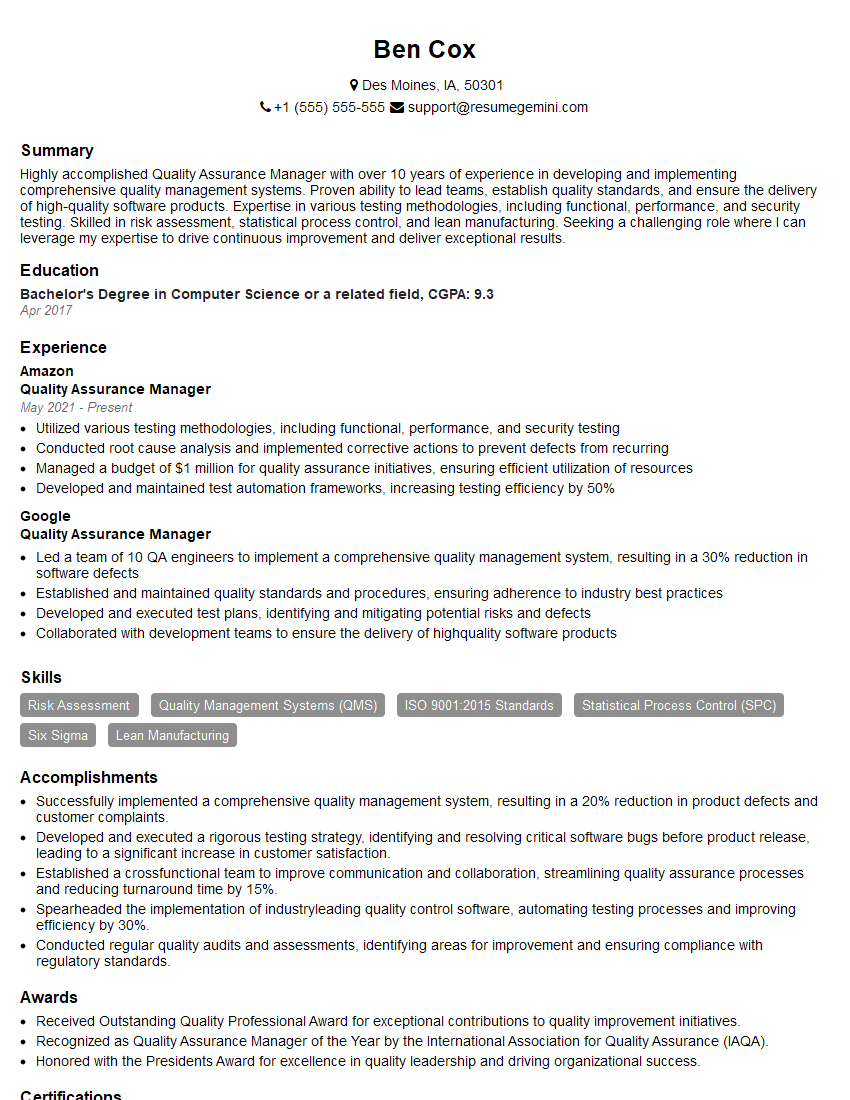
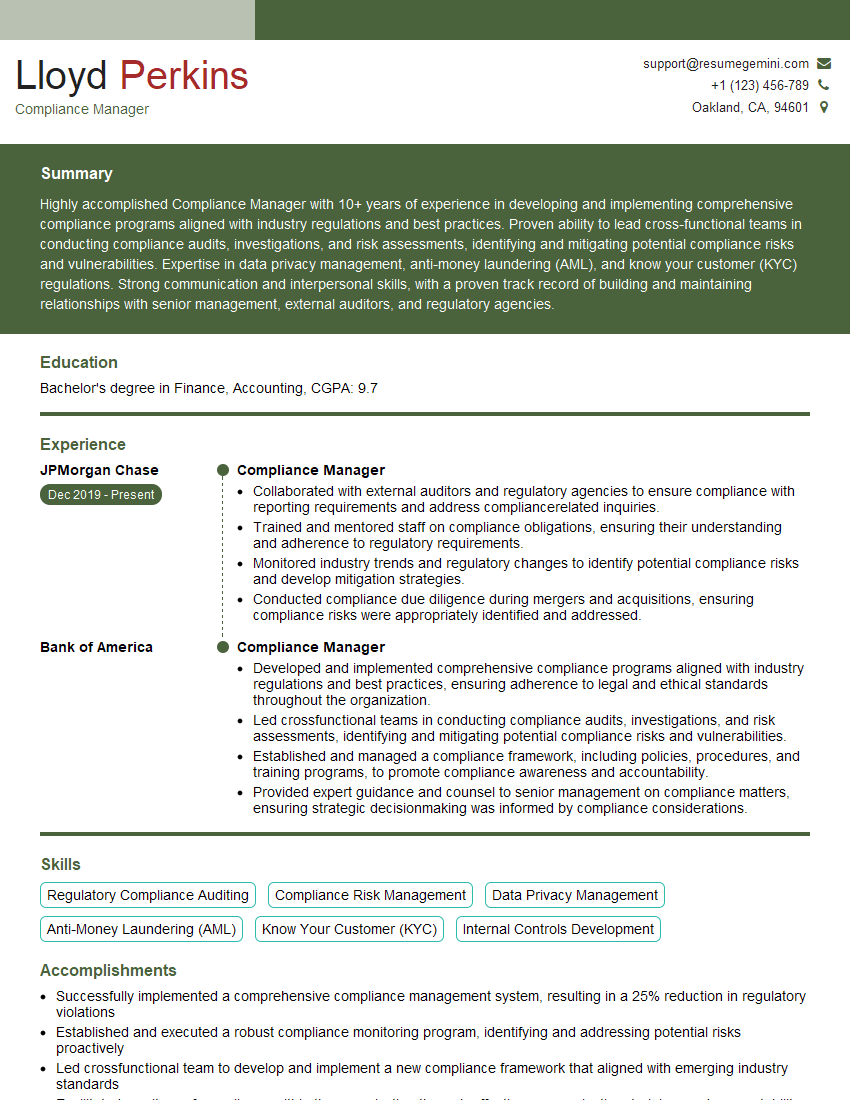
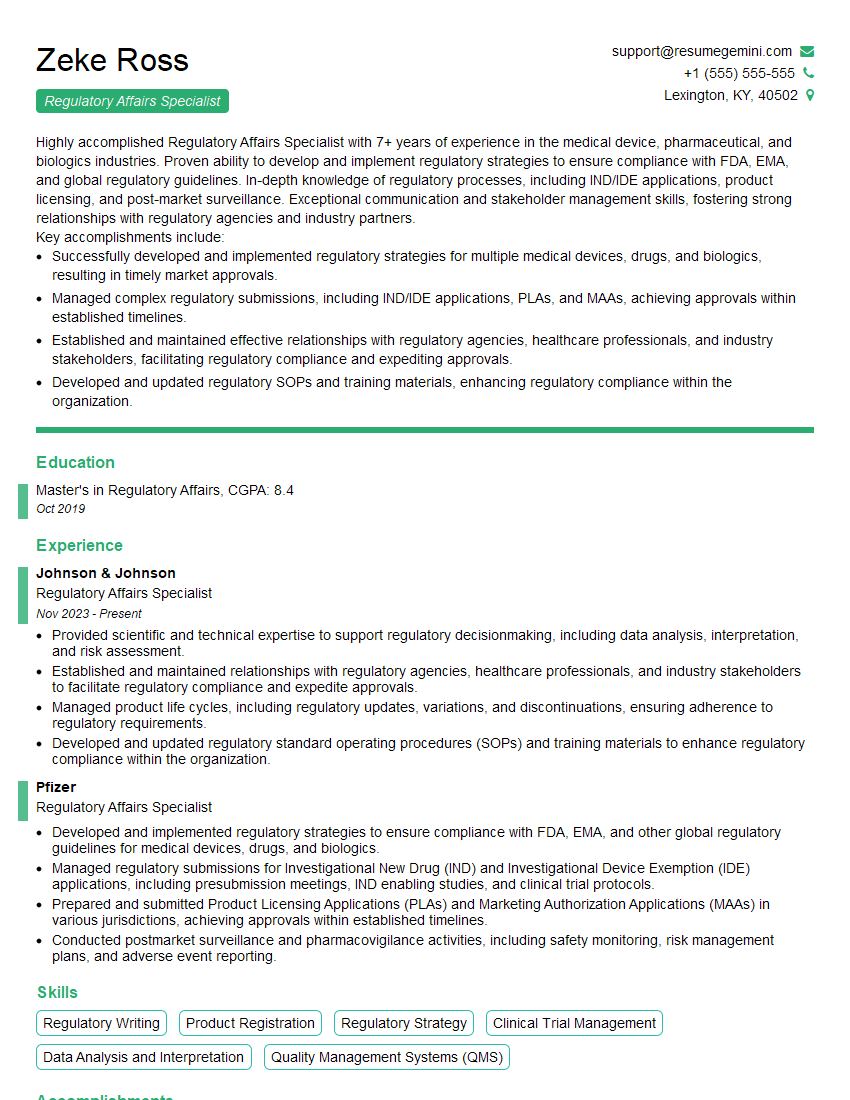
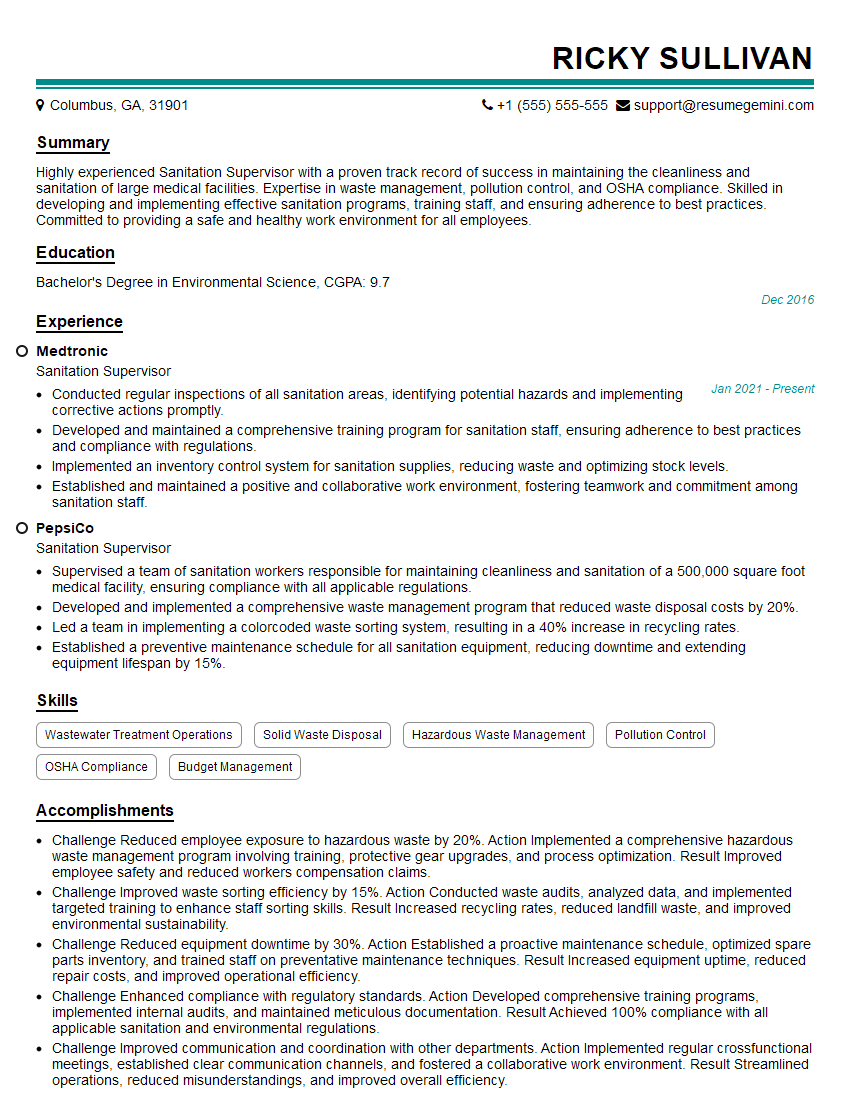
Mastering Food Safety Regulations and Standards is crucial for career advancement in the food industry. A strong understanding of these principles demonstrates your commitment to safety and opens doors to leadership roles and higher earning potential. To maximize your job prospects, create an ATS-friendly resume that highlights your skills and experience effectively. ResumeGemini is a trusted resource that can help you build a professional and impactful resume. We offer examples of resumes tailored to Food Safety Regulations and Standards to help guide you in crafting your own compelling application.
Explore more articles
Users Rating of Our Blogs
Share Your Experience
We value your feedback! Please rate our content and share your thoughts (optional).
What Readers Say About Our Blog
Really detailed insights and content, thank you for writing this detailed article.
IT gave me an insight and words to use and be able to think of examples