Feeling uncertain about what to expect in your upcoming interview? We’ve got you covered! This blog highlights the most important Leveling and Surveying interview questions and provides actionable advice to help you stand out as the ideal candidate. Let’s pave the way for your success.
Questions Asked in Leveling and Surveying Interview
Q 1. Explain the difference between leveling and surveying.
Surveying is the broader field encompassing the science and art of determining the relative positions of points above, on, or beneath the Earth’s surface. Leveling, on the other hand, is a specific type of surveying that focuses on determining the difference in elevation between points. Think of it this way: surveying is the big picture, mapping out a whole area, while leveling is a detailed focus on the vertical heights within that picture.
For example, surveying might involve creating a topographic map of a construction site, determining property boundaries, or designing road alignments. Leveling, however, would be crucial for setting the precise elevations for building foundations, ensuring proper drainage slopes, or establishing benchmarks for future construction.
Q 2. Describe the various types of levels used in surveying.
Several types of levels are used in surveying, each with its own advantages and disadvantages:
- Dumpy Level: A classic and robust instrument, it’s simple to operate and maintain. It uses a telescope that’s fixed to a level vial, providing a direct line of sight to determine levels. Ideal for basic leveling tasks.
- Automatic Level: This modern level utilizes a compensator that automatically levels the line of sight, making it much faster and less susceptible to minor tilting errors. Very popular for efficiency.
- Tilting Level: Offers a fine adjustment screw to precisely level the telescope, offering greater accuracy than a dumpy level but requiring more careful operation.
- Digital Level: Incorporates an electronic sensor and digital display, automatically measuring and recording elevation differences. This minimizes human error and streamlines data collection.
The choice of level depends on the project’s accuracy requirements, the terrain, and budget considerations. For large-scale projects needing high accuracy and efficiency, automatic or digital levels are preferred. For simpler tasks, a dumpy level might suffice.
Q 3. How do you perform a closed-loop traverse?
A closed-loop traverse is a surveying technique where a series of points are measured in a continuous loop, returning to the starting point. This allows for error detection and correction. The accuracy of the loop closure is crucial; the smaller the misclosure, the better the accuracy of the survey.
Here’s how to perform one:
- Establish a starting point: This point has known coordinates and elevation.
- Measure angles and distances: Using a theodolite and measuring tape/EDM (Electronic Distance Measurement) equipment, carefully measure the horizontal and vertical angles and distances between consecutive points in the loop.
- Compute coordinates and elevations: Using the measured data and appropriate surveying calculations (typically involving trigonometry), compute the coordinates (Easting, Northing) and elevations of each point.
- Close the loop: Compare the final calculated coordinates and elevation of the last point with those of the starting point. There will inevitably be a small difference, called the misclosure.
- Adjust the measurements: If the misclosure is within acceptable limits (determined by project specifications), the misclosure is distributed proportionally throughout the traverse to adjust the calculated coordinates and elevations of all the points. If the misclosure is too large, the survey needs to be rechecked for errors.
Imagine surveying a building’s perimeter. You start at one corner, measure around to the other three corners and back to your original starting point. The misclosure reflects the cumulative errors in your measurements. A small misclosure indicates precise work.
Q 4. What are the common sources of error in leveling?
Several sources contribute to errors in leveling:
- Instrumental errors: These stem from imperfections or misadjustments in the level itself, such as a poorly calibrated level vial, a collimation error (telescope not perfectly aligned), or faulty compensator in an automatic level.
- Personal errors: These are mistakes made by the surveyor, including inaccurate rod readings, improper instrument setup, or misinterpreting the level bubble.
- Natural errors: These result from environmental conditions, such as earth curvature, atmospheric refraction (light bending due to variations in air density), temperature variations affecting the leveling rod, and wind affecting the instrument stability.
- Curvature and Refraction: The Earth’s curvature and atmospheric refraction cause the line of sight to deviate from a true level, affecting accuracy, particularly over longer distances.
Minimizing errors involves meticulous instrument calibration, proper leveling techniques, careful rod readings, multiple readings to average out random errors, and understanding and compensating for natural errors.
Q 5. Explain the concept of differential leveling.
Differential leveling is a precise method used to determine the difference in elevation between two points that are some distance apart. It involves a series of level readings taken along a series of intermediate points, eliminating the need for a single, long sight.
Here’s how it works: The level is set up midway between two points. A level rod is held at each point, and readings (backsight and foresight) are taken. The difference between the backsight and foresight gives the elevation difference between the two points. This process is repeated to find the difference over longer distances. Imagine measuring the height difference between two points on a steep hill—you’d take several shorter level readings rather than one long, inaccurate one across the entire slope.
For instance, to find the difference in elevation between points A and B, you might set up your level at point C, halfway between A and B, take readings at both points A and B. Repeat this process with additional intermediate points as needed over longer distances.
Q 6. How do you compensate for curvature and refraction in long-distance leveling?
Curvature and refraction cause significant errors in long-distance leveling. Compensating for these involves applying corrections to the observed readings.
Curvature Correction: The Earth’s curvature causes the line of sight to be above the true level. The correction is calculated using the formula: C = 0.0673 * d² where C is the curvature correction in meters and d is the distance in kilometers.
Refraction Correction: Atmospheric refraction bends the line of sight downwards. The correction is approximately 1/7th of the curvature correction: R = C/7
The combined correction for curvature and refraction is approximately 0.0673 * d² * (6/7) = 0.0577 * d². This combined correction is subtracted from the observed elevation difference.
Let’s say you have a leveling run of 5 km. The curvature and refraction correction would be approximately 0.0577 * 5² = 1.44 meters. You’d subtract this from your total observed elevation difference to get a more accurate result.
Q 7. What are the different types of surveying equipment you are familiar with?
I’m familiar with a wide range of surveying equipment, including:
- Levels: Dumpy levels, automatic levels, tilting levels, digital levels (as discussed earlier)
- Theodolites: These precision instruments measure horizontal and vertical angles accurately, essential for traversing and other surveying tasks. Modern electronic theodolites provide digital readings and data storage.
- Total Stations: These combine the functions of a theodolite, an EDM (Electronic Distance Measurement) device, and often a data recorder. Total stations significantly increase efficiency and accuracy.
- GPS Receivers: Used for precise positioning, particularly in large-scale projects. Various types are available, from basic hand-held receivers to highly accurate RTK (Real-Time Kinematic) systems.
- Leveling Rods: These are graduated rods used in conjunction with levels to determine elevation differences.
- Measuring Tapes and Wheels: Used for measuring distances, particularly for shorter distances and less precise measurements.
- Data Recorders and Field Computers: These store and process survey data, enhancing efficiency and reducing errors.
The specific equipment used depends on the survey’s nature, required accuracy, budget, and accessibility of the survey site.
Q 8. Describe your experience with GPS surveying techniques.
My experience with GPS surveying techniques is extensive, encompassing both static and kinematic methods. Static GPS involves setting up the receiver at a point for an extended period (often several hours) to obtain highly accurate position data. This is ideal for establishing control points or base stations. Kinematic GPS, on the other hand, involves continuously moving the receiver while recording data. This allows for rapid data acquisition, perfect for tasks like traversing or boundary surveys. I’m proficient in using various post-processing software packages to correct for atmospheric delays and other errors, ensuring high-precision results. For instance, in a recent project involving a large-scale land development, we utilized Real-Time Kinematic (RTK) GPS to accurately map the property boundaries, minimizing potential disputes and ensuring efficient land allocation. This involved utilizing base stations strategically placed around the site and rover units for mobile data collection. The resulting data was then post-processed to achieve centimeter-level accuracy.
Q 9. How do you handle discrepancies in survey data?
Discrepancies in survey data are inevitable, and handling them effectively is crucial for ensuring the accuracy and reliability of the final product. My approach involves a systematic investigation, beginning with a careful review of the field notes and data logs. I look for possible sources of error, such as instrument malfunction, incorrect data entry, or environmental factors like atmospheric refraction. I then analyze the discrepancies’ magnitude and distribution to determine their significance. Small inconsistencies within the expected range of error are often addressed through averaging or statistical analysis. Larger discrepancies may require a re-survey of the affected areas. For example, during a recent topographic survey, we encountered a significant difference between two adjacent measurements. A careful review revealed a small error in the instrument setup in one of the locations. Rectifying this error resolved the discrepancy. Documentation of the discrepancy, the investigation, and the resolution is always meticulously recorded.
Q 10. Explain the importance of proper field notes and documentation in surveying.
Proper field notes and documentation are paramount in surveying. They serve as the foundational record of the entire survey process, providing a complete and verifiable account of all measurements, observations, and calculations. Imagine building a house without blueprints – it’s impossible! Similarly, without comprehensive field notes, our survey data is unreliable and difficult to interpret or verify. My field notes always include details such as date, time, weather conditions, instrument details (serial number, calibration date), and a detailed sketch showing the location and description of each point. Each measurement is clearly documented, including the method used and any relevant observations. This rigorous documentation ensures the integrity of the data and allows for easy error detection and correction. Furthermore, detailed notes are crucial in case of legal disputes or future project reference. I have seen many instances where accurate, well-maintained field notes have been critical in resolving conflicts or in the design of subsequent projects.
Q 11. How do you ensure the accuracy of your survey measurements?
Ensuring the accuracy of survey measurements involves a multi-faceted approach. First and foremost is the use of calibrated and properly maintained equipment. Regular calibration checks are essential to detect and correct for any instrumental errors. Second, employing proper surveying techniques is critical. This involves careful instrument setup, precise measurements, and appropriate use of checks and balances. For example, using multiple measurements to check for consistency is a standard practice. Third, accounting for environmental factors like temperature and atmospheric pressure is vital, especially when working with instruments like total stations that are sensitive to such variations. Software processing plays a critical role, allowing for adjustments and corrections based on known error sources. Finally, utilizing appropriate quality control procedures, such as independent checks and comparisons, is essential for verifying the accuracy of the final results. In my experience, a combination of these strategies has consistently yielded high-accuracy survey data, minimizing potential errors and assuring client satisfaction.
Q 12. What are the different coordinate systems used in surveying?
Several coordinate systems are commonly used in surveying, each with its advantages and disadvantages. The most common are:
- Geographic Coordinate System (GCS): Uses latitude and longitude to define locations on the Earth’s surface. It’s a global system, but distances are not represented accurately, especially over large areas.
- Projected Coordinate System (PCS): Projects the Earth’s curved surface onto a plane, allowing for accurate distance measurements within a specific area. Common projections include UTM (Universal Transverse Mercator) and State Plane Coordinate Systems. These are better for local scale mapping and engineering projects.
- Local Coordinate Systems: These are arbitrary systems established for specific projects, often based on a local control point. They are useful for smaller-scale projects where simplicity is preferred.
The choice of coordinate system depends on the scale and scope of the project. For large-scale projects covering extensive areas, a projected coordinate system like UTM is usually preferred. For smaller projects, a local coordinate system or even a simple grid system might suffice. Understanding the limitations and benefits of each system is crucial for selecting the appropriate one for a given task.
Q 13. Describe your experience with data processing and analysis in surveying.
My experience with data processing and analysis in surveying is extensive, involving the use of sophisticated software packages such as AutoCAD Civil 3D, ArcGIS, and various GPS post-processing programs. I’m proficient in data manipulation, including coordinate transformations, error analysis, and surface modeling. I frequently work with large datasets, converting raw survey data into usable formats for analysis and presentation. This often involves georeferencing, adjusting for instrument errors, and applying appropriate coordinate transformations. A recent project involved processing terabytes of LiDAR data to create a highly accurate digital terrain model (DTM) for a major highway construction project. This involved extensive data cleaning, filtering, and processing to produce a seamless and usable model for engineering design. Data analysis includes identifying trends, patterns, and potential errors within the data, leading to informed decisions on project execution.
Q 14. How do you interpret survey plans and drawings?
Interpreting survey plans and drawings requires a strong understanding of surveying principles and symbology. I’m proficient in reading various types of survey drawings, including topographic maps, boundary surveys, and cross-sections. This involves understanding the meaning of different symbols, scales, and notations. For example, contour lines on a topographic map represent elevation, and understanding their spacing helps determine the slope of the land. Similarly, boundary surveys clearly define property lines, easements, and other legal aspects. My interpretation process begins with identifying the drawing’s purpose and scale. I then carefully examine the details, verifying the accuracy of coordinates and measurements against the field data. Any inconsistencies or ambiguities are investigated and resolved. In essence, I translate the graphical representation of the survey into a comprehensive understanding of the terrain, features, and boundaries. This skill is critical in ensuring the successful implementation of construction, engineering, or land development projects.
Q 15. Explain the process of setting out construction works using survey data.
Setting out construction works using survey data is a crucial process that ensures the building aligns perfectly with the design plans. It involves transferring the design coordinates from the plan to the ground, establishing the precise location of building features like corners, walls, and columns. This process uses survey data, usually obtained through methods like Total Station surveying or GPS.
The process typically involves these steps:
- Reviewing the Design Drawings: Carefully examining the architectural and structural plans to identify key control points and dimensions.
- Establishing a Control Network: Setting up a network of precisely located points (benchmarks) on the site, which serve as a reference for all subsequent measurements. This might involve using GPS techniques for larger projects.
- Transferring Coordinates: Using a Total Station or similar equipment, the coordinates of the design points are accurately transferred to the ground, often using precise measurements and calculations. For instance, we’d set out the corners of a building by measuring exact distances and angles from the control network.
- Setting Out Points: Marking the locations of the transferred coordinates using pegs, stakes, or other markers, clearly indicating their position and elevation. This ensures that the foundation, walls, and other structural elements are built in the correct place.
- Regular Checks and Adjustments: Continuous monitoring and verification are essential throughout the construction to detect any deviations from the set-out points due to ground movement or errors. This ensures the project stays on track.
For example, imagine constructing a large warehouse. We would use the survey data to pinpoint the exact location of each column, ensuring they’re evenly spaced and aligned according to the design. Incorrect setting out can lead to significant structural problems and costly rectifications.
Career Expert Tips:
- Ace those interviews! Prepare effectively by reviewing the Top 50 Most Common Interview Questions on ResumeGemini.
- Navigate your job search with confidence! Explore a wide range of Career Tips on ResumeGemini. Learn about common challenges and recommendations to overcome them.
- Craft the perfect resume! Master the Art of Resume Writing with ResumeGemini’s guide. Showcase your unique qualifications and achievements effectively.
- Don’t miss out on holiday savings! Build your dream resume with ResumeGemini’s ATS optimized templates.
Q 16. What safety procedures do you follow while working in a surveying crew?
Safety is paramount in surveying. We adhere to a strict set of procedures, which start with a thorough site risk assessment before any work begins. This includes identifying potential hazards like uneven terrain, overhead power lines, traffic, and equipment risks.
Our safety measures include:
- Personal Protective Equipment (PPE): Mandatory use of high-visibility clothing, safety helmets, safety boots, and eye protection, depending on the task.
- Site Awareness: Constant vigilance and communication amongst the crew regarding hazards and safe working practices. This includes maintaining a safe distance from traffic and equipment and clearly marking out the work area.
- Safe Handling of Equipment: Proper training and procedures for using surveying equipment, like Total Stations and GPS receivers. This also includes careful handling and storage of equipment to prevent accidents and damage.
- Emergency Procedures: A clearly defined emergency response plan for accidents or unexpected events, including first-aid provision and contacting emergency services.
- Weather Monitoring: Suspending work in unsafe weather conditions like storms or extreme heat to prevent injuries.
For instance, before commencing work near a busy road, we’d ensure a traffic management plan is in place and team members are briefed on safe crossing procedures. Safety is not just a policy, it’s a culture ingrained in our surveying practices.
Q 17. How do you deal with challenging site conditions during surveying?
Challenging site conditions are common in surveying, requiring adaptability and resourcefulness. These conditions might include dense vegetation, steep slopes, unstable ground, or limited accessibility. We overcome these using a range of techniques.
Our strategies include:
- Detailed Site Reconnaissance: Thorough inspection of the site before fieldwork to assess challenges and plan accordingly. This includes identifying potential hazards and optimal survey methodologies.
- Alternative Survey Methods: Employing alternative techniques like drone surveying for inaccessible areas or using GPS techniques for challenging terrain where traditional methods might be difficult.
- Specialized Equipment: Utilizing equipment suited for the conditions, such as robust Total Stations for uneven ground or GPS receivers with RTK for precise positioning in challenging environments.
- Safety Precautions: Implementing additional safety measures for hazardous conditions, like using ropes and harnesses on steep slopes or working in teams for enhanced safety.
- Data Processing and Adjustment: Employing advanced data processing techniques to account for errors and discrepancies arising from challenging conditions, ensuring the accuracy of our results.
For example, when surveying a steep hillside, we might use a robotic Total Station to reduce the need for difficult manual measurements. We also use GPS to overcome obstructions that prevent line of sight for traditional surveying techniques. The key is planning and flexibility.
Q 18. Describe your experience with various surveying software.
I have extensive experience with various surveying software packages, both for data acquisition and processing. My proficiency includes:
- AutoCAD Civil 3D: Proficient in creating and managing digital terrain models (DTMs), designing alignments, and generating plans and sections. I use it extensively for design and site modeling.
- Trimble Business Center: Experienced in processing and adjusting data from Total Stations and GPS receivers, ensuring accuracy and integrity of survey data. I regularly use this for post-processing and quality control.
- ArcGIS: Skilled in using ArcGIS for spatial data management, analysis, and visualization. This is particularly useful for integrating survey data with other geographic information.
- MicroStation: Familiar with MicroStation for CAD drafting and modeling, primarily used for integrating survey data into larger design projects.
My experience encompasses the entire workflow, from data acquisition and processing to report generation. I’m comfortable using these tools to analyze data, detect errors, and create accurate and detailed deliverables.
Q 19. What is your experience with Total Stations and their applications?
Total Stations are highly accurate electronic instruments used for measuring distances and angles. They are an indispensable part of modern surveying. My experience with Total Stations is extensive, covering various applications and techniques.
My applications include:
- Setting out construction works: Precisely transferring coordinates from design plans to the ground, ensuring accurate placement of building features.
- Topographic surveying: Creating detailed maps showing the contours and features of a site, essential for design and planning.
- As-built surveys: Verifying the construction has followed the design plans. This is crucial for final documentation and handover.
- Control surveys: Establishing accurate control networks for larger projects, ensuring a precise framework for measurements.
- Volume calculations: Determining the volume of earthworks, essential for estimating costs and materials.
I’m proficient in using various Total Station brands and models, capable of performing both conventional and robotic surveying. I understand the importance of proper calibration and maintenance for optimal accuracy and reliability. For example, I’ve used Total Stations to accurately set out the foundations for a large bridge project, ensuring precision and minimizing errors. The resulting accuracy was critical to the structural integrity of the bridge.
Q 20. Explain your understanding of legal aspects and boundaries in surveying.
Understanding legal aspects and boundaries is crucial in surveying. It’s about ensuring that all survey work adheres to legal requirements and protects the rights of landowners. This involves a deep understanding of property law, boundary demarcation, and relevant legislation.
My understanding covers:
- Property Law: Knowledge of various land tenure systems, deed interpretation, and legal descriptions of property boundaries. Understanding easements and rights-of-way is vital in boundary determination.
- Boundary Demarcation: Skills in identifying and accurately defining property boundaries using evidence from deeds, physical features, and historical records. This may involve research, fieldwork, and collaboration with legal professionals.
- Legal Surveys: Experience in conducting surveys that meet legal requirements, providing evidence admissible in court or for legal disputes. Accuracy and clear documentation are vital in this context.
- Relevant Legislation: Familiarity with local, regional, and national legislation governing land surveying practices, ensuring compliance with all regulations and standards.
I’ve been involved in several projects where accurate boundary determination was critical. For example, in one project, I had to resolve a boundary dispute by carefully examining historical records, interpreting deeds, and using GPS and Total Station measurements to define the accurate boundary location, avoiding costly legal battles.
Q 21. How do you manage and coordinate survey projects effectively?
Effective project management is vital in surveying, encompassing planning, execution, and delivery. My approach involves several key elements:
My strategies include:
- Project Planning: Developing detailed project plans that outline scope, deliverables, timelines, budgets, and resource allocation. This often involves meticulous planning and risk assessment.
- Resource Management: Effectively managing equipment, personnel, and materials to ensure efficiency and minimize downtime. This includes ensuring the appropriate training and skill sets within the team.
- Quality Control: Implementing rigorous quality control measures at every stage to ensure data accuracy and adherence to specifications. Regular checks and quality assurance reviews are key.
- Communication: Maintaining clear and consistent communication with clients, stakeholders, and team members. Regular progress reports and updates are essential.
- Problem Solving: Identifying and effectively addressing challenges and unexpected issues, proactively seeking solutions to minimize disruptions.
- Documentation: Maintaining detailed records of all survey data, processes, and results. This is essential for accountability and for future reference.
For example, on a large-scale infrastructure project, I successfully managed a team to deliver survey data within a tight deadline and budget. This involved meticulous planning, effective resource allocation, and proactive problem-solving, resulting in a successful project.
Q 22. What is your experience with different types of surveys (e.g., topographic, cadastral)?
My experience encompasses a wide range of surveying types. Topographic surveys, for instance, are fundamental to my work. I’ve conducted numerous surveys to create detailed maps showing the natural and man-made features of a site, including elevation contours, buildings, and vegetation. This involves using various equipment like total stations and GPS receivers to collect precise data. Cadastral surveys, on the other hand, focus on land boundaries and ownership. I’ve been involved in projects establishing property lines, resolving boundary disputes, and preparing legal descriptions of parcels. These projects require a strong understanding of legal principles and accurate measurements to ensure compliance with regulations. Beyond these, I’m also experienced with hydrographic surveys (measuring bodies of water), route surveys (for road or pipeline design), and construction surveys (monitoring progress and ensuring accuracy during construction).
- Example: On a recent topographic survey for a large-scale housing development, I used drone technology to efficiently capture high-resolution imagery, which was then processed to create a highly accurate digital terrain model (DTM).
- Example: In a cadastral survey project, I utilized GPS technology combined with traditional ground surveys to resolve a long-standing boundary dispute, successfully delimiting the property lines for several landowners.
Q 23. Explain your knowledge of surveying calculations and formulas.
Surveying calculations are the backbone of accurate surveying. My knowledge encompasses a wide array of formulas, from basic trigonometry to more advanced geodetic computations. For example, I routinely use trigonometric functions (sine, cosine, tangent) to determine distances and angles. I’m proficient in calculating coordinates using different coordinate systems (e.g., State Plane Coordinate System, Universal Transverse Mercator). Traverse calculations, a crucial aspect of many surveying projects, are a specialty. These involve calculating the coordinates of points along a series of connected lines, accounting for errors and adjusting the measurements to ensure consistency. Similarly, I use various formulas for calculating areas, volumes, and earthwork quantities. This is critical in construction projects and land development.
- Example: To calculate the area of a irregularly shaped parcel, I would often utilize the coordinate geometry method, where the coordinates of each vertex are used to calculate the area.
- Example: For volume calculations during earthwork projects, I utilize techniques such as cross-sections and the prismoidal formula for accuracy.
// Example of a simple distance calculation using trigonometry let distance = hypotenuse / Math.cos(angle);Q 24. How familiar are you with the principles of least squares adjustment?
The principle of least squares adjustment is crucial for minimizing the effects of unavoidable errors in surveying measurements. It’s a statistical method that determines the most probable values for the unknown quantities in a survey network by minimizing the sum of the squares of the residuals (differences between observed and computed values). I understand the underlying mathematical principles and utilize software packages to perform these adjustments. This is especially important in large and complex surveys, where many measurements are taken and errors can accumulate. A properly adjusted survey ensures the highest possible accuracy and consistency in the final results. I’m familiar with different types of least squares adjustments, including free network adjustment, constrained network adjustment, and adjustments involving various observation types (distances, angles, coordinates).
Think of it like this: imagine you’re trying to fit a piece of puzzle. Least squares helps you find the position that best fits the surrounding pieces, minimizing the gaps (residuals) and giving you the most accurate overall picture.
Q 25. Describe a challenging surveying project you worked on and how you overcame the difficulties.
One challenging project involved surveying a steep and heavily wooded hillside for a proposed cable car installation. The terrain made access difficult, and dense vegetation obstructed line of sight for many measurements. Traditional surveying methods were inefficient and prone to errors. To overcome these challenges, I employed a combination of techniques. We used drones equipped with high-resolution cameras and LiDAR to capture a detailed 3D model of the terrain. This minimized the need for extensive ground surveys in difficult-to-reach areas. For areas inaccessible by drone, we used robotic total stations and GPS technology, allowing for remote operation and improved accuracy. We meticulously checked and double-checked our data, performing rigorous quality control checks at every step. The project was completed on time and within budget, demonstrating our ability to adapt to challenging environments and leverage technology to achieve accurate results.
Q 26. Explain your proficiency in using AutoCAD or other relevant CAD software for surveying.
I’m highly proficient in AutoCAD Civil 3D, and I have experience with other CAD software such as MicroStation. I use these programs extensively for data processing, drawing creation, and analysis in surveying projects. This includes creating topographic maps, designing alignments for roads and utilities, preparing construction plans, and generating digital terrain models (DTMs). I’m comfortable using various tools and features within these software packages, such as surface modeling, volume calculations, and coordinate geometry. I can also efficiently import and export data from various surveying instruments and other software programs. My skills allow me to efficiently translate raw field data into accurate and easily understandable drawings and models, crucial for communication and decision-making in construction and land development projects.
Q 27. How do you stay updated on the latest technologies and advancements in surveying?
Staying updated in this rapidly evolving field is crucial. I regularly attend industry conferences and workshops to learn about the latest technologies and best practices. I’m an active member of professional surveying organizations, which provide access to publications, webinars, and networking opportunities. I subscribe to relevant journals and online resources to keep abreast of new software and hardware developments. Furthermore, I actively seek out opportunities to learn new skills, such as through online courses and tutorials. Specifically, I’ve been focusing on advancements in drone technology, laser scanning, and point cloud processing.
Q 28. What are your salary expectations for this role?
My salary expectations for this role are in the range of $ [Insert Salary Range] per year, depending on the overall compensation package and the specific responsibilities of the position. This is based on my experience, skills, and the current market rate for professionals with my qualifications. I’m open to discussing this further.
Key Topics to Learn for Leveling and Surveying Interview
- Fundamentals of Leveling: Understanding different leveling techniques (e.g., differential leveling, trigonometric leveling), error analysis, and instrument calibration procedures.
- Practical Application of Leveling: Experience with setting benchmarks, establishing control points for construction projects, and preparing level notes and calculations.
- Surveying Instruments and Technologies: Familiarity with the operation and maintenance of total stations, GPS receivers, and other surveying equipment; understanding data collection methods and accuracy assessments.
- Coordinate Systems and Projections: Knowledge of various coordinate systems (e.g., UTM, State Plane) and map projections, and their application in surveying projects.
- Data Processing and Analysis: Experience with surveying software for data processing, adjustment, and analysis; proficiency in interpreting and presenting survey data.
- Legal Aspects of Surveying: Understanding boundary surveys, property lines, and legal descriptions, as well as relevant regulations and best practices.
- Surveying Calculations and Problem Solving: Ability to perform complex calculations related to distances, angles, areas, and volumes, and troubleshoot issues encountered in the field.
- Health and Safety in Surveying: Awareness of safety procedures and regulations related to fieldwork and the use of surveying equipment.
Next Steps
Mastering Leveling and Surveying opens doors to exciting and rewarding careers in construction, engineering, and land development. Your expertise is highly valuable in shaping the built environment. To stand out from the competition, it’s crucial to present your skills effectively. Creating an ATS-friendly resume is essential for ensuring your application gets noticed by recruiters. ResumeGemini can help you build a professional resume that highlights your achievements and technical skills in a way that Applicant Tracking Systems (ATS) recognize. Examples of resumes tailored to Leveling and Surveying professionals are available to guide you through the process. Invest the time to craft a compelling resume – it’s your first impression and a key step toward securing your dream job.

Cartographer Resume Sample

Photogrammetrist Resume Sample

Surveyor Resume Sample

Land Surveyor Resume Sample

Project Surveyor Resume Sample

Survey Manager Resume Sample

Survey Party Chief Resume Sample

Surveying Technician Resume Sample
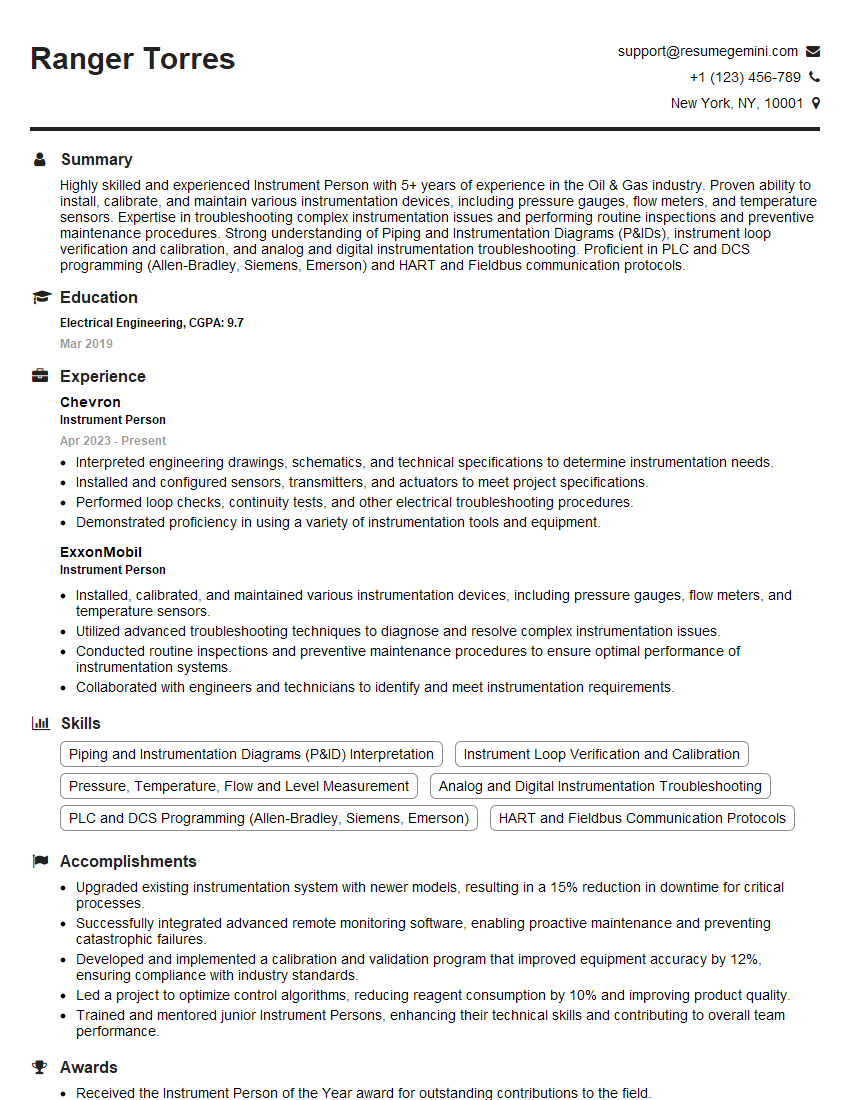
Instrument Person Resume Sample

Survey Crew Chief Resume Sample

Remote Sensing Specialist Resume Sample

Leveler Resume Sample
Explore more articles
Users Rating of Our Blogs
Share Your Experience
We value your feedback! Please rate our content and share your thoughts (optional).
What Readers Say About Our Blog
Really detailed insights and content, thank you for writing this detailed article.
IT gave me an insight and words to use and be able to think of examples