Interviews are more than just a Q&A session—they’re a chance to prove your worth. This blog dives into essential Geology and Geomorphology interview questions and expert tips to help you align your answers with what hiring managers are looking for. Start preparing to shine!
Questions Asked in Geology and Geomorphology Interview
Q 1. Explain the rock cycle and its significance.
The rock cycle is a fundamental concept in geology describing the continuous transformation of rocks from one type to another. It’s a cyclical process driven by internal (tectonic) and external (surface) Earth processes. Imagine it like a never-ending recycling program for rocks!
The cycle involves three main rock types:
- Igneous rocks: Formed from the cooling and solidification of molten rock (magma or lava). Examples include granite (intrusive, cooling slowly beneath the surface) and basalt (extrusive, cooling rapidly at the surface).
- Sedimentary rocks: Formed from the accumulation and cementation of sediments (fragments of pre-existing rocks, minerals, or organic matter). Examples include sandstone (from sand grains), shale (from clay), and limestone (from skeletal remains). Think of them as the ‘recycled’ rocks.
- Metamorphic rocks: Formed from the transformation of existing rocks (igneous, sedimentary, or even other metamorphic rocks) due to heat, pressure, and/or chemical reactions deep within the Earth. Examples include marble (from limestone) and slate (from shale). They are the ‘upgraded’ rocks.
The significance of the rock cycle lies in its role in shaping the Earth’s crust, creating diverse landscapes, and providing valuable resources like ores and building materials. Understanding the rock cycle helps us interpret Earth’s history, predict geological hazards, and manage our resources sustainably.
Q 2. Describe the different types of weathering and erosion.
Weathering and erosion are distinct but related processes that shape the Earth’s surface. Weathering is the in-situ breakdown of rocks and minerals at or near the Earth’s surface, while erosion involves the transport of weathered material to new locations.
Types of Weathering:
- Physical weathering (also called mechanical weathering): The breakdown of rocks without changing their chemical composition. Examples include freeze-thaw (water expands when freezing, fracturing rock), salt weathering (salt crystals grow in cracks, expanding them), and exfoliation (pressure release causing outer layers to peel off).
- Chemical weathering: The breakdown of rocks through chemical reactions. Examples include hydrolysis (water reacts with minerals), oxidation (minerals react with oxygen), and carbonation (carbon dioxide reacts with minerals, especially carbonate rocks).
Types of Erosion:
- Water erosion: The transport of material by rivers, streams, rain, and waves. This can form canyons, valleys, and deltas.
- Wind erosion: The transport of material by wind. This forms features like dunes and desert pavements.
- Glacial erosion: The transport of material by glaciers. This creates U-shaped valleys, moraines, and fjords.
- Gravity erosion: The downslope movement of material due to gravity. This includes landslides, rockfalls, and mudflows.
Understanding weathering and erosion is crucial for many applications, including predicting landslides, managing soil resources, and designing stable infrastructure.
Q 3. What are the major tectonic plates and their boundaries?
The Earth’s lithosphere is divided into several large and small tectonic plates that are constantly moving. These movements are responsible for earthquakes, volcanic activity, and the formation of mountains and ocean basins. Precise plate boundaries are complex and constantly evolving. However, some major plates include:
- North American Plate
- South American Plate
- Eurasian Plate
- African Plate
- Indo-Australian Plate
- Pacific Plate
- Antarctic Plate
Plate Boundaries:
- Divergent boundaries: Plates move apart, creating new crust (e.g., Mid-Atlantic Ridge). Think of it like a zipper slowly opening.
- Convergent boundaries: Plates collide. This can lead to subduction (one plate goes under another, forming volcanic arcs and trenches) or continental collision (forming mountain ranges like the Himalayas).
- Transform boundaries: Plates slide past each other horizontally (e.g., San Andreas Fault). This causes earthquakes.
Understanding plate tectonics is fundamental to comprehending the distribution of earthquakes, volcanoes, and geological resources and the evolution of Earth’s landscapes. It’s a cornerstone of modern geology.
Q 4. Explain the principles of stratigraphy.
Stratigraphy is the branch of geology that deals with the study of rock layers (strata) and layering (stratification). It’s like reading the Earth’s history written in stone!
Key Principles of Stratigraphy:
- Principle of Superposition: In an undisturbed sequence of rocks, the oldest layers are at the bottom, and the youngest are at the top.
- Principle of Original Horizontality: Sedimentary layers are originally deposited horizontally. Tilted layers indicate later deformation.
- Principle of Lateral Continuity: Sedimentary layers extend laterally in all directions until they thin out or terminate against the edge of their depositional basin.
- Principle of Cross-Cutting Relationships: A geologic feature that cuts another is the younger of the two (e.g., a fault cutting through layers is younger than the layers).
- Principle of Fossil Succession: Fossils succeed one another in a definite and determinable order; therefore, any time period can be recognized by its fossil content. This is crucial for dating rock layers.
Stratigraphic principles are essential for constructing geological time scales, correlating rock units across different locations, and understanding past environments. They are critical tools in exploration for resources and analyzing the geological record.
Q 5. How do you interpret geological maps?
Interpreting geological maps involves understanding the symbols, colours, and patterns used to represent various rock types, structures, and geological features. It’s like reading a detailed map of the Earth’s subsurface.
Steps in Interpreting Geological Maps:
- Identify the map’s legend: Understand the symbols and colours used for different rock units, faults, folds, and other features.
- Examine the rock units: Note the distribution, age, and type of each rock unit. Consider their relationship to each other (e.g., superposition).
- Analyze structural features: Identify faults and folds. Determine their orientations and relationships to the rock units. The style of folding or faulting can tell us about the stress conditions present during formation.
- Consider the geological history: Based on the observed rock units and structures, reconstruct the geological history of the area. This may involve identifying periods of sedimentation, deformation, intrusion, or metamorphism.
- Correlate with other data: Integrate the map interpretation with other data, such as geophysical surveys or borehole information, for a more comprehensive understanding.
Geological maps are vital for various applications, including mineral exploration, environmental assessments, infrastructure planning, and hazard assessment. The ability to interpret them is a key skill for any geologist.
Q 6. Describe different types of folds and faults.
Folds and faults are two major types of geological structures that result from deformation of rocks within the Earth’s crust. They are formed due to compressional, tensional or shear forces.
Types of Folds:
- Anticline: A fold with an upward arch; the oldest rocks are in the core.
- Syncline: A fold with a downward trough; the youngest rocks are in the core.
- Monocline: A step-like fold; one limb is nearly horizontal.
- Dome: A broad, upward arch; rocks dip away from a central point.
- Basin: A broad, downward arch; rocks dip towards a central point.
Types of Faults:
- Normal fault: Hanging wall moves down relative to the footwall (associated with extensional stress).
- Reverse fault: Hanging wall moves up relative to the footwall (associated with compressional stress); a thrust fault is a type of reverse fault with a low dip angle.
- Strike-slip fault: Rocks move horizontally past each other (associated with shear stress); the San Andreas Fault is a famous example.
The study of folds and faults is crucial for understanding tectonic processes, assessing geological hazards (like earthquakes and landslides), and exploring for resources. The geometry and kinematics of folds and faults are key factors in reservoir characterization in the petroleum industry.
Q 7. Explain the concept of groundwater flow and aquifers.
Groundwater flow refers to the movement of water beneath the Earth’s surface. Aquifers are geological formations that store and transmit groundwater. Think of them as underground reservoirs.
Groundwater Flow:
Groundwater moves primarily under the influence of gravity and pressure gradients. The rate of flow depends on factors such as the permeability (ability of the rock to transmit water) and hydraulic conductivity (ease with which water can move through the rock) of the aquifer material and the hydraulic gradient (difference in water pressure). Groundwater flow can be modeled using Darcy’s Law, which relates the flow rate to the hydraulic gradient and the hydraulic conductivity.
Aquifers:
Aquifers can be classified based on their geological characteristics and hydrological properties:
- Confined aquifers: Overlain by an impermeable layer (aquitard).
- Unconfined aquifers: In direct contact with the atmosphere; water level fluctuates with recharge.
- Perched aquifers: Small, isolated aquifers above the main water table.
Understanding groundwater flow and aquifers is critical for managing water resources, predicting the impact of groundwater extraction, assessing groundwater contamination risks, and designing sustainable groundwater management strategies. This understanding is crucial for water resource management and environmental protection.
Q 8. How is GIS used in geological studies?
GIS, or Geographic Information Systems, is an indispensable tool in geological studies. It allows us to integrate, analyze, and visualize diverse spatial data related to the Earth’s structure and processes. Imagine trying to map a complex geological formation across a vast area – GIS makes this manageable.
- Spatial Data Integration: GIS handles various data types such as geological maps, satellite imagery, geophysical surveys, and drill core data, combining them to create a comprehensive picture of the subsurface.
- Data Analysis: GIS performs spatial analyses such as overlay analysis (combining different map layers), proximity analysis (identifying areas near geological features), and interpolation (estimating values between known data points), giving insights into geological relationships.
- 3D Modeling: GIS facilitates the creation of 3D models of subsurface structures, assisting in visualizing complex geological formations and understanding their relationships, crucial for resource exploration and hazard assessment.
- Visualization and Communication: GIS produces high-quality maps and visualizations, effectively communicating complex geological information to stakeholders, including researchers, policymakers, and the public. For instance, creating a clear map showing areas prone to landslides improves public safety and informs infrastructure development.
For example, in mineral exploration, GIS helps geologists analyze geochemical data, geological maps, and geophysical surveys to identify potential ore deposits. It’s a powerful tool allowing for more efficient and accurate resource identification.
Q 9. What are the different methods for dating geological formations?
Dating geological formations is crucial for understanding the Earth’s history. We employ various methods, broadly categorized as relative and absolute dating.
- Relative Dating: This determines the chronological order of events without specifying exact ages. Principles like superposition (older layers are below younger ones) and cross-cutting relationships (features cutting across others are younger) are applied. Think of it like stacking books: the book at the bottom is older.
- Absolute Dating (Geochronology): This provides numerical ages for geological formations. Key techniques include:
- Radiometric Dating: This is based on the decay of radioactive isotopes in minerals. The most common is carbon dating (14C), useful for organic materials up to around 50,000 years old. For older rocks, uranium-lead (U-Pb) or potassium-argon (K-Ar) dating is employed.
- Luminescence Dating: This measures the accumulated light emitted from minerals exposed to radiation, useful for sediments and volcanic rocks.
- Dendrochronology (Tree-Ring Dating): This counts the annual growth rings in trees to determine their age, useful for dating relatively recent events and correlating them with other geological events.
For instance, in a geological cross-section, relative dating can establish the sequence of rock layers, while radiometric dating can provide absolute ages for key volcanic ash layers, helping to precisely constrain the ages of the surrounding strata.
Q 10. Describe the process of sediment transport and deposition.
Sediment transport and deposition is the continuous process of moving weathered rock fragments (sediments) and their eventual settling. Imagine a river carrying sand downstream.
- Erosion and Weathering: The process begins with the breakdown of rocks into smaller fragments through weathering (chemical and physical processes) and erosion (removal of weathered material). Think of rain and wind slowly eroding a mountain.
- Transportation: These fragments are then transported by various agents:
- Water: Rivers, streams, and ocean currents are major carriers, transporting sediments based on size and flow velocity (larger particles require faster flow).
- Wind: Wind transports finer particles like sand and dust over long distances, forming features like sand dunes.
- Ice: Glaciers transport vast quantities of sediment, depositing them as they melt.
- Gravity: Mass wasting events (landslides, rockfalls) transport sediment downslope.
- Deposition: When the transporting agent loses energy (e.g., a river entering a lake), the sediments settle out, forming layers called strata. The size and type of sediment deposited depend on the energy of the transporting agent. Finer sediments settle in calmer environments, while coarser ones settle in higher-energy environments.
A classic example is a delta, formed where a river meets the sea; the decrease in water velocity leads to deposition of sediment, building up land over time.
Q 11. Explain the formation of different types of sedimentary rocks.
Sedimentary rocks are formed from the accumulation and lithification (compaction and cementation) of sediments. The type of rock depends heavily on the source and environment of deposition.
- Clastic Sedimentary Rocks: These are composed of fragments (clasts) of pre-existing rocks. Examples include:
- Conglomerates: Composed of rounded, gravel-sized clasts.
- Sandstones: Composed of sand-sized grains.
- Shales: Composed of very fine-grained clay particles.
- Chemical Sedimentary Rocks: These form from the precipitation of minerals from solution. Examples include:
- Limestones: Primarily composed of calcium carbonate (CaCO3), often formed in marine environments.
- Evaporites: Formed by evaporation of water bodies, leaving behind salts such as halite (rock salt) and gypsum.
- Organic Sedimentary Rocks: These form from the accumulation of organic matter. Examples include:
- Coal: Formed from the accumulation of plant remains in swamps.
- Some Limestones: Formed from the accumulation of skeletal remains of marine organisms.
The environment of deposition profoundly influences the characteristics of the resulting rock. For example, well-sorted sandstones indicate deposition in a high-energy environment like a beach, while poorly sorted conglomerates suggest deposition in a chaotic environment like a glacial outwash plain.
Q 12. What are the characteristics of igneous and metamorphic rocks?
Igneous and metamorphic rocks represent distinct stages in the rock cycle, formed through different processes.
- Igneous Rocks: These form from the cooling and solidification of molten rock (magma or lava). Their characteristics depend on the cooling rate and composition of the magma:
- Intrusive Igneous Rocks (Plutonic): These cool slowly beneath the Earth’s surface, resulting in large crystals (e.g., granite).
- Extrusive Igneous Rocks (Volcanic): These cool quickly at the surface, resulting in small or no visible crystals (e.g., basalt).
- Metamorphic Rocks: These form from the transformation of pre-existing rocks (igneous, sedimentary, or other metamorphic rocks) due to changes in temperature, pressure, or chemical environment. Different metamorphic grades exist, reflecting varying degrees of alteration. Examples include:
- Foliated Metamorphic Rocks: These exhibit a layered or banded texture due to directed pressure (e.g., slate, schist, gneiss).
- Non-foliated Metamorphic Rocks: These lack a layered texture, often formed under uniform pressure (e.g., marble, quartzite).
Granite’s coarse crystals indicate slow cooling deep underground, while basalt’s fine crystals indicate rapid cooling after volcanic eruption. Marble’s transformation from limestone is evident in its recrystallized structure.
Q 13. How do you assess geological hazards like landslides or earthquakes?
Assessing geological hazards requires a multi-faceted approach combining geological mapping, geophysical surveys, and geotechnical investigations.
- Landslides: Assessment involves identifying areas with unstable slopes, analyzing soil properties (strength, water content), and considering triggering factors like rainfall or earthquakes. Techniques include slope stability analysis and remote sensing (satellite imagery, LiDAR) to identify potential failure zones.
- Earthquakes: Assessment involves studying historical earthquake records, mapping fault lines, and analyzing ground motion characteristics. Geophysical techniques like seismic reflection and refraction surveys provide subsurface information to understand fault structures and potential ground shaking.
For example, in landslide assessment, we might use GIS to overlay slope angle maps, soil type maps, and rainfall data to pinpoint high-risk areas. Similarly, earthquake hazard maps are created based on historical seismic activity and fault locations, informing building codes and land-use planning.
Q 14. Explain the principles of geotechnical site investigation.
Geotechnical site investigation aims to determine the engineering properties of soil and rock for construction purposes. It’s crucial for designing safe and stable foundations.
- Phase 1: Desk Study: This involves reviewing existing geological maps, site history, and environmental data to get an initial understanding of site conditions.
- Phase 2: Site Reconnaissance and Preliminary Investigations: This includes a site visit to visually assess the terrain, geological outcrops, and existing infrastructure. Preliminary investigations may include shallow drilling or geophysical surveys.
- Phase 3: Detailed Investigations: This involves detailed subsurface exploration using methods like:
- Drilling and Sampling: Obtaining soil and rock samples for laboratory testing to determine strength, permeability, and other engineering properties.
- In-situ Testing: Performing tests directly in the ground, such as cone penetration tests (CPT) and standard penetration tests (SPT), to assess soil strength and density.
- Geophysical Surveys: Employing techniques like seismic surveys and ground-penetrating radar (GPR) to image subsurface conditions.
- Phase 4: Report Writing and Recommendations: This involves compiling all the data collected, interpreting the results, and providing recommendations for foundation design and construction methods.
For example, before building a high-rise building, detailed geotechnical investigations are crucial to ensure the foundation can withstand the anticipated loads and to avoid issues like settlement or instability.
Q 15. Describe your experience with geological modeling software.
My experience with geological modeling software spans several years and encompasses a range of applications. I’m proficient in using industry-standard software such as Leapfrog Geo, ArcGIS Pro, and GOCAD. I’ve used these tools extensively for tasks including 3D geological modeling from drillhole data, creating structural interpretations, resource estimation, and geotechnical analyses. For example, in a recent project involving a porphyry copper deposit, I used Leapfrog Geo to build a 3D model of the ore body, incorporating geological data from drilling, geophysics, and mapping. This model was then used to estimate the resource volume and grade, crucial for economic evaluations. My experience also extends to using scripting languages like Python within these platforms to automate repetitive tasks and enhance model accuracy. I’m confident in adapting my skills to new software as needed, as the field is constantly evolving.
Career Expert Tips:
- Ace those interviews! Prepare effectively by reviewing the Top 50 Most Common Interview Questions on ResumeGemini.
- Navigate your job search with confidence! Explore a wide range of Career Tips on ResumeGemini. Learn about common challenges and recommendations to overcome them.
- Craft the perfect resume! Master the Art of Resume Writing with ResumeGemini’s guide. Showcase your unique qualifications and achievements effectively.
- Don’t miss out on holiday savings! Build your dream resume with ResumeGemini’s ATS optimized templates.
Q 16. How do you interpret geophysical data?
Interpreting geophysical data involves a multi-step process that requires a thorough understanding of the underlying geophysical methods and their limitations. I typically begin by reviewing the survey parameters, understanding the acquisition techniques used (e.g., seismic reflection, gravity, magnetic, electrical resistivity), and assessing the quality of the data. This includes identifying and mitigating noise. Once the data quality is assessed, I move to processing, which may include filtering, enhancing signals, and correcting for various effects. The interpretation phase then involves analyzing processed data using visualization techniques, such as contour maps, cross-sections, and 3D models. I use my geological knowledge to integrate geophysical results with other data sources, like geological maps and drillhole data, to create a coherent subsurface interpretation. For instance, identifying a strong magnetic anomaly might suggest the presence of a mafic intrusion, which could be further verified through geological mapping and drilling. A crucial aspect is understanding the uncertainties inherent in geophysical data and expressing them appropriately in my interpretations.
Q 17. Explain the concept of soil mechanics and its relevance to geology.
Soil mechanics is the application of engineering principles to understand the behavior of soils. It’s critically relevant to geology because it bridges the gap between the physical properties of soil (as a geological material) and its engineering applications. Geologists frequently encounter soils in various contexts, from slope stability analyses to foundation design for structures. Soil mechanics considers factors like soil composition (grain size distribution, mineral content), water content, and stress conditions to predict how soil will behave under different loads or environmental changes. For instance, understanding soil shear strength is crucial for assessing landslide susceptibility. Similarly, knowledge of soil consolidation is essential in designing foundations for large structures to prevent settlement. The principles of soil mechanics underpin numerous geotechnical investigations, informing decisions related to construction, infrastructure development, and hazard mitigation.
Q 18. Describe the different types of mass wasting.
Mass wasting refers to the downslope movement of rock and soil under the influence of gravity. Several factors influence the type and speed of mass wasting, including slope angle, material properties, water content, and triggering events like earthquakes or heavy rainfall. Different types include:
- Falls: Free-fall of rock fragments from a steep cliff face. Imagine a rock tumbling down a vertical cliff.
- Topples: Rotation of a rock mass about a pivot point. Think of a leaning tower slowly tipping over.
- Slides: Movement of a relatively coherent block of material along a defined failure surface. This is like a large, cohesive chunk of earth sliding downhill.
- Spreads: Lateral movement of soil or rock masses often associated with liquefaction or underlying geological structures. This is a horizontal or nearly horizontal movement.
- Flows: Fluid-like movement of unconsolidated materials, including debris flows (a mixture of rock, soil, and water) and earthflows (slower movement of saturated soil). Imagine a river of mud flowing downhill.
- Creep: Very slow, gradual downslope movement of soil particles. This is a subtle, long-term process.
Understanding these different types is vital for hazard assessment and mitigation in areas prone to mass wasting.
Q 19. What are the environmental impacts of mining?
Mining activities have significant environmental impacts, both during and after the operational phase. These impacts include:
- Habitat Loss and Fragmentation: Mining operations often involve clearing large areas of land, resulting in habitat loss for various plant and animal species.
- Soil Erosion and Degradation: The removal of vegetation cover during mining increases the risk of soil erosion and degradation, leading to sedimentation in nearby waterways.
- Water Pollution: Mining can contaminate water sources through the release of heavy metals, chemicals, and acid mine drainage. This can harm aquatic life and pose risks to human health.
- Air Pollution: Mining operations, especially those involving blasting and ore processing, can release dust and other airborne pollutants.
- Greenhouse Gas Emissions: Mining activities contribute to greenhouse gas emissions through the use of heavy machinery and energy consumption.
- Waste Generation: Mining generates large amounts of waste rock and tailings, which require proper management to prevent environmental damage.
Effective environmental management strategies are crucial to mitigate these impacts and ensure the long-term sustainability of mining operations. This includes careful site selection, implementing best practices for waste management, and employing effective monitoring and remediation measures.
Q 20. How do you manage geological data effectively?
Effective geological data management is essential for efficient and accurate geological interpretation and decision-making. My approach involves a multi-faceted strategy:
- Database Management: I use relational databases (e.g., SQL Server, PostgreSQL) to store and manage geological data, ensuring data integrity and accessibility. This includes structured data from drillholes, geophysical surveys, and geological mapping.
- Data Standardization: Adopting standardized data formats and coding systems is crucial for ensuring compatibility and ease of analysis across different projects and teams. I follow established industry standards wherever possible.
- Data Visualization and Analysis: Effective visualization using GIS software (ArcGIS, QGIS) and other specialized geological software (e.g., Leapfrog Geo) is crucial for interpreting complex datasets. I regularly use these tools to create maps, cross-sections, and 3D models.
- Version Control: Implementing a version control system (e.g., Git) helps track changes and modifications to data, allowing for easy collaboration and audit trails. This prevents data loss and ensures data quality.
- Data Security: Data security is paramount. I adhere to strict data security protocols and ensure data is properly backed up and protected against unauthorized access.
By applying these principles, I ensure that geological data is effectively managed, readily accessible, and reliable for informed decision-making.
Q 21. Explain your understanding of fluvial geomorphology.
Fluvial geomorphology focuses on the processes and landforms associated with rivers and streams. It encompasses a wide range of scales, from individual grain movement to the evolution of entire river systems. Key aspects include:
- Channel Morphology: The shape, size, and pattern of river channels are influenced by factors such as discharge, sediment load, and substrate. This includes understanding braided, meandering, and straight channels.
- Sediment Transport: Rivers transport sediment through various mechanisms, including bed load, suspended load, and dissolved load. The rate and type of sediment transport influence channel morphology.
- Floodplain Development: Floodplains are formed by repeated flooding events, resulting in the deposition of sediment and the formation of characteristic landforms like levees, terraces, and oxbow lakes.
- River Basin Evolution: Fluvial geomorphology examines the long-term evolution of river basins, including the impact of tectonic uplift, climate change, and human activities.
Understanding fluvial geomorphology is crucial for applications such as flood risk assessment, river management, and understanding past environmental conditions. For instance, analyzing fluvial deposits can provide valuable information about past climates and tectonic events.
Q 22. Describe the different types of coastal landforms.
Coastal landforms are dynamic features shaped by the continuous interplay between land and sea. They are broadly classified based on the dominant processes involved: erosion, deposition, or a combination of both.
- Erosional Landforms: These are formed by the relentless action of waves, currents, and tides wearing away the coastline. Examples include:
- Cliffs: Steep rock faces carved by wave action.
- Headlands and Bays: Headlands are resistant rock projections that jut out into the sea, while bays are recessed areas formed where softer rocks have been eroded.
- Sea Caves, Arches, and Stacks: Progressive erosion creates these features, with caves eventually becoming arches and then stacks (isolated columns of rock).
- Depositional Landforms: These are created by the accumulation of sediments transported and deposited by waves and currents. Examples include:
- Beaches: Accumulations of sand and shingle along the shoreline.
- Spits: Linear ridges of sediment extending from the land into the sea, often formed where a coastline changes direction.
- Bars: Similar to spits, but they extend completely across a bay, creating a lagoon.
- Tombolos: A ridge of sand or shingle connecting an island to the mainland.
- Estuaries and Deltas: These are transitional zones where rivers meet the sea. Estuaries are partially enclosed bodies of water where fresh and saltwater mix, while deltas are formed by the deposition of sediments carried by rivers at their mouths.
Understanding these landforms is crucial for coastal management, predicting erosion patterns, and planning coastal development. For instance, knowing the erosional susceptibility of a cliff allows for informed decisions about building infrastructure near the coast.
Q 23. How does climate change affect geomorphic processes?
Climate change significantly impacts geomorphic processes, primarily through alterations in temperature and precipitation patterns, as well as sea-level rise.
- Increased Temperatures: Higher temperatures can lead to increased rates of weathering and erosion, particularly in permafrost regions where thawing can destabilize slopes and alter drainage patterns. Think of glaciers melting at an accelerated rate, significantly impacting the morphology of valleys and coastlines.
- Changes in Precipitation: More intense rainfall events cause increased runoff, leading to enhanced erosion and sediment transport. Conversely, prolonged droughts can reduce river discharge, impacting sediment transport and potentially leading to channel incision.
- Sea-Level Rise: Rising sea levels inundate low-lying coastal areas, accelerating coastal erosion and changing the shape of coastlines. This affects beaches, deltas, and estuaries considerably.
- Extreme Weather Events: Climate change increases the frequency and intensity of storms and hurricanes, causing significant geomorphic changes through coastal erosion, flooding, and landslides.
The combined effect of these changes leads to alterations in landscape evolution, impacting human settlements and infrastructure. For example, coastal erosion due to sea-level rise threatens coastal communities and infrastructure, while increased landslide activity due to permafrost thaw poses significant risks in high-latitude regions. Understanding these impacts is essential for effective climate change adaptation and mitigation strategies.
Q 24. Explain the concept of isostasy.
Isostasy is a fundamental concept in geology that describes the equilibrium between Earth’s lithosphere (the crust and upper mantle) and asthenosphere (the more ductile layer beneath the lithosphere). Imagine the lithosphere as a raft floating on the denser asthenosphere.
The principle of isostasy states that the lithosphere will adjust vertically to maintain equilibrium, meaning that higher elevations (like mountains) have thicker roots extending down into the asthenosphere, compensating for their mass. Conversely, lower areas (like ocean basins) have thinner roots.
Several models exist to explain isostasy, including Airy isostasy (where the crustal thickness varies) and Pratt isostasy (where the density of the crust varies).
Isostatic adjustment can occur over geological time scales in response to changes in surface loading (e.g., glacial ice sheets, sediment deposition). For example, the uplift of Scandinavia after the last ice age is a classic example of isostatic rebound, as the removal of the massive ice sheet allowed the lithosphere to slowly rise back to equilibrium. Understanding isostasy is vital in interpreting topographic variations, understanding tectonic processes, and predicting post-glacial land-level changes.
Q 25. What are the applications of remote sensing in geomorphology?
Remote sensing plays a crucial role in geomorphology by providing a synoptic view of the Earth’s surface and subsurface. It allows us to study geomorphic processes and landforms at different scales, from local to global.
- Satellite Imagery: Provides high-resolution images for mapping landforms, vegetation cover, and surface changes over time. This is invaluable for monitoring erosion, landslides, and coastal changes.
- Aerial Photography: Offers detailed images for mapping landforms and geological structures, especially useful for smaller-scale studies.
- LiDAR (Light Detection and Ranging): Uses laser pulses to create highly accurate 3D models of the Earth’s surface, allowing for precise measurements of topography, vegetation height, and even subsurface features.
- Radar: Penetrates vegetation and soil to map subsurface features and assess ground stability. This is particularly useful in identifying potential landslides or subsurface cavities.
By analyzing remotely sensed data, we can monitor changes in landforms over time, model geomorphic processes, and assess the impact of natural hazards and human activities on the landscape. For example, using time-series satellite imagery, we can track the retreat of glaciers or the evolution of river channels over decades. This data allows for better land management, infrastructure planning, and hazard mitigation strategies.
Q 26. Describe your experience with field mapping techniques.
My field mapping experience encompasses a range of techniques, from traditional compass and clinometer surveys to the use of GPS and GIS technologies.
I have extensive experience in producing geological maps at various scales. This includes:
- Geological mapping: Identifying and mapping different rock units, their contacts, and structural features (faults, folds).
- Geomorphological mapping: Mapping different landforms and their associated processes (e.g., erosion, deposition).
- Surveying techniques: Using compass, clinometer, and GPS to collect accurate spatial data. I’m proficient in using various mapping software packages to process the field data into maps and cross-sections.
- Data analysis: Integrating geological, geomorphological, and geophysical data to create comprehensive maps and interpretations.
A recent project involved mapping a complex area characterized by active faulting and landslides. Using a combination of field observations, aerial photography, and LiDAR data, we were able to accurately map the geological units and identify areas at high risk of future landslides, informing local land-use planning decisions. This project highlights the importance of integrated field mapping techniques to provide robust and reliable geological and geomorphological information.
Q 27. How do you assess the stability of slopes?
Slope stability assessment is a critical aspect of geotechnical engineering and geomorphology, involving evaluating the likelihood of a slope failure. This requires a multi-faceted approach combining field investigation, laboratory testing, and numerical modeling.
My assessment typically involves these steps:
- Visual inspection and field mapping: This includes identifying potential failure planes, assessing the presence of cracks, vegetation cover, and water infiltration.
- Geotechnical investigation: Gathering information on soil properties, groundwater conditions, and past slope failures through boreholes and in-situ testing.
- Stability analysis: Employing various analytical and numerical methods (e.g., limit equilibrium analysis, finite element analysis) to determine the factor of safety (the ratio of resisting forces to driving forces).
- Risk assessment: Evaluating the probability of slope failure and its potential consequences, taking into account the type of failure, the potential for loss of life or property, and the time scale involved.
For instance, in assessing the stability of a highway cut, we would need to consider the strength of the rocks, the presence of joints and fractures, the angle of the slope, and the potential for water infiltration. Low factor of safety values or signs of active instability may require remediation measures such as slope stabilization, drainage improvements, or retaining walls.
Q 28. Explain your understanding of karst geomorphology.
Karst geomorphology focuses on landscapes shaped by the dissolution of soluble rocks, primarily limestone, dolomite, and gypsum. This dissolution process, driven by slightly acidic rainwater, creates unique and distinctive features.
Key features of karst landscapes include:
- Sinkholes (dolines): Depressions formed by the collapse of the surface into underlying cavities.
- Caves and caverns: Underground openings created by the dissolution of rock along joints and bedding planes.
- Karren (solution grooves): Small-scale surface features etched by rainwater.
- Poljes: Large, flat-bottomed depressions surrounded by steep slopes.
- Underground drainage systems: Instead of surface rivers, water often flows underground through conduits and caves.
Understanding karst geomorphology is crucial for various applications, including groundwater resource management, hazard assessment (sinkhole formation, cave collapses), and environmental protection. For example, mapping the extent of karst aquifers is essential for sustainable groundwater management, and assessing the stability of caves is vital for cave tourism and preservation.
Key Topics to Learn for Geology and Geomorphology Interview
- Structural Geology: Understanding plate tectonics, fault systems, folds, and their implications for resource exploration and hazard assessment.
- Sedimentology and Stratigraphy: Interpreting sedimentary rock sequences, analyzing depositional environments, and applying this knowledge to reconstruct past climates and geological events. Practical application includes subsurface reservoir characterization in the oil and gas industry.
- Geomorphology: Analyzing landforms, understanding fluvial processes (rivers and streams), coastal dynamics, glacial processes, and their impact on landscape evolution. Consider the practical applications in environmental management and hazard mitigation.
- Hydrogeology: Understanding groundwater flow, aquifer systems, and contaminant transport. This is crucial for water resource management and environmental remediation projects.
- Petrology and Mineralogy: Identifying and classifying rocks and minerals, understanding their formation and properties, which is vital for geological mapping and resource exploration.
- Geophysical Methods: Familiarity with seismic, gravity, and magnetic methods for subsurface imaging and resource exploration. This demonstrates understanding of data acquisition and interpretation.
- Geological Mapping and Interpretation: Demonstrate skills in interpreting geological maps, cross-sections, and using GIS software for spatial data analysis.
- Problem-Solving and Data Analysis: Practice approaching geological problems systematically, using critical thinking, and presenting your findings clearly and concisely. This could include interpreting core logs, well logs, or geophysical data sets.
Next Steps
Mastering Geology and Geomorphology opens doors to exciting careers in resource exploration, environmental consulting, academia, and government agencies. To maximize your job prospects, crafting a compelling and ATS-friendly resume is crucial. A well-structured resume highlights your skills and experience effectively, increasing your chances of landing an interview. We highly recommend using ResumeGemini to build a professional and impactful resume tailored to the specific requirements of Geology and Geomorphology positions. ResumeGemini provides examples of resumes specifically designed for this field, giving you a head start in showcasing your qualifications.
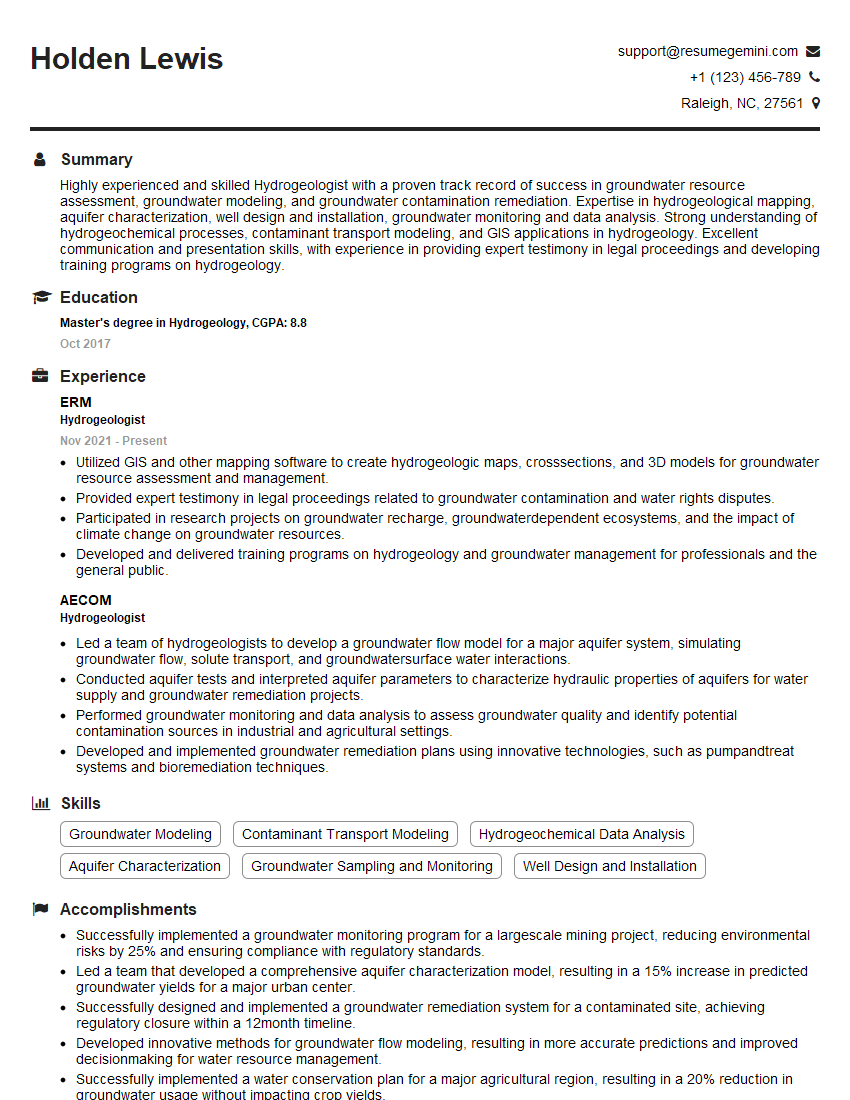
Hydrogeologist Resume Sample

Geologist Resume Sample
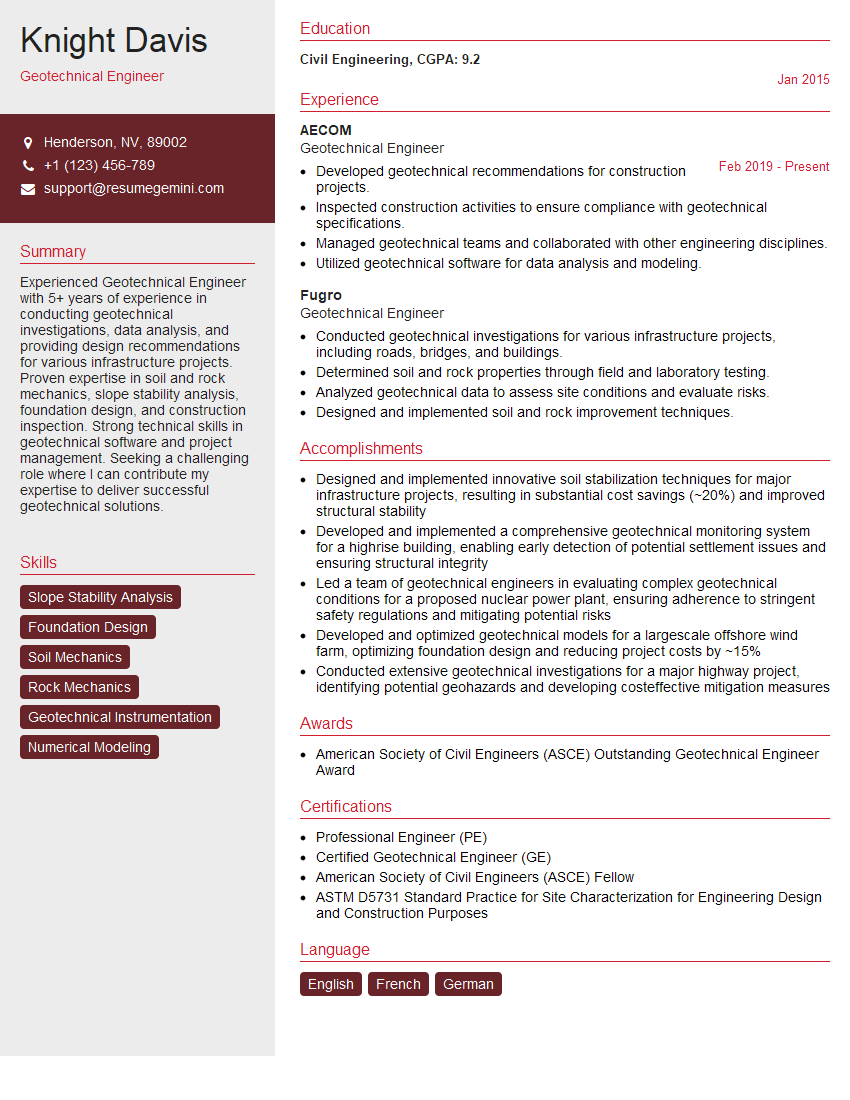
Geotechnical Engineer Resume Sample
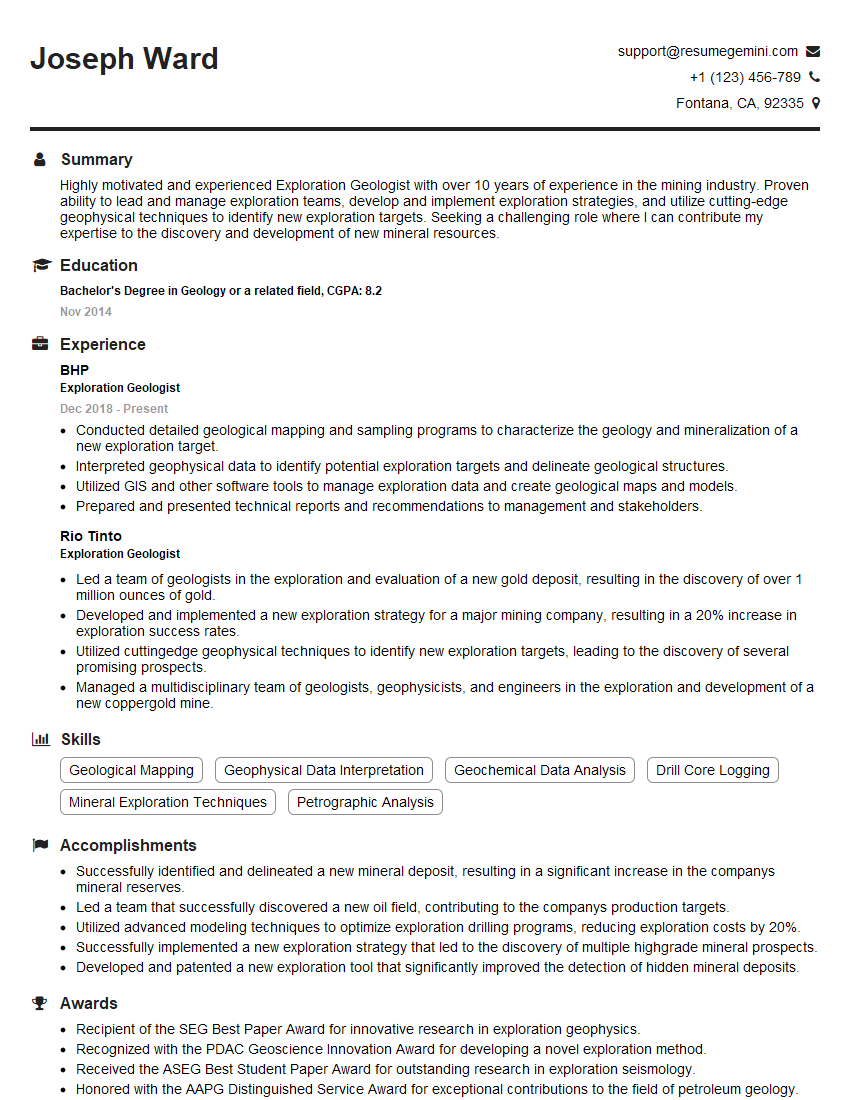
Exploration Geologist Resume Sample

Engineering Geologist Resume Sample
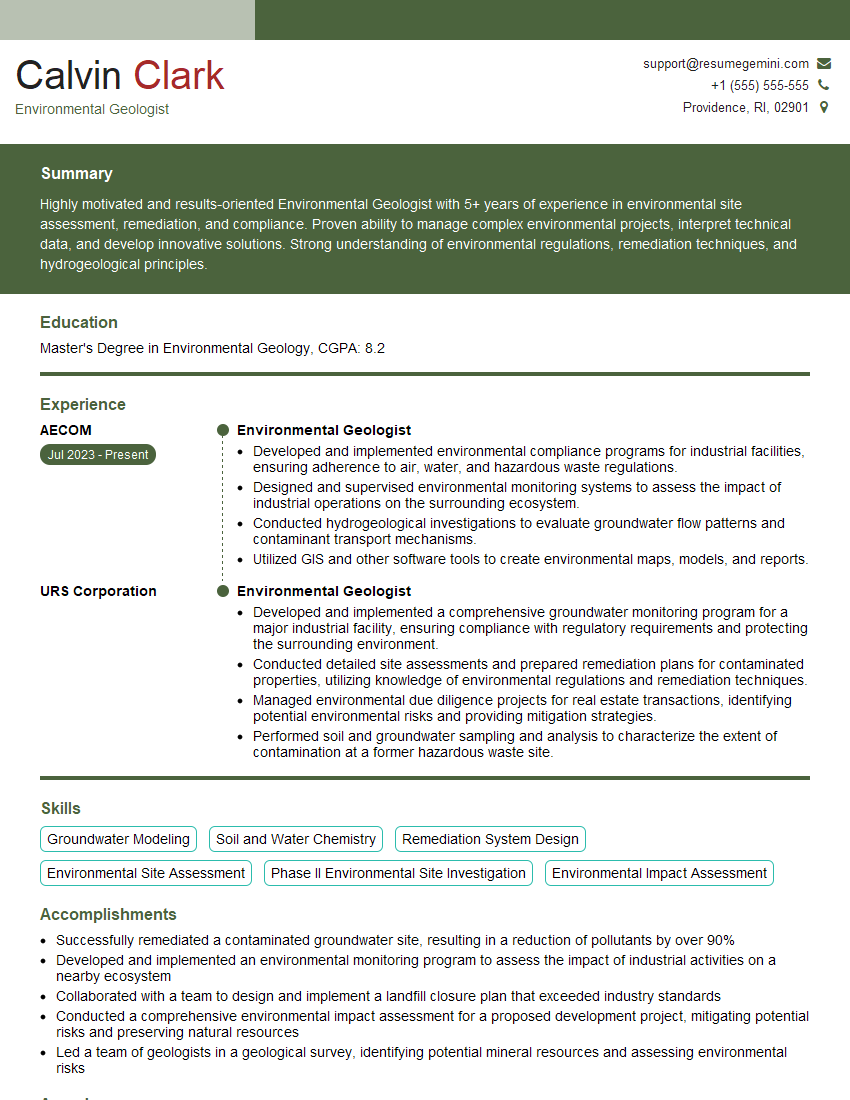
Environmental Geologist Resume Sample
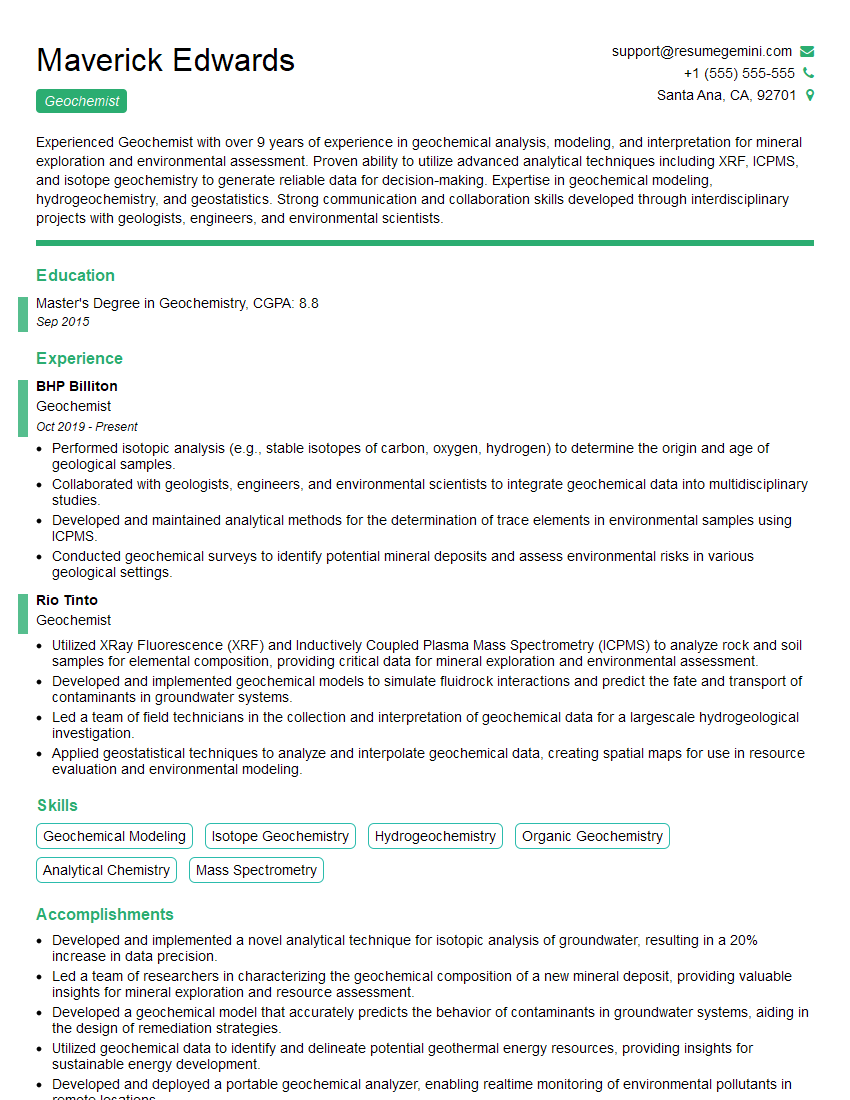
Geochemist Resume Sample
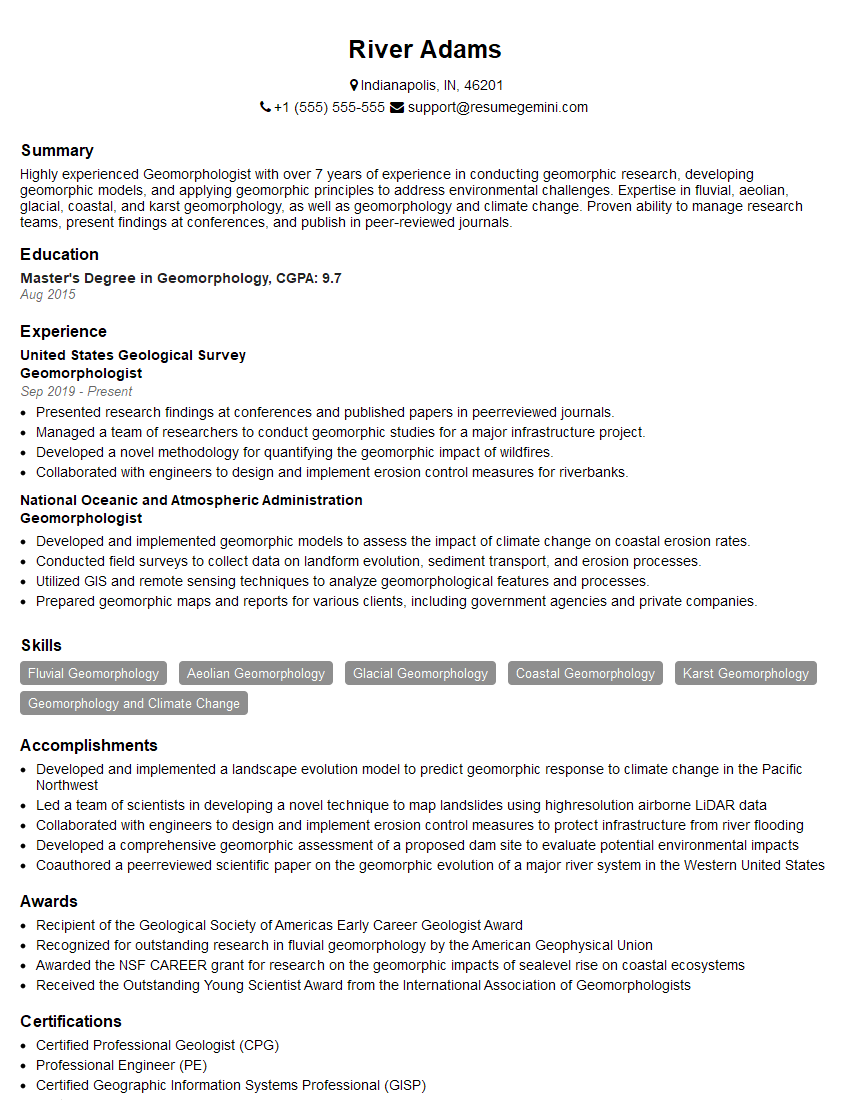
Geomorphologist Resume Sample
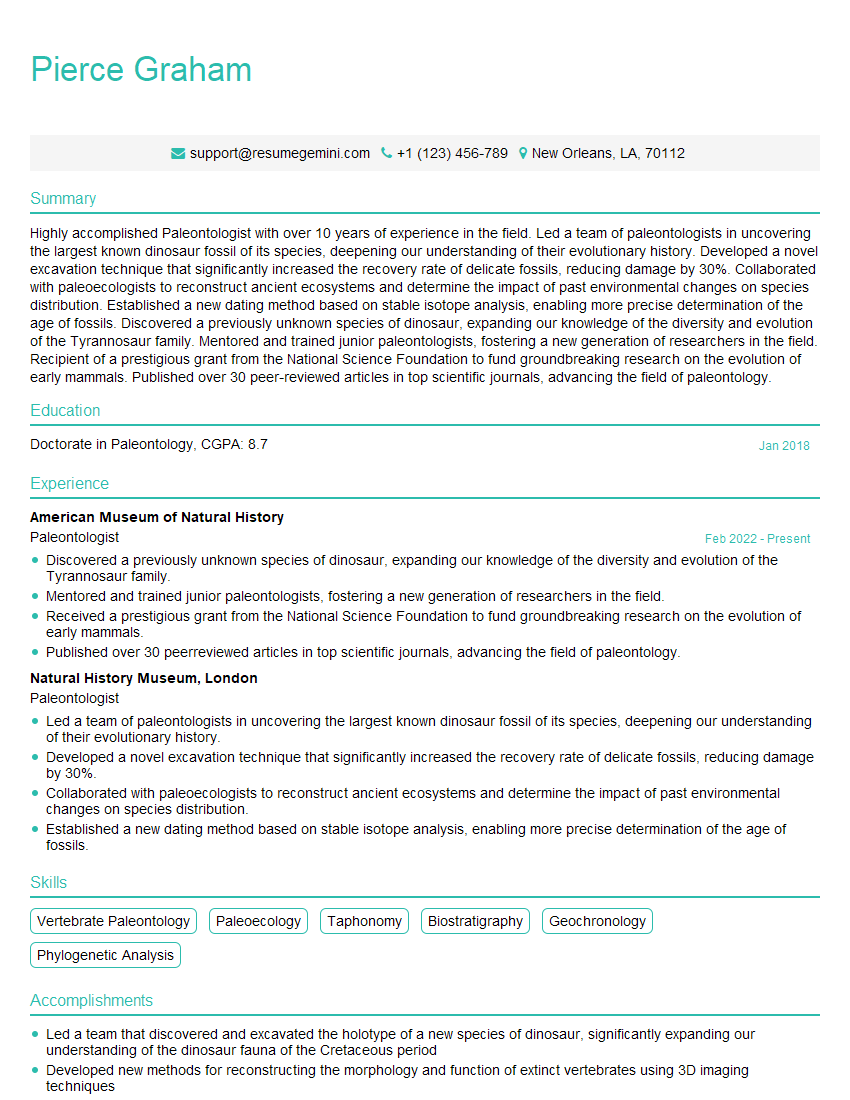
Paleontologist Resume Sample
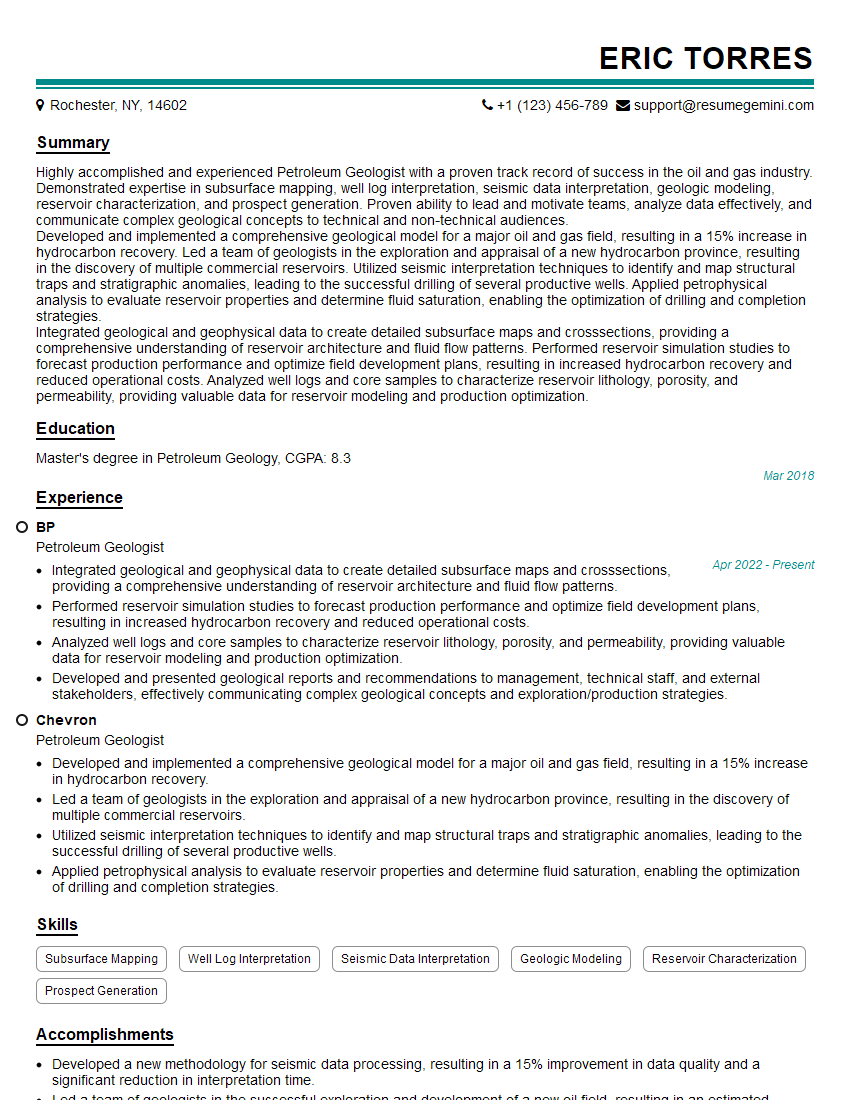
Petroleum Geologist Resume Sample
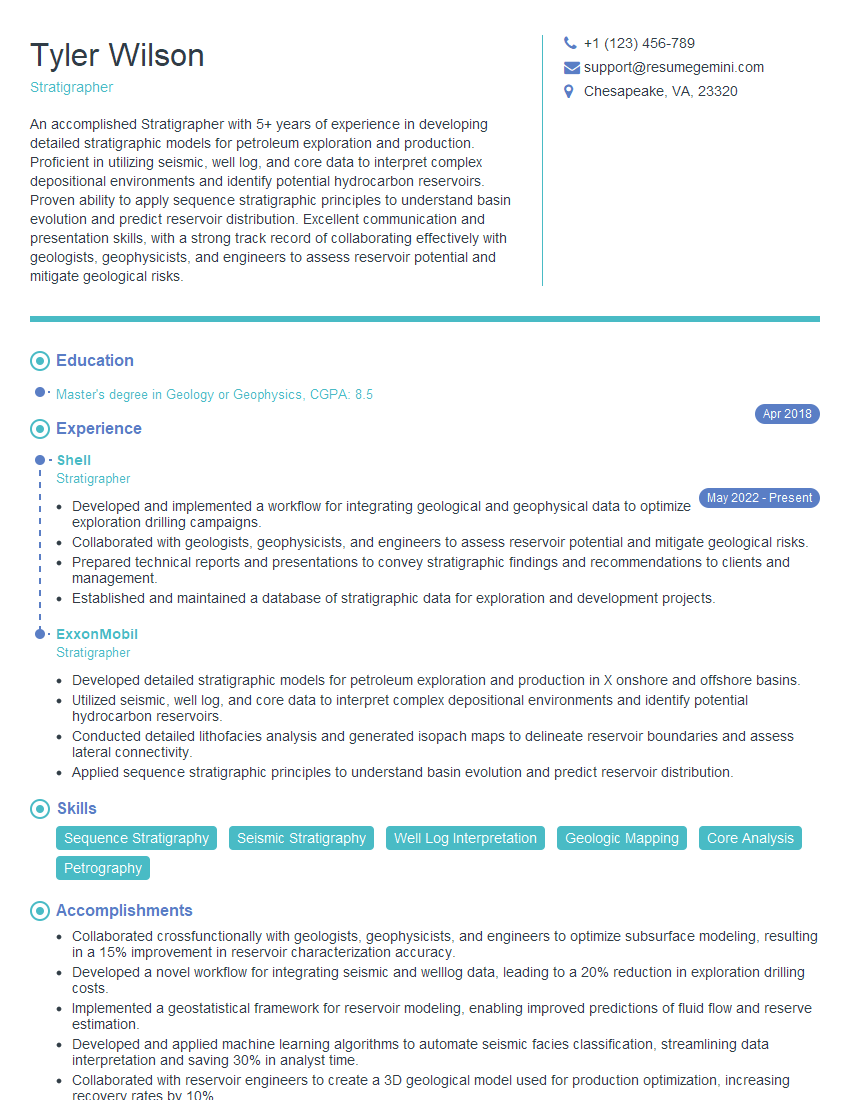
Stratigrapher Resume Sample

Remote Sensing Specialist Resume Sample

Glaciologist Resume Sample

Geological Technician Resume Sample
Explore more articles
Users Rating of Our Blogs
Share Your Experience
We value your feedback! Please rate our content and share your thoughts (optional).
What Readers Say About Our Blog
Really detailed insights and content, thank you for writing this detailed article.
IT gave me an insight and words to use and be able to think of examples