Interviews are opportunities to demonstrate your expertise, and this guide is here to help you shine. Explore the essential Fish Hatchery Design and Construction interview questions that employers frequently ask, paired with strategies for crafting responses that set you apart from the competition.
Questions Asked in Fish Hatchery Design and Construction Interview
Q 1. Describe your experience in designing water treatment systems for fish hatcheries.
Designing water treatment systems for fish hatcheries is crucial for maintaining optimal water quality, which directly impacts fish health and survival. My experience encompasses designing systems that address various water sources and their inherent challenges. This includes selecting appropriate filtration methods (e.g., sand filtration, biofiltration, UV sterilization), ensuring adequate disinfection (chlorination, ozonation), and managing water flow rates to prevent stress on the fish.
For instance, in one project, we dealt with a high level of iron in the source water. We implemented a multi-stage system including aeration, coagulation, and sedimentation to remove the iron before the water reached the rearing tanks. In another project focusing on disease prevention, we incorporated UV sterilization as a final barrier to eliminate any harmful microorganisms. The design always prioritizes redundancy, employing backup systems to ensure continuous water flow and treatment even in case of equipment failure.
The design process is iterative, involving detailed water quality analysis, hydraulic modeling, and careful consideration of the specific needs of the target fish species. It’s not just about treating water; it’s about creating a stable and healthy aquatic environment. This involves considering the temperature control systems, oxygenation mechanisms, and nutrient management as well.
Q 2. What are the key considerations for selecting a suitable hatchery site?
Selecting a suitable hatchery site is paramount to its long-term success. Key considerations include:
- Water Source: Abundant, high-quality water with consistent flow and temperature is essential. The water source should be free from pollutants and easily accessible.
- Accessibility: Easy access for transportation of fish, equipment, and personnel is critical. Proximity to roads and infrastructure minimizes logistical challenges.
- Topography: The site should be relatively flat to minimize grading and construction costs. The slope can influence water flow and drainage design.
- Climate: A suitable climate reduces heating and cooling costs and ensures optimal conditions for fish growth. Extreme weather conditions should be considered during design.
- Environmental Impact: Minimize environmental impact by choosing a site that reduces disruption to natural habitats. Compliance with local regulations is mandatory.
- Power Supply: Reliable power supply is essential for all hatchery operations, particularly water treatment and temperature control systems. Backup power is highly recommended.
For example, locating a hatchery near a clean, flowing river minimizes water treatment costs, but a site too close to industrial discharge could lead to significant operational difficulties.
Q 3. Explain different types of hatchery rearing systems and their advantages/disadvantages.
Hatchery rearing systems vary depending on species, production goals, and available resources. Common types include:
- Raceways: Long, narrow channels that allow for high fish density. Advantages: High production capacity, relatively low cost. Disadvantages: High water usage, potential for uneven growth, higher risk of disease spread.
- Circular Tanks: Round tanks with a central water inlet and outlet. Advantages: Improved water circulation, better oxygenation, easier cleaning. Disadvantages: Higher cost than raceways, requires more sophisticated water treatment.
- Flow-through Systems: Water continuously flows through the rearing tanks. Advantages: Excellent water quality, minimal waste accumulation. Disadvantages: High water consumption, high cost.
- Recirculating Aquaculture Systems (RAS): Water is filtered, treated, and reused. Advantages: Low water consumption, reduced environmental impact, better control over water quality. Disadvantages: High initial cost, requires skilled management.
The choice depends on factors such as scale of production, species being reared, budget, and environmental regulations. A small-scale operation might opt for raceways, whereas a large-scale commercial hatchery would likely favor RAS for its efficiency and sustainability.
Q 4. How do you ensure optimal water quality parameters in a fish hatchery?
Maintaining optimal water quality is critical. This involves continuous monitoring and adjustment of key parameters:
- Temperature: Maintaining appropriate temperature for the specific species is vital for growth, health, and stress reduction. This often requires temperature control systems.
- Dissolved Oxygen (DO): Sufficient DO is critical for fish respiration. Aeration and water flow rates are adjusted to maintain adequate DO levels.
- pH: Maintaining pH within the optimal range prevents stress and potential health problems. pH is often monitored and adjusted using chemicals.
- Ammonia and Nitrite: These are toxic metabolites that need to be kept at minimal levels through efficient filtration and biological nitrification. Regular monitoring is essential.
- Nitrate: While less toxic than ammonia and nitrite, high nitrate levels can negatively impact fish health. Regular water changes or dilution are often needed.
Continuous monitoring using automated systems and regular manual checks is essential to identify and address any deviations from optimal parameters. Data logging provides valuable information for analyzing trends and optimizing water quality management.
Q 5. Describe your experience with hatchery construction materials and their suitability.
The choice of construction materials greatly influences durability, cost, and hygiene in a hatchery. Common materials include:
- Concrete: Durable, cost-effective, and easily cleaned. However, it can be prone to cracking if not properly reinforced.
- Fiberglass Reinforced Polymer (FRP): Lightweight, strong, and resistant to corrosion. Ideal for tanks and pipes. However, it can be more expensive than concrete.
- Stainless Steel: Highly durable and resistant to corrosion, but expensive. Suitable for critical components like pipes and equipment.
- PVC: Cost-effective and readily available for piping systems. However, it can be less durable than other materials.
Material selection involves balancing cost, durability, and suitability for the specific application. For example, concrete might be preferred for the hatchery building’s structure, while FRP might be used for the rearing tanks. Stainless steel is often used for critical applications such as water delivery systems to avoid corrosion and potential leaching of harmful substances.
Q 6. How do you manage disease outbreaks in a fish hatchery?
Disease outbreaks can devastate a hatchery. Effective management involves:
- Early Detection: Regular health checks, monitoring for unusual mortality, and observing fish behavior are crucial for early detection.
- Quarantine: Newly acquired fish should be quarantined to prevent introduction of pathogens.
- Isolation: Sick fish should be isolated immediately to prevent disease spread.
- Treatment: Appropriate treatment methods depend on the identified pathogen. This may involve medication, water quality adjustments, or other interventions. Veterinary consultation is essential.
- Disposal: Proper disposal of infected fish and waste materials prevents further contamination.
- Prophylactic Measures: Implementing practices like good hygiene, regular cleaning, and disinfection help to prevent outbreaks.
A detailed disease management plan, including protocols for diagnosis, treatment, and reporting, should be in place. Collaboration with a fish health expert is essential for effective disease management.
Q 7. Explain the importance of biosecurity in fish hatchery operations.
Biosecurity is fundamental to preventing disease outbreaks and protecting valuable fish stocks. It involves a multifaceted approach to minimize the risk of pathogen introduction and spread.
- Access Control: Restricting access to authorized personnel only and implementing strict hygiene protocols at entry points.
- Disinfection: Regular disinfection of equipment, tools, and surfaces using appropriate disinfectants.
- Waste Management: Safe disposal of waste materials, including dead fish and uneaten feed, to prevent contamination.
- Vector Control: Controlling insects, rodents, and other potential vectors of disease.
- Quarantine Procedures: Strict quarantine procedures for all incoming fish, equipment, and personnel.
- Staff Training: Providing staff with thorough training on biosecurity protocols.
A robust biosecurity program is not just a set of rules; it’s a culture of vigilance and proactive risk management, essential for protecting the health of the fish and the financial viability of the hatchery.
Q 8. What are the different methods for fish egg incubation?
Fish egg incubation methods are crucial for successful hatchery operations, impacting survival and quality of fry. The choice depends on factors like species, egg size, and available resources.
Vertical Flow Systems: These systems use a gentle upward flow of water to keep eggs suspended, ensuring even oxygenation and waste removal. Think of it like a gentle waterfall constantly refreshing the eggs. They are widely used for salmonids and are very efficient.
Jar Systems: Smaller, simpler systems using jars or containers with gentle aeration. Ideal for smaller hatcheries or experimental work, especially with species that require more precise temperature control.
Horizontal Flow Systems: Eggs are held in trays or containers with water flowing horizontally over them. This method is suitable for larger eggs and species less sensitive to water current. While simpler to construct than vertical systems, they require more careful management of water flow to prevent egg damage.
Dry Incubation: Used for some species, this technique involves incubating eggs in a humid environment without direct water contact, often used when water quality is a major concern.
Natural Incubation: Some species, like certain trout species, can successfully incubate their eggs in natural streambeds. This is not strictly a hatchery method, but can be used in conjunction with hatchery techniques, especially for enhancement programs.
Q 9. How do you calculate stocking density for different fish species?
Stocking density is a critical factor influencing fish health and growth. It’s a balancing act – too high, and fish compete for resources, leading to stress and disease; too low, and you waste valuable space and resources. Calculation involves considering several factors:
Species: Different species have different oxygen requirements, growth rates, and tolerance for crowding. For example, fast-growing trout will need lower stocking densities than slower-growing carp.
Life Stage: Eggs and fry require different densities than fingerlings or adults. Fry need more space than eggs because they become more active and need more oxygen as they develop.
Water Quality: Higher water quality (dissolved oxygen, temperature stability) allows for slightly higher densities, but never exceeding the species’ tolerance.
Tank Size and Shape: The available surface area and water volume directly influence how many fish can be accommodated.
Feeding Regime: Higher feeding rates require more frequent water changes and therefore can influence allowable stocking densities.
There’s no single formula. It often involves trial and error, referencing published research on the target species, and gradually adjusting based on observations of fish behavior and health indicators. Experienced hatcheries often use a combination of established guidelines and their own data to optimize stocking densities. Data loggers and automated monitoring systems provide useful real-time information to inform density adjustments.
Q 10. Describe your experience with hatchery automation and control systems.
I have extensive experience with hatchery automation, ranging from simple automated feeding systems to sophisticated SCADA (Supervisory Control and Data Acquisition) systems. Automation is crucial for efficiency, consistency, and minimizing human error. I’ve worked on projects integrating:
Automated Feeders: Programmable feeders ensure consistent and precise feeding schedules, optimizing fish growth and minimizing feed waste.
Water Quality Monitoring Systems: Sensors continuously monitor parameters like dissolved oxygen, temperature, pH, and ammonia levels. These systems trigger alarms and automated responses (e.g., water changes) if parameters fall outside predetermined ranges, enhancing fish welfare and preventing mortality events. Real-time data analysis helps identify trends and patterns.
Environmental Control Systems: Automated systems manage water temperature, flow rates, and aeration levels, ensuring optimal conditions. These systems are especially important in regions with variable climates.
My experience also includes integrating these systems using SCADA software, enabling centralized control and monitoring of the entire hatchery. Data logging and reporting features are vital for tracking performance, identifying problems, and conducting scientific analysis. This ensures continuous improvement and a comprehensive understanding of hatchery operations.
Q 11. What are the key environmental regulations affecting fish hatchery operations?
Fish hatchery operations are subject to a range of environmental regulations, varying significantly by location. These regulations aim to protect water quality, aquatic ecosystems, and prevent the spread of invasive species. Key areas include:
Water Discharge Permits: These permits dictate water quality standards for effluent discharged from the hatchery, limiting pollutants like ammonia, nitrates, and suspended solids.
Wastewater Treatment Requirements: Hatcheries must often implement wastewater treatment systems to meet discharge standards. This can include sedimentation tanks, filtration systems, and disinfection processes.
Species-Specific Regulations: Regulations can target specific species, limiting the number of fish that can be raised, or imposing strict biosecurity measures to prevent escapes and the spread of diseases.
Endangered Species Protection: Hatcheries operating near habitats of endangered species must follow strict guidelines to avoid impacting these populations.
Biosecurity Protocols: Regulations often mandate strict biosecurity procedures to prevent the introduction and spread of diseases within the hatchery and to the surrounding environment.
Compliance with these regulations is paramount. Failure to comply can result in significant fines, operational shutdowns, and reputational damage.
Q 12. How do you monitor and assess the growth performance of fish in a hatchery?
Monitoring and assessing fish growth is crucial for optimizing hatchery practices. Several methods are employed:
Regular Length and Weight Measurements: Sampling fish at regular intervals and measuring their length and weight provides data on growth rates. This allows for early detection of problems such as nutrient deficiencies or disease outbreaks.
Condition Factor (K-factor) Analysis: This calculation (weight/length3) provides a measure of fish health and body condition. A declining K-factor may indicate stress, poor nutrition, or disease.
Survival Rates: Tracking the number of fish surviving at different life stages provides insights into the effectiveness of hatchery management practices. High mortality rates indicate potential problems that need addressing.
Visual Observation: Regular visual inspection of fish for signs of disease, deformities, or abnormal behavior is essential. This helps in early detection of problems and timely interventions.
Growth Curves: Plotting length or weight against time helps in visualizing growth patterns and comparing different cohorts or treatment groups.
Data analysis and statistical methods are used to interpret the collected data and identify trends or factors impacting fish growth. This information guides adjustments in feeding strategies, water quality management, and other hatchery practices.
Q 13. Explain your experience with fish nutrition and feed management.
Fish nutrition is a cornerstone of successful hatchery operations. It directly impacts growth rate, survival, disease resistance, and overall fish quality. My experience encompasses:
Feed Formulation: Selecting appropriate commercial feeds or developing custom diets based on species-specific nutritional requirements and life stages. This involves careful consideration of protein, fat, carbohydrate, vitamin, and mineral content.
Feed Management: Implementing efficient feeding strategies, including appropriate feeding rates, frequencies, and distribution methods to minimize feed waste and ensure optimal nutrient utilization. Automated feeders are crucial for precise and consistent feeding.
I’ve worked with various feed types, including dry pellets, moist pellets, and live foods (e.g., rotifers, Artemia). The choice depends on the species, age, and available resources. Regular monitoring of feed conversion ratios (FCR) – the amount of feed required to produce a unit of fish weight – is crucial for optimizing feed efficiency and cost-effectiveness. In addition, regular water quality monitoring helps us observe the indirect impact of feeding on the system (e.g., excess nutrients leading to increased ammonia levels). My expertise ensures that the nutrition program supports robust fish health and efficient production within budget constraints.
Q 14. What are the common challenges faced in fish hatchery construction projects?
Fish hatchery construction presents unique challenges, often requiring specialized knowledge and careful planning:
Site Selection: Finding a suitable location with adequate water supply, appropriate climate, and minimal environmental impact is crucial. Access to reliable power and infrastructure is also essential.
Water Supply and Quality: Ensuring a consistent supply of high-quality water, free from pollutants and pathogens, is paramount. This often requires treatment systems and backup water sources.
Construction Materials: Choosing durable and corrosion-resistant materials suitable for the aquatic environment is vital. Concrete, stainless steel, and specialized plastics are frequently used.
Disease Prevention: Designing the hatchery to minimize the risk of disease outbreaks involves features like isolation areas, disinfection protocols, and robust biosecurity measures.
Budgetary Constraints: Balancing functionality, quality, and cost-effectiveness is a significant challenge. Effective planning and resource allocation are crucial for staying within budget.
Permitting and Regulations: Navigating the complex regulatory landscape and obtaining necessary permits can be time-consuming and require expertise in environmental regulations.
Effective project management, meticulous planning, and collaboration with experienced contractors and engineers are essential for successful fish hatchery construction projects.
Q 15. How do you manage waste and effluent from a fish hatchery?
Waste management in a fish hatchery is crucial for environmental protection and operational efficiency. It involves a multi-faceted approach focusing on minimizing waste generation and effectively treating effluent before discharge.
Waste Sources: Major waste streams include uneaten feed, fish excrement, and dead fish. These contribute to elevated levels of ammonia, nitrates, and phosphates in the water.
Treatment Methods: Effective effluent treatment typically involves a combination of:
- Mechanical filtration: Removes solids like uneaten feed and dead fish using screens, settling tanks, and drum filters.
- Biological filtration: Utilizes beneficial bacteria to break down organic waste, converting ammonia to less harmful nitrates. This often involves biofilters, constructed wetlands, or aeration systems.
- Chemical treatment: In some cases, chemical treatments may be necessary to adjust pH, reduce ammonia levels, or remove other pollutants. This should be carefully managed to avoid harming aquatic life.
- UV sterilization: Ultraviolet light can help eliminate pathogens and bacteria in the treated water before discharge.
Discharge Regulations: Compliance with local and national environmental regulations is paramount. This involves obtaining permits and regularly monitoring effluent quality to ensure it meets the required standards. Regular testing of key parameters such as ammonia, nitrite, nitrate, pH, and dissolved oxygen is essential.
Example: In one project, we integrated a constructed wetland system downstream of the main treatment plant to further polish the effluent before it was released into a nearby river, significantly reducing the environmental impact of the hatchery.
Career Expert Tips:
- Ace those interviews! Prepare effectively by reviewing the Top 50 Most Common Interview Questions on ResumeGemini.
- Navigate your job search with confidence! Explore a wide range of Career Tips on ResumeGemini. Learn about common challenges and recommendations to overcome them.
- Craft the perfect resume! Master the Art of Resume Writing with ResumeGemini’s guide. Showcase your unique qualifications and achievements effectively.
- Don’t miss out on holiday savings! Build your dream resume with ResumeGemini’s ATS optimized templates.
Q 16. What are the different methods for fish transportation and handling?
Fish transportation and handling are critical aspects of hatchery operations, requiring careful consideration to minimize stress and mortality. The methods employed depend on factors like the species, developmental stage, distance, and quantity of fish being transported.
Methods:
- Truck transport: Common for shorter distances, trucks equipped with aerated tanks maintain water quality and temperature. Smaller containers, oxygen tanks, and appropriate stocking densities are crucial.
- Air freight: For long-distance transport, air freight offers speed but needs careful planning to ensure proper oxygenation and temperature control. Fish are usually packed in specialized bags with oxygen and water, minimizing stress.
- Live haul tanks: These specialized tanks on trucks or trailers provide optimal conditions during transport, particularly for longer distances. These tanks feature built-in oxygenation and temperature control systems.
- Barge transport: Occasionally used for very large quantities of fish over water, barges require similar considerations for water quality, oxygenation, and temperature control.
Handling Techniques: Gentle handling is essential to minimize injury and stress. This involves using appropriate nets, avoiding overcrowding, and ensuring smooth transfers between tanks. Proper acclimation techniques are vital when transferring fish between environments with differing temperatures or water chemistry.
Example: During the transport of juvenile salmon, we used specialized live haul tanks with oxygenation systems and temperature control to maintain optimal conditions throughout the 12-hour journey, ensuring minimal mortality.
Q 17. How do you ensure the sustainability of a fish hatchery operation?
Sustainable hatchery operation focuses on minimizing environmental impact while ensuring long-term viability. This involves integrating ecological principles throughout the design, construction, and operation phases.
Key Aspects:
- Water conservation: Implementing recirculating aquaculture systems (RAS) significantly reduces water consumption. These systems filter and reuse water, reducing the discharge of effluent.
- Energy efficiency: Employing energy-efficient equipment such as pumps, aerators, and lighting minimizes operational costs and reduces the hatchery’s carbon footprint.
- Waste management: As discussed earlier, effective waste management through proper treatment and recycling is fundamental.
- Responsible sourcing of feed: Using sustainably produced fish feed reduces reliance on wild-caught fishmeal and minimizes environmental damage.
- Disease prevention: Strict biosecurity protocols prevent the introduction and spread of diseases, reducing medication use and potential water pollution.
- Environmental monitoring: Regularly monitoring water quality and the surrounding environment allows for early detection of any negative impacts and facilitates timely corrective actions.
Example: We designed a hatchery that utilizes a closed-loop RAS with integrated water treatment and an on-site renewable energy source, minimizing water usage, energy consumption, and reliance on external resources.
Q 18. Describe your experience with different types of fish rearing tanks.
Various tank types are used in fish hatcheries, each with its advantages and disadvantages. The choice depends on the species, life stage, and production goals.
Types of Tanks:
- Earthen ponds: Cost-effective for certain species and life stages but require more land and present challenges in terms of water quality control.
- Concrete tanks: Durable and easy to clean, but construction costs are higher. Sizes vary greatly from small tanks for egg incubation to large tanks for rearing.
- Fiberglass tanks: Relatively inexpensive and easy to install, but less durable than concrete. Suitable for smaller operations and specific rearing stages.
- Raceways: Flow-through systems ideal for larger fish and offer efficient water exchange, but require higher water volumes.
- Vertical tanks: Space-saving, suitable for high-density rearing in RAS, but careful attention to water quality and oxygenation is needed.
- Tanks with specialized features: Some tanks have built-in features like aeration systems, water circulation systems, or automated feeding systems to improve efficiency and fish welfare.
Example: For rearing trout, we typically use concrete raceways for their superior water flow and efficient use of space, ensuring proper oxygenation and distribution of feed.
Q 19. Explain your understanding of water filtration and aeration systems.
Water filtration and aeration are essential for maintaining optimal water quality in fish hatcheries. These systems work together to remove waste, provide oxygen, and create a healthy environment for fish.
Water Filtration: This process removes solid and dissolved waste products from the water. Methods include:
- Mechanical filtration: Removes larger particles through screens, settling tanks, and drum filters.
- Biological filtration: Utilizes beneficial bacteria to convert ammonia (toxic to fish) into less harmful nitrates. Biofilters, often containing media like gravel or plastic bioballs, provide a surface area for bacterial colonization.
- Chemical filtration: May involve using activated carbon to remove dissolved organic compounds, or other chemicals to adjust water parameters like pH.
Aeration: This process increases dissolved oxygen levels in the water, crucial for fish respiration. Methods include:
- Air diffusers: Introduce air bubbles into the water, increasing oxygen levels.
- Surface aerators: Create turbulence at the water’s surface, increasing the oxygen transfer rate.
- Mechanical aerators: Use paddles or other mechanical devices to mix the water, increasing oxygen absorption from the air.
System Integration: Filtration and aeration systems often work in tandem, with filtered water being aerated before being returned to the rearing tanks. The choice of system depends on the hatchery size, species, and water source.
Example: In a RAS, we implemented a multi-stage filtration system combining mechanical, biological, and UV sterilization, coupled with a robust aeration system using air diffusers and surface aerators to ensure high levels of dissolved oxygen and maintain excellent water quality.
Q 20. How do you conduct quality control checks on fish eggs and larvae?
Quality control of fish eggs and larvae is paramount for hatchery success. It involves regular checks to ensure viability, health, and minimize losses.
Egg Quality Checks:
- Fertilization rate: Determining the percentage of eggs that have been successfully fertilized. This is done visually by examining the eggs under a microscope to look for the presence of a fertilization membrane.
- Egg viability: Assessing the percentage of eggs that are capable of hatching. This may involve techniques like staining to identify viable vs. non-viable eggs.
- Incubation temperature and oxygen levels: Monitoring these parameters to maintain optimal conditions for embryonic development.
Larvae Quality Checks:
- Hatching rate: The percentage of viable eggs that successfully hatch.
- Larval morphology: Evaluating the physical appearance and development of larvae, looking for deformities or signs of disease.
- Mortality rates: Monitoring daily or hourly mortality to detect any issues with water quality or other factors affecting the larvae’s health.
- Feeding behavior: Observing feeding behavior to ensure larvae are successfully consuming feed. This is crucial for their growth and survival.
Tools and Techniques: Microscopes, water quality testing kits, and specialized software are used for precise measurements and data analysis. Regular observations by trained personnel are critical.
Example: We use a stereomicroscope to assess the fertilization and viability of eggs, and a daily mortality count to track the health of the larvae, allowing us to detect and address any problems early on.
Q 21. What are the different types of hatchery equipment and their functions?
Fish hatchery equipment is diverse, with each piece playing a specific role in optimizing operations and fish welfare.
Types of Equipment and Functions:
- Incubation systems: These systems provide controlled conditions (temperature, oxygen, water flow) for egg incubation, including incubators, jars, and troughs.
- Rearing tanks: Various types of tanks (concrete, fiberglass, raceways, etc.) provide environments for larval and juvenile fish rearing.
- Water filtration systems: Mechanical, biological, and chemical filters maintain water quality by removing solids, converting ammonia, and removing other undesirable substances.
- Aeration systems: Air diffusers, surface aerators, and mechanical aerators maintain optimal dissolved oxygen levels.
- Feeding systems: Automated feeders provide precise and efficient feed distribution, reducing waste and optimizing fish growth.
- Water pumps: Circulate water in rearing tanks and through filtration systems.
- Water heating and cooling systems: Maintain optimal water temperatures for different species and life stages.
- Monitoring systems: Sensors and data loggers monitor various parameters (temperature, dissolved oxygen, pH, ammonia) to ensure optimal conditions and provide insights into the hatchery’s performance.
- Egg handling equipment: Includes tools and devices for egg collection, cleaning, and manipulation.
Example: A recent project involved integrating an automated feeding system with a real-time monitoring system to provide data-driven decisions regarding feeding schedules and water quality adjustments, leading to improved fish growth rates and reduced mortality.
Q 22. Describe your experience in project management within a fish hatchery context.
My experience in fish hatchery project management spans over 15 years, encompassing all phases from initial design and permitting through construction, commissioning, and ongoing operational management. I’ve led teams ranging from 5 to 25 individuals, including engineers, biologists, technicians, and construction crews. For example, on a recent project building a recirculating aquaculture system (RAS) hatchery, I utilized Agile project management methodologies. This allowed for flexibility and responsiveness to changing needs, crucial in a dynamic project with complex biological and engineering requirements. We broke down the project into smaller, manageable sprints, frequently reviewing progress, and adapting plans based on real-time data. This resulted in a project completed on time and under budget. Another key aspect of my approach is proactive risk management, identifying potential issues (like equipment delays or disease outbreaks) early and developing mitigation strategies to avoid costly setbacks.
- Experience with different hatchery types: I have worked with both flow-through and recirculating systems, each requiring unique management approaches.
- Budgetary control: I employ robust budgeting and tracking systems to ensure all costs are accounted for and managed effectively.
- Team leadership: My approach fosters collaboration and open communication, creating a supportive environment for problem-solving and innovation.
Q 23. How do you budget and manage costs associated with fish hatchery operations?
Budgeting and cost management in a fish hatchery requires a multi-faceted approach. It starts with a detailed cost breakdown, encompassing capital expenditures (land acquisition, building construction, equipment purchase) and operational expenses (feed, utilities, labor, maintenance, disease control). I use sophisticated spreadsheet software and project management tools to track expenditures against the budget in real-time, identifying potential overruns early. For instance, I might predict higher energy costs based on seasonal temperature fluctuations and adjust the budget accordingly or implement energy-saving measures. Another critical aspect is developing realistic operational budgets, factoring in variables like fish mortality rates, feed conversion ratios, and disease prevalence. We regularly review and revise our budget based on performance data, allowing for informed decision-making and resource allocation.
Regular financial reporting and variance analysis are essential to ensure cost control. This involves comparing actual expenses to the budget, investigating significant deviations, and making adjustments as needed. For instance, if feed costs exceed projections, we might explore alternative, more cost-effective feed sources without compromising fish health and growth.
Q 24. Explain your experience with troubleshooting equipment malfunctions in a hatchery.
Troubleshooting equipment malfunctions requires a systematic approach. My experience includes diagnosing and resolving issues with various hatchery equipment, including water filtration systems, oxygenation systems, feeding systems, and temperature control units. I start by thoroughly assessing the problem, gathering data from sensors and control systems, and interviewing the operating personnel to understand the sequence of events leading to the malfunction. For example, if an oxygenation system fails, I’d check oxygen levels, power supply, air compressor function, and tubing for blockages. A methodical approach, combined with understanding the underlying principles of the equipment, helps in accurate diagnosis. I maintain detailed logs of equipment maintenance and repairs, aiding in identifying patterns and preventing future issues. In addition to hands-on troubleshooting, I collaborate with equipment vendors and technicians when necessary to access specialized expertise and parts.
Q 25. How do you develop and implement a hatchery maintenance schedule?
Developing and implementing a hatchery maintenance schedule is critical for ensuring optimal operational efficiency and preventing costly breakdowns. My approach involves creating a comprehensive schedule encompassing preventative maintenance (PM) and corrective maintenance (CM). The PM schedule includes regular inspections, cleaning, lubrication, and parts replacement based on manufacturer recommendations and historical data. For example, water filters may require backwashing on a daily basis, while pumps might need lubrication every three months. The CM schedule addresses unforeseen issues, often requiring immediate attention. We use a computerized maintenance management system (CMMS) to track all scheduled and unscheduled maintenance activities, generating alerts for upcoming tasks and recording completed work. This system also helps in analyzing maintenance history, facilitating data-driven decisions on resource allocation and preventative strategies. Regular training of staff on proper maintenance procedures ensures consistency and minimizes errors. Regular calibration of instruments is essential to ensure accurate data collection.
Q 26. What are the key performance indicators (KPIs) for a successful fish hatchery?
Key Performance Indicators (KPIs) for a successful fish hatchery are multifaceted, focusing on both production efficiency and fish health. Some critical KPIs include:
- Survival Rate: Percentage of fish that survive from egg to harvest. Low survival rates indicate problems with water quality, disease, or husbandry practices.
- Growth Rate: Rate at which fish grow, measured in weight or length. Poor growth can be caused by nutritional deficiencies or environmental factors.
- Feed Conversion Ratio (FCR): Amount of feed required to produce one unit of fish weight. A lower FCR indicates greater efficiency.
- Production Costs: Total costs per unit of fish produced. This shows the economic viability of the hatchery.
- Water Quality Parameters: Continuous monitoring of dissolved oxygen, ammonia, nitrite, and pH levels to ensure optimal fish health.
- Disease Prevalence: Tracking the occurrence of diseases and implementing effective control measures.
- Hatching Rate: Percentage of eggs that hatch successfully.
Regular monitoring and analysis of these KPIs are essential for identifying areas for improvement and optimizing hatchery operations. For example, consistently low survival rates might prompt a review of water quality protocols, while high FCR might necessitate a reassessment of the feeding strategy.
Q 27. Describe your understanding of fish genetics and selective breeding.
Understanding fish genetics and selective breeding is fundamental to improving fish production. Selective breeding involves choosing parent fish with desirable traits (fast growth, disease resistance, high quality of flesh) and breeding them to produce offspring with enhanced characteristics. I have experience in implementing selective breeding programs, involving genetic analysis, pedigree tracking, and performance evaluation. We use various techniques, like genomic selection, to identify and select superior breeding candidates. Accurate record-keeping is crucial for tracking the performance of different strains and families over generations. Furthermore, understanding the genetic diversity within a population is essential for maintaining genetic health and preventing inbreeding depression. For instance, we might use molecular markers to assess genetic diversity and identify individuals suitable for breeding to avoid excessive genetic similarity.
Q 28. How do you ensure the traceability and safety of fish produced in a hatchery?
Ensuring traceability and safety of fish produced in a hatchery is critical for maintaining consumer confidence and meeting regulatory requirements. We implement a robust traceability system, from egg to market, using unique identification codes and detailed record-keeping. This involves meticulous tracking of fish batches, including their origin, breeding history, feeding regimen, and any treatments administered. This detailed information is critical for rapid response in case of a disease outbreak or other safety concerns. For safety, strict biosecurity protocols are implemented to prevent the introduction and spread of pathogens. This includes quarantine procedures for new fish stocks, disinfection of equipment and personnel, and regular water quality testing. Regular audits of our procedures and facilities ensure compliance with relevant food safety standards and regulations. We often work with government regulatory bodies to maintain a safe and compliant operation. Furthermore, transparency regarding our procedures and our commitment to safe, high-quality fish production are key to building trust with consumers.
Key Topics to Learn for Your Fish Hatchery Design and Construction Interview
- Water Supply and Treatment: Understanding water quality parameters, filtration systems, and disinfection methods crucial for fish health. Consider practical applications like designing efficient water recirculation systems and troubleshooting water quality issues.
- Raceway Design and Construction: Exploring different raceway types (circular, rectangular, etc.), their advantages and disadvantages, and the impact of flow rate, water depth, and stocking density on fish growth and survival. Think about solving problems like optimizing raceway design for maximum fish production and minimizing energy consumption.
- Environmental Considerations: Analyzing the environmental impact of hatchery operations, including waste management, energy use, and potential impacts on surrounding ecosystems. Practical applications include designing sustainable and environmentally friendly hatcheries.
- Building Design and Materials: Selecting appropriate building materials considering durability, cost-effectiveness, and resistance to corrosion and biofouling. Problem-solving scenarios could involve designing a hatchery resistant to extreme weather conditions or selecting materials that minimize maintenance needs.
- Fish Health and Disease Management: Understanding common fish diseases, prevention strategies, and biosecurity protocols to maintain a healthy fish population. This includes practical knowledge of quarantine procedures and disease outbreak response.
- Hatchery Operations and Management: Familiarize yourself with hatchery operations, including egg incubation, larval rearing, juvenile rearing, and fish transportation. Consider the practical aspects of efficient hatchery management, including labor requirements and cost optimization.
- Regulations and Permits: Understanding relevant environmental regulations and permitting processes related to hatchery construction and operation. This involves navigating complexities to ensure compliance.
Next Steps
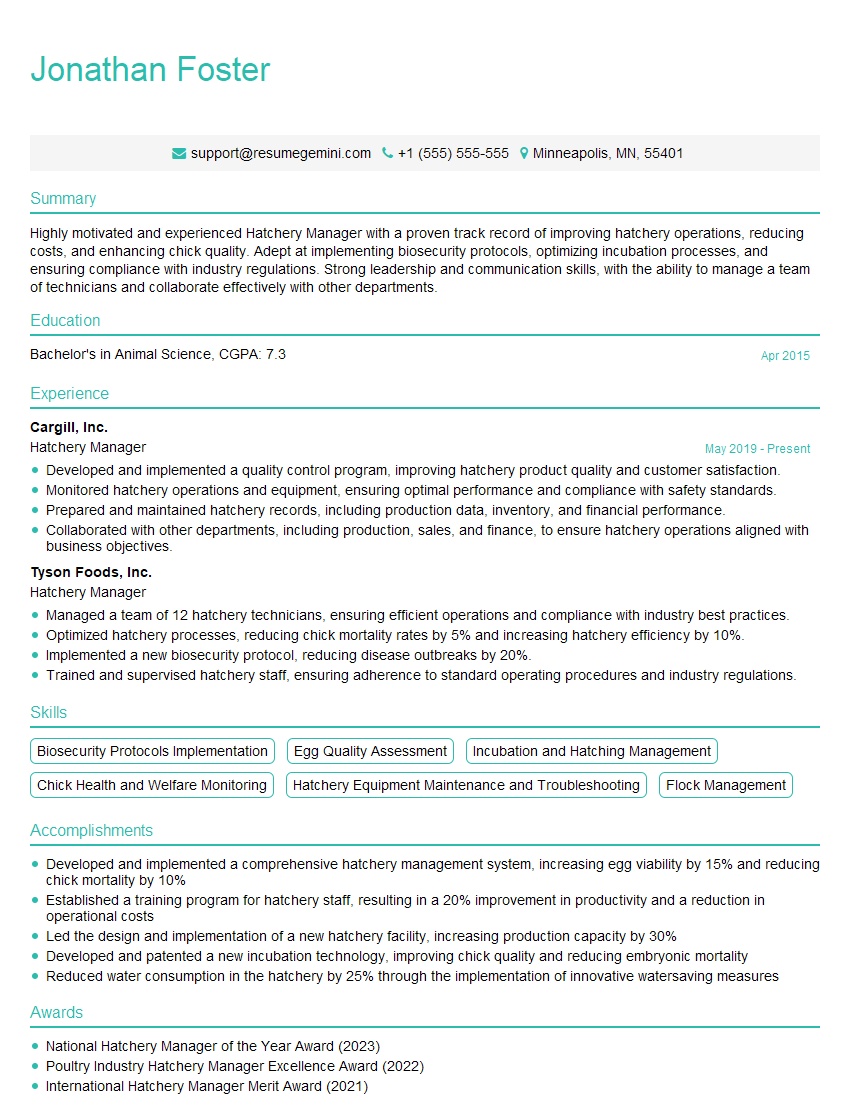
Mastering Fish Hatchery Design and Construction opens doors to a rewarding career in aquaculture, conservation, and research. A strong understanding of these principles is vital for career advancement and securing your dream role. To significantly increase your chances of landing your ideal job, create an ATS-friendly resume that highlights your skills and experience effectively. We highly recommend using ResumeGemini, a trusted resource for building professional resumes. ResumeGemini provides examples of resumes tailored to the Fish Hatchery Design and Construction field, helping you showcase your qualifications in the best possible light. Take advantage of these resources and prepare for a successful interview!
Explore more articles
Users Rating of Our Blogs
Share Your Experience
We value your feedback! Please rate our content and share your thoughts (optional).
What Readers Say About Our Blog
Really detailed insights and content, thank you for writing this detailed article.
IT gave me an insight and words to use and be able to think of examples