Preparation is the key to success in any interview. In this post, we’ll explore crucial Habitat Creation interview questions and equip you with strategies to craft impactful answers. Whether you’re a beginner or a pro, these tips will elevate your preparation.
Questions Asked in Habitat Creation Interview
Q 1. Describe your experience in designing and implementing habitat restoration projects.
My experience in habitat restoration spans over 15 years, encompassing a wide range of projects from small-scale wetland rehabilitation to large-scale prairie reconstruction. I’ve led teams in every stage, from initial site assessment and design to implementation, monitoring, and adaptive management. For example, in one project restoring a degraded riparian zone along the Mississippi River, we employed a phased approach. First, we removed invasive species like Japanese knotweed. Then, we implemented bioengineering techniques using native willow and cottonwood cuttings to stabilize the banks. Finally, we planted a diverse mix of native grasses, forbs, and shrubs to promote biodiversity and ecological function. Another project involved the creation of a pollinator meadow on a previously barren industrial site. This required careful soil remediation, followed by the selection and planting of a diverse array of nectar-rich flowering plants. In both cases, meticulous planning, incorporating ecological principles, and ongoing monitoring were key to success.
Q 2. What are the key factors to consider when selecting plant species for habitat creation?
Selecting plant species for habitat creation is crucial for project success. Key factors include:
- Native species: Prioritizing native plants ensures compatibility with the local ecosystem and provides food and habitat for native wildlife. Non-native species can become invasive, disrupting the balance.
- Functional groups: Incorporating a diversity of species that fulfill different ecological roles (e.g., nitrogen fixers, deep-rooted plants, fast-growing species) creates resilience and stability.
- Site conditions: Soil type, moisture levels, sunlight exposure, and elevation dictate which species will thrive. Selecting unsuitable species will lead to high mortality and project failure.
- Wildlife needs: Consider the target species you aim to attract or support. For example, creating butterfly habitat requires plants that provide nectar and larval host plants.
- Genetic diversity: Using plants from different sources minimizes the risk of inbreeding and increases resilience to pests and diseases.
For instance, when designing a coastal dune habitat, we would focus on salt-tolerant grasses and shrubs that stabilize the sand and provide nesting sites for shorebirds. In contrast, a forest restoration project would prioritize tree species appropriate for the soil type and shade tolerance.
Q 3. Explain your understanding of ecological succession and its role in habitat development.
Ecological succession is the gradual process of change in species composition and community structure over time. It’s a natural progression of plant communities, from pioneer species to climax communities. Understanding this process is essential for habitat creation because it allows us to predict how a habitat will develop and manage it appropriately. For example, a newly created wetland might initially be dominated by fast-growing, opportunistic plants. Over time, as conditions change (e.g., increased soil depth, reduced light penetration), these will be replaced by more shade-tolerant species. We can accelerate or guide this process through careful species selection and management interventions like controlled burning or selective thinning. Ignoring succession can lead to unintended outcomes, such as the dominance of invasive species.
Q 4. How do you assess the success of a habitat creation project?
Assessing the success of a habitat creation project requires a multi-faceted approach. We use a combination of quantitative and qualitative methods.
- Plant survival and growth: Monitoring plant survival rates, height, and cover helps assess the establishment success of planted species.
- Species diversity and richness: We record the number and types of plant and animal species present to assess biodiversity. This includes both targeted species and incidental species that colonize the area.
- Soil health: Soil analysis measures changes in soil organic matter, nutrient levels, and water infiltration, indicating improved soil quality.
- Wildlife usage: We monitor wildlife through observations, camera traps, or scat surveys to assess the habitat’s use by the target species.
- Community feedback: Engaging local communities and collecting their observations on changes in the area provides valuable insights.
Success isn’t solely measured by plant survival; it’s about creating a functional and resilient ecosystem that provides habitat for wildlife and delivers ecosystem services.
Q 5. Describe your experience with GIS software and its application in habitat mapping and analysis.
GIS software is an indispensable tool in habitat creation. I’m proficient in ArcGIS and QGIS. We use these tools for:
- Habitat mapping: Identifying suitable sites for habitat creation based on factors like soil type, elevation, and proximity to existing habitats.
- Species distribution modeling: Predicting the potential distribution of target species based on environmental variables. This helps select appropriate plant species and optimize habitat design.
- Monitoring and assessment: Tracking changes in vegetation cover, species distribution, and other ecological indicators over time using remotely sensed data (e.g., aerial photography, satellite imagery).
- Data visualization and communication: Creating maps and reports to communicate project findings to stakeholders and the public.
For example, in a recent project, we used GIS to analyze historical land use data, identify areas with suitable hydrological conditions for wetland restoration, and model the potential distribution of target amphibian species.
Q 6. What are the common challenges faced in habitat creation and how do you overcome them?
Common challenges in habitat creation include:
- Invasive species: Controlling invasive plants and animals is often a major hurdle. We address this through mechanical removal, herbicide application (where appropriate and environmentally sound), and biological control.
- Funding limitations: Habitat restoration is expensive, and securing sufficient funding can be challenging. We often work with multiple funding sources and leverage community involvement to reduce costs.
- Site limitations: Soil conditions, topography, and existing infrastructure can restrict planting options and limit project feasibility. Careful site selection and adaptive management are crucial.
- Climate change: Altered rainfall patterns and increased temperatures pose risks. We select climate-resilient species and implement adaptive management strategies to mitigate these risks.
- Community opposition: Lack of community support or opposition from stakeholders can impede project implementation. Effective communication and community engagement are essential to address concerns.
Overcoming these challenges requires careful planning, adaptive management, strong stakeholder engagement, and a commitment to long-term monitoring and evaluation.
Q 7. How do you incorporate community involvement in habitat restoration projects?
Community involvement is critical for the long-term success of habitat restoration projects. We employ various strategies to foster participation:
- Community workshops and meetings: Providing opportunities for community members to learn about the project, express their concerns, and contribute their ideas.
- Volunteer programs: Engaging community members in planting, weeding, and monitoring activities builds ownership and stewardship.
- Educational outreach: Implementing educational programs in schools and community centers raises awareness about the importance of habitat conservation and the project’s benefits.
- Community monitoring: Training community members to monitor project outcomes provides valuable data and enhances community ownership.
- Partnerships with local organizations: Collaborating with local conservation groups, schools, and businesses leverages resources and expertise.
For instance, in a recent prairie restoration project, we partnered with a local school to create an outdoor classroom on the restored site, integrating education and community engagement.
Q 8. Explain your knowledge of native plant communities and their importance in habitat creation.
Native plant communities are groups of plant species that naturally occur together in a specific geographic area. They are crucial for successful habitat creation because they form the foundation of the food web, providing food and shelter for a wide array of wildlife. Using native plants ensures the created habitat is ecologically sound and supports the biodiversity of the region. Think of it like building a house – you wouldn’t use random materials; you’d choose materials appropriate for the climate and local conditions. Similarly, using native plants ensures the habitat is well-suited to the local environment and the species it’s intended to support.
- Increased Biodiversity: Native plants support a greater diversity of insects, birds, and other animals than non-native species because they’ve co-evolved. For example, a specific butterfly species may only lay its eggs on a particular native milkweed.
- Enhanced Ecosystem Services: Native plants contribute to essential ecosystem services like soil stabilization, water filtration, and carbon sequestration. They are more resilient to local pests and diseases, requiring less intervention and reducing the need for pesticides and fertilizers.
- Aesthetic Value: Native plant communities often create beautiful and diverse landscapes, blending seamlessly with the existing natural surroundings.
For instance, in a coastal dune restoration project, using native dune grasses like Ammophila breviligulata is crucial for stabilizing the dunes and preventing erosion. These grasses also provide habitat for nesting birds and other coastal wildlife, unlike non-native grasses which might not support this ecosystem.
Q 9. What are the legal and regulatory aspects of habitat creation that you are familiar with?
Legal and regulatory aspects vary significantly depending on location (national, state, local), but generally involve permits, environmental impact assessments, and adherence to endangered species protection laws. Before starting any habitat creation project, thorough research into applicable regulations is paramount. This involves contacting relevant government agencies like the Environmental Protection Agency (EPA), Department of Fish and Wildlife, or local conservation authorities.
- Permits: Many jurisdictions require permits for altering land, especially wetlands or areas with endangered species. These permits often entail detailed plans outlining the project’s scope, potential impacts, and mitigation strategies.
- Environmental Impact Assessments (EIAs): Larger projects might require a comprehensive EIA to assess potential environmental impacts and propose measures to minimize harm. This involves detailed studies of the site’s ecology, hydrology, and potential effects on the surrounding environment.
- Endangered Species Protection: Laws like the Endangered Species Act (ESA) in the US protect threatened and endangered species and their habitats. Projects impacting such habitats require careful planning and may need specific mitigation measures, such as translocation of species or habitat creation to compensate for losses.
For example, a project to restore a riparian zone (area alongside a river) might necessitate a permit from the Army Corps of Engineers (in the US) due to wetland regulations. The project plan needs to demonstrate how it avoids or mitigates potential negative impacts on water quality and aquatic species.
Q 10. How do you monitor and evaluate the effectiveness of habitat restoration efforts?
Monitoring and evaluation are essential to assess the success of habitat restoration efforts. This involves a combination of quantitative and qualitative data collection over time. Imagine it as a checkup for your newly created habitat, ensuring it’s thriving.
- Species Inventories: Regularly surveying plant and animal species present to track changes in biodiversity. This might involve visual surveys, camera traps, or acoustic monitoring (for birds and other animals).
- Vegetation Surveys: Measuring plant cover, density, species composition, and overall health to assess the success of revegetation efforts. This can use quadrats (sampling areas) to compare vegetation across time and space.
- Soil Analysis: Evaluating soil properties, such as organic matter content, nutrient levels, and moisture retention to assess soil health and its contribution to the restored ecosystem.
- Water Quality Monitoring: Assessing water quality parameters such as dissolved oxygen, nutrient levels, and pH to track the impact of restoration on water resources (relevant for wetland or riparian projects).
For example, we might establish permanent sampling plots in a restored wetland, collecting data on plant species richness, plant cover, and water quality annually. Changes in these metrics over time would indicate the effectiveness of the restoration efforts. Statistical analysis of this data helps to understand trends and assess overall success against the initial objectives.
Q 11. Describe your experience with different habitat restoration techniques.
Habitat restoration techniques vary widely depending on the degraded habitat and restoration goals. My experience encompasses a range of approaches including:
- Revegetation: Planting native plant species, either through direct seeding or using seedlings or plugs. This might involve site preparation, such as soil amendment or erosion control measures.
- Hydrological Restoration: Restoring natural water flow patterns, such as removing drainage ditches or creating wetlands to improve water quality and habitat availability.
- Soil Remediation: Improving soil quality through the addition of organic matter, biochar or other soil amendments to enhance fertility and structure.
- Erosion Control: Implementing measures such as contour plowing, terracing or planting vegetation to prevent soil erosion and stabilize slopes.
- Wildlife Habitat Enhancement: Creating features such as nesting boxes, artificial reefs, or brush piles to support specific wildlife species.
For example, in a prairie restoration project, I might employ prescribed burning to mimic natural fire regimes, followed by seeding with native prairie grasses and forbs. In a stream restoration, I’d focus on techniques to reshape the stream channel, reduce erosion, and enhance riparian vegetation to improve water quality and fish habitat.
Q 12. How do you manage invasive species in a habitat restoration project?
Invasive species management is critical in habitat restoration, as they can outcompete native species and hinder restoration efforts. A multi-pronged approach is usually required.
- Physical Removal: Manually removing invasive plants, often the most effective method for smaller infestations. This might involve hand-pulling, cutting, or digging.
- Herbicide Application: Using herbicides selectively to control invasive plants. This requires careful consideration to avoid harming native vegetation.
- Biological Control: Introducing natural enemies of the invasive species, such as insects or other organisms that feed on them. This requires careful study to ensure the introduced biological control agent does not become an invasive species itself.
- Monitoring and Prevention: Regular monitoring to detect new infestations and implement preventative measures, such as early detection and rapid response protocols.
For example, in a forest restoration project battling Japanese Knotweed, we might use a combination of herbicide application (targeted to prevent harm to native trees and understory) and physical removal, followed by regular monitoring to prevent re-infestation.
Q 13. How do you determine the appropriate scale for a habitat restoration project?
Determining the appropriate scale for a habitat restoration project depends on several factors, including the extent of degradation, available resources, and ecological goals. It’s a balancing act between ambition and feasibility.
- Extent of Degradation: A larger scale might be necessary for severely degraded habitats requiring extensive restoration. Smaller, more targeted projects may suffice for less impacted areas.
- Available Resources: Funding, personnel, and materials constrain project size. Realistic project planning considers resource availability and the potential for phased implementation.
- Ecological Goals: The desired ecological outcomes influence the scale. For instance, establishing a large-scale wildlife corridor requires a much larger project than restoring a small patch of degraded wetland.
- Connectivity: Restoration projects should ideally consider connectivity with existing habitats. Larger scale projects can improve connectivity and increase the overall ecological effectiveness.
For example, restoring a small degraded section of a stream might be a manageable project with limited resources, while restoring the entire river system would require a much larger, phased, and more resource intensive approach involving multiple stakeholders and funding sources.
Q 14. Explain your understanding of soil science and its relevance to habitat creation.
Soil science is fundamental to habitat creation because soil is the foundation of terrestrial ecosystems. Understanding soil properties is crucial for selecting appropriate plant species, ensuring successful plant establishment, and fostering overall ecosystem health. Think of soil as the life support system for the plants and animals in the habitat.
- Soil Texture and Structure: Soil texture (sand, silt, clay content) and structure influence water infiltration, drainage, aeration, and nutrient availability. This knowledge guides decisions about site preparation and plant selection.
- Soil pH: Soil pH affects nutrient availability and plant growth. Soil testing and amendment (e.g., adding lime to increase pH) are essential for optimizing conditions for specific plants.
- Soil Organic Matter: Organic matter content impacts soil fertility, water holding capacity, and microbial activity. Adding organic matter through composting or other methods improves soil health and supports plant growth.
- Nutrient Levels: Nutrient levels (nitrogen, phosphorus, potassium) affect plant growth. Soil testing can identify deficiencies, guiding the use of fertilizers or other amendments.
For example, in a wetland restoration, we would need to analyze soil characteristics to ensure the soil is suitable for the chosen wetland plants and that it can support the desired hydrology. If the soil is excessively sandy, we might incorporate organic matter to improve water retention.
Q 15. What are the different types of habitats you have experience working with?
My experience spans a wide range of habitats, focusing primarily on wetland restoration, riparian zone rehabilitation, and prairie reconstruction. I’ve also worked extensively on urban green space development, incorporating native species to create biodiverse mini-habitats within cities. For wetland restoration, I’ve been involved in projects ranging from restoring degraded salt marshes to enhancing freshwater wetlands for improved water quality and wildlife support. Riparian zone projects have involved stabilizing eroding stream banks, planting native vegetation to filter runoff, and creating habitat corridors for aquatic and terrestrial species. Finally, prairie restoration has entailed carefully removing invasive species and reintroducing native grasses and forbs to create a thriving grassland ecosystem.
- Wetland Restoration: This includes projects focusing on water quality improvement, species reintroduction (e.g., native amphibians, waterfowl), and erosion control.
- Riparian Zone Rehabilitation: This involves stabilizing stream banks, improving water infiltration, and creating buffer zones between land and water to filter pollutants.
- Prairie Reconstruction: This encompasses controlled burns, invasive species removal, and seeding with native prairie grasses and wildflowers to restore biodiversity.
- Urban Green Space: Creating small-scale habitats within urban areas using native plants that support local wildlife and provide ecological services.
Career Expert Tips:
- Ace those interviews! Prepare effectively by reviewing the Top 50 Most Common Interview Questions on ResumeGemini.
- Navigate your job search with confidence! Explore a wide range of Career Tips on ResumeGemini. Learn about common challenges and recommendations to overcome them.
- Craft the perfect resume! Master the Art of Resume Writing with ResumeGemini’s guide. Showcase your unique qualifications and achievements effectively.
- Don’t miss out on holiday savings! Build your dream resume with ResumeGemini’s ATS optimized templates.
Q 16. How do you balance the needs of different stakeholders in a habitat creation project?
Balancing stakeholder needs in habitat creation is crucial for project success. It’s about finding common ground amongst often-conflicting interests. I typically employ a collaborative approach, starting with open communication and engaging all parties early in the process. This includes landowners, local communities, government agencies, and environmental groups. We use participatory mapping and stakeholder workshops to identify project goals, constraints, and potential compromises. For instance, in a recent project, a landowner wanted to maintain agricultural land while also creating wildlife habitat. We worked together to design a plan that incorporated buffer strips around fields with native vegetation that benefitted both farming operations and wildlife. This involved compromises, but it led to a mutually acceptable solution. Documenting these compromises and the reasoning behind them is vital for transparency and managing expectations.
Q 17. Explain your understanding of the ecological principles underlying habitat restoration.
Ecological principles underpin every aspect of habitat restoration. Understanding these principles allows for informed decision-making and a higher likelihood of project success. Key principles include:
- Succession: Understanding the natural progression of plant and animal communities over time helps us guide restoration towards a desired climax community. This might involve assisting natural processes or accelerating them through targeted interventions.
- Connectivity: Creating connected habitats is vital for species movement and gene flow. Habitat corridors and stepping stones help mitigate habitat fragmentation, a major threat to biodiversity.
- Trophic Interactions: Understanding food webs and the interactions between different species is important. Reintroducing keystone species or managing populations of invasive species can have cascading effects on the entire ecosystem.
- Nutrient Cycling: Restoration projects often aim to improve nutrient cycling, enhancing soil health and supporting plant growth. This may involve strategies to reduce nutrient runoff or increase soil organic matter.
For example, when restoring a degraded wetland, we consider the water flow, sediment deposition, and nutrient levels to ensure the conditions support the desired plant and animal communities.
Q 18. Describe your experience with grant writing or fundraising for habitat restoration projects.
Grant writing and fundraising are essential for securing funding for habitat restoration projects. I have extensive experience in developing compelling proposals that articulate the ecological and social benefits of the project. This involves highlighting the scientific basis for the restoration plan, clearly outlining the project budget and timeline, and demonstrating the project’s impact on local communities. I’ve secured funding from various sources, including government agencies (e.g., the USDA, EPA), private foundations, and corporate sponsors. A successful grant proposal emphasizes the project’s long-term sustainability, demonstrating how the project will continue to thrive after initial funding ends. For instance, in one proposal, we developed a community stewardship plan to ensure ongoing maintenance and monitoring of the restored habitat, making it more attractive to funders.
Q 19. How do you incorporate climate change considerations into habitat creation planning?
Incorporating climate change considerations is paramount. We need to design resilient habitats that can withstand future environmental changes. This involves choosing plant species adapted to predicted climate shifts in temperature and precipitation patterns. For example, in selecting tree species for riparian buffers, we might prioritize drought-tolerant species or those adapted to increased temperatures. We also consider potential impacts of sea-level rise and increased storm intensity, incorporating measures to enhance coastal resilience, such as creating wider buffer zones or incorporating appropriate elevation changes in wetland restoration projects. Furthermore, projections on changes in precipitation are essential to determine the need for improved water management strategies within the restored habitat.
Q 20. What are some common metrics used to assess the success of habitat restoration efforts?
Assessing the success of habitat restoration requires a multifaceted approach using various metrics. These metrics can be broadly categorized into:
- Biodiversity Metrics: Species richness, evenness, and abundance of target species provide insights into the recovery of biodiversity. We use methods like vegetation surveys, bird counts, and amphibian surveys to track changes in species populations.
- Habitat Structure Metrics: Measurements of vegetation cover, canopy height, and habitat complexity assess the physical structure of the restored habitat. For example, in a wetland restoration project, we might measure water depth, vegetation density and substrate type.
- Ecological Function Metrics: Indicators such as water quality parameters (e.g., nutrient levels, dissolved oxygen), soil health indicators, and carbon sequestration rates assess the functionality of the restored ecosystem.
- Socio-economic Metrics: Surveys and interviews are used to assess the community benefits of the restoration project, such as improvements in recreational opportunities, aesthetic value, and property values.
The specific metrics used depend on the project goals and the type of habitat being restored. It’s crucial to establish baseline data before the project begins to track changes effectively. Long-term monitoring is key to understanding the long-term success of the project and adapting management strategies as needed.
Q 21. Describe your experience with data analysis and interpretation in the context of habitat restoration.
Data analysis and interpretation are integral to habitat restoration. We use various statistical methods to analyze data from monitoring efforts, assessing the effectiveness of restoration techniques. For example, we might use time-series analysis to evaluate trends in species abundance or regression analysis to determine the relationship between environmental variables and species distribution. Geographic Information Systems (GIS) are used to map habitats, track changes over time, and model potential future scenarios. R and Python are frequently used for statistical analysis and visualization. Interpreting the data helps us refine restoration strategies, adapt management plans, and assess the overall success of the project. For example, if bird counts reveal that a particular species isn’t thriving in a restored wetland, we might investigate potential factors such as lack of food resources or nesting sites and adjust our management accordingly.
Q 22. Explain your understanding of the Endangered Species Act and its implications for habitat creation.
The Endangered Species Act (ESA) is a cornerstone of US environmental law, aiming to protect and recover imperiled species. Its implications for habitat creation are profound. Essentially, the ESA mandates that federal agencies must not jeopardize the continued existence of listed threatened or endangered species, and must consult with the Fish and Wildlife Service or NOAA Fisheries to ensure their actions (including habitat modification projects) don’t do so. This often means habitat creation becomes a crucial tool for species recovery. If a species’ habitat is degraded or lost, creating new suitable habitat is often a critical part of the recovery plan. For instance, if a specific wetland species is threatened by habitat loss, creating new wetlands, ensuring the correct water chemistry and vegetation, becomes a federally mandated step towards recovery.
The ESA influences habitat creation by guiding the design and implementation of projects. This includes considerations like habitat connectivity (linking fragmented habitats), minimizing invasive species, ensuring adequate size and quality, and mitigating potential negative impacts. Failure to adhere to ESA regulations during habitat creation can result in legal challenges and project delays.
Q 23. How do you ensure the long-term sustainability of a created habitat?
Ensuring the long-term sustainability of a created habitat requires a multi-faceted approach that goes beyond the initial construction. It’s like building a house – you need a solid foundation and ongoing maintenance. We need to consider several key aspects:
- Adaptive Management: Regular monitoring and evaluation are crucial. We need to track the success of the habitat in supporting the target species and adjust management strategies as needed. This is an iterative process where we learn from the successes and failures, fine-tuning our approach over time. For example, if a planted tree species isn’t thriving, we might try a different species or adjust planting techniques.
- Invasive Species Control: Invasive plants and animals can quickly overrun a newly created habitat, outcompeting native species. Ongoing management to control or eradicate invasives is essential for long-term sustainability. This could involve manual removal, herbicide application, or biological control methods.
- Resource Management: This includes managing water availability (irrigation, water quality), nutrient cycling, and other resources crucial for the habitat’s health. Depending on the habitat type, this might involve prescribed burns to mimic natural fire regimes or careful water level management in a wetland.
- Community Engagement: Involving local communities in the ongoing stewardship of the habitat fosters a sense of ownership and responsibility, ensuring long-term protection and maintenance. Education and outreach programs are vital.
- Funding Security: Securing long-term funding for maintenance and monitoring is critical. This might involve seeking grants, partnerships with conservation organizations, or establishing endowment funds.
Q 24. Describe your proficiency in using specific habitat creation software or tools.
My proficiency with habitat creation software and tools encompasses several key platforms. I’m experienced with GIS software such as ArcGIS, utilizing its spatial analysis capabilities for site selection, habitat mapping, and connectivity analysis. For example, I’ve used ArcGIS to model the potential spread of invasive species and design buffer zones to protect newly created habitat. I also utilize habitat modeling software, such as Zonation, to optimize habitat design based on various species’ needs and environmental factors.
I’m also proficient in using remote sensing data (satellite imagery, aerial photography) to assess habitat quality and change over time. This data is invaluable for monitoring the effectiveness of restoration efforts. Finally, I’m familiar with various databases and modeling tools for predicting climate change impacts on habitat suitability and planning for climate change adaptation strategies.
Q 25. Explain your experience with collaborating with other professionals on habitat restoration projects.
Collaboration is central to successful habitat restoration. I’ve worked extensively with a diverse team including ecologists, hydrologists, engineers, land managers, and community stakeholders. In one project, restoring a degraded riparian zone, I worked closely with a hydrologist to design a stream restoration plan that would improve water flow and reduce erosion. The engineer then helped us design and implement the physical structures needed for streambank stabilization. Meanwhile, the ecologist helped us select appropriate native plant species for replanting, while the community helped with planting and ongoing monitoring.
Effective communication and shared decision-making are key to these collaborations. I facilitate collaborative workshops and utilize project management tools to ensure everyone stays informed and on track. This collaborative approach ensures a holistic and effective restoration strategy.
Q 26. How do you prioritize habitat restoration projects based on ecological need and feasibility?
Prioritizing habitat restoration projects requires a careful balancing act between ecological need and feasibility. I use a multi-criteria decision analysis (MCDA) approach. This involves identifying key criteria, assigning weights reflecting their relative importance, and then scoring potential projects based on each criterion. For example, criteria might include:
- Ecological Importance: Threatened or endangered species presence, habitat rarity, ecosystem services provided.
- Feasibility: Land ownership and access, funding availability, technical feasibility, community support.
- Cost-effectiveness: Cost per unit of habitat restored, potential for long-term sustainability.
Each criterion is assigned a weight based on its relative importance, and then each potential project is scored on a scale for each criterion. The scores are then weighted and summed to provide an overall ranking of projects. This approach allows for a transparent and objective assessment of project priorities.
Q 27. What are the ethical considerations involved in habitat creation and restoration?
Ethical considerations in habitat creation and restoration are paramount. We must strive to minimize any negative impacts on existing ecosystems and human communities. Key ethical considerations include:
- Minimizing Disturbance: Habitat creation should be designed to minimize disturbance to existing ecosystems and avoid causing harm to non-target species.
- Informed Consent: When working on private or tribal lands, obtaining informed consent from landowners and engaging in respectful communication is critical.
- Social Justice: Ensuring that restoration projects benefit all members of the community, particularly marginalized groups, is essential. We need to avoid perpetuating environmental injustice.
- Transparency and Accountability: Being transparent about project goals, methods, and outcomes is important. We need to be accountable for our actions and willing to learn from mistakes.
- Avoiding Maladaptation: We need to avoid creating habitats that are not resilient to future environmental changes, such as climate change.
Q 28. Describe your experience working in diverse ecosystems and habitats.
My experience spans diverse ecosystems, including coastal wetlands, riparian zones, grasslands, forests, and alpine meadows. I’ve worked on projects ranging from restoring degraded salt marshes in coastal California to creating wildlife corridors in fragmented forest landscapes. In each case, the approach needed adaptation to the specific ecological characteristics of that ecosystem. For example, restoring a wetland requires a different set of techniques than restoring a forest, which considers things like soil type, hydrology, and species composition specific to that ecosystem. This diversity of experience has provided me with a robust understanding of ecological principles and a broad skill set for tackling habitat challenges across a range of environments.
Key Topics to Learn for Habitat Creation Interview
- Ecological Principles: Understanding fundamental ecological concepts like biodiversity, trophic levels, keystone species, and ecosystem services is crucial for designing effective habitats.
- Habitat Suitability Assessment: Learn to analyze factors influencing habitat quality, including climate, topography, vegetation, and resource availability. Practical application involves using GIS software and ecological modeling techniques.
- Habitat Restoration & Reclamation: Explore techniques for restoring degraded habitats and creating new ones. This includes site preparation, species selection, planting strategies, and long-term monitoring.
- Conservation Biology Principles: Understanding population dynamics, genetic diversity, and threats to biodiversity is essential for creating sustainable habitats.
- Sustainable Design & Construction: Incorporating sustainable practices into habitat creation projects, minimizing environmental impact, and considering lifecycle analyses.
- Regulatory Compliance & Permitting: Familiarize yourself with relevant environmental regulations and permitting processes for habitat creation projects.
- Project Management & Planning: Understanding project scoping, budgeting, scheduling, and stakeholder engagement for successful habitat creation initiatives. Problem-solving skills are key here.
- Data Analysis & Interpretation: Ability to analyze ecological data, interpret results, and draw meaningful conclusions to inform habitat management decisions.
Next Steps
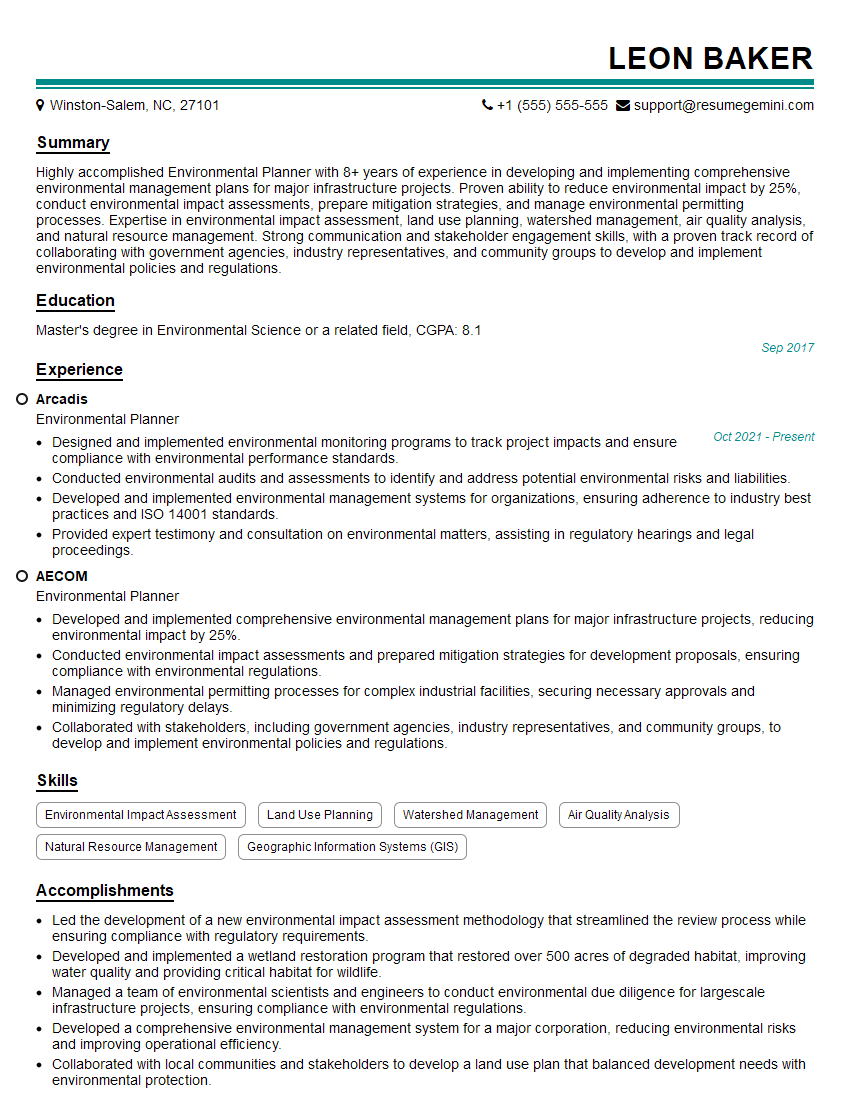
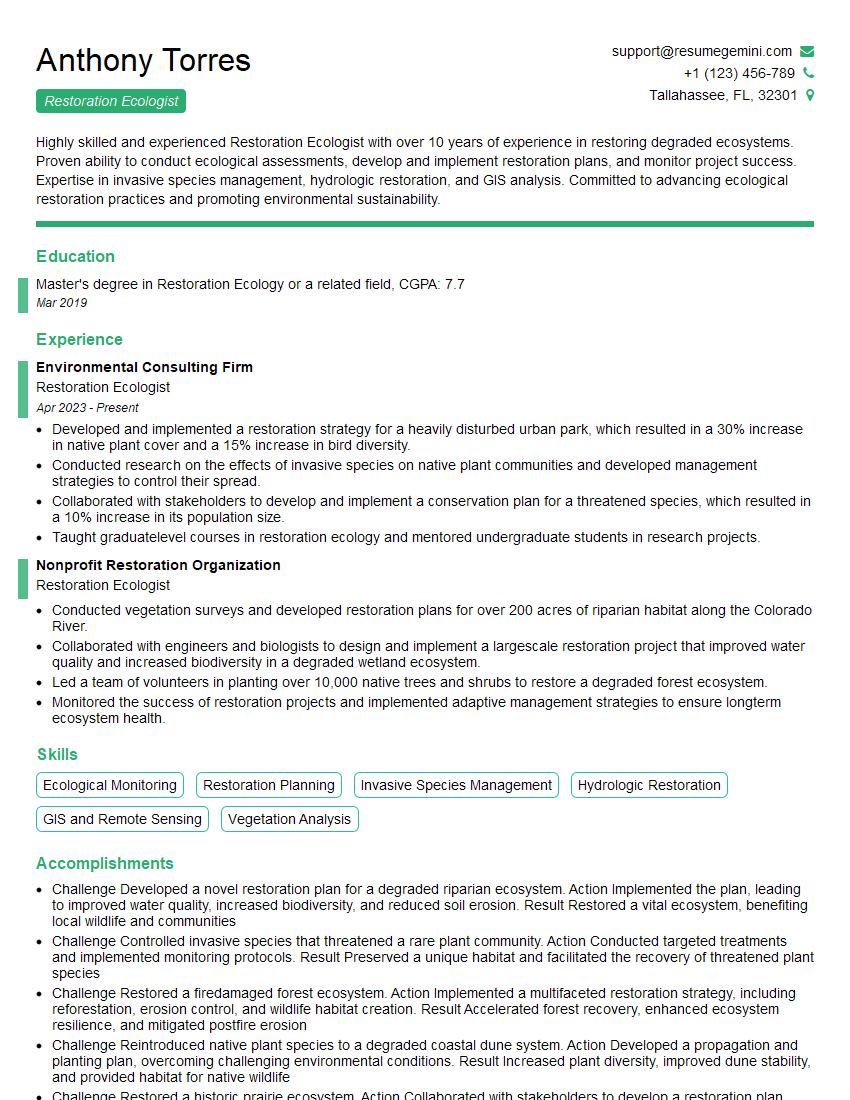
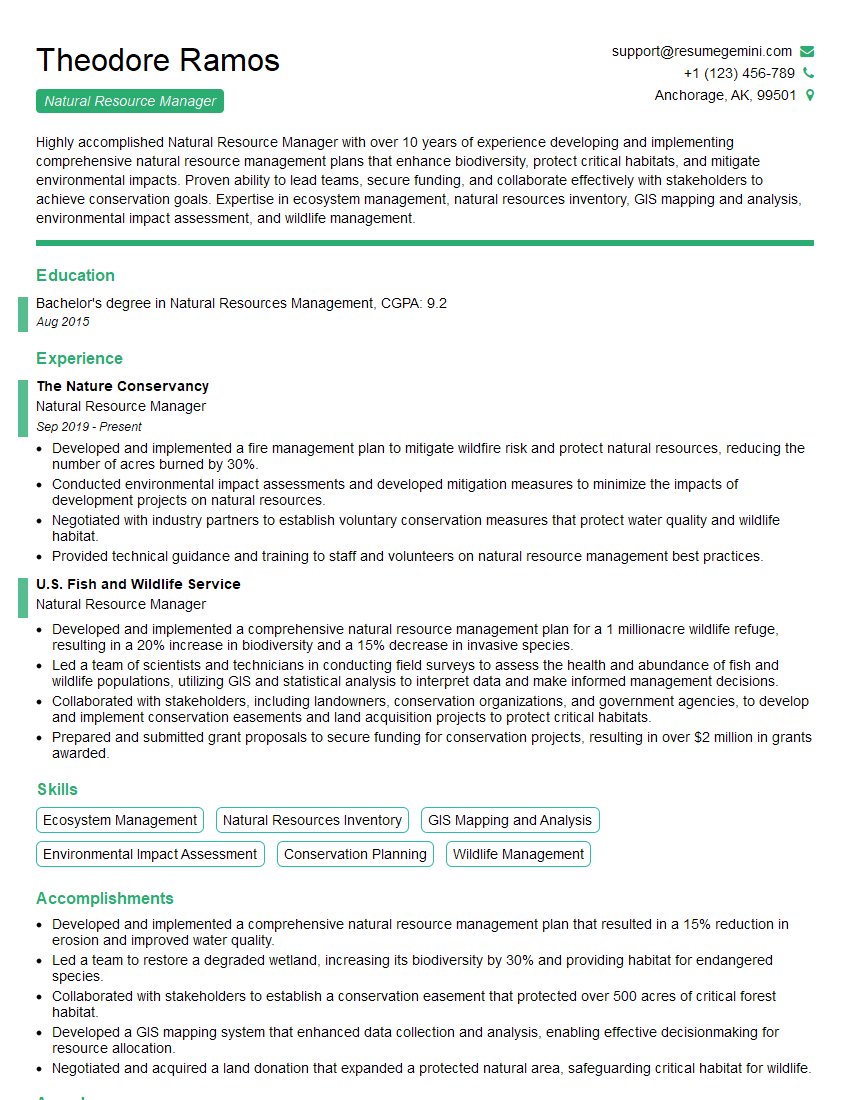
Mastering Habitat Creation opens doors to exciting and impactful careers in conservation, environmental management, and ecological restoration. To maximize your job prospects, creating an ATS-friendly resume is essential. This ensures your qualifications are effectively communicated to hiring managers and applicant tracking systems. We strongly recommend using ResumeGemini to build a professional and impactful resume. ResumeGemini provides tools and resources to create a standout resume, and examples of resumes tailored to Habitat Creation are available to guide you.

Explore more articles
Users Rating of Our Blogs
Share Your Experience
We value your feedback! Please rate our content and share your thoughts (optional).
What Readers Say About Our Blog
Really detailed insights and content, thank you for writing this detailed article.
IT gave me an insight and words to use and be able to think of examples