The right preparation can turn an interview into an opportunity to showcase your expertise. This guide to Hard Surface Cleaning interview questions is your ultimate resource, providing key insights and tips to help you ace your responses and stand out as a top candidate.
Questions Asked in Hard Surface Cleaning Interview
Q 1. What are the different types of hard surfaces and their specific cleaning requirements?
Hard surfaces encompass a wide variety of materials, each with unique cleaning needs. Understanding these differences is crucial for effective and damage-free cleaning.
- Tile: Ceramic, porcelain, and stone tiles are relatively durable but can be scratched by abrasive cleaners. Cleaning typically involves sweeping or vacuuming followed by mopping with a pH-neutral cleaner. Grout lines require special attention, often needing a grout brush and a stronger cleaner to remove embedded grime.
- Marble and Granite: These natural stones are porous and susceptible to etching (dulling) from acidic cleaners. Gentle, pH-neutral cleaners are essential. Avoid abrasive pads and harsh chemicals. Regular sealing helps protect these surfaces.
- Hardwood: Requires specific cleaning solutions to avoid damaging the finish. Avoid excessive moisture, which can cause warping. Sweeping or vacuuming is crucial, followed by damp mopping with a wood-specific cleaner. Using a microfiber mop helps prevent scratches.
- Laminate: Generally durable but sensitive to excessive moisture. Avoid harsh chemicals and abrasive cleaners. Regular sweeping or vacuuming, followed by damp mopping with a mild cleaner, is recommended.
- Stainless Steel: Relatively easy to clean but can show streaks if not cleaned properly. Use a non-abrasive cleaner and a microfiber cloth to avoid scratches. Vertical wiping often provides the best streak-free results.
For example, cleaning a heavily soiled porcelain tile floor might involve pre-treating stubborn stains with a specialized tile cleaner before mopping with a cleaner solution. Marble countertops, on the other hand, would require a much gentler approach, perhaps a simple solution of warm water and mild dish soap, followed by thorough rinsing and drying.
Q 2. Explain your experience with various cleaning agents and their appropriate usage.
My experience spans a wide range of cleaning agents, each chosen based on the surface type and level of soiling. It’s vital to understand the chemical composition of these agents to ensure safe and effective cleaning.
- All-purpose cleaners: These are generally suitable for many hard surfaces, but their effectiveness varies. I always check the product label for specific surface compatibility.
- Acidic cleaners: Effective for removing mineral deposits, but they can damage certain materials like marble and granite. They must be used with extreme caution and are appropriate only for surfaces explicitly stated as compatible on the product label.
- Alkaline cleaners: Good for dissolving grease and oils, but can be harsh on some surfaces. Again, careful consideration of the surface is key.
- Specialized cleaners: For specific tasks and materials, specialized cleaners offer superior performance. Examples include grout cleaners, stainless steel polishes, and hardwood floor cleaners.
- Disinfectants: These are essential for eliminating harmful bacteria and viruses in healthcare and food service environments. Appropriate selection and application are critical for effectiveness and safety.
For instance, I’ve used a powerful alkaline cleaner to remove baked-on grease from a commercial kitchen’s stainless steel range hood, followed by thorough rinsing and disinfection. In a residential setting, a mild all-purpose cleaner was perfectly adequate for cleaning a ceramic tile backsplash.
Q 3. Describe your method for safely handling and disposing of cleaning chemicals.
Safety is paramount when handling and disposing of cleaning chemicals. Proper handling prevents accidents and environmental contamination, while correct disposal protects both human health and the environment.
- Personal Protective Equipment (PPE): Always wear appropriate PPE, including gloves, eye protection, and sometimes a respirator, depending on the chemical being used.
- Ventilation: Ensure adequate ventilation to avoid inhaling fumes. Work in well-ventilated areas or use a respirator when working with strong chemicals.
- Storage: Store chemicals in their original containers, labeled clearly, and out of reach of children and pets. Follow storage guidelines outlined on the product’s Safety Data Sheet (SDS).
- Disposal: Dispose of chemicals according to local regulations. Never mix chemicals together unless explicitly instructed to do so by the manufacturer. Empty containers should be rinsed thoroughly before disposal. Many cleaning product manufacturers have specific recycling or disposal programs. Check the product label or their website for more information.
A recent example involves the proper disposal of a used bottle of disinfectant. I carefully rinsed the container several times before disposing of it in the designated hazardous waste container according to our company’s protocol and local regulations.
Q 4. How do you assess the condition of a hard surface before cleaning?
Assessing the condition of a hard surface before cleaning is a crucial first step, allowing me to tailor my cleaning approach and avoid causing damage. This assessment usually involves a visual inspection and sometimes a touch test.
- Visual Inspection: This involves carefully examining the surface for any visible damage, such as scratches, cracks, or stains. I also look for loose tiles or debris.
- Touch Test: Sometimes a gentle touch is needed to determine the surface texture and identify areas of concern.
- Material Identification: Knowing the material of the surface (e.g., marble, granite, tile, wood) is crucial to select the appropriate cleaning agents and methods.
- Soiling Assessment: This helps determine the type and intensity of cleaning required. Is it a light dusting, or are we dealing with stubborn grease or embedded grime?
For example, before cleaning a hardwood floor, I would visually inspect for any loose floorboards or significant scratches. This would inform my decision to use a specialized hardwood cleaner and a microfiber mop to avoid causing further damage. For a heavily soiled kitchen floor, my assessment might involve pre-treating particularly greasy areas with a degreaser before mopping.
Q 5. What are the appropriate techniques for cleaning different types of flooring (e.g., tile, marble, hardwood)?
Cleaning different types of flooring requires tailored techniques to avoid damage and ensure effectiveness. Each material presents its unique challenges.
- Tile: Sweep or vacuum to remove loose debris. Mop with a pH-neutral cleaner. Pay extra attention to grout lines using a grout brush and a suitable cleaner. Rinse thoroughly.
- Marble: Sweep or vacuum. Use a pH-neutral cleaner diluted with water. Avoid acidic cleaners. Rinse thoroughly and dry immediately to prevent etching.
- Hardwood: Sweep or vacuum to remove dust and debris. Use a wood-specific cleaner and a damp (not wet) microfiber mop. Rinse only if needed, and always dry thoroughly. Avoid excessive moisture.
For example, a marble floor requires a much gentler approach than a ceramic tile floor. Harsh chemicals or excessive scrubbing can etch or dull marble. In contrast, ceramic tile can often withstand more aggressive cleaning techniques.
Q 6. Explain your experience with specialized cleaning equipment (e.g., floor buffers, scrubbers).
I’m experienced in operating various specialized cleaning equipment, understanding their strengths and limitations is key to efficient and safe cleaning.
- Floor buffers: These are used for polishing and maintaining hard floors, particularly those made of resilient materials like vinyl or polished concrete. Different pads are used for different tasks (e.g., scrubbing, polishing, buffing). Proper speed and pressure settings are essential to prevent damage.
- Floor scrubbers: These are automatic floor cleaning machines that combine scrubbing, rinsing, and drying. They are more efficient for large areas and often preferred in commercial settings. Different types of scrubbers are used depending on the surface type and the level of cleaning required.
- Steam cleaners: These use pressurized steam to clean and disinfect various surfaces. Effective for removing grease, grime, and some types of stains. It’s important to select the appropriate attachments and settings for the surface being cleaned.
For example, in a large office building, a floor scrubber would be more efficient for cleaning hard floors than manual mopping. I would select the appropriate brushes and cleaning solution based on the type of flooring.
Q 7. How do you maintain the cleanliness and hygiene of cleaning equipment?
Maintaining the cleanliness and hygiene of cleaning equipment is crucial for preventing cross-contamination and ensuring the equipment’s longevity. This involves regular cleaning and disinfection after each use.
- Regular Cleaning: This usually involves rinsing the equipment thoroughly with water, removing any debris or build-up of cleaning solution. For floor buffers and scrubbers, this might involve emptying and cleaning the solution tanks and rinsing the brushes or pads.
- Disinfection: To prevent the spread of bacteria and viruses, I use a disinfectant appropriate for the equipment materials. I follow the manufacturer’s instructions carefully.
- Storage: I store equipment properly to prevent damage and contamination. This might involve storing it in a clean, dry area, and ensuring that the equipment is properly covered or stored in designated areas.
- Scheduled Maintenance: Regular maintenance involves checking for any wear and tear and taking appropriate measures to address issues before they become major problems. This may include replacing worn pads, changing filters, and regularly inspecting and cleaning internal components.
For instance, after using a floor scrubber, I would empty and clean the solution tanks, rinse the brushes, and then disinfect them with a suitable disinfectant before storing them in a designated area. This ensures they are clean and ready for the next cleaning task.
Q 8. Describe your method for cleaning and disinfecting restrooms.
Cleaning and disinfecting restrooms requires a systematic approach to ensure hygiene and prevent the spread of germs. My method involves a multi-step process, starting with pre-cleaning to remove loose debris. This is followed by applying an appropriate disinfectant to all surfaces, allowing sufficient contact time as specified on the product label – this is crucial for effective disinfection. I then thoroughly clean and rinse all surfaces, paying close attention to high-touch areas like door handles, faucets, and toilet flushes. Finally, I replenish soap, paper towels, and hand sanitizer dispensers.
For instance, I might pre-clean a toilet bowl using a toilet brush and then apply a disinfectant cleaner, leaving it to dwell for the recommended time before scrubbing and flushing. Similarly, I would clean and disinfect sink surfaces with a disinfectant cleaner, ensuring I reach all crevices and corners. The entire process is completed with a final wipe-down with a clean, damp cloth.
Q 9. How do you ensure the safety of yourself and others while performing cleaning tasks?
Safety is paramount in hard surface cleaning. I always prioritize personal protective equipment (PPE), including gloves, eye protection, and sometimes a respirator, depending on the cleaning agents used and the environment. I ensure proper ventilation is maintained whenever possible, particularly when working with strong chemicals. I also follow a strict procedure for handling cleaning solutions, always reading and adhering to the manufacturer’s instructions. Spills are immediately cleaned up using absorbent materials and appropriate personal protective equipment. Additionally, I’m trained to handle potential hazards like broken glass or sharp objects using the correct procedures and tools.
For example, if I’m working with a strong bleach solution, I will always wear gloves and eye protection, and work in a well-ventilated area. Similarly, when dealing with broken glass, I carefully sweep up the fragments into a dustpan using a brush, ensuring I don’t cut myself. Safety is not just my personal responsibility but a core part of maintaining a safe environment for everyone.
Q 10. What are the common hazards associated with hard surface cleaning?
Hard surface cleaning presents several hazards. Chemical hazards are a major concern, with exposure to cleaning solutions potentially causing skin irritation, respiratory problems, or even more severe reactions. Biological hazards, such as bacteria and viruses, pose a risk of infection. Physical hazards include slips, trips, and falls due to wet floors or obstacles, as well as cuts from broken glass or sharp objects. Ergonomic hazards can also occur from repetitive movements and awkward postures, leading to musculoskeletal injuries.
For instance, improper use of bleach can lead to respiratory problems, while failing to properly clean up a spill could result in someone slipping and falling. Proper training and awareness of these hazards are essential for mitigating risks.
Q 11. How do you handle spills and accidents effectively and safely?
Handling spills and accidents safely and effectively requires immediate action. The first step is to contain the spill, preventing further spread. This involves using absorbent materials like paper towels or spill kits. Then, I would carefully clean the area using the appropriate cleaning solution, ensuring proper ventilation and wearing appropriate PPE. The area should then be thoroughly rinsed and dried to prevent slips and falls. In the event of an accident or injury, immediate first aid should be administered, and the appropriate authorities should be notified.
For example, if a bottle of cleaning solution spills, I’d first contain it with absorbent pads to prevent it from spreading. Then, I’d use appropriate cleaning solutions and tools, wearing gloves, to clean the area thoroughly. Finally, I’d make sure the area is completely dry before allowing access.
Q 12. What are the best practices for preventing cross-contamination during cleaning?
Preventing cross-contamination is crucial to maintain hygiene and prevent the spread of bacteria and viruses. This involves using a color-coded cleaning system, using separate cleaning cloths and tools for different areas (e.g., restrooms vs. kitchen), and frequently changing cleaning solutions. Working from cleanest to dirtiest areas also helps minimize the risk of spreading contaminants. Furthermore, proper disposal of contaminated materials and thorough handwashing after each task are vital.
For instance, I’d use a blue cloth for bathrooms and a green cloth for kitchens to prevent cross-contamination. Also, I would change my cleaning solution regularly to avoid spreading germs from one area to another. These small steps cumulatively reduce the risk substantially.
Q 13. How do you handle situations involving difficult stains or grime?
Difficult stains or grime require specialized cleaning methods and products. I assess the type of stain and the surface material before selecting an appropriate cleaning solution. Pre-treating the stain with a suitable product and allowing sufficient dwell time can significantly improve the effectiveness of cleaning. Sometimes, mechanical action, such as scrubbing or using a pressure washer (for appropriate surfaces), is necessary. Stubborn stains might require multiple applications of different cleaning solutions or professional intervention.
For instance, a stubborn grease stain on a kitchen floor might require a degreasing solution followed by scrubbing and rinsing. A heavily soiled grout line might necessitate a specialized grout cleaner and a stiff brush. I always test any cleaning solution on an inconspicuous area first to ensure it won’t damage the surface.
Q 14. Describe your experience with post-construction cleaning.
Post-construction cleaning is a specialized area requiring a different approach than regular cleaning. It involves removing construction debris, dust, and residue from all surfaces. This usually requires heavy-duty equipment, like industrial vacuum cleaners and floor scrubbers. Thorough cleaning of windows, fixtures, and appliances is crucial to remove dust and protect from damage. Final walkthroughs and quality inspections are necessary to ensure a clean and safe environment for occupancy.
My experience includes working on several large-scale projects, where careful organization and a phased cleaning approach were crucial to clear dust and debris efficiently while minimizing disruption. This often involves coordinating with the construction team to access areas that are progressively completed. Proper disposal of hazardous materials is also a key element of responsible post-construction cleaning.
Q 15. What are your preferred methods for cleaning windows and glass surfaces?
For pristine windows and glass, my preferred method is a two-step process. First, I pre-clean using a squeegee and a solution of warm water and a high-quality glass cleaner. This removes loose dirt and grime. I avoid harsh chemicals whenever possible, opting for environmentally friendly products. For heavily soiled areas, a soft microfiber cloth pre-wipe can be beneficial. Then, I meticulously apply a streak-free finish using a professional-grade squeegee, working in overlapping sections and ensuring I wipe the squeegee blade clean after each pass. This technique minimizes streaking and maximizes shine. For hard-to-reach spots, I employ extension poles with appropriate attachments, ensuring safety and efficiency. Finally, I inspect the work, addressing any missed spots immediately. The key is attention to detail and using the right tools.
For very stubborn stains, like bird droppings or hard water spots, I might use a specialized glass cleaner or a very dilute solution of white vinegar, but always test in an inconspicuous area first to avoid damage. This careful approach ensures a professional finish every time.
Career Expert Tips:
- Ace those interviews! Prepare effectively by reviewing the Top 50 Most Common Interview Questions on ResumeGemini.
- Navigate your job search with confidence! Explore a wide range of Career Tips on ResumeGemini. Learn about common challenges and recommendations to overcome them.
- Craft the perfect resume! Master the Art of Resume Writing with ResumeGemini’s guide. Showcase your unique qualifications and achievements effectively.
- Don’t miss out on holiday savings! Build your dream resume with ResumeGemini’s ATS optimized templates.
Q 16. How do you determine the appropriate cleaning schedule for a particular area?
Determining the cleaning schedule hinges on several factors: the type of surface, the level of foot traffic or use, the environment’s conditions (e.g., dust, humidity), and the desired level of cleanliness. High-traffic areas like office entrances might need daily cleaning, while less frequented spaces can be cleaned weekly or bi-weekly. I consider the potential for buildup of dirt, grime, and germs. For example, restrooms require far more frequent cleaning than a sparsely used storage room. I often use a combination of scheduled cleaning and proactive spot cleaning as needed. This maintains a consistently high standard of cleanliness, maximizing hygiene and preventing more extensive cleaning efforts later. Regular inspections help me adapt the schedule based on actual conditions.
Think of it like gardening: a small flower bed needs more frequent weeding than a large, established garden. The frequency depends on the needs of the ‘garden,’ in this case, the area being cleaned.
Q 17. How do you measure and evaluate the effectiveness of cleaning procedures?
Measuring cleaning effectiveness involves both objective and subjective assessment. Objective measures can include things like microbial counts (using swabs and laboratory analysis in environments like hospitals), the absence of visible soiling, or measurements of dust levels using specific equipment. Subjective evaluation involves visual inspection for cleanliness and the absence of streaks, smudges, or stains. I also consider feedback from clients or occupants, assessing their satisfaction with the cleanliness of the area. For floor cleaning, I might use a cleanness meter to measure the level of reflectivity. Before and after photographs can also be a valuable tool for documenting the cleaning work.
Using a checklist for each cleaning task helps ensure consistency and allows for a structured evaluation. By systematically checking off each item, you can objectively verify that all aspects of the cleaning procedure have been completed to the required standard.
Q 18. What are the industry standards and regulations related to hard surface cleaning?
Industry standards and regulations for hard surface cleaning vary by location and context. Generally, there’s a focus on safety, using appropriate Personal Protective Equipment (PPE) like gloves, eye protection, and sometimes respirators depending on the chemicals used. Regulations often address the proper handling and disposal of cleaning chemicals, adherence to safety data sheets (SDS), and the prevention of cross-contamination. In healthcare settings, stringent protocols regarding disinfection and sterilization are paramount to prevent the spread of infection. OSHA (Occupational Safety and Health Administration) in the US, and equivalent bodies in other countries, set guidelines for workplace safety, including safe handling of chemicals and proper ventilation. Green cleaning practices, which emphasize environmentally friendly products and methods, are gaining increasing importance across the industry.
Staying up-to-date on these regulations is critical for responsible and compliant cleaning operations. Regular training and adherence to the latest guidelines are essential aspects of professional hard surface cleaning.
Q 19. How do you adapt your cleaning techniques to different environments (e.g., hospitals, offices)?
Adapting cleaning techniques requires understanding the specific needs of each environment. In hospitals, the focus shifts towards disinfection and sterilization, using hospital-grade disinfectants and adhering to strict protocols to eliminate pathogens. This necessitates a thorough understanding of infection control procedures. In offices, the priority is often maintaining a clean and presentable workspace, using environmentally friendly products and minimizing disruption to work activities. For example, cleaning may need to be scheduled outside of working hours. Industrial settings might involve specialized equipment and procedures to handle heavy soil or hazardous materials. The choice of cleaning products and methods is key – a school will have different needs than a manufacturing plant. Understanding the specific demands of each environment allows for effective and tailored cleaning strategies.
This adaptability is crucial for efficient and safe cleaning practices across diverse settings.
Q 20. Describe a situation where you had to solve a cleaning-related problem.
I once encountered a challenging situation involving a significant coffee spill on a polished concrete floor in a busy restaurant kitchen. The spill had dried and created a sticky residue that was attracting more dirt and grime. Traditional cleaning methods were ineffective. My solution involved a multi-step approach. First, I used a commercial-grade degreaser to loosen the coffee residue. Then, I carefully scrubbed the area using a stiff-bristled brush, followed by thorough rinsing and extraction using a wet vacuum. Finally, I applied a specialized concrete cleaner to restore the shine and protective coating. The key was to tackle the problem systematically and strategically, using the correct cleaning agents and equipment. Through careful planning and execution, I was able to restore the floor to its original condition without damaging the surface.
The key takeaway is that thorough preparation and systematic problem-solving are crucial for effective and efficient cleaning, especially in challenging situations.
Q 21. What are the different types of floor finishes and how are they maintained?
Floor finishes come in several types, each with its own maintenance requirements. Common types include:
- Vinyl: Relatively easy to maintain, typically requiring regular sweeping, damp mopping, and occasional stripping and waxing.
- Epoxy: Durable and resistant to chemicals, but requires careful cleaning to avoid scratching or dulling the shine. Specialized epoxy cleaners are often necessary.
- Polished concrete: Requires periodic polishing to maintain its shine, along with regular sweeping and damp mopping. Avoid acidic cleaners which can damage the surface.
- Hardwood: Needs regular sweeping and dusting, followed by damp mopping with a wood-specific cleaner. Avoid excessive moisture.
- Tile: Relatively easy to clean with a damp mop and appropriate cleaning solution. Grout requires periodic cleaning to prevent staining.
Maintaining these finishes involves a combination of daily or weekly cleaning, periodic deep cleaning (stripping and waxing for some types), and proactive measures to prevent damage or deterioration. This includes using appropriate cleaning products, avoiding abrasive materials, and addressing spills promptly. The choice of maintenance methods depends on the type of floor finish and the level of traffic it experiences.
Q 22. How do you ensure the safety and security of cleaning supplies and equipment?
Safety and security of cleaning supplies and equipment are paramount. My approach involves a multi-layered strategy focusing on proper storage, handling, and disposal.
- Storage: Cleaning chemicals are stored in their original containers, clearly labeled, in a designated, locked area away from food and children. Flammable materials are kept separate from oxidizers, and incompatible chemicals are never stored together. I always use appropriate Material Safety Data Sheets (MSDS) to understand storage requirements.
- Handling: Personal Protective Equipment (PPE) such as gloves, eye protection, and aprons are worn consistently when handling chemicals. Equipment like pressure washers or floor buffers are inspected before each use to ensure they are in good working order and safety features are functioning properly.
- Disposal: I follow all local and federal regulations regarding chemical waste disposal, ensuring proper neutralization or dilution before discarding. Broken or damaged equipment is immediately taken out of service and reported for repair or replacement.
For example, during a recent large-scale office cleaning, I successfully prevented an accident by identifying a leaking container of bleach and immediately isolating it, then following the proper protocol for its safe disposal. This averted potential harm to personnel and property.
Q 23. Explain your knowledge of OSHA regulations relevant to hard surface cleaning.
My understanding of OSHA regulations regarding hard surface cleaning is comprehensive. OSHA standards emphasize employee safety and health, particularly concerning exposure to hazardous chemicals and proper use of equipment.
- Hazard Communication: I am familiar with the requirements for proper labeling, MSDS accessibility, and employee training on the safe handling of chemicals. Understanding and communicating these hazards is critical for a safe workplace.
- Personal Protective Equipment (PPE): OSHA mandates appropriate PPE based on the tasks and chemicals involved. I ensure that employees are provided with and use the necessary PPE, including gloves, eye protection, respirators (when needed), and protective footwear.
- Machine Safety: I am versed in OSHA’s standards for the safe operation and maintenance of cleaning equipment, such as floor buffers, vacuum cleaners, and pressure washers. Regular inspections and proper training are essential to prevent accidents.
- Slip, Trip, and Fall Prevention: OSHA regulations stress the importance of maintaining a clean and dry work surface to prevent slips, trips, and falls. Proper wet floor signage and immediate cleaning of spills are integral to my cleaning process.
For instance, I’ve created and implemented a detailed safety training program for my team, covering all relevant OSHA standards, the use of safety data sheets, and proper PPE usage. This proactive approach has resulted in a consistently safe working environment.
Q 24. How do you manage your time and prioritize tasks effectively during cleaning?
Effective time management and task prioritization are crucial for efficient cleaning. My strategy combines planning, organization, and flexibility.
- Planning: I always begin with a detailed cleaning schedule, broken down into specific tasks and timeframes. This allows me to allocate sufficient time for each area and task.
- Prioritization: I prioritize tasks based on urgency and importance. High-traffic areas or areas with visible dirt or spills typically take precedence.
- Organization: I maintain a well-organized cleaning cart with all necessary supplies readily accessible. This minimizes downtime searching for materials.
- Flexibility: Unexpected events, such as spills or sudden increases in foot traffic, may require adjusting the schedule. I’m adept at prioritizing tasks to address these interruptions effectively.
In a large office building, for example, I might prioritize restrooms and high-traffic entryways during peak hours, then address less critical areas such as storage rooms later.
Q 25. How do you communicate effectively with clients or supervisors regarding cleaning needs?
Clear and effective communication is essential in hard surface cleaning. I prioritize active listening and precise information sharing.
- Active Listening: I carefully listen to client’s or supervisor’s cleaning needs, asking clarifying questions to ensure I understand their expectations fully.
- Clear Communication: I explain my cleaning plan and any potential challenges or limitations in clear, concise language. I avoid jargon and use easily understandable terms.
- Regular Updates: I provide regular updates on progress, especially for large or complex projects. This ensures transparency and allows for adjustments as needed.
- Professionalism: I maintain a professional demeanor, responding promptly to questions and concerns with courtesy and respect.
Recently, a client expressed concern over the use of a particular cleaning solution. I listened carefully to their concerns, explained the product’s safety profile using the MSDS, and offered an alternative solution that addressed their anxieties while maintaining cleaning efficacy.
Q 26. Describe your experience with using different types of cleaning cloths and mops.
My experience encompasses a wide range of cleaning cloths and mops, each suited for specific tasks and surfaces.
- Microfiber Cloths: Excellent for general cleaning, dusting, and polishing. Their absorbent nature and ability to trap dirt effectively make them ideal for various surfaces.
- Cotton Cloths: Good for heavier cleaning jobs, though they might require more frequent rinsing. They are durable and suitable for scrubbing.
- Sponge Mops: Versatile and suited for larger floor areas. Their absorbency is good, but regular rinsing is needed to avoid spreading dirt.
- String Mops: Effective for scrubbing heavily soiled floors. They’re more durable than sponge mops but require more effort.
- Flat Mops (with microfiber or other covers): These offer efficient cleaning on various hard floors, and the covers are easily replaceable.
I select the appropriate cloth or mop based on the surface type, level of soiling, and desired finish. For example, I’d use microfiber cloths for glass surfaces and a string mop for a heavily soiled concrete floor. Knowing the properties of different materials ensures optimal cleaning results.
Q 27. How do you stay updated with the latest cleaning technologies and methods?
Staying updated on the latest cleaning technologies and methods is crucial for maintaining a competitive edge. My strategy for continuous learning includes:
- Industry Publications: I regularly read trade magazines and journals that feature the newest advancements in cleaning technologies and techniques.
- Professional Development: Attending industry conferences and workshops allows me to network with peers and learn about best practices.
- Online Resources: I utilize online platforms and webinars to stay informed about new cleaning products, equipment, and sustainable cleaning methods.
- Manufacturer Websites: I regularly consult manufacturer websites for updates on their products and safety information.
For example, I recently learned about the advancements in electrostatic spraying technology for disinfecting large areas efficiently and effectively. Incorporating this knowledge into my practice has improved the speed and hygiene of my work.
Q 28. What are your salary expectations for this role?
My salary expectations for this role are commensurate with my experience, skills, and the responsibilities of the position. I am open to discussing this further and am confident that my skills and contributions will provide significant value to your organization. Given my expertise and proven track record, I am seeking a salary in the range of [Insert Salary Range]. This is based on my research of comparable roles and my comprehensive skillset. I am flexible and willing to negotiate based on a detailed discussion of the position and its requirements.
Key Topics to Learn for Hard Surface Cleaning Interview
- Cleaning Agent Chemistry: Understanding the properties of different cleaning agents (acids, alkalis, neutral cleaners), their effectiveness on various surfaces, and safety precautions.
- Surface Material Knowledge: Identifying various hard surfaces (e.g., tile, marble, granite, wood, metal) and understanding their specific cleaning requirements and vulnerabilities to damage.
- Cleaning Methodologies: Mastering various cleaning techniques including scrubbing, wiping, polishing, and specialized methods for different surfaces and soils (e.g., grout cleaning, stain removal).
- Equipment and Tool Selection: Knowing how to select and properly utilize different cleaning equipment (e.g., floor scrubbers, pressure washers, vacuum cleaners) and hand tools for optimal results and safety.
- Health and Safety Procedures: Understanding and adhering to safety protocols, including proper handling of cleaning chemicals, personal protective equipment (PPE) use, and waste disposal procedures.
- Quality Control and Inspection: Developing a keen eye for detail to ensure a high standard of cleanliness and identify areas needing further attention. Understanding how to document cleaning procedures and results.
- Problem-Solving and Troubleshooting: Analyzing and resolving cleaning challenges such as stubborn stains, surface damage, and equipment malfunctions.
- Sustainability and Eco-Friendly Practices: Familiarity with environmentally friendly cleaning products and methods, waste reduction strategies, and water conservation techniques.
Next Steps
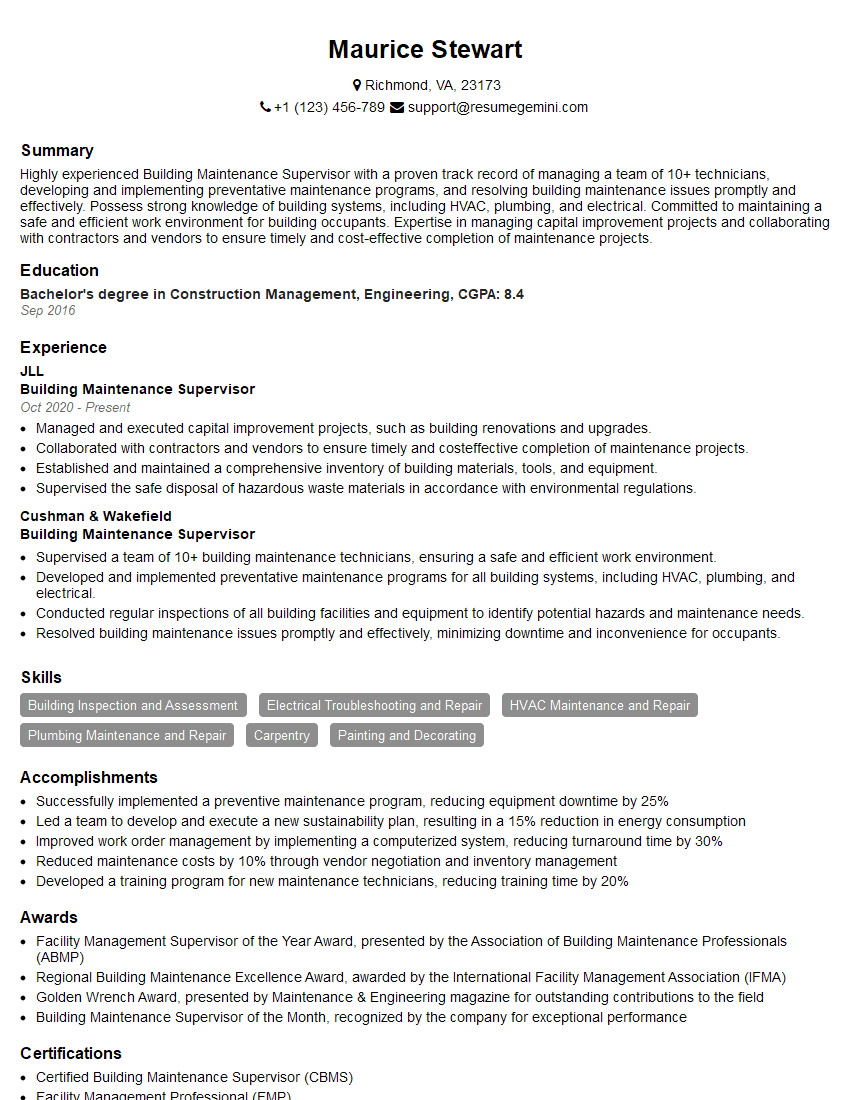
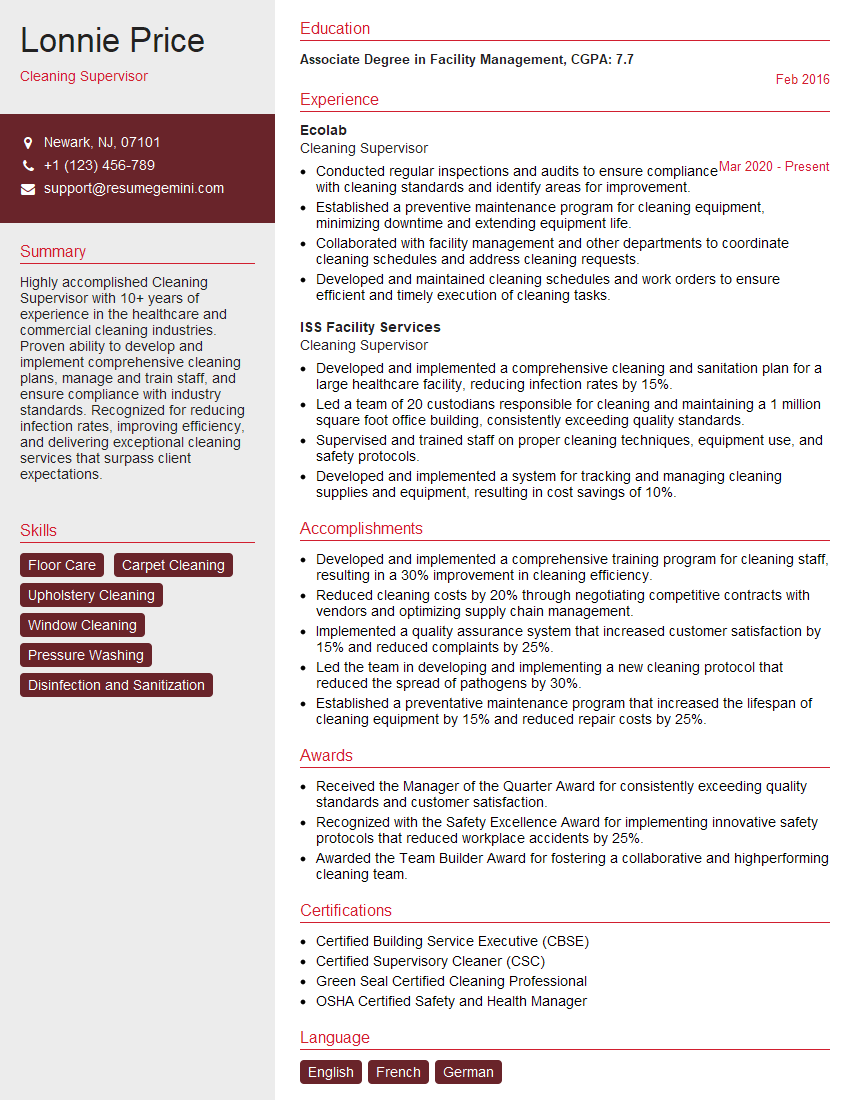
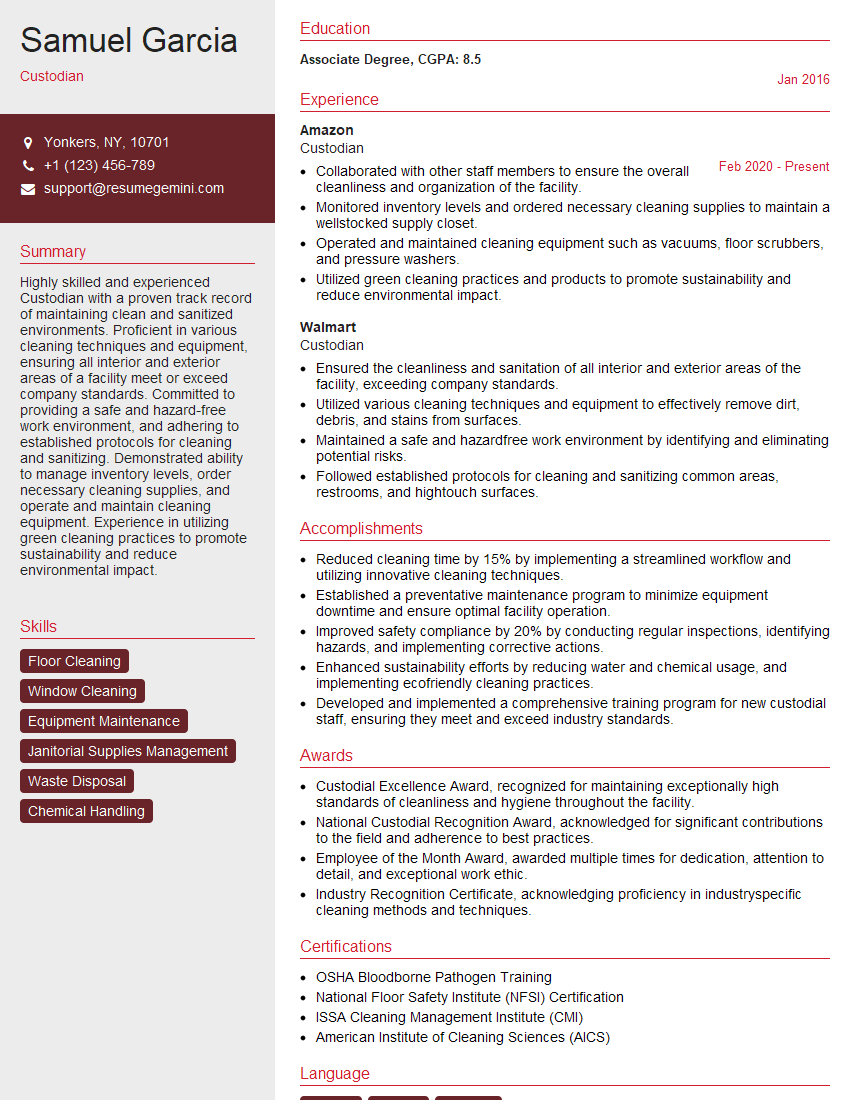
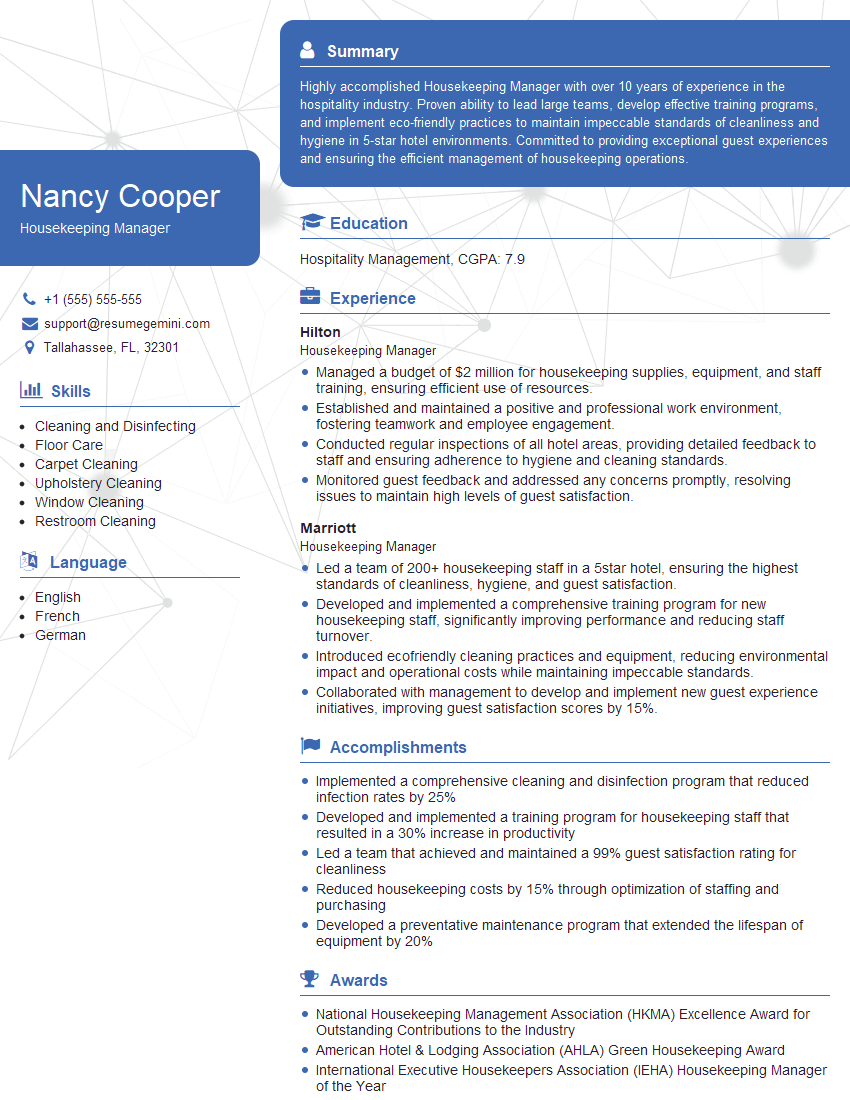
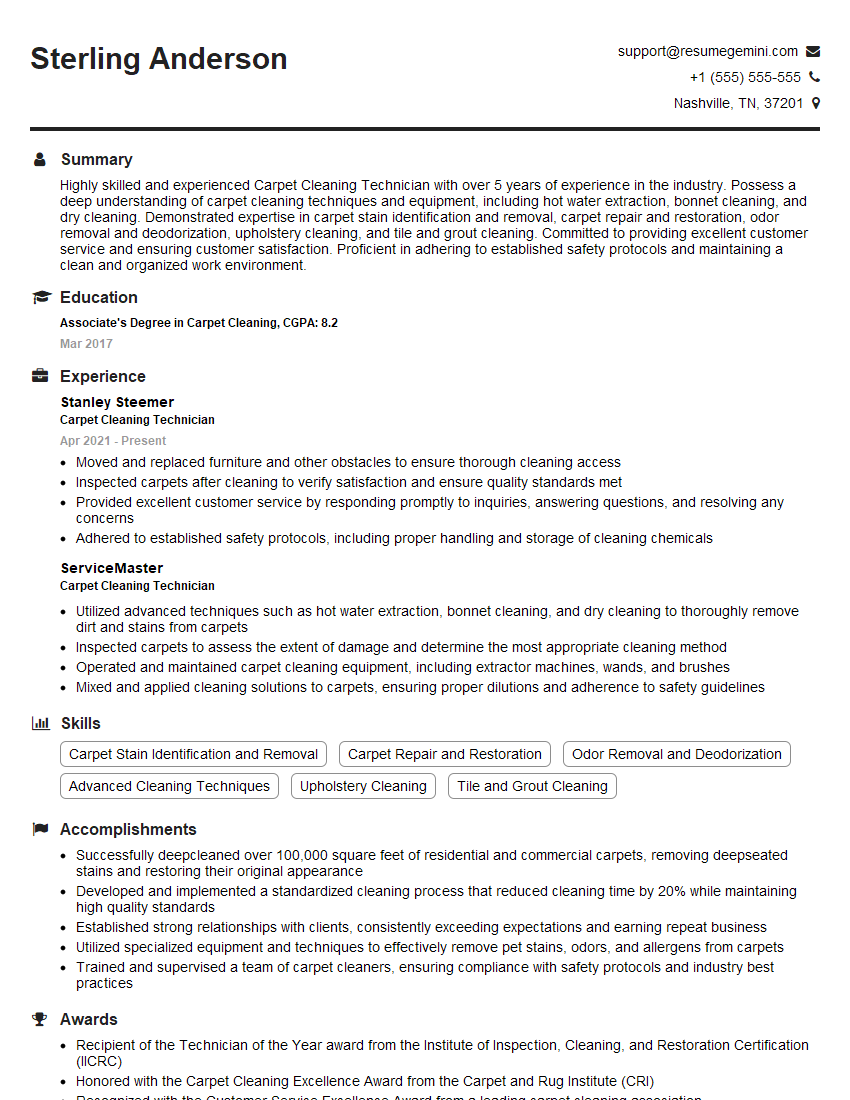
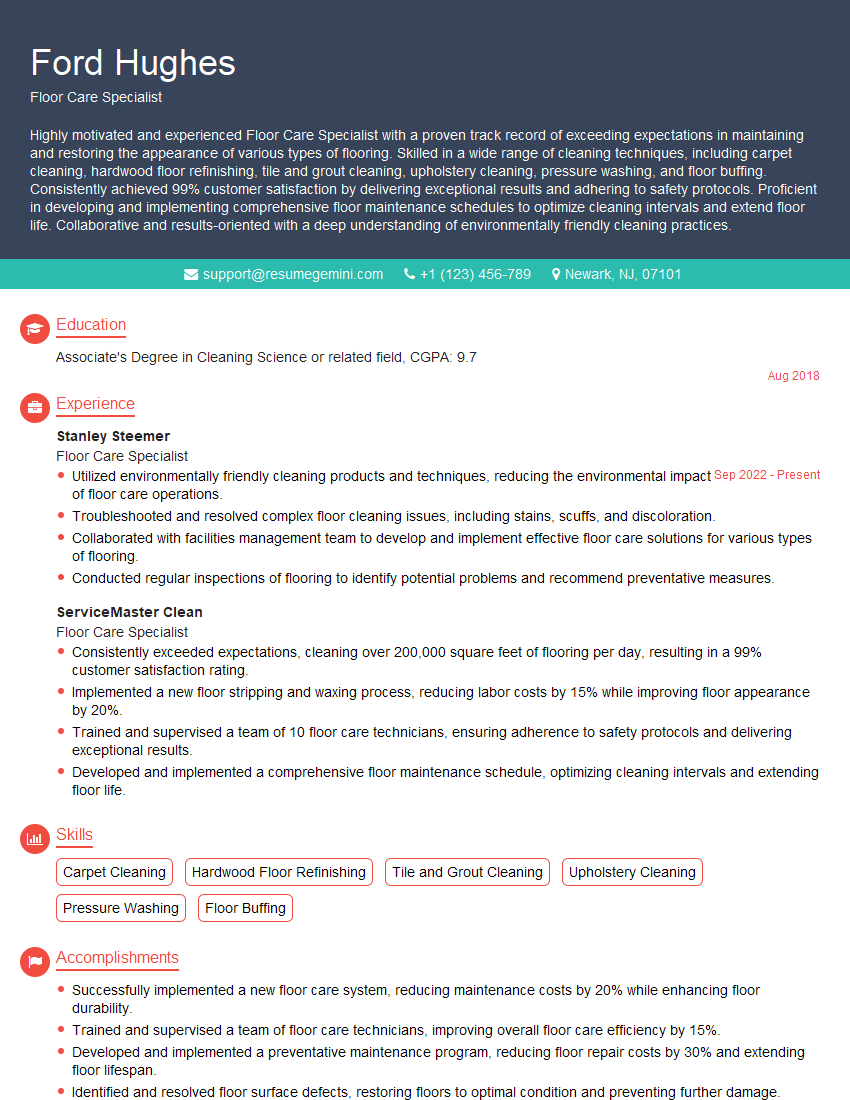
Mastering hard surface cleaning techniques opens doors to diverse and rewarding career opportunities, offering excellent prospects for growth and advancement within the industry. To maximize your job search success, creating a strong, ATS-friendly resume is crucial. This ensures your qualifications are effectively highlighted to potential employers. We strongly encourage you to utilize ResumeGemini to build a professional and impactful resume that showcases your skills and experience. ResumeGemini provides examples of resumes tailored to the Hard Surface Cleaning industry, offering invaluable guidance in crafting a compelling application.
Explore more articles
Users Rating of Our Blogs
Share Your Experience
We value your feedback! Please rate our content and share your thoughts (optional).
What Readers Say About Our Blog
Really detailed insights and content, thank you for writing this detailed article.
IT gave me an insight and words to use and be able to think of examples