Are you ready to stand out in your next interview? Understanding and preparing for Hatchery Record Keeping and Management interview questions is a game-changer. In this blog, we’ve compiled key questions and expert advice to help you showcase your skills with confidence and precision. Let’s get started on your journey to acing the interview.
Questions Asked in Hatchery Record Keeping and Management Interview
Q 1. Describe your experience with different hatchery record-keeping software.
My experience encompasses a range of hatchery record-keeping software, from simple spreadsheet-based systems to sophisticated, integrated aquaculture management platforms. I’ve worked extensively with programs like AquaManager, which offers robust functionalities for tracking broodstock, egg production, and larval development, and also with custom-designed databases tailored to specific hatchery needs. For example, in a previous role, we utilized a custom database linked to our automated feeding system, allowing for real-time data entry and analysis of feed efficiency. In another instance, I migrated a hatchery from a manual paper-based system to a cloud-based solution, improving data accessibility and collaboration significantly. Each system has its own strengths and weaknesses; my ability lies in selecting and adapting the most appropriate technology for the specific hatchery context and operational goals.
Q 2. How do you ensure data accuracy and integrity in hatchery records?
Data accuracy and integrity are paramount in hatchery operations. I implement a multi-pronged approach. This includes rigorous data entry protocols, regular data validation checks, and cross-referencing information from multiple sources. For instance, daily counts of eggs or fry are independently verified by two staff members. We also employ automated data collection wherever possible – think electronic scales for weighing fish, automated water quality monitoring systems, and barcode scanning for inventory management. These tools minimize human error. Moreover, we maintain detailed audit trails to track all data modifications, allowing for traceability and accountability. Think of it like a detective’s meticulous case file – every change is documented, providing a clear history of the data’s journey.
Q 3. What methods do you use to track fish health and mortality rates?
Tracking fish health and mortality is critical for identifying and addressing problems promptly. We use a combination of methods. Visual inspections are conducted daily, noting any signs of disease or unusual behavior. Regular sampling for disease diagnostics – parasite checks, bacterial cultures – is performed by our veterinary consultant or laboratory personnel. Mortality data is meticulously recorded, categorized by age group, tank, and suspected cause. We often utilize specialized software to generate mortality rate graphs and other visualizations, allowing us to quickly spot trends and potential issues. For example, a sudden spike in mortality in one tank might signal a problem with water quality or a disease outbreak, prompting immediate investigation and corrective action.
Q 4. Explain your process for managing hatchery inventory and supplies.
Effective inventory management is essential for smooth hatchery operations. We employ a combination of physical inventory counts and a computerized inventory management system. The system tracks all supplies, from feed and chemicals to equipment and consumables. We use a just-in-time inventory system to minimize storage space and waste, and the system automatically generates reordering alerts when stock levels fall below a pre-defined threshold. This helps prevent stockouts that can disrupt operations. Regular physical inventory checks are conducted to reconcile the system data with the physical inventory, ensuring accuracy. Think of it like managing a well-stocked kitchen – everything has its place, and we know exactly when to restock.
Q 5. How do you handle discrepancies or errors in hatchery records?
Discrepancies are handled systematically. First, the discrepancy is identified and documented. Then, we investigate the root cause. This might involve reviewing data entry procedures, checking equipment calibration, or even revisiting the physical inventory. Once the cause is identified, corrective actions are implemented to prevent future errors. For instance, if a discrepancy is due to a faulty scale, the scale will be recalibrated, and past data affected by the faulty readings will be adjusted and documented. A detailed report is created, documenting the discrepancy, the investigation, and the corrective actions taken. This ensures accountability and facilitates continuous improvement.
Q 6. Describe your experience with implementing or improving hatchery record-keeping systems.
I have extensive experience in implementing and improving hatchery record-keeping systems. In one project, I led the transition of a small-scale hatchery from a manual paper-based system to a fully computerized system. This involved selecting appropriate software, training staff on the new system, developing data entry protocols, and implementing quality control procedures. The result was a significant improvement in data accuracy, accessibility, and efficiency. In another instance, I optimized an existing system by automating data entry through integration with automated equipment. This reduced human error and significantly improved data accuracy and timeliness. My approach always focuses on identifying the specific needs of the hatchery, selecting the right tools, and ensuring adequate staff training and support.
Q 7. What are the key performance indicators (KPIs) you track in a hatchery?
Key Performance Indicators (KPIs) are vital for monitoring hatchery performance. We track several crucial metrics, including:
- Egg production rates: Number of eggs produced per broodstock.
- Hatching rates: Percentage of eggs that hatch successfully.
- Survival rates: Percentage of fish surviving to various life stages.
- Growth rates: Average weight gain of fish over time.
- Feed conversion ratio (FCR): Amount of feed required to produce a unit of fish weight gain.
- Mortality rates: Number of fish deaths per unit time.
- Water quality parameters: Temperature, dissolved oxygen, ammonia levels, etc.
By regularly monitoring these KPIs, we can identify areas for improvement and ensure the hatchery is operating efficiently and sustainably. These KPIs provide a clear picture of hatchery health and allow for timely interventions to prevent potential problems.
Q 8. How do you ensure compliance with regulatory requirements for hatchery record keeping?
Ensuring compliance with regulatory requirements for hatchery record-keeping is paramount. It’s not just about following the rules; it’s about protecting the health of the fish, maintaining the integrity of the operation, and safeguarding the environment. This involves meticulous record-keeping practices that are auditable and easily accessible.
- Detailed Inventory Tracking: We meticulously track every stage of the fish’s life cycle, from egg to juvenile. This includes the origin of the broodstock, incubation details (temperature, oxygen levels, hatching rates), feeding regimes, and any treatments administered. Imagine it like a detailed diary for each batch of fish.
- Health Monitoring and Treatment Records: Any signs of disease or mortality are meticulously documented, including the type of disease suspected, the treatment protocol used (medications, dosages), and the response of the fish. This creates a valuable record for identifying potential issues and preventing outbreaks in the future. We might use specific software or spreadsheets that allow for easy tracking and analysis of this data.
- Water Quality Parameters: Continuous monitoring of water quality parameters like temperature, pH, dissolved oxygen, and ammonia levels is essential. We record these parameters regularly, ensuring all data is readily available should an audit occur. This allows us to trace back any unexpected fish mortality to potential issues with the water conditions.
- Regular Audits and Internal Reviews: We conduct regular internal audits of our record-keeping system to ensure compliance with regulations and identify areas for improvement. This proactive approach prevents costly mistakes and reinforces best practices.
- Compliance with Specific Regulations: We stay updated on all relevant local, national, and international regulations concerning hatchery operations and adhere strictly to all requirements. This might involve specific record-keeping formats or reporting deadlines, depending on the location and species.
Think of it like this: thorough record-keeping acts as a safety net for our operations, allowing us to identify problems quickly, maintain traceability, and meet the legal and ethical expectations of responsible aquaculture.
Q 9. How do you use hatchery data to improve production efficiency?
Hatchery data is the lifeblood of efficient production. By analyzing this data, we can pinpoint areas for improvement and optimize our processes to maximize yield and minimize waste.
- Identifying Bottlenecks: Analyzing historical data on hatching rates, survival rates, growth rates, and feed conversion ratios helps us identify bottlenecks in the production process. For example, if we notice consistently low hatching rates in a specific incubator, we can investigate the cause and implement corrective actions.
- Optimizing Resource Allocation: Data on water usage, energy consumption, and feed costs allow us to fine-tune resource allocation. We might discover, for instance, that adjusting the water temperature slightly increases hatching rates significantly, leading to cost savings.
- Predictive Modelling: We can leverage historical data to develop predictive models that help us anticipate future trends and optimize production planning. For example, by analyzing historical data on growth rates, we can better estimate the time required to reach a certain size, aiding in production scheduling.
- Improving Stock Management: Careful tracking of broodstock performance, egg production, and offspring survival enables us to select the best performing breeders, leading to improved overall productivity. Think of this as selective breeding in action, guided by data analysis.
- Performance Monitoring and Benchmarking: By comparing our performance metrics to industry benchmarks, we can identify areas where we can make significant improvements. This helps us stay competitive and constantly strive for optimization.
In essence, using hatchery data effectively transforms a potentially chaotic process into a streamlined, data-driven operation that consistently meets targets.
Q 10. Explain your experience with different hatchery management techniques.
My experience spans a range of hatchery management techniques, encompassing both traditional and modern approaches. This allows me to tailor my strategies to specific needs and optimize operations for maximum efficiency and resilience.
- Traditional Hatchery Management: I’m proficient in the traditional methods of egg incubation, water management, and disease control, relying on hands-on experience and close observation of the fish. This includes understanding the nuances of different species and their specific needs at various life stages. For example, I know the optimal temperature and oxygen levels for different species at various developmental stages.
- Recirculating Aquaculture Systems (RAS): I have significant experience in managing RAS hatcheries, understanding the complexities of water treatment, filtration, and biosecurity. These systems allow for precise control of water quality parameters and efficient use of resources, which is critical for maintaining a sustainable and efficient operation.
- Automated Systems: I’m comfortable working with automated systems for tasks such as water quality monitoring, feeding, and egg incubation. This includes using sensors, automated controllers, and data logging systems to monitor and control various aspects of the hatchery environment. I’m also skilled in troubleshooting and maintaining these systems.
- Data-Driven Management: As mentioned previously, I strongly advocate for data-driven management. I am adept at collecting, analyzing, and interpreting hatchery data to identify trends, optimize processes, and improve overall hatchery performance.
The key is to blend traditional knowledge and hands-on experience with the latest technological advancements. It’s like using the expertise of a seasoned craftsman combined with the precision of a well-oiled machine.
Q 11. How do you manage hatchery personnel and delegate tasks effectively?
Effective hatchery personnel management is crucial for success. I believe in a collaborative approach that fosters teamwork, shared responsibility, and continuous improvement.
- Clear Roles and Responsibilities: I begin by clearly defining each team member’s roles and responsibilities. This avoids confusion and ensures everyone understands their contribution to the overall operation. For example, I might assign specific individuals to monitor water quality, others to manage feeding schedules, and others to maintain equipment.
- Training and Development: I invest heavily in training and development, providing staff with the knowledge and skills needed to perform their jobs effectively. This includes both on-the-job training and opportunities for professional development. Regular training sessions and workshops ensure updated knowledge on best practices and techniques.
- Effective Communication: Open and transparent communication is essential. I encourage regular team meetings, feedback sessions, and open dialogue to address concerns, share ideas, and solve problems collectively. This also includes utilizing different communication channels, such as internal messaging systems or daily briefings.
- Delegation and Empowerment: I effectively delegate tasks, empowering my team members to take ownership and make decisions within their scope of responsibility. This builds confidence, boosts morale, and fosters a sense of shared ownership.
- Performance Management: Regular performance reviews provide constructive feedback, identify areas for improvement, and reward outstanding contributions. This helps to maintain high standards and motivates the team to perform at their best.
Think of it as conducting an orchestra – each musician has their designated part, but the conductor brings it all together to create beautiful music. That’s my role in managing the hatchery team.
Q 12. Describe your experience with troubleshooting hatchery equipment or processes.
Troubleshooting hatchery equipment and processes is a frequent part of the job. My approach is systematic and data-driven, combining practical skills with analytical thinking.
- Identifying the Problem: I start by carefully identifying the problem, gathering data on the symptoms, and considering potential causes. This might involve observing the equipment, reviewing records, and interviewing staff members. For example, if there’s unusually high mortality, we’d check water parameters, feeding schedules, and any recent changes in the hatchery environment.
- Systematic Troubleshooting: I employ a systematic troubleshooting approach, checking the most likely causes first and progressively narrowing down the possibilities. This could involve checking electrical connections, water pumps, filters, and other components.
- Data Analysis: Data analysis plays a significant role. Reviewing historical data can help identify patterns or trends that might be related to the problem. For example, if a particular piece of equipment has a history of malfunctioning, we might proactively schedule maintenance to prevent further issues.
- Seeking External Expertise: When necessary, I don’t hesitate to seek external expertise from equipment manufacturers or specialists. This ensures we address the problem correctly and efficiently.
- Implementing Corrective Actions and Preventative Maintenance: Once the problem is identified and resolved, I implement corrective actions to prevent recurrence. This might involve repairing or replacing faulty equipment, adjusting operating parameters, or implementing preventative maintenance schedules.
Think of it as being a detective – you collect evidence, analyze the clues, and formulate a solution based on a thorough investigation.
Q 13. What are your strategies for preventing disease outbreaks in a hatchery?
Preventing disease outbreaks is critical in a hatchery. My approach is multifaceted and proactive, focusing on biosecurity, hygiene, and health monitoring.
- Strict Biosecurity Protocols: Implementing rigorous biosecurity protocols is paramount. This includes controlling access to the hatchery, disinfecting equipment and clothing, and preventing the introduction of pathogens from external sources. We might use footbaths, hand sanitizers, and change rooms to effectively minimize the risk of contamination.
- Hygiene and Sanitation: Maintaining a high level of hygiene and sanitation throughout the hatchery is essential. This involves regular cleaning and disinfection of tanks, equipment, and surfaces. We might use specific disinfectants and follow strict protocols to ensure efficacy.
- Water Quality Management: Maintaining optimal water quality is crucial for fish health. This includes monitoring parameters like temperature, pH, dissolved oxygen, and ammonia levels, and making adjustments as needed. This minimizes the stress on fish, reducing their susceptibility to disease.
- Vaccination and Treatment Protocols: Vaccination programs can protect against specific diseases. We carefully select appropriate vaccines and adhere to strict vaccination protocols. In addition, we have clear protocols for treating diseased fish, including quarantine procedures, medication administration, and post-treatment monitoring.
- Regular Health Monitoring: Regular health monitoring helps detect diseases early. This involves observing fish for signs of illness, conducting routine water quality tests, and utilizing appropriate diagnostic tools. Early detection allows for swift intervention and minimizes the spread of disease.
It’s all about building a fortress against disease – layered defenses that minimize the chance of an invasion.
Q 14. How do you ensure the quality and consistency of hatchery-produced fish?
Ensuring the quality and consistency of hatchery-produced fish requires a holistic approach encompassing all aspects of the operation.
- Quality Broodstock: Starting with high-quality broodstock is fundamental. We carefully select breeders based on their genetic traits, health status, and reproductive performance. This ensures the offspring are healthy and have desirable characteristics.
- Optimal Incubation Conditions: Providing optimal incubation conditions is critical for high hatching rates and healthy fry. This involves precise control of temperature, oxygen levels, and turning frequency to avoid deformities and ensure consistent development.
- Controlled Feeding Regimes: Implementing controlled feeding regimes is essential for consistent growth and development. We carefully adjust the amount and type of feed to the fish’s age and size, ensuring optimal nutrition.
- Disease Prevention and Control: As mentioned earlier, proactive disease prevention and control are vital to ensuring consistent high quality. This minimizes mortality and ensures healthy, disease-free fish.
- Regular Monitoring and Evaluation: Continuous monitoring and evaluation of key performance indicators (KPIs) such as survival rates, growth rates, and feed conversion ratios are critical for identifying areas for improvement. Regular assessments allow for quick adjustments and consistent high quality.
Think of it like baking a cake – you need the right ingredients, the precise recipe, and the perfect oven temperature to ensure a consistently delicious outcome. It’s the same with producing high-quality fish.
Q 15. Explain your experience with environmental monitoring in a hatchery setting.
Environmental monitoring in a hatchery is crucial for ensuring optimal fish health and production. It involves continuous tracking of key parameters that directly impact the aquatic environment and, consequently, the fish. This includes temperature, dissolved oxygen (DO), pH, ammonia, nitrite, nitrate, and alkalinity. In my experience, this monitoring goes beyond simple daily readings. We implemented a system using automated sensors and data loggers, providing real-time monitoring and historical data analysis. This allows us to identify trends and potential problems proactively. For instance, a sudden drop in DO levels, perhaps due to a malfunctioning aeration system, can be instantly detected and addressed before it causes significant fish mortality. We also monitor water flow rates to ensure adequate circulation and prevent stagnation. Regular checks for the presence of harmful pathogens or parasites, often through microscopic examination of water samples, are also part of our routine monitoring.
In one instance, our automated system alerted us to a gradual increase in ammonia levels. Investigating, we discovered a clogged filter in one of the rearing tanks. Addressing this promptly averted a potentially catastrophic ammonia spike.
Career Expert Tips:
- Ace those interviews! Prepare effectively by reviewing the Top 50 Most Common Interview Questions on ResumeGemini.
- Navigate your job search with confidence! Explore a wide range of Career Tips on ResumeGemini. Learn about common challenges and recommendations to overcome them.
- Craft the perfect resume! Master the Art of Resume Writing with ResumeGemini’s guide. Showcase your unique qualifications and achievements effectively.
- Don’t miss out on holiday savings! Build your dream resume with ResumeGemini’s ATS optimized templates.
Q 16. How do you manage water quality parameters in a hatchery?
Managing water quality involves a multi-faceted approach, beginning with the source water. We typically use a combination of filtration (mechanical, biological, and possibly UV sterilization) and water exchange to maintain optimal parameters. Regular testing is paramount, utilizing both automated sensors and lab-based analysis for accurate results. This allows us to fine-tune the system based on the needs of the fish at different life stages. For example, the water quality requirements for larval fish are far stricter than those for larger juveniles. Adjustments might involve modifying aeration rates, adding specific chemicals (within safe parameters) to address imbalances, or even adjusting the water exchange schedule.
We use a spreadsheet system to record daily water quality data and correlate it with observations regarding fish health and growth. This data forms the basis for adjusting our water management strategies. Think of it as a feedback loop; the data informs our actions, and we use observations to refine our interpretation of the data.
Q 17. Describe your experience with hatchery broodstock management.
Effective broodstock management is the foundation of successful hatchery operations. This begins with selecting healthy, genetically diverse individuals with desirable traits, such as disease resistance and fast growth rates. We maintain detailed records of each broodfish, including their lineage, age, weight, reproductive history, and any health concerns. This allows for informed breeding decisions. Regular health checks, including parasite screening, are vital. The broodstock are held in separate, optimal conditions, with carefully controlled water quality and nutrition. Proper nutrition involves providing a balanced diet that ensures optimal reproductive performance. We meticulously track spawning events, fertilization rates, and egg quality, using this data to fine-tune our spawning protocols. Genetic diversity is managed carefully to prevent inbreeding and maintain a robust stock. Imagine it like managing a valuable vineyard; every vine needs individual attention to produce the best fruit.
One example involved identifying a superior male broodfish based on previous offspring performance. This informed our breeding strategy and contributed to improved offspring quality in subsequent generations.
Q 18. How do you track and analyze hatchery production costs?
Tracking and analyzing hatchery production costs is essential for profitability and efficient resource allocation. We utilize a comprehensive cost accounting system, categorizing expenses into distinct areas such as water, feed, electricity, labor, and supplies. We track these costs daily, weekly, and monthly, allowing us to identify potential areas for improvement. Each batch of fish is given a unique identifier, allowing us to track all costs associated with that specific batch from egg to harvest. We calculate the cost per unit (e.g., cost per fish) and analyze this data alongside production yield to determine overall profitability. This information is crucial for identifying cost-saving measures and justifying investments in new technologies or improved practices.
For instance, by analyzing our data, we were able to pinpoint an increase in electricity costs related to aeration. This led to an investigation that identified a leak in our aeration system, which we promptly repaired, resulting in significant cost savings.
Q 19. What are your strategies for optimizing hatchery production yield?
Optimizing hatchery production yield involves a holistic approach addressing several key aspects. Water quality, as previously discussed, is paramount. Ensuring optimal water parameters, including temperature, DO, and appropriate chemical balances, supports rapid growth and high survival rates. Feed management is critical; providing the right type and amount of feed at each life stage is vital for growth. Regular health checks prevent disease outbreaks that can decimate production. We employ prophylactic measures, monitoring for parasites and pathogens, and implementing appropriate treatments when necessary. Genetic selection plays a major role, prioritizing broodstock with superior growth rates, disease resistance, and other desirable traits. Efficient operation of hatchery equipment also contributes; routine maintenance of filters, pumps, and aeration systems minimizes downtime and ensures optimal performance. Finally, data analysis plays a critical role; by tracking key metrics, we can identify areas of inefficiency and implement improvements.
In one instance, by switching to a more efficient feeding regime and optimizing water temperature, we achieved a 15% increase in overall production yield.
Q 20. Explain your experience with hatchery security and biosecurity protocols.
Hatchery security and biosecurity are paramount for preventing disease outbreaks and protecting valuable genetic stock. Our security measures include restricted access to the hatchery, employing surveillance systems (cameras and alarms), and maintaining accurate visitor logs. Biosecurity protocols focus on preventing the introduction and spread of pathogens. This includes strict hygiene practices for personnel, such as disinfecting boots and clothing before entering the hatchery. All incoming equipment and supplies are disinfected, and water sources are tested regularly for pathogens. Quarantine procedures are in place for any new fish or equipment introduced to the facility. We regularly conduct biosecurity audits to ensure compliance with all protocols and identify potential vulnerabilities. Think of it as having multiple layers of defense, reducing the likelihood of an invasion by unwanted pathogens.
One example includes the strict implementation of a footbath disinfection protocol, which effectively reduced the incidence of bacterial infections in our fish.
Q 21. How do you handle emergency situations in a hatchery?
Emergency preparedness is vital in a hatchery setting. We have detailed emergency response plans addressing various scenarios, such as power outages, equipment malfunctions, disease outbreaks, and natural disasters. These plans include procedures for maintaining water quality during power outages (using backup generators and alternative aeration methods) and responding to disease outbreaks (rapid diagnostics, isolation, and treatment). Regular emergency drills ensure that personnel are familiar with the procedures. We have established communication channels with external resources, such as veterinary services and emergency response teams. Having backup systems for critical equipment is essential. Our approach is one of proactive risk management, identifying potential problems and developing comprehensive solutions beforehand.
During a recent power outage, our pre-planned procedures, including using backup generators, ensured that minimal impact was made on the fish.
Q 22. What software or tools are you proficient in for hatchery data analysis?
My proficiency in hatchery data analysis extends across several software and tools. I’m highly skilled in using spreadsheet software like Microsoft Excel and Google Sheets for data entry, cleaning, and basic statistical analysis. I utilize pivot tables and charts extensively to visualize trends in egg production, hatching rates, chick quality, and mortality. For more complex analyses, I’m experienced with statistical software packages like R and specialized aquaculture management software that often include built-in reporting and analytical tools. These systems allow for more sophisticated analyses, including regression modeling to predict outcomes or identifying key factors influencing performance. For example, I’ve used R to perform survival analysis on chick mortality data, pinpointing critical periods and potential contributing factors.
Beyond software, I’m comfortable with database management systems (DBMS) like Access or MySQL to store and retrieve large datasets efficiently. This is crucial for long-term tracking of hatchery performance and conducting thorough analyses across multiple production cycles.
Q 23. How do you ensure the timely reporting of hatchery data to management?
Timely reporting is paramount in hatchery management. My approach involves a structured system. First, I ensure that data is entered accurately and consistently throughout the production cycle. This is usually done using daily data sheets that are carefully checked and double-checked for errors. Second, I schedule regular automated reports based on management needs. For instance, daily reports may focus on immediate production figures, whereas weekly reports might summarize key performance indicators (KPIs) like hatch rates and chick quality. Monthly reports delve into more in-depth analyses, highlighting trends and areas needing improvement. These automated reports, created through software features or programmed scripts, greatly enhance efficiency. Third, I always present the data in a clear, concise format using easily interpretable charts and graphs. Finally, I actively communicate findings to management, highlighting any potential issues and proposed solutions. This proactive communication prevents any surprises and enables prompt action to optimize performance.
Q 24. Describe your experience with hatchery waste management.
Hatchery waste management is critical for both environmental sustainability and operational efficiency. My experience involves implementing a multi-pronged strategy. This begins with minimizing waste generation through optimized operational procedures, such as precise feed management to reduce uneaten feed, and efficient egg handling to reduce breakage. Second, I’m versed in proper waste segregation. This involves separating organic waste (like uneaten feed and dead embryos) from inorganic waste (plastic containers, packaging). The organic waste can then be composted, reducing landfill burden and potentially creating valuable fertilizer. Third, safe and responsible disposal of inorganic waste is crucial. This requires compliance with all local environmental regulations and often involves contracting with specialized waste disposal companies to ensure proper handling and recycling. In one instance, I successfully implemented a composting system for organic waste, resulting in a 30% reduction in our landfill disposal costs and creating valuable organic fertilizer for our nursery.
Q 25. How do you maintain accurate records of hatchery personnel training?
Maintaining accurate records of hatchery personnel training is crucial for both safety and consistent operational quality. I utilize a dedicated training database, which I have either built or helped establish in previous roles, to record all training activities. This database typically includes details such as employee name, training type (e.g., safety procedures, equipment operation, biosecurity protocols), training date, instructor, and assessment results. For example, I’ve set up databases using Access or even simple spreadsheet software to record all training information. I also ensure that training records are readily accessible, providing quick verification during audits or inspections. The database also includes a scheduling function, prompting for refresher training courses to ensure continued competency. We also use a sign-off system where each employee acknowledges their understanding of the training material and procedures before beginning work.
Q 26. Describe your experience with developing and implementing standard operating procedures (SOPs) for hatchery operations.
Developing and implementing standard operating procedures (SOPs) is essential for efficient, safe, and consistent hatchery operations. My approach begins with a thorough needs assessment, identifying all key processes within the hatchery. This usually entails collaboration with hatchery staff to ensure comprehensive coverage. Then, I create detailed step-by-step instructions for each process, including diagrams, flowcharts, and clear written descriptions to enhance understanding. These SOPs cover every aspect, from egg handling and incubation to chick sexing and transfer. Critical control points (CCPs) are clearly identified, ensuring high levels of product safety and quality. Once drafted, the SOPs undergo a thorough review process, including feedback from staff, before formal implementation. Regular revisions ensure that the SOPs remain current and effective. For instance, I once developed and implemented a new SOP for egg disinfection that led to a significant decrease in bacterial contamination and improved overall hatch rates.
Q 27. How do you ensure the sustainability of hatchery operations?
Ensuring the sustainability of hatchery operations involves integrating environmentally and economically responsible practices. This starts with optimizing resource usage. For example, implementing energy-efficient incubation systems, using water-saving technologies, and optimizing feed formulation to minimize waste. Furthermore, I focus on waste reduction strategies (as described previously), reducing environmental impact and potentially generating cost savings. Another key aspect is embracing biosecurity measures to prevent disease outbreaks, minimizing the need for antibiotics and reducing economic losses. Investing in regular equipment maintenance also contributes to longevity and efficiency, preventing premature replacements. Finally, it is crucial to consider the environmental impact of our product, raising awareness about sustainable poultry farming practices among our clients and collaborators. For example, I encouraged the adoption of a closed-loop system for water usage, significantly reducing water consumption.
Q 28. Explain your approach to continuous improvement in hatchery record keeping and management.
My approach to continuous improvement in hatchery record keeping and management hinges on a cycle of data analysis, feedback, and implementation. Regularly reviewing key performance indicators (KPIs) helps identify areas for improvement. For example, a decrease in hatch rates might necessitate an investigation of incubation parameters or egg quality. I use data visualization tools to identify trends and patterns. This data analysis is crucial for informed decision-making. Feedback loops are essential; I regularly solicit input from hatchery staff, identifying operational challenges or suggestions for optimization. This collaborative approach ensures that improvements are practical and tailored to the specific operational context. Improvements are then documented and integrated into updated SOPs and training materials to maintain continuous improvement across all hatchery processes. For instance, I’ve successfully implemented a new data entry system following staff feedback, streamlining the data collection process and improving data accuracy.
Key Topics to Learn for Hatchery Record Keeping and Management Interview
- Egg Incubation and Hatching Processes: Understanding the intricacies of incubation parameters (temperature, humidity, turning), and their impact on hatch rates and chick quality. Practical application: Analyzing incubation data to identify and troubleshoot issues leading to poor hatching results.
- Record Keeping Systems and Software: Familiarity with various record-keeping methods, both manual and digital, including database management and relevant software applications. Practical application: Designing an efficient record-keeping system to track key metrics, ensuring data accuracy and accessibility.
- Data Analysis and Interpretation: Ability to collect, analyze, and interpret data related to hatch rates, chick quality, mortality rates, and other key performance indicators (KPIs). Practical application: Using data analysis to identify trends, predict potential problems, and improve hatchery efficiency.
- Biosecurity and Disease Prevention: Understanding biosecurity protocols and their role in maintaining a healthy hatchery environment, free from disease outbreaks. Practical application: Implementing and monitoring biosecurity measures to minimize the risk of disease transmission.
- Inventory Management: Efficient management of egg inventory, chick inventory, and supplies, ensuring optimal stock levels and minimizing waste. Practical application: Developing and implementing an inventory management system to track stock levels and predict future needs.
- Regulatory Compliance: Knowledge of relevant regulations and standards related to hatchery operations, ensuring compliance with industry best practices. Practical application: Implementing and maintaining procedures to ensure compliance with all applicable regulations.
- Problem-Solving and Troubleshooting: Ability to identify and resolve issues related to incubation, hatching, chick quality, and overall hatchery operations. Practical application: Developing and implementing strategies to address common hatchery challenges and improve efficiency.
Next Steps
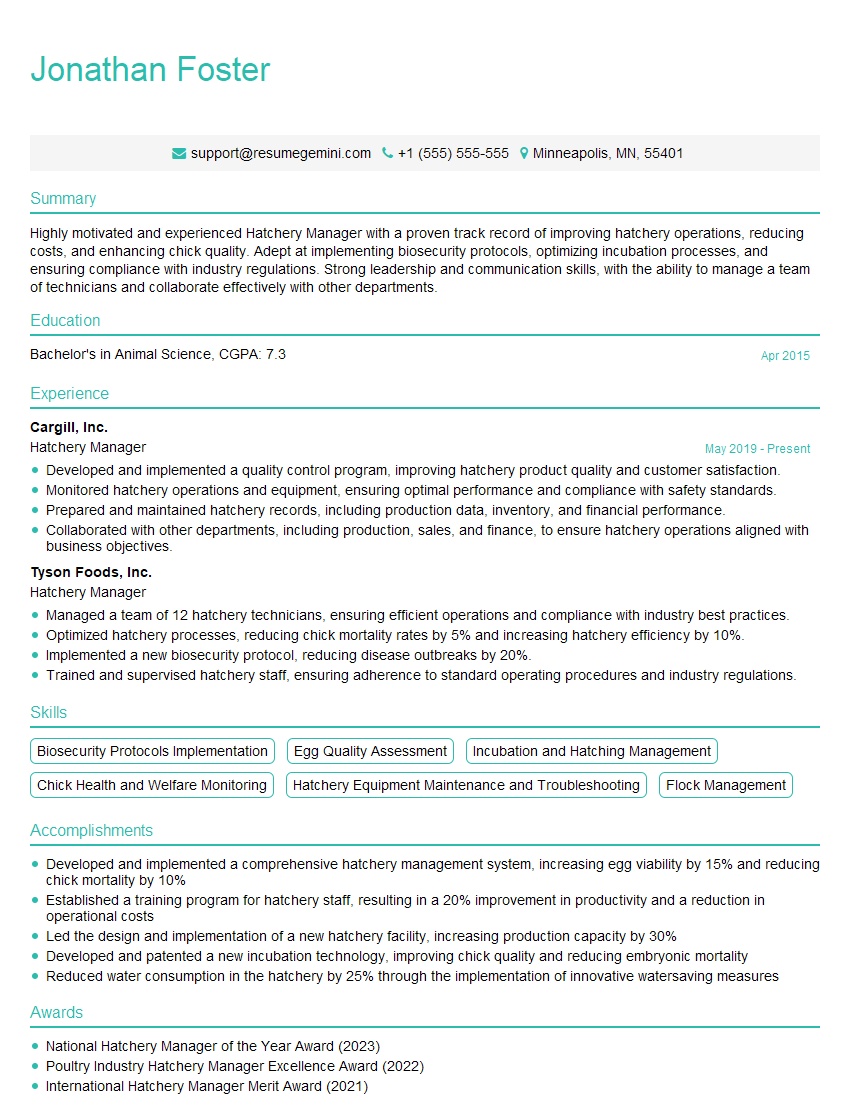
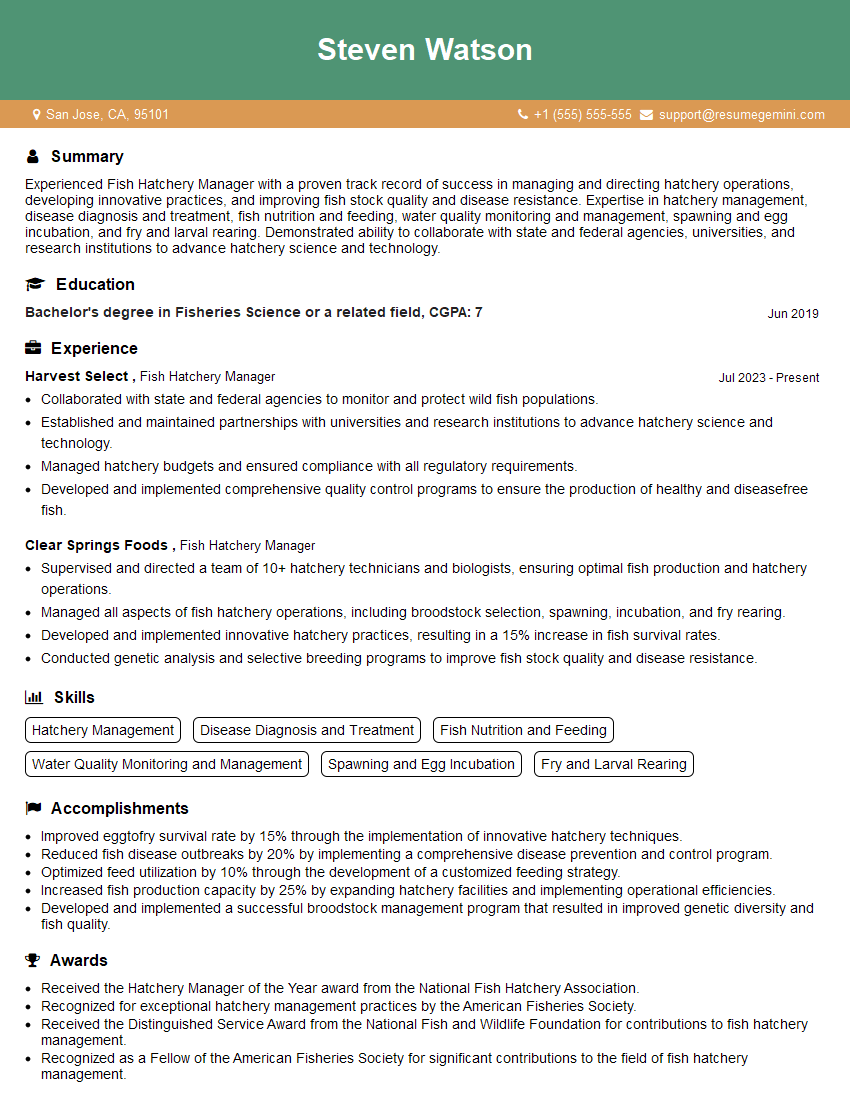
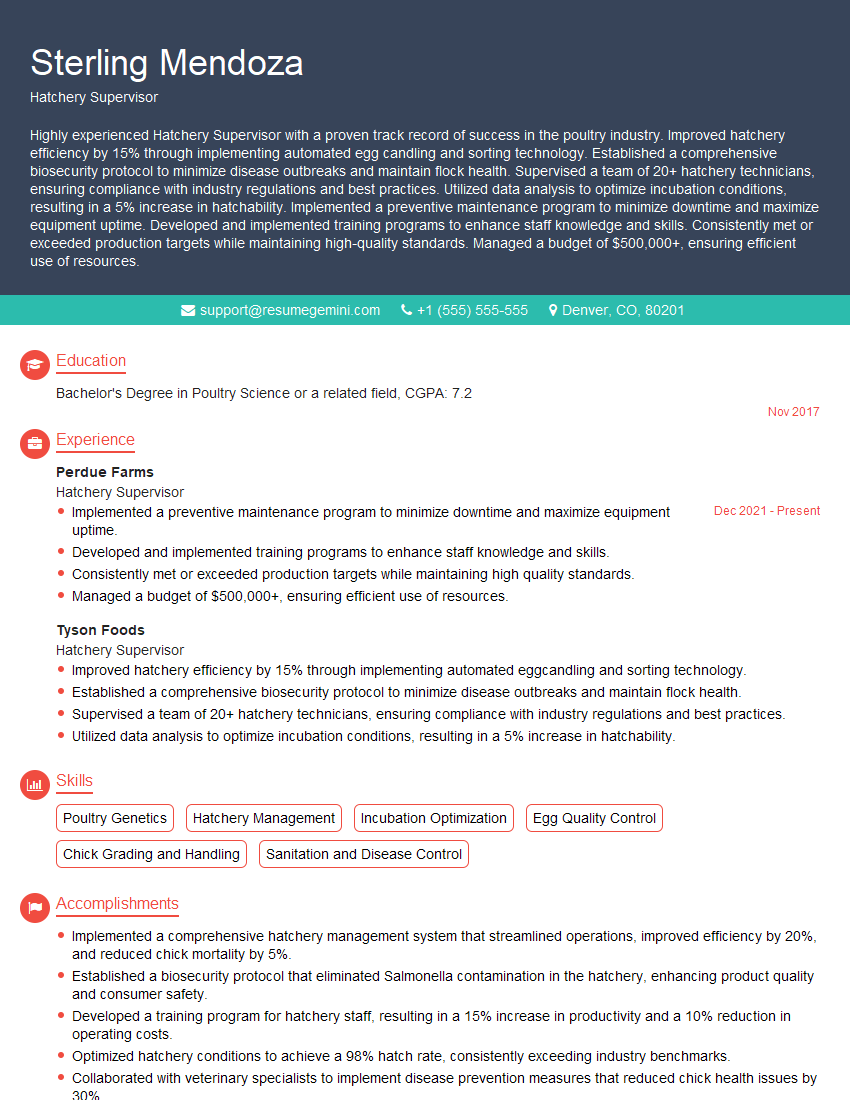
Mastering Hatchery Record Keeping and Management is crucial for career advancement in the poultry industry. Strong record-keeping skills demonstrate efficiency, attention to detail, and problem-solving abilities—highly valued attributes in this field. To enhance your job prospects, focus on creating an ATS-friendly resume that highlights your relevant skills and experience. ResumeGemini is a trusted resource to help you build a professional and effective resume. Examples of resumes tailored to Hatchery Record Keeping and Management are available to guide you.
Explore more articles
Users Rating of Our Blogs
Share Your Experience
We value your feedback! Please rate our content and share your thoughts (optional).
What Readers Say About Our Blog
Really detailed insights and content, thank you for writing this detailed article.
IT gave me an insight and words to use and be able to think of examples