Interviews are opportunities to demonstrate your expertise, and this guide is here to help you shine. Explore the essential Heating and cooling system repair and maintenance interview questions that employers frequently ask, paired with strategies for crafting responses that set you apart from the competition.
Questions Asked in Heating and cooling system repair and maintenance Interview
Q 1. Explain the difference between a heat pump and a furnace.
The key difference between a heat pump and a furnace lies in how they produce heat. A furnace burns fuel (natural gas, propane, or oil) to generate heat, which is then distributed through ductwork. Think of it as a big, efficient heater. A heat pump, on the other hand, moves heat rather than generating it. It absorbs heat from the outside air (even in cold temperatures) and transfers it indoors, acting like a refrigerator in reverse. In warmer months, it reverses the process, cooling your home by moving heat outside. Therefore, heat pumps are significantly more energy-efficient than furnaces, especially in milder climates, because they don’t consume fuel to generate heat; they simply relocate it.
Imagine a sponge: a furnace creates heat from scratch, like building a bonfire. A heat pump acts like a sponge, absorbing heat from the environment and squeezing it into your home.
Q 2. Describe the refrigeration cycle in detail.
The refrigeration cycle is the heart of how heat pumps and air conditioners work. It’s a continuous loop involving four key components: the compressor, condenser, expansion valve, and evaporator.
- Compressor: This compresses the refrigerant, raising its temperature and pressure. Think of it as a pump that increases the refrigerant’s energy.
- Condenser: Here, the high-pressure, high-temperature refrigerant releases heat to the outside air, cooling down and changing from a gas to a liquid. This is why the outside unit of your AC feels hot.
- Expansion Valve: This valve reduces the pressure and temperature of the refrigerant, causing it to rapidly expand and absorb heat again. It’s like a tiny valve controlling the flow and pressure.
- Evaporator: Inside your home, the low-pressure, low-temperature refrigerant absorbs heat from the indoor air, cooling your space and turning back into a gas. This cool air is then circulated throughout your home.
The refrigerant then cycles back to the compressor, and the process repeats continuously. The type of refrigerant used is crucial, with modern systems employing environmentally friendly options that don’t harm the ozone layer.
Q 3. What are the common causes of a malfunctioning air conditioner?
Several issues can cause an air conditioner to malfunction. These include:
- Refrigerant leaks: A low refrigerant level prevents efficient cooling. Leaks can be caused by damaged lines or components.
- Dirty air filter: A clogged filter restricts airflow, reducing cooling efficiency and potentially leading to freezing issues.
- Frozen evaporator coil: This often results from restricted airflow or low refrigerant.
- Faulty compressor: The compressor is the heart of the system; failure can cause complete system shutdown.
- Electrical problems: Issues with wiring, capacitors, or the control board can prevent the system from functioning properly.
- Clogged condensate drain line: This allows water to back up and potentially freeze.
Regular maintenance, including filter changes and inspections, can often prevent these problems. Remember, it’s best to call a professional for any significant issues to avoid further damage.
Q 4. How do you troubleshoot a furnace that won’t ignite?
Troubleshooting a furnace that won’t ignite requires a systematic approach, prioritizing safety. Always turn off the gas supply and power to the furnace before starting any inspection.
- Check the gas supply: Make sure the gas valve is open and that there’s gas reaching the furnace. A simple test with a gas leak detector can help.
- Inspect the igniter: A faulty igniter won’t provide the spark needed to ignite the gas. Visually inspect for damage and, if needed, replace it.
- Examine the flame sensor: This sensor detects the flame; if dirty or faulty, it can prevent the furnace from staying on.
- Check the blower motor: A malfunctioning blower motor can prevent proper airflow, hindering ignition.
- Verify the thermostat settings: Ensure the thermostat is set correctly and is receiving power. A simple test is to try a different thermostat.
- Check for gas leaks: If you smell gas, immediately evacuate the area and call a qualified professional.
If you’re not comfortable performing these checks, it’s crucial to contact a qualified HVAC technician. Attempting repairs without proper knowledge can be dangerous.
Q 5. What safety precautions do you take when working with refrigerants?
Safety is paramount when working with refrigerants. Refrigerants can be toxic and/or flammable, and improper handling can lead to serious health consequences or environmental damage.
- Proper personal protective equipment (PPE): Always wear safety glasses, gloves, and appropriate clothing to protect yourself from spills or exposure.
- Well-ventilated area: Work in a well-ventilated space to prevent the buildup of refrigerant fumes.
- Recovery and recycling: Never release refrigerant into the atmosphere. Use proper recovery and recycling equipment to capture and properly dispose of the refrigerant.
- Leak detection equipment: Use electronic leak detectors to identify leaks precisely and efficiently. Avoid relying on methods that could cause environmental harm.
- Training and certification: Proper training and certification are essential to safely handle refrigerants.
Following these precautions not only protects you but also safeguards the environment. Remember, improper refrigerant handling can have significant environmental consequences.
Q 6. Explain the importance of proper airflow in an HVAC system.
Proper airflow is fundamental to an HVAC system’s efficiency and longevity. Inadequate airflow can lead to several problems:
- Reduced cooling/heating capacity: Restricted airflow prevents the system from effectively transferring heat, leading to poor performance.
- Increased energy consumption: The system works harder to compensate for poor airflow, leading to higher energy bills.
- Component damage: Restricted airflow can cause components like the evaporator coil to freeze, leading to expensive repairs.
- Uneven temperatures: Some areas may be too hot or cold, resulting in uncomfortable living conditions.
Think of it like a clogged artery – if the blood (air) cannot flow freely, the system will struggle. Regular cleaning of air filters, ductwork, and coils is crucial to maintaining good airflow.
Q 7. How do you diagnose a refrigerant leak?
Diagnosing a refrigerant leak involves a combination of visual inspection and specialized tools.
- Visual inspection: Carefully inspect all refrigerant lines, connections, and components for signs of leaks – oil stains, frost, or bubbling.
- Electronic leak detector: This tool uses sensors to detect refrigerant escaping into the air. It’s highly accurate and a key tool for locating small, hard-to-find leaks.
- Pressure testing: The system can be pressurized with nitrogen to find leaks that might be too small for the electronic detector to detect.
- Dye injection: A UV dye is added to the refrigerant; using a UV lamp, even tiny leaks become readily visible.
Once the leak is located, repair is necessary. This might involve patching the leak, replacing a component, or even replacing sections of the refrigerant line. Remember, addressing a refrigerant leak promptly is critical to avoiding further damage and environmental concerns.
Q 8. What are the different types of HVAC system controls?
HVAC system controls regulate the operation of your heating and cooling equipment. They can range from simple thermostats to sophisticated, programmable systems integrated with smart home technology. Think of them as the brains of your HVAC system, telling it when and how to run.
- Thermostats: These are the most common control, allowing you to set your desired temperature. Basic models simply turn the system on and off, while programmable thermostats allow scheduling for different times of the day or week. Smart thermostats offer even more features, like learning your preferences and integrating with your smartphone.
- Zone Controls: In larger buildings or homes with multiple zones, zone controls allow for independent temperature regulation in each area. This increases efficiency by only heating or cooling occupied spaces.
- Humidistats: These monitor and control humidity levels, crucial for comfort and preventing issues like mold growth. They work in conjunction with your HVAC system to dehumidify or humidify as needed.
- Building Management Systems (BMS): These are complex computerized systems used in larger commercial buildings. They oversee and manage all aspects of the HVAC system, including multiple zones, energy consumption monitoring, and fault detection.
For example, a homeowner might use a programmable thermostat to automatically lower the temperature at night, saving energy while maintaining comfort.
Q 9. Describe your experience with different types of HVAC equipment (e.g., split systems, heat pumps, boilers).
My experience spans a wide range of HVAC equipment. I’ve worked extensively with split systems, heat pumps, and boilers, understanding their unique functionalities and troubleshooting needs.
- Split Systems: These are the most common residential systems, comprising an outdoor condenser unit and an indoor evaporator coil. I’ve diagnosed and repaired issues ranging from refrigerant leaks to compressor failures in both air conditioning and heating modes. I’m adept at handling different refrigerant types and understanding the nuances of different manufacturers’ designs.
- Heat Pumps: Heat pumps are highly efficient systems that can both heat and cool. My expertise includes understanding the principles of reverse-cycle operation, troubleshooting problems related to defrost cycles and heat exchanger efficiency, and ensuring optimal performance across varying weather conditions. I’ve handled a variety of heat pump types, from air-source to geothermal.
- Boilers: I’m proficient in servicing both gas and electric boilers, addressing issues like burner malfunctions, low water pressure, and pump problems. This includes familiarity with safety regulations and procedures related to high-temperature and high-pressure systems.
For instance, I once diagnosed a heat pump’s failure to heat effectively due to a faulty reversing valve, a problem requiring precise understanding of its operation and component interactions.
Q 10. How do you maintain and clean an HVAC system?
Regular maintenance is crucial for extending the lifespan and efficiency of an HVAC system. This involves both cleaning and preventative measures.
- Cleaning: This includes changing air filters regularly (at least every 3 months, or more frequently if needed), cleaning evaporator and condenser coils (removing dirt and debris that impede heat transfer), and inspecting and cleaning the condensate drain line (preventing clogs and overflow). Vacuuming or brushing dust and debris from the system’s exterior is also important.
- Preventative Maintenance: This involves inspecting components for wear and tear, checking refrigerant levels, lubricating moving parts, testing electrical connections, and verifying proper airflow. Professional inspections usually include measuring system pressures, temperatures, and airflow rates to identify subtle efficiency issues before they become major problems.
Imagine your HVAC system as a car. Regular oil changes, tire rotations, and inspections keep it running smoothly. Similarly, regular cleaning and maintenance for your HVAC system prevents breakdowns and improves efficiency, saving you money in the long run.
Q 11. Explain the concept of BTU and its relevance in HVAC systems.
BTU stands for British Thermal Unit. It’s a unit of heat energy. In HVAC, it represents the amount of heat a system can remove (cooling) or add (heating) in one hour. It’s crucial for selecting the appropriately sized system for a given space.
A larger BTU rating means more cooling or heating capacity. Choosing a system with an incorrect BTU rating can lead to problems. A system that’s too small will struggle to keep up, leading to discomfort and higher energy bills. A system that’s too large will cycle on and off frequently, also reducing efficiency and potentially causing premature wear and tear.
For example, a larger living room will require an HVAC system with a higher BTU rating compared to a small bedroom. Proper calculation based on room size, insulation, climate, and desired temperature differences is crucial for effective system selection.
Q 12. What are the common causes of low refrigerant levels?
Low refrigerant levels in an HVAC system are a common problem with several possible causes.
- Leaks: This is the most frequent cause. Refrigerant can leak through tiny holes or cracks in the lines, connections, or components. These leaks can be difficult to detect, sometimes requiring specialized equipment like leak detectors.
- Improper Installation: Poorly installed systems are more prone to leaks. Improper connections or damaged lines during installation can lead to refrigerant loss.
- Component Failure: A faulty compressor or expansion valve can lead to refrigerant loss. These components are under high pressure and can fail over time.
- System Age: Older systems are more susceptible to leaks due to wear and tear on the refrigerant lines.
Detecting leaks often involves using electronic leak detectors and sometimes requires adding a dye to the refrigerant to trace the leak visually. Finding the leak and repairing it is essential for restoring the system’s function and preventing further damage.
Q 13. How do you troubleshoot a noisy HVAC system?
A noisy HVAC system can indicate a variety of problems. Systematic troubleshooting is key.
- Identify the Noise: Is it a rattling, banging, squealing, hissing, or humming sound? The type of noise often points to a specific component.
- Locate the Source: Pinpoint where the noise originates – is it from the indoor unit, the outdoor unit, or the ductwork? This helps narrow down the possible causes.
- Common Causes and Solutions:
- Rattling or Banging: Loose parts, worn bearings, or debris within the unit.
- Squealing: Worn belts or bearings, needing lubrication or replacement.
- Hissing: Refrigerant leak requiring professional attention.
- Humming: Electrical problem, possibly loose wiring or a failing motor.
- Rumbling or vibrating: Imbalance, loose connections or mounting issues.
For example, a squealing sound could indicate worn blower motor bearings, requiring replacement. A rattling noise could indicate a loose component inside the air handler, requiring tightening or securing.
Always prioritize safety and disconnect the power before attempting any internal repairs.
Q 14. Explain your understanding of ductwork design and installation.
Ductwork design and installation are crucial for efficient HVAC system performance. Poorly designed or installed ducts can lead to significant energy loss and discomfort.
- Design Considerations: Proper duct design involves calculating the correct duct size and shape to minimize airflow resistance and ensure even air distribution throughout the space. Factors considered include the length of the duct runs, the number of bends, the type of material used, and the system’s airflow requirements.
- Installation Practices: Proper installation includes sealing all joints and connections to prevent air leaks. Leaks reduce efficiency and can lead to uneven temperatures. The ducts should be properly insulated, especially in unconditioned spaces, to minimize heat loss or gain.
- Materials: Different materials like galvanized steel, flexible ductwork, and fiberglass ducts have their own pros and cons regarding durability, cost, and insulation properties. Choosing appropriate materials based on the application and environment is vital.
A poorly sealed duct system can lead to significant energy loss, like air escaping through gaps in poorly joined sections, just as a leaky tire on a car reduces fuel efficiency. Effective ductwork design and installation maximizes system performance and minimizes energy consumption.
Q 15. What are the different types of thermostats and their functionalities?
Thermostats are the control center of your HVAC system, acting as the interface between you and your heating and cooling equipment. There are several types, each with varying functionalities:
- Basic Mechanical Thermostats: These are the simplest, using a dial to manually set the temperature. They’re inexpensive but lack the precision and programming features of more advanced models. Think of it like a simple on/off switch for your system.
- Digital Programmable Thermostats: These offer greater control with digital displays and allow you to program different temperatures for different times of the day or days of the week. This can significantly improve energy efficiency by automatically adjusting the temperature when you’re away or asleep. Imagine setting it to a cooler temperature while you’re at work and having it warm up before you get home.
- Smart Thermostats (Wi-Fi enabled): These connect to your home’s Wi-Fi network, allowing for remote control via a smartphone app. Many include advanced features like geofencing (automatically adjusting temperature based on your location), learning algorithms (adjusting to your preferences over time), and energy usage monitoring. It’s like having a personal assistant for your HVAC system.
- Smart Thermostats with advanced features: Some smart thermostats include features such as humidity control, air quality monitoring, and integration with other smart home devices. These are more expensive, but offer high level of comfort and efficiency.
The choice of thermostat depends on your budget, technical comfort, and desired level of control. For a simple, reliable solution, a basic digital programmable thermostat works well. For maximum efficiency and convenience, a smart thermostat is the way to go.
Career Expert Tips:
- Ace those interviews! Prepare effectively by reviewing the Top 50 Most Common Interview Questions on ResumeGemini.
- Navigate your job search with confidence! Explore a wide range of Career Tips on ResumeGemini. Learn about common challenges and recommendations to overcome them.
- Craft the perfect resume! Master the Art of Resume Writing with ResumeGemini’s guide. Showcase your unique qualifications and achievements effectively.
- Don’t miss out on holiday savings! Build your dream resume with ResumeGemini’s ATS optimized templates.
Q 16. How do you identify and address common electrical issues in HVAC systems?
Electrical issues in HVAC systems can range from minor nuisances to complete system shutdowns. Proper identification and addressing these issues requires a systematic approach and safety precautions.
Identifying Electrical Issues: I start by visually inspecting wiring, connections, and components for any obvious damage, loose connections, or corrosion. I use a non-contact voltage tester to check for the presence of voltage in wires without touching them – this is crucial for safety. A multimeter is essential to measure voltage, current, and resistance accurately, helping pinpoint faulty components.
Addressing Electrical Issues: Addressing the problems depends on the specific issue. Loose connections need to be tightened securely; corroded connections require cleaning and potentially replacing wires. If a component (like a capacitor or motor) is found to be faulty, it needs to be replaced. This requires careful attention to wire routing and electrical codes. Always disconnect the power before working on any electrical component! This is critical for safety!
Example: A malfunctioning blower motor might be caused by a blown capacitor or a faulty motor winding. I would first use a multimeter to test the capacitor and the motor windings for continuity and resistance. If the readings are outside the manufacturer’s specifications, it would indicate a faulty component requiring replacement. After the replacement, I carefully reassemble the system, test the operation of the blower motor, and verify that the voltage, current, and resistance across components are within the acceptable range.
Safety is paramount when working with electricity. Always follow proper safety procedures, use appropriate personal protective equipment (PPE), and if unsure about any procedure, consult the manufacturer’s documentation or a qualified electrician.
Q 17. Describe your experience with different types of air filters.
Air filters are essential for maintaining the efficiency and longevity of an HVAC system, as well as improving indoor air quality. There’s a variety available, each with its own strengths and weaknesses:
- Fiberglass Filters: These are the most common and inexpensive, but they’re also the least efficient. They capture larger particles but allow many smaller ones to pass through. They’re good for basic filtration but need frequent replacement (every 1-3 months).
- Pleated Filters: These offer more surface area than fiberglass filters, trapping more particles and lasting longer (2-6 months). They are more efficient than fiberglass filters.
- HEPA (High-Efficiency Particulate Air) Filters: These are the most efficient, capable of removing 99.97% of particles 0.3 microns or larger. They’re ideal for individuals with allergies or respiratory problems but are more expensive and require more frequent replacement (1-3 months).
- Electrostatic Filters: These use an electrostatic charge to attract and trap particles. They’re relatively efficient and can last longer than fiberglass filters but can be more costly. They usually need replacement every 3-6 months.
Choosing the right air filter depends on factors like your budget, air quality needs, and climate. I always advise clients to select a filter with an appropriate MERV (Minimum Efficiency Reporting Value) rating, which indicates the filter’s efficiency at capturing various sized particles. Higher MERV ratings mean better filtration but may also restrict airflow, so finding the right balance is key.
Q 18. What are the common causes of poor indoor air quality?
Poor indoor air quality (IAQ) can be caused by a variety of factors, impacting the health and comfort of occupants. Common culprits include:
- Dust Mites and Pet Dander: These allergens are microscopic and readily circulate in the air, triggering allergic reactions in susceptible individuals. Regular cleaning and use of HEPA filters help mitigate this.
- Mold and Mildew: These thrive in damp environments, releasing spores that can cause respiratory problems and other health issues. Proper ventilation and moisture control are essential.
- Volatile Organic Compounds (VOCs): These are chemicals released from building materials, furniture, cleaning products, and other sources. They can cause headaches, eye irritation, and other health problems. Improving ventilation and using low-VOC products can reduce their impact.
- Carbon Monoxide (CO): This odorless, colorless gas is a deadly byproduct of incomplete combustion. Regular inspection and maintenance of fuel-burning appliances, like furnaces and water heaters, are critical to prevent CO buildup.
- Poor Ventilation: Inadequate ventilation traps pollutants indoors, leading to poor IAQ. Proper ventilation is crucial for diluting pollutants and introducing fresh air.
Addressing poor IAQ often requires a multi-pronged approach. This might include cleaning, improving ventilation, using air purifiers with HEPA filters, and replacing or repairing faulty appliances. It’s a matter of improving air circulation and removing the sources of contaminants.
Q 19. How do you perform a system performance check?
A comprehensive system performance check involves a methodical assessment of various aspects of the HVAC system to ensure it’s operating efficiently and effectively. The process typically includes:
- Visual Inspection: Checking for any signs of damage, leaks, or corrosion in components like the condenser coil, evaporator coil, ductwork, and wiring.
- Airflow Measurement: Using a manometer or other airflow measurement tools to check the airflow through the system. Restricted airflow can indicate dirty filters, clogged ducts, or other issues.
- Temperature and Pressure Readings: Measuring temperatures and pressures at various points in the system (using a thermometer and pressure gauges) to assess the refrigerant cycle’s efficiency. Significant deviations from the manufacturer’s specifications may indicate problems.
- Electrical Checks: Testing the voltage, current, and amperage of various components using a multimeter. Abnormalities may indicate faulty components that need replacing.
- Refrigerant Level and Charge Check: Checking the refrigerant level and pressure to ensure there’s sufficient refrigerant and that the system is not leaking. Refrigerant leaks need immediate attention.
- Component Efficiency Check: Assessing the efficiency of individual components like the compressor, blower motor, and condenser fan motor. This might involve measuring their power consumption.
After the inspection and checks, I create a report detailing my findings and recommendations for repairs or maintenance. This provides the client with a clear understanding of the system’s status and any necessary actions. For example, low refrigerant can be a sign of a leak, and high pressure can indicate restricted airflow. These issues could lead to reduced system efficiency and increased energy consumption. This approach provides a detailed and proactive system assessment that helps avoid more significant problems down the line.
Q 20. What are the environmental regulations related to refrigerant handling?
Environmental regulations concerning refrigerant handling are crucial for protecting the environment and human health. These regulations focus primarily on reducing the release of ozone-depleting substances and greenhouse gases. Key aspects include:
- Proper Refrigerant Recovery and Recycling: Regulations mandate the recovery and recycling of refrigerants during system servicing or disposal to prevent their release into the atmosphere. This involves using specialized equipment to capture the refrigerant and recycle or reclaim it for reuse.
- Leak Detection and Repair: Regular leak checks are required, and any leaks must be promptly repaired to minimize refrigerant emissions. This often involves the use of electronic leak detectors.
- Refrigerant Type Restrictions: The use of certain refrigerants is restricted or phased out due to their environmental impact. Many countries are transitioning to refrigerants with lower global warming potentials (GWPs).
- Technician Certification and Training: HVAC technicians are typically required to undergo specialized training and certification to handle refrigerants safely and legally. This ensures compliance with regulations and safe handling practices.
- Record Keeping: Detailed records of refrigerant handling, including recovery and recycling activities, are often required for compliance purposes.
Ignoring these regulations can result in significant fines and legal repercussions. Furthermore, the responsible handling of refrigerants is critical to mitigating climate change and protecting the ozone layer. As a technician, staying current on these regulations and adhering to them is non-negotiable.
Q 21. Describe your experience with troubleshooting and repairing different types of HVAC components (e.g., compressors, condensers, evaporators).
Troubleshooting and repairing HVAC components requires a deep understanding of the system’s operation and the individual functions of each component. My experience encompasses a wide range of components:
- Compressors: I’ve diagnosed and repaired various compressor issues, including faulty start relays, burned-out windings, and issues with internal components. Diagnosis often involves using multimeters to test electrical components and assessing the compressor’s operational sounds. Replacement is sometimes needed.
- Condensers: I’ve addressed condenser problems such as dirty or clogged coils (reducing efficiency), faulty fan motors (impairing heat dissipation), and refrigerant leaks. Cleaning or replacing coils, and repairing or replacing fans are common solutions.
- Evaporators: Troubleshooting evaporators often involves checking for airflow restrictions, frozen coils (due to low refrigerant or restricted airflow), and refrigerant leaks. Cleaning coils, addressing airflow issues, and rectifying refrigerant leaks are typical solutions.
Example: I once encountered a system with a malfunctioning compressor. After thorough electrical checks, I found a burned-out start capacitor. Replacing the capacitor restored the compressor’s operation. In another case, a frozen evaporator coil pointed towards a refrigerant leak. Using specialized leak detection tools, I located the leak in a connection joint, repaired the joint, and recharged the system. Proper diagnosis and attention to detail were key in these and other repair scenarios.
Each repair requires a systematic approach, combining electrical testing, refrigerant analysis, and mechanical checks to pinpoint the root cause. Accurate diagnosis ensures the correct repair, preventing unnecessary component replacements and optimizing the system’s performance.
Q 22. How familiar are you with different types of HVAC control systems (e.g., programmable thermostats, smart thermostats, building management systems)?
My experience encompasses a wide range of HVAC control systems. I’m proficient with basic programmable thermostats, where you manually set schedules for heating and cooling. These are straightforward, offering simple temperature control based on pre-programmed times. I’ve also extensively worked with smart thermostats, like Nest or Ecobee. These offer advanced features such as geofencing (automatically adjusting temperature based on your location), learning algorithms (adapting to your preferences over time), and remote control via smartphone apps. This allows for energy savings and increased convenience. Finally, I have significant experience with Building Management Systems (BMS). These are sophisticated networked systems controlling HVAC in large buildings, offering centralized monitoring, control, and data logging. A BMS provides real-time insights into energy consumption and system performance, allowing for proactive maintenance and optimization. For example, I recently troubleshot a malfunctioning BMS in a large office complex, tracing the issue to a faulty sensor causing inconsistent temperature regulation across different zones. This required understanding the network architecture, data protocols (like BACnet or Modbus), and utilizing specialized diagnostic software.
Q 23. Explain your experience with preventative maintenance procedures for HVAC systems.
Preventative maintenance is crucial for extending the lifespan and efficiency of HVAC systems. My procedures follow a structured approach, starting with a visual inspection – checking for leaks, corrosion, and loose connections. Then, I perform a thorough cleaning, including filter replacements (I always advise on the correct filter type for the system), coil cleaning (essential for efficient heat transfer), and condensate drain clearing. I also check refrigerant levels and pressures (using gauges and ensuring proper safety procedures are followed), and inspect blower motors, belts, and other moving parts for wear and tear. I test safety controls, ensuring proper operation of high-limit switches and other safety mechanisms. Finally, I document all findings and recommendations, including any minor repairs made during the preventative maintenance visit. Think of it like a car tune-up – regular maintenance prevents costly breakdowns down the road. For instance, regularly cleaning condenser coils can improve efficiency by 15-20%, significantly reducing energy bills.
Q 24. How do you prioritize multiple service requests or maintenance tasks?
Prioritizing service requests involves a combination of factors. Urgency is paramount – a complete system failure takes precedence over a minor issue. Safety concerns also play a critical role; for example, a gas leak requires immediate attention. Beyond urgency and safety, I consider factors like the potential impact of the issue (e.g., a broken AC unit during a heatwave is more critical than a malfunctioning humidifier), the client’s needs and expectations, and available resources (my own time and the availability of parts). I often use a ticketing system to track requests, allowing me to assign priorities and track progress. I also communicate proactively with clients, setting realistic expectations for repair times. Think of it like triage in a hospital – the most critical cases are addressed first.
Q 25. What are your preferred methods for documenting repair and maintenance work?
My preferred documentation method involves a combination of digital and paper records. I use a tablet or laptop to create detailed service reports, including a description of the issue, steps taken during the repair or maintenance, parts used (including model numbers and serial numbers), and client feedback. Photos or videos are also included to document the before-and-after condition of the system. A hard copy is left with the client, and the digital version is stored in a secure, organized database. This system ensures accurate record-keeping, streamlines future service requests, and protects both the client and myself from misunderstandings. For example, detailed photos documenting a refrigerant leak are invaluable for warranty claims and future troubleshooting.
Q 26. Describe your experience using diagnostic tools for HVAC systems.
I’m experienced using a variety of diagnostic tools. These include multimeters (for measuring voltage, current, and resistance), manometers (for measuring refrigerant pressure), amp clamps (for measuring current draw), and infrared thermometers (for detecting temperature differences and identifying potential issues). I also utilize specialized HVAC diagnostic equipment, such as electronic leak detectors, which are crucial for locating refrigerant leaks precisely. For example, I recently used a combination of a manometer and an amp clamp to diagnose a problem with a compressor in an air conditioning unit – the high amperage draw pointed to a failing compressor, and pressure readings confirmed low refrigerant levels consistent with a leak. Modern diagnostic tools allow for quicker and more accurate troubleshooting, saving both time and resources.
Q 27. How do you handle difficult customers or challenging situations on the job?
Handling difficult customers or challenging situations requires patience, empathy, and strong communication skills. I begin by actively listening to their concerns, acknowledging their frustration, and demonstrating a genuine desire to help. I explain technical issues in clear, understandable terms, avoiding jargon. If a misunderstanding arises, I clarify the situation and offer options to resolve the issue. Occasionally, I may involve a supervisor or management if the issue requires escalation. Remember, even if the situation is difficult, maintaining a professional and respectful demeanor is crucial. For example, I once had a client who was extremely upset about a delayed repair. By calmly explaining the situation, offering a discount on future services, and providing regular updates, I was able to de-escalate the situation and maintain a positive client relationship.
Q 28. Describe your experience with troubleshooting and repairing heat pumps.
Heat pumps are efficient systems, but require specialized knowledge for troubleshooting and repair. My experience includes diagnosing and repairing various issues, including refrigerant leaks (using leak detectors and proper recovery/charging procedures), compressor problems (identifying faulty components and understanding the intricacies of compressor operation), and control board malfunctions (identifying faulty components using multimeters and schematics). I’m also proficient in diagnosing issues related to reversing valves (essential for switching between heating and cooling modes), defrost cycles (identifying and fixing issues that lead to inefficient defrosting), and air flow problems. Understanding the refrigeration cycle is paramount in this area. For example, I recently repaired a heat pump that wasn’t heating effectively. Through systematic diagnostics, I identified a faulty reversing valve preventing the system from switching to the heating mode correctly. Replacing the valve restored the system’s functionality. I also make sure to stay up to date on new technologies and best practices related to heat pumps, attending workshops and online training to maintain my expertise in this rapidly evolving area of HVAC technology.
Key Topics to Learn for Heating and Cooling System Repair and Maintenance Interviews
- HVAC System Fundamentals: Understanding the principles of refrigeration cycles, heat transfer, and thermodynamics. This includes knowledge of different types of systems (split systems, heat pumps, etc.).
- Troubleshooting and Diagnostics: Practical application of diagnostic tools and techniques to identify malfunctions in heating and cooling systems. This involves analyzing symptoms, using multimeters, and interpreting system readings.
- Safety Procedures and Regulations: Understanding and adhering to safety protocols, including handling refrigerants responsibly and working with electricity safely. Familiarity with relevant industry codes and regulations.
- Repair and Maintenance Procedures: Knowledge of common repairs, preventative maintenance tasks, and the use of specialized tools for various HVAC components (compressors, condensers, evaporators, etc.).
- Component Identification and Functionality: Being able to identify and explain the function of all major components within various HVAC systems. This includes understanding the relationships between components and their impact on overall system performance.
- Energy Efficiency and Optimization: Understanding energy-efficient practices, system optimization techniques, and the impact of different components on energy consumption. This includes knowledge of various energy efficiency standards and certifications.
- Customer Service and Communication: Effective communication skills to explain technical issues to non-technical customers in a clear and understandable manner. Demonstrating professionalism and a customer-focused approach.
Next Steps
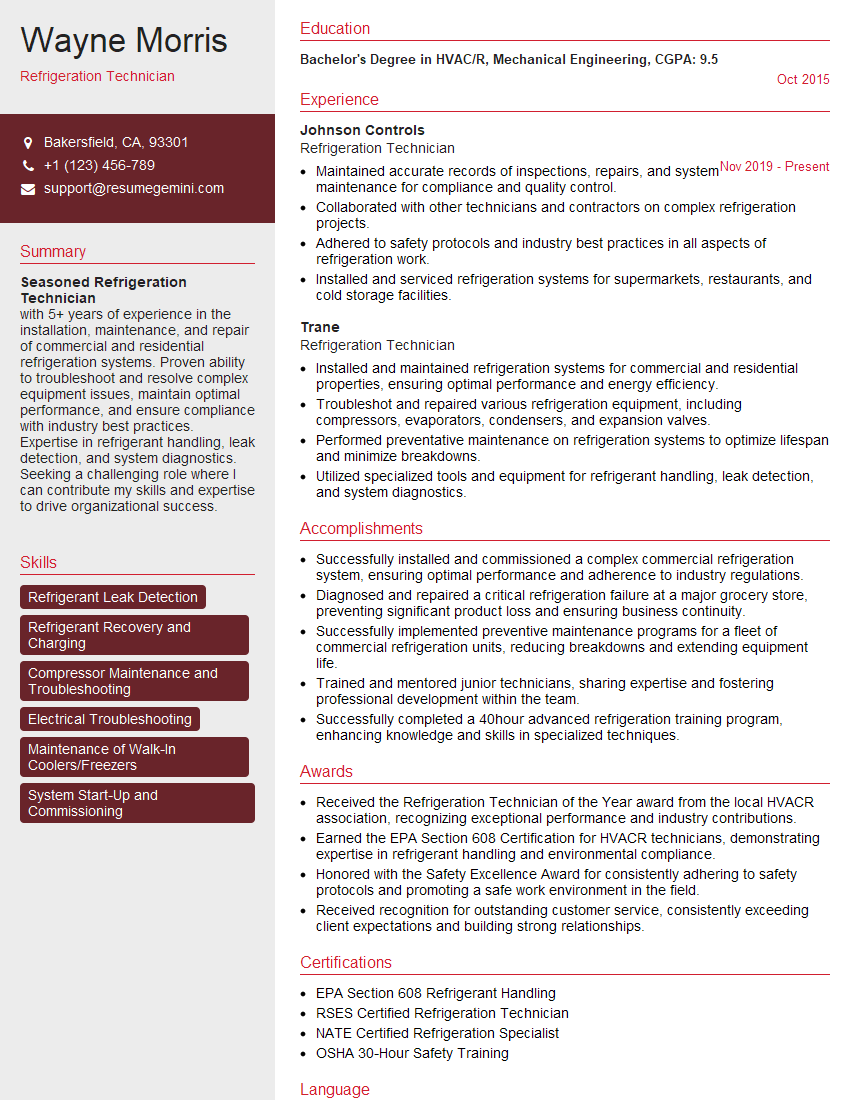
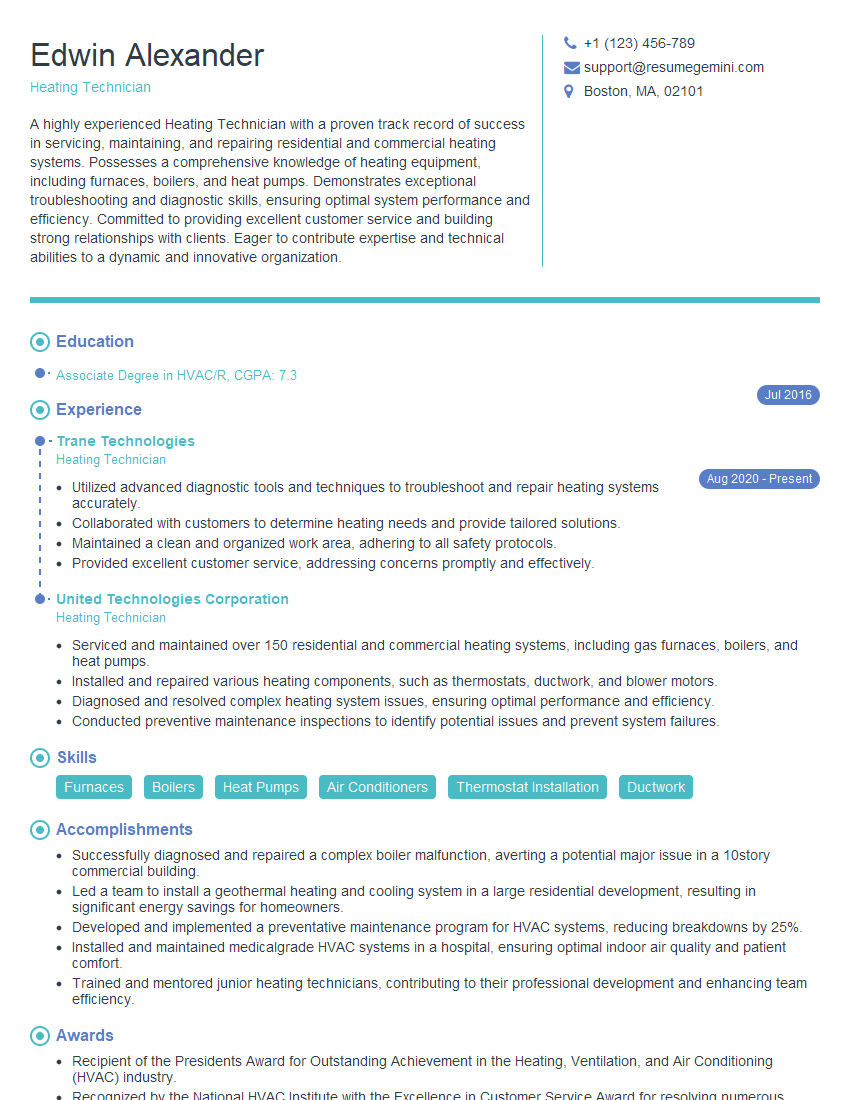
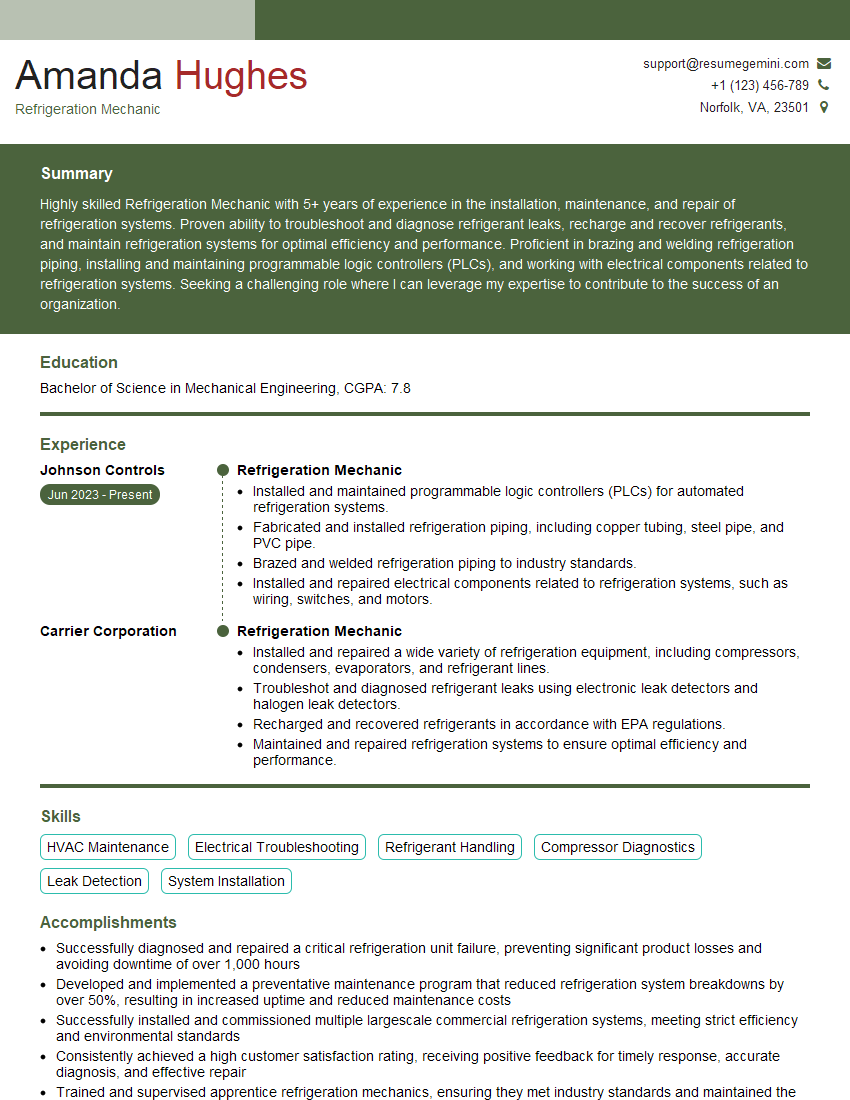
Mastering Heating and Cooling system repair and maintenance opens doors to a rewarding and consistently in-demand career. Advancement opportunities abound for skilled technicians, offering higher earning potential and specialized roles. To maximize your job prospects, a well-crafted, ATS-friendly resume is crucial. This ensures your application gets noticed by recruiters and hiring managers. ResumeGemini is a trusted resource that can help you create a professional and impactful resume tailored to the HVAC industry. We provide examples of resumes specifically designed for Heating and Cooling system repair and maintenance professionals to help guide you in crafting yours.
Explore more articles
Users Rating of Our Blogs
Share Your Experience
We value your feedback! Please rate our content and share your thoughts (optional).
What Readers Say About Our Blog
Really detailed insights and content, thank you for writing this detailed article.
IT gave me an insight and words to use and be able to think of examples